




Post Banner Image
Tips

7 Clever Ways To Make Your Luggage Stand Out at Bag Claim

By Rachel Gresh
Read time: 4 minutes
August 19, 2025
Updated: August 19, 2025

7 Clever Ways To Make Your Luggage Stand Out at Bag Claim

By Rachel Gresh
Author
Rachel Gresh
Rachel is a Washington, D.C.–based travel and lifestyle writer with roots in the Great Lakes region. When she’s not writing for publications such as The Discoverer and Interesting Facts, you’ll find her wandering through museums or exploring destinations off the beaten path.

After a flight lands, travelers often find themselves in a sea of similar suitcases circulating around the baggage carousel. While opting to travel only with a carry-on is ultimately the best way to avoid any luggage swapping mishaps, sometimes checking a bag is unavoidable. To avoid the baggage carousel guessing game (and the risk of someone else mistaking your bag for theirs), here are seven smart tips to make your checked luggage unmistakably yours.

Add a Luggage Belt

Suitcase with neon green luggage belt
Credit: Image courtesy of vendor 

Luggage belts — those expandable nylon straps that wrap around the exterior of luggage — provide an extra layer of security, but can also be a stylish way to personalize your bag. Available in vibrant colors and patterns, they make your luggage instantly identifiable and are adjustable to fit any checked bag size. The brand Gorilla Grip offers a multipack of single-strap belts in various colors, while Samsonite offers a brightly colored version with a built-in TSA-approved lock, adding peace of mind and some flair.

Use Wheel Covers

Suitcase with wheel covers
Credit: Image courtesy of vendor 

Wheel covers are another clever way to add a splash of color to your luggage — for under $10. Made from silicone, they also reduce noise, resist wear and tear, and protect wheels. Most wheel covers come in a standard one-size-fits-all, but make sure to measure your suitcase wheels before purchasing.

Get a Personalized Luggage Cover

Suitcase with colorful cover
Credit: Image courtesy of vendor 

Dents and scratches in checked luggage are expected by frequent flyers. That’s why many turn to luggage covers, which provide protection, easy identification, and a layer of security. Samsonite’s luggage covers come in several playful designs and are machine washable. For a wider range of styles and sizes, Travelkin’s covers are functional and affordable, fitting suitcases measuring 18 inches through 32 inches. And for a more minimalist look, RainVillage offers several bold, single-color options.

Related: How Often Should You Clean Your Suitcase?

Add Stickers and Patches

Stickers on Rimowa luggage
Credit: Image courtesy of vendor 

Luggage stickers are one of the most affordable (not to mention fun) methods of personalizing your luggage. Rimowa made stickers cool again with its sleek city-themed or monogram-style options to decorate the luxury luggage brand’s aluminum hard-shells. Bags from Away are also perfect canvases for stickers thanks to their sleek polycarbonate shells.

Not ready to commit to putting stickers directly on your luggage? Try a clear protective cover, like those from Explore Land. Whether you’re collecting stickers of national parks or international landmarks, you can decorate the cover without the risk of leaving sticky residue on your suitcase. (Tip: Look for waterproof and scratch-resistant stickers to ensure longevity.)

For soft-sided fabric luggage, opt for iron-on or sew-on fabric patches instead. This is a fun way to personalize your bag with patches of countries visited, vintage designs, embroidered initials, sports teams, or anything else that makes your bag “you.” 

Opt for Handle Covers 

Product image of Cosmos soft handle grips in various colors
Credit: Image courtesy of vendor 

Handle covers aren’t just for aesthetics — they add comfort, especially while hauling around a heavy checked bag. But instead of picking a neutral-colored handle wrap, opt for something bold to make your suitcase instantly recognizable at bag claim. Cosmos soft handle grips, for example, come in various bright colors, and there are even handle wrap options inspired by famous artists like Van Gogh. For a custom look, embroidery featuring your name or initials is also an option.

Use Luggage Tags

Product image of Zouity orange-shaped luggage tags
Credit: Image courtesy of vendor 

Luggage tags are another low-cost add-on to make your suitcase stand out. Choose one with a bright hue, fun pattern, or even your initials. For frequent flyers concerned about durability, personalized aluminum luggage tags come in neon shades and include space for your contact details. For a more playful design, brands like Catch On and Zouity offer fun shapes such as sea turtles, flowers, and fruit. (Tip: Some designs include slots for an Apple AirTag, helping you track your luggage in real time.)

Related: The One Gadget You Should Never Travel Without

Choose Standout Luggage

Product image of Calpak Hue Large Luggage
Credit: Image courtesy of vendor 

If accessorizing isn’t your thing, consider investing in luggage that stands out on its own. Bold colors, unique textures, and distinctive shapes make your bag easier to spot. 

For instance, Samsonite offers vibrant luggage options such as the Venue x Large Spinner in matcha green and the Voltage DLX Large Spinner in chili red. NOBL’s All-in-One Check-In luggage (with interior compression system) features a hot pink color option. And Calpak, known for its durability, offers the Hue Large Luggage, which comes in 10 colors. Keep an eye out for limited-edition designs and seasonal color drops from these brands to make your luggage even easier to spot at baggage claim.

Featured image credit: Bet_Noire/ iStock via Getty Images Plus 

Post Banner Image
Tips

10 Affordable Coastal Cities for Retirees

By Rachel Gresh
Read time: 6 minutes
August 19, 2025
Updated: August 19, 2025

10 Affordable Coastal Cities for Retirees

By Rachel Gresh
Author
Rachel Gresh
Rachel is a Washington, D.C.–based travel and lifestyle writer with roots in the Great Lakes region. When she’s not writing for publications such as The Discoverer and Interesting Facts, you’ll find her wandering through museums or exploring destinations off the beaten path.

Settling down by the sea is a dream for many people in retirement, and it can be surprisingly affordable if you know where to look. To find the best seaside destinations for retirees on a budget, we looked to U.S. News and World Report’s 2025 survey ranking 150 of the best cities for retirement based on the happiness of residents, housing affordability, tax rates, and health care quality. Of these top cities, we’ve narrowed down the 10 most affordable oceanfront cities to retire to in 2025 and 2026. Even if you’re not planning for retirement quite yet, these 10 destinations make for great budget-friendly coastal getaways.

10. Port St. Lucie, Florida

Aerial view of Port St. Lucie, Florida
Credit: Jeff Greenberg/ Universal Images Group via Getty Images  
  • Cost of living: 1.4% lower than national average
  • Median home value: $349,395
  • Median rent: $1,290
  • Percentage of population over 65: 22%

In Port St. Lucie, you don’t need to pay top dollar to retire on the Atlantic Coast. Despite being Florida’s sixth-most-populated city, Port St. Lucie is one of the Sunshine State’s more affordable places to reside. Living here comes at a fraction of the cost of cities like Miami or Naples, though it offers similar perks, such as great weather, no state income tax, and easy access to beaches, riverwalks, and nature preserves. The city’s subtropical climate makes year-round outdoor recreation possible, from enjoying coffee on a quiet beach to casting a line from your backyard fishing dock.

Related: The 8 States Without Income Tax

9. Jacksonville, Florida

Downtown Jacksonville, Florida
Credit: Michael Warren/ iStock via Getty Images Plus
  • Cost of living: 4.3% lower than national average
  • Median home value: $302,616
  • Median rent: $1,241
  • Percentage of population over 65: 15%

Jacksonville is a big city with a small-town feel. Florida’s largest city by both population (approximately 986,000 residents) and land area offers diverse neighborhoods spread across 874 square miles, from historic homes on the St. Johns River to quiet beachside bungalows. Jacksonville’s blend of coastal and urban living appeals to retirees looking for variety, with downtown entertainment venues, coastal walking trails, and scenic golf courses all within easy reach. The city also provides top-rated health care, including the Mayo Clinic Jacksonville.

8. Melbourne, Florida

Sandy beach in Melbourne, Florida
Credit: Joel Carillet/ E+ via Getty Images
  • Cost of living: 4.4% lower than national average
  • Median home value: $310,404
  • Median rent: $1,261
  • Percentage of population over 65: 23%

Located on Florida’s Space Coast, Melbourne beckons retirees with sunny skies and warm weather year-round. It’s less crowded than other South Florida hot spots, creating a more laid-back atmosphere. Plus, there are many 55-plus communities, often with lower-than-average HOA fees. 

Residents can enjoy watching rocket launches from Cape Canaveral, paddling along the Indian River, and spending time on the golf course. Melbourne’s proximity to Orlando (60 to 90 minutes by car) is also convenient for accessing big-city attractions, an international airport, and top-notch medical care.

7. Daytona Beach, Florida

Palm trees on median in Daytona Beach, Florida
Credit: jganser/ E+ via Getty Images 
  • Cost of living: 5.1% lower than national average
  • Median home value: $301,815
  • Median rent: $1,203
  • Percentage of population over 65: 20%

Clearly, the Sunshine State has plenty of budget-friendly options for retirees. Daytona Beach is another one of the most affordable coastal cities in Florida, offering condos and homes with ocean views at prices much lower than other oceanfront areas around the country. Although the city boasts plenty of quiet suburbs and condo communities, things liven up every February as tourists flock here for the Daytona 500 NASCAR race at the namesake speedway. 

With boardwalk entertainment, free summer concerts, and easy access to golf, tennis, and walking trails, this city inspires active lifestyles without being overwhelming, making it ideal for those who want relaxation and recreation.

6. Myrtle Beach, South Carolina

Multistory homes in Myrtle Beach, South Carolina
Credit: benedek/ iStock via Getty Images Plus 
  • Cost of living: 9.6% lower than national average
  • Median home value: $347,457
  • Median rent: $990
  • Percentage of population over 65: 24%

If you’re seeking an alternative retirement destination to Florida, Myrtle Beach boasts a low cost of living and a quiet, less touristy feel in the offseason. With a mild climate and access to quality health care, Myrtle Beach is especially popular with retirees from the Mid-Atlantic and Northeast. 

Situated on the “Grand Strand” on the Atlantic coastline, an area that boasts more than 90 golf courses, Myrtle Beach is also a golfer’s paradise. The low-cost beach lifestyle is made even more affordable thanks to South Carolina’s tax benefits for retirees, including no tax on Social Security benefits and retirement income deductions.

5. Savannah, Georgia

Aerial view of downtown Savannah, Georgia
Credit: Starcevic/ iStock via Getty Images Plus
  • Cost of living: 9.8% lower than national average
  • Median home value: $272,339
  • Median rent: $1,105
  • Percentage of population over 65: 15%

Savannah, a charming coastal city in southeastern Georgia, is known for its oak tree-lined streets and quaint historic district. It boasts lower housing costs than many cities in Florida and the Carolinas, while still offering coastal amenities and a laid-back lifestyle. 

While there aren’t high-rise beach condos here, retirees looking for quiet, historic homes along the rivers and marshes will find plenty of options. Many are a short drive from popular beaches such as Tybee Island. Savannah also has a thriving cultural scene, thanks in part to the Savannah College of Art and Design (SCAD), with plenty of galleries, festivals, theater, and concerts to enjoy.

4. Pensacola, Florida

Boardwalk alongside marina in Pensacola, Florida
Credit: Dan Reynolds Photography/ Moment via Getty Images
  • Cost of living: 11% lower than national average
  • Median home value: $296,312
  • Median rent: $1,013
  • Percentage of population over 65: 21%

Pensacola blends history, nature, and small-town charm on Florida’s Gulf Coast. The historic downtown district is a lively area home to boutique shops, museums, art galleries, dining, and free community events. With strong Veterans Affairs (VA) services and a significant military retiree population, it’s also an excellent choice for veterans.  Across the Pensacola Bay is Pensacola Beach, known for its white sand and unbeatable sunsets.

3. Mobile, Alabama

Downtown Mobile, Alabama
Credit: peeterv/ iStock via Getty Images Plus 
  • Cost of living: 15.9% lower than national average
  • Median home value: $177,707
  • Median rent: $745
  • Percentage of population over 65: 17%

Mobile is one of the most affordable destinations in the Gulf Coast region, allowing retirees to live near the water on a modest budget. Home prices and property taxes are well below the national average, and there are plenty of historic homes situated along oak-lined streets. 

Although the city is not located directly on the Gulf Coast, Mobile’s location on Mobile Bay is ideal for boating, with numerous marinas located south of the city. Mobile also boasts a lively local culture, with year-round festivals and fewer tourists than cities like New Orleans. Plus, it’s just a short drive from Dauphin Island, allowing for quick trips to the Gulf beaches.

2. Corpus Christi, Texas

Waterfront homes in Corpus Christi, Texas
Credit: typhoonski/ iStock via Getty Images Plus 
  • Cost of living: 16.5% lower than national average
  • Median home value: $202,525
  • Median rent: $967
  • Percentage of population over 65: 16%

Thanks to its affordable location on the Gulf of Mexico, Corpus Christi is home to a growing community of full-time retirees and part-time snowbirds. Texas does not have state income tax, allowing retirees to stretch their dollars further. It’s one of the most affordable waterfront cities in the country, particularly when it comes to groceries, services, and insurance. With its proximity to scenic spots like Padre Island and Mustang Island, retirees can enjoy nature and quiet beaches year-round.

1. Gulfport, Mississippi

Cars parked on street in downtown Gulfport, Mississippi
Credit: DenisTangneyJr/ iStock via Getty Images Plus 
  • Cost of living: 17.4% lower than national average
  • Median home value: $188,052
  • Median rent: $797
  • Percentage of population over 65: 16%

Gulfport stands out as one of the best seaside destinations for a comfortable and affordable retirement. It’s located under two hours by car from New Orleans on the Mississippi Sound, an area known for its calm waters and white-sand beaches. Boating, fishing, and other coastal activities are part of daily life here.

Gulfport’s residents have convenient access to world-class entertainment and specialized medical care. Nearby Biloxi also offers a cruise port, casinos, and lively nightlife. Although Gulfport is Mississippi’s second-largest city, its small-town feel provides a welcoming vibe of community for retirees.

Related: 6 of the Best Islands for Retirees
Post Banner Image
Outdoors

5 Overlooked U.S. National Monuments Worth Visiting

By Fiona Mokry
Read time: 4 minutes
August 13, 2025
Updated: August 13, 2025

5 Overlooked U.S. National Monuments Worth Visiting

By Fiona Mokry
Author
Fiona Mokry
Fiona has spent her career exploring the world and working in the travel industry, turning her lifelong passion into a profession. From planning custom trips to sharing stories as a travel writer for publications such as The Discoverer, she’s all about helping others experience the world in a deeper, more meaningful way.

The U.S. is home to 130 national monuments, many of which are just as breathtaking as the country’s most popular parks — minus the crowds. While national parks grab the spotlight, there’s something particularly enticing about exploring places that feel a little more under the radar. From the Black Hills of South Dakota to the tranquil islands of the Pacific Northwest, here are five underrated U.S. national monuments that we think deserve a spot on your travel list.

Jewel Cave National Monument – South Dakota

Visitors exploring Jewel Cave National Monument in South Dakota
Credit: Jon Lauriat/ iStock via Getty Images Plus

Jewel Cave National Monument is a hidden gem in every sense of the word. Tucked away in the Black Hills of South Dakota, it’s one of the longest cave systems in the world, boasting over 220 miles of mapped passageways. Inside Jewel Cave are a variety of sparkling calcite crystals, glistening like jewels and earning the cave system its name. 

Among the stunning cave formations visitors will find are boxwork, a unique honeycomblike structure, and cave popcorn, which are small, knobby formations. You can also see flowstone, stalactites, stalagmites, and a long, ribbonlike drapery known as cave bacon. Guided tours at Jewel Cave range from short, family-friendly walks to historic lantern-lit journeys and even wild spelunking adventures that take you deep into its most thrilling passages. No matter which route you choose, exploring this incredible underground world is an unforgettable experience.

Craters of the Moon National Monument and Preserve – Idaho

Lunar-like landscape of Craters of the Moon National Monument in Idaho
Credit: zrfphoto/ iStock via Getty Images Plus

Enter Craters of the Moon National Monument and Preserve and you’ll swear you’ve stepped into another world. In fact, the bizarre landscape made from lava and sagebrush so closely resembles the lunar surface that Apollo astronauts conducted their training here in 1969 to prepare for their trip to the moon. 

The most striking features of this protected area are its ancient lava flows, formed by past eruptions from 25 dormant volcanoes that date back between 2,100 and 15,000 years. Popular activities in the national monument include scenic drives, hikes through dramatic lava formations such as Indian Tunnel and Inferno Cone, and stargazing in some of the clearest skies in the country. Craters of the Moon National Monument is often overlooked for Yellowstone and Grand Teton National Parks, both located a few hours away by car, but it delivers a quiet, otherworldly experience unlike anything else in the country.

Katahdin Woods and Waters National Monument – Maine

Aerial view of lake, forest, and mountains in Katahdin Woods and Waters National Monument, Maine
Credit: Rabbitti/ iStock via Getty Images Plus

Maine is known for its rugged landscapes and pristine wilderness, and Katahdin Woods and Waters National Monument showcases some of the best that this New England state has to offer. This Maine national monument takes its name from the state’s highest peak, Mount Katahdin, which can be seen from various vantage points throughout the woods. With 50 miles of trails — including segments of the Appalachian Trail — Katahdin Woods and Waters offers everything from short scenic hikes to multiday backpacking adventures, all set against the backdrop of tranquil Maine wilderness. 

As a designated International Dark Sky Sanctuary, the monument also offers exceptional stargazing, boasting some of the clearest, darkest skies east of the Mississippi. Elsewhere, visitors can enjoy birding, biking, fishing, and hunting, all without the typical crowds that flock to Acadia National Park during peak season — making it a quieter, yet equally compelling alternative.

San Juan Islands National Monument – Washington

Lighthouse amid tall grass overlooking the San Juan Islands
Credit: George Ostertag/ iStock via Getty Images Plus 

Located in the Salish Sea off the coast of northwest Washington, San Juan Islands National Monument is made up of 450 rocks, islands, and pinnacles. The park’s diverse landscapes — from sandy beaches to dense forests and snow-capped peaks — provide vital habitats for countless species of mammals and birds, including orcas, seals, sea lions, and bald eagles. One particularly remarkable species is the island marble butterfly, once believed to be extinct but rediscovered here in 1998. 

The San Juan Islands hold profound cultural and ecological significance, with evidence of wildlife inhabiting the area for thousands of years before Indigenous tribes later made it their home. In addition, several historic lighthouses that reflect the region’s rich maritime heritage are scattered across the landscape. Visitors can experience the national monument through activities such as kayaking, hiking, wildlife viewing, and camping.

Canyon de Chelly National Monument – Arizona

Lookout point over Canyon de Chelly National Monument in Arizona
Credit: dszc/ E+ via Getty Images

Grand Canyon National Park features on many travelers’ bucket lists, but with 4.9 million visitors in 2024, some of its magic can feel lost in the crowds. What many don’t realize is that Arizona houses a wealth of other stunning canyons and sandstone landscapes that rival the Grand Canyon’s beauty, one of which is Canyon de Chelly National Monument

Located about 200 miles east of the Grand Canyon, Canyon de Chelly features dramatic sandstone cliffs, ancient Puebloan ruins, and cliff dwellings carved into the canyon walls. Among its highlights is Spider Rock, a striking sandstone spire that holds deep spiritual meaning for the Navajo peoples. Canyon de Chelly is home to a Navajo community, who work alongside the National Park Service to protect the land’s cultural heritage and natural beauty.

Related: 9 of the Newest U.S. National Monuments
Post Banner Image
Tips

How To Stop Wasting Money on Travel Toiletries

By Bennett Kleinman
Read time: 3 minutes
August 13, 2025
Updated: November 1, 2025

How To Stop Wasting Money on Travel Toiletries

By Bennett Kleinman
Author
Bennett Kleinman
Bennett is a New York City-based staff writer for Daily Passport. He previously contributed to television programs such as the Late Show With David Letterman, as well as digital publications like the Onion. Bennett has traveled to 48 U.S. states and all 30 Major League Baseball stadiums.

To meet the TSA’s strict liquid rules for carry-on luggage, many travelers stock up on travel-size toiletries at the drugstore before flying. However, doing so comes with its own set of considerations. Not only are those small plastic bottles wasteful, but the cost can add up, especially if you travel frequently. Here are a few clever alternatives to save money on toiletries before your next vacation.

Purchase Refillable Bottles

Refillable toiletry bottles in bag
Credit: Ilona Shorokhova/ iStock via Getty Images Plus

The best method to cut down on waste and save money in the long run is a simple one: Buy a set of refillable containers. Travelers can choose from a variety of TSA-approved options such as silicone bottles or squeezable pouches. These containers easily fit into your bag without taking up much space, and they eliminate unnecessary waste. A set typically costs around $5 to $10, so you’ll be saving money in just a few trips. When you return, simply rinse and clean them out and stow them away until your next journey.

Fill Tiny Baggies

Clear plastic bag and small reusable toiletry bottle on table
Credit: Liudmila Chernetska/ iStock via Getty Images Plus

No refillable bottles? No problem. Small plastic bags or containers can be an excellent alternative in a pinch, so long as they have a tight seal to prevent potential leakage. Consider pill bags or even contact lens cases, both of which usually measure well below the TSA liquid limit of 3.4 ounces, and can serve as makeshift toiletry dispensers when you don’t have other options. Before your trip, be sure to label each bag or case with its contents, such as toothpaste or sunscreen, and pack them in a place where they are less likely to leak.

Use What the Hotel Provides

Single-use toiletry bottles on bathroom counter
Credit: FGM/ iStock via Getty Images Plus

When you book a hotel room, a variety of amenities are included in the price. This includes shampoo, body wash, hand soap, and other basic toiletries. This isn’t to say that every toiletry will be taken care of, but if you aren’t picky about hair products, soap, and lotion, you can simply take advantage of the hotel’s complimentary offerings to free up valuable space in your luggage — and avoid the cost of purchasing travel-size toiletries. Plus, if the hotel still offers single-use containers, you can also take the bottles home and reuse them on another trip. (Pro tip: Many hotels also offer amenity kits if you ask the front desk, with additional items such as a toothbrush, toothpaste, lip balm, lotion, and even socks free of charge.)

Related: Why Tiny Shampoos in Hotels Are Disappearing

Stock Up at the Dentist

Person squeezing toothpaste onto toothbrush
Credit: RealPeopleGroup/ E+ via Getty Images

Nobody likes visiting the dentist, but at least you can save some money on toiletries for your next vacation by grabbing a few of those complimentary tubes of toothpaste on the way out. Most dentist offices provide floss, toothbrushes, and toothpaste samples at the end of each visit — not only are they usually free, but the smaller sample sizes are perfect for tossing into your carry-on and still meeting TSA liquid regulations.

Swap Liquids for Solids

Shopper reaching for toiletries in store aisle
Credit: dusanpetkovic/ iStock via Getty Images Plus 

These days, many toiletries also come in solid forms — think shampoo and conditioner bars (like those from Kitsch), powdered mouthwash packets (MySmile), and sunscreen sticks (Blue Lizard). These items are TSA-approved, and because they’re solid, you don’t have to worry about liquid restrictions in your carry-on. Plus, solid versions often last longer because they are more concentrated than liquid toiletries, which will end up saving you money in the long run. For instance, a solid shampoo bar can last for over 80 washes.

Post Banner Image
Tips

What Actually Happens on a Plane Between Flights?

By Julia Hammond
Read time: 4 minutes
August 13, 2025
Updated: August 13, 2025

What Actually Happens on a Plane Between Flights?

By Julia Hammond
Author
Julia Hammond
Julia is a U.K.-based travel writer whose work has been featured in The Independent, The Telegraph, The New Zealand Herald, and Culture Trip, among others. She’s an enthusiastic advocate for independent travel and a passionate geographer who has had the privilege of traveling to more than 130 countries in search of a story.

Picture this scenario: Your plane is at the gate, but boarding has yet to commence. The crew is on board and the cabin is being prepared — but what, exactly, does that entail, and why does it sometimes seem to take so long? Delve into what actually happens during what’s known as a turnaround, or the time a plane spends on the ground between flights. 

Why Pilots Walk Around the Aircraft

Pilot conducting walk-around of aircraft parked at gate
Credit: yacobchuk/ iStock via Getty Images Plus

An aircraft’s flight crew has a responsibility to ensure that the plane is functioning as it should and that it is safe to fly. To do this, pilots and first officers carry out a host of preflight checks. You may have seen this happening in the flight deck as you board, but an exterior walk-through needs to happen, too. The pilot (or co-pilot) will walk around the aircraft, looking for visual evidence of leaks, corrosion, dents, or foreign bodies, as well as checking the condition of the engines and noting anything that seems unusual. Once all the fuel, passengers, bags, and cargo have been loaded, all flight controls are confirmed as working correctly, and the weather and flight plan have been signed off on, the plane can get on its way.  

Related: 6 Secrets and Rules of the Cockpit

How Flight Attendants Prepare the Cabin

Flight attendants closing overhead bins on airplane
Credit: golfcphoto/ iStock via Getty Images Plus 

The role of flight attendants is to ensure passengers remain safe at all times during the flight. Before passengers board, flight attendants thoroughly inspect the cabin, including overhead bins, seat pockets, lavatories, and underneath seats. Once these security checks are complete, flight attendants continue with other safety-related items, making sure these are where they should be and in full working order. This includes looking to see that the life vests are stowed for each seat, checking that first-aid kits are complete, and making sure that smoke detectors, the PA system, and emergency lighting are all functioning correctly. Finally, they’ll stock the galley and begin welcoming passengers on board.

Related: Flight Attendants Have a Secret Language — Here’s How to Decode It

What Happens When the Cabin Is Cleaned?

Cleaning crew vacuuming floor of aircraft cabin
Credit: BONDART/ iStock via Getty Images Plus 

Between flights, the cabin of an aircraft undergoes cleaning, but how involved the process is depends on the type of flight. Between long-haul flights, the plane is typically on the ground for several hours, giving cleaning crews ample time to freshen up the space and ensure it is clean and tidy for the next set of passengers. Blankets and pillows are replaced, trash is removed from the plane, carpets are vacuumed, and hard surfaces such as tray tables are wiped down. The lavatories and galleys are also disinfected and sanitized. 

Between short-haul flights, especially those operated by low-cost airlines, the turnaround times are much shorter — sometimes as little as 25 minutes. Often, this means that cabin crew members instead of a dedicated cleaning crew will collect trash prior to boarding and try to minimize the amount of work required while the plane is on the ground, thus avoiding unwanted delays and keeping costs low.

Related: The Dirtiest and Cleanest Parts of an Airplane

Loading Luggage and Cargo

Conveyor belt with luggage being loaded onto aircraft
Credit: jmsilva/ iStock via Getty Images Plus 

Proper weight distribution is one of the most important things to consider when loading cargo of any kind, including passengers’ bags, onto a plane. While load planners know the exact weight of freight containers, loose items (such as suitcases) are loaded with an assumption about average weight — such estimates vary according to whether the flight is domestic or international, for instance. Nets keep the bags in place so that the plane’s center of gravity isn’t affected. In addition, for security reasons, it’s standard practice that only accompanied baggage is permitted, which is why, if a passenger doesn’t show up for the flight, it can be necessary to offload their hold luggage prior to takeoff. 

Related: The Real Reason Airlines Have Strict Baggage Weight Limits

Getting Food on Board

Meal trays in aircraft galley
Credit: riskms/ iStock via Getty Images Plus

Before they are loaded on an aircraft, in-flight meals are prepared off-site in dedicated flight kitchens. These kitchens have strict hygiene policies and quality control measures. Hot food, for example, is thoroughly cooled before it is ready to leave and reheated through in the galley once in the air. Service carts loaded with meals are transported in catering trucks to the plane, where they replace those used on the previous flight. While passengers typically board from the left side of the plane, the doors on the opposite side are used to load catering required for the journey. Hydraulics lift the unit up to the level of the door so that carts can be easily transferred to the plane before departure.

Related: How Much Do Airlines Really Spend on In-Flight Meals?
Post Banner Image
Architecture

5 Stunning Beaux Arts Buildings for Architecture Buffs To Visit

By Julia Hammond
Read time: 5 minutes
August 13, 2025
Updated: August 13, 2025

5 Stunning Beaux Arts Buildings for Architecture Buffs To Visit

By Julia Hammond
Author
Julia Hammond
Julia is a U.K.-based travel writer whose work has been featured in The Independent, The Telegraph, The New Zealand Herald, and Culture Trip, among others. She’s an enthusiastic advocate for independent travel and a passionate geographer who has had the privilege of traveling to more than 130 countries in search of a story.

Beaux Arts architecture exudes opulence. With a nod to classical forms, this striking building style became a popular choice for civic and public buildings in the 19th century thanks to its commanding presence — symmetrical façades replete with arched windows and pedimented doors, imposing entrances leading to grand staircases, and ornamental details in the form of festoons, cartouches and balustrades. The obsession with Beaux Arts architecture gained momentum in Paris and peaked during the late 19th and early 20th centuries. Below, take a look at five notable examples of Beaux Arts architecture and see why they have an enduring appeal. 

Grand Central Terminal – New York, New York

Taxi cabs passing Grand Central Terminal in New York City
Credit: spyarm/ iStock via Getty Images Plus 

Grand Central Terminal was commissioned in 1903 to replace the outdated Grand Central Depot, which had served New Yorkers since 1871. Architecture firm Reed & Stem won the contract to redevelop and modernize the station with an ambitious plan that split the station over two levels to create 44 platforms serving 63 tracks. 

However, it’s the Beaux Arts styling — from the Tennessee pink marble used on the floor of the main concourse to the Guastavino tiles on the walls — that makes Grand Central Terminal such a beloved landmark today. That style choice is thanks to the involvement of another architecture firm, Warren & Wetmore. Their sketch for the celestial ceiling mural would become one of Grand Central’s most iconic features. Additionally, French sculptor Jules-Félix Coutan was commissioned to create the Glory to Commerce sculpture, which dominates the south façade alongside a decorative Tiffany-style clock.    

Opéra Garnier – Paris, France

Grand exterior of Opéra Garnier in Paris, France
Credit: Thomas Demarczyk/ iStock Unreleased via Getty Images

French architect Charles Garnier was a graduate of the École des Beaux-Arts in Paris, the school of fine arts where the Beaux Arts architecture style was born. He was responsible for the city’s opulent opera house, completed in 1861. In fact, its interiors are so extravagant that it is often referred to as Palais Garnier, as the building is sumptuous enough to resemble a palace. 

Commissioned by Emperor Napoleon III, it’s a feast for the eyes: The main façade, overlooking Place de l’Opéra, is adorned with sculptures such as Gumery’s gilded L’Harmonie (Harmony) and La Poésie (Poetry), which are perched above busts of great composers such as Mozart, Beethoven, and Rossini. Meanwhile, the metal framework of the horseshoe-shaped auditorium — strong enough to support a magnificent bronze and crystal chandelier — is beautifully concealed by marble, stucco, velvet, and gilding. 

Thomas Jefferson Building at the Library of Congress – Washington, D.C.

Exterior of the Thomas Jefferson Building at the Library of Congress in Washington, D.C.
Credit: ValerijaP/ iStock via Getty Images Plus

Also known as the Main Library, the Thomas Jefferson Building at the Library of Congress in Washington, D.C., is one of the most splendid examples of Beaux Arts architecture in the United States. It was constructed in the 1890s but didn’t receive its current name until 1980, in honor of one of the nation’s Founding Fathers and the third president.

Modeled on the Paris Opera House, the building was first billed as an example of Italian Renaissance-style architecture, but these days it’s widely considered to fit into the Beaux Arts style instead. Inside, the opulent décor befits a building of such importance, replete with artwork, sculptures, and expensive materials such as marble, granite, bronze, and mahogany. A standout feature of the building is the copper dome, which was gold-leafed until the 1930s, while the Flame of Knowledge atop it is still a gilded treasure covered in gold.

Musée d’Orsay – Paris, France

Musée d’Orsay in Paris, France, behind bridge across the Seine River
Credit: Gilmanshin/ iStock via Getty Images Plus 

When French architect Victor Laloux was tasked with building the Gare d’Orsay (Orsay train station), he chose a fabulous Beaux Arts design. Opened in 1900, it was originally the terminus for the Chemin de Fer de Paris à Orléans (Paris to Orleans railway). The station’s ornate limestone façade concealed a functional steel frame, while the glass roof of its distinctive barrel vault flooded the lower spaces with light. Ornate detailing — including lion’s heads, oak branches, and laurel leaves — enhanced the exterior, along with statuary representing the destination cities of Nantes, Bordeaux, and Toulon. 

But eventually, the length of the platforms couldn’t accommodate the trains that needed to use it, and the station closed to long-distance traffic in 1939. After suburban trains were also relocated, a new use for the building was needed. It reopened as the Musée d’Orsay in 1986. The old station clock now stands over Carpeaux’s iconic sculpture, Les Quatre Parties du monde soutenant la sphère céleste (The Four Parts of the World Supporting the Celestial Sphere). Meanwhile, paintings by Cezanne, Van Gogh, and Monet hang in what was once the station hotel.  

Edificio Metrópolis – Madrid, Spain

Edificio Metrópolis in Madrid, Spain, with winged statue on top
Credit: Stefano Politi Markovina/ Alamy Stock Photo

Outside of France, one of the most delightful examples of Beaux Arts architecture in Europe can be found in the Spanish capital. Completed in 1911, Edificio Metrópolis (Metropolis Building) was the work of French architect Jules Février in collaboration with his son Raymond. 

The insurance company La Unión y el Fénix Español, which would occupy the office building, held a competition and chose the duo’s elaborate Beaux Arts design as the winner. The Corinthian columns that flank the main entrance support sculptures representing worthy endeavors such as agriculture, while a phoenix, the emblem of the company, originally topped the slate dome that crowns the building. Today, a magnificent statue called Victoria Alada (Winged Victory) sits atop the building as its showstopper. 

Post Banner Image
History

5 Landmarks That Used To Look Totally Different

By Marissa Kozma
Read time: 4 minutes
August 13, 2025
Updated: August 13, 2025

5 Landmarks That Used To Look Totally Different

By Marissa Kozma
Author
Marissa Kozma
Marissa is a cheap airfare aficionado who loves exploring offbeat destinations with her husband. Based in Los Angeles and Joshua Tree, Marissa has been featured in publications such as San Diego Magazine, Palm Springs Life Magazine, 303 Magazine, and Mountain Living.

Images of the world’s most iconic landmarks are familiar to travelers all over the world, but some were even more magnificent when they were first built. For instance, it may seem strange to envision the Eiffel Tower being any shade other than brown, but if you lived in Paris back in the early 1900s, you’d have a different view of the famous monument. Here are five enduring structures around the world whose original appearances may surprise you.

Eiffel Tower – Paris, France

Bird flying over the Eiffel Tower along the Seine River in Paris, France
Credit: Eloi_Omella/ iStock via Getty Images Plus 

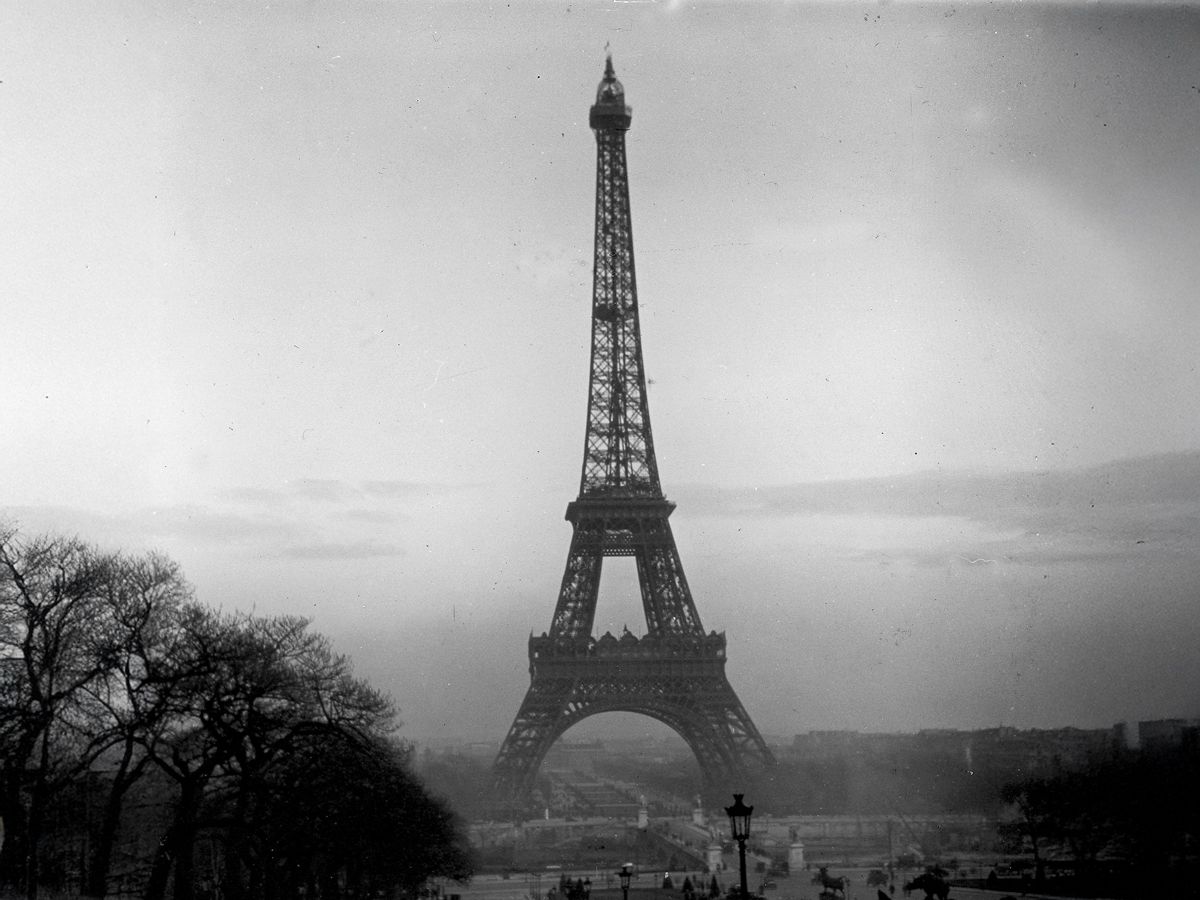
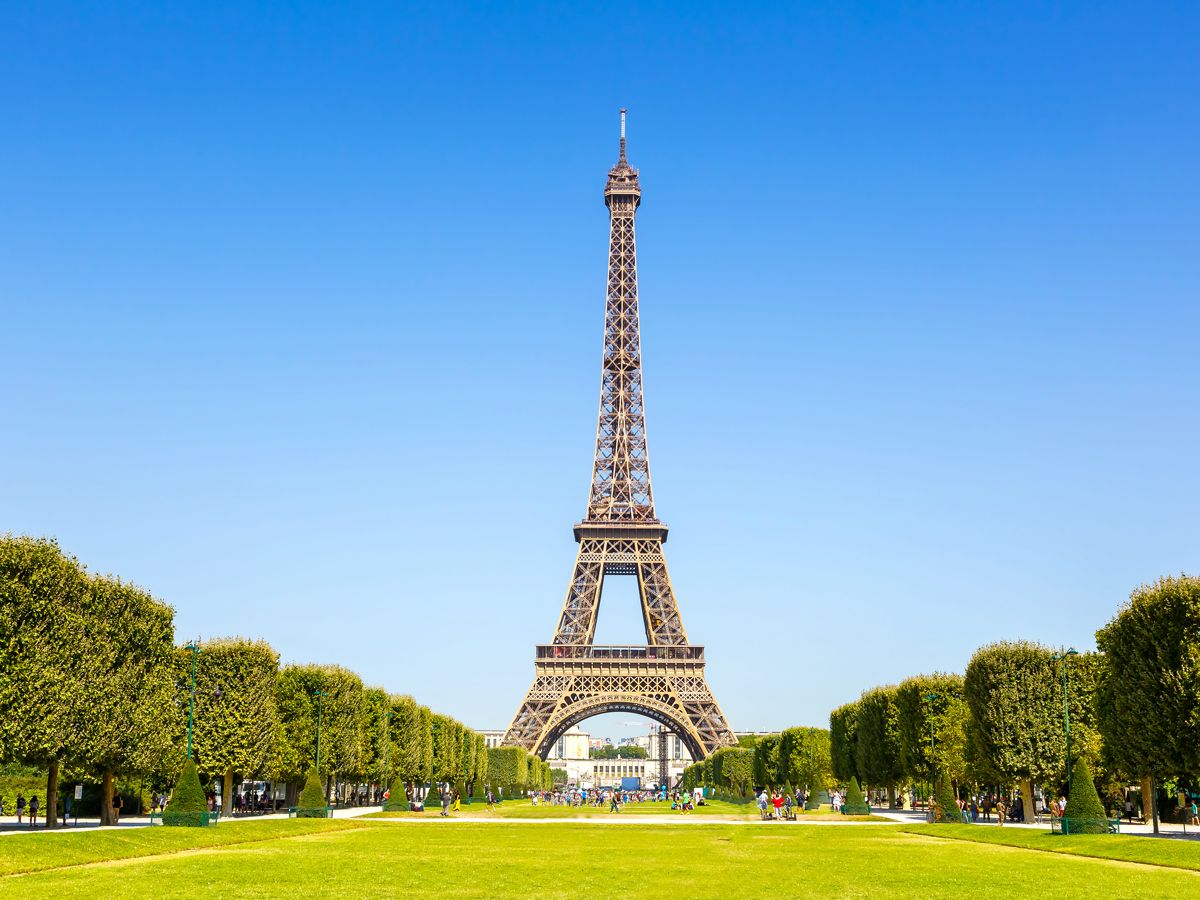
Did you know that the Eiffel Tower has donned eight different shades since it was first constructed? In 1888, the iconic structure was painted a vivid hue called Venetian red, which was applied at the workshop of its namesake designer, Gustave Eiffel. The next year, however, it was painted a different reddish-brown color for the 1889 world’s fair. In 1892, the tower received a coat of ochre-brown, and in 1899, just before the 1900 world’s fair, Gustave Eiffel decided it should be yellow — five gradient shades to be exact, ranging from light yellow at the top to orange-yellow at the base. 

Interestingly, the Eiffel Tower was also designed to be temporary. When plans changed and it became a permanent fixture in 1907, Gustave Eiffel chose another yellow-brown hue that lasted for 47 years, until a reddish-brown color was chosen in 1954. In 1968, the iconic “Eiffel Tower Brown” was born. The bronze-like hue lasted 50 years and harmonized with the iconic Haussmann-style apartment buildings that are popular across Paris. 

The tower got its most recent makeover in 2019 in anticipation of the 2024 Summer Olympics, changing back to the yellow-brown color that Gustave Eiffel decided to use when it became a lasting beacon of Paris at the turn of the 20th century. 

Statue of Liberty – New York, New York

Tourists gazing up at the Statue of Liberty in New York Harbor
Credit: Ekkachai Pholrojpanya/ Moment via Getty Images 

The Statue of Liberty is arguably America’s most treasured landmark, but it didn’t always have its famous green patina. Designed by French sculptor Frédéric-Auguste Bartholdi, Lady Liberty was gifted to the United States to ​​commemorate a friendship with France and the two nations’ shared ideals of liberty. 

When she was unveiled in 1886, the copper-clad statue was simply the color of copper — a glimmering reddish-brown, similar to the color of a penny. When the statue was placed on Liberty Island in New York Harbor, the copper coating began to oxidize as it was exposed to the elements, resulting in the blue-green hue we recognize today. The patina actually acts as a protective layer, preventing further corrosion of the copper beneath.

Pyramids of Giza – Egypt

The Pyramids of Giza amid desert landscape of Egypt
Credit: karimhesham/ iStock via Getty Images Plus 

On the west bank of the Nile River near Al-Jīzah (Giza) in northern Egypt, travelers can still witness one of the original Seven Wonders of the World — the only one that remains standing. For nearly 4,000 years after its completion in approximately 2560 BCE, the Great Pyramid was the tallest human-made structure in the world. It’s one of three magnificent pyramids on the site that date back to Egypt’s fourth dynasty. 

Today, the pyramids are so old and weathered that they have the same sandy appearance of the surrounding desert. Many visitors don’t realize that the pyramids were once a gleaming white. They were originally encased in smooth, polished white limestone blocks, which have faded over time. Historians also speculate that the Great Pyramid once had a pyramidion or capstone made of gold or covered in gold or electrum (a gold and silver alloy).

Colosseum – Rome, Italy

View of the interior of Rome's Colosseum from upper levels
Credit: boerescul/ iStock via Getty Images Plus 

The Colosseum of Rome, another weathered ancient ruin, also once had a more opulent appearance. Though the landmark was originally encased in glistening white travertine marble, it was removed over time and used for other construction projects, such as St. Peter’s Basilica in Vatican City. 

The marble was attached to the underlying structure with iron clamps and pins, which were also removed — leaving the holes that we see today. Inside the Colosseum were intricate carvings, statues, precious stones, and gold accents that were looted over time. Interestingly, on several occasions dating back to the third century BCE, the Colosseum was also filled with water to host mock naval sea battles. 

Hollywood Sign – Los Angeles, California

The Hollywood sign on hillside in Los Angeles, California
Credit: Christian Adams/ The Image Bank Unreleased via Getty Images 

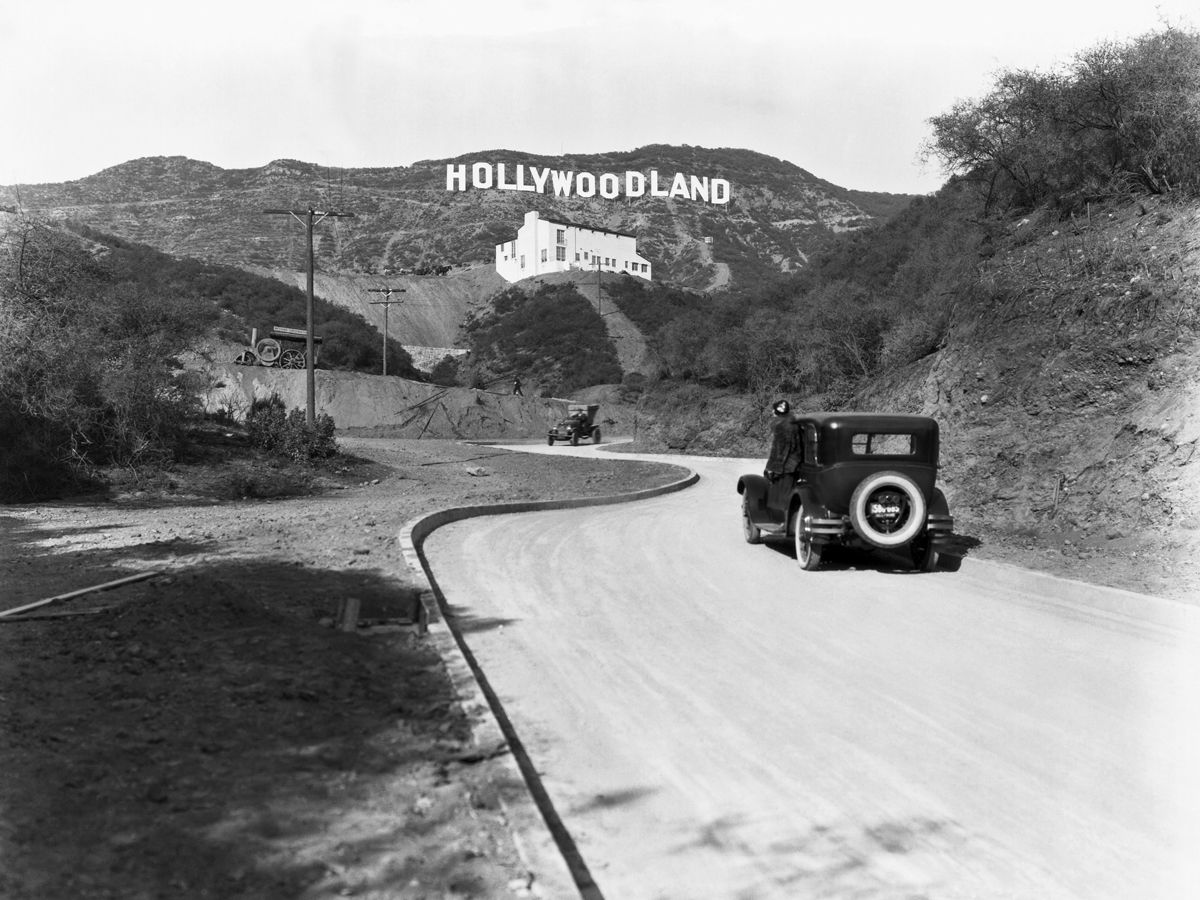
Although it’s now one of California’s most famous landmarks, the Hollywood Sign wasn’t intended to be a permanent fixture in the Hollywood Hills. In 1923, a company called Hollywoodland Property started selling homes and plots of land in the Santa Monica Mountains and created the sign, which originally read “Hollywoodland” as an advertisement. The original sign was 800 feet long and 50 feet tall and featured 4,000 light bulbs to illuminate the letters at night. 

The sign was only supposed to remain standing for a year and a half, but it towered over the hills until 1949, when residents complained of its disrepair and demanded it be removed. Instead, the Hollywood Chamber of Commerce repaired and modified the sign, dropping the “land” in Hollywoodland. It became damaged yet again and almost came down permanently in 1978, but thanks to famed Playboy publisher Hugh Hefner, who helped raise $250,000 for its refurbishment, the beloved landmark has stayed in Tinseltown ever since. 

Post Banner Image
Tips

Where To Buy the Suitcases Pilots Use

By Rachel Gresh
Read time: 4 minutes
August 13, 2025
Updated: October 2, 2025

Where To Buy the Suitcases Pilots Use

By Rachel Gresh
Author
Rachel Gresh
Rachel is a Washington, D.C.–based travel and lifestyle writer with roots in the Great Lakes region. When she’s not writing for publications such as The Discoverer and Interesting Facts, you’ll find her wandering through museums or exploring destinations off the beaten path.

Luggage mishaps — broken wheels, bent handles, busted zippers — are all too common in airport terminals. But while ordinary travelers wrestle with worn-out bags, pilots and flight crews seem to glide through airports with ease. Their secret? Durable, no-nonsense luggage designed to survive the rigors of frequent air travel. While they often come at a higher price tag, they’re built to last — and yes, you can buy them, too.

Travelpro Luggage

Product image of Travelpro Rollaboard suitcase
Photo credit: Image courtesy of Travelpro Luggage 

In 1987, pilot Robert Plath invented the first upright, wheeled luggage with a telescoping handle to make travel easier for pilots and flight crews, forever changing the luggage game. Today, Travelpro, the company he founded, offers over a dozen variations of the original Rollaboard, including backpacks, garment bags, and the classic wheeled carry-on.

Travelpro, renowned for its durability and timeless design, is trusted by crews from over 90 airlines around the world, according to the company’s website. Many pilots favor the FlightCrew Professional Collection, but it’s not just for crew — it’s a favorite among avid travelers, too. All Travelpro luggage features the brand’s patented Precision Glide system, with 360-degree magnetic spinner wheels and an airline-grade aluminum handle for smooth maneuverability.
Briggs & Riley

Product image of Briggs & Riley roller suitcase
Photo credit: Image courtesy of Briggs & Riley

Briggs & Riley is known for its thoughtful designs and modern features. One standout is the brand’s CX expansion feature, a luggage compression system designed for fitting carry-on luggage into tight overhead bins. Another signature feature is the “outsider handle,” mounted on the exterior of the bag to create a flat interior packing space with no bumps or bars.

The brand’s Aircrew Essentials line is designed with flight crews in mind, but is also available to everyday travelers. The line offers a range of carry-on expandable spinners, including the popular Essential 22″ Carry-On Expandable Spinner, which fits the carry-on size requirements for most U.S. airlines. Backed by a lifetime guarantee that covers repairs or replacements, Briggs & Riley is often a top choice for flight crews for both design and durability. 
LuggageWorks

Product image of LuggageWorks suitcase
Photo credit: Image courtesy of LuggageWorks

Instead of bold colors or trendy designs, the luggage favored by flight crews tends to focus on function and durability, with useful compartments, expansion options, and sturdy handles. That’s certainly true of LuggageWorks, a crew luggage staple since 1989.
You’ll often see airline pilots carrying luggage from the brand’s Stealth Series. With strong aluminum frames, stainless steel handles, and ballistic nylon fabric shells, bags in this line are designed to last for over a decade. LuggageWorks also offers other collections, such as the sleek Aurora Series and the ultra-lightweight Carbon Series, plus custom monogramming, three-year warranties, and an in-house repair department.

Related: The Luggage and Travel Gear Our Editors Swear By

Brightline Bags

Product image of Brightline Bags gear bag
Photo credit: Image courtesy of Brightline Bags

BrightLine Bags is another go-to choice among pilots and flight crews seeking a customizable carry-on bag. The brand’s FLEX System is a modular design that lets users build their own bag by attaching or detaching zippered compartments based on the needs of each trip. It’s essentially multiple bags in one.

The B18 HANGAR Modular Gear Bag was originally designed as an overnight flight bag for aviators. This set can be configured into eight different bag combinations using the included modules, with even more options available by adding extra components. With special modules for cameras, drones, and other travel equipment, BrightLine’s modular system offers impressive versatility for carry-on bags. 

StrongBags

Product image of StrongBags roller suitcase
Photo credit: Image courtesy of StrongBags

Southwest Airlines pilot Ethan Fisher created StrongBags when he kept finding that his travel gear wasn’t up to his rigorous travel schedule. Customers are encouraged to take StrongBags on the road to see if they meet their needs with the company’s 30-day risk-free guarantee. While the brand offers exclusive discounts to airline employees, its gear is available to all travelers.

StrongBags roller luggage is available in multiple sizes, ranging from compact 20-inch carry-ons to spacious 25-inch checked bags. The popular Vortex Voyager 22 Flight Crew Roller Luggage is built to withstand even the most demanding flight schedules. Its exterior fabric is made from Cordura Ballistic Nylon, initially developed for military body armor. Other key features include smooth-gliding wheels, stainless steel zippers, and optional custom embroidery. The brand’s carry-on cooler bags — designed to stay cold for up to 48 hours — are also popular with pilots and flight crew.

Featured image credit: Svitlana Hulko/ iStock via Getty Images Plus 

Post Banner Image
Culture

5 Colors That Have Different Connotations Abroad

By Michael Nordine
Read time: 4 minutes
August 13, 2025
Updated: August 13, 2025

5 Colors That Have Different Connotations Abroad

By Michael Nordine
Author
Michael Nordine
Michael is a staff writer for Daily Passport and film critic who writes the weekly newsletter Movie Brief. His writing and criticism have also appeared in the Los Angeles Times, Variety, and the Washington Post, among others. A native Angeleno, his favorite countries to visit are Norway and Japan.

If red is the color of passion and black is the color of mourning, what about yellow and green? The answer depends on where you live. Different colors have different connotations across the globe, with some having completely different meanings elsewhere than what Americans are used to. Here are five colors with fascinating symbolisms abroad.

Yellow – Royalty

Yellow roofs in Beijing's Forbidden City
Credit: zhaojiankang/ iStock via Getty Images Plus

Because of its association with royalty in general and the emperor in particular, yellow used to be forbidden among regular Chinese people — commoners weren’t allowed to wear it at all. Huangdi, a mythological sovereign and folk hero who is credited with leading the country toward civilization, is also known as the Yellow Emperor. An emperor’s long pao (dragon robe) was often yellow, as were the imperial palace’s glazed tiles, utensils, and other objects. The royal color still receives pride of place at traditional festivals, not least because it’s no longer forbidden to wear.

Red – Weddings

Close-up image of traditional red Mehndi on wedding guest
Credit: PeopleImages/ iStock via Getty Images Plus

Red has many different associations around the world. In the former Soviet Union, it’s tied to communism, while in China, red signifies good luck and prosperity (hence the iconic envelopes you’ve seen at Lunar New Year parties and other celebrations). It’s also the color brides traditionally wear to their weddings in China, Taiwan, India, Pakistan, and Sudan, among other countries. The reason for wearing red is the same: It’s considered the most auspicious color and therefore the one you want associated with your nuptials. Suffice to say that certain Game of Thrones viewers probably had a very different idea of what the Red Wedding entailed.

Green – Superstition

Aerial view of tropical island
Credit: graphixel/ E+ via Getty Images

In Javanese and Sundanese mythology, Nyi Roro Kidul — the Queen of the Southern Sea — is sometimes depicted as a mermaid and other times portrayed as having the lower half of a snake. She represents the Indian Ocean in all its majestic power. Because green is her favorite color, wearing green is considered not only bad luck but also an insult on some parts of Java’s southern coast. To do so is, according to legend, to risk being swallowed by the sea or conscripted as part of Nyi Roro Kidul’s unwilling army.

Related: 5 American Customs That Are Considered Rude Abroad

Blue – The Virgin Mary

Crowds gather behind statue of the Virgin Mary
Credit: Anadolu via Getty Images 

The world’s favorite color has countless connotations, with one of its most spiritual associations being especially prevalent in Central and South America. In Christianity, blue evokes the purity of the heavenly skies as well as that of the Virgin Mary, who’s often depicted cloaked in blue. Because the color is rare in nature on land but omnipresent in the sky, it has an elusive quality befitting the queen of heaven

There’s even a specific shade known as Marian blue, which has been the Virgin Mary’s “official color” since the fifth century. The blue pigment used for it in medieval and Renaissance art was originally derived from lapis lazuli, a stone imported from Afghanistan that, at the time, was more valuable than gold. To portray Mary in blue was therefore to glorify her in a way that few other figures were worthy of.

White – Mourning

White dresses hanging on rack
Credit: The Good Brigade/ DigitalVision via Getty Images

Though black is the traditional color of mourning in much of the Western world, the opposite is true elsewhere. One example is Korea, where white symbolizes grief and is the color of traditional funeral attire, especially for family members. It’s also the color of mourning in China, where white is associated with death and purity.

Bonus: Pink – Donuts

Pink boxes filled with doughnuts
Credit: Andrew Valdivia/ Unsplash

This one is admittedly quite specific and may seem strange to anyone not familiar with Southern California, but its fascinating cultural history warrants an honorable mention. Donut boxes are traditionally pink in SoCal, thanks largely to the Cambodian refugees who fled the Khmer Rouge in the 1970s and arrived in Los Angeles and Orange County, where a number of them opened donut shops. One of the owners, seeking a cheaper alternative to the standard white boxes they used, asked their supplier if anything else was available. It turns out, pink boxes were, which was auspicious for two reasons: They were less expensive and close in hue to red, which, as mentioned above, is considered lucky in some cultures.

Post Banner Image
Outdoors

7 Must-See Natural Wonders in the Midwest

By Marissa Kozma
Read time: 4 minutes
August 13, 2025
Updated: August 19, 2025

7 Must-See Natural Wonders in the Midwest

By Marissa Kozma
Author
Marissa Kozma
Marissa is a cheap airfare aficionado who loves exploring offbeat destinations with her husband. Based in Los Angeles and Joshua Tree, Marissa has been featured in publications such as San Diego Magazine, Palm Springs Life Magazine, 303 Magazine, and Mountain Living.

Meandering trails with mountain vistas and pebbled coves surrounded by sandstone cliffs probably don’t come to mind when you think of the Midwest. This region of the United States is better known for its historic homesteads, rolling farmland, and mom-and-pop restaurants and shops, but the heart of America is also an incredible place to experience the great outdoors — if you know where to look. From steep canyons to cascading waterfalls, here are seven must-see Midwestern natural wonders, from Minnesota to Ohio.

Sleeping Bear Dunes National Lakeshore – Michigan

Wooden pathway over sand overlooking lake at Sleeping Bear Dunes National Lakeshore in Michigan
Credit: Gary Ennis/ iStock via Getty Images Plus

With sand bluffs that tower up to 450 feet above Lake Michigan on Michigan’s Lower Peninsula, Sleeping Bear Dunes National Lakeshore is home to the world’s largest collection of freshwater sand dunes. The dunes were shaped by glaciers over millions of years and are a stunning sight in any season. One of the park’s highlights is the famous Dune Climb, a strenuous yet rewarding climb up a 284-foot-tall sand dune that can take up to four hours to complete. The lakeshore is also popular for its beautiful campgrounds, Pierce Stocking Scenic Drive, canoeing on the Crystal and Platte rivers, and forested trails for hiking, cross-country skiing, biking, and snowshoeing. 

Chimney Rock National Historic Site – Nebraska

Chimney Rock towering over the plains of Nebraska
Credit: Wirestock/ iStock via Getty Images Plus

Jutting out from the flat plains of Nebraska is Chimney Rock, one of the most historically significant natural landmarks in the Midwest. Rising 325 feet above the North Platte River valley, the stone spire is visible for miles and was an important marker for travelers on the Oregon, California, and Mormon trails in the 19th century. According to the National Park Service, the landmark was mentioned in more emigrant diaries than any other landmark on the journey to the American West. And long before westward expansion, the area around Chimney Rock was home to Indigenous groups such as the Lakota and Cheyenne peoples, whom you can learn more about at the adjacent visitor center. 

Maquoketa Caves State Park – Iowa

Steps leading to cave at Maquoketa Caves State Park in Iowa
Credit: scgerding/ iStock via Getty Images Plus

One of Iowa’s most unique attractions, Maquoketa Caves State Park features a winding 6-mile trail system that welcomes first-time and experienced spelunkers alike. A popular destination for hikers since the 1860s, the state park features a number of unusual geologic formations, including a 1,100-foot cavern nicknamed “Dancehall Cave” and a scenic natural bridge hovering 50 feet over a creek. If you’re planning a trip, keep in mind that the caves in the park are closed every year from October 15 to April 15 as they are a hibernaculum for overwintering bats. 

Apostle Islands National Lakeshore – Wisconsin

Caves along the Apostle Islands National Lakeshore, Wisconsin
Credit: zimmytws/ iStock via Getty Images Plus

Located at the northern tip of Wisconsin’s Bayfield Peninsula, the Apostle Islands are located within the ancestral homeland of the Indigenous Ojibwe peoples. With 21 islands in total and a 12-mile shoreline along Lake Superior, the park is ideal for kayaking, boating, camping, and even exploring ice caves in winter. Established in 1970, the national lakeshore has the largest collection of lighthouses in the National Park System (with a total of nine). Visitors flock to its sandy coves and stunning caves on the water, which are particularly mesmerizing at sunrise and sunset. 

Boundary Waters Canoe Area Wilderness – Minnesota

Lake and forested shoreline in Boundary Waters Canoe Area Wilderness in Minnesota
Credit: GeorgePeters/ E+ via Getty Images

At more than 1 million acres, Boundary Waters Canoe Area Wilderness has so much to offer that it’s nearly impossible to cover it all. Located on the border between Ontario, Canada, and Minnesota, the pristine park comprises woodlands, rocky coves, glacial lakes, towering cliffs, and canyons in the Superior National Forest. The area contains more than 1,200 miles of canoe routes, 12 hiking trails, and more than 2,000 designated campsites, which means those seeking solitude in nature have plenty of options. Just be sure to pack bear spray, as wildlife encounters are common.

Monument Rocks – Kansas

Natural arch and rock formations of Monument Rocks, Kansas
Credit: Jessica Snow/ iStock via Getty Images Plus

It’s not every day that you’ll come across massive chalk formations in the middle of the Midwest. But, indeed, the Monument Rocks in Gove County, Kansas, are an otherworldly sight — particularly at dawn and dusk, when the pale limestone formations stand out on the Kansas prairie. If you’re driving through the Sunflower State, it’s well worth stopping to take a look at this unusual natural wonder, but be aware that climbing on the rocks is not permitted. 

Hocking Hills State Park – Ohio

Footbridge over waterfall in Hocking Hills State Park in Ohio
Credit: David Arment/ iStock via Getty Images Plus

Picturesque in every season, from ice formations in winter to vivid fall foliage, Hocking Hills State Park is an Ohio gem that locals love. Featuring a series of cascades ranging in size, the park is popular for waterfall hikes through ravines and hemlock-shaded gorges. Other activities include stargazing at John Glenn Astronomy Park, rock climbing, zip-lining, kayaking, canoeing, fishing, and rappelling. The park’s Ash Cave is the largest recess cave in the state; another highlight is the “Rock House,” a tunnel-like corridor situated up a 150-foot cliff.