





Post Banner Image
Outdoors

5 of America’s Most Scenic Ferry Rides

By Fiona Mokry
Read time: 4 minutes
August 22, 2025
Updated: August 22, 2025

5 of America’s Most Scenic Ferry Rides

By Fiona Mokry
Author
Fiona Mokry
Fiona has spent her career exploring the world and working in the travel industry, turning her lifelong passion into a profession. From planning custom trips to sharing stories as a travel writer for publications such as The Discoverer, she’s all about helping others experience the world in a deeper, more meaningful way.

Some of the most unforgettable views in the U.S. aren’t visible from highways or hiking trails — they’re seen from the deck of a ferry. Whether you’re gliding past the Statue of Liberty or cruising through remote Alaskan landscapes, these scenic rides turn getting from point A to point B into part of the adventure. Check out five of the most scenic ferry rides in America.

Staten Island Ferry – New York, New York

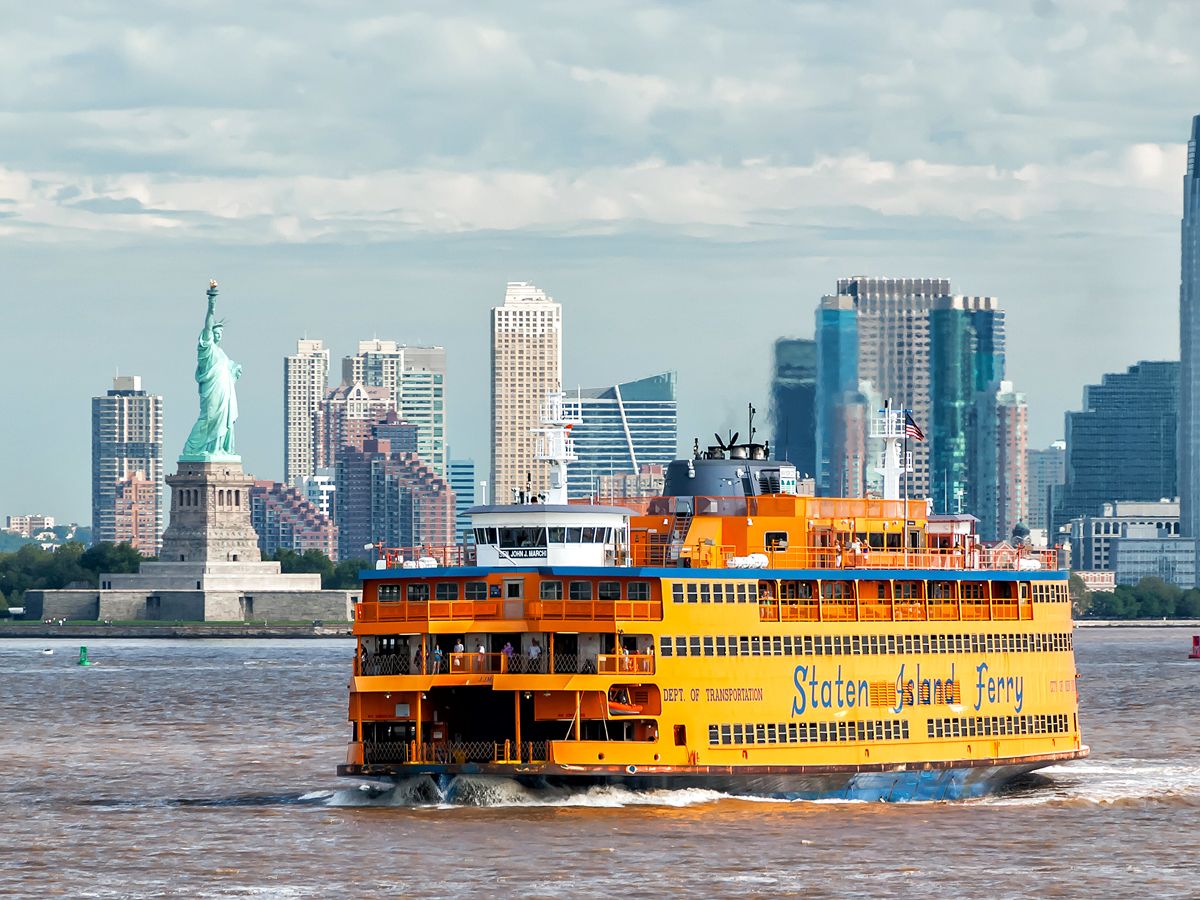
Staten Island Ferry with Statue of Liberty and Manhattan skyline in background
Credit: Thomas Kurmeier/ Moment Open via Getty Images 

Skip the pricey harbor cruises and head to Whitehall Terminal in Lower Manhattan, where the Staten Island Ferry is ready to take you on a scenic — and better yet, free — ride across New York Harbor. Running seven days a week, 365 days a year, this free commuter ferry happens to offer some of New York City’s best views, including the Statue of Liberty, Ellis Island, and the Verrazano-Narrows Bridge. The ferry runs between Staten Island and Manhattan, carrying nearly 22 million passengers each year with over 100 trips daily. It’s a quick 25-minute ride each way, but more than enough time to snap some great photos.

Casco Bay Ferry Lines – Portland, Maine

Casco Bay Lines ferry leaving terminal in Portland, Maine
Credit: jsnover/ iStock via Getty Images Plus 

There’s perhaps no better way to take in Maine’s classic coastal views than from the water — and a ferry ride past Portland’s busy harbor gives you a front-row seat. From historic lighthouses to rugged shorelines and passing lobster boats, the scenery is quintessentially New England.

Hop on one of the yellow-and-black Casco Bay Lines ferries from Commercial Street and cruise past it all while heading out to the islands just offshore. The 20-minute, $14 one-way ride to Peaks Island takes you to beaches, bike paths, restaurants, and plenty of serene coastal vibes. Other islands — such as Long Island, Little Diamond, and Chebeague — are just as easy (and affordable) to reach by ferry. 

Golden Gate Ferry – San Francisco, California

Golden Gate Ferry with Golden Gate Bridge in background
Credit: Dee Jolie/ Alamy Stock Photo 

Departing from the start of Market Street along the Embarcadero, the Golden Gate Ferry offers a quick and scenic journey across San Francisco Bay to popular day-trip destinations including Sausalito, Tiburon, Angel Island, and Larkspur in Marin County. Each ride takes about 30 minutes and costs $14 to $15.50 each way for adults, with discounted options for seniors, kids, and Clipper Card transit users.
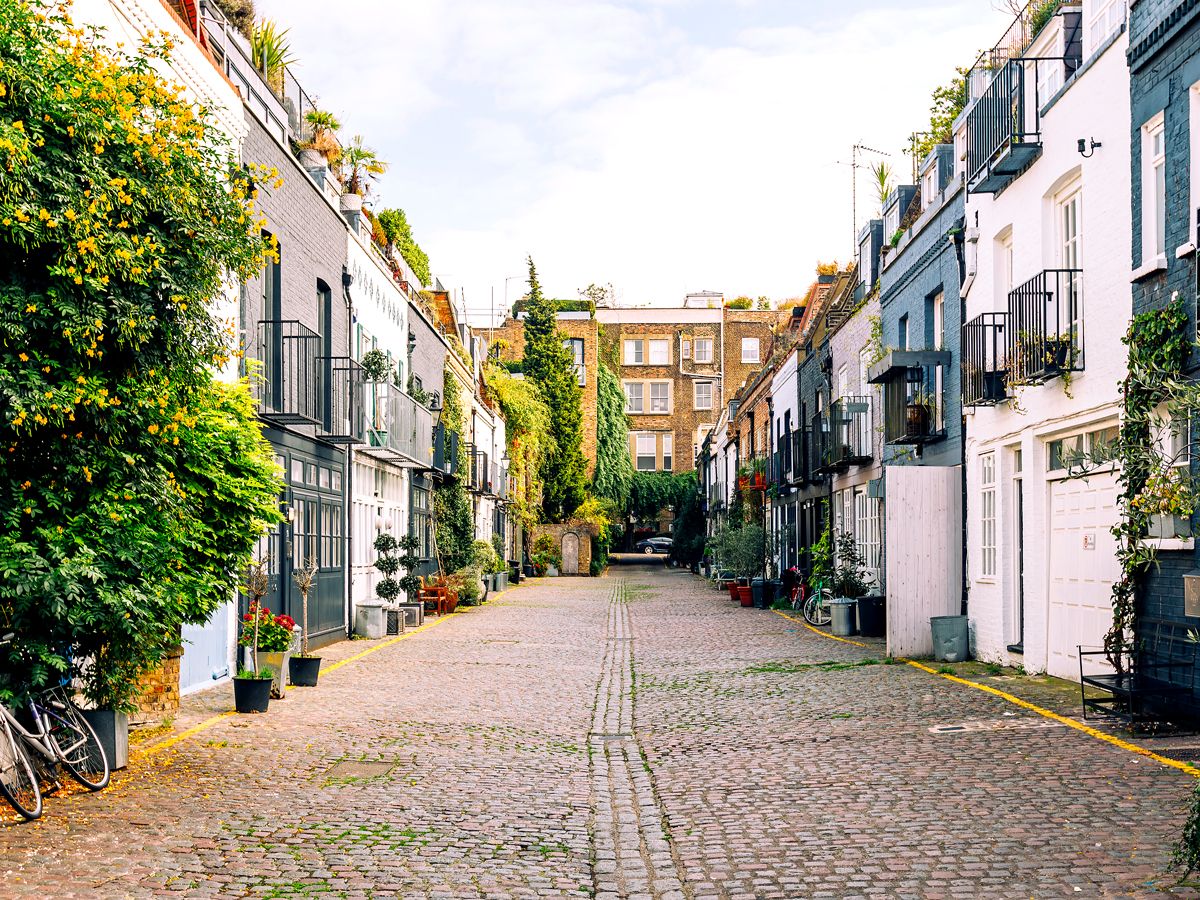
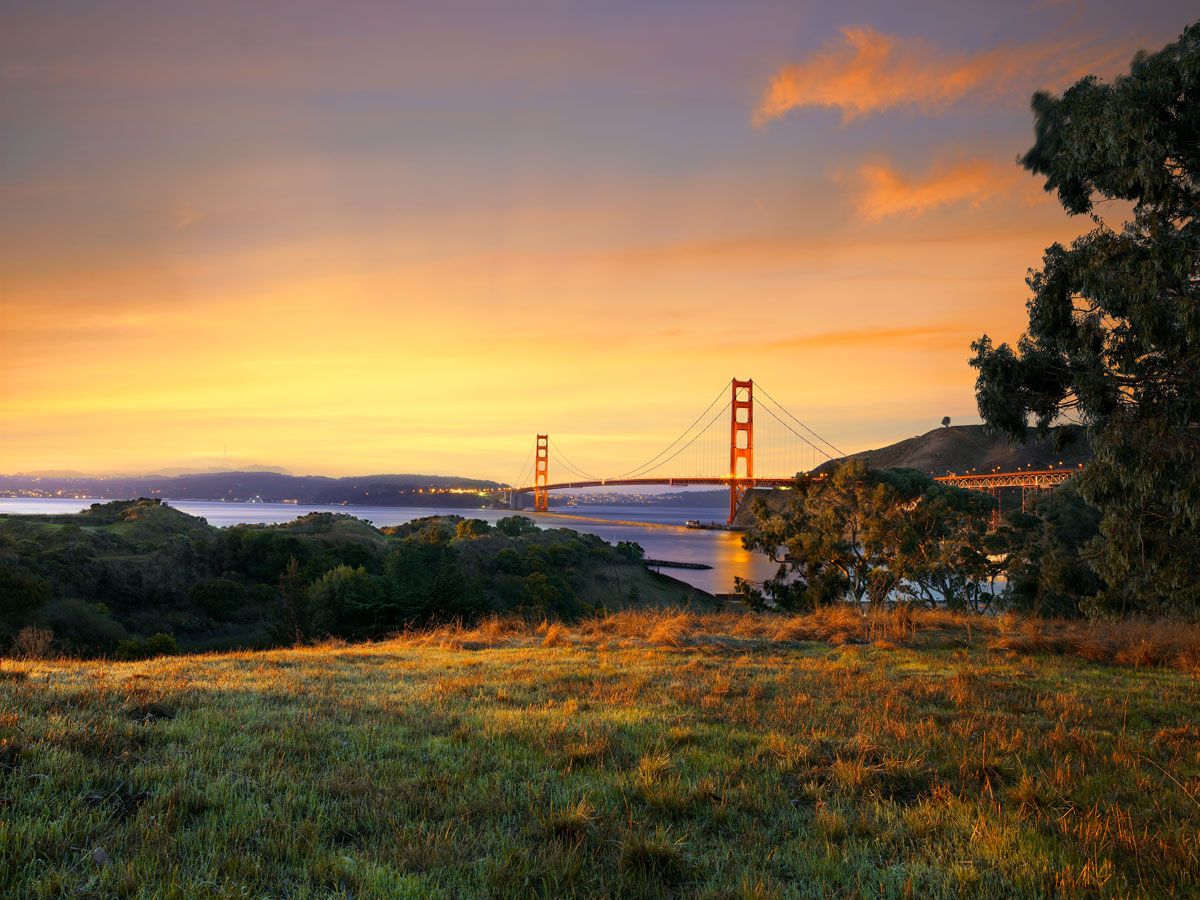
The ride treats passengers to sweeping views of the Golden Gate Bridge, Alcatraz, and the San Francisco skyline. Time it right, and you might even catch the sun setting behind the city’s iconic bridge — a spectacular way to cap any ferry ride. But many passengers turn the ferry ride into a full-day outing — you can hike or bike around Angel Island State Park, stroll Sausalito’s waterfront boardwalk, or explore Tiburon’s hidden gems and snap pictures at the panoramic lookout from the Hippie Tree.

Cape May-Lewes Ferry – New Jersey and Delaware

Cape May-Lewes Ferry turning into dock in Lewes, Delaware
Credit: Holcy/ iStock Editorial via Getty Images Plus

Traveling 17 miles across the Delaware Bay, the Cape May-Lewes Ferry runs daily between Cape May, New Jersey, and Lewes, Delaware. Keep your eyes peeled during the 85-minute ride for dolphins and whales off the bow, along with historic lighthouses and charming oceanside towns. On either end, oceanfront restaurants await with seafood dishes perfect for kicking off or wrapping up your day by the water. Adult fares are $10 each way.
Alaska Marine Highway System – Alaska

Ferry traveling on the Alaska Marine Highway System
Credit: Image Source Limited/ Alamy Stock Photo 

Part commuter transit, part scenic cruise, the Alaska Marine Highway System is a network of ferries that offer an exceptional way to explore the rugged beauty of Alaska’s coastline. Spanning more than 3,500 miles and connecting 32 terminals, this ferry system — also designated a Scenic National Byway — connects many rural communities while also providing easy access to glacier tourism. 
With its northernmost port in Dutch Harbor, part of the remote Aleutian Islands, the system stretches all the way south to Bellingham, Washington. (The ferry from Bellingham to Ketchikan takes a whopping 38 hours.) Some of the coastal towns along the way aren’t even accessible by road, offering a rare glimpse into off-the-grid Alaskan life. On board, expect dramatic views of glaciers, fjords, snow-capped peaks, and even the occasional active volcano. Fares vary depending on the route.

Post Banner Image
Culture

15 College Towns That Double as Great Tourist Destinations

By Daily Passport Team
Read time: 11 minutes
August 22, 2025
Updated: March 3, 2026

15 College Towns That Double as Great Tourist Destinations

By Daily Passport Team
Author
Daily Passport Team
Daily Passport writers have been seen in publications such as National Geographic, Food & Wine, CBC, Condé Nast Traveler, and Business Insider. They're passionate about uncovering unique destinations and sharing expert tips with curious travelers.

The U.S. is home to nearly 4,000 colleges and universities, often situated on idyllic campuses that seem to leap straight out of the pages of a brochure. Many of them are located in equally gorgeous towns worthy of a visit in their own right — even if your student days are long gone. Explore 15 of the most beautiful U.S. college towns and cities and a few of the year-round activities you can enjoy at each one.

Ann Arbor, Michigan

University of Michigan campus in Ann Arbor
Credit: Nicholas Klein/ iStock via Getty Images Plus 

Although close enough to Detroit to be able to hop aboard an international flight, Ann Arbor is far enough from Motor City to have its own distinct character. College football is a big deal at the University of Michigan, and you’ll know when the Wolverines are playing by the crowds of avid fans pouring along the tree-lined streets to the stadium. The campus also has several excellent museums, as well as an arboretum and botanical gardens.

Winters can be harsh — this is Michigan, after all — but even in the snow, Ann Arbor is easy to navigate on foot or bike. After a day of cheering on the quarterback or working up a sweat outdoors, spend some time relaxing in one of downtown’s many bookshops before taking in a movie at the Michigan Theater and stopping in at one of Main Street’s many eateries.

Oxford, Ohio

Campus of the University of Miami in Oxford, Ohio
Credit: Matthew Kiernan/ Alamy Stock Photo 

A long way from the beaches of Florida, Miami University is located in the idyllic town of Oxford, Ohio. The college was once nicknamed the Yale of the West,” and the campus area certainly does conjure up images of New England with its red brick buildings and shady tree-lined streets.

The town is easily walkable, but in warm weather, locals head to Hueston Woods State Park for hiking, fishing, horse riding, or perhaps just lazing by the creek. Afterward, stop by the farmer’s market or one of the popular brunch locales (Patterson’s Café is a favorite). In the spring, local wineries all come to town for the annual wine festival, while summer evenings are filled with art gallery hops, outdoor music and movie screenings. Later in the year, as the winter evenings get longer, ice skating and Christmas festivities add to the charm of the irresistible college town.

Burlington, Vermont

Downtown Burlington, Vermont
Credit: DenisTangneyJr/ E+ via Getty Images 

Located a mile from Lake Champlain on a hill above downtown Burlington, the University of Vermont is ideally situated for visitors and students to take advantage of the surroundings any time of year. In the summer, rent a paddleboard and spend hours along the shoreline or go further afield for a hike in the Green Mountains at Mount Philo. In the winter months, Burlington is bursting with hygge, and when you’re ready to leave the cozy shops and breweries, there are several skiing areas nearby. Bolton Valley is a 25-minute drive, and Stowe is also less than an hour away. Don’t forget that Vermont is home to Ben and Jerry’s, and it’s always a good time to take a break for ice cream.

Boulder, Colorado

River in the mountains outside of Boulder, Colorado
Credit: SeanXu/ iStock via Getty Images Plus 

Few cities in the U.S. feel quite as utopian as Boulder. The clean, crisp air and surrounding mountains create an invigorating vibe for numerous outdoor activities around town. Time your visit to a University of Colorado Buffs football game and enjoy an epic view of the Flatirons from the stadium. Enjoy the pregame festivities at one of the numerous breweries, preferably on the patio so you can soak up the Colorado sunshine. (Avery or Twisted Pine are two solid choices.)

For more active pursuits, hike the popular Chautauqua Meadow trail or kayak on Boulder Creek in summer. When it comes to winter, many of the students (and visitors) in town are drawn to the ease of access to skiing and snowboarding in the area — a number of world-class ski resorts are within a two-hour drive of Boulder.

Boone, North Carolina

Aerial view of Boone, North Carolina
Credit: Sean Pavone/ iStock via Getty Images Plus 

Deep in the Blue Ridge Mountains, Boone feels like a true escape from the grid. As the home of Appalachian State University, the city boasts a mix of mountain and college cultures, resulting in an eclectic, inviting atmosphere. For an easy hike, try Howard’s Knob, a mountain which sits in the middle of Boone. A more difficult option is the trek to the Grandfather’s Bridge — a mile-high suspension bridge that offers 360-degree views of the mountains. On your return to town, shop and explore King Street and dine on modern Southern food (Vidalia is a favorite).

Madison, Wisconsin

Road leading to Wisconsin State Capitol in Madison
Credit: Eric Fehrenbacher/ iStock via Getty Images Plus 

Home to the state capital and the University of Wisconsin-Madison campus, Madison is situated on an isthmus between two lakes. In the summertime, visitors can rent a kayak and paddle up to one of the many waterfront restaurants. Or, if you can brave the cold, you can even rent snowshoes to walk along the lake in winter.

Locals flock to the Dane County Farmers Market on Saturdays from April to November for local wares, produce, and flowers. If you visit, also consider taking a tour of the majestic state capitol building or the impressive botanical gardens while you’re in town. One local specialty you can’t leave without trying is fried cheese curds — you can find them at most local breweries.

Related: 10 U.S. State Capitals Tourists Always Overlook

Annapolis, Maryland

Sailboat docked in marina in Annapolis, Maryland
Credit: KenWiedemann/ E+ via Getty Images 

Home to the United States Naval Academy, Annapolis, the capital of Maryland, is a historic city located along the Chesapeake Bay. When visiting, be sure to take a leisurely stroll and peruse the boutiques downtown and grab a drink along the water, but another unique way to take in the surroundings is a sailing cruise around the harbor with Schooner Woodwind. (For a cheaper option, grab a water taxi between your destinations).

Extend your afternoon by visiting the Naval Academy —  if you happen to visit on a weekend, you might be lucky enough to catch a wedding party outside the chapel holding their swords high for the happy couple. No visit to Annapolis is complete without a crab feast, and there are several spots around town like Cantler’s and Mike’s Crab House for a down-home meal with mallets.

Danville, Kentucky

Statue in Danville, Kentucky
Credit: Barry Fowler/ Alamy Stock Photo 

About an hour south of Lexington, Danville frequently features in lists of the best small towns in the nation. The presence of Centre College means residents and visitors can enjoy a packed calendar of performing arts at the Norton Center. In summer, take in a show at the outdoor Pioneer Playhouse, where several Hollywood stars got their start. The town hosts several popular festivals each year, including the Great American Brass Band Festival in June. Throughout the year, Main Street is buzzing with small shops, pubs, and restaurants; the town even has a dollhouse museum. Exploring the charming downtown, you’ll feel as if you’ve gone back to a simpler time.  

Missoula, Montana

Bridge over Clark Fork River in Missoula, Montana
Credit: DenisTangneyJr/ iStock via Getty Images Plus 

If Montana conjures up images of open pastures and fly fishing, you’ll be in for a surprise when you see just how much more the charming city of Missoula — home to the University of Montana — has to offer. To be sure, the fishing is magnificent; the Clark Fork River was the setting for all of those idyllic river scenes in A River Runs Through It. In the summer, take a hike to the top of Mount Sentinel, marked by the giant M on the hillside overlooking the town, or head to the 61,000 acres of Rattlesnake National Recreation Area and Wilderness.

Once winter comes, the mountain bike trails of the Snowbowl are transformed into cross-country skiing trails. On the edge of town, the Historical Museum at Fort Missoula showcases a number of preserved buildings that chart the town’s history, from pioneer days to when the fort was used as an internment camp during World War II. Meanwhile, downtown is home to the children’s theater, numerous art galleries, and plenty of restaurants and pubs. Sit by the river, take in the mountain air, and ponder the benefits of staying here a little longer.

Ithaca, New York

Waterfall near Ithaca, New York
Credit: Paul Massie Photography/ iStock via Getty Images Plus 

Located in upstate New York, the college town of Ithaca makes the most of all four seasons. This part of the state has access to several state parks and opportunities for skiing and skating in the winter, fabulous fall foliage, and hiking and water sports in the warmer months. Much of the town’s population attends or works at Cornell University, and so there is a strong sense of community here, plus numerous options for live entertainment and nightlife.

Despite the brewpubs, shops, and pedestrian streets of Victorian houses downtown, the star attraction of Ithaca is its proximity to so many outdoor activities. It overlooks Cayuga Lake, the longest of the region’s Finger Lakes. From swimming and boating on its waters to hiking and climbing along its banks, there are many welcome escapes from hitting the books.

Santa Fe, New Mexico

Downtown Santa Fe, New Mexico
Credit: Sean Pavone/ iStock via Getty Images Plus 

In addition to being the home of St. John’s College, Santa Fe is the state capital of New Mexico. As a result, the small city is alive with culture and history. The mountains surrounding Santa Fe provide some spectacular views, but ultimately it is the town’s funky artistic vibe that attracts so many people, with more than 250 art galleries, museums, and markets to visit.

Choose from those dedicated to Georgia O’Keeffe, International Folk Art, Indian Arts and Culture, Meow Wolf, and many other options. After spending the day rejuvenating your creative spirit, indulge your taste buds at one of Santa Fe’s many charming local restaurants, or take a culinary tour of the town to learn about the Spanish and Indigenous influences in the regional cuisine.

Gainesville, Florida

Downtown Gainesville, Florida
Credit: benedek/ iStock via Getty Images Plus 

With beautiful weather, year-round blue skies, and the sprawling Florida wetlands surrounding town, Gainesville is proof that inland parts of the state have just as much to offer as the coast. Spanish moss drapes elegantly across the branches of the city’s trees, creating a gauzy tropical effect that complements the stately Southern buildings.

At the southern edge of town, Paynes Prairie Preserve State Park, established in 1971, is home to several hundred species of birds, as well as bison, wild horses, and (of course) gators. At the opposite end of town is Devil’s Millhopper Geological State Park, a miniature rainforest that contains a number of precious fossil remains. The Butterfly Rainforest at the Florida Museum of Natural History is also a great option for families.

Rome, Georgia

Main drag in Rome, Georgia
Credit: Philip Scalia/ Alamy Stock Photo 

Rome sits near the center of the triangle formed by Chattanooga, Tennessee; Huntsville, Alabama; and Atlanta, Georgia. The college town — home to the likes of Berry College and Shorter University — has undergone an impressive revitalization in recent years. The result is a city that is filled with galleries, shops, restaurants, and historic buildings.

Any visitor should make a stop by City Hall to see the Romulus and Remus statue that stands out front. The bronze statue is an exact replica of the Etruscan original in Rome, Italy, and was a gift from the original city of Rome in 1929. This Rome also has a fascinating history, with its location on the Trail of Tears. Chieftain’s Museum was once owned by Cherokee leader Major Ridge; today, it operates as a museum depicting the history of the Cherokee people in the area. Visitors can also take in America’s favorite pastime by watching the Rome Braves, the town’s minor league baseball team. 

Related: 15 U.S. City Names Borrowed From Other Countries

Chapel Hill, North Carolina

North Carolina Botanic Garden in Chapel Hill
Credit: Jason Pulley/ Alamy Stock Photo 

Chapel Hill combines great food, a lively downtown, gorgeous architecture, and good weather — making it a city that is much more than its (albeit impressive) college campus. If museums are your thing, you have equally excellent choices between art and science. When you’re done soaking up the culture, more than 700 acres of parkland make it easy to get some fresh air. Add another 1,000 acres with the North Carolina Botanical Garden and you might forget that Chapel Hill also happens to be a worldwide center for scientific research and development.

But there’s more to Chapel Hill than academic research and the outdoors — the city has become is a rising food hotspot. Bon Appetit previously called it “America’s Foodiest Small Town” and, befitting that status, Chapel Hill continues to host a plethora of food festivals throughout the year. As the sun goes down, head to Franklin Street to take in some live entertainment, local brews, wood-fired pizza, or some Turkish delights.

Sewanee, Tennessee

All Saints' Chapel in Sewanee, Tennessee
Credit: Wirestock/ iStock via Getty Images Plus 

About an hour’s drive northwest of Chattanooga, the small community of Sewanee is hidden in the remote forests of Tennessee. It’s a popular destination for writers who come to attend workshops at the University of the South (otherwise known simply as Sewanee), but there is also much to offer those seeking a little peace and quiet surrounded by nature.

The university is the focal point of this small town, and the gothic campus begs to be explored. Another point of interest is the Cross, a striking memorial to those Sewanee graduates who died in World War I. After wandering through the campus, shop for a few local gifts at the Lemon Fair or stop for a bite at the Blue Chair. Hikers can meander along the Mountain Goat Trail, or make the quick trip to South Cumberland State Park for panoramic views.

Related: 11 University Campuses That Double as Architectural Masterpieces
Post Banner Image
Culture

This Fairy-Tale Castle Just Earned UNESCO Status

By Rachel Gresh
Read time: 5 minutes
August 22, 2025
Updated: August 22, 2025

This Fairy-Tale Castle Just Earned UNESCO Status

By Rachel Gresh
Author
Rachel Gresh
Rachel is a Washington, D.C.–based travel and lifestyle writer with roots in the Great Lakes region. When she’s not writing for publications such as The Discoverer and Interesting Facts, you’ll find her wandering through museums or exploring destinations off the beaten path.

Travelers now have 26 new reasons to pack their suitcases. Last month, the UNESCO World Heritage Committee wrapped up its 47th session in Paris, France, where they chose 26 new cultural and natural properties to be added to UNESCO’s World Heritage List. This brings the total to a whopping 1,248 sites of cultural and natural significance across 170 countries. Among the new inductees is one of Europe’s most famous landmarks — a postcard-perfect fairy-tale castle tucked away in Germany’s Bavarian Alps.

History of Neuschwanstein Castle

Neuschwanstein Castle in Bavaria, Germany, surrounded by mountains
Credit: bluejayphoto/ iStock Editorial via Getty Images Plus

You’ve seen it on postcards, in travel blogs, and even a version of it at Disneyland: Neuschwanstein has earned its place on the world’s stage as Germany’s most recognizable castle. Perched above the village of Schwangau, this 19th-century palace is now registered on the UNESCO World Heritage List. Neuschwanstein was the brainchild of “Mad” King Ludwig II, who gained his nickname for being one of Bavaria’s most eccentric rulers, known for his reclusive lifestyle and over-the-top architectural projects. Unfortunately, he did not live to see the completion of Neuschwanstein before he died in 1886.

The foundation for the palace was laid in September 1869 on the site of two earlier castles. The interior of the 65,000-square-foot castle was never finished; in fact, only about a dozen rooms have been completed since construction began. Following King Ludwig’s mysterious death in 1886, the castle opened to the public as a museum and has been enchanting visitors ever since.

Today, Neuschwanstein — unfinished rooms and all — ranks among the most popular tourist attractions in Europe. An estimated 1.4 million annual visitors come to admire its stunning architecture, Alpine views, and storied halls. Highlights of the castle include an elaborate two-story throne room modeled after a Byzantine basilica and Singers’ Hall, a lavish space that served as Ludwig’s monument to medieval legends. Even Walt Disney was captivated by Neuschwanstein’s fairy-tale charm — his visit to the castle famously inspired the design of Sleeping Beauty’s Castle in Disneyland.

Related: These Real-World Sites Inspired Disney Park Attractions

Additional Estates of King Ludwig II 

Aerial view of Herrenchiemsee Palace
Credit: aerial-photos.com/ Alamy Stock Photo 

Neuschwanstein might be the headliner, but it is not the only Ludwig landmark to join the UNESCO World Heritage List this year. Three additional Bavarian estates — Linderhof Palace, Herrenchiemsee Palace and Park, and the King’s House on Schachen — have also been recognized.

These opulent properties were constructed between 1864 and 1886, and like Neuschwanstein, opened as museums after Ludwig’s death. Reflecting the ruler’s unique architectural preferences, they draw inspiration from all things grand, romantic, or mythological, from the Palace of Versailles to German fairy tales, Richard Wagner’s operas, and the medieval Wartburg Castle.

Linderhof Palace

Estate and grounds of Linderhof Palace in Germany
Credit: Jean-Marc Pierard/ iStock Editorial via Getty Images Plus

Linderhof Palace is located in the Ettaler Forest of southwest Bavaria, about 30 miles east of Neuschwanstein Castle by car. Although it is the smallest of King Ludwig’s three palaces, it might be the most sentimental — it was the only palace completed before his death, making it the place where he spent most of his time.

The interior is decorated in the neo-Rococo style, with floor-to-ceiling embellishments and an elaborate peacock throne, complete with three bronze peacock statues and vibrantly colored silk cushions. Artisans in Munich and Paris designed the showstopping throne under the supervision of the king. Other highlights include an artificial dripstone cave known as the Venus Grotto, a shimmering Hall of Mirrors, and, surrounding the palace, the immaculate Linderhof Park, inspired by one of Ludwig’s favorite places, Versailles.

Herrenchiemsee Palace and Park

Herrenchiemsee Palace with reflection on lake
Credit: Andia/ Universal Images Group via Getty Images 

Herrenchiemsee Palace and Park might be Ludwig’s most regal creation. Situated on Chiemsee, Bavaria’s largest lake, the 600-acre island palace complex was the king’s largest architectural undertaking. The ruler built this palace as a “Temple of Fame” in honor of King Louis XIV of France, whom he greatly admired.

Herrenchiemsee is often referred to as the “Bavarian Versailles.” The island boasts a sprawling complex of palatial buildings, museums, and green spaces, including the Royal Palace, the King Ludwig II Museum, two art galleries within the Augustinian Monastery, and lush French-style gardens featuring fountains and walking paths. 

King’s House on Schachen

The King's House on Schachen perched on mountaintop
Credit: Matthias Riedinger/ Alamy Stock Photo 

The King’s House on Schachen is the most remote of Ludwig’s royal properties. This Alpine retreat isn’t a castle in the traditional sense; rather, it was inspired by the wooden chalets of Switzerland and designed for countryside relaxation. It was also the king’s favorite escape — he celebrated his birthday there each year on August 25.

Unlike Ludwig’s three palaces, King’s House on Schachen isn’t easily accessible by car. Situated at the foot of the Wetterstein massif at an altitude of 6,122 feet, the estate is accessible only by a six- to seven-hour hike (though Ludwig was taken there via horse carriage). For those willing to make the trek, the view of the surrounding Northern Limestone Alps is magical.

Other New UNESCO Entries for 2025

Landscape of Murujuga National Park in Australia
Credit: Nick Rains/ Corbis Documentary via Getty Images 

In addition to the extravagant works championed by King Ludwig,  more than 20 new cultural and natural wonders have been granted UNESCO World Heritage status this year, from ancient rock art to rainforest sanctuaries.

One standout addition is Australia’s Murujuga Cultural Landscape, famous for its collection of over 1 million Aboriginal petroglyphs. Older than the Pyramids of Giza, this area has been inhabited and preserved by the Ngarda-Ngarli peoples, a collective term for the five Traditional Owner groups of Murujuga, for the past 50,000 years.

In Mexico, the Wixárika Route, a sacred trail of 20 sites, winds across five states, connecting the Wixárika Indigenous peoples in their rituals and ceremonies. Also known as “Tatehuarí Huajuyé” or the “Path of Our Grandfather Fire,” it is one of the best representations of pre-Columbian routes still used in the Americas.

On the opposite side of the globe, China’s Xixia Imperial Tombs from the Xixia Dynasty (11th to 13th centuries) features honeycomb-shaped imperial tombs set against the backdrop of the southern Helan Mountains. It stands as the most intact archaeological site from the Xixia period.

Several natural wonders have also landed a spot on UNESCO’s list. Among this year’s newly protected landscapes are the Bijagós Islands in Guinea-Bissau, the Gola Rainforest National Park and Tiwai Island Wildlife Sanctuary in Sierra Leone, Møns Klint chalk cliffs in Denmark, and the Peruaçu River Canyon in Brazil.

Related: 7 Newly Added UNESCO Sites You Need To Visit
Post Banner Image
Tips

Why Are So Many Americans Retiring in Malta?

By Julia Hammond
Read time: 4 minutes
August 22, 2025
Updated: August 22, 2025

Why Are So Many Americans Retiring in Malta?

By Julia Hammond
Author
Julia Hammond
Julia is a U.K.-based travel writer whose work has been featured in The Independent, The Telegraph, The New Zealand Herald, and Culture Trip, among others. She’s an enthusiastic advocate for independent travel and a passionate geographer who has had the privilege of traveling to more than 130 countries in search of a story.

The Mediterranean island of Malta may be one of the smallest countries in the world, but as of late, it’s made big waves with American retirees looking for a new adventure, as seen on a recent segment by CBS Sunday Morning. Discover why Malta is so appealing as a retirement destination and what you might expect if you move to — or simply vacation in — this beautiful and often overlooked European country. 

English Is Widely Spoken

Waterfront restaurant patio with church in background in Malta
Credit: Florentino Arias Gonzalez/ iStock via Getty Images Plus 

According to a 2023 report from The Malta Independent, an impressive 96% of Maltese citizens understand at least some English, with more than 60% claiming advanced proficiency. The figure is actually higher than the percentage who claim to understand Maltese (90%). The widespread understanding of English means that making friends, joining clubs, and generally sourcing help when needed is much easier for American visitors or retirees. As communication is such an important part of assimilating into a new community — not least for the important stuff such as banking and health care — this should be welcome news to anyone from the U.S. hoping to retire to Malta. 

Low Cost of Living by E.U. Standards

Colorfully painted row homes in Malta
Credit: ewg3D/ iStock via Getty Images Plus 

Malta’s cost of living is about 8.4% less than the average cost of living in the European Union. Prices on the island are considerably lower than in countries such as Austria, France, and Ireland. They are on a par with other Mediterranean countries such as Spain, Italy, and Cyprus (though a little higher than in budget-friendly Portugal). For retirees on a fixed income, the cost of living is an attractive proposition, as the average monthly rent in Malta is €970 for a single person. Health care is also universal and significantly cheaper, costing around €50 per person per month — potentially leaving you with spare cash to spend on exploring your new surroundings.

Taxation Is Attractive 

Traditional architecture in Malta
Credit: travellaggio/ iStock via Getty Images Plus 

The Maltese government levies a flat rate of 15% on income. There’s also a treaty in place that ensures U.S. citizens do not pay tax twice on the same income, as long as they have made a minimum payment of €4,500 in income tax that year. In addition, permanent residents moving to Malta from a country outside the EU are exempt from paying customs duties on personal property, including household goods and cars, and don’t need to pay social security contributions (though you will not be eligible for public health care coverage and will need to obtain a private policy). If you’re thinking about making the move, be sure to consult an experienced financial adviser who can give you a clearer picture about the taxation details in Malta. 

Related: 6 Countries With No Income Tax

Sunny and Warm Weather

Crowded beach under sunny skies in Malta
Credit: helovi/ iStock via Getty Images Plus 

Malta enjoys one of the sunniest climates of Europe. You can expect an average of over 300 sunny days each year in this part of the Mediterranean. Summers are hot and dry, with temperatures regularly reaching the mid-to-upper 80s for extended periods. Spring and fall are more pleasant, particularly for hiking and other outdoor activities, and winters are typically mild. Winter is when most rain falls, though typically you’ll experience less than 4 inches of rain a month, even in the wettest months of December and January. And according to the UK’s Met Office, it hasn’t snowed in Malta since 1962. 

There’s Plenty To Do and See

Tourists taking photo of Mdina Gate in Malta
Credit: urbazon/ E+ via Getty Images

Retirement should be fun, so having plenty to do and see in the place you choose as your base is a must. Malta packs a lot into a relatively small area of 122 square miles. Historic cities such as Valletta and Mdina boast fascinating museums and a slew of cultural events, while the scenic countryside is littered with ancient ruins. The coastline is arguably Malta’s biggest draw, punctuated by picturesque fishing villages and dramatic natural landscapes that form a scenic backdrop to sea-based activities.

The Schengen Zone at Your Doorstep

Couple sitting on bench admiring the Swiss Alps
Credit: nycshooter/ E+ via Getty Images 

As part of the Schengen Agreement, Maltese residents are able to move freely to other member states in the EU. Basing yourself in Malta therefore opens up a wealth of sightseeing opportunities not only on the island but also in the wider European region. There are currently 29 European countries that are part of the Schengen Area, including popular destinations such as France, Iceland, and Switzerland. 

Related: What Is the Schengen Area? A Guide to Europe’s Border-Free Zone

How To Qualify for Retirement in Malta

Tourist walking down stairs to beach in Malta
Credit: elifilm/ iStock via Getty Images Plus 

Currently, there are two main pathways a U.S. citizen can qualify to retire in Malta, each with their own specific requirements:

  • Malta Retirement Program: Applicants to the Malta Retirement Program need to satisfy certain criteria. Crucially, they must be in receipt of a pension and not be seeking paid employment. However, philanthropic activities such as charity work are permitted.
  • Global Residence Program: Those seeking to retire in Malta with the intent to continue working could qualify for the country’s Global Residence Program. This is a five-year residence visa that requires that applicants have a stable income stream and can show proof of accommodation and evidence of a health insurance policy.
Post Banner Image
Tips

What To Know About the TSA’s New Family Screening Lines

By Peter Vanden Bos
Read time: 4 minutes
August 22, 2025
Updated: August 22, 2025

What To Know About the TSA’s New Family Screening Lines

By Peter Vanden Bos
Author
Peter Vanden Bos
Peter is a Toronto-based journalist, editor, content strategist, and self-professed avgeek with 15 years of experience covering all things travel. Prior to joining Daily Passport, he oversaw newsletter publication for Travelzoo. His favorite destinations to explore include Japan, France, Chile, New Zealand, and his adopted home country of Canada.

The memories we make on family vacations are priceless, but getting through the airport with young kids also comes with its fair share of stress. If you’re planning to travel soon with the family in tow (or know someone who is), we have good news: The TSA has introduced new dedicated screening lanes at select U.S. airports to allow families with children to pass through security checkpoints more easily, which should lead to fewer headaches for everyone. Here are all the details and where you can find the TSA’s new family lanes. 

The TSA’s “Families on the Fly” Program

Family walking through airport with suitcases
Credit: Jacob Wackerhausen/ iStock via Getty Images Plus 

Anyone who’s traveled with little ones before will tell you it can be a stressful juggling act. Between wrangling distracted toddlers, folding strollers, and carrying extra diaper bags and backpacks full of games and toys, the security screening process for families can be time-consuming and cumbersome. By offering dedicated screening lanes, the TSA’s new “Families on the Fly” aims to make the security experience smoother and quicker for both families and the other passengers in line behind them.

According to a TSA press release, the goal of the program is “to mitigate the unique challenges families face when traveling and minimize stress while maintaining the highest level of security.” Families traveling with children ages 12 and younger — including all adults in the party — are eligible (but not required) to use the lanes. 

While the family lanes should help remove bottlenecks, one of the best ways to speed through security is still to enroll in TSA PreCheck, which offers quicker screening without the need to remove laptops. Children ages 17 and under can go through the TSA PreCheck lane with their enrolled parents, as long as they are traveling on the same reservation. 

As part of the new family initiatives, the TSA has also introduced dedicated PreCheck lanes for service members and their families. Plus, through October 31, 2025, the TSA is offering families a $15 discount on new enrollments in PreCheck. 

Related: 10 Things the TSA Wants You To Know

Which Airports Will Have Family Screening Lanes?

Traveler holding boarding pass and suitcase handle in airport line
Credit: Jose Rodriguez Gil/ iStock via Getty Images Plus 

The TSA’s new family screening lanes debuted in July at Orlando International Airport — which makes perfect sense, given its proximity to theme parks that are popular with young kids — and at Charlotte-Douglas International Airport, a major hub for American Airlines.

As of late August, expect to find family lanes staffed by dedicated TSA officers at the following airports: 

  • Charlotte-Douglas International Airport (CLT), North Carolina
  • Honolulu Daniel K. Inouye International Airport (HNL), Hawaii
  • John Wayne Orange County Airport (SNA), California
  • Luis Muñoz Marín International Airport (SJU), Puerto Rico
  • Orlando International Airport (MCO), Florida
  • Oklahoma City Will Rogers International Airport (OKC), Oklahoma 
  • Providence T. F. Green International Airport (PVD), Rhode Island

The TSA says the program will be rolling out to select airports across the country “in the coming months,” according to the press release.

Other Recent TSA Changes

Traveler undergoing security screening at airport
Credit: EvgeniyShkolenko/ iStock via Getty Images Plus 

The news for families comes on the heels of another major TSA announcement: As of July 2025, passengers are no longer required to remove their shoes for standard security checks. 

In a statement explaining the change, Secretary of Homeland Security Kristi Noem, whose department oversees the TSA, explained, “In those 20 years since that policy was put in place, our security technology has changed dramatically. It’s evolved.” She added, “We expect this change will drastically decrease passenger wait times at our TSA checkpoints.” 

The agency is also expanding its Touchless ID program to additional airports. The biometric technology aims to further reduce wait times since passengers don’t need to fumble in their bag to show their ID or boarding pass as they pass through the checkpoint. Biometric screening is also being tested at departure gates at select airports. Remember, you can always opt out of facial recognition, but if you do, make sure to bring your REAL ID, which is required to board domestic flights as of May this year. 

Related: 7 Mistakes That Slow You Down at Airport Security

Featured image credit: Hinterhaus Productions/ DigitalVision via Getty Images 

Post Banner Image
Culture

5 Small U.S. Cities With Incredible Food Scenes

By Fiona Mokry
Read time: 4 minutes
August 22, 2025
Updated: August 22, 2025

5 Small U.S. Cities With Incredible Food Scenes

By Fiona Mokry
Author
Fiona Mokry
Fiona has spent her career exploring the world and working in the travel industry, turning her lifelong passion into a profession. From planning custom trips to sharing stories as a travel writer for publications such as The Discoverer, she’s all about helping others experience the world in a deeper, more meaningful way.

Savvy travelers know that you don’t have to visit a big city to eat well. Small cities across the U.S. are serving up seriously good food, from inventive seafood dishes and mouthwatering barbecue fare to fresh, farm-to-table meals and world-class wine lists. Here are five of the best small American cities for foodies.

Bozeman, Montana

Brick facade of restaurant in Bozeman, Montana
Credit: Allen Creative / Steve Allen/ Alamy Stock Photo 

This small but fast-growing city of 57,000 is surrounded by cattle fields and country farms, setting the stage for a burgeoning food scene. Local chefs are tapping into Bozeman’s natural bounty of beef, grains, and produce to create dishes that are both hearty and creative, served everywhere from casual diners to fine-dining restaurants. 

While steakhouses and barbecue joints are popular — and often where you’ll find the city’s best bison burgers, brisket sandwiches, baby back ribs, elk steaks, and the like — Bozeman also surprises with its range of international cuisine. Top picks include Ted’s Montana Grill for classic American barbecue, Open Range for steaks and seafood, City Vineyard for one of the city’s best wine selections, and La Brasserie for refined European cuisine. To cap it off, Bozeman also boasts a booming craft brewery scene, so foodies and beer lovers alike have plenty on tap to enjoy.

Healdsburg, California

Vineyards in Healdsburg, California
Credit: Ed Reschke/ Stone via Getty Images 

Healdsburg may be a small, charming city of just 11,000 people, but don’t let its size fool you. The smallest city on our list boasts six Michelin-recognized restaurants in the city proper and seven more in the surrounding area of Sonoma County. The local food scene in Healdsburg is heavily focused on fresh ingredients, farm-to-table dining, and, of course, world-class wine. 

At the top of the list is SingleThread, a three-Michelin-star restaurant located on a 24-acre farm that supplies many of the ingredients for its exquisite seasonal tasting menu. On the other end of the price spectrum, you’ll find stylish bakeries and cool cafes serving plant-based menus, focused on sustainability and local ingredients. Plus, in a place like Sonoma Valley, where wine reigns supreme, cozy wine bars with award-winning pours are abundant. The moral of the story is you’ll eat (and drink) very well in Healdsburg.

Greenville, South Carolina

Park and skyline of Greenville, South Carolina
Credit: SeanPavonePhoto/ iStock via Getty Images Plus 

Greenville is a city of 72,000 that packs a serious culinary punch for its 30-square-mile size. Thanks to the fertile soil of upstate South Carolina, Greenville has made a name for itself with seasonal dishes, creative menus, and a focus on honest, natural ingredients. Many Greenville restaurants sit on their own plots of farmland, allowing them to incorporate hyperlocal produce into their dishes. Topsoil and Fork and Plough, located slightly outside the downtown area, are both exceptional examples of farm-focused cuisine. 

Meanwhile, downtown Greenville offers around 200 restaurants packed into just 12 city blocks, with international cuisine from over 30 countries — making it one of the most interesting places to eat in the Southeast. Several spots have earned recognition from the James Beard Foundation, including O-Ku Sushi for its inventive sushi and cocktails, Scoundrel for elevated French cuisine, and Topsoil Kitchen + Market for exceptional pastries.

Portland, Maine

Diners on patio at restaurant in Portland, Maine
Credit: Brianna Soukup/ Portland Press Herald via Getty Images

Once known primarily for its local lobster, this small city in southern Maine has transformed into an international culinary hot spot while still putting local seafood front and center. Located on a working harbor, Portland embraces a boat-to-table approach, evidenced by long-standing staples such as Boone Fish House (operating since 1898), J’s Oyster (since 1977), and Dimillio’s on the Water (open since 1982). 

Over the decades, Portland has steadily built a reputation for creative, standout restaurants that showcase its coastal location and fresh seafood. Today’s highlights include Luke’s Lobster, Scales, Eventide Oyster Co., and the Shop. It’s not all about seafood, either — Izakaya Minato serves inventive Japanese small plates, while Via Vecchio is a beloved Italian spot with a quintessentially Portland brick-and-wood interior. But perhaps Portland’s biggest claim to fame is its brewery scene, with more breweries per capita than any other U.S. city — roughly 18 for every 50,000 people. 

Fredericksburg, Texas

Cars parked outside restaurant in Fredericksburg, Texas
Credit: BirchTree/ Alamy Stock Photo 

Texas barbecue meets authentic German cuisine in the small city of Fredericksburg, with a population of 11,500 people. German immigrants founded Fredericksburg in 1846, and evidence of European culture is still seen today in everything from the architecture to the food. Located in the heart of Texas wine country, Fredericksburg leads with its strong agricultural roots and plentiful vineyards to create a surprising epicenter for food and wine in south-central Texas. 

Farm-to-table is the norm, with local restaurants sourcing grassfed beef from family-owned farms and seasonal produce like peaches and pecans from Hill Country orchards. Cabernet Grill highlights the best of both worlds with tasty fare and an all-Texas wine list, while Der Lindenbaum pays homage to its roots by serving up genuine German cuisine in a historic building. With 75 wineries, vineyards, and tasting rooms in the surrounding county, visitors will find many opportunities to sip and savor throughout this charming Texas city. 

Post Banner Image
Tips

7 Travel Credit Card Rebates and Perks You’re Probably Not Using

By Peter Vanden Bos
Read time: 6 minutes
August 22, 2025
Updated: August 22, 2025

7 Travel Credit Card Rebates and Perks You’re Probably Not Using

By Peter Vanden Bos
Author
Peter Vanden Bos
Peter is a Toronto-based journalist, editor, content strategist, and self-professed avgeek with 15 years of experience covering all things travel. Prior to joining Daily Passport, he oversaw newsletter publication for Travelzoo. His favorite destinations to explore include Japan, France, Chile, New Zealand, and his adopted home country of Canada.

Flying (and spending) a lot with an airline will unlock the many perks of elite status — think: free bags, shorter security lines, and upgraded seats — but it’s not the only way to receive valuable perks and savings while traveling. Many travelers also sign up for travel credit cards, which — in exchange for an annual fee — provide useful benefits that can quickly add up if you fly frequently. Here are a few of our favorite, often underrated rebates and perks of travel credit cards that can save you serious money. 

TSA PreCheck and Global Entry Credits

Travelers passing through TSA PreCheck checkpoint at airport
Credit: Jeff Greenberg/ Universal Images Group via Getty Images 

One of the best ways to speed through security at the airport? Enrolling in a Trusted Traveler Program, like TSA PreCheck. According to the TSA, 99% of PreCheck passengers wait 10 minutes or less, as travelers in these expedited lanes do not have to remove shoes, liquids, or laptops for screening. The TSA provides a helpful list of more than 40 credit cards that offer rebates on the application fee (currently $78 for a five-year membership). 

Many of these credit cards also cover the cost of Global Entry, a program that allows travelers to breeze through customs and immigrations after arriving from an international location. The fee for Global Entry is $120 for five years, and it includes TSA PreCheck, so check to see if your credit card covers it before signing up. Some cards also cover the cost for CLEAR, a membership program that uses biometric technology to allow travelers to bypass the ID check line and save even more time at the airport.

Related: What's the Difference Between TSA PreCheck, Global Entry, and CLEAR?

Free Checked Bags

Passengers waiting in line to check bags at airport
Credit: xavierarnau/ E+ via Getty Images 

With Southwest no longer the last holdout, checked baggage fees are pretty much unavoidable now — unless you hold the right credit card. This is one of the most popular reasons people sign up for airline co-branded credit cards, many of which waive the fee for your first checked bag each time you travel with that airline.

But did you know you can share this benefit with others? For instance, the Delta SkyMiles Gold American Express card offers a fee waiver for up to nine people traveling together on the same reservation. Considering the fee for each first checked bag on Delta is currently $35, you could score substantial savings by booking your entire group or family on the same reservation. 

Related: Why Your Checked Bags Are Getting More Expensive

Airline Credits

Airline passenger holding credit card
Credit: webphotographeer/ iStock via Getty Images Plus 

Each time you swipe or tap your credit card on an airplane, you could also be racking up savings. Many airline co-branded credit cards offer a statement credit for in-flight purchases — for example, the JetBlue Card provides 50% off savings on in-flight food and beverages on JetBlue-operated flights. 

Other cards offer annual credits for money spent on airline incidentals, such as checked bag fees, change fees, pet fees, and seat assignment fees. The Platinum Card from American Express, one of the most popular premium travel credit cards (and one with a steep $695 annual fee), has a $200 annual credit for such purchases. However, you have to choose one specific airline each year to receive this perk. 

Offer Portals

Man sitting at table typing on laptop computer
Credit: Morsa Images/ DigitalVision via Getty Images 

Often, credit card holders overlook the exclusive discounts they can receive through dedicated offers. Each card issuer has a specific name for its offer portal — American Express has Amex Offers, Chase has Chase Offers, Capital One has Capital One Offers, and Citi has Citi Merchant Offers, for example. While these offers cover a wide range of retailers, some of which you may find more enticing than others, what’s true is that you will often find money-saving travel offers. 

Recently, I added an Amex Offer to spend $500 and save $100 on a Delta Air Lines purchase and to spend $350 and save $140 on a Marriott hotel stay. You should regularly log in to these portals to check and enroll for travel offers — it only takes a few minutes, and by not doing so, you’re leaving potential savings on the table. 

Travel and Rental Car Insurance

Woman with suitcase opening rental car door
Credit: Oscar Wong/ Moment via Getty Images 

We embark on our travels with optimism, but with the understanding that sometimes hiccups can happen. That’s why many travelers opt for insurance, whether that’s trip interruption insurance or collision coverage on a rental car. But before checking that box for insurance on the checkout page for your plane ticket, check your credit card benefits to see if you’re already covered so you avoid paying unnecessarily for insurance.

Some travel credit cards offer valuable protections simply for being a cardholder and using that card to pay for your trip. For example, Chase Sapphire Preferred and Chase Sapphire Reserve cardholders receive travel and emergency assistance, trip delay reimbursement, trip cancellation and interruption insurance, baggage delay insurance, lost luggage reimbursement, auto rental coverage, and travel accident insurance, among other benefits. While you probably hope to never need to take advantage of these, you’d be covered for out-of-pocket expenses if the worst happened. 

Related: Should You Buy Car Rental Insurance?

Purchase Protection

Person using cellphone
Credit: LaylaBird/ E+ via Getty Images 

While we’re on the topic of unfortunate events, picture this scenario: You just upgraded your iPhone so you can capture better photos during a big trip coming up, but a week before you depart, you accidentally break it. Are you on the hook for an expensive last-minute replacement? Not so fast.

Many credit card companies offer purchase protection policies that reimburse you for recent purchases if they are accidentally damaged, lost, or stolen. You’ll need to have paid for the item with your eligible card, and purchases usually must be made within the last 90 to 120 days, depending on the card issuer. Some credit card companies even offer ongoing cellphone insurance, provided you pay for your monthly cellphone bill with the card.  

Shopping Sites

Woman holding credit card and typing on laptop
Credit: Yuliya Taba/ iStock via Getty Images Plus 

Love online shopping? You’re not alone. More Americans than ever are shopping online, but many of them are leaving money on the table by not using e-commerce portals, which offer cash back or bonus points on everyday purchases. Many airlines offer their own versions, such as Delta’s SkyMiles Shopping, which awards bonus miles for every purchase. 

One of the easiest to use is Rakuten. Start shopping on the Rakuten site (or use their free browser plugin) to see cash back offers and sales across a wide variety of retailers. Once you click over to the merchant, Rakuten will track your purchase and add cash back to your account. If you hold an American Express credit card that earns Membership Rewards points, you can opt to receive points instead, which are often considered more valuable because you can use them to redeem for travel through transfer partners, often at a better rate than paying cash outright. 

Post Banner Image
Geography

9 Countries With the Most Time Zones

By Bradley O'Neill
Read time: 6 minutes
August 22, 2025
Updated: August 22, 2025

9 Countries With the Most Time Zones

By Bradley O'Neill
Author
Bradley O'Neill
Bradley is an English travel writer who’s wandered through 50-plus countries and lived on four continents while chasing waves, the perfect pint, and family adventures. Bradley's work has appeared in publications such as Skyscanner and Matador Network, and he now splits his time between Buenos Aires and Uruguay.

Before the 19th century, towns and cities around the world set their own times, usually following solar time. As travel and communication technology developed, however, this increasingly led to confusion and chaos. So, in the 1840s, Greenwich Mean Time (GMT) — later changed to Universal Coordinated Time (UTC) — was established at the prime meridian, located at 0 degrees longitude. Today, time zones around the globe are measured from this starting point. They shape everything from business schedules to flights and international broadcasts. Most follow orderly lines of longitude, but politics, colonization, and geography often twist the map. Here are nine countries with the most time zones. 

Brazil

Octávio Frias de Oliveira Bridge in Sao Paulo, Brazil
Credit: Phaelnogueira/ iStock via Getty Images Plus 

Number of time zones: 4

Brazil stretches across almost the entire width of South America as the continent’s largest country. There are four time zones in Brazil, ranging from UTC-2 (two hours behind Greenwich, England) to UTC-5. An estimated 90% of the country’s population live within Brasília Time (BRT), set at UTC-5. It incorporates 21 of the 27 Brazilian states, including the cities of Rio de Janeiro and Sao Paulo. In 2019, officials in Brazil decided to remove daylight saving time in order to end clock confusion; however, the decision is being reconsidered due to energy challenges brought about by climate change.

Mexico

Aerial view of Guadalajara Plaza, Mexico
Credit: traveler1116/ E+ via Getty Images 

Number of time zones: 4

Prior to 1922, towns and cities in Mexico used solar time. This meant that Mexico City was about 6 hours and 36 minutes behind Greenwich Mean Time. Today, the country’s four zones loosely mirror those in the contiguous United States. The Baja California state on the Pacific Coast is on Pacific Standard Time (UTC-8), while Quintana Roo is on Eastern Standard Time (UTC-5) and Mexico City observes Central Standard Time (UTC-6). Interestingly, while Mexico abolished daylight saving time in 2022, some northern border municipalities still adjust their clocks twice a year to stay in sync with the United States.

Denmark

Residential street in Denmark
Credit: Joshua Tindall/ iStock via Getty Images Plus 

Number of time zones: 5

When including its mainland and territories, Denmark spans five time zones. This reflects the kingdom’s vast geographic spread between Europe, the North Atlantic Ocean, and the Arctic Circle. Mainland Denmark is on Central European Time (UTC+1) and observes daylight saving time. About 700 miles to the northwest, the Faroe Islands follow Western European Time, which has no offset from Coordinated Universal Time (UTC). Another 1,160 miles northwest, Greenland — the world’s largest island — is split into three time zones, ranging from UTC+0 to UTC-3. This makes the island’s western region closer in time to eastern Canada than to mainland Denmark. 

Canada

Colorful waterfront homes in Newfoundland and Labrador, Canada
Credit: FedevPhoto/ iStock via Getty Images Plus

Number of time zones: 6

Canada, the world’s second-largest country, observes six time zones. There’s a 4.5-hour swing from Newfoundland Standard Time (UTC-3.5) in the east to Pacific Standard Time (UTC-8) in the west. The island of Newfoundland is unique in that it’s the only place in North America to have a 30-minute deviation from UTC, rather than the standard hour offset. This was chosen because the 30-minute offset was closer to solar time in the capital, St. John’s, where a significant number of Newfoundlanders live. 

Australia

Sailboats alongside skyline of Brisbane, Australia
Credit: Jeremy Edwards/ iStock via Getty Images Plus 

Number of time zones: 8

The world’s only country to cover an entire continent, Australia observes some of the most interesting time zones. Australia Western Standard Time (UTC+8) covers the state of Western Australia. Going against the grain is Eucla and a handful of other small towns, which observe Australian Central Western Standard Time at a 45-minute offset (UTC+8:45). Highway signs tell visitors to advance and turn their clocks back when passing through. Encompassing the eastern coast states and Tasmania is Australian Eastern Standard Time (UTC+10).

Australia also has individual time zones on off-shore islands and dependencies. They include the Coco Islands (UTC+6:30), Christmas Island (UTC+7), Lord Howe Island (UTC+10:30), and the Norfolk Islands (UTC+11).

United Kingdom

Pedestrians on Cockburn Street in Edinburgh, Scotland
Credit: Guven Ozdemir/ E+ via Getty Images

Number of time zones: 9

The United Kingdom has long played a major role in global timekeeping. From 1884 to 1972, the time measured at London’s Royal Observatory Greenwich, Greenwich Mean Time (GMT), was the world’s standard, before it was renamed Universal Coordinated Time (UTC). While the United Kingdom continues to observe UTC, its many overseas territories differ between UTC-8 and UTC+6. The easternmost time zone is observed in the British Indian Ocean Territory, which includes the Chagos Archipelago. Almost 10,000 miles away in the southern Pacific Ocean are the isolated Pitcairn Islands, which observe the U.K.’s westernmost time zone. 

United States

Aerial view of Ketchikan, Alaska
Credit: shippee/ iStock via Getty Images Plus 

Number of time zones: 9

Similar to time zones in the U.K., time zones in the United States are spread across the mainland, noncontiguous states, and overseas territories. Currently, there are nine official zones. Four of them — Eastern (UTC-5), Central (UTC-6), Mountain (UTC-7), and Pacific (UTC-8) — are in the contiguous U.S. Others are observed in the states of Alaska and Hawaii, plus territories such as American Samoa and Puerto Rico. The distance between the country’s westernmost and easternmost territories is approximately 9,500 miles, from Guam (UTC+10) to the U.S. Virgin Islands (UTC-4). 

The U.S. also has two unofficial time zones, so some consider there to be 11 time zones. These two time zones are used for the uninhabited Howland Island and Baker Island, one of the last places on Earth to experience a calendar day.

Related: A Guide to the 5 Major U.S. Territories

Russia

St. Basil's Cathedral in Moscow, Russia
Credit: Thomas Janisch/ Moment via Getty Images

Number of time zones: 11

Measuring roughly 5,600 miles east to west, Russia is the largest country in the world, so it’s no surprise that it has a lot of time zones. In fact, Russia holds the record for the highest number of zones (10) in a contiguous country. (Interestingly, neighboring China, the world’s fourth-largest country, observes only one time zone — the largest sovereign nation to do so.)

In Russia, there’s a nine-hour difference between Kamchatka Time (UTC+12) in the east and Moscow Standard Time (UTC+3) in the west. The country’s 11th zone is observed in Kaliningrad, a province nestled between the Baltic Sea, Poland, and Lithuania. It’s the only Russian region to observe Eastern European Time (UTC+2). 

France

Historic bridge and hilltop cathedral in Beziers, France
Credit: zm_photo/ iStock via Getty Images Plus 

Number of time zones: 12

With an impressive 12 standard time zones, France has the most time zones of any country. The entirety of the French mainland, however, observes Central European Time (UTC+1). This is the same time zone followed in more than 30 European countries, along with the North African nations of Algeria and Tunisia. 

France also has 11 dependencies and overseas territories, each with their own time zones. Among them are the Caribbean islands of Guadeloupe, Martinique, St. Barthélemy, and St. Martin, which all follow Atlantic Standard Time (UTC-4). Meanwhile, the 118-island territory of French Polynesia is split into three separate zones. 

Related: 7 Fascinating and Unexpected Places to Visit in France
Post Banner Image
Outdoors

8 of the World’s Biggest Natural Arches

By Marissa Kozma
Read time: 4 minutes
August 19, 2025
Updated: August 19, 2025

8 of the World’s Biggest Natural Arches

By Marissa Kozma
Author
Marissa Kozma
Marissa is a cheap airfare aficionado who loves exploring offbeat destinations with her husband. Based in Los Angeles and Joshua Tree, Marissa has been featured in publications such as San Diego Magazine, Palm Springs Life Magazine, 303 Magazine, and Mountain Living.

Formed over tens of thousands of years by wind erosion, acidic rainwater, or freeze-thaw cycles, naturally occurring land bridges are a testament to the power of Mother Nature and how Earth’s surface is shaped over long periods of time. Many of the world’s biggest natural arches are protected in national parks and scenic conservation areas, with some spanning more than 300 feet, nearly the length of a football field. Check out eight of the widest land bridges around the world. 

8. Aloba Arch – Chad

Aloba Arch in desert landscape of Chad
Credit: HomoCosmicos/ iStock via Getty Images Plus 

Towering 394 feet high with a span of 250 feet, Aloba Arch is the eighth-largest natural arch in the world, according to the Natural Arch and Bridge Society, a nonprofit group dedicated to studying and preserving these delicate rock formations. Located on the Ennedi Plateau in northeastern Chad, the Aloba Arch is a geological wonder that’s hard to reach due to extreme weather conditions in the scorching Sahara Desert. The arch is an anomaly, as it is the largest rock arch on this list not located in China or the Colorado Plateau of the southwestern United States.

7. Qingxudong Arch – China

Qingxudong Arch rising above forest in China's Guizhou province
Credit: mariusz_prusaczyk/ iStock via Getty Images Plus 

The planet’s seventh-largest natural rock arch stands 246 feet tall and spans 251 feet. Located 5 miles southeast of the city of Dafang in China’s Guizhou province, Qingxudong Arch is considered both a through-cave — as it requires a headlamp in dark sections — and a natural bridge. The surrounding area is a karst landscape characterized by soluble bedrock and formed by erosion. 

6. Kolob Arch – Utah

Kolob Arch against sandstone cliff in Utah's Zion National Park
Credit: Larry N Young/ iStock via Getty Images Plus

Adventurists wishing to make the trek to see the 287-foot-wide Kolob Arch in Utah’s Zion National Park must hike nearly 14 miles out and back on the La Verkin Creek Trail to appreciate its majesty up close. Made primarily of red Navajo sandstone, the land bridge was sculpted over millions of years by erosion and is located in one of the lesser-visited areas of the popular park, making it a peaceful place to unwind and enjoy Zion’s stunning landscapes with fewer crowds.

5. Landscape Arch – Utah

Landscape Arch in desert landscape of Utah
Credit: James Marvin Phelps/500px/ 500Px Plus via Getty Images 

Another famous rock formation in Utah earns fifth place in the ranking of the world’s biggest natural arches. Located in the aptly named Arches National Park just north of Moab, the 290-foot span known as Landscape Arch is the longest natural rock bridge in North America. Standing 77.5 feet tall, the arch is made of Entrada sandstone and is located in Devils Garden, named for its spiky series of rock fins and arches formed by erosion and accessible via the easy 1.8-mile-long Devils Garden Trail

4. Dachuandong Arch – China

Sun shining through Dachuandong Arch in China
Credit: PhilipSmith1000/ iStock via Getty Images Plus

Spanning an impressive 300 feet, Dachuandong Arch (near the village of Si Lian in China’s Guizhou province) is the fourth-largest natural arch on Earth. The 135-foot-tall land bridge is part of Getu River National Park, which includes several other stunning limestone formations and caves, including the “Swallow Cave” — home to thousands of swallows that fly through the cave at sunrise and sunset.

3. Jiangzhou Natural Bridge – China

Jiangzhou Natural Bridge in China
Credit: Rosysea/ Wikimedia 

Also known as Jiangzhou Immortal Bridge, Jiangzhou Natural Bridge has a span of 310 feet. Some visitors say it resembles the neck of a dinosaur kissing a mountain. The massive arch is located in Leye-Fengshan UNESCO Global Geopark, which is home to 28 sinkholes alongside caves, underground rivers, and other dramatic geological features. Jiangzhou Natural Bridge is the remains of karstic limestone, formed due to erosion in the transition zone between the Yunnan-Guizhou plateau and the Guangxi basin. 

2. Zhijin Natural Bridge – China

Visitors at Zhijin Cave UNESCO Global Geopark
Credit: Christian J Kober/ Alamy Stock Photo 

Located in the Zhijin Cave UNESCO Global Geopark in Guizhou province, Zhijin Natural Bridge is part of a group of five natural bridges spanning the Qijiehe River Gorge. The 340-foot arch stands amid the spectacular karst topography of the Zhijin Grand Canyon. Surrounded by steep cliffs, deep gorges, and lush greenery, the natural land bridge is a mesmerizing scene for those visiting this part of China.

1. Xianren Bridge – China

People visiting Xianren Bridge in China in winter
Credit: Imaginechina Limited/ Alamy Stock Photo 

Xianren Bridge, commonly known as the “Fairy Bridge,” is the largest natural rock arch in the world, measuring an astounding 400 feet in length, 40 feet longer than a football field. Carved from a limestone karst formation by flowing water in the Buliu River, the massive span was only recently discovered in 2009, when Jay Wilbur, the founder of the Natural Arch and Bridge Society, spotted it in the Guangxi Zhuang Autonomous Region near the border between China and Vietnam while browsing Google Earth. 

In 2010, society member Ray Millar reached the Fairy Bridge in real life, but because of its remote location, the arch is accessible only by bamboo or inflatable rafts from the river. The geological marvel is now also part of the Leye-Fengshan UNESCO Global Geopark.

Related: Nature’s Sculptures: 9 Unique Rock Formations Around the World
Post Banner Image
Tips

The One Thing That Makes Coming Home From Vacation Easier

By Bennett Kleinman
Read time: 4 minutes
August 19, 2025
Updated: August 19, 2025

The One Thing That Makes Coming Home From Vacation Easier

By Bennett Kleinman
Author
Bennett Kleinman
Bennett is a New York City-based staff writer for Daily Passport. He previously contributed to television programs such as the Late Show With David Letterman, as well as digital publications like the Onion. Bennett has traveled to 48 U.S. states and all 30 Major League Baseball stadiums.

After a long, relaxing vacation, the idea of coming home and getting back into a standard routine can be daunting — especially when it comes to meals. Before a trip, people tend to use up perishable items so they don’t spoil, but doing so means an empty fridge upon return. And the last thing that most of us want to do is come home, drop off our luggage, and turn right around to go to the supermarket. Thankfully, there’s a helpful hack that makes it simple to come home from vacation to a stocked kitchen.

Preschedule a Grocery Delivery

Woman unpacking grocery delivery
Credit: monkeybusinessimages/ iStock via Getty Images Plus

At-home grocery delivery isn’t a new concept, but it’s one that travelers should be utilizing more often. Several companies allow you to schedule grocery deliveries in advance — for example, Amazon Fresh allows customers to place an order up to a week before delivery, while Instacart allows you to place an order up to two weeks early. Many local stores offer grocery delivery as well. By prescheduling a grocery delivery, you can return to fresh food soon after you get home, which is one less important errand to worry about.

Word to the wise: When scheduling a post-trip grocery delivery, it’s important to take into account the potential for delays. We’d recommend scheduling the delivery for at least a couple of hours after you expect to get back home.

Place a Last-Minute, Same-Day Order

Person using cellphone to order groceries
Credit: SDI Productions/ iStock via Getty Images Plus 

If you didn’t place a grocery order before your trip, don’t worry — many stores also offer same-day delivery (sometimes for an additional fee). This method works just as well as prescheduling an order, as you’ll have fresh food waiting for you shortly after you return a few hours later — all it takes is a few quick taps on your phone as you’re waiting to board your flight home. While you can still always order takeout, it’s nice to have fresh groceries as an option for a more nutritious and satisfying meal.

Related: The States With the Most (and Least) Expensive Groceries

Don’t Get Burned by the Freezer

Person reaching into freezer in kitchen
Credit: Dmitrii Marchenko/ Moment via Getty Images 

Of course, you can always freeze food as well, but here’s another tip for making sure that the food in your freezer is safe to eat after you get back from your trip, in case of any power outages. Before you leave home, take a few ice cubes, place them in an empty bowl, and then put the bowl in your freezer. When you return home, check to see if the ice is still in cube form. If it is, you know that your freezer worked while you were gone; if the cubes melted and refroze as one piece, you’ll probably want to toss the food as it could be unsafe to eat.

Other Proactive Tips To Keep Your Home Safe

Colonial-style home with porch lights on during evening
Credit: ferrantraite/ E+ via Getty Images 

Being proactive before a trip helps alleviate the potential for headaches after you get back, and this includes matters besides food. For instance, a smart tip is to snap photos before you leave of items like ovens and other heating elements to make sure they’re turned off or unplugged — doing so not only forces you to double-check them, but also offers peace of mind on your trip. Additionally, consider adding drain stoppers, covers, or metal screens to drains to deter pests from entering your home while you’re away.

You’ll also want to set your thermostat to a proper temperature to keep your house in good physical condition — without racking up a huge energy bill. (Follow our tips here for the perfect temperature.) 

Lastly, did you know that some home insurance policies require that someone check in on your home while you’re gone? According to TD Insurance, “Your insurer may require your home and property to be checked regularly while you’re away to confirm your eligibility for specific coverage.” If you’re a homeowner, be sure to carefully read your insurance plan before departing so you’ll be able to travel worry-free.

Related: The One Thing You Should Do at Home Before a Trip