

Post Banner Image
Outdoors

8 of the Most Beautiful Places To Visit in Canada

By Daily Passport Team
Read time: 7 minutes
September 19, 2024
Updated: May 2, 2025

8 of the Most Beautiful Places To Visit in Canada

By Daily Passport Team
Author
Daily Passport Team
Daily Passport writers have been seen in publications such as National Geographic, Food & Wine, CBC, Condé Nast Traveler, and Business Insider. They're passionate about uncovering unique destinations and sharing expert tips with curious travelers.

Canada — aka the “Great White North” — is the world’s second-largest country, behind only Russia. With 3.8 million square miles to explore, travelers have endless possibilities, from the thunderous cascade of Niagara Falls to the jaw-dropping landscapes of Banff, Canada’s oldest national park. Don’t know where to start? Here are seven of our favorite places to visit in Canada.

Peace Tower – Ottawa

View of Peace Tower and Parliament Hill in Ottawa, Canada
Credit: boonsom/ iStock via Getty Images Plus 

Along with the maple leaf, Ottawa’s Peace Tower is a significant symbol of national pride and heritage. This spectacular 300-foot-tall bell tower stands atop Parliament Hill in the Canadian capital, where it was constructed in the wake of a 1916 fire that destroyed most of the previous structure, the Victoria Tower. Designed by John Andrew Pearson, the tower debuted on July 1, 1927, to commemorate Canada’s Diamond Jubilee of Confederation. 

The neo-gothic tower is decorated with ornate stonework including gargoyles and grotesques. Each side features a working clock face reminiscent of the one gifted to Canada by the United Kingdom in 1927 (the original now sits in the observation deck). The Peace Tower also houses a set of 53 bells, which were heard nationwide as part of Canada’s first live coast-to-coast radio broadcast that coincided with the tower’s opening ceremony. Visitors can pay their respects in the Memorial Chamber, a somber reminder of the 66,000 Canadians who lost their lives defending their country in World War I and whose names are enshrined in the chamber’s Book of Remembrance.

Cape Breton Island – Nova Scotia

Scenery of Cape Breton Island in Nova Scotia, seen through trees
Credit: Vaughan Burton / 500px/ 500px via Getty Images 

The northeastern tip of Nova Scotia is known for rare confluences. Sometimes, they’re literal, as is the case of the Arctic and warm subtropical waters that come together in Bras d‘Or Lake (not actually a lake, but rather an estuary that’s teeming with wildlife — and a UNESCO-designated Biosphere Reserve). But the cultural confluences are no less rare or distinctive. 

Here, you’ll find a blend of Indigenous, Gaelic, and — as the current name would suggest — French influences, which include Celtic fiddling, Acadian dancing, and Mi’kmaq storytelling. This last group, which precedes the others here by millennia, bestowed the name Unama’ki (“land of the fog”) on the island, and the best place to see why is the Cabot Trail. The stunningly scenic roadway — about a third of which runs through Cape Breton Highlands National Park — covers 185 miles of seaside mountains and quaint fishing villages, and is about as bucket-list worthy as road trips get.

Fairmont Le Château Frontenac – Québec City, Québec

Overview of Fairmont Le Château Frontenac in Québec City, Québec
Credit: bloodua/ iStock via Getty Images Plus 

Among the grandest of grand dames on the North American hospitality scene, this stunning hotel comes by her château title honestly, occupying the grounds of the former Château Saint-Louis. That first outpost, destroyed by fire in 1834, had been the principal administrative seat of Québec’s colonial governments. But it was the Canadian Pacific Railroad Company that set its sights on the property next, with locomotion reshaping the face of the continent and grand railway hotels becoming an increasingly hot commodity around the turn of the 20th century. Architect Bruce Price was brought on board and incorporated classic 16th-century French architecture into his design, and the Château Frontenac Hotel was born in 1893.

Since then, this National Historic Site has boasted an epic guest registry, with Grace Kelly, Charles de Gaulle and Queen Elizabeth among the entries. Most have come for the lavish accommodations alongside the majestic Saint Lawrence River and UNESCO-listed Old Québec, but others had much more sobering motivations: FDR and Churchill met here during World War II’s Quebec Conferences. Having since become a Fairmont property, the hotel remains the city’s most iconic stay.

Casa Loma – Toronto, Ontario

Castle-like exterior of Casa Loma in Toronto, Ontario
Credit: Marvin Samuel Tolentino Pineda/ iStock Editorial via Getty Images Plus

Once the largest private residence in Canada, Casa Loma (Spanish for “Hill House”) was constructed in 1911 for soldier and financier Major-General Sir Henry Mill Pellatt, who co-founded the Toronto Electric Light Company and helped bring electricity to Toronto in the late 19th century. Inspired by Pellatt’s European travels, the 98-room, 30-bath Gothic Revival chateau featured secret passageways, heated flower beds, mahogany and Spanish tile horse stables, a 10,000-book library, and a cellar that contained almost 2,000 bottles of wine. 

All of this extravagance eventually bankrupted the major-general, who was forced to sell many of his prized possessions for a fraction of their worth and eventually left the mansion in 1923. Fortunately for design aficionados and history buffs, Casa Loma is now open to the public as a museum. Stroll the elaborate and beautifully maintained gardens, take in a stunning view of the Toronto skyline, or savor Michelin-starred Italian cuisine under a stained-glass dome at one of the estate’s three restaurants.

Auyuittuq National Park – Nunavut

Rocky, mountainous landscapes of Auyuittuq National Park in Canada's Nunavut Territory
Credit: Cavan Images/ Cavan via Getty Images 

Its name (pronounced “ow-you-we-took”) is the Inuktitut word for “the land that never melts,” and this 8,000-square-mile reserve on Canada’s Baffin Island certainly lives up to that title. Composed of approximately 85% rock and ice, the glacier-filled Arctic wilderness has the briefest of summers — and some of the country’s most dramatic coastline. A land of whales and seals, caribou and polar bears, it’s the home of the Inuit people and a destination for experienced mountaineers who come to pit themselves against the challenges of its harsh granite peaks. 

James Bond parachuted from one of the twin summits of Auyuittuq’s Mount Asgard in The Spy Who Loved Me, but the most challenging peak in the remote and regal park is Thor Peak. Named for the Norse god of thunder, the mountain’s western face is the longest vertical drop on the planet. Plunging 4,101 feet into the Weasel River valley, the sheer face has a 105-degree angle overhang, making the stomach-dropping descent even steeper than “straight down.” While it has undeniable allure for base jumpers, Thor is strictly off limits — those who attempt to skirt the law (and make it) will find themselves subject to prosecution.

Moraine Lake – Alberta

Turquoise waters of Moraine Lake surrounded by Canadian Rockies
Credit: YinYang/ E+ via Getty Images 

There are alpine lakes — with their requisite glacier-fed waters and snow-capped mountain backdrops — and then there’s Moraine Lake. Located in Alberta’s Banff National Park, Canada’s oldest national park, this alpine crown jewel is hidden within the Valley of Ten Peaks in the Canadian Rockies. Though often skipped by tourists in search of the more famous Lake Louise nearby, Moraine Lake is every bit as stunning. The lake owes its unforgettable piercing blue hue to ice melt: As glacial water melts, the water flows into the lake along with bits of glacial silt or rock flour, which are transferred and remain suspended in the lake water, reflecting sunlight. This phenomenon gives the lake its brilliant azure color.

If you want to witness one of Canada’s most photographed spots yourself, lookout points are easily accessible by car, but Moraine Lake’s growing popularity means that spots can fill up quickly in the peak summer months. For the most memorable views, there are several hikes (from easy walks to more strenuous treks), and you can canoe or kayak on the lake in the summer.

Montréal Biosphere – Montréal, Québec

Montreal Biosphere surrounded by foliage, seen across St. Lawrence River
Credit: spasmik/ iStock Editorial via Getty Images Plus

The most eye-catching feature of the Montreal skyline — a 20-story geodesic dome called the Montréal Biosphere — is the work of the visionary American architect Buckminster Fuller. The lightweight but durable structure was created to house the American Pavilion when Montreal assumed hosting duties for the Expo 67 world’s fair. The American Pavilion quickly emerged as the top attraction of the event, transfixing its 5.3 million guests with Fuller’s futuristic design — which even inspired Spaceship Earth at Walt Disney World’s Epcot theme park. 

The Biosphere’s steel lattice exterior weighs more than nine tons and stretches across a nearly 250-foot diameter, which reflects onto the St. Lawrence River from its perch on St. Helen’s Island. The historic exhibition halls now house North America’s first environmental museum, a family-friendly destination filled with interactive exhibits, but you may want to pack a dinnertime picnic and return at dusk, when you can relish one of the Biosphere’s dazzling chromatic light shows.

Victoria – British Columbia

Gardens in Victoria, British Columbia
Credit: Manjurul/ iStock via Getty Images Plus 

The capital of Canada’s British Columbia province, Victoria is effortlessly charming — from its British-influenced architecture to the expansive gardens, pedestrian-friendly streets, and seaside setting. The area was originally home to people of the Songhees and Esquimalt First Nations, but after the arrival of the Hudson Bay Company in 1843, it transitioned from a fishing village to a bustling cityscape lined with palatial legislative buildings.

Victoria later became an attractive tourist destination, thanks in part to the Inner Harbour Causeway, a walkway originally constructed in 1903 that still houses market stalls and street performers. One of the star architectural landmarks of the Inner Harbour is the Fairmont Empress Hotel, an Edwardian-style 1908 building that offers both a luxury stay and a spooky adventure for those who believe rumors that it’s haunted. (Even if you’re not staying at the hotel, popping by for afternoon tea is a must.) 

Post Banner Image
History

How Do New States Become Part of the U.S.?

By Bennett Kleinman
Read time: 5 minutes
September 19, 2024
Updated: October 3, 2024

How Do New States Become Part of the U.S.?

By Bennett Kleinman
Author
Bennett Kleinman
Bennett is a New York City-based staff writer for Daily Passport. He previously contributed to television programs such as the Late Show With David Letterman, as well as digital publications like the Onion. Bennett has traveled to 48 U.S. states and all 30 Major League Baseball stadiums.

It’s been over six decades since Alaska and Hawaii became the most recent states to join the Union, in January and August of 1959, respectively. In the years since, the total number of stars on the American flag has remained exactly the same, though not for a lack of trying. Advocacy groups have led various pro-statehood efforts in several locations that could very well become the 51st state someday. If that were to happen, it would be an exciting prospect for travelers, too. That got us curious: What exactly does it take to become a state? Here’s a look at the recent history of U.S. statehood and what it would take to add any new states in the future.

Statehood During the 20th Century

Cityscape of Santa Fe, New Mexico, seen at sunset
Credit: Sean Pavone/ iStock via Getty Images Plus 

Five states were admitted to the Union during the 20th century: Oklahoma in 1907, New Mexico and Arizona in 1912, and Alaska and Hawaii in 1959. The first of those, Oklahoma, was formed as a U.S. territory in 1890. In 1906, Congress authorized the Oklahoma Enabling Act, which empowered the people of Oklahoma to draft their own state constitution. On September 17, 1907, locals voted in favor of statehood, and on November 16, 1907, President Theodore Roosvelt issued Presidential Proclamation 780 to formally admit Oklahoma as the 46th state.

Meanwhile, New Mexico had been an organized incorporated territory since 1850, while the Territory of Arizona existed as far back as 1863. In later years, the quest for statehood proved to be an arduous process due to border disputes and other political disagreements. Finally, in 1910, both New Mexico and Arizona drafted their state constitutions, and Congress approved a joint statehood resolution on August 21, 1911. President William Howard Taft signed the legislation soon after, admitting New Mexico as the 47th state on January 6, 1912, and Arizona as the 48th state on February 14.

Alaskans voted for statehood in 1946, and the state adopted a constitution in 1956. On July 7, 1958, President Dwight D. Eisenhower signed the Alaska Statehood Act, recognizing the state’s strategic importance during the Cold War. It was admitted to the Union on January 3, 1959, as the 49th state. Alaska’s successful statehood bid renewed a long-standing push for Hawaiian statehood, for which a bill was first introduced back in 1919. On March 18, 1959, U.S. Congress voted to approve the Hawaii State Admission Act. Hawaiians voted for statehood in June 1959, and the Hawaiian territory finally became the 50th state on August 21 of that year.

How the Admission Process Works

U.S. Capitol Building framed by cherry blossoms
Credit: DoraDalton/ iStock via Getty Images Plus 

The decision to admit a new state lies solely with the United States Congress. While members may take into account local statehood referendums and other lobbying efforts, it all comes down to whether the bill gets congressional approval in both houses. These rules are written in Article IV, Section 3 of the Constitution, which says, “New States may be admitted by the Congress into this Union; but no new State shall be formed or erected within the Jurisdiction of any other State; nor any State be formed by the Junction of two or more States, or Parts of States, without the Consent of the Legislatures of the States concerned as well as of the Congress.”

Essentially, statehood isn’t tied to the will of the people fighting for statehood — it’s whatever Congress ends up deciding. Locations including Puerto Rico and Washington, D.C., have held multiple referendums over the years in which locals voted in favor of statehood, but none resulted in statehood because Congress either ignored the referendums or voted them down. That said, the statehood process still begins on a local level. A convention is held to draft a state constitution, which is sent to voters for approval and ultimately submitted to Congress for consideration.

Statehood can’t be formally approved until legislation is introduced in Congress. For instance, the Washington, D.C. Admission Act was introduced in 2019, 2021, and 2023. However, the bill was not held for a vote in either 2019 or 2023, and only the House voted on it in 2021. Meanwhile, in 2022, the House approved a bill that would have committed to the results of a Puerto Rican statehood referendum, but that bill was never taken up by the Senate. Should both houses ever vote and approve one of these bills, the legislation would then be sent to the president for their official signature before becoming official.

What Are the Odds of a 51st State?

View of Old San Juan, Puerto Rico, along Caribbean coast
Credit: benedek/ iStock via Getty Images Plus 

Currently, ongoing political posturing makes the likelihood of a 51st state in the near future quite slim. Members of the Republican Party have opposed D.C. statehood, fearing that it would give Democrats two new senators and several new House representatives, and there’s a similar ongoing debate regarding Puerto Rican statehood. Until the political climate in Congress changes, it’s hard to imagine any would-be state garnering the required support it would take to join the Union.

However, the push for statehood remains strong among residents of the areas that could become the 51st state. For example, 86% of D.C. residents voted in favor of statehood in 2016, and 53% of voters in Puerto Rico also voted for statehood back in 2020. This continued support makes it likely that bills will continue to be introduced in Congress, whether they’re eventually voted upon or not. Until then, while the prospect of a new state may be enticing, travelers have plenty to explore in the existing 50 states. 

Post Banner Image
Tips

Should You Keep Your Airplane Window Shade Up or Down?

By Bennett Kleinman
Read time: 4 minutes
September 19, 2024
Updated: February 19, 2025

Should You Keep Your Airplane Window Shade Up or Down?

By Bennett Kleinman
Author
Bennett Kleinman
Bennett is a New York City-based staff writer for Daily Passport. He previously contributed to television programs such as the Late Show With David Letterman, as well as digital publications like the Onion. Bennett has traveled to 48 U.S. states and all 30 Major League Baseball stadiums.

Airplane etiquette is the subject of much debate, but most travel experts agree: When you sit in the window seat on an airplane, you get to decide whether to keep the shade up or down (as long as the flight crew doesn’t instruct you otherwise). That said, while control of the window shade falls on the window seat passenger, there are still a few important considerations. Sometimes, it’s recommended to put the shade up for practical reasons, while other times it’s suggested you lower the shade to be polite. Either way, if you find yourself in the window seat, it’s not always easy to know which choice is best. Before you settle in for your next plane trip, check out these tips for when you should keep the window shade up or down.

When To Keep the Shades Open

Airline passenger looking out window
Credit: Natee Meepian/ Shutterstock 

Personal preference aside, many airlines recommend (and some, particularly outside the U.S., require) keeping the shades open during takeoff and landing. This is especially the case at windows near the emergency exits. Takeoff and landing are critical moments during any plane journey, and the crew needs to be ready to jump into action in case of emergency. Keeping the shades open allows them to look outside for fire, smoke, or any other potential hazards that may impede a safe evacuation. Additionally, keeping certain window shades open during takeoff and landing allows rescue crews on the ground to see inside the plane in case the cabin is filled with smoke, for example. 

But there’s another benefit for passengers: According to the CDC, keeping the window shades open may also help reduce motion sickness, which is often caused by a mismatch between what your body feels and what your eyes see. If the shade is down, you may not actually “see” that you’re moving, which could cause you to feel queasy. If this is an issue that plagues you, try keeping the shade open during bumpier parts of the trip or during takeoff and landing.

Of course, part of the reason you purchased a window seat may be the view. As long as the flight crew isn’t instructing otherwise, the window seat passenger should feel free to keep the shades open to enjoy the passing scenery. After all, looking down at the beautiful terrain below can be one of the most enjoyable aspects of flying.

Related: 26 Rules for Flying in 2026 Every Traveler Should Follow

When To Keep the Shades Closed

Airline passenger adjusting window shade
Credit: Torjrtrx/ Shutterstock 

At times, the crew may make an announcement requesting that passengers lower their window shades, particularly during overnight or long-haul flights when people are trying to sleep in order to beat jet lag — even if it’s still light outside the airplane. In this event, it’s best to abide by the request rather than argue. Flight attendants are doing their best to ensure the comfort of every passenger, so if people are trying to sleep, lowering the shades ensures that they’re not disturbed by sunlight when the sun eventually rises.

Whether or not you hear an announcement, it’s also useful to take cues from fellow passengers. If your shade is the only shade that’s open in the entire cabin, then the sunlight may prove to be an unwanted nuisance for your fellow passengers. So, it may be a good idea to lower the shade and then reopen it when others begin to open theirs.

Be Considerate of Others

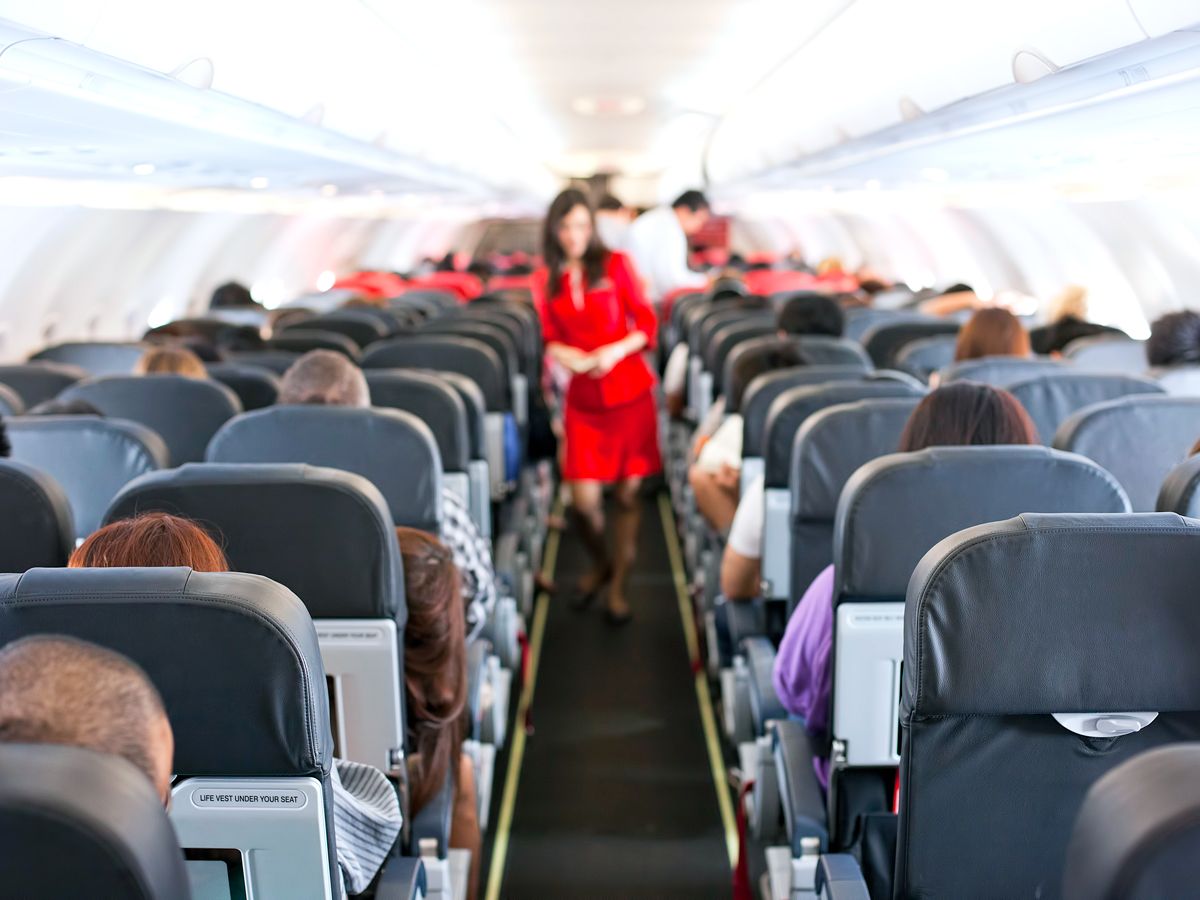
Aircraft aisle looking toward front of plane
Credit: Mariakray/ iStock via Getty Images Plus 

When it comes to window shade etiquette, it’s a balancing act between your own personal preferences and the preferences of other passengers. You may want to gaze out on the world while the person next to you is trying to watch a movie but can’t because of the glare. As a rule of thumb, there’s no need to go out of your way and close the window shade before someone says something. 

However, if anyone politely asks if you’d consider opening or closing the window shade, try to compromise and find a solution that works best for you both. Perhaps you can agree to leave the shade half open, or to keep it closed for the next 30 minutes so they can finish their movie. At the end of the day, it’ll be a better flight for everyone if you choose to work with your fellow passengers rather than argue.

Post Banner Image
Tips

How To Get a Better Seat on Your Next Flight

By Peter Vanden Bos
Read time: 6 minutes
September 19, 2024
Updated: February 19, 2025

How To Get a Better Seat on Your Next Flight

By Peter Vanden Bos
Author
Peter Vanden Bos
Peter is a Toronto-based journalist, editor, content strategist, and self-professed avgeek with 15 years of experience covering all things travel. Prior to joining Daily Passport, he oversaw newsletter publication for Travelzoo. His favorite destinations to explore include Japan, France, Chile, New Zealand, and his adopted home country of Canada.

When flying, most travelers do everything possible to avoid being stuck in a middle seat, especially one way at the back of the plane. But otherwise, you may think that most economy-class seats these days are more or less the same (read: cramped). That’s not necessarily true, however. Even if you don’t have the budget to splurge on first or business class — though it may actually be cheaper than you think — economy-class seats are far from equal when it comes to comfort. Follow these helpful tips and tricks to score a better airplane seat.

Know the Ins and Outs of the Seat Map

Woman standing in aircraft aisle
Credit: Anchiy/ E+ via Getty Images 

The first step to scoring a better seat: researching the seat map. When choosing a seat during the booking process, travelers will be able to tell which seats are window versus middle versus aisle, and which seats are located toward the front or back of the plane. But there are several other important details to be aware of — you just might have to do a little more digging. 

Most airlines have a dedicated section on their website with more detailed aircraft seating plans that include helpful information such as seat pitch (the distance between rows of seats) and seat width, plus which seats are located at emergency exits or bulkheads (these seats have a fixed wall directly in front, typically providing more leg space, but nowhere to store a bag under the seat in front). Airline seat maps will also mark specific seats that have limited recline (usually those right in front of an exit row) or more limited width due to their location in the cabin. If the airline’s website doesn’t show these details, it’s a good idea to also consult websites such as AeroLOPA, which compile seat maps across carriers. 

When reviewing the seat map, you’ll also get a good sense of what the average legroom is — remember, some airlines are more generous than others — and be able to spot which seats have advantageous locations. For example, some rows might be missing a seat in front or be arranged in a two-by-two configuration instead of the typical three-by-three layout, which can be better for couples. 

Related: 26 Rules for Flying in 2026 Every Traveler Should Follow

Check In Early

Airline passenger using electronic check-in kiosk
Credit: wsfurlan/ E+ via Getty Images 

You probably already settled on a seat during the booking process, but it’s still worth checking in as soon as the airline allows to see if your options have changed. In the days and hours leading up to departure, airlines process upgrades for frequent flyers, which will often open up better seats for selection. By checking in early, you can beat your fellow travelers to the punch. Additionally, for travelers who don’t have status, some seats can show as unavailable during the booking process, but might become available to all flyers once check-in opens.

Even if you don’t score a better seat when check-in opens, it’s worth keeping an eye on the seat map up until departure. You can do so by managing your booking on the airline’s website or app — some airline apps make it easy to view seat maps when checking your flight status. If you see your preferred seat open up, you should be able to change it in the app before boarding begins. 

You might not even have to put in the legwork, however. In early 2024, United Airlines introduced a useful new feature within its app that will send a push notification to flyers, alerting them if their preferred seat has become available. Another useful tool is the ExpertFlyer website, where subscribers can set up similar seat alerts

Be Strategic

Airline passenger showing agent phone
Credit: Ridofranz/ iStock via Getty Images Plus

Ever sat next to an empty seat during the boarding process, counting down the minutes until flight attendants close the boarding door in hopes that it remains open? Scoring some extra elbow room next to an unoccupied seat is one of the best free perks of traveling, but with record load factors these days, it’s far from guaranteed. That said, a little strategy can go a long way. 

First, consider traveling at off-peak times. Some days of the week — usually Tuesdays, Wednesdays, and Saturdays — typically see far fewer business travelers, which means planes will be less full. If you’re traveling to a popular destination, try visiting during quieter months, such as when schools are back in session, for the best chance of scoring some extra room to spread out. 

Second, carefully consider the location of your seat. According to travel expert Zach Griff at The Points Guy, the seats toward the front of the cabin tend to fill up first, leaving more empty seats toward the back. Some airlines even charge extra for “preferred” seats at the front of the cabin, as travelers are often willing to pay more to be off the plane sooner. So, it might be worth settling on a seat toward the back for greater odds of having no one next to you. (It might also be the safest section of the airplane.)

Two travelers flying together can also consider a hack on aircraft with seats arranged three-by-three across the aisle — the typical arrangement on most narrowbody aircraft these days. Instead of booking a window and a middle (or an aisle and a middle), try booking the aisle and the window, leaving the middle seat open. The rationale is that travelers will only choose that middle seat if there are no better options available, resulting in a higher likelihood of it remaining open. (If that’s not the case, the couple should be prepared to have a stranger sitting between them; however, the person who ends up in the middle seat will often be happy to switch to an aisle or middle.) 

Take Advantage of Affordable Upgrades 

Traveler sitting in plush airplane seat
Credit: BJI/ Blue Jean Images via Getty Images 

While first- or business-class upgrades can be expensive, many airlines offer extra-legroom seats in economy class that are more affordable. These extra-legroom economy seats go by different names — Economy Plus on United Airlines, Comfort+ on Delta, and Main Cabin Extra on American, for example — and they can be an attractive option for passengers looking for added comfort without breaking the bank. 

A few airlines have also introduced options with more elbow room, too. Budget carrier Frontier Airlines calls this upgraded seating option “UpFront Plus,” and it includes a seat in the first few rows of the cabin with extra legroom and a guaranteed free middle seat next to you, with pricing starting at $49 per segment, as of 2024. Spirit Airlines has a similar option called “Go Comfy,” while Australian flag carrier Qantas offers “Neighbour Free” seating.

Post Banner Image
Tips

The One Thing You Should Do at Home Before a Trip

By Rachel Gresh
Read time: 5 minutes
September 19, 2024
Updated: November 12, 2025

The One Thing You Should Do at Home Before a Trip

By Rachel Gresh
Author
Rachel Gresh
Rachel is a Washington, D.C.–based travel and lifestyle writer with roots in the Great Lakes region. When she’s not writing for publications such as The Discoverer and Interesting Facts, you’ll find her wandering through museums or exploring destinations off the beaten path.

Worrying about your home while you’re away on vacation is a feeling many travelers know all too well. Instead of relaxing at the beach or taking in the sights in a new city, you’re concerned about electronics being left on, your plants being unwatered, or even your home being broken into. If you can’t help but think about what’s going on at home while you’re away, try this clever hack (and other helpful tips) to secure your home and bring you peace of mind on your next vacation.

Why You Should Snap a Few Pictures

Passengers on airplane
Credit: urbazon/ E+ via Getty Images 

Imagine you’ve just ordered your favorite in-flight beverage and are ready to begin a relaxing vacation when a thought springs into your head: Did I turn off the oven? Instead of letting worry seep in, here’s a helpful hack to follow before you leave for a trip: Take pictures on your cellphone of any potentially hazardous items in your home before you leave. 

First on your list of pictures to take should be heating elements, as they present the most significant threat while away. This includes photos of blown-out candles, unplugged curling irons, and turned-off ovens. Some people also like taking pictures of deadbolted doors, unplugged electronics, and other items specific to their home that need to be squared away before leaving.

Not only will taking photos of every item force you to double-check them, but you’ll also have proof that you turned everything off if your anxiety begins to get the best of you. After all, no one wants to start a vacation worrying about how things are at home.

Other Helpful Tips To Secure Your Home

House lit at night
Credit: Wirestock/ iStock via Getty Images Plus 

Making a home appear lived in, even while you’re away, dissuades would-be home intruders and mail thieves who prey on empty houses. One way to do this is to have lights on during the evenings. However, leaving your light switches turned on throughout your vacation isn’t recommended — it runs up the electric bill and also poses a safety hazard. Instead, set up a lamp or two with a programmable timer to turn on for a few hours every evening so that it looks like someone is home. These timers can be plugged into any outlet and used with any type of lamp, plus setup takes only a few minutes.

Smart lightbulbs are another way to make your home appear occupied. Technophiles love this option because it’s more fun than a simple timer — you can even change the bulb’s colors. These lightbulbs connect to an app on your phone, and you can control them from anywhere, allowing you to turn them off and on as you please.

Install Security Signs

Woman setting house alarm system
Credit: RossHelen/ iStock via Getty Images Plus 

You might be surprised at the power of suggestion a sign can have. Whether you have a home security system with video surveillance or not, placing home security signs near your doors or windows will help deter potential intruders. Some homeowners take this notion a step further by adding a “beware of dog” sign by the front door or another visible location to make the home less appealing, as burglars are usually less likely to break into a home if they think an aggressive dog lives there.

Automate Plant Watering

Houseplants of various sizes
Credit: Liudmila Chernetska/ iStock via Getty Images Plus 

No traveler wants to return home to brown, drooping plants. If a trusted neighbor or family member can’t water for you, you’ll have to take matters into your own hands. For a cost-effective method that lasts a few days, consider a set of watering globes, which are a few dollars a piece and come in various fun colors. Fill the glass globes with water and push them into the soil, and the globes can slowly water your plants for around one week. 

If you’re willing to make a bigger investment in your houseplants, another option is a digital indoor plant watering system, which is particularly useful if you’re traveling for more than a few days. These small irrigation systems ensure your plant is watered daily for extended periods.

Protect From Pests

Couple walking into room with luggage
Credit: LeoPatrizi/ E+ via Getty Images 

Coming home to unwanted house guests is a surefire way to ruin your postvacation mood. While there are obvious ways to keep insects out, such as ensuring all doors and windows are closed tightly, there is one area you might have overlooked: your drains. 

According to the pest removal professionals at Terminix, certain insects live in pipes, including cockroaches, fruit flies, drain flies, and phorid flies. They feed off of organic matter in drains and are usually nocturnal. Without water running constantly down drains while you’re away, they’re more likely to make it out of the pipes and into your home. Drain stoppers, covers, and metal screens can deter pests from entering your home. You can also set up “tape traps” by making an “X” with sticky tape over the drain to catch insects as they crawl out.

Skip Spare Key Holders

Person locking loor
Credit: ljubaphoto/ iStock via Getty Images Plus 

Under the doormat, inside a fake rock, behind a plant — home intruders know all the popular places to check for a spare key. Instead, leave a key with a trusted neighbor. Alternatively, if you’re concerned about losing a spare key or leaving it with a neighbor, consider installing a smart lock on your front door for easy digital access to your home. Be sure to pick a unique key code, and do not use your address or simple codes such as “00000” or “12345.” Choosing a unique code that is only familiar to you helps keep your home secure while you’re away.

Related: How To Set Your Thermostat When You Go on Vacation
Post Banner Image
Outdoors

8 Hidden Gems To Discover in Anchorage, Alaska

By Bennett Kleinman
Read time: 6 minutes
September 17, 2024
Updated: September 25, 2024

8 Hidden Gems To Discover in Anchorage, Alaska

By Bennett Kleinman
Author
Bennett Kleinman
Bennett is a New York City-based staff writer for Daily Passport. He previously contributed to television programs such as the Late Show With David Letterman, as well as digital publications like the Onion. Bennett has traveled to 48 U.S. states and all 30 Major League Baseball stadiums.
Sponsored content

With eight national parks spread out across more than 660,000 square miles, the Alaska wilderness is vast and endlessly beautiful. But in addition to its stunning natural landscapes, the “Great Land” is also renowned for its rich culture and history — and there’s no better place to experience it than in the bustling metropolis of Anchorage. While many visitors opt to visit during the warmer spring or summer months, Anchorage is appealing any time of year. That’s especially true in winter, when, despite the cooler temperatures, the city comes alive with fun themed festivals and cultural attractions, and visitors can score great deals without the crowds. No matter when you choose to visit, here are the best must-sees and hidden gems in Alaska’s largest city.
The Northern Lights

Northern lights over snowy Alaska landscape at night
Credit: zorazhuang/ iStock via Getty Images Plus

No trip to Alaska is complete without experiencing the northern lights, but did you know there are plenty of excellent viewing locations within a few miles of downtown Anchorage? The aurora borealis is a colorful and awe-inspiring natural light display that illuminates the sky with brilliant swirling tones. In Anchorage, the best time to see the northern lights is from mid-August through April, but this season is particularly special, as it’s anticipated to be a solar maximum — a period that occurs once every 11 years, in which the aurora appears particularly vibrant. 

If you’re looking for a prime viewpoint, drive about 25 minutes from downtown to the Glen Alps Overlook. This 2,200-foot peak can be accessed by easy-to-walk trails and provides some of the best views anywhere in the city, without any light pollution. If you’d prefer to stay in the city core, head to a parking area just off the aptly named East Northern Lights Boulevard. This quiet spot has limited light pollution, allowing guests to view nature’s incredible light show in all its glory.
Alyeska Resort

Couple relaxing in hot springs at Alyeska Resort near Anchorage, Alaska
Photo credit: Image courtesy of Kristian Irey/Visit Anchorage 

For those looking to relax and recharge, the Alyeska Resort — located 40 miles southeast of downtown Anchorage — should be at the top of your list. The adults-only Alyeska Nordic Spa, nestled in the shadows of the Chugach Mountains, features cold pools, hot pools, and a variety of treatment options. For those looking for a bit more adrenaline, the resort has a mountain with 76 ski trails that receives over 669 inches of snowfall annually. The resort is also home to the decadent Seven Glaciers restaurant, a fine-dining establishment that offers up delicious meals as well as spectacular views of the seven surrounding glaciers.
Anchorage Fur Rendezvous

Dog sledding team running across snowy landscape near Anchorage, Alaska
Credit: Ray Bulson/ Alamy Stock Photo

Known among locals as “Fur Rondy,” the Anchorage Fur Rendezvous is an annual winter festival that has been held in the city since 1936. If you’ve never attended before, next year is a great opportunity to do so, as the 90th edition of this spectacle is set to take place from February 20 to March 2, 2025. As the largest and oldest winter festival in the entire state, Fur Rondy annually attracts huge crowds of people looking to experience authentic Alaskan culture. 

Popular events include the Running of the Reindeer — akin to the running of the bulls in Pamplona, Spain — as well as the Outhouse Races, where outhouses on skis are steered through the streets of the city, and the Blanket Toss, a tradition in which people are launched into the air atop a walrus skin. The festival is also renowned for its events that revolve around Indigenous cultures — be sure to check out all of the beautiful Alaska Native art that’s exhibited at the festival year after year.

Leaf Peeping

Two hikers walking through fall foliage near Anchorage, Alaska
Photo credit: Image courtesy of Chris Arend/Visit Anchorage 

You may think that leaf peeping is an autumn activity mainly enjoyed in the Northeast United States, but you’d be mistaken — the colorful fall leaves of Alaska are some of the best in the country. Alaska’s fall season generally begins in late August and runs until mid-October, during which time the leaves turn gorgeous shades of yellow and red. These months also mark the harvest season, meaning there are plenty of farmers markets around the city where you can indulge in freshly caught silver salmon and cups of hot apple cider. 

Visitors can also try their hand at wild berry picking — with fresh cranberries, blueberries, and currants found on mountainsides, trails, and even in city parks. Autumn is an excellent time to visit if you’re an animal lover, as you’re likely to see moose wandering in Anchorage. Nearby, you might also be able to watch grizzlies trying to fatten up on salmon before winter arrives.

Alaska Federation of Natives

Traditional Alaska Native dancers performing
Photo credit: Image courtesy of Lexi Trainer/Visit Anchorage

Held each October, the Alaska Federation of Natives marks the largest annual gathering of any Native peoples in the United States. In 2024, the event will be held at the Dena’ina Center in downtown Anchorage, with the theme “Our Children — Our Future Ancestors.” The event is entirely free for public observers, who can listen to inspiring speeches about the Native peoples’ rich history, view their gorgeous art displays on exhibition, and even participate in traditional Native dances. It’s an essential experience to learn more about the Native peoples who continue to shape Alaska’s history.

Salmon Derby

Salmon fishing in Anchorage, Alaska
Photo credit: Image courtesy of Wayde Carroll/Visit Anchorage 

If you find yourself in Anchorage in June, be sure to visit the Salmon Derby, a popular competition in which anglers vie to reel in the biggest king salmon. You can either watch the pros go at it or rent some gear and try your luck to see if you can win a prize. And if you work up an appetite, head to the nearby Bridge, Co. restaurant for dinner. This unique eatery is built atop a 1920s railroad bridge, where diners can see fishermen right from their table as they dig into fresh Alaska salmon and other fresh, local seafood dishes.

Humpy’s Great Alaskan Alehouse

Beers on tap at Humpy’s Great Alaskan Alehouse in Anchorage
Photo credit: Image courtesy of JodyO.Photos/Visit Anchorage 

Speaking of can’t-miss eateries, Humpy’s Great Alaskan Alehouse has served up delicious meals and refreshing brews since 1994, and the restaurant prides itself on the 60-plus beers that it always has on tap. If you’re feeling particularly hungry or ambitious, try your hand at the Kodiak Arrest Challenge. This hefty meal comes with 4 pounds of Alaska king crab, seven crab nuggets, 14 inches of reindeer sausage, tons of tasty sides, and a wild berry crisp with ice cream to top it all off. The price is a whopping $365, but the memories will last long after you leave — whether you finish or not. Those who complete the challenge walk away with not only a free T-shirt but also a spot on the restaurant’s storied Wall of Fame. The current record is held by diner Jefory C., who managed to eat all that tasty food in just 12 minutes and 10 seconds.

Wildbirch Hotel

Photo credit: Image courtesy of the Wildbirch Hotel 

Anchorage has no shortage of places to stay, from modern hotels to cozy B&Bs, but one of the most exciting new openings of 2024 is the Wildbirch Hotel. The property is located right downtown in the Mushing District, on West 4th Avenue, and some rooms even look out onto the Cook Inlet, where guests can watch the passing ships and may even see a couple of beluga whales. While the hotel is still putting on the finishing touches, its funky retro vibe — right down to the vintage mini fridges in the rooms — and unbeatable location make it a great option for your Anchorage visit.

Ready to go now? Visit Anchorage is your go-to resource for planning the ultimate Alaska vacation.

Post Banner Image
Tips

The World’s Top-Ranked Airports for 2024

By Peter Vanden Bos
Read time: 5 minutes
September 16, 2024
Updated: September 16, 2024

The World’s Top-Ranked Airports for 2024

By Peter Vanden Bos
Author
Peter Vanden Bos
Peter is a Toronto-based journalist, editor, content strategist, and self-professed avgeek with 15 years of experience covering all things travel. Prior to joining Daily Passport, he oversaw newsletter publication for Travelzoo. His favorite destinations to explore include Japan, France, Chile, New Zealand, and his adopted home country of Canada.

Airports have come a long way since the early days of aviation. Nowadays, the world’s busiest airports handle hundreds — in some cases, thousands — of arrivals and departures each day. Some airports go above and beyond to make the experience as seamless and enjoyable as possible for passengers. A 2024 report from AirHelp, a company that helps passengers get compensation for flight disruptions, analyzed more than 17,000 airports worldwide based on on-time performance, customer service, and the quality of dining and shopping options. Here are the top 10 best airports in the world, according to the report.

10. Tokyo-Narita International Airport – Japan

Exterior of terminal building at Japan's Tokyo Narita International Airport
Credit: mbell/ Moment Unreleased via Getty Images 

Serving the world’s most populous city, Narita is the second-busiest airport in Japan behind Haneda Airport, Tokyo’s other major gateway. Tokyo-Narita International ranks at No. 10 on the list of world’s best airports, with its highest marks coming from the customer service category. That score was based on results from a survey of thousands of passengers about airport staff, wait times, and cleanliness. If you plan to join the record number of people visiting Japan, the airport’s high ranking should come as welcome news. 

9. Belém Val-de-Cans Airport – Brazil

Check-in area at Belém Val-de-Cans Airport in Brazil
Credit: Pulsar Imagens/ Alamy Stock Photo

Belém is the largest city in Brazil’s northern state of Pará, serving as a gateway to the Amazon River, the planet’s second-longest river. Though it’s far from Brazil’s busiest airport, the airport provides a reliable and pleasant experience for passengers heading to destinations in Brazil and neighboring South American countries. 

8. Salt Lake City International Airport – Utah

Passengers inside Salt Lake City International Airport
Credit: Aaron Hawkins/ iStock Unreleased via Getty Images 

Salt Lake City International was the only U.S. airport to land in the top 10 ranking of the world’s best airports, thanks in large part to its brand-new terminal facility that opened its first phase in 2020. Not only did the project boost the airport’s capacity, but it also gave passengers a major upgrade when it came to amenities, including new local dining options, 50-foot-tall windows to provide more natural light, and a 27,000-square-foot premium lounge with an outdoor deck. As one of the most on-time airports in the U.S., Salt Lake City got the majority of passengers off the ground on time in 2024.

7. Muscat International Airport – Oman

Exterior of Muscat International Airport in Oman
Credit: efired/ iStock via Getty Images Plus 

The main gateway to the Middle East country of Oman, Muscat International debuted a brand-new airport terminal in 2018, which allowed the airport to expand its capacity to handle over 20 million passengers annually. Chances are, most of those passengers will leave the airport with a good impression — Muscat landed at No. 7 in the rankings of world’s best airports. 

6. Johannesburg O.R. Tambo Airport – South Africa

Passengers inside light-filled interior of Johannesburg’s O.R. Tambo International Airport in South Africa
Credit: AfriPics.com/ Alamy Stock Photo

One of two airports in South Africa to make the list, Johannesburg’s O.R. Tambo International Airport is named after Oliver Tambo, a prominent anti-apartheid politician and activist. As the main hub for South African Airways, the airport is the second-busiest airport in Africa. Serving around 25 million passengers annually, Johannesburg’s airport has an impressive track record when it comes to on-time performance and customer service. 

5. Brasília International Airport – Brazil

Aircraft at boarding gate at Brasília International Airport in Brazil
Credit: Leonidas Santana/ iStock Editorial via Getty Images Plus 

Brazil is one of a handful of countries that has relocated capitals over the years, choosing in 1960 to move from coastal Rio de Janeiro to Brasília, a purpose-built new capital in the center of the country. Interestingly, from the air, the planned city looks like the shape of an airplane — which is perhaps fitting for a city that proudly hosts the fifth-best airport in the world, according to the AirHelp report. 

4. Osaka Itami Airport – Japan

Terminal with mountains in background at Osaka's Itami Airport
Credit: winhorse/ iStock Unreleased via Getty Images 

Osaka’s Itami Airport is significantly smaller than the city’s primary international gateway, Kansai Airport, but it more than makes up for its size with its high marks from travelers. Itami primarily serves domestic destinations in Japan and is the closest airport to Kyoto, one of Japan’s most popular tourist destinations. In Kyoto, travelers can wander charming streets lined with traditional architecture, admire hundreds of temples, and visit an ethereal (and highly popular) bamboo forest located just outside the city center

3. Nagoya Chubu Airport – Japan

Aircraft parked at boarding gates at Nagoya Chubu Airport in Japan
Credit: winhorse/ iStock Unreleased via Getty Images 

Chubu Airport serves as the main international gateway for the central (Chubu) region of Japan, which is home to Nagoya, the country’s fourth-biggest city. The airport scored high marks across the board, particularly when it came to customer opinion of its cleanliness, staff, and wait times. Chubu Airport was built on an artificial island off the coast and opened in 2005. 

2. Cape Town International Airport – South Africa

Exterior of terminal building at Cape Town International Airport in South Africa
Credit: Julia Chan/ iStock Editorial via Getty Images Plus

Thanks to its stunning coastal scenery, Cape Town is one of Africa’s most popular cities to visit, and, luckily, those who do should have a seamless experience transiting through the city’s primary international gateway. In addition to flights to dozens of destinations in Africa, Cape Town International Airport offers nonstop flights to Atlanta, Newark, and Washington, D.C. — which are some of the longest flights in the world

1. Doha Hamad Airport – Qatar

Expansive light-filled interior of Doha Hamad International Airport in Qatar
Credit: GordonBellPhotography/ iStock Editorial via Getty Images Plus

The world’s best airport for 2024 is Qatar’s Doha Hamad International Airport, one of the busiest hubs in the Middle East. Hamad Airport achieved high marks in customer opinion surveys and saw strong on-time performance, but travelers were particularly impressed by its expansive amenities. The architecturally stunning terminal, which debuted in 2014, boasts a 65,000-square-foot shopping and dining complex called the Orchard, which features more than 25,000 live plants. 

Post Banner Image
Outdoors

The Best Long-Distance Rail Trips Around the World

By Bradley O'Neill
Read time: 5 minutes
September 16, 2024
Updated: November 22, 2024

The Best Long-Distance Rail Trips Around the World

By Bradley O'Neill

An air of romance often accompanies long-distance train travel, and for good reason. Traveling by rail offers the chance to sit back and gaze out the window at spectacular urban and natural landscapes. It provides the opportunity to indulge in first-rate service, strike up conversations with fellow train enthusiasts, and fall asleep to the sound of wheels trundling over parallel lines of steel. From the ever-changing scenery of Africa to the wide-open vistas of the Southwest U.S., here are six long-distance rail trips you won’t want to miss.

The Canadian – Canada

Train traveling through Rocky Mountains in Banff, Canada
Credit: Harry Collins/ iStock via Getty Images Plus 

Inaugurated in 1955, the Canadian is an epic transcontinental rail journey from Toronto to Vancouver. Over four nights and 2,775 miles, passengers will experience the spectacular natural landscapes that make Canada famous. From Ontario in the east to British Columbia in the west, the train visits five diverse provinces, with the scenery shifting from the shimmering Great Lakes and thick deciduous forests of Ontario to the sprawling prairies of Manitoba, the big blue skies and bright-yellow canola fields of Saskatchewan, and the majestic Rocky Mountains of Alberta.

The Canadian offers three seating classes, with the Prestige Class featuring a concierge service and suites with domed, glass windows to enjoy the scenery. A la carte meals are available to all, and there’s even an onboard wine tasting, too. For those preferring to break up the journey, the Canadian can easily be turned into a hop-on, hop-off rail adventure. Overnight stays are possible in destinations like Winnipeg, Edmonton, and Jasper. 

Blue Train – South Africa

View from car window of Blue Train in South Africa
Credit: Gerrit Rautenbach/ Shutterstock 

Billed as a “Palace on Wheels,” the Blue Train has been an icon of long-distance train travel since it first set off in 1946. Traveling 994 miles between Cape Town and Pretoria, this epic trip has attracted — and continues to attract — everyone from royal families and dignitaries to honeymooners and celebrities. On the 54-hour cross-country ride, the train passes the sprawling Magaliesburg Mountains, the flamingo-inhabited Kamfers Dam, the arid expanses of the Karoo Desert, and the emblematic Table Mountain, among other sights. 

Onboard the Blue Train, guests are treated to impeccable service, with butlers providing all the bells and whistles. Carriages feature plush suites with elegant furniture, goose-down duvets, and private bathrooms. Dining, too, is an elegant affair, with gourmet meals and fine South African wines. There’s also a lounge car for socializing or simply gazing out at the jaw-dropping scenery.

Reunification Express – Vietnam

Aerial view of Reunification Express on lush hillside overlooking sea in Vietnam
Credit: Nguyen Quang Ngoc Tonkin/ Shutterstock 

The historic Reunification Express connects Vietnam’s vibrant capital of Hanoi with energetic Ho Chi Minh City, the country’s most populous city. Traveling 1,072 miles in around 30 to 35 hours, the long-distance train crosses thousands of bridges and passes through 150 stations, which were all meticulously repaired following the reunification of the country in 1976. Passengers can take in forest-clad mountains and dense jungle, emerald-green rice paddies, pristine coastlines, and expansive wetlands. Notable sights along the way include the ancient city of Hue, the snaking Hải Vân Pass, and the white-sand beaches of Da Nang. 

Travelers can choose between a range of seating classes onboard, such as budget hard seats, shared sleeper cabins, and private rooms. This is by no means a luxury adventure, but it offers an authentic view of Vietnamese culture and nature. The train is used by tourists and Vietnamese locals alike, with a food cart serving traditional Vietnamese food adding to the experience.

Tazara Railway’s Mukuba Express – Tanzania and Zambia

Tazara Railway’s Mukuba Express on its journey
Credit: Wanangwe Muchika/ Shutterstock

From the highlands of Zambia to Tanzania’s Indian Ocean coastline, Tazara Railway’s Mukuba Express Train provides an unforgettable snapshot of East Africa. The journey covers 1,160 miles in approximately 46 hours. The railway was constructed with the help of Chinese engineers between 1970 and 1975, and is named after the Zambian word for copper (mukuba). Facilities onboard include comfortable shared and private sleeper cabins along with a dining car.

The real beauty of the journey is the scenery — this is one of a few train journeys in the world where it’s possible (though not guaranteed) to spot big game animals from the comfort of your seat. Starting in Tanzania, the train passes through the bustling markets of the capital Dar es Salaam. Then, it crosses Nyerere National Park (formerly called the Selous Game Reserve), which is home to free-roaming elephants and giraffes. The train then trundles underneath craggy escarpments and clings to hillsides in southern Tanzania. After weaving through the green valleys of Zambia, the journey finally ends in the Zambian town of Kapiri Mposhi.

Sunset Limited – United States

Aerial view of train through Southwest U.S. desert landscape
Credit: Donovan Reese/ Photodisc via Getty Images 

First introduced in 1894, Amtrak’s Sunset Limited is the oldest continuously operating named train in the Americas. Crossing 1,995 miles of the American South and Southwest in 48 hours, the journey provides an unforgettable opportunity to take in the bayous and plantations of Louisiana and the far-reaching deserts and soaring mountains of Texas, New Mexico, and Arizona during a single trip. The last leg the journey trundles over the Californian hills to the Pacific coastline. 

The onboard service provides all the comforts needed to lean back and watch the beauty unfold outside the train’s picture windows. A range of sleeping arrangements, with both shared and private bathroom facilities, are available, and a dining car serves up meals with a Southern spin. Plus, opportunities for adventure abound along the way. Disembark in Alpine, Texas, to visit Big Bend National Park; in Tucson, Arizona, for Saguaro National Park; or in Palm Springs, California, for Joshua Tree National Park. 

Z21 Beijing to Lhasa – China

Elevated railway line in Tibet
Credit: zheng long/ Moment via Getty Images 

From the imperial monuments and modern skyscrapers of Beijing, China’s Z21 train embarks on a mammoth 2,336-mile, 40-hour journey to the spiritual Buddhist city of Lhasa. This excursion is a one-of-a-kind experience, as it travels along the world’s highest railroad, the Qinghai-Tibet Railway. It’s also a fairly economical way to appreciate the natural riches of China and Tibet. Options on board include soft sleeper (four-bunk compartments), hard sleeper (six-bunk compartments), and hard seat (seat only). A dining car serves three meals per day, and snack trolleys pass through the carriages regularly.

Leaving the bright lights of urban China behind, the train enters the rural landscapes of the North China Plain and the Gobi Desert. Upon reaching Qinghai, it climbs steadily up into the Tibetan Plateau, with spectacular views of snow-capped mountain peaks and sparkling lakes. At the 16,400-foot-high Tanggu-la Pass, an in-carriage oxygen supply is activated to combat altitude sickness. Finally, you’ll descend toward Lhasa, where robed Tibetan monks, grazing yaks, and villages decorated with multicolored prayer flags await. 

Post Banner Image
Tips

When Will You Need a REAL ID To Travel?

By Bennett Kleinman
Read time: 3 minutes
September 16, 2024
Updated: September 16, 2024

When Will You Need a REAL ID To Travel?

By Bennett Kleinman
Author
Bennett Kleinman
Bennett is a New York City-based staff writer for Daily Passport. He previously contributed to television programs such as the Late Show With David Letterman, as well as digital publications like the Onion. Bennett has traveled to 48 U.S. states and all 30 Major League Baseball stadiums.

Are you up to speed on REAL ID? This relatively new form of government-issued ID comes with extra security features to guarantee the holder’s identity. And while signing up for REAL ID is currently optional, it’ll soon be a requirement for anyone planning to board a domestic flight in the United States. If you’re a frequent flyer and don’t have your REAL ID yet, take a closer look at what REAL ID is, and why and when you’ll need it to travel.

What Is REAL ID?

Person handing over identification to officer
Credit: Carlina Teteris/ Moment via Getty Images 

In 2005, Congress passed the REAL ID Act, establishing new security standards for any government-issued ID used to board an aircraft. While it is currently permitted to use a standard driver’s license to get onto a domestic flight, that will soon no longer be the case — you’ll need a REAL ID-compliant form of identification instead. 

A REAL ID is identifiable by a star or flag symbol (or both), along with the label “Enhanced.” This type of identification contains security features that make each document more difficult to counterfeit, such as unique barcodes. This ensures that the person holding the REAL ID is exactly who they say they are instead of someone using a false identity. REAL ID will also soon be required to enter certain federal facilities. That said, it’s important to note that you’ll still need a valid passport for international travel.

Some states, including New York, also offer Enhanced ID, which is even more secure than REAL ID. As an added benefit, Enhanced IDs allow people to cross over the U.S. border into Canada or Mexico without needing to show a passport.

When Is the Real ID Deadline?

Woman filling out application on clipboard
Credit: mediaphotos/ iStock via Getty Images Plus 

Originally, the REAL ID rules were set to take effect as far back as 2008, but repeated delays in implementation have pushed the deadline back several times. Currently, these regulations are set to go into effect on May 7, 2025. However, the Transportation Security Administration announced in September 2024 a proposal for a phased-in approach, rather than full enforcement on that date as was originally planned.

Under the new proposal, agencies would have two years (until May 2027) to fully comply with the new REAL ID regulations. Travelers can continue to monitor the Department of Homeland Security website for a live countdown until these rules take effect and to see if the deadline gets pushed back any further. 

Are There Any Exceptions?

Airline passenger using check-in kiosk
Credit: VladTeodor/ iStock via Getty Images Plus 

While it’s recommended that all Americans acquire a REAL ID-compliant form of identification if they haven’t done so already, there are a few exceptions when it comes to air travel. First, any airline passenger under 18 years of age won’t need to provide a REAL ID, as long as they’re traveling with an adult companion. You can also use certain documents instead of a REAL ID, such as a passport or Global Entry card, to board a flight.

How To Apply for REAL ID

Man typing on laptop
Credit: LumiNola/ E+ via Getty Images 

The good news is that it’s simple to upgrade your existing driver’s license to be REAL ID-compatible. You’ll need to head to your local Department of Motor Vehicles with the required documents to verify who you are and where you live. These can include your Social Security Card, your current driver’s license, a valid passport, or a birth certificate. You should also fill out an application form before heading to the DMV that you can present when you arrive. Lastly, be aware that there’s a small fee as part of the application process. To learn more about what documents you’ll need to apply, consult your state’s DMV website or the DHS website for more information.

Post Banner Image
Outdoors

10 of America’s Most Charming Mountain Towns

By Daily Passport Team
Read time: 7 minutes
September 16, 2024
Updated: April 3, 2026

10 of America’s Most Charming Mountain Towns

By Daily Passport Team
Author
Daily Passport Team
Daily Passport writers have been seen in publications such as National Geographic, Food & Wine, CBC, Condé Nast Traveler, and Business Insider. They're passionate about uncovering unique destinations and sharing expert tips with curious travelers.

Mountain towns have a way of captivating travelers with their unique mix of natural beauty, local culture, and outdoor adventure in all four seasons. From Asheville’s vibrant arts scene in the Blue Ridge Mountains to North Conway’s classic New England appeal in the White Mountains, these are 10 charming U.S. mountain towns you shouldn’t miss.

Whitefish, Montana

Skiers on slopes in Whitefish, Montana
Credit: © ronniechua/stock.adobe.com

Whitefish, a charming mountain town in northwest Montana, appeals to travelers with its friendly vibe and easy access to outdoor activities. Located near Glacier National Park and home to Whitefish Mountain Resort, it offers year-round adventure — from skiing and snowboarding in winter to hiking, biking, and summer days spent boating and paddle-boarding on scenic Whitefish Lake. 

Downtown Whitefish’s streets are relaxed and welcoming, lined with cafes, bakeries, brewpubs, and boutiques, including galleries showcasing art inspired by the surrounding landscapes. Also known for its thriving music scene, Whitefish hosts the annual Under the Big Sky music festival and other celebrations such as the Whitefish Art Festival and Huckleberry Days

North Conway, New Hampshire

Aerial view of Conway Scenic Railroad and fall foliage of New Hampshire's White Mountains
Credit: eFlexion/ Shutterstock 

New England is home to several impressive mountain ranges, but New Hampshire’s White Mountains are particularly renowned. Mount Washington — the highest peak in New England — is famous for its severe weather and challenging hikes that draw enthusiasts from across the country. North Conway makes the perfect base for exploring it all — and there’s plenty of appeal in the town itself, too.

For starters, North Conway’s charming downtown is filled with antique shops, bookstores, and bakeries, while Schouler Park offers a pleasant green space for picnics. Additionally, as a tax-free state, New Hampshire attracts shoppers with its popular outlet stores. For those who want to admire the abundant nature but aren’t up for tackling the hikes, the historic 19th-century Conway Scenic Railroad — which boards right in town — is a fantastic way to experience New England’s quintessential beauty.

Pagosa Springs, Colorado

Homes beside lakes and mountains in Pagosa Springs, Colorado
Credit: © Jon Camrud/stock.adobe.com

Pagosa Springs, best known for its natural hot springs and stunning mountain scenery, is located on the banks of the San Juan River in southwest Colorado. The town is home to the world’s deepest geothermal hot spring, according to Guinness World Records, 1,002 feet of which have been measured by plumb line. The Mother Spring Aquifer feeds dozens of local soaking pools, including those at Overlook Hot Springs Spa, Healing Waters Resort and Spa, and the popular Springs Resort and Spa (which has 45 pools). 

The hot springs are the perfect complement to the outdoor pursuits in and around Pagosa Springs. The surrounding San Juan National Forest offers hiking, fly fishing, and rafting, while nearby Wolf Creek Ski Area attracts skiers and snowboarders with fresh powder and uncrowded terrain. The downtown area clusters around the San Juan River, and it’s lined with historic buildings housing local shops, galleries, cafes, and restaurants. Don’t miss the riverside brewpub Riff Raff Brewing Company, which uses geothermal heat from the town’s hot springs to brew its beer.

Asheville, North Carolina

Lookout point over the Blue Ridge Mountains in Asheville, North Carolina
Credit: Michael Warren/ iStock via Getty Images Plus 

Nestled in the Blue Ridge Mountains, Asheville is surrounded by sweeping natural landscapes that range from rolling hills to lush forests and picturesque peaks. Nearby, the Blue Ridge Parkway — nicknamed “America’s Favorite Drive” for good reason — winds through the Appalachian Mountains, offering some of the best scenic views in the country.

Encircled by several national forests and Great Smoky Mountains National Park, Asheville provides easy access to some of the best hiking on the East Coast. But Asheville also boasts a vibrant cultural scene, with an abundance of galleries, public art installations, and music venues. Adding to Asheville’s distinctive charm is the historic architecture that adorns the downtown area.

McCall, Idaho

Viewpoint of Payette Lake in McCall, Idaho
Credit: © Victoria/stock.adobe.com

McCall is a small mountain town of about 4,000 people that’s buzzing with activities during all four seasons. It sits on the shores of Payette Lake, a glacial lake located at an elevation of 5,000 feet, where you can swim, paddleboard, fish, or take a scenic cruise when it’s warm out. In winter, the frozen lake hosts an annual Winter Carnival with impressive ice sculptures, parades, and fireworks. Brundage Mountain Ski Area is just a short drive away, while nearby natural hot springs are perfect for a relaxing soak. 

Downtown McCall centers around Lake Street and the marina, with casual restaurants, coffee shops, gear outfitters, breweries, and Legacy Park, where you can catch the sun setting over the water after a day filled with activities.

Truckee, California

View of Truckee, California beyond flowers
Credit: MattGush/ iStock via Getty Images Plus 

Lake Tahoe is renowned for its crystal-clear waters and stunning peaks, drawing crowds for its outdoor activities. For a similar experience with fewer people, head to Truckee, located 15 miles north of Tahoe City. Truckee offers a tranquil, laid-back atmosphere and is close to Donner Lake, which offers camping, fishing, swimming, boating, hiking, and biking in summer, along with snowshoeing and cross-country skiing in winter.

In addition to its natural beauty, Truckee boasts a rich heritage in logging, ice harvesting, and the Emigrant Trail. Named after a Paiute chief who assisted emigrants heading west, Truckee was also a key site for railroad construction in the 1860s. The historic downtown retains its Old West charm with antique brick buildings housing art galleries, unique shops, and restaurants.

Ashland, Oregon

Ashland street with view of mountains in distance
Credit: © RG/stock.adobe.com

Ashland is one of the most vibrant and interesting towns in southern Oregon. Its charming and walkable downtown is filled with brick buildings, bookstores, art galleries, cozy restaurants, and wine bars. Despite its small size (around 21,000 people), Ashland is a major cultural hub in Oregon and a strong supporter of the arts. 

The city is best known for the Oregon Shakespeare Festival, which draws theater lovers from across the country and around the world. It also hosts the Ashland New Plays Festival, which showcases local playwrights, and the Oregon Chocolate Festival. Events aside, Ashland offers beautiful parks (such as the scenic 100-acre Lithia Park), nearby hiking trails, and a friendly, small-town atmosphere that makes it feel both sophisticated and approachable. 

Davis, West Virginia

View of forest and mountains in Davis, West Virginia
Credit: ablokhin/ iStock via Getty Images Plus 

With a population of roughly 600 residents, Davis is an under-the-radar town on the Blackwater River in West Virginia’s Canaan Valley. Davis offers easy access to a number of state parks and trail systems for hiking and mountain biking. Blackwater Falls State Park is especially popular for its striking 62-foot waterfall, one of the most photographed places in the state. Canaan Valley Resort State Park draws mountain bike enthusiasts during the warmer months and skiers in the winter, while Dolly Sods Wilderness is known for its rugged terrain, dramatic vistas, and wildlife viewing.

On a rest day, discover the Highlands Scenic Highway, which offers picturesque views of the mountains and valleys, along with access to various other charming small towns. Despite its compact size, Davis boasts excellent local food, breweries, and unique shops and restaurants housed in historic buildings.

Durango, Colorado

Fall foliage covering mountain landscape of Durango, Colorado
Credit: Adventure_Photo/ iStock via Getty Images Plus 

Often overlooked for larger mountain towns such as Aspen, Durango is a hidden gem in Colorado’s San Juan Mountains. Nearby, Mesa Verde National Park boasts over 4,700 archaeological sites, including the famed 700-year-old cliff dwellings of the Ancestral Pueblo peoples. Meanwhile, San Juan National Forest provides serene forests and scenic lakes such as Vallecito and Lake Nighthorse for a refreshing dip.

After a day of adventure, enjoy a craft beer at one of Durango’s many local breweries or a delicious meal in the historic downtown area. Be sure to stroll down Main Avenue to browse art galleries, visit the Railroad Museum, and lunch like a local at 11th Street Station food truck park. Finally, a visit to Durango isn’t complete without a ride on the Durango and Silverton Narrow Gauge Railway. This historic journey offers a captivating glimpse into the region’s railway heritage, all while showcasing Colorado’s breathtaking scenery.

Banner Elk, North Carolina

Street with mountain view in Banner Elk, North Carolina
Credit: © krblokhin—iStock Editorial/Getty Images  

Banner Elk is a laid-back Blue Ridge Mountain town that sits between Beech Mountain Resort and Sugar Mountain Resort, making it a popular base for skiing and snowboarding in winter. The warmer months offer hiking, fly fishing, and drives along the nearby Blue Ridge Parkway

Banner Elk also has an excellent food scene, along with local wineries and craft breweries and unique traditions like the annual Woolly Worm Festival, centered around a popular worm race. A ride on Banner Elk’s Wilderness Run Alpine Coaster is not to be missed, and just outside of town is Grandfather Mountain, one of the tallest peaks in the Blue Ridge range. It’s known for its panoramic views from the Mile High Swinging Bridge, a 228‑foot suspension footbridge sitting about 5,280 feet above sea level.