This City Is Home to the World’s Largest Natural Ice Rink
By
Michael Nordine
Read time: 3 minutes
December 17, 2024
Updated: January 9, 2025
This City Is Home to the World’s Largest Natural Ice Rink
Outdoors •December 17, 2024•Updated: January 9, 2025
By Michael Nordine
Author
Michael Nordine
Michael is a staff writer for Daily Passport and film critic who writes the weekly newsletter Movie Brief. His writing and criticism have also appeared in the Los Angeles Times, Variety, and the Washington Post, among others. A native Angeleno, his favorite countries to visit are Norway and Japan.
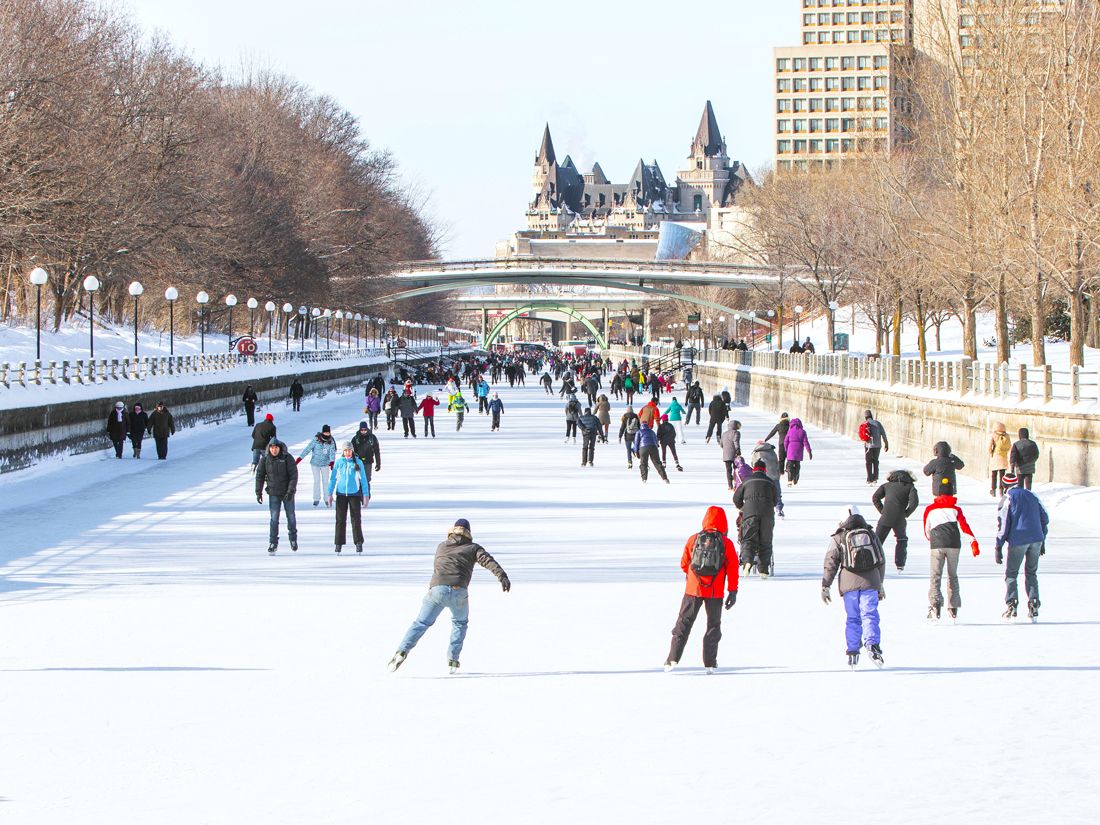
Human-made ice rinks are cool, but you know what’s even cooler? Naturally frozen ice rinks — particularly when they’re unreasonably large. If you seek superlatives on your travels and have an affinity for winter sports, move Ottawa to the top of your list. Canada’s capital and fourth-largest city is home to the world’s largest natural ice rink. Discover its fascinating history and details on how to visit below.
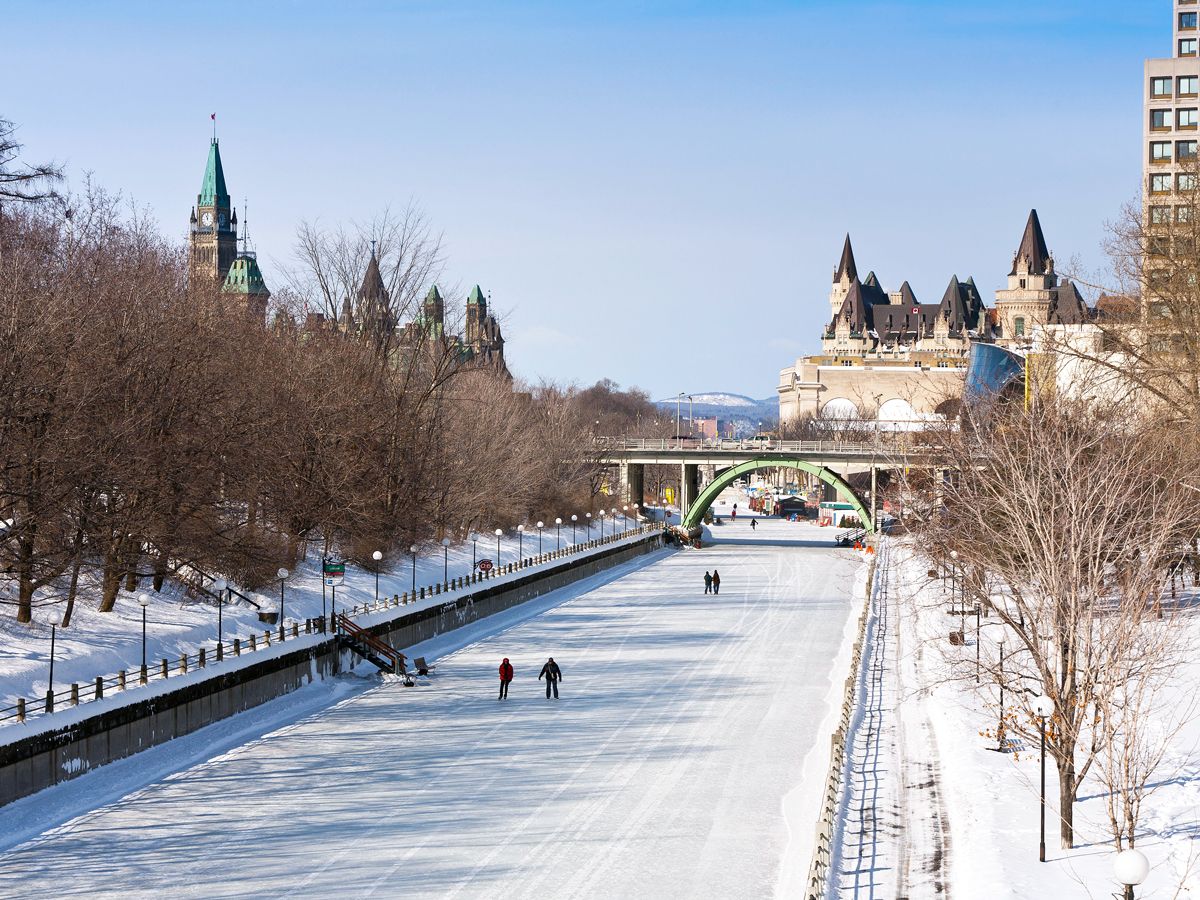
Just how big is the Rideau Canal Skateway? It has a total surface area of 1.782 million square feet, which could fit 90 Olympic skating rinks. As impressive as this natural ice rink is, the reason it exists is thanks to a remarkable feat of engineering. In 1832, the Rideau Canal opened, providing a military defense and a crucial commercial shipping connection from the Ottawa River to Lake Ontario.
The entire canal stretches 125 miles and is the oldest continuously operating canal system in North America — and the only UNESCO World Heritage Site in Ontario. According to UNESCO, it was one of the earliest canals in the world designed for steam-powered vessels. Today, it is mostly used for recreation, including the 4.8-mile section that transforms each winter into the Rideau Canal Skateway, which first opened to the public in 1971.
Guinness World Records calls this the world’s “largest natural frozen ice rink,” which differs from other frozen bodies of water because “its entire length received daily maintenance such as sweeping [and] ice thickness checks, and there are toilet and recreational facilities along its entire length.”
The canal freezes each January and February, drawing as many as 19,000 ice-skating visitors to its frosty embrace per day. Beginning downtown and ending in Dow’s Lake, it’s free to visit and open seven days a week — except when it’s closed due to warm temperatures and lack of ice, as it was from early 2023 to 2024.
The rink is operated by the National Capital Commission (NCC), which has strict standards for when it can safely open. The ice must be at least 12 inches thick in order to be safely skated upon, which requires 10 to 14 consecutive days at temperatures between -4 and -14 degrees Celsius.
2023 was simply too mild a winter for visitors to safely enjoy the Rideau Canal Skateway, but the NCC did gain valuable insights from the experience. “Our team learned a lot from the challenges we faced last year and were able to put measures in place, helped by more seasonal temperatures, to make it happen this year,” said CEO Tobi Nussbaum.
That said, future skating seasons might be shorter than they used to be. The NCC commissioned a climate change risk assessment alongside the Standards Council of Canada, which found that moderate emissions could result in “seasons with less than 40 days of skating approximately 50% of the time.”
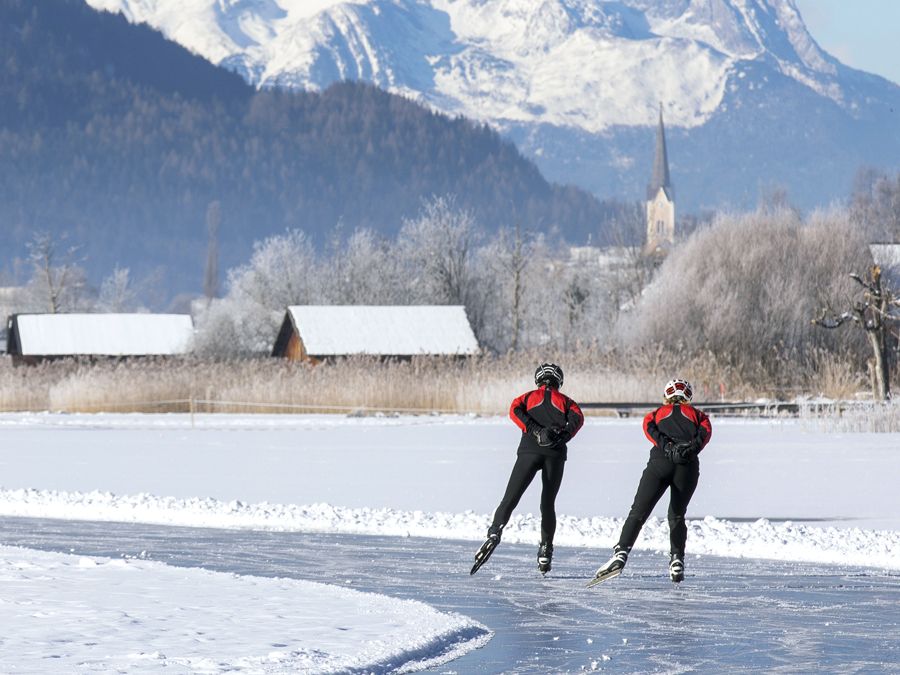
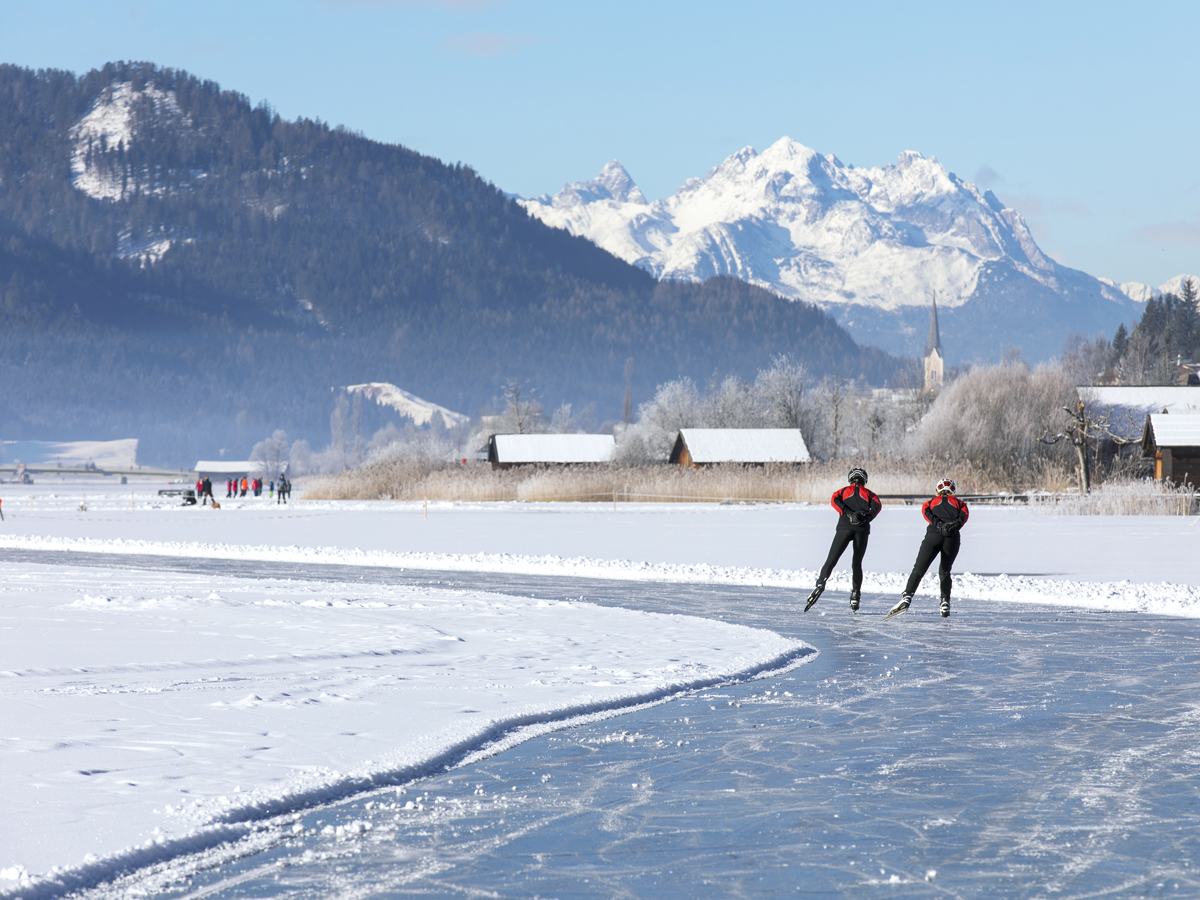
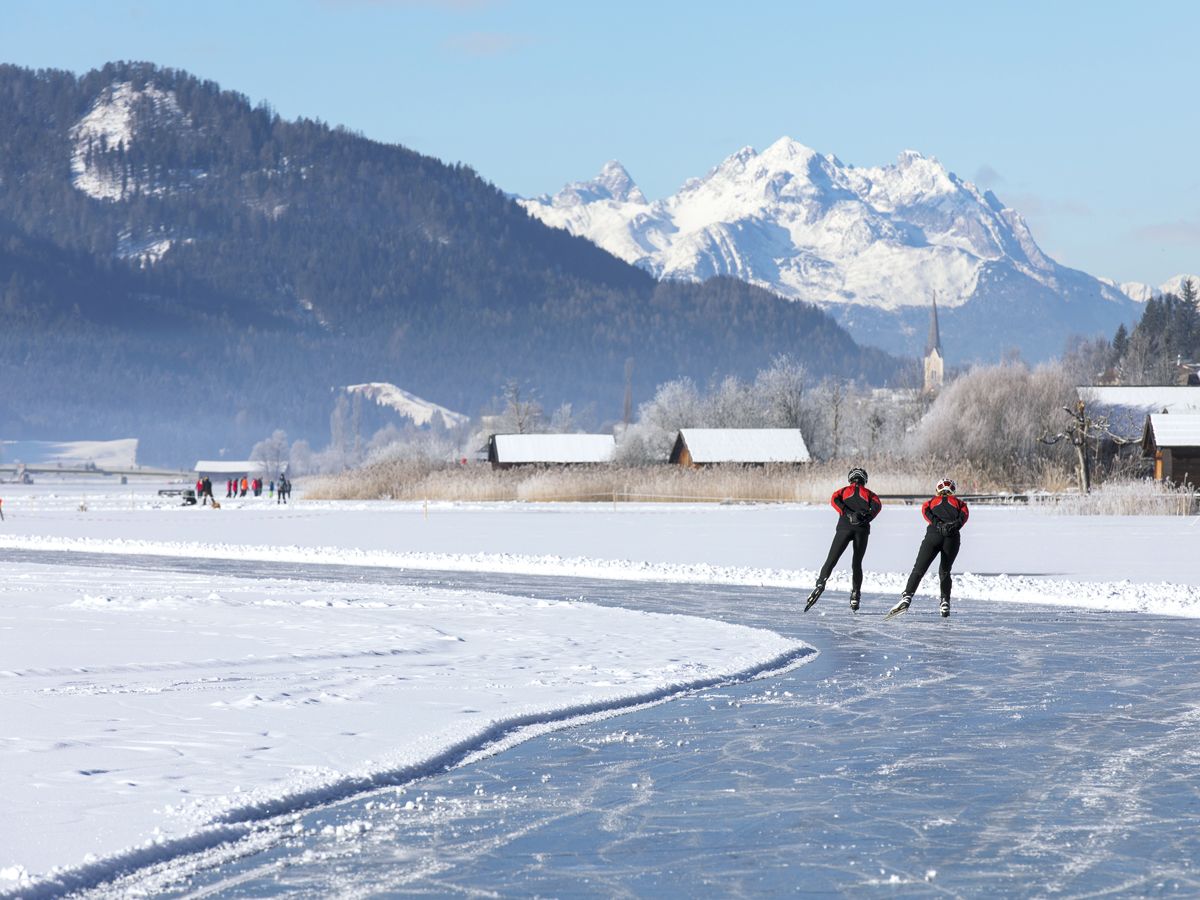
The rest of the world’s largest natural ice rinks can be found across the pond. Most prodigious of them all is Lake Weissensee in Weissensee, Austria, which is geared toward both advanced and casual skaters. It has a 1,300-foot speed-skating track and nearly 16 inches of frozen ice, not to mention striking views — a veritable winter wonderland.
Also popular are Slovenia’s Lake Bled, Lake St. Moritz in Switzerland, Munich’s Nymphenburg Palace Canal, and Lake Mälaren in Stockholm. All of them are scenic enough to be enjoyed even if you’ve never put on a pair of skates, but those who’ve been would say that getting on the ice is the best way to experience them.
Advertisement
More from our network
Daily Passport is part of Inbox Studio, an email-first media company. *Indicates a third-party property.
6 of the World’s Most Interesting Souvenir Passport Stamps
By
Bennett Kleinman
Read time: 5 minutes
December 17, 2024
Updated: March 20, 2025
6 of the World’s Most Interesting Souvenir Passport Stamps
Culture •December 17, 2024•Updated: March 20, 2025
By Bennett Kleinman
Author
Bennett Kleinman
Bennett is a New York City-based staff writer for Daily Passport. He previously contributed to television programs such as the Late Show With David Letterman, as well as digital publications like the Onion. Bennett has traveled to 48 U.S. states and all 30 Major League Baseball stadiums.
Most passport stamps are pretty straightforward. They feature the name of the country, the date of travel, and sometimes an official seal. But there are some souvenir stamps that really pop off the page. Certain tourist destinations offer unique stamp designs that highlight local landmarks and iconography, which can usually be acquired at regional tourist centers. (Word of caution: Adding these unofficial stamps to your actual passport may invalidate the document. Instead, you should collect these sentimental souvenirs in a separate booklet that you can look back on for years to come.) So, where can you find these uniquely designed images? Let’s take a look at six distinctive stamps from around the world.
Given that it’s not a sovereign territory, there are no immigration centers in Antarctica, and thus no official passport stamps to be acquired. However, there are several locations throughout the continent where you can procure a unique souvenir stamp to commemorate your long southward journey.
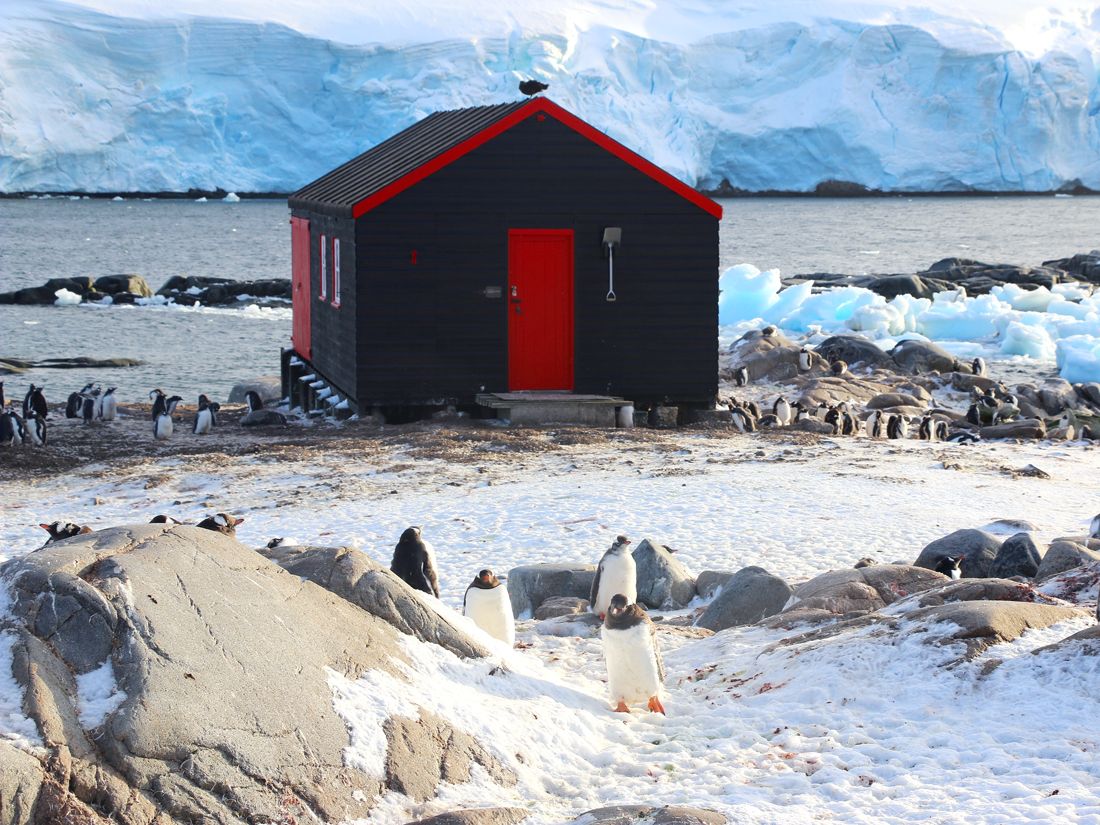
One such site is a post office located in the British base of Port Lockroy, toward the northern end of Antarctica. The “Penguin Post Office,” as it’s affectionately known, is often surrounded by the thousands of gentoo penguins that flock here each summer. If you visit the post office, you’ll receive a souvenir stamp featuring the image of a penguin surrounded by text listing out the region’s southerly coordinates.
If you venture south, you’ll come across the Amundsen-Scott South Pole Station, the southernmost year-round research station in the world. It offers unique stamps to anyone willing to make the perilous trek. Those stamps include an outline of the Antarctic continent, as well as text denoting the 9,300-foot elevation of the research station.
Located roughly 700 miles north of Antarctica is the Argentinian city of Ushuaia. Nicknamed “El Fin del Mundo” (Spanish for “The End of the World”), Ushuaia lays claim to the title of the southernmost city on Earth. Situated along the shore is the town’s local tourist office, where visitors can get a stamp to prove just how far they’ve journeyed.
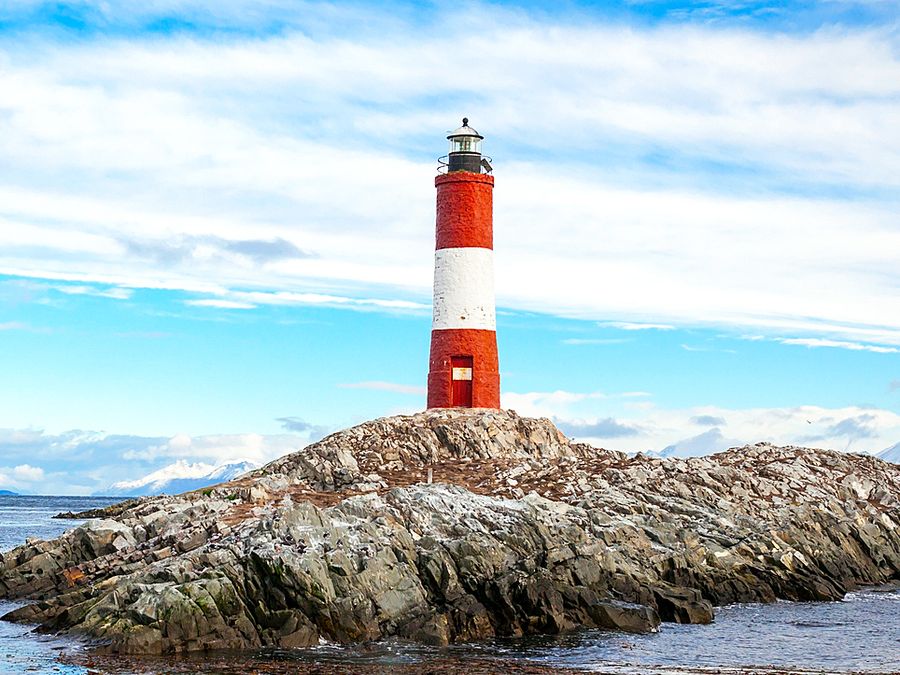
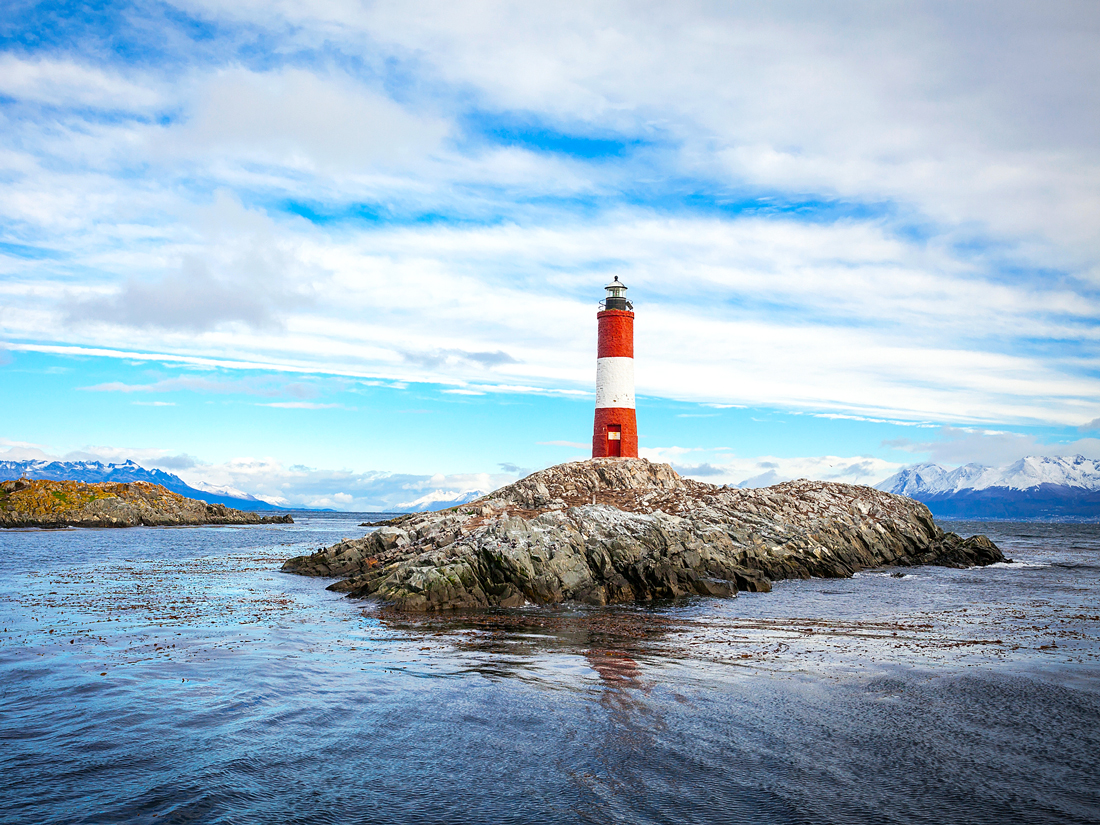
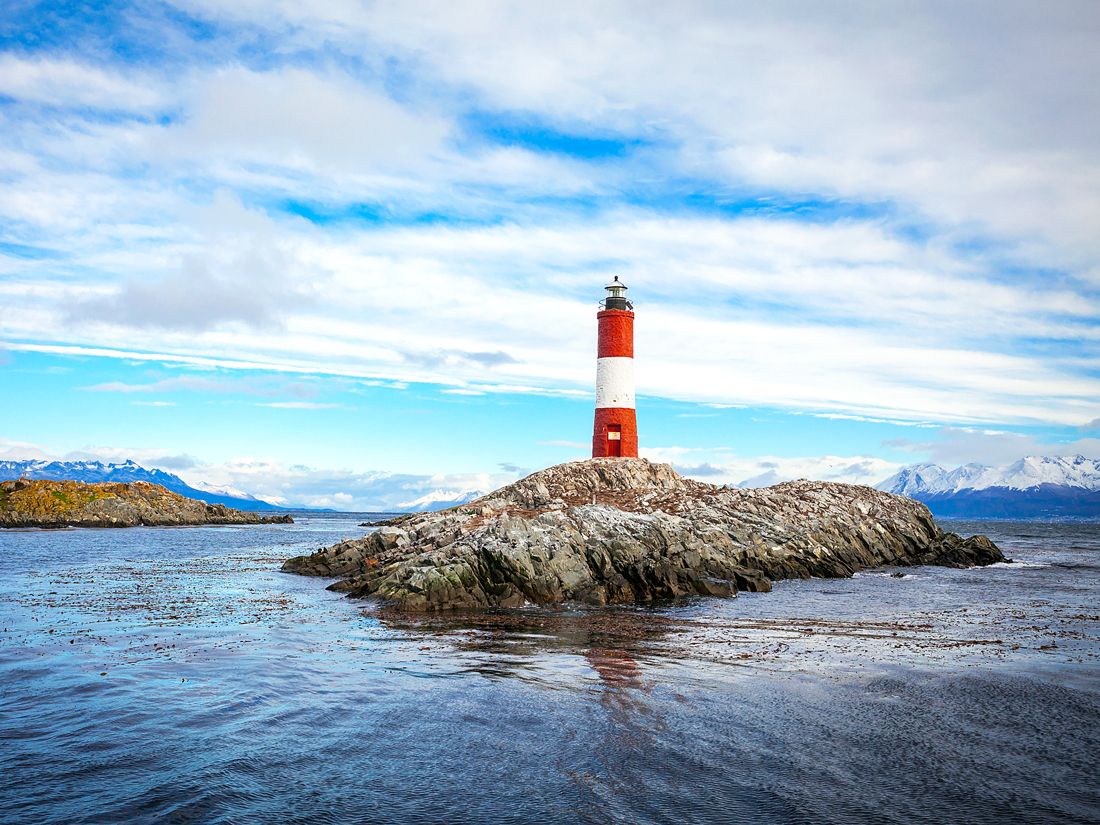
Each of these stamps features an eloquent design, with the name of the city up top and the “Southernmost City in the World” denomination emblazoned on the bottom of the seal. The stamp also includes a depiction of a local landmark called Les Eclaireurs Lighthouse, which was built in the 1920s along the Beagle Channel and remains one of the most-visited attractions in the city. Visitors to Ushuaia can also get a diploma to honor their trip to the world’s southernmost city.
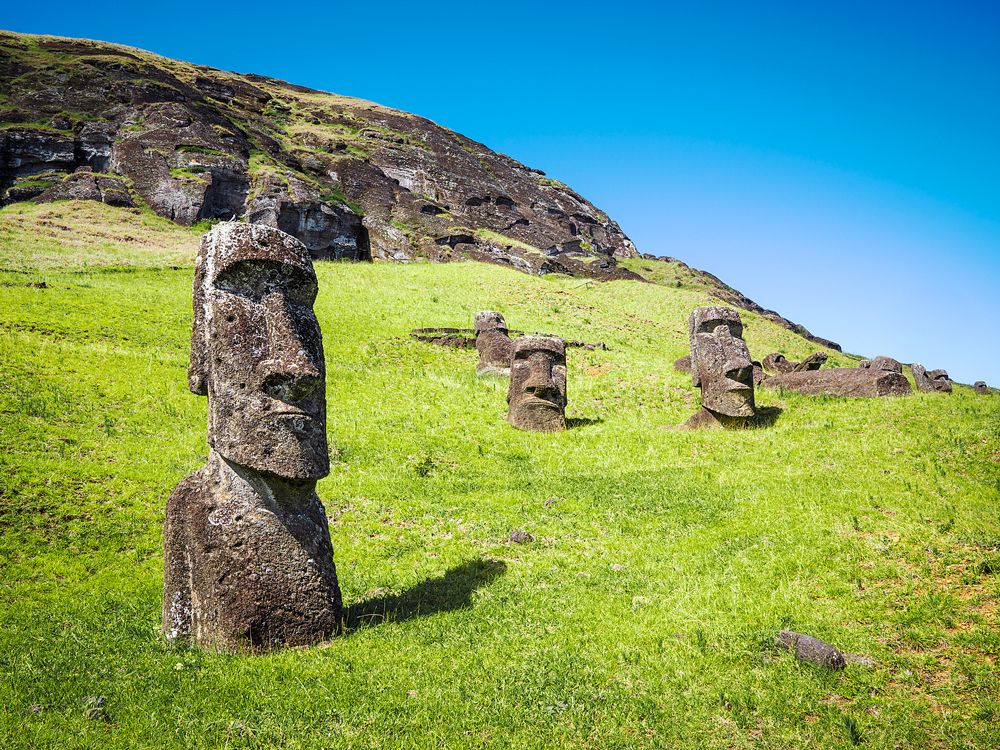
The most recognizable symbols on Easter Island are moai — the hundreds of monolithic heads (with bodies buried beneath the ground) that were built by the Rapa Nui peoples hundreds of years ago. Three of these moai make up the design of Easter Island’s souvenir stamp, which can be obtained for free at a post office located in the town of Hanga Roa on the western part of the island.
In addition to the three large moai heads, the stamp also includes the name “Isla de Pascua” (Spanish for “Easter Island”). If you happen to be flying from Santiago, Chile, over to Easter Island, users on Reddit have also reported receiving a special stamp featuring a single moai head.
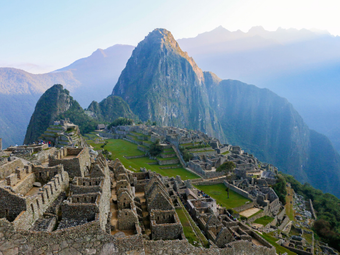
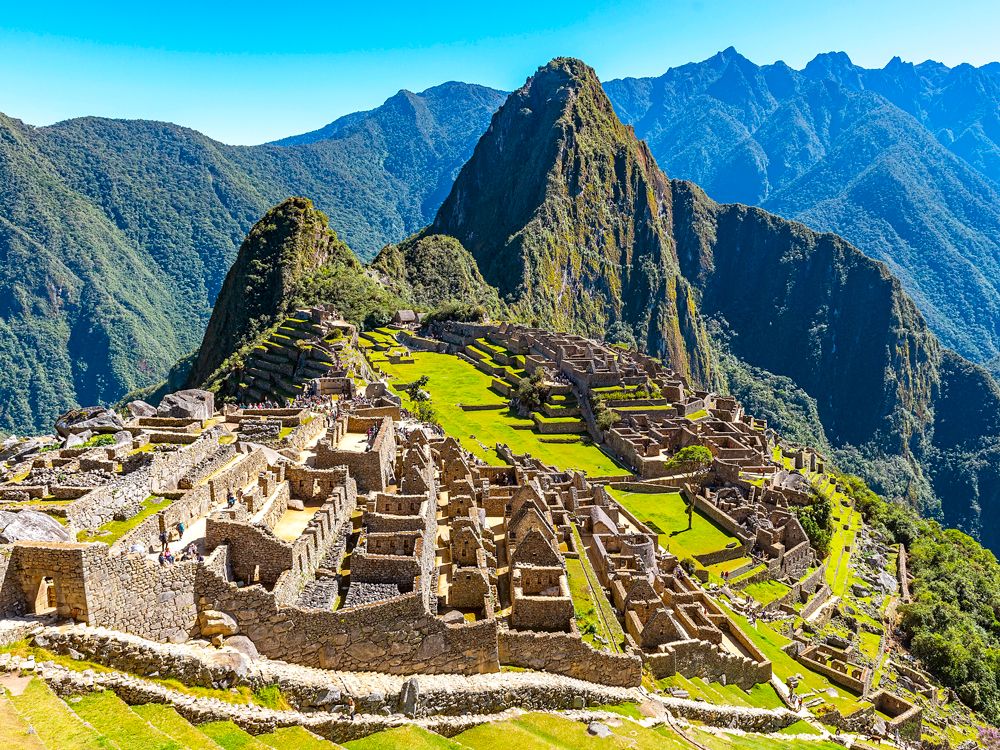
Built over 500 years ago by the Inca civilization, the UNESCO World Heritage Site of Machu Picchu is one of the most recognizable landmarks in Peru. When you visit this mountaintop citadel, be sure to get your souvenir booklet stamped at the small tourist office beside the ruins. The stamp comes included in the park’s admission fee.
The appealing design features ancient ruins in the foreground with looming mountain peaks in the background. Some versions even include a tiny image of a vicuña — a mountain-dwelling creature that’s also the national animal of Peru — drawn into the negative space beneath the mountain peak.
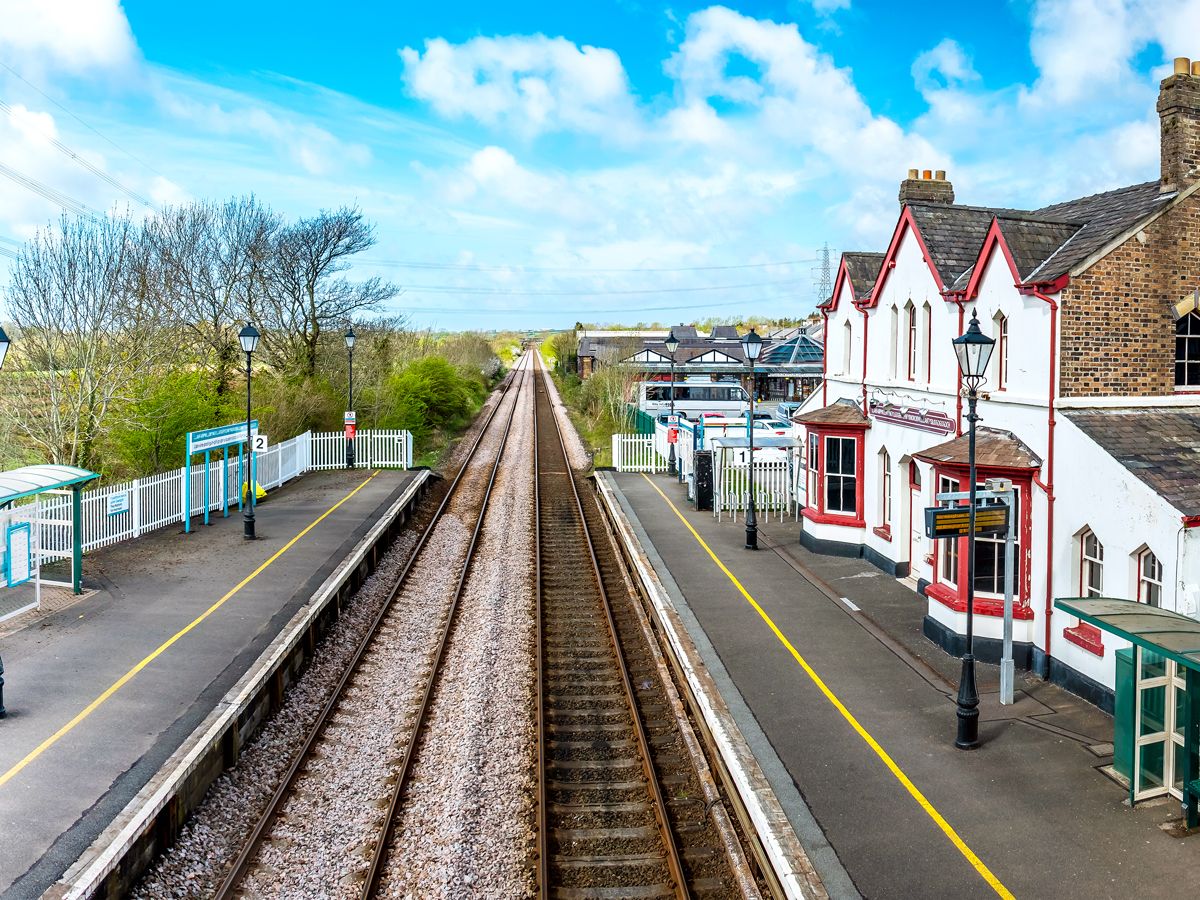
Llanfairpwllgwyngyllgogerychwyrndrobwllllantysiliogogogoch, Wales
The Welsh town of Llanfairpwllgwyngyllgogerychwyrndrobwllllantysiliogogogoch has the longest name of any European village, totalling 58 characters. This name is so long, in fact, that it wraps around in a circle on the village’s souvenir passport stamp. Head over to the gift shop opposite the train station, where someone will be glad to stamp your souvenir book with this unique stamp.
In the center of the design, you’ll find a likeness of the Welsh dragon, which also appears on Wales’ national flag. Surrounding the dragon is a circular chain of letters containing the village’s long name. If you’re curious what Llanfairpwllgwyngyllgogerychwyrndrobwllllantysiliogogogoch stands for, travel expert Rick Steves says it’s Welsh for “St. Mary’s Church in the hollow of white hazel near a rapid whirlpool and the Church of St. Tysilio near the red cave.”
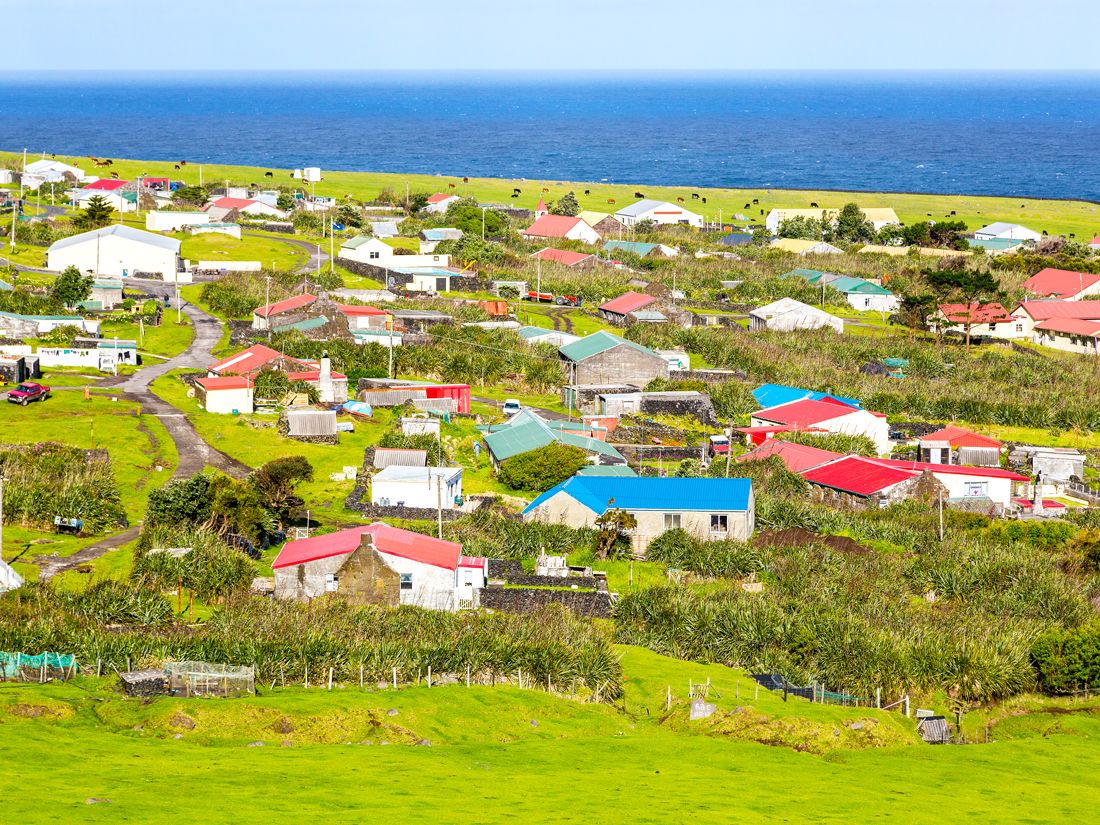
Unlike the other souvenir passport stamps on this list, the one you receive at Tristan da Cunha is as official as it gets. This small Atlantic island — located roughly halfway between Africa and South America — is a sovereign state within the United Kingdom. The design of its passport stamp features a rounded hill, flowing ocean waves, and a bird soaring through the foreground. This combination of the stamp’s visual design, coupled with the fact that you can only get here by taking a five-day boat trip from South Africa, makes this one of the most remarkable passport stamps in the world.
Do you have a unique passport stamp of your own? Let us know in the comments!
Advertisement
More from our network
Daily Passport is part of Inbox Studio, an email-first media company. *Indicates a third-party property.
6 New Year’s Celebrations That Don’t Take Place on January 1
By
Julia Hammond
Read time: 5 minutes
December 13, 2024
Updated: December 13, 2024
6 New Year’s Celebrations That Don’t Take Place on January 1
Culture •December 13, 2024•Updated: December 13, 2024
By Julia Hammond
Author
Julia Hammond
Julia is a U.K.-based travel writer whose work has been featured in The Independent, The Telegraph, The New Zealand Herald, and Culture Trip, among others. She’s an enthusiastic advocate for independent travel and a passionate geographer who has had the privilege of traveling to more than 130 countries in search of a story.
The United States — like many countries in Latin America, Europe, Africa, and Australasia — marks the start of the new year on January 1. It’s a time to make resolutions and an excuse to let loose and celebrate with big gatherings of friends and family members. However, it’s also an opportunity to think about those cultures that follow a different calendar and celebrate the new year at a different time — not least because, as travelers, it’s often a highly rewarding time to visit. Check out these six fascinating New Year’s celebrations that don’t take place on January 1.
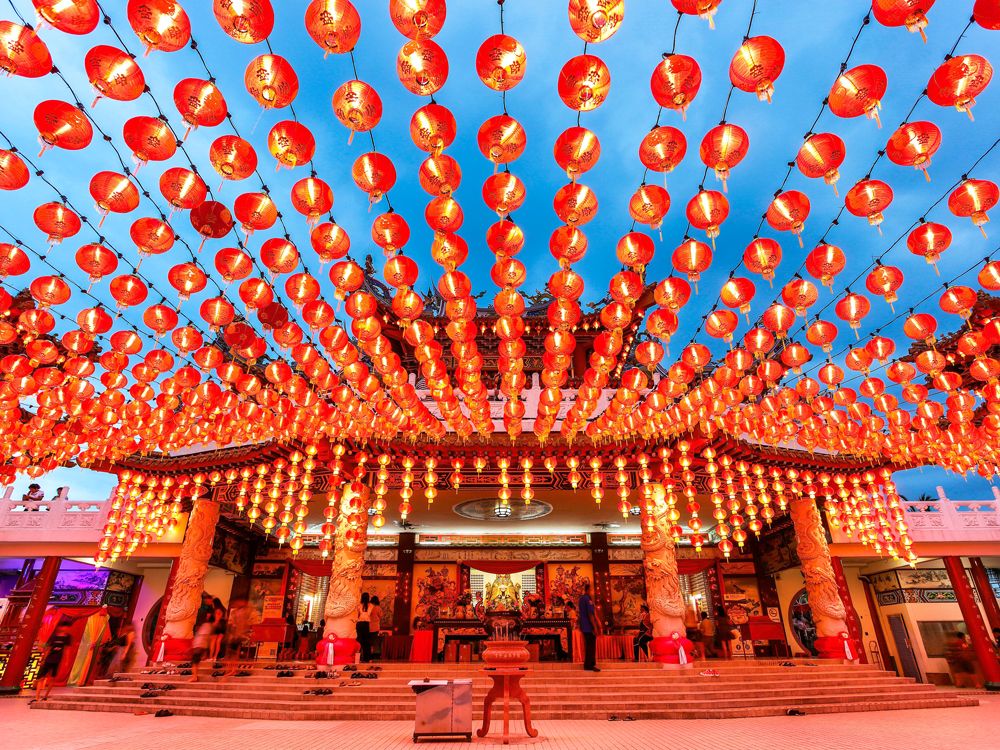
2025 will be the Year of the Snake, and the billions of people who live in countries that follow the lunisolar calendar, such as China, will welcome the new year on January 29. Chunjie is also known as the Spring Festival, which lasts for two weeks and celebrates the end of the coldest days of winter and the beginning of spring.
Some of the traditions that are associated with Chunjie are designed to keep a demonic beast called Nian at bay. This mythical creature — which looks similar to a lion with a horn on its head — languishes in the depths of the ocean for most of the year, but on the last day of the lunar year, it comes ashore in search of people and livestock to feast upon. According to tradition, Nian is frightened of firecrackers and anything that’s red, which is why you see plenty of both at this time of year. Red envelopes (hong bao in Mandarin; lai see in Cantonese) containing money are also exchanged. The amount enclosed is important – eight is considered lucky, while four is the opposite.
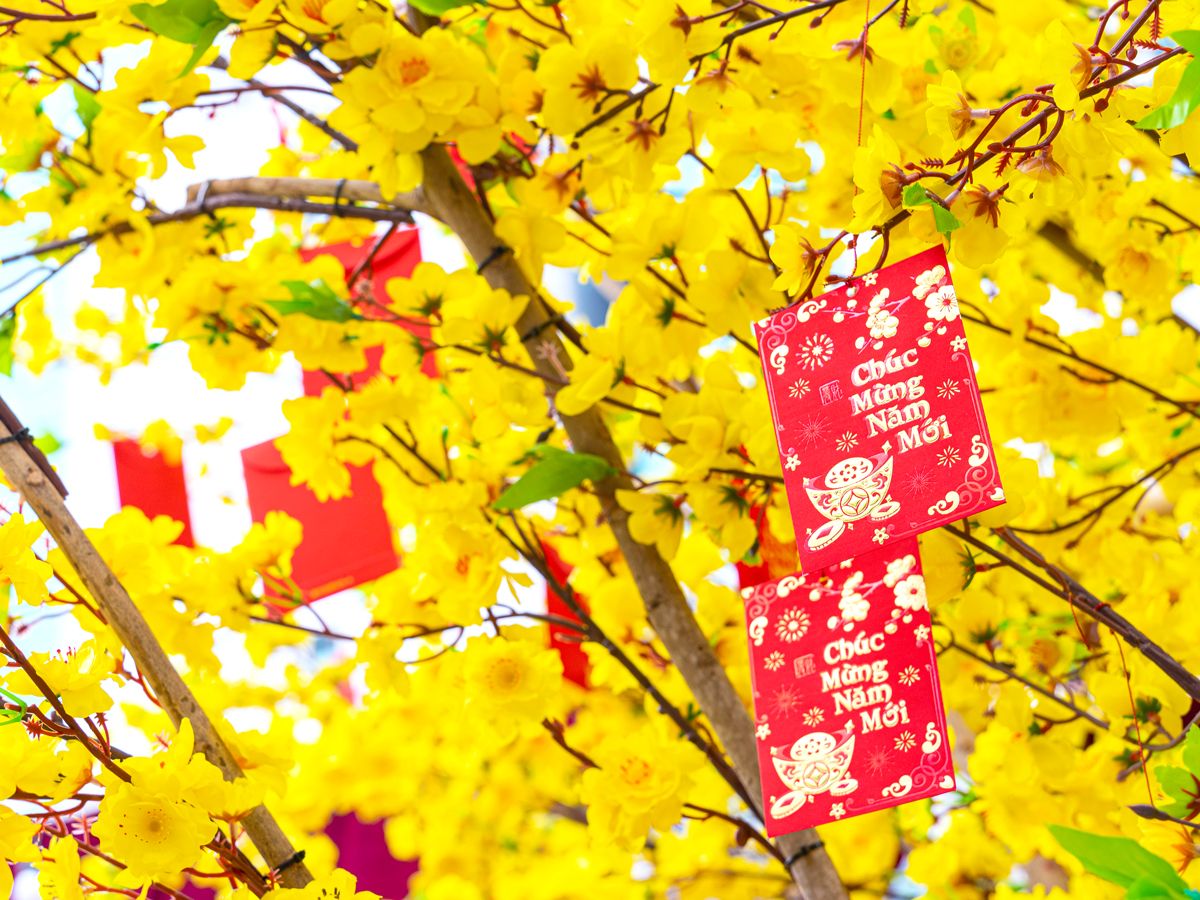
Marking the Lunar New Year is a big deal in Vietnam, where their version of the Spring Festival is known as Tết Nguyên Đán, usually shortened to Tết. In 2025, it will take place from January 28to February 3. In the past, when the country was a largely agricultural society, this would have been an important period of rest and recovery after the toil of the harvest and before the next crop had to be sown.
These days, for many in Vietnam, Tết is a chance to reconnect with family and remember those who have passed. During the festival, you’ll see a lot of red and yellow decorations, as these colors signify fortune. Houses are given a thorough clean in the days leading up to Tết, but on the day itself, no one picks up a broom lest they sweep away good luck.
Rosh Hashanah
Credit: NurPhoto via Getty Images
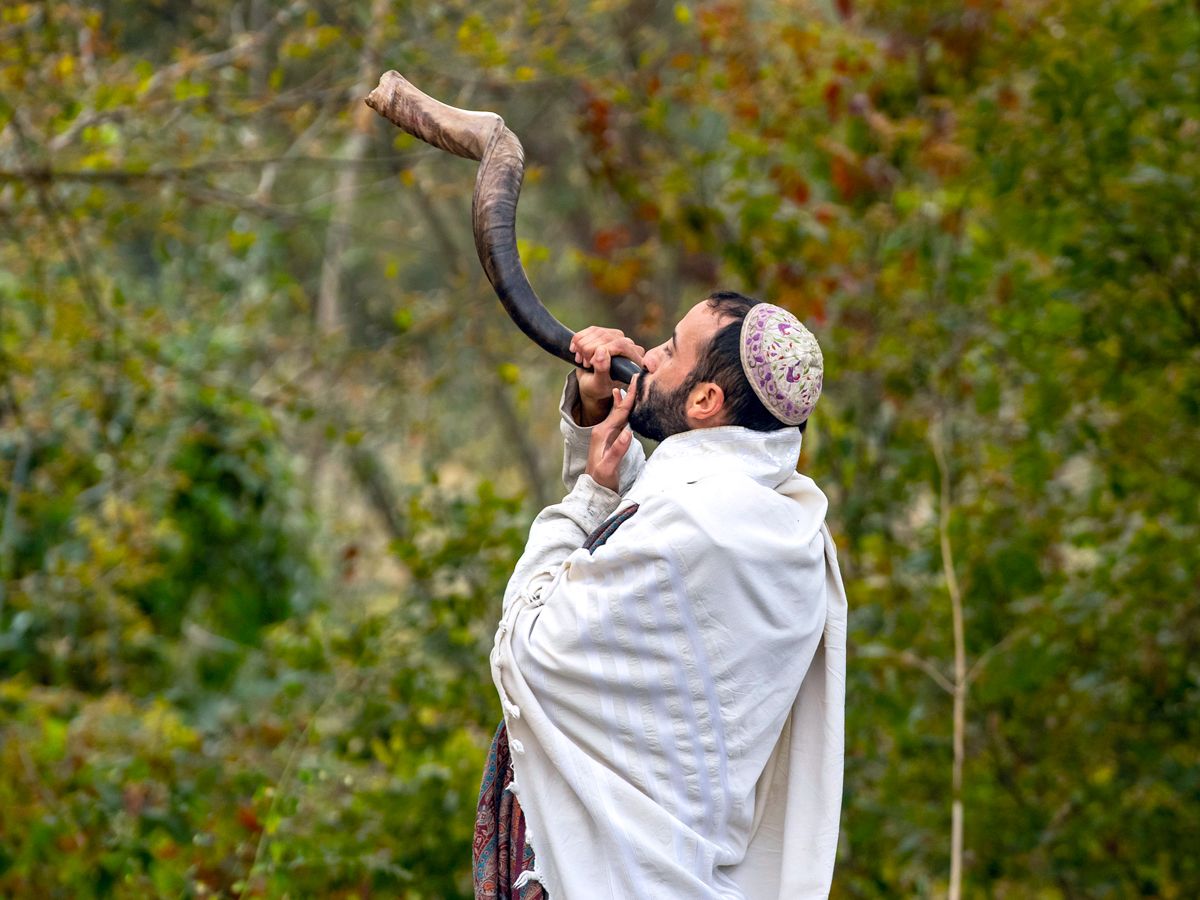
Rosh Hashanah (Jewish New Year) falls in late September or early October, at the start of the month of Tishrei. In 2025, this important holiday will take place from September 22 to 24. It’s a time for believers to reflect and take stock, as it ushers in the Ten Days of Repentance that lead up to Yom Kippur, the Day of Atonement.
Several traditional practices are associated with Rosh Hashanah, including the blowing of the shofar (a hollowed-out ram’s horn used for rituals) during services at the synagogue. Jews consume certain foods for good luck — believers dip challah bread and apples into honey and eat them after reciting a blessing. Another significant ritual is to toss crumbs of bread into water as a symbol of casting off sin.
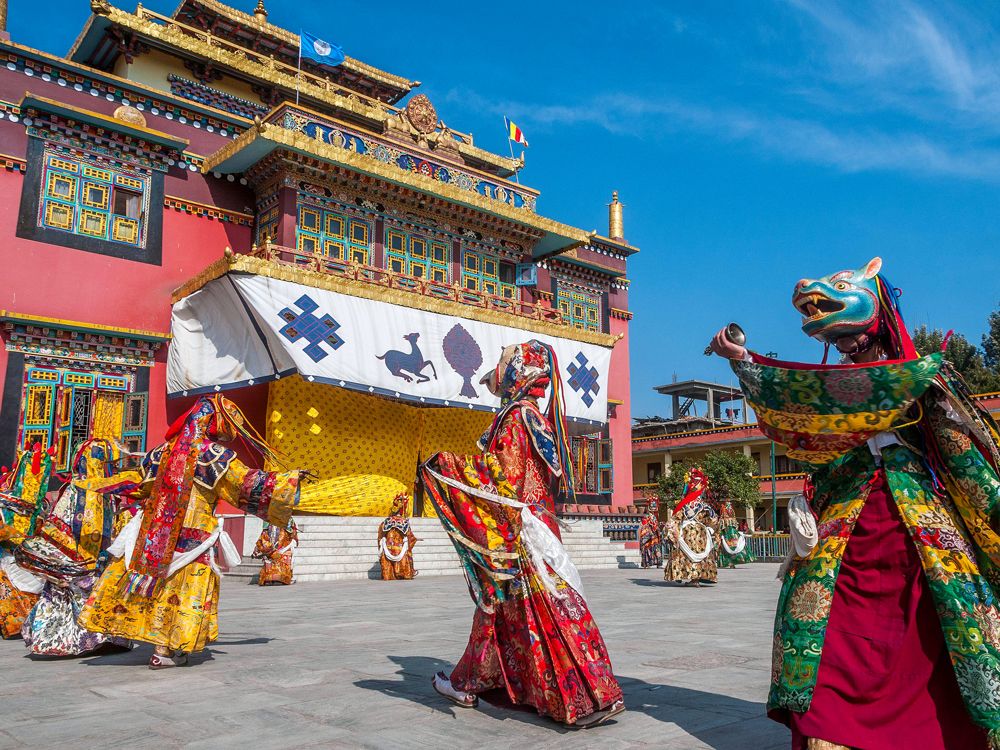
Losar takes place in Tibet at the end of winter. The 2025 celebration will occur from February 28 to March 14, though the first three days are the most significant. It’s customary to make offerings at monasteries, shrines, and stupas. Celebrants also don new outfits, exchange gifts, and greet each other with the words “tashi delek,” which mean “good luck.”
Tibetans enjoy a New Year’s feast that includes a vegetable soup known as guthuk. Items are hidden inside dough balls inside the soup, and those who find wood or rice inside are said to have a promising outlook for the upcoming year. Celebrations also include firecrackers, which are thrown to scare away evil spirits. They wrap up with the Butter Lamp Festival, a lively affair featuring dancing and music at the temple.
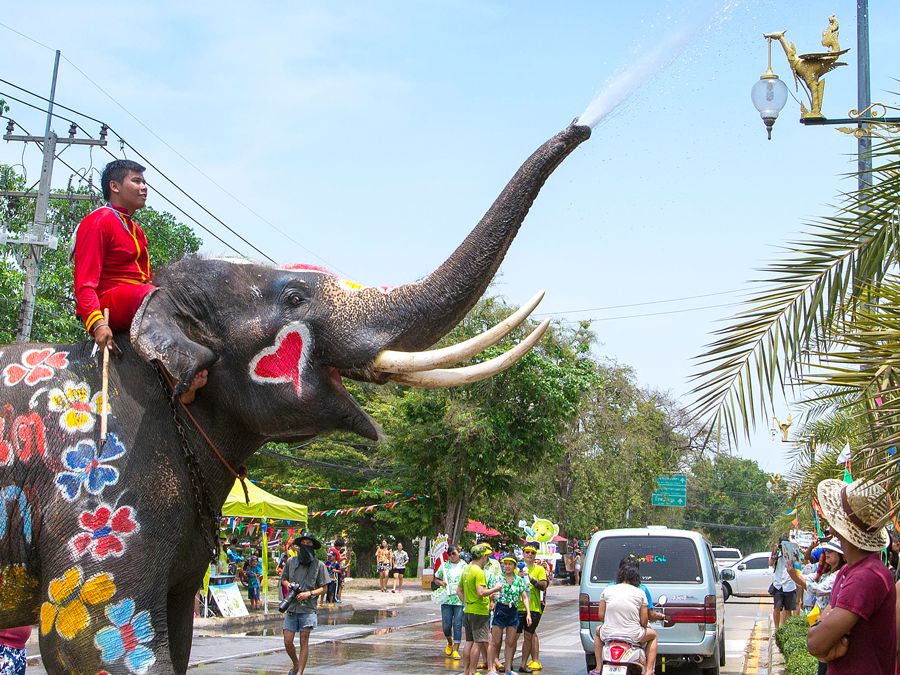
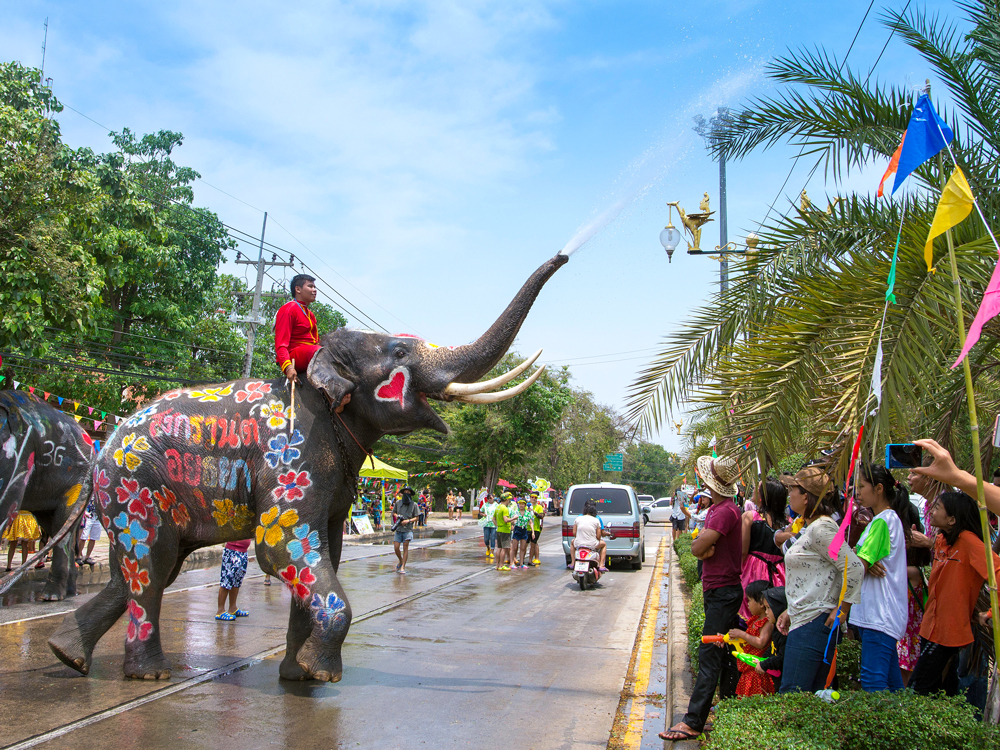
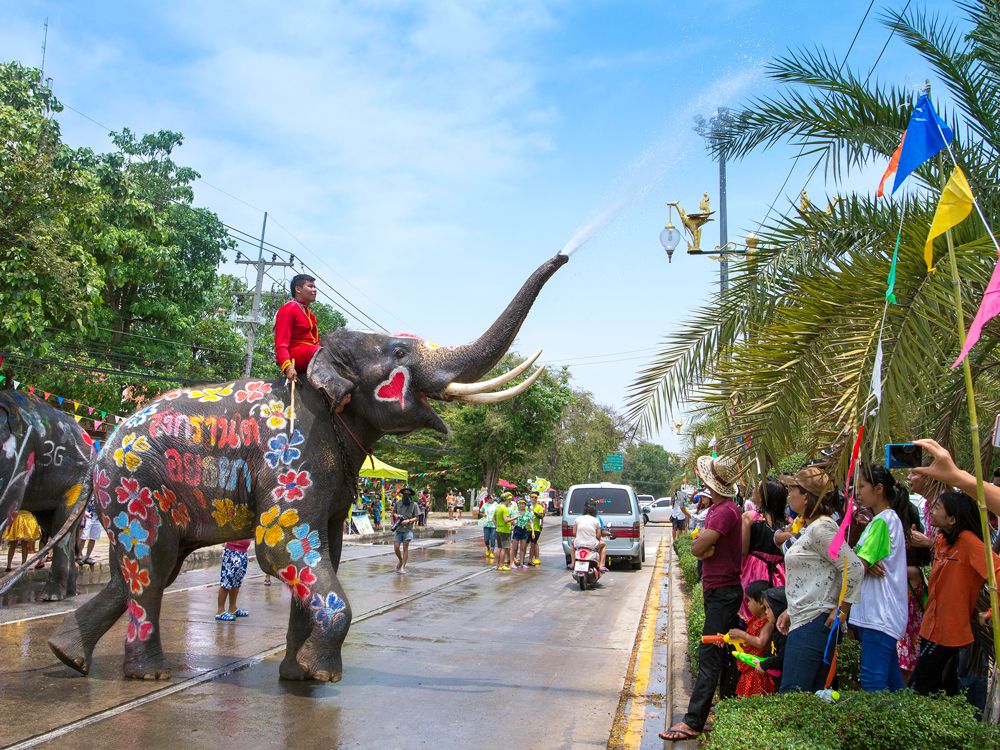
Theravada New Year is a Buddhist celebration that follows the rice harvest. It is marked in varying ways across Thailand (where it’s called Songkran), Cambodia, Laos, and several other countries in South and Southeast Asia. Dates vary slightly from country to country, but in Thailand the holiday takes place from April 13 to 15 each year.
Once a genteel affair, these days Songkran is characterized by a lively water festival — welcome news for travelers who wish to join in at a time of year when temperatures often rise considerably. However, there’s a serious message behind all the fun — the action of splashing water represents cleansing, purification, and renewal. In addition, ceremonies take place at pagodas and monasteries, while young people visit their elders to show respect.
Yennayer
Credit: NurPhoto via Getty Images
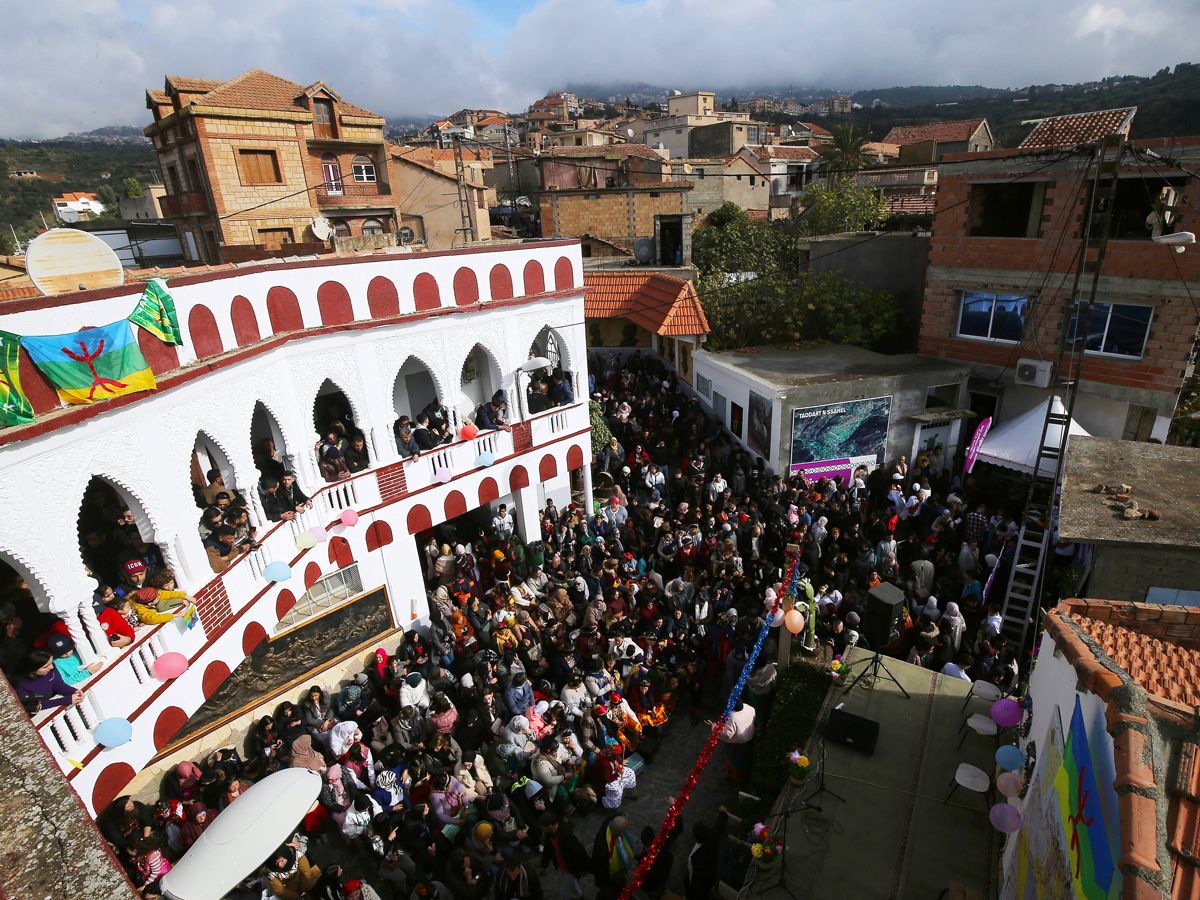
In parts of North Africa, Amazigh New Year, which falls on January 12, has only recently become an official public holiday, but the celebration of Yennayer to round out the agrarian year goes back centuries. Traditionally, bonfires are lit, and a feast is prepared by members of each Berber community, with foods used to represent the abundance of the local harvest.
In Morocco’s High Atlas mountains, for instance, a dish called tagoula is often served. It consists of boiled corn or barley flavored with olive oil and honey. The chef buries the pit from a date within it, which is considered a good omen for the person who bites on it. Berkoukes (a dish similar to cous cous) and irkmen (a thick soup of fava beans and wheat) are popular alternatives. According to tradition, no one should leave the table without a full belly, as this means there will be no famine or shortages in the upcoming year.
Advertisement
More from our network
Daily Passport is part of Inbox Studio, an email-first media company. *Indicates a third-party property.
The Best Travel Perks You Can Get From Credit Cards
By
Peter Vanden Bos
Read time: 6 minutes
December 13, 2024
Updated: December 16, 2024
The Best Travel Perks You Can Get From Credit Cards
Tips •December 13, 2024•Updated: December 16, 2024
By Peter Vanden Bos
Author
Peter Vanden Bos
Peter is a Toronto-based journalist, editor, content strategist, and self-professed avgeek with 15 years of experience covering all things travel. Prior to joining Daily Passport, he oversaw newsletter publication for Travelzoo. His favorite destinations to explore include Japan, France, Chile, New Zealand, and his adopted home country of Canada.
Signing up for a travel rewards credit card could bring that bucket-list vacation one step closer to reality. With a big sign-up bonus and extra points earned in categories such as dining and travel, the points can quickly add up to a free flight or hotel stay. But why stop there? Savvy travelers know that the best travel credit cards offer a slew of other valuable perks, from access to swanky airport lounges to often-overlooked benefits including travel insurance. Here are five of the most valuable travel perks that come with credit cards.
Lounge Access
Credit: PixelsEffect/ E+ via Getty Images
With ever-more-crowded terminals and long security lines, many travelers aim to arrive at the airport with plenty of time to spare. While there’s nothing wrong with passing the time before boarding at the gate, you may be looking for a more elevated experience to kick off your vacation on the right note. Enter: the airport lounge.
As part of their annual fee, many travel rewards credit cards offer cardmembers complimentary access to lounges, where travelers can relax in a comfortable environment and take advantage of amenities such as free buffets and free-flowing cocktails.
There are a few different types of airport lounges. In recent years, the major U.S. card issuers themselves have been building out their own network of lounges in an effort to attract new card signups. American Express pioneered this concept with its Centurion Lounges (access included with the Platinum Card), followed by Capital One (included with the Venture X Rewards card) and Chase (included with the Chase Sapphire Reserve card).
Airlines also operate their own branded lounges, such as the American Airlines Admirals Club or the Delta Sky Club. Many premium airline credit cards also offer access, though it’s typically available only when flying that airline or one of its partners. This perk can often represent a great value. For example, if you wished to purchase an annual membership to the United Club, it would set you back $650 a year (as of 2024), but if you sign up for the airline’s United Club Infinite Credit Card, unlimited access is included as part of the card’s $525 annual fee.
Looking for more lounge options? A Priority Pass membership is another valuable perk that comes with certain travel rewards cards such as the Chase Sapphire Reserve and Capital One Venture X Rewards cards. Priority Pass operates a network of more than 1,300 global airport lounges, so you shouldn’t have much trouble finding one to enjoy on your next trip.
Elite Status (or Elite-Like Perks)
Credit: alvarez/ E+ via Getty Images
To recognize their most loyal customers, airlines and hotels typically award elite status to those who meet certain spending thresholds. Elite status unlocks lucrative benefits such as free upgrades, priority boarding, and late check-out. But even if you don’t typically spend enough to qualify, a credit card can give you a jump-start toward status.
Some credit cards even offer elite status outright just for having the card. For instance, Marriott Bonvoy Brilliant cardholders receive complimentary Platinum Elite status, while the Hilton Aspire Card offers top-tier Diamond status. The Air Canada Aeroplan Card grants automatic 25K Elite status with Air Canada for the first two years of card membership.
And then there are cards which offer elite-like perks even if you don’t achieve elite status. Take the American Express Platinum Card — when you book a hotel that’s part of the Fine Hotels + Resorts collection, you get cardmember-exclusive perks including complimentary daily breakfast, room upgrades, guaranteed late checkout, and a resort credit.
Travel and Rental Car Insurance
Credit: blackCAT/ E+ via Getty Images
Even the best-laid travel plans can sometimes go awry, which is why some people purchase travel insurance for upcoming trips. But did you know many travel rewards credit cards already offer travel insurance?
Depending on the card and policy, this would reimburse you for things such as lost or damaged baggage, trip delays or interruptions, car rental damage, and medical treatment. Holding a card with travel insurance (and, typically, using it to pay for all or part of your trip) means you don’t have to purchase a separate stand-alone travel insurance policy.
One of the most comprehensive travel insurance policies is found with the Chase Sapphire Reserve. Benefits include up to $20,000 reimbursement for trip interruption or cancellation and up to $3,000 per passenger for lost bags (accurate as of 2024). Other cards, even ones with lower annual fees, also offer travel insurance protections, but you’ll want to take a careful look before deciding if you need to purchase a more comprehensive policy.
Rental car insurance is another handy perk. Some cards, such as the Chase Sapphire Reserve, even offer primary insurance coverage, which means if you get in an accident, it applies before any other type of insurance coverage you might have. (Other cards offer secondary coverage, which means you’ll have to go through your existing provider first and possibly deal with multiple insurance companies.)
To be eligible, make sure you waive the insurance offered by the rental car company and pay with the rental using the credit card that offers insurance. And be sure to read through the fine print — for example, credit cards typically offer collision damage coverage but not liability coverage.
Travel Credits and Certificates
Credit: Tatiana Maksimova/ Moment via Getty Images
While it’s true that many of these travel perks come at a cost — premium card annual fees often exceed $500 — you can easily offset your out-of-pocket cost by taking advantage of the credits and certificates that some cards offer.
One of the simplest to use is the $300 annual travel credit with the Chase Sapphire Reserve. As a cardmember, you’ll automatically receive statement credits of up to $300 for any travel purchase — airline tickets, hotel rooms, cruises, and even parking, tolls, and taxi rides.
Capital One’s Venture X Rewards card also offers a $300 credit, but this applies only to bookings through the Capital One travel portal. And with the American Express Platinum Card, you’ll get a $200 credit for prepaid hotels booked through American Express Travel and $200 per year to offset airline fees such as those for checked baggage or seat selection.
Free hotel night certificates are another potentially useful benefit. The World of Hyatt Credit Card offers a free night redeemable at select properties for each cardmember anniversary; you can earn an additional free night by meeting certain spending thresholds. Similarly, the Marriott Bonvoy Boundless offers a free night award for each year you hold the card.
PreCheck and Global Entry Fee Reimbursement
Credit: AzmanL/ E+ via Getty Images
Nobody likes standing in a long security or customs line, but fortunately, there are ways to reduce your wait. Start by enrolling in a Trusted Traveler Program like TSA PreCheck or Global Entry, which allows prescreened passengers to bypass certain parts of the process, such as removing your laptop or shoes in the security screening line.
These programs aren’t free, but that’s where credit card perks come in. A large number of credit cards will automatically credit cardholders the application fee ($78 for PreCheck or $120 for Global Entry, as of October 1, 2024). If you travel frequently, it’s a no-brainer.
Advertisement
More from our network
Daily Passport is part of Inbox Studio, an email-first media company. *Indicates a third-party property.
8 U.S. Natural Attractions With Fascinating Histories
By
Daily Passport Team
Read time: 7 minutes
December 13, 2024
Updated: March 20, 2025
8 U.S. Natural Attractions With Fascinating Histories
Outdoors •December 13, 2024•Updated: March 20, 2025
By Daily Passport Team
Author
Daily Passport Team
Daily Passport writers have been seen in publications such as National Geographic, Food & Wine, CBC, Condé Nast Traveler, and Business Insider. They're passionate about uncovering unique destinations and sharing expert tips with curious travelers.
Though the U.S. is a relatively young nation, it’s easy to forget that the land it occupies has been shaped over 4 billion years. Across America, there are countless wonders that reveal America’s fascinating geological history — making them a must for history buffs and outdoor enthusiasts alike. From iconic monuments to underrated gems, here are eight historically significant U.S. natural attractions you shouldn’t miss.
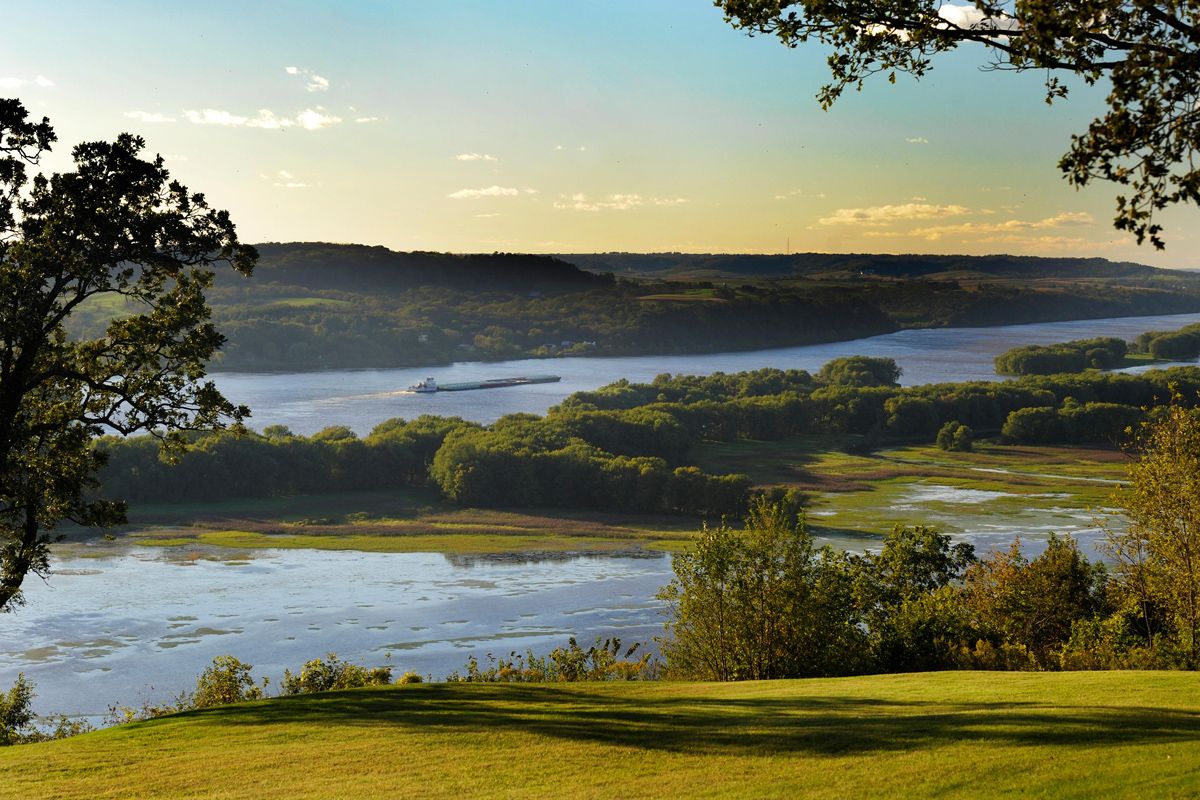
Around 10,000 years ago, much of Wisconsin was covered by a continental glacier. However, the glacier spared this nearly 25,000-acre region, endowing the geologically unique area (which extends into parts of Minnesota, Iowa, and Illinois) with its name.
Retreating glaciers leave behind “drift,” which are deposits of silt, gravel, and rock. This landscape has none. In its absence, the Driftless Area is left with a dramatic topography of rolling karst limestone hills and valleys, punctuated by the largest concentration of cold water streams in the world.
Today, the region is a highlight of America’s dairyland, with friendly small towns — including a number of Amish settlements — and well-regarded creameries that turn out some of the country’s best cheese. The Driftless is a four-season recreational draw as well, with outdoor enthusiasts flocking to fish for trout on the many streams, hike, cycle, or canoe the Kickapoo River.
On the Mississippi River, the Mississippi Flyway provides ample opportunities for birders, who come to witness the migration of great flocks of American white pelicans and tundra swans that fly low above the waters, while the year-round population includes large numbers of bald eagles.
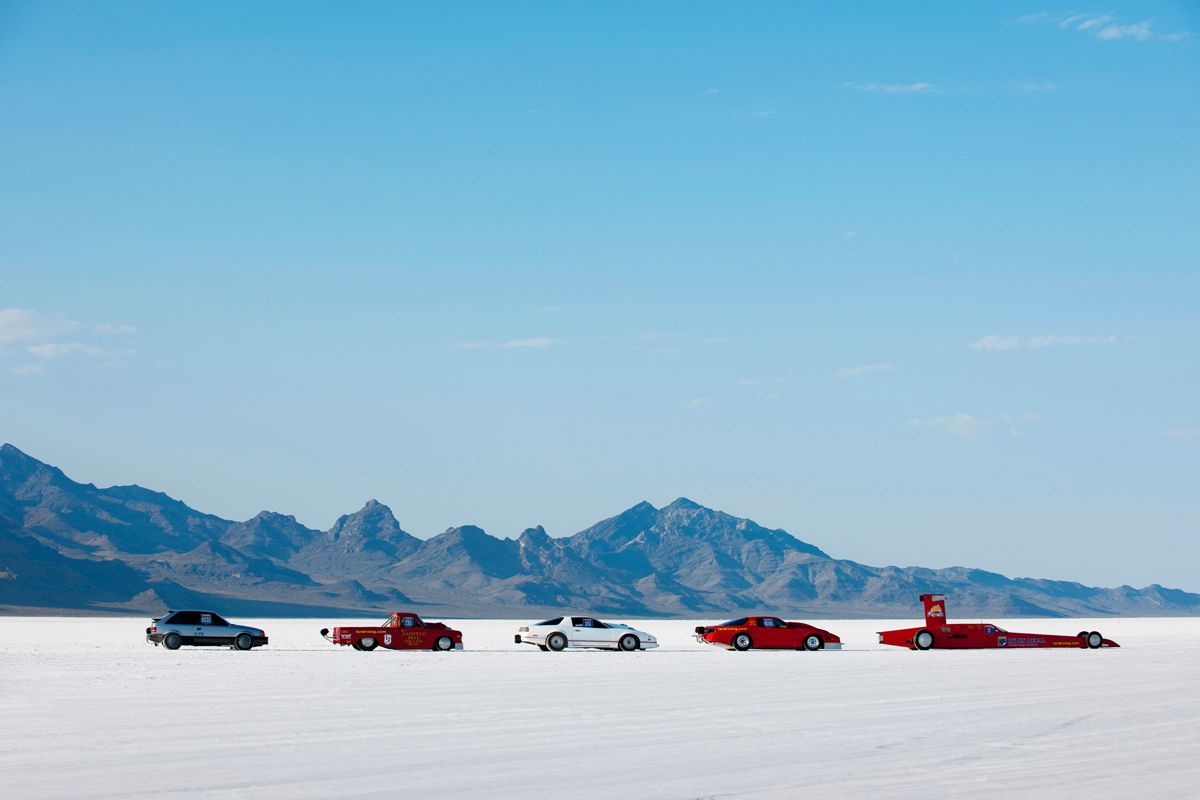
This otherworldly 30,000-acre expanse — about 90 minutes west of Salt Lake City near the Nevada border — is covered in a perfectly flat, glowing white salt crust that ranges from a few inches thick to five feet deep. The uniform layer, which looks like a frozen lake and prevents any vegetation, is a photographer’s dream, stretching almost as far as the eye can see, broken only by the Sierra Nevada Mountains in the distance. The area was once part of a vast, prehistoric, saltwater lake, part of the same system that created the Great Salt Lake.
A rest stop along I-80, just east of the town of Wendover, offers one of the best vantage points of the salt flats. From there, the uninterrupted views look especially surreal in the glistening summer heat. There’s even a spray station where visitors can clean the salt off of their shoes after exploring. This flat expanse has also been an international hub for auto racing since 1911, and multiple land-speed records have been set in and around the Bonneville International Speedway.
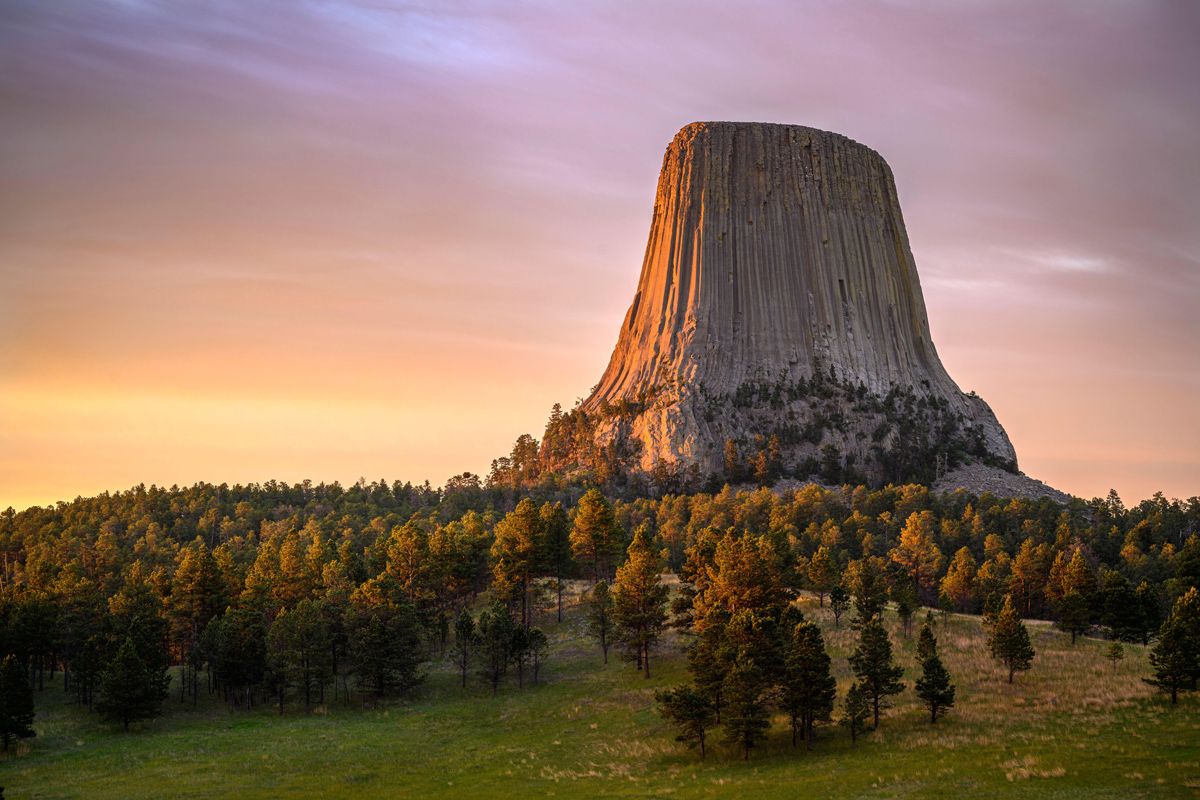
Fans of Close Encounters of the Third Kind will immediately recognize this dramatic rock formation towering 1,267 feet above the Belle Fourche River, as it was the backdrop for the film’s culminating UFO landing scene.
Located among the Black Hills of northeastern Wyoming, Devils Tower is much more than a film fun fact, though — for Northern Plains Tribes, it’s a sacred site. It is integral in oral histories, cultural narratives, and ceremonial rituals for multiple Native nations, all of whom refer to the landmark with a different ancient name. (Just a few examples: the Arapahoe call it Bear’s Tipi, the Kiowa call it Tree Rock, and the Lakota call it Bear Lodge.) And in 1906, President Theodore Roosevelt proclaimed Devils Tower the first official U.S. national monument.
Visible from miles in every direction, the flat, football-field-sized summit stretches roughly 180 feet by 300 feet, and its base — composed of a granite-like rock called phonolite porphyry — has a circumference of about a mile. That makes it popular with rock climbers — between 5,000 and 6,000 visit this singular rock formation each year.
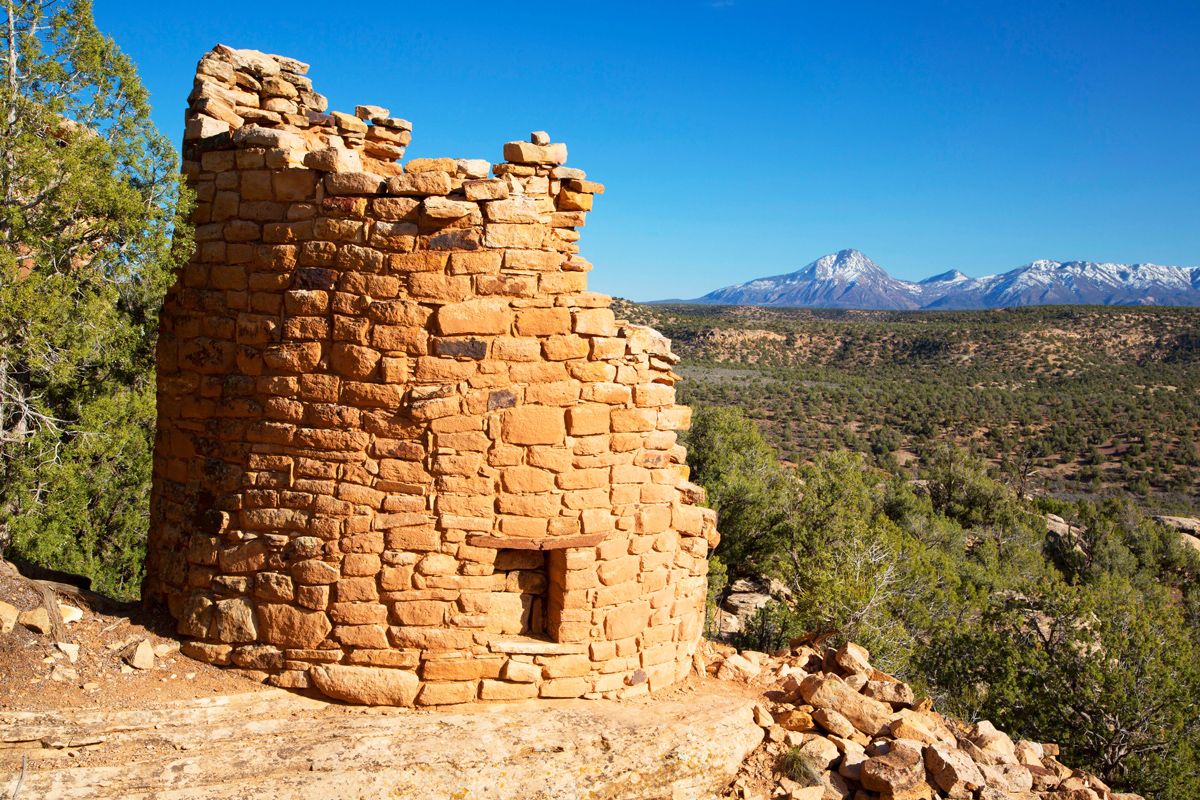
Canyons of the Ancients National Monument – Colorado
Covering more than 175,000 acres, Canyons of the Ancients National Monument is perhaps the richest archaeological region on the North American continent, containing an estimated 30,000 examples of cliff dwellings, kivas, rock art, and ceremonial sites. The Visitor Center and Museum alone holds a whopping 3.5 million items in a research collection documenting the history and culture of the historic Pueblo, Ute, and Navajo Native Americans who lived in the region. One site (Lowry Pueblo) is developed, with stabilized walls and an ADA-compliant restroom, nature trail and picnic area.
As for the rest of the monument, located in Colorado’s Four Corners region, you can explore by car (some unpaved roads will require high-clearance and all-wheel drive) and by mountain bike, on horseback, and on foot. Bring layers, snacks, and water — and don’t count on cell service in this remote and rugged region.
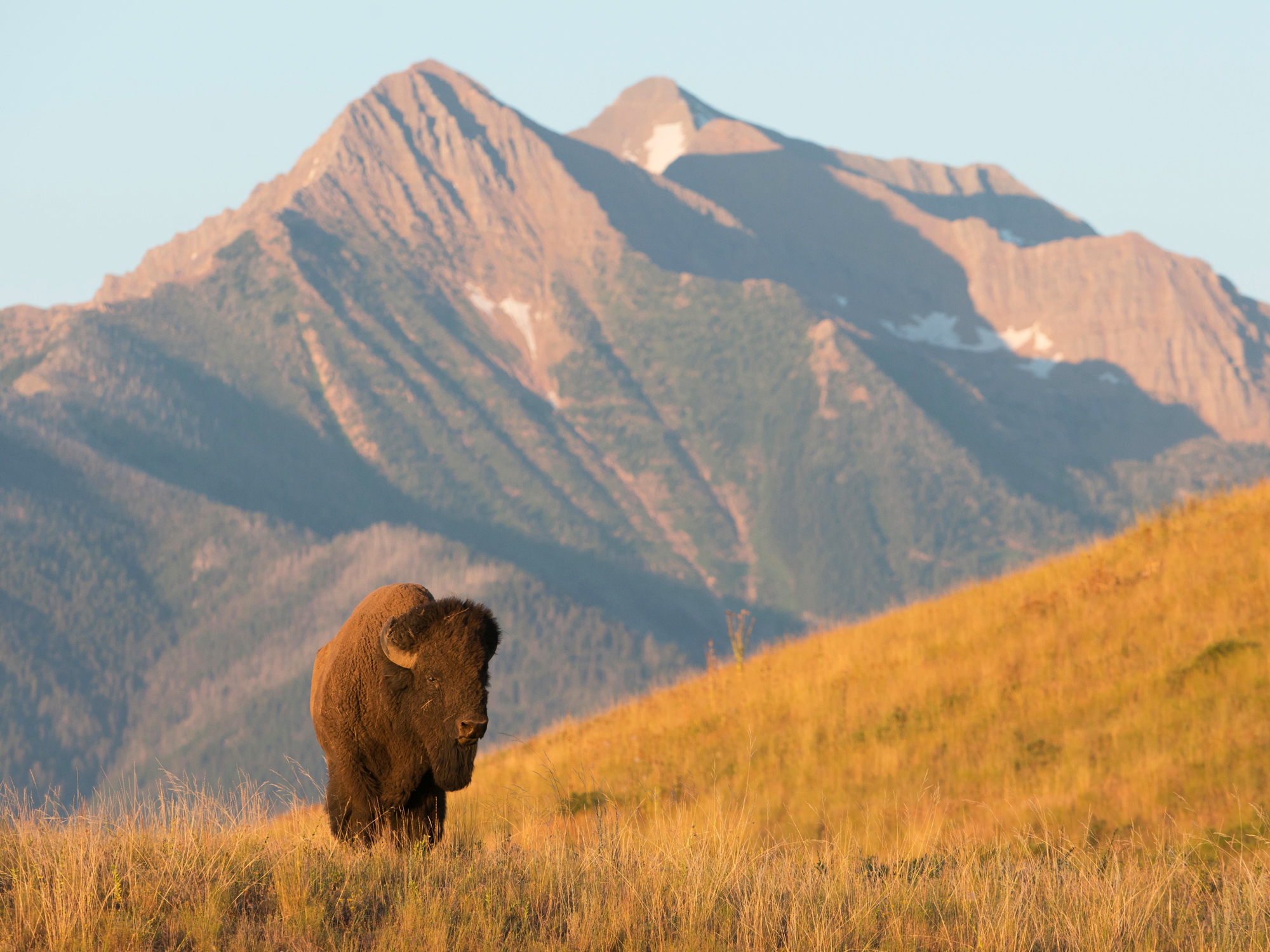
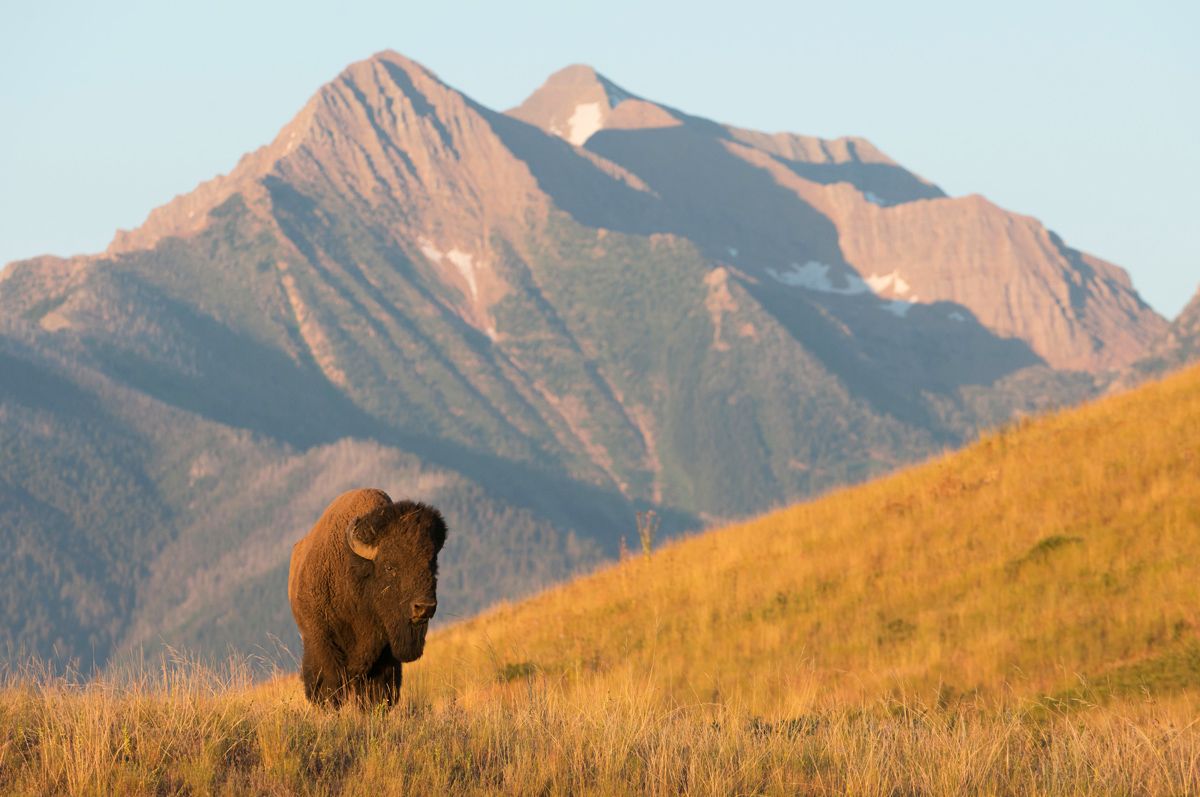
This 19,000-acre refuge within Montana’s Flathead Indian Reservation is home to an estimated 350 adult bison — plus dozens of babies each year — whose neighbors include elk, bighorn sheep, white-tailed deer, pronghorn, black bears, multitudes of birds, and the occasional grizzly and wolverine. Given the regularly sightings of the namesake beasts, plus the mountain-backed drama of their gorgeously green habitat, any visitor who’s ever driven the Bison Range’s two public roads has no doubt been amazed.
For the first time in more than a century, the range has recently been restored to tribal hands, thanks to a years-long, hard-fought campaign by the Confederated Salish and Kootenai tribes. The Montana Historical Society also agreed to return Big Medicine — a particularly sacred preserved white bison from the early 20th century — to the reservation.
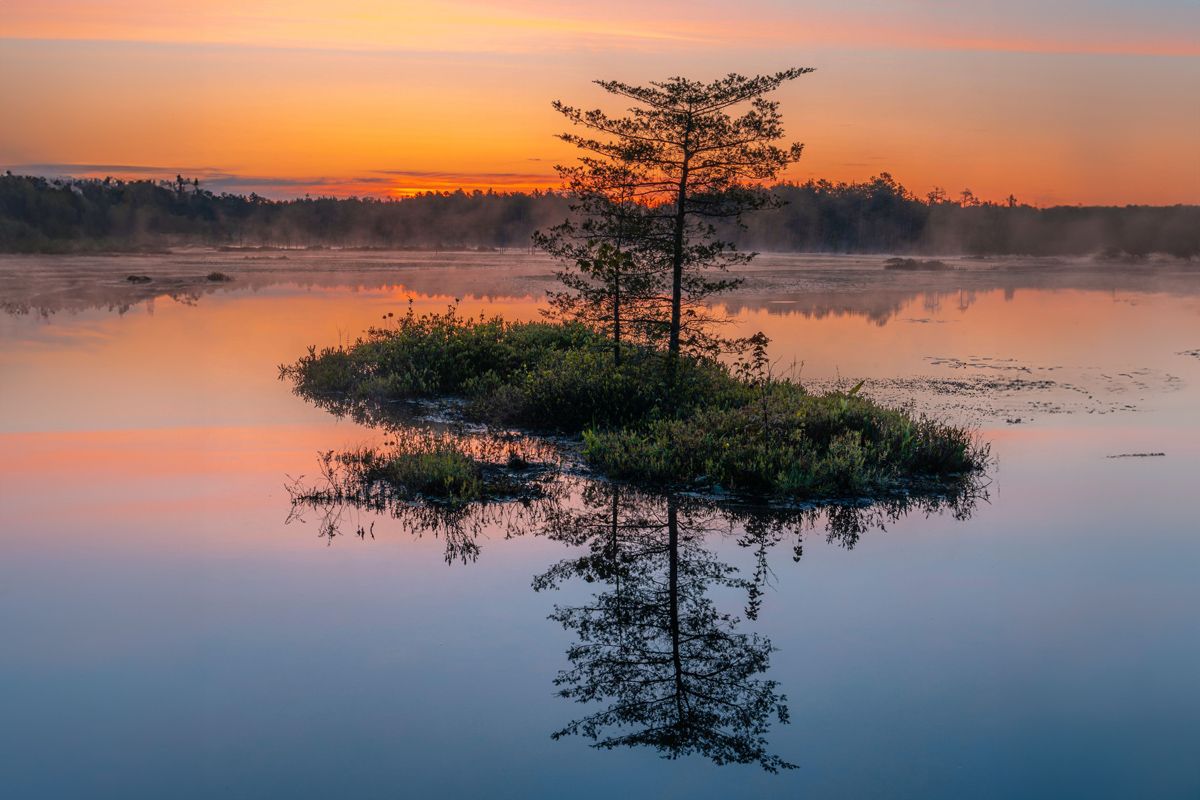
America’s first designated national reserve, New Jersey’s Pinelands National Reserve covers 1.1 million acres, accounting for 22% of the state’s total landmass and spanning an area larger than either Yosemite or Grand Canyon National Park. It consists of pine forests and wetlands that are rich with unique wildlife, including bobcats, birds, rattlesnakes, rare frogs, various orchids and ferns, carnivorous plants, and rare pygmy pitch pine and oak trees that rarely exceed 11 feet in height.
The soil is sandy and acidic and waterways are a cedar-stained tea-color. And underground, there’s a massive reservoir of sterile water comparable to melted glacial ice. Needless to say, the Pinelands is an incredible natural wonder — one that can be enjoyed by hiking, kayaking, birdwatching, camping, fishing, or swimming.
But it also has a long and checkered history, from its days as a hub for the shipbuilding and iron ore industries and its cranberry and blueberry production (domesticated blueberry bushes were perfected in the area), to its ghost towns, failed developments, and even a resident monster: the Jersey Devil. This kangaroo-like creature with bat wings, horns, and a forked tail, is said to have killed its family and terrorized locals for generations — even Joseph Bonaparte, brother of Napoleon, claimed to see it in 1820.
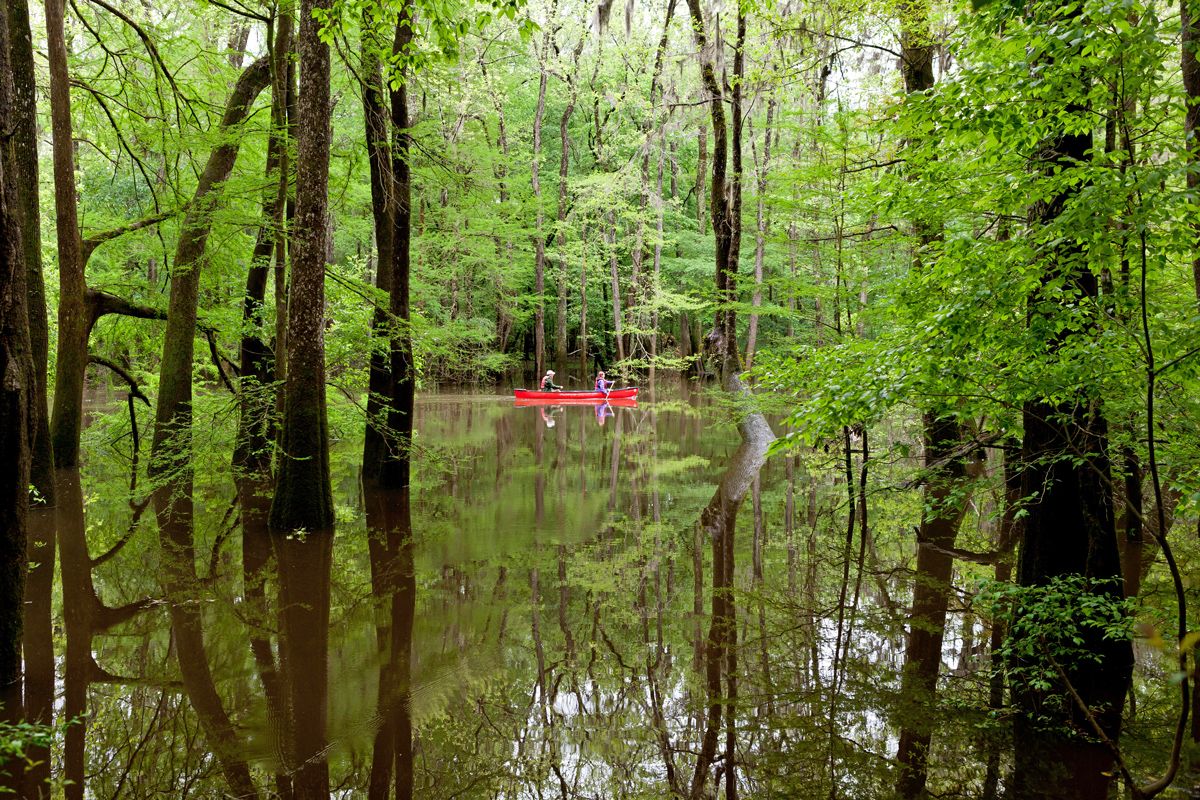
South Carolina’s only national park, Congaree features one of the world’s tallest temperate and hardwood forests, with some native loblolly pines towering as high as 170 feet.
Long before Congaree’s authorization as a national monument in 1976 and redesignation as a national park in 2003, the site’s floodplain was an important source of natural resources for the native Congaree population, and it later served as a haven for escaped enslaved persons. Today, the sanctuary sits 18 miles outside of the state capital of Columbia, which provides a stark contrast to Congaree’s forest of 500-year-old cypress trees.
The park is home to countless hiking trails, including a popular 2.6-mile boardwalk loop. Canoe rides are a popular activity along the slow-moving Cedar Creek, but perhaps no event is more popular at Congaree than the annual synchronous firefly viewing, which occurs for two weeks between May and June each year. Visitors can gaze at millions of fireflies in search of their mates, and their glowing throughout the sky creates a natural light show unlike any other.
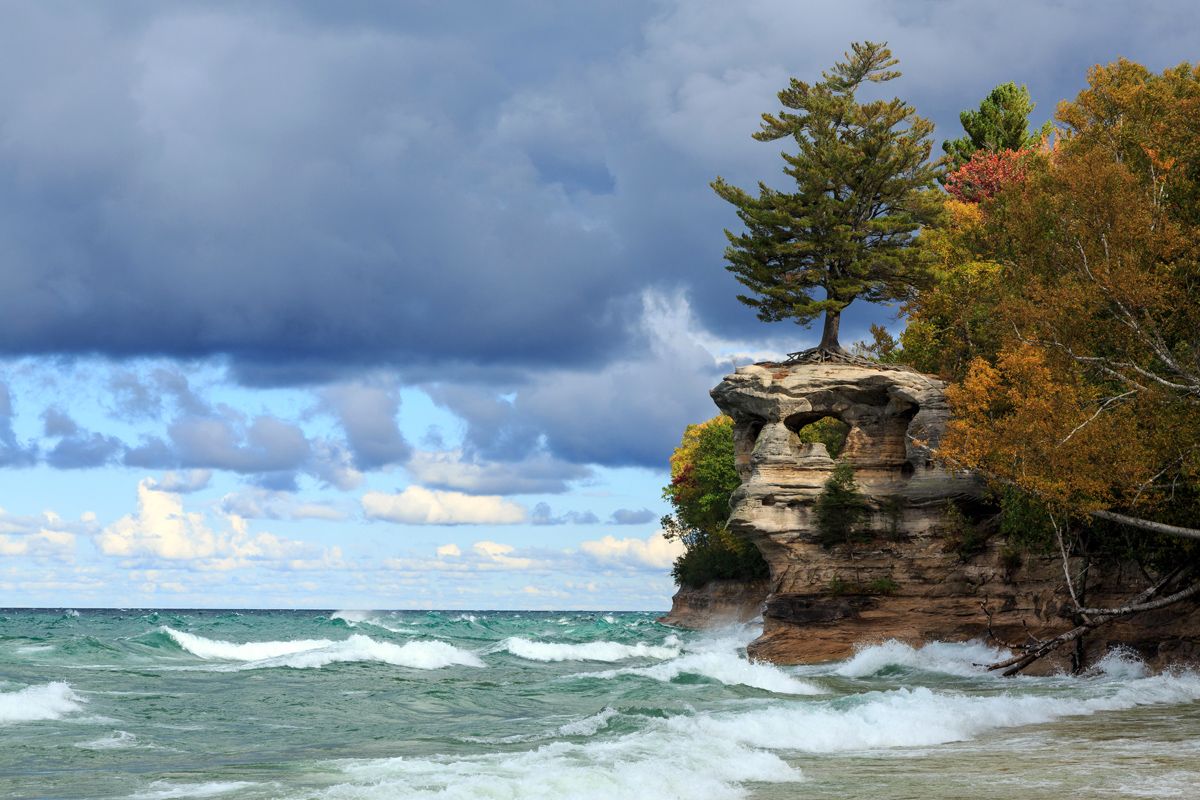
From the 15 miles of glacially carved cliffs that give this park its name to the nature that surrounds them (42 miles of shoreline, densely forested trails, and copious seasonal waterfalls), the wild beauty of this place is reason enough to visit Michigan’s Upper Peninsula. But because of a few particularities, the park has also become a pilgrimage site for enthusiast groups.
Located on Lake Superior’s fabled Shipwreck Coast — where sandstone reefs, thick fog, and monster waves can form a fearsome trio — Pictured Rocks National Lakeshore is the final resting place of at least 45 vessels, some still protruding evocatively from the water. You can scuba dive and snorkel among them or tour Au Sable Light Station, the 19th-century lighthouse that ultimately didn’t do them quite enough good. And if you want to see multiple wreck sites, you can even embark on a glass-bottom boat tour.
Beyond the shipwreck and maritime history fans, though, ice climbers come here from around the world each winter, when the rock faces freeze over and sprout what look like milky stalactites. The best time to experience this scene is the annual Michigan Ice Fest in February, when climbers of all skill levels gather for demos, classes, clinics and ice-cold lakeside beers.
Advertisement
More from our network
Daily Passport is part of Inbox Studio, an email-first media company. *Indicates a third-party property.
15 Countries With Fascinating Christmas Traditions
By
Daily Passport Team
Read time: 8 minutes
December 13, 2024
Updated: December 18, 2025
15 Countries With Fascinating Christmas Traditions
Culture •December 13, 2024•Updated: December 18, 2025
By Daily Passport Team
Author
Daily Passport Team
Daily Passport writers have been seen in publications such as National Geographic, Food & Wine, CBC, Condé Nast Traveler, and Business Insider. They're passionate about uncovering unique destinations and sharing expert tips with curious travelers.
If you grew up in the United States, you likely spent the holidays decorating a tree, baking cookies, and opening presents delivered by Santa Claus. But in other parts of the world, the Christmas holiday looks a little different. From presents brought to children by peculiar mountain men to massive fireworks displays, discover the fascinating Christmas traditions in 15 countries around the world.
Brazil
Credit: YASUYOSHI CHIBA/ AFP via Getty Images
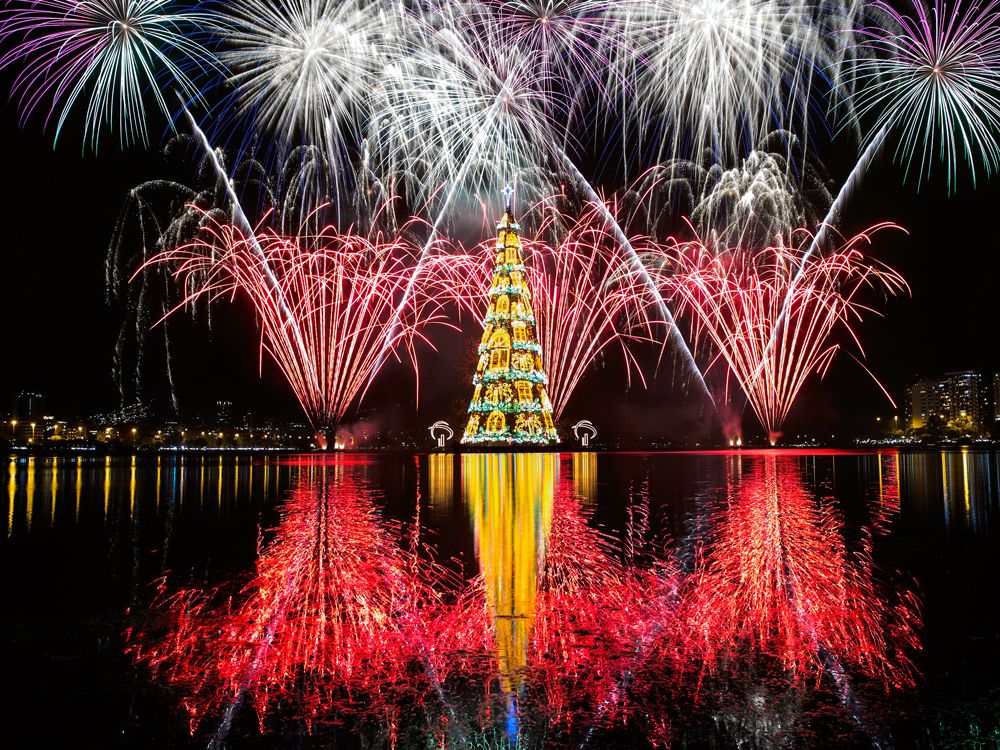
The Christmas season evokes visions of snow-covered winter wonderlands for many Americans, but in the Southern Hemisphere, Christmas is a summertime holiday. In Rio de Janeiro, Brazil, Christmas feels more like the Fourth of July as fireworks accompany the annual lighting of the floating Christmas tree surrounded by the waters of Rodrigo De Freitas Lagoon. The Guinness Book of World Records has deemed it the world’s largest floating Christmas tree. Measuring 278 feet tall, the tree is decorated with more than 3 million lights, with multiple changing lighting displays as it floats to different parts of the lagoon.
Christmas in Brazil also centers around Missa do Galo, which translates to “Rooster Mass.” This church service, which takes place at midnight, is named for the rooster because the bird is responsible for calling out the new day. Brazil also believes in a version of Santa Claus, called Papai Noel, who wears a suit of red silk to stay cool in the heat. Brazilian children put a sock on their windows to trade for a gift from Papai Noel, while adults prefer Amigo Secreto — the Brazilian version of Secret Santa — for their gift exchange.
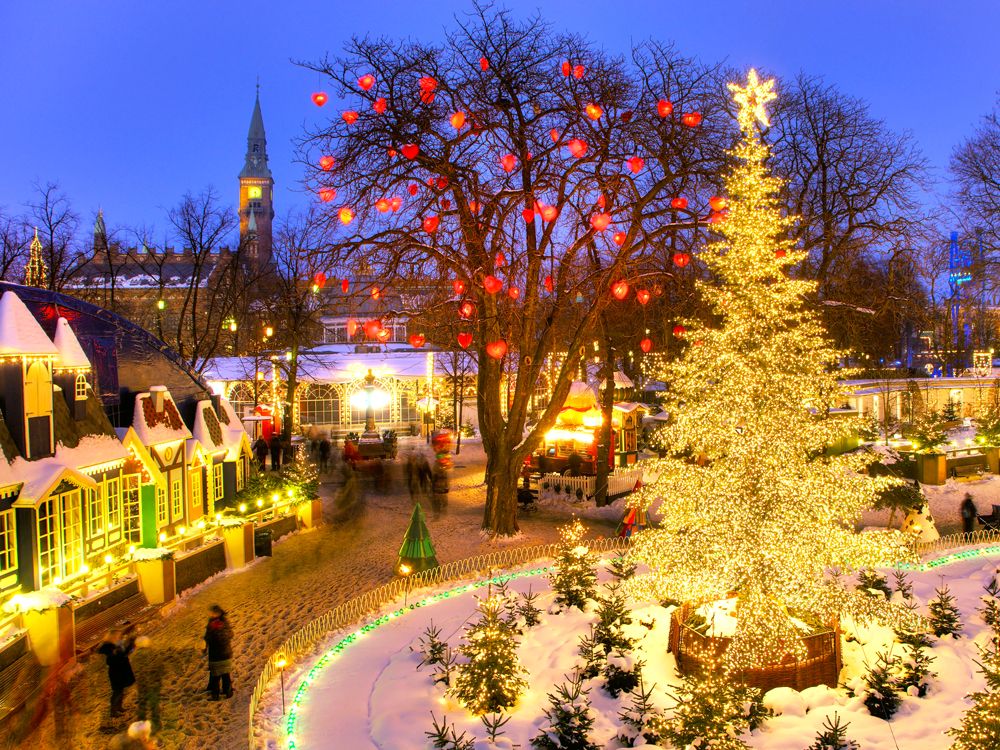
In Denmark, Christmastime is filled with particularly festive parties called julefrokost. The Danish word jul translates to “yule,” the winter solstice celebration from which many Christian traditions have been derived. Technically, julefrokost means “Christmas lunch,” but that doesn’t stop these events from lasting all day and into the night. Friends, family members, and colleagues host parties throughout the month of December, and each gathering includes several courses of food and an abundance of alcoholic beverages.
Similar to their Scandinavian neighbor, Norway celebrates Christmas with a festive meal called julebord, and Sweden has julbord, both of which translate to “Christmas table.” These gatherings occurs nearly every weekend leading up to Christmas, as groups of friends and family members come together to celebrate throughout the season.
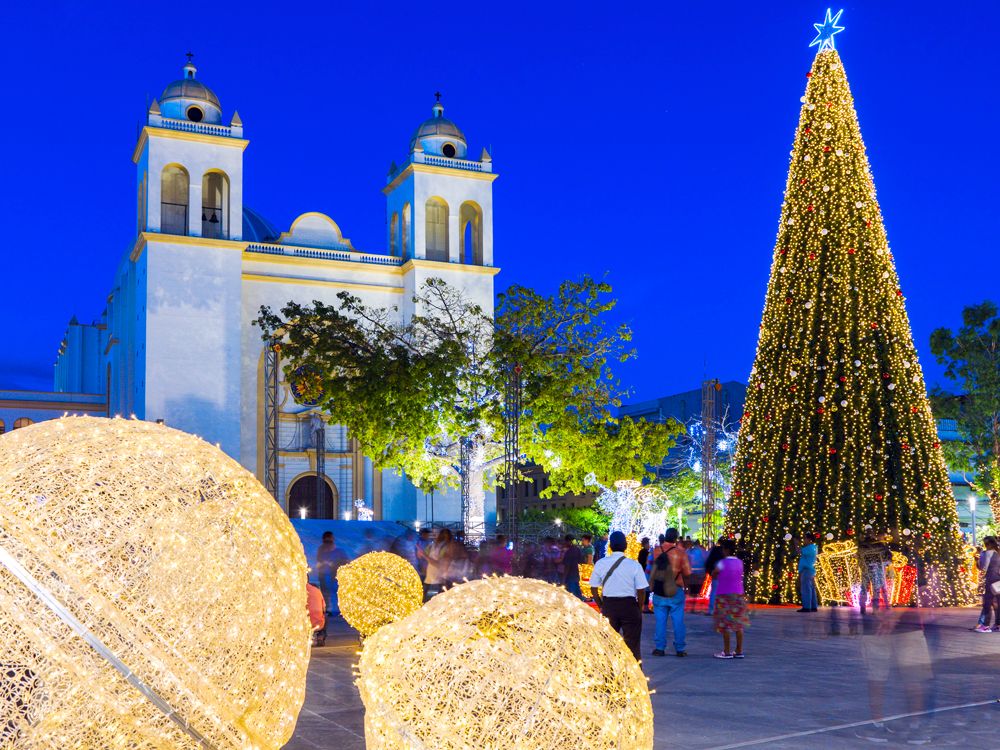
There are two Christmas traditions that Salvadorans take very seriously: fireworks and nativity scenes. Throughout the entire month of December, many people in El Salvador light fireworks in anticipation of the upcoming holiday. On Christmas Eve, a traditional firework display takes place right before midnight, with people lighting them across the country. Nativity scenes, or Los Nacimientos, are also hugely important to Christmastime in El Salvador. Families may spend days constructing scenes in their front yards — some are so elaborate that they feature water fountains or light shows.
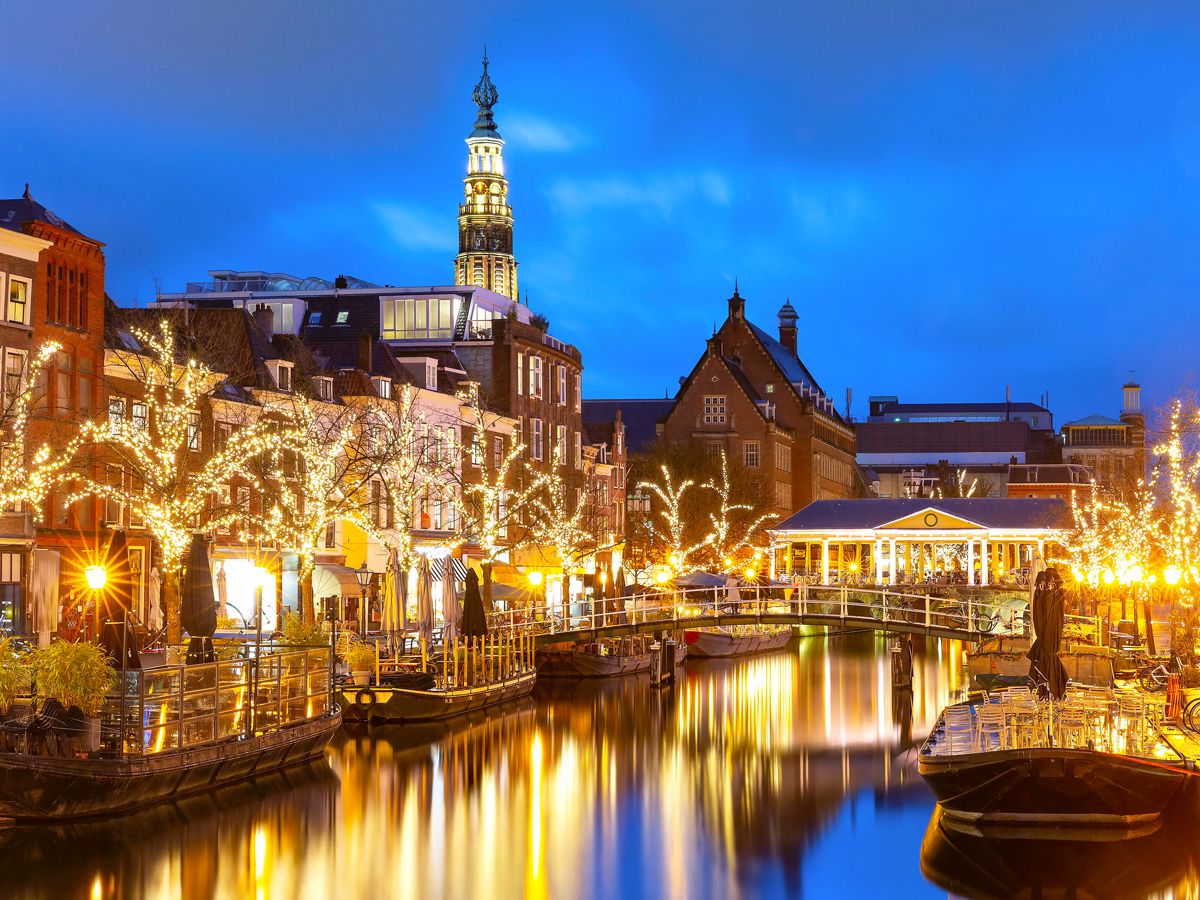
St. Nicholas, known as Sinterklaas, is an important figure in the Netherlands. On December 5, the eve of St. Nicholas’ birthday, many businesses and shops close to celebrate St. Nicholas Eve with feasts and gatherings, and children put their shoes in front of the fire to receive gifts from Sinterklaas himself. The Dutch have participated in this celebration for at least 700 years, in honor of the fourth-century bishop who was the patron saint of children. Today, legend has it that Sinterklaas lives Sin Spain, and he travels to the Netherlands every year by steamship.
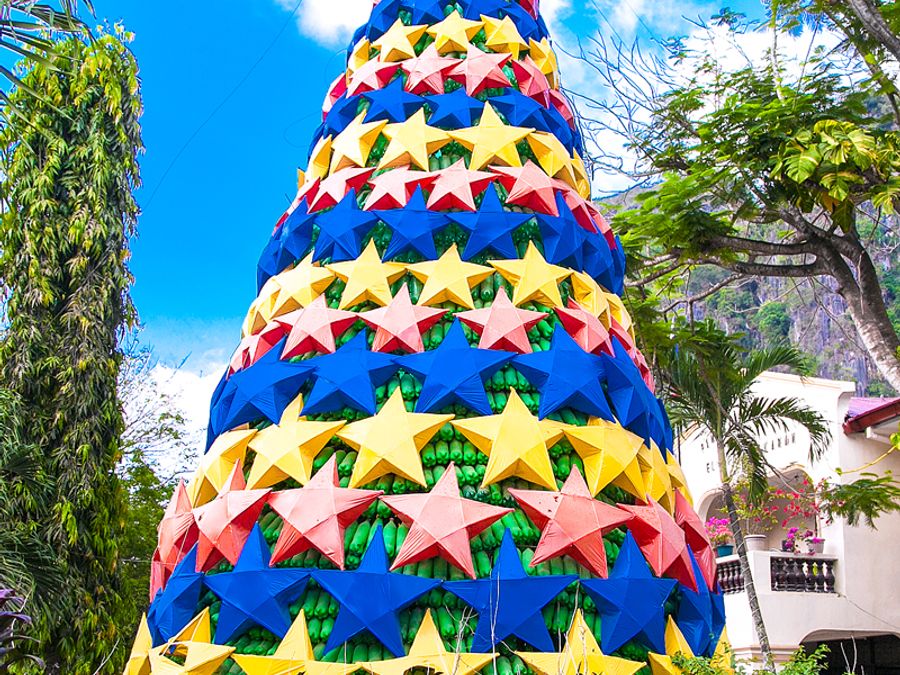
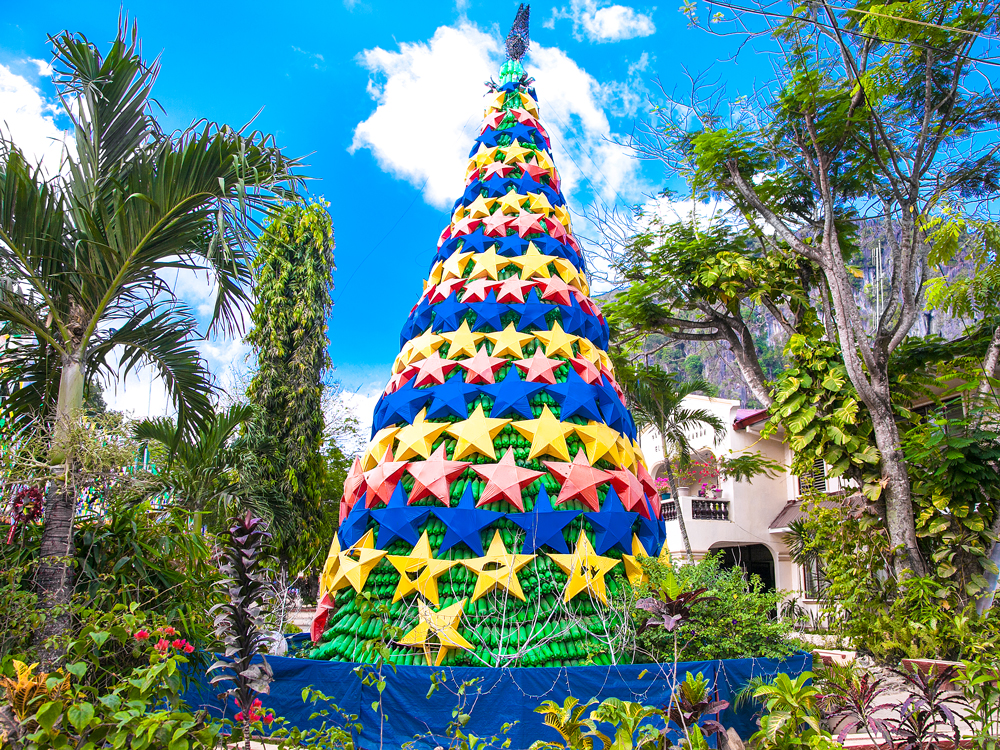
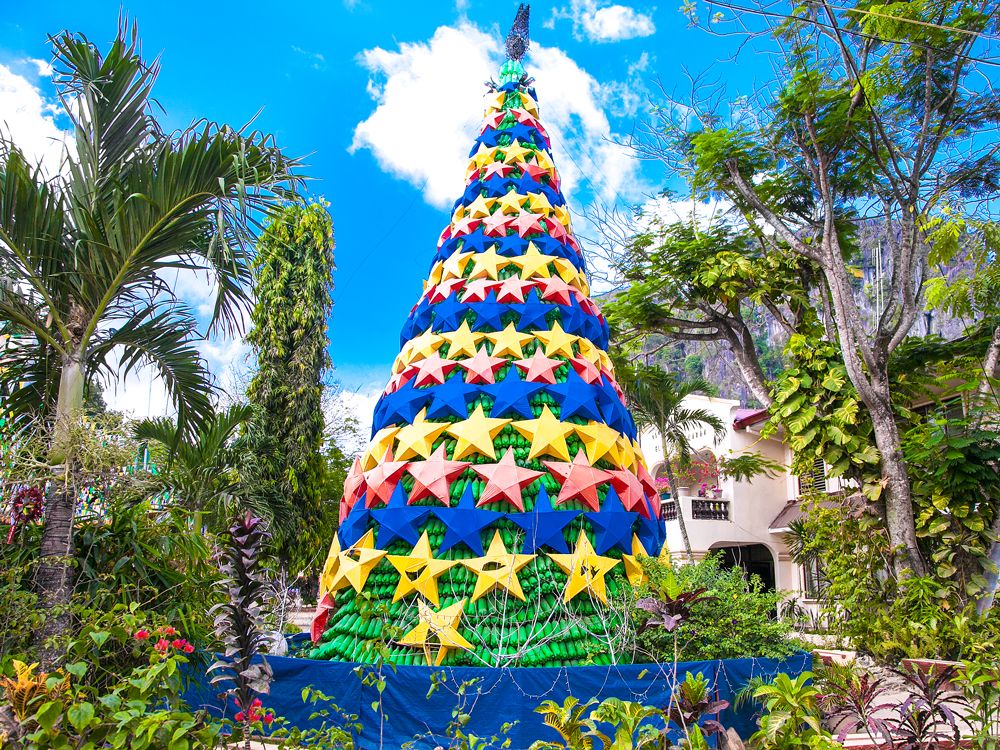
As the only predominantly Christian nation in East Asia, the Philippines goes all out for the holiday. Filipinos prepare for Christmas throughout December by constructing elaborate and decorative lights outside their homes and businesses. The culmination of the holiday fervor occurs in San Fernando with the Giant Lantern Festival, where intricate lanterns, called parols, are built to represent the Star of Bethlehem. The tradition stemmed from creating lanterns to light Christmas Eve mass but morphed into the massive structures seen today, which are illuminated by thousands of light bulbs.
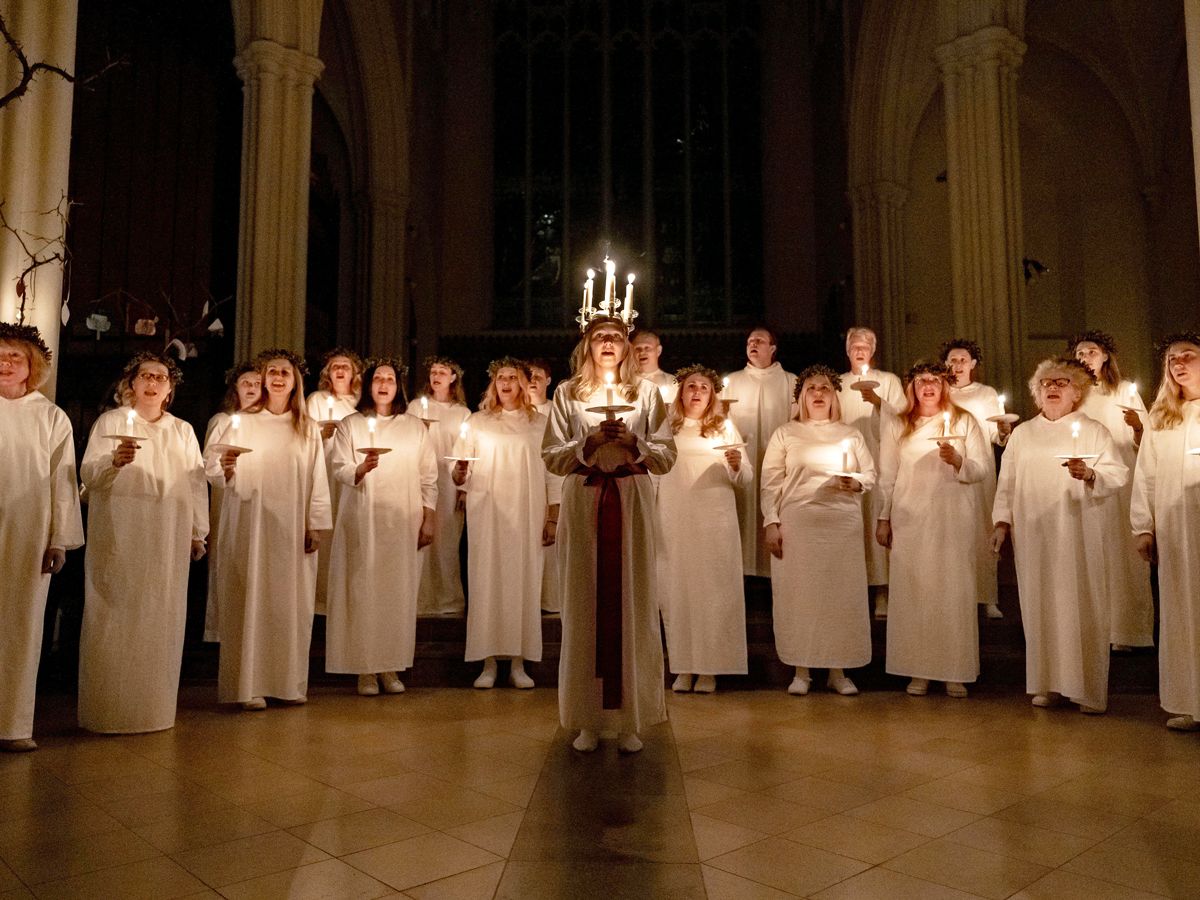
One of the most popular Christian traditions in Sweden falls on December 13. Known as St. Lucia’s Day or St. Lucy’s Day, it was named for a young Christian girl who was killed for her faith in 304 CE. St. Lucia used to wear candles on her head, so that she could carry food to persecuted Christians throughout Rome. On St. Lucia’s Day, young girls throughout Sweden wear white robes with a red sash, donning a crown of candles atop their heads to honor the young martyr. Boys also get in on the fun, dressing up as stjärngossar (star boys), tomtar (gnomes), or gingerbread men.
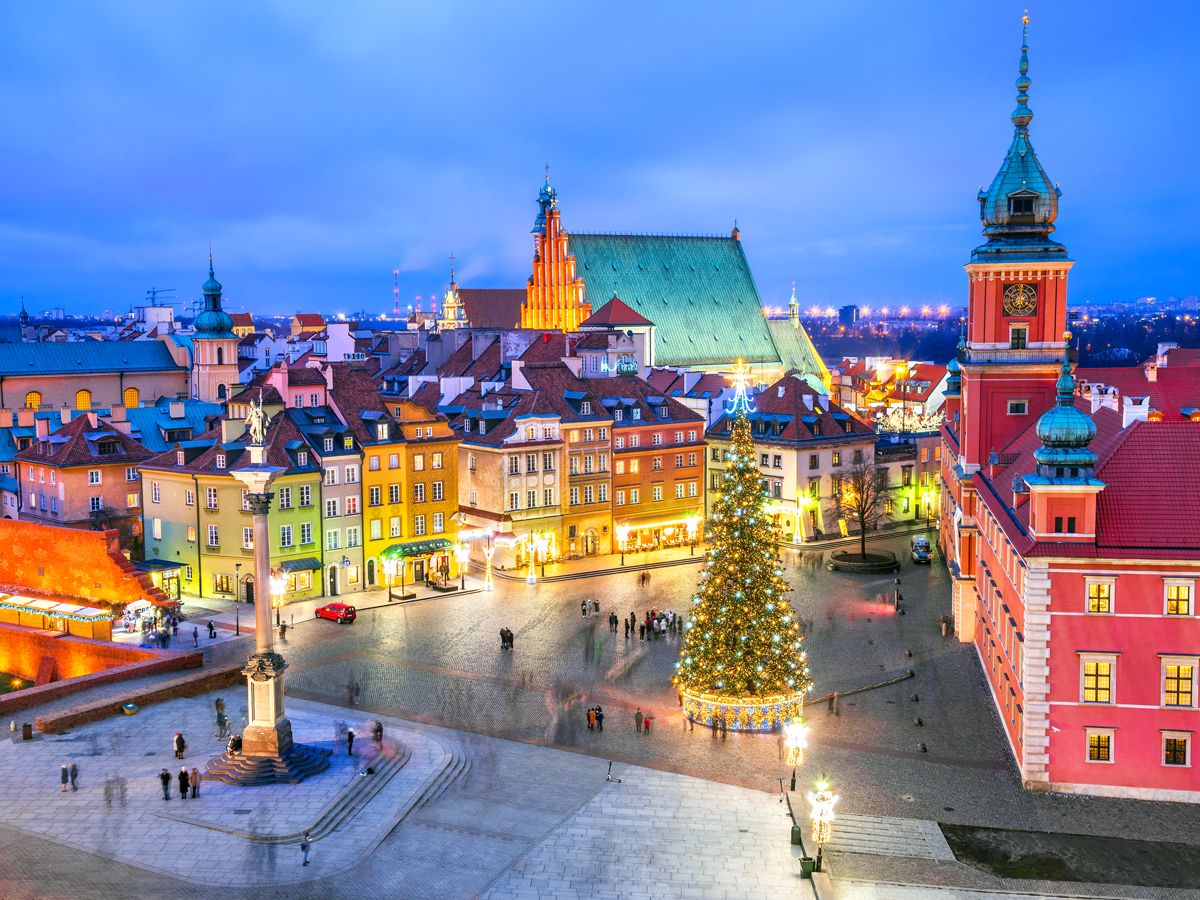
During Advent, the weeks leading up to Christmas, people in Poland are encouraged to practice moderation. As in Lent before Easter, Polish people abstain from anything excessive, choosing to give up their favorite foods or alcohol in preparation for Christmas. They also spend the month of December cleaning their homes and washing carpets, so everything can be sparkling on Christmas Day. When Christmas Eve, known as Wigilia, finally arrives, families eat 12 dishes for 12 months of good luck. However, no one is allowed to eat until the first star is spotted in the sky.
From November until late December, Santa parades are popular throughout New Zealand, although naturally, the Kiwi version of Santa wears sandals and a rugby shirt. On Christmas Eve, instead of milk and cookies, Santa usually receives a beer and some pineapple chunks, and carrots are left out for the reindeer. In addition to a traditional fir Christmas tree, Kiwis also decorate with flowers from the Pōhutukawa tree, which is a native plant nicknamed the “Christmas tree” for its red flowers that bloom in December.
Finnish people have an unusual way of celebrating Christmas — a nice, long, sweat in the sauna. Christmas sauna, or joulusauna, as it’s called in Finland, has been a tradition here for centuries. Historically, the idea stemmed from the sauna being a way to purify the body and clear the mind before the arrival of Finnish spirits, elves, and gnomes. To do otherwise would anger the mythical beings, who were believed to enjoy the sauna on the holiday. Today, this tradition occurs on the afternoon of Christmas Eve, as a way to relax before the festivities.
Children in Iceland receive Christmas presents from the Yule Lads, a group of 13 mischievous pranksters who live in the mountains and descend upon towns for 13 nights before Christmas. On each of the 13 nights, children leave shoes on their windowsill, and the Yule Lads distribute candy or rotten potatoes, depending on whether the children have been naughty or nice. Each lad has a persona for which he is known, like Þvörusleikir (Spoon Licker) Bjúgnakrækir (Sausage Swiper), and Gluggagægir (Window Peeper).
Icelanders are voracious readers, too — there are more books read here per capita than anywhere else in the world. Christmas traditions draw on the Icelandic love of books, with Jolabokaflod — or “Christmas book flood” — inviting families to wrap themselves up in a blanket with a mug of hot chocolate and get lost in a good book.
Jamaica
Credit: Pool/ WireImage via Getty Images
As Jamaica is part of the British Commonwealth, Boxing Day on December 26 is an official national holiday in the Caribbean island nation. This dates back to the 17th century, when plantation owners allowed enslaved peoples a break on the day after Christmas. In their free time, they would dance all night to live drumming, often dressed in masks. This celebration evolved into Jonkonnu, which is a time-honored Jamaican tradition around Christmastime. Today, Boxing Day features Jonkonnu parades with masked dancers and live drummers in the street.
Christmas is a big deal in Germany — it’s widely believed that practice of decorating Christmas trees originated here. One way Germans love to celebrate Christmas is by making a fiery version of mulled wine. Feuerzangenbowle (Fire Tong Punch) is a festive drink that is served at holiday parties throughout the country. Prepared in a specialized fondue pot, the punch is made by lighting a rum-soaked sugar cube over the hot drink — hence the name “Fire Tong.” The recipe became popular after the release of the 1943 comedic movieFeuerzangenbowle — now, it is a customary holiday tradition to prepare the punch with friends before watching the beloved film.
In Colombia, the Christmas season starts with Día de las Velitas, or Little Candles’ Day. The holiday takes place on December 7, which in the Catholic tradition is known as the Eve of the Immaculate Conception. Colombians celebrate Día de las Velitas by placing candles and paper lanterns on windowsills and balconies. Most also partake in novenas, between December 16 and Christmas Eve, when family members and friends congregate to recite traditional Christmas prayers called Novenas de Aguinaldos. It’s also a time to convene with loved ones, sing carols, and eat holiday dishes.
“Mummering” is an eccentric holiday tradition that is celebrated in small towns throughout the Canadian province of Newfoundland and Labrador. To partake in the Christmas pastime, people called “Mummers” dress up in disguises, donning silly masks or clothing, before knocking on the doors of friends. If the host invites them in, an impromptu party occurs, with cake, beverages, and dancing. If the host cannot accurately guess the Mummers, then they are required to dress up and join the Mummering festivities for the rest of the evening.
Spain
Credit: NurPhoto via Getty Images
Spain holds a special Christmas lottery that is drawn annually on December 22. Called El Gordo, which translates to “the fat one,” the tradition is one that most Spaniards partake in — likely due to the billion-dollar jackpot. Indeed, the Christmas lotto often turns into a national frenzy — many people share a lotto ticket with friends, family, or co-workers, choosing to split the jackpot should they win. The lotto numbers are drawn from a giant ball and announced to much fanfare on television, with school children singing the winning numbers.
Advertisement
More from our network
Daily Passport is part of Inbox Studio, an email-first media company. *Indicates a third-party property.
Geography •December 9, 2024•Updated: December 10, 2024
By Fiona Young-Brown
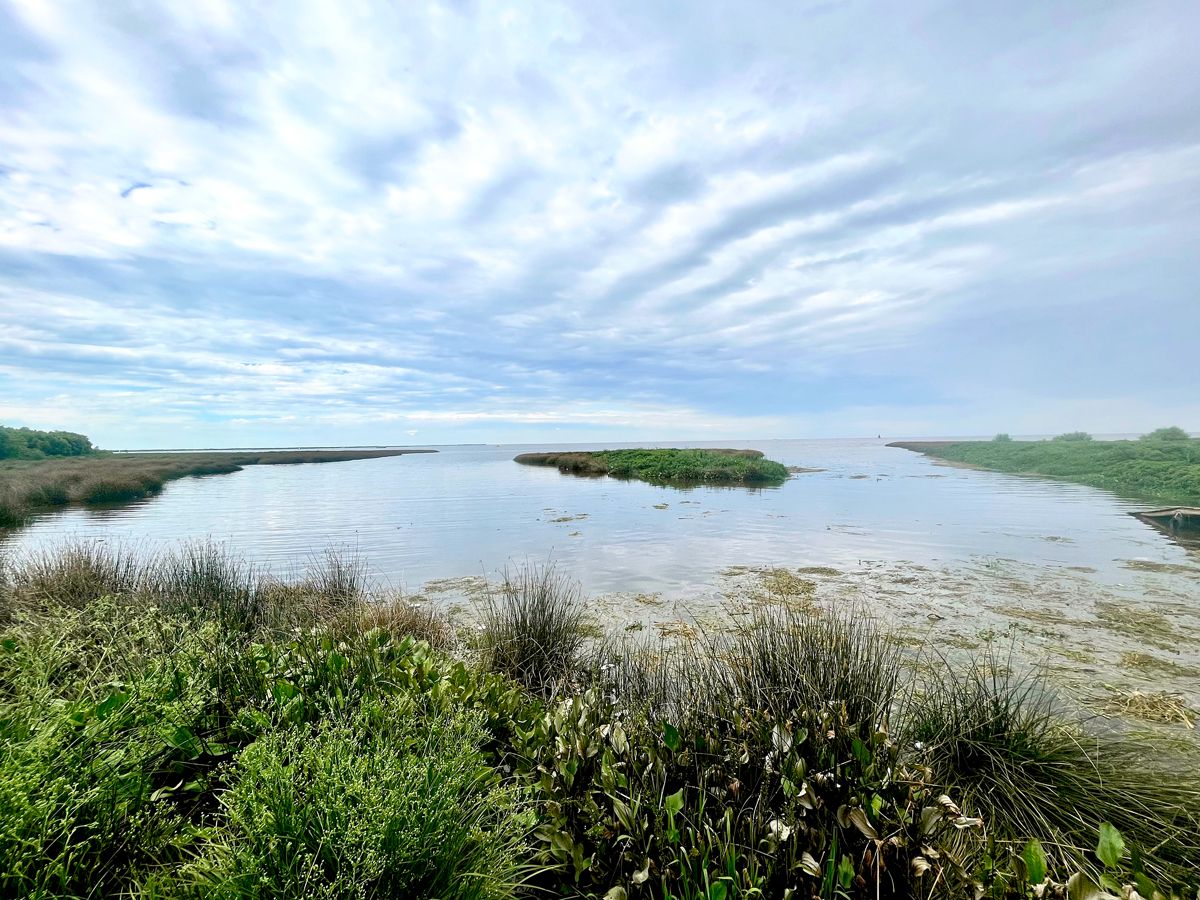
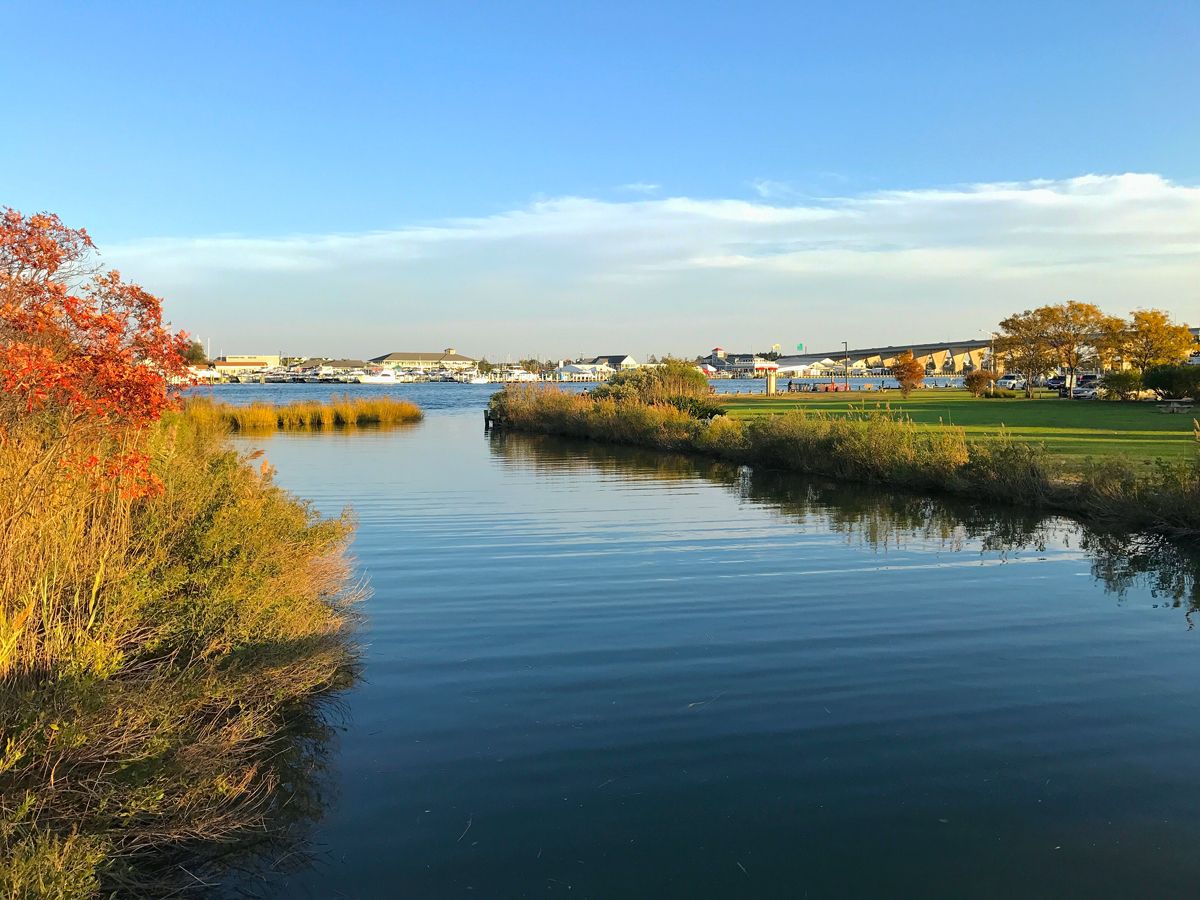
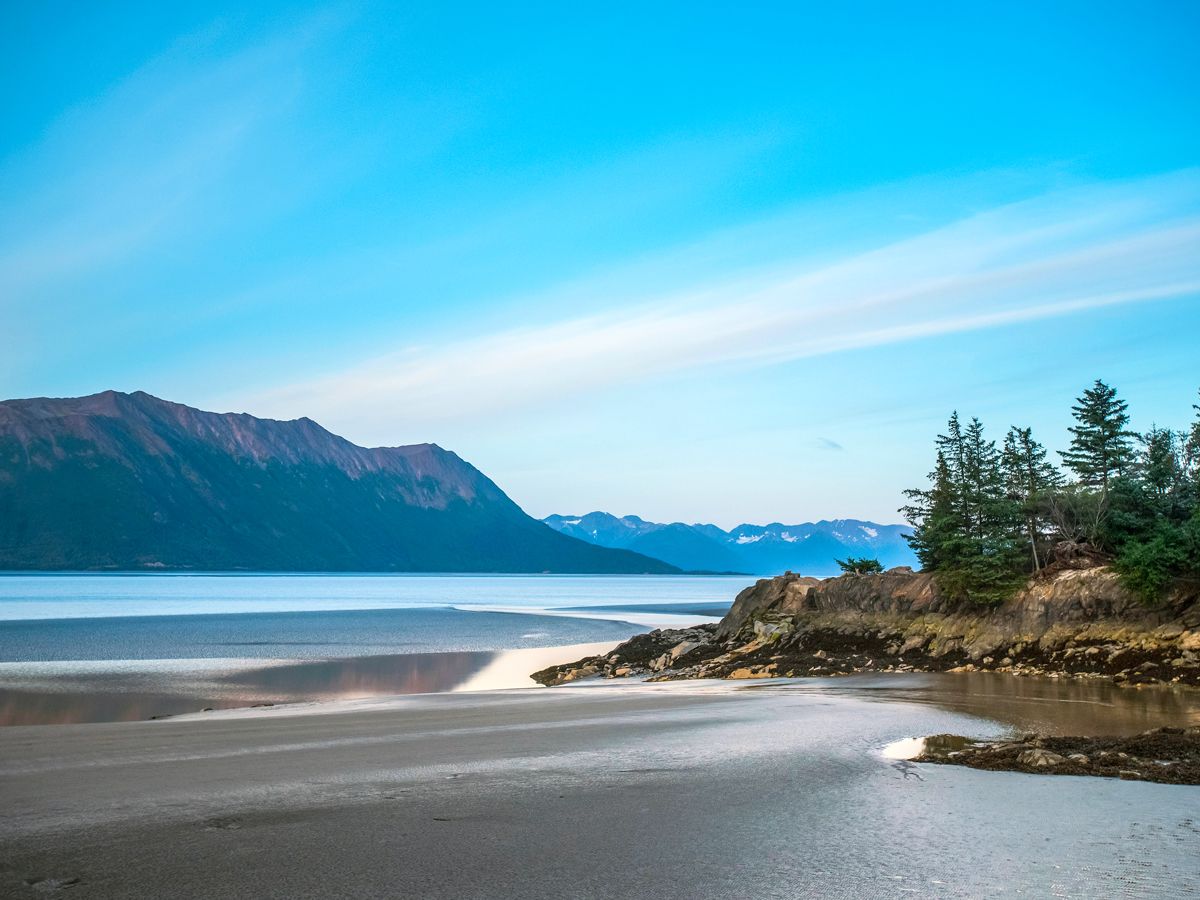
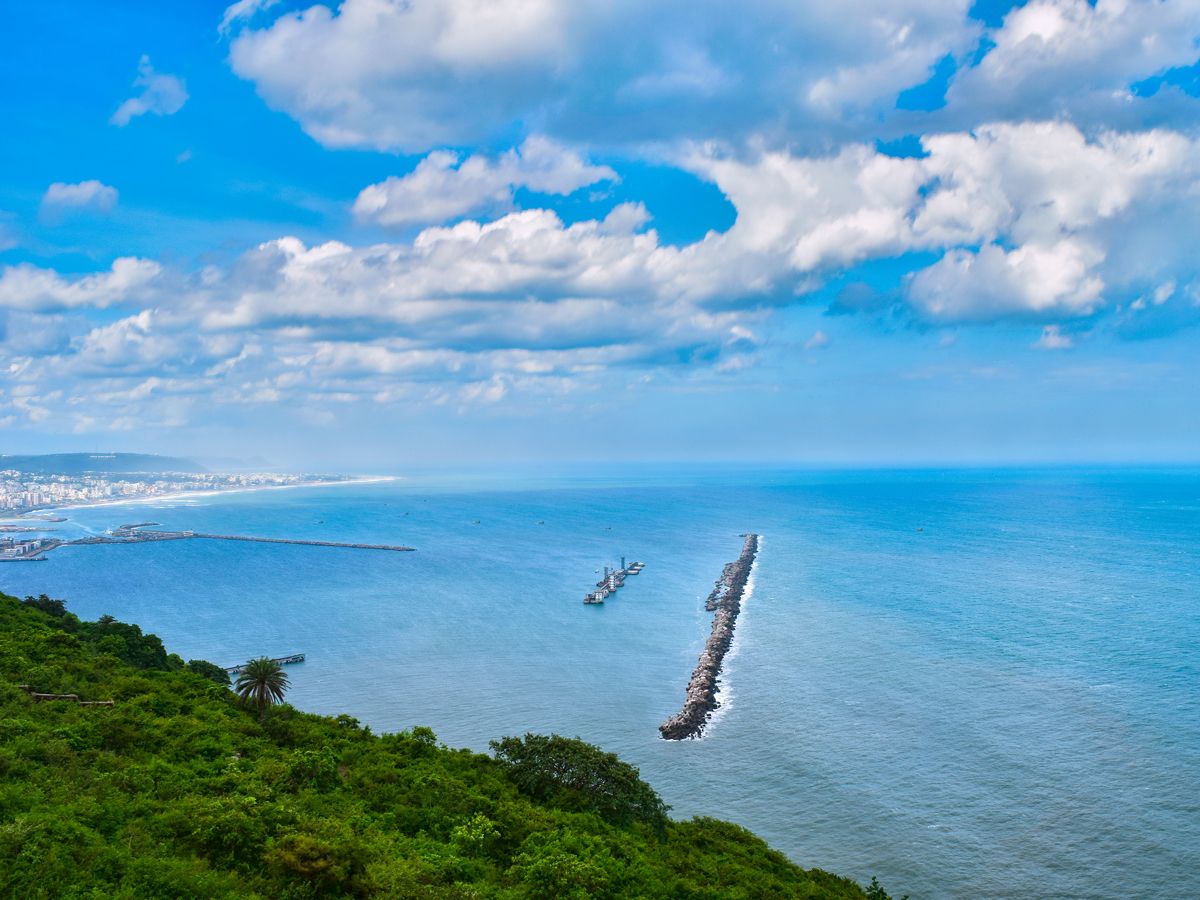
An estuary is a type of ecosystem found when a river flows into the ocean. The fresh water of the river combines with the salt water of the ocean, creating a condition described as brackish. This unique environment is home to all sorts of marine life. There are several different ways to measure the size of an estuary, including the length of the estuary itself, the length of the shoreline, or the area of the estuary. It could also be measured by the watershed, which is the larger land area that collects the water that flows into the rivers and streams. Taking these metrics into account, the following list includes 10 of the world’s largest estuaries.
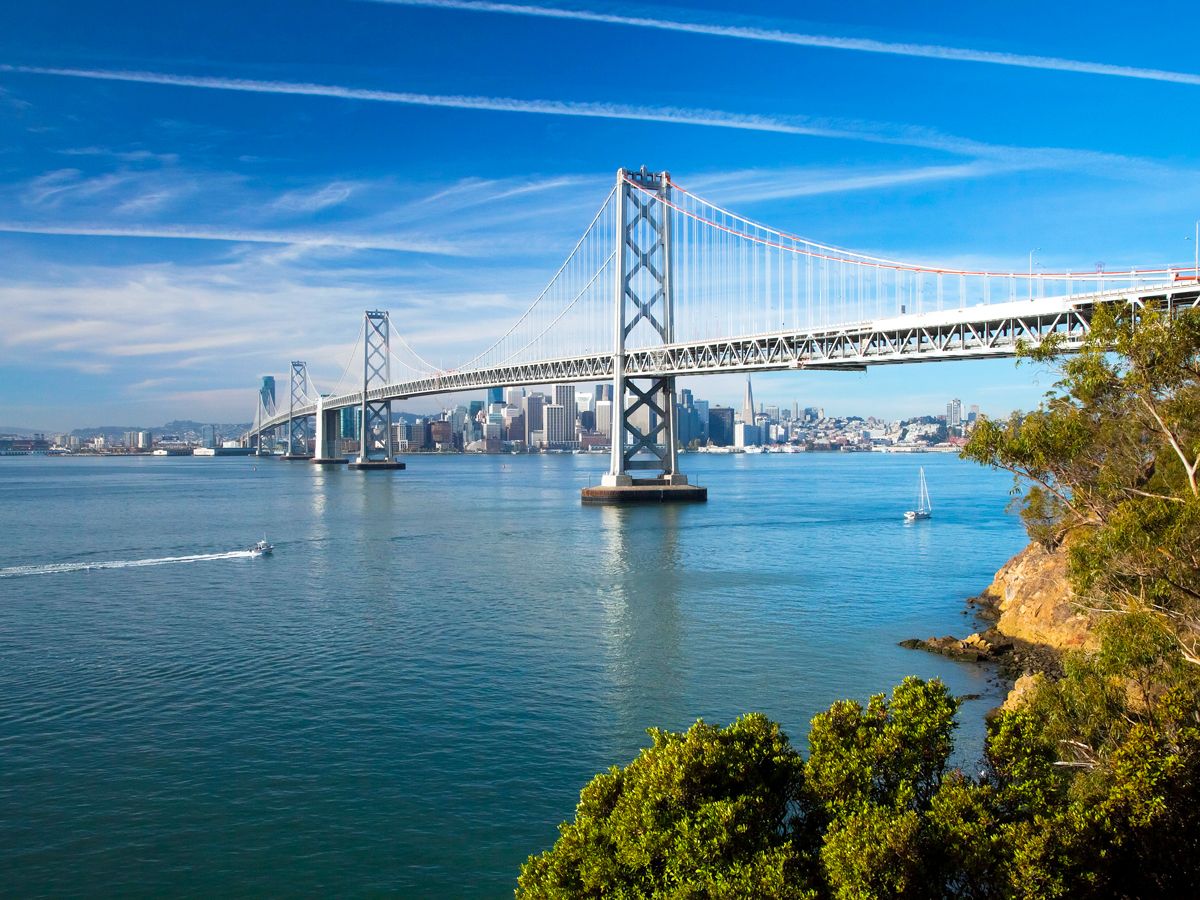
The largest estuary on the West Coast of North America, the San Francisco Bay covers approximately 1,600 square miles — larger than the state of Rhode Island. The estuary system actually consists of four small bays. Two major rivers, the Sacramento and the San Joaquin, flow into the estuary. They come together near Sacramento, forming a delta region that continues through the Bay Area into the Pacific Ocean. Overall, the San Francisco Bay has a watershed area of more than 75,000 square miles. Many endangered wildlife species make their home in the bay’s ecosystem, and it is an important area for trade and agriculture.
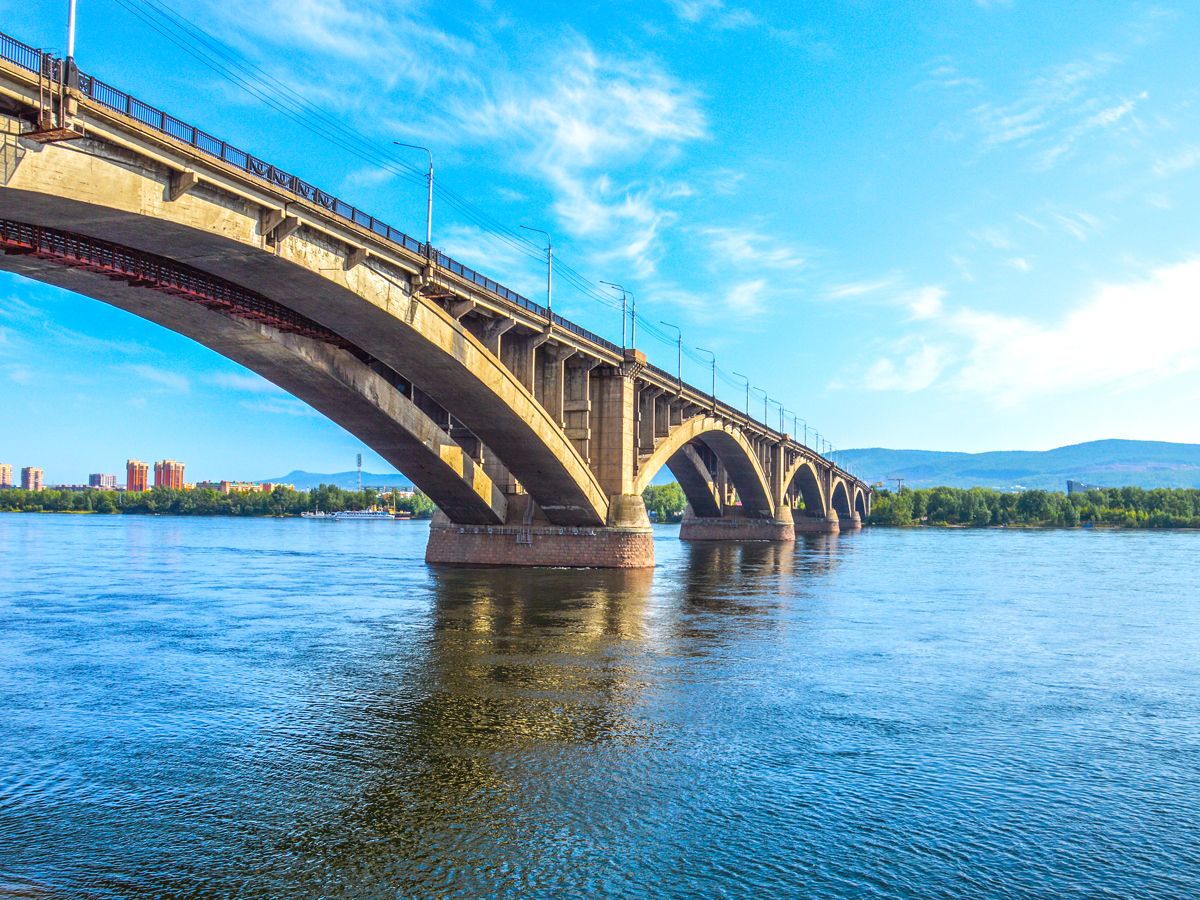
The Yenisey is one of the longest rivers in Russia and Asia, flowing more than 2,000 miles through Siberia into the Kara Sea, an extension of the Arctic Ocean. It discharges roughly 160 cubic miles of water into the ocean each year. The river’s watershed (about 966,000 square miles) has a sparse human population and few mammal or bird species because of the cold climate. However, the waters of the Yenisey are a fertile source of fish, including sturgeon, and beluga whales live in the Yenisey Gulf. The estuary is a part of the Great Arctic Nature Reserve, the largest nature reserve in Eurasia.
If the size of an estuary is judged by the amount of water discharged into the ocean, no other estuary on Earth can compete with the Amazon River estuary. Roughly one-fifth of the world’s river discharge flows from the Amazon into the Atlantic Ocean. That equates to a staggering 219,000 cubic meters per second. You can be more than 100 miles out to sea and still find fresh water from the Amazon. The ecosystem surrounding the Amazon is divided into four separate bioregions, including mangrove forests, rainforest, coastal islands, and a long strip of coastline. As is the case throughout the Amazon region, pollution and deforestation threaten the ecosystem.
Another of the world’s largest estuaries also feeds into the Atlantic Ocean from the South American continent. The Río de la Plata is formed by two rivers, the Uruguay and the Paraná. They join and form into this funnel-shaped estuary, which is about 180 miles long. The estuary also serves as the border between Uruguay and Argentina. The cities of Montevideo and Buenos Aires both lie along the estuary and serve as major ports for the southern part of the continent. A large portion of both nations’ populations live within the watershed area, while the Reserva Ecologica Costanera Sur is a protected wildlife reserve.
The National Ocean Service lists the Chesapeake Bay as the largest estuary in the United States. Twelve rivers flow into the bay, and its watershed covers 64,000 square miles in six different states and the District of Columbia. The estuary is about 200 miles long, but it has a shoreline of 11,684 miles. The Chesapeake Bay is an area of enormous biodiversity — more than 300 types of migratory birds and more than 250 species of fish can be spotted in the region. In addition to being an important area for fishing and shipping, the Chesapeake Bay is also a vibrant tourist area, with about 9 million visiting the Maryland area of the bay each year.
While Chesapeake Bay is recognized as the largest estuary in the U.S., there are some experts who argue that there is a much larger competitor for the title farther north. Alaska’s Cook Inlet has an area that fluctuates between 7,307 and 7,930 square miles, depending on the tides, significantly larger than Chesapeake’s 4,480 square miles. However, the Cook Inlet does have a smaller watershed area, bordering Lake Clark National Park and the Kenai National Wildlife Refuge. The inlet is a key source of fish for the region’s fisheries industry.
Thirty-nine rivers flow into the Bay of Bengal, making it the largest bay in the world and one of the planet’s largest estuaries, too. Among the rivers that end here are the Ganges, the Irrawaddy, and the Brahmaputra. The Bay of Bengal covers an area of approximately 839,000 square miles in the countries of Bangladesh, India, Indonesia, Myanmar, and Sri Lanka. The estuary creates a thriving ecosystem that includes the extensive Sundarban Mangrove Forest, a UNESCO World Heritage Site and the largest mangrove forest in the world, home to the endangered Bengal tiger. For centuries, the region has been an important shipping hub, and that role continues today.
Beginning at the eastern end of Lake Ontario and flowing to the Atlantic Ocean, the St. Lawrence River is the main connection between the Great Lakes and the coast. The river’s estuary begins near Quebec’s Ile d’Orleans and extends roughly 150 miles into the Cabot Strait. The estuary’s watershed spans both the U.S. and Canada. In New York, many rivers and streams from the Adirondacks flow into the St. Lawrence. This has long been an important international trade route, with large amounts of iron and steel moving along its waters.
The second Russian estuary on the list is the Gulf of Ob. Like the Yenisey River, this inlet is located in Siberia on the Kara Sea. It is also considered the world’s longest estuary, extending for around 500 miles. Since the 16th century, the gulf has been a hub for trade with Europe. In the 20th century, natural gas, oil, and hydrocarbon reserves were found in the area, greatly increasing the region’s economic importance.
While some might argue that Hudson Bay in Canada is not an estuary but an inland sea, NASA describes it as “an important cold-water estuary ecosystem of the Arctic Ocean and the Atlantic Ocean.” It is also the largest bay in the world, based on a shoreline length of 7,623 miles, according to the Guinness Book of World Records. The Hudson Bay’s watershed is the largest in Canada and covers five provinces, plus the Northwest Territories and Nunavut. A number of rivers flow into the bay, which in turn flows into two oceans via the Hudson Strait and the Foxe Channel.
Advertisement
More from our network
Daily Passport is part of Inbox Studio, an email-first media company. *Indicates a third-party property.
Geography •December 9, 2024•Updated: December 9, 2024
By Bennett Kleinman
Author
Bennett Kleinman
Bennett is a New York City-based staff writer for Daily Passport. He previously contributed to television programs such as the Late Show With David Letterman, as well as digital publications like the Onion. Bennett has traveled to 48 U.S. states and all 30 Major League Baseball stadiums.
There are an estimated 11,000 permanently inhabited islands on Earth, which house some 730 million people. The largest of these islands, by far, is Greenland, which measures 836,330 square miles — over three times the size of Texas. On the opposite end of the spectrum are islands that are incredibly small — to the tune of just a few thousand square feet. Here are five of the world’s tiniest islands that people call home.
5. Kodakarajima – Japan
Photo credit: Wikimedia
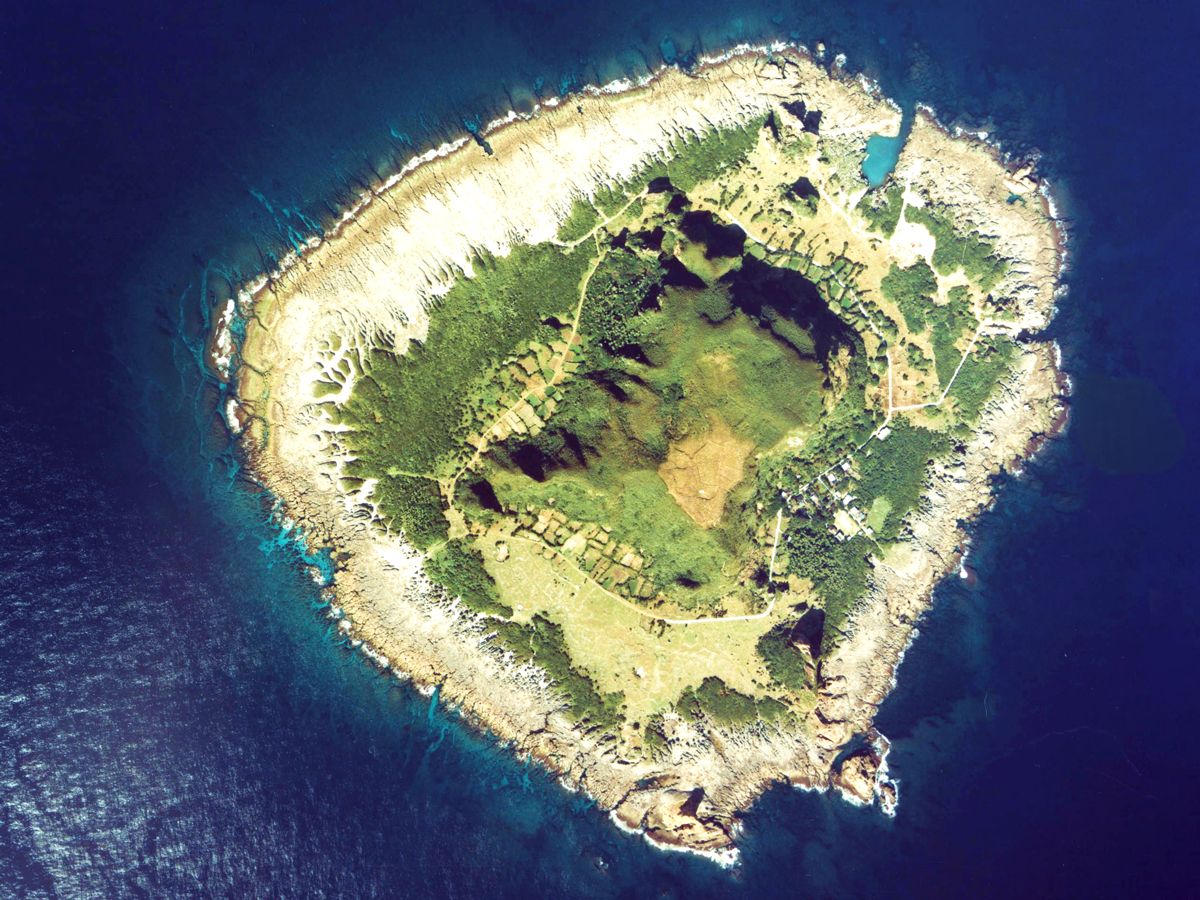
There are 14,125 islands that make up the Japanese archipelago, including those in the Tokara Islands chain, located roughly 150 miles southwest from the mainland. Of these islands, Kodakarajima — which translates to “small treasure island” — is the tiniest, totaling a mere 0.39 square miles in area.
The island is home to 43 permanent residents, who rely on fishing in the surrounding ocean for both sustenance and to support their livelihoods. While there’s no airport on Kodakarajima, the island can be accessed by boat, including the ferry that connects it with the city of Kagoshima on the mainland. For residents and tourists alike, one of the most popular spots on Kodakarajima is the Yudomari Onsen — a free, 24-hour hot spring where bathers enjoy stunning views of the Pacific Ocean.
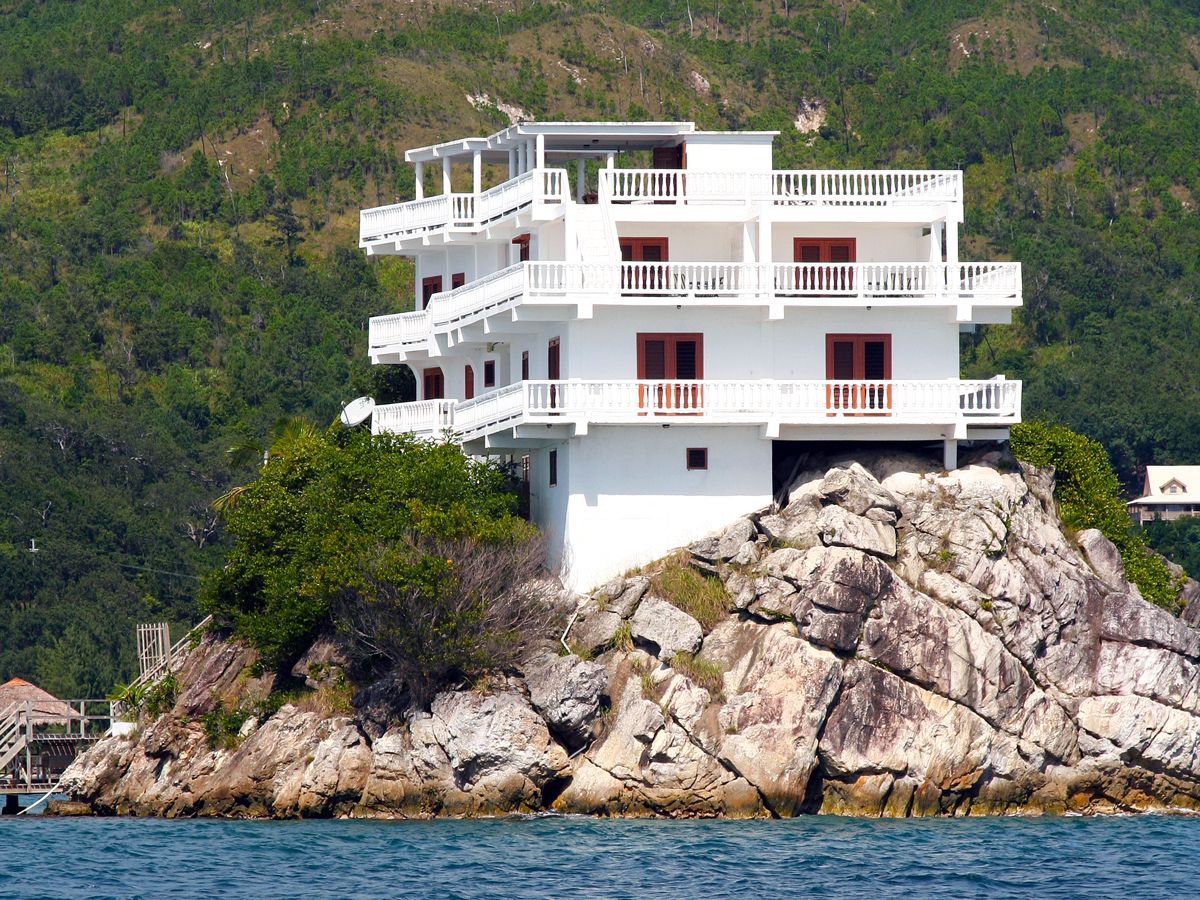
While this tiny island was once home to a private property, it has since been converted into the Villa on Dunbar Rock — a luxurious Caribbean resort where tourists can experience what it’s like to live on an isolated, yet beautiful island located north of the Honduran mainland and just south of the island of Guanaja.
The villa itself spans 15,000 square feet across four floors, taking up almost every inch of space on the island itself. It can be accessed by flying into nearby Guanaja Island and taking a 10-minute boat ride to Dunbar Rock. Those who book a stay here can expect 360-degree views of the surrounding water, a private beach, an infinity pool, an on-call masseuse, and plenty of scenic diving opportunities. According to local legend, the island was once used by the infamous pirate Blackbeard to moor his ship, and rumor has it that his treasure is buried somewhere on Dunbar Rock.
3. Caye Sable – Haiti
Photo credit: TerraData/ Wikimedia
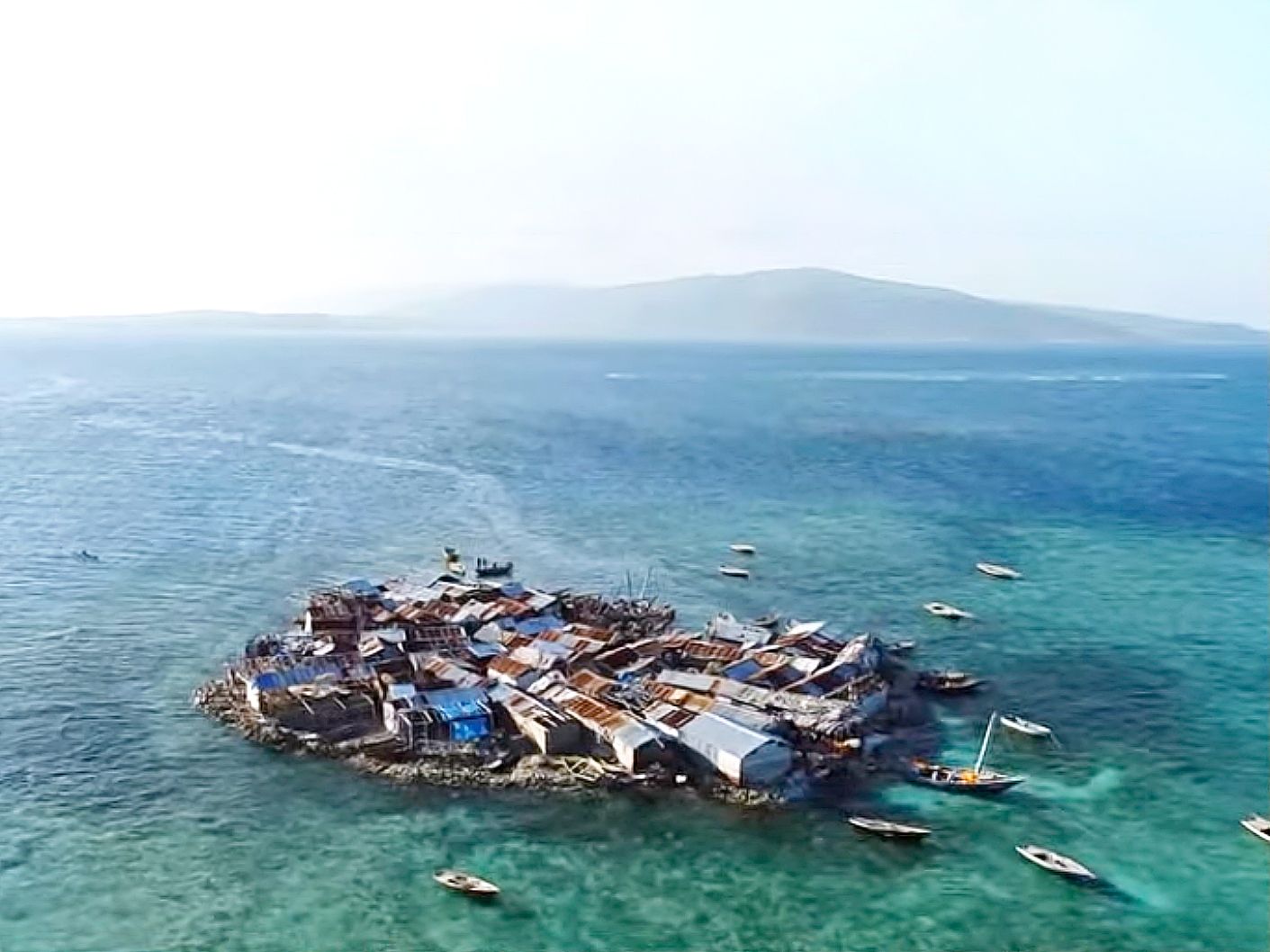
Caye Sable is located in the Gulf of Gonâve, roughly 30 miles west of Port-au-Prince, the Haitian capital. The island measures a mere 0.4 acres in size — less than half the size of a standard soccer field. But despite the limited living space, around 250 to 300 people reside on Caye Sable, making it one of the most densely populated islands on Earth.
This infinitesimal expanse reflects some of the issues plaguing Haiti, which is among the poorest countries in the world. For many Haitians, living spaces are hard to come by and conditions are far from ideal. Though there aren’t any tourist sites to see on Caye Sable, it can still be accessed by taking a small fishing boat from the nearby village of Petite Anse.
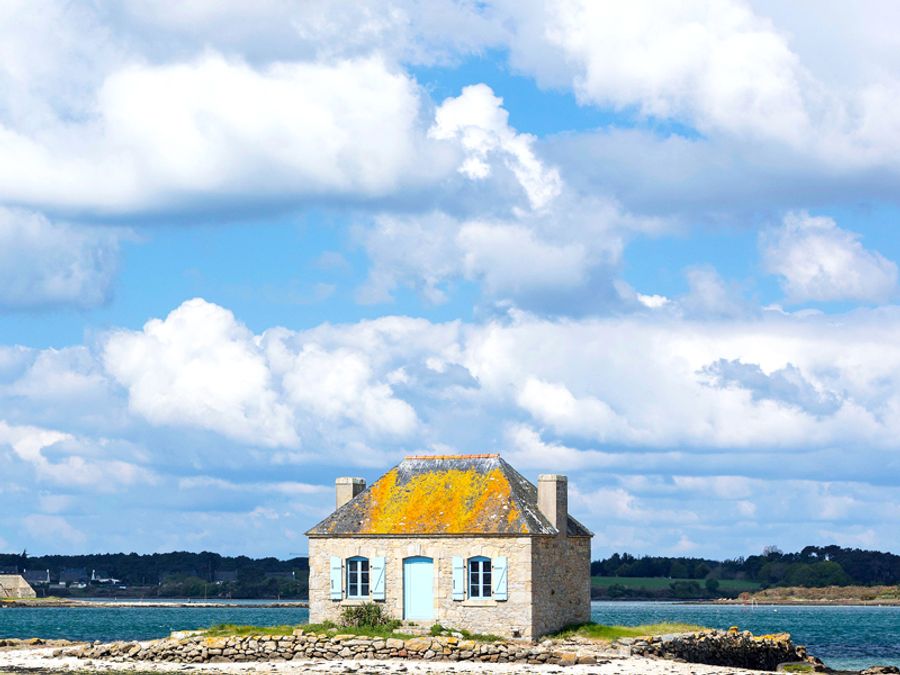
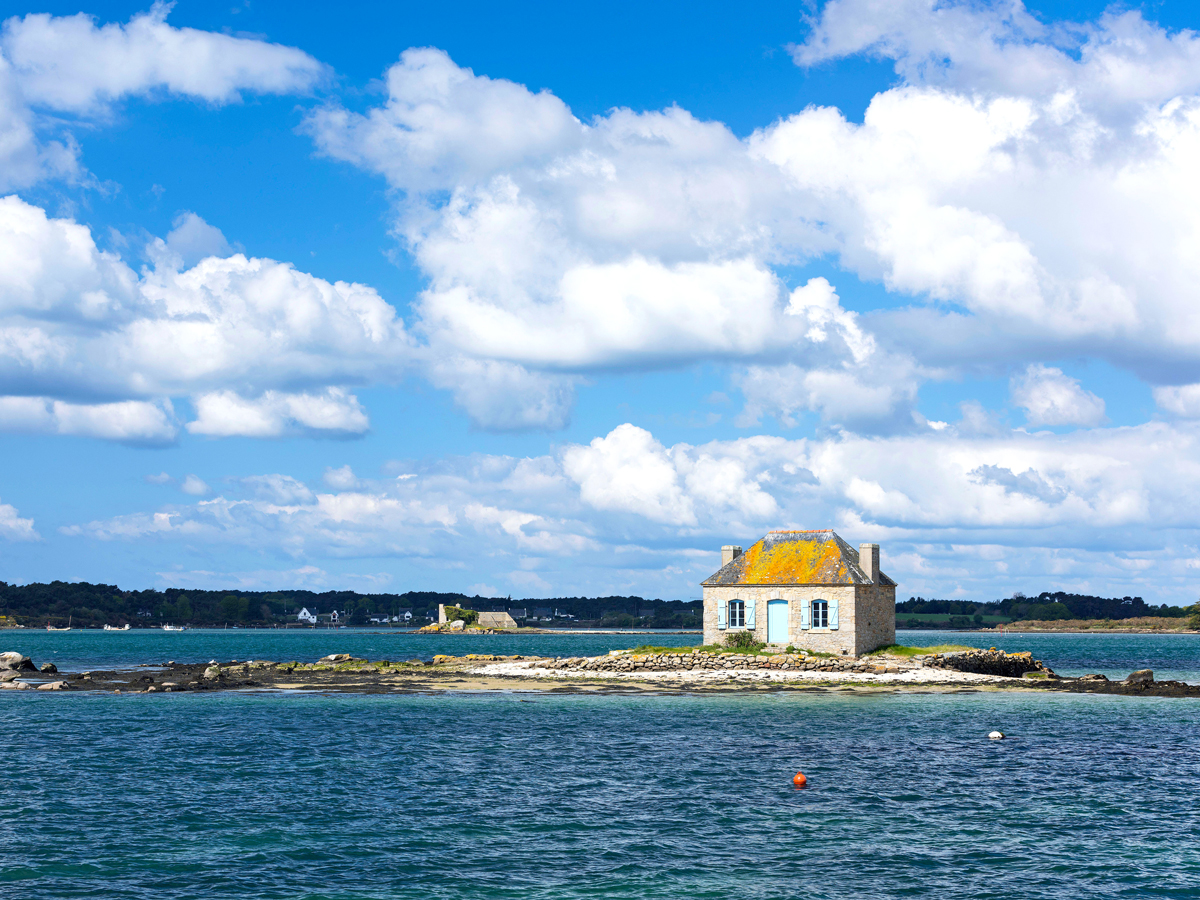
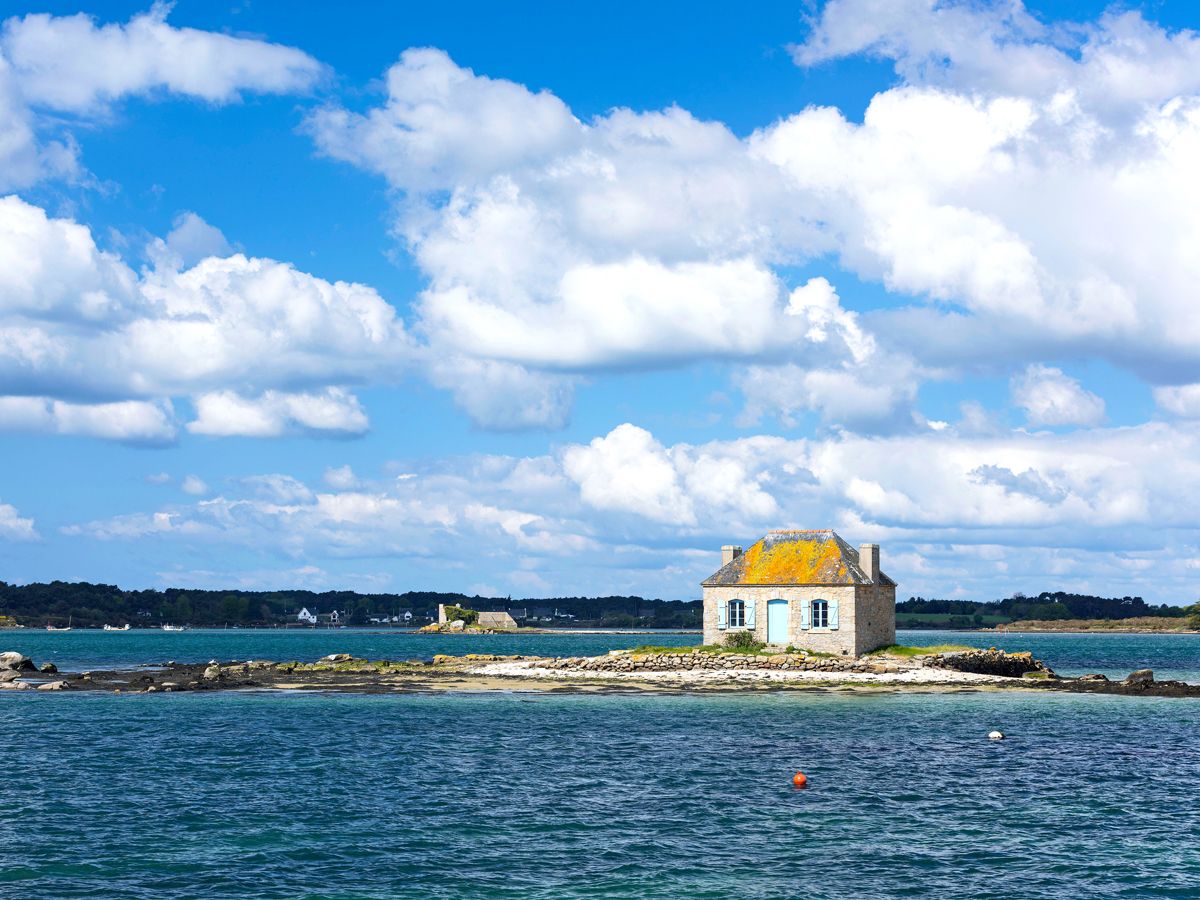
On the island of Nichtarguér, located along the Rivière d’Étel in northwestern France, you’ll find a single stone building with a bright blue door that was originally constructed in 1894. It was built to serve as the residence for a caretaker of a local oyster farm, and it has maintained that purpose ever since. The size of Nichtarguér varies depending on the time of day and surrounding tide. At low tide, it can measure 328 feet in length, compared with high tide, when the island shrinks to a mere 82 feet long.
Located just a stone’s throw away from Nichtarguér is the picturesque island community of St. Cado, a circular island with a diameter of about 200 feet. Here, you’ll find fascinating historic sites such as a medieval-era church dating to the 11th century. St. Cado also has several hiking trails to explore the natural beauty of this small French commune.
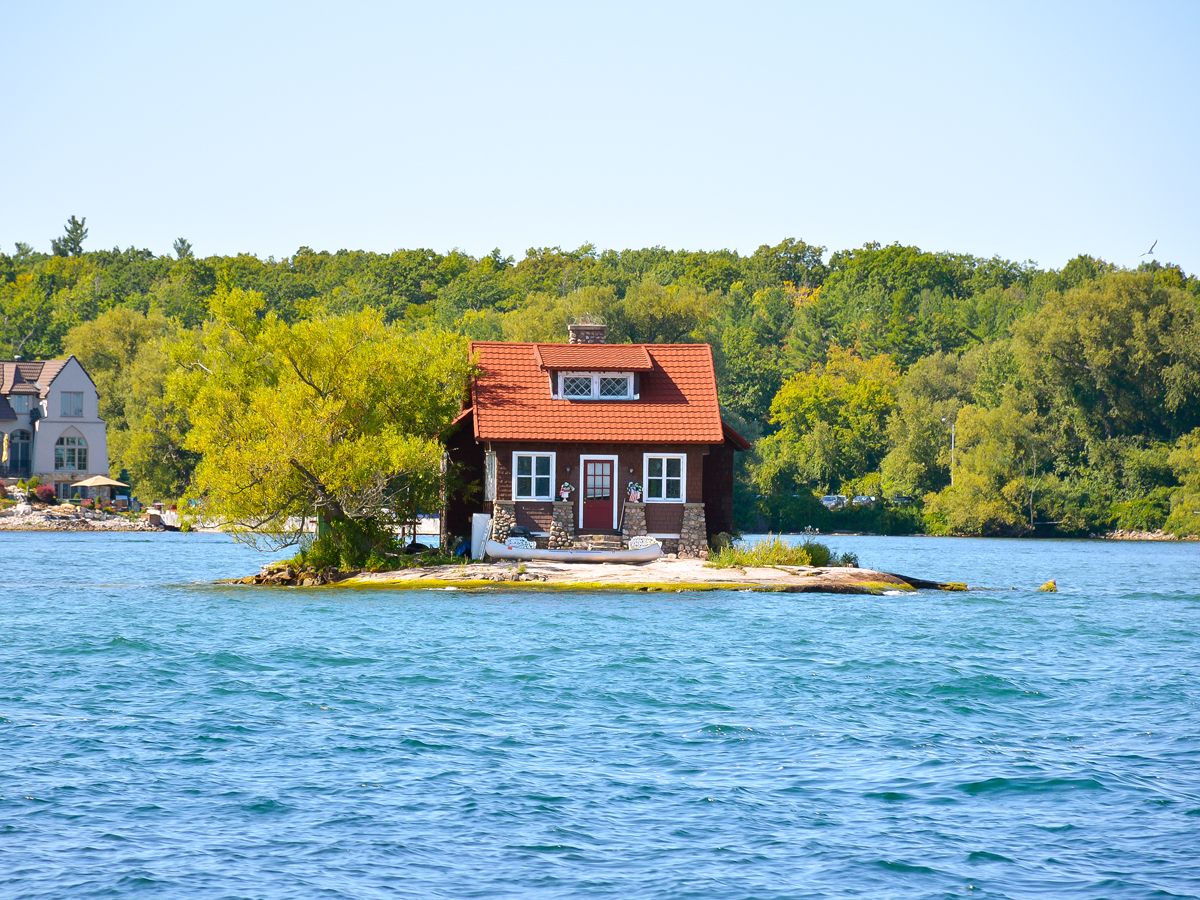
Hub Island is part of the Thousand Islands chain, located in upstate New York in the St. Lawrence River. At just 3,300 square feet in total area, the island is also aptly known as “Just Room Enough Island.” Hub Island is the smallest inhabited piece of land among all 1,864 islands that make up the chain, and most sources consider it to be the smallest inhabited island in the world.
The land was uninhabited for many years until it was purchased by the Sizeland family in the 1950s. They planted a single tree on the island and also constructed a tiny cottage that still stands today. The house takes up nearly every inch of available room on the island, so the “Just Room Enough” nickname is fitting. Hub Island remains private property, but anyone is welcome to boat down the St. Lawrence River and see it from the water.
Advertisement
More from our network
Daily Passport is part of Inbox Studio, an email-first media company. *Indicates a third-party property.
This Highway in the Clouds Is an Engineering Marvel
By
Michael Nordine
Read time: 3 minutes
December 6, 2024
Updated: December 9, 2024
This Highway in the Clouds Is an Engineering Marvel
Architecture •December 6, 2024•Updated: December 9, 2024
By Michael Nordine
Author
Michael Nordine
Michael is a staff writer for Daily Passport and film critic who writes the weekly newsletter Movie Brief. His writing and criticism have also appeared in the Los Angeles Times, Variety, and the Washington Post, among others. A native Angeleno, his favorite countries to visit are Norway and Japan.
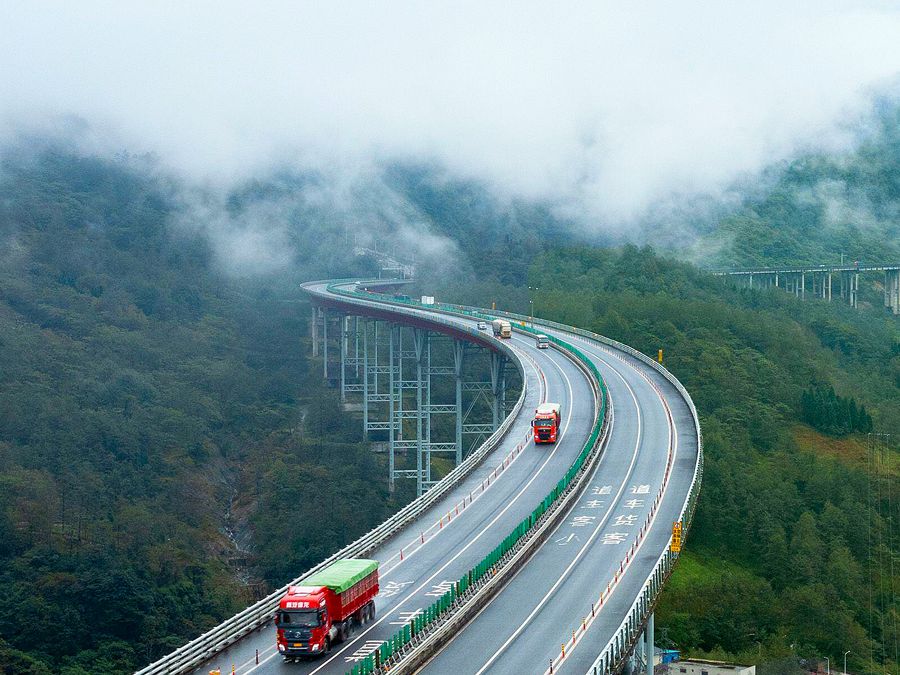
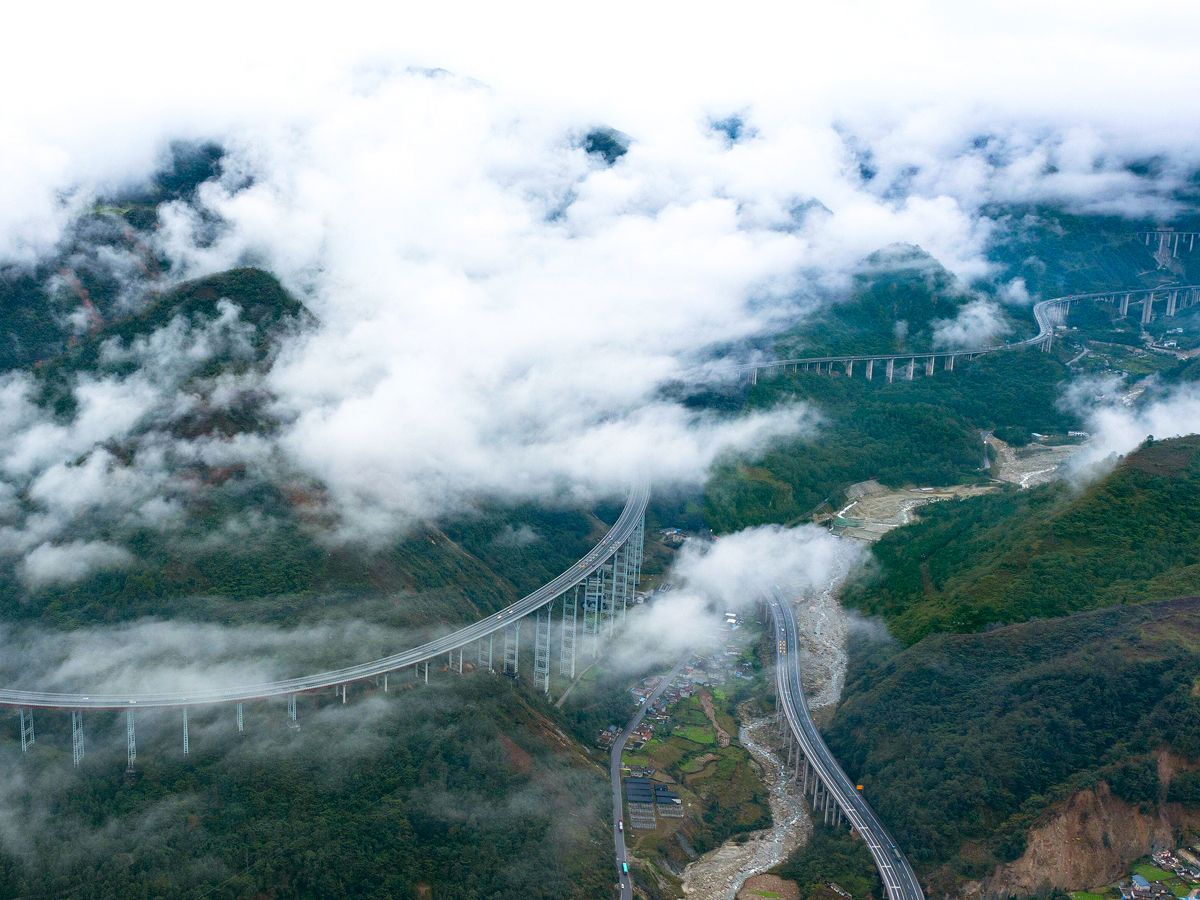
As the world’s third-largest country by area, China has often had to get creative with transportation infrastructure. The Shanghai Maglev is the fastest train in the world, with a maximum speed of 268 mph. At 102.4 miles, the Danyang-Kunshan Grand Bridge is the longest bridge in the world. And Beijing Daxing Airport is among the world’s biggest international airports. The Ya’an-Xichang Expressway, also known as Yaxi Highway, doesn’t have any superlatives of that sort to its name, but it is a marvel of engineering all the same. Here’s why.
Located in Sichuan, a mountainous province in southwestern China, the “Skyroad” (as it’s known) connects the cities of Ya’an and Xichang as part of the Beijing-Kunming Expressway. The only way out of the province is through mountains, so the expressway gradually increases its elevation at a rate of nearly 50 feet per mile.
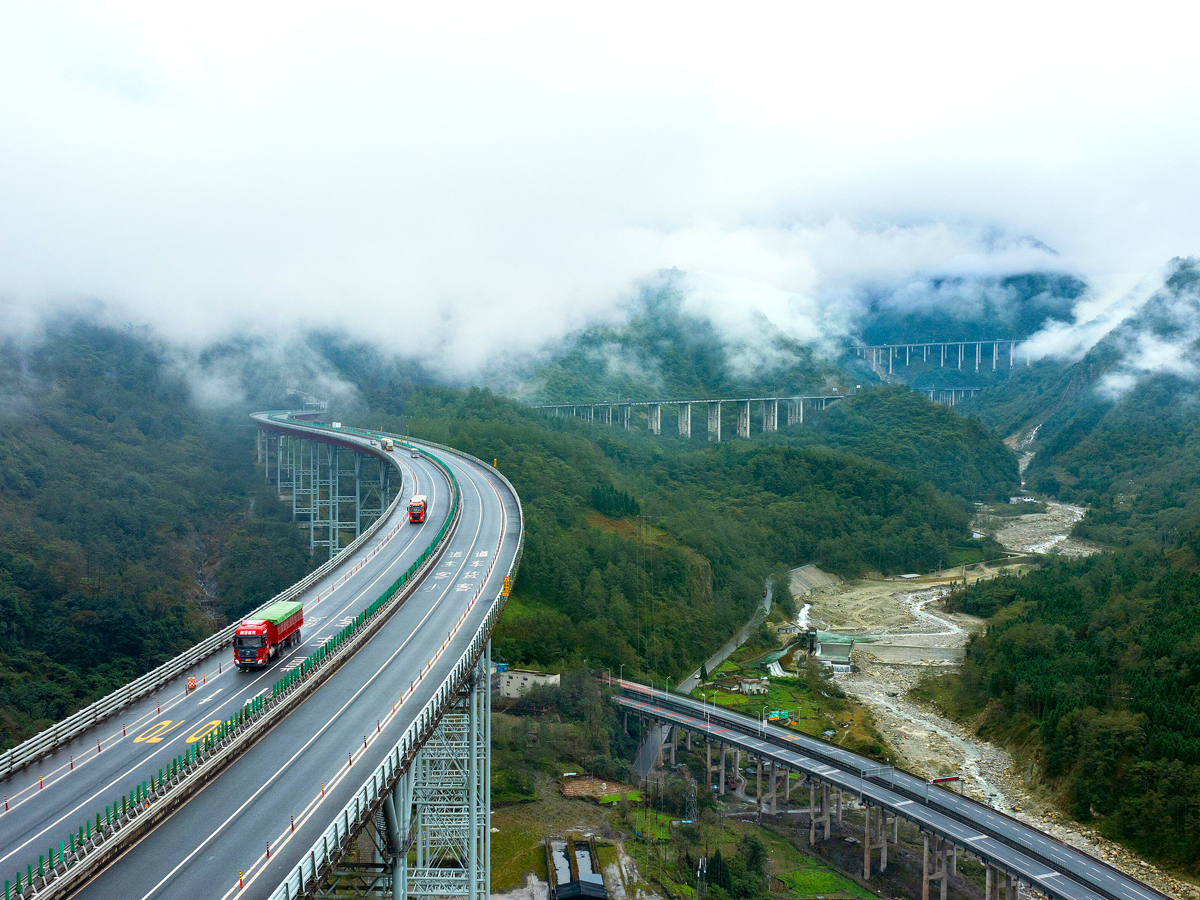
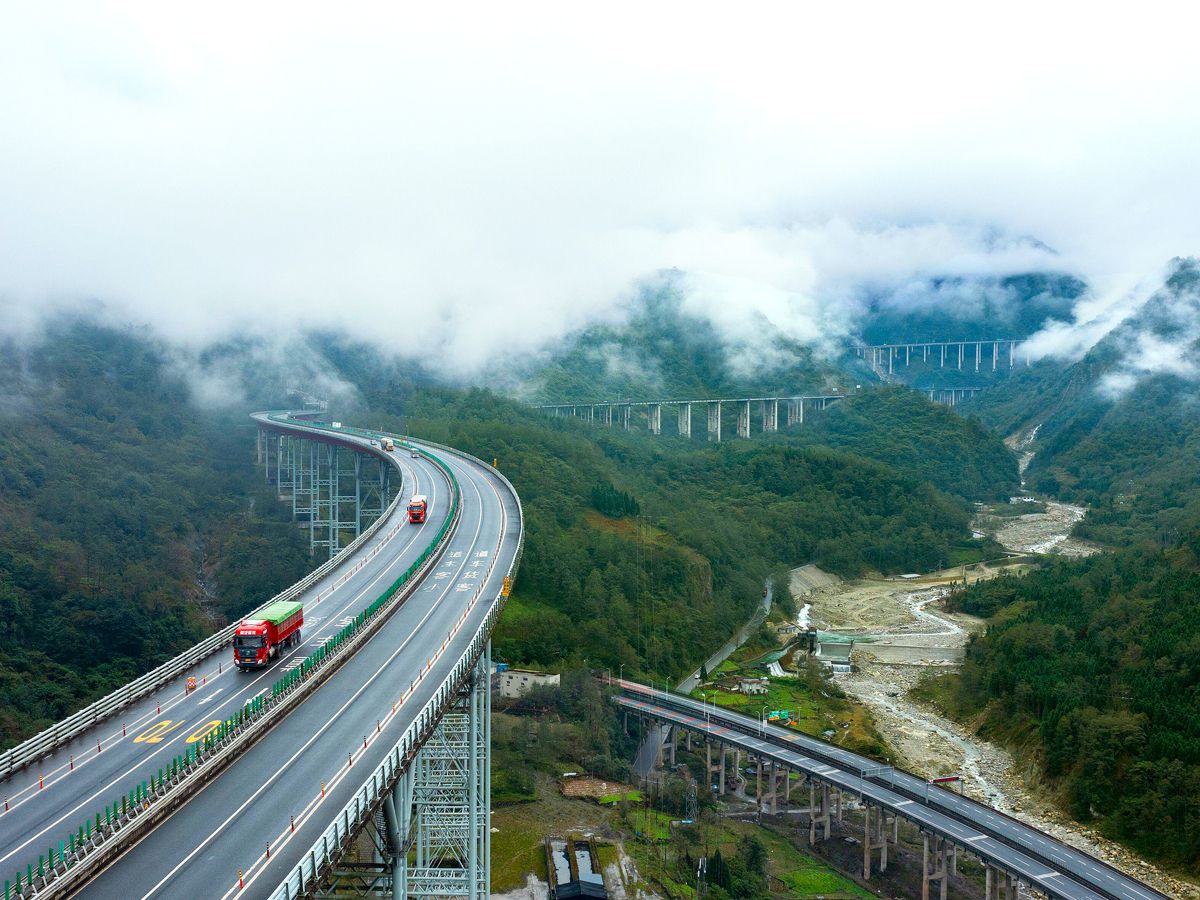
For 149 miles, the road goes through an area that rises from 1,970 feet to 10,500 feet above sea level — which means that, at certain points, you will indeed be living up to the highway’s nickname and driving through the clouds. It’s also full of tunnels and viaducts: 25 miles’ worth of the former, 270 of the latter. Much of the surrounding terrain is perilous, including 12 seismic fault zones. All told, the Skyroad cost 20.6 billion yuan (about $3.3 billion USD) to construct between 2007 and 2012 — it’s been dubbed the “most difficult” motorway ever built.
Even watching a video of the Yaxi Highway will make some prospective travelers nervous. Its guardrails are structurally sound and perfectly safe, but the thought of driving hundreds of feet above the ground might make your palms sweat — especially when you reach the Ganhaizi Bridge. The world’s first reinforced concrete truss bridge, it’s situated at an altitude of 8,200 feet and stretches 5,940 feet long by 82 feet wide.
If you don’t suffer from acrophobia but also don’t have plans to visit China anytime soon, you can watch a three-hour video of the entire drive captured in 4K. It offers a sense of the toll gates, lush scenery, and dizzying heights of the Yaxi — most of which has little traffic. The long tunnels aren’t especially scenic, but much of the drive is surprisingly pleasant, with the elevation increasing gradually enough to not cause any nosebleeds.
As of 2023, China’s expressway network had reached a total length of 114,083 miles. Its overall road network has grown at a rapid rate since the turn of the century and currently ranks third in the world behind America and India, with Russia and Brazil rounding out the top five. Despite this impressive growth, China isn’t yet home to one of the top 10 longest highways in the world, but that could easily change in the coming years.
Advertisement
More from our network
Daily Passport is part of Inbox Studio, an email-first media company. *Indicates a third-party property.
Geography •December 6, 2024•Updated: January 16, 2025
By Bradley O'Neill
Plateaus are elevated, flat landforms that rise distinctly above their surrounding areas. Some are shaped by the interplay of geological forces, like tectonic collisions or volcanic activity, while others evolve gradually as wind and rain erosion sculpts them. Found on every continent, plateaus can vary immensely in size and altitude. From the Altiplano of South America to the colossal Tibetan Plateau in Asia, these are five of Earth’s major plateaus you should know.
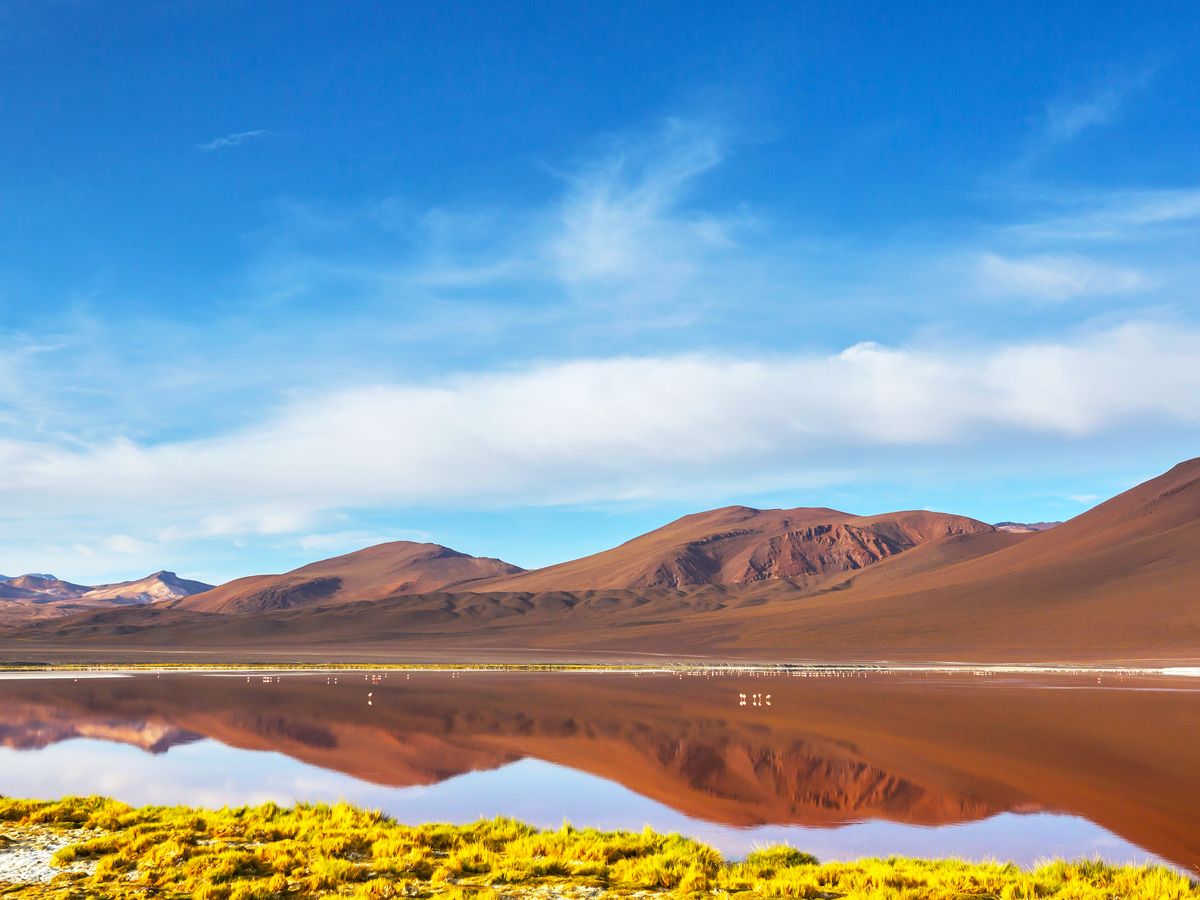
Spanning parts of Bolivia, Peru, Chile, and Argentina, the Altiplano is one of the world’s largest plateaus. It’s a collection of intermontane basins set at around 12,000 feet, where the Andes mountains reach their widest point. The plateau is defined by unique landscapes and geological features. Toward the north is Bolivia’s Lake Titicaca, which is the world’s highest navigable lake. Bordering the southwest side of the Altiplano is the Atacama Desert, one of the driest places on Earth. The Altiplano is also where you’ll find salt flats such as Argentina’s Salinas Grandes and Bolivia’s Salar de Uyuni.
Although characterized by harsh, high-altitude environments, the Altiplano has been inhabited for centuries. Pre-Columbian cultures such as the Chiripa, Tiwanaku, and Inca peoples all flourished here. On the southern shores of Lake Titicaca are the UNESCO-listed ruins of the Tiwanaku political and spiritual center. Today, the region remains a home for populations of the Aymara and Quechua peoples.
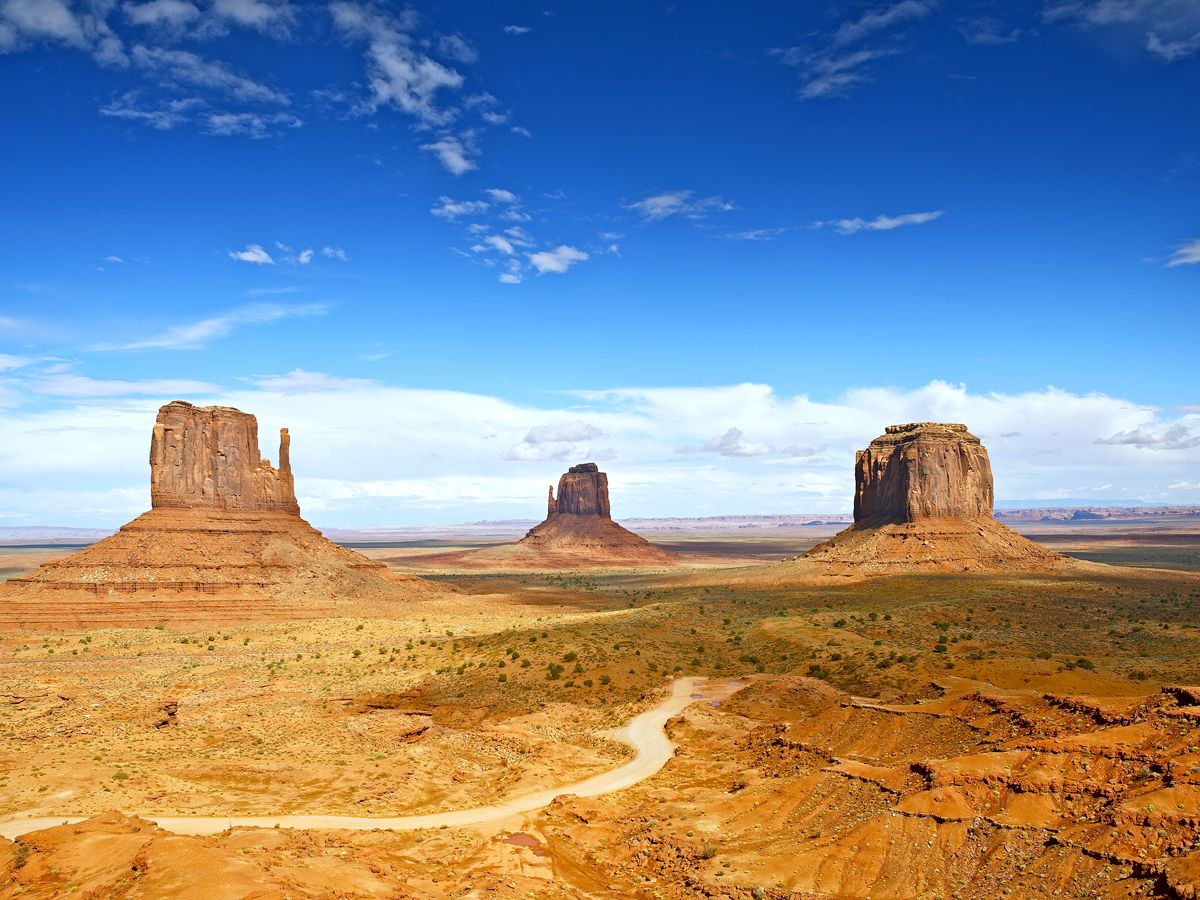
Famous for its multicolored buttes, canyons, and mesas, the Colorado Plateau is a 150,000-square-mile showcase of Earth’s history. It’s located in an area called the Four Corners, where the states of Arizona, Colorado, New Mexico, and Utah all meet. The plateau’s elevation ranges from canyon bottoms at 2,461 feet to 12,600-foot-tall mountain peaks. Grass and shrublands like sagebrush are common at the lowest elevations, while juniper, pine, and pinyon woodlands thrive in the higher regions. Much of the landscape has been shaped over millennia by the Colorado River.
The Colorado Plateau contains one of the world’s largest concentrations of national parks and monuments. Highlights include Grand Canyon National Park and Arches National Park, home to the densest concentration of natural stone arches on the planet. From backcountry hiking in Utah’s San Rafael Swell to paddling through Desolation Canyon, the entire region is a playground for outdoor adventures.
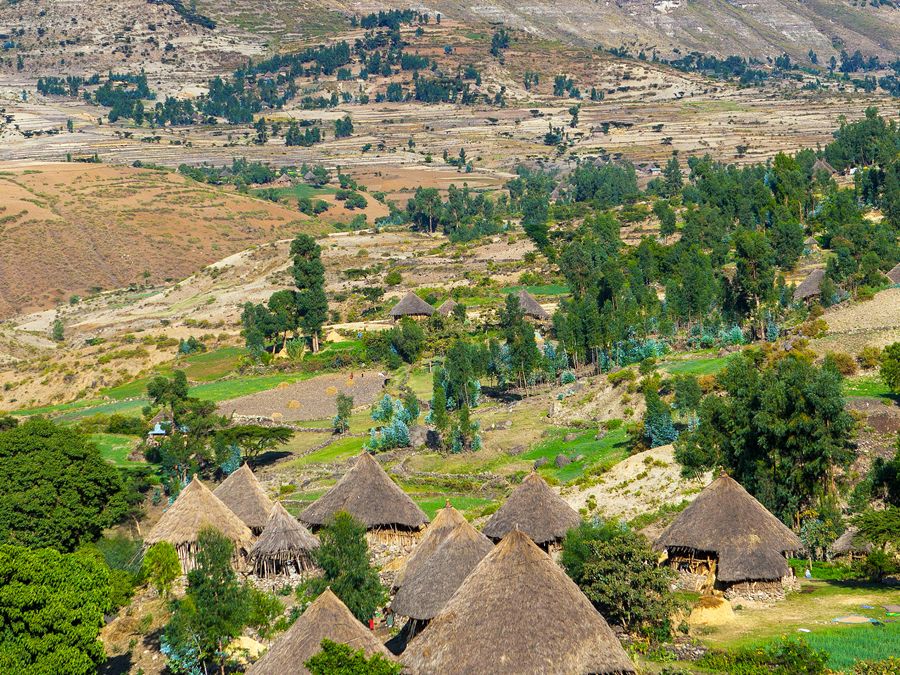
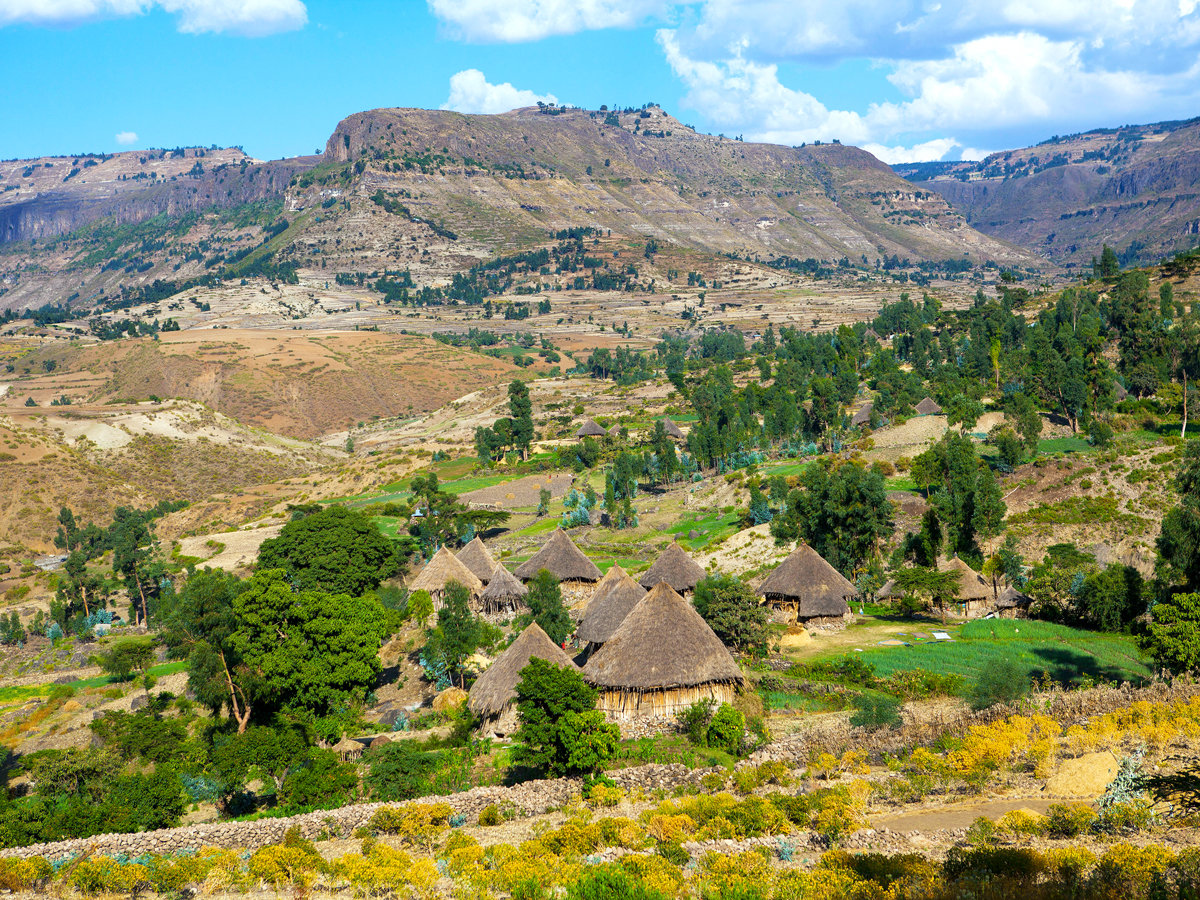
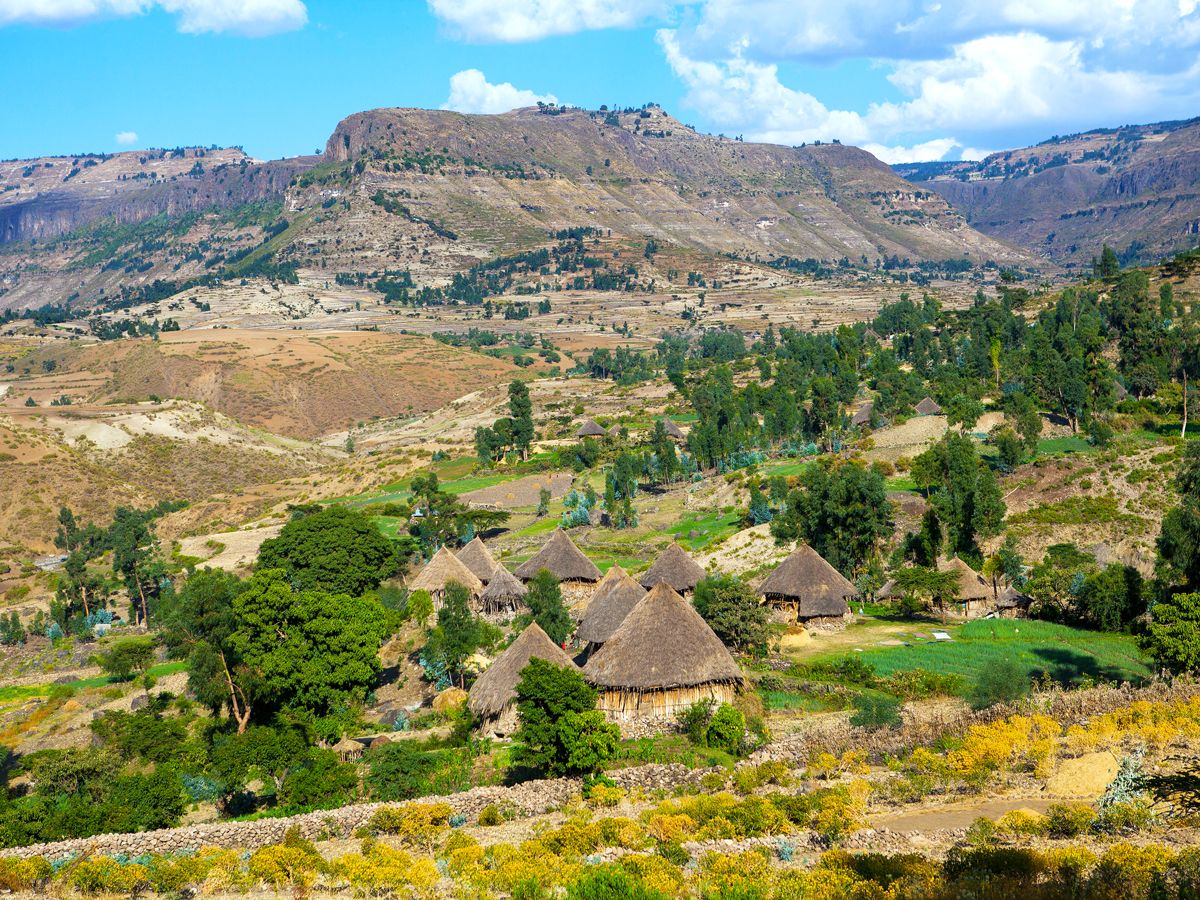
Dubbed the “Roof of Africa,” the Ethiopian Highlands are home to about 80% of Africa’s tallest mountains. Rising over 14,000 feet, these peaks are some of the oldest landforms on the planet, created around 75 million years ago when magma from Earth’s mantle raised a huge dome of ancient rock. Later, the Great Rift Valley split the highlands into two sections. The tallest point of the northern section is 14,930-foot Ras Dashen, while the highest in the southern section is 14,360-foot Tullu Demtu.
Simien Mountains National Park, which shelters Ras Dashen, is a major highlight of the northwestern highlands. It’s home to unique animal species, including the gelada baboon and Walia ibex, along with the country’s largest lake, Lake Tana. The lake is the source of the Blue Nile, which is one of the two major tributaries of the Nile River. Around 40 churches and monasteries surround the lake, some dating back to the 14th century.
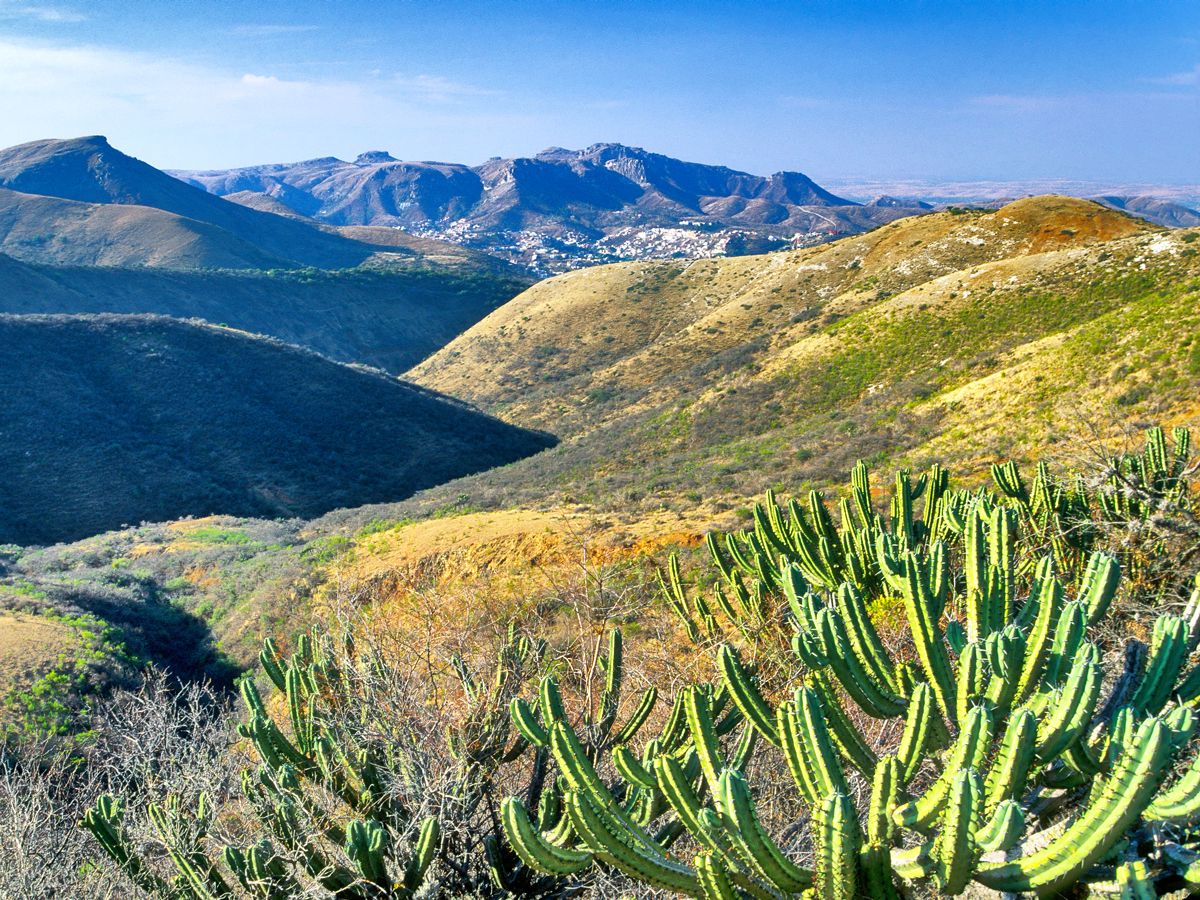
The Mexican Plateau, or Mexican Altiplano, is a vast and diverse region spanning northern and central Mexico. It consists of two main segments: the Northern Plateau (Mesa del Norte) and the Central Plateau (Mesa Central). Bordered by the U.S. to the north and the Trans-Mexican Volcanic Belt to the south, the Mexican Plateau is surrounded by the Sierra Madre Occidental and Sierra Madre Oriental ranges. These mountains shape the plateau’s climate, contributing to its arid northern and temperate central regions. The plateau’s topography includes a combination of vast plains, flat-topped hills, and deep river valleys.
Inhabited for millennia by various Indigenous groups, the Mexican Plateau is rich in cultural attractions. About 90 minutes from Mexico City, Teotihuacan is a UNESCO-protected archaeological complex known as the “City of the Gods.” This pre-Columbian city was built between the first and seventh centuries and is home to well-preserved pyramids and religious buildings. The region is also home to major cities such as Guanajuato and San Miguel de Allende.
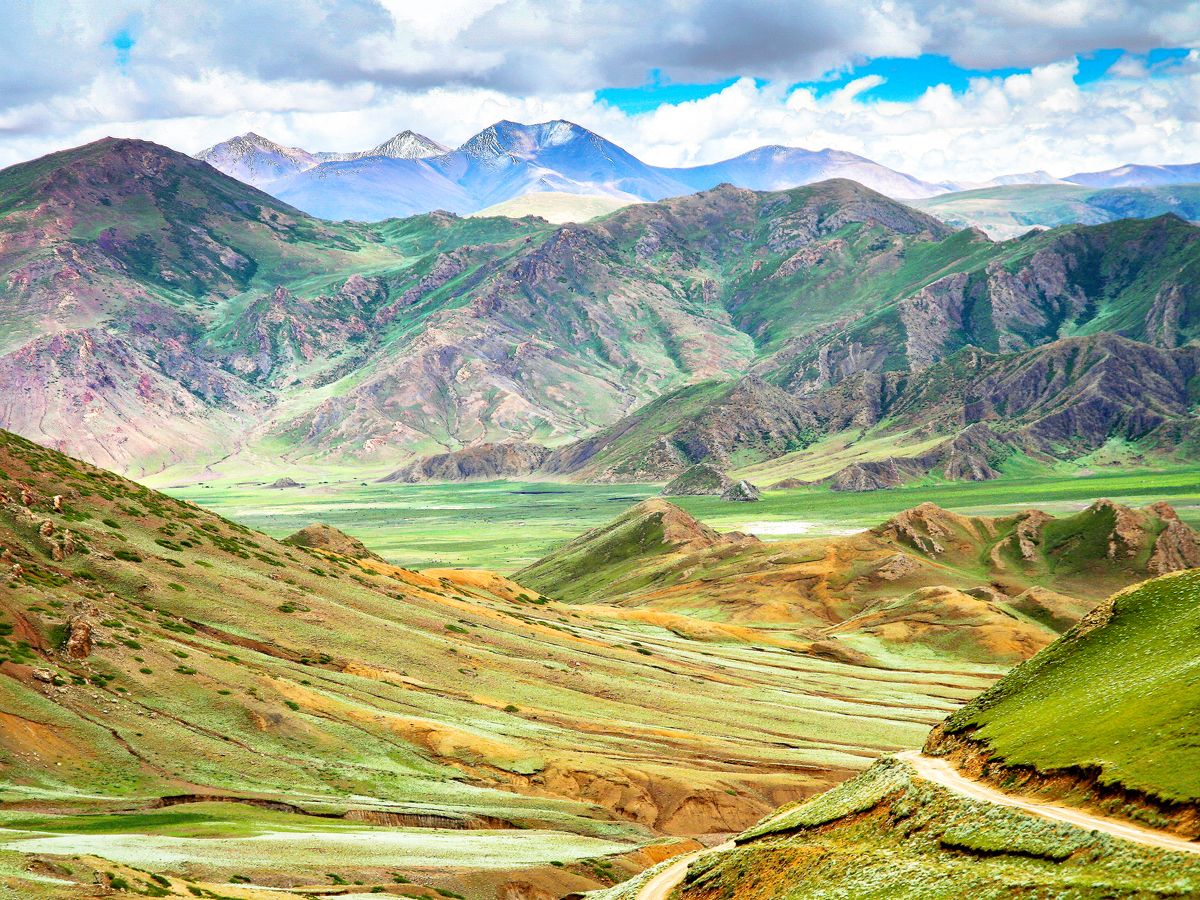
Known as the “Roof of the World,” the Qinghai-Tibetan Plateau is the largest and highest plateau in the world. It occupies around 970,000 square miles in China, India, Nepal, Pakistan, and Bhutan. Stretching about 1,700 miles from east to west, it’s bounded by mountain ranges including the Himalayas, Altun, and Kunlun. The plateau has an average elevation of around 14,760 feet, with 29,032-foot-tall Mount Everest marking its tallest point. Besides mountains, notable characteristics of the plateau include glacial lakes, sprawling ice fields, and alpine meadows.
Several of Asia’s major rivers begin in the plateau, such as the Ganges, Mekong, and Yangtze. The most prominent group here are the Tibetan peoples, who are historically linked with the practice of Tibetan Buddhism. Their spiritual home is the city of Llhasa, the location of the seventh-century Potala Palace. Nomadic herding communities continue to live and carry out their ancient customs around the region, typically moving between pastures according to the seasons with animals that contribute to their sustenance and trade.
Advertisement
More from our network
Daily Passport is part of Inbox Studio, an email-first media company. *Indicates a third-party property.