
Post Banner Image
Culture

15 U.S. Cities and Towns That Look Like They Could Belong in Europe

By Daily Passport Team
Read time: 9 minutes
November 9, 2023
Updated: November 9, 2023

15 U.S. Cities and Towns That Look Like They Could Belong in Europe

By Daily Passport Team
Author
Daily Passport Team
Daily Passport writers have been seen in publications such as National Geographic, Food & Wine, CBC, Condé Nast Traveler, and Business Insider. They're passionate about uncovering unique destinations and sharing expert tips with curious travelers.

Dreaming of a European vacation but can’t make it across the pond? You’re in luck: All across America, there are quaint towns and even big cities where you might close your eyes and easily imagine you’re in Europe. From German settlements in central Texas to Nordic communities in the Midwest, here are 15 cities and towns in the U.S. look and feel quintessentially European — but with no passport required.

Solvang, California

Horse-drawn carriage in front of Danish-style building in Solvang, California
Photo credit: Marcin Ochonski/ Alamy Stock Photo

Founded in 1911 by Danish immigrants, the charming town of Solvang, California, remains a testament to Danish culture. Upon their arrival to the Santa Ynez Valley, Solvang’s founders sought to preserve their Danish heritage by building a Danish folk school, Lutheran church, and local college. Visitors to Solvang will immediately notice the town’s Danish roots, from the Solvang Windmill to the replica of Copenhagen’s Little Mermaid statue. Since it’s located in the heart of Southern California’s wine country, downtown Solvang is filled with wineries and tasting rooms, which only adds to the town’s European charm.

Leavenworth, Washington

Bavarian-style buildings in Leavenworth, Washington
Photo credit: John Trax/ Alamy Stock Photo

Referred to as “Washington State’s Bavarian Village,” the town of Leavenworth’s German appearance has little to do with the area’s original settlers. Instead, Leavenworth’s distinctly European architecture is the result of a clever PR stunt. In the 1960s, town leaders transformed Leavenworth to resemble a Bavarian village at the base of the Cascade Mountains. Today, Leavenworth fully identifies with its faux-German heritage; it’s home to an annual Oktoberfest celebration, a German-style beer hall, and a nutcracker museum. Although Leavenworth has the look and feel of a European village, it’s a mere two-hour drive from Seattle — making it the perfect weekend getaway.

Boston, Massachusetts

Colonial architecture in Boston, Massachusetts
Photo credit: Sherab/ Alamy Stock Photo

As a city filled with history, there are plenty of neighborhoods in Boston that pay homage to the city’s British roots. Beacon Hill, which has been a prominent Boston neighborhood since the Revolutionary War, is a charming throwback to the city’s original foundation, with brick row houses, narrow cobblestone streets, and gas lanterns. Nearby, Trinity Church in Copley Square is evocative of Rome, with arched windows, spires, and stained glass. Elsewhere in the city, and even across the Charles River in Cambridge, Boston’s architecture retains an Old World vibe, made even more European by the winding roads that were formerly cow paths.

Fredericksburg, Texas

Main street storefronts in Fredericksburg, Texas
Photo credit: Florin Seitan/ Alamy Stock Photo

If you’re looking for a piece of Germany in the heart of Texas, look no further than the town of Fredericksburg. Established in 1846 and named for Prince Frederick of Prussia, Fredericksburg’s original founders lured other German immigrants to the town with the promise of farmland and Sunday Houses (second homes located near the church for weekend visits to town). Main Street is the place to see the town’s full-fledged German influence, with historic stone architecture, German shops, and Altstadt Brewery, which serves up lagers, Bavarian-style soft pretzels, and housemade sausages. Plus, many of the town’s original Sunday Houses have been converted to bed and breakfasts for a delightful getaway in a historic home.

Lindsborg, Kansas

Storefront in Lindsborg, Kansas
Photo credit: Butch Martin/ Alamy Stock Photo

Nicknamed “Little Sweden,” the small town of Lindsborg, Kansas, has deep roots in Swedish culture. Settled in 1869 by a group of Swedish immigrants, Lindsborg was originally a haven for the Swedish community, with a focus on religion and the arts. The result is a Midwestern town that shares a strong fondness for its homeland, a fact that is evident from the life-size Dala horses on display along Main Street. Lindsborg also hosts Swedish heritage festivals, like Svensk Hyllningsfest, which honors all Swedish immigrants in the region. Lindsborg is so famously engulfed in Swedish culture that the King of Sweden himself paid the small town a visit in 1976.

Holland, Michigan

Canal in Holland, Michigan
Photo credit: ehrlif/ Alamy Stock Photo

Named for the country they were fleeing, the town of Holland, Michigan, was founded by Dutch settlers escaping religious persecution. Today, the town continues to preserve its unique heritage in its architecture, food, and annual festivals. Held annually each May, the town’s Tulip Time Festival resembles the sweeping flower fields of the Netherlands, complete with an authentic Dutch windmill. In winter, children can visit Sinterklaas (the Dutch version of Santa Claus) before strolling through a European open-air market selling Christmas treats and trinkets. To top that off, the town is also home to Nelis’ Dutch Village, which hosts wooden shoe carving demonstrations and Dutch dancing daily.

St. Augustine, Florida

Ivy-covered church in St. Augustine, Florida
Photo credit: Allen Creative / Steve Allen/ Alamy Stock Photo

It’s a little-known fact that the city of St. Augustine, Florida, was founded before Jamestown and Plymouth, making it the oldest permanent European settlement in the U.S. When the Spanish established the town in 1565, the remote outpost was used as a military colony. Centuries later, Spanish influence is still very evident throughout the Floridan city. The Historic District features narrow streets and buildings dating back to the 18th century. St. Augustine is also famous for its Spanish Colonial Revival-style architecture — evident in the Lightner Museum and the Ponce de Leon Hotel, both of which are famous for their red-tiled roofs, terracotta carvings, and ornate trim.



New Orleans, Louisiana

Wrought iron balconies in the French Quarter of New Orleans
Photo credit: Inge Johnsson/ Alamy Stock Photo

Today, the city of New Orleans is a melting pot of cultures, but when it was founded in 1718, it was strictly French. Named for the Duke of Orleans, the city still remains proud of its French heritage. Perhaps the most European of all the neighborhoods is the aptly named French Quarter, lined with cobblestone streets and Creole townhouses. Contrary to the district’s name, the French’s Quarter’s buildings are a blend of French and Spanish influence — they were built in 1788 after a fire destroyed much of the neighborhood. Either way, the French Quarter’s cast iron balconies, open courtyards, and ornate parapets are distinctly European in design.

Tarpon Springs, Florida

Statue along waterfront in Tarpon Springs, Florida
Photo credit: Bert Hoferichter/ Alamy Stock Photo

Home to the highest percentage of Greek Americans in the U.S., the city of Tarpon Springs, Florida, boasts a big Greek population. Located on the Gulf of Mexico, Tarpon Springs is home to many blue-and-white painted buildings that contain Greek shops and restaurants. When you throw in the Greek street names and a local harbor filled with boats, Tarpon Springs feels more like a Greek island than an American suburb. The city’s biggest industry is sponge diving, popularized by Greek immigrants in the early 1900s. Today, many descendants of the city’s original founders still reside in Tarpon Springs.

Philadelphia, Pennsylvania

Narrow cobblestone street lined with row homes in Philadelphia
Photo credit: Sean Pavone/ Alamy Stock Photo

As one of the oldest cities in the U.S., it should come as no surprise that Philadelphia is home to colonial architecture, with Federal-style homes and cobblestone streets present in many neighborhoods downtown and inspired by historic districts of London. Perhaps the most British street of all is the picturesque Elfreth’s Alley, which is the oldest continually occupied street in the U.S. and a national historic landmark. Elsewhere in the city, it’s easy to spot other European-inspired landmarks, like the Philadelphia Museum of Art, which is more akin to a Greek temple than a museum, or Philadelphia City Hall, which resembles an elaborate French palace.

Vail, Colorado

Downtown Vail, Colorado, with mountains in distance
Photo credit: Dennis Frates/ Alamy Stock Photo

If you’re looking for a European ski town in the U.S., look no further than Vail, Colorado. The town’s founders, skier Pete Siebert and local rancher Earl Eaton, thought the area was the perfect place to build a Bavarian-inspired ski town. After construction on Highway 6 was completed, the remote mountainous area could finally be accessed from Denver, which led to the creation of Vail Resort in 1962, and the town four years later. Vail’s architecture is very much based on Bavarian farmhouses, with ornate decorative trim, wood shutters, and recessed windows. German fare is also available throughout the town and resort, with restaurants serving cheese spӕtzle, Bavarian soft pretzels, and pork schnitzel for après-ski hour.

Washington, D.C.

Statue surrounded by cherry blossoms in Washington, D.C.
Photo credit: Ann Cutting/ Alamy Stock Photo

It might seem odd that the U.S. capital resembles a European city, but it’s true. If you’ve ever visited Washington, D.C, you’ve probably strolled along wide boulevards, walked along Tidal Basin to view the cherry blossoms, or gazed upon the city’s ubiquitous statues and monuments. This is primarily due to the fact that Washington, D.C. was designed by Pierre Charles L’Enfant, a French architect and engineer who fought in the Revolutionary War. His French design aesthetic is evident in the tree-lined streets and blooming gardens found throughout the city, giving the U.S. capital a sophisticated, European feel.

Frankenmuth, Michigan

Steamboat docked in Frankenmuth, Michigan
Photo credit: ehrlif/ Alamy Stock Photo

Founded by a German missionary in the mid-1800s, the town of Frankenmuth, Michigan, was settled when 15 Germans crossed the Atlantic to form a German colony. The plan was for the village to be exclusively Bavarian — no English was allowed to be spoken and the residents had to be of the Lutheran faith. While Frankenmuth had strict rules to begin with, eventually the settlement grew and more Germans were drawn to the area. After World War II, the town began to use its Bavarian roots to attract tourists, earning the nickname “Michigan’s Little Bavaria.” Today, visitors can partake in the town’s Bavarian culture by learning to hand-roll pretzels or riding in horse-drawn carriage through town.

Venice Beach, California

Canals in Venice Beach, California
Photo credit: Ivo Roospold/ Alamy Stock Photo

When the “Venice of America” was in its planning stage in the early 1900s, developer Abbot Kinney took inspiration from its European namesake. In addition to Italian-inspired architecture, Kinney built a large network of canals to add the city’s ambiance. Although the canals were first considered charming, they eventually became a nuisance to developers. As a result, most of the canals were paved over by 1929. Today, a small network of these original canals still exist and can be found near 25th street in Venice Beach. Lined by sidewalks, the canal’s peaceful waters and overarching bridges remain reminiscent of the original Venice.

Charleston, South Carolina

Streets of Charleston, South Carolina, at night
Photo credit: Kruck20/ Alamy Stock Photo

When Charleston was founded in 1670, the bustling seaport city was often referred to as “Little London.” In the ensuing years, however, Charleston earned a new nickname — the Holy City — as the founding Protestants’ religious tolerance made the city a haven from persecution. Thanks to its history, Charleston has European undertones, including a skyline filled with church steeples, cobblestone roadways, and brightly colored historic homes. When you add in the city streets lined with palm trees, visitors to Charleston may feel like they’ve been transported to a Southern version of the French Riviera.

Post Banner Image
Architecture

6 Mesmerizing Secret Passageways Around the World

By Julia Hammond
Read time: 5 minutes
November 9, 2023
Updated: November 9, 2023

6 Mesmerizing Secret Passageways Around the World

By Julia Hammond
Author
Julia Hammond
Julia is a U.K.-based travel writer whose work has been featured in The Independent, The Telegraph, The New Zealand Herald, and Culture Trip, among others. She’s an enthusiastic advocate for independent travel and a passionate geographer who has had the privilege of traveling to more than 130 countries in search of a story.

Across the world, historic buildings of all kinds conceal hidden corridors leading to separate annexes, wings, and even different properties altogether. The reasons these secret passageways were first installed are equally as interesting as the corridors themselves. Some were nothing more than the follies and quirks of wealthy property owners, while others were necessary to maintain the safety of those who lived or worked there. Take a look at the stories behind six fascinating secret passageways that exist around the world, from the Vatican to the pyramids of Egypt. 

Passetto di Borgo – Vatican City

Stone archway concealing the Passetto di Borgo in Vatican City
Photo credit: Vito Arcomano/ Alamy Stock Photo

To casual observers, the Passetto di Borgo may look like a fortification, but this particular crenulated wall hides something far more unusual. Inside, lies a hidden passageway which links the Vatican with Castel Sant’Angelo in Rome, the building commissioned by Roman Emperor Hadrian as his mausoleum in the first century CE.

In the 13th century, Pope Nicholas III oversaw the passageway’s construction, building on the site of an earlier wall. Pope Alexander VI, who completed the structure more than two centuries later, was most likely the first to take advantage of a hidden passageway that had been concealed within the wall. He used it to escape the troops of Charles VIII of France when they invaded in 1494. Later, Pope Clement VII Medici fled to Castel Sant’Angelo via the same route during the Sack of Rome by Charles VIII. If you want to follow in their footsteps, the Passetto di Borgo opens to a limited number of visitors every summer.

Great Pyramid of Giza – Egypt

Person on camel in front of Great Pyramid of Giza, Egypt
Photo credit:  Weixin Shen/ Alamy Stock Photo

News broke in March 2023 of a secret corridor in the Great Pyramid of Giza, the oldest and largest of Giza’s pyramids. Archaeologists working on the ScanPyramids project unveiled their find, which measured 30 feet long and six feet wide, after making the discovery using state of the art, non-invasive imaging technology. 

The pyramid was built by Khufu (also known as Cheops), the second king of Egypt’s fourth dynasty, and was finished around 2560 BCE. Outer layers of limestone cover granite burial chambers that are linked by internal passageways. A carefully managed number of ticket holders have long been permitted to venture inside the pyramid, and all of them would have been just feet away from this incomplete passageway, whose purpose is still something of a mystery. Investigations continue, so perhaps one day archaeologists will have a fuller understanding of this enigmatic corridor.

Singer Castle – Dark Island, New York

Stone facade of the Singer Castle in New York
Photo credit: Danita Delimont/ Shutterstock

Singer Castle was the island retreat home of Frederick Bourne, the former president of the Singer Sewing Machine Company. He chose to build it on Dark Island, part of the Thousand Islands archipelago scattered in the St. Lawrence River along the U.S.-Canada border. Bourne commissioned American architect Ernest Flagg to build him an eccentric Gothic Revival-style castle. 

The end result contains several secret passageways, such as a corridor to the wine cellar accessed from a hidden door in the library. Another leads off from a concealed doorway beside a fireplace. One possible explanation for these corridors was that the family’s servants could use them to discreetly keep an eye on the needs of their guests, but some claim it was so the hosts could spy on the guests.

Palace of Westminster –  London, England

View of the Palace of Westminster across the Thames River in London, England
Photo credit: Ionut David/ Alamy Stock Photo

The Palace of Westminster, situated on the north bank of the River Thames in London, is home to the House of Commons and the House of Lords. One might assume that a nation’s policymakers would have extensive knowledge of just about everything inside, so it was perhaps somewhat surprising to find out that Britain’s MPs didn’t even know about a secret passageway right under their noses. 

Though a plaque marks the doorway, it was believed that the passage itself had been filled in during repairs necessitated by World War II bomb damage. It had originally been built for the coronation of Charles II in 1661 to enable guests to proceed to a banqueting hall. The intact passageway was rediscovered by historians during restoration work in 2020, though it’s not open to the public.

Traboules of Lyon – France

View of the Traboules passageways in Lyon, France
Photo credit: Michel & Gabrielle Therin-Weise/ Alamy Stock Photo

Sometimes, secret passageways can be hidden in plain sight, and that’s certainly the case with the Traboules of Lyon. More than 400 corridors, staircases, and courtyards are tucked away in the center of this charming yet underrated French city, with around 40 of them accessible to the public. 

It’s well worth seeking out these passageways for their unique architecture — some boast vaulted ceilings, while others feature Renaissance arches. They were originally used by silk workers, who needed to transport cloth across Vieux Lyon (Old Lyon) without the risk of it getting wet or dirty in the process. Many years later, the Resistance took advantage of their shadowy nooks and corners as they carried out covert operations in occupied France during World War II. Today, they make a handy (and photogenic) shortcut as locals and tourists move about Lyon’s city center.

Biltmore Estate – Asheville, North Carolina

Ornate exterior of the Biltmore Estate in Asheville, North Carolina
Photo credit: Ninette Maumus/ Alamy Stock Photo

This lavish Gilded Age mansion built in 1895 belonged to business tycoon George Washington Vanderbilt II. The design of the Biltmore Estate was a reflection of the châteaux and stately homes he had admired during his travels through France and England, including Chambord and Chenonceau, Hatfield House, and Haddon Hall. 

Vanderbilt instructed his architect to incorporate secret passageways and hidden rooms, camouflaging doorways to match the surrounding décor so that they wouldn’t immediately be obvious. However, observant visitors will spot them. For instance, in the breakfast room, a doorknob and door frame can be seen beneath the Renoir painting that hangs on the wall. Behind it is a corridor leading to the butler’s pantry, and another secret passageway leads from the library to the guest bedrooms.

Post Banner Image
Geography

What Countries Are the Largest States Most Similar in Size To?

By Bennett Kleinman
Read time: 6 minutes
November 9, 2023
Updated: January 25, 2024

What Countries Are the Largest States Most Similar in Size To?

By Bennett Kleinman
Author
Bennett Kleinman
Bennett is a New York City-based staff writer for Daily Passport. He previously contributed to television programs such as the Late Show With David Letterman, as well as digital publications like the Onion. Bennett has traveled to 48 U.S. states and all 30 Major League Baseball stadiums.

The United States is the third-largest country in the world by total area, and many of its individual states are known for their vast size. For instance, there are only 15 sovereign nations boasting a larger area than Alaska. Even Rhode Island — the smallest U.S. state — is larger than a number of independent nations. However, it can be challenging to compare the sizes of states to countries just by looking at a map. To put things in perspective, we’ve ranked the 10 largest states and the countries to which they’re most similar in size.

10. Wyoming – United Kingdom

Wrangler boot sculpture in downtown Cheyenne, Wyoming
Photo credit: Cheryl Moulton/ Alamy Stock Photo

Wyoming, America’s tenth-largest state, encompasses 97,813 square miles of total area. On the other side of the pond, the United Kingdom is closest in size to the Equality State — it’s just a few thousand square miles smaller, coming in at 93,630 square miles. Wyoming is also the least populated U.S. state, and is home to a mere 583,000 people. The United Kingdom, on the other hand, has an estimated population of 67.9 million people spread throughout England, Wales, Scotland, and Northern Ireland. The largest city in Wyoming is the capital, Cheyenne, with approximately 65,000 residents. London — the capital of the United Kingdom — is by far the country’s most populous city with 7.6 million residents.

9. Oregon – Ecuador

Aerial view of the Basilica del Voto Nacional and downtown Quito, Ecuador
Photo credit: f11photo/ Shutterstock

The ninth-largest state is Oregon, totalling 98,379 square miles of area in the Pacific Northwest. At 99,112 square miles, the Central American country of Ecuador is closest in size to Oregon. There are approximately 4.2 million residents living within Oregon’s borders, a number that pales in comparison to Ecuador’s total population of around 18.2 million. Oregon’s largest city is Portland, with 619,000 residents, just ahead of its capital and second-largest city, Salem (182,000). Ecuador’s capital city of Quito is its second-most populous city with 1.4 million people — Guayaquil is slightly larger with a population approaching 2 million residents.

8. Colorado – New Zealand

Rock formations in Garden of the Gods in Colorado Springs, Colorado
Photo credit: Sean Pavone/ Alamy Stock Photo

Colorado, the eighth-largest state in the country, covers 104,094 square miles. That makes it slightly larger than the Oceanic nation of New Zealand, which totals 102,587 square miles of area. Colorado and New Zealand are similar not only in size but also population. There are an estimated 5.9 million Colorado residents, compared to 5.1 million people living in New Zealand. Colorado’s capital, Denver, is the state’s most populous city, with nearly 700,000 residents. Auckland is the most populated city in New Zealand with 418,000 residents, just ahead of the capital city of Wellington (382,000).

7. Nevada – Burkina Faso

View of the Sindou peaks in Burkina Faso
Photo credit: Travel Telly/ Shutterstock

The state with the seventh-largest breadth is Nevada, spread over 110,572 square miles. That’s just a few thousand square miles larger than the West African nation of Burkina Faso, which covers 104,524 square miles of area. Nevada is home to 3.2 million residents, many fewer than Burkina Faso’s 22.8 million citizens. Carson City serves as the capital of Nevada and is home to nearly 60,000 people, though Las Vegas is the state’s largest city with over 650,000 residents. The largest city in Burkina Faso is also its capital, Ouagadougou, with 1.1 million people living there.

6. Arizona – The Philippines

Image of the Quezon Memorial Circle in Quezon City, Philippines
Photo credit: Matthew Roberge/ Alamy Stock Photo

Arizona is the sixth-largest state in the nation, covering 113,990 square miles. The archipelagic Asian nation of the Philippines is closest in size to Arizona at 114,145 square miles. There’s a significant gap in terms of population between the state and country, however — there are 7.5 million Arizona residents compared to a whopping 115 million Philippine citizens. Arizona’s capital, Phoenix, is not only the most populous city in the state (with 1.7 million residents) but also the most populous capital city in the country. In the Philippines, 2.8 million residents live in Quezon City, the country’s largest city — considerably more than the 1.6 million residents of Manila, the capital.

5. New Mexico – Poland

Shops and galleries in Old Town, Albuquerque, New Mexico
Photo credit:  Ian Dagnall/ Alamy Stock Photo

Arizona’s neighbor, New Mexico, is the fifth-largest state, spanning 121,590 square miles of the southwestern U.S. The “Land of Enchantment” is most similar in size to Poland, which has 120,423 square miles of territory. There are 2.1 million people living in New Mexico, significantly fewer than the 37.5 million people who reside in Poland. New Mexico’s capital city is Santa Fe, though the city has a smaller population than the larger cities of Albuquerque, Las Cruces, and Rio Rancho. Poland’s capital, Warsaw, is also its most populous city, and is home to an estimated 1.7 million residents.

4. Montana – Japan

Senso-ji temple and Skytree Tower at night in Tokyo, Japan
Photo credit: robertharding/ Alamy Stock Photo

Montana is the fourth-biggest state in the Union, covering an area of 147,040 square miles. This closely aligns with the archipelagic nation of Japan, which covers 145,936 square miles. In terms of population, Montana ranks among the nation’s 10 least populated states, with approximately 1.1 million residents. Its population is significantly smaller than the 124.2 million people who call Japan home, which makes Japan the 11th-most populous country in the world. Montana’s most populous city is Billings (118,000 residents), though its capital city is Helena (population: 35,000). Tokyo, the capital of Japan, is the world’s most populous city — with over 37 million living in its metro area.

3. California – Paraguay

Flower-lined pathway along the Sacramento River in California
Photo credit: Chris LaBasco/ Shutterstock

California, America’s third-largest state, boasts a total area of 163,696 square miles — slightly larger than the South American nation of Paraguay, which covers 157,048 square miles. California also has far more residents than Paraguay: There are around 38.9 million Californians compared to just 7.6 million Paraguayans. California’s most populous cities are Los Angeles (3.8 million people) and San Diego (1.4 million), and its capital of Sacramento is home to around 528,000 people. Paraguay’s capital and largest city is Asunción, home to an estimated 525,000 inhabitants (2.2 million in the entire metro region).

2. Texas – Myanmar

Stairs leading to Golden Uppatasanti Peace Pagoda Temple in Naypyitaw, Myanmar
Photo credit: chrisontour84/ Shutterstock

At 268,596 square miles, Texas is the second-largest of the 50 U.S. states. In terms of foreign countries, this compares most closely to Myanmar, a nation in Southeast Asia with an area of 261,219 square miles. While Texas is also the second-most populous state — with just over 30 million residents — the total population of Myanmar is around 56 million individuals, ranking it among the world’s 30 most populous countries. Texas has three cities (Houston, San Antonio, and Dallas) with populations that exceed 1 million residents, though its capital city of Austin is home to 974,000 people. Myanmar’s capital city is Nay Pyi Taw, which is the third-most populous city in the country (925,000 residents) behind Yangon and Mandalay.

1. Alaska – Libya

View of Gastineau Channel, Douglas Island, and downtown Juneau from the top of Mount Juneau in Alaska
Photo credit: Ion Mes/ Shutterstock

Alaska is by far the largest U.S. state, with a total area of 665,384 square miles that’s more than double the size of Texas. Alaska is closest in size to Libya, a North African country with a total area of 647,184 square miles. Libya, however, boasts a significantly larger population than Alaska — it is home to an estimated 7.6 million residents. Alaska’s population is roughly one-tenth of that, at around 733,000 people. Alaska’s largest city is Anchorage (with just under 300,000 residents), and its capital city, Juneau, has a population of 32,000. Tripoli is both Libya’s most populous city as well as its capital, with over 1.1 million residents.

Post Banner Image
Culture

8 Things You Probably Don’t Know About Hawaii

By Bradley O'Neill
Read time: 7 minutes
November 9, 2023
Updated: November 15, 2023

8 Things You Probably Don’t Know About Hawaii

By Bradley O'Neill

Hawaii, aka the Aloha State, is part of an archipelago of tropical islands located around 2,400 miles off the western coast of the continental U.S. Described by author Mark Twain as the “loveliest fleet of islands that lies anchored in any ocean,” this Pacific paradise boasts some of the most diverse climates, cultures, ecosystems, and landscapes in the country. The Hawaiian chain consists of 137 islands, eight of which are considered the major islands. Here are eight interesting facts that you might not know about each of the eight major islands of Hawaii. 

Niihau Has Been Privately Owned Since 1864

Dramatic canyon in the Hawaiian island of Niihau
Photo credit: Ritu Manoj Jethani/ Shutterstock

Niihau is the westernmost of the eight major Hawaiian islands and, for many, the most mysterious. The island was formed from a shield volcano around 5 million years ago, but for the last 150 years, the island has been privately owned by one family, who instituted a closed-door policy to preserve native Hawaiian culture. For this reason, it’s been nicknamed the “Forbidden Island,” and only members of the family, permanent residents, and invited guests can set foot on the island. Others can get a glimpse via boat and helicopter tours. 

In 1863, a family of Scottish farmers arrived from New Zealand. The family matriarch, Elizabeth Sinclair, forged a strong relationship with Hawaii’s royal family and made an agreement with King Kamehameha V to purchase Niihau in 1864. Today, most of the island’s 160 or so residents live in the village of Puuwai and get around on bike, foot, and horseback. The making and selling of the Niihau shell lei is an important part of the local economy. 

The Big Island Is Home to Earth’s Largest and Most Active Volcanoes 

Rocky coastline of the Big Island
Photo credit: PeopleImages.com – Yuri A/ Shutterstock

The Hawaiian islands are part of the Hawaiian Emperor seamount chain, an underwater volcanic mountain range that partly reaches above sea level. Consequently, all of the islands in the archipelago are of volcanic origin and have at least one primary volcano. Hawaii, also known as the Big Island because it’s the largest of the chain, consists of five major volcanoes: ​​Kilauea, Mauna Loa, Mauna Kea, Hualalai, and Kohala.

Of the Big Island’s five volcanoes, Mauna Loa is the largest active volcano on the planet. Reaching 13,681 feet tall (30,000 feet if measured from the seabed), this massive shield volcano dominates Hawai’i Volcanoes National Park and occupies 51% of the island. It has erupted 34 times since 1843 — an average of once every five years. Also within the park is Kilauea, which is among the world’s most active volcanoes. Over the past 1,000 years, Kilauea has covered 90% of its surface in lava, and the volcano currently features a lava lake.

Kauai Has One of the Wettest Places on Earth

Person walking in the shadow of tall sea cliff on sandy beach on Kauai
Photo credit: Colton Stiffler/ Shutterstock

The northernmost of the eight major islands, Kauai — aka the Garden Island — is a verdant paradise where white sand beaches give way to lush rainforests and dramatic cliffs. At the heart of it all is 5,148-foot-tall Mount Waialeale. Perpetually shrouded in clouds and receiving an average of 450 inches of annual rainfall, it ranks as one of the wettest places on Earth. In 1982, a staggering 666 inches of rainfall was recorded on the mountain, which might explain why Hawaiians call it Waialeale (“Rippling Water”). 

A knock-on effect of the rainfall is deep faulting and water erosion, which has helped to carve stunning geological features such as Waimea Canyon. Nicknamed “the Grand Canyon of the Pacific,” it stretches 14 miles long, a mile wide, and up to 3,600 feet deep. Also benefiting from the rainfall is the 20-mile-long Wailua River, one of Hawaii’s only navigable rivers, which flows from the foot of Waialeale and feeds Opaekaa Falls and Wailua Falls.

Lanai Once Produced 75% of the World’s Pineapples

Coastline of Lanai, seen from above
Photo credit: Frederick Millett/ Shutterstock

Untouched and uncrowded, Lanai is the embodiment of Hawaii’s laidback island lifestyle. This island with a little over 3,000 permanent residents gained worldwide fame after Charles Gay, who partly owned the island, planted the first pineapples here in 1921. A year later, James Dole (of the Dole Food Company) bought the island and turned around 20,000 acres into the world’s largest pineapple plantation. By 1930, Lanai was a leader in pineapple production and responsible for about 75% of the world’s crop.

Although production ended in the 1990s, pineapple culture is still present today on the island. In July, the annual Pineapple Festival takes place at Lanai City’s Dole Park. It features live music and dance performances, handicrafts, and ono grinds (a Hawaiian phrase for “delicious food”). Visitors can learn more about life on Lanai and the island’s history at the Lanai Cultural and Heritage Center.

Maui Takes Its Name from a Polyenisan Demigod

Sunset over sandy beach on Maui
Photo credit: tropicdreams/ Shutterstock

Maui, the second-largest island in the Hawaiian archipelago, attracts visitors with its surf beaches, whale watching, emerald green valleys, and the imposing Haleakala volcano. According to legend, the mythical fisherman Hawaiiloa named the island after his son, who in turn was named for the Polynesian demigod Maui. A mischievous shapeshifter, Maui is said to have created Hawaii by tricking his brothers into pulling up enormous fish from the ocean floor, which turned out to be the islands.

Another fable says that Maui climbed to the top of Haleakala to restrain the sun using a lasso made from his sister’s hair. His mission was to slow the sun’s movement and create more daylight hours for his mother to work. Visitors can walk in the footsteps of the hero while hiking in Haleakala National Park. Sunrises and sunsets here are among the most magnificent in the Aloha State. 

Molokai Is Home to the World’s Tallest Sea Cliffs

Pond surrounded by lush foliage on the Hawaiian island of Molokai
Photo credit: Trevor Ready/ Shutterstock

Occupying Molokai’s northern-central region is Kalaupapa National Historical Park, a jaw-dropping area of volcanic craters, lush valleys, and rainforests. Here, you’ll also find the Kalaupapa Cliffs, which are the world’s tallest sea cliffs, according to Guinness World Records. Formed over a million years ago, the cliffs reach dizzying heights of 3,900 feet above sea level. 

Access to the park is restricted to protect the residents, who are the descendants of a former Hansen’s disease colony. In 1865, King Kamehameha V approved a law to send those suffering from the disease to Molokai to control its spread. Also on the Molokai’s northern coastline are the Haloku Sea Cliffs, which shelter some of the tallest waterfalls in the U.S.

Kahoolawe Is Off Limits to the Public

Volcanic crater on Hawaiian island of Kahoolawe
Photo credit: Billy McDonald/ Shutterstock

Roughly six miles off the southwest coast of Maui lies Kahoolawe — the smallest of the eight major Hawaiian islands, and one with an intriguing history. Settlers from the South Pacific first arrived on the island around 400 CE and dedicated it to Kanaloa, the ocean god. From 1832 to 1852, it was used as a penal colony by Hawaiian monarchs and later for the rearing of cattle, sheep, and goats. In response to the World War II attack on Pearl Harbor in 1941, Kahoolawe was used as a bombing range for the U.S. Navy. 

Today, Kahoolawe Island Reserve Commission manages the entire island. The organization is responsible for Kahoolawe’s restoration, sustainable management, and care of around 3,000 archeological sites. Tourism access is prohibited to both the reserve and its coastline because of the presence of unexploded ordnance. That said, curious visitors can sign up for volunteer programs and take part in cultural and restoration projects on the island. 

Oahu Is Home to the Only Royal Residence in the U.S.

Grand exterior of the Iolani Palace in Honolulu, Hawaii
Photo credit: Richie Chan/ Shutterstock

The third-largest (and most-visited) Hawaiian island, Oahu is where surf culture and ancient Hawaiian traditions blend with vibrant city life in the state capital, Honolulu. It’s also the location of Iolani Palace, which is the only royal palace on U.S. soil. From 1795 to 1893, the Hawaiian Kingdom was ruled by three dynasties. It began when King Kamehameha I united the islands and ended when Queen Liliuokalani, who was the only female monarch, was overthrown by colonists seeking annexation to the United States.

But in 1879, the royal family had started building a new residence for King Kalakaua and his sister, Queen Liliuokalani. They choose the site of the former home of King Kamehameha III. It took three years to complete the American Florentine-style masterpiece, which featured  cutting-edge amenities for the time, such as electric lighting, plumbing, and a telephone. Following the abolition of the monarchy, Iolani Palace was used as a state capitol. It has operated as a museum since 1978 and is open for guided tours of the stately rooms and exquisite art collections.  

Post Banner Image
History

What Are the Oldest Churches in America?

By Jersey Griggs
Read time: 5 minutes
November 9, 2023
Updated: November 9, 2023

What Are the Oldest Churches in America?

By Jersey Griggs
Author
Jersey Griggs
Jersey is a travel and lifestyle writer whose work has appeared in publications such as Condé Nast Traveler, Business Insider, and Bust. When she’s not exploring her adopted home state of Maine, she’s likely planning her next big trip.

When European settlers first arrived in North America, one of the first orders of business for those mainly Christian pilgrims in the New World was the construction of local churches. More than 500 years later, many of these churches remain standing, and some still even welcome congregations every Sunday. From New England to the Southwest and the Caribbean, these are the seven oldest churches in America. 

7. Old Ship Church – Hingham, Massachusetts

Exterior of the Old Ship Church in Massachusetts
Photo credit: Yingna Cai/ Shutterstock

Located about 25 miles north of Plymouth on the Massachusetts coast, the Old Ship Church was established by a group of Puritans who hailed from Hingham, England. In 1681, the settlement’s 140 families raised enough money to build the town’s first chapel. With its distinct roofline resembling a ship’s hull, the church’s architectural style was reminiscent of the settlers’ native England.

Remarkably, the Old Ship Church is the last surviving 17th-century Puritan meeting house and, by some accounts, the oldest U.S. church in continuous operation. As one of the oldest wooden church structures in the country, both the frame and walls are original, with oak timber beams felled from the local old-growth forest. After undergoing renovations, the church was restored in the 1930s to its original design. Operating as a Unitarian congregation, the Old Ship Church is open to the public, with services on Sundays.

6. St. Mary’s Whitechapel – Lancaster, Virginia

Pathway leading to St. Mary's Whitechapel in Virginia
Photo credit: Mark Summerfield/ Alamy Stock Photo

Construction on St. Mary’s Whitechapel began in 1699. The church was originally funded by Captain David Fox, who bequeathed 20 pounds of silver and the necessary land to build it. Records reveal that the church’s builder was James Jones, the grandfather of President James Monroe. The chapel also has notable connections to President George Washington, as the south gallery was funded by Washington’s maternal lineage, the Ball family.

Although the church fell into disuse in the early 19th century, it still retains some of its original features, including the gold-lettered walnut panels behind the altar and a British silver chalice, gifted by St. Mary’s original benefactor, David Fox. Open to the public, St. Mary’s is an active Episcopal church today.

5. Old Trinity Church – Church Creek, Maryland

Tombstones in front of brick exterior of Old Trinity Church in Maryland
Photo credit: Jeffrey M. Frank/ Shutterstock

This humble church was first erected in 1671 by English settlers on Church Creek, a tributary of the Little Choptank River. Since then, it has been used by congregants as a place of worship, most often in the Episcopal tradition. With a graveyard that has been employed as a regional burial ground for over 300 years, the cemetery contains the graves of veterans from every American war.

Updated in 1853 in the Gothic style, and then restored again in the 1950s, the Old Trinity Church retains its original black walnut altar. The church is also known for its fine acoustics and has a west gallery that contains an organ, a common feature in English rural churches. With an active congregation, services are held every Sunday.

4. Jamestown Church – Jamestown, Virginia

Brick exterior of the Jamestown Church in Virginia
Photo credit: dbtravel/ Alamy Stock Photo

The fourth-oldest church in America was also Jamestown, Virginia’s fourth attempt at building a church. Members of the settlement — the first established by the English in North America — constructed three other churches between 1607 and 1617, two of which were destroyed by fires. The fourth church was a brick chapel built in 1639. Unfortunately, the church was subsequently burned in Bacon’s Rebellion in 1676 — only the bell tower was left intact and remains standing today.

As the last surviving above-ground structure from the original 17th-century settlement, the bell tower is located adjacent to Jamestown’s fifth and final church, completed in 1907 for the settlement’s 300th anniversary. The church — an ode to Jamestown’s history — contains remnants of the colony’s former churches, including the cobblestone foundations of the 1617 church and the brick foundations of the 1639 church.

3. San Estevan del Rey Mission Church – Acoma Pueblo, New Mexico

Adobe facade of the San Estevan del Rey Mission Church in New Mexico
Photo credit: Design Pics Inc/ Alamy Stock Photo

Built in 1629 at the Acoma Pueblo, the San Esteban del Rey Mission Church is a symbol of the fraught relationship between the Spanish colonists and the Acoma peoples, an Indigenous group from the Southwest. The mission church’s primary goal was to convert the Acoma to Christianity during the 17th century. While some of the Indigenous peoples assimilated, many of them fought against the Spanish to retain their ancient  traditions.

Utilizing seven-foot-thick walls and several vigas — long pieces of timber transported 30 miles on foot by the Acoma — construction of the church lasted 12 years. Today, the church and pueblo are well-preserved and remain on the Acoma Pueblo reservation, with guided tours available from the Acoma Tribal Council and Administration.

2. San Miguel Mission – Santa Fe, New Mexico

Courtyard and adobe facade of the San Miguel Mission in Santa Fe, New Mexico
Photo credit: pmphoto/ Shutterstock

According to oral history, San Miguel Mission — the oldest church in the contiguous U.S. — dates back to 1610, which was around the same time when Santa Fe was founded. The Tlaxcalan Indigenous peoples, who originated in Mexico and later allied with the Spanish, most likely constructed the adobe church. A portion of the church’s original walls still stands to this day, although many repairs have been necessitated over the centuries.

Throughout its 400-plus year tenure, the church has had many iterations: a place of worship for Indigenous peoples, a community gathering space, an infirmary for missions, a military chapel, and a sanctified Catholic church. San Miguel Mission is still used regularly for religious services; visiting hours are available daily, with docent history talks five days a week.

1. Cathedral of San Juan Bautista – San Juan, Puerto Rico

Image of the Cathedral of San Juan Bautista in Puerto Rico with San Juan in background
Photo credit: Russell Kord/ Alamy Stock Photo

The oldest church in America was built in 1521, when Puerto Rico was still under Spanish rule — and a mere 28 years after Christopher Columbus landed on the island. By the turn of the century, Puerto Rico was established as Spain’s first major colony in North America. As devout Catholics, the Spanish colonists built the Cathedral of San Juan Bautista out of stone to make it more durable than their first church, which had been destroyed by a hurricane.

At over 500 years old, the Cathedral of San Juan Bautista remains in use today and is open daily to visitors. Although it’s undergone renovations, it retains the same 16th-century Spanish colonial architecture from when it was first constructed. The church also contains the marble tomb of Juan Ponce de León, the colony’s first governor, and the statue and shrine of the Virgin of Providence, the patroness of Puerto Rico.

Post Banner Image
Architecture

7 of the World’s Most Unique Bridges

By Daily Passport Team
Read time: 5 minutes
November 8, 2023
Updated: November 8, 2023

7 of the World’s Most Unique Bridges

By Daily Passport Team
Author
Daily Passport Team
Daily Passport writers have been seen in publications such as National Geographic, Food & Wine, CBC, Condé Nast Traveler, and Business Insider. They're passionate about uncovering unique destinations and sharing expert tips with curious travelers.

Humans have been building bridges since at least 4000 BCE, and since then, spans have become ever more ambitious. As some of the most challenging construction projects on the planet, they require careful consideration of gravity, tension, compression, and the landscape in which they are built. But when complete, bridges can become not only feats of engineering but also stunning architectural landmarks that stand the test of time. Here are seven of the world’s most unique bridges you can drive across. 

Millau Viaduct – France

Overview of the Millau Viaduct in France
Photo credit: Jason Knott/ Alamy Stock Photo

The Millau Viaduct is the tallest bridge not only in France but also Europe — the Eiffel Tower would fit comfortably beneath it. Reaching 1,130 feet tall, the cable-stayed bridge, which carries the A75 motorway that links the city of Clermont-Ferrand with the towns of Béziers and Narbonne, spans the Gorges du Tarn (Tarn Gorge) in southern France.

Its elegant and graceful design was the vision of British architect Sir Norman Foster, who collaborated with French engineer Michel Virlogeux to build the incredible structure from 2001 to 2004. The thin and slightly curved steel road bridge rests on just seven slim pillars, touching the ground in only nine places.

Laguna Garzón Bridge – Uruguay

Aerial view of the Laguna Garzón Bridge in Uruguay
Photo credit:Tareq.Khan/ Shutterstock

Authorities in Uruguay approached architect Rafael Viñoly to create a bridge as an alternative to ferry crossing over Laguna Garzón. The ferry could only transport vehicles across the water in calm weather during the day. But since the coastal lagoon on the Atlantic had a fragile ecosystem crucial for birdlife, a bridge couldn’t interfere.

After 15 months of construction and an investment of roughly $11 million, the bridge was unveiled in December 2015. But this is no ordinary structure. The bridge uses as few pillars as possible but most impressively, has a circular design to deter drivers from speeding. Pedestrians can also access the bridge to take in the extraordinary views and fish in the central pond.

Confederation Bridge – Canada

View of the Confederation Bridge in Canada from shoreline
Photo credit: Natalia Bratslavsky/ Shutterstock

Even sturdy bridges can still create white-knuckle experiences for drivers. The Confederation Bridge connects the Canadian provinces of Prince Edward Island and New Brunswick over the Northumberland Strait. This is the longest bridge spanning ice water in the world, sitting roughly 197 feet above sea level at its highest point.

For five months during the winter, the water flowing beneath the bridge is filled with chunks of ice. It’s so serious that the bridge’s piers have breakers to prevent any serious damage from ice crashing into them. As if that’s not enough, wind gusts are dangerously common due to the bridge’s location on open water. As a consequence, the Confederation Bridge website monitors and provides real-time wind conditions 24 hours a day.

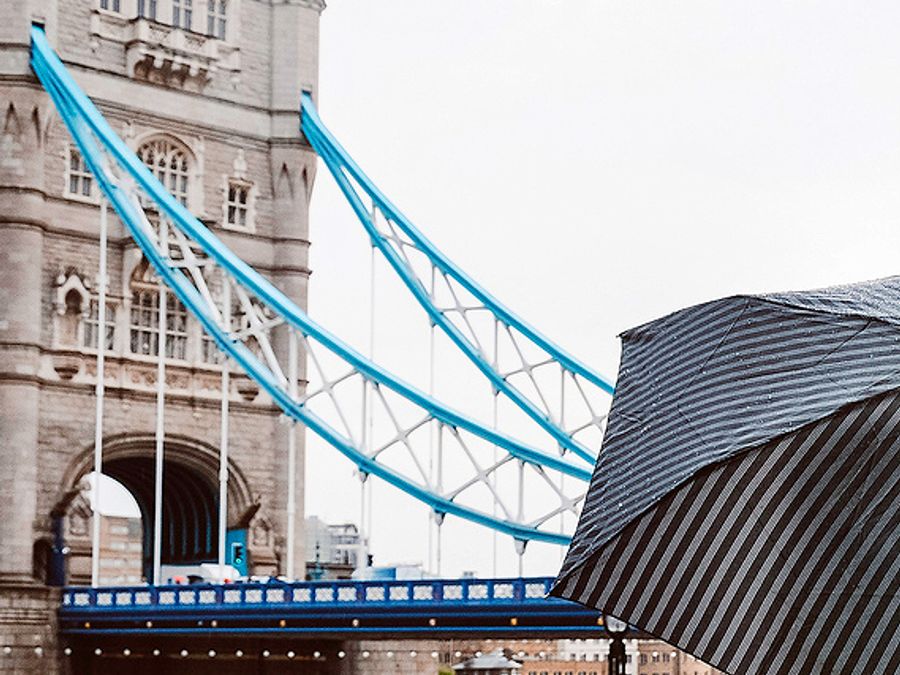
Tower Bridge – England

View of the Tower Bridge in London from banks of the Thames River
Photo credit: tilialucida/ Shutterstock

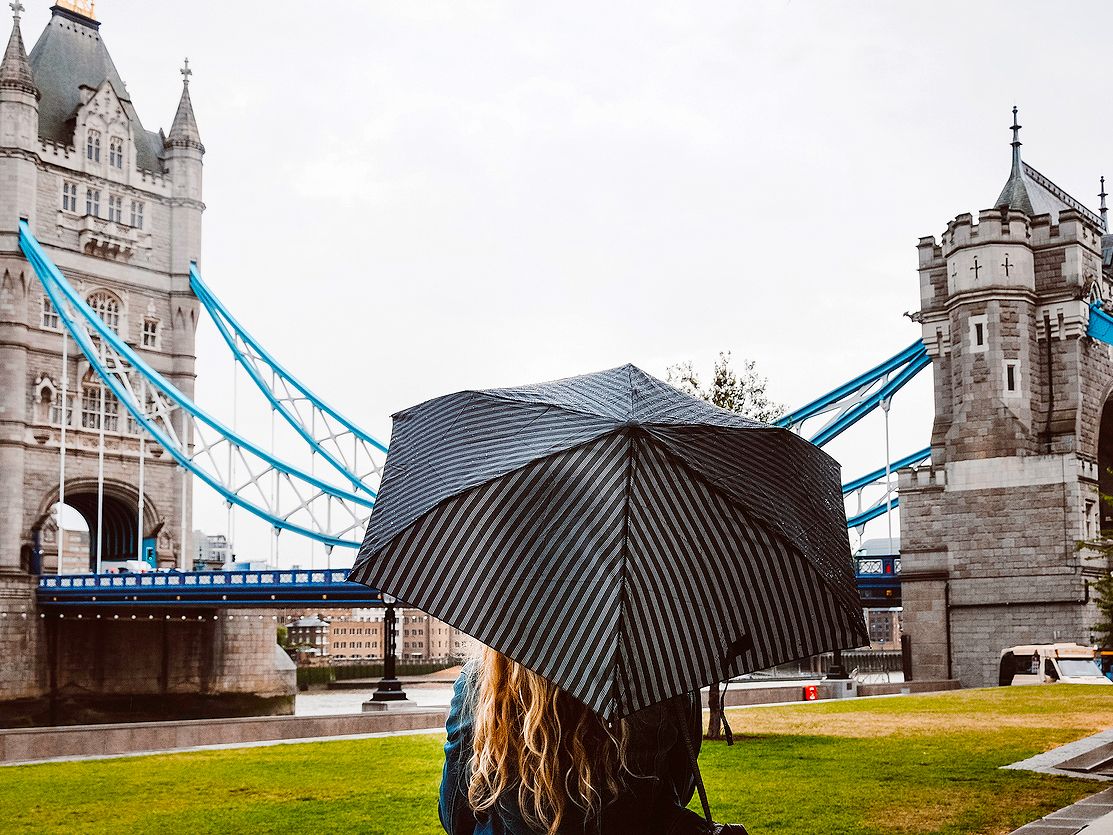
The Tower Bridge crosses the River Thames beside the Tower of London. Designed by Sir Horace Jones and built between 1886 and 1894, the span remains one of London’s most distinctive and best-loved landmarks. The river is navigable upstream of this point, so any vessel that’s too tall to fit beneath it must notify bridge personnel in advance to get the bridge raised. If watercraft fail to report their expected time of passage, the crash is likely to be headline news. The now-commissioned Spanish oil tanker Monte Urquiola hit the bridge three times in the span of 10 years.

The Tower Bridge is what’s known as a bascule bridge (“bascule” is French for seesaw). Since 1976, oil and electricity have driven the bascules in place of steam. Visitors can see the engine rooms and machinery at work in the tower’s museum and walk across a glass floor while vehicles move below.

Eshima Ohashi Bridge – Japan

Cars driving on steep incline of the Eshima Ohashi Bridge in Japan
Photo credit: Gueffier Franck/ Alamy Stock Photo

The Eshima Ohashi Bridge in Japan is considered one of the most daunting bridges to cross and is often referred to as the “Rollercoaster Bridge.” The bridge has some of the steepest gradients in the world, reaching 6.1% on one side and 5.1% on the other. But there’s a real purpose for these intense inclines.

The bridge is only a mile long and must reach a height of 144 feet so that ships can safely pass beneath it on Nakaumi lake. The bridge that Eshima Ohashi replaced had a more traditional drawbridge design, but when it was open, vehicles had to be halted in order to allow time for the boats to pass, leading to traffic jams.

Duge Beipanjiang Bridge – China

Yellow flowers in foreground and Duge Beipanjiang Bridge over deep gorge in background
Photo credit: Xinhua/ Alamy Stock Photo

It’s no secret that China has been beefing up its infrastructure in recent years. This means there are massive construction projects and numerous new bridges around the country that currently hold world records. One of these bridges is the Duge Beipanjiang Bridge, which currently holds the title of the world’s tallest bridge. Soaring nearly 1,855 feet high — the equivalent of a 200-story skyscraper — the bridge connects Guizhou and Yunnan provinces in southeastern China and crosses the Beipanjiang Grand Valley.

Lake Pontchartrain Causeway – Louisiana

Cars driving on the Lake Pontchartrain Causeway in Louisiana
Photo credit: Alexandr Junek Imaging/ Shutterstock

If you’re not from Louisiana, you probably first heard about the Lake Pontchartrain Causeway during Hurricane Katrina in August 2005, when it suffered serious damage. It was later repaired, and the bridge is now listed as a National Historic Civil Engineering Landmark by the American Historical Society.

Until 2016, the causeway was considered the longest bridge in the world until it was unseated by the Danyang-Kunshan Grand Bridge in China. After some contention between parties in the United States and China, Guinness created a new category to clarify any confusion. Today, the Lake Pontchartrain Causeway is the longest continuous bridge over water in the world — spanning 24 miles.

Post Banner Image
Outdoors

The Best National Parks Around the World to Add to Your Bucket List

By Daily Passport Team
Read time: 11 minutes
November 8, 2023
Updated: November 9, 2023

The Best National Parks Around the World to Add to Your Bucket List

By Daily Passport Team
Author
Daily Passport Team
Daily Passport writers have been seen in publications such as National Geographic, Food & Wine, CBC, Condé Nast Traveler, and Business Insider. They're passionate about uncovering unique destinations and sharing expert tips with curious travelers.

From the depths of Death Valley to the peaks of Denali, the U.S. has no shortage of incredible national parks. But as impressive as it is, America’s list only scratches the surface of the global park system. Don’t know where to start? Filled with ancient tombs, hidden temples, and underwater marine reserves, these 20 national parks in other countries are seriously worth adding to your bucket list.

Khao Sam Roi Yot National Park – Thailand

Temple in cave with light-filled opening in Thailand's Khao Sam Roi Yot National Park
Photo credit: Pakpoom Phummee/ Shutterstock

Khao Sam Roi Yot National Park, located along the Gulf of Thailand, is famous for its limestone hills that reach as high as 900 feet above sea level. With a name that translates to “mountain with 300 peaks,” the park is open year-round, but it’s especially popular with birders in January and February, when 300 species of migratory birds flock to the park. However, the highlight for most visitors is likely the pilgrimage to Phraya Nakhon Cave, a spectacular limestone cavern that contains a Buddhist temple. The cave can be reached by boat or on foot, with guided trekking tours for visitors who are unfamiliar with the terrain.

Jasper National Park – Canada

Aerial view of mountains and rivers of Jasper National Park in Canada
Photo credit: Dieter Kepper/ Shutterstock

Home to grizzly bears, moose, and elk, Jasper National Park is the biggest national park in the Canadian Rockies, providing visitors with 4,247 square miles of wilderness to explore. Located in western Alberta, the park offers rugged adventurers access to backcountry trails, mountain summits, alpine meadows, winding rivers, and pristine lakes. As a UNESCO World Heritage Site, Jasper draws roughly 2.5 million visitors a year. Skiing and snowshoeing are popular activities in winter, while summer visitors prefer camping and hiking.

Tongariro National Park – New Zealand

Glacial mountain pool in Tongariro National Park in New Zealand, seen from above
Photo credit: Filip Fuxa/ Shutterstock

Established in 1887, Tongariro is New Zealand’s oldest national park, drawing thrill-seekers to the area for over 100 years. With almost 200,000 acres of preserved land, the park is uniquely situated on three volcanoes, resulting in a dramatic landscape that has been formed over centuries. From ancient lava flows and steaming craters to emerald lakes, Tongariro’s geothermal activity makes it an incredibly diverse park. It’s also sought after by hikers who are brave enough to trek across the park’s active volcano — although checking Tongariro’s volcanic activity ahead of time is required.

Yakushima National Park – Japan

Suspension bridge over river in dense forest of Japan's Yakushima National Park
Photo credit: Sara Winter/ Shutterstock

An island preserve located on Yakushima Island at the southern end of Japan’s archipelago, Yakushima National Park is home to some of the country’s oldest trees. Ancient cedars that are over 1,000 years old can be found within the park, including Jomon Sugi — the oldest tree in Japan. Although reaching Jomon Sugi is an arduous hike that often takes up to 10 hours of trekking over boulders and up ladders, the journey through the temperate rainforest is sure to be memorable. If this type of hike sounds too strenuous, fear not. The park offers a network of trails for all skill levels, including stone-paved paths for easier trailblazing.

Amboseli National Park – Kenya

Elephants roaming in Kenya's Amboseli National Park
Photo credit: GoodFocused/ Shutterstock

Most people are familiar with the famed Mount Kilimanjaro National Park in Tanzania, while neighboring Amboseli National Park remains lesser-known. Located beneath Mount Kilimanjaro just over the border in Kenya, Amboseli translates to “salty dust” in the Indigenous Maasai language, a nod to the park’s landscape. But in addition to its dusty plains, the park is home to wetlands, a savannah, woodlands, and a large, dried lakebed. The diverse ecosystem draws one of the largest populations of elephants in all of East Africa, with up to 1,600 elephants reported within the 150-square-mile park.

Abisko National Park – Sweden

Snow- and ice-covered landscape of Sweden's Abisko National Park
Photo credit: Natalia Sokko/ Shutterstock

At a mere 29 square miles, Abisko National Park might be small, but its offerings are on a much larger scale. Located in the country’s northernmost province, Abisko is considered to be one of the best places in the world to see the elusive northern lights. With an Aurora Sky Station that can be accessed via chairlift, the park’s remote location and dark night skies provide the perfect viewing opportunity for aurora borealis. Since winter reigns supreme in this part of the world, Abisko offers plenty of other activities in colder months, including dog-sledding, snowshoeing, and even meeting reindeer at a nearby Sami village.

Sajama National Park – Bolivia

Snow-capped peaks in Sajama National Park in Bolivia
Photo credit: Inga Locmele/ Shutterstock

As Bolivia’s oldest national park, Sajama was established in 1939 as a way to protect the queñoa tree, which was being overforested. Today, the park stretches for 2,236 miles on a high Andean plateau at 13,100 feet. The vast plain provides the perfect habitat for alpacas and llamas, who can be seen roaming the landscape. Since the park is situated below a volcano, Sajama’s ecosystem provides plenty of exciting activities, such as soaking in natural hot springs, walking through geyser fields, and climbing the snow-capped volcano, Nevado Sajama. To avoid the rainy season, the best time of year to visit the park is between April and November.

Uluru-Kata Tjuta National Park – Australia

Dirt path leading to Uluru rock formation in Australia
Photo credit: Cindy Hopkins/ Alamy Stock Photo

For curious visitors, Uluru-Kata Tjuta National Park has plenty of geological and cultural activities for the taking. Originally established as protected land in 1950, the park encompasses Uluru Rock and Kata Tjuta Rock, which were once part of the Aboriginal Reserve. Since these incredible red-rock formations, which are estimated to be roughly 500 million years old, have been a part of Aṉangu culture for centuries, the park eventually recognized the Aboriginal people as the rocks’ original owners. As a result, visiting the park is shaped by this stewardship and is a fascinating lesson in Aṉangu culture. Visitors are invited to begin their trip at the Cultural Centre, where they can learn about the Aṉangu people, hear their stories, and understand how the land has been an integral part of their lives for 30,000 years.

Berchtesgaden National Park – Germany

Lake filled with translucent waters in Germany's Berchtesgaden National Park
Photo credit: SCStock/ Shutterstock

This relatively young park was established in 1978, and with a network of trails that stretches for 155 miles, it provides some of the best hiking in Germany. Located in the Northern Alps near the Austrian border, the trails at Berchtesgaden National Park provide striking views of Bavaria at every turn. Visitors who trek through the park will often spy ibex, a species of a wild goat that roams the park’s mountainous landscape. Berchtesgaden is also known for Lake Königssee, a shockingly green alpine lake wedged between mountains where swimming is permitted.

Tsitsikamma National Park – South Africa

River through steep, narrow gorge in South Africa's Tsitsikamma National Park
Photo credit: Benjamin B/ Shutterstock

Located within the confines of Garden Route National Park, Tsitsikamma National Park is a coastal stretch of protected land that runs along Plettenberg Bay. With access to the Indian Ocean, Tsitsikamma offers water lovers the opportunity to swim, snorkel, and kayak in the bay, or watch dolphins play in the breakers. Inland, Tsitsikamma is renowned for its forested hillsides, which contain indigenous plants, steep canyons, and suspension bridges that cross the water. The park is also a haven for animals and is home to Monkeyland Primate Sanctuary, which houses over 550 free-roaming primates.

Shennongjia National Geopark – China

Statue in mountain valley of Shennongjia National Geopark in China
Photo credit: Hao Wan/ Shutterstock

Located in the landlocked province of Hubei, Shennongjia National Geopark is known for its mountainous terrain and thick forests. The forests are so replete with healthy trees that the park has been named a “natural oxygen bar,” which is a certified place in China that has fresh oxygen and plenty of negative ions. With acres of evergreens, deciduous hardwood trees, and waterways, Shennongjia is especially sought-after by nature lovers and anglers. And since the park limits its daily number of visitors, Shennongjia never feels overcrowded, even during peak season.

Sintra-Cascais National Park – Portugal

Beach with rock formations in Portugal's Sintra-Cascais National Park
Photo credit: Peter116/ Shutterstock

Stretching from the mountains of Sintra to the beaches in Cascais, Sintra-Cascais National Park offers a wide variety of activities for every type of traveler. From its rugged beaches tucked beneath soaring cliffs to its expansive mountains and hiking trails, outdoorsy visitors will find plenty to keep them busy. A mere 30 minutes from the capital of Lisbon, the park is also an ideal day-trip for sightseers looking to learn more about the history of the Iberian Peninsula. In addition to the Castle of the Moors, which dates back to Muslim rule during the eighth century, the Quinta da Regaleira is an ornate palace built in the early 20th century. Even more exciting, near the village of Rodizio, visitors can find fossilized dinosaur footprints embedded in limestone.

Kornati National Park – Croatia

View of coastline in Kornati National Park in Croatia
Photo credit: Adrian_am13/ Shutterstock

Consisting of 89 islands, Kornati National Park is an archipelago located off the coast of Croatia in the Adriatic Sea. Established as protected land in 1980, the park is mostly uninhabited, making it an expansive and exciting place for visitors. Often called a “nautical paradise,” many visitors to Kornati organize their own vessel to explore the islands and surrounding waters. Since the water is clean with good visibility, snorkeling and diving are popular activities in the protected bay on Levrnaka Island or around the small islet, Rasip Mali.

Valley of the Flowers National Park – India

Clouds creeping over lush green, flower-filled fields in Valley of the Flowers National Park in India
Photo credit: Vivek BR/ Shutterstock

There’s no doubt that the Valley of the Flowers National Park is appropriately named. After monsoon season, the park’s meadows come alive with thousands of wildflowers. Located in the western Himalayas of India, the alpine flowers are exceptionally beautiful beneath the imposing, craggy mountains. The park is open from June until October, but the flowers are often at peak bloom in July and August. However, visiting the remote, high-altitude park is not for the faint of heart, as it requires a 12-hour drive, followed by a 10-mile hike on a steep mountain trail.

Gorkhi-Terelj National Park – Mongolia

Rock formations in Mongolia's Gorkhi-Terelj National Park
Photo credit: RPBaiao/ Shutterstock

Gorkhi-Terelj National Park is often overlooked by tourists, but among locals, it’s one of the most popular parks to visit in Mongolia. Comprising 1,127 square miles of forest-covered mountains, rolling meadows, and pristine rivers, Gorkhi-Terelj is paradise for adventure enthusiasts. With activities that range from white-watering rafting to horseback riding to archery and dog-sledding, the park provides plenty of year-round fun. In addition to these active pursuits, Gorkhi-Terelj is popular for Turtle Rock, a natural granite formation that stands 80 feet tall and bears an incredible resemblance to a turtle.

Snowdonia National Park – Wales

Rocky mountain pathway in Snowdonia National Park in Wales
Photo credit: Gail Johnson/ Shutterstock

Located in northwestern Wales, Snowdonia — or Yr Wyddfa as the locals refer to it — is both the largest and oldest of the country’s three national parks. Established in 1951, the park is named for Snowdon, the highest mountain in Britain at 3,560 feet above sea level. As a result, Snowdon is a large draw for trekkers who want to bag the high peak. Once that is accomplished, the park offers plenty of other beautiful and challenging summits, including Tryfan and Cader Idris. Snowdonia’s lakes, rivers, and coastline make it an ideal place for pursuing water sports, such as paddling, whitewater rafting, and even surfing. There are also plenty of historic sites to explore in the Welsh countryside, as the area has an abundance of castles built in the 12th and 13th centuries.

Bunaken Marine National Park – Indonesia

Palm tree-covered island in Bunaken Marine National Park in Indonesia
Photo credit: timsimages.uk/ Shutterstock

Bunaken Marine National Park was established in 1991 and is one of Indonesia’s first marine parks. It encompasses nearly 200,000 acres of land and sea, with 97% of the park underwater. Bunaken was created in order to protect marine biodiversity and to prevent harmful practices that could be detrimental to the region’s animal and plant life. Not only is the park a migratory route for protected sea creatures, but it’s also home to dozens of coral reefs. As such, it’s no surprise that Bunaken is an ideal location for divers, with 25 dive sites located throughout the park.

Grutas de Cacahuamilpa National Park – Mexico

Cave formations in Mexico's Grutas de Cacahuamilpa National Park
Photo credit: Roberto Michel/ Alamy Stock Photo

Grutas de Cacahuamilpha National Park in Guerrero, Mexico, is one of the largest cave systems in the world, with only 20 caves that have been explored out of the park’s estimated 90. With two rivers flowing through Cacahuamilpha, the cave system is considered to be a “live” cave, which means the groundwater causes the continuous formation of stalactites and stalagmites. With some cave salons as high as 265 feet tall, the cavern continues to enlarge over time, creating incredible formations such as “The Bottle,” which resembles a foamy beer. Since tours are the best way to see the cave, it’s best to reserve an English-led tour in advance.

Nemrut Dağı National Park – Turkey

Rock sculptures in Turkey's Nemrut Dağı National Park
Photo credit:  Jan Wlodarczyk/ Alamy Stock Photo

Located atop Mount Nemrut at 6,909 feet above sea level is the archeological site of Nemrut Dağı National Park. Mysterious stone sculptures of ancient gods can be found here, erected by a former king as a burial tomb for himself. Constructed between 69 and 34 B.C., these ancient statues are not only massive, but their crumbling faces seem otherworldly atop the mountain. Mount Nemrut can be accessed by vehicle but is only open between May and October. Reaching the summit requires an uphill walk, so make sure you bring good hiking shoes!

Greenland National Park – Greenland

Glaciers and mountains in Greenland National Park
Photo credit: Chris Howey/ Shutterstock

Covering an astonishing 375,291 square miles of arctic landscape, the eponymous Greenland National Park is the largest national park in the world. Although the park is 100 times larger than Yellowstone National Park, it receives far fewer visitors annually — approximately 500 people or less. With the exception of the crew at the four weather stations, scientists and researchers, and the Sirius Patrol (a navy dog sled unit), the park is free of permanent human inhabitants, making it a vast and unspoiled place to explore. However, the park is home to numerous land and sea animals, including polar foxes, wolves, snow hares, polar bears, and humpback whales.

Post Banner Image
History

8 Major Cities That Used to Be Called Something Else

By Daily Passport Team
Read time: 6 minutes
November 2, 2023
Updated: November 2, 2023

8 Major Cities That Used to Be Called Something Else

By Daily Passport Team
Author
Daily Passport Team
Daily Passport writers have been seen in publications such as National Geographic, Food & Wine, CBC, Condé Nast Traveler, and Business Insider. They're passionate about uncovering unique destinations and sharing expert tips with curious travelers.

Have you visited Edo? What about Lutetia? Even if you haven’t heard of these names, there’s a good chance you might have stepped foot in these cities. While a name is perhaps the most obvious marker of a city’s identity, not all cities stick to their original monikers. Go back in time and discover what people from the past used to call eight major cities — and how they got the names we know them by today. 

Edo – Tokyo, Japan

Crowded street lit with neon billboards in Tokyo, Japan
Photo credit:  Ian Dagnall/ Alamy Stock Photo 

Tokyo, the heart of Japan and most populous city in the world, was first settled around 3000 BCE as a sleepy fishing village called Edo. Set on a sheltered bay, the village was a collection of humble homes made from bamboo and paper, and was originally named after the residents of the Kanto region, the Edo clan

Peaceful Edo was thrust into the spotlight when the Tokugawa dynasty of shoguns made it their capital in 1603, and over the next few centuries it grew into a powerful urban center. The Meiji Restoration in 1868 brought further upheaval to the city when the Tokugawa shoguns were usurped and the Japanese Emperor was returned to power. The seat of the throne transferred from Kyoto to Edo, which was renamed “Tokyo,” meaning “Eastern Capital.”

Lutetia – Paris, France

Pedestrians on narrow cobblestone street in Paris, France
Photo credit: Soma/ Alamy Stock Photo

From the “Romance Capital of the World” to the “City of Light,” Paris is known by many nicknames. But in Roman times, the actual name of the French capital was called Lutetia, a less-romantic Celtic name that roughly translated to “place near a swamp.” The area was originally settled by the Parisii tribe in the third millennium BCE

When Julius Caesar took over Lutetia in 52 BCE, he transformed it into a Roman town complete with baths, an arena, and aqueducts (the ruins of which can still be seen in the city’s Latin Quarter). The city was renamed “Paris” after those original Celtic inhabitants, in the fourth century, after the fall of the Western Roman Empire.

Trimount – Boston, Massachusetts

Brick buildings in Boston, Massachusetts
Photo credit: Radharc Images/ Alamy Stock Photo

When colonists from Europe first arrived in what is now Boston, Massachusetts, in 1630, they called this area Tremontaine or Trimount, after the hill with three peaks that originally dominated the peninsula on Massachusetts Bay. These hills were Mt. Vernon, Beacon Hill, and Pemberton Hill. 

The city was officially renamed Boston (after the town of Boston in England) after a 1630 vote amongst the settlers. Not only did the old name disappear, so too did the hills: a massive land reclamation project in the 19th century meant that Boston’s three peaks were quarried away. Now, all that’s left of the undulating peninsula is the slightly elevated Beacon Hill neighborhood, plus streets named Mt. Vernon and Tremont.

Batavia – Jakarta, Indonesia

Image of Old Town Jakarta, Indonesia
Photo credit: Jui-Chi Chan/ Alamy Stock Photo

The capital of Indonesia, Jakarta, has seen its fair share of folks fighting for naming privileges. The story begins in 1527, when the Sultan of Bantam (a nearby province) defeated Portuguese colonists at the mouth of the Ciliwung River. To celebrate his victory, he named the area Jayakarta, meaning “victorious deed.” 

A century later, spice profiteers from the Dutch East India Company captured the city and established a trading post at this strategic location, calling it Batavia after a Germanic tribe then believed to be the ancestors of the Dutch people. The Netherlands grew rich from this colony, and the city remained under Dutch control until 1949, when Indonesia gained independence. Jakarta then became the city’s recognized name.

York – Toronto, Canada

Streets of downtown Toronto with CN Tower in distance
Photo credit: Panther Media GmbH/ Alamy Stock Photo

The city of Toronto was established by British general John Graves Simcoe in 1793, who thought the harborside location would be easy to defend from potential marauding Americans. Simcoe was known to dislike the area’s First Nations name, Tkaronto, a Mohawk word meaning “where there are trees standing in water.” 

His superior, Lord Dorchester, proposed the settlement be named after himself, but Simcoe didn’t think much of him, either. So, Simcoe called his new town York in honor of the Duke of York. But Simcoe’s choice didn’t last long. When the city was incorporated in 1834, the government opted to christen it Toronto, a variation of the original Mohawk name, as it had a “musical sound.”

Kristiania – Oslo, Norway

Clock tower and brightly painted buildings in downtown Oslo, Norway
Photo credit: incamerastock/ Alamy Stock Photo

Norway’s twinkling capital in the fjords, Oslo, is centered around one major landmark: the Akershus Fortress. This old castle was built by King Haakon V in the 14th century. However, in 1624, a massive fire destroyed swathes of the city. The reigning King of Norway, Christian IV, decided that the city would be rebuilt below the walls of the Akershus, and took the opportunity to name the construction project after himself — thus, Oslo (which translates to “the meadow beneath the hill”) became “Christiania.” 

In 1877, the spelling was changed to “Kristiania” to make it more appropriate for the Norwegian language, but the city’s residents were slow on the uptake. After Norway became fully independent of Sweden in 1905, the city’s old name was increasingly used to bolster national pride, and became its official moniker in 1925.

Salisbury – Harare, Zimbabwe

Tunnel of trees with purple flowers in Harare, Zimbabwe
Photo credit: Jez Bennett/ Alamy Stock Photo

In Harare, Zimbabwe, the ruins of ancient African civilizations rub shoulders with towering skyscrapers. When colonists from Britain led by Cecil Rhodes first founded a settlement here in 1890, they called it “Fort Salisbury” — not after the English cathedral city near Stonehenge, but for the Prime Minister at the time, who also happened to be the Marquess of Salisbury

The military settlement ultimately became the capital of the Rhodesia colony until, in 1980, Zimbabwe won its independence from Britain. On the independent nation’s second anniversary, they renamed their growing capital to “Harare” — a powerful name, honoring a 19th-century Shona chief.

Yerba Buena – San Francisco, California

View of hills of San Francisco and San Francisco Bay
Photo credit: Llewellyn/ Alamy Stock Photo

Many of California’s place names are a reminder of the West Coast’s Mexican past, with Los Angeles, San Diego, and San Francisco all deriving from the Spanish language. But did you know that San Francisco is not the Golden Gate City’s original name? This bayside settlement was first called Yerba Buena (“good herb”) by Mexican pioneers in the 18th century, named so for a fragrant herb of the same name that grew in abundance there. 

After the U.S. took possession of the city in the Mexican-American War, the city was renamed San Francisco in 1847, because a mission dedicated to St. Francis was one of the first buildings by the bay. Now, all that remains of Yerba Buena is a city district famous for its food, art, and excellent museums.

Post Banner Image
Culture

Why These 5 Far-Flung Landmarks Are Worth the Trek

By Cynthia Barnes
Read time: 5 minutes
November 2, 2023
Updated: November 2, 2023

Why These 5 Far-Flung Landmarks Are Worth the Trek

By Cynthia Barnes
Author
Cynthia Barnes
Cynthia kicked around the world for a while before landing in Colorado. Her work has appeared in Food & Wine, the Boston Globe, and National Geographic, among others. She loves dives — both scuba and bars — baseball, the Oxford comma, and live music.

While many iconic landmarks (like the Statue of Liberty, the Great Pyramids, Niagara Falls, or Rome’s Colosseum) are relatively easy to visit, there are other places around the globe that are undeniably special, but require some extra effort to reach. From a stunning mountainside monastery to a legendary 15th-century citadel, here are five bucket-list landmarks around the world that are worth the trek.

Tiger’s Nest Monastery – Bhutan

Gold-and-white Tiger's Nest Monastery perched on hillside in Bhutan
Photo credit: MC_Noppadol/ Shutterstock

Legend has it that, in the eighth century, Buddhist master Guru Rinpoche arrived at this breathtaking mountainside locale overlooking Bhutan’s Paro Valley by flying in on the back of a tigress. Without a flying tigress, visitors to the Tiger’s Nest Monastery today will need to fly into Paro — the only international airport in the Kingdom of Bhutan. From Paro, it’s about a 25-minute drive to the place where you’ll begin your four-mile hike to the monastery. Guru Rinpoche, a central figure in Buddhism, meditated here for three years, three months, three days, and three hours to subdue the demons at the site — however, your trek should only take about two hours, including a steep path that takes you up to 10,000 feet. 

The monastery is both the holiest Buddhist site and the most-visited attraction in Bhutan, so it’s recommended to leave early (around 6 a.m.) and bring pants or a long skirt, as visitors will not be admitted wearing shorts. Photography and phones inside the temples are not permitted, but you can get a spectacular picture at the famous viewpoint and then walk down 780 steps to the monastery itself. 

Angel Falls – Venezuela

View of Venezuela's roaring Angel Falls between trees in the distance
Photo credit: Matyas Rehak/ Shutterstock

Hidden in the dense jungle of Venezuela’s Canaima National Park is the world’s highest uninterrupted waterfall, the 3,212-foot Angel Falls. But it takes considerable effort to get there. It’s a two-day journey once you reach the town of Canaima, after flying on a small plane from Puerto Ordaz, Caracas, or Ciudad Bolívar. The following morning, you’ll board a curiara (small boat) for the four-hour ride up the Rio Carrao to a staging point. From there, you’ll hike to the base of the falls and camp overnight, sleeping in hammocks before setting off on your return to Canaima.

A travel advisory to Venezuela has reduced the number of visitors, and it’s recommended to choose a reputable tour operator wisely and remember to carry cash, as Canaima does not have ATMs. Your reward for the journey will be a once-in-a-lifetime adventure to the world’s highest falls, surrounded by stunning landscapes filled with the sound of birds and monkeys who call the jungle canopy home. 

The Moai – Easter Island, Chile 

Giant half-buried Moai statue on grassy hill on Easter Island
Photo credit: Carlos Aranguiz/ Shutterstock

You’ll need a lot more than a long weekend to visit Easter Island’s noble moai, the enormous monolithic stone statues that have made this one of the world’s most instantly recognizable landmarks. One of the most remote inhabited places on the planet, Easter Island is located in the middle of the Pacific Ocean, more than 2,000 miles off the western coast of South America. The Rapa Nui peoples — who carved these immense figures from volcanic stone around 1400 to 1600 CE — considered them sacred, and it is still forbidden to lay hands upon the monuments. 

Around a thousand moai are scattered across the island half-buried in the earth. Each of the giant hand-carved stone statues weighs around 14 tons and stands 13 feet tall on average, and their purpose has also been the subject of much debate. To reach them, you can take a luxurious cruise — Seabourn and Silversea offer sailings — or take a 5.5-hour flight from Santiago.

Machu Picchu – Peru

Llama standing next to Machu Picchu in the Andes mountains of Peru
Photo credit: Olga Kot Photo/ Shutterstock

There are a number of ways to make the journey to legendary Machu Picchu, the majestic 15th-century citadel constructed by the Inca peoples high in the Andes mountains. Topping seemingly every adventure traveler’s “must-see” list, Machu Picchu is a glory of archaeology in a stunning natural setting. The UNESCO World Heritage Site was built at the height of Incan influence, when their empire stretched from northern Ecuador to central Chile and ruled over 12 million inhabitants. Discovered by the outside world in 1911, Machu Picchu has 200 ceremonial, religious, and astronomical structures that are crisscrossed by stone terraces along with agricultural areas.

Intrepid travelers can hike the iconic Inca Trail over a period of four days, while others may choose a luxury train journey. The low-cost local train is not available for foreigners, but bus service is offered from Aguas Calientes. With thermal baths, lively restaurants, and a great crafts market, the town and surrounding area is worth a few days in its own right.

Ciudad Perdida – Colombia

Overview of the "lost city" of Ciudad Perdida in the mountainous jungle of Colombia
Photo credit: Scott Biales DitchTheMap/ Shutterstock

Hundreds of years before the construction of Machu Picchu, the people of the Tairona civilization built their own settlements deep in the jungle of the Sierra Nevada Mountains, in what is now Colombia. The largest of these, located at 19,000 feet above sea level, was hidden by thick jungle for over 400 years. 

This magnificent real-life “lost city” was only rediscovered in 1972 by a group of local treasure hunters, who found a series of stone steps rising up a mountainside and followed them to the abandoned city. To date, only a sliver of the site has been excavated, finding mud and stone terraces and excavations along with gold and pottery. To experience Ciudad Perdida, visitors must make a strenuous 30-mile round-trip trek along the Buritaca River, braving steamy jungle and many mosquitoes. Facilities are extremely basic, although camps and snack shacks are starting to spring up along the route, and the payoff of exploring this mystical jungle-surrounded slice of history is well-worth the effort.

Post Banner Image
Culture

5 Rust Belt Cities That Are Making a Comeback

By Nicole Villeneuve
Read time: 6 minutes
November 2, 2023
Updated: November 2, 2023

5 Rust Belt Cities That Are Making a Comeback

By Nicole Villeneuve
Author
Nicole Villeneuve
Nicole is a writer and researcher with over 15 years of experience seeking out arts, culture, and lifestyle stories in places like remote northern Quebec and the unforgettable streets of Amsterdam. Her work has also appeared in PureWow, Brit + Co, AUX TV, and CBC.

In the late 19th and early 20th centuries, cities in the Midwest became some of the largest population centers in the U.S. — buoyed by their strategic locations and contributions to auto manufacturing, steel production, and transportation. As hubs of commerce and innovation, they attracted people from around the country. But in the later half of the 20th century, these cities — key points in what’s known as America’s “Rust Belt” — faced the challenges of deindustrialization, technological advances, globalization, and population decline. Today, many of the places that were once the heart of American manufacturing and industry have diversified their economies and revitalized their urban spaces. Discover the fascinating histories of five once-thriving Rust Belt cities and why they’re well worth visiting today.

Detroit, Michigan

Sculpture and fountain in downtown Detroit, Michigan
Photo credit: Chris Rabior/ Alamy Stock Photo

For much of the first half of the 20th century, Detroit flourished as a hotbed of auto manufacturing. The “Big Three” car companies — General Motors, Ford, and Chrysler — were all based in Detroit’s metropolitan area, and the city saw an influx of people from all over the country in pursuit of well-paying jobs. By 1950, the population swelled to a peak of 1.8 million residents, making it the fifth-largest city in the country. By the mid-20th century, due mainly to economic and technological shifts, Motor City started on a path of population decline. In 2013, Detroit filed for bankruptcy, becoming the largest American city to ever do so.

Fortunately, modern-day redevelopment of the city’s once-beautiful buildings is well underway. Cultural institutions such as the Motown Museum and Detroit Institute of Arts are thriving, neighborhoods like Eastern Market are artistic and culinary hubs, and green spaces like the Riverwalk and Belle Isle Park in the city’s southeast are undergoing revitalization.

Buffalo, New York

Street lined with brick buildings in Buffalo, New York
Photo credit: JG Photography/ Alamy Stock Photo

Buffalo earned its “Queen City” nickname in the mid-1800s, when it was one of the most prosperous cities in the Great Lakes region. After the completion of the Erie Canal in 1825, Buffalo became a pivotal hub for transporting goods from Chicago to New York City and onwards via the Atlantic Ocean. Other industries emerged to take advantage of the products that passed through — the grain industry became a key component of the city’s growth, and Buffalo’s outer harbor was home to manufacturers of steel and other materials that contributed to the city’s industrial prominence. 

By 1900, Buffalo was the eighth-largest city in the United States and the sixth-busiest water port in the world. Its population had grown to over 350,000 people and would reach its peak of 580,000 in 1950 — about half of what it is now. When the St. Lawrence Seaway opened in 1959, the use of the Erie Canal greatly diminished. Like many American Rust Belt cities, this also coincided with postwar suburbanization, increased access to cars, and manufacturing automation — depleting the city of its finances, economic prowess, and population. 

But Buffalo has embarked on a path of revitalization, as the state of New York is channeling substantial investments into the city. At the grassroots level, entrepreneurs are venturing into small businesses such as breweries, restaurants, and housing projects. This has turned previously overlooked neighborhoods into vibrant pockets that are fueling the city’s revival.

Cleveland, Ohio 

Skyline of Cleveland, Ohio
Photo credit: Sean Pavone/ Shutterstock

In the late 19th and early 20th centuries, steel mills, coal mines, automotive factories, and John D. Rockefeller’s Standard Oil refineries contributed to Cleveland’s economic prosperity. The city’s advantageous location on the shores of Lake Erie facilitated transportation and trade, turning it into a bustling manufacturing center. 

But by the 1960s, Cleveland’s industry was in decline, feeling the effects of inflation as well as international competition. The city also experienced tensions and violence among its diversifying population, which led to a suburban exodus. And in 1969, oil on the Cuyahoga River caught fire, helping to solidify Cleveland’s unfortunate nickname of “Mistake on the Lake.”

Although the city’s population is still only a fraction of its peak of 914,000 people, Cleveland’s fortunes have been changing in recent years. While manufacturing is still an important industry in the city, Cleveland has also diversified its economy, focusing on sectors like healthcare, technology, and higher education — with the Cleveland Clinic, Case Western Reserve University, and University Hospitals all prominent institutions in the city. Meanwhile, investments in waterfront redevelopment, cultural attractions like the Rock and Roll Hall of Fame, and a growing culinary scene have given the city new vitality — transforming Cleveland from a classic Rust Belt city to a multifaceted urban center.

St. Louis, Missouri

Gateway Arch next to pool and buildings in St. Louis, Missouri
Photo credit: Sean Pavone/ Shutterstock

Situated along the Mississippi River, St. Louis, Missouri, became an important transportation and trade center in the 19th century. The “Gateway” city was also an early part of the U.S. automotive industry, and throughout the early 20th century, St. Louis also excelled in a range of other industries, including brewing and aerospace. But like many urban areas at the time, St. Louis experienced financial hardships during the Great Depression.

While the city’s industrial output ramped back up with ammunition and vehicle production during World War II, pushing the population over 850,000 by 1950, St. Louis would face several decades of hard times ahead. Urban planning during this era — including interstate highways that cut through several neighborhoods — sent the city population into the suburbs. By 1980, the St. Louis’ population had fallen to about 450,000. 

In recent years though, St. Louis has embarked on a journey of reinvention. Finance and technology now fuel the city’s economy, and the city’s fascinating cultural attractions — such as the Gateway Arch, the St. Louis Art Museum, and Forest Park — continue to attract visitors and locals alike. St. Louis’s unique neighborhoods and vibrant culinary scene — notably its barbecue culture — add to the city’s renewed charm. 

Pittsburgh, Pennsylvania

Yellow bridge leading to skyscrapers in downtown Pittsburgh, Pennsylvania
Photo credit: Leonid Andronov/ Shutterstock

Steel mills were once a defining part of Pittsburgh’s landscape. Throughout the late 19th and early 20th centuries, the “Steel City” stood as an American industrial powerhouse fueled by major companies like U.S. Steel and Carnegie Steel, built by infamous American industrialist Andrew Carnegie. Pittsburgh’s population swelled, and by 1950, it reached its peak at over 670,000 people — making it the 12th largest city in the country at the time. 

During the 1970s, however, the steel industry in the U.S. started to crash. The economic downturn of the 1970s and 1980s, as well as increased global competition, began to take a toll on Pittsburgh’s primary industry. As the steel mills closed and jobs were lost, the city’s population steadily declined. 

In recent years, Pittsburgh has successfully transformed itself into a hub for technology and medicine, and its economy now revolves around robotics, artificial intelligence, and healthcare. Stadiums for several successful and popular major-league sports teams now take the place of steel mills, including the MLB’s Pittsburgh Pirates, the NHL’s Pittsburgh Penguins, and the NFL’s Pittsburgh Steelers. The city’s innovative spirit, along with its investments in clean energy and environmental restoration, has allowed Pittsburgh to rise from the ashes of deindustrialization.