

Post Banner Image
Outdoors

What Are the 7 Natural Wonders of the World?

By Daily Passport Team
Read time: 5 minutes
November 21, 2023
Updated: November 21, 2023

What Are the 7 Natural Wonders of the World?

By Daily Passport Team
Author
Daily Passport Team
Daily Passport writers have been seen in publications such as National Geographic, Food & Wine, CBC, Condé Nast Traveler, and Business Insider. They're passionate about uncovering unique destinations and sharing expert tips with curious travelers.

Narrowing down the list of Earth’s incredible natural wonders to just seven standouts is a mighty task. But in 2008, the nonprofit group Seven Natural Wonders set out to identify and preserve the seven sites that surpass the rest — places so magnificent that they belong on any traveler’s bucket list. Read on to learn the fascinating stories behind the Seven Natural Wonders of the World.

Great Barrier Reef – Australia

Aerial view of the Great Barrier Reef in Australia
Photo credit: Edward Haylan/ Shutterstock

As the largest coral reef on Earth, Australia’s Great Barrier Reef is so massive, it’s the only living organism that can be seen from space. At 134,634 square miles, it’s also the world’s largest living structure. A rich and diverse ecosystem, the Great Barrier Reef is home to 600 types of coral, 3,000 varieties of mollusk, and 1,625 species of fish. But that’s not all — the reef provides ideal living conditions for some of the world’s most fascinating sea creatures, including turtles, sharks, rays, crocodiles, dolphins, whales, and sea cows. Since it consists of 2,100 individual reefs and 800 fringing reefs, there are plenty of accessible reefs for snorkelers who want a glimpse of the mesmerizing subaqueous world.

Aurora Borealis – Northern Hemisphere

Greenish-blue display of the northern lights over snowy mountain landscape
Photo credit: Abstract51/ Shutterstock

Also known as the northern lights, the aurora borealis is a phenomenon that occurs in the Northern Hemisphere, particularly around the fall and spring equinoxes. Named for the goddess of the dawn from Roman mythology, Aurora, and the Greek god of the north wind, Boreas, this night sky occurrence is the result of particles colliding with Earth’s atmosphere. As a result, it can be challenging to predict precisely when it will occur, although certain locations have higher chances than others. Nicknamed “Mirrie Dancers” by the Irish and “Dance of the Spirits” by the Cree, the green, blue, and purple lights dance across the sky, making them a true wonder to behold.

Grand Canyon – Arizona 

Sun setting over the Grand Canyon in Arizona
Photo credit: LHBLLC/ Shutterstock

Located in northwest Arizona, the Grand Canyon is nothing short of phenomenal. A mile deep and 227 miles long, the impressive gorge was formed by the Colorado River carving its way through rock for almost six million years. But the age of the rock in the Grand Canyon is older than the gorge itself, estimated to be between 250 million to nearly two billion years old. Archaeologists have unearthed artifacts from prehistoric humans who resided in the canyon nearly 12,000 years ago; it was also the home of Ancestral Pueblo people and the Havasupai people. Today, the Grand Canyon is protected national parkland and one of the most frequented national parks in the U.S., with roughly 6 million people visiting annually.

Parícutin – Mexico

Historic church surrounded by forest near Parícutin volcano in Mexico
Photo credit: ConanEdogawa/ Shutterstock

Since scientists were able to study its life cycle in its entirety, Parícutin is unlike any other volcano in the world. In 1943, the volcano was “born” in a Mexican cornfield, exploding from the earth to create a six-foot-tall mound — seemingly out of nowhere. The fissure opened and began to erupt lava, and within a year, the volcano grew to 1,345 feet. The lava flowed for 52 square miles, destroying the nearby village of Parícutin, for which the volcano was named. After erupting for nine years, it suddenly stopped in 1952 and is now considered extinct. Visitors can now explore the cinder cone and the surrounding area, including the partially buried church in what was once the town of Parícutin, about five hours from Guadalajara.

Mount Everest – Tibet/Nepal

Climbers on Mount Everest
Photo credit: Vixit/ Shutterstock

Located in the Himalayas, directly on the Tibetan/Nepalese border, Mount Everest stretches 29,029 feet into the sky, making it the tallest mountain on Earth to stand above sea level. Named for Sir George Everest, a Welsh surveyor for India, the mountain also goes by many other names. In Tibetan, the mountain is called Chomolungma, which translates to “Goddess Mother of the World.” In Sanskrit, it is referred to as Sagarmatha, or “Peak of Heaven.” Regardless of what it is called, the 60-million-year-old mountain is staggeringly beautiful, but also dangerous. A summit coveted by mountaineers around the world, this natural wonder is no easy feat to conquer, especially since expeditions take nearly two months from start to finish.

Victoria Falls – Zimbabwe/Zambia

Thundering cascade of Victoria Falls on the border between Zimbabwe and Zambia
Photo credit: kavram/ Shutterstock

These world-famous waterfalls are located on the Zambezi River, which delineates the border between Zimbabwe and Zambia. Spanning the entire breadth of the Zambezi  — the fourth-largest river in Africa — the Victoria Falls dramatically plunge 355 feet over the river’s basalt cliffs. The result is nothing short of spectacular, with spray from the falls rising 1,000 feet into the air. Visitors can view the waterfall’s dazzling beauty from numerous vantage points, including Knife Edge Bridge and Boiling Point. For an extra-special view, short helicopter trips offer a mind-blowing perspective of the falls from the sky.

Guanabara Bay – Brazil

Guanabara Bay in Brazil at dusk, seen from mountaintop
Photo credit: Anna Gibiskys/ Shutterstock

Also known as Guanabara Bay, the harbor of Rio de Janeiro is the largest bay in the world in terms of volume of water. As a result, the bay actually resembles a river — an illusion that inspired Portuguese explorers to name the city Rio de Janeiro, which translates to “River of January.” The harbor’s bright blue water is surrounded by mountains and monoliths, making it an undeniably beautiful sight. From Sugar Loaf Mountain, which juts from the water at the mouth of the bay, to Mount Corcovado, home of Christ the Redeemer, there are plenty of vantage points from which to take in the harbor’s splendor. Even better, these sites can be reached by exciting modes of transportation, including cable cars that carry you to Sugar Loaf’s summit and a cog train that takes you straight up Mount Corcovado.

Post Banner Image
Tips

Travel Gift Ideas for the Thoughtful Traveler

By Peter Vanden Bos
Read time: 6 minutes
November 21, 2023
Updated: May 8, 2024

Travel Gift Ideas for the Thoughtful Traveler

By Peter Vanden Bos
Author
Peter Vanden Bos
Peter is a Toronto-based journalist, editor, content strategist, and self-professed avgeek with 15 years of experience covering all things travel. Prior to joining Daily Passport, he oversaw newsletter publication for Travelzoo. His favorite destinations to explore include Japan, France, Chile, New Zealand, and his adopted home country of Canada.

It might seem like the avid traveler in your life already has everything they need to make their travels smooth and enjoyable. But there are still plenty of creative gift ideas that travel lovers are sure to appreciate — the ones that encourage them to slow down and immerse themselves in local culture, try new experiences and cuisines, and contribute to causes and products that conserve our planet for future generations. Surprise the traveler in your life with these thoughtful, travel-related gifts this year.

Coalatree Travel Hoodie

Image of Coalatree Evolution Hoodie in blue
Photo credit: Photo courtesy of Coalatree

The best travel clothing is not only comfortable but sustainably made. That’s why we love Coalatree’s Evolution Hoodie, which, incredibly, is made from spent coffee grounds that are mixed and melted down with recycled plastic bottles. It’s eco-friendly and cozy — plus, it’s filled with features that they’ll appreciate on their travels, like a water-repellent coating and handy pockets to keep your passport safe. 

Gonex Packing Cubes

Photo of three Gonex expandable packing cubes in black
Photo credit: Photo courtesy of Amazon

Many frequent fliers will tell you they’ll only check a bag if they absolutely have to. On the other hand, it can be a challenge to manage long trips with just a carry-on. Their secret? Packing cubes. Gonex’s expandable compression packing cubes, which come in a range of colors, allow you to pack more in less space — something the traveler in your life will surely appreciate when they aren’t standing around baggage claim at the end of a long flight. 

Nomatic Toiletry Bag

Photo of black Nomatic tolietry bag
Photo credit: Photo courtesy of Nomatic

Every traveler needs a toiletry bag, but a thoughtful traveler will want one that’s both stylish and functional. Enter the Nomatic toiletry bag. The slim, minimalist bags come in two sizes (both water resistant) with handy features like an optional hanging strap and dedicated exterior toothbrush pocket.

AllTrails+ Membership 

Image of AllTrails+ gift card
Photo credit: Photo courtesy of AllTrails

If you have an outdoors enthusiast in your life, they’re probably already familiar with the All Trails App. It’s loaded with 400,000 handy trail maps and detailed reviews and photos from a community of 50 million users. While there’s plenty to love in the free version, the AllTrails+ membership comes with a number of useful features — including the ability to download maps offline, wrong-turn alerts, sorting trails by distance away from you, and an ads-free experience. It’s a great gift that’s sure to make their next hiking adventure hassle-free. 

Caddis Sunglasses

Sunglasses are a travel necessity, and Caddis’ line of stylish sunglasses were designed with the road in mind. Their premium hard coating minimizes scratches, and lenses feature a repellent coating that fights off water, dirt, and grease. The company says that their proprietary polarized lenses are able to reduce 99.9% of glare, plus the frames are made with bio-based materials.

Local Cooking Classes and Food Tours 

Image of Giftory gift cards
Photo credit: Photo courtesy of Giftory

There’s nothing like giving the gift of an experience and creating a lasting travel memory. For the foodie-focused traveler, Giftory offers hundreds of locally curated experiences in cities across the U.S. A few of our favorites include a food tour of New York City’s amazingly diverse Queens borough, a handmade pasta cooking class in L.A., and a walking tour of Chicago’s Prohibition-era speakeasies. 

Travel Challenges Card Deck

Image of UncommonGoods Travel Challenges Card Deck
Photo credit: Photo courtesy of Uncommon Goods

The Travel Challenges Card Deck from UncommonGoods is the perfect stocking stuffer for the indecisive traveler in your life. Not sure what to see and do when they get there? The 50 cards each have fun, thought-provoking prompts that will encourage them to immerse themselves in the local culture — from asking a local for a secret spot tourists won’t know about to challenging themselves to go technology-free for the day. 

National Parks Memo Books

Image of Fields Notes national park memo books
Photo credit: Photo courtesy of Field Notes

If you can think of someone in your life who would agree with the famous quote that national parks are “America’s best idea,” this is another great stocking stuffer. The vintage pocket notebooks from Field Notes are perfect for jotting down travel memories, and the National Park Series is all about America’s incredible parks. Plus, 5% of proceeds go to the National Park Service to continue protecting these amazing landscapes.

The Elephant Project Plushies

Image of plushie from the Elephant Project
Photo credit: Photo courtesy of The Elephant Project

Have a budding traveler on your list? Instead of your standard stuffed animal, consider supporting the Elephant Project — not only do they make adorable gifts for little ones, but 100% of the net proceeds from the Save Us Collection of plushies also go to global organizations which protect and care for elephants, dogs, and big cats. Hopefully, it will be not just a cherished keepsake but a valuable lesson to appreciate all the beautiful animal life on our planet.

Klean Kanteen Water Bottle

Image of Klean Kanteen water bottle
Photo credit: Photo courtesy of Klean Kanteen

We all know how bad plastic water bottles are for our amazing planet, so bringing your own reusable bottle is one small way to become a more thoughtful traveler. One of our favorites is the Klean Kanteen. According to the company, 95% of their products are made from certified 90% post-consumer recycled stainless steel. The handy insulated water bottle features a leak proof twist cap with built-in reusable steel straw, plus, you can add laser etching for an additional price to personalize your gift.

Try the World Subscription Box

Image of snacks in Try the World box
Photo credit: Photo courtesy of Try the World

Have a traveler in mind whose first stop on any trip is the local food market? Inspire their future travels with the Try the World subscription box, which brings international flavors to their doorstep. You can customize their box with locally made (and delicious) snacks they won’t be able to find on grocery shelves in the U.S. — think sriracha banana chips from Thailand, traditional Yakgwa honey cookies from South Korea, or butter cookies made with the rich butter found in France’s northern Brittany region. 

World of Tea Collection

Image of Numi World of Tea Collection
Photo credit: Photo courtesy of Amazon

If your traveler can’t go a day without a cup of tea, here’s another way they can try international flavors without leaving home. The Numi World of Tea Collection features premium organic teas that are all made with 100% real fruits, flowers, and spices. The golden chai from India, aged earl grey from Italy, rooibos from South Africa, and mate lemon from Brazil are among the highlights in this collection of 45 tea bags.

Travel Coffee Table Book

Photo of "The Bucket List: 100 Adventures Big & Small" book
Photo credit: Photo courtesy of Amazon

Travel coffee table books aren’t just pretty to look at — your loved ones can pick them up anytime they need inspiration for their next trip. One of our favorites is The Bucket List: 1000 Adventures Big & Small. It’s filled with bucket-list ideas both big and small, from visiting an orangutan sanctuary in Borneo to dancing the tango in Buenos Aires. And what we love most is the out-of-the-box ideas for travelers of all ages and interests, from seasoned trekkers to foodies, animal lovers, sun worshippers, and museum lovers.

Apple AirTags

Image of Apple AirTag and iPhone
Photo credit: Photo courtesy of Amazon

Let’s face it: It’s much easier to be a thoughtful traveler and immerse yourself in the local culture when you aren’t worrying about your bags getting lost. Apple AirTags are a must for peace-of-mind on your next trip. Trust us, the thoughtful traveler in your life will thank you!

Note: All featured products and deals are selected independently and objectively by the author. Daily Passport may receive a share of sales via affiliate links in content.

Featured image credit: emicristea/ iStock

Post Banner Image
Culture

Are You Mispronouncing the Names of These Popular Tourist Sites?

By Cynthia Barnes
Read time: 4 minutes
November 17, 2023
Updated: September 19, 2024

Are You Mispronouncing the Names of These Popular Tourist Sites?

By Cynthia Barnes
Author
Cynthia Barnes
Cynthia kicked around the world for a while before landing in Colorado. Her work has appeared in Food & Wine, the Boston Globe, and National Geographic, among others. She loves dives — both scuba and bars — baseball, the Oxford comma, and live music.
Sponsored content

“I never make fun of a man for mispronouncing a word; it means he learned it by reading.” While there’s no evidence that Mark Twain actually said this, there’s also no shame in mispronouncing a word that you’ve only seen in writing — and the same is true for place names. While some landmarks and places easily lend themselves to being pronounced correctly, others are a little less intuitive. (And we’re not going to even think about how to say the name of this village in Wales!) Here are five tourist attractions around the world you might not be pronouncing correctly. 

Before You Go

Before you visit a foreign city or tourist attraction, it’s helpful to not only know how to pronounce its name, but it can also be incredibly useful to learn some of the local language. That’s where Babbel can help. Their lessons can help you master languages such as French, Spanish, or German in as little as 10 minutes a day. See how fácil it is to learn a new language, with Babbel.

Champs-Élysées – Paris, France

Looking down Champs Élysées in Paris, France, towards Arc de Triomphe
Photo credit: givaga/ Shutterstock

French is a delightful language that’s nonetheless filled with silent consonants and tricky aspirations. This two-mile stretch in the historic heart of Paris is the city’s most famous street, and also one of its most difficult to pronounce. The “ch” is soft, the “mps” sounds like “onz” — the entire name is properly pronounced as “shohnz-eh-lee-zeh.” Regardless of how difficult Champs-Élysées is to pronounce until you’ve heard it, about 300,000 visitors a day flock to this enchanting tree-lined avenue — home to high-end shopping, monuments such as the Arc de Triomphe, and the annual finish line of the Tour de France. 

Ibiza, Spain

Cobblestone alleyway in Ibiza, Spain
Photo credit: Alex Tihonovs/ Shutterstock

This picturesque island in the Western Mediterranean is known for its nonstop nightlife, so you probably won’t be getting many “zzzs” if you visit. That might make it easier to remember that the “z” in Ibiza sounds like “th,” and it’s properly pronounced “i-bee-thah.” (This is for Castilian Spanish; in Latin America, “z” is pronounced like the letter “s.”) When you do wake up after a night of dancing at one of Ibiza’s famous clubs, you can explore quiet villages, splash in crystal-clear coves, lounge on white sand beaches, or shop in elegant boutiques lining the cobblestoned streets of its historic walled Old Town.

Xochimilco, Mexico 

Canal lined with purple flowering plants in Xochimilco, Mexico
Photo credit: Marcos E Ramos Ponciano/ Shutterstock

The letter “x” is all over the place in Mexico (properly pronounced as “meh-hee-koh”). Sometimes it sounds like the familiar-to-English-speakers “ex,” but more often it’s pronounced like the Spanish “j,” which Spanish speakers pronounce as an aspirated “h.” And then there’s the lovely floating market of Xochimilco. Often called “the Venice of Mexico,” its name means “field of flowers” in the Nahuatl (Aztec) language. (Modern-day Mexico City itself was built on the site of Tenochtitlán, the capital of the Aztec Empire.) “X” in Nahuatl is pronounced like “sh,” which the Spaniards morphed slowly into “s.” Today, this popular excursion south of Mexico City is usually pronounced “so-chee-meel-koh.” 

La Jolla, California

Sun setting over cliffs in La Jolla, California
Photo credit: kan_khampanya/ Shutterstock

This glamorous seaside village tucked along the San Diego shore is a jolly place to enjoy a vacation, but its pronunciation has nothing in common with the word “jolly.” Another name that comes from the Spanish language, La Jolla has a double “ll” and “a” which combine to make a dipthong that rhymes with “boy.” And the “j” is pronounced as “h,” so together it’s “lah-hoy-ah.” When visiting La Jolla, you can look for starfish and crabs in tide pools, catch top acts at the Conrad Prebys Performing Arts Center, or get back to nature at the Torrey Pines State Natural Reserve. 

Vientiane, Laos

Flower-lined fountain in Vientiane, Laos
Photo credit: Nathapon Triratanachat/ Shutterstock

Vientiane, the capital of the Southeast Asian country of Laos, offers a two-for-one name pronunciation challenge — both the elegant city and the country itself. First, the country. While some attempt to drop the “s,” the name of the nation correctly rhymes with “blouse.” As for the city, the best way to approximate the original characters in the Lao language is to aim for something that sounds like “vee-ang-chun.” No matter how you say it, Vientiane is worth a visit. The capital city along the Mekong River boasts ornate Buddhist temples, bustling markets, and a rich culinary scene with both French and Lao dishes. Beer drinkers can sample the offerings from Lao Brewery Company, considered one of the best breweries in Southeast Asia.

Post Banner Image
Architecture

7 Iconic Buildings With Starring Roles in Movies

By Daily Passport Team
Read time: 6 minutes
November 15, 2023
Updated: November 15, 2023

7 Iconic Buildings With Starring Roles in Movies

By Daily Passport Team
Author
Daily Passport Team
Daily Passport writers have been seen in publications such as National Geographic, Food & Wine, CBC, Condé Nast Traveler, and Business Insider. They're passionate about uncovering unique destinations and sharing expert tips with curious travelers.

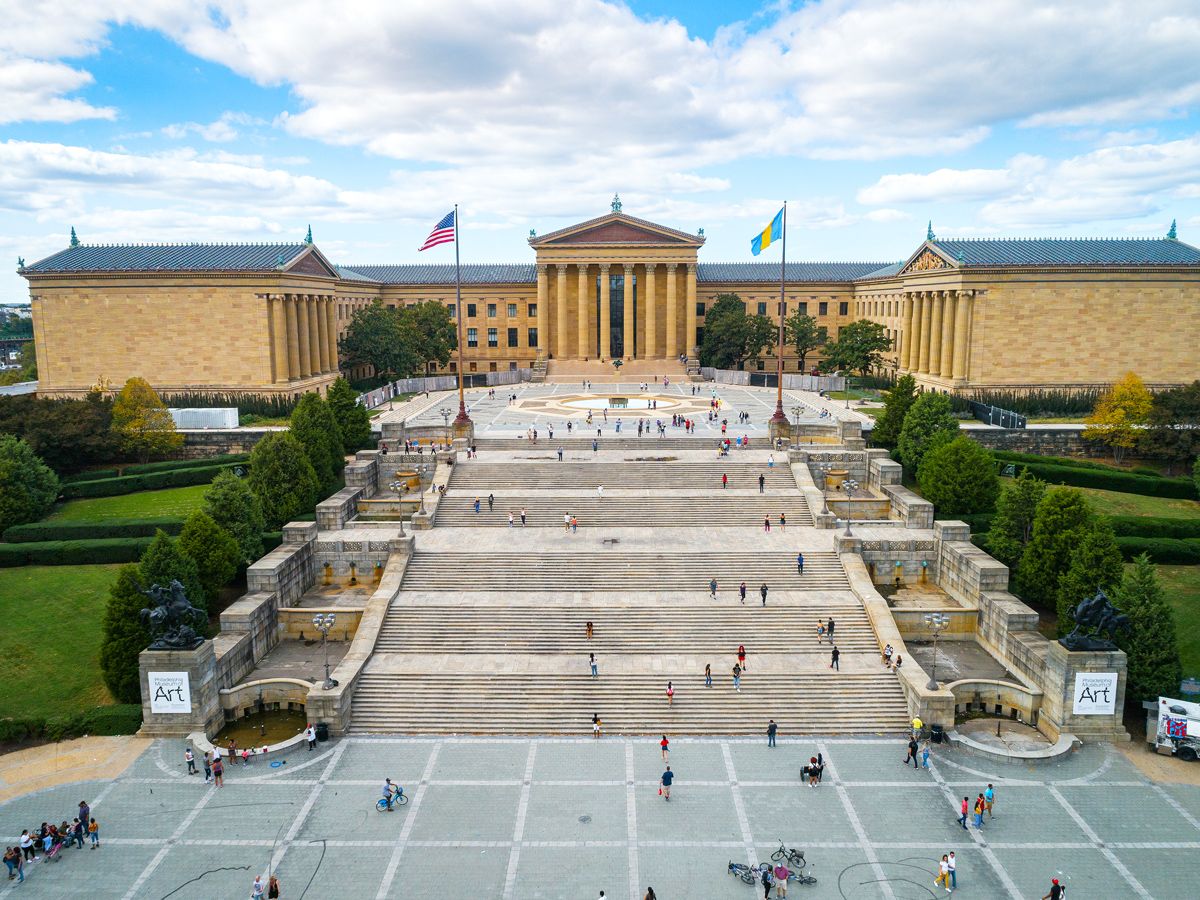
Spoiler alert: Most movies aren’t filmed where they’re set. Even so, location shooting isn’t quite a lost art — just ask the Rocky superfans who have made the pilgrimage to those famous steps of the Philadelphia Art Museum. Indeed, utilizing real places can deepen the viewer’s sense of immersion in the story. That is especially true on the rare occasions when a location becomes as iconic as the movie in which it appears. Consider yourself a film buff? Check out these seven movie buildings that are ready for their closeup.

Griffith Observatory – Los Angeles, California

View of Griffith Observatory dome and Los Angeles skyline in the distance
Photo credit: Sunpix Travel/ Alamy Stock Photo

You don’t have to be a fan of 1955’s Rebel Without a Cause to enjoy the stunning view of Los Angeles offered by Griffith Observatory, but it helps. Director Nicholas Ray’s era-defining drama made James Dean even more of a silver-screen icon than his Oscar-nominated turn in East of Eden (1955), not least because the actor died just a month before its release. Two key scenes were filmed at Griffith: a field trip featuring a knife fight between Dean’s character and another teen and the tragic finale in which a wayward youth meets his untimely end.

While far from the only movie the observatory appears in — The Terminator (1984), Back to the Future (1985), and La La Land (2016), to name a few — Rebel Without a Cause is the one most associated with the L.A. landmark, so much so that it now includes a bust of Dean.

Katz’s Delicatessen – New York, New York

Exterior of Katz's Delicatessen in New York City
Photo credit: Robert K. Chin – Storefronts/ Alamy Stock Photo

If you’d like to have what she’s having, there’s only one place to do so: Katz’s Delicatessen. The most famous scene in When Harry Met Sally (1989) — which is saying a lot, given that it’s one of the most beloved romantic comedies ever made — takes place in the equally beloved restaurant, which is arguably the best deli in New York (at least according to the Zagat New York City Restaurant Survey). Katz’s is especially famous for its pastrami on rye, which has been drawing visitors and native New Yorkers into the deli for decades. With that in mind, it’s no surprise that When Harry Met Sally isn’t the only movie to have been filmed there: Donnie Brasco (1997), We Own the Night (2007), and Across the Universe (2007) all include scenes at the kosher-style deli as well.

Dallas City Hall – Dallas, Texas

Image of Dallas City Hall, resembling an upside-down pyramid
Photo credit: Zeytun Travel Images/ Alamy Stock Photo

Despite being perhaps the most well-known movie set in Detroit, RoboCop (1987) wasn’t actually filmed there. The production actually took place on location in Dallas, most famously City Hall. The government building stood in as the megacorporation Omni Consumer Products’ headquarters, which is where the murdered police officer played by Peter Weller is revived as RoboCop himself; it’s also where the ED-209 droid malfunctions with fatal results in one of the film’s most memorable scenes.

Ohio State Reformatory – Mansfield, Ohio

Exterior of Ohio State Reformatory
Photo credit: Lori Ellis/ Alamy Stock Photo

Some film settings are so vital to the plot that they almost become characters unto themselves. One case in point is The Shawshank Redemption (1994), Frank Darabont’s adaptation of Stephen King’s novella Rita Hayworth and Shawshank Redemption. The prison drama was filmed almost entirely at the Ohio State Reformatory, also known as Mansfield Reformatory, which was added to the U.S. National Register of Historic Places in 1983.

In operation from September 15, 1896 until 1990, when a federal court order ruled that it be closed, it has since been restored and now offers tours four days a week. Many other movies, television shows, and even music videos have been shot at the reformatory, but none of them feature as prominently in those tours — or the prison’s legacy — as Shawshank.

Fox Plaza – Los Angeles, California 

View upwards at street level of Fox Plaza in Los Angeles, California
Photo credit: Erik Lattwein/ Alamy Stock Photo

One needn’t wade into the “Is it a Christmas movie?” debate to acknowledge that Die Hard (1988) ranks among the best action flicks of all time. Diehard fans (sorry) of the classic starring Bruce Willis have come to love the fictional Nakatomi Plaza almost as much as John McLane himself, with the skyscraper even making its way into video games. 20th Century Fox was producing the film at the same time that its own Fox Plaza was being completed in Century City, making for the perfect shooting location. For plot reasons, the building needed to be empty.

It wasn’t easy logistically — daytime filming wasn’t allowed, nor was blowing anything up — but it did come together wonderfully. That’s thanks in part to the fact that screenwriter Steven E. de Souza was able to use the building’s blueprints while mapping out the story, thus allowing viewers to become as familiar with Nakatomi Plaza’s inner workings as the characters do.
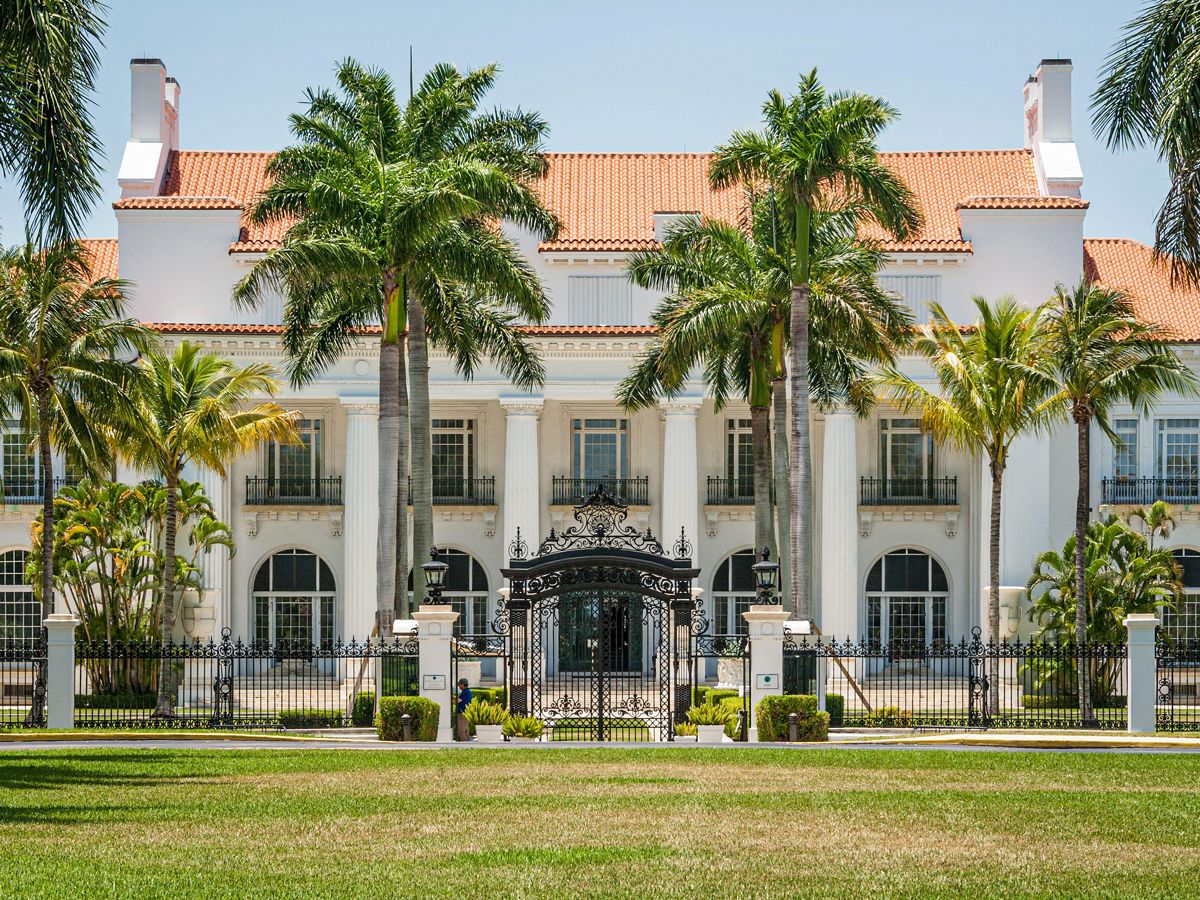
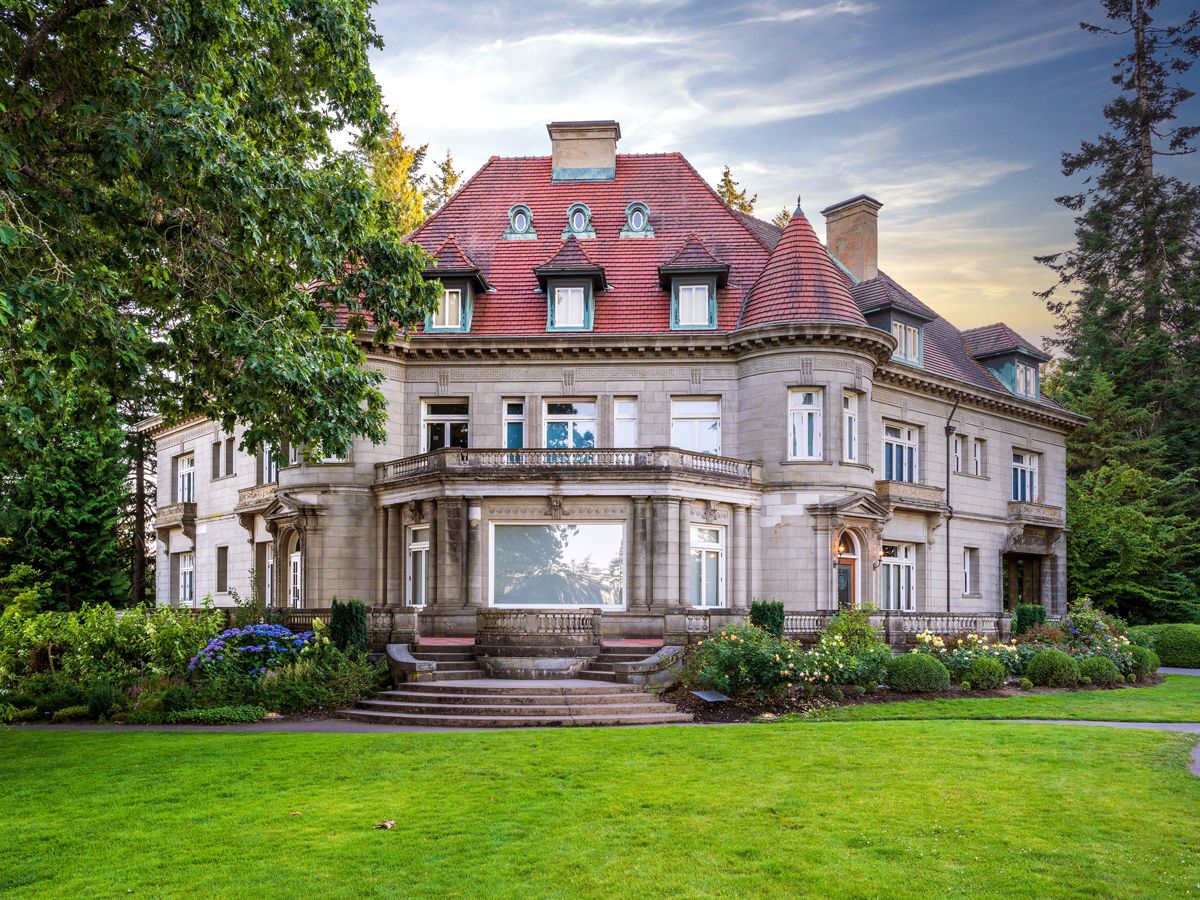
The Dakota – New York, New York

Street view of the Dakota apartment building in New York City
Photo credit: TRAVEL by VISION/ Alamy Stock Photo

One of the scariest movies ever made, Rosemary’s Baby (1968), is transportive from its opening credits. While that’s mostly due to the haunting song sung by star Mia Farrow, the looming presence of the apartment building where most of the narrative takes place adds to the unease. Called the Bramford in the film, the exteriors were shot at the Dakota, which was completed in the early 1880s in the Renaissance Revival style.

Long popular with artists, the building has been home to everyone from Judy Garland and Boris Karloff to Lauren Bacall and Jack Palance; not all of its history is of the happy variety, however, as one of the Dakota’s most famous residents, John Lennon, was shot and killed in its archway. The Dakota still stands today, and has been designated as both a New York City Landmark and U.S. National Historic Landmark.

The Bradbury Building – Los Angeles, California

Light-filled interior courtyard of the iconic Bradbury Building in Los Angeles, California
Photo credit: Michele and Tom Grimm/ Alamy Stock Photo

While it’s accurate to call the Bradbury Building a shooting location for Blade Runner (1982), it’s also downplaying the architectural landmark’s legacy. The building has been featured in dozens of movies and television shows, from M (1931) and Chinatown (1974) to Pushing Daisies (2007) and The Artist (2011). But its use in Ridley Scott’s sci-fi classic is especially memorable. (The name, however, has nothing to do with sci-fi luminary Ray Bradbury — the building bears the name of Lewis L. Bradbury, the millionaire who commissioned it in 1892.)

Even so, the building’s near-ubiquity led to some skepticism when Scott first announced his plans to film there. “‘The Bradbury Building? But everyone on TV uses it!’” the filmmaker said of the initial response. “But I said, ‘Back off! I’m gonna use it and I’m gonna shoot it in a way you have never seen before.’” That’s exactly what he did in Blade Runner’s climactic sequence; the off-kilter backdrop lends the film’s final moments much of their strange poignancy.

Post Banner Image
History

6 Fascinating Early Colonial America History Sites to Visit

By Jersey Griggs
Read time: 5 minutes
November 15, 2023
Updated: November 15, 2023

6 Fascinating Early Colonial America History Sites to Visit

By Jersey Griggs
Author
Jersey Griggs
Jersey is a travel and lifestyle writer whose work has appeared in publications such as Condé Nast Traveler, Business Insider, and Bust. When she’s not exploring her adopted home state of Maine, she’s likely planning her next big trip.

The United States is still relatively young as far as nations go. But it’s safe to say that a lot has changed since European colonists first landed on American shores over two centuries ago. Back then, New York was known as New Amsterdam before the British gained control, and the governors of the various colonies reported to the British Crown. Ranging from battlefields to living history museums, these six historical sites are a must-visit for history buffs to learn more about life in early colonial America.

St. John’s Church – Richmond, Virginia

Image of snow-covered St. John's Church in Richmond, Virginia
Photo credit: Julia Catt Photography/ Alamy Stock Photo

The famous words “Give me liberty or give me death!” were uttered by Patrick Henry within the walls of Richmond’s St. John’s Church. At the time, the church was known as Henrico Parish Church, and it gained fame after hosting the Second Virginia Convention in March 1775. With increasing tensions growing between the colonies and the Crown, it was here that Founding Fathers such as George Washington, Thomas Jefferson, and Patrick Henry met to discuss organizing protests against Great Britain.

Established in 1611, St. John’s remains an active church and is open to visitors. Proud of its place in history, the church hosts costumed reenactments of the Second Virginia Convention every Sunday during the summer. Scheduled group tours can be arranged, as can a one-man reenacted performance by Patrick Henry, the historic lawyer and fiery orator whose words helped to spark a revolution.

Colonial Williamsburg – Williamsburg, Virginia

Brick building in Colonial Williamsburg, Virginia
Photo credit: Kevin M Collins/ Shutterstock

Visiting Colonial Williamsburg is about as close as you can get to experiencing early America in the 1700s. Home to 89 original 18th-century buildings — and hundreds of historically accurate reconstructions — the original capital of the Virginia Colony aims to educate visitors through live reenactments and theatrical performances.

In addition to guided and self-guided tours, visitors can ride through town on horse-drawn carriages, watch live silversmith and blacksmith demonstrations, and listen to costumed historical figures explain the ins and outs of everyday life in colonial Virginia. Don’t miss the Governor’s Palace, an impressive Colonial Revival mansion that served as the official residence of seven royal governors and two post-colonial governors, Patrick Henry and Thomas Jefferson.

New Amsterdam Trail – New York, New York

Lampposts lining walkway along Hudson River in New York, New York
Photo credit: Irina Wilhauk/ Shutterstock

When Dutch colonists first arrived on the island of Manhattan in the 17th century, they named their settlement New Amsterdam in honor of their homeland. At the time, the Lenni-Lenape Native Americans called the island Mannahatta (“Island of the Hills”), prompting the Dutch to later adopt the same moniker for the region. 

Today, the lives of these Dutch settlers are commemorated by the New Amsterdam Trail, a historic walking trail that traverses historic sites on the southern tip of modern-day Manhattan. Visitors can begin at Battery Park, which was once underwater and served as the original harbor where Dutch explorer Henry Hudson anchored his boat to explore Mannahatta. Be sure to stop by Wall Street, named for the wall built around New Amsterdam, and then mosey over to the former site of the settlement’s tavern. The site later became Stadt Huys, which served as Manhattan’s first City Hall. It is now marked by an outline on the foundation of the current building on the site, 85 Broad Street.

Nassau Hall – Princeton, New Jersey

Students lounging on grass in front of Nassau Hall at Princeton University
Photo credit: Andrew Cribb/ Alamy Stock Photo

Though it’s home to a wealth of history, Nassau Hall is perhaps a lesser-known early colonial American site. Located on Princeton University’s campus, it was the largest stone building in the colonies at the time of its construction in 1756. Nassau Hall is also the oldest building at Princeton (formerly known as the College of New Jersey) — the hall was originally constructed in honor of King William III.

It wasn’t until the American Revolution that Nassau Hall became a key part of U.S. history. The campus was the site of the 1777 Battle of Princeton, a turning point in the war when the defeated British troops surrendered Nassau Hall to George Washington’s army. Six years later, it became the temporary site of the nation’s capital, where the Continental Congress met for half of 1783. Now home to administrative offices, this must-see on Princeton’s campus is open to visitors through private tours.

Roanoke Island – Outer Banks, North Carolina

Wooden pathway leading to striped lighthouse on Roanoke Island, North Carolina
Photo credit: Jay Yuan/ Shutterstock

Though Jamestown, Virginia, was the first permanent English colony in America, a lost colony at Roanoke Island was established several years earlier, and it has long been shrouded in mystery. Founded in 1585 by Sir Walter Raleigh, the settlement hosted roughly 100 colonists before the entire population mysteriously disappeared with no signs of struggle. Today, historians assert that the settlers departed to escape drought conditions, or perhaps became absorbed into the native Croatan tribe.

Although the original settlement is no longer intact, its spirit lives on at Roanoke Island Festival Park. The recreated settlement features live demonstrations and costumed interpreters who teach visitors about colonial life in the 1500s. Visitors can also climb aboard Elizabeth II, a recreated 16th-century ship, or learn about canoe-making, weaving, and the lives of the Indigenous peoples of the region at American Indian Town.

Fort Ticonderoga – Ticonderoga, New York

Image of artillery and fortifications at Fort Ticonderoga in New York state
Photo credit: Steve Heap/ Shutterstock

Fort Ticonderoga was originally built by French settlers in the mid-18th century as a stronghold between Lake Champlain and Lake George, and saw several conflicts as early as 1609. Derived from the Iroquois language, the name Ticonderoga loosely translates to “the place where two bodies of water meet.” As water was one of the easiest and swiftest modes of transportation during colonial times, the fort’s location was not only useful, but highly strategic.

After being captured by the British in 1759, the fort was later overtaken by American Patriots at the start of the Revolution. The siege was particularly important because it marked the first American victory in the war, a feat that allowed the rebels to procure a large amount of artillery. Today, the star-shaped fort is open to visitors, with guided tours, living history programs, and a daily weapons demonstration on the battlefield.

Post Banner Image
Outdoors

Why Portugal’s Azores Islands Should Be on Your Bucket List

By Nicole Villeneuve
Read time: 8 minutes
November 15, 2023
Updated: September 19, 2024

Why Portugal’s Azores Islands Should Be on Your Bucket List

By Nicole Villeneuve
Author
Nicole Villeneuve
Nicole is a writer and researcher with over 15 years of experience seeking out arts, culture, and lifestyle stories in places like remote northern Quebec and the unforgettable streets of Amsterdam. Her work has also appeared in PureWow, Brit + Co, AUX TV, and CBC.
Sponsored content

Over 22.3 million people traveled to Portugal in 2022, many heading straight to the picturesque coastal cities of Lisbon and Porto or the historic Douro Valley wine region. But outside of these popular mainland spots lies a remote Portuguese archipelago in the North Atlantic Ocean that many overlook — the Azores. Today, adventurers visit this autonomous region to explore its remarkable natural wonders and immerse themselves in the islands’ local culture and unspoiled paradise. Below, discover everything you need to know about the region’s fascinating history, its otherworldly volcanic landscapes, and essential tips for planning the bucket-list trip to the Azores you never knew you needed.

Before You Go

Trail overlooking the Boca do Inferno in Sao Miguel island in the Azores
Photo credit: trabantos/ Shutterstock

In the Azores, like in much of Portugal, it’s common to come across locals who speak English, especially in tourist hubs like Ponta Delgada on São Miguel Island. But in other parts of the islands, knowing some Portuguese will definitely come in handy. That’s where Babbel can help. Their lessons can help you master Portuguese in as little as 10 minutes a day. Say “bom dia” to days of adventure in the Azores, with Babbel.

A Fascinating History

Portas da Cidade in Ponta Delgada on Sao Miguel island in the Azores
Photo credit: DaLiu/ Shutterstock

Discovered by Portuguese explorers in the 15th century, the Azores are a group of nine islands located about 900 miles west of the Portuguese mainland. While newer evidence suggests that Norse seafarers might have actually predated Portuguese settlement by about 700 years, Portuguese explorers Diogo de Silves and Gonçalo Velho Cabral first reached the uninhabited southernmost island of Santa Maria in the Azores in 1427. The archipelago remained sparsely populated until 1439, when settlers from mainland Portugal and, eventually, other European countries such as France and Spain, started arriving. Over the next 60 years, all of the islands would eventually be settled

Settlers harnessed the islands’ fertile volcanic soil to initially cultivate wheat and sugarcane. After European farm animals were introduced to the islands, dairy also fueled economic expansion. By the early 17th century, the islands had become susceptible to European attacks, eventually falling under Spanish control. However, by 1640, the Azores were once again under Portuguese rule. By this point, Ponta Delgada had become — and still remains — the capital of the Azores.

Following the restoration of the Portuguese monarchy, the islands maintained their importance as an agricultural and economic center — boosted significantly by the export of oranges to England starting at the the end of the 18th century. 

During World War II, the Azores also played a significant role as a base for Allied forces. The U.S. Navy established an air base on Santa Maria, later relocating it to its current home at Lajes Field on Terceira Island. The post-WWII period saw an increase in inter-island and European travel. Since then, the cultural tapestry of this archipelago has continued to be woven with both Portuguese traditions and distinct regional ones, all set against the backdrop of the Azores’ remarkable geology.

A Complex Landscape

View from clifftop of a lighthouse on Santa Maria island in the Azores
Photo credit: Anibal Trejo/ Shutterstock

Long before it was an idyllic vacation destination, the Azores existed deep within the earth. About 10 million years ago, the rugged island chain began to form over a mantle hotspot in the Atlantic Ocean. The Azores are often referred to as the “Hawaii of Europe,” due to the similarities in how they formed. However, unlike Hawaii, which is in the middle of a tectonic plate, the Azores formed along the edges of the North American, Eurasian, and African tectonic plates. These tectonic plates and their thickened crust experienced complex interactions and shifting, creating a perfect storm for the formation of the Azores.

The nine major islands and several islets that compose the archipelago add up to just over 900 square miles of land area. Each island has distinctive features that represent different stages in their geological evolution. 

Corvo — the smallest and most remote island — was formed by a major Plinian eruption, while São Jorge’s shape is long and slender, the result of fissure eruptions over millennia. The rugged terrain of valleys and escarpments on Flores were sculpted by extensive lava flow. Faial stands out as having the most recent volcanic formations, left after the devastating 1957 eruption. 

Meanwhile, Pico reigns as the highest peak in the archipelago, reaching over 7,700 feet, while Graciosa boasts the Furnas do Enxofre, the largest volcanic dome in Europe. The island of Terceira is nearly circular. São Miguel, the largest island, is the most volcanically active and is marked by numerous craters and spatter cones. Lastly, Santa Maria, the archipelago’s oldest island, is flatter than the other islands and is home to golden-sand beaches — a rarity among the region’s dark volcanic shores.

Off-the-Beaten Path Natural Wonders

Coastal path with hydrangeas on Sao Miguel
Photo credit: peresanz/ Shutterstock

Although the Azores have seen recent record increases in tourism, the region remains relatively unspoiled by mass tourism and is committed to being a sustainable destination. From the lush landscapes of São Miguel to the volcanic beauty of Terceira, Faial, Pico, and São Jorge, the Azores are a haven for outdoor enthusiasts. 

São Miguel, the largest island in the Azores, is home to the breathtaking Sete Cidades (which translates to “Seven Cities” in Portuguese). One of the archipelago’s top sights, the crater features picturesque twin blue and green lakes. The island’s Furnas region is known for its many hot springs and geysers and also has several famous black sand beaches — just be wary of the sand getting extra hot in the summer.

On Terceira, the stunning Algar do Carvão offers a rare opportunity to explore an ancient volcanic vent cave, while another dormant volcano, Monte Brasil, offers breathtaking panoramic views. 

Elsewhere on the archipelago, hiking the extensive network of trails available throughout the islands is a must — the ascent of Pico’s Mount Pico is a particularly challenging but rewarding option. Try canyoning in the lush forests, embark on whale-watching tours, go horseback riding, or paraglide over volcanic craters. For the more adventurous, the Azores boast numerous diving spots and expeditions with incredibly diverse marine life. 

Embracing the Local Culture

Steps leading to the Cathedral of Angra do Heroismo on Terceira island in the Azores
Photo credit: Architect´s Eye/ Alamy Stock Photo

Aside from the most stunning natural beauty, the Azores are rich in culture. Among the top cultural attractions on the islands is the city of Angra do Heroísmo on Terceira island, a UNESCO World Heritage Site fielled with charming streets and well-preserved architecture — the centerpiece of which is the majestic 16th-century Cathedral of Angra.

São Miguel’s capital, Ponta Delgada, is another cultural gem, with elegant churches and cathedrals, the vibrant Mercado da Graca food market, and several interesting museums. The Forte de Sao Bras details the island’s military history, while the Carlos Machado Museum houses a diverse collection of art and artifacts.

Local festivals and events also offer a deeper experience of Azorean culture. Not to be missed is the Sanjoaninas festival on Terceira. For 10 days in June, lively parades, music, and traditional performances take place through the streets. On São Miguel, the Festival of the Lord Holy Christ of Miracles takes place during the fifth week after Easter, drawing thousands of devotees and spectators to immerse themselves in the Azores’ faith-based culture. 

And then there’s the traditional Azores cuisine. Don’t miss the opportunity to try dishes such as cozido das furnas (a traditional meat dish cooked slowly underground in volcanic vents), alcatra (Portuguese pot roast), and queijadas (traditional custard tarts). Pico island’s wine region has long been revered for its ingenuity, and the UNESCO-recognized vineyards are cultivated in the island’s unique volcanic soil. To experience other Azorean industries, consider chartering a fishing boat, visiting dairy farms, or checking out São Miguel’s Gorreana tea factory — the oldest operational tea farm in Europe.

What to Know When Visiting the Azores

Whales off the coast of the Azores in Portugal
Photo credit: Evgeni Fabisuk/ Shutterstock

The Azores are grouped into Western, Central, and Eastern island clusters, and it’s important to plan your travel strategically. Plus, it’s always helpful to learn a few key Portuguese phrases before you go.

Inter-island flights are the most efficient (if also the most expensive) way to hop between islands, particularly when moving from one group to another. Ferries are a great option for shorter inter-group island trips. Taxis are readily available on the islands, and if you have a car rental, make sure you check with the rental agency before bringing it from one island to another. (And note that many of the roads in Azores are narrow and winding.) It’s also important to reserve your ferry trip in advance, as not all ferry lines or times allow vehicles.

Fortunately, the Azores’ location in the Atlantic means the climate is relatively mild year-round. However, the islands’ cool, damp mist and frequent winds can make it feel much colder, and the weather can be unpredictable — even with sunny skies, it’s a good idea to carry a light rain jacket  and maybe even an umbrella, considering things can change quickly, according to locals. Hiking attire, such as shorts and sturdy shoes, is also recommended for often muddy trails.

All told, the Azores promise an off-the-beaten adventure in a pristine natural paradise. By carefully planning your itinerary and immersing yourself in the local culture and landscapes, you’ll make the most of your visit to the one-of-a-kind  archipelago.

Note: All featured products and deals are selected independently and objectively by the author. Daily Passport may receive a share of sales via affiliate links in content.

Post Banner Image
Culture

The 10 Busiest Airports in the World

By Bradley O'Neill
Read time: 6 minutes
November 15, 2023
Updated: November 15, 2023

The 10 Busiest Airports in the World

By Bradley O'Neill

These days, it’s difficult to imagine a world without air travel. According to the annual report by the Airports International Council, nearly 7 billion travelers took to the skies in 2022 alone — an increase of 53.5% from the pandemic lockdowns of the previous year. And while there are more than 41,000 airports dotting the globe, some handle far more of that traffic than the rest. Below, take a look at the world’s 10 busiest airports by total passengers enplaned and deplaned in 2022. 

10. Paris Charles de Gaulle Airport (CDG) – France

Passengers lounging in terminal overlooking airfield at Paris Charles de Gaulle Airport
Photo credit: Javier Garcia/ Shutterstock

Handling almost 57.5 million passengers annually, Paris Charles de Gaulle (also known as Roissy Airport or Paris CDG) is the principal hub for French flag carrier Air France. The airport is named after French army officer and statesman Charles de Gaulle, who was the architect of France’s Fifth Republic in the 1950s. The airport’s three main terminals accommodate flights to 119 countries around the globe, just behind Istanbul Airport in terms of network breadth. Inside Terminal 2, the Espace Musées features works of art loaned from renowned Parisian cultural institutions such as the Rodin Museum. To fend off boredom on a long layover, budding musicians can also play the free-to-use pianos in all three terminals. 

9. Indira Gandhi International Airport (DEL) – Delhi, India

Interior of terminal building at Delhi's Indira Gandhi International Airport
Photo credit: Bert Hoferichter/ Alamy Stock Photo

Located in southwest Delhi, one of the world’s most populous metro areas, Indira Gandhi International Airport is currently the busiest airport in India. Latest figures account for just under 59.5 million passengers in 2022. Open since 1962, the airport — named after former Prime Minister Indira Gandhi — is served by 80 airlines and is the main hub of India’s flag carrier, Air India. Throughout the three terminals, passengers can access over 75 retail outlets and 65 food and drink establishments. Seamless travel between the airport and New Delhi is offered by a high-speed rail network, which takes about 20 minutes to reach the city center.

8. London Heathrow Airport (LHR) – United Kingdom

Shops inside terminal at London Heathrow Airport
Photo credit: CBW/ Alamy Stock Photo

London Heathrow is the busiest airport in the United Kingdom and the largest of the six international airports that serve London. Over 61.6 million passengers traveled through the airport in 2022. Flights depart from the four passenger terminals (numbered Terminals 2 to 5) to over 200 destinations across 84 countries on 89 airlines. Heathrow is also a major cargo port, with approximately 1.4 million tonnes handled in 2022. Passengers traveling through Heathrow can find around 130 retail shops to pass the time, along with more than 30 bars, cafés, and restaurants. The airport is named after the ancient hamlet called Heath Row, where the airport was built following World War II.

7. Istanbul Airport (IST) – Turkey

Aerial view of passenger lounge area at Istanbul Airport
Photo credit: Little Adventures/ Alamy Stock Photo

Situated on the European side of Istanbul, Istanbul Airport has been Turkey’s main international air traffic gateway since it opened in 2018. It replaced Atatürk Airport, which was unable to expand due to its proximity to city developments and the Sea of Marmara. In 2022, the new Istanbul Airport connected around 64.3 million passengers to and from nearly 300 destinations in Asia, Africa, the Americas, and Europe — more destinations than any other airport in the world. In addition to a wide range of shops and restaurants, the airport has dedicated and complimentary Rest and Entertainment areas. Among these is the Youth Lounge, a space for travelers aged 15 to 30 with free Wi-Fi, comics, and video and board games.

6. Los Angeles International Airport (LAX) – California

Lawn and flower garden beside Theme Building at Los Angeles International Airport
Photo credit: Serhii Chrucky/ Alamy Stock Photo

Famed for the 135-foot-tall Space Age-inspired Theme Building at the center of its terminal complex, Los Angeles International Airport is the fifth-busiest airport in the U.S. Just over 65.9 million passengers used the airport’s nine terminals and 150 gates in 2022. LAX’s Tom Bradley International Terminal, named after the city’s longest-serving and first Black mayor, serves over 40 foreign carriers and underwent a major expansion in 2021, with the addition of a new 15-gate concourse. With a mission to celebrate the talents of South Californian artists, the LAX Art Program puts on 20 exhibitions a year in the departure and arrival areas. There’s also a permanent Pets Unstresseing Passengers (PUP) program, which helps to provide stress relief to passengers via interaction with dogs. 

5. Dubai International Airport (DXB) – United Arab Emirates

Interior of terminal building at Dubai International Airport
Photo credit: eye35/ Alamy Stock Photo

In 2022, Dubai International Airport was the busiest airport in the world located outside of the United States, with its passenger numbers reaching 66 million. Dubai is the main hub for Emirates, the flag carrier for the United Arab Emirates which operates more than 350 flights each day to over 130 destinations. Throughout the airport’s three main terminals, passengers can browse 280,000 square feet of retail space, featuring luxury retail brands and multiple dining options. And to aid in pre-flight and layover relaxation, the airport offers two zen gardens, spa services, wellness centers, and entertainment at the Game Space Gaming Lounge.

4. Chicago O’Hare International AIrport (ORD) – Illinois

Escalator tunnel under neon light display at Chicago O'Hare International Airport
Photo credit: Stu Gray/ Alamy Stock Photo

Built on the site of a former Douglas aircraft assembly plant, Chicago O’Hare International Airport became one of America’s main getaways to the world after opening in 1945. Named after naval aviator Lieutenant Commander Edward H. “Butch” O’Hare, the airport is a major hub for both American Airlines and United Airlines. Today, O’Hare handles approximately 68.3 million passengers annually over its four terminals, which boast nearly 200 aircraft gates. New to Terminal 5, Airport Art is a public art collection featuring works by 20 Chicagoan artists. Fun fact: O’Hare boasts the most runways out of any airport in the world, with eight. 

3. Denver International AIrport (DEN) – Colorado

Terminal building reflected on Westin Hotel at Denver International Airport
Photo credit: Tim Clark/ Alamy Stock Photo

Framed by the Rocky Mountains, Denver International Airport is both one of the busiest — serving 69.3 million passengers in 2022 — and most architecturally impressive airports in the world. DIA (as locals call it) serves as a hub and focus city for United Airlines, Southwest Airlines, and Frontier Airlines — with around 1,700 flight movements per day. The exterior of the main Jeppesen Terminal is notable for its fabric-covered tents, which symbolize the Rockies, prairie wagons, and the teepee tents of Native Americans. Boasting a 9,000-panel solar farm that generates 3.5 million kilowatts of electricity annually, the airport opened in 1995 and was designed with sustainability in mind. Throughout the terminal, passengers can also embrace Colorado culture through the DEN Arts displays. 

2. Dallas/Fort Worth International Airport (DFW) – Texas

Aerial view of control tower, roadway complex, and passenger terminals at Dallas/Fort Worth International Airport
Photo credit: EQRoy/ Alamy Stock Photo

Dallas/Fort Worth International Airport, the world’s second-busiest airport, opened in 1974 with flights from nine airlines. Today, around 73.4 million passengers fly to and from nearly 200 domestic destinations and over 60 international destinations on 28 airlines. Making transit easier for passengers is the airport’s complimentary Wi-Fi, six lounges, pet-friendly zones, and an outdoor observation area at Founder’s Plaza, where you can enjoy up-close views of aircraft taking off and landing. And, like many U.S. airports, there’s an in-house art program — highlights include an outdoor sculpture garden and mosaiced floors. 

1. Atlanta Hartsfield-Jackson International Airport (ATL) – Georgia

Dinosaur skeleton inside terminal at Hartsfield-Jackson Atlanta Airport
Photo credit: James Kirkikis/ Alamy Stock Photo

Flying far ahead of the pack to claim the title of the world’s busiest airport is Atlanta Hartsfield-Jackson International Airport. The main hub for Delta Air Lines, Hartsfield-Jackson welcomed a staggering 93.7 million passengers in 2022. Impressively, it has held the title of the world’s busiest airport every year since 1998, with the exception of 2020 (when flight schedules were reduced due to the pandemic). Flights connect to over 150 domestic destinations and over 75 international destinations across 50 countries. On average, Atlanta’s airport operates 2,700 daily arrivals and departures. The airport also provides 63,000 jobs and features over 300 shops and eateries. The in-house art program, Airport Art, boasts more than 1,000 works, making it one of the largest collections of public art in the southeastern United States.

Post Banner Image
Architecture

7 Buildings That Influenced the History of Architecture

By Daily Passport Team
Read time: 6 minutes
November 15, 2023
Updated: November 15, 2023

7 Buildings That Influenced the History of Architecture

By Daily Passport Team
Author
Daily Passport Team
Daily Passport writers have been seen in publications such as National Geographic, Food & Wine, CBC, Condé Nast Traveler, and Business Insider. They're passionate about uncovering unique destinations and sharing expert tips with curious travelers.

Much of the modern architecture we see today builds upon the past — both figuratively and literally. But whether because of their exceptional design or the cutting-edge methods used in their construction, there are also a handful of individual buildings throughout the world that have played a pivotal role in transforming what humans build and how we build it. Here are seven standout buildings that are influential buildings in architecture.

Home Insurance Building – Chicago, Illinois

Historical image of the former Home Insurance Building in Chicago, Illinois
Photo credit: Science History Images/ Alamy Stock Photo

The Home Insurance Building, which stood in Chicago from 1884 to 1931, is widely considered to be the world’s first modern skyscraper. In an usual move, architect and engineer William Le Baron Jenney proposed using an iron frame, which would allow him to reach a greater height than if he used the conventional building methods of the time. And, unlike masonry structures, his building would also weigh less. 

However, Jenney had to temporarily pause the project to persuade nervous officials that this new building type would remain sturdy. The delay enabled him to be sold on the benefits of steel over iron, which he sourced from the Carnegie-Phipps Steel Company of Pittsburgh and incorporated into his final design. Initially, the office building had 10 floors — the most of any building at the time. An additional two stories were added a few years later, raising it to 180 feet tall. Though the Home Insurance Building was sadly demolished in 1931, Jenney’s groundbreaking technique revolutionized the modern cityscape — not just in Chicago, but the world over.

Parthenon of Athens – Greece

Ruins of the Parthenon in Athens, Greece
Photo credit: Ian Dagnall/ Alamy Stock Photo

The Parthenon was built on the Acropolis of Athens in the fifth century BCE. While the temple, dedicated to the goddess Athena, is now a ruin, its iconic status is undiminished. The architecture of the ancient Greeks had a huge influence on building design over the centuries, and the Parthenon itself has had a particularly strong influence. 

Its mathematically perfect proportions and symmetry have underpinned the design of many buildings across the world, even those that are iconic in their own right — such as Le Corbusier’s Modernist classic, Villa Savoye in France. In the U.S., you might recognize the similarities to the columns used in the Lincoln Memorial in Washington, D.C; the Federal Hall in New York City; and the Tennessee State Capitol in Nashville. 

Great Pyramid of Giza – Egypt

Image of the Great Pyramid of Giza in Egypt
Photo credit: Matyas Rehak/ Shutterstock

At the time it was built around 2560 BCE, the Great Pyramid of Giza was (and still is) a feat of engineering. The only remaining landmark of the Seven Wonders of Ancient World, it originally measured 481 feet high — becoming the tallest building in the world and remaining so until Lincoln Cathedral was completed in the early 14th century. 

The pioneering construction of the Great Pyramid, while remarkable, remains somewhat of a mystery — exactly how did the Ancient Egyptians move and maneuver such large quantities of building materials with the tools available to them at the time? Khufu’s final resting place may also have provided the inspiration for other pyramid constructions across the world, from Mexico and Central America to Asian nations such as Cambodia, Thailand, and Indonesia. 

Hagia Sophia –  Istanbul, Turkey

Birds flying over the minarets of Hagia Sophia in Istanbul, Turkey
Photo credit: AlexAnton/ Shutterstock

The Hagia Sophia was built in what’s now Istanbul in the sixth century. The landmark building began life as a church and was later converted into a mosque, a museum, and a mosque once again in 2020. One of the Hagia Sophia’s most impressive architectural features is its domed roof, which features four pendentives — triangular segments which connect the dome to the walls to support its weight. When the Ottoman Turks captured the city in the 15th century, they added features such as minarets and replaced Christian ornamentation with Islamic decoration, but the dome was retained. 

The Hagia Sophia’s architectural influence is evident in other religious buildings in Istanbul, such as the Blue Mosque, completed in the early 17th century. But it is perhaps the building’s versatility when it comes to culture and religion which is its true contribution to the history of architecture. 

Basilica of Saint-Denis – France

Front facade of Basilica of Saint-Denis, France
Photo credit: Petr Kovalenkov/ Shutterstock

The Basilica of Saint-Denis, a commune in the northern Paris suburbs, is considered one of the earliest examples of Gothic architecture. The earliest parts of the basilica date from the 12th century and were built under the supervision of Abbot Suger, a close confidant of the French kings Louis VI and Louis VII. The Basilica of Saint-Denis was the first to feature all the elements of this centuries-old European style, including rib vaults, pointed arches, and flying buttresses. 

As Gothic architecture evolved, the Basilica of Saint-Denis paved the way for countless other religious buildings to be constructed or renovated in the iconic style, such as the Notre-Dame de Paris and the towering cathedrals of other European cities such as Chartres, Reims, Cologne, and Milan.

Crystal Palace – London, England

Historical image of the former Crystal Palace in London, England
Photo credit: SOTK2011/ Alamy Stock Photo

The enormous Crystal Palace was erected for the Great Exhibition of 1851 in Hyde Park. Epitomizing Victorian ingenuity and ambition, Joseph Paxton’s design featured nearly 300,000 panes of glazed sheet glass and a skeletal structure made largely out of cast iron. The exhibition hall had a floor area totaling 990,000 square feet. After the world’s fair, it was taken apart and moved south of the River Thames. and with an altered design, its new barrel-vaulted roof reflected the Beaux-Arts style. 

Sadly, the Crystal Palace was destroyed by fire in 1936, just like several of the buildings it inspired, including one built in New York’s Bryant Park in 1853 and others in Montreal, Munich, and Amsterdam. A few others survive, such as the Aberdeen Pavilion in Ottawa, Canada, and the much more recently built Infomart in Dallas, Texas. In addition, the legacy of this landmark still lives on in the U.K., as the area in which it once stood in southeast London has been known as Crystal Palace for more than 80 years. 

Amager Bakke – Copenhagen, Denmark

Steam billowing out of the Amager Bakke in Copenhagen, Denmark
Photo credit: Niels Quist/ Alamy Stock Photo

The buildings that will influence and inform the future of architecture from this point in history are likely to be multi-functional spaces with sustainability as their core principle. In that sense, history has already been made with the construction of buildings such as Amager Bakke in the Danish capital, Copenhagen. 

Opened in 2017, it is primarily a waste-to-energy plant, burning the city’s trash to create power and help Copenhagen make the transition to zero carbon. However, Amager Bakke — or CopenHill, as locals call it — also plays a significant role in providing recreational opportunities. The building itself features the world’s tallest climbing wall and is topped with trails for hiking and running, fitness equipment, and even a dry ski slope. Designers Bjarke Ingels Group (BIG) call their concept “hedonistic sustainability” and claim it is the “single largest environmental initiative in Denmark.” 

Post Banner Image
Culture

7 Stunning Mosaics and Murals Around the World

By Daily Passport Team
Read time: 5 minutes
November 15, 2023
Updated: November 15, 2023

7 Stunning Mosaics and Murals Around the World

By Daily Passport Team
Author
Daily Passport Team
Daily Passport writers have been seen in publications such as National Geographic, Food & Wine, CBC, Condé Nast Traveler, and Business Insider. They're passionate about uncovering unique destinations and sharing expert tips with curious travelers.

Art can be found in all aspects of everyday life, whether in historic museums or the back wall of an unassuming alleway. But in particular, large-scale murals possess a certain wow factor — using intricate pieces and varied mediums to create bold statements in grand proportion. From ornate ceilings in ancient cathedrals to whimsical urban parks, discover these seven stunning mosaics and murals around the world.

Cattedrale di Monreale – Palermo, Italy

Murals inside Cattedrale di Monreale in Palermo, Italy
Photo credit: Peter J. Traub/ Shutterstock

They say that all that glitters is not gold, but in the case of Cattedrale di Monreale (Monreale Cathedral) in Palermo, Italy, the adage proves false. With a mosaic made from nearly 5,000 pounds of pure gold, the cathedral’s interior is truly luminous. Listed as a UNESCO World Heritage Site, Monreale Cathedral is considered to be one of the most beautiful churches in Sicily, and with its gold-laden mosaic, it’s easy to see why.

Built between 1170 and 1189, the mosaic was constructed by craftsmen from Constantinople. Installed throughout the cathedral’s nave, walls, and ceilings, the work features Christian saints and important scenes from the Bible. Naturally, the mosaic’s centralized figure is Jesus Christ, who takes up nearly 300 square feet of space in the aspe above the altar.

Shah Cheragh – Shiraz, Iran

Mosaic-covered ceiling of Shah Cheragh mosque in Shiraz, Iran
Photo credit: Leonid Andronov/ Alamy Stock Photo

Since Shah Cheragh translates to “King of Light,” it comes as no surprise that the interior of this funerary mosque is spectacular. Given its translation, however, it is rather surprising that the mosaic was not built for a king. Instead, Shah Cheragh’s dazzling glass mosaic was designed with a queen in mind.

In the 14th century, Queen Tash Khātūn requested that the traditional Persian artform of mirrored mosaics be inlaid inside the mosque, which had been a pilgrimage site for Muslims for centuries. In order to be fit for a queen (Queen Tash Khātūn was eventually entombed inside the mosque), ornate chandeliers were hung from the ceiling and the mosaic was finished with pieces of silver. As a result, the mosque’s interior resembles a brilliant mirrorball that continues to draw visitors today.

Parc Güell – Barcelona, Spain

Mosaic-covered wall and buildings overlooking Barcelona skyline at Parc Güell
Photo credit: Roland Nagy/ Alamy Stock Photo

Built between 1900 and 1914, Parc Güell was designed by famous Barcelona architect Antoni Gaudí. Funded by Eusebi Güell, the entrepreneur who discovered Gaudí, the park was built to create a stylish place for Barcelonians to gather, while also honoring the Modernist art movement that was sweeping through the city at the time.

Located in Carmel Hill, Parc Güell is commonly recognized as one of the most accomplished mosaics around the world. Using ceramics, glass, broken marble, and tiles, Gaudí used his signature sense of color and whimsical sensibility to create an otherworldly effect. In addition to the undulating mosaic walkway that overlooks the city, Parc Güell is known for “El Drac,” a tiled lizard which is said to bring good luck to those who touch it.

St. George’s Church – Topola, Serbia

Mosaics inside St. George's Church in Topola, Serbia
Photo credit: RooM the Agency/ Alamy Stock Photo

Also referred to as the Oplenac Mausoleum, St. George’s Church contains nearly 40,000 square feet of inlaid mosaic inside its walls. The brainchild of King Peter I, the mausoleum in Topola, Serbia, was commissioned in 1910, but construction was soon halted by successive wars.

Decades later, King Peter’s successor commissioned Puhl and Wagner, a glass company from Berlin to create the exquisite mosaic inside the church. The work depicts 1,500 figures from Serbian monasteries and contains pieces of glass in 15,000 different hues. But the artwork doesn’t end in the nave — more mosaics can be found in the crypt below the church with dozens of royal tombs.

Madaba Map – Madaba, Jordan

Image of the Madaba Map in Madaba, Jordan
Photo credit: GRANT ROONEY PREMIUM/ Alamy Stock Photo

Located inside St. George’s Church in the town of Madaba is one of the most historic mosaics in the world. When the Greek Orthodox church was being built in 1884, construction workers discovered an ancient relic from the Byzantine era: the Madaba Mosaic Map. While experts believe the original piece was between 50 and 82 feet long, only one-quarter of the map remains undamaged and can be seen on the floor of the church.

Created in 560 CE, the mosaic displays an intricate map of the Holy Land using thousands of tiles to depict ancient biblical scenes. Featuring fish swimming in the Jordan River, the gates of Jerusalem, and Mount Sinai, each scene is labeled with captions in Greek, with over 150 inscriptions in total.

Mausoleum of Galla Placidia – Ravenna, Italy

Mural-covered ceiling of Mausoleum of Galla Placidia in Ravenna, Italy
Photo credit: Salvatore Leanza/ Alamy Stock Photo

Located in an unassuming brick building, the Mausoleum of Galla Placidia houses the remains of a famed Roman empress who died in 450 CE. As one of eight UNESCO World Heritage Sites in Ravenna, Italy, the mausoleum’s interior is laden with mosaics from the fifth century that depict Christian iconography.

While the lower walls are made of marble, the rest of the interior is covered in a magnificent tile mosaic. Featuring scenes that depict the triumph of eternal life over death, the work portrays saints, shepherds, and several other icons of Christianity. The most impressive feature is the mosaicked pattern of stars set amidst a dark blue sky on the arched ceiling. The work of art is so stunning that it inspired Cole Porter to write the jazz song “Night and Day” in 1932.

Jameh Mosque of Yazd – Yazd, Iran

Mosaic-covered exterior of Jameh Mosque of Yazd in Iran
Photo credit: Leonid Andronov/ Shutterstock

Although the Jameh Mosque of Yazd is now used for the town’s Muslim congregation, the building originated as a Sassanid fire temple. The oldest tilework in this Iranian mosque dates back to 1365 CE, but since the mosque underwent a 43-year renovation in the 20th century, the mural remains in perfect condition.With mosaic patterns laid throughout the interior, the double-dome chamber contains one of the structure’s most astonishing pieces — a massive faience mosaic.

This tile-making technique was common prior to the development of glass. To create the faience used inside the mosque, quartz dust or sand had to be melted, molded, and then glazed before it was inlaid into delicate mosaic patterns of blue, green, yellow, and red.

Post Banner Image
Outdoors

8 Fascinating Facts About the Appalachian Trail

By Daily Passport Team
Read time: 6 minutes
November 15, 2023
Updated: November 15, 2023

8 Fascinating Facts About the Appalachian Trail

By Daily Passport Team
Author
Daily Passport Team
Daily Passport writers have been seen in publications such as National Geographic, Food & Wine, CBC, Condé Nast Traveler, and Business Insider. They're passionate about uncovering unique destinations and sharing expert tips with curious travelers.

Running through 14 states in the eastern U.S., the Appalachian Trail is one of the world’s longest hiking trails. For serious adventurers looking to tackle the entire route, it typically takes about five to seven months from start to finish. But even if you’re not seeking an epic trek, you’ll be fascinated to learn about the trail’s history and those who have made it all the way. Check out these eight facts you might not know about the Appalachian Trail. 

The Trail’s Origins Date Back to 1921

Trail along ridge of the Appalachian Mountains
Photo credit: Jaminnbenji/ Shutterstock

The Appalachian Trail was the brainchild of forester Benton MacKaye, who first proposed the route in an issue of the Journal of the American Institute of Architects. Claiming that the idea had come to him while he was sitting in a tree, MacKaye envisaged the trail as an escape from modern city life, a utopia of interconnected forest camps. In 1923, the first 18-mile section of trail opened, starting at New York’s Bear Mountain and winding its way to the hamlet of Arden.

The Appalachian Trail Conservancy (ATC) was established in 1925, and the completed trail finally opened in 1937, long after MacKaye had left the organization. In 1968, it became the country’s first National Scenic Trail. Today, the ATC is run entirely by volunteers, with 31 clubs along the route dedicating their time to maintain the trail, monitor flora and fauna, and carry out necessary repairs.

Its Exact Length Varies

Stone archway and sign indicating Appalachian Trail
Photo credit: Ogletree Photography/ Shutterstock 

The actual length of the trail varies according to which website, map, or guidebook you happen to be looking at. As of late 2023, the ATC currently lists it at 2,198.4 miles, while the National Park Service opts for a simpler 2,180-plus miles. One reason for the varying length is that the trail itself is ever-changing, even from one year to the next. Since its completion in 1937, 99% of the Appalachian Trail has been restored, rehabilitated, or relocated.

The trail officially begins (or ends) at Mount Katahdin in Maine, with the other end at Georgia’s Springer Mountain. The original southern point (until 1956) was Mount Oglethorpe, some 30 miles south of Springer Mountain. Although it passes through 14 states, the trail is not divided equally — 544 miles of the path is in Virginia, more than any other state, while a mere four-mile stretch crosses West Virginia.

The Change in Elevation Is Equivalent to Climbing Mount Everest 16 Times

Pedestrian bridge overlooking Appalachian Trail
Photo credit: J K Laws/ Shutterstock

Running the length of the Appalachian Mountains, the trail is unsurprisingly full of ups and downs. The lowest point of the trail is Bear Mountain State Park in New York, just 124 feet above sea level. The highest point is Clingmans Dome on the border of Tennessee and North Carolina, at 6,644 feet above sea level. Even considering the trail’s 2,000-plus-mile length, it can still come as a surprise to know that the elevation gain and loss hikers experience when walking the entire Appalachian Trail is the same as climbing Mount Everest from sea level and back a whopping 16 times.

More Than 20,000 People Have Completed the Trail

Scenic overlook on the Appalachian Trail
Photo credit: MarkVanDykePhotography/ Shutterstock

While an estimated 4,000 people set out every year with dreams of completing the Appalachian Trail, considerably fewer actually achieve that goal. Still, since its inception in 1937, more than 20,000 people have walked the entire trail. Fatigue (both physical and mental), illness, and injury are common causes for dropping out. Of course, most of the trail’s 3 million visitors each year plan to hike shorter segments. The ATC reports that thru-hikers (those who have hiked the entirety of the trail) have ranged in age from just 5 to 82 years old.

Even rarer than the already impressive thru-hikers are the yo-yoers. These are adventurers who reach the end of the trail, be it in Maine or Georgia, and then turn around to walk the whole thing again in the other direction. That’s almost 4,400 miles in one year.

But No One Walked the Entire Trail Until 1948

Hiker on the Appalachian Trail
Photo credit: Jonathan A. Mauer/ Shutterstock

While more than 20,000 people have hiked the complete trail, that feat was not possible for the earliest trekkers. Hurricanes and road construction rendered parts of the path impassable, and the outbreak of World War II delayed any repairs. The first person to hike the trail in its entirety was Earl Shaffer in 1948. The Army veteran returned to complete the trail again in 1965, and a third time in 1998, when he was remarkably 79 years old. His hiking boots and journal from the first complete hike are now displayed in the Smithsonian Museum. Shaffer’s advice to future thru-hikers? “Carry as little as possible. But choose that little with care.”

The First Solo Female Thru-Hiker Was Emma Gatewood

Appalachian Trail path through forested area
Photo credit: EWY Media/ Shutterstock

A certain level of physical health is required to complete the trail, but doing so is certainly not limited to the young. Nor is it limited to those with a selection of expensive equipment. The first solo female thru-hiker was Emma “Grandma” Gatewood, who was 67 years old when she decided to walk the trail in 1955. She took little with her, wearing simple sneakers and throwing a few extra belongings in a duffel bag. Gatewood soon attracted press and relied on her foraging skills and the kindness of strangers to feed herself. After her groundbreaking achievement, Gatewood completed the Appalachian Trail a second time just two years later in 1957.

The Fastest Time to Complete the Trail Was 41 Days

Wooden bridge through field of flowers
Photo credit: Nancy Kennedy/ Shutterstock

Completing the trail takes an average of five to seven months, allowing for a daily pace of between 10 and 16 miles per day. This means it is vital to plan the trip around the seasons to avoid snow in the Northeast and the hottest days of summer in the South. However, a few hardy souls have been determined to set new records for the walk. The fastest was Belgian ultra-marathoner Karel Sabbe, who completed the trail in 41 days, 7 hours, and 39 minutes in 2018. Sabbe, who had a support team to help him along the way, broke the previous record held by Joe “Stringbean” McConaughy, who finished in 45 days, 12 hours, and 15 minutes in 2017.

You Will Need Lots of Food (But Probably Not a Map)

Rock formation jutting out over the Appalachian Mountains
Photo credit: Britt J/ Shutterstock

With hikers requiring roughly 5,500 calories per day to keep their energy up, they need to be sure to budget for food. After just a few weeks, thru-hikers may notice that they are burning so many calories, they never feel satisfied no matter how much they eat. At the trail’s halfway point, it is a tradition to stop for ice cream, but not just one or two scoops — half a gallon (a whopping four pints) is the customary amount. On average, thru-hikers lose 30 pounds during the six months on the trail.

One thing you probably won’t need? A map. A series of white blazes painted to trees highlight the route. In all, approximately 165,000 of these blazes help to guide hikers, with an average spacing of 70 feet between them. With the trail so well-marked, hikers can save a little room in their bags and leave the map at home.