


Post Banner Image
Tips

Amtrak Is Debuting New State-of-the-Art Trains This Year

By Bennett Kleinman
Read time: 3 minutes
January 22, 2026
Updated: January 22, 2026

Amtrak Is Debuting New State-of-the-Art Trains This Year

By Bennett Kleinman
Author
Bennett Kleinman
Bennett is a New York City-based staff writer for Daily Passport. He previously contributed to television programs such as the Late Show With David Letterman, as well as digital publications like the Onion. Bennett has traveled to 48 U.S. states and all 30 Major League Baseball stadiums.

After setting an all-time ridership record in 2025, Amtrak is looking to the future. One of the rail provider’s biggest initiatives? Updating its aging fleet to provide a more reliable and comfortable service for the 35 million people who now ride Amtrak each year. Enter the Amtrak Airo — a new state-of-the-art train model entering service in 2026. Here’s a look at what makes this new design so special, plus where and when you can expect these trains to make their debut.

Notable Features

Seats in Amtrak's new Airo trains
Credit: Image courtesy of Amtrak 

At first glance, Amtrak Airo train cars are a major aesthetic improvement over older models that have been in service for decades. These new trains boast a sleek, eye-catching exterior design, as well as an interior outfitted with modern finishes. 

The ergonomically designed seats are roomier than before, providing plenty of legroom for all passengers. You’ll also find sturdier tray tables, movable headrests, and dedicated cup and tablet holders. Tech is upgraded, too — all seats will feature dedicated outlets, USB ports, and 5G-enabled Wi-Fi.

Another special feature of the Airo model is that each cabin is outfitted with panoramic windows, offering stunning views of the passing terrain. This is a big improvement on older Amtrak models, which typically had smaller windows and a dedicated viewing car that required riders to leave their regular seats.

Amtrak’s new Airo trains were also designed with accessibility in mind. Spacious restrooms, wheelchair lifts, and wider vestibules make these trains more welcoming to riders using a wheelchair or those with mobility concerns. Furthermore, signage has been improved: Cleaner text and color-coded systems will make it easier to navigate the cabins and find the cafe car, business class, or bathrooms (which will also have touchless controls).

There’s a major update to business-class seating, too: While older train models featured a two-by-two seating configuration, business class on the Airo line offers a two-by-one seat configuration. This means more privacy for business-class passengers traveling alone — and more comfort because there are fewer seats installed in the business-class section.

Reliability and Sustainability

Amtrak train traveling at high speeds
Credit: Image courtesy of Amtrak 

Two other areas in which Airo trains excel are reliability and sustainability. Airo trains are not only capable of traveling at faster speeds (up to 125 mph), but they also eliminate the need for time-consuming engine changes. While many older Amtrak models would need to stop in locations such as Washington, D.C., to swap out the engine from diesel to electric, that’s no longer the case. Airo trains will have dual-engine technology that allows them to switch between electrified and nonelectrified tracks, meaning less downtime sitting in transit hubs.
Manufactured at Siemens facilities in California and North Carolina, the trains are also more fuel-efficient thanks to their hybrid battery power options, and they are estimated to produce 90% fewer particulate emissions than diesel alternatives.

When Does the Airo Debut?

Amtrak train with reflection on lake
Credit: Image courtesy of Amtrak 

Amtrak plans to roll out 83 Airo trainsets over several months. It’ll all begin along the Amtrak Cascades line that connects Vancouver, British Columbia, to Eugene, Oregon. There’s no exact date for the official debut as of the time of writing, but Airos are expected to hit the rails this year, perhaps as early as spring 2026.

This debut couldn’t come at a better time for Amtrak’s Cascades line, which saw 70 older trains removed from service in 2025 due to corrosion. The corroded trains were subsequently replaced by smaller models that couldn’t sufficiently accommodate the Cascades line’s usual ridership.

After they debut on the Cascades route, the plan is for Airo trains to be rolled out on Amtrak’s most heavily trafficked route — the Northeast Regional line, which passes through Boston, New York City, and Washington, D.C. Airo trains are expected to provide much-needed reliability on a route that has historically been plagued by congestion, delays, and crowded trains.

In the meantime, the trains are still undergoing safety testing before making their official rollout. But riders should expect these world-class train cars before long.

Post Banner Image
Culture

5 of the World’s Best Shopping Cities

By Fiona Mokry
Read time: 5 minutes
January 22, 2026
Updated: January 22, 2026

5 of the World’s Best Shopping Cities

By Fiona Mokry
Author
Fiona Mokry
Fiona has spent her career exploring the world and working in the travel industry, turning her lifelong passion into a profession. From planning custom trips to sharing stories as a travel writer for publications such as The Discoverer, she’s all about helping others experience the world in a deeper, more meaningful way.
For some travelers, shopping is just as much a part of the experience as sightseeing or food. From luxury fashion boutiques and massive malls to vintage finds and local gems, these destinations offer standout shopping experiences for every style and budget. Here are five of the best cities in the world for shopping, no matter what’s on your list.

Berlin, Germany

Busy shopping street in Berlin, Germany
Credit: ArTo/ Adobe Stock 

Best known for its cutting-edge arts and music scene, its many UNESCO-listed landmarks, and an “anything-goes” creative culture, Berlin is one of Europe’s most exciting and effortlessly cool cities. That same energy carries over into its fashion scene, where independent designers, flea markets, vintage shops, and sustainable brands thrive alongside retail giants. 

For high-end department store shopping, head to Kurfürstendamm, the city’s main luxury boulevard, also known as Ku’damm. Here you can visit KaDeWe, Germany’s most famous department store and a go-to for luxury finds, or Bikini Berlin, Germany’s first concept mall, for a curated, edgier take on mall shopping. For trendy boutiques and galleries, head to Mitte, Berlin’s historic district, or explore Kreuzberg for creative stores like Voo Store and countless cafés. 

For vintage lovers and bargain hunters, the districts of Neukölln, Friedrichshain, and Prenzlauer Berg are packed with thrift stores and secondhand gems, like pay-per-kilo PicknWeight. Berlin’s famous flea markets are also a huge part of the local culture. Whether you’re looking for classic threads or alternative, budget-friendly finds, Berlin shopping does not disappoint. 

Dubai, UAE

Water feature in Dubai Mall
Credit: Sergii Figurnyi/ Adobe Stock 

The juxtaposition of cutting-edge super malls and traditional shopping makes Dubai one of the world’s most sought-after retail destinations. Though today it’s best known for its luxury shopping and opulent malls, this wealthy Middle Eastern city is still in touch with its ancient roots, with souks selling everything from spices to gold to textiles. 

A visit to mega-complexes like the Dubai Mall and Mall of the Emirates provides more than just high-end shopping opportunities. Though you’ll find plenty of world-class designers and international brands — including Miu Miu, FENDI, and Rolex — there are also immersive activities like aquariums, ice skating rinks, kids’ play areas, and even indoor ski slopes and a snow park. 

Beyond the glamourous malls, traditional souks offer a markedly different experience. Wandering the labyrinth hallways of Grand Souk Deira, you’ll discover traditional Arabian products like spices, perfumes, and vibrant fabrics. Hop over to the Gold Souk, also in the historic Deira district, to find hundreds of shops selling everything from ornate necklaces to glittering gold and gemstone pieces at competitive prices.

Bangkok, Thailand

People walking in front of modern shopping mall at night in Bangkok, Thailand
Credit: Sylvain Sonnet/ The Image Bank Unreleased via Getty Images 

From the buzzing night markets of Khao San Road to massive, ultramodern malls and a growing local designer scene, Bangkok is a must-visit city for shopaholics. Siam Paragon is one of the Thai capital’s highlights, with around 70 luxury fashion and accessory brands, upscale dining, a theme park, and Bangkok’s largest aquarium. Nearby, Central Park features more than 500 stores, 100-plus dining options, and an outdoor plaza that regularly hosts markets and concerts. 

On the other end of the spectrum, Bangkok’s traditional markets offer incredible value and variety, ranging from authentic, handmade silk blankets to the famous Thailand-themed T-shirts. If you’re looking to find everything in one place, don’t skip Chatuchak Weekend Market, boasting an incredible 15,000 stalls spread across 35 acres, selling clothing, antiques, home décor, and street food. 

For something a bit trendier, the Song Wat warehouses in the historic Talat Noi neighborhood blend striking street art with stores selling artisanal crafts and ceramics, vintage pop-ups, and cool cafés. Regardless of where you shop in Bangkok, you’ll always find something worth bringing home — and usually more than you planned.

Related: A Practical Guide to Bringing Home Souvenirs From Vacation

Barcelona, Spain

Person holding shopping bags with arms outstretched on Barcelona street
Credit: Maridav/ Adobe Stock 

Art and architecture may be Barcelona’s main draws, but on days when you’re not touring the Sagrada Família or the Picasso Museum, you may find yourself enjoying its excellent shopping scene. 

Stretching about a mile long is Paseo de Gràcia, Barcelona’s most expensive boulevard, showcasing luxury brands and high-end boutiques rivaling better-known European shopping cities like London and Paris. Haute fashion, fine jewelry, and luxury accessories decorate elegant storefronts from prestigious international and local brands like Hermès, Chanel, and Dior. Spanish fashion giant Zara, along with similarly priced brands like H&M and Mango, also have a strong presence along the avenue. 

For more midrange options, venture just off Paseo de Gràcia toward Plaça de Catalunya, a lively square surrounded by shopping centers and department stores. Also be sure to visit the Raval district’s Carrer dels Tallers, a narrow street filled with vintage shops, record stores, boutiques, and independent designers. Despite its proximity to tourist-heavy Las Ramblas, it remains a beloved local shopping area with a more authentic feel.

New York, New York

Macy's department store in Herald Square neighborhood of New York City
Credit: Alexandre/ Adobe Stock 

The Big Apple truly has something for everyone, whether you’re a theater lover, a foodie ticking off bucket-list restaurants, a sports fan, or simply someone who thrives on the energy of a city that never sleeps. The New York City shopping scene is just as varied, with everything from runway-level fashion to everyday casualwear is up for grabs. 

Iconic department stores like Macy’s Herald Square (the largest department store in the U.S.), Bloomingdale’s, Nordstrom, and Bergdorf Goodman are at the heart of New York’s shopping culture. Some of the city’s busiest shopping districts include the high-end shops on Madison Avenue and the trendier, fashion-forward designs found in SoHo. For creative finds, head to Brooklyn’s one-of-kind artisanal boutiques, like wearable ceramics brand Haricot Verts

New York City is known for more than shopping, however — it’s a trendsetting destination home to independent designers, emerging labels, and concept stores that influence the trajectory of fashion itself. Taken together, New York arguably has one of the most comprehensive shopping scenes in the world.

Related: 5 Secret Spots in NYC Most Tourists Don’t Know About
Post Banner Image
History

5 of the Oldest Olympic Venues Still in Use

By Julia Hammond
Read time: 4 minutes
January 22, 2026
Updated: January 22, 2026

5 of the Oldest Olympic Venues Still in Use

By Julia Hammond
Author
Julia Hammond
Julia is a U.K.-based travel writer whose work has been featured in The Independent, The Telegraph, The New Zealand Herald, and Culture Trip, among others. She’s an enthusiastic advocate for independent travel and a passionate geographer who has had the privilege of traveling to more than 130 countries in search of a story.

While some Olympic venues are only ever intended as temporary structures, others become a lasting legacy. Some have even served in multiple Olympic Games, often undergoing extensive refurbishment to enable them to meet today’s more exacting standards. With the 2026 Winter Olympics in Milan and Cortina d’Ampezzo around the corner, take a trip back in time to some of the cities that hosted the earliest modern Olympic Games — and find out how their most enduring venues have fared over time.  

Zappeion and Panathenaic Stadium – Athens, Greece

Empty Panathenaic Stadium in Athens, Greece
Credit: gatsi/ Adobe Stock 

The glorious Panathenaic Stadium was constructed from marble in the second century. Having once staged gladiator fights, it was later was excavated and renovated so that it could be used for the opening and closing ceremonies of the first modern Games, the 1896 Summer Olympics in Athens.

Another remarkable building, known as the Zappeion, hosted fencing matches during the 1896 Games in its circular atrium. However, its association with the Olympics continued long after those competitors put down their foils. The Zappeion formed part of the Olympic Village for the 1906 Games in Athens and also played a role more recently, when it housed the media center at the 2004 Games. Today, it’s a venue for conventions and exhibitions. The Athens Lawn Tennis Club, which was founded in 1895 and hosted tennis events for the 1896 Games, is also still in use.

Vélodrome Jacques Anquetil – Paris, France

Aerial view of snow-covered Vélodrome Jacques Anquetil in Paris, France
Credit: Hemis/ Alamy Stock Photo 

The Vélodrome de Vincennes dates back to the 1890s, and its original iron stands were built by Gustave Eiffel of tower fame. This versatile venue staged competitions in six sports during the 1900 Summer Olympics in Paris — cycling, archery, cricket, football, rugby, and gymnastics. It was brought into use again when the Games returned to the French capital in 1924, though only for cycling competitions. 

Decades later, from 1968 to 1974, the Vélodrome became the finishing point for the final stage of the iconic Tour de France cycling race (until the finish line was moved to the more central Champs-Élysées). Facing deteriorating conditions, it closed in 1980. Now known as the Vélodrome Jacques Anquetil or by its nickname La Cipale, the stands and track underwent extensive restoration to reopen in 2015.

Francis Olympic Field – St. Louis, Missouri

Football game at Francis Olympic Field in St. Louis, Missouri
Credit: Darren Dwayne Frazier/ Alamy Stock Photo 

Francis Olympic Field is named after David Rowland Francis, a Washington University graduate and later governor of Missouri, who was instrumental in bringing this prestigious international sporting event to St. Louis. During the 1904 Summer Games, Francis Olympic Field was the setting for an impressive program of archery, gymnastics, athletics, cycling, football, lacrosse, tug-of-war, weight lifting, and wrestling. 

Afterward, it became the home base for the Washington University in St. Louis Bears football team and now also hosts the university’s track and field, cross-country, and soccer teams. However, renovations in 1984 reduced the capacity from 19,000 spectators to 4,000, as the original wing sections had to be demolished because they no longer met modern standards. 

Ryde Pier – Isle of Wight, England

Ryde Pier on the Isle of Wight, U.K.
Credit: Vicky/ Adobe Stock

The practice of staging events outside the host city began when London hosted the 1908 Olympic Games. Events such as sailing, rowing, and shooting were all held at venues beyond the British capital. For example, the Henley Royal Regatta Course, in the town of Henley-on-Thames, and the Bisley Rifle Range in Surrey were used again when the Olympics returned to London in 1948. 

The same wasn’t true for Ryde Pier, but this heritage structure on the Isle of Wight remains a popular local landmark more than a century on — not least because it’s the second-longest seaside pleasure pier in the U.K., after the Southend Pier. During the 1908 Games, spectators gathered at the end of the pier to watch yacht races, all of which were won by the Great Britain crews, to the delight of the crowd. 

Stockholms Stadion – Stockholm, Sweden

Exterior of Stockholms Stadion
Credit: Thorir Ingvarsson/ iStock Editorial via Getty Images Plus

This historic stadium served the Swedes well in the 1912 Olympic Games when it hosted equestrian events, running, football, gymnastics, tug-of-war, and wrestling. The organizing committee initially intended to construct a temporary structure from wood, but later decided to build something more permanent. 

The distinctive design, representing the Swedish National Romantic style, was the vision of architect Torben Grut. He was passionate about using traditional, locally sourced materials and had a reputation for craftsmanship. The stadium bore more than a passing resemblance to a castle with crenellations and towers befitting a fortification. Today, it hosts sporting events and concerts. It’s also open to the public, popular with joggers and those playing soccer with friends.

Related: 5 Eerily Beautiful Abandoned Olympic Venues
Post Banner Image
Outdoors

What Is a Farm Stay? (And Where To Experience One)

By Fiona Mokry
Read time: 4 minutes
January 22, 2026
Updated: January 22, 2026

What Is a Farm Stay? (And Where To Experience One)

By Fiona Mokry
Author
Fiona Mokry
Fiona has spent her career exploring the world and working in the travel industry, turning her lifelong passion into a profession. From planning custom trips to sharing stories as a travel writer for publications such as The Discoverer, she’s all about helping others experience the world in a deeper, more meaningful way.

Increasingly, travelers’ priorities are shifting away from overtouristed destinations and experiences toward sustainable boutique resorts, farm-to-table dining, and activities that support local communities. This is especially true in the world of luxury travel. A decade or so ago, farm stays wouldn’t have been considered luxury accommodations, but that perception is quickly changing as travelers seek a more authentic and meaningful connection to their destination. Here’s how to join this growing travel trend.

What Is a Farm Stay? 

Camping tents on farm
Credit: Jiffy Photography/ Adobe Stock 

Simply put, a farm stay is any type of accommodation located on a working farm, but it can take many forms. Some are simple and rural, others have a rustic-chic aesthetic, and others offer high-end luxury. No matter the type of farm stay you choose, the common thread is an immersive, hands-on experience that connects guests to the land and daily rhythms of farm life.

Farm stays have been around for a while — even before there was an official name for them. In 1985, the term agriturismo (agritourism) was coined in Italy, officially and legally recognizing and protecting farm stays as a rural activity. Over the years, the concept has gained traction with travelers looking for experiences that feel meaningful, restorative, and connected to the local community.

Why Are Travelers Choosing Farm Stays?

Child feeding donkey on farm
Credit: Toni/ Adobe Stock

So, what’s all the hype about and why are some travelers choosing to stay on a farm, instead of in a hotel? A few key reasons stand out:

  • Authenticity: Travelers increasingly want to know where their food comes from, meet the people behind a place, and experience local culture firsthand. Farm stays showcase this side of a destination that’s hard to find in conventional accommodations.
  • Sustainable travel: Many farm stays operate with a lighter environmental footprint, using local ingredients, renewable practices, and small-scale operations. Guests can feel good knowing their stay directly supports local agriculture and economies.
  • Farm-to-table experiences: Fresh, seasonal meals, often sourced just steps from the kitchen, are a major draw. For many diners, eating food grown on-site is a luxury in itself.
  • Restorative travel: Farm stays encourage travelers to unplug, follow the rhythms of nature, and embrace a slower pace. Open landscapes, fresh air, and fewer crowds make them especially appealing to those seeking tranquility and simplicity. 
  • Hands-on experiences: From harvesting vegetables to learning traditional crafts or animal care, farm stays offer immersive activities that appeal to curious travelers.

Where To Experience a Farm Stay

Guest riding biking through farm at Borgo Santo Pietro
Photo credit: Image courtesy of Borgo Santo Pietro

Farm stays are available all over the world — from their origins (officially, at least) in Italy to charming rural farms in the U.S. According to Fortune Business Insights, the worldwide agritourism industry was valued at $69.2 billion in 2019 and is expected to grow to $197.4 billion by 2032. Interested in experiencing it for yourself? Here are a few appealing farm stay options:

Borgo Santo Pietro is a dreamy 13th-century estate turned five-star hotel set deep in the Tuscan countryside, about 45 minutes by car from Siena, near the village of Chiusdino. Known simply as “Borgo,” it blends historic charm with modern luxury, featuring a sprawling organic working farm, a Michelin-starred restaurant, lush gardens, and a spa focused on holistic wellness. Experiences include on-site herbal medicine workshops, forest bathing, cooking classes with homegrown ingredients, farm-to-fork dining, and wine tastings.

Fat Sheep Farm is a cozy hideaway located on 60 acres of land in the New England countryside. Here, you can soak up rural life without giving up comfort. See: cabins with full kitchens, plush beds, and beautiful views over the farmland. During a stay at this award-winning farm, guests can join in farm activities like feeding animals, collecting eggs, or milking sheep. There are also lawn games, a natural playground, and a fire pit perfect for evening chats. The farm grows vegetables, fruit, and berries, so you get a true sense of where your food comes from. Seasonal workshops like cheesemaking or sourdough baking are just a few of the hands-on activities on offer.

Zava Ranch is a chemical-free farm that’s family-owned and operated. Set in the rolling hills of Southern California’s Ventura County, the farm spreads across 20 acres of lemon and avocado groves. Guests can wander through the organic orchards, pick seasonal fruit, or simply relax and soak in the peaceful surroundings. Accommodations range from cozy cottages to a larger farmhouse, all with rustic charm and modern comforts. Days here include long countryside walks, stargazing at night, or participating in veganic (animal-free) planting and harvesting methods. 

Another family-owned estate, São Lourenço do Barrocal is nestled in Portugal’s Alentejo region, located near the medieval village of Monsaraz, close to the Spanish border. The property has been carefully restored into a collection of elegant, yet understated cottages, spread across rolling hills of olive groves, vineyards, and orchards. Guests can enjoy farm-driven meals, homemade wines, spa treatments, and outdoor experiences like biking, horseback riding, and guided walks, along with seasonal activities such as olive and grape harvesting.

Post Banner Image
Culture

5 of the Quirkiest Small Towns in the Mid-Atlantic Region

By Fiona Mokry
Read time: 4 minutes
January 20, 2026
Updated: January 20, 2026

5 of the Quirkiest Small Towns in the Mid-Atlantic Region

By Fiona Mokry
Author
Fiona Mokry
Fiona has spent her career exploring the world and working in the travel industry, turning her lifelong passion into a profession. From planning custom trips to sharing stories as a travel writer for publications such as The Discoverer, she’s all about helping others experience the world in a deeper, more meaningful way.

If you’re looking to get off the beaten path in the Mid-Atlantic region, small towns are often full of surprises. From destinations with haunted bridges and annual pony swims to those characterized by artsy streets and beloved local festivals, these five towns are places where history, creativity, and charm come together in the most delightful ways.

Berlin, Maryland

Brick buildings in Berlin, Maryland
Credit: kosoff/ Adobe Stock 

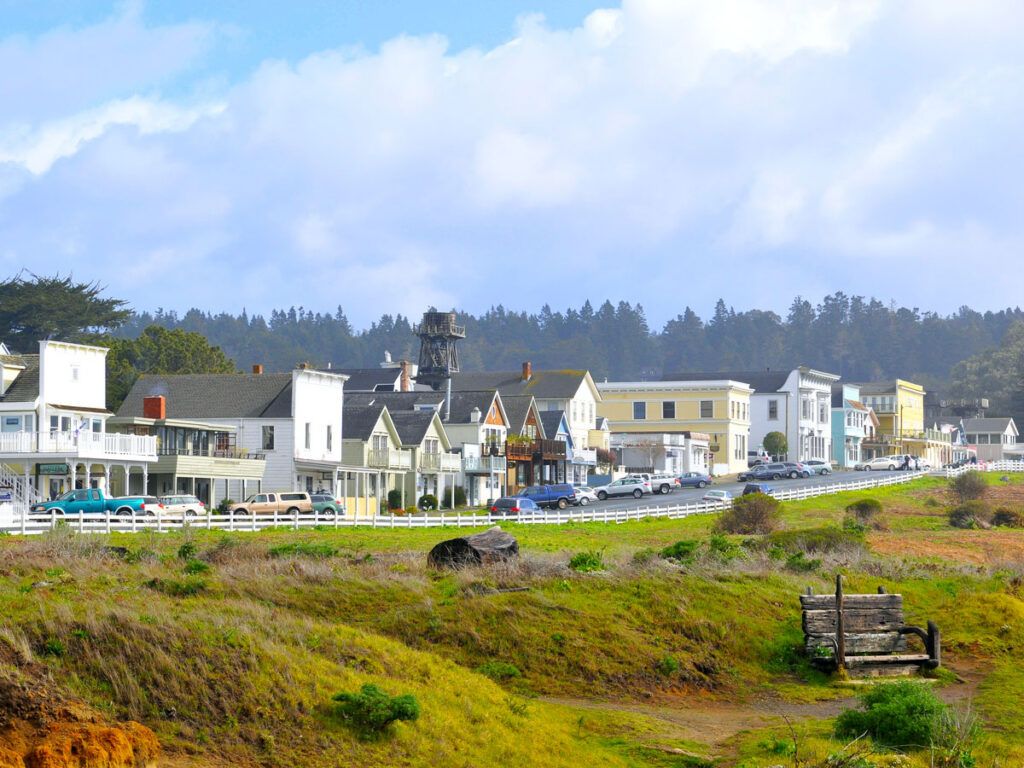
Berlin doesn’t try too hard to impress, and perhaps that’s exactly what makes it so charming. Just a few miles from the busy boardwalks of Ocean City, the laid-back town of around 5,000 people boasts colorful Victorian buildings and a walkable downtown that’s a joy to meander through. Berlin is also known for hosting quirky events such as the annual Bathtub Races, in which participants dressed in creative costumes race handmade tubs down Main Street, and the Fiddlers Convention, which fills the town with music, dancing, and friendly competition. 

Throughout the year, street festivals, farmers markets, and outdoor concerts keep the local community engaged and attract curious visitors from up and down the East Coast. Permanent fixtures include a range of indie boutiques, antique shops, cozy cafes, art galleries, and restaurants focused on farm-to-table fare, craft brews, and fresh seafood. 

Asbury Park, New Jersey

Asbury Lanes bowling alley in Asbury Park, New Jersey
Credit: c.moulton/ Adobe Stock 

Part of the famous Jersey Shore, Asbury Park is a beach town known for its mile-long boardwalk, wide sandy beaches, and revitalized town center. Its revival is thanks in large part to the Asbury Park Music Foundation, which saw potential in the town after its popularity declined in the second half of the 20th century, leaving much of it in disarray. Today, Asbury Park is known for its vibrant live music scene, with performances happening nearly every night of the week at iconic venues like the Stone Pony, made famous by a young Bruce Springsteen at the start of his career. 

Another characteristic that sets Asbury Park apart from other coastal cities in New Jersey is its relationship with the paranormal. The town is widely considered to be haunted, with visitors reporting ghostly encounters in historic locations such as the Berkeley Oceanfront Hotel, Paramount Theatre, and Ashbury Lanes. Ghost tours run regularly, and if you can’t get enough of the eerie vibes, check out the Paranormal Museum, where an eclectic collection of strange artifacts and oddities are on display.

Woodstock, New York

Shops in downtown Woodstock, New York
Credit: Sergey/ Adobe Stock 

Woodstock was once set to host a festival for the ages — the 1969 Woodstock Music & Art Fair, but local opposition and logistical obstacles ultimately pushed the event 60 miles down the road to Bethel. Still, the name stuck, thanks to Woodstock’s already-established reputation as a haven for artists, musicians, and free thinkers. Decades later, that creative spirit is still thriving, defining the town and setting it apart from its neighbors in the Catskills and Hudson Valley. 

The atmosphere in Woodstock is unmistakably bohemian, with colorful galleries, crystal shops, tarot readers, and indie bookstores lining Tinker Street, the town’s main drag. Cafes and green spaces regularly host live music on warm afternoons (including the drum circle on Sundays at the Village Green). And despite Woodstock’s famous reputation, the community remains grounded and innovative, curating an easygoing atmosphere that feels welcoming to visitors.

Chincoteague, Virginia

Wild horses wading in the waters off Chincoteague Island in Virginia
Credit: Eric/ Adobe Stock 

Chincoteague is part of Virginia’s barrier island system, located on the eastern shore of the state on the Delmarva Peninsula. It is the state’s only developed barrier island, but Chincoteague has another claim to fame: the Chincoteague Annual Pony Swim, an event made famous by Marguerite Henry’s 1947 novel Misty of Chincoteague

The swim takes place on the last Wednesday in July, drawing huge crowds to Chincoteague to watch the ponies make their way across the bay from neighboring Assateague Island. Once they arrive in Chincoteague, an auction is held, with proceeds supporting the Chincoteague Volunteer Fire Company, which helps care for the island’s herd of wild horses and funds this long-standing tradition. The weeklong Chincoteague Volunteer Firemen’s Carnival happens around the event and adds to the fun with rides, games, live entertainment, and plenty of classic fried fair food. 

New Hope, Pennsylvania

Old railroad station in New Hope, Pennsylvania
Credit: WilliamSherman/ iStock via Getty Images Plus 

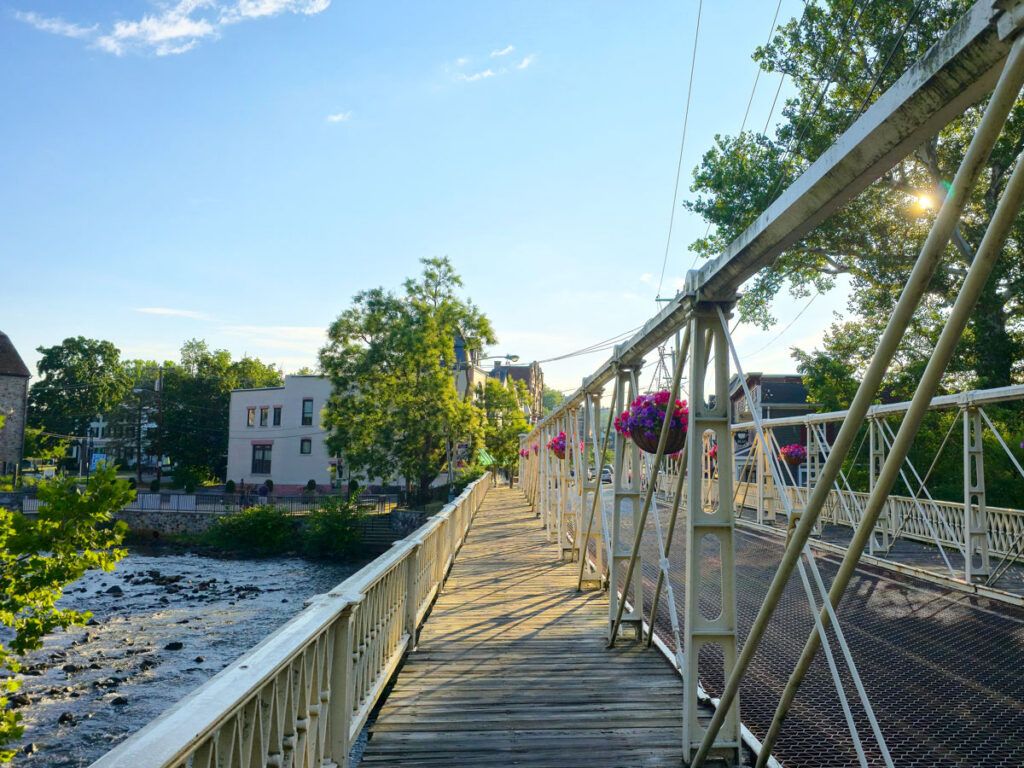
Known for its eclectic shops, vibrant arts scene, strong LGBTQ+ presence, and even the occasional haunting, New Hope is a town of about 2,600 people located 30 miles north of Philadelphia. Despite its proximity to the city, New Hope has an independent vibe, and the preserved 18th- and 19th-century buildings now used as shops and cafes give it an old-fashioned feel. Artisan boutiques sell everything from handcrafted goods to gothic art and vintage treasures, while art galleries and live music venues put the town’s creative spirit on full display. 

There are also rumors of ghosts of former townsfolk still lurking in the shadows of haunted locations like Crybaby Bridge and the Aaron Burr House, a bed-and-breakfast said to have harbored Burr after he shot and killed Alexander Hamilton in their famous duel. But even if you’re not a fan of the paranormal, New Hope’s walkable streets, riverside setting, and creative atmosphere make it one of the most appealing small towns on the East Coast. 

Post Banner Image
Tips

Why Book Retreats Are the Next Big Thing in Travel

By Julia Hammond
Read time: 4 minutes
January 20, 2026
Updated: January 20, 2026

Why Book Retreats Are the Next Big Thing in Travel

By Julia Hammond
Author
Julia Hammond
Julia is a U.K.-based travel writer whose work has been featured in The Independent, The Telegraph, The New Zealand Herald, and Culture Trip, among others. She’s an enthusiastic advocate for independent travel and a passionate geographer who has had the privilege of traveling to more than 130 countries in search of a story.

For many travelers with busy everyday lives, taking a vacation provides an opportunity to finally pick up that must-read bestseller. Becoming engrossed in a good story can be just as relaxing as a trip to the spa or a dip in the pool. But what if you wanted to take things up a notch? Reading retreats — a step up from community book clubs — are quickly gaining popularity in the world of travel. Bespoke itineraries build in time for structured group discussions with like-minded readers, provide valuable reading time away from the distractions of home, and visit fascinating literary-inspired sites. Dive into the growing phenomenon of book retreats.

Reading as a Pastime Is in Decline

Woman reading book as man uses TV remote
Credit: Lumos sp/ Adobe Stock 

One of the more curious aspects of this trend is that reading as a pastime is becoming less popular. According to a recent survey carried out by the American Academy of Arts and Sciences, the proportion of the U.S. population reading for pleasure has shrunk considerably in the last two decades. The study found that 84% of Americans read for less than five minutes a day in 2023. Approximately 22% of Americans 55 or older read for more than 20 minutes of the day — a marked contrast to Americans who fell into the age 54 or younger category, for which the figure was just 10%. 

Other data paints a similar picture. In a 2022 survey, the National Endowment for the Arts (NEA) found that only 37.6% of Americans polled said that they read novels or short stories, down from 45.2% in 2012. With all of our modern-day tech distractions, it’s likely that more people just aren’t finding the time to make reading part of their daily routine anymore. 

Making Time for Reading

Group sitting on beach in lounge chairs reading books
Credit: Wavebreakmedia/ iStock via Getty Images Plus 

These findings don’t mean reading as a leisure pursuit has gone by the wayside, however. Trips that celebrate a love of literature are nothing new, as a slew of book festivals and conventions around the world can prove. For example, the Cheltenham Literature Festival has been held in that English city since 1949, making it the oldest of its kind in the world. 2025 was a record-breaking year for attendance, suggesting the prestigious festival continues to resonate with literature fans. 

But reading retreats are different — they take a more personalized approach and are often more intimate than festival events (though such exclusivity can sometimes come with a hefty price tag). Book retreats promise escapism and an opportunity to put aside the distractions of everyday life to focus on a neglected “to be read” list. They offer the chance for avid readers to forge connections with others who share their passion through conversations that dissect reading material and a variety of communal activities. 

Some retreats are focused on a single book, which retreat-goers commonly read in advance of the trip to discuss with other attendees (similar to a book club), while others simply encourage reading in a looser sense, allowing you to curl up with your favorite book during the trip. Companies such as Ladies Who Lit or Book a Break, for example, choose a particular book to focus on for their in-person retreats and offer a lineup of events themed around each selection. 

Tours Centered on Your Favorite Novel

Boats on the Nile River in Egypt during sunset
Credit: Calin Stan/ Adobe Stock 

While nothing compares to using our imagination to bring the words on the page to life, immersing ourselves in the real-life destinations that inspired your favorite writers can bring something special to a vacation. In these cases, it’s helpful to have someone lead the way. 

Paul Wright is the driving force behind Books in Places, which organizes literary-inspired tours to a wide range of destinations. Past trips have included reading the 1999 novel Girl With a Pearl Earring by Tracy Chevalier in Delft — the Dutch town where the novel is set in the 17th century — and Agatha Christie’s 1937 classic Death on the Nile in Egypt.  

In 2026, Wright’s groups will read Captain Corelli’s Mandolin by Louis de Bernières in Kefalonia, Greece; Victoria Hislop’s The Island in Crete, Greece; and Karen Blixen’s memoir Out of Africa in Kenya. Trips range in duration from as short as three to four nights to a week or more and include accommodations.

Related: 5 Famous Literary Destinations for Bookworms To Visit

Fostering Connections

Two people holding books and discussing
Credit: Portra/ E+ via Getty Images 

Closer to home, PAGE BREAK fosters community connections in and around New York City through a shared love of reading. The fledgling organization, which launched in 2024, is committed to championing emerging and underrepresented authors. It pledges to donate 3% of the income received from every retreat booking to a relevant nonprofit.

Retreats take place in various locations, such as the Adirondacks and the Hudson Valley, and include accommodations. Brooklyn-based founder Mikey Friedman says the act of reading aloud at these retreats is at the heart of what makes PAGE BREAK a success, giving everyone in the group a voice and the opportunity to be heard. 

As well as encouraging the development of new friendships within the group, reading aloud has other benefits. For instance, research from the University of Waterloo in Canada suggests that saying the words out loud and listening to yourself as you do so aids memory. Signing up for a retreat such as those offered by PAGE BREAK could have lasting, positive effects.

Post Banner Image
History

6 Classic Honeymoon Destinations from the 1960s

By Nicole Villeneuve
Read time: 5 minutes
January 20, 2026
Updated: January 23, 2026

6 Classic Honeymoon Destinations from the 1960s

By Nicole Villeneuve
Author
Nicole Villeneuve
Nicole is a writer and researcher with over 15 years of experience seeking out arts, culture, and lifestyle stories in places like remote northern Quebec and the unforgettable streets of Amsterdam. Her work has also appeared in PureWow, Brit + Co, AUX TV, and CBC.

Honeymoons as we know them today evolved from bridal tours of the 18th and early 19th centuries, when upper-class newlyweds in Britain and Europe often traveled with family to visit relatives who weren’t at the wedding. By the early 1900s, those trips had become common for Americans, too, though they’d morphed into something more intimate: a short vacation meant just for the newly married couple. A few honeymoon destinations emerged as favorites, including Niagara Falls, the early 20th-century “Honeymoon Capital of the World.” But by midcentury, the falls had more competition. Throughout the 1960s, a handful of popular destinations stood out, from mountainside resorts to tropical beaches. Learn more about the fascinating histories of six classic 1960s honeymoon spots.

The Poconos, Pennsylvania

Chairs around fire pit overlooking docks on lake in the Poconos at sunset
Credit: Jon Lovette/ Stone via Getty Images 

The first honeymoon resort in Pennsylvania’s Pocono Mountains opened in the 1940s, but it wasn’t until after World War II that the region’s appeal to newlyweds truly took off. By the 1960s, the Poconos had a full-fledged honeymoon industry, attracting more than 100,000 couples a year and helping define what a modern honeymoon could look like.

The vibes were unapologetically excessive. In the early 1960s, Morris B. Wilkins introduced the heart-shaped hot tub at his Cove Haven resort. A retro-kitsch mainstay of honeymoon suites today, it was an indulgent novelty and a major draw at the time. Cove Haven and similar resorts weren’t simply places to stay — they were designed specifically for newlyweds, with mirrored walls, circular beds, and evocative marketing that took root in the Poconos. The aesthetic stuck, spreading far beyond northeastern Pennsylvania and shaping postnuptial expectations for decades to come.

Honolulu, Hawaii

Palm trees, white sands, and skyscrapers of Waikiki Beach
Credit: SCStock/ Adobe Stock 

Hawaii became a U.S. state in 1959, and it didn’t take long for Honolulu (especially Waikiki Beach) to become a dream honeymoon destination. Though Hawaii had attracted wealthy American travelers since the early 20th century, easier access to air travel turned what had once been a lengthy steamship voyage into a feasible — though still luxurious — trip for middle-class couples. Beyond its beautiful palm-lined beaches, Waikiki Beach also offered the feeling of being far from home while still being within the U.S.

Hotels like the famously pink Royal Hawaiian and the Moana Surfrider (Waikiki’s first hotel) gave guests an elegant version of a tropical beach experience. Newlyweds were welcomed with lei greetings, tiki-torch-lit luaus, and extravagant oceanfront dinners of local cuisine. 

Waikiki’s allure was amplified in popular culture, too. Elvis Presley’s 1961 film Blue Hawaii — the first of three movies he filmed in Hawaii in short order — showcased the state to a rapt midcentury American audience, bringing the once-foreign land within sight and making it synonymous with romance.

Montego Bay, Jamaica

Single palm tree along rocky beach in Montego Bay, Jamaica
Credit: Aide/ Adobe Stock 

After Jamaica gained independence from the United Kingdom in 1962, tourism became a way for the newly independent Caribbean nation to reintroduce itself to the world. Montego Bay, already known to wealthy travelers for its calm waters and relaxed pace, was an obvious entry point. Thanks to the Round Hill resort, it built a reputation as a glamorous celebrity haven in the 1950s, welcoming the likes of Grace Kelly and John F. Kennedy as guests.

In 1963, hotelier John Pringle was appointed the country’s first director of tourism and tasked with shaping Jamaica’s international image. A major North American advertising push soon followed, including a stylish Macy’s campaign that sold the island’s vibrant modernity. By the mid-1960s, Montego Bay beachfront resorts had become plentiful, and the laid-back lifestyle and culture was a welcome reprieve for young newlyweds.

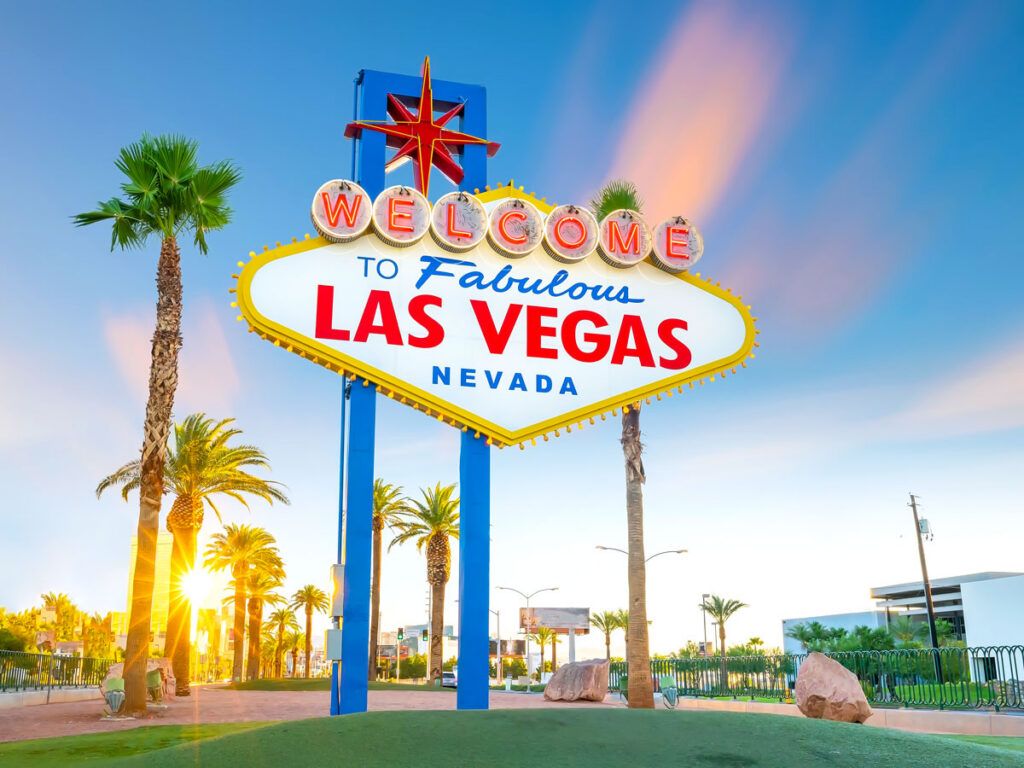
Las Vegas, Nevada

Iconic Las Vegas welcome sign illuminated during sunset
Credit: f11photo/ Adobe Stock 

In the 1960s, Las Vegas was in a golden age of glamour. Frank Sinatra, Sammy Davis Jr., Dean Martin, and the rest of the Rat Pack turned clubs and hotel theaters into can’t-miss destinations, and the city was unapologetically adult — honeymooners came not for a quiet retreat, but for excitement. Lavish new resorts such as Caesars Palace and the Sands offered luxury and spectacle, as well as the chance to step outside of everyday rules.

The promise of quick weddings certainly added to the city’s allure, but many couples arrived already married and ready to celebrate. Popular culture helped cement the image. Films like 1960’s Ocean’s 11 and 1964’s Elvis Presley-starring Viva Las Vegas cast Vegas in a sleek and modern light, with the excitement of cocktails, neon lights, and staying up till dawn with your bride or groom. 

Miami, Florida

LIfeguard tower on Miami Beach
Credit: xbrchx/ Adobe Stock 

In the 1960s, Miami — sun-drenched and stylish as ever — was one of the most popular honeymoon spots in the eastern U.S. The Florida city’s skyline was much more modest then, and its famous art deco hotels — many built in the 1930s and ’40s — were sought out by young couples, alongside popular resort-style mote​​ls such as the Castaways.

Unlike more secluded destinations, Miami was vibrant — bringing couples not only to the pool or oceanside but also to shows by some of the era’s most exciting performers at places such as the famous Fontainebleau. For East Coast newlyweds especially, it was an easily accessible upgrade from other familiar beach towns, one whose sunshine, nightlife, and international influence helped make memories to last a lifetime.

Bermuda

Boats moored off the coast of Bermuda
Credit: kwphotog/ Adobe Stock 

By the mid-20th century, Bermuda had earned a reputation as a beloved honeymoon destination, especially for Americans, given its close proximity to the U.S. East Coast. Upwards of 85% of Bermuda tourists at this time were from the Eastern Seaboard. The island’s famous pink-sand beaches and seaside resorts felt refined and romantic, and its reliable road and hotel infrastructure made it especially appealing for those making their first international voyages. 

Bermuda’s pristine Atlantic waters offered a warm and welcome escape — the island’s tourism board billed it as a place to escape the winter and recharge in the sun. Much of Bermuda’s honeymoon traffic centered on its south shore, where hotels such as the storied Elbow Beach had been welcoming couples since 1908. Elbow Beach’s long, sheltered shoreline and quiet surroundings were the perfect mix of private and polished, and to this day, Bermuda attracts honeymooners for the simpler pleasures it always has — relaxing, swimming, sightseeing, and plenty of fresh seafood.

Post Banner Image
Culture

7 Surprising Destinations Where English Is Widely Spoken

By Bradley O'Neill
Read time: 6 minutes
January 20, 2026
Updated: January 20, 2026

7 Surprising Destinations Where English Is Widely Spoken

By Bradley O'Neill
Author
Bradley O'Neill
Bradley is an English travel writer who’s wandered through 50-plus countries and lived on four continents while chasing waves, the perfect pint, and family adventures. Bradley's work has appeared in publications such as Skyscanner and Matador Network, and he now splits his time between Buenos Aires and Uruguay.

English is the world’s most spoken language, but it often turns up in corners of the globe you might not expect. Some countries have inherited it through past empires, some have embraced it through trade and tourism, and others are influenced by large expat communities. Whether you’re navigating public transit systems, ordering food, or simply chatting with locals, the ability to communicate in English can make travel refreshingly stress-free (though it’s always a good idea to learn at least a few key words and phrases in the local language, if there is one). Discover seven perhaps surprising destinations where English is widely spoken. 

Belize

Turquoise waters off Caye Caulker, Belize
Credit: Aleksandar Todorovic/ Adobe Stock 

Bordered by Guatemala, Mexico, and the Caribbean Sea, Belize is the only Central American country to adopt English as its official language. Though many locals also speak Belizean Creole and Spanish, English is the language of choice for business, education, government, and general daily communication. This is due to a long history of British colonial presence beginning in 1638. In 1840, the territory became known as the Colony of British Honduras, and in 1862, it was declared a crown colony. Belize became a self-governing nation in 1964 and finally gained independence in 1981. 

Travelers are drawn to Belize’s extraordinary biodiversity, ranging from its mangrove-lined coastline to its verdant jungles and mountain ranges. Much of the country is protected by reserves like Cockscomb Basin Wildlife Sanctuary, home to wildlife such as tapirs and toucans. Offshore, the Belize Barrier Reef — the second-largest global reef after the Great Barrier Reef — promises world-class diving and snorkeling. Back on land, adventure awaits at the Chiquibul Cave System, the longest in Central America, while Caracol and Xunantunich offer a glimpse of the country’s ancient Maya culture. 

Guyana

Kaieteur Falls in Guyana
Credit: Victor1153/ Adobe Stock 

On the North Atlantic coast of South America, Guyana stands out linguistically as the continent’s sole nation with English as its official language. Following years of intermittent Dutch, French, and British colonial rule, the country became the Colony of British Guiana from 1814 until 1966, when it gained independence from the U.K. Today, English can be heard everywhere from schools and the media to the street vendors at Georgetown’s bustling markets. The British influence is not only in the language, but also in the country’s Victorian-era architecture and cricket culture. 

For those who make it to this lesser-visited corner of South America, Guyana offers some of the continent’s most unspoiled landscapes. Kaieteur Falls, one of the world’s tallest single-drop waterfalls, is a standout attraction. In the remote Rupununi Savannah, there are opportunities to spot flora and fauna such as giant anteaters, otters, and water lilies. The capital city of Georgetown has plenty of charms, too, including the wooden Gothic-style St. George’s Anglican Cathedral and cricket matches at the Bourda. 

Malta

Street and marina in Senglea, Malta
Credit: allard1/ Adobe Stock 

English has deep roots in Malta thanks to more than 150 years of British rule, and today it stands as one of the two official languages alongside Maltese. English is the predominant language for driving and road signs, government services, universities, and the business and tourism sectors. And as in the U.K., cars drive on the left in Malta, since road rules are based on the U.K. Highway Code.

Valletta, the first port of call for many visitors to Malta, stuns visitors with its Baroque architecture and harborside fortresses. The island’s legacy of British culture is also found at traditional pubs and fish and chips shops. Inland from the capital, Mdina is the “Silent City,” popular for its winding medieval lanes, stately buildings, and sea views. Away from the main island, Gozo offers a slower pace alongside pretty beaches, and Comino’s Blue Lagoon is an ethereal blend of turquoise waters and rocky coastlines.

Related: Why Are So Many Americans Retiring in Malta?

Federated States of Micronesia

Coastal landscape of the island of Kosrae in the Federated States of Micronesia
Credit: robnaw/ Adobe Stock 

Stretching 1,700 miles west to east in the remote Western Pacific Ocean, the Federated States of Micronesia consists of 607 islands. First settled by voyagers sailing from Asia and Polynesia, the islands were later visited by Spanish, German, and Japanese explorers. They came under U.S. rule following World War II (until 1986). English became the prominent language during that time and is still the default for government and commerce. There are also eight Indigenous languages spoken, including Chuukese, Pohnpeian, and Yapese.

Tourism here is low-key and geared toward the outdoors and nature, though travelers should bear in mind that this is among the world’s most expensive countries to visit. On the island of Pohnpei, Palikir is one of the world’s smallest capital cities, with surfing, diving, and waterfall hikes among the main attractions. Diving is also popular around Kosrae, whose waters shelter hundreds of types of coral and over 250 fish species, including the grey reef shark. Meanwhile, Chuuk offers wreck diving with the remnants of Japanese army war sites.

The Philippines

Tuk-tuks in front of Binondo Church in Manila, the Philippines
Credit: Sean Hsu/ Adobe Stock 

Among over 100 Austronesian languages spoken across the Filipino archipelago, English has been one of the major working languages since the early 20th century. After the U.S. took control of this island nation in 1902, English became dominant in business, government, and the new public school system. The language was so ingrained in the culture that it remained in use even after the Philippines gained independence in 1946. Today, English is heard alongside Filipino, a standardized form of the Tagalog language heavily influenced by both English and Spanish. 

From surfing on Siargao Island to the limestone cliffs and lagoons of Palawan and the rice terraces of the Cordillera mountains, adventures are limitless across the 7,000-plus islands of the Philippines. The capital, Manila, is the world’s most densely populated city. Here, the Ateneo de Manila University hosts an annual celebration of writer Paz Marquez Benitez, whose 1925 book Dead Stars was the first modern Filipino short story published in English. 

Singapore

"Supertrees" of Singapore's Gardens by the Bay
Credit: Sean Hsu/ Adobe Stock 

Introduced by the British in the 19th century, English evolved into a natural communication bridge between diverse cultures in this multilingual society following independence. Singapore’s first television station, Radio Television Singapore, introduced a dedicated English channel in 1963. In schools, students started to learn English alongside the country’s other official languages: Chinese Mandarin, Malay, and Tamil. Those four official languages have since merged to create a local, nonstandardized dialect known as Singlish.

A linguistic ease coupled with a city that runs like clockwork and a dining scene like no other guarantee memorable experiences in Singapore. The Lion City is where glistening skyscrapers rise above UNESCO-listed monuments, innovative gardens, and multicultural neighborhoods such as Chinatown and Little India. Even just passing through on a layover at Singapore Changi Airport — named the world’s best airport — is a must on many globetrotters’ bucket lists. 

Ghana

Kwame Nkrumah Memorial Park in Accra, Ghana
Credit: Waldemar/ Adobe Stock 

English in Ghana took hold progressively in the 17th century as the British began occupying forts and displacing Portuguese influence. The use of the language was cemented in the subsequent colonial years, and it maintained its importance after Ghana gained independence in 1957. It now coexists with up to 70 Indigenous languages, including Akan, Ewe, Ga, and Dagbani. Many Ghanaians speak fluent English, with Ghanaian English (especially Ghanaian Pidgin) often omitting consonants to make words like opi (“open”) and stan (“stand”). 

Stretching north from the shores of the Gulf of Guinea in West Africa, Ghana is a destination that rewards the adventurous. Historic forts like Cape Coast Castle and Elmina Castle dot the coastline, and the city of Kumasi offers a glimpse into the Asante Empire. The Akwasidae Festival is a celebration of Asante culture held in the city every sixth Sunday. Elsewhere, travelers can find rainforest canopy walks in Kakum National Park and bird-spotting in Bunso Arboretum. 

Post Banner Image
Tips

U.S. Airlines With the Most (and Least) Comfortable Economy Class

By Peter Vanden Bos
Read time: 5 minutes
January 20, 2026
Updated: January 20, 2026

U.S. Airlines With the Most (and Least) Comfortable Economy Class

By Peter Vanden Bos
Author
Peter Vanden Bos
Peter is a Toronto-based journalist, editor, content strategist, and self-professed avgeek with 15 years of experience covering all things travel. Prior to joining Daily Passport, he oversaw newsletter publication for Travelzoo. His favorite destinations to explore include Japan, France, Chile, New Zealand, and his adopted home country of Canada.

If your last flight in economy class felt more cramped than you remember, it’s not your imagination. The average seat pitch — meaning the distance from the point on one seat to the same point on the seat in the next row — has shrunk by around 2 inches over the past few decades, as airlines try to squeeze in more seats and generate more revenue. While you could pony up for an extra-legroom seat or splurge for first class, sometimes the vacation budget doesn’t allow for it. But the good news it that not all coach seats — and amenities — are the same across U.S. airlines. We turned to a 2025 study from AirAdvisor, a company that helps passengers get compensation for flight disruptions, to find the U.S. airlines with the most comfortable economy class.

5. Hawaiian Airlines

Hawaiian Airlines Airbus A330 landing at Los Angeles International Airport
Credit: keithbwinn/ iStock Editorial via Getty Images Plus

To determine their rankings, AirAdvisor’s survey looked at five key comfort categories: seat comfort (average seat pitch and width), in-flight entertainment, Wi-Fi availability, complimentary food and beverages, and comfort items (such as blankets and pillows).

The fifth-place finisher is good news for anyone with plans to travel to the Aloha State. While Hawaiian Airlines offers average legroom (31 inches) and seat width (17 to 18 inches), the airline provides free meals and snacks on flights from Hawaii to the mainland (and vice versa). Wide-body planes (such as the Airbus A330 and Boeing 787) feature seatback screens, while narrow-body Airbus A321s offer free streaming to your personal device. The airline is also rolling out high-speed Wi-Fi, which will soon be free for all passengers. (Hawaiian merged with Alaska Airlines in 2024, but for the time being, the two airlines plan to operate as separate brands.)

4. American Airlines

Passengers boarding American Airlines aircraft economy class
Credit: Jeffrey Greenberg/UCG/ Universal Images Group via Getty Images

The world’s largest airline by fleet size, American Airlines landed at No. 4 in the rankings, but passengers should probably temper their expectations. With an average seat pitch between 30 and 32 inches, economy class on American is still considerably cramped compared with the legroom you’ll find on the world’s top airlines, such as Japan Airlines. 

American reserves its best economy-class experience for long-haul international flights, on which it offers passengers complimentary meals, blankets, and seatback entertainment. On domestic flights, those amenities are typically not available. And no matter which route you fly, there’s still a chance you’ll have to pay for Wi-Fi, as the carrier only recently started rolling out free Wi-Fi. (The process should be complete by the end of 2026.)  

3. United Airlines

View of United Airlines Boeing 787 economy-class cabin from back to front
Credit: Nicolas Economou/ NurPhoto via Getty Images

Like American, United Airlines has started to offer fast, free Wi-Fi (though no word yet on what all aircraft with be reconfigurd). Its provider, Starlink, offers impressive speeds similar to what you’d find on the ground. In the meantime, the cost to connect starts at $8 for MileagePlus members and $10 for all other passengers. 

United falls a bit short when it comes to average seat width (up to 17.3 inches), and it provides industry-average legroom (30 to 31 inches). However, the airline is investing heavily in seatback entertainment and even offers Bluetooth connectivity on newer aircraft. Snacks and soft drinks — including AHA flavored sparking water and Illy coffee — are also free on flights over 300 miles.

2. JetBlue Airways

Passengers seated on JetBlue Airbus A220
Credit: Richard Baker/ In Pictures via Getty Images

New York City-based JetBlue shines in one very important category: legroom. The carrier says it offers the most legroom in coach of any U.S. carrier, with a minimum seat pitch of 32 inches. Some aircraft offer even more legroom (up to 34 inches). However, JetBlue might not hold on to its crown for long — it plans to introduce new first-class seats on shorter flights, which could come at the expense of its industry-leading legroom in coach, as reports suggest.

To its credit, though, JetBlue was the first U.S. airline to offer complimentary Wi-Fi, and every seat has a seatback screen with LiveTV. The airline also is known for its generous free drink and snack options, such as plantain chips, Biscoff cookies, Goldfish crackers, and Quaker granola bars.

1. Delta Air Lines

Economy-class cabin on Delta Air Lines aircraft looking from front to back
Credit: Joel Carillet/ iStock Unreleased via Getty Images 

Delta Air Lines offers the most comfortable economy class in the U.S., according to AirAdvisor. While the airline’s average legroom is nothing to write home about, you’ll typically find more generous seat width on Delta. Seats are 17.2 to 18.5 inches wide, with the widest seats being found on newer Airbus A220 aircraft.

Most Delta flights offer fast, free Wi-Fi for SkyMiles members, and seatback screens are found on every aircraft type (save for Boeing 717s and those operated under its regional brand, Delta Connection). Soft drinks and snacks are complimentary on flights over 250 miles, while main cabin passengers on long-haul flights receive an appetizer, entrée, dessert, and complimentary beer, wine, and spirits. 

The Least Comfortable U.S. Airlines

Allegiant Air Airbus A320 on approach
Credit: robin/ Adobe Stock 

Now that we’ve covered the best coach experience among U.S. airlines, you may be wondering which ones to avoid. Tied for last place were two ultra-low-cost carriers: Allegiant and Frontier. 

While those airlines offer rock-bottom fares, it comes at the expense of comfort. Seat pitch on both airlines is below average — as little as 28 inches — and there are no amenities like in-flight entertainment or free snacks and soft drinks. On a positive note, Frontier Airlines offers some of the industry’s widest seats on average. 

Related: This Secret Trick Can Save You Money on Budget Airlines
Post Banner Image
Tips

Why Your Boarding Pass Says ‘Seat Assigned at Gate’

By Julia Hammond
Read time: 4 minutes
January 20, 2026
Updated: January 20, 2026

Why Your Boarding Pass Says ‘Seat Assigned at Gate’

By Julia Hammond
Author
Julia Hammond
Julia is a U.K.-based travel writer whose work has been featured in The Independent, The Telegraph, The New Zealand Herald, and Culture Trip, among others. She’s an enthusiastic advocate for independent travel and a passionate geographer who has had the privilege of traveling to more than 130 countries in search of a story.

With the stress of a long travel day ahead, it’s comforting to be able to check in online ahead of a flight and receive a boarding pass with an allocated seat. When that’s not the case, some travelers naturally may worry. But rest assured: Not being given a seat assignment ahead of boarding won’t necessarily lead to you being bumped from the flight. Let’s take a look at why your boarding pass might say “seat assigned at gate.”

You Bought the Cheapest Ticket

Passenger using kiosk to check in for flight
Credit: Art_Photo/ Adobe Stock 

In recent years, there’s been a trend for airlines to segment cabins with an increasingly complex number of fare classes. At the cheaper end of the spectrum, those who’ve paid less for their flight with, say, a basic-economy ticket may forfeit free checked bags, be the last to board, and not be able to choose where they sit on the aircraft (or have to pay extra).

For instance, if you purchase a basic-economy fare on American Airlines, the airline will allocate you a seat at check-in; United Airlines will also pick for you and confirm your assignment before you board. Delta’s Main Basic passengers are told that their seat “will not be assigned until after you check in to your flight. If your seat number does not appear on your boarding pass, your seat will be assigned at the gate before you board.” In turn, this practice of not sharing a seat assignment in advance may also encourage passengers to fork over the extra cash for a seat assignment for peace of mind. 

The Airline Might Be Holding Back Seats

Gate agents working at podium
Credit: Tyler Olson/ Adobe Stock 

In certain instances, an airline might wish to not allocate all the seats on its aircraft until passengers are fully checked in. Smaller planes, in particular, need to be loaded in a way that they can take off and land safely. Weight must be distributed as evenly as possible to ensure the aircraft remains stable. Some seats may also be held back for passengers with disabilities or those who may need extra assistance.

On other occasions, a plane may be swapped out for another one at the last minute. Seats may be configured differently on the new aircraft, so holding back some seat allocations may make it simpler for gate agents to switch passengers around. Withholding seat numbers might also be a way to prioritize families so that they can be moved to sit together — even if they’ve been issued seats that are more spread out. Gate agents will bear factors such as these in mind before boarding gets underway.

The Flight Is Oversold

Passengers crowding around gate area
Credit: Charnchai saeheng/ Adobe Stock 

This reason is the one every traveler fears. Airlines routinely — and legally — overbook to ensure they fly as full as possible, since a certain percentage of passengers will end up no-showing for a flight. This happens when a passenger doesn’t check in or reach the gate on time, when they miss their connecting flight, or when they decide not to fly and don’t bother to cancel, for example. But if more passengers show up than expected, this means that, from time to time, passengers will be bumped and put on an alternative flight. 

If you’ve purchased a ticket at the last minute, the flight is more likely to be full — and your boarding pass may request that you see a gate agent for a seat assignment. In this case, there’s still a chance that one will be available even if the flight was originally oversold, as airlines will typically ask for volunteers to give up their seats in exchange for compensation. 

Related: Overbooked Flight? Here’s What to Do if the Airline Tries to Bump You

You Need To Undergo a Document Check

Close-up view of U.S. passport
Credit: Bojan Bokic/ iStock via Getty Images Plus 

Airlines need to ensure that anyone flying with them has the right to be on board. Particularly for international flights, the correct documentation (such as a visa) is required to make the journey. Some passengers, therefore, won’t be able to check in online, as they will need to present those documents for inspection at the airport. In rare cases, a carrier won’t allocate a seat until the passenger’s paperwork has been verified. 

A similar situation can arise if it’s a codeshare flight, in which you book with one airline but travel with another. If you find yourself in this kind of situation, it’s best to arrive at the airport as early as possible. Head to the check-in desk or bag drop counter to see if the document inspection and seat allocation can take place as soon as you arrive at the airport. If you’re traveling with only carry-on luggage, it’s wise to present yourself at the gate as soon as it is staffed so you can swiftly receive a seat assignment.