Peter is a Toronto-based journalist, editor, content strategist, and self-professed avgeek with 15 years of experience covering all things travel. Prior to joining Daily Passport, he oversaw newsletter publication for Travelzoo. His favorite destinations to explore include Japan, France, Chile, New Zealand, and his adopted home country of Canada.
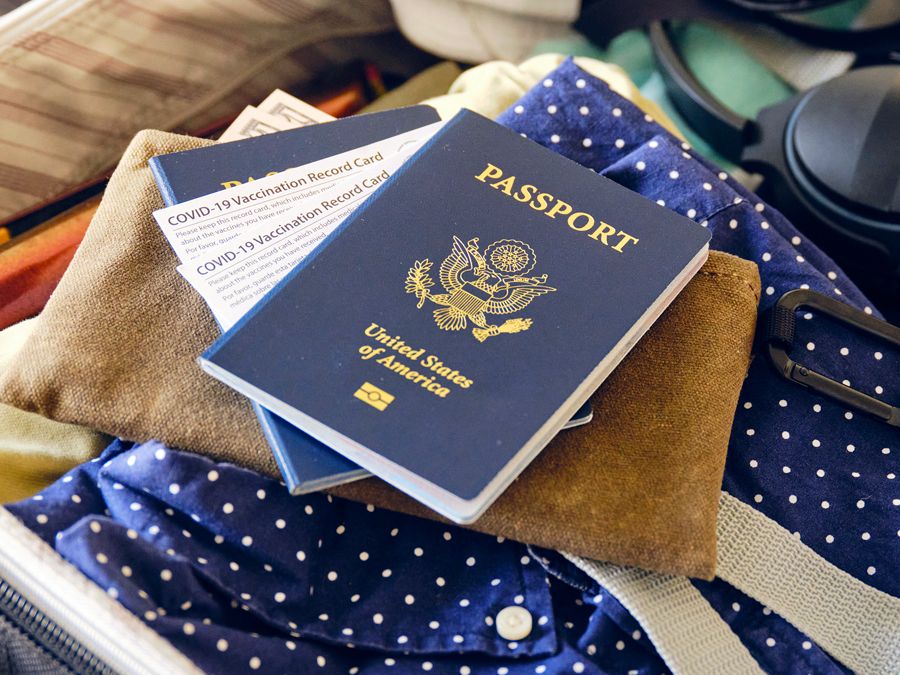
As one of the world’s most powerful passports, a U.S. passport grants visa-free entry into 189 countries across the globe, as of 2024. For adults, each passport is valid for 10 years — which means there’s plenty of time to cross a good chunk of those countries off your travel list before it’s time to renew. Unfortunately, the renewal process is typically time-consuming. It involves making an in-person appointment or, if you’re eligible, filling out an application and sending in your old passport and then waiting several weeks for your new one to arrive. But thanks to a new program launched by the State Department, you might now be able to save time and renew your passport online. Find out everything you need to know about online passport renewal below.
How Does Online Passport Renewal Work?
Credit: SDI Productions/ E+ via Getty Images
In September 2024, the U.S. State Department launched a new online passport renewal system, following a successful beta test that was rolled out in June. Eligible passport holders can apply to renew their passports online by creating an account on the MyTravelGov website and clicking “Renew Your Passport.” Applicants will have 30 days to complete their online application.
The application requires you to enter information about your most recent passport, confirm any upcoming travel plans, and upload a digital photo. If all requirements are met, you can submit payment online via credit or debit card and sign up for email updates on the status of your application. You can find all the details and step-by-step instructions, including helpful videos, on the State Department website.
Who Can Renew Their Passport Online?
Credit: Ridofranz/ iStock via Getty Images Plus
Currently, the biggest limitation is that the online system only offers routine passport renewal service. While you’ll be able to avoid the hassle of mailing in your old passport, the processing time will still be the same six to eight weeks. Importantly, this means you can’t use the service if you have international travel plans within eight weeks of your application date.
Similarly, if your passport is expiring soon — keeping in mind the six-month rule — you can’t use the online service, and there’s no option to pay extra for an expedited renewal. However, you can still apply for a quicker renewal in person or by mail.
Of note, the system is available only for renewals — not brand-new passports. You can only apply for a standard tourist passport (not a diplomatic or other special type of passport), and the passport must be less than 15 years old. You also must be at least 25 years of age, and your passport cannot be lost, stolen, or damaged.
Furthermore, applicants cannot be U.S. citizens residing in a foreign country. You’ll only be able to pay with a credit or debit card, and you can’t change any personal details such as your name. The full list of requirements is available on the State Department website.
Advertisement
More from our network
Daily Passport is part of Inbox Studio, an email-first media company. *Indicates a third-party property.
Architecture •August 9, 2024•Updated: August 9, 2024
By Bradley O'Neill
Seeing the world from a bird’s-eye perspective offers travelers the chance to peer down on magnificent urban and natural landscapes. To aid in this pursuit, spectacular observation decks have been built all across the planet. Typically standing taller than already cloud-scraping skylines, these record-breaking marvels of engineering allow us to gaze in wonder at all the action below. Take a look at the nine tallest observation decks around the world.
9. CN Tower – Toronto, Canada
Credit: inigoarza/ RooM via Getty Images
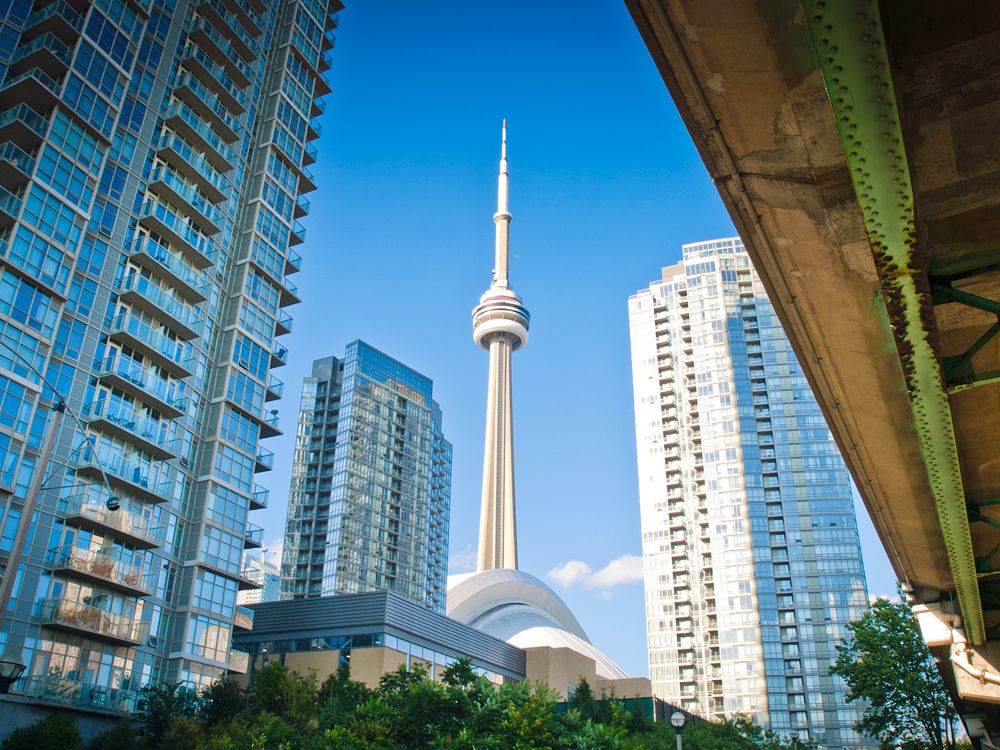
Towering above Toronto’s skyline since 1976, the 1,815-foot-tall CN Tower was the world’s tallest freestanding structure for over three decades. This busy tourist attraction in downtown Toronto is home to the Western Hemisphere’s highest observation platform, the Top, located 1,456 feet above ground. On sunny, cloudless days, it’s possible to see as far as Niagara Falls and the state of New York. Remarkably, visitors can also feel the sensation of the giant tower swaying in the wind.
Those looking for even more of an adrenaline rush can step outside and (attached by harness) wander around the tower’s perimeter via the EdgeWalk, which sits 116 stories above Canada’s largest city. Another popular attraction is CN Tower’s revolving 360 Restaurant, which completes a full rotation in 72 minutes.
8. Tokyo SkyTree – Tokyo, Japan
Credit: YIN WENJIE/ Moment via Getty Images
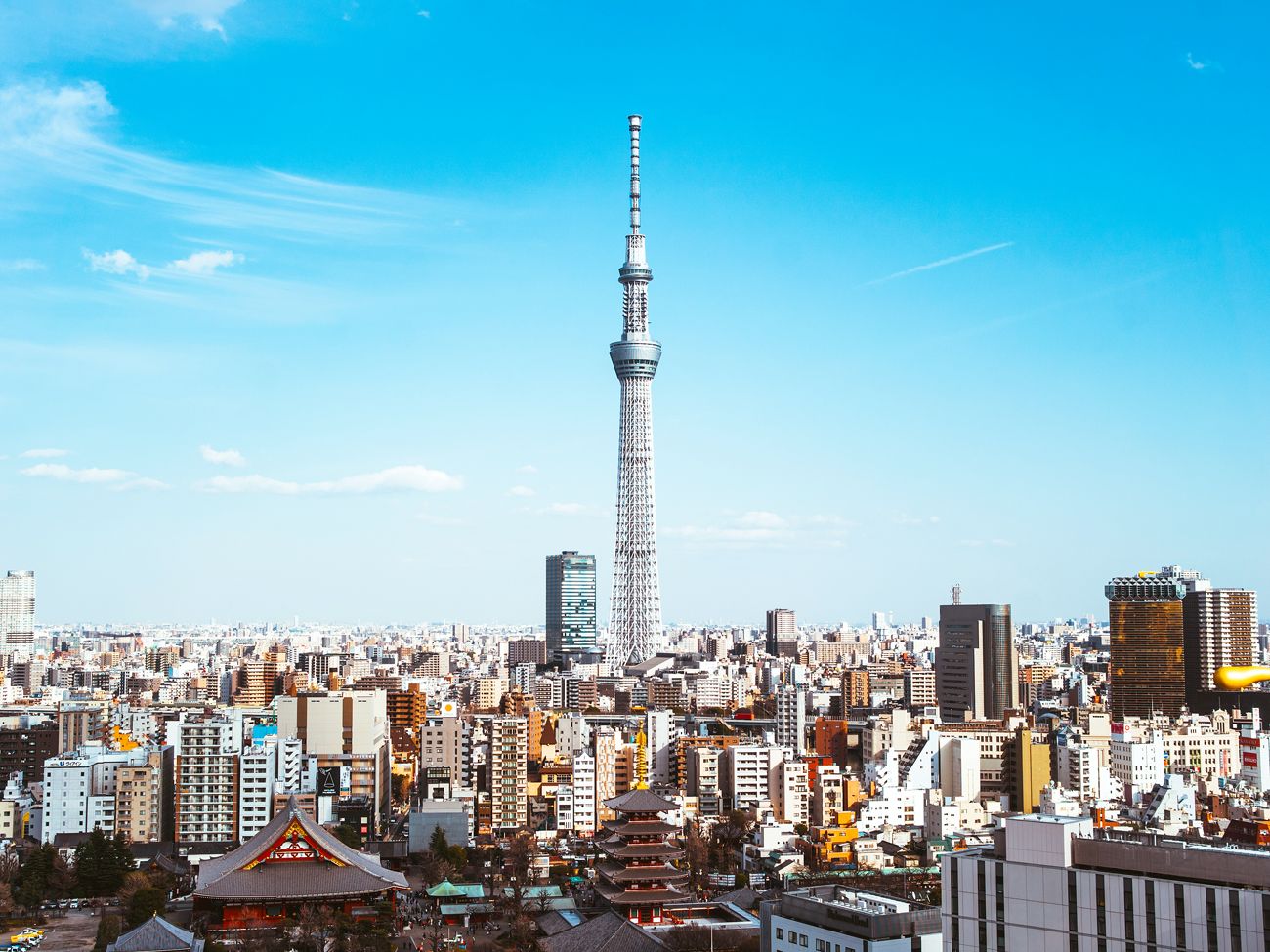
Rising 2,080 feet above Tokyo’s Sumida City, Tokyo Skytree is the tallest structure in Japan. When unveiled in 2012, it was the second-tallest freestanding structure in the world. The SkyTree primarily functions as a television and radio broadcasting site, but its two lookout decks are a major draw for tourists to the world’s most populous city.
Perched 1,148 feet above city streets, the lower Tembo Deck spreads over three floors and features glass floors, restaurants, and panoramic views. The 1,476-foot-high upper deck, called Tembo Galleria, has a breathtaking glass ramp that wraps around the building and offers unbeatable views. The tower stays open until 10 p.m., presenting the chance to admire the sprawling Tokyo skyline by night.
7. Shanghai World Financial Center – Shanghai, China
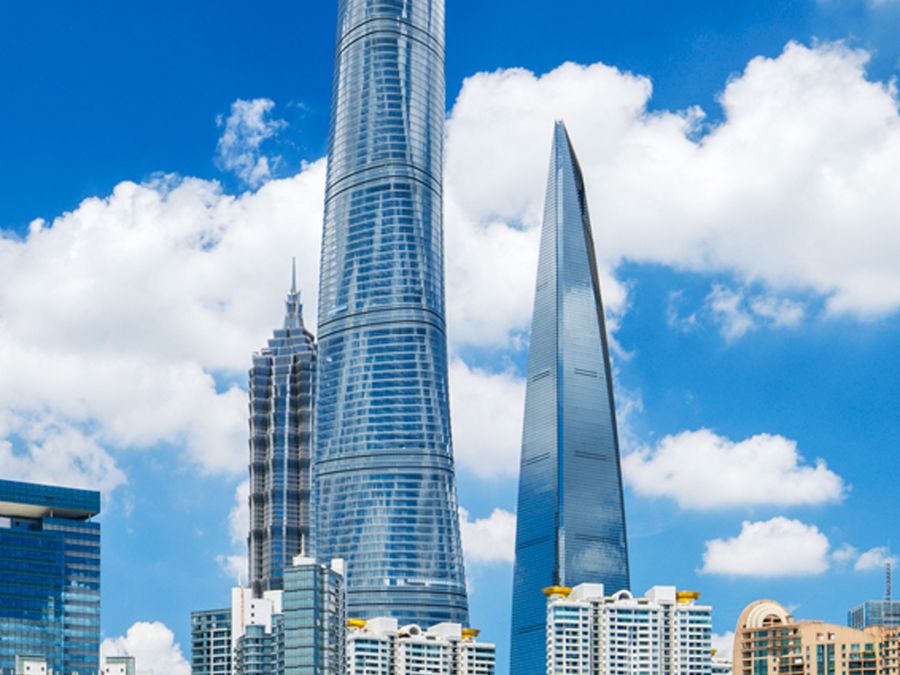
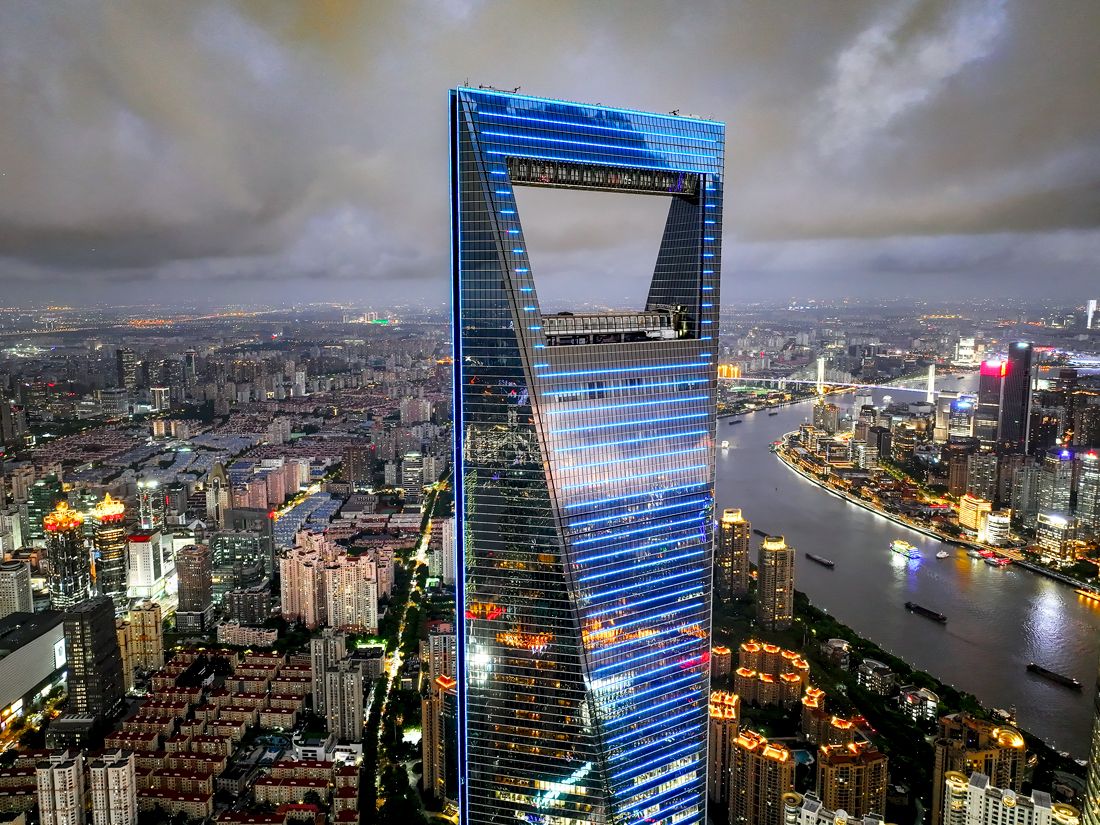
At 1,614 feet, the futuristic-looking Shanghai World Financial Center is one of China’s 10 tallest buildings. Across its 101 floors you’ll find shops, restaurants, a media center, luxury office spaces, and an upscale hotel. The tower also has an observatory with lookout decks on the 94th, 97th, and 100th floors, with the upper lookout located 1,555 feet above ground. Visitors are treated to 360-degree panoramas of the Pudong District and can spot other notable city landmarks, including the Oriental Pearl TV Tower and Shanghai Tower.
6. Canton Tower – Guangzhou, China
Credit: BNBB Studio/ Moment via Getty Images
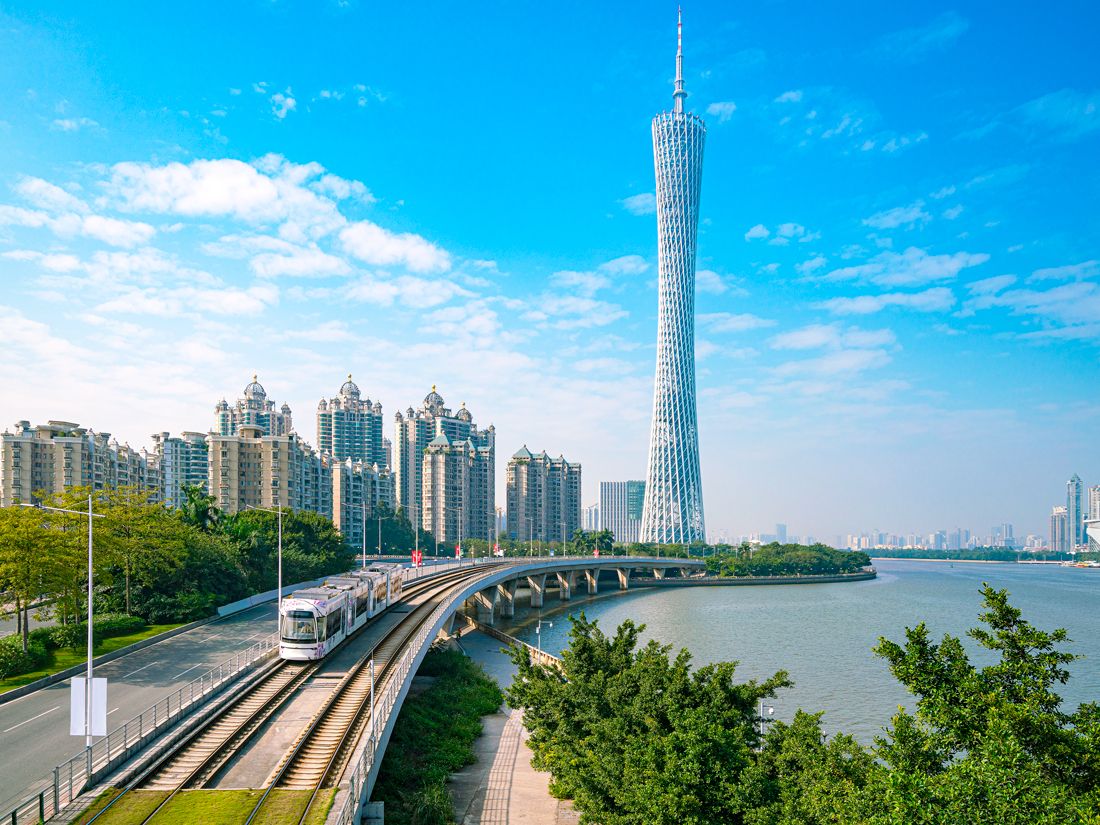
On the Pearl River waterfront of Guangzhou’s Haizhu District stands the colossal Canton Tower (also called the Guangzhou New Television Tower). A stunning example of the city’s modern urban development, the design of this 1,968-foot-tall tower is influenced by the silhouette of a female hip. It has observation decks at three different levels, located between 1,404 and 1,601 feet high. The lower deck features a glass walkway with dizzying views of the city far below. More vertigo-inducing vistas await above on the outdoor balcony of the 488M Look Out. Another popular attraction is the Bubble Tram, a rollercoaster-like attraction of 16 glass and spherical cabins that rotate around the tower.
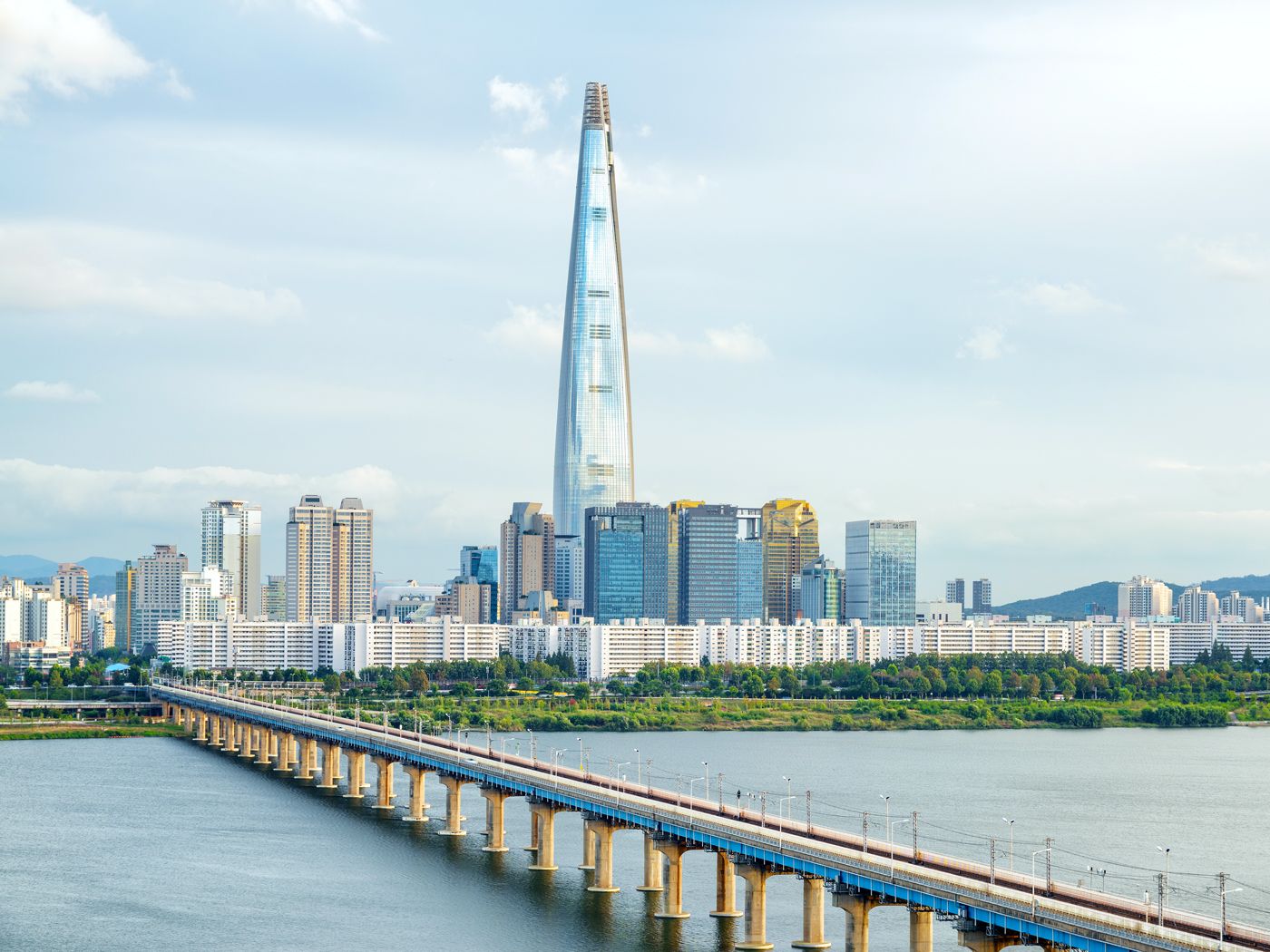
One of the world’s tallest buildings, Lotte World Tower in South Korea’s sprawling capital city is home to the Seoul Sky observatory, which is situated at 1,640 feet above ground. A double-decker elevator takes visitors from the ground floor to the observatory in just a minute’s time. Once there, it’s possible to walk around a 120th-floor outdoor terrace and stroll over the world’s highest tower bridge.
The tower itself stands 1,821 feet tall, and its design was inspired by the curvature of traditional Korean calligraphy and ceramics. Its exterior is made up of an incredible 42,000 glass windows. When not enjoying the views, visitors can check out the shops at the Lotte World Mall, browse contemporary works at the Lotte Museum of Art, and spot 55,000 sea creatures at the Lotte World Aquarium.
4. Ping An Finance Centre – Shenzhen, China
Credit: VCG/ Visual China Group via Getty Images
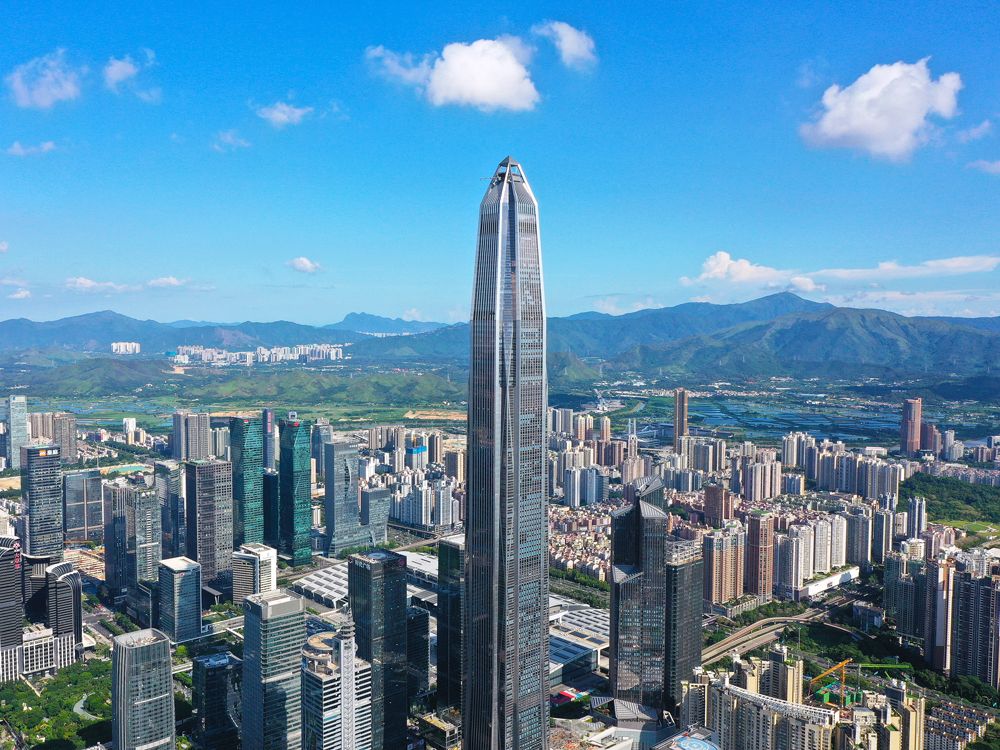
Unveiled in 2022, Ping An Finance Centre sits in the heart of Shenzhen’s burgeoning Futian Central Business District. The 1,965-foot stone and glass tower is predominantly occupied by a hotel, offices, and retail outlets. On the 166th floor, at 1,775 feet above ground, is the Free Sky viewing platform. Visitors can access it via the fastest-accelerating elevators in China, which whisk visitors up from ground level in a mere 55 seconds. Views encompass the nearby Luohu District, as well as Bijia Mountain, Silver Lake Mountain, and northern Hong Kong. There are also glass-floor areas and immersive attractions such as a mirror maze and space tunnel.
3. Shanghai Tower – Shanghai, China
Credit: Tony Shi Photography/ Moment via Getty Images
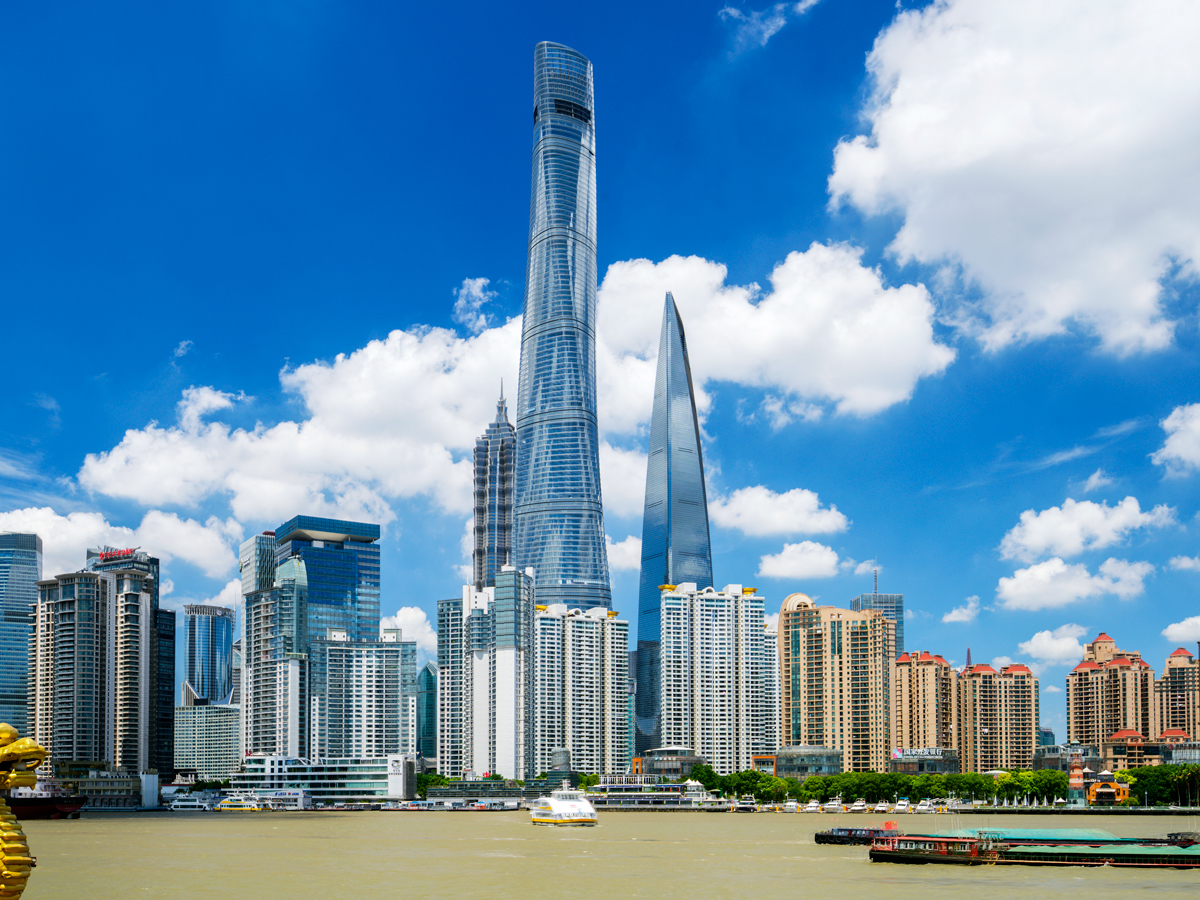
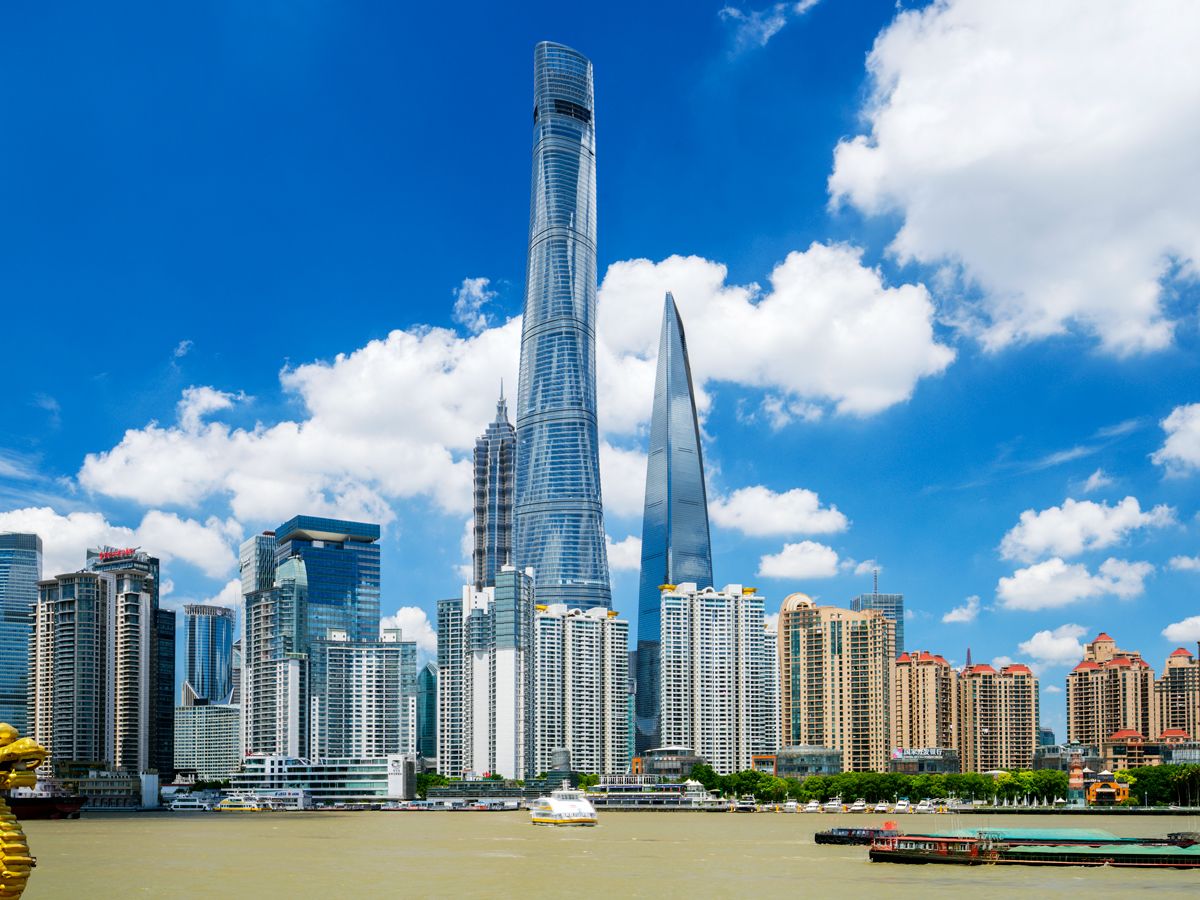
Twisting toward the sky in a state-of-the-art helical shape is the 2,073-foot-tall Shanghai Tower. Located near the Huangpu River and Shanghai World Financial Center, this is the second-tallest building in the world. Its Top of Shanghai observation deck is located on the 118th floor (1,791 feet high), with huge glass windows that make it easy to admire Shanghai’s gleaming skyscrapers, historic architecture, and green spaces.
The observation deck is accessible through some of the fastest elevators on the planet, which travel at around 40 mph. As of 2024, plans are also in place to open a new observation deck on the 125th and 126th floors, which will grant views from lofty heights of 1,914 feet above Shanghai’s busy streets.
2. Burj Khalifa – Dubai, UAE
Credit: FevreDream/ iStock Editorial via Getty Images Plus
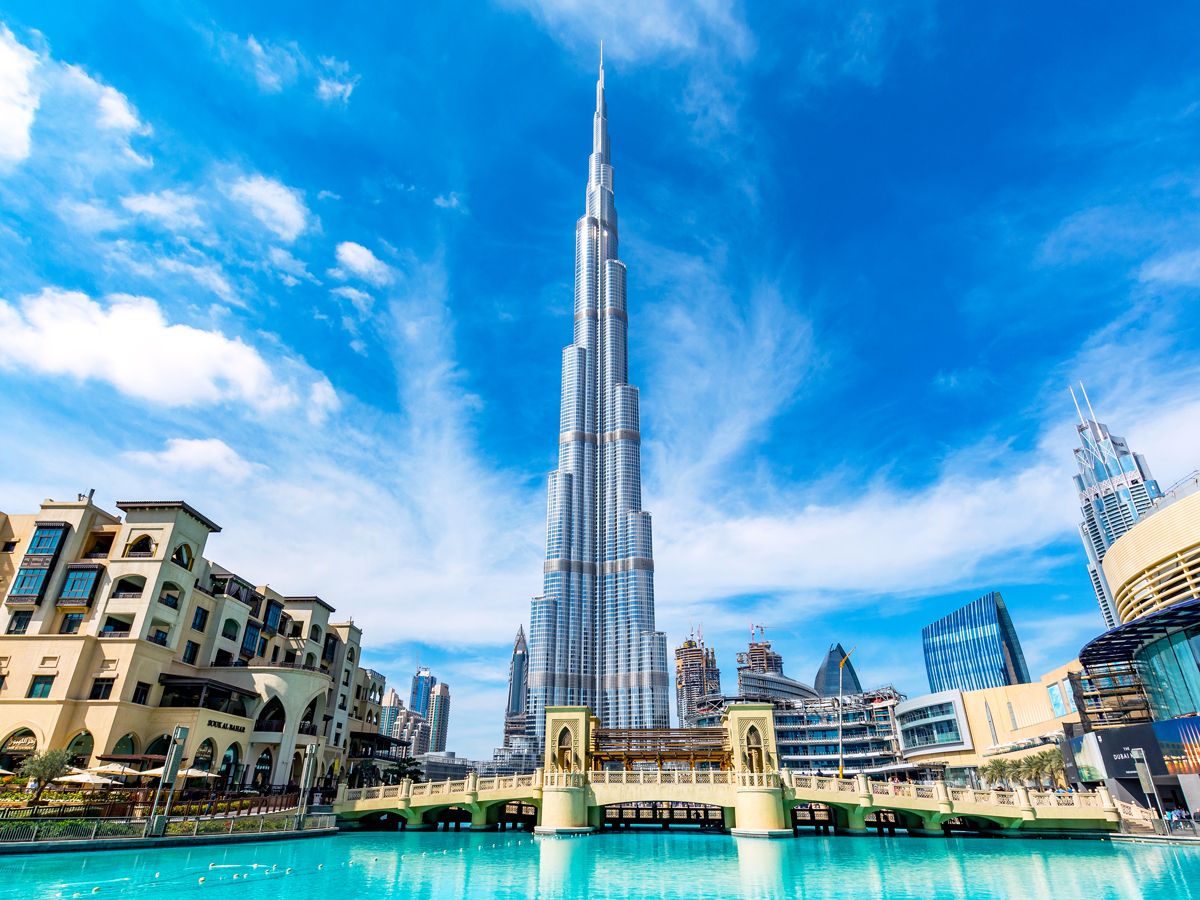
Dubai’s iconic Burj Khalifa — the world’s tallest building at 2,716 feet — is the best place to take in the city’s ultramodern skyline. There are three observation decks located within the 160 floors of this architectural wonder. The tallest — At the Top, Burj Khalifa SKY — occupies the 148th floor at 1,821 feet above street level.
After peering out over the city, visitors can kick back with drinks at a lounge bar before checking out the other two lookouts on the 124th and 125th floors. Here, high-powered telescopes, virtual presentations, and a glass floor with realistic cracking sounds create an immersive and memorable experience. The journey to these attractions is an adventure in itself via double-decker elevators traveling at 22 mph.
1. Makkah Royal Clock Tower – Mecca, Saudi Arabia
Credit: clicksbyabrar/ iStock via Getty Images Plus
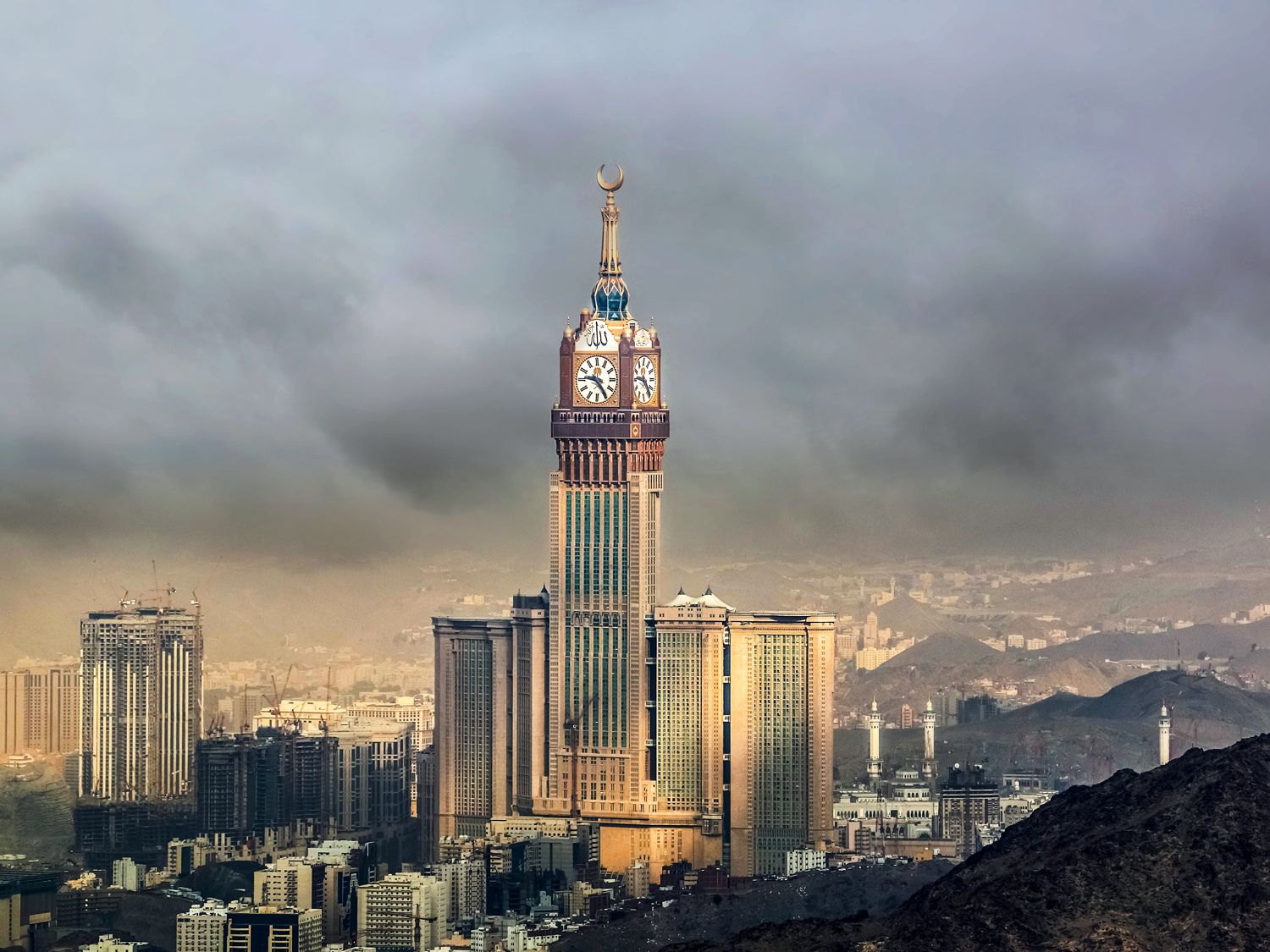
Makkah Royal Clock Tower, the tallest of a collection of seven towers that make up the Abraj al-Bait complex, soars 1,972 feet above the sacred Masjid al-Haram, the world’s largest mosque. It features an observation deck situated at 1,831 feet above ground. When visiting during Hajj, tourists can look down on the millions of worshippers who make this annual pilgrimage to Mecca. The viewing deck is accessible from the Clock Tower Museum, a four-floor museum with science and cosmology exhibits. It’s also home to a high-end hotel whose rooms overlook the sacred Kaaba sanctuary. On the outside, the four sides of the tower are decorated with the world’s largest clock faces.
Advertisement
More from our network
Daily Passport is part of Inbox Studio, an email-first media company. *Indicates a third-party property.
The One Thing You Should Always Do in a Hotel Room
By
Bennett Kleinman
Read time: 3 minutes
August 9, 2024
Updated: November 25, 2024
The One Thing You Should Always Do in a Hotel Room
Tips •August 9, 2024•Updated: November 25, 2024
By Bennett Kleinman
Author
Bennett Kleinman
Bennett is a New York City-based staff writer for Daily Passport. He previously contributed to television programs such as the Late Show With David Letterman, as well as digital publications like the Onion. Bennett has traveled to 48 U.S. states and all 30 Major League Baseball stadiums.
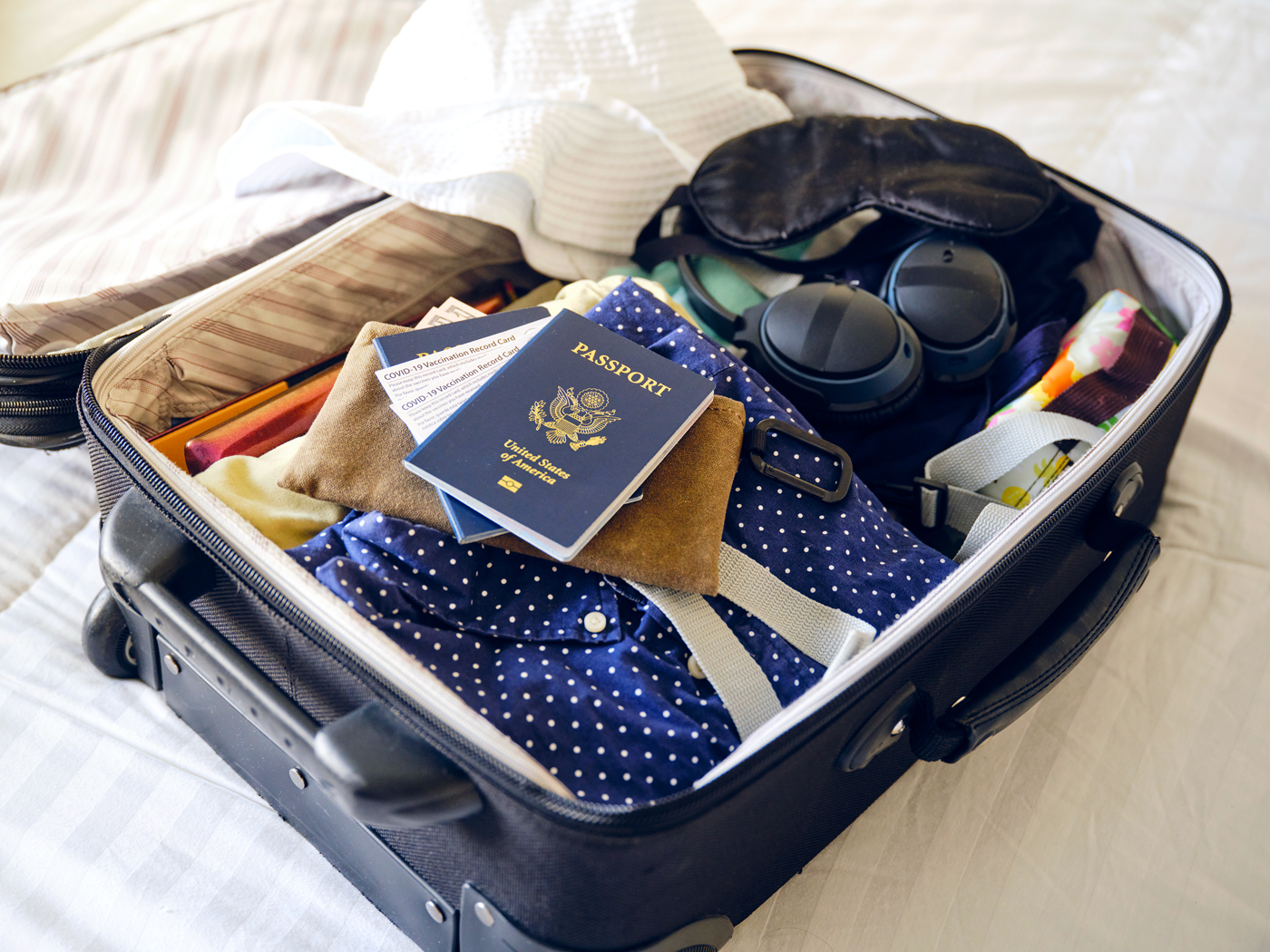
When you check into your hotel room, there are several things you should do right off the bat. You’ll want to make sure the locks work and clean high-touch surfaces, of course, but perhaps more surprisingly, you should also put your suitcase in the bathtub. Yes, the tub. While it may sound like an unusual suggestion, putting your luggage in the bathtub is a far better option than placing it on the bed, as many travelers automatically do. Find out why you should follow this one simple tip to enjoy a stress-free hotel stay on your next trip.
Watch Out for Bed Bugs
Credit: SDI Productions/ E+ via Getty Images
There’s one culprit that can quickly derail a hotel stay: bed bugs. While hotel bed bug infestations are relatively rare, it’s still worth taking a few simple precautions. Most importantly, if you throw your suitcase on the bed without checking for bugs, you risk those tiny critters crawling into your luggage. Once they’ve found a home in your suitcase, you may unknowingly bring them back home with you, which can create major complications after your trip.
Bed bugs thrive on fabric and make their homes in the dark crevices of the bed. They may also be lurking in other hotel room fabrics, such as carpets or drapes. The bathtub, on the other hand, is an inhospitable environment for these bugs, as it’s impossible for them to survive on the glossy ceramic surface. By putting your luggage in the tub, you’re guaranteeing that your clothing will be safe from infestation until you’ve had enough time to scan the room for these tiny mites. Once you’re assured that there are no bed bugs in the room, you can theoretically place your luggage on the bed. However, there are other sanitary reasons unrelated to bed bugs as to why doing so is still a bad idea.
Think of all the different surfaces that our luggage comes into contact with while traveling — the floor of the airport, the plane’s cargo hold, and the dirty streets of an unfamiliar city, just to name a few. This leads to an accumulation of dirt on the outside of your luggage, which is another reason why you should put your luggage straight into the tub upon arriving at the hotel.
If you put your suitcase right on the bed, you’re introducing those contaminants to the clean sheets where you’ll be sleeping. But if you put the luggage in the tub, you have a chance to wipe off your bag and remove any dirt straight into the tub, where it’s easy to wash that dirt down the drain afterward.
Tub vs. Luggage Rack
Credit: FollowTheFlow/ iStock via Getty Images Plus
Many hotel rooms feature a dedicated luggage rack where you can unpack your suitcase. This begs the question — why not use that instead of the tub? The luggage rack is definitely a better option than the bed, but it’s usually pretty close to where you’ll be sleeping. Also, some luggage racks are partially made of fabric, which means that bed bugs could be living there. Therefore, it’s recommended to use the luggage rack only as an alternative when the tub is in use or your room doesn’t have one.
What If There’s No Bathtub?
Credit: PixelCatchers/ E+ via Getty Images
If you don’t have a tub in your room, you can simply leave the suitcase in the dedicated shower area or another spot in the bathroom, which should also be adequately clean. It may be unconventional, but given the potential concerns with germs and bed bugs, it could be worth keeping your luggage there for the duration of your stay. The tile surfaces in the bathroom are typically easier to clean and won’t hide potential critters. Just make sure you leave a note for the housekeeping staff that you intentionally left the suitcase there.
Advertisement
More from our network
Daily Passport is part of Inbox Studio, an email-first media company. *Indicates a third-party property.
Daily Passport writers have been seen in publications such as National Geographic, Food & Wine, CBC, Condé Nast Traveler, and Business Insider. They're passionate about uncovering unique destinations and sharing expert tips with curious travelers.
Found on every continent, volcanoes are responsible for some 80% of the surface of the Earth. Over millions of years of eruptions, they have created some of the planet’s most stunning natural landscapes. While around 1,500 are considered active today, others have lay dormant for thousands of years. From one of the world’s most active volcanoes to North America’s tallest volcano, here are five of the most stunning volcanoes on the planet that you can safely visit.
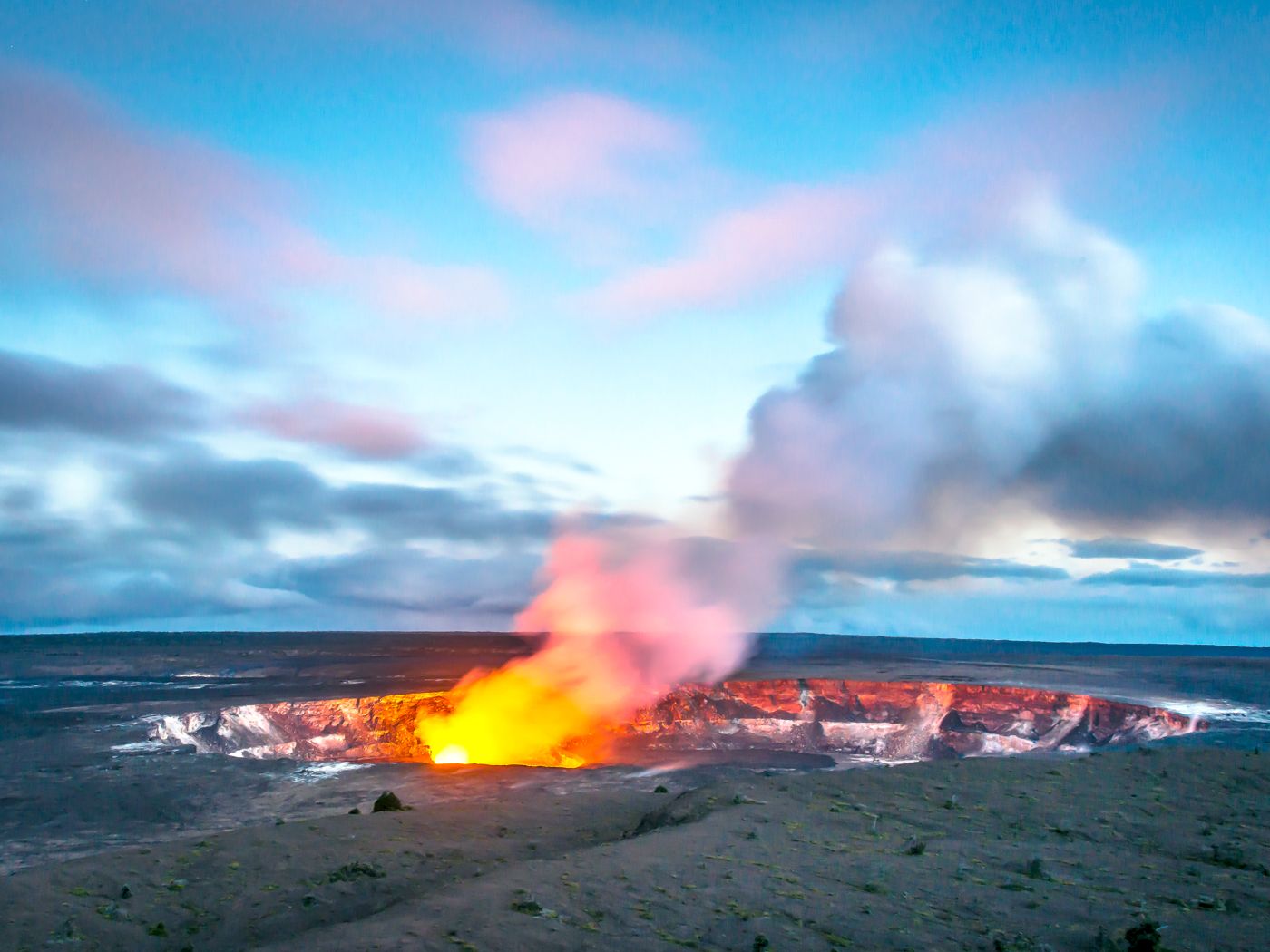
Kīlauea – Hawaii
Credit: Kevin Thrash/ Moment via Getty Images
In many parts of Hawai’i Volcanoes National Park, you might feel like you’re on another planet. Witness: hot molten lava snaking its way, bubbling and glowing, across a rugged, Martian-like landscape before falling over steep cliffs and meeting the Pacific Ocean in an explosion of steam. The park was established in 1916 around one of the world’s most active volcanoes, Kīlauea, which has been in continuous eruption since 1983, and neighboring Mauna Loa, which last erupted in 1984. When measured from the Pacific Ocean floor, Mauna Loa is the largest volcanic mass on Earth.
The similarity to Mars is no coincidence: Kīlauea’s lava fields contain vast amounts of basalt, as does the surface of the Red Planet. In fact, NASA has spent years in the national park to simulate conditions on Mars. But for earthlings, the park — a UNESCO World Heritage Site — offers 150 miles of hiking trails through incredibly varied topography, from cliffs to scalded deserts and rainforests. Just be sure to take care in such a sacred place to traditional Hawaiian culture: Legend says that Pele — the goddess of volcanoes and creator of the islands — once resided in Halemaʻumaʻu crater at Kīlauea’s summit.
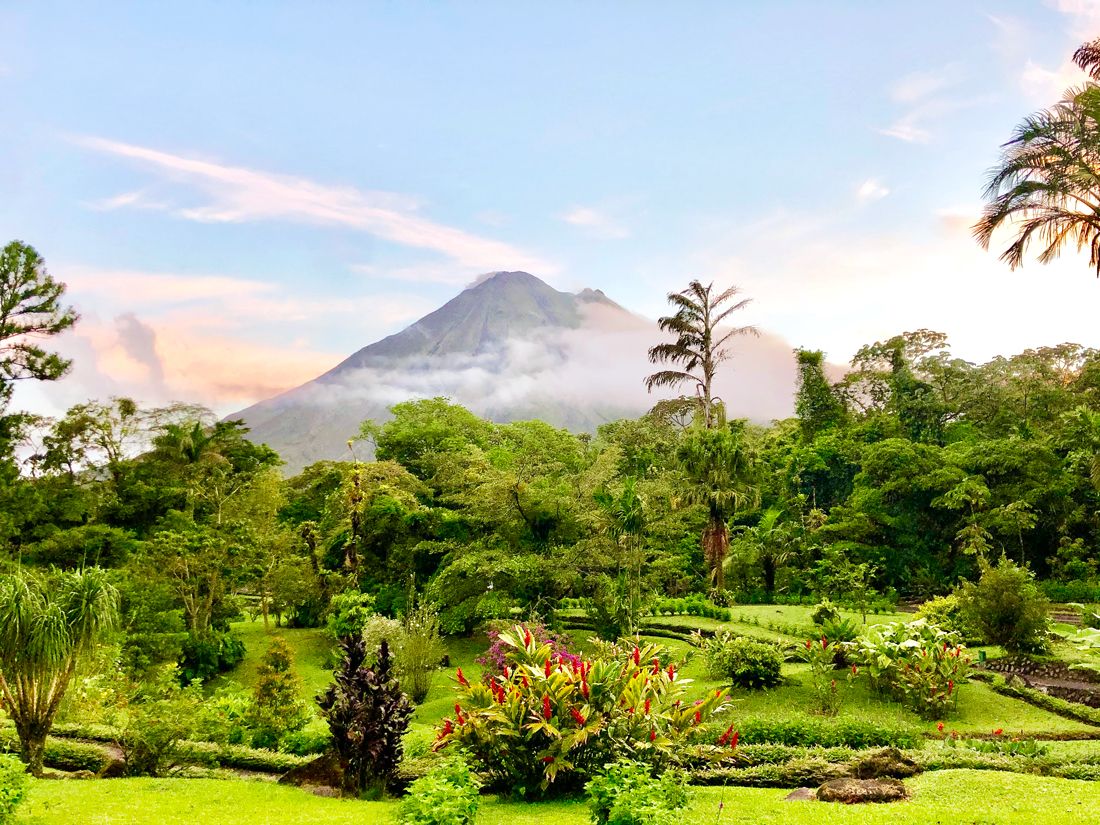
Arenal – Costa Rica
Credit: Janusz Kubow/ iStock via Getty Images Plus
If there was ever a reason to leave Costa Rica’s gorgeous coastline, it might just be Arenal. Located within the 30,000-acre jungle wilderness of Arenal Volcano National Park, Arenal is a 5,400-foot stratovolcano, magnificently conical and symmetrical — pretty much a photographer’s dream.
After admiring Arenal’s stunning vistas, visitors can hike the park’s lava fields and jungles, swim or fish in pristine waters, and scope out a laundry list of bird and butterfly species. While you can climb the volcano, consider hiking the neighboring Mount Chato instead. The climb is strenuous, but you’ll enjoy unparalleled views of the majestic Arenal and you’ll be able to swim in a crystalline crater lake in the shadows of the volcano’s soaring peak. After your climb, check out the neighboring town of Tabacón — decimated by the volcano’s last major eruption in 1968, it has since been reinvented as a spa destination, where visitors can rest and relax with volcanically-heated mineral water dips and treatments.
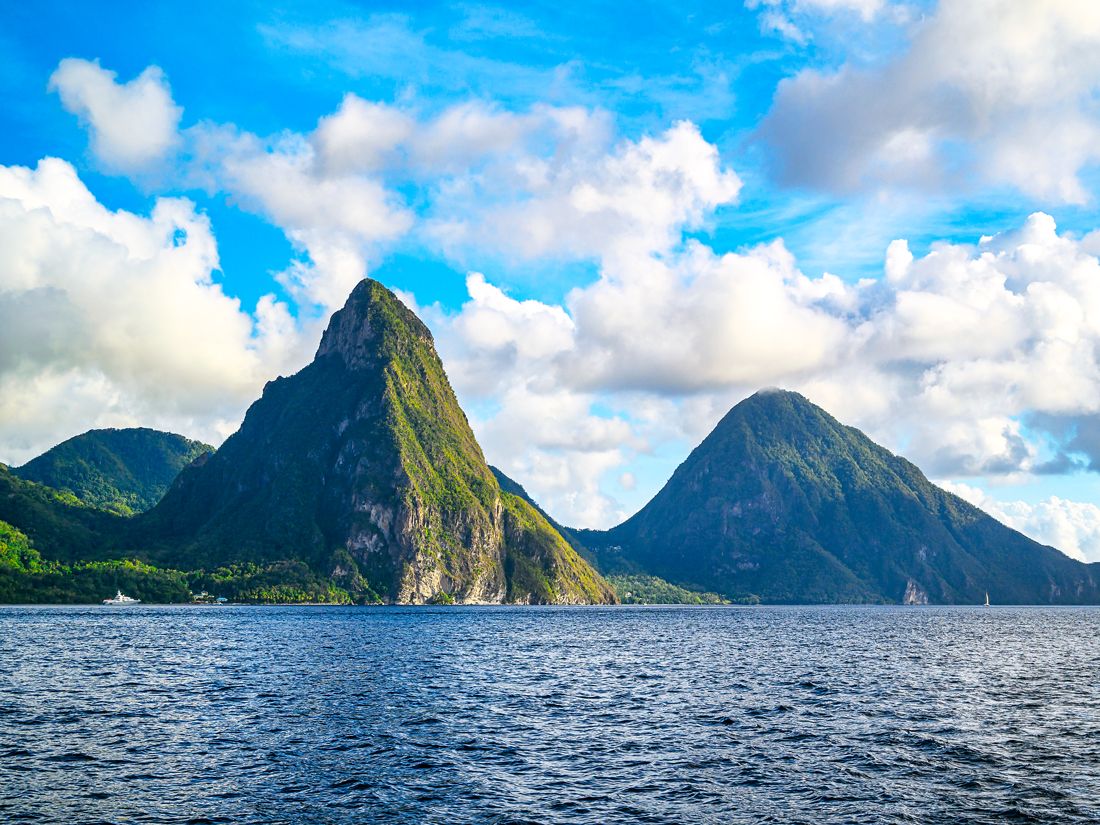
The Pitons – St. Lucia
Credit: Andreas Voelkel/ iStock via Getty Images Plus
St. Lucia’s national motto is, “The land, the people, the light,” and all three converge at the island state’s most beloved natural wonder. Basking high above the Caribbean Sea, the Pitons are plugs of two dormant volcanoes that took shape between 200,000 and 300,000 years ago. The Arawaks — early citizens of St. Lucia — worshipped the peaks as Atebyra, the god of food and fertility, and Yokahu, the god of fire, thunder, and rain. The twin peaks — 2,460-foot Petit Piton and 2,619-foot Gros Piton — form a UNESCO World Heritage Site designated in 2004.
There’s no missing the Pitons — from cruise ships, from helicopter windows, or even when emerging from snorkeling sessions — but one of the best ways to experience them is to climb them. In fact, climbing excursions on Gros Piton are encouraged, since the mountain has marked trails. The 3.2-mile round-trip hike takes between 6 and 12 hours, and tour guides are ready to help you make the jungle ascent so you can sign the summit register.
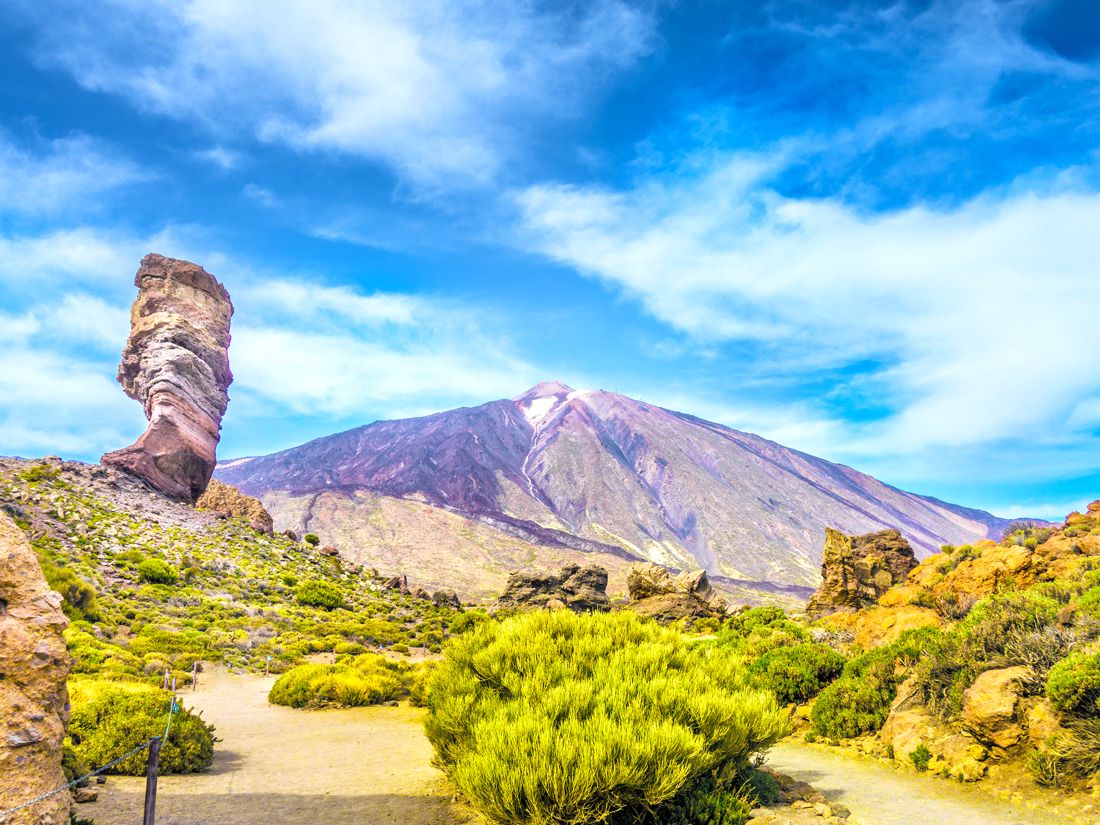
Mount Teide – Canary Islands, Spain
Credit: bluejayphoto/ iStock via Getty Images Plus
Though it’s considered Spain’s highest peak, Mount Teide is exponentially closer to Africa than to Europe. Positioned about 200 miles off the southwest coast of Morocco and 800 southwest of Spain, this volcano — one of the tallest in the world — rises almost 12,200 feet from the heart of Tenerife in the Canary Islands (a Spanish territory). The surrounding national park, also a UNESCO World Heritage Site, blends volcanic boulders with petrified lava rivers, steaming vents, and gaping craters, among other surreal elements. But one of the most otherworldly natural attractions is in the air: Every so often, a so-called “sea of clouds” moves in, enshrouding the peak in an extra layer of drama.
You can hike or drive your way through the park, take a cable car to the top of the volcano, and even spend the night in one of two onsite lodging options — a convenient way to check out the park’s famously starry skies. By day, however, you shouldn’t miss the Teide Observatory, one of the largest solar observatories on Earth.
Pico de Orizaba – Mexico
Credit: robertcicchetti/ iStock via Getty Images Plus
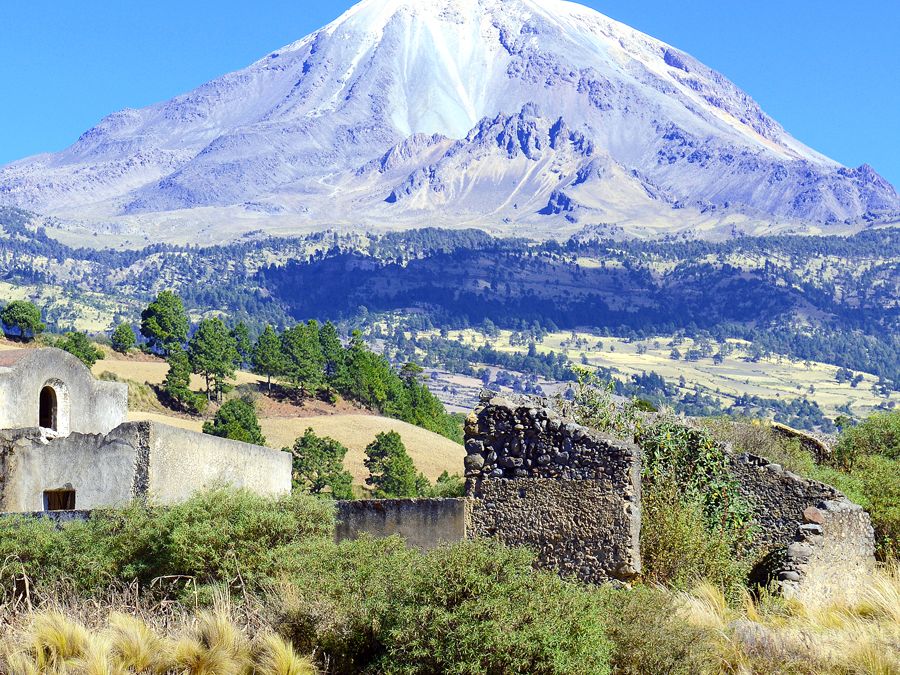
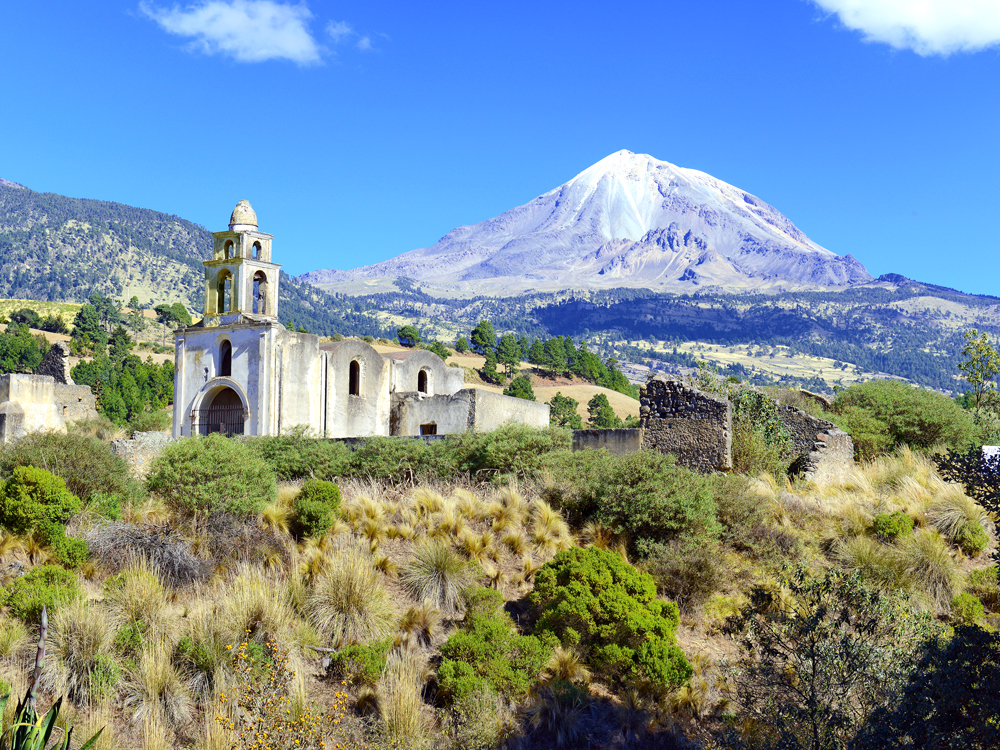
In the Nahuatl language, Pico de Orizaba is known as Citlaltépetl, which translates to “Star Mountain” — an apt descriptor for North America’s tallest volcano. The 18,491-foot snow-capped peak straddles the border of the Mexican states Puebla and Veracruz, and though it’s dormant, it’s not considered extinct. The last time it erupted was in 1846. Along with Mount Kilimanjaro in Africa, it’s one of the world’s most topographically pronounced volcanic peaks. Its sheer size is stunning and even makes it visible to boats entering the port of Veracruz almost 70 miles away.
Pico de Orizaba is popular among serious mountain climbers from all over the world, most of whom start their trek at the nearby town of Tlachichuca. Hundreds of experienced hikers make the journey to its glacier-topped summit each year — mostly during the winter near Christmas, México’s dry season. Altitude and weather can be extreme, and proper gear is a must. You’ll also start your journey early — typically at 2 or 3 a.m. — both to enjoy the dramatic shadows of the peak as the sun rises, and to avoid the dense fog that typically shrouds the peak in late afternoon.
Advertisement
More from our network
Daily Passport is part of Inbox Studio, an email-first media company. *Indicates a third-party property.
Architecture •August 8, 2024•Updated: August 14, 2024
By Julia Hammond
Author
Julia Hammond
Julia is a U.K.-based travel writer whose work has been featured in The Independent, The Telegraph, The New Zealand Herald, and Culture Trip, among others. She’s an enthusiastic advocate for independent travel and a passionate geographer who has had the privilege of traveling to more than 130 countries in search of a story.
The years and months leading up to an Olympic Games see a flurry of activity, as cities rush to complete the additional facilities required to host a broad range of events. Many are permanent venues that are intended for legacy use, perhaps as stadiums for local football teams or municipal swimming pools for the general population. In some cities, however, factors such as a lack of funds or unexpected political change can take their toll on Olympic venues. But as is often the case with abandoned places, these derelict structures retain a mystical appeal and can be eerily beautiful to visit, especially in light of their former glory. Take a look at five abandoned Olympic venues that are worth checking out.
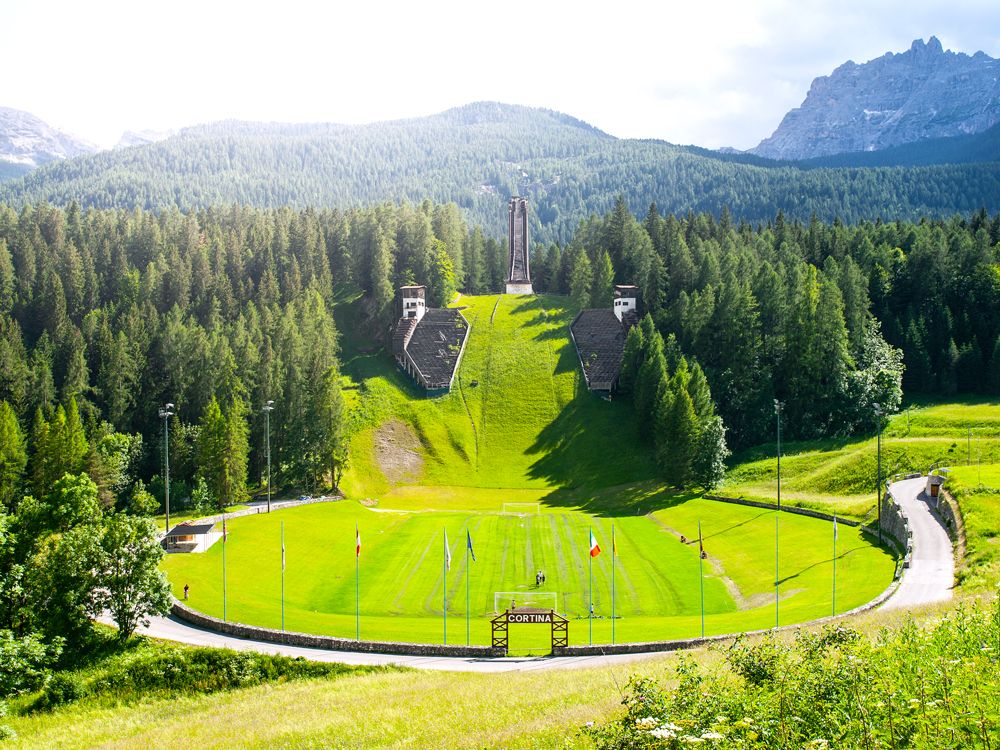
The Trampolino Olimpico Italia (Italian Olympic Ski Jump) may sit empty today, but it had an illustrious past. Surrounded by the stunning Italian Dolomites, the ski jump was constructed for the 1956 Winter Olympics held in Cortina d’Ampezzo. In addition to hosting the world’s top skiers that year, you might also recognize it from the 1981 James Bond film For Your Eyes Only, when a suave Roger Moore takes flight with rifle-toting assassins on motorbikes in hot pursuit.
But ski jumping hills must be accredited with the International Ski and Snowboard Federation (FIS) for insurance reasons, and the certification lapsed at Cortina in 1990. Even though the Italian resort town (together with Milan) is due to stage the Winter Games again in 2026, there are no plans to bring the landmark jump back into use. Instead, a different ski jumping hill at Predazzo in the Val di Fiemme will be the focus. In the meantime, visitors to Cortina will still be able to admire the sleek lines of its abandoned predecessor.
Linnahall – Tallinn, Estonia
Credit: The Washington Post via Getty Images
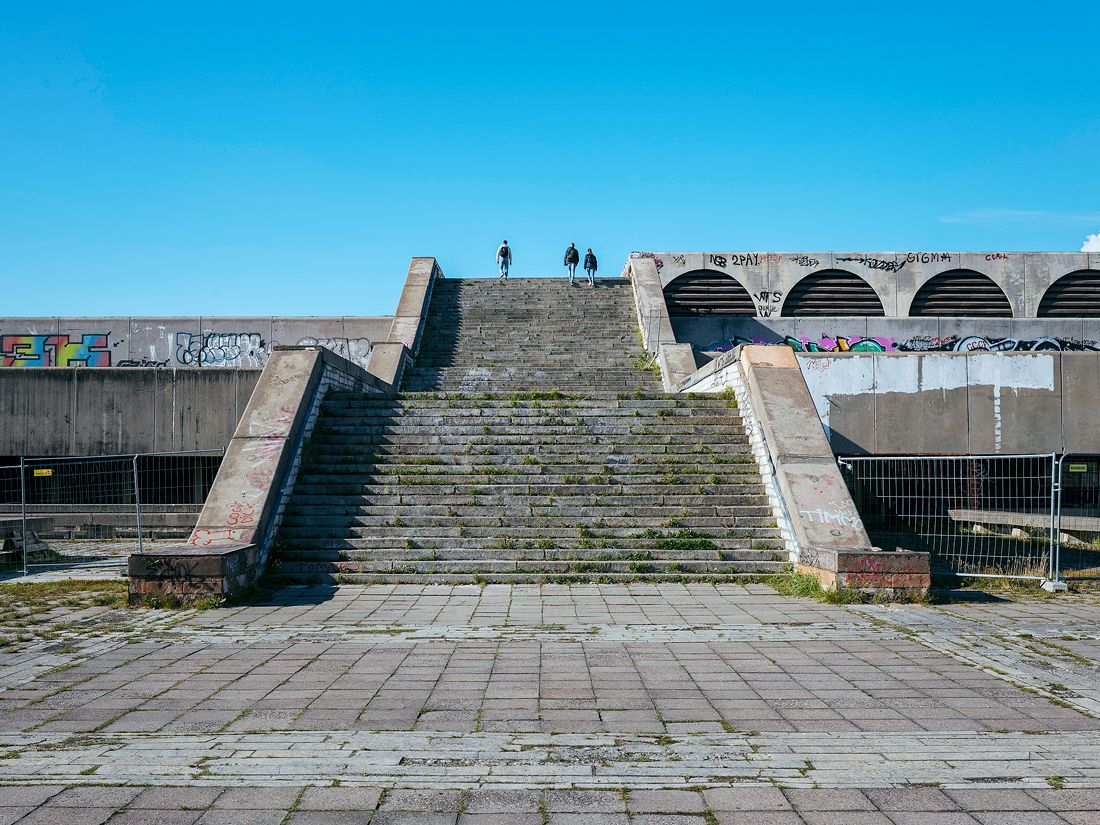
At the time of the Moscow Summer Olympics in 1980, Estonia was part of the Soviet Union. With no suitable venue in the Russian capital to host the sailing competitions, Estonia’s capital city, Tallinn, took on the task. The city constructed the Lenin Palace of Culture and Sport (later renamed Linnahall) to host these events during the 1980 Games. Designed by architects Raine Karp and Riina Altmae, this multipurpose venue boasted a 5,000-seat amphitheater that was later used to stage music concerts, along with a seasonal ice rink with a capacity of 3,000 people, before falling into disrepair and becoming abandoned by the end of that decade.
Today, its outlook over the Baltic Sea perhaps softens the decaying Brutalist architecture, yet the structure sits low enough not to spoil those same sea views from Tallinn’s charming medieval Old Town. The city authorities hope that, one day, Linnahall can be refurbished, but for now it’s a poignant reminder of Estonia’s past.
Bobsleigh and Luge Track – Sarajevo, Bosnia and Herzegovina
Credit: Frizi/ iStock Editorial via Getty Images Plus
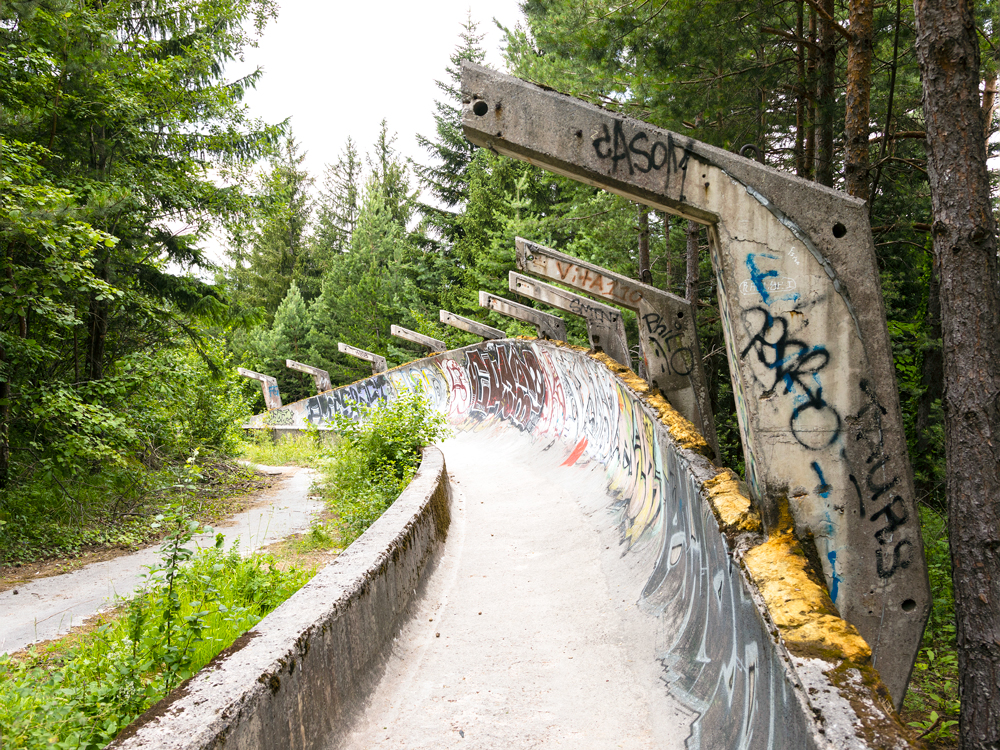
Sarajevo, the capital of Bosnia and Herzegovina, was still a part of Yugoslavia when the city hosted the 1984 Winter Olympics. Among the many facilities created for those Games was a bobsleigh and luge track, designed by architect Gorazd Bučar and constructed on the slope of Mount Trebević. The track was also used for several other events over the years, including World Cup competitions and the European Bobsleigh Championships.
However, it sustained serious damage during the war that took place in the region in the 1990s, when it served as an artillery position for Bosnian Serb forces during the Siege of Sarajevo. But today, the venue is still mostly intact, if covered in colorful graffiti, and city authorities hope to restore it for winter use at some point. In the meantime, competitive lugers make the most of it for summer training.
Hellinikon Olympic Canoe and Kayak Slalom Centre – Athens, Greece
Credit: ARIS MESSINIS/ AFP via Getty Images
Greece was the birthplace of the ancient Olympiad and the first host of the modern Olympic Games, which took place in 1894. When Athens successfully bid to host the 2004 Summer Olympics, it ended up costing the country about $11 billion, according to several reports, with unforeseen costs sending the Games considerably over budget.
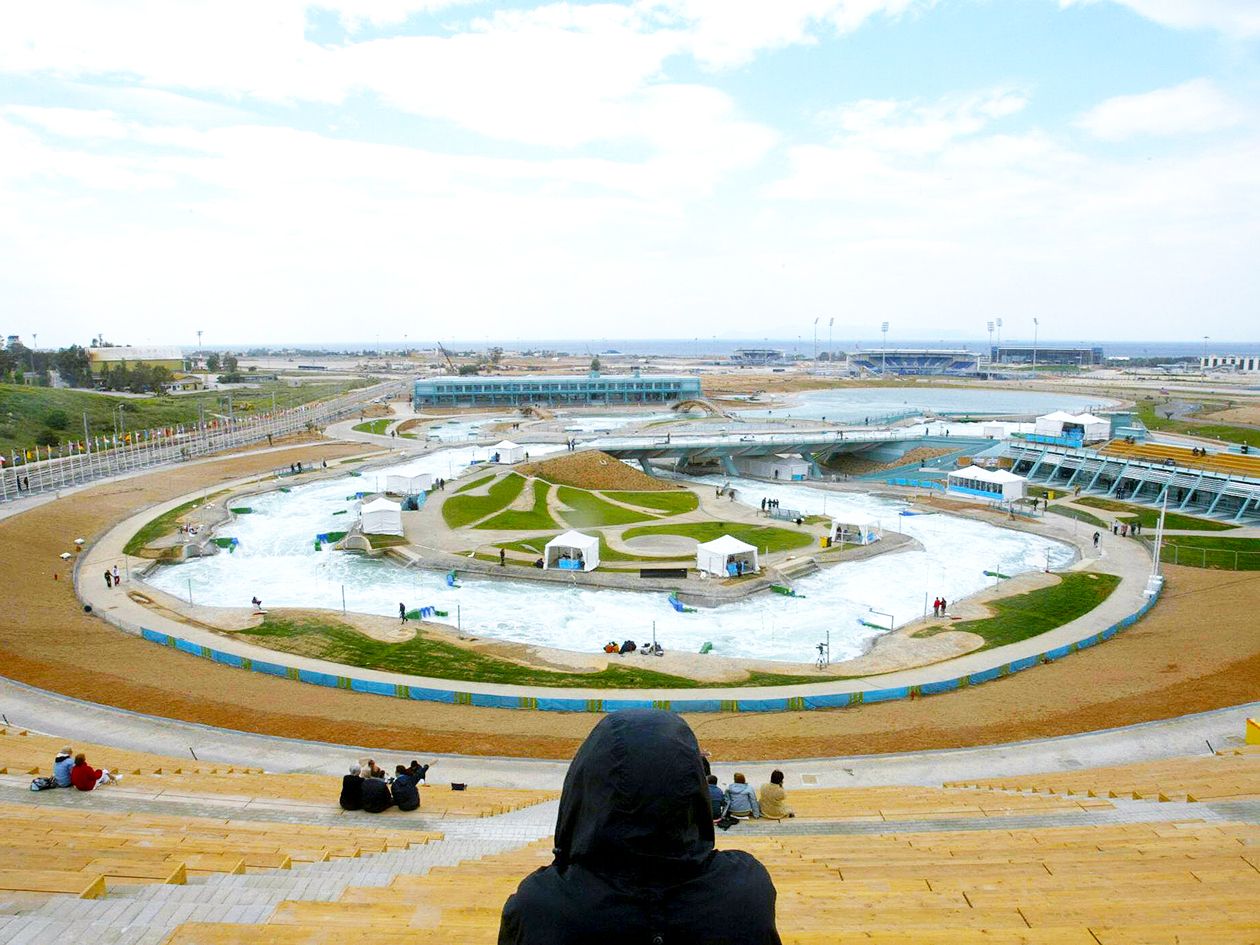
It’s particularly noteworthy in that context to see that some of these purpose-built venues are no longer in use. One such facility is the Hellinikon Olympic Canoe and Kayak Slalom Centre, which boasted two courses and a warm-up pool, as well as seating for 7,600 spectators. The pool was unusual in that the water was salty, pumped in from the Aegean Sea. However, it’s now dry, and weeds have colonized the stadium seating where excited fans once cheered.
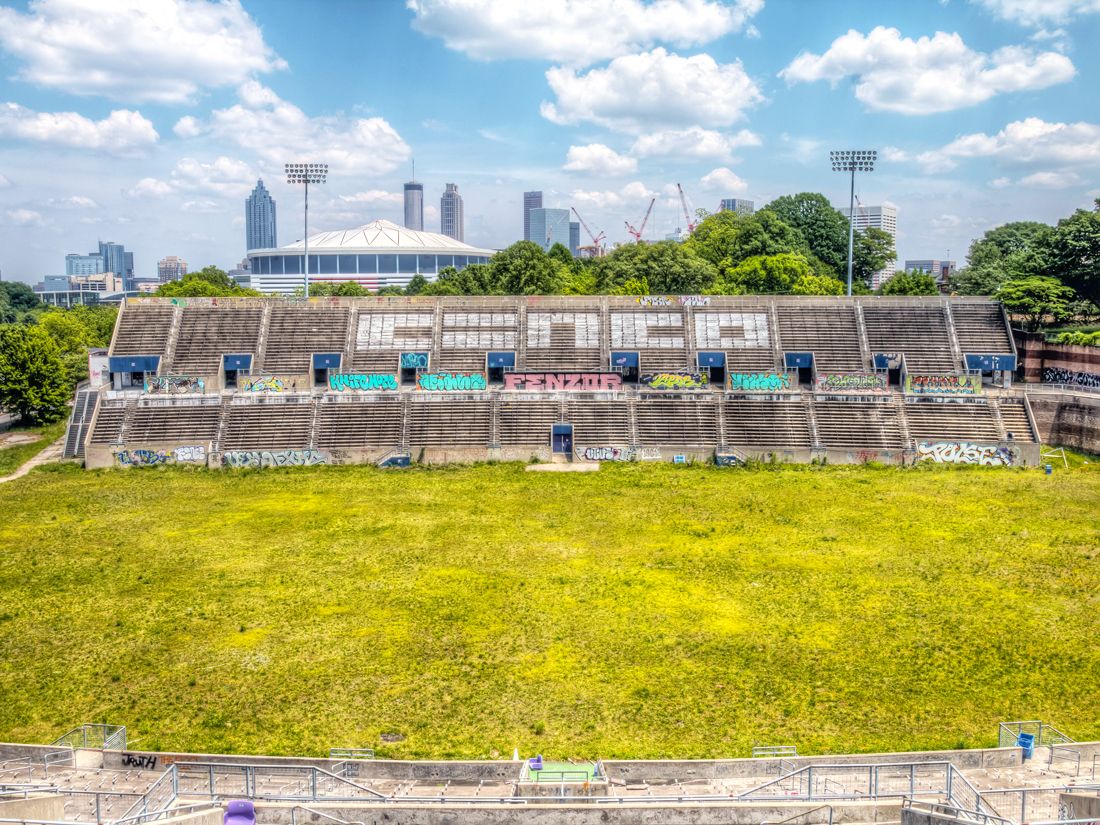
Alonzo Herndon Stadium, located on the Morris Brown College campus in Atlanta, was built in 1948. It was named for a local entrepreneur who was born enslaved and who later became the city’s first Black millionaire. The stadium had been regularly used before it was expanded to host the field hockey competition during the 1996 Atlanta Summer Games. However, less than two decades later, it is one of six of the 28 Atlanta Olympic venues to not remain in use.
The college experienced significant financial hardship and planned to sell the stadium to raise funds. But lengthy legal issues over title deeds meant the stadium fell into disrepair. This has attracted the attention of Hollywood location scouts, though, who embrace its rundown state. For instance, the venue featured in the 2024 movie Civil War as a refugee camp. So, it seems for the time being that this abandoned Olympic venue’s legacy will be on the big screen.
Advertisement
More from our network
Daily Passport is part of Inbox Studio, an email-first media company. *Indicates a third-party property.
Michael is a staff writer for Daily Passport and film critic who writes the weekly newsletter Movie Brief. His writing and criticism have also appeared in the Los Angeles Times, Variety, and the Washington Post, among others. A native Angeleno, his favorite countries to visit are Norway and Japan.
Conventional wisdom suggests that travel agents have gone the way of lamplighters, switchboard operators, and other bygone occupations. These days, with countless websites and apps devoted to making every aspect of booking vacations as easy as possible, it doesn’t even occur to most people to employ this once-ubiquitous service. Still, there are several scenarios where doing so will make your excursion much easier — travel agents are experts with an inside track, after all. Here’s when it might make sense to use a travel agent to book a vacation.
An important thing to consider is that travel agents (or travel advisers, as they’re sometimes called) aren’t free, at least not usually. Some agents receive commissions on the flights and accommodations they book rather than directly charge customers, but more often you’ll be paying them out of pocket. Depending on which travel adviser you go with and the level of service you opt for, doing so could set you back hundreds or even thousands of dollars. However, these costs could be offset by discounts, upgrades, and the peace of mind that comes with knowing you’re in good hands.
For example, companies such as Virtuoso, Signature Travel Network, and Ensemble specialize in getting customers perks included with their hotel stay. Think: free breakfast, spa treatments, food and drink credits, and other bonuses that aren’t usually included when booking on your own. Such perks are one of the primary benefits of going with a travel adviser, as well as why many continue to swear by them. You get what you pay for, as they say, and even the most savvy traveler simply won’t have access to all the deals that a professional will.
Travel agents are also a great option for anyone who takes a more relaxed, vibes-based approach to traveling. If you’re someone who tends to be less concerned with the granular details — exactly which room in the hotel you’ll be staying in, when and where your dinner reservations are — a travel agent or travel adviser will gladly fine-tune your trip, while potentially saving you money by booking things as part of a larger package that you might not have access to on your own.
Think of a good travel adviser as a kind of all-in-one service that allows you to visit the city of your dreams without stressing over every potential complication. Those who prefer to plan every aspect of their vacation by putting together an hour-by-hour itinerary might not want to cede this level of control to someone else, but for everyone else there’s a certain freedom to going with the flow.
Somewhat counterintuitively, the opposite can equally be true: Travel agents are also ideal for when you need something highly specific but don’t have the precise know-how to make it happen. For example, if you want to go to Botswana for a safari but feel a bit out of your depth, consider checking travel expert Wendy Perrin’s WOW List and finding someone who not only books that kind of trip but also has spent years of their life in the region.
Or, this might be your first time going to Prague, but a seasoned travel agent has likely planned dozens of trips there and knows better than most what to do, what to avoid, and how to arrange it all in the most efficient, cost-effective way. That level of experience and expertise shouldn’t be ignored. As with anything else, the only way to see if this works for you is to give it a try — you might be surprised by how much value a good travel agent can actually add to a trip.
Featured image credit: massimo colombo/ Moment via Getty Images
Advertisement
More from our network
Daily Passport is part of Inbox Studio, an email-first media company. *Indicates a third-party property.
These Are the Foods You Should Never Eat on a Plane
By
Bennett Kleinman
Read time: 3 minutes
August 8, 2024
Updated: August 8, 2024
These Are the Foods You Should Never Eat on a Plane
Tips •August 8, 2024•Updated: August 8, 2024
By Bennett Kleinman
Author
Bennett Kleinman
Bennett is a New York City-based staff writer for Daily Passport. He previously contributed to television programs such as the Late Show With David Letterman, as well as digital publications like the Onion. Bennett has traveled to 48 U.S. states and all 30 Major League Baseball stadiums.
With the in-flight meal likely to be bland — that is, if you get one at all — many passengers choose to pack their favorite treats to help keep hunger at bay throughout the flight. But a word of caution: Much like there’s one drink that you should never order on a plane, there are also certain types of food you should think twice before eating at 30,000 feet. Here are foods that you should avoid on airplanes and what you should be eating instead.
Avoid Salty Snacks
Credit: Svitlana Hulko/ iStock via Getty Images Plus
Salty snacks — potato chips, pretzels, and even those tiny bags of airplane peanuts — are among the worst foods you can eat on a plane. Why? Airplane cabins are already dehydrating, and the added salt in these highly processed snacks exacerbates dehydration, causing your body to become fatigued at a more rapid pace. This fatigue may lead to headaches, exhaustion, and jet lag at the other end of your trip. Instead of noshing on these sodium-packed foods, try foods without any added salt, such as granola bars, pear slices, or edamame. The Aerospace Medical Association also suggests drinking 8 ounces of water for every hour you’re in the air in order to stay properly hydrated.
Skip Gas-Inducing Foods
Credit: urbazon/ E+ via Getty Images
Another type of food to avoid eating on planes is any item that can leave you feeling bloated and gassy. This includes carbohydrate-rich and fibrous foods such as broccoli, lentils, and nuts. While gas is never comfortable to deal with, it can be particularly unpleasant aboard a plane. The pressurized cabins and changes in atmospheric pressure cause the air cavities in your digestive system to expand. Often, this results in a more intense bloated feeling than you’d normally experience back on the ground.
Steer Clear of Stinky Foods
Credit: Caia Image/ Collection Mix: Subjects via Getty Images
It’s also important to remember that planes are communal spaces where rules of etiquette apply. This is why you should refrain from eating particularly odorous foods while flying — it’s the least you can do for your fellow passengers. Tuna sandwiches, hard-boiled eggs, and garlicky pastas can be quite tasty, but they also tend to be potent and can stink up the cabin. When in doubt, leave those smelly snacks at home in favor of foods with more neutral odors.
Don’t Skip the Meal
Credit: Dobrila Vignjevic/ E+ via Getty Images
It may be tempting to fast during a flight to ensure you don’t eat the wrong thing — or simply because the onboard options are unappealing or overpriced. But it’s also risky to go prolonged periods on an airplane without eating, as that may lead to lower blood sugar. Low blood sugar may mean worsening jet lag when you finally reach your destination. So, always try to eat something on a plane in order to keep your blood sugar levels stable.
The Best Foods To Eat on a Plane
Credit: Chalabala/ iStock via Getty Images Plus
If you’re taking a long-haul flight, there are some foods that are ideal for keeping you energized and satiated. One of the best plane snacks is a protein bar, which can provide you with enough energy to arrive at your destination feeling refreshed and ready to explore. If you receive a meal on the flight, consider ordering a lean protein dish like chicken breast, which also provides the body with necessary energy. Fresh fruits such as oranges and bananas are another excellent option, as they act as both natural immune boosters and anti-inflammatories.
Advertisement
More from our network
Daily Passport is part of Inbox Studio, an email-first media company. *Indicates a third-party property.
Julia is a U.K.-based travel writer whose work has been featured in The Independent, The Telegraph, The New Zealand Herald, and Culture Trip, among others. She’s an enthusiastic advocate for independent travel and a passionate geographer who has had the privilege of traveling to more than 130 countries in search of a story.
Small towns offer tourists the best of both worlds: a smattering of museums, intriguing attractions, and tasty local restaurants like in a typical big city, yet within easy reach of the surrounding countryside. The best small towns to visit are compellingly idiosyncratic, boasting unique histories, distinct cultures, interesting architecture, and local food specialties. If you’re traveling around the South, these are six of the best and quirkiest towns you should visit.
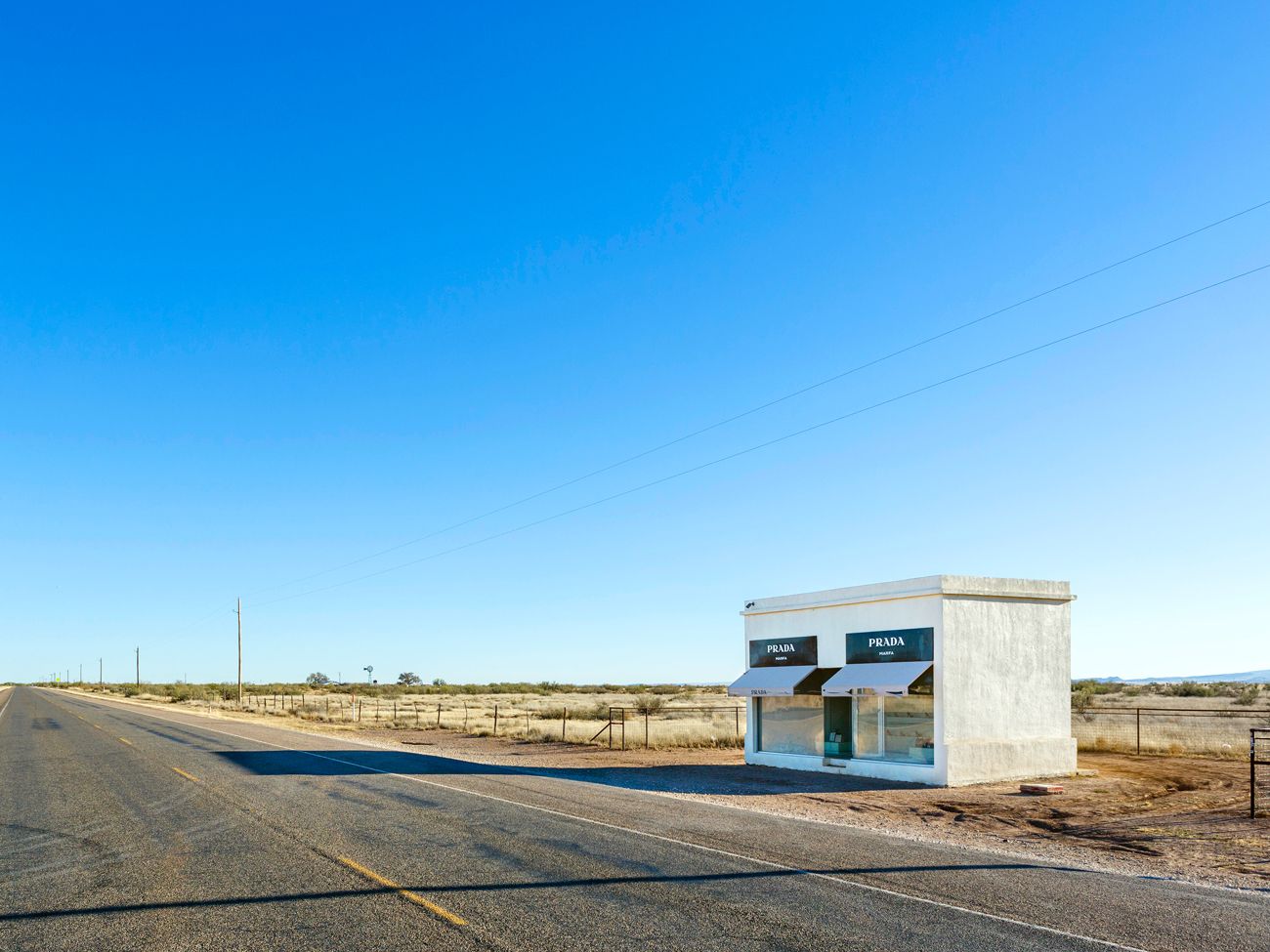
The infamous Marfa Lights lure travelers from far and wide to this part of West Texas. Since the 19th century, people have reported seeing lights without a known source on the horizon beyond this Texan town. They appear at random throughout the year, casting a red, blue, or white light into the night sky. The town hosts the Marfa Lights Festival annually in late August to celebrate this unexplained but mesmerizing phenomenon.
Even if you don’t manage to spot the lights, there’s plenty else to hold your attention in Marfa. Grab a selfie in front of the iconic Giant mural, a backdrop inspired by the Oscar-winning 1956 Western that starred Hollywood greats Elizabeth Taylor, Rock Hudson, and James Dean. Marfa embraces art in all forms, with Insta-famous roadside installations such as Prada Marfa and multiple galleries scattered throughout the town. Don’t miss the Judd Foundation, the Chinati Foundation, and Ballroom Marfa.
Breaux Bridge, Louisiana
Credit: Tim Graham via Getty Images News
Each May, Breaux Bridge celebrates Louisiana’s delicious Cajun cuisine during the annual Crawfish Festival. First held in 1960, the festival draws a large crowd, not just for the food but also for an eclectic mix of live music, including Cajun, zydeco and swamp pop. Visitors can also take dance or cookery lessons as they immerse themselves in the area’s unique culture and traditions.
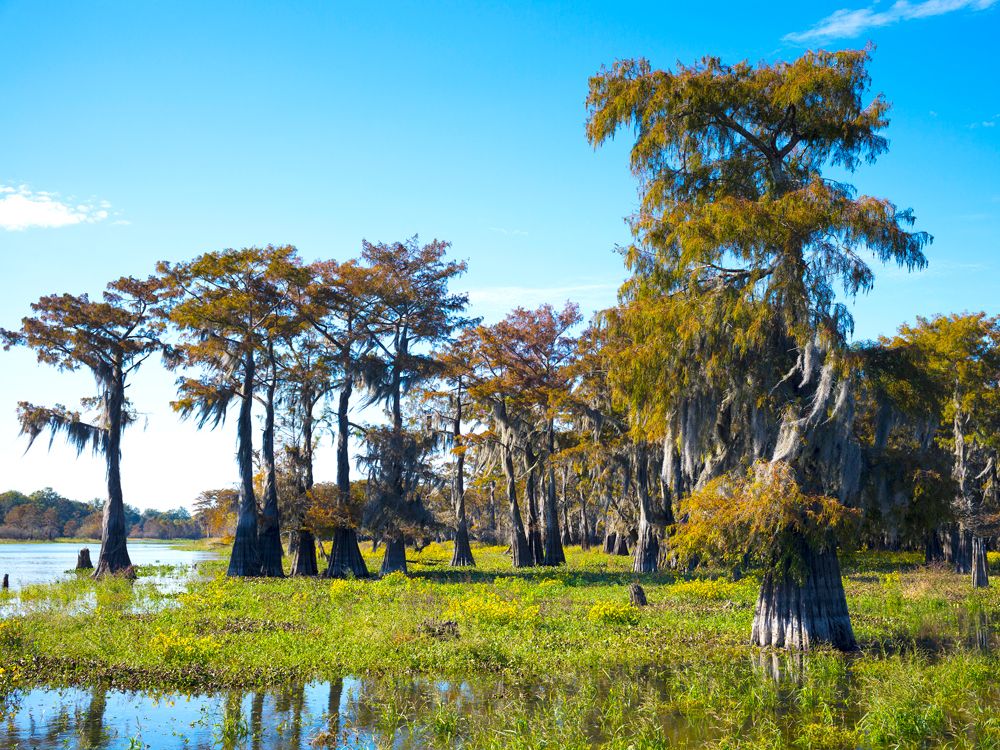
Can’t visit in May? One of the best year-round attractions in Breaux Bridge is a Cajun Country swamp tour. The opportunity to head out onto the water on a traditional crawfish skiff and explore this fascinating wetland ecosystem is one you won’t want to pass up. You’ll spot cypress trees laden with Spanish moss and an abundance of wading birds — such as roseate spoonbills, white ibis, great blue herons, and anhingas — coupled with other swamp-dwelling wildlife including alligators.
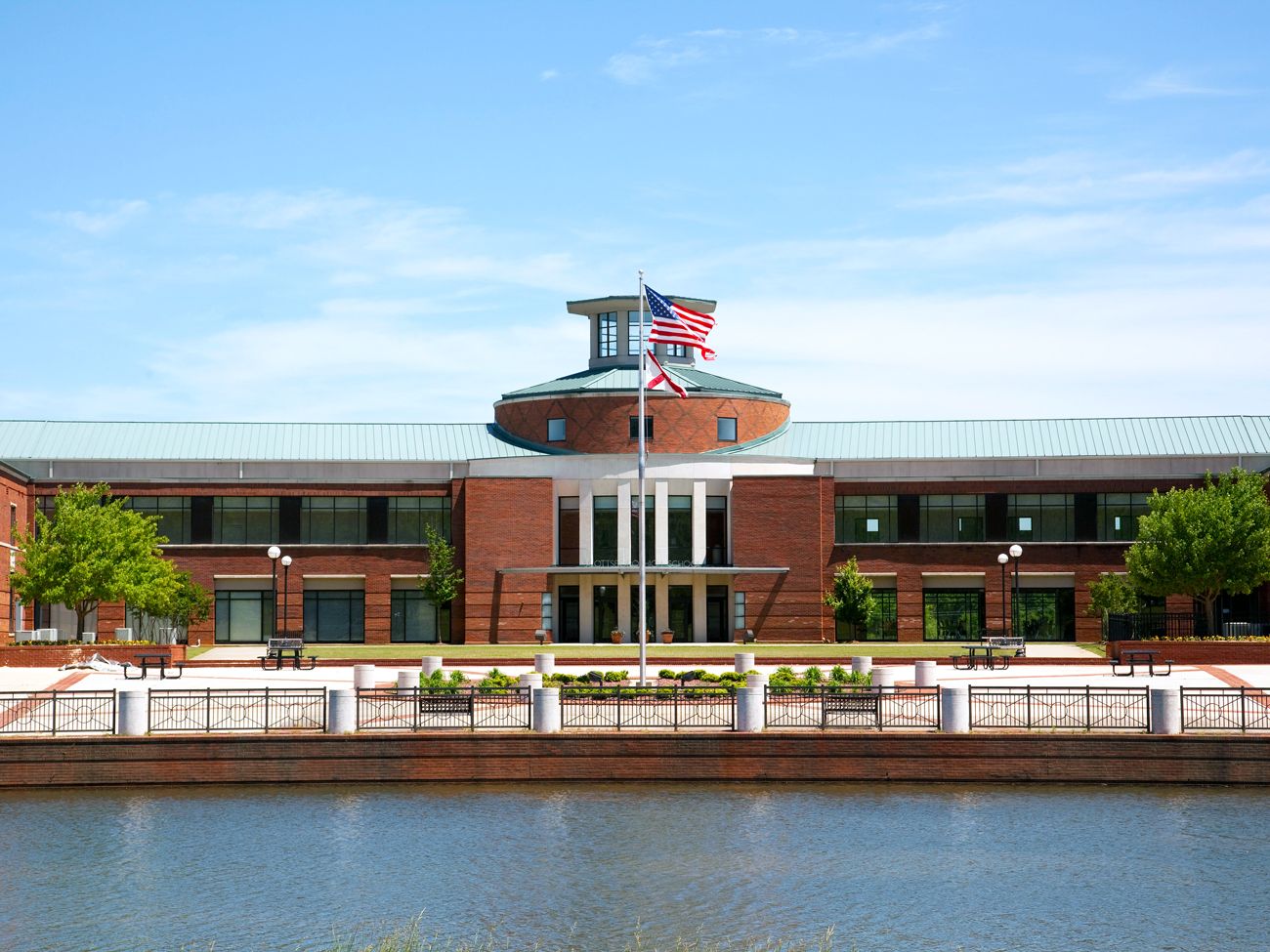
If you’ve ever wondered what airlines do with lost bags, you might want to head to the town of Scottsboro, Alabama. There, you’ll find Unclaimed Baggage, a retail store selling the contents of suitcases that were never picked up by their owners. The store has been in business for more than 50 years, and some of the more interesting items that have passed through its doors — including ancient Egyptian artifacts and medieval armor — are displayed in the on-site museum, Found Treasures.
Another must-visit in Scottsboro is the Scottsboro Boys Museum, housed in Joyce Chapel. It tells the important story of nine Black youths who were falsely accused and incarcerated in the 1930s and whose trial was a catalyst in the American Civil Rights Movement. The town is also home to Alabama’s oldest soda shop, Payne’s Sandwich Shop and Soda Fountain. It retains a charming 1950s vibe, but it opened as a drugstore much earlier in 1869. Order a signature red slaw dog, grab a stool beside the vintage jukebox, and reminisce about the old days.
Hollywood legend Andie MacDowell hails from this small-town South Carolina gem. Since 1981, Gaffney’s most prominent landmark has been the Peachoid, a 135-foot-tall water tower in the form of a giant peach. Peach production in South Carolina far outstrips that of neighboring Georgia, despite the latter state’s nickname — in fact, only California produces more of this popular fruit.
Visitors to Gaffney can also take a tour of Daimler’s Freightliner factory, where chassis roll off the production line ready to support large vehicles such as RVs and school buses. In the surrounding area, visit Cowpens National Battlefield, the site of a pivotal battle and Patriot victory against the British in the Southern Campaign of the Revolutionary War. Learn more by following the Overmountain Victory National Historic Trail or by checking out the Gaffney Visitor Center and Art Museum.
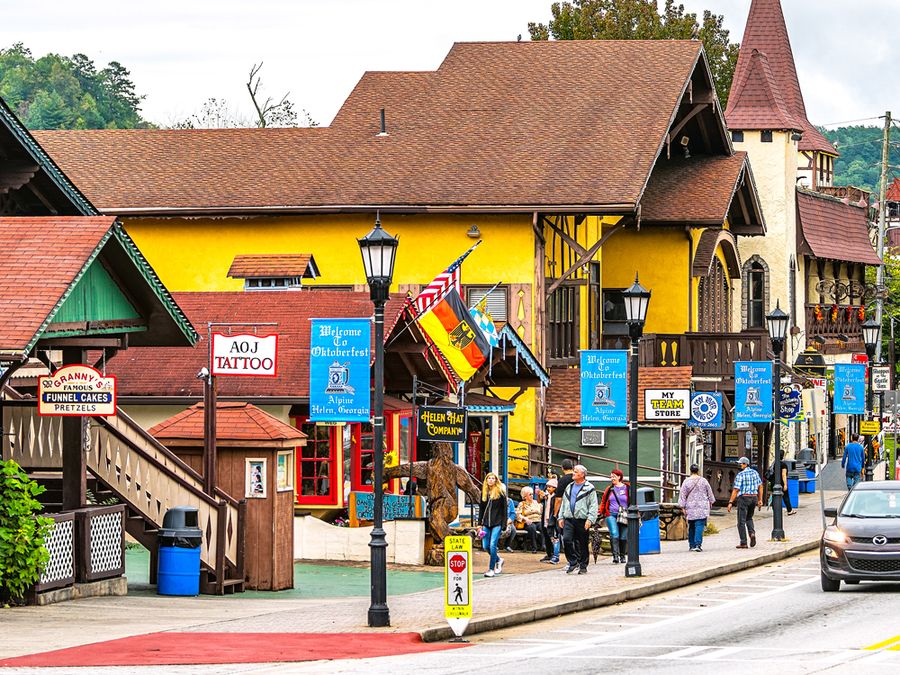
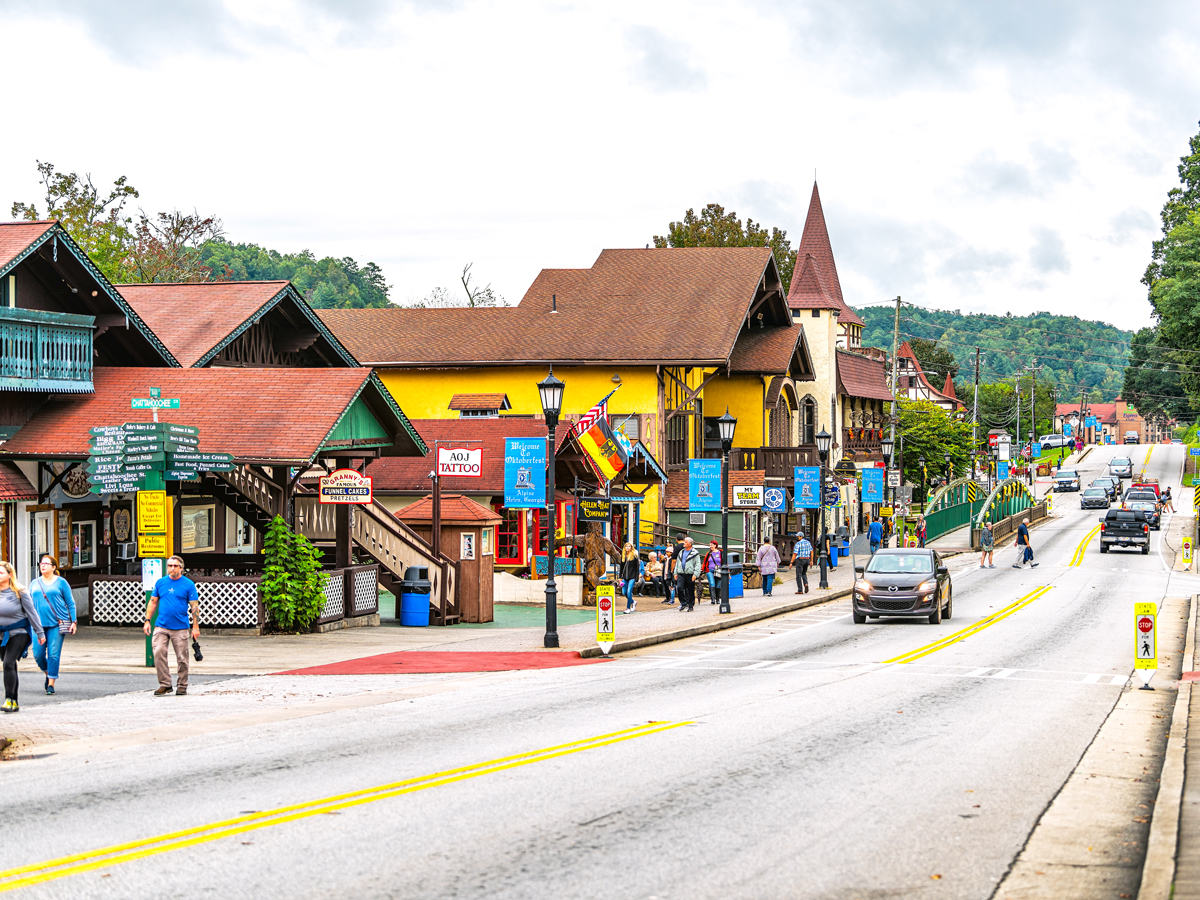
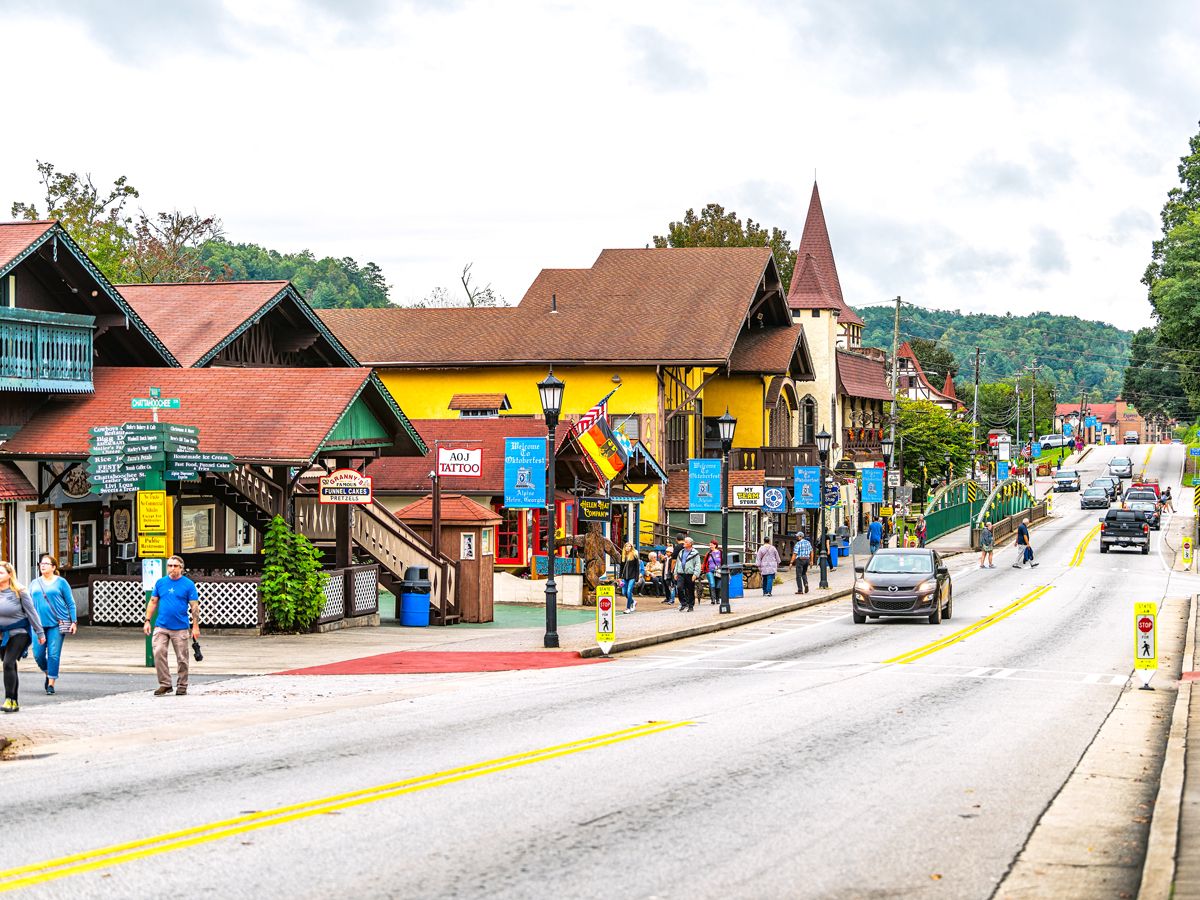
If you’ve always fancied a trip to Germany but can’t make it across the pond, head for Helen, Georgia, instead. Originally, the town made a living on gold and lumber, but in an attempt to boost the economy, it was transformed into an Alpine village in the 1960s. The reinvention proved successful, as the town now attracts thousands of camera-toting visitors who come to admire its gabled, half-timbered architecture.
The buildings form a delightful backdrop for a carriage ride, which you can follow with German lager at a traditional tavern as you munch on pretzels, schnitzel, and bratwurst. If you can, aim to be here for Oktoberfest. Celebrated over consecutive weekends in the early fall, the event features live oompah bands and themed food and drink. The town also offers plenty for nature lovers — anglers congregate along the Chattahoochee River, while hikers enjoy exploring Chattahoochee National Forest and the foothills of the Blue Ridge Mountains. Even if you’re only passing through, you can dip a toe into the town’s beautiful surroundings with the easy Helen to Hardman Heritage Trail.
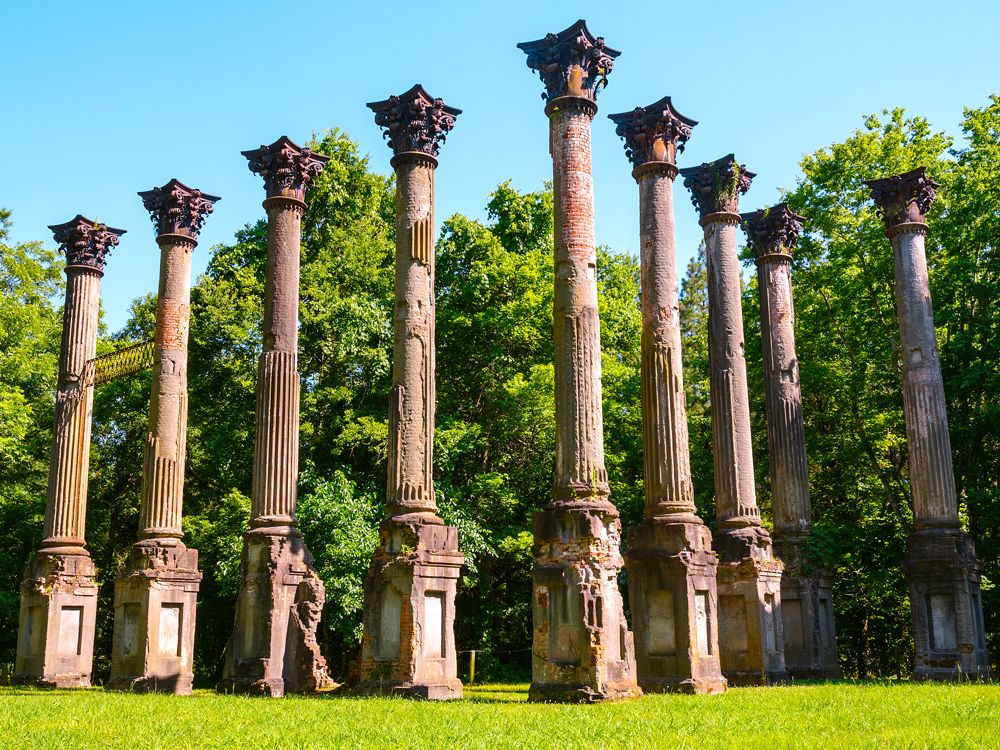
Port Gibson is Mississippi’s third-oldest settlement, with a history dating back to 1729 and a charter issued in 1803. Residents of Port Gibson will proudly tell you that, during the Civil War, General Ulysses S. Grant was allegedly so enamored with the town’s beauty that he gave the order that it should not be destroyed, saying that it was “too beautiful to burn.”
Today, Grand Gulf Military Park, located on the banks of the Mississippi River, encompasses the historic military sites of Fort Cobun and Fort Wade, the Grand Gulf Cemetery, a museum, and several other buildings of interest. Nevertheless, Port Gibson is best known for the Windsor Ruins. They once formed part of the largest antebellum mansion to be built in the area, the work of enslaved peoples. The 20 Corinthian columns are all that remain after a devastating fire consumed the rest of the structure in 1890.
Advertisement
More from our network
Daily Passport is part of Inbox Studio, an email-first media company. *Indicates a third-party property.
This Is the Line You Should Always Choose at the Airport
By
Bennett Kleinman
Read time: 4 minutes
August 1, 2024
Updated: August 1, 2024
This Is the Line You Should Always Choose at the Airport
Tips •August 1, 2024•Updated: August 1, 2024
By Bennett Kleinman
Author
Bennett Kleinman
Bennett is a New York City-based staff writer for Daily Passport. He previously contributed to television programs such as the Late Show With David Letterman, as well as digital publications like the Onion. Bennett has traveled to 48 U.S. states and all 30 Major League Baseball stadiums.
Between the long lines and confusing rules, passing through airport security can all too often be a headache for travelers. This is especially true if you’re in a rush to catch a flight, as security lines rarely move at breakneck speed. But fortunately, there are several tricks you can take advantage of to move past airport security more quickly. Find out why one popular strategy — always choosing the left line at airport security — usually gets you past the checkpoint in less time.
According to sociological theories, people have a subconscious tendency to stick to what feels comfortable rather than what may be the most efficient course of action. The same idea applies to travel — one of the more common mistakes that many flyers make is going straight to the center line because it’s the first one they see. This is often due to factors such as inexperience or herd mentality, as people usually follow others into less-than-ideal situations.
Another theory about why the left line is best has to do with dominant handedness. In Western countries, around 85% to 90% of people are right-handed, and because of this, they tend to look and drift toward the right side. At the airport, this means that people may follow that instinct and end up in the rightmost line at security. Assuming that both of the above theories hold true, there’s a good chance that the left line will be the least crowded and thus most efficient of the bunch.
Adjust if Necessary
Credit: AzmanL/ E+ via Getty Images
While the left security line may move the quickest, keep in mind that’s not always guaranteed to be true. Before hopping in line, take a few moments to analyze the situation and try to gauge how fast each line is moving. Just because one line is the shortest doesn’t always mean it’s the fastest, as that line may have TSA agents that are slower when it comes to checking people’s luggage. Once you have a grasp on how quickly each line is moving, you can hop into the queue and hope for the best.
Come Prepared
Credit: izusek/ E+ via Getty Images
No matter which line you chose, it’s important to come prepared to get through security quickly and make it easier on the passengers behind you. First, keep your passport or identification in an easy-to-access location. You should also pack your bags so that it’s easy to remove any electronics or liquids when asked, and wear as few accessories as possible so you don’t potentially hold up the line. Also, as you get toward the front of the line, be sure to listen for any pertinent instructions. If your head is down in your phone, you may miss useful announcements that could help lessen the security logjam.
Look for the Hidden Queue
Credit: owngarden/ iStock via Getty Images Plus
If the leftmost security line looks just as packed as the others, then you may be out of luck — unless the airport has a “hidden” security line. Some, but not all airports provide auxiliary queues that are in a different location. These are often used if the main security lines become overcrowded. If you’re short on time before your flight, speak to a customer service agent who may be able to direct you to a spillover line, should it exist.
Apply for Trusted Traveler Programs
Credit: AzmanJaka/ E+ via Getty Images
Programs such as TSA PreCheck, Global Entry, and CLEAR are game changers when it comes to passing through airport security. All of these programs require paying an application or membership fee and undergoing a background check. But once you’re approved, you’ll gain access to dedicated security lines that usually move much more quickly than a normal security line, since these travelers don’t have to remove their shoes, liquids, or laptops. CLEAR even offers members the option to reserve a spot in the security line at many airports around the world in order to expedite the process even further.
Advertisement
More from our network
Daily Passport is part of Inbox Studio, an email-first media company. *Indicates a third-party property.
Architecture •July 31, 2024•Updated: August 1, 2024
By Marissa Kozma
Author
Marissa Kozma
Marissa is a cheap airfare aficionado who loves exploring offbeat destinations with her husband. Based in Los Angeles and Joshua Tree, Marissa has been featured in publications such as San Diego Magazine, Palm Springs Life Magazine, 303 Magazine, and Mountain Living.
Surely, landmarks such as the Library of Congress in Washington, D.C., and the New York Public Library are on any bibliophile’s must-see list, but the United States is also home to many other stately libraries well worth a visit. Their collections are housed in buildings that exhibit award-winning architecture and are often surrounded by stunning scenery. From a Gothic-style castle library to a log cabin library in South Dakota, here are eight of the coolest libraries in America that are bound to impress.
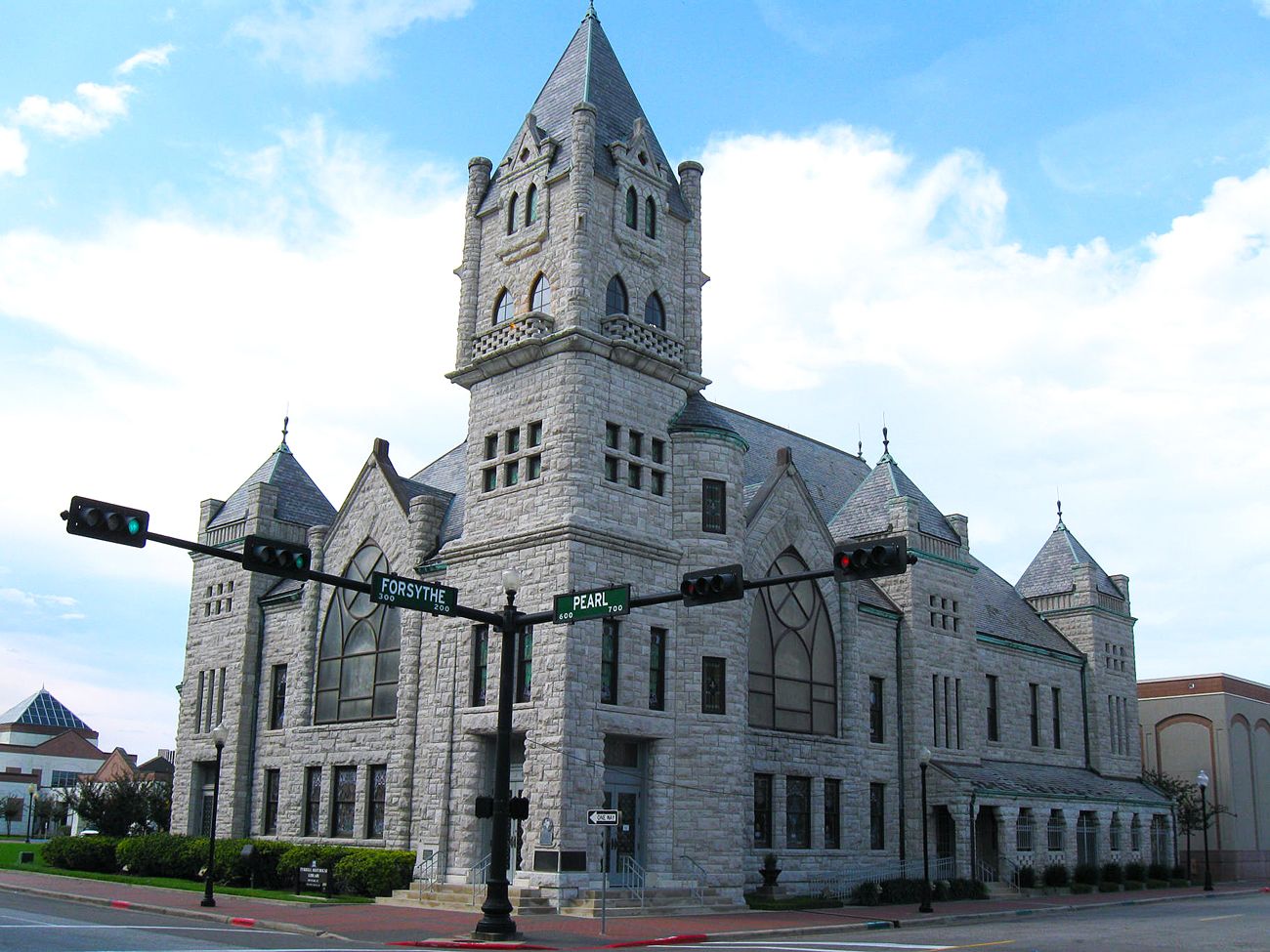
Originally built as a church in 1903, the Tyrrell Historical Library is a beloved landmark in the city of Beaumont, about 80 miles west of Houston. In 1923, oil tycoon “Captain W. C.” Tyrrell purchased the church and donated the building to the city to be used as a library, which opened in 1926. Exhibiting Richardsonian Romanesque and Victorian Gothic architecture styles, the stone castlelike structure is easily one of the most beautiful libraries in the Lone Star State. Outside, it features dramatic archways and stained glass windows, while inside are extensive archives of materials relating to the culture and history of southeast Texas.
Iowa is renowned for producing many of America’s best journalists and fiction writers — offering residencies, workshops, and writing camps across the state — so it’s no surprise this Midwestern state is also home to a bookworm’s dream. The State Law Library in Des Moines, located on the second floor of the state Capitol building, features Victorian-style architecture with spiral staircases, elaborate chandeliers, and stacked shelves of approximately 100,000 books. With everything from fiction to Iowa-related legal documents, the library is a wonderful place to be inspired.
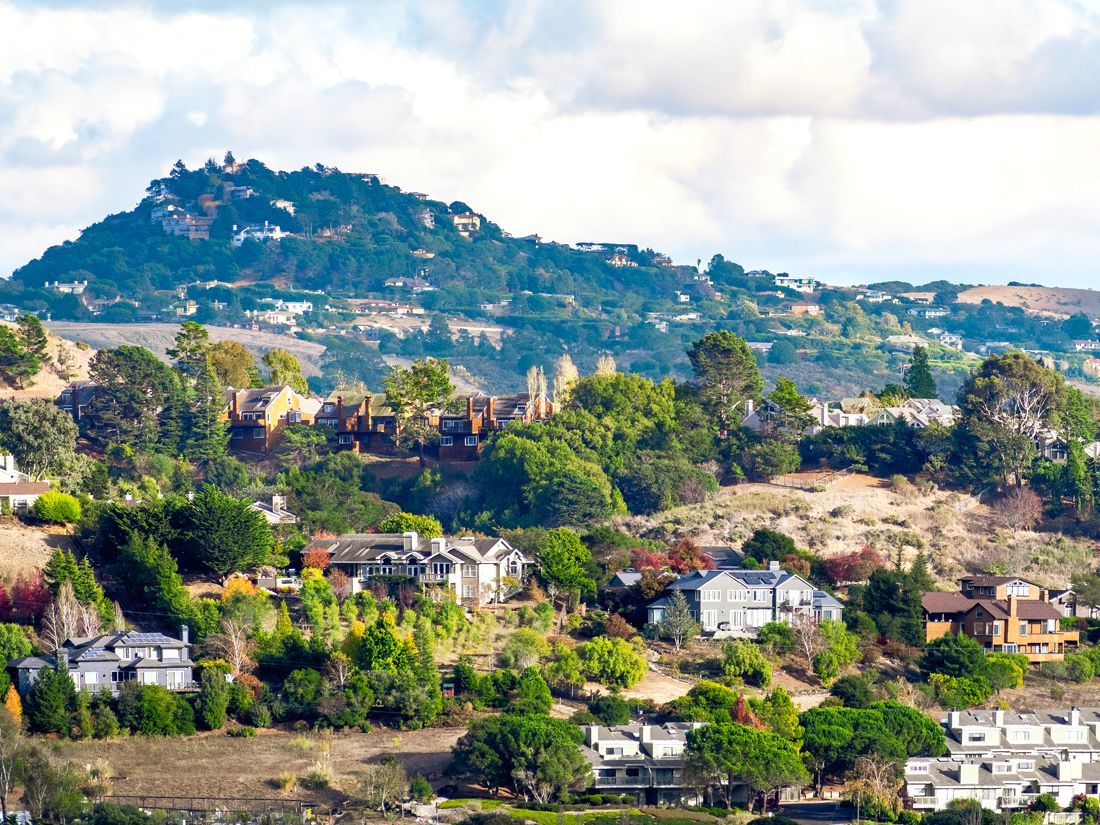
If snuggling up with a good book in a chair beneath towering redwoods sounds like an ideal way to spend an afternoon, you should head to the Mill Valley Public Library in Marin County in the San Francisco Bay Area. Built in 1966, the unique structure seems to blend into the surrounding forest. Inside, it features handcrafted walnut furniture and many original works of art. There’s also a deck overlooking a park with a creek, a wood-burning fireplace, and floor-to-ceiling windows with views of the surrounding woods.
A popular wedding venue in Music City, Nashville Public Library’s Main Library is located two blocks south of the Tennessee Capitol. Designed in a modern classical style, the opulent building is made of granite, marble, and quartz. It houses a grand staircase in the lobby, large windows with views of the state Capitol, historic murals, skylights, and lots of outdoor space for reading or working on a sunny day. The stately interior houses impressive collections spanning three floors, including works on civil rights and the women’s suffrage movement.
Arabian Library – Scottsdale, Arizona
Credit: David Robinson/ 500Px Plus via Getty Images
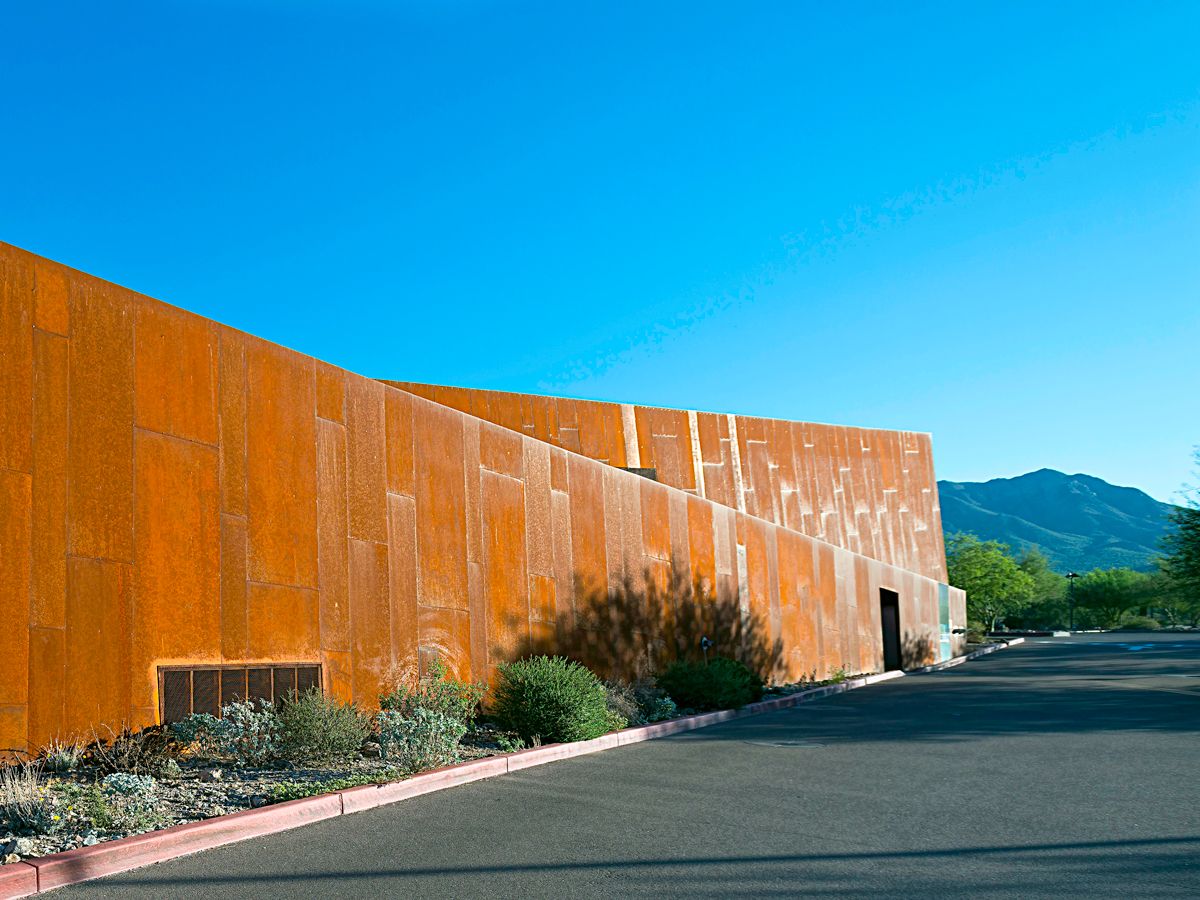
Named for a breed of horse popular in the Middle East, Scottdale’s Arabian Library, opened in 2007, takes inspiration from the red-rock slot canyons of northern Arizona. Featuring weathered walls, an earthen stone roof, and landscaped grounds with native paloverde trees and hopbush shrubs, the modern library offers a tranquil environment for visitors. When the sun hits the library at dawn and dusk, the reddish-brown building is particularly riveting.
Hillary Rodham Clinton Children’s Library – Little Rock, Arkansas
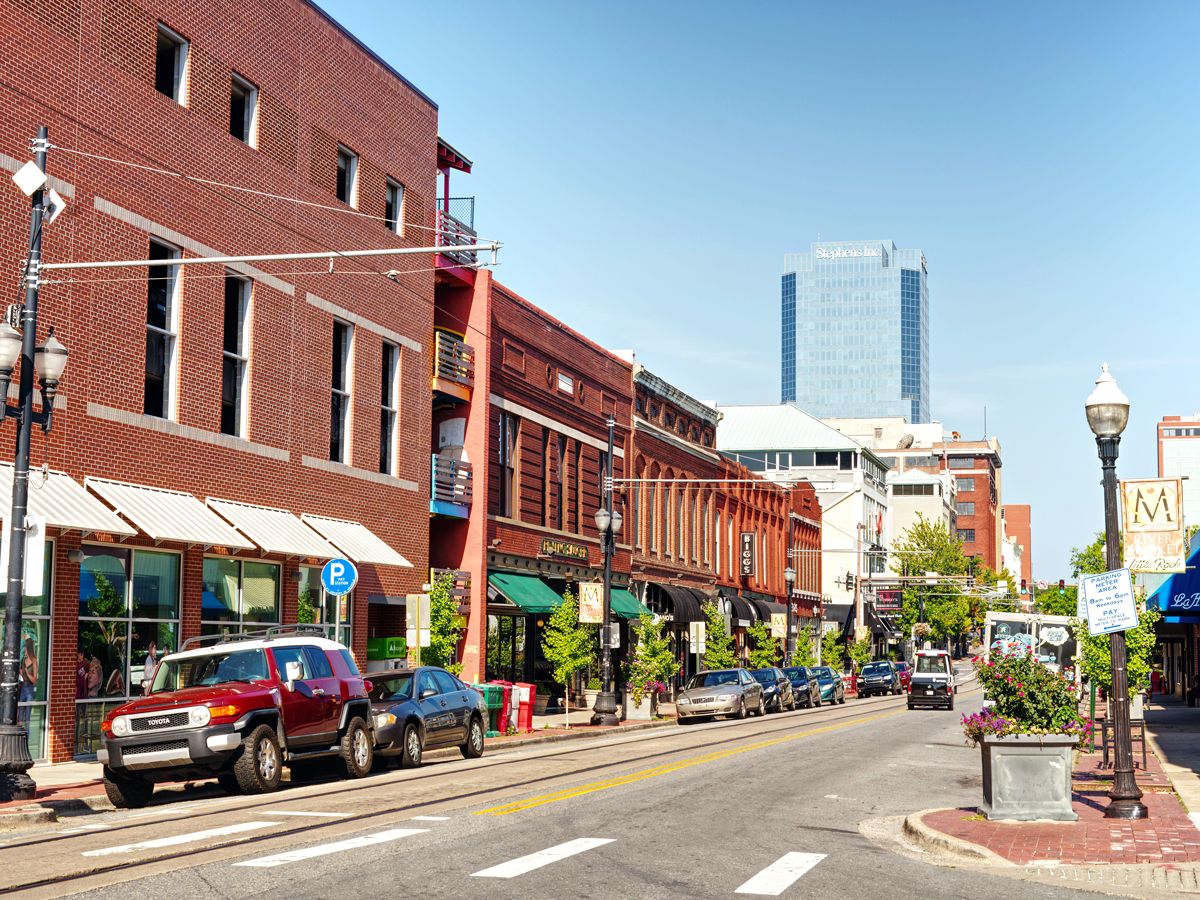
The Hillary Rodham Clinton Children’s Library and Learning Center was built in 2013 to foster imagination in young ones. The former first lady’s namesake covers 30,000 square feet and 6 acres in downtown Little Rock, where the Clintons once lived. Home to a greenhouse, vegetable garden, arboretum, and kitchen for learning about the culinary arts, the space is much more than a place to read — it’s a place for kids to learn more about their environment and experience the great outdoors.
Hot Springs Public Library – Hot Springs, South Dakota
The log cabinlike exterior isn’t what you’d typically expect of a library building, but Hot Springs Public Library fits right into its surroundings in the Black Hills of South Dakota. With stone fireplaces and large windows that peer out onto the surrounding scenery, the building is a cozy retreat for bookworms and those in search of much-needed peace and quiet. When the sun comes out, readers can also enjoy the outdoor patio.
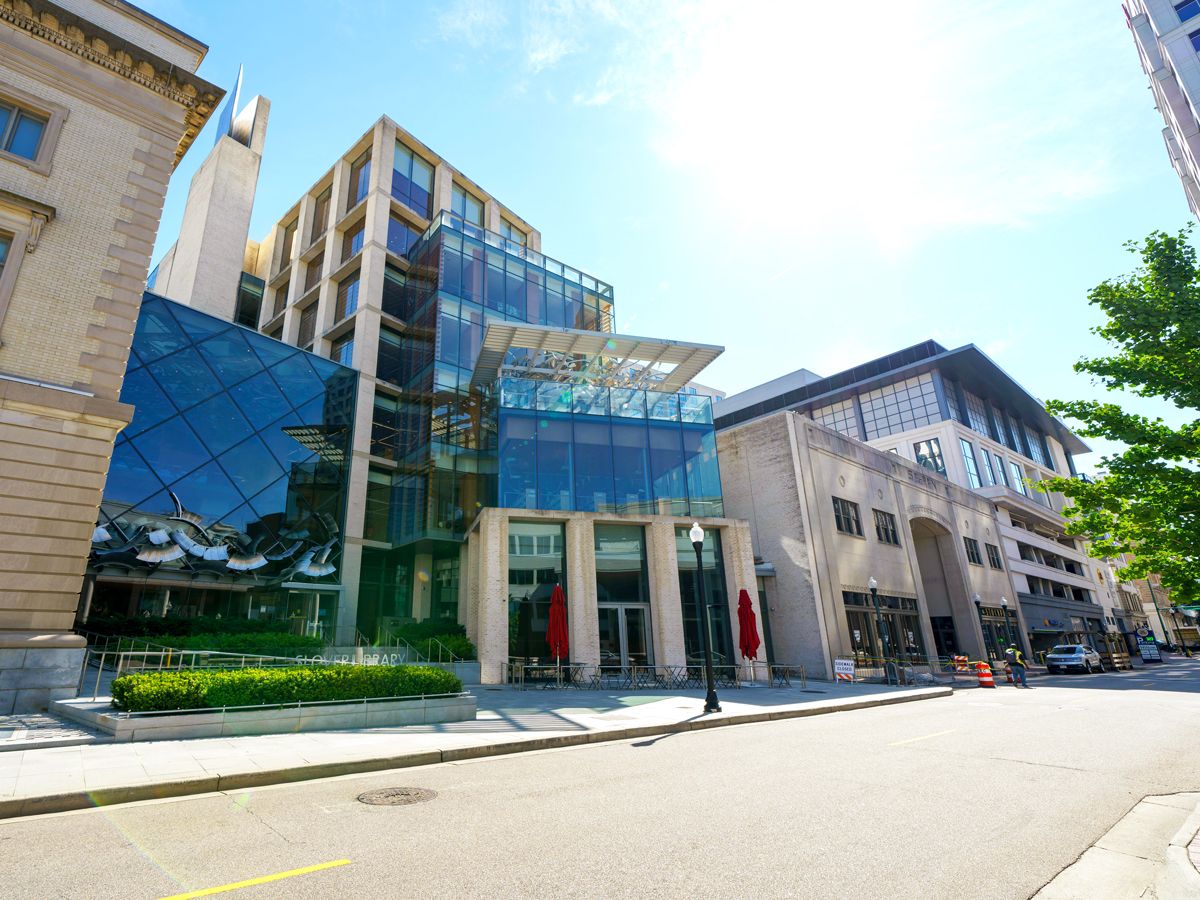
Blending modern and traditional architecture styles, the Slover Library in Norfolk represents the multiple uses and characteristics of libraries today, as places for historic preservation and portals for cutting-edge technology used to access information. As one of the most technologically advanced libraries in America, the structure was designed with sustainability in mind, earning LEED silver certification. With seven floors of computer labs, an art studio, lounge spaces, a waffle shop, and shelves of books, Slover really is more than a library — it’s the city’s ideal hangout spot.
Advertisement
More from our network
Daily Passport is part of Inbox Studio, an email-first media company. *Indicates a third-party property.