Daily Passport writers have been seen in publications such as National Geographic, Food & Wine, CBC, Condé Nast Traveler, and Business Insider. They're passionate about uncovering unique destinations and sharing expert tips with curious travelers.
The average hotel room contains the same old gadgets we’ve all seen before — an alarm clock from the 1990s, a remote control that only sort of works, and a hair dryer that blows way too hot. But there are plenty of other useful items you can (and should) bring to elevate a hotel stay. These nifty products include easy-to-install safety mechanisms, tools to keep your room clean, and other convenient items that promise to make time on the road much easier. Check out these five handy gadgets for your next trip.
Portable Lock
Credit: Boy_Anupong/ Moment via Getty Images
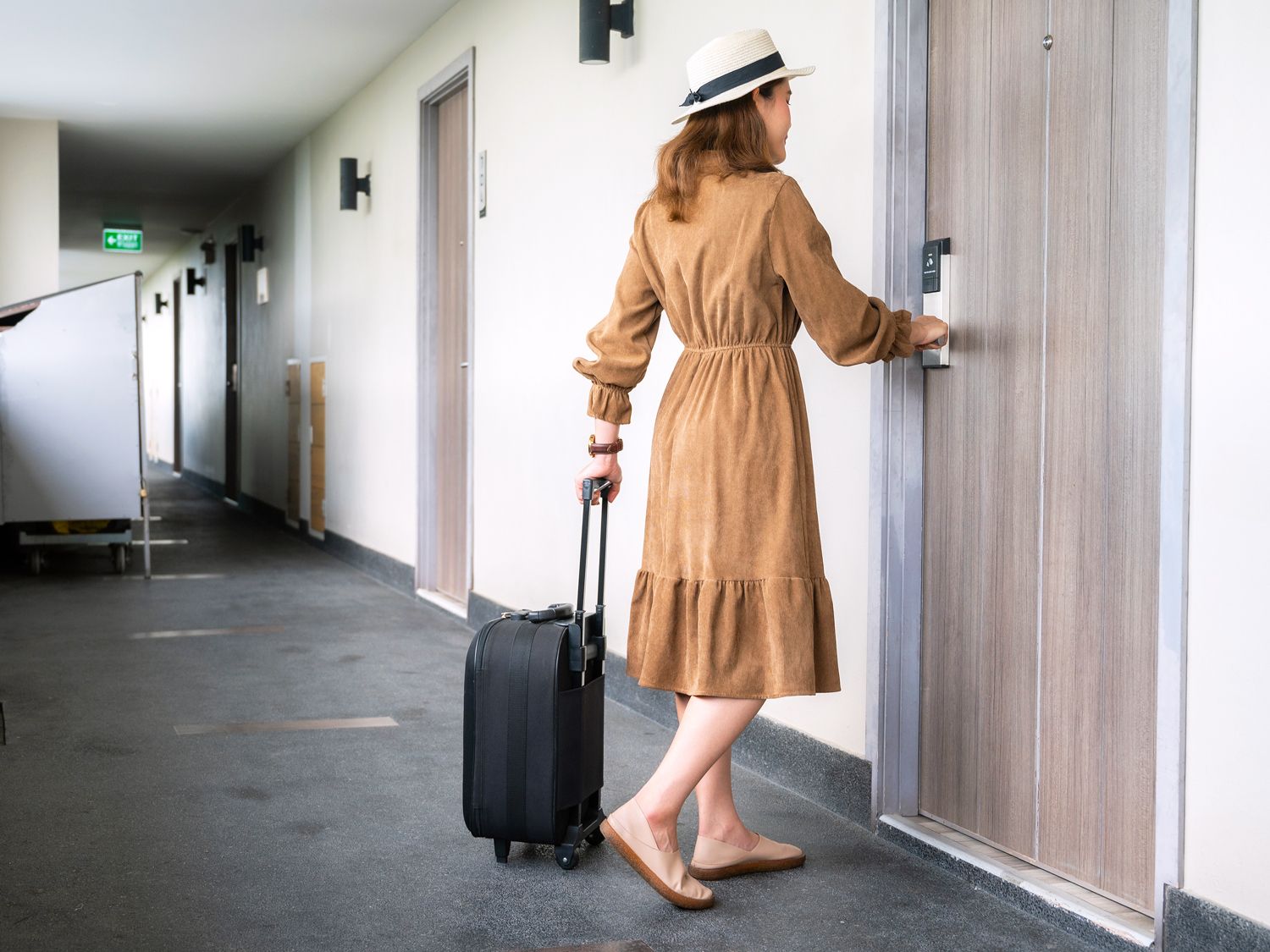
Not every hotel door locks automatically when you close it, but even those that do are still at risk of being jimmied open. The Addalock can help you sleep soundly by keeping that door firmly shut and providing much-needed peace of mind in your hotel room. To install this device, insert the metal “claws” into the strike of the door and then close the door to hold the Addalock in place. Then, grab the dangling red handle and insert the moving metal rod into the portion already attached to the door. Once installed, the door will be securely locked from the inside without any way to open it from the hallway, even for people with a key.
Virtual Private Network
Credit: Anchiy/ E+ via Getty Images
Many hotel Wi-Fi networks are vulnerable to cyber attacks, which puts your personal data at risk. This includes your name, credit card information, passwords, and other sensitive information. To protect against these potential attacks, it’s worth using a virtual private network (VPN). VPNs encrypt sensitive information on your computer so that it can’t be accessed by hackers. Plus, they are easy to install. Just go to your device’s network settings, search for the specific VPN you want to use, enter a username and password, and hit “connect.” Some of the most popular VPN services include NordVPN and Private Internet Access.
Travel Adapter
Credit: Pheelings Media/ iStock via Getty Images
Travel adapters are especially useful when staying in a hotel abroad, as they’re compatible with a wide range of unfamiliar outlet shapes. But this device is also great for domestic travel, just in case you need a USB-C outlet or another connection the hotel may not have. For instance, this adapter works in over 200 countries and includes USB and USB-C slots, in addition to a slot for more traditional power plugs. You can also plug in multiple devices and charge your computer, smartphone, and tablet all at once.
Personal Toiletry Holders
Credit: onsuda/ iStock via Getty Images
Complimentary hotel toiletries can be hit-or-miss, and you may wish that you had the personal care products you use at home. Thanks to LiquiSnugs, you can. These tiny silicone bottles are easy to fill with any shampoo, conditioner, soap, or other squeezable toiletry. This allows you to bring a small portion of your preferred shampoo with you on the road rather than lug around the whole bottle. LiquiSnugs are also TSA-approved and are designed to prevent any leaking in your luggage. Plus, they aren’t just for personal care items — you can also fill them with your favorite condiment to spice up that room service order.
UV Light Sanitizer
Credit: cameraguy/ iStock via Getty Images
Door handles, telephone buttons, and the remote control are some of the most germ-covered areas of any hotel room. This portable UV light from LivePure helps clean these touch points by killing 99.9% of invisible germs and bacteria. The light easily fits into any bag or purse so you can take it with you on your next trip. It’s also great to bring when you leave the hotel and use public transportation, go out to dinner at a crowded restaurant, or stop off anywhere else that you may be concerned about germs.
Note: All featured products and deals are selected independently and objectively by the author. Daily Passport may receive a share of sales via affiliate links in content.
Advertisement
More from our network
Daily Passport is part of Inbox Studio, an email-first media company. *Indicates a third-party property.
8 Things Passengers Do That Flight Attendants Hate
By
Rachel Gresh
Read time: 6 minutes
June 26, 2024
Updated: June 26, 2024
8 Things Passengers Do That Flight Attendants Hate
Tips •June 26, 2024•Updated: June 26, 2024
By Rachel Gresh
Author
Rachel Gresh
Rachel is a Washington, D.C.–based travel and lifestyle writer with roots in the Great Lakes region. When she’s not writing for publications such as The Discoverer and Interesting Facts, you’ll find her wandering through museums or exploring destinations off the beaten path.
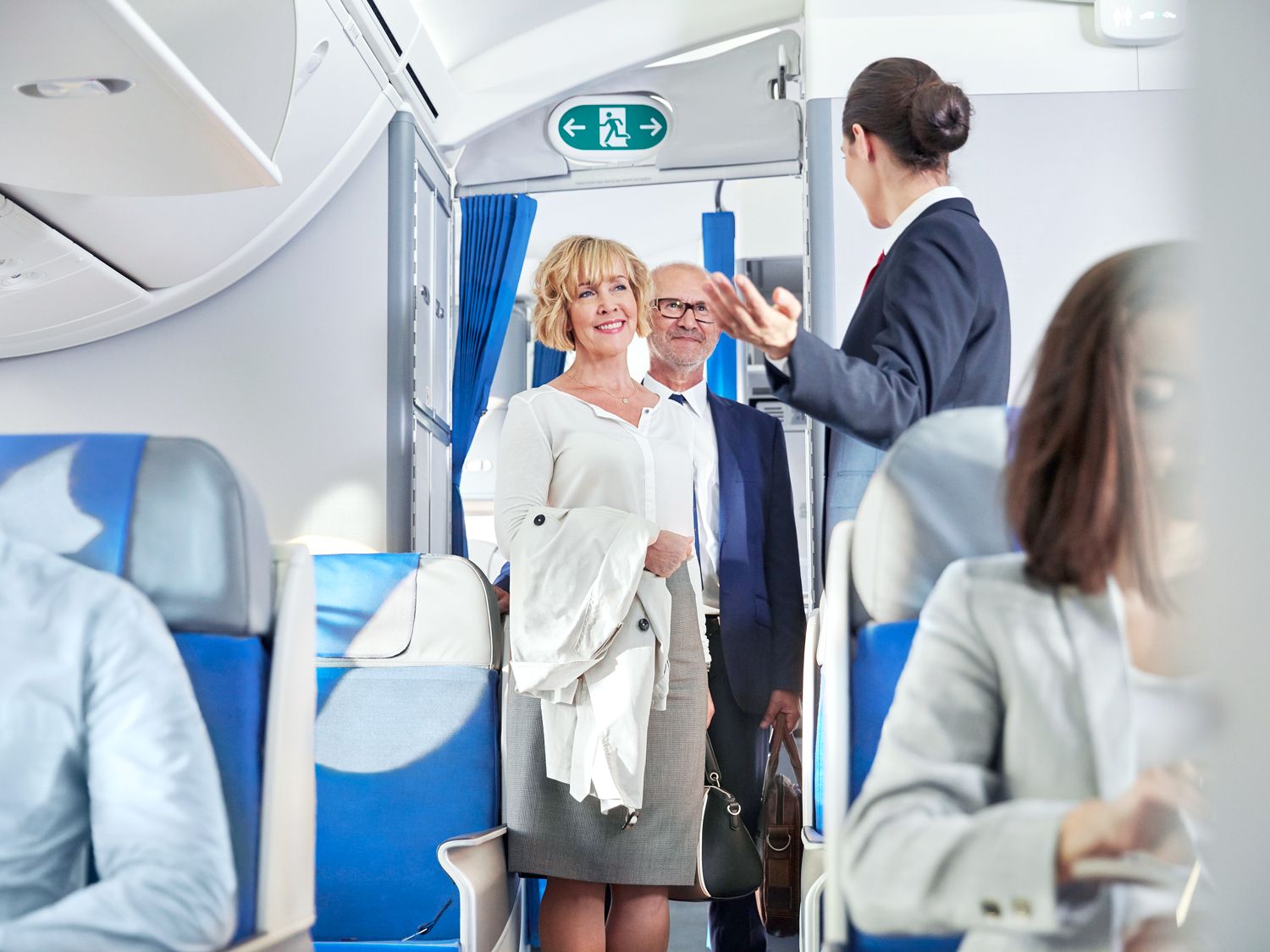
While flying on an airplane, following directions, limiting loud noises, and not making a mess (hopefully) goes without saying. Still, there are plenty of other things passengers do that make flight attendants’ skin crawl — and they might not even realize they’re doing it. Here are some of the most annoying things airline passengers do, according to flight attendants.
Talking During the Safety Demonstration
Credit: ake1150sb/ iStock via Getty Images
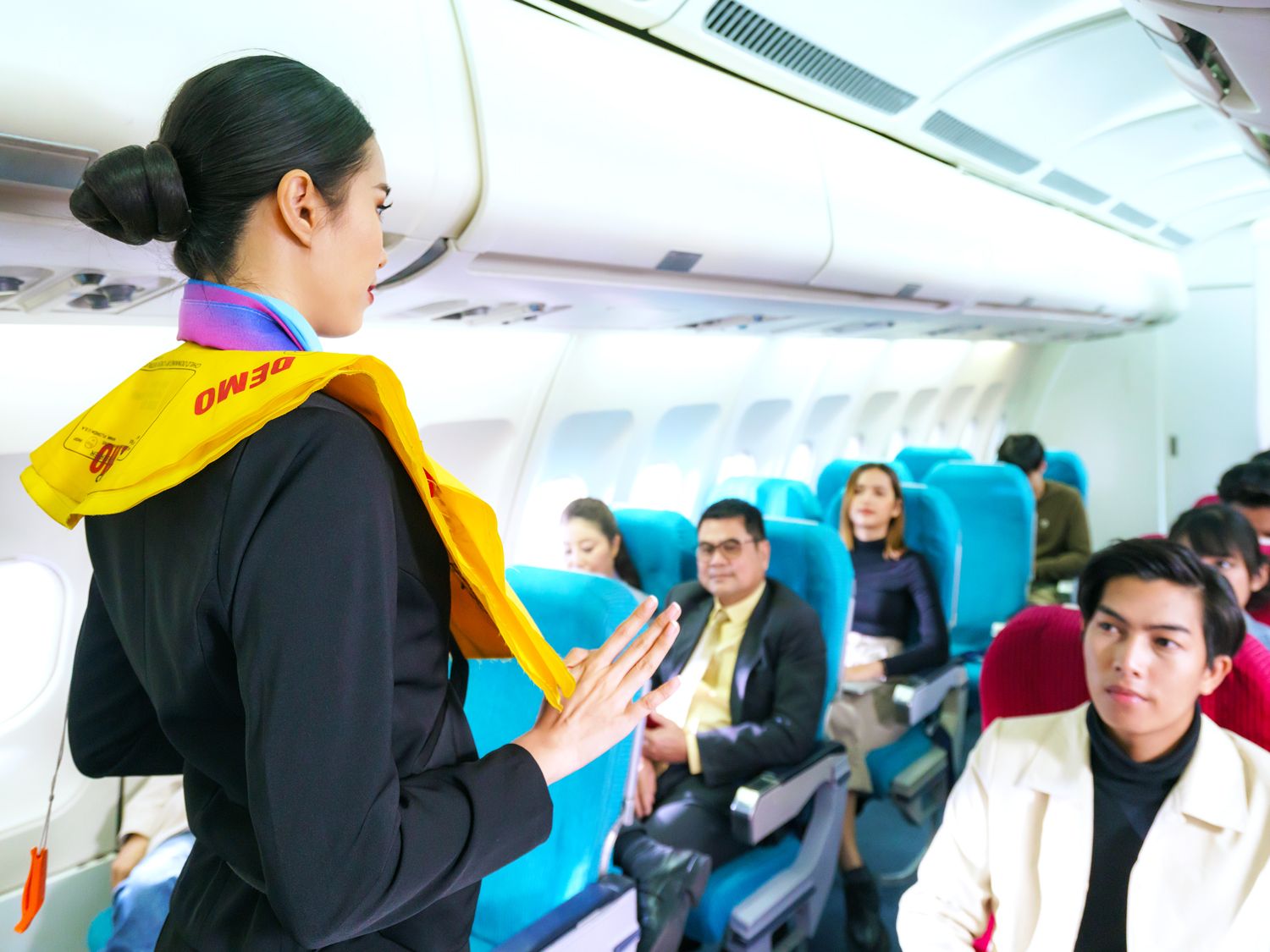
It’s not just that flight attendants want passengers to pay attention during safety demonstrations — the Federal Aviation Administration requires it. You never know when you might need this vital information during an emergency. Wearing headphones is one thing, but flight attendants say it’s incredibly annoying when passengers talk loudly during the safety presentation. Not only is it evident that they aren’t paying attention, but they’re also distracting nearby passengers and possibly preventing them from hearing potentially lifesaving safety information.
Special Requests During Trash Time
Credit: Me 3645 Studio/ Moment via Getty Images
A simple way to make flight attendants’ lives easier is to let them handle one task at a time. During trash collection, try not to make any extra requests requiring them to return to the galley. This is especially true when asking for drinks or snacks while flight attendants are collecting trash — they can’t write down orders with both hands on the trash bag, so it’s all from memory. As one flight attendant pointed out on Reddit, “How am I going to remember that 6B wants a Coke, 10A wants coffee with three creams, 12F wants a vodka soda, 13F needs headphones, and 20D wants a beer by the time I’ve finished doing trash for 30 rows?”
Of course, flight attendants are there to assist you, but they’re primarily focused on safety. Any other needs are secondary and should be addressed while they aren’t preoccupied. For example, try not to ring the bell for trash collection (unless you’ve made a big mess and need assistance). Flight attendants come around at least once before the flight is over.
Invading Their Personal Space
Credit: Anchiy/ E+ via Getty Images
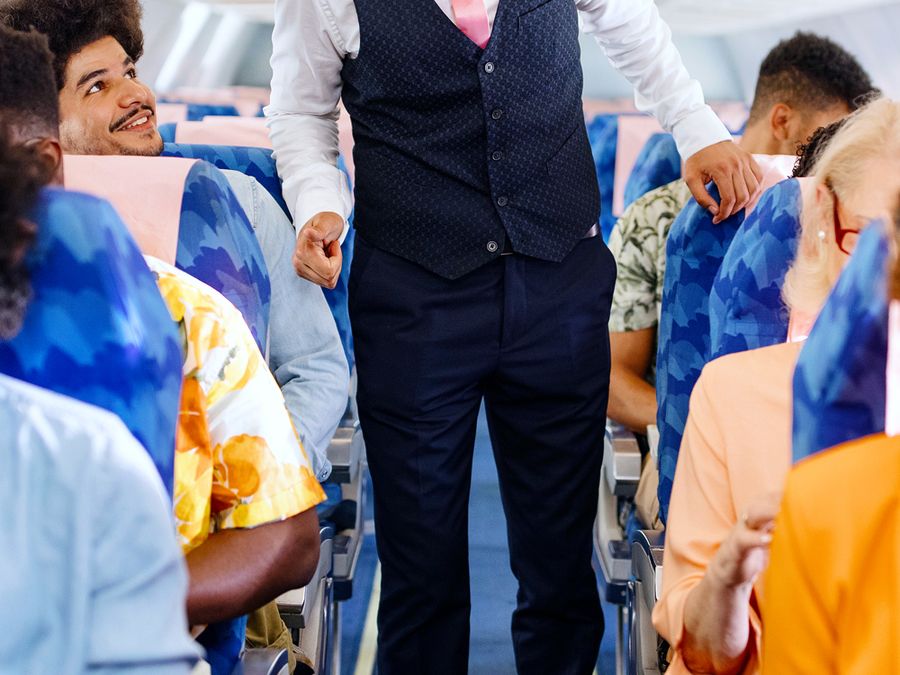
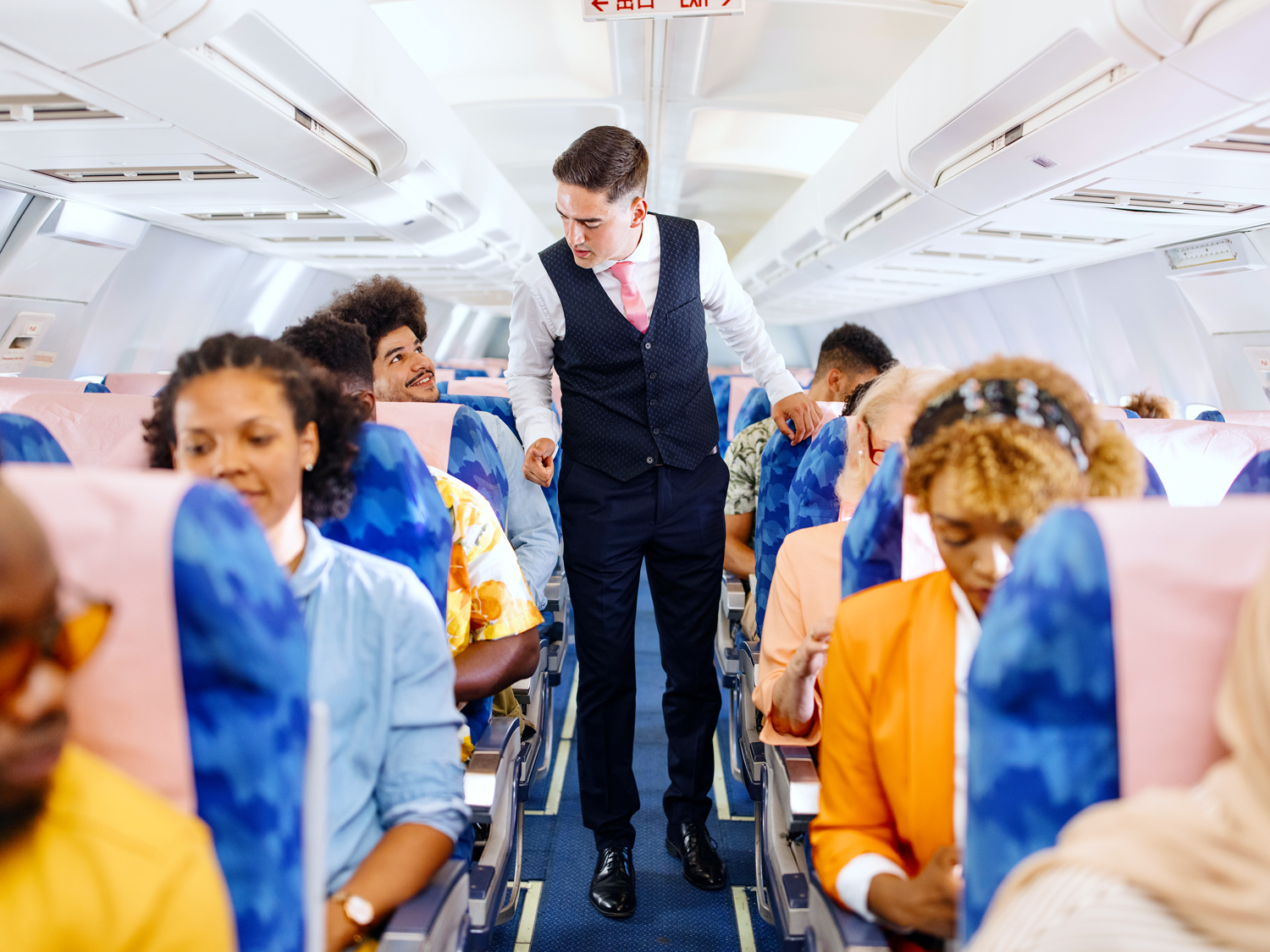
It may seem obvious, but unfortunately, this is one of flight attendants’ most common complaints: Never poke or tap airline staff to get their attention. Instead, politely wait until they’re done with their task. You’d never poke a bus driver, waiter, or retail employee to get their attention, but for some reason, passengers don’t seem to honor personal space on planes, according to many flight attendants on Reddit. Similarly, customers should always respect crew members’ personal space in airports.
Not Obeying the Fasten Seatbelt Sign
Credit: urbazon/ E+ via Getty Images
When the “fasten seatbelt” sign is on during periods of turbulence, both passengers and flight attendants should be seated. This isn’t a good time to ring the call bell for a drink or to get up and go to the bathroom — you could hurt yourself and others. After all, turbulence accounts for around 75% of annual weather-related incidents on commercial planes. A good rule of thumb: If flight attendants are in their jumpseats, you should be in your seat, too.
Not Properly Disposing ofDiapers
Credit: tatyana_tomsickova/ iStock via Getty Images
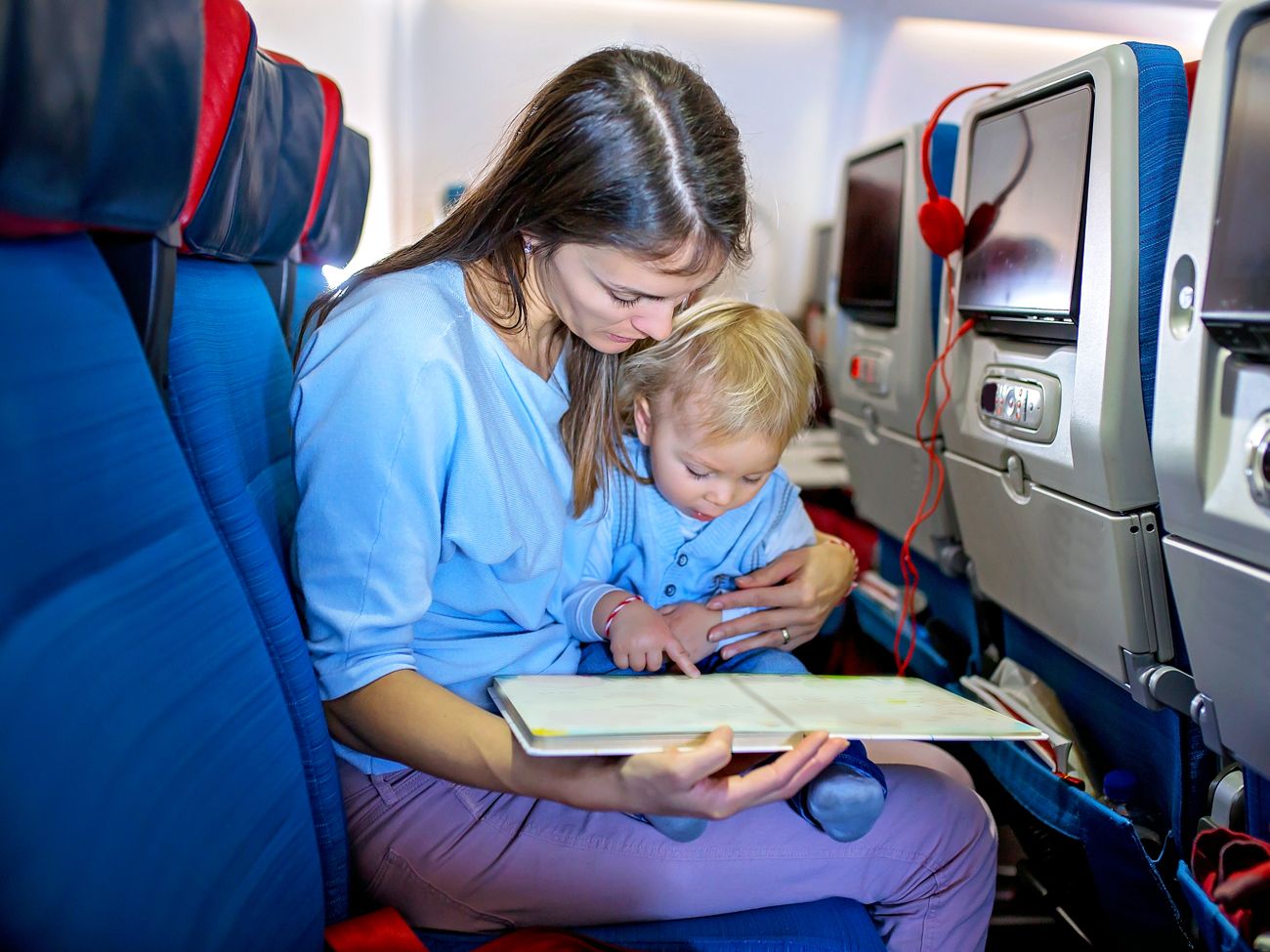
Flight attendants work to make you more comfortable while flying with your little ones, but they ask you to extend the same common courtesy to them. Passengers should take used diapers to the lavatory and dispose of them in the trash can, and never try to flush them. And please, don’t hand the diaper to a flight attendant (yes, it happens) or try to put it in any other onboard trash bag aside from the one in the bathroom, because doing so can result in a smelly cabin. The same goes for changing diapers: Always take little ones to the onboard lavatory for that task. You might be surprised at the number of flight attendants who have witnessed parents changing diapers on a seat or tray table.
Swapping Seats
Credit: Dobrila Vignjevic/ E+ via Getty Images
Only move to an empty seat after checking with a flight attendant first. Chances are, that seat is taken, and the passenger with that seat assignment hasn’t boarded yet. Plus, there’s often an extra charge to reserve specific seats, explains one flight attendant, who says their biggest annoyance is “seat problems.” When someone sits in a seat they didn’t reserve or pay for, it “causes a huge delay during boarding because we have to figure out who’s sitting in the wrong seat.”
Another flight attendant adds that passengers often move to an upgraded seat, and “they get angry when they have to move to the correct seat.” Of course, flight attendants are happy to work with you if you’re separated from your children on a flight, for example, but the best course of action is to determine seating with the gate agent before you board (if you didn’t already pick out your seats during booking).
Poor Lavatory Etiquette
Credit: Jackal Pan/ Moment via Getty Images
If you need to use the lavatory during your flight, always wait until the seatbelt sign is turned off. If you try to use the restroom before the plane takes off, you could delay the flight because everyone needs to be seated while the aircraft is taxiing. “People don’t realize we have to wait for everyone to be seated before we can taxi,” a flight attendantexplains on Reddit.
Many flight attendants have also seen passengers walking to the bathroom in only their socks — or worse, bare feet. This is not only unsanitary, but it also wouldn’t be considered normal behavior anywhere else in public. And remember to lock the lavatory door while you’re in there to avoid any in-flight mishaps and shut it on your way out. Flight attendants spend most of their time near the bathroom during flights, and they say it can get smelly if the door is left open.
Baggage Blunders
Credit: Hispanolistic/ E+ via Getty Images
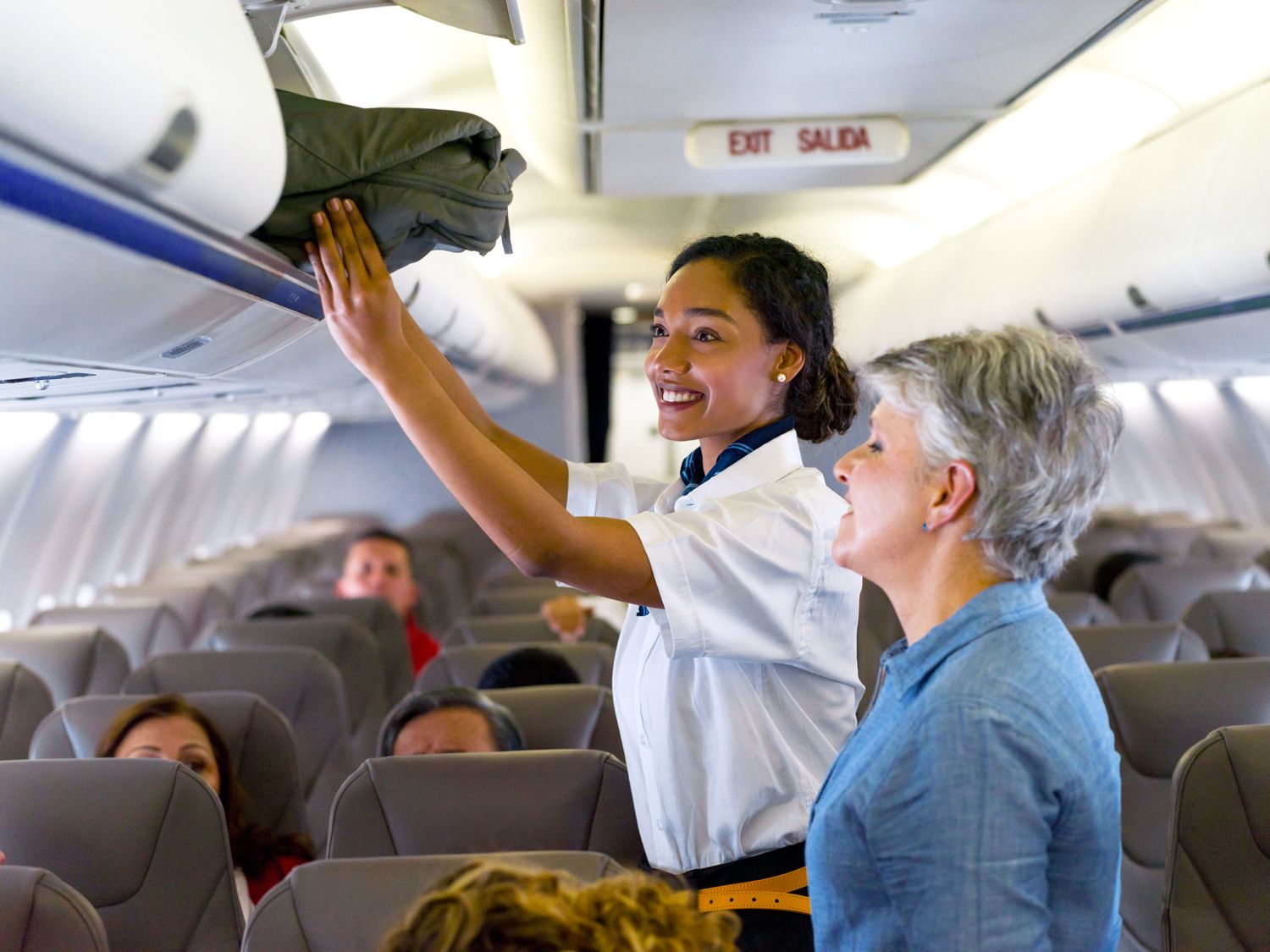
Large carry-ons such as roller bags and duffel bags go in the overhead bins, but smaller items — purses, jackets, hats, and small backpacks — belong on the floor in front of you. This is especially important on fully booked flights or smaller planes where overhead space is limited. Takeoff can be delayed while attendants reorganize overhead bins.
“When the flight is completely sold out, and we know we’re gonna run out of bin space, people will fill the overhead bin with their jackets and purses and small things that could go under the seat in front of them,” a flight attendant explains, adding that people do this even when they are specifically asked to move small items under the seat. For safety reasons, flight attendants aren’t supposed to help you lift your bags, either, so keep that in mind when putting something in the overhead bin.
What Flight Attendants Love: Courteous Customers
Credit: Caia Image/ Collection Mix: Subjects via Getty Images
The best gift you can give a flight attendant is simply following their directions. This makes their job easy and keeps things running smoothly. But perhaps the second-best gift you can give them is a smile. Sadly, one of the biggest annoyances of flight attendants is that plenty of passengers don’t say “hello,” “goodbye,” or acknowledge them at all — so sometimes, simply asking how they’re doing goes a long way. Some flight attendants feel extra special if a passenger goes out of their way to give them a small gift, such as candies, a Starbucks gift card, or even a thank-you note. After all, it’s always nice to feel appreciated.
Advertisement
More from our network
Daily Passport is part of Inbox Studio, an email-first media company. *Indicates a third-party property.
Fiona has spent her career exploring the world and working in the travel industry, turning her lifelong passion into a profession. From planning custom trips to sharing stories as a travel writer for publications such as The Discoverer, she’s all about helping others experience the world in a deeper, more meaningful way.
Losing your passport on vacation is a stressful scenario no traveler wants to find themselves in. Fortunately, there are measures in place to help you remedy the situation and get home quickly from your trip abroad. Follow this step-by-step guide for what to do when you lose your passport on vacation.
Don’t Panic
Credit: miodrag ignjatovic/ E+ via Getty Images
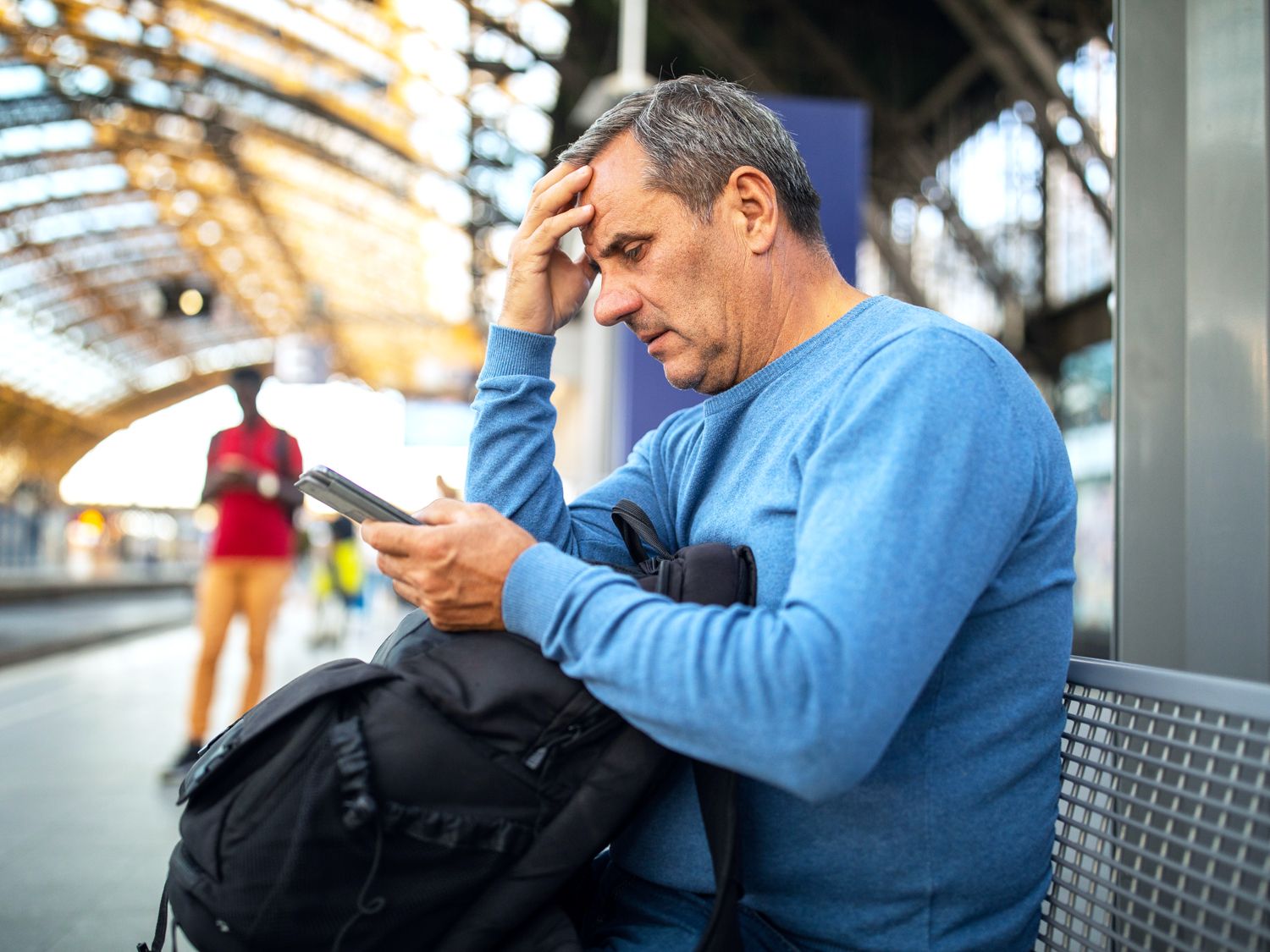
Sure, it’s easier said than done, but remember that panicking will not bring your passport back. It’s important to take a deep breath, think back to where you last saw it, and retrace your steps. If your passport still doesn’t turn up, stay calm and know that, while inconvenient, there are processes in place to help you obtain a new one.
File a Police Report
Credit: VioletaStoimenova/ E+ via Getty Images
Whether you suspect your passport was stolen, lost, or misplaced, your next step should be to file a report with the local authorities. Reporting the situation is less about the police locating your passport and more about you obtaining official documentation. However, this is not a mandatory step. If circumstances prevent you from doing this or your travel itinerary doesn’t allow for it, you can still apply for a new passport without an official report.
Contact the Nearest U.S. Embassy or Consulate
Credit: Inna Polekhina/ iStock via Getty Images
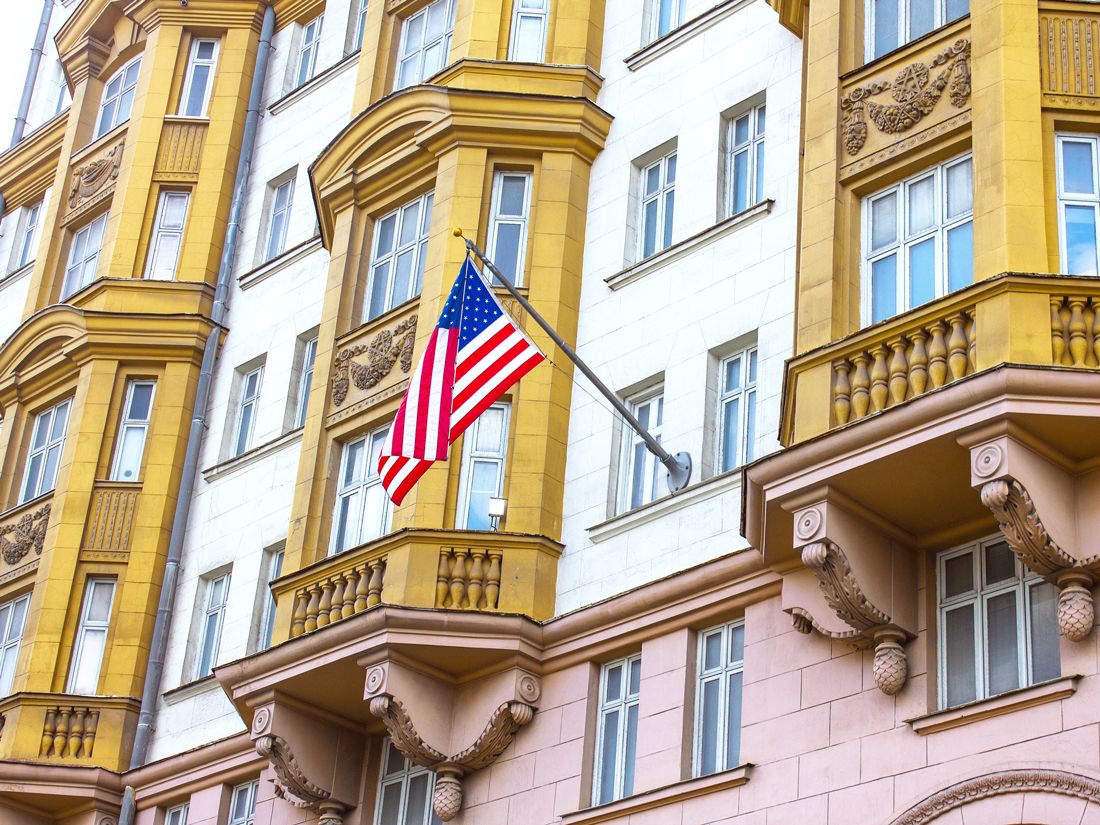
Next, contact the nearest U.S consulate or embassy and ask to speak to their consular section to report your passport lost or stolen. You will need to make an appointment to appear in person at the nearest location to apply for a new passport, and it could take some time to get there. Depending on the situation and urgency, the consular section may issue you a limited-validity emergency passport, which can usually be ready within one day and is good for up to one year. If there’s sufficient time, you may be issued a fully valid passport good for 10 years. Both passports have the standard $140 fee attached (as of 2024).
Apply for a New Passport
Credit: mediaphotos/ iStock via Getty Images
To apply for a new passport, you will need to bring the following items with you to your in-person appointment at the embassy or consulate: a passport photo, another form of valid identification (such as a driver’s license), proof of U.S. citizenship (a birth certificate or photocopy of your passport), your flight itinerary, a completed DS-11 Passport Application, and a DS-64 Statement Regarding a Lost or Stolen Passport. (In the event you can’t provide all these documents, the State Department’s website notes that consular staff will do their best to assist.)
Given these requirements for obtaining a new passport, it’s critical that you keep a virtual copy of your passport on your phone, as well as a photocopy. It’s also advisable to carry your driver’s license with you as a second form of identification. Remember to store these important documents in a separate place from your passport and avoid tucking them into the flap or pages of your passport.
Be Flexible With Your Travel Plans
Credit: d3sign/ Moment via Getty Images
Keep in mind that embassies and consulates typically do not issue passports on weekends or holidays. If you happen to lose your passport during these periods and have an upcoming flight, you’ll likely need to reschedule. This will ensure sufficient time to obtain a new passport before your departure. (Travel insurance may be able to offset some of these costs.)
Exchange Your Passport at Home
Credit: nortonrsx/ iStock via Getty Images
If you were issued a limited-validity emergency passport, this can be exchanged for a fully valid one when you get home. Complete the DS-5504 form along with another DS-11 Passport Application form and submit by mail. If you’ve already paid the $140 passport fee abroad, you won’t need to pay any additional charges, unless you opt for expedited processing, which costs an extra $60.
Advertisement
More from our network
Daily Passport is part of Inbox Studio, an email-first media company. *Indicates a third-party property.
The Biggest (and Best) Fourth of July Celebrations in America
By
Fiona Mokry
Read time: 4 minutes
June 26, 2024
Updated: June 26, 2024
The Biggest (and Best) Fourth of July Celebrations in America
Culture •June 26, 2024•Updated: June 26, 2024
By Fiona Mokry
Author
Fiona Mokry
Fiona has spent her career exploring the world and working in the travel industry, turning her lifelong passion into a profession. From planning custom trips to sharing stories as a travel writer for publications such as The Discoverer, she’s all about helping others experience the world in a deeper, more meaningful way.
Marking the day the Declaration of Independence was adopted on July 4, 1776, America’s Independence Day is celebrated throughout the country with fireworks, parades, and backyard barbecues. Some people might prefer a low-key affair; others are looking for a grand spectacle to commemorate the birth of our nation. If you count yourself among the latter, check out these six Fourth of July celebrations that are renowned as the nation’s biggest and best.
Bristol Fourth of July Parade – Bristol, Rhode Island
Credit: kickstand/ iStock Unreleased via Getty Images
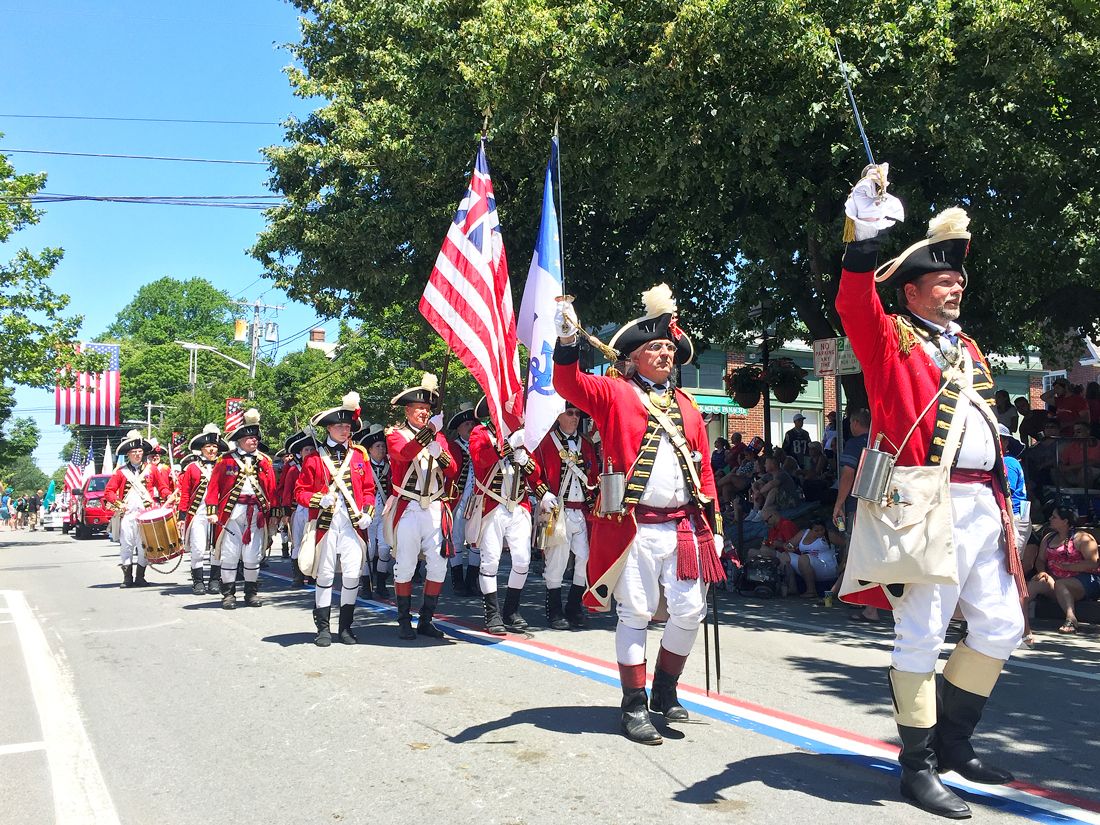
The Bristol Fourth of July Parade in Bristol, Rhode Island, is the centerpiece of the nation’s oldest Independence Day celebration. The festivities began in 1785 when Reverend Henry Wright led patriotic exercises in the town of Bristol that featured hymns and speeches. As community members gathered and marched toward the meeting point, this set in motion what would become the longest-running Fourth of July celebration in the country. Today, Bristol takes its honorary title seriously. The celebration gets underway on June 14 with Flag Day festivities and concludes a full three weeks later with the epic 2.5-mile-long Fourth of July parade that draws up to 200,000 spectators from across the state and around the world.
Macy’s Fourth of July Fireworks – New York City, New York
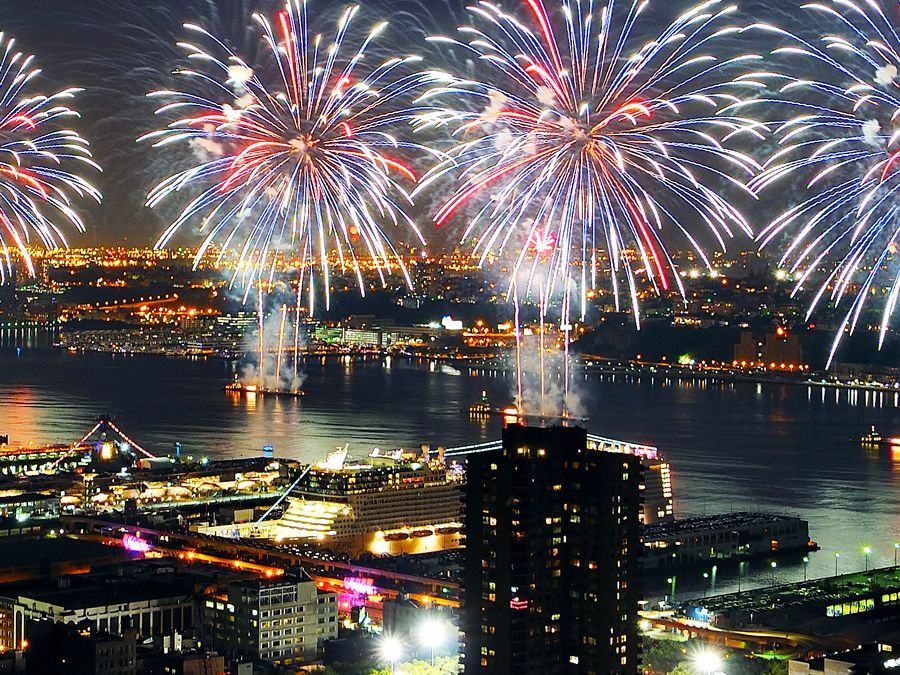
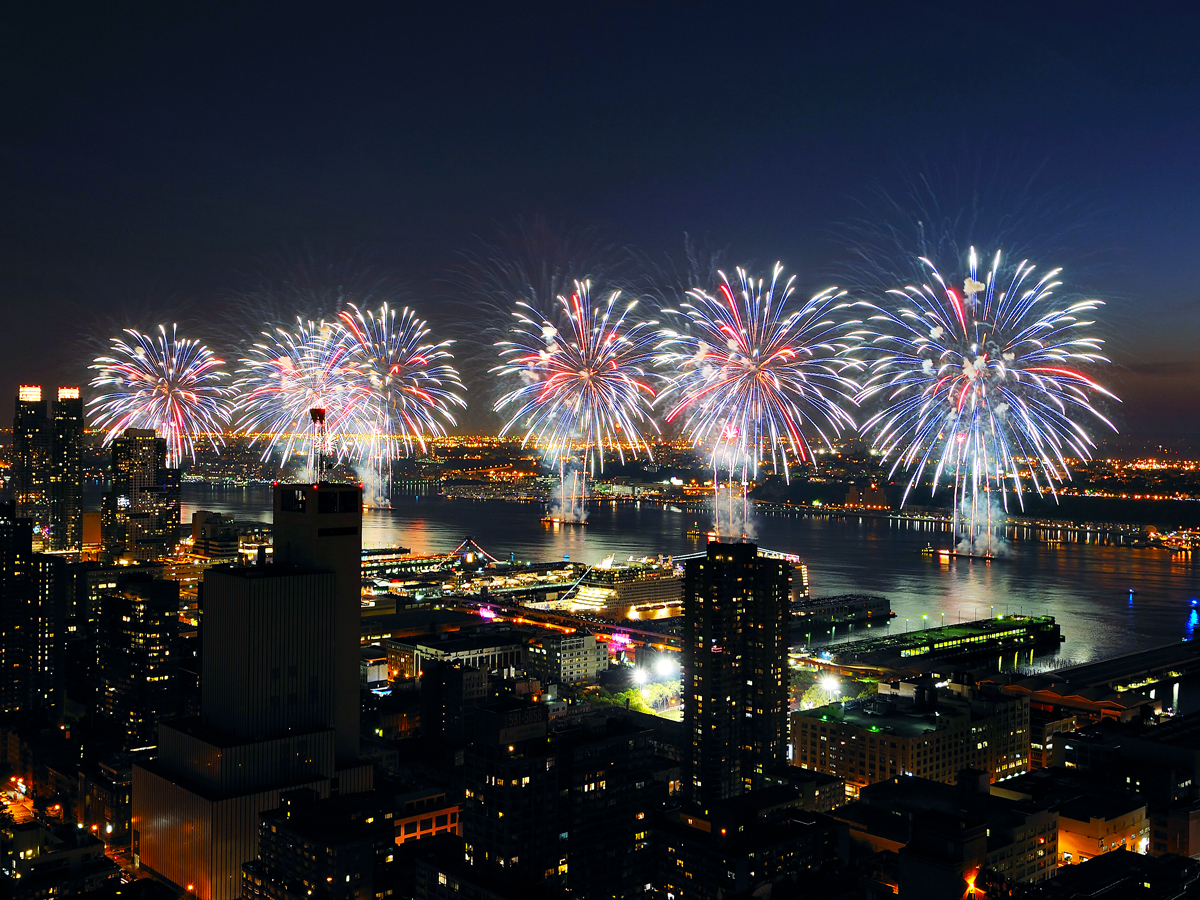
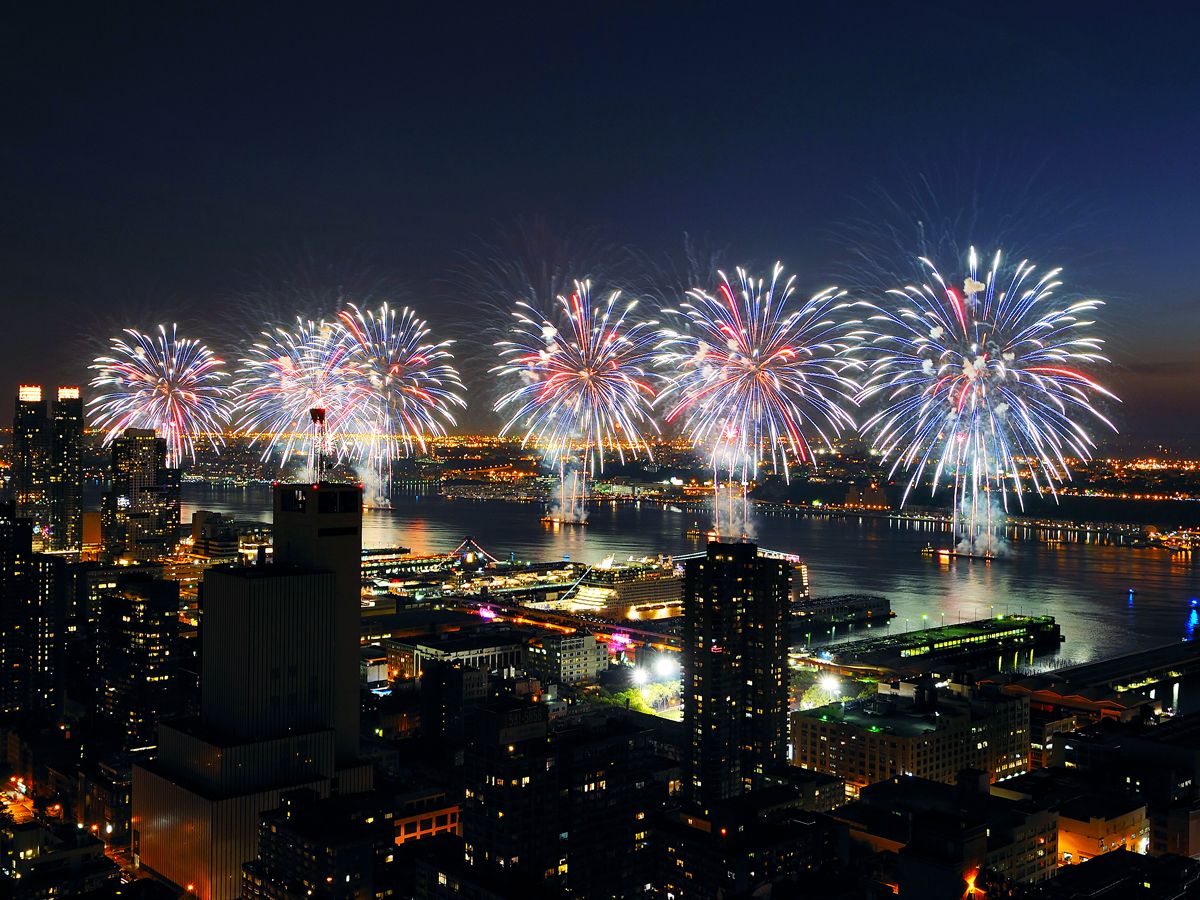
The highly anticipated Macy’s Fourth of July Fireworks attract several million people each year, who come to see the country’s largest Fourth of July fireworks show take place from barges on the Hudson River in New York City. (An additional 15 million people watch the spectacle on TV.) Tens of thousands of fireworks produce the extravagant display, which is accompanied by pyrotechnics, dancing, and live musical performances around the viewing area of the fireworks. There’s no parade with colorful floats and marching bands, but New York City still hosts one of the largest and most spectacular Fourth of July celebrations in the country.
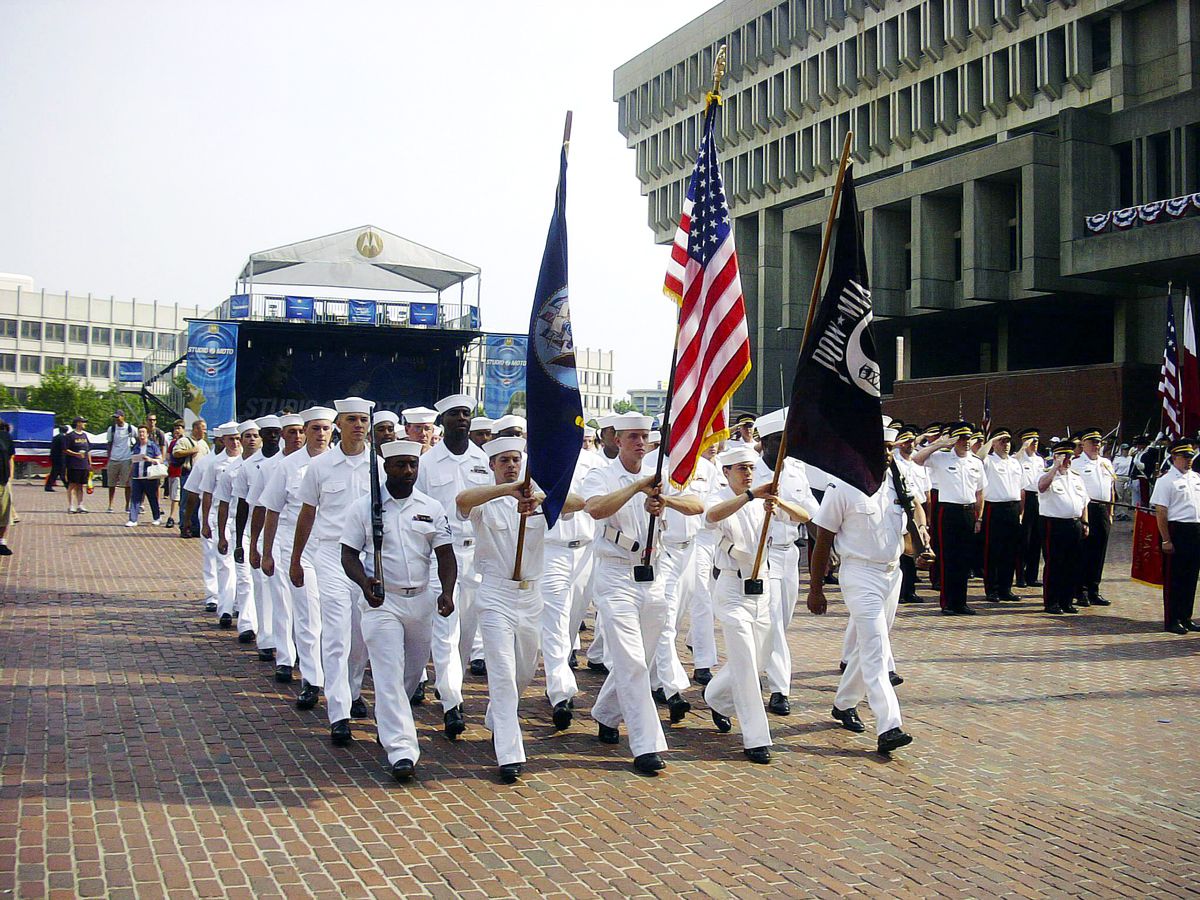
It’s only fitting that, as one of the oldest cities in the nation, Boston would also throw one of the biggest parties in the country to celebrate Independence Day. Harborfest is a multiday festival that takes place in Boston from July 1 to July 4 each year. The festival features an array of events and activities catering to all ages and interests, including historical reenactments, boat tours, live music, food vendors, art markets, a chowder festival, and the famous Boston Pops Fireworks Spectacular fireworks display.
The morning of July 4 starts with a flag-raising ceremony and a wreath-laying ritual at Granary Burying Ground, followed by a reading of the Declaration of Independence at the Old State House and an oration at historic Faneuil Hall. The event concludes with fireworks, as well as the USS Constitution sailing from Boston Harbor to Castle Island and back. In 2022, Boston’s Harborfest drew an estimated 2 million spectators.
Huntington Beach 4th of July Celebration – Huntington Beach, California
Credit: Jeff Gritchen/Orange County Register/ MediaNews Group via Getty Images
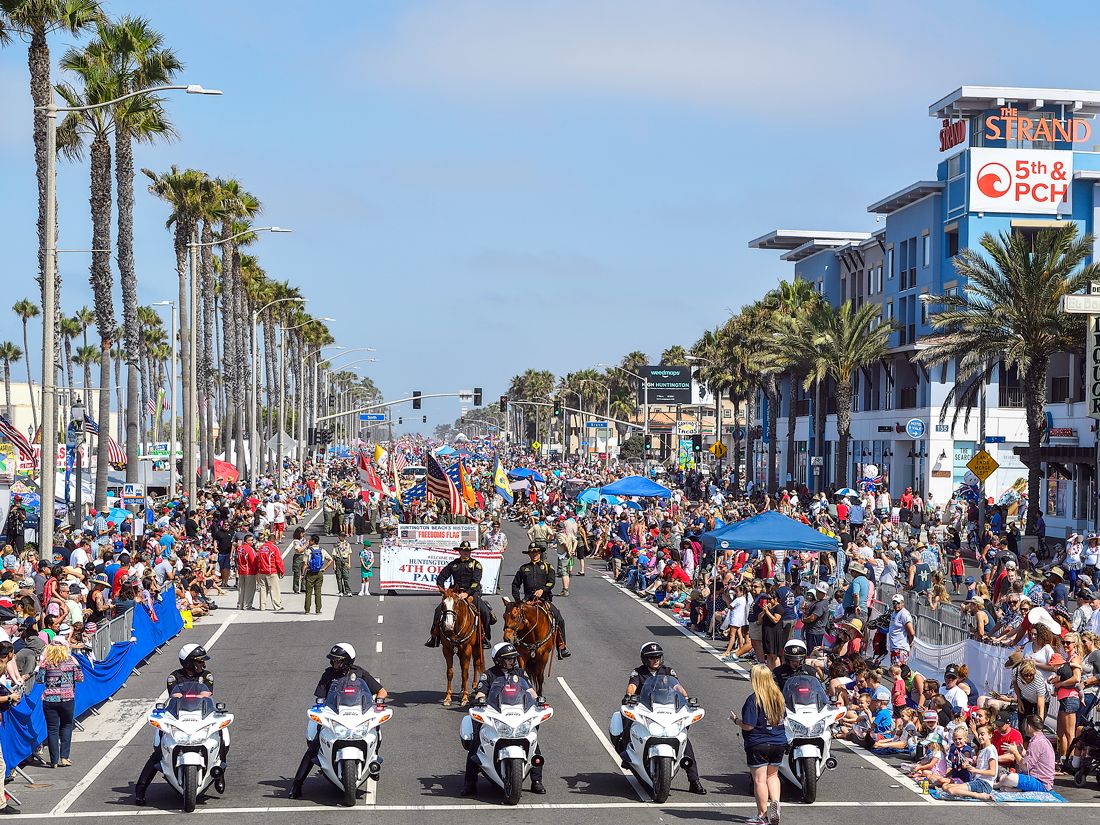
Southern California’s surf capital has been celebrating America’s birthday in style since 1904. The original Huntington Beach 4th of July Celebration coincided with the opening of the first electric train connecting Huntington Beach with nearby Long Beach and Los Angeles, which brought 50,000 people to Huntington Beach’s shores to celebrate. Though that train no longer exists, today the renowned party attracts upwards of 500,000 revelers.
Activities and events include the Surf City 5K Run, a parade, fireworks, and a house-decorating contest for Huntington Beach residents. The celebration reaches its peak with a July 5 block party, in which the city’s Main Street is transformed into a lively pedestrian-only zone featuring live music, with bars and restaurants opening their doors to the crowds.
Let Freedom Sing! – Nashville, Tennessee
Credit: Danielle Del Valle via Getty Images Entertainment
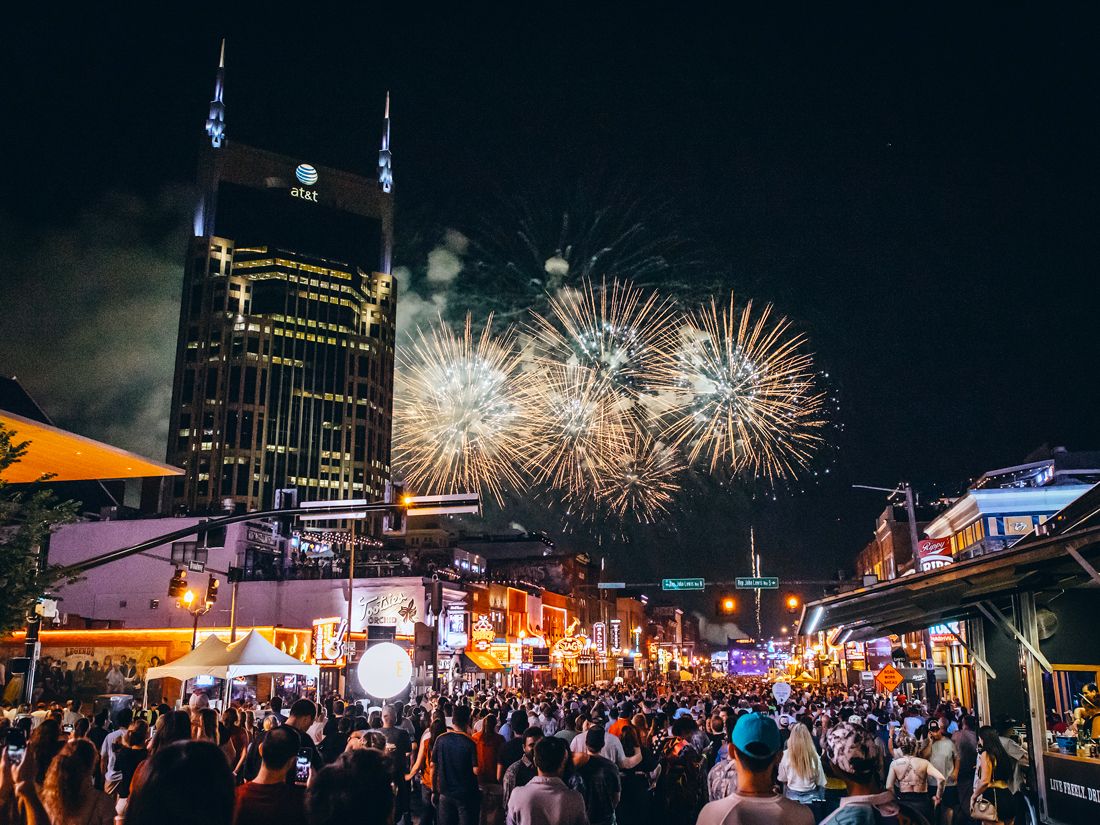
Music City certainly lives up to its name with the annual Let Freedom Sing! Fourth of July celebration. The party kicks off on the afternoon of July 4 with a star-studded lineup of musical artists — the 2024 show features Chris Young, YOLA, Girl Named Tom, and many more. Following the free concerts is one of the largest fireworks shows in the nation, synchronized to a live performance by the Grammy Award-winning Nashville Symphony. The party also features a family-fun zone with inflatables, face painting, and other activities, as well as a wide variety of tasty food vendors and food trucks.
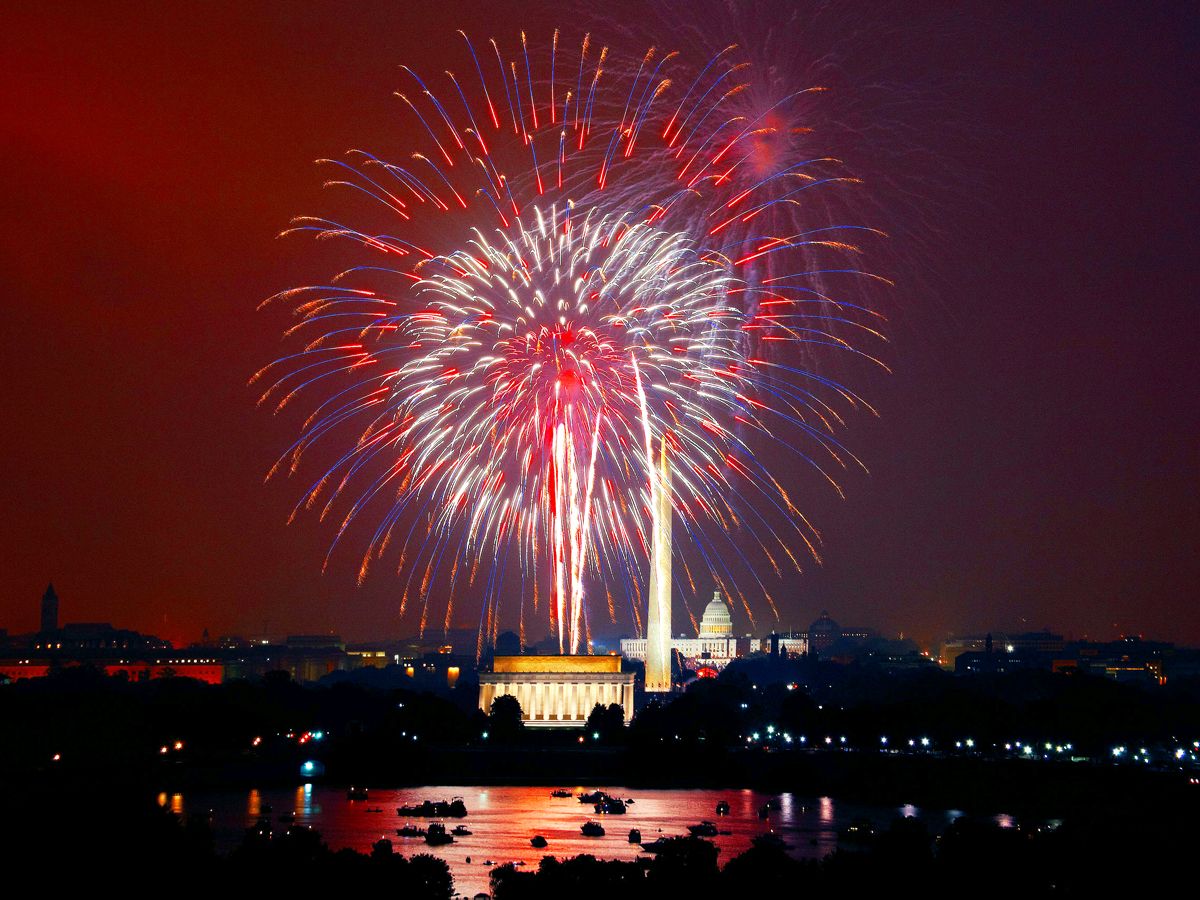
As you might expect, America’s capital stages one of the country’s biggest and best Fourth of July celebrations. The festivities kick off in the late morning of July 4 on Constitution Avenue with the National Independence Day Parade, consisting of marching bands, drum corps, floats, military and specialty units, giant balloons, equestrians, drill teams, national dignitaries, and celebrity participants. Happening simultaneously are family-friendly activities on the grounds of the Washington Monument. As night falls, a free concert gets underway with a lineup of popular musical artists. (Boyz II Men, Chicago, and Babyface were among the sperformer in 2023.) The night concludes with Fireworks at the National Mall, an annual spectacle that attracts roughly 700,000 people.
Advertisement
More from our network
Daily Passport is part of Inbox Studio, an email-first media company. *Indicates a third-party property.
6 of the Most Famous Memorial Sites to Visit in the U.S.
By
Daily Passport Team
Read time: 6 minutes
June 26, 2024
Updated: June 27, 2024
6 of the Most Famous Memorial Sites to Visit in the U.S.
History •June 26, 2024•Updated: June 27, 2024
By Daily Passport Team
Author
Daily Passport Team
Daily Passport writers have been seen in publications such as National Geographic, Food & Wine, CBC, Condé Nast Traveler, and Business Insider. They're passionate about uncovering unique destinations and sharing expert tips with curious travelers.
The United States is home to thousands of sites that commemorate influential historical figures, military heroes, civil rights leaders, and significant turning points in the nation’s history. Visiting these landmarks is all but guaranteed to leave you with a sense of awe and a deeper appreciation for the trailblazing Americans who shaped our country. Here are seven of the more important memorial sites you should visit.
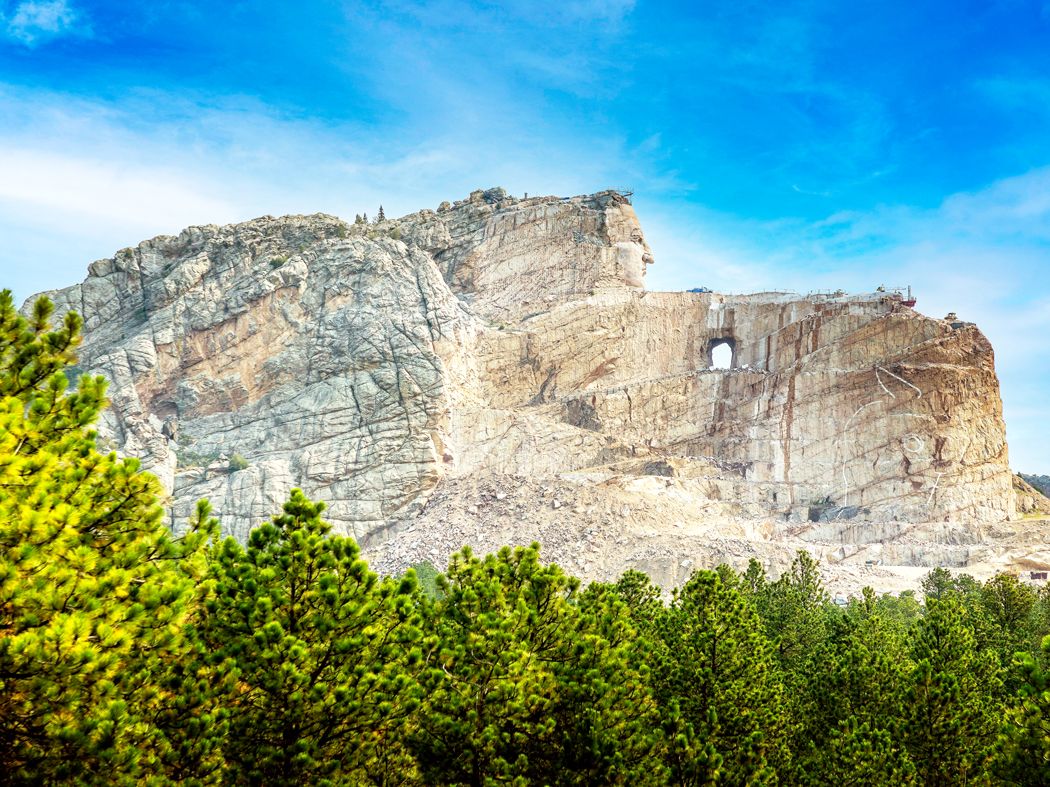
The Crazy Horse Memorial in the Black Hills of South Dakota is set to be the world’s largest sculpture — but only once it’s finished. More than 70 years after it began, work on the monument is still in progress, and some are skeptical that it will ever be completed. While construction started in 1948, the memorial’s history dates back to Mount Rushmore, which was built in 1927 on Lakota Native American lands. In response, Chief Henry Standing Bear petitioned Polish-American sculptor Korczak Ziolkowski (who assisted on Mount Rushmore) to carve a memorial dedicated to Crazy Horse, the Oglala Lakota chief who successfully fought Custer’s army at the 1876 Battle of Little Big Horn.
Crazy Horse’s face alone is 87 feet tall (compared to Rushmore’s 60-foot George Washington profile), while the entire memorial will stand at 563 feet — four times the height of the Statue of Liberty. Although Ziolkowski passed away in 1982, leaving his masterpiece unfinished, roughly 1 million visitors still make the journey each year to admire the single completed segment, a majestic profile of Crazy Horse carved into a rocky mountain face.
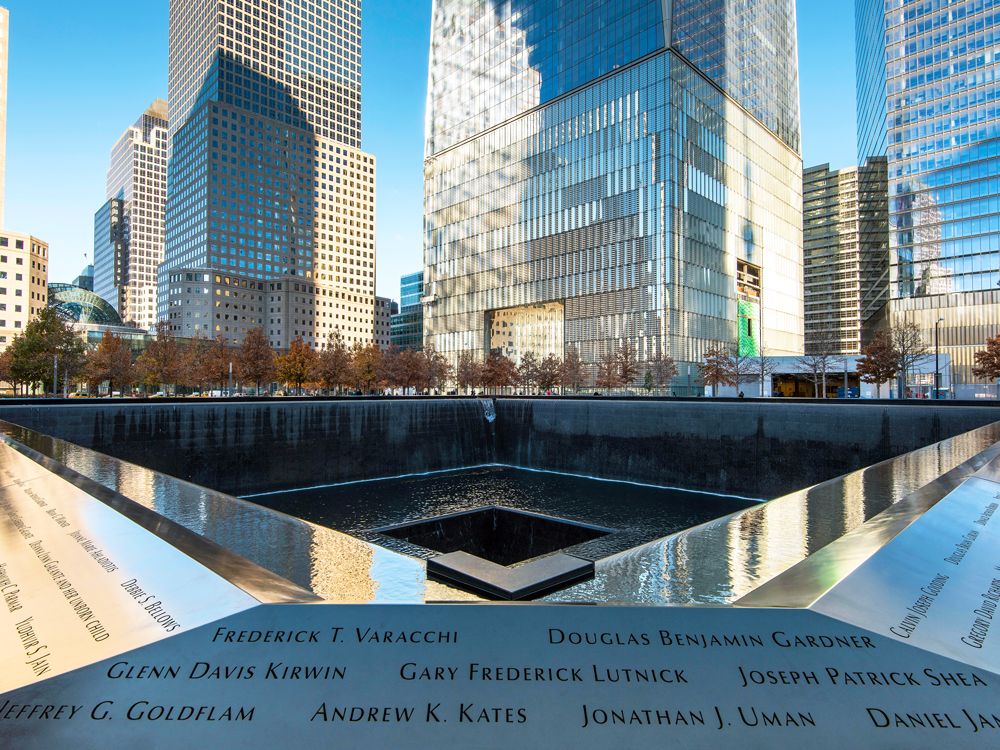
In stark contrast to the skyscrapers and busy streets of downtown Manhattan, two reflecting pools sit quietly on the former site of the World Trade Center’s towers. The waters flow inward, first to a pool 30 feet below street level and then another 20 feet into a void that represents, in the architects’ words, “absence made visible.” Surrounding them are the names of the nearly 3,000 victims who lost their lives on September 11, 2001, as well as those who perished in the 1993 terrorist attack.
Designed by Michael Arad and Peter Walker, the pools are part of the 9/11 Memorial & Museum — a site which has drawn more than 50 million people since it opened in 2014. The 8-acre memorial complex also houses an incredible underground museum with 60,000-plus artifacts and interactive exhibits. Above ground are 400 swamp white oak trees, a species native to New York, Virginia, and Pennsylvania — the three plane crash sites. A single Callery pear tree, which was damaged during the attack, has been revived and is now known as the Survivor Tree and stands as an enduring symbol of resilience.
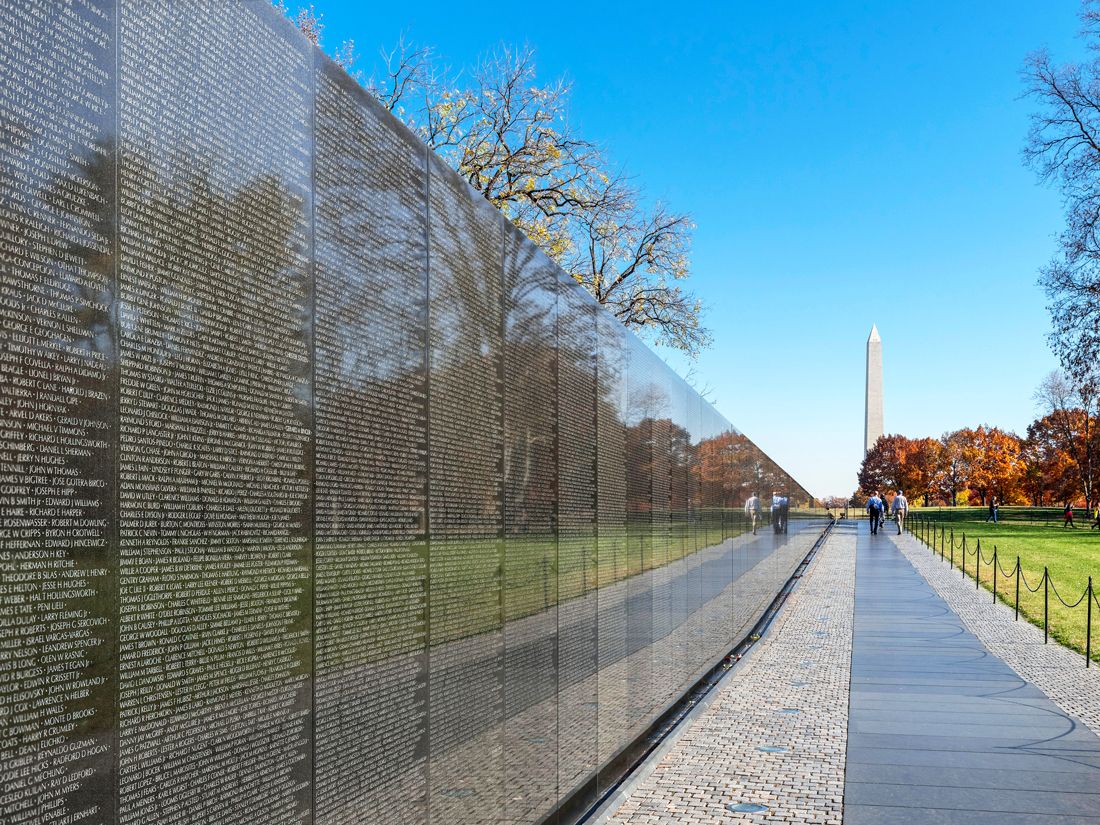
In 1980, a competition was held for the design of a new memorial to Vietnam veterans. The winning entry by Maya Lin, then a Yale University senior, was a graceful, stark work that elicits contemplation. The memorial features a V-shape gash carved into the sod of the National Mall and held open by black granite walls. The walls are etched with the 58,281 names of those who lost their lives in the Vietnam War, and from the vertex where they meet, the walls extend 246 feet in opposing directions, toward the Washington Monument and the Lincoln Memorial. In 1984, a more traditional sculpture — of three soldiers and a U.S. flag — was added to the site.
Nine years later, a Vietnam Women’s Memorial, a figurative sculpture depicting nurses tending to a fallen soldier, was erected nearby and, in 2004, a plaque honoring those who died after the war but as a result of their service was added to the solemn memorial group. And on Veterans Day 2020, the National Native American Veterans Memorial was unofficially unveiled. (It had an official post-pandemic dedication two years later.) Placed in a wooded wetland reestablished outside the Smithsonian’s National Museum of the American Indian, the memorial offers the chance for some quiet reflection on Washington, D.C.’s well-trodden National Mall.
Pearl Harbor National Memorial – Hawaii
Credit: mphillips007/ iStock Unreleased via Getty Images
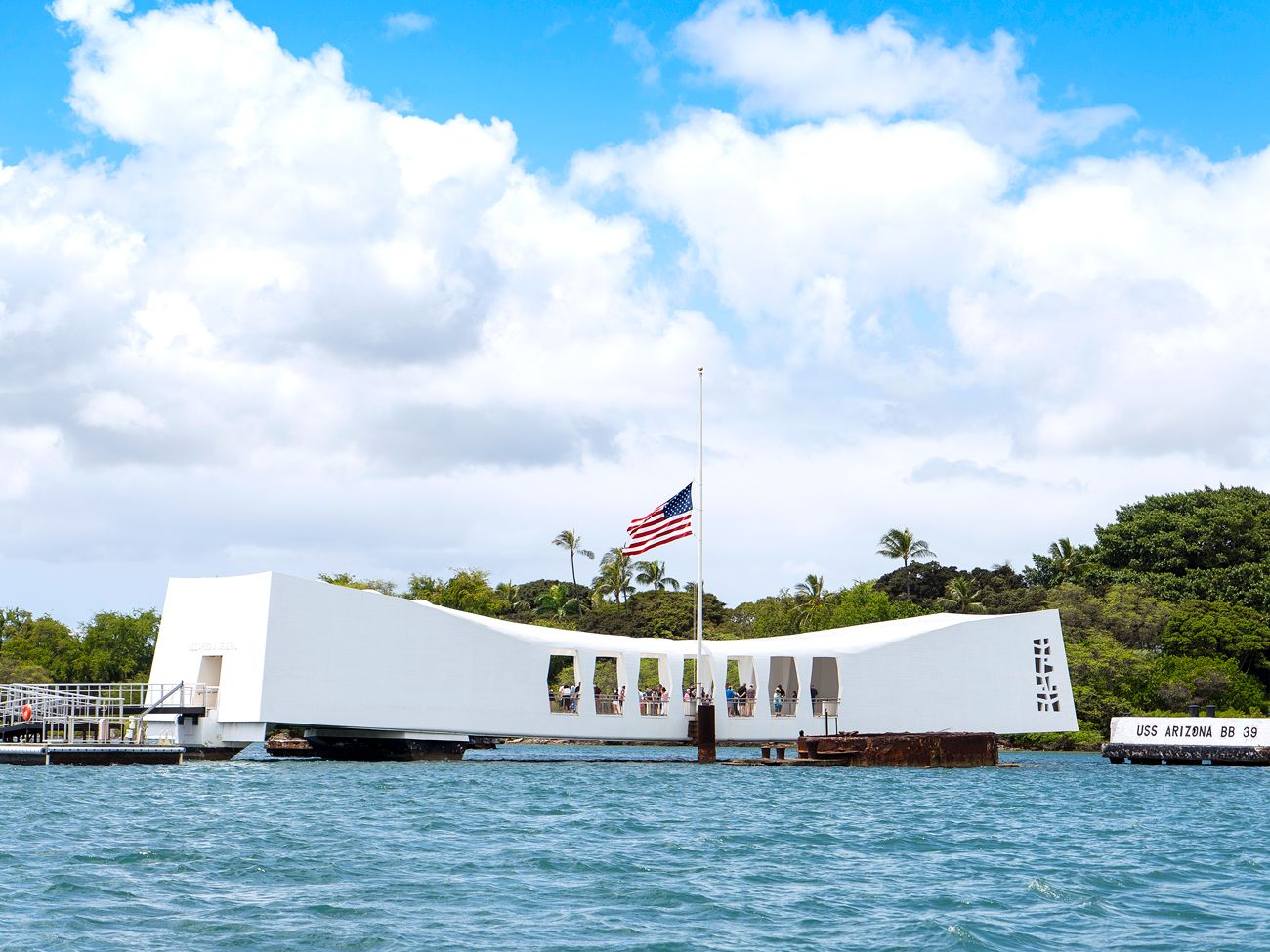
On December 7, 1941, “a date which will live in infamy,” as FDR so memorably described it, Japanese forces attacked Oahu’s Pearl Harbor, the event that finally precipitated the United States’ long deliberated entry into World War II. Eighty years after the fact, the Pearl Harbor National Memorial stands as a sobering reminder of the unthinkable number of lives lost on that day — and remains one of the most visited attractions in the state of Hawaii.
The centerpiece of the experience is the USS Arizona Memorial, which sits alongside a still active military base and is accessible only by shuttle boat (for which you’ll need a ticket and designated departure time). The unique floating white concrete-and-steel structure, designed by Austrian architect Alfred Preis, is built atop the eponymous sunken battleship. Visitors can still see its remains from the surface, and its 1,177 deceased officers and crewmen are enshrined in marble at the site. Around the broader national memorial, you’ll find surprisingly serene natural spaces, artifacts from the damaged ships, and educational films about one of the most pivotal moments in American history.
Martin Luther King Jr. Memorial – Washington, D.C.
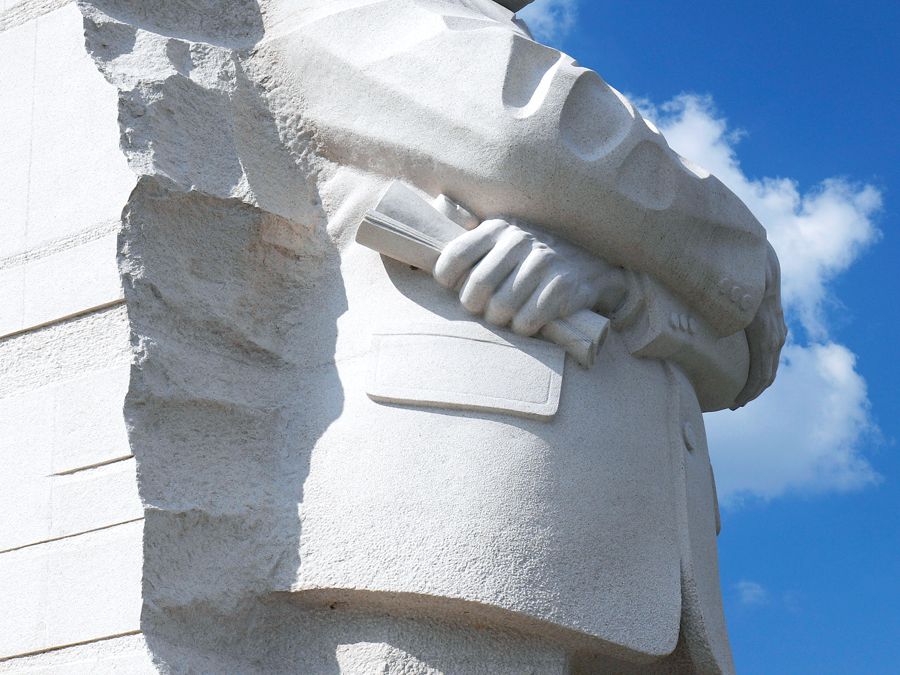
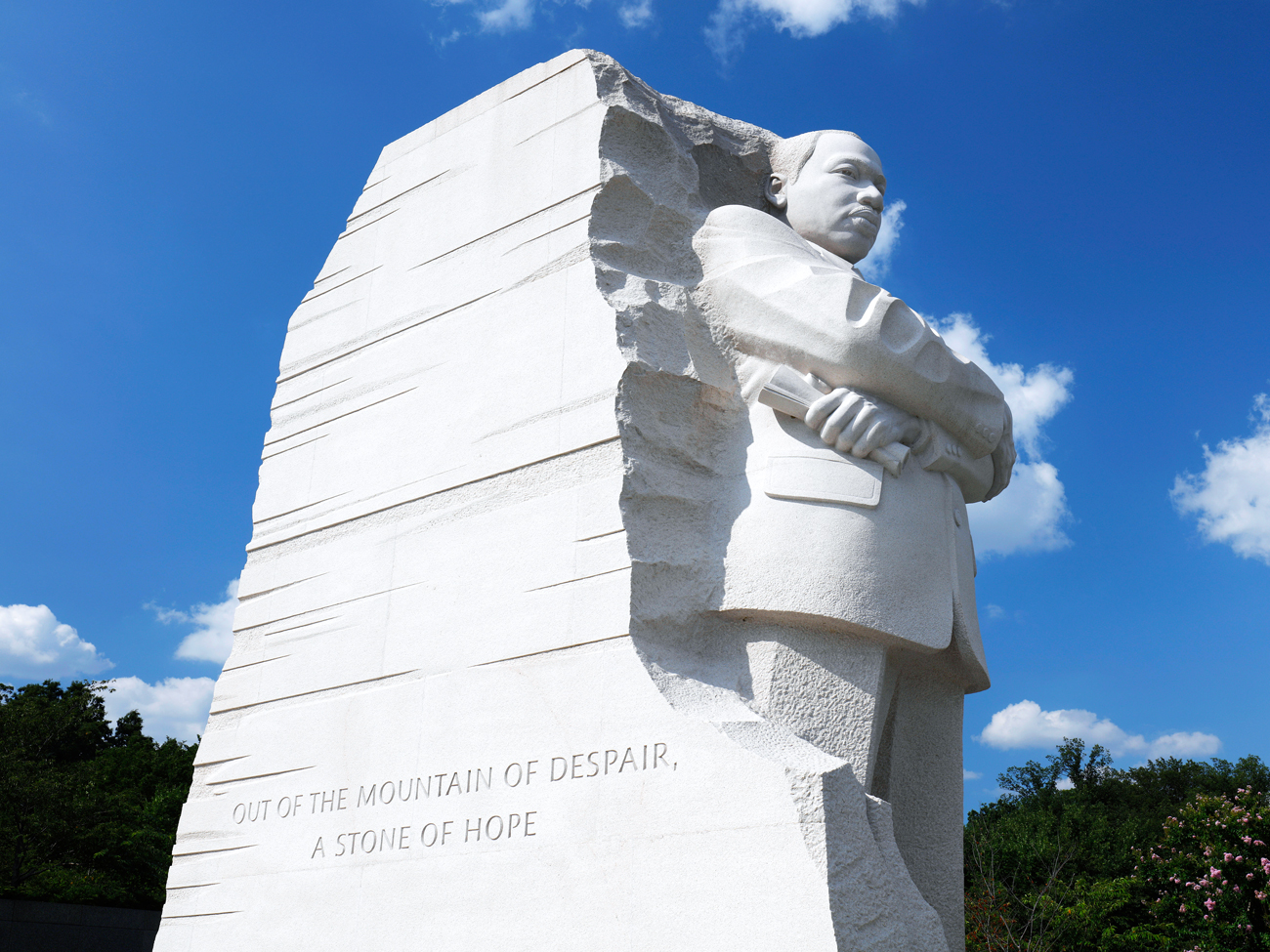
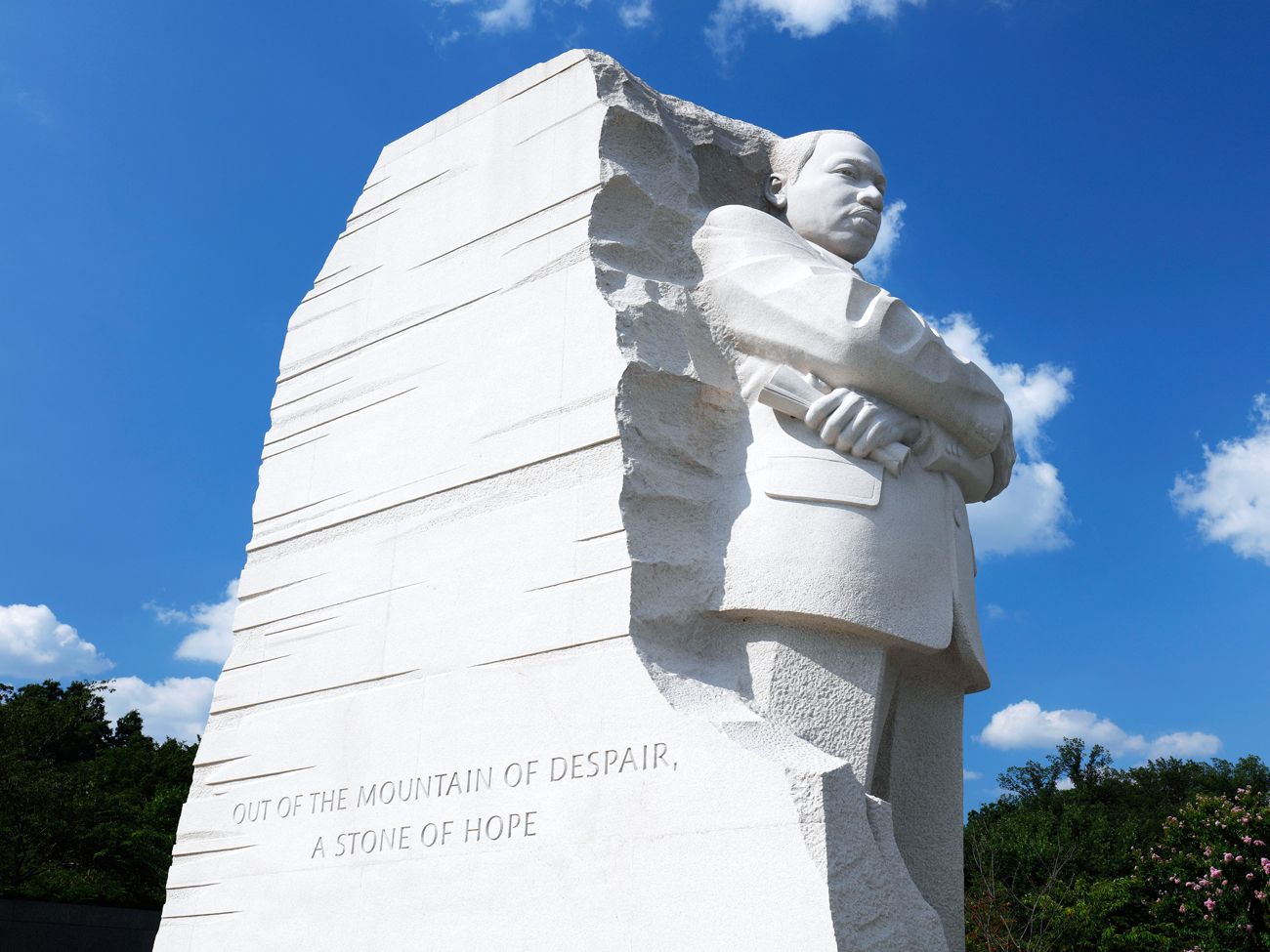
Before 2011, the National Mall didn’t have a memorial dedicated to any Black Americans, but that changed when Baptist minister-turned-civil rights activist Martin Luther King, Jr. was honored with this impressive 30-foot granite stone sculpture. (It’s also the first memorial on the mall not dedicated to a President or war.) Prominently located at the Tidal Basin opposite the Jefferson Memorial, King’s memorial is packed with symbolism — right down to its address at 1964 Independence Avenue SW, honoring the Civil Rights Act of 1964.
The winning design for the monument (out of 900-plus entries) took inspiration from one of King’s quotes: “With this faith, we will be able to hew out of a mountain of despair, a stone of hope.” Upon entering the memorial, visitors first pass through two halves of the Mountain of Despair before reaching the Stone of Hope, where King’s statue is located. Throughout the memorial, King’s words are inscribed into stone — a powerful reminder of the continuing struggle for civil rights around the globe.
National Memorial for Peace and Justice – Montgomery, Alabama
Credit: wellesenterprises/ iStock via Getty Images Plus
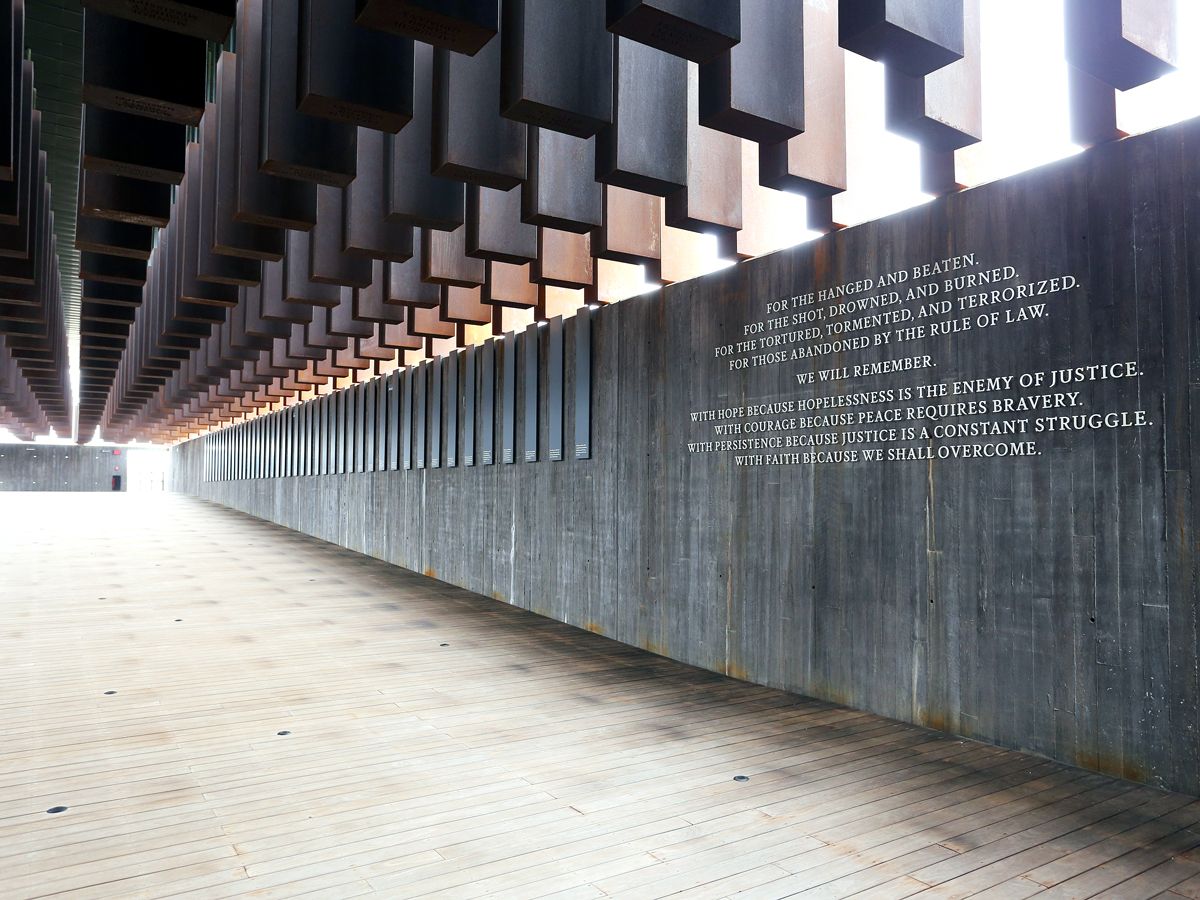
By design, memorials are sobering places, where reflection, silence, and intense emotional reactions come reflexively, without instruction. Opened in April 2018, the National Memorial for Peace and Justice in Montgomery is no exception — and one that was long overdue. Created by the Equal Justice Initiative in collaboration with artists such as Kwame Akoto-Bamfo, Dana King, and Hank Willis Thomas, the open-sided, single-story structure is, in the words of the EJI, the “nation’s first memorial dedicated to the legacy of enslaved Black people, people terrorized by lynching, African Americans humiliated by racial segregation and Jim Crow, and people of color burdened with contemporary presumptions of guilt and police violence.”
Inside, suspended from the ceiling is the focal point of the six-acre site: orderly rows of six-foot slabs of Corten steel, each of the 800 roughly human-sized slabs representing a U.S. county and is inscribed with the names of the thousands of men, women, and children who were violently murdered there. The memorial and the adjacent museum, a sobering reminder of the nation’s history of racial inequality, was created with $20 million in private funds, and has quickly become one of the top tourist destinations in Alabama.
Advertisement
More from our network
Daily Passport is part of Inbox Studio, an email-first media company. *Indicates a third-party property.
Julia is a U.K.-based travel writer whose work has been featured in The Independent, The Telegraph, The New Zealand Herald, and Culture Trip, among others. She’s an enthusiastic advocate for independent travel and a passionate geographer who has had the privilege of traveling to more than 130 countries in search of a story.
If you’re off on a big trip, chances are you’ll have a suitcase that you’ll want to check. But even so, it’s important to give some thought to what’s going on the plane with you, especially if you’re flying long-haul. After all, you don’t want to be stuck on a delayed flight or arrive at your destination lacking important items to make you comfortable. Here are eight things you should always pack in your carry-on.
Passport and Other Important Documents
Credit: simon2579/ iStock via Getty Images
When traveling abroad, you certainly can’t get far without your passport, so keep it with you at all times (and preferably in a wallet so it doesn’t get lost within a larger bag). Along with your boarding pass (if printed), travel insurance details, and a small stash of emergency cash, you might also want to keep the booking reference for your first night’s accommodation with you. Carrying a paper copy is a good idea — if you’re delayed and your cellphone battery is perilously low, you won’t have to worry about finding somewhere to charge up until after you’ve checked in.
Essential Medicines and a Hygiene Kit
Credit: Artit_Wongpradu/ iStock via Getty Images
Health and hygiene products are the next group of items you should always pack in your carry-on. It’s vital that any prescription medicines are carried with you on the plane so they don’t get lost in transit. And depending on your destination, you might also want to carry a copy of the prescription itself to satisfy officials of their purpose. A small first-aid kit and some antibacterial wipes or gel will also give you peace of mind while you’re on the go. Other products such as a folding toothbrush and toothpaste, stick deodorant, lip balm, and moisturizer will keep you feeling fresh, even on a long journey.
Travel Pillow and Eye Mask
Credit: mihailomilovanovic/ E+ via Getty Images
On flights where you’re hoping to sleep, it’s worth slipping a travel pillow and eye mask into your carry-on. Ensuring your neck is properly supported will help you rest, and wearing an eye mask means that open window blinds or bright cabin lights won’t bother you. Just be sure to test these items before you leave to ensure they’ll keep you comfortable. Then, all you’ll need to do to catch some z’s is to buckle up over your blanket so that the flight attendants can see you’re safely strapped in if the plane encounters any turbulence.
Noise-Canceling Headphones
Credit: urbazon/ E+ via Getty Images
We’ve come to rely on in-flight entertainment to keep us occupied while we’re in the air, whether it’s the airline’s seatback offering or shows downloaded onto your personal device. Whichever you prefer, using noise-canceling headphones will help you block out background chatter so you can concentrate uninterrupted on the music, movies, or games you’ve selected. These high-quality headphones are designed with comfort in mind and are more effective than the freebies the airlines hand out, so you’ll be glad you saved space for them in your carry-on.
Phone Charger
Credit: O_Lypa/ iStock via Getty Images
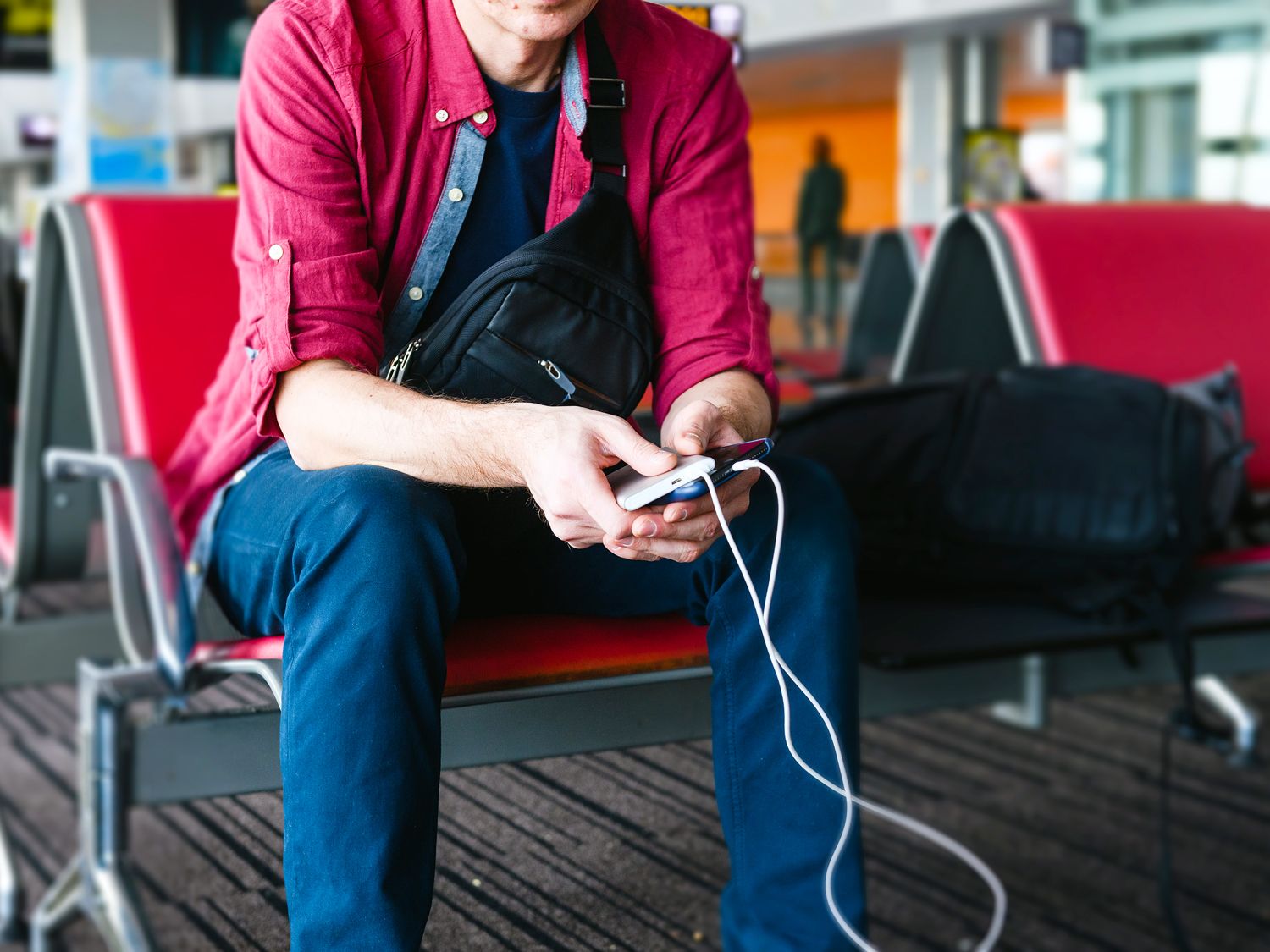
We forget how much we rely on our cellphones — until the battery’s almost dead. Consider carrying a multicountry adpater and topping up at the gate while you’re waiting to board. And if you’re changing planes along the way, it’s worth packing a cable with a USB adapter so you can keep the battery topped up during your flight if the airline provides outlets. Alternatively, throw a portable power bank into your carry-on and recharge that way.
Refillable Water Bottle
Credit: MalaikaCasal/ iStock via Getty Images
Air travel can be dehydrating, and cabin crew members don’t always have the time during a busy flight to deliver drinks on demand. Instead, pop a large reusable water bottle into your carry-on and fill it up at an airport water fountain before you board your flight. Over time, this will save money on the cost of buying bottles of water at the airport, and you’ll also be doing your bit to save the planet by cutting down on single-use plastics.
Snacks
Credit: Dobrila Vignjevic/ E+ via Getty Images
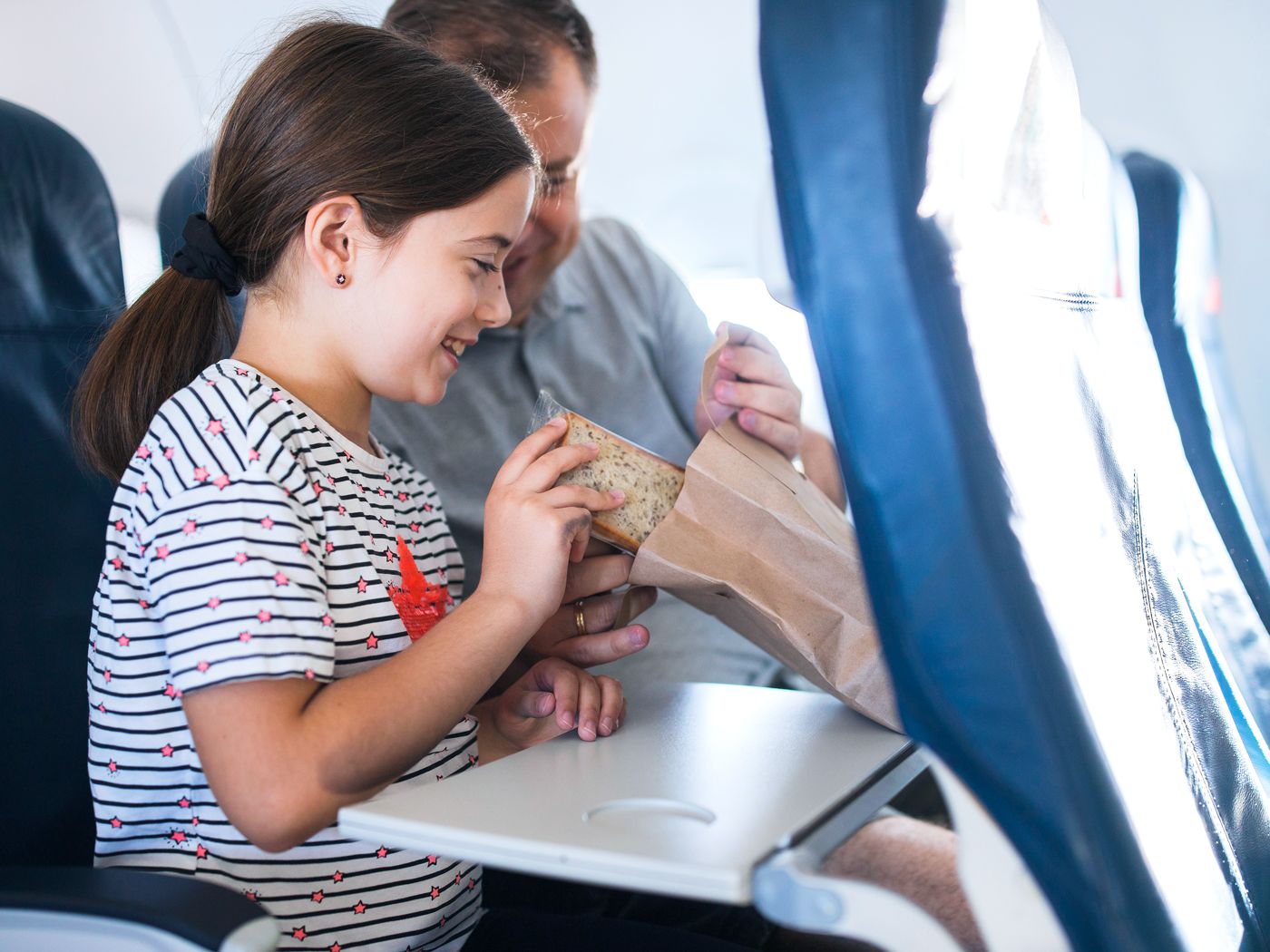
On a long flight, you might also consider throwing in a few healthy, nutritious snacks to keep up your energy levels. Plus, if you’re stuck waiting for an extended period on the tarmac before takeoff, you won’t be worrying about a rumbling stomach on top of the delay. It’s a good idea to be mindful of the needs of other passengers by avoiding peanuts or other foods that may trigger an allergic reaction. Also, note that spreadables count as liquids when going through airport security. Finally, depending on your destination’s customs rules, you might not be able to deplane with certain leftover snacks, so bear that in mind when working out how much to take.
Change of Clothes
Credit: kitzcorner/ iStock via Getty Images
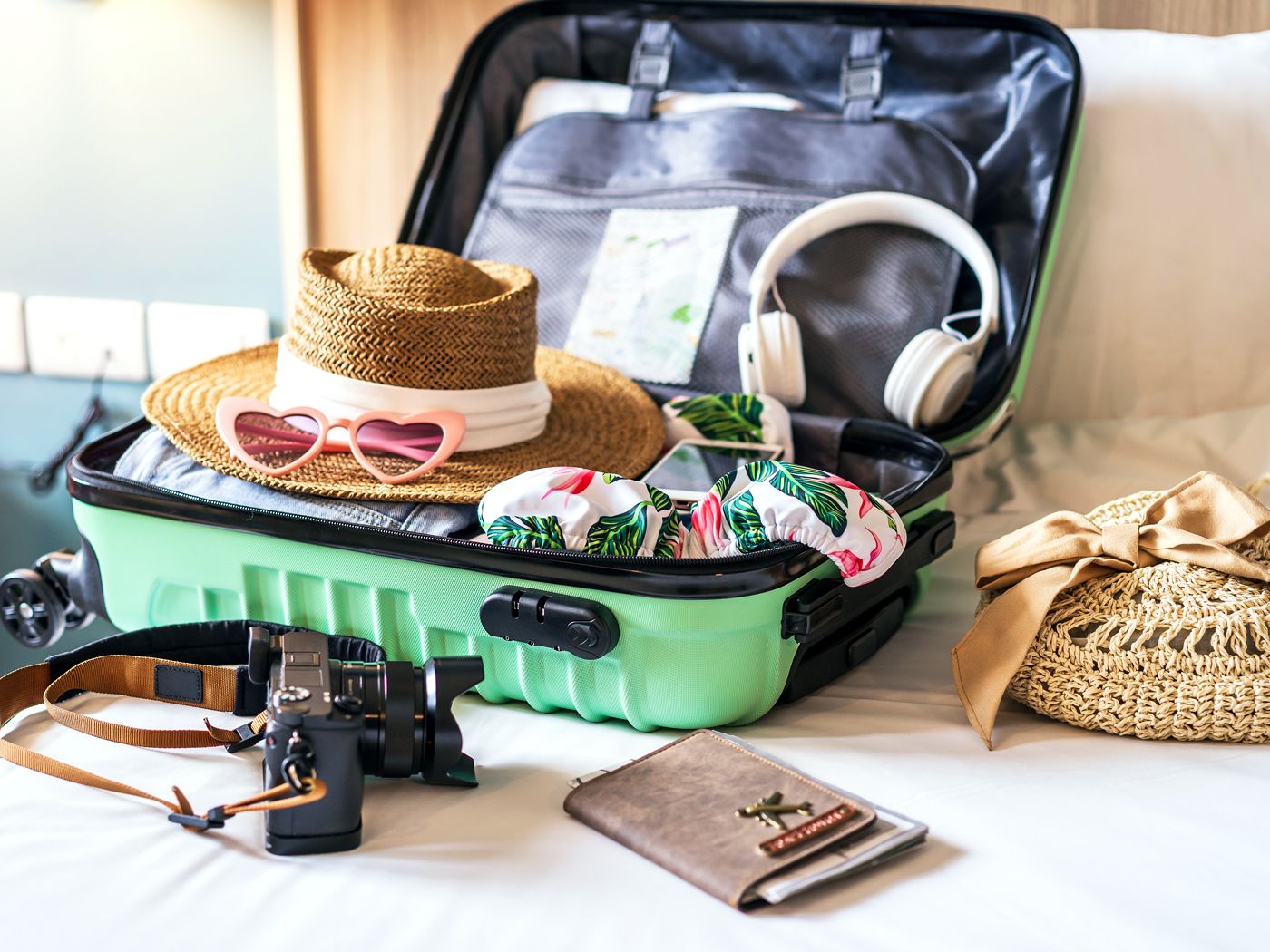
While most checked bags arrive at the same time you do, there’s always a chance that you’ll arrive at your destination to find your luggage has been delayed or lost in transit. Fortunately, the majority of mishandled baggage is reunited with its owners eventually, but in the meantime, a missing bag can still have a big impact on your vacation. So, be sure to always pack a change of clothes, especially a spare set of underwear, in your carry-on. This will buy you time until the shops open or the rest of your belongings show up. Be destination-ready: If you’re heading to a beach resort, throw in a pair of flip-flops and a swimsuit; for a city break, don’t fly without a fresh pair of pants, a clean T-shirt, and some comfy waterproof sneakers in your carry-on.
Advertisement
More from our network
Daily Passport is part of Inbox Studio, an email-first media company. *Indicates a third-party property.
Bennett is a New York City-based staff writer for Daily Passport. He previously contributed to television programs such as the Late Show With David Letterman, as well as digital publications like the Onion. Bennett has traveled to 48 U.S. states and all 30 Major League Baseball stadiums.
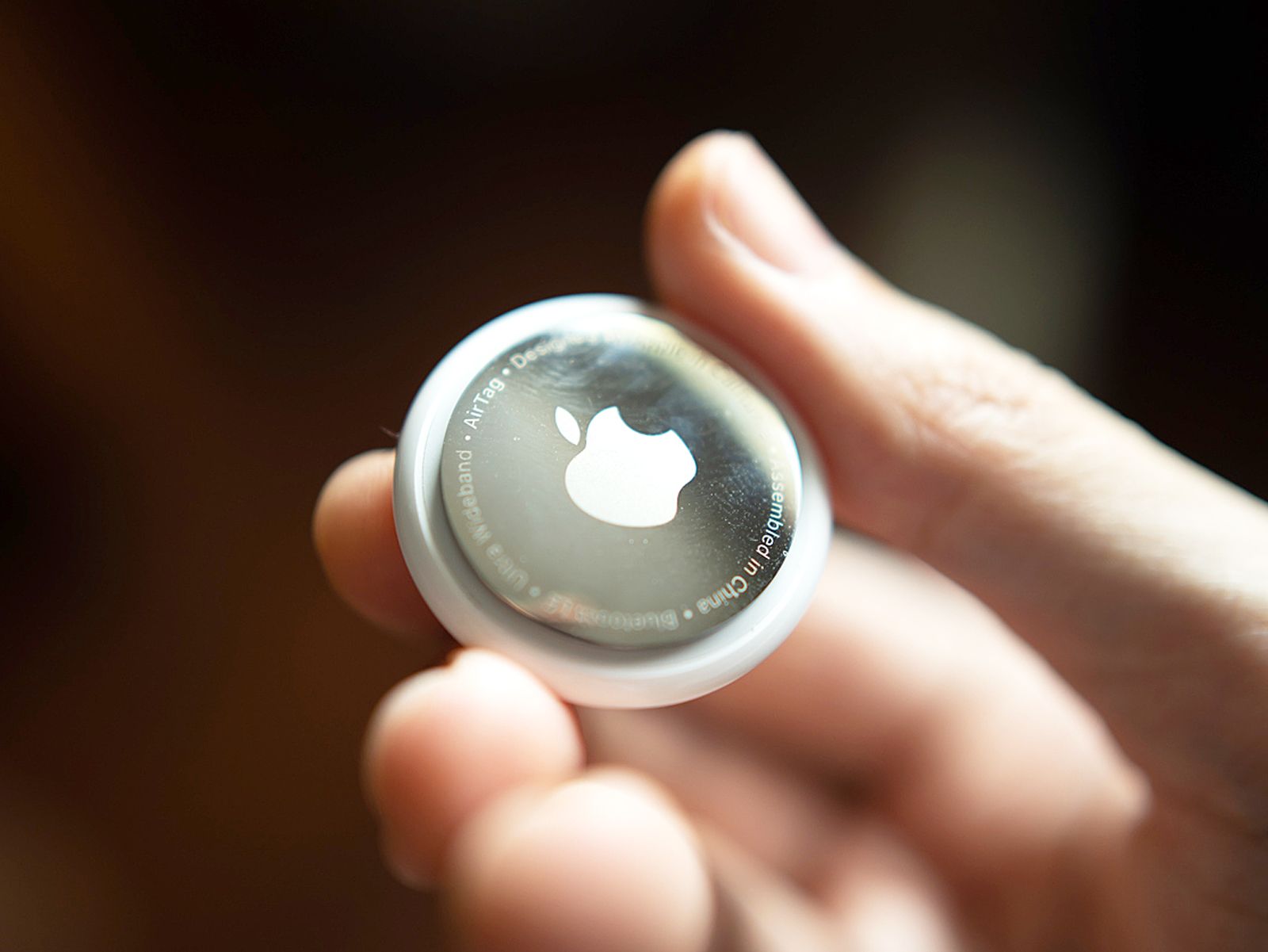
Finding out the airline lost your luggage is a headache that no traveler wants to endure. While lost or delayed luggage cases are still rare, they are unfortunately on the rise. That’s why it’s important to take matters into your own hands when possible. Thankfully, there’s an affordable gadget that can help track down your missing bags and provide peace of mind on your next trip. Even better, it takes up barely any luggage space at all. We’re talking about the Apple AirTag — a tiny, yet essential device that every jetsetter should own.
AirTags, which are a little larger than a quarter, allow the user to track the device’s location using a technology called ultra-wideband, which sends out signals every two nanoseconds. These frequent signals provide information about the exact location of the AirTag and whether it’s on the move or stationary. This is then communicated to any nearby Apple devices, and that data is then relayed to the larger Apple network. The location details are kept private and can only be seen by the owner of the Apple account connected to the AirTags themselves. Of note, AirTags only work with Apple products and are not compatible with Android devices.
To set up an AirTag, pull the tab out to activate the device. Then, turn on your iPhone or iPad’s Bluetooth setting and follow the prompts to pair the AirTag with your Apple ID. Once setup is complete, you can track the AirTag’s location using your Apple ID on any Apple product, including Macbook laptops. Just open the Find My app to do so.
Why AirTags Are Useful for Travel
Credit: Chalabala/ iStock via Getty Images
If you slide an AirTag into any luggage that you’re planning to check, you can easily keep tabs on your bags throughout your journey. Often, it can help you figure out where your missing bags are before the airline does. Keep the AirTag in an interior compartment if possible, as leaving it hanging on the outside may result in theft. If you arrive at your destination and notice your bags are gone, open the Find My app. The AirTag should connect with any nearby Apple devices no matter where it’s located. This can help you figure out if your luggage was left behind, or perhaps loaded onto the wrong flight.
How To Track Down Lost Luggage
Credit: izusek/ E+ via Getty Images
Once you’ve figured out where your luggage is located, speak with a customer service representative and show them what you’ve found. Some airlines will work with you to track down the baggage and get it to its intended destination, while other airlines may not be as helpful. In rare cases, you may see your AirTag located at a private residence, suggesting the bag may have been taken by another traveler accidentally or stolen by someone at the airport. If this happens, immediately file a claim with the airline in order to initiate an investigation.
If you notice your luggage is somewhere nearby, open the Find My app, where you can prompt the AirTag to play a sound. You can also mark your AirTag as “lost” and list a phone number or email address where people can contact you. That way, if someone finds the AirTag, they’ll have no issues getting in touch.
AirTags are small circular devices that can be easily misplaced. To help keep them safe, you can purchase a secure key ring that you can affix to any loop within your luggage. Another useful option is this stick-on AirTag holder that you can firmly adhere to the interior of any bag or suitcase.
Apple AirTags are often sold as a four-pack, which is ideal if you’re traveling with several checked bags or wish to share them with your travel companions. However, you can also buy a single AirTag. Either way, they are well worth the cost, especially if you consider how expensive it’d be to replace your luggage and its contents.
Advertisement
More from our network
Daily Passport is part of Inbox Studio, an email-first media company. *Indicates a third-party property.
Michael is a staff writer for Daily Passport and film critic who writes the weekly newsletter Movie Brief. His writing and criticism have also appeared in the Los Angeles Times, Variety, and the Washington Post, among others. A native Angeleno, his favorite countries to visit are Norway and Japan.
More than 80% of Americans live in the country’s 3,573 urban areas — and both the number of urban areas and the percentage of Americans living in them continue to rise. As urbanized as the U.S. is today, it wasn’t until 1920 that the majority of Americans resided in cities. Now, it’s exceedingly unlikely that that trend will ever reverse. Take a look at the 10 largest U.S. metro areas, as of 2024.
10. Phoenix, Arizona
Credit: benedek/ iStock via Getty Images
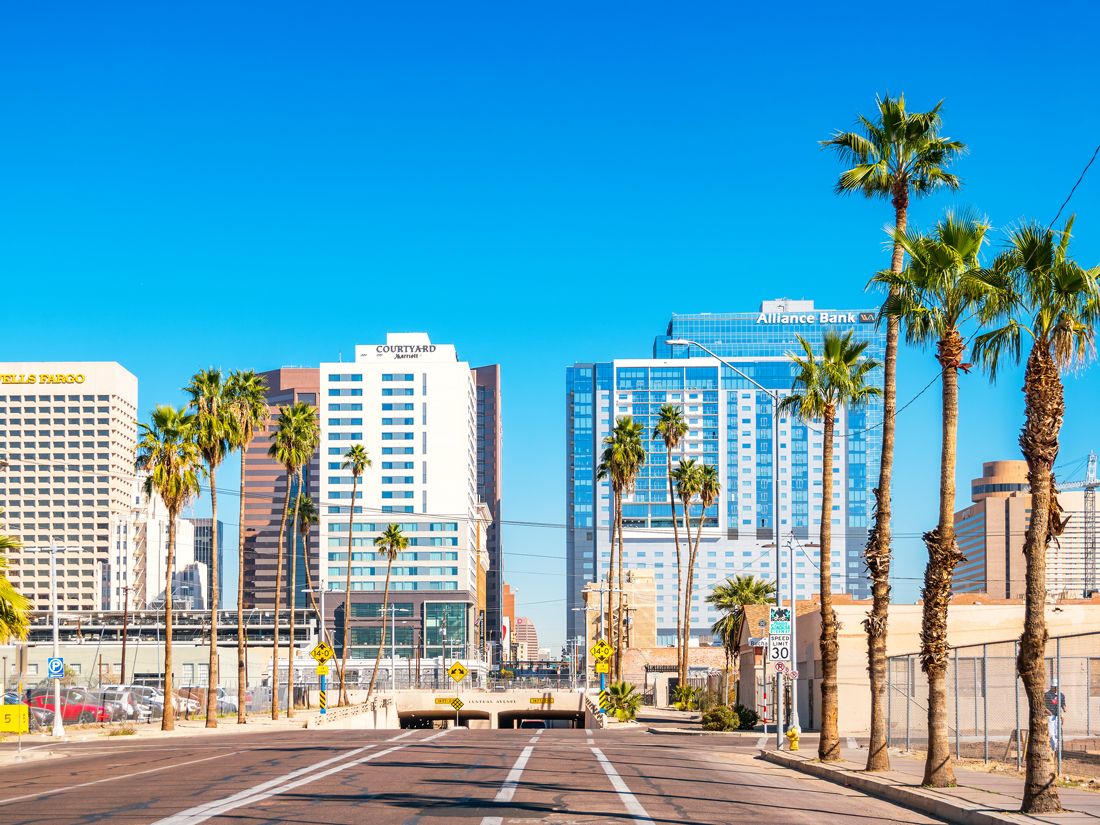
Phoenix is part of the country’s 10th-most-populous metropolitan area, alongside nearby cities such as Mesa and Chandler. Phoenix is also America’s most populous state capital, a fact that might seem surprising until you remember that cities such as New York, Los Angeles, and Chicago aren’t their respective states’ seats of government. (Rounding out the top five biggest capitals are Austin, Columbus, Indianapolis, and Denver.) The metro area has a combined population of just over 5 million people — more than the populations of 25 individual states. Of that 5 million, nearly 1.7 million live in Phoenix itself, and there may be a reason for that — it also ranks as one of America’s sunniest cities.
9. Atlanta, Georgia
Credit: Daniela Duncan/ Moment via Getty Images
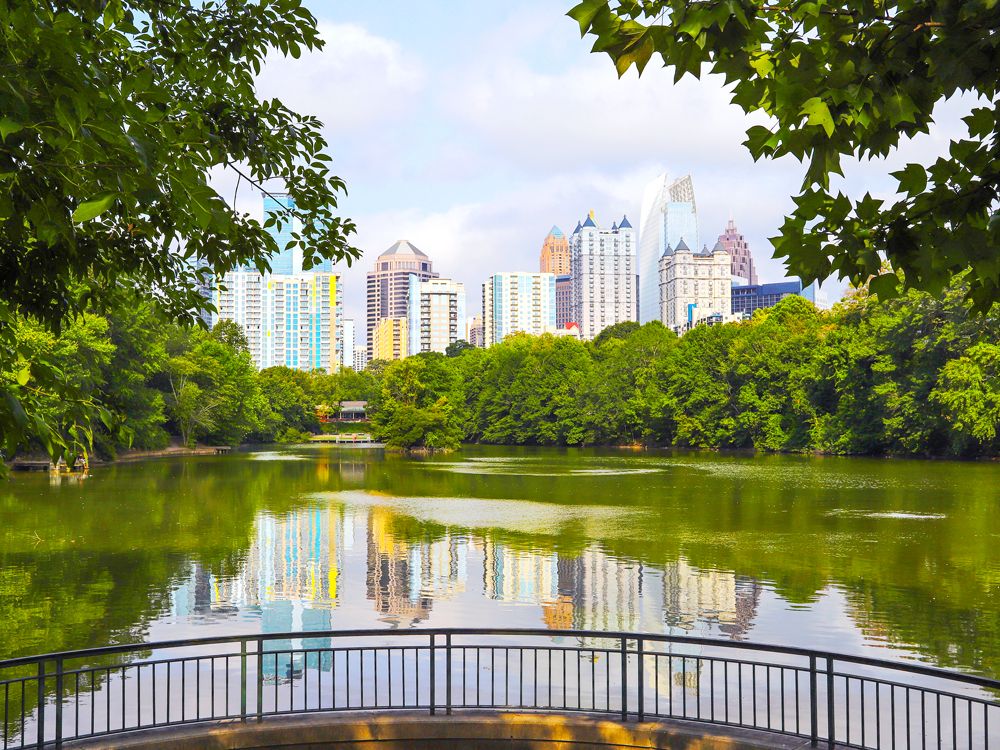
On its own, Atlanta is home to about half a million people within its city limits, placing it at No. 10 on the list of most populous capital cities in the country. As part of the Atlanta-Sandy Springs-Alpharetta metro area, however, it’s home to more than 10 times that number — about 6.2 million people in total. Founded in 1837 as Marthasville in honor of Governor Wilson Lumpkin’s daughter, Atlanta was also known as Terminus because it marked the end of the Western & Atlantic railroad line at the time. (Its current name was thought of as a feminine version of “Atlantic.”) The Atlanta area continues to grow quickly, with more and more people moving to the Peach State every year.
8. Miami, Florida
Credit: pawel.gaul/ iStock via Getty Images
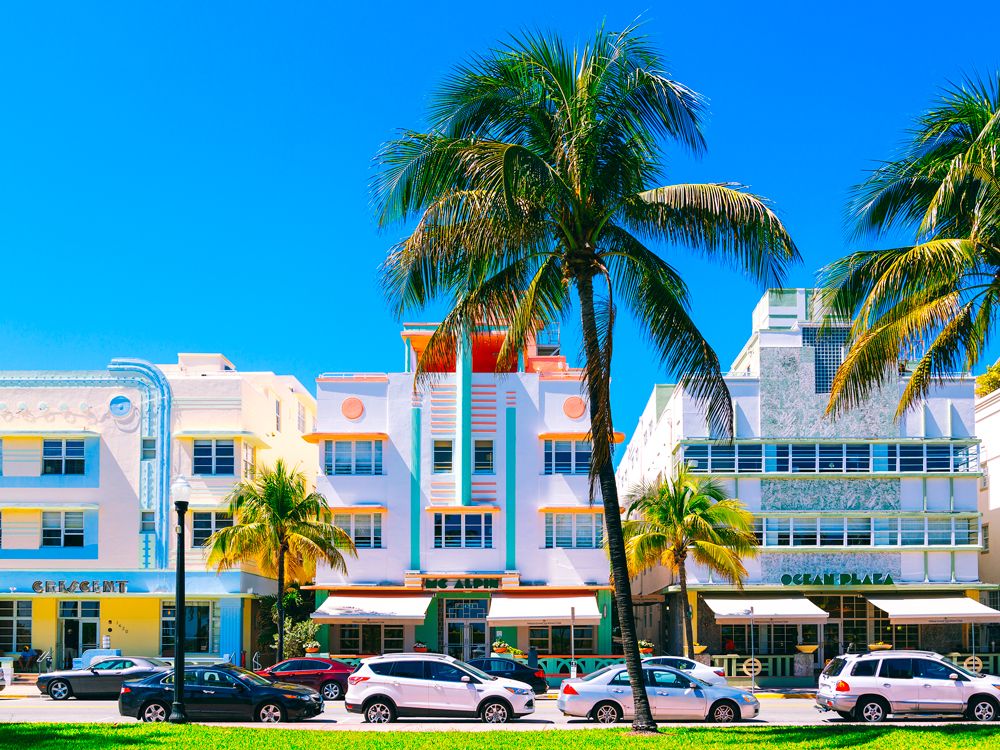
The Miami-Fort Lauderdale-Pompano Beach metropolitan area has a combined population of 6.1 million, with some 450,000 in Miami itself. Nestled near the southernmost point of Florida, the metro area is spread across 5,067 square miles and has 1,211.6 people per square mile. The warm weather has long attracted snowbirds, retirees, and spring breakers to the region, ditto the beaches and nightlife — all of which continue to define Miami.
7. Philadelphia, Pennsylvania
Credit: Pgiam/ iStock via Getty Images
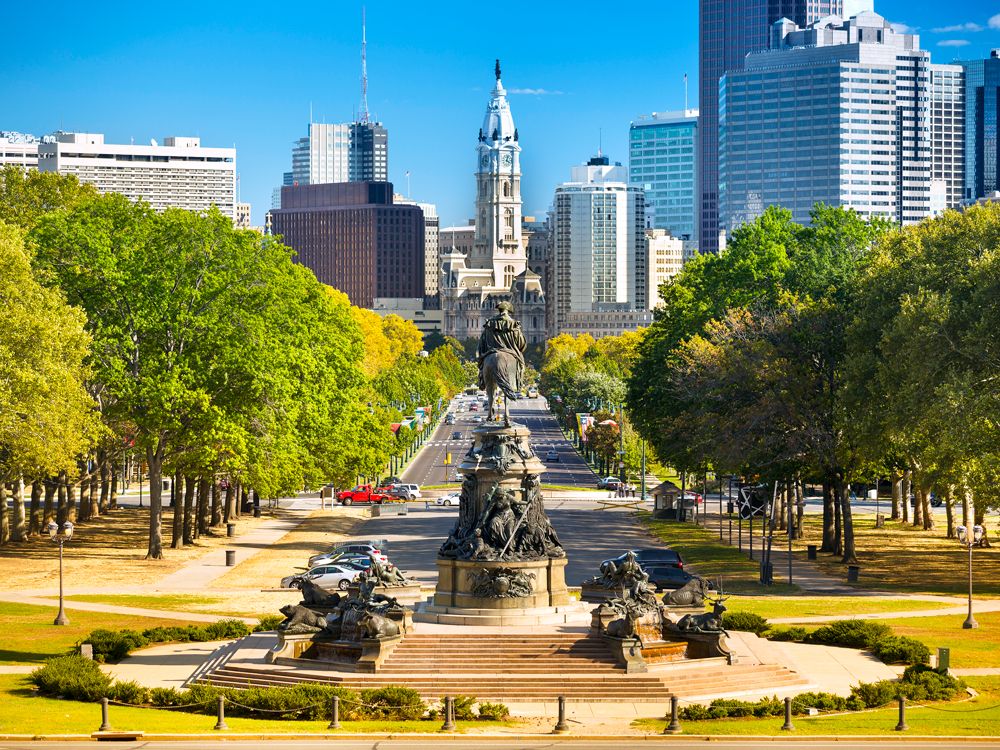
In addition to serving as America’s capital until 1800, Philadelphia was also once the nation’s most populous city. The home of cheesesteaks and rowdy sports fans (they’ve been known to throw snowballs at Santa Claus) hasn’t held either of those titles for centuries, but it remains one of the most historically important cities in the U.S. nevertheless. Its metro area — which is also known as the Delaware Valley and includes Camden, New Jersey, and Wilmington, Delaware — ranks seventh in the country, with more than 6.2 million people spread across four states (including Maryland).
6. Washington, D.C.
Credit: Tanarch/ iStock via Getty Images
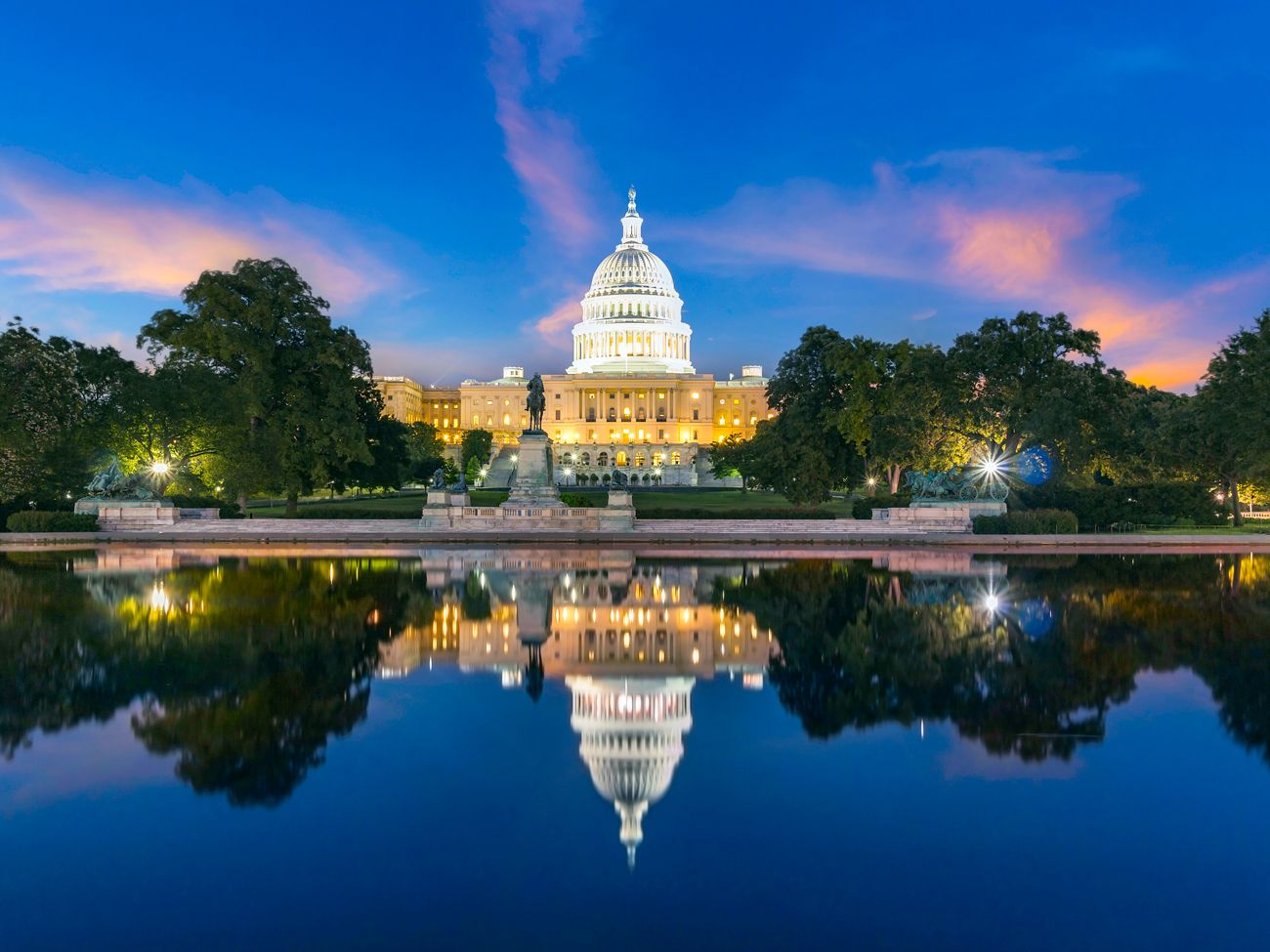
Philadelphia isn’t the only metro area spread across several states. There’s also Washington-Arlington-Alexandria, which includes the District of Columbia and parts of Virginia, Maryland, and West Virginia. The region has a total population of more than 6.3 million people. Also known as the D.C. area, Greater Washington, and DMV (District of Columbia, Maryland, and Virginia), the metropolitan area includes the nation’s capital (with a population of 679,000), as well as cities such as Silver Spring, Maryland, and Charles Town, West Virginia.
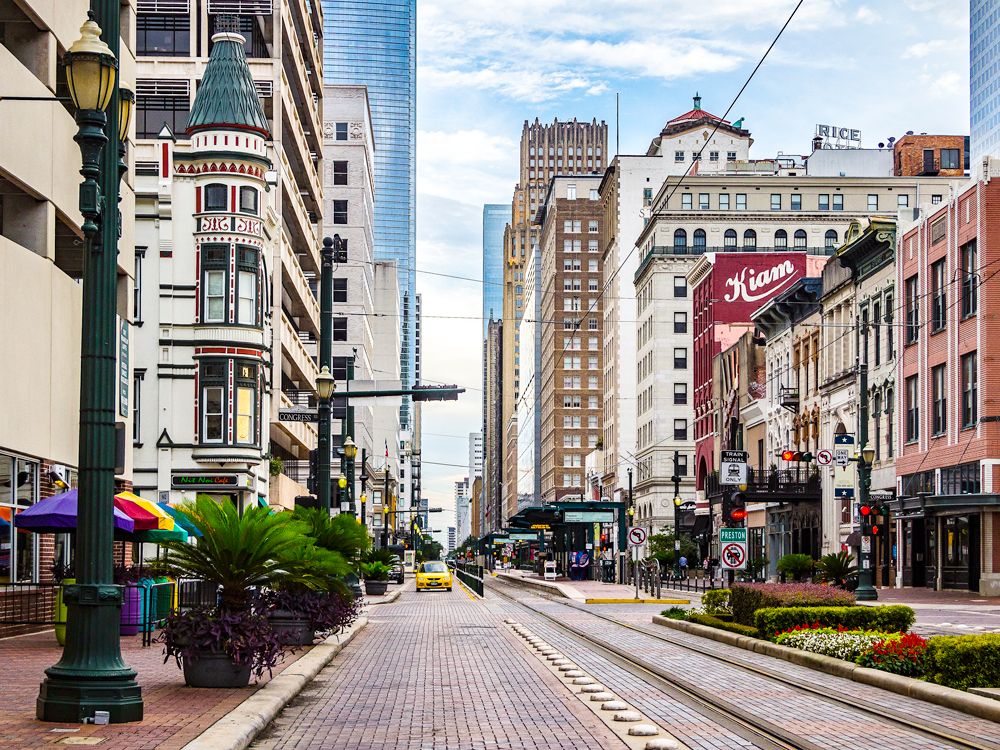
Everything’s bigger in Texas, including the metropolitan areas. Houston-The Woodlands-Sugar Land has a population of 7.3 million, with cities such as Galveston, Lake Jackson, and Kingwood also part of this region that accounts for 16% of the Lone Star State’s population. Among its nine counties is Harris County, the third-most-populous in the country. In addition to being known as Space City (there’s a reason why the famous line is “Houston, we have a problem”), Houston has also been deemed the “Cultural Capital of the South.”
4. Dallas, Texas
Credit: edfuentesg/ iStock via Getty Images
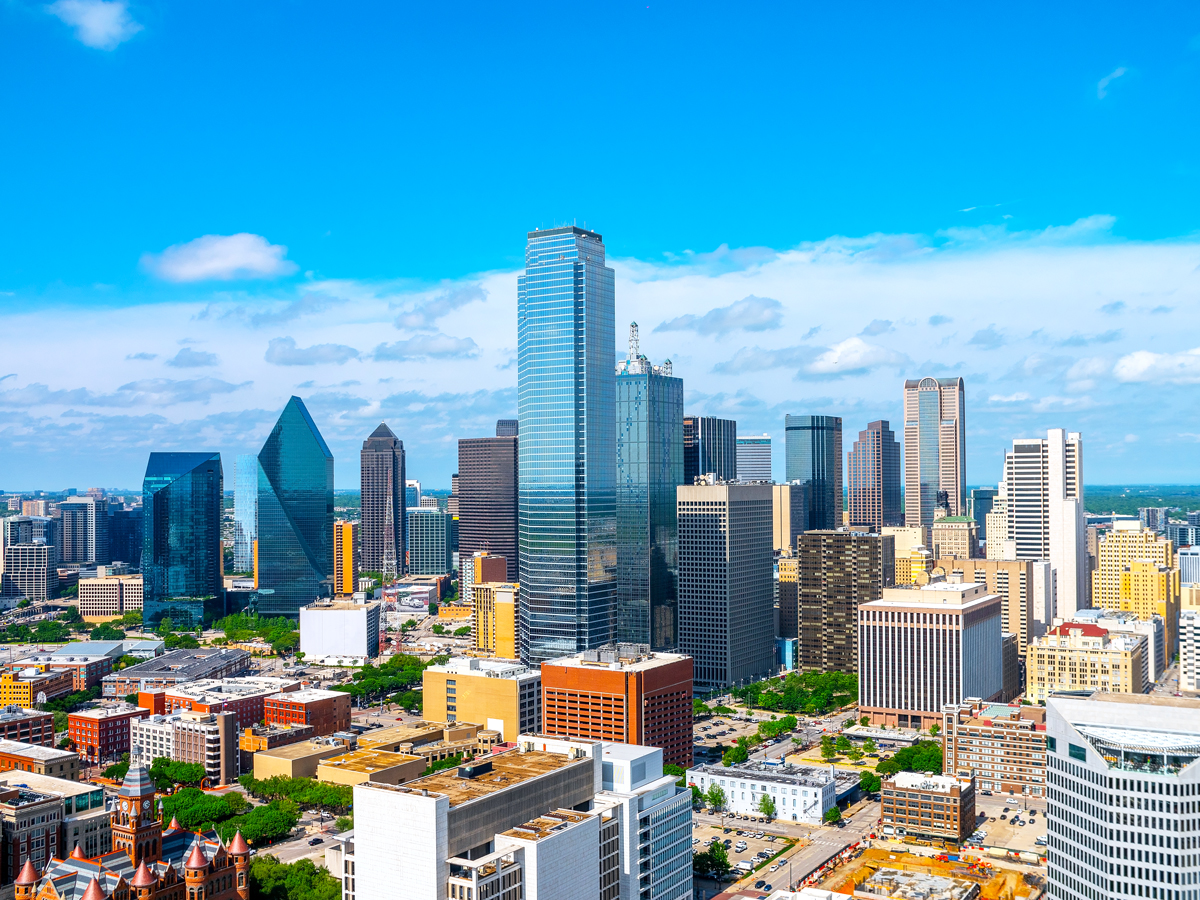
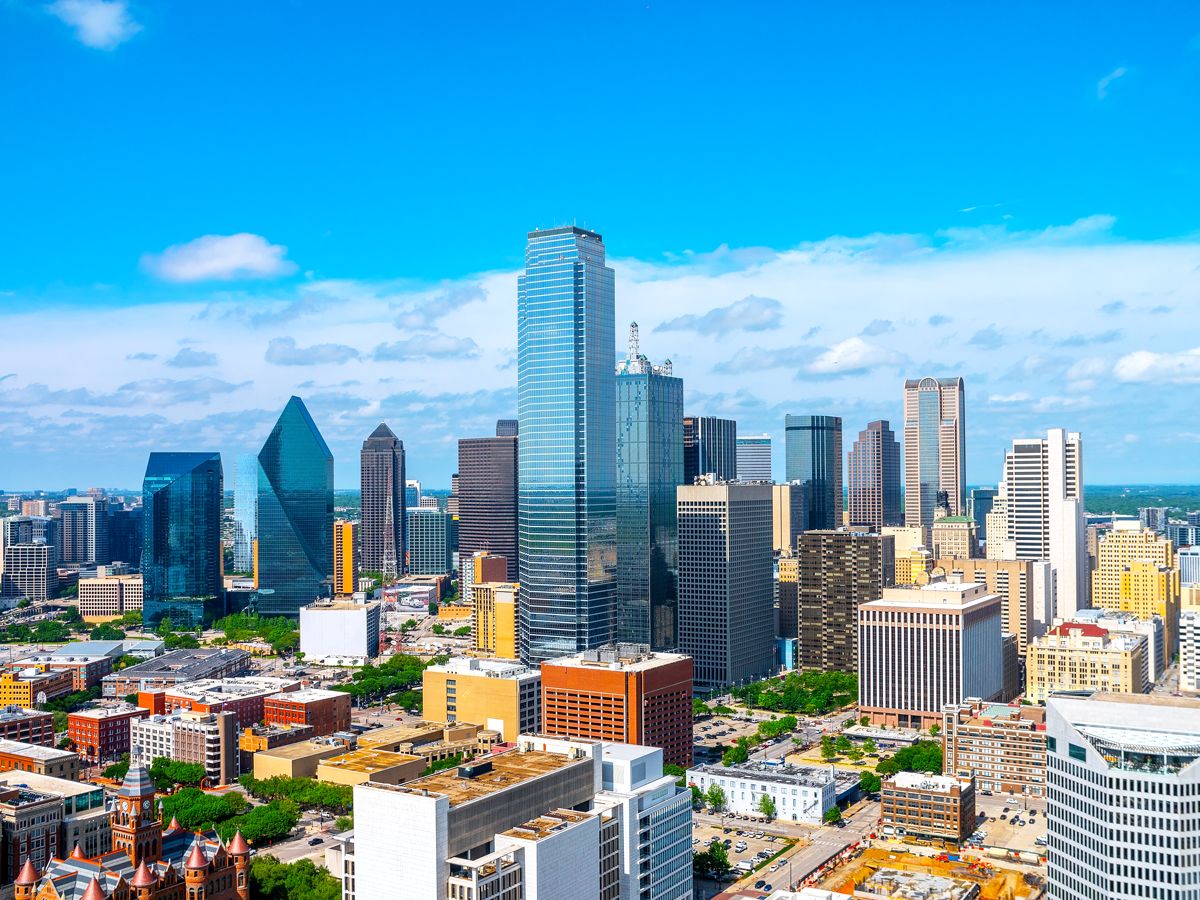
Texans might be as competitive with each other as they are with the rest of the country, and here’s at least one category where Dallas has Houston beat. Dallas-Fort Worth-Arlington, also known as DFW and the Metroplex by locals, is home to just shy of 8 million people. Its extremely productive economy includes Silicon Prairie and 24 Fortune 500 companies. Meanwhile, the Dallas Cowboys have long been known as “America’s Team,” and the Dallas food scene has grown increasingly luxurious in recent years. In other words, don’t expect its population boom to slow down anytime soon.
3. Chicago, Illinois
Credit: Mlenny/ E+ via Getty Images
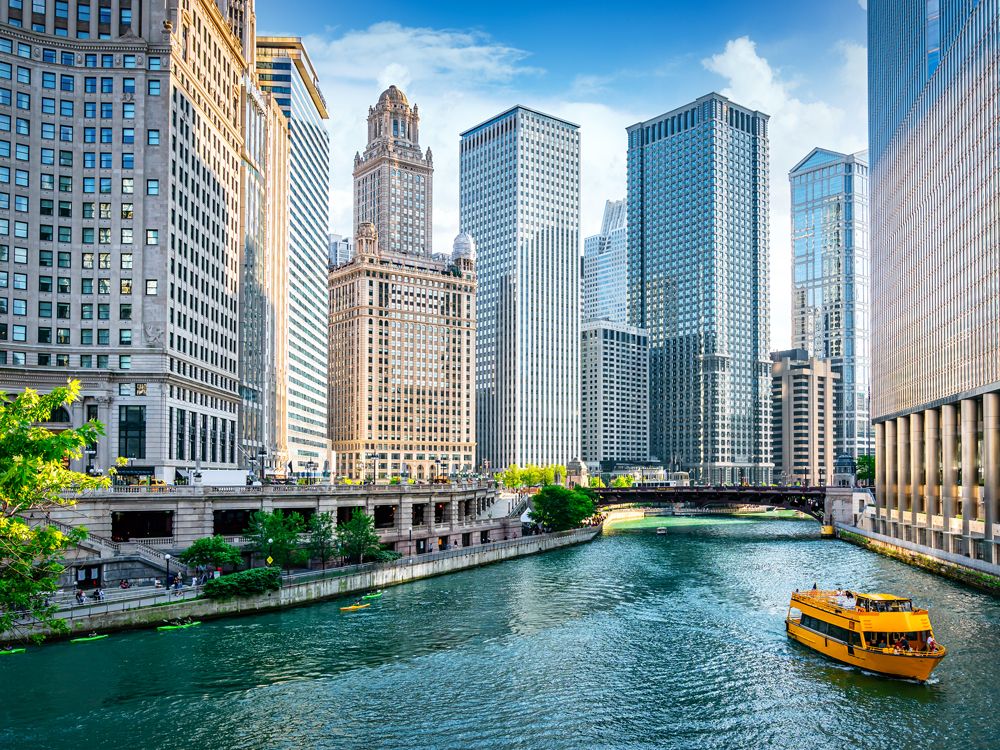
Chicago is known as the “Windy City” not because of actual wind but because its residents (and especially its politicians) were said to be “full of hot air” in the late 19th century. The city is part of an urban region called Chicago-Naperville-Elgin, which ranks as the third-most-populous metro area in the country. Nearly 9.5 million people live there, most of them in Illinois but with some in Indiana (including Gary) and some in Wisconsin (mostly Kenosha).
2. Los Angeles, California
Credit: LeoPatrizi/ E+ via Getty Images
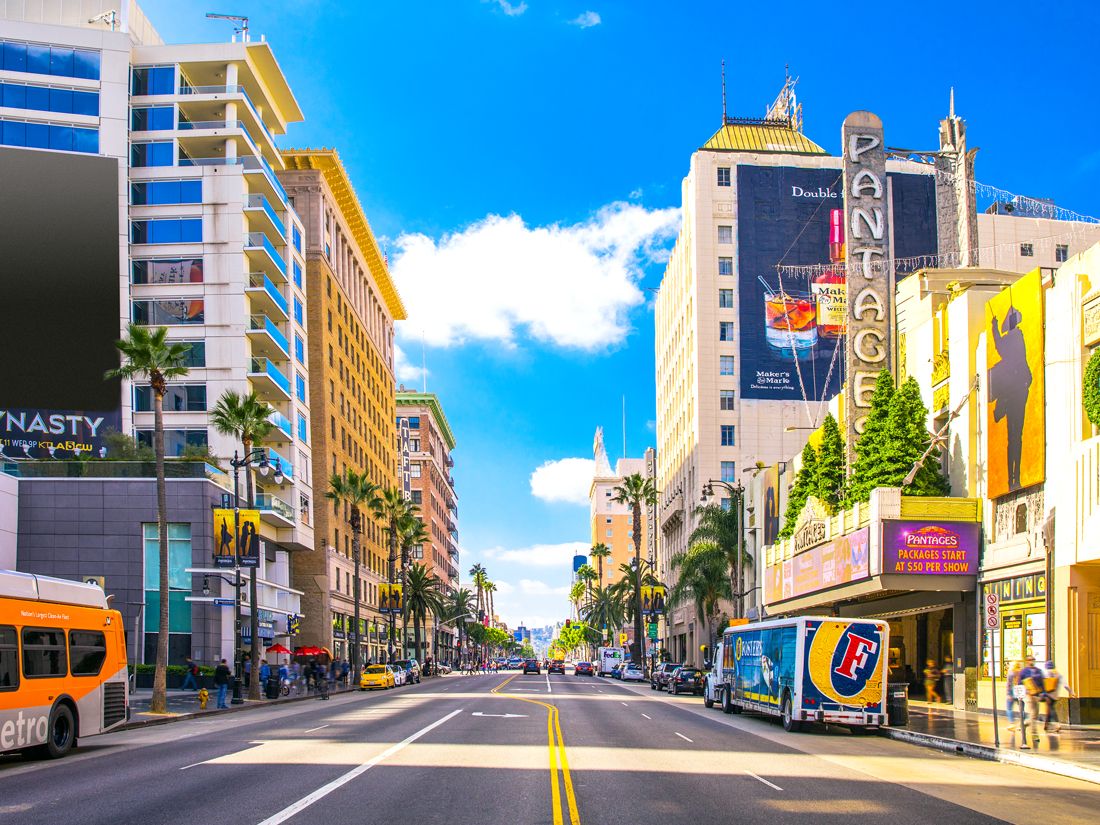
Second on the list of the largest U.S. metro areas is Los Angeles, which also encompasses Long Beach and Anaheim. A whopping 12.9 million people call the L.A. area home. The film industry, miles of beaches, and cultural attractions such as Disneyland and the Hollywood Bowl are among the many reasons that people have been California dreamin’ throughout much of the country’s history.
1. New York, New York
Credit: Guido Cozzi/Atlantide Phototravel/ Photodisc via Getty Images
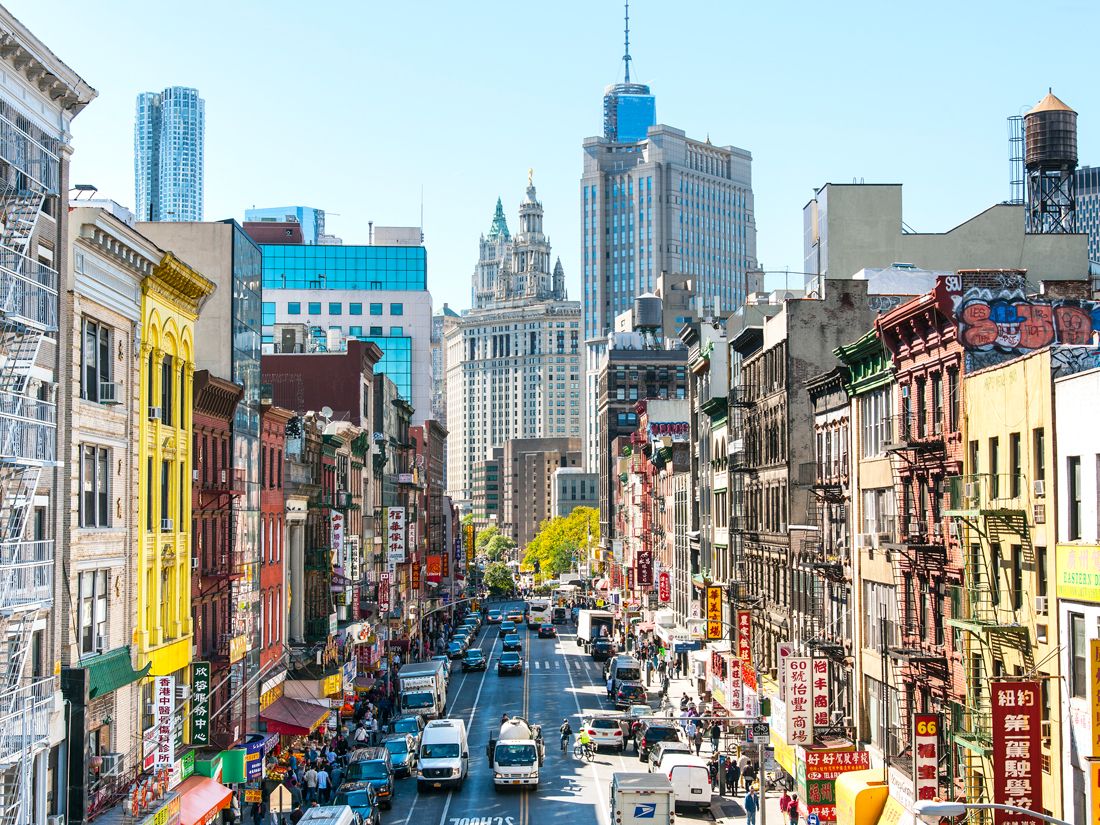
Frank Sinatra wasn’t the only one who wanted to be a part of it: Just as New York City is the most populous city in the country by far (8.3 million at last count), so too is New York-Newark-Jersey City the nation’s most populous metro area. And it isn’t even close — the population is an astounding 19.6 million people, more than every state aside from New York state, Florida, Texas, and California. Parts of New Jersey and even a tiny sliver of Pennsylvania are included in the metro area, though the lion’s share of that number resides in the Big Apple.
Advertisement
More from our network
Daily Passport is part of Inbox Studio, an email-first media company. *Indicates a third-party property.
For many travelers, summer is the most anticipated season of the year. It’s a time associated with warmer weather, outdoor activities, and epic vacations. And, luckily, it’s also when Mother Nature adds an extra magic touch to the natural world. From magnificent lavender blooms to a spotted lake and a rainbow river, these are seven natural wonders you can only see in summer.
Brown Bear Feeding at Brooks Falls – Katmai National Park, Alaska
Credit: Mark Kostich/ iStock via Getty Images
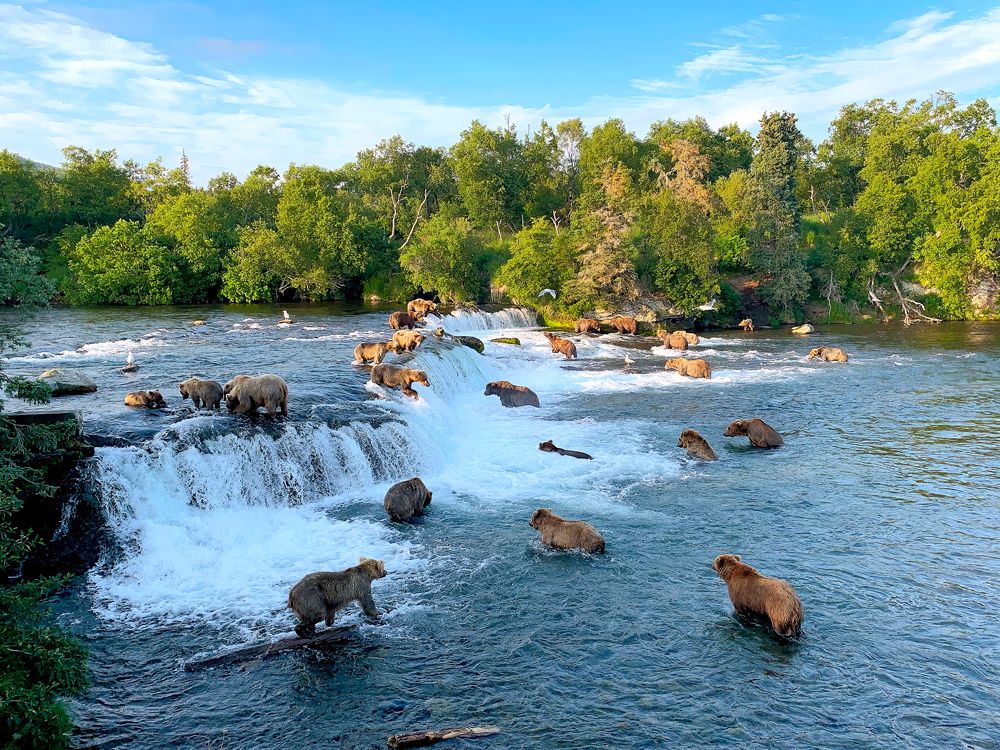
Around 2,200 brown bears roam amid a landscape of volcanoes, mountains, and coastal forests in southern Alaska’s Katmai National Park and Preserve. As the harsh winter comes to end, the bears come out of hibernation and make their way toward Brooks Camp. Once there, they travel up Brooks River to Brooks Falls, where they feed on the hundreds of sockeye salmon attempting to leap over the falls.
Visitors can often catch a glimpse of the feeding bears from June to September. Not only do they fish for salmon, but they also teach their cubs how to hunt and survive in the wild. During the feeding season, there are daily bus tours to Brooks Camp, where you can find observation decks, ranger-led programs, hiking opportunities, and camping.
Blooming Lavender Fields – Provence, France
Credit: olgysha2008/ iStock via Getty Images
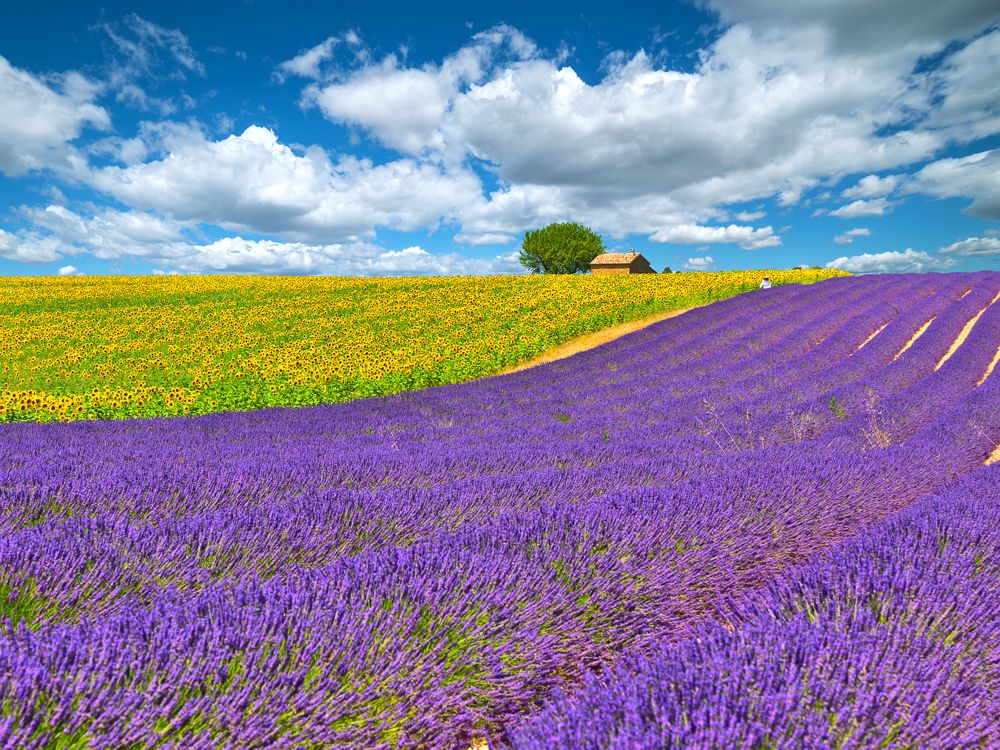
Between June and August every year, the countryside of the Provence region in the South of France turns into a mesmerizing patchwork of purple. Millions of lavender flowers bloom as far as the eye can see, creating scenes that have inspired artists such as Picasso and Van Gogh. The Valensole Plateau is perhaps the most famous location to enjoy the spectacle. It’s known for the rolling fields along the Route de Manosque and farms like Terraroma, where lavender oils and lavender-infused skin care products are made. The 2.5-mile-long Chemin des Lavandes (Lavender Path) in Sault is also worth checking out. Interpretive panels along the trail provide information about the botanical properties, cultivation, harvest, and distillation of the region’s most famous flower.
Caño Cristales – Sierra de la Macarena National Natural Park, Colombia
Credit: Claudio Sieber/ iStock via Getty Images
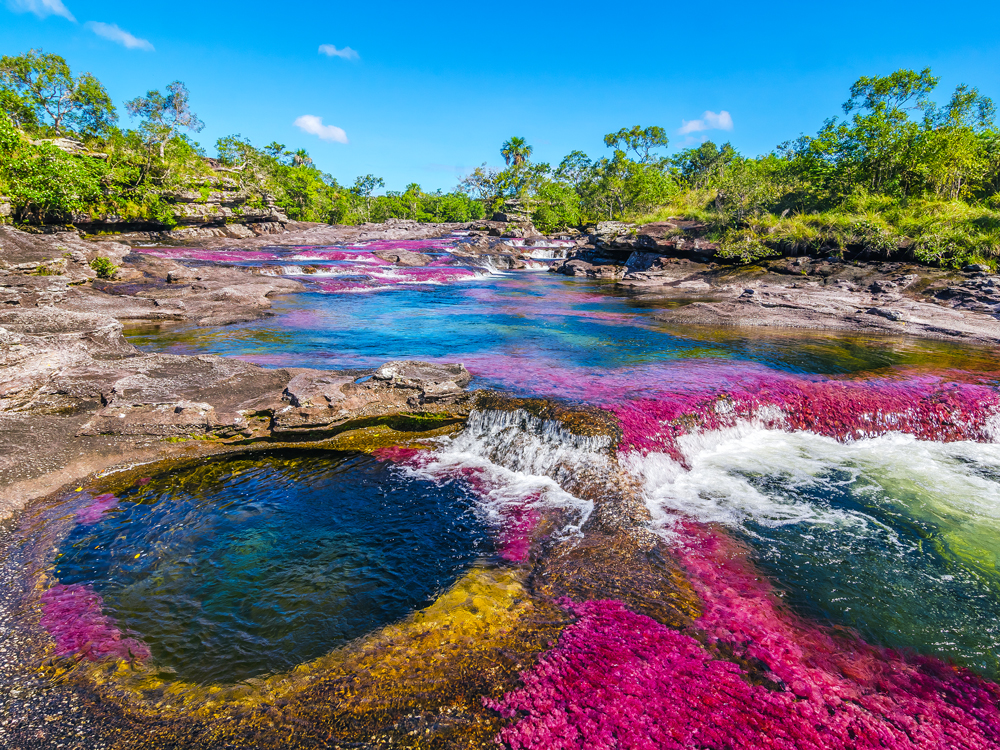
As the age-old saying goes, there’s always a pot of gold at the end of a rainbow. If you travel to Colombia’s remote Sierra de la Macarena National Natural Park, however, you might find it at the end of a river. That’s because beneath the crystalline surface of the Caño Cristales river, the water flows in fascinating hues of blue, black, green, red, and yellow. Some call it the “River of Five Colors,” while others have deemed it the “Liquid Rainbow.” Either way, this summertime phenonmenon is attributed to an aquatic plant called macarenia clavigera. It clings to quartzite rocks and turns red during the rainy season. The rainbow effect changes according to water levels and sunlight — July to November is when the colors are at their most dramatic.
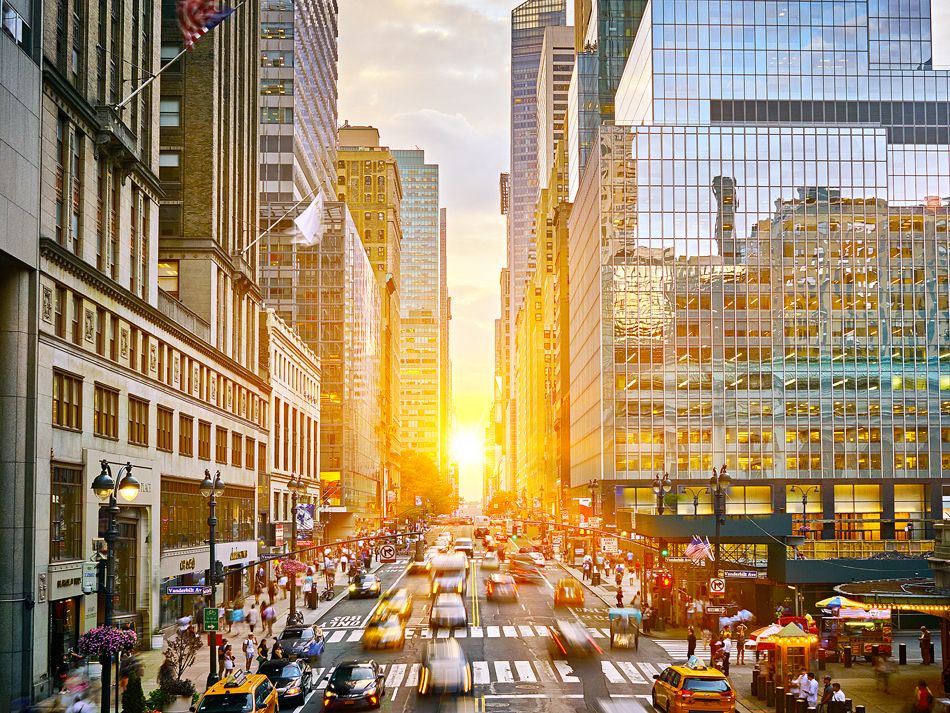
Manhattanhenge – New York, New York
Credit: ANDREY DENISYUK/ Moment via Getty Images
Manhattanhenge is a rare summer event when the setting sun aligns perfectly with the east-west streets of Manhattan’s grid layout. The name is an homage to Stonehenge, one of the world’s most emblematic stone circles. But whereas Stonehenge was built purposely to frame the sunsets of the summer and winter solstices, Manhattanhenge is a complete accident.
On two separate occasions, typically once around Memorial Day and again in mid-July, the sun drifts down precisely between the city grid. In doing so, it casts a dazzling and mystical glow over New York’s skyline. Optimal viewing spots are as far east as you can go (without losing sight of New Jersey to the west) along the wider thoroughfares of 14th, 23rd, 34th, 42nd, and 57th Streets.
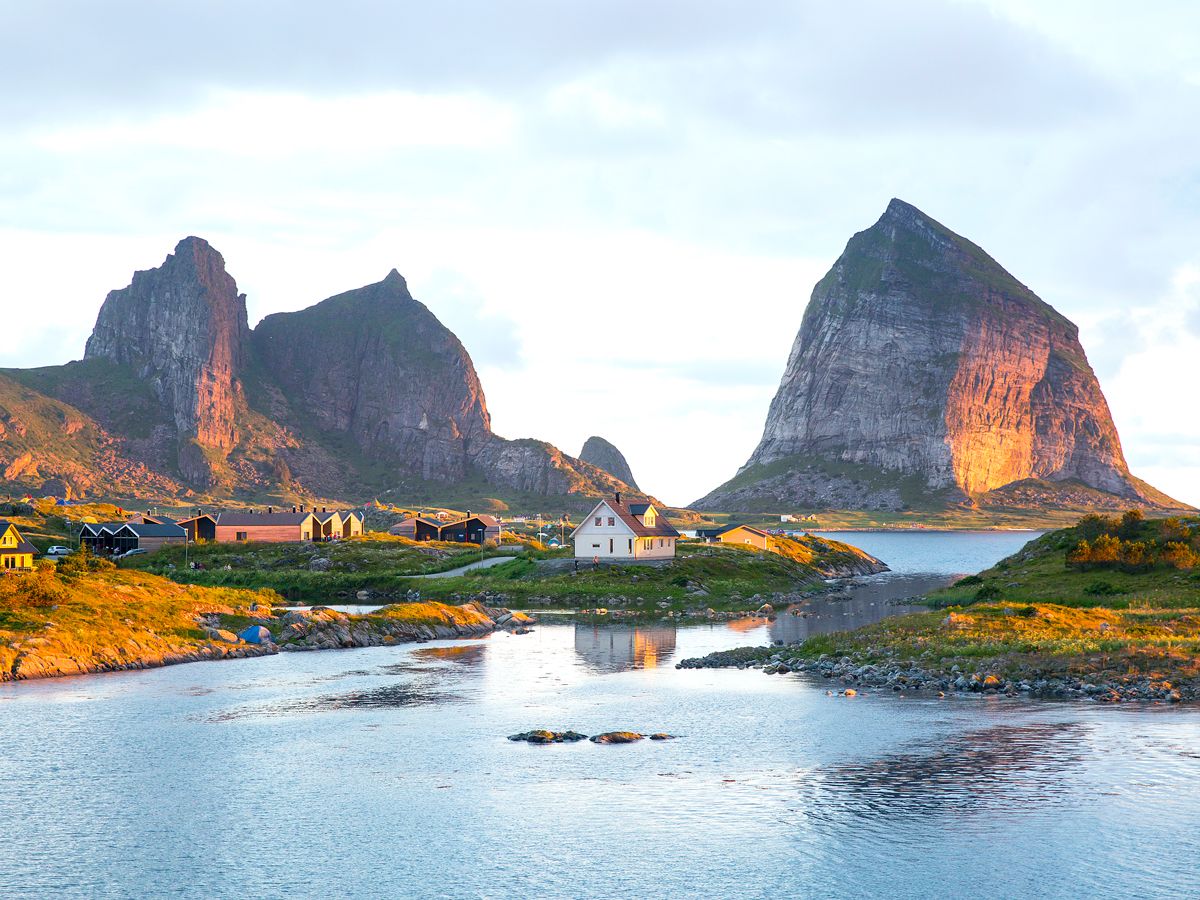
Midnight Sun – Northern Norway
Credit: Cloud-Mine-Amsterdam/ iStock via Getty Images
At the northern reaches of the planet above the Arctic Circle, the sun stays up 24 hours a day for several weeks (or even months) around the summer solstice. Known as the midnight sun, it happens because Earth’s axis is tilted more toward the sun during this time of year.
In northern Norway, summer days filled with sunlight are part of the fabric of daily life. Rather than battle to block out the light, locals instead choose to embrace the extra-long days. A midnight cable car ride to Storsteinen mountain, sunlit nighttime cruises along Trollfjord, and late-night swimming at Kvalvika Beach are all the norm. The Svalbard archipelago experiences even more round-the-clock daylight from mid-April to late August. Here, the aptly named Longyearbyen is the gateway to Arctic adventures beneath constantly sunny skies.
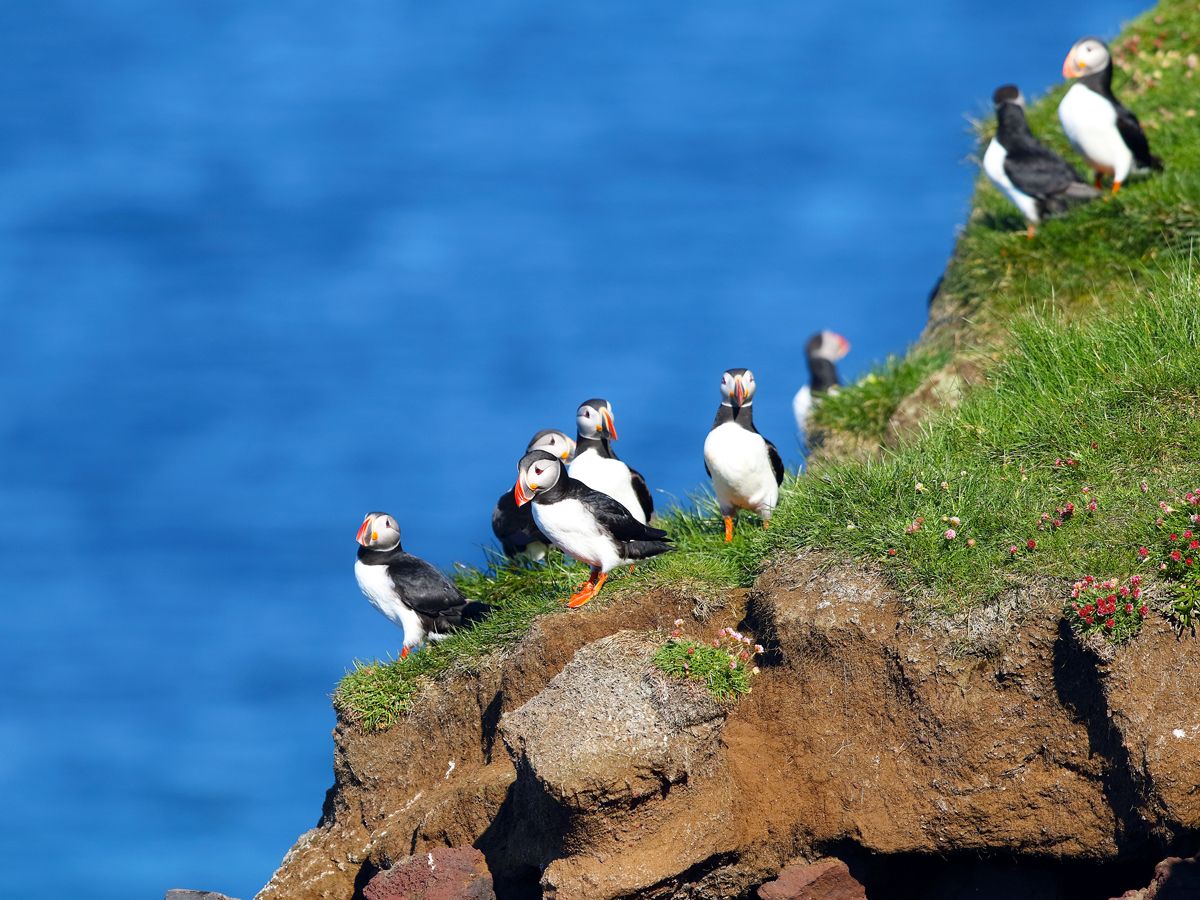
Puffin Migration – Vestmannaeyjar, Iceland
Credit: AntonioGuillem/ iStock via Getty Images
Iceland is home to approximately 60% of the world’s Atlantic puffin population, which amounts to between 8 million and 10 million individual birds. While they spend up to eight months out at sea, the puffins come ashore to breed in the summer months. One place where this happens is the Vestmannaeyjar (Westman Islands), an archipelago off the country’s southern coastline.
Between June and September, it welcomes about a fifth of the world’s puffins. The reason for this is that puffins only nest in their birthplace and where other puffins are present. Consequently, this guarantees sightings year in, year out. Taking a boat tour from Heimaey (Home Island) is a great way to spot them perched on the grassy cliffs. On Heimaey, kids and adults alike take part in pysja (puffin) patrolsto rescue any wayward chicks.
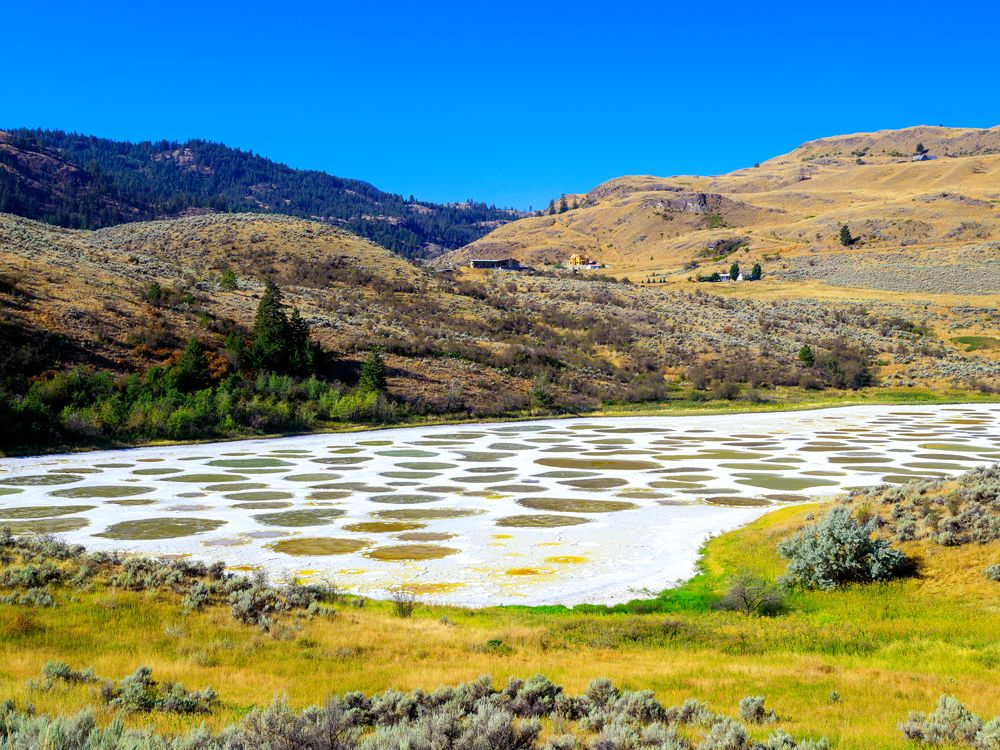
Spotted Lake – Osoyoos, Canada
Credit: Nalidsa Sukprasert/ iStock via Getty Images
If you happen to drive along British Columbia’s Crowsnest Highway toward Osoyoos between autumn and spring, there’ll be nothing remarkable to note about Spotted Lake. But come summertime (June to August), the scene changes completely. As the temperatures rise, the lake’s water slowly evaporates to reveal a bed of circles in striking shades of blue, green, and yellow.
The circles are deposits of calcium, magnesium sulfate, sodium sulfate, and other minerals. They reach the lake via the snowmelt and runoff that drain into the lake from the nearby hills. Continued evaporation causes additional changes in shape and color. Spotted Lake is deemed a sacred place of healing by the Okanagan First Nations peoples, who call it kłlilx’w. Information about the lake and its history is on display at Osoyoos Visitor Centre.
Advertisement
More from our network
Daily Passport is part of Inbox Studio, an email-first media company. *Indicates a third-party property.
Did you know it’s possible for settlements to exist while technically being lower than the height of oceans and seas? As the world’s ocean is technically one continuous body of water, its surface level is generally the same throughout the planet. “Sea level” is the basis from which elevation and depth are measured on planet Earth. Places below sea level can occur due to a variety of factors, including tectonic activity, rising water levels, and human developments such as land reclamation. Check out these 10 cities below sea level.
Georgetown, Guyana
Credit: pawel.gaul/ iStock via Getty Images
Elevation: 6 feet below sea level
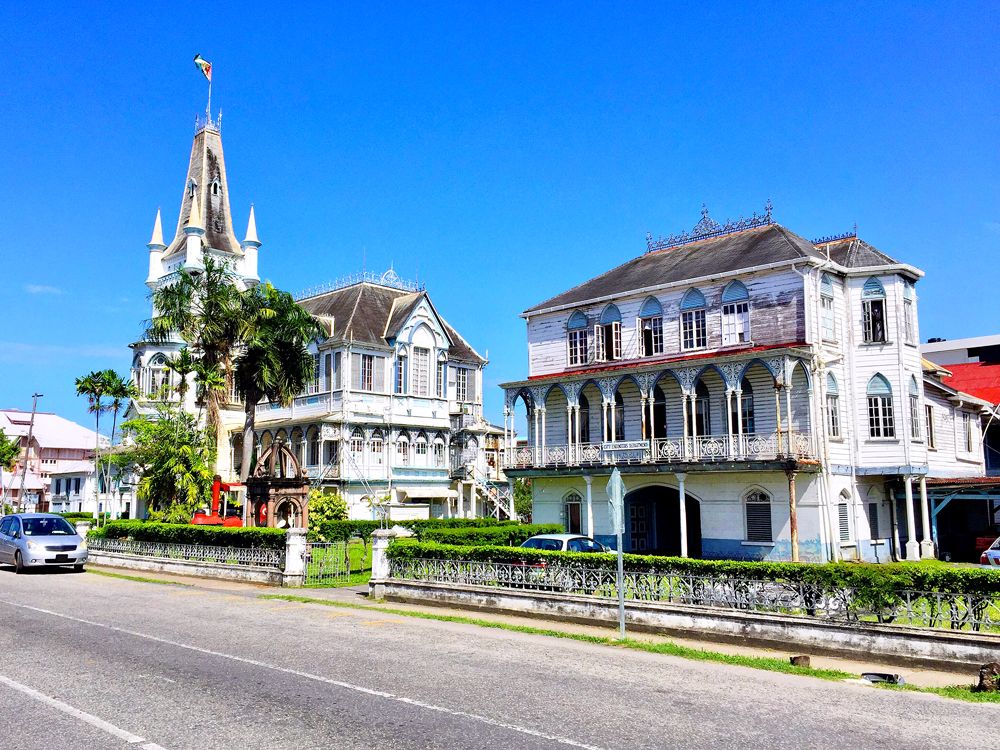
Located where the Demerara River meets the Atlantic Ocean on South America’s northern coastline, Georgetown is the English-speaking capital of Guyana. It is also one of the world’s few major cities below sea level. Protecting much of Georgetown is the Kingston Seawall, which is the country’s oldest sea defense structure. It keeps the Atlantic at bay and helps to preserve the country’s many rice and sugarcane fields.
Often called the “Garden City of the Caribbean,” Georgetown is also known for its colonial architecture. Notable landmarks include the Gothic Revival-style City Hall and St. George’s Cathedral. Visitors often use the city as a starting point for tours to explore nearby natural wonders such as Kaieteur Falls in Kaieteur National Park and the Iwokrama Rainforest.
Amsterdam, The Netherlands
Credit: a_Taiga/ iStock via Getty Images
Elevation: 7 feet below sea level
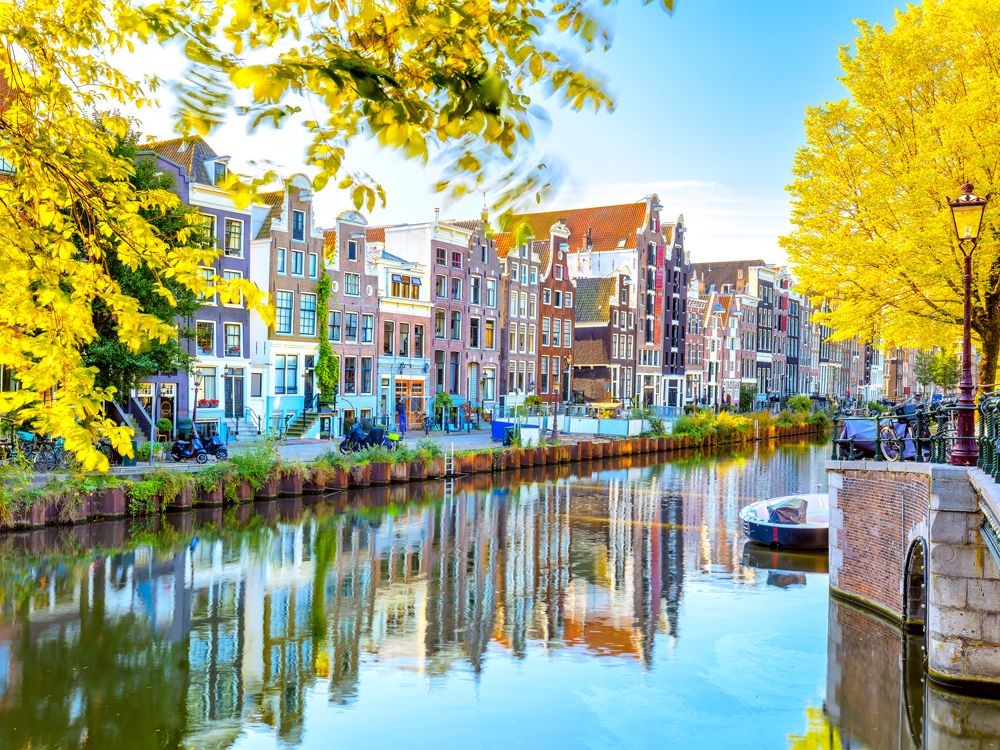
The country name Netherlands means “low-lying lands,” and indeed, the country has many areas below sea level. Amsterdam’s altitude is 7 feet below sea level, making it one of the biggest major cities below level. An estimated 26% of the Netherlands is located below sea level — that number rises to as high as 59% following heavy storms and other times of increased water levels. The Dutch capital stays “afloat” thanks to a system of canals, dikes, dunes, floodgates, and pumping stations. It’s part of the Delta Works, a massive engineering project initiated after significant flooding in 1953.
The Dutch continue to find innovative ways to adapt to the country’s low-lying location. For example, in 2023, an underwater bicycle parking lot with space for 7,000 bikes opened next to Amsterdam’s Centraal Station.
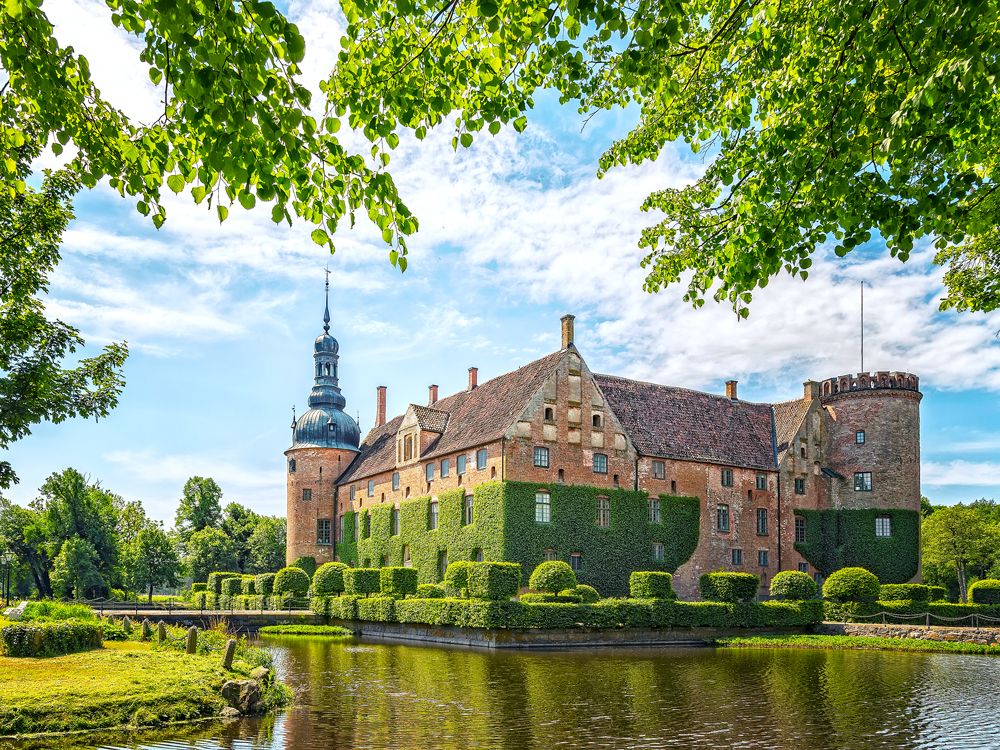
The lowest point in Sweden is located just outside the city of Kristianstad, set on the banks of Lake Hammarsjon in the southern part of this Scandinavian country. In the 19th century, part of the lake was drained to create a reverse dam called Hammarslundsvallen. Since this part of the country is below sea level, the dam’s job is to keep water out rather than retain it.
However, the dam almost breached in 2002, after which a project was launched to pump water out. By 2025, the goal is to have over 6 miles of embankments and six pumping stations to prevent future flooding. Still, water plays an important role in the town’s culture and surroundings. The Kristiansand Vattenrike Biosphere Reserve extends around 22 miles along the River Helge. This wetlands area features nature trails, bird towers, and interpretive centers.
Rotterdam, The Netherlands
Credit: nantonov/ iStock via Getty Images
Elevation: 23 feet below sea level
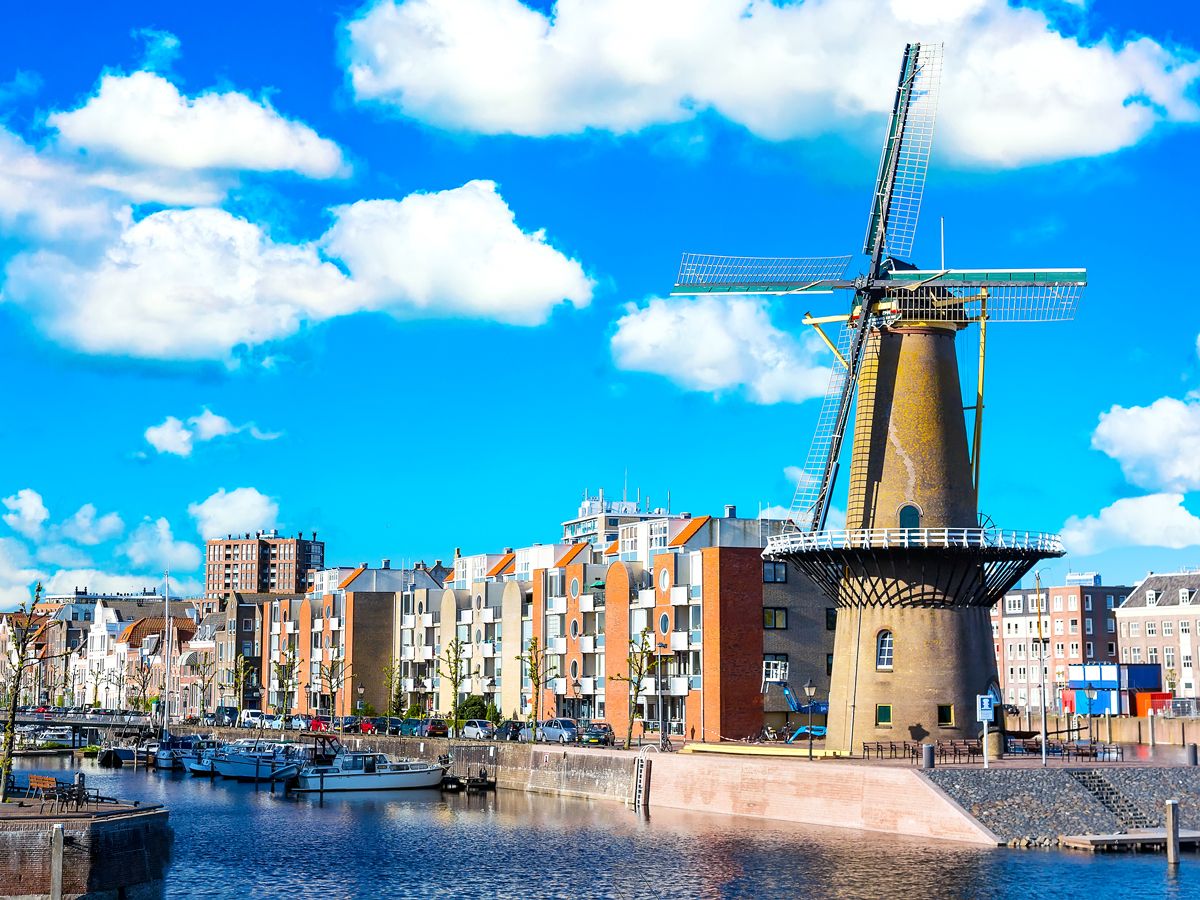
The second-largest city in the Netherlands and of the world’s biggest cities below sea level, Rotterdam is an important maritime port set along the Scheur river, close to the North Sea. About 85% of the city has land below sea level. Despite being one of the lowest cities in the world, Rotterdam is regarded as one of the safest delta cities on the planet. This is mainly thanks to creative engineering and architectural projects.
The Maeslantkering is a storm surge barrier built on the river that shuts automatically when floods and tidal surges threaten the city. It’s controlled by a centralized computer system and can withstand a water increase of 16 feet. Rotterdam is also home to other water-based infrastructure projects such as a floating solar park and Nassauhaven, a collection of sustainable homes that move with the tide.
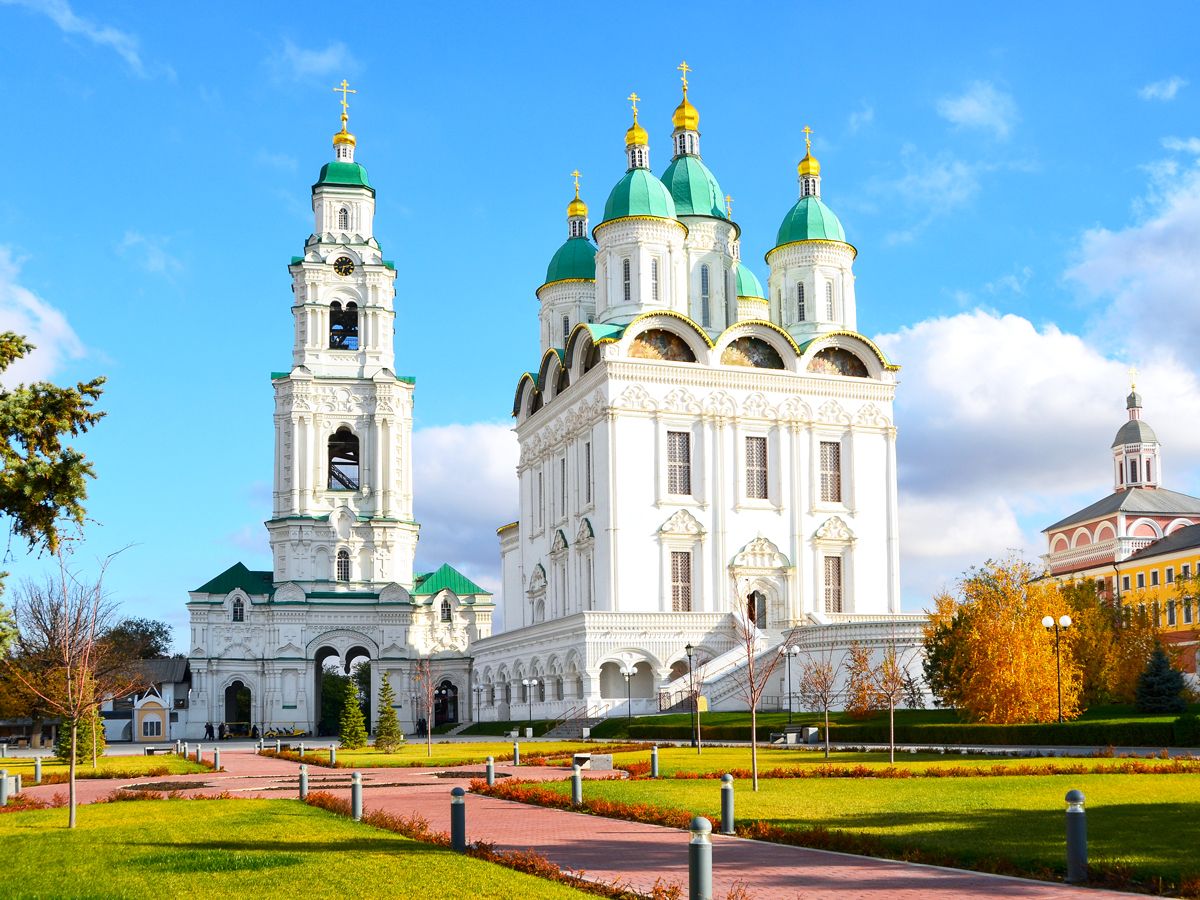
Straddling the Volga River about 60 miles from the Caspian Sea, Astrakhan is the administrative center of Russia’s Astrakhan Oblast (province). In the 14th century, it developed from a small fishing community into a vital trading port spreading across a network of small islands. The city lends its name to Astrakhan fur, a sought-after material taken from the skins of the karakul sheep native to Central Asia. It was fur traders from the region who first introduced the fur to Russia.
Dominating the city skyline is the UNESCO-listed Astrakhan Kremlin, originally a wooden structure built in 1558. Today’s imposing white fortress features huge defensive walls and seven of its original eight towers. Inside the complex is the Cathedral of the Assumption, distinguished by its five green domes and widely regarded as one of the finest surviving examples of 18th-century Russian church architecture.
Baku, Azerbaijan
Credit: Ayhan Altun/ Moment via Getty Images
Elevation: 92 feet below sea level
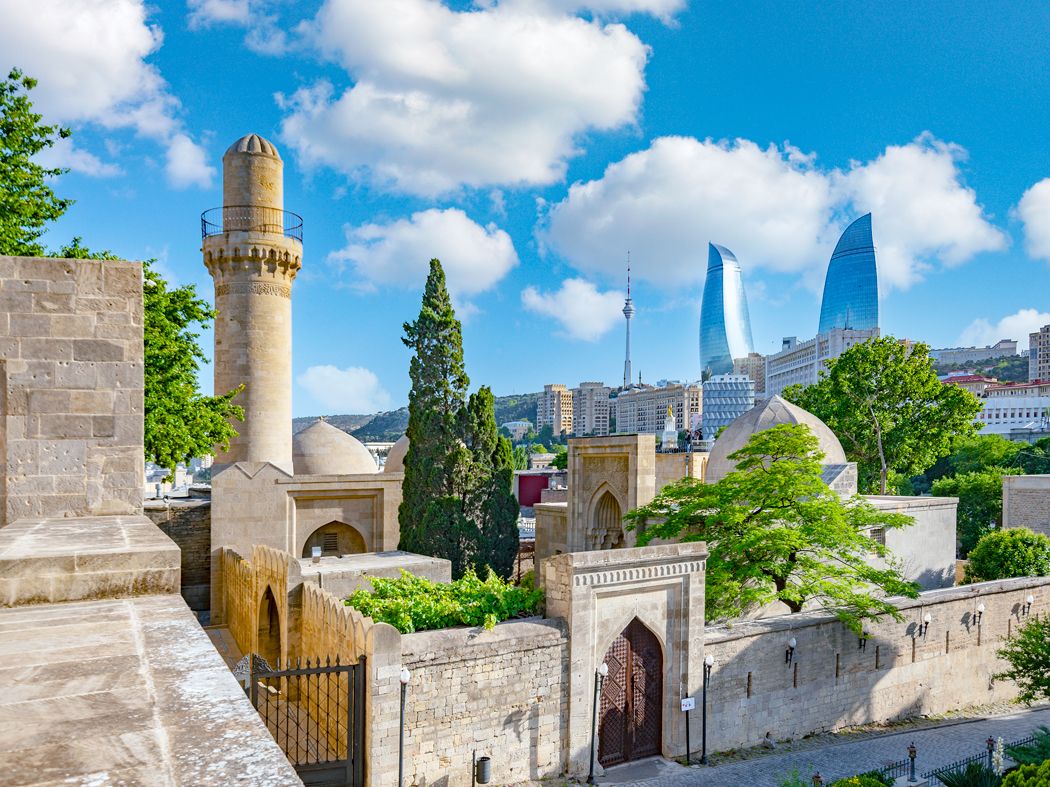
Baku is the lowest capital city in the world. It’s also the largest city situated on the Caspian Sea, the world’s largest inland body of water. Baku was settled in the Bronze Age, and the landscape of the city has changed dramatically since its early beginnings. Today, it’s an ultra-modern metropolis of gleaming skyscrapers, including the iconic Flame Towers. At night, hundreds of LED screens illuminate these three towers to simulate flickering flames.
Baku’s location on the Caspian Sea is key to Azerbaijan’s economy, as the body of water is rich in both fish and oil reserves. City planners also took advantage of the waterfront setting to create the Mini Venice tourist attraction, which has canals, islands, restaurants, and gondola rides.
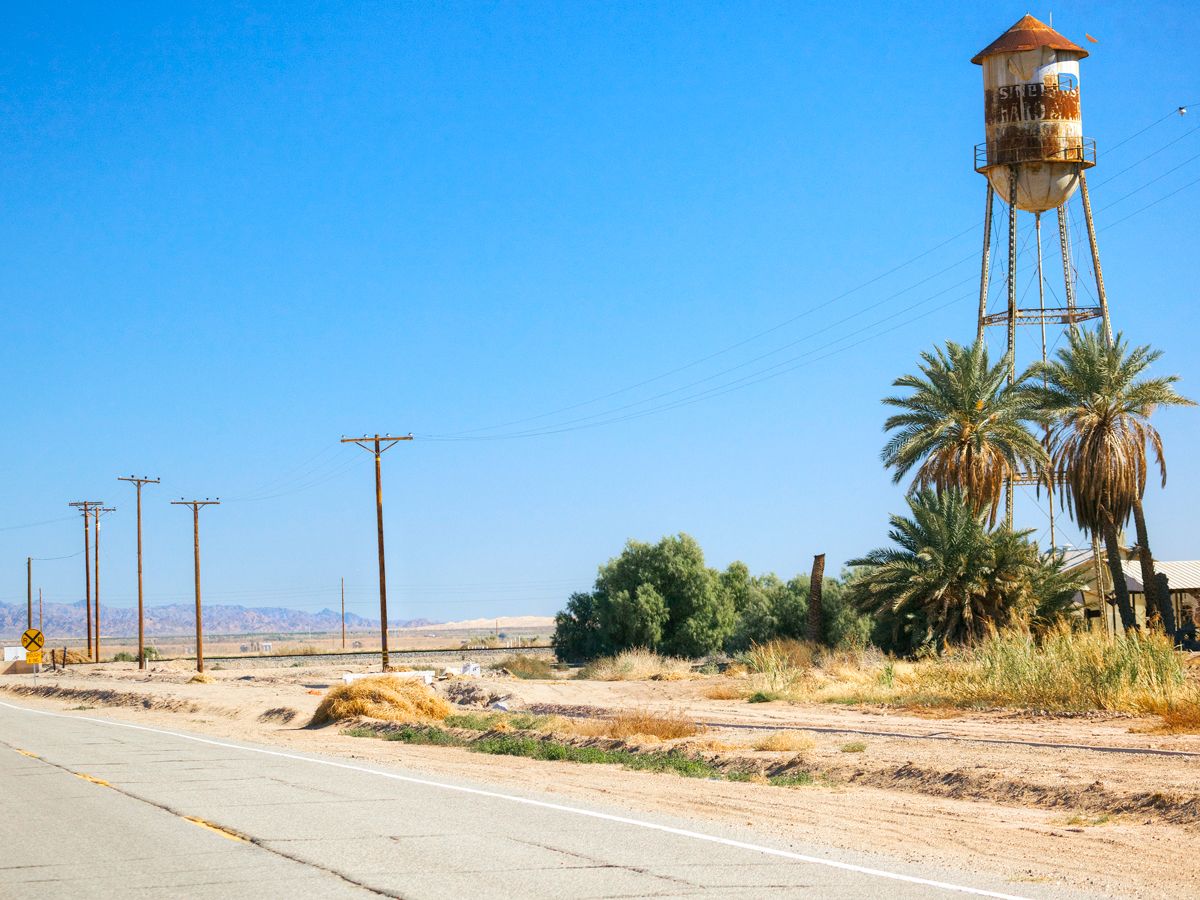
Situated close to the Salton Sea in Southern California, Calipatria is the lowest incorporated town in the Western Hemisphere. Its name is a portmanteau of “California” and “patria,” the Spanish word for “homeland” or “fatherland.” This quiet, low-lying city is surrounded by agricultural land, solar farms, a geothermal power plant, and the Calipatria State Prison. In the center of town you’ll find what locals claim is the “World’s Tallest Flagpole.” It stands 184 feet tall, meaning the flag flies just about at sea level.
Calipatria is a short drive from several unique natural and human-made attractions. On the shores of the Salton Sea is the Sonny Bono Salton Sea National Wildlife Refuge. Its mix of cattail marshes, desert uplands, fields, and wetlands provide an important habitat for migratory birds traveling on the Pacific Flyway. Also nearby is a quirky roadside attraction called Salvation Mountain. Created by artist Leonard Knight, the adobe mountain is emblazoned with the message “God Is Love” and decorated with multicolored religious art.
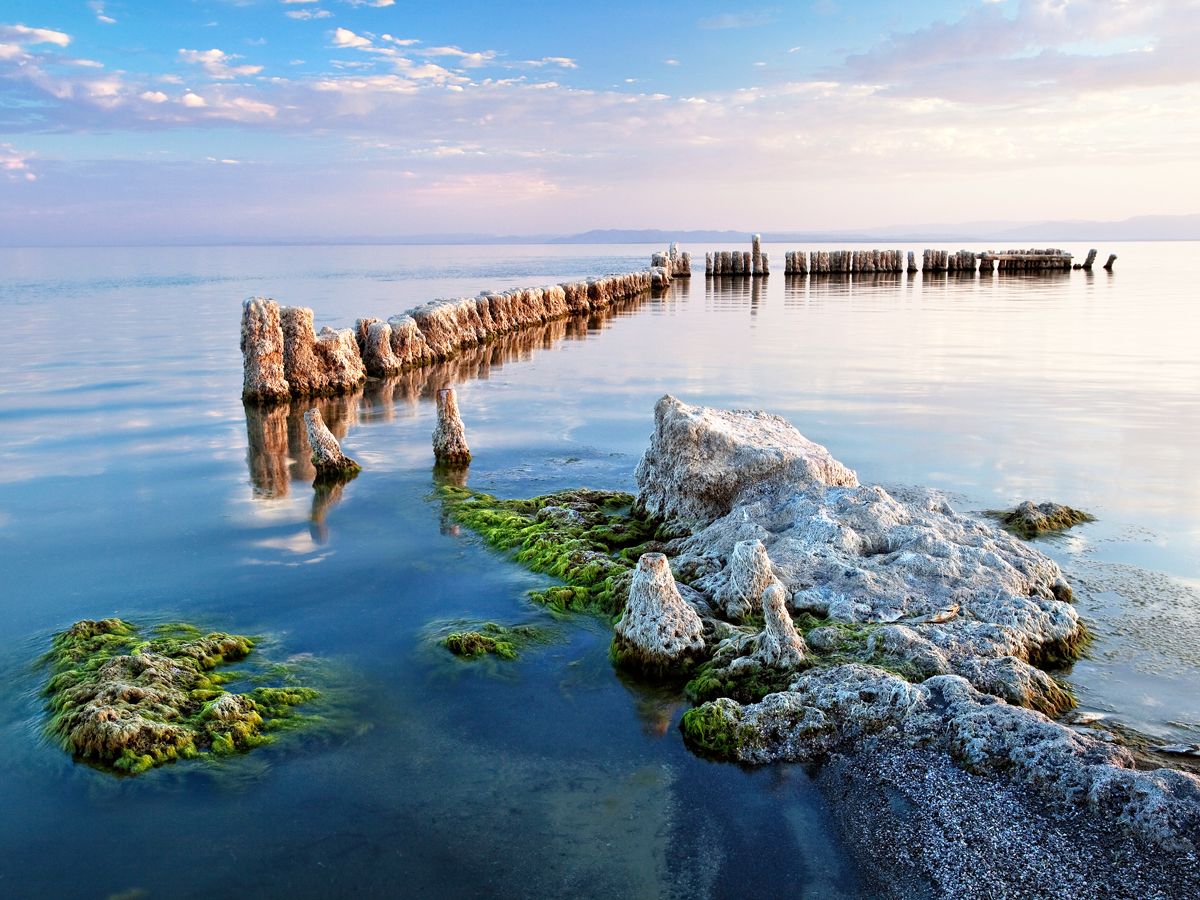
Part ghost town, part thriving arts community, Bombay Beach is the lowest unincorporated community in the United States. The census-designated place (CDP) sits at 226 feet below sea level on the shores of Salton Sea, about 25 miles from Calipatria. The saline lake originated when canals transporting water from the Colorado River burst in 1905. By the mid-1900s, Bombay Beach had become a waterside escape loved by watersports enthusiasts and even celebrities.
But an unfortunate combination of flooding, rising summer temperatures, and rotting fish (thanks to contaminants and hypersalinity in the lake) forced residents out during the 1970s. However, life has come full circle here. In the 2010s, former residents and retirees started to return, and they were soon joined by artists. The Bombay Beach Biennale, founded in 2016, is a celebration of art and music inspired by this quirky and resilient town.
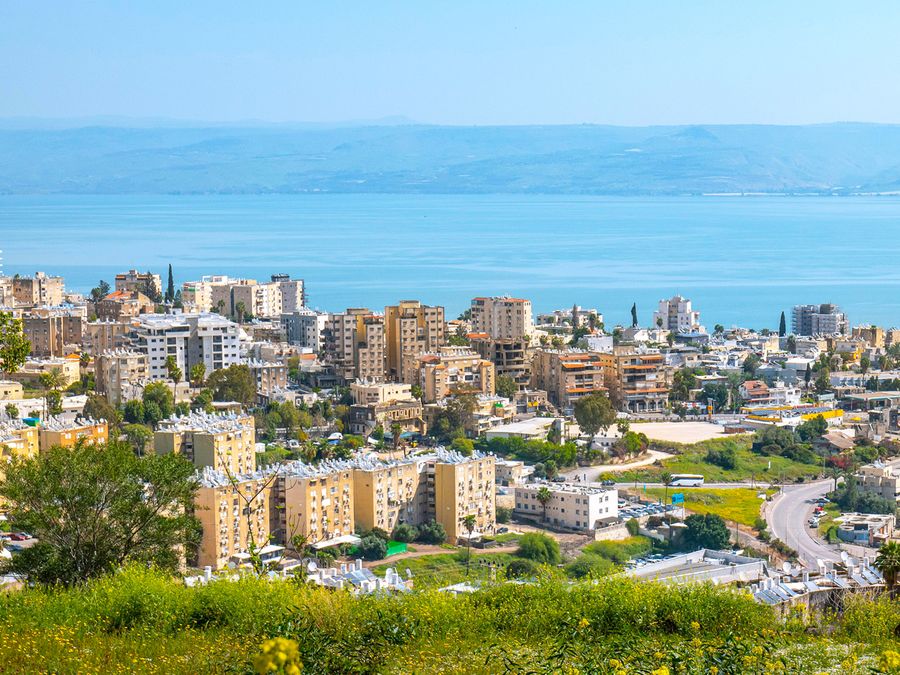
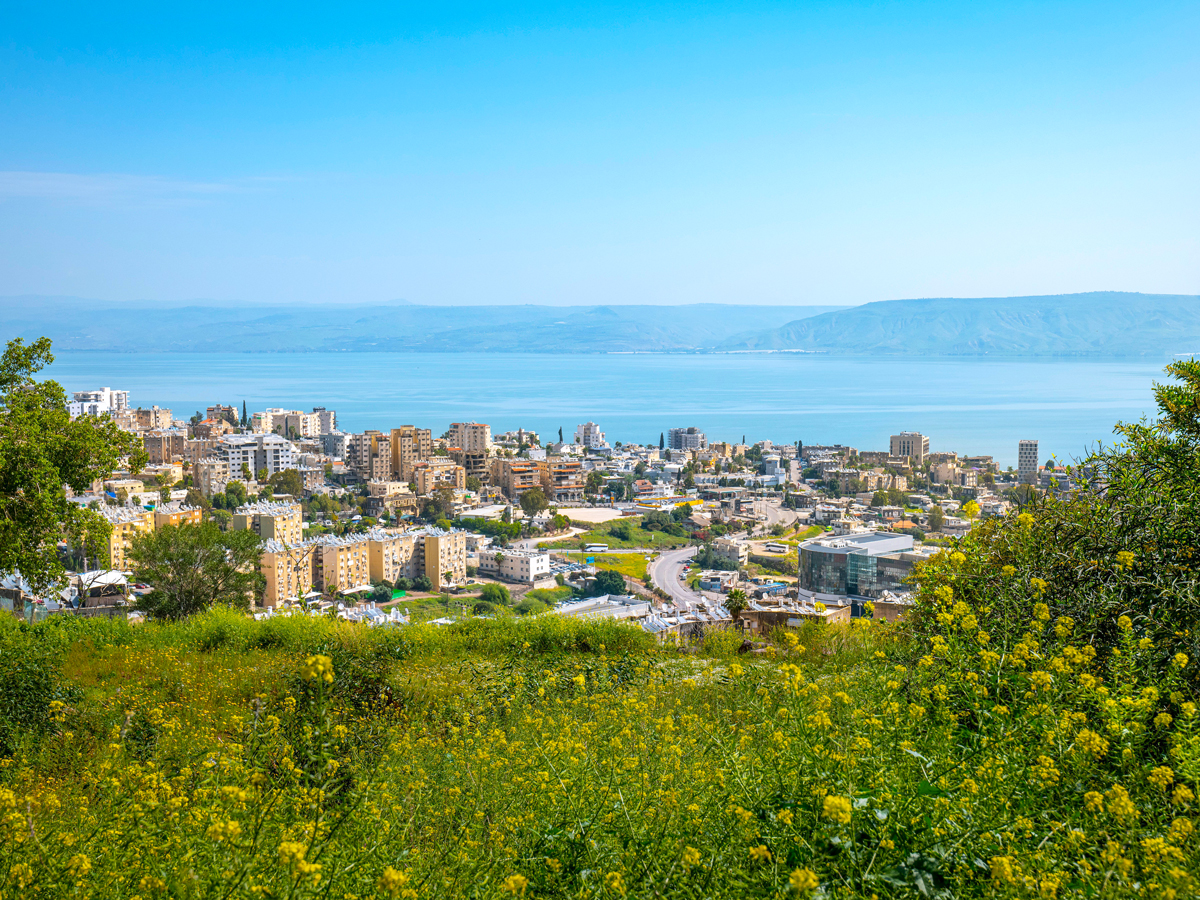
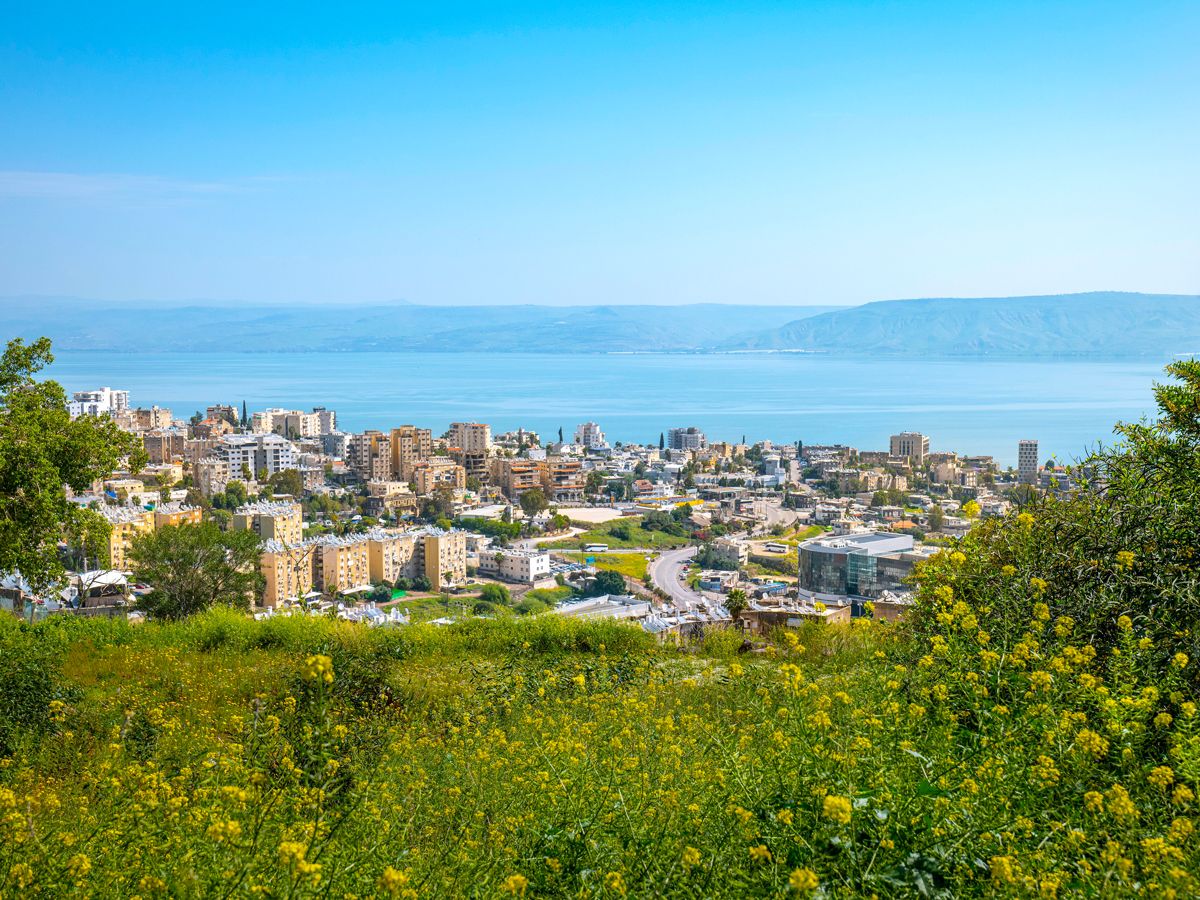
On the western shore of the Sea of Galilee stands the ancient city of Tiberias. Founded in the first century CE by Herod Antipas, son of King Herod the Great, it’s one of the four original holy cities of Judaism. Various empires have controlled the city over the centuries, including the Romans, Byzantines, Crusaders, and Ottomans. Each has contributed to a legacy of interesting architectural landmarks and archaeological sites found in Tiberias today. Among these are the Roman Theater of Tiberias and Tomb of Maimonides, which is the burial place of a revered rabbi and Sephardic philosopher.
Another emblematic sight is Hamat Tiberias National Park. It protects Hamat Teverya, a village that predates the city and was incorporated into its boundaries during the Byzantine era. The park has 17 hot springs that are redirected into modern tourist baths. Visitors can also see the remains of a Roman bathhouse and a synagogue, which was built (and rebuilt) between the first and fifth centuries CE. The synagogue is famous for a mosaic floor design, one of the earliest examples of a mosaic in a synagogue in Israel.
Jericho, West Bank
Credit: Zoonar/J.Wachala/ Zoonar via Getty Images Plus
Elevation: 864 feet below sea level
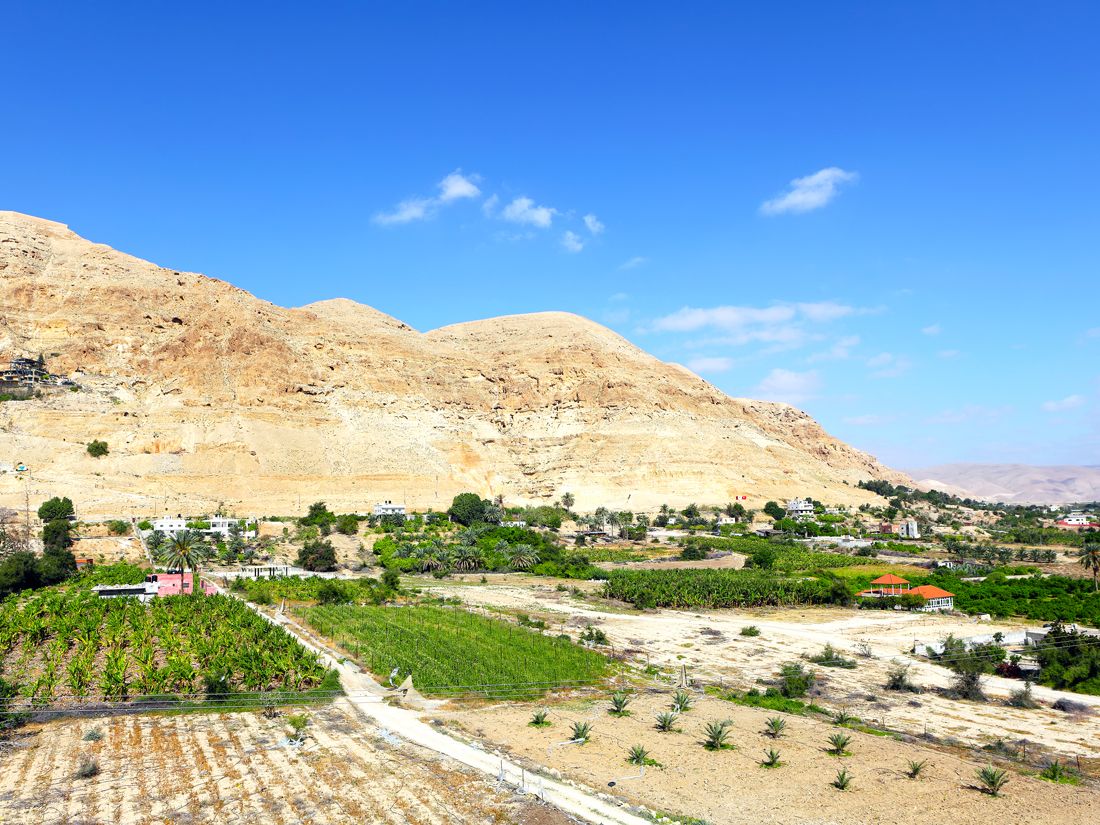
Jericho is situated about 10 miles from the Dead Sea — the lowest elevation in the world — and is both the lowest and oldest city in the world. The exact, record-breaking low point is known as Tell es-Sultan, which sits 864 feet below sea level. Excavated remains of the Natufian peoples found here date back over 10,000 years to the Neolithic period.
Further archaeological digs in and around Jericho have shed light on the Roman, Byzantine, and Ottoman influences on the city. The Russian Museum also recounts the often-unknown history of Russians in the Holy Land. It shelters an ancient sycamore tree, which — according to Christian tradition — Zaccheus climbed to watch Jesus on his pilgrimage to Jerusalem.
Advertisement
More from our network
Daily Passport is part of Inbox Studio, an email-first media company. *Indicates a third-party property.