



Post Banner Image
Tips

8 Airline Booking Mistakes That May Be Costing You

By Bennett Kleinman
Read time: 6 minutes
April 12, 2024
Updated: April 12, 2024

8 Airline Booking Mistakes That May Be Costing You

By Bennett Kleinman
Author
Bennett Kleinman
Bennett is a New York City-based staff writer for Daily Passport. He previously contributed to television programs such as the Late Show With David Letterman, as well as digital publications like the Onion. Bennett has traveled to 48 U.S. states and all 30 Major League Baseball stadiums.

Booking a flight is easier than ever thanks to the internet. Anyone can book their plane tickets in a matter of minutes without needing to call the airline or a travel agency like in the old days. But despite how convenient the process has become, snagging a plane ticket online comes with potential pitfalls. Here are eight potentially costly airline booking mistakes you might be making — and tips on how to avoid them.

You Book Too Early or Late

Close-up of flight booking web page
Credit: glegorly/ iStock

Many airlines price their flights conservatively when they first go on sale, so those early reservations will likely end up costing you more than if you booked closer to the departure date. Prices tend to start dipping around the six-month mark, so it’s worth waiting until at least then. On the other hand, if you wait until a few days before travel, you’ll likely end up paying a hefty sum for one of the dwindling available seats. 

It’s useful to know the sweet spots for booking flights. According to a 2024 report from Expedia, that window is roughly 28 days before takeoff for domestic flights and around 60 days before international trips. The study found that customers who booked domestic flights 28 days before leaving were rewarded with 24% savings compared to those who waited until the last minute. For international travelers, those savings were closer to 10%.

You Book the Absolute Cheapest Fare

Person using laptop to select seats on flight booking
Credit: glegorly/ iStock

Rock-bottom fares are too tempting for some travelers to pass up. But keep in mind that some tickets are cheap for a reason. Budget airlines often charge travelers hidden fees that quickly add up by the time of your flight. For instance, you may be paying just $20 for the ticket itself, but then you’ll end up paying extra for checked or even carry-on luggage, seat selection, and in-flight food and drinks. 

At the end of the day, those fees might add up to the point where you’re likely paying just as much, if not more, than standard fares on some non-budget airlines. To avoid this pitfall, take the time to do some research of all the fees on the airline’s site and a little math beforehand to add up the total cost of all those potential fees. This will allow you to determine if a seemingly “cheap” fare is worth booking.

You Depart on the Wrong Day

Traveler with backpack looking at airport departures and arrivals board
Credit: Jaromir Chalabala/ Shutterstock

Certain days of the week typically have less demand, particularly for business travel, and airlines price fares accordingly. According to data from Hopper, the average cost of taking a domestic flight on a Tuesday is roughly 24% lower than those same seats for flights departing on a Sunday, which is the most expensive day of the week. Wednesdays are the next cheapest day to fly, and even flying on a Saturday or Monday will save you an average of around $50 versus Sunday departures. When it comes to international trips, Wednesday is the cheapest option, and you’ll net roughly 12% in savings if you leave on a Wednesday instead of a Sunday.

You Make Your Purchase on the Wrong Day

Traveler using flight booking app with cup coffee on table
Credit: Thai Liang Lim/ iStock

While Sunday may be the most expensive day to fly, making the actual purchase for your flight on a Sunday could end up costing less. According to Expedia’s 2024 Air Travel Hacks Report, booking your trip on a Sunday — no matter what day it departs — will net you around 8% savings compared to making that purchase on a Friday. Breaking it down by cabin, you can typically expect to save around 5% for both domestic and international economy, 7% for domestic business, and a whopping 24% on international business class tickets.

You Don’t Clear Your Browser Cookies

Close up of hands typing on computer
Credit: render11010/ Shutterstock

As you browse the internet, retail sites gather data about your shopping history in the form of cookies. These cookies may leave you vulnerable to a concept known as dynamic pricing. Essentially, companies — including travel sites — can display different prices depending on the consumer. They may even charge you more than a new customer if they see you’ve purchased expensive flights with them before. 

To avoid falling victim to this strategy, browse using incognito mode or clear your cookies beforehand. To clear your cookies, visit the settings tab of your preferred browser, go to privacy settings, and delete past cookies. This won’t affect any of your bookmarks, but it’ll wipe the slate clean and allow you to shop for lower prices as if you were a new customer.

You Book With a Third-Party Website

Close-up of person using Google on laptop computer
Credit: firmbee/ Unsplash

Instead of using sites like Priceline to book, try using Google Flights, which displays all available flight options and prices across sites — and then allows you to book directly with the airline. Also remember that booking directly with the airline is useful in the event you need to cancel. In fact, there’s a rule that ensures a full refund without penalty to customers within 24 hours of booking, but only those who book directly with an airline. (Though some third-party providers offer a similar guarantee, you’ll want to do your research carefully.)

You Avoid Inconvenient Flights

Frustrated traveler with luggage at airport
Credit: fizkes/ Shutterstock

In an ideal world, we’d all be taking direct flights at convenient times. But that’s often easier said than done, especially if you’re looking to save money. In order to net the cheapest fare, consider departing between 4 a.m. and 8 a.m., as doing so will save you roughly 2% compared to afternoon flights, according to Hopper. You can also save an average of 3% by snagging a return flight in the early morning instead of later in the day, as most travelers prefer to spend a full day at their destination before returning back home. 

Some would argue that layovers are much more of an inconvenience than leaving early, and they may be right. Even still, those savings are often too good to pass up — you can save around 20% on flights that require a connection, according to historical data from Google Flights.

You Plug in Specific Travel Dates

Person working at desk on computer
Credit: lechatnoir/ iStock

It’s always important to maintain flexibility when traveling — and that includes before your trip even starts. If you’re looking to avoid paying a premium, consider searching for flights over the course of a larger window of time rather than a narrow set of specific dates. Services like Google Flights, Kayak, Skyscanner, or Hopper allow customers to view flights within a range of time and select the dates with the most attractive prices. These sites also allow for flexibility with regards to your destination, as you can search by general metro area or country rather than specific airports or even specific cities. The more flexible you are, the more likely you are to snag a better flight deal.

Post Banner Image
Culture

Road Trip? 7 Must-Visit U.S. Food Capitals

By Daily Passport Team
Read time: 4 minutes
April 12, 2024
Updated: April 16, 2024

Road Trip? 7 Must-Visit U.S. Food Capitals

By Daily Passport Team
Author
Daily Passport Team
Daily Passport writers have been seen in publications such as National Geographic, Food & Wine, CBC, Condé Nast Traveler, and Business Insider. They're passionate about uncovering unique destinations and sharing expert tips with curious travelers.

Some travelers plan a road trip to see quirky roadside attractions, to visit charming small towns, or to see spectacular natural landscapes. Others have a different motivation: food. If you’re looking to plan a road trip in celebration of local specialties, start by visiting the cities that claim themselves to be food capitals. From the “Blackberry Capital of the World” to the “Tenderloin Trail,” these seven U.S. foodie cities are sure to satisfy your appetite. 

Castroville, California – Artichokes

Artichoke fields in Castroville, California
Credit: lfstewart/ Shutterstock

Love artichoke dip? There’s a good chance those artichokes came from Castroville. This community in central California’s Monterey County produces almost 80% of all artichokes in the U.S. and is the (self-proclaimed) artichoke center of the world. Castroville celebrates its most important crop each summer at the Artichoke Festival, with chef demos, a car show, and other entertainment. There’s no beauty pageant, but in 1948, Norma Jeane Mortenson, better known as Marilyn Monroe, was California’s first honorary Artichoke Queen. Hungry for more? Head to the Giant Artichoke Restaurant for French-fried artichoke hearts, and then make a side trip to the nearby city of Gilroy, known as the “Garlic Capital of the World.”

McLoud, Oklahoma – Blackberries

Close-up image of person picking blackberries from plant
Credit: Konstanttin/ iStock

The small town of McLoud, Oklahoma (population: 4,500), has been the official “Blackberry Capital of the World” since 1949. That year, enterprising growers sent a box of their best berries to then-U.S. President Harry Truman. Every summer, the town celebrates the sweet designation at the annual McLoud Blackberry Festival, a weekend jam-packed with events including a cobbler-eating contest, parade, and beauty pageant — as well as, of course, a bushel of blackberries and blackberry-enhanced foods. If you can’t make the festival, stop down the road in the city of Stroud at Stable Ridge Winery for some blackberry wine any time of year.

Buffalo, New York – Buffalo Wings

Plate of Buffalo wings
Credit: grandriver/ iStock

It’s estimated that Americans consume over 1 billion chicken wings on Super Bowl Sunday alone. The finger-licking craze was born in 1964 at Buffalo’s Anchor Bar, but the wings have spread far and wide since. While many locals pledge allegiance to Duff’s, others go all in for the offerings at Gabriel’s Gate. Since 2002, wing worshippers have convened over Labor Day Weekend for the National Buffalo Wing Festival, where visitors can sample entries in the sauce-off, “bob” for wings in a baby pool filled with blue cheese dressing, and watch the wing-eating contest. Chicken averse? Seek out another Buffalo specialty, beef on weck.

Warrens, Wisconsin – Cranberries

Cranberry farmer standing in cranberry bog with handful of cranberries
Credit: Ralf-Finn Hestoft/ Corbis Historical via Getty Images

Cranberries aren’t just for Thanksgiving. Although the town has fewer than 400 permanent residents, little Warrens draws 120,000 visitors each September to the world’s largest celebration of the tart and tangy official state fruit. Browse the art and antique stalls and farmers market, attend the parade, or fuel up at the pancake breakfast. Throughout the rest of the year, visitors can tour a cranberry marsh or stop by the old-fashioned ice cream parlor, which features different flavors of cranberry confections.

Wenatchee, Washington – Apples

Close-up of apple growing on tree
Credit: Miragest/ iStock

Washington grows more apples than any other state in the country, with about 12 billion orbs hand-picked from lush orchards each year. While harvest is in late summer and fall, spring finds 100,000-plus people heading to the small town of Wenatchee to celebrate the blossoms that appear before the fruit. At the Washington State Apple Blossom Festival, visitors enjoy 11 days of carnival rides and booths, parades, a golf tournament, live entertainment, and of course, apples in every form from fritter to wine. If you’re in town another time, be sure to grab a slice of pie at local favorite the Windmill.

Kodiak, Alaska – Crab

Fisherman with bucket of crabs
Credit: Photo_Time/ Shutterstock

Alaskan crab is indisputably some of the finest flesh to grace a shell. If eating your body weight in crab is an item on your bucket list, the Kodiak Krab Fest is for you. While the events have changed since the festival’s 1958 founding — there is no longer a seal-skinning contest — the four-day Memorial Day weekend event has plenty of activities in addition to delicious crab offerings, including Alutiiq dance performances, a Survival Suit race. For non-festival dining, head to Henry’s Great Alaskan Restaurant and tuck in with the locals.

Hamilton County, Indiana – Pork Tenderloin

Plate of pork tenderloin
Credit: mphillips007/ iStock

The Midwest loves its pork tenderloins, and nowhere more than in this county just north of Indianapolis. Fuel up on the “Tenderloin Trail,” where more than 50 restaurants offer up different versions of the classic dish — even including a vegan version. Every Tuesday in July, visitors can savor discounts and specials on Tenderloin Tuesdays. Served as a sandwich or smothered with gravy, it’s a hearty meal and a Hoosier tradition.

Post Banner Image
Tips

6 Travel Scams To Watch Out For

By Julia Hammond
Read time: 5 minutes
April 11, 2024
Updated: September 17, 2024

6 Travel Scams To Watch Out For

By Julia Hammond
Author
Julia Hammond
Julia is a U.K.-based travel writer whose work has been featured in The Independent, The Telegraph, The New Zealand Herald, and Culture Trip, among others. She’s an enthusiastic advocate for independent travel and a passionate geographer who has had the privilege of traveling to more than 130 countries in search of a story.

According to data from the FTC, scammers conned unsuspecting Americans out of a mind-blowing $10 billion in 2023. One in four found themselves a victim, incurring a median loss of $500. Travel-related scams were a relatively small percentage of these incidents, but even so, they still generated more than 55,000 reports — hardly insignificant. And as much of our trip planning and bookings now take place online, potential scams have become more sophisticated. Rest assured: The vast majority of vacations go off without a hitch, but here are six common travel scams to look out for before, during, and after your trip.

Make Sure It Really Is Your Hotel Getting in Touch 

Person on hotel website on laptop computer
Credit: Africa Studio/ Shutterstock

Many travelers rely on online travel agencies (OTAs) and consolidators to find the best deals for accommodations. However, a worrying trend is starting to appear in which hackers are logging into travel booking portals to request money. They do it by infiltrating the systems of the hotels themselves, but because the message arrives via the OTA’s app, travelers have been fooled into thinking it’s legitimate. When they check in, the receptionist has no record of any payment and they’ll have to shell out again. 

So, how can you be sure you aren’t dealing with a nefarious third party? When you reserve a room with an OTA such as Booking.com or Expedia, make a note of the hotel’s email address and phone number. Shoot them a message before parting with any money and ask for a secure link if you intend to pay them online. Or, better yet, pick up the phone and call the official number for the hotel and ask to make a payment over the phone. 

Be Careful When Using a Third-Party Website for ETAs

Close-up image of couple holding passports
Credit: Pekic/ iStock

An increasing number of countries require travelers to apply for an electronic travel authorization (ETA) prior to travel. They’re similar to the ESTA required by the U.S. to determine eligibility for entry under the Visa Waiver Program. As such programs are overseen by official government agencies, so too are the websites through which travelers apply. 

But unscrupulous businesses have seen an opportunity to dupe applicants by offering to procure the ETA on their behalf, charging an additional fee in the process. One provider, for instance, offers a Canadian ETA service for $79. However, if you apply directly with the Canadian government, it costs just $7 CAD. Though U.S. travelers aren’t required to obtain a Canadian ETA, other areas such as the EU are planning such requirements in the near future, and similar websites are likely to pop up. So, be sure to do your due diligence and apply with the government agency directly. 

Avoid Being Taken for a Ride at the Airport

Traveler stepping into yellow taxi cab with luggage
Credit: Liudmila Chernetska/ iStock

There are many reasons for travelers to be wary at the airport. One potential scam awaits right outside the arrivals hall. If you’re jet-lagged after a long journey, it can be easy to fall victim to unlicensed taxi drivers. Hop in, and you could be taking a circuitous route to your accommodation and be charged well over the going rate. Or worse, you could be charged an inflated price displayed on a meter that’s been tampered with. 

Trust your gut — if something feels a little off, go back inside the terminal building and find the information kiosk so airport employees can point you in the right direction. Research your destination before leaving home to see if there’s an official taxi area at the airport. Alternatively, arrange for transportation with the hotel directly, book a scheduled shuttle transfer, or consider public transportation if it’s available.    

Yes, Diversion Scams Still Exist

Close-up image of person taking red wallet out of another person's pocket
Credit: Ground Picture/ Shutterstock

You’ve probably read about diversion scams before. They follow a tried and tested pattern, starting with a tap on the shoulder to point out that you’ve dropped something or perhaps an offer of a handkerchief to deal with an accidental spillage on your jacket. As you take a look and thank the kind stranger for their help, an accomplice picks your pocket or snatches your bag. By the time you realize your mistake, they’ve disappeared, leaving you to work out what’s missing. 

Sadly, such thefts take place often in some destinations. It’s always common sense to keep your wits about you in busy places or during any interactions initiated by someone else, such as if you’re asked for directions. Avoid using your cell phone on the go where possible, wear cross-body bags or money belts, and keep valuables behind zipped pockets or in a hotel safe. 

Be on the Lookout for Fake Police Officers 

Police officer walking away from patrol car
Credit: Bennian/ Shutterstock

Most travelers would instinctively trust a police officer when overseas and comply with their instructions. Unfortunately, impersonators bank on you doing just that. One relatively common sting is to demand your purse in order to search for counterfeit money. When they return it, some of your cash will be missing, though you probably won’t be able to prove anything — it’s your word against theirs. 

While you might be able to spot a fake on home turf, faced with unfamiliar uniforms you probably wouldn’t feel as confident in doing so abroad. Asking to see ID might help, but that could also be counterfeit. Instead, request that the so-called officer accompany you to the nearest police station so that the check can be carried out on the premises.     

Check Social Media Handles Carefully

Passenger sitting in airport terminal using her cell phone
Credit: Gorodenkoff/ Shutterstock

When flights are canceled or baggage fails to appear on the carousel, it can be tempting to vent on social media. After all, you’re doing your fellow travelers a service by sharing your experience, right? 

But if you get a response purporting to be from the airline’s customer service team, take a close look at the account from which it originates and also whether it was set up recently. Scammers trawl for keywords in the hope of finding their next victim. You may be asked to send a direct message with your flight details or hand over personal information such as bank account or credit card details. Fraudsters have tricked some unwitting passengers into paying a rebooking fee or fare difference, thinking it’s for a replacement flight, when in reality it’s just another travel scam to be on the lookout for. 

Note: All featured products and deals are selected independently and objectively by the author. Daily Passport may receive a share of sales via affiliate links in content.

Featured image credit: Credit: Oat_Phawat/ iStock

Post Banner Image
Architecture

A Surprising City Might Be Getting America’s New Tallest Skyscraper

By Julia Hammond
Read time: 4 minutes
April 11, 2024
Updated: April 11, 2024

A Surprising City Might Be Getting America’s New Tallest Skyscraper

By Julia Hammond
Author
Julia Hammond
Julia is a U.K.-based travel writer whose work has been featured in The Independent, The Telegraph, The New Zealand Herald, and Culture Trip, among others. She’s an enthusiastic advocate for independent travel and a passionate geographer who has had the privilege of traveling to more than 130 countries in search of a story.

The U.S. is no stranger to tall buildings. Chicago, after all, was the home of the world’s first skyscraper in 1885. Over the years, America has been home to the world’s tallest building several times, from New York’s Empire State Building, which held the title from 1931 to 1971, to Chicago’s Sears Tower (now Willis Tower), which was the world’s tallest from 1973 to 1998. As of 2024, the tallest building in the U.S. (and sixth-tallest in the world) is One World Trade Center in New York City, but if one city has its way, that’s all set to change. Find out where America’s newest supertall building may soon be located.

A New Landmark Skyscraper

Aerial view of downtown Oklahoma City, Oklahoma
Credit: Sean Pavone/ Shutterstock

The skyline of Oklahoma City (home to around 700,000 people) likely doesn’t come to mind when you think of skyscrapers. The city’s current tallest building is the Devon Energy Center, reaching a mere 844 feet and 50 stories. But downtown Oklahoma City is set to become dramatically different thanks to the Boardwalk at Bricktown project.

California real estate developer and investor Scot Matteson and architectural firm AO have planned a prestigious mixed-use development that would include residential, hospitality, entertainment, dining, and retail spaces. Assuming the full project comes to fruition, the development would be centered around four towers. The tallest of these would be Legends Tower, a residential building topped with an observatory deck. Its height is planned to be 1,907 feet — a nod to the year Oklahoma gained statehood. Most notably, it would be 131 feet taller than the One World Trade Center, making it the country’s new tallest building. 

How Would a Supertall Skyscraper Fit into the OKC Skyline?

Modern glass-covered Devon Energy Center, the tallest building in Oklahoma City, seen from afar
Credit: Paul Brady Photography/ Shutterstock

Supertall skyscrapers are officially defined as being between 984 and 1,968 feet tall. Such skyscrapers are largely associated with the world’s megacities, places like New York City, Chicago, Dubai or Shanghai. One could ask why shouldn’t somewhere like Oklahoma City get in on the act? Yet, the Devon Energy Center, the city’s current tallest building, wouldn’t even make the top 30 tallest structures in New York City. Jason Barr, a professor of economics at Rutgers University and author of The Quest for the World’s Tallest Skyscrapers shared on the social media platform X (formerly Twitter) that he would consider such a skyscraper in Oklahoma City an “unprecedented outlier.”
How Suitable is Oklahoma City for This Project?

Large "OKC" block letters in park with Ferris wheel in Oklahoma City
Credit: Paul Brady Photography/ Shutterstock

Should it be a surprise that Oklahoma City has been earmarked for such an ambitious project? Supporters of the plan say that OKC is a dynamic, growing city filled with potential. It ranked 13th out of 83 cities in Arizona State University’s 2022 Doing Business North America report for ease of doing business, beating out cities like Denver, Dallas, Chicago, and Seattle. The greater Oklahoma City metro area continues on a steadily increasing trajectory, with the current estimated population of more than 1.4 million people set to rise even further over the next decade. 

However, after the pandemic, a significant percentage of employees no longer commute to the office, a decision that has had consequences for downtown business centers. Oklahoma City appears to be bucking this trend, but it’s a safe bet, nevertheless, that plans for the Boardwalk at Bricktown’s tallest skyscraper focus on residential apartments rather than offices. And then there’s nature: The National Weather Service recorded 74 tornadoes in the state of Oklahoma in 2023. Though most of those tornadoes were relatively small, critics of the proposal see the potential risk as a drawback. 

A City With a Can-Do Attitude

Credit: andy0man/ iStock

Interestingly, the Legends Tower wouldn’t be the first time a groundbreaking construction project has taken place in Oklahoma City. The Griffin Television Tower Oklahoma (sometimes referred to as the KWTV Mast) was the world’s tallest structure when it was built in 1954. At 1,576 feet tall, this aerial mast was higher than the Empire State Building and required guy-wires to stabilize it from the effects of severe storms. It lost its record-breaking status in 1956 to the KOBR-TV Tower in Caprock, New Mexico, and was sadly dismantled in February 2015. 
Looking to the Future

Aerial view of highways and downtown Oklahoma City, Oklahoma
Credit: Felix Mizioznikov/ Shutterstock

And what of the Legends Tower? In March 2024, developer Matteson told The Oklahoman that he had secured the $1.5 billion needed to fund the project, though some remain skeptical. And numerous hurdles remain, not least the need to gain approval from the city and from the Federal Aviation Administration for a building of this scale. 

Leasing considerations are also a factor — sufficient demand for apartment space in the development’s three shortest towers needs to be demonstrated before Legends Tower can kick off. The Oklahoma City Planning Commission makes its decision in spring 2024 — if green-lit, construction could break ground as early as summer 2024. Or, Oklahoma City’s dreams of taking the tallest skyscraper title may become a distant memory, at least for the time being.

Post Banner Image
History

Stroll Down 6 of America’s Oldest Streets

By Daily Passport Team
Read time: 6 minutes
April 11, 2024
Updated: November 27, 2024

Stroll Down 6 of America’s Oldest Streets

By Daily Passport Team
Author
Daily Passport Team
Daily Passport writers have been seen in publications such as National Geographic, Food & Wine, CBC, Condé Nast Traveler, and Business Insider. They're passionate about uncovering unique destinations and sharing expert tips with curious travelers.

There’s perhaps no better way to connect with the nation’s history than by walking, quite literally, in the footsteps of those who came before us. Though the U.S. is a relatively young nation, the country’s oldest streets still offer a fascinating glimpse through centuries of history, from Native American cultures to colonial influences. Discover the stories of six of America’s oldest streets.

Aviles Street – St. Augustine, Florida

Archway marking entrance to historic Aviles Street in St. Augustine, Florida
Credit: Clarence Holmes Photography/ Alamy Stock Photo

Established in 1565, St. Augustine is the oldest continuously occupied city founded by Europeans in the United States. St. Augustine’s city archaeologist estimates that Aviles Street was built in the early 1600s. It was once known as Hospital Street because of the location of St. Augustine’s Spanish Military Hospital, but today’s Aviles Street lies in the center of the city’s historic arts district. Visitors can stroll along the brick street and find galleries and shops full of leather goods, antiques, and jewelry, as well as sidewalk cafes and restaurants.

Before you head to St. Augustine’s panoramic and pristine beaches, make sure to visit the historic landmarks along Aviles Street. You can learn about early Spanish medical practices at the Spanish Military Hospital Museum and visit the St. Augustine Historical Society at the General Kirby House. Aviles Street is also home to one of the oldest buildings in St. Augustine. At the Father O’Reilly House Museum, you can learn about St. Augustine’s Catholic tradition and the Sisters of St. Joseph, who maintain the museum for visitors.

Elfreth’s Alley – Philadelphia, Pennsylvania

View of cobblestones and brick row homes along Elfreth's Alley in Philadelphia, Pennsylvania, from street level
Credit: f11photo/ Shutterstock

Elfreth’s Alley has been lined with the same 32 houses for more than 300 years. Though the area wasn’t in the original plans for Philadelphia, two landowners combined their properties to create Elfreth’s Alley in 1706, in order to provide a cart path for artisans and merchants who needed to travel to the Delaware River. During these early years, many people did business from their homes on Elfreth’s Alley — including grocers, shoemakers, and tailors — until factories appeared during the Industrial Revolution.

Today, Elfreth’s Alley is a National Historic Landmark welcoming visitors from all over the world. The street remains a celebration of working class America. Visitors can learn more about its history when they visit the Elfreth’s Alley Museum, located inside two of the homes on the street. The museum offers tours and shares the story of two dressmakers who ran a sewing business from their homes during the early days. If you want to see the inside of the historic homes on Elfreth’s Alley, visit Philadelphia on the first Saturday of December when all the houses are decorated for the holidays and open to the public.

Wall Street – New York, New York

Large American flag hanging over the New York Stock Exchange on Wall Street
Credit: NurPhoto via Getty Image

Visitors cannot see all New York City has to offer in one trip, but whether it’s your first visit or 10th visit, take the time to soak in the atmosphere on Wall Street. Although today’s Wall Street is the nation’s financial capital, this hasn’t always been the case. Dutch settlers, who settled in New York — previously named New Amsterdam — built a wooden wall in 1653, de Waal Straat, to defend against an expected English invasion. After the wall was demolished in 1699, Wall Street became the location of an enslaved people market until the mid-1700s.

Today, Wall Street is a bustling financial center with several historical landmarks and museums for visitors. Make sure to get photos by the famous Charging Bull and Fearless Girl statues. Some of the museums celebrating the area include the National Museum of the American Indian, located in the Alexander Hamilton U.S. Custom House, and the Museum of American Finance. You can no longer visit the trading floor of the New York Stock Exchange (NYSE), but you can grab a cup of coffee and listen for the famous sound of the 9:30 opening bell.

Bourbon Street – New Orleans, Louisiana

Two-story venues along Bourbon Street in New Orleans, Louisiana
Credit: f11photo/ iStock

The architecture and atmosphere of New Orleans’ French Quarter carries a true distinction not found in other historic districts in the United States. Bourbon Street runs through its core. Named after the French ruling family when it was built in the early 1700s, Bourbon Street has long been the city’s center of culture and entertainment. As visitors walk along Bourbon’s narrow 14 blocks, they can take in the Spanish architecture — an artifact of a brief period of Spanish rule before Americans took control with the Louisiana Purchase.

New Orleans has undergone transformations throughout the ages, but Bourbon Street remains an adult playground full of music, food, cocktails and culture. Today’s visitors can enjoy a famous hurricane cocktail at Pat O’Brien’s, listen to live jazz at Preservation Jazz Hall, or dance the night away at one of the many other music venues. During the day, you can soak up some Creole culture and visit Marie Laveau’s House of Voodoo, take a horse and carriage ride around the French Quarter, and explore the shops on nearby historical Royal Street.

Acorn Street – Boston, Massachusetts

Colonial-style brick row houses on Acorn Street in Boston, Massachusetts
Credit: benedek/ iStock

Boston’s character today is still rooted in its historical settlements and Revolutionary War history. Nestled in Beacon Hill, one of Boston’s oldest neighborhoods, is the single-block Acorn Street. Boston is full of historic streets, but Acorn Street maintains the original cobblestone from when it was built in the early 1800s. (Most of Boston’s other historic streets have been replaced with setts, or pavers.) Touted as one of the most photographed streets in the world, Acorn Street lies in close proximity to several of Beacon Hill’s historical sites.

Learn about the history of Acorn Street and the Beacon Hill neighborhood when you visit the Nichols House Museum, relax at Boston Common (America’s oldest public park), or catch a glimpse of the Massachusetts State House with its ornate golden dome. Acorn Street lies at the heart of Beacon Hill, where you can find restaurants, cafes, and boutiques full of curios and treasures.

River Street – Savannah, Georgia

Street lamps, cobblestones, and brick storefronts and residential buildings along River Street in Savannah, Georgia
Credit: Sean Pavone/ Shutterstock

River Street is the centerpiece of Savannah’s rich history. The road is paved with stones from all over the world, which arrived as ballast on ships which sailed into Savannah’s harbor in the 1700s. This area of the city was constructed on the site of a former burial ground and has a dark history associated with the slave trade, causing it to be revered as one of the most haunted areas in the nation.

Today, River Street has a promenade along the Savannah River with shops, restaurants and bars frequented by locals and tourists alike. When you visit Savannah you might be lucky enough to attend one of the many events and festivals held at Rousakis Riverfront Plaza. Take a ride on the historic street car which travels up and down River Street or enjoy the many boutiques, galleries, antique shops, and restaurants that line its path.

Post Banner Image
Architecture

These Are the Largest Homes in America

By Jersey Griggs
Read time: 4 minutes
April 11, 2024
Updated: April 11, 2024

These Are the Largest Homes in America

By Jersey Griggs
Author
Jersey Griggs
Jersey is a travel and lifestyle writer whose work has appeared in publications such as Condé Nast Traveler, Business Insider, and Bust. When she’s not exploring her adopted home state of Maine, she’s likely planning her next big trip.

The average American home measures 2,014 square feet, so for most of us, it’s hard to imagine living in a house that’s five times bigger — let alone 50. But the biggest homes in the country exceed the imagination, ranging from 90,000 to 175,000 square feet. This translates to dozens of bedrooms, more bathrooms than you’d ever want to clean, and at least one bowling alley or movie theater. Ranging in size and style, these mansions were built across the 19th, 20th, and 21st centuries. Check out six of the most massive homes in the United States.

Versailles – Windermere, Florida

Exterior of Versailles mansion in Windemere, Florida
Credit: Brandi Lyon Photography/ Alamy Stock Photo

Dubbed Versailles for its size and grandiosity that recalls the famous French palace, this 90,000-square-foot mansion was built by businessman David Siegel and his wife Jackie. Work on the project began in 2000 to house the family’s eight children and adopted niece, and the sprawling Florida estate has been under construction ever since. In 2022, it was impacted by Hurricane Ivan, costing the Siegels about $10 million in damage.

Though the mansion isn’t quite finished, the Siegels have left no stone unturned in terms of luxury. Versailles — located outside of Orlando — features 13 bedrooms, 23 bathrooms, two elevators, a two-story movie theater, a roller rink, a bowling alley, and a 30-car garage. Jackie Siegel has even installed a replica private jet so that she can enjoy her caviar from the simulated vantage point of 30,000 feet.

Shadow Lawn – West Long Branch, New Jersey

Black-and-white historical image of the Shadow Lawn mansion in West Long Branch, New Jersey
Credit: Heritage Images/ Hulton Archive via Getty Images

The original Shadow Lawn was an American Colonial-style mansion famously leased by Woodrow Wilson in 1916. After burning to the ground in 1927, it was rebuilt into the mammoth Tudor Revival-style mansion that graces the Monmouth University campus in New Jersey today. Spanning approximately 90,000 square feet, the mansion cost $10.5 million to build in 1929 (about $190 million today). The original design included luxurious amenities such as a bowling alley, indoor swimming pool, and a three-story entrance hall.

However, the Great Depression meant that Shadow Lawn’s heyday couldn’t last forever, and by 1939, the owner had lost his fortune and his home. It became a private girls’ school until it was eventually incorporated into Monmouth University, where it became known as Woodrow Wilson Hall.

Winterthur – Winterthur, Delaware

Exterior of Winterthur mansion in Winterthur, Delaware
Credit: Dobresum/ iStock

After inheriting a 12-room Greek revival manor house in the 1880s, businessman and former U.S. Senator Henry Algernon du Pont began to expand the estate, with renovations that included adding rooms and raising the roof. But it wasn’t until his son, Henry Francis du Pont, acquired ownership that the grand vision of Winterthur came to be.

This sprawling 96,582-square-foot estate marks the completion of duPont’s longtime vision: to transform his family home into a grand museum that housed artifacts of American style and craftsmanship. Today, the home remains open to the public, with 175 rooms showcasing a range of historic and decorative American pieces, including paintings, furniture, and ceramics. The total collection preserves around 90,000 objects so that future generations may appreciate them.

The One – Bel Air, California

Aerial view of modern mansion The One in Bel Air, California
Credit: Allen J. Schaben/ Los Angeles Times via Getty Images

This 105,000-square-foot mansion in Bel Air, an affluent residential neighborhood in Los Angeles, took over 10 years to build. The project was funded by Nile Niami, a film producer and real estate developer who originally hoped to sell it for $500 million. But after constant delays and construction challenges, the home was put up for auction and purchased by Fashion Nova CEO Richard Saighan for a cool $141 million.

With 21 bedrooms and 49 bathrooms, the distinctly modern home features floor-to-ceiling windows, rotating sculptures, and lavish amenities such as a salon, a movie theater, a nightclub, a bowling alley, and a 4,000-square-foot primary suite.

Fair Field – Sagaponack, New York

Fair Field Mansion in the Hamptons, New York, seen beyond foliage
Credit: James Leynse/ Corbis Historical via Getty Images

Built in the late 1990s by junk bond billionaire Ira Rennert, this mansion in the Hamptons has had its fair share of controversy. The sprawling estate measures a total of 110,000 square feet, a number that includes a 64,000-square-foot main house, two pool houses, a playhouse, a bowling alley, a basketball court, a 164-seat theater, and a 100-car garage. 

With 29 bedrooms and 39 baths, the estimated value of Fair Field is between $248 and $500 million. Despite the home’s value, Rennert fought tooth and nail to have it built, first battling legal disputes with neighbors and then paying $213 million in damages to investors who claimed he used company funds to construct the lavish estate.

Biltmore Estate – Asheville, North Carolina

Grandiose exterior of the Biltmore Estate in Asheville, North Carolina
Credit: Stephen Saks Photography/ Alamy Stock Photo

The grand vision of George Washington Vanderbilt, this Gilded Age mansion has been the largest private home in America for 135 years. With a footprint of 175,000 square feet, Biltmore Estate is akin to a French Renaissance castle, with 250 rooms, 35 bedrooms, and 43 bathrooms. Set on 8,000 acres, the estate’s grounds and gardens were designed with the help of landscape designer Frederick Law Olmsted of Central Park fame.

Built with the intent of hosting the upper echelons of society, the mansion contains several hidden doors and passageways to allow both staff and guests to navigate the house silently and efficiently. On self-guided and docent-led tours, visitors can spot these hidden oddities throughout the home — like the secret doors in the Breakfast room and Library, or the trap door in the Winter Garden.

Post Banner Image
Tips

A Flight Attendant Shares Her Secrets to Make Flying Easier

By Bennett Kleinman
Read time: 6 minutes
April 11, 2024
Updated: January 9, 2025

A Flight Attendant Shares Her Secrets to Make Flying Easier

By Bennett Kleinman
Author
Bennett Kleinman
Bennett is a New York City-based staff writer for Daily Passport. He previously contributed to television programs such as the Late Show With David Letterman, as well as digital publications like the Onion. Bennett has traveled to 48 U.S. states and all 30 Major League Baseball stadiums.

Flight attendants spend thousands of hours in the sky each year, so who better to ask for tips when it comes to air travel? Their hospitality and breadth of experience ensure the safety and comfort of passengers during each journey. And with so much time spent in the skies, it should come as no surprise that flight attendants are privy to some insider info that the average flier may not be aware of. To find out the scoop, we reached out to Linzey, a flight attendant at a major airline, and asked for some tips and tricks that promise to make any plane trip a whole lot easier. (The conversation that follows has been lightly edited for clarity.)

Toddler sleeping on mother's lap in airplane
Credit: Pollyana Ventura/ iStock

What are your go-to flight essentials for staying hydrated and avoiding jet lag?

I bring a 50-ounce water bottle with me every time I fly (for work and personal travel). You just need to fill it up in the terminal before your flight. My skincare routine is also important to me — I am constantly reapplying hand lotion and lip balm during flights. To avoid jet lag, try to adjust to the time zone you’re going to as quickly as possible.

Any other tips for surviving long flights?

Like I said, stay hydrated! I also bring my own little snack bag, so I don’t have to pay airport prices — and I get to eat what I like if I don’t love the onboard options. The other non-negotiables for me are noise-canceling headphones, hand lotion, lip balm, and a sleep mask. I also like to have a few movies or shows, playlists, and books downloaded for entertainment if I’m not trying to sleep during the flight. I’ve even brought easy card games like Uno when traveling with a friend.

What are some airplane etiquette tips that you wish more people followed? Any passenger pet peeves?

Honestly, I wish people would just be considerate of others. As for pet peeves: Please don’t touch or grab me. There are so many other ways to get my attention.

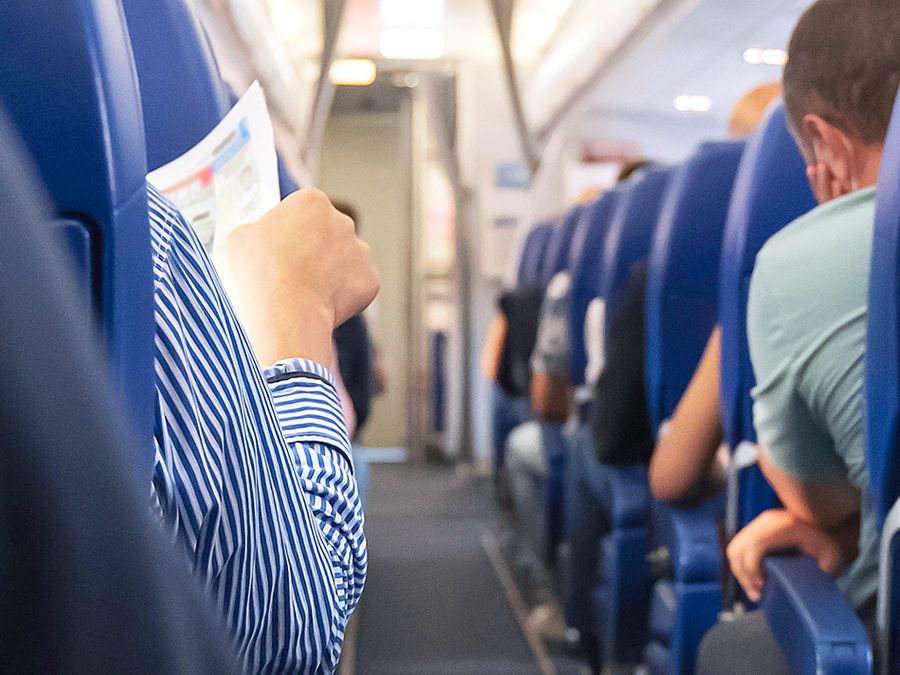
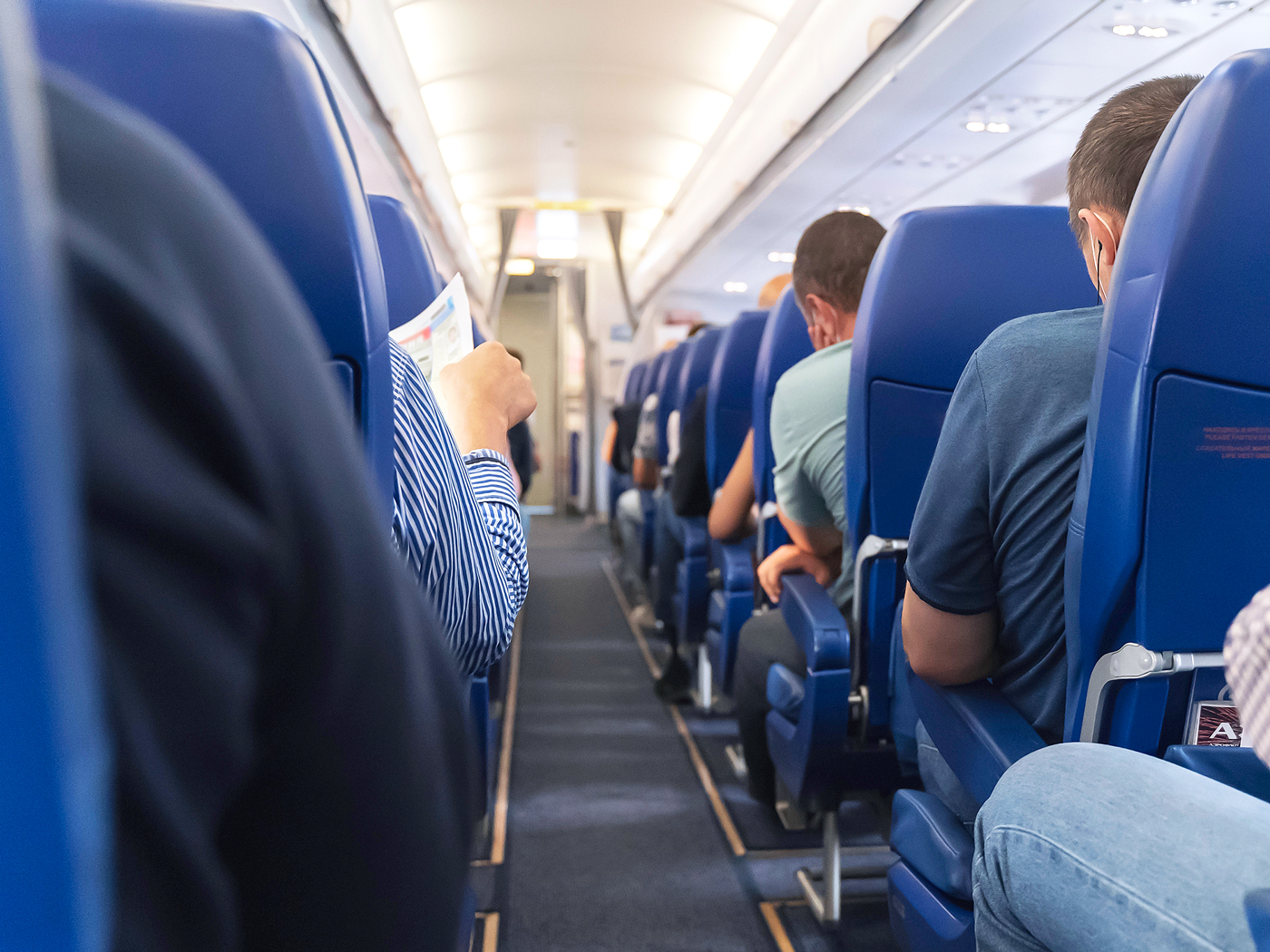
View of aircraft aisle looking toward front, with passengers seated on either side
Credit: Pollyana Ventura/ iStock

Is there anything that passengers can do to make your job easier?

If you bring a carry-on bag, make sure it fits the size requirements ahead of time. If you can’t lift it above your head and into the bin, you should check it. We aren’t allowed to lift bags and put them overhead for you, which is why I’m stressing this so much. We can help you guide it into the bin, but you still have to be the one to lift it.”

Otherwise, look at the drink and snack options in the seatback pocket before we get to you and know what you want to order. And if we ask you to do something, it is almost always safety related — so please don’t argue with us.

Do people request free upgrades? Are they ever successful?

All of the time. I don’t give out free upgrades. If you want to upgrade, you can talk to the gate agent before boarding starts and learn your options.

What do you think are the best seats in the economy cabin?

I personally prefer a window seat with extra leg room, like an exit row. I think the “best seat” is wherever you are the most comfortable.

Flight attendant in aisle interacting with passenger on airplane
Credit: Shine Nucha/ Shutterstock

Do you have a favorite time of day to fly?

I prefer early morning or late night flying because people typically seem to be more relaxed during those times.

Should I be worried about turbulence? How do flight attendants deal with it?

No! It honestly doesn’t bother me at all. The one kind of turbulence you have to be more concerned with is clear air turbulence because there is no warning for it — which is why you should always have your seatbelt on when you aren’t up for something, even if the seatbelt sign is off.

Close-up image of flight attendant pouring coffee in airplane aisle next to seated passengers
Credit: YakobchukOlena/ iStock

Water, sparkling water, ginger ale, and Coke are probably the most popular drinks, but it really depends on the route. Certain drinks are more common in specific regions or time of day. In terms of beverages worth avoiding, anything with a high sodium content or that causes you personally to bloat. 

As for beverages we don’t like serving, definitely Diet Coke and Coke Zero. They take so much time to pour because they fizz up so much so it just slows the rhythm down a bit. 

What do flight attendants usually eat and drink in the air?

It really depends on the flight attendant. For food, I bring bagged salad kits (with grilled chicken, tofu, or smoked salmon), baked potatoes (toppings of choice), carrot sticks, pickles, fruits, cottage cheese, oatmeal, granola bars, protein shakes, and usually whatever leftovers I have. For drinks, I drink through my 50-ounce water bottle a few times, and I bring my own coffee and tea. I also bring electrolyte powders and usually have a Coke Zero at some point. 

I also asked a few of my friends:

Flight Attendant No. 1: I pack fried rice, noodles, stir fry, burritos, yogurt, cereal, and oatmeal. I drink water and my own coffee and hot tea. Sometimes I also drink Coke Zero and seltzer water.

Flight Attendant No. 2: I drink more water when working than when I’m not. For meals, I often bake a pizza before I leave for a trip or eat chicken wings that heat up well in airplane ovens. And I always have oatmeal and ramen packed, as those can be made with boiling water.

Flight Attendant No. 3: Chicken and rice, popcorn, gummy bears, and lots of water and sparkling water.

Flight Attendant No. 4: I meal prep for every trip, so I bring all my food. My last couple trips I brought “egg rolls in a bowl,” which didn’t need to be reheated. The trip before that, I made sweet potatoes stuffed with chickpeas and kale, which did need to be heated. (I use a tin from the plane and reheat in the oven.) For breakfast, I usually do overnight oats, yogurt, fruit, cottage cheese, or a bagel with cream cheese or avocado. For snacks, I bring pickles and fruits, nuts, and popcorn.

Passenger placing backpack in overhead bin on airplane
Credit: Chalabala/ iStock

Is it better to check my luggage or bring a carry-on? 

It depends on the person and on the trip you’re taking. I never check bags, but I know I can lift my bag and put it in the overhead bin, and I know my tote bag fits under the seat in front of me. If I needed to check a bag for a longer trip, I would absolutely do that and just bring a small backpack with my essentials for the plane.

Any tips or tricks that we didn’t cover?

If you have a great flight attendant, please let them know! And fill out the quick survey or feedback to the company and let the company know when someone is doing an awesome job. It really means so much to us when we get positive feedback, and it takes 30 seconds of your time.

Note: All featured products and deals are selected independently and objectively by the author. Daily Passport may receive a share of sales via affiliate links in content.

Featured image credit: Credit: SeventyFour/ Shutterstock

Post Banner Image
Culture

10 U.S. State Capitals Tourists Always Overlook

By Daily Passport Team
Read time: 8 minutes
April 10, 2024
Updated: August 13, 2025

10 U.S. State Capitals Tourists Always Overlook

By Daily Passport Team
Author
Daily Passport Team
Daily Passport writers have been seen in publications such as National Geographic, Food & Wine, CBC, Condé Nast Traveler, and Business Insider. They're passionate about uncovering unique destinations and sharing expert tips with curious travelers.

Whether the draw is history, sports, nature, or music, famous U.S. capital cities such as Washington D.C, Boston, Nashville, Denver, and Austin attract visitors from around the world. But America reaches far and wide, and the world’s third-largest country by area packs in dozens of fascinating (and fun) capital cities that often go overlooked in favor of those better known. Find out why you should also add these 10 underrated capital cities to your bucket list of places to visit in the U.S.

Baton Rouge, Louisiana

Aerial view of Louisiana State Capitol and Baton Rouge skyline
Credit: Fang Deng/ iStoc

Many people visit Louisiana to soak up the jazz music scene, indulge in Creole cuisine, and celebrate Carnival in New Orleans. With NOLA securely in the limelight, the rest of the state is relatively underexplored and underrated, including the capital city of Baton Rouge — home to the tallest state capitol building in the country.

Sitting just 80 miles northwest of New Orleans, Baton Rouge offers a more traditional view of life in the South. Here, you’ll find a host of museums and landmarks to explore the Civil Rights Movement and the Bluebonnet Swamp Nature Center to discover the area’s flora and fauna. At night, the city comes alive with collegiate energy because it’s home to Louisiana State University. (Be sure to catch a game while you’re in town.) Join the fun or enjoy a meal at one of the city’s many acclaimed establishments for some authentic Cajun and Creole comfort food. 

Olympia, Washington

Washington state capital in Olympia
Credit: CrackerClips/ iStock via Getty Images Plus 

Home to famous landmarks such as the Space Needle, Seattle gets a lot of love from tourists — who often skip over the much smaller, yet eclectic state capital, Olympia. Although Olympia, located about 60 miles southwest of Seattle, is home to only about 55,000 residents, the city boasts a burgeoning arts scene and packs a public art collection and a number of museums and galleries into its 20 square miles.

Olympia was also the birthplace of the “riot grrrl” music movement in the 1990s and is still a thriving music hub decades later. Beyond its cultural offerings, Olympia embodies the essence of Pacific Northwest natural beauty. The city boasts an array of picturesque parks, scenic hiking trails, and stunning vistas of Mount Rainier in the distance.

Providence, Rhode Island

Bridge over the Providence River, flanked by high-rise buildings
Credit: tupungato/ iStock via Getty Images Plus 

Though Providence is the capital of the smallest state in the U.S. by area, it boasts a remarkable blend of culinary experiences, cultural attractions, and sophisticated entertainment in its compact 20-square-mile area. Federal Hill’s Little Italy is the place to go for Italian food, while the city’s West Side is filled with innovative eateries. Providence is also renowned for its rich historic architecture and features eight Local Historic Districts.

Among these are College Hill (home to Brown University), Federal Hill, and Benefit Street — each lined with beautifully preserved 18th- and 19th-century buildings. Round out your Providence visit with a gondola ride down the Providence River. If you visit during select summer dates, you can end your journey with the magnificent WaterFire event, where the river comes alive with dazzling flames.

Helena, Montana

Red-roofed buildings of Helena, Montana, with mountains in distance
Credit: DenisTangneyJr/ iStock via Getty Images Plus 

Known for its breathtaking, wide-open landscapes, Montana lives up to its “Big Sky” nickname. Its capital, Helena, though often overlooked by tourists, is an ideal base to immerse yourself in the state’s stunning natural beauty. Helena is one of the least populous state capitals in the U.S., with just over 33,000 residents. But don’t let the small population deter you — there’s plenty happening in this vibrant city. 

A must-visit is Mount Helena City Park, a 620-acre space named for Mount Helena, a 5,468-foot peak in the Rocky Mountain range. Located at the doorstep of the capital, the park offers hiking and biking trails, fishing, and opportunities to spot wildlife, all with views of the surrounding mountains and Helena Valley. Helena is also emerging as a microbrewery destination, with nearly a dozen breweries offering a diverse range of craft beers, while the city’s gold rush roots are still apparent at several historic landmarks scattered throughout town.  

Related: Can You Ace This Quiz About All 50 State Capitals?

Sacramento, California

Aerial view of Sacramento, California
Credit: halbergman/ Shutterstock

When you’re going up against world-famous coastal cities like San Francisco, Los Angeles, and San Diego, it’s easy to get overlooked in California. While Sacramento doesn’t have the beaches of the south or the glamor of the Hollywood Hills, California’s state capital does have a lot going for it. Not only is it one of America’s sunniest cities, but Sacramento also offers plenty of fascinating entertainment options for visitors, a vibrant wine and culinary scene, and a bevy of outdoor adventures right at its doorstep.

A visit to Sacramento could entail museum hopping through the historic 19th-century downtown filled with the architecture of the Old West, dining at farm-to-fork restaurants, tasting wine at dozens of nearby wineries, rafting down the American River, or hiking in the nearby Sierra Nevadas.  

Tallahassee, Florida

Shady street in Tallahassee, Florida
Credit: Felix Mizioznikov/ Shutterstock 

Florida welcomed a record-breaking 140.6 million tourists in 2023. Miami, Orlando, Fort Lauderdale, and Tampa are among the most-visited Floridian cities, leaving the Florida panhandle passed up for the white-sand beaches farther south. However, the state capital of Tallahassee, located in the heart of the panhandle, has much to offer visitors — and may be even more enjoyable with its quieter, more relaxed atmosphere. 

Tallahassee’s close proximity to Georgia imparts a distinctly Southern charm, setting it apart from other Florida cities. Visitors can walk among the tree-lined streets of downtown’s Railroad Square Art Park, a historic district housing a host of art galleries, public art installations, and local boutiques. Despite its inland location, Tallahassee offers plenty of opportunities to enjoy nature away from the Atlantic coast. Lake Ella and Alfred B. Maclay Gardens State Park are popular retreats within the city; just outside the city limits you’ll find Edward Ball Wakulla Springs State Park and St. Marks National Wildlife Refuge

Boise, Idaho

Highway leading to downtown Boise, Idaho, with mountains seen in distance
Credit: knowlesgallery/ iStock

Idaho’s location — between the beautiful mountains of Montana, the lush greenery of Oregon and Washington, and the stunning canyons of Utah — means that many people overlook the state. While you may be tempted to write off Idaho as a mass generator of potatoes and not much more, the state capital of Boise is a far cry from just farmlands and fields. 

The city’s skyscrapers compete with the backdrop of the Rocky Mountains, a contrast that sums up the duality of life in Boise. Foodies and wine lovers thrive in the tree-lined downtown, dining at award-winning restaurants, sampling microbrews, and exploring the urban wine trail. Meanwhile, finding outdoor adventure is easy. Boise boasts direct access to several nature reserves northwest of the city, which offer hikes of all skill levels, from the novice to the more advanced. If you’d rather stay in the city, the 25-mile riverside Greenbelt provides plenty of space to walk, run, or bike. And after a day of adventure, visitors can relax in one of the many hot springs outside of Boise.

St. Paul, Minnesota

Bridge over Mississippi River with St. Paul, Minnesota, skyline seen underneath
Credit: culbertson/ iStock

Maybe you’re fascinated with Victorian architecture or you’re looking to log some water time in the Land of 10,000 Lakes. Or perhaps you simply want to splurge on a shopping spree. Whatever your interest, St. Paul has appeal for many types of travelers. Despite all its offerings, this capital city of around 300,000 people is frequently passed up for its flashier “twin” city, Minneapolis. 

Founded in 1854 (13 years earlier than its sister city), St. Paul boasts more Mississippi Riverfront (26 miles) than any other major city. St. Paul also claims a number of other impressive records, ranging from its marble-domed state capitol building (the second-largest in the world) to the second-longest skyway walk in the world (five miles) and the longest strip of preserved Victorian homes in the world on Summit Avenue. And if all else fails, a short drive away is the largest shopping center in the country, the Mall of America

Oklahoma City, Oklahoma

Empty road beside downtown Oklahoma City skyscrapers
Credit: DenisTangneyJr/ iStock via Getty Images Plus

Cowboy culture is alive and thriving in Oklahoma City, a state capital that often gets overlooked in favor of more popular cities in neighboring states, such as Denver and Dallas in Colorado and Texas, respectively. The largest city in the state, Oklahoma City has a population of just under 650,000. There’s more to the “Big Friendly” than cowboy boots and rodeos, though. 

The Bricktown district, a former industrial area, is now an entertainment hub, running along the Bricktown Canal and offering waterfront restaurants, piano lounges, and chic wine bars. OKC (as it’s known for short) is also home to several prominent museums and monuments, including the Oklahoma City National Memorial & Museum, Science Museum Oklahoma, National Cowboy & Western Heritage Museum, and Museum of Osteology. And sports fans can get their fix at Paycom Center, home of the NBA’s Oklahoma City Thunder.

Juneau, Alaska

Waterfront homes with forested mountains in background in Juneau, Alaska, seen from above
Credit: jmoor17/ iStock

Juneau may be one of the most-visited cities in Alaska, but compared to other capital cities in the U.S., it can safely be described as undiscovered. Given its location, Alaska is more rugged and less accessible than most other states, making it the least-visited state in the country. However, those who venture north are definitely rewarded for their efforts. 

Juneau’s quaint downtown sits right on the waterfront and is lined with charming shops, historic buildings, including the bustling Heritage Square. Hike Mount Juneau or take the Mount Roberts Tram up 1,800 feet for the best vistas over the capital and the surrounding Gastineau Channel. Or, make the 20-minute drive to marvel at the Mendenhall Glacier and enjoy more incredible hiking in pristine nature. From Juneau, visitors also have ample opportunities for wildlife activities, from whale-watching tours to bear viewing

Post Banner Image
Tips

The Real Reason You Need to Remove Your Laptop for Airport Security

By Bennett Kleinman
Read time: 4 minutes
April 10, 2024
Updated: April 15, 2024

The Real Reason You Need to Remove Your Laptop for Airport Security

By Bennett Kleinman
Author
Bennett Kleinman
Bennett is a New York City-based staff writer for Daily Passport. He previously contributed to television programs such as the Late Show With David Letterman, as well as digital publications like the Onion. Bennett has traveled to 48 U.S. states and all 30 Major League Baseball stadiums.

Dealing with airport security is the best part of the travel experience… said no one ever. The reality is, nobody likes taking off their shoes, walking through body scanners, and being told that they need to toss that tiny bottle of toothpaste because it was an ounce over the limit. But one aspect of airport security that puzzles many travelers is why we need to take our laptop out at these checkpoints. Why can most items simply be scanned by the X-ray machine, while laptops and other large electronic devices require an added step that slows down the entire process? As it turns out, there’s a logic behind this decision. Let’s take a look at why you need to take your computer out of your bag at airport security.

Your Laptop is Blocking Your Luggage

Laptop, wallet, belt, phone, and other personal items in tray on airport security belt
Credit: Jaromir Chalabala/ Shutterstock

No, it’s not just the TSA adding an extra screening step to keep travelers on their toes. It’s imperative to remove your laptop at airport security for one simple reason: The battery and other mechanical components are too dense for many X-ray machines to penetrate. This is especially true when it comes to the older model scanners that many airports still rely on. The components of a laptop essentially create a solid barrier, which can be used to obscure other items packed into the same bag. This could mean knives, smaller firearms, or any other potentially dangerous items packed by people looking to cause damage or harm.

By requiring passengers to remove their laptops, TSA agents can look behind this “wall” to see if there are any prohibited items hidden in the laptop bag. If you’re pulled for secondary screening, some TSA agents might actually make you turn on the computer to show it’s working — if a laptop doesn’t boot up, that might arouse suspicion. These rules primarily apply to standard laptop computers, whereas tablets such as iPads are thin enough for the scanner to see through.

The Benefits of a TSA-Approved Laptop Bag

Person placing laptop in backpack
Credit: Rawpixel.com/ Shutterstock

To avoid the hassle of removing your laptop, it may be worth investing in a laptop bag designed with TSA-approved specifications in mind. These include a designated laptop section that can completely unfold to lie flat on the conveyor belt, no additional pockets within that laptop-only section, and no dangling metal fasteners that could potentially obscure the X-ray scanner from seeing all that it needs to see.

Word of caution: Even if you purchase a bag that you believe to meet these requirements, TSA agents can still ask you to remove your laptop for any reason. But if you want the best shot at getting through security without the extra hassle, check out the approved laptop bags at retailers such as Amazon.

The Future of Airport Scanners

Travelers and officers at airport security checkpoint
Credit: AzmanJaka/ iStock

While there are still many hoops that travelers need to jump through at TSA checkpoints, some good news may be on the horizon. Many airports are still using previous-generation X-ray scanners that are less sophisticated than what’s currently available on the market. But in 2022, the federal government awarded a $780 million contract to install nearly 1,000 next-gen scanners at TSA checkpoints. In 2023, $1.3 billion was allocated for additional X-ray scanners. And it’s not just a U.S. phenomenon — these highly-advanced X-ray devices have been installed at major airports in cities like Rome, London, and Amsterdam, with many more on the way. 

While old scanners produce a simple overhead image, these next-gen machines create 3-D images of the bag’s interior. This provides TSA agents with a detailed view at every nook and cranny in the bag, thus allowing them to determine if there are any potentially dangerous items tucked underneath any dense obstructions like a laptop. Not only do these machines mean you can keep your laptop inside the bag, but you can also leave liquids inside the bag rather than undergo a separate screening. All told, these newer machines should theoretically reduce wait times in the security queue.

Note: All featured products and deals are selected independently and objectively by the author. Daily Passport may receive a share of sales via affiliate links in content.

Featured image credit: Credit: izusek/ iStock

Post Banner Image
Tips

Flight Turbulence Is Happening More Often — Here’s Why

By Julia Hammond
Read time: 4 minutes
April 10, 2024
Updated: February 19, 2025

Flight Turbulence Is Happening More Often — Here’s Why

By Julia Hammond
Author
Julia Hammond
Julia is a U.K.-based travel writer whose work has been featured in The Independent, The Telegraph, The New Zealand Herald, and Culture Trip, among others. She’s an enthusiastic advocate for independent travel and a passionate geographer who has had the privilege of traveling to more than 130 countries in search of a story.

If you fly a lot, chances are that you’re no stranger to turbulence. It’s not rare for the fasten-seatbelt light to be switched on midway through a flight, nor is it uncommon for passengers to experience short periods of bumpiness. Even though it can be unpleasant, turbulence is usually mild and rarely anything to worry about. But if you travel often and have been noticing more frequent bumps in the sky, you’re not alone: According to recent reports, flight turbulence is on the rise. Let’s explain why.

What Happens When a Plane Encounters Turbulence?

Close-up image of passenger fastening seatbelt in airplane seat
Credit: Yaroslav Astakhov/ Shutterstock

The degree of in-flight turbulence can differ significantly from flight to flight. You might experience a brief interruption to the meal service or the inconvenience of not being able to use the restroom for a few minutes. In more extreme cases, the overhead bins can open and shed their contents and injuries can occur, particularly to those who aren’t wearing their seatbelts. That said, unless you’re a nervous flier, it’s not usually something that would trouble you for long. 

It’s not just passengers and flight crews that are affected — severe turbulence also causes a headache for aircraft maintenance teams. If a plane bounces around frequently, it’s subjected to greater stresses than when a flight is smooth, causing more wear and tear to the airframe. The need to carry out time-consuming checks and repairs places an additional financial burden on airlines. It’s estimated that turbulence costs the U.S. aviation industry somewhere between $150 and $500 million every year. 

One Type of Turbulence Is Becoming More Common

Airplane during cruise above clouds
Credit: IM_photo/ Shutterstock

Serious or sustained turbulence is never a good thing, so to learn that its incidence is increasing is unwelcome news. According to a 2023 study carried out by the University of Reading in the U.K., one particular kind of turbulence known as clear air turbulence is becoming far more likely to impact flights than in previous years.

Clear air turbulence is caused when different air masses collide, each with varying wind speeds and directions. In the findings, published in the Geophysical Research Letters journal, datasets taken between 1979 and 2020 demonstrated large increases in clear air turbulence of all magnitudes. Particularly worrisome is that incidences of severe turbulence grew by 55%.

Related: 26 Rules for Flying in 2026 Every Traveler Should Follow

Other Forms of Turbulence

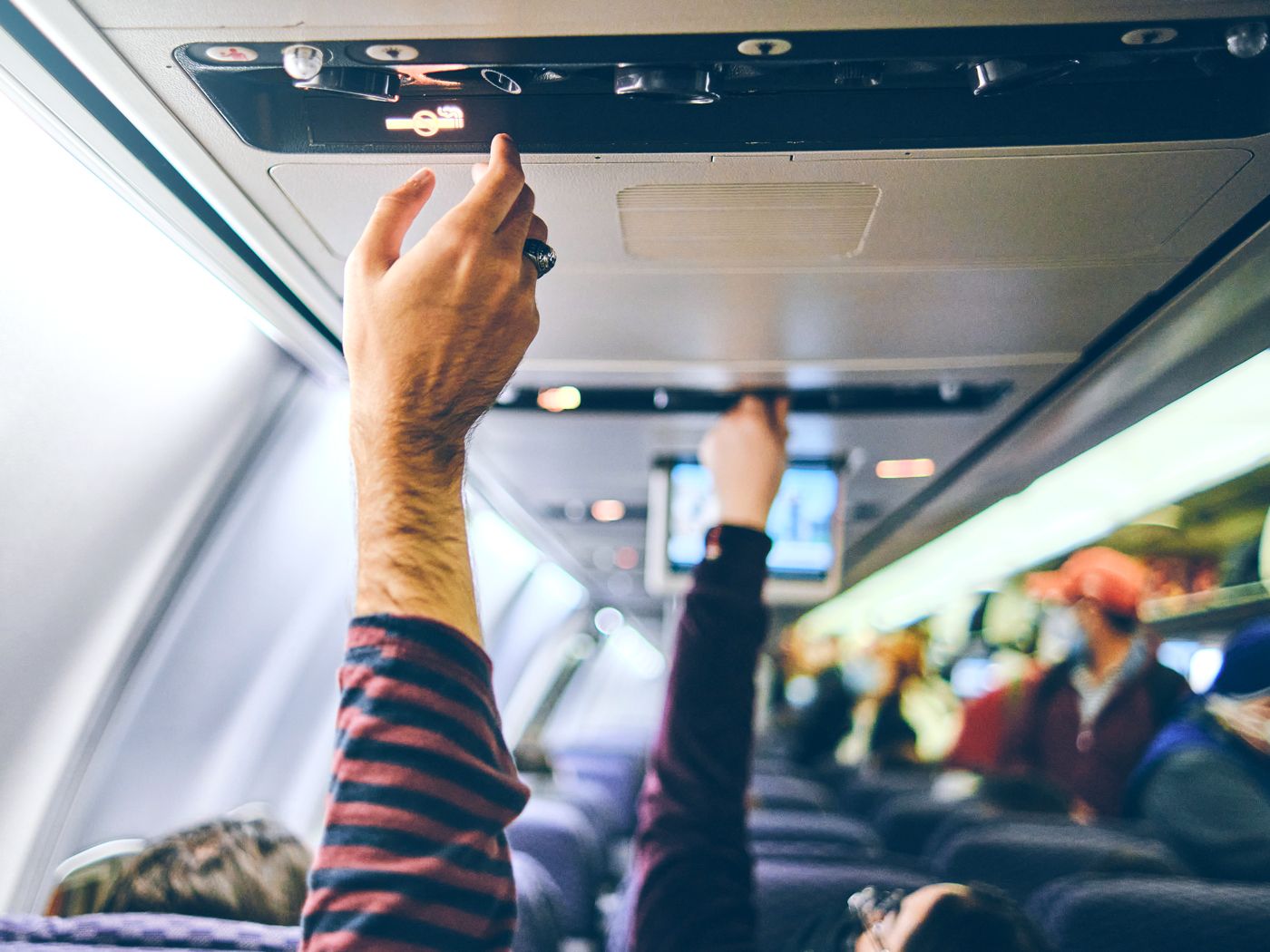
Zoomed-in view of passenger service unit on airplane with seatbelt sign illuminated
Credit: KatMoys/ Shutterstock

Turbulence is often associated with mountainous regions. As warm air rises to pass over the obstacle, in this case a mountain, it creates unstable air on the windward side. The air cools and condenses, forming clouds and causing turbulence. Frontal turbulence, which is associated with clouds and thunderstorms, occurs in much the same way, minus the hilly terrain. Thanks to the tell-tale presence of those clouds, these types of turbulence are relatively easy to predict, giving pilots time to plan evasive action. 

Likewise, wind shear turbulence is something flight crews know to watch out for. This happens when the wind direction and speed change suddenly. Near the jet stream, it’s quite common to encounter this type of turbulence, which is carefully monitored by meteorologists and included in weather reports.

What’s Different About Clear Air Turbulence?

Close-up of passengers on airplane gripping armrests
Credit: H_Ko/ Shutterstock 

In contrast, clear air turbulence most often happens in cloudless skies. Though it is far more common in winter than summer, this type of turbulence is far trickier for pilots to anticipate, as it isn’t something that can clearly be identified on the plane’s radar. Researchers also found evidence of greater incidences of clear air turbulence at altitudes over 15,000 feet — precisely the kind of altitude commercial aircraft typically favor when cruising. 

As a consequence, the data showed that planes following flight paths over the U.S. and the North Atlantic Ocean were especially likely to encounter clear air turbulence. While it’s usually possible to escape such turbulence by altering the plane’s altitude by a few thousand feet, it’s still preferable not to encounter it at all.

What’s Driving This Change?

Plane on approach with jet trail behind
Credit: Fasttailwind/ Shutterstock

The authors of the report believe there’s a link between increased turbulence and climate change. One of them, Professor Paul Williams, an atmospheric scientist at the University of Reading, wrote: “Following a decade of research showing that climate change will increase clear air turbulence in the future, we now have evidence suggesting that the increase has already begun. We should be investing in improved turbulence forecasting and detection systems, to prevent the rougher air from translating into bumpier flights in the coming decades.” 

Another study at the University of Reading focused on future trends. Isabel Smith, a meteorologist and PhD student, found a correlation between global temperature increases and the incidence of clear air turbulence. According to her projections, by 2050, summers could become more turbulent — matching levels that, in 1950, were seen only in winter and fall.

Even as the world grapples with the need to reduce emissions and invests heavily in green energy and technology, we’re likely to see a continued growth in clear air turbulence. In the meantime, the best advice is to buckle up and always follow flight crew instructions to ensure you remain safe in the skies.