Culture •September 6, 2024•Updated: September 6, 2024
By Bennett Kleinman
Author
Bennett Kleinman
Bennett is a New York City-based staff writer for Daily Passport. He previously contributed to television programs such as the Late Show With David Letterman, as well as digital publications like the Onion. Bennett has traveled to 48 U.S. states and all 30 Major League Baseball stadiums.
One of the best ways to experience a new culture is by trying the local cuisine. Often, some of the most authentic recipes are served up from a street cart. Street food is delicious, affordable, and found in pretty much every country around the world — but the definition of street food can vary wildly depending on where you are. Sometimes, it’s a saucy noodle dish, while other times it’s a loaded hot dog. Some street food dishes are so popular that they’ve been embraced as emblems of national pride. From the streets of South Korea to Egypt, here are eight of the most popular street foods around the world.
Currywurst – Germany
Credit: xbrchx/ iStock via Getty Images Plus
Currywurst is perhaps as much a part of Germany’s national identity as the Autobahn or Oktoberfest. The dish dates back to 1949, when a street vendor named Herta Heuwer made use of what limited ingredients she had available in the wake of World War II to create this tasty snack, which can now be found on street corners around the country — especially in the cities of Berlin and Hamburg. Currywurst consists of a boiled and fried bratwurst that is then sliced and covered with a thick curried tomato sauce. The plate is finished with a side of crispy fries and sprinkled with yellow curry powder for added kick.
Elote – Mexico
Credit: Elijah-Lovkoff/ iStock via Getty Images Plus
Elote is the Spanish word for corn, as well as the name of a popular street food served up in Mexico and parts of the United States. The simple cooking process involves either boiling or grilling a whole cob over an open flame. Once cooked, the corn is slathered with a combination of mayonnaise and lime before the cob is dipped into cotija cheese and chili powder. The result is a delicious mixture of crunchiness, creaminess, and a bit of heat. The origins of elotedate back to the 15th century and the Aztec and Maya peoples, who would cook corn cobs over an open flame and then top them with the various spices they had available.
Gamja Hot Dog – South Korea
Credit: GoranQ/ iStock via Getty Images Plus
Koreans put a unique twist on the traditional hot dogs you’d find in the United States. Firstly, calling them hot dogs is a bit misleading, as they’re coated in a batter that makes them more akin to corn dogs. To make a gamja hot dog, first decide what goes on the skewer — you can opt for a hot dog, only cheese, or a combination of the two. The skewered meat and cheese is then coated in a batter that sometimes contains chunks of potato for added crunch and flavor. After the dog is fried, it’s topped with a variety of condiments that range from the more traditional mustard and ketchup to unique options such as mayo or sugar.
Koshari – Egypt
Credit: Diy13/ iStock via Getty Images Plus
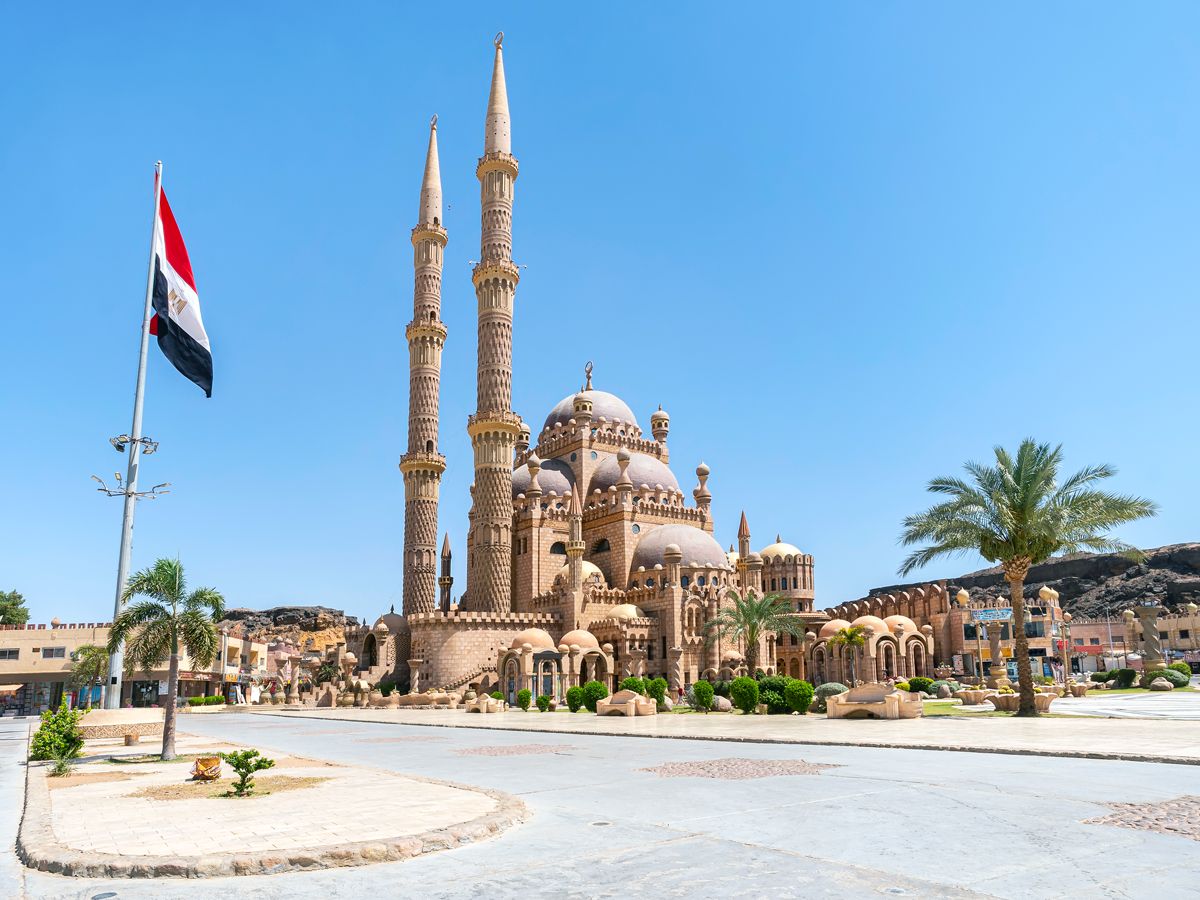
The streets of Cairo are lined with vendors serving up hot bowls of koshari, the national dish of Egypt. This beloved local delicacy was inspired by a similar Hindu dish known as khichri, which contains a mix of rice and lentils. However, Egyptian chefs made the recipe their own by adding macaroni noodles and slathering the whole thing in a spicy tomato sauce. Koshari is cooked by slowly simmering the stew for hours before it’s poured into a bowl and topped with a combination of fried vermicelli and browned onions. Heartier versions can contain chunks of lamb or beef, too.
Arepas – Colombia
Credit: Juergen Ritterbach/ Photodisc via Getty Images
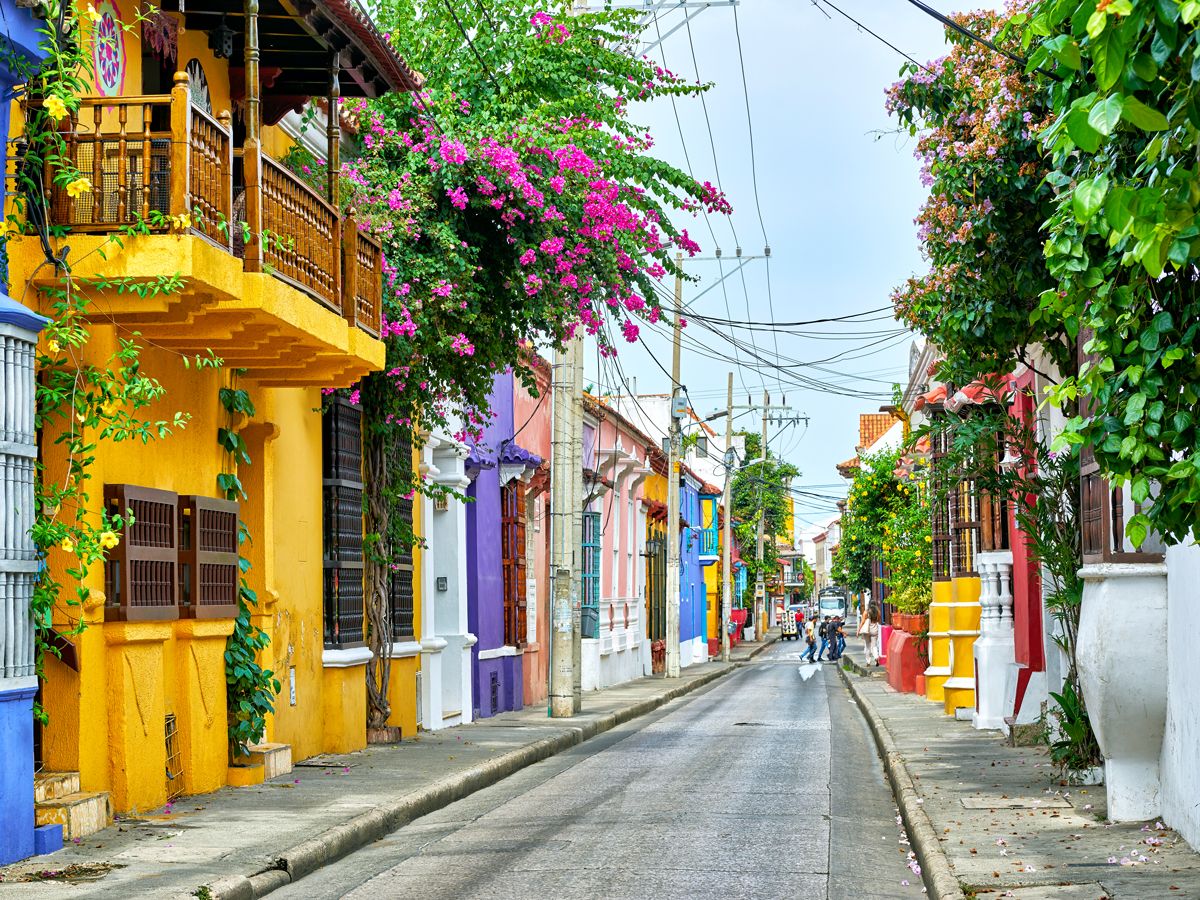
A staple of street corners throughout the country, Colombian arepas are circular corn patties that have been fried and stuffed with various fillings. A popular breakfast variant is the arepa de huevo, in which the corn patties are stuffed with eggs and then fried. Arepa de queso is another popular option, consisting of dough filled with a gooey queso fresco; these types of arepa are commonly paired with a cup of hot chocolate. While Colombia is known for its arepas, it isn’t the only country in the region where you can find them. In Venezuela, one of the most popular types is the arepa reina pepiada, which is filled with shredded chicken, avocado chunks, lime, and cilantro.
Takoyaki – Japan
Credit: f11photo/ iStock via Getty Images Plus
Takoyaki was created in the Osaka area around 1935. The dish is often credited to a street vendor named Endo Tomekichi, who was known for selling a similar pancake dish called chobayaki. His decision one day to add octopus meat resulted in an iconic dish that’s now eaten in every major Japanese city. Takoyaki contains multiple balls that are made of egg batter and stuffed with hearty chunks of octopus, before being cooked in a special pan that helps them achieve their circular shape. The savory dish is typically garnished with ingredients such as scallions, ginger, and dried fish flakes.
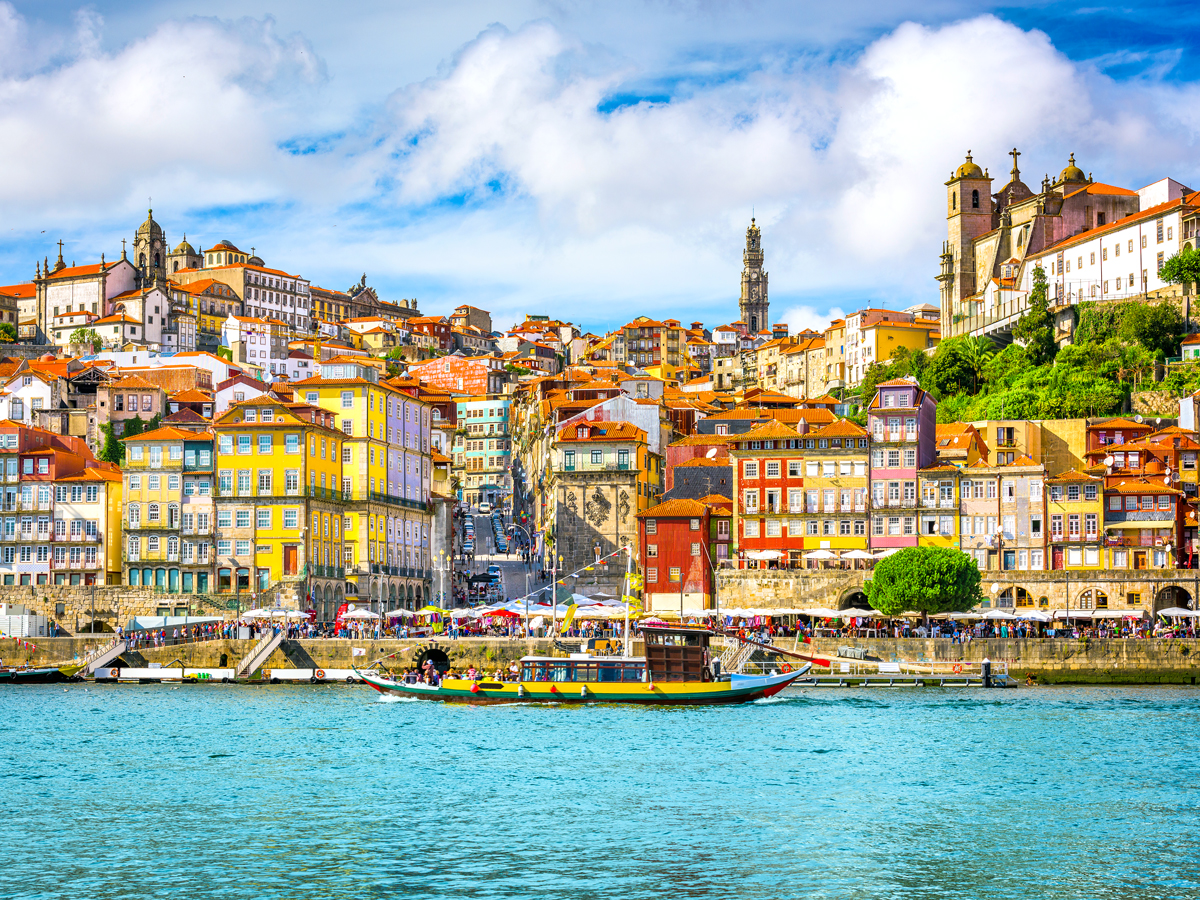
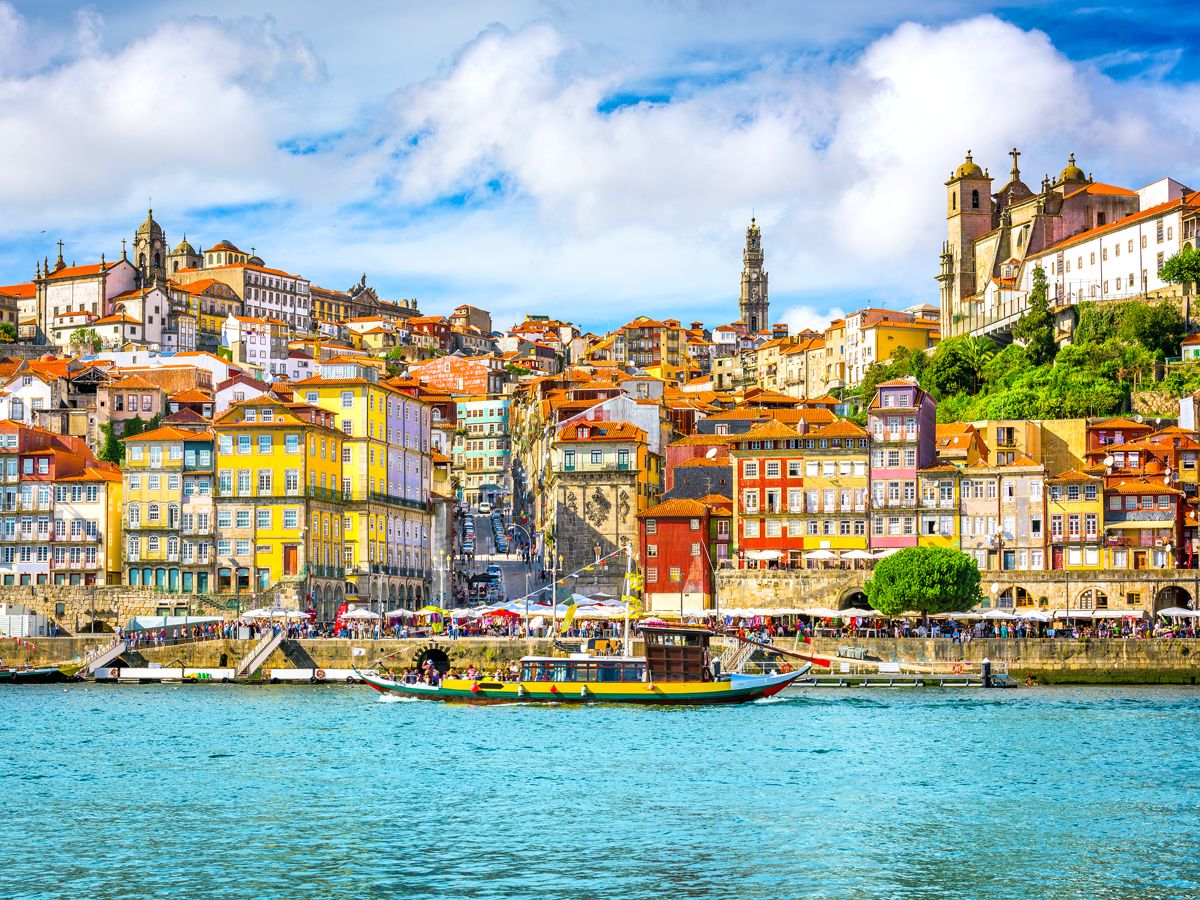
Pastel de nata is a creamy Portuguese pastry that translates literally to “custard tart.” The treat dates back to before the 18th century, when monks at the Church of Santa Maria de Belém used leftover egg yolks to create this unique gooey pastry. Though the original recipe remains secret, that hasn’t stopped other proprietors from creating recipes of their own. Each pastel de nata is essentially a small egg custard stuffed inside a puff pastry. The treat is cooked until the top layer of custard begins to develop a bit of a crisp, and then it is dusted with cinnamon before being served.
Halo-Halo – The Philippines
Credit: Nate Hovee/ iStock via Getty Images Plus
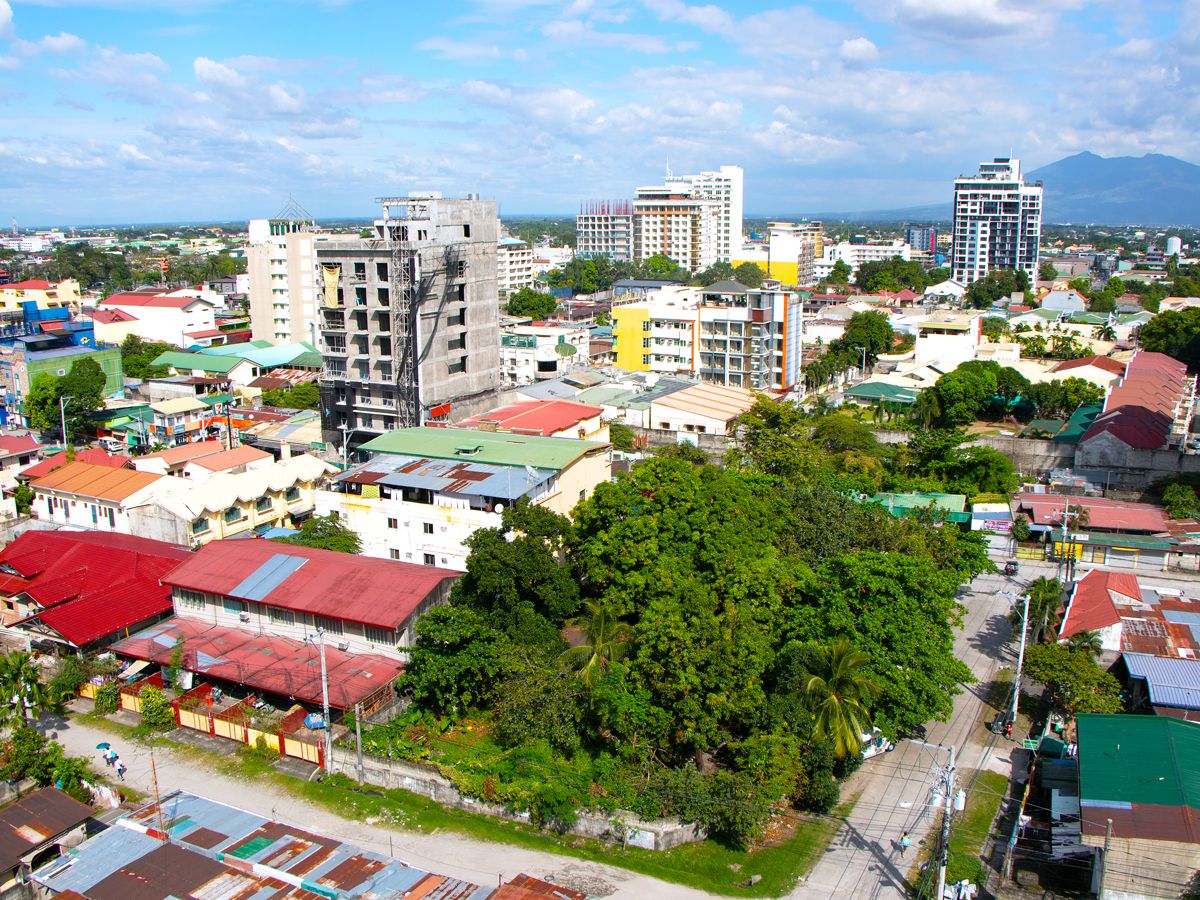
If you’re traveling in the Philippines, a refreshing treat known as halo-halo is a must-try. This dessert is a hodgepodge of ingredients that work surprisingly well together. The base is usually a mix of chopped fruit and beans, which is then topped with finely crushed ice and either sweet milk or ice cream. Popular additional toppings include bananas, coconuts, or chickpeas — each cup of halo-halo can be customized depending on personal preference. The result is a colorful and tantalizing treat that really hits the spot during those hot and humid summer days.
Advertisement
More from our network
Daily Passport is part of Inbox Studio, an email-first media company. *Indicates a third-party property.
Tips •September 6, 2024•Updated: September 6, 2024
By Bennett Kleinman
Author
Bennett Kleinman
Bennett is a New York City-based staff writer for Daily Passport. He previously contributed to television programs such as the Late Show With David Letterman, as well as digital publications like the Onion. Bennett has traveled to 48 U.S. states and all 30 Major League Baseball stadiums.
These days, it can seem like phones are as essential as oxygen — especially when traveling. But if you’re in a far-off country, using your phone as you normally would isn’t so simple. For starters, you may find yourself dealing with unreliable service and hefty charges for international data usage. The good news is that those problems can easily be avoided if you plan ahead and know what apps to download and products to buy. Here’s a helpful guide to using your phone during your next international vacation.
First, Talk With Your Cell Provider
Credit: andresr/ E+ via Getty Images
Before departing on your trip, it’s important to contact your cellphone provider and know exactly what your existing plan offers in terms of international coverage. Some U.S.-based plans come with unlimited free calls and texts if you’re traveling to a neighboring country such as Canada or Mexico, but they may tack on roaming charges if you’re traveling to another continent. Review your plan details in your online account, or call and speak to a customer service representative who can explain your current benefits in greater depth.
If your plan doesn’t include international calls or texts, you might be able to add that capability for the duration of your vacation for an additional fee. For example, Verizon offers users the ability to purchase a TravelPass for $5 per day in Canada and Mexico, and $10 per day everywhere else. For $100, you can purchase an International Monthly Plan, which is ideal for longer trips. AT&T sells an International Day Pass for $12 per day, while T-Mobile offers up one of their own for $5. Once you’ve enrolled, you can use your phone abroad without incurring any unexpected charges, but beware of potential data limits with international plans.
Cellphones contain a SIM card (which stands for subscriber identity module) that allows the user to connect with local mobile networks, whether at home or abroad. But when you’re traveling internationally, using your phone’s standard SIM card can incur hefty fees if you don’t have international phone coverage. This is why you should consider purchasing an international SIM card before your trip (as an alternative to buying an international plan directly with your phone provider). You can easily install a new SIM card in your phone for temporary use, allowing you to make calls and texts without incurring those pricey roaming charges.
To purchase an international SIM card, contact your service provider and ask what they have available or purchase a prepaid travel card at the airport once you’ve landed. Either way, once you’ve acquired the card, check your phone’s instruction manual to see how to shut down your phone, remove the current SIM card, and replace it with the new SIM card. If you’d rather not deal with physical SIM cards, another option is to purchase an eSIM instead. These digital cards download all necessary information wirelessly, so you don’t have to worry about installing anything.
If you mainly need internet access instead of the ability to make calls and send texts, then relying on local Wi-Fi networks is another option for using your phone abroad. Just be sure to turn off cellular service or your phone’s roaming feature, so you don’t accidentally incur any charges. Then, turn on Wi-Fi and connect to any available networks.
This allows you to use apps such as WhatsApp or iMessage to communicate with people you’d normally call or text. WhatsApp is one of the most popular communication apps in the world, and its messages are encrypted, ensuring added security in the event you’re sharing sensitive info. Best of all, it doesn’t cost you anything to use Wi-Fi, as long as the network is free to access wherever you’re visiting — just beware of any potential security risks with public networks.
Pre-Download Maps
Credit: d3sign/ Moment via Getty Images
Cellphone apps such as Google Maps or Apple Maps are invaluable for navigating unfamiliar cities, but if you don’t plan on paying for international service, there’s a useful hack to know about. Both Google Maps and Apple Maps allow you to pre-download maps using a Wi-Fi connection, storing them for future use when you’re out and about exploring a new city. While you’re at your hotel, take time the night before to download any maps you might need for sightseeing the next day. That way, you won’t have to worry about finding good service or asking a stranger for directions if you get lost.
Just Use the Camera
Credit: Hello Lovely/ Tetra images via Getty Images
Don’t forget about your phone’s camera. Even if there’s no internet connection or cell service, it’s still worth bringing your phone on your trip to capture special moments. Phone cameras have come a long way since those low-quality flip phones of yesteryear, and they now have some of the best lenses available on the market. If you don’t plan to use your phone for communication or navigation, at least bring it to chronicle the memories you’ll make.
Advertisement
More from our network
Daily Passport is part of Inbox Studio, an email-first media company. *Indicates a third-party property.
The 6 Most Annoying Things You Can Do as a Tourist Abroad
By
Julia Hammond
Read time: 5 minutes
September 6, 2024
Updated: September 6, 2024
The 6 Most Annoying Things You Can Do as a Tourist Abroad
Tips •September 6, 2024•Updated: September 6, 2024
By Julia Hammond
Author
Julia Hammond
Julia is a U.K.-based travel writer whose work has been featured in The Independent, The Telegraph, The New Zealand Herald, and Culture Trip, among others. She’s an enthusiastic advocate for independent travel and a passionate geographer who has had the privilege of traveling to more than 130 countries in search of a story.
Visiting a new country is a privilege, but heading abroad — especially for the first time — can also be overwhelming. With so much to discover, tourists may find themselves experiencing sensory overload. Though your new surroundings are bound to have a profound impact in such circumstances, it’s important that your reaction doesn’t provoke annoyance among the local population. Take a look at six of the most annoying things tourists do abroad so that you can try not to follow suit.
Clog Up Tourist Hot Spots With a Photo Shoot
Credit: Fani Kurti/ iStock via Getty Images Plus
While there’s no harm in grabbing a quick selfie or souvenir photo, some tourists take the concept to extremes. It’s not a problem, so long as others aren’t impacted. But in popular spots, roads and sidewalks can quickly become clogged, and the lack of respect shown for others can really start to grate. Sometimes, locals fight back: In 2023, the city of Portofino, Italy, introduced no-waiting zones; later the same year, a road was closed in Pomfret, Vermont, to deny visiting fall foliage selfie-takers the chance to disrupt local traffic.
Confuse Your Heritage With Your Place of Birth
Credit: e55evu/ iStock via Getty Images Plus
Travelers often seek to find common ground with those they encounter along their journey. United by shared interests or backgrounds, they feel an affinity to the place they’re visiting, and those valuable connections create lasting memories. However, a word to the wise: Having a great-great-grandfather who was born in Ireland does not make you Irish. Your family might, of course, enthusiastically and diligently maintain certain traditions and customs that celebrate your heritage and have helped mold your identity. Nevertheless, semantics matter — being Irish American (of Irish descent and living in the United States), for example, is different from someone who was born and still lives there. During a visit, don’t be shy about revealing your heritage, but be clear where your own story began — the locals will appreciate you for it.
If you live in North America, you might be aware that the amount of paid time off employees receive is typically stingy in comparison to what people get in other parts of the world, such as Europe. Chances are, you’ll also be used to making long journeys. So, when your vacation allowance is dwindling, it can be tempting to plan as much sightseeing as possible on a long-haul trip. However, where population densities are higher, so too is the concentration of visitor attractions and the traffic you’ll encounter between them. Thus, you may want to reconsider if your planned itinerary covers six European countries in only two weeks — hurriedly rushing from site to site not only will cause stress, but also might irritate those who realize such places are far more rewarding when given more time.
Tip Where It’s Not a Thing
Credit: Walter Bibikow/ DigitalVision via Getty Images
Adding a tip for your server is routine in some parts of the world, and in the U.S., many service sector workers have come to rely on gratuities. However, this practice is not universal, and elsewhere, a higher minimum wage means that employees aren’t so reliant on tips to top up their wages. In some countries, tipping not only is not expected but also can be considered rude. but in places where international travelers have repeatedly ignored this cultural norm, businesses have often sought to capitalize on the practice. To locals, however, a newly installed tip jar in a café can feel unwelcome. After your check has been settled, generously depositing a fistful of notes or coins could annoy the regular clientele if they think they might be judged for not following suit.
Complain There’s No Ice
Credit: Rrrainbow/ iStock via Getty Images Plus
If you’re used to being presented with a large glass of iced water at a restaurant or filling your cup full of ice cubes at a soda fountain, it can feel strange to be in a place where that’s not the norm. In Europe, for example, if you want a glass of water, you’d be expected to ask for it, and if you don’t specify that you mean tap water, you’ll be charged for a bottle. And though a cold drink is likely to be served chilled, don’t expect the glass that accompanies it to contain more than a few cubes of ice (if any). Instead of complaining about it, politely ask for ice, and locals will usually be happy to oblige.
Be Too Loud
Credit: Panuwat Dangsungnoen/ iStock via Getty Images Plus
Culture and background have an influence on how loudly it is deemed appropriate to talk. A volume that’s normal to one nationality can be considered rude by another. Being unaware of your indoor voice can be a huge faux pas when traveling overseas on public transit, dining out, or visiting quiet attractions such as museums. Likewise, no one wants to relax beside the pool and have to listen to other people’s conversations over their own. Avoid incurring the wrath of fellow tourists and locals alike by respecting the fact that it’s their space, too. Listen for a minute and gauge what’s appropriate for where you are, then set your own volume to match.
Advertisement
More from our network
Daily Passport is part of Inbox Studio, an email-first media company. *Indicates a third-party property.
6 Small U.S. Towns That Feel Like Stepping Back in Time
By
Marissa Kozma
Read time: 5 minutes
September 4, 2024
Updated: September 4, 2024
6 Small U.S. Towns That Feel Like Stepping Back in Time
History •September 4, 2024•Updated: September 4, 2024
By Marissa Kozma
Author
Marissa Kozma
Marissa is a cheap airfare aficionado who loves exploring offbeat destinations with her husband. Based in Los Angeles and Joshua Tree, Marissa has been featured in publications such as San Diego Magazine, Palm Springs Life Magazine, 303 Magazine, and Mountain Living.
From former Wild West gold mining towns to the first settlements in colonial America, there are numerous small towns scattered across the U.S. that haven’t changed all that much over the years. According to the National Park Service, there are more than 2,300 historic districts in the nation today, with homes, buildings, and other special landmarks that have been carefully preserved despite the passage of time. For your next vacation, consider exploring one of these historic U.S. small towns that will make you feel as though you’ve stepped back in time.
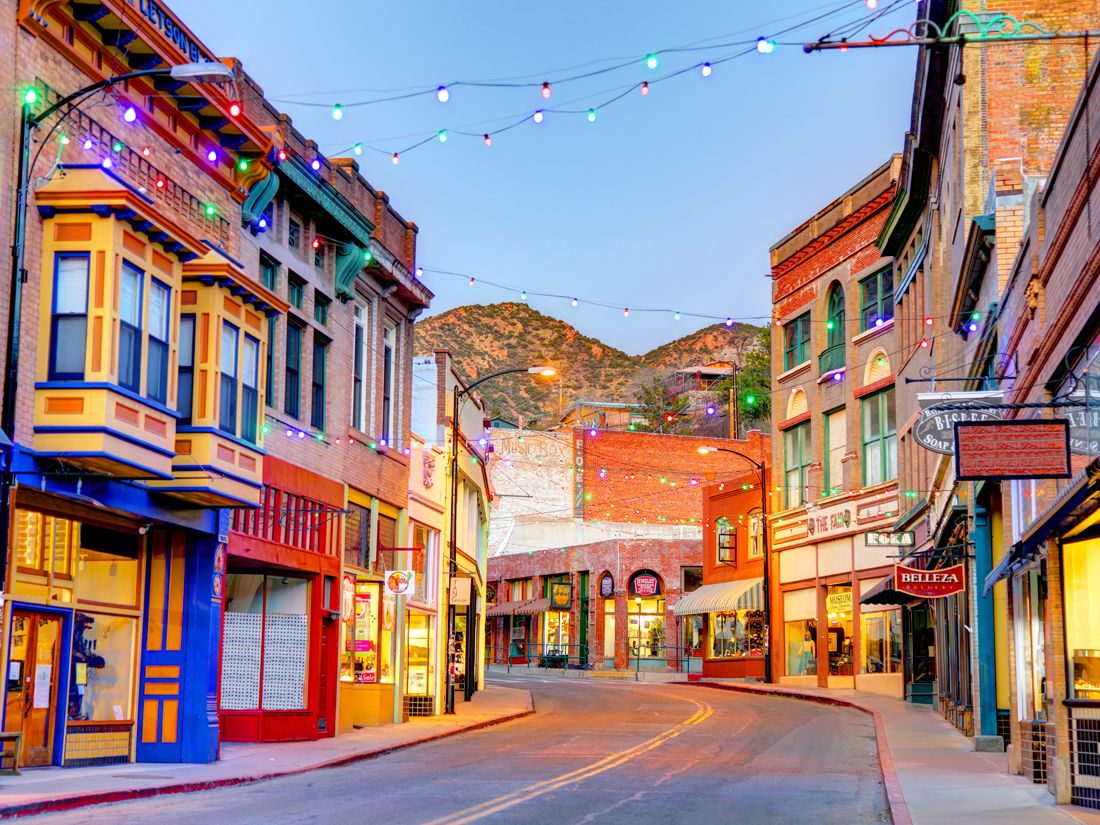
The quirky canyon town of Bisbee in southeastern Arizona sits at an elevation of 5,538 feet — making it America’s southernmost “mile-high” city. After copper was discovered in a nearby mine in 1877, Bisbee was incorporated in 1880 and became one of the largest cities in what was then the Arizona territory. By 1900, Bisbee had a population of more than 20,000, but after the mine closed in 1974, the number of residents began to dwindle.
Today, the former saloons and inns remain relics of the town’s mining past, and locals are careful to preserve them, as well as their tight-knit community of artists and others who prefer the quiet desert scenery of the Mule Mountains. But with a lively downtown of dive bars, galleries, gift shops selling copper-themed trinkets, museums, and Wild West-themed restaurants, Bisbee also offers plenty of appeal as a weekend getaway for history buffs.
Ferndale, California
Credit: travelview/ iStock Editorial via Getty Images Plus
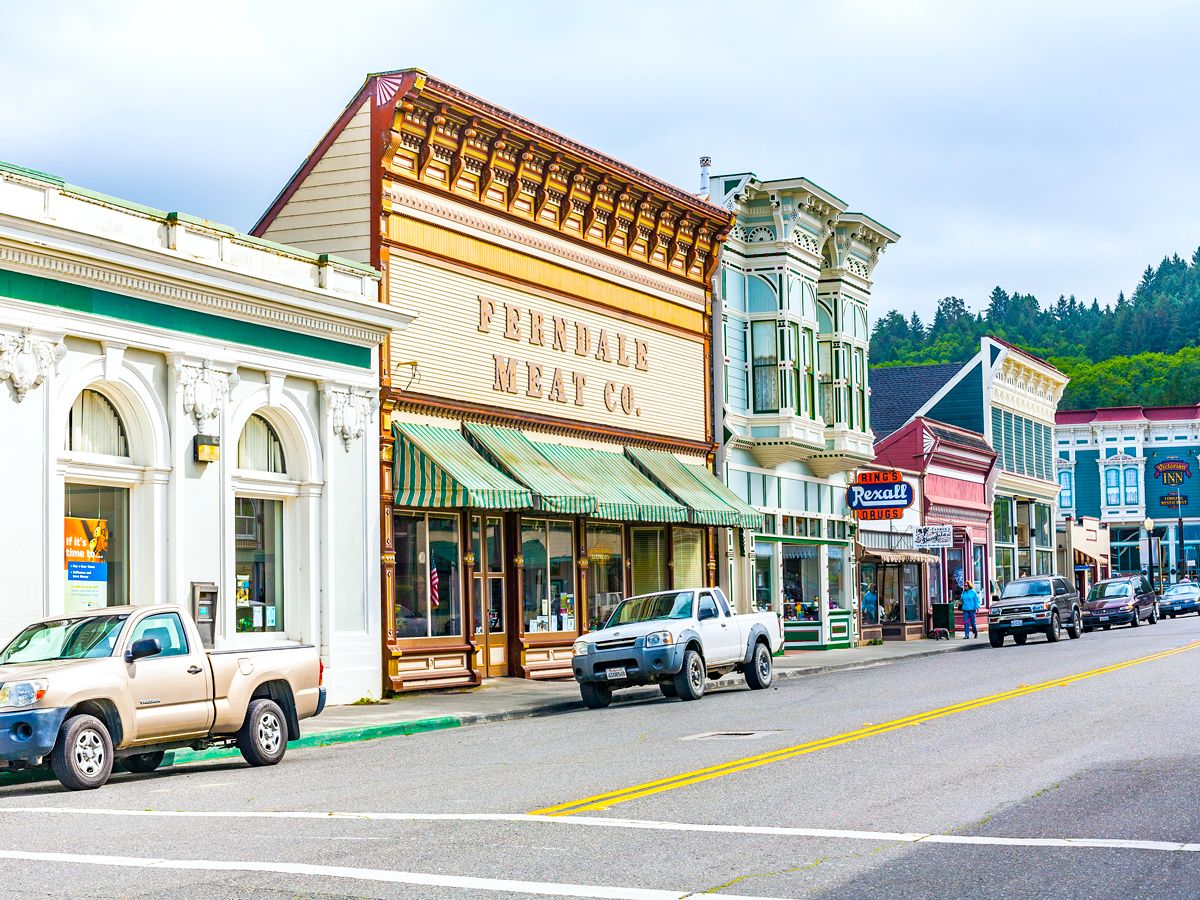
The Northern Californian town of Ferndale hasn’t changed much since it was founded in 1852 by Danish dairy farmers, earning it the nickname “Cream City.” The elaborate Victorian shops and dwellings that mark Main Street have been protected to maintain the town’s charming character, giving visitors a glimpse of what life was like here in the late 19th century.
Home to historic inns, gift shops, bakeries, fine art galleries, coffee shops, local markets, the Ferndale Museum, and other old-timey businesses, Ferndale is not only a picturesque getaway itself, but also an ideal hub for exploring nearby trails through the towering trees of Redwood National and State Park, the Lost Coast, and other attractions in the remote wilderness of Humboldt County.
Jim Thorpe, Pennsylvania
Credit: zimmytws/ iStock Editorial via Getty Images Plus
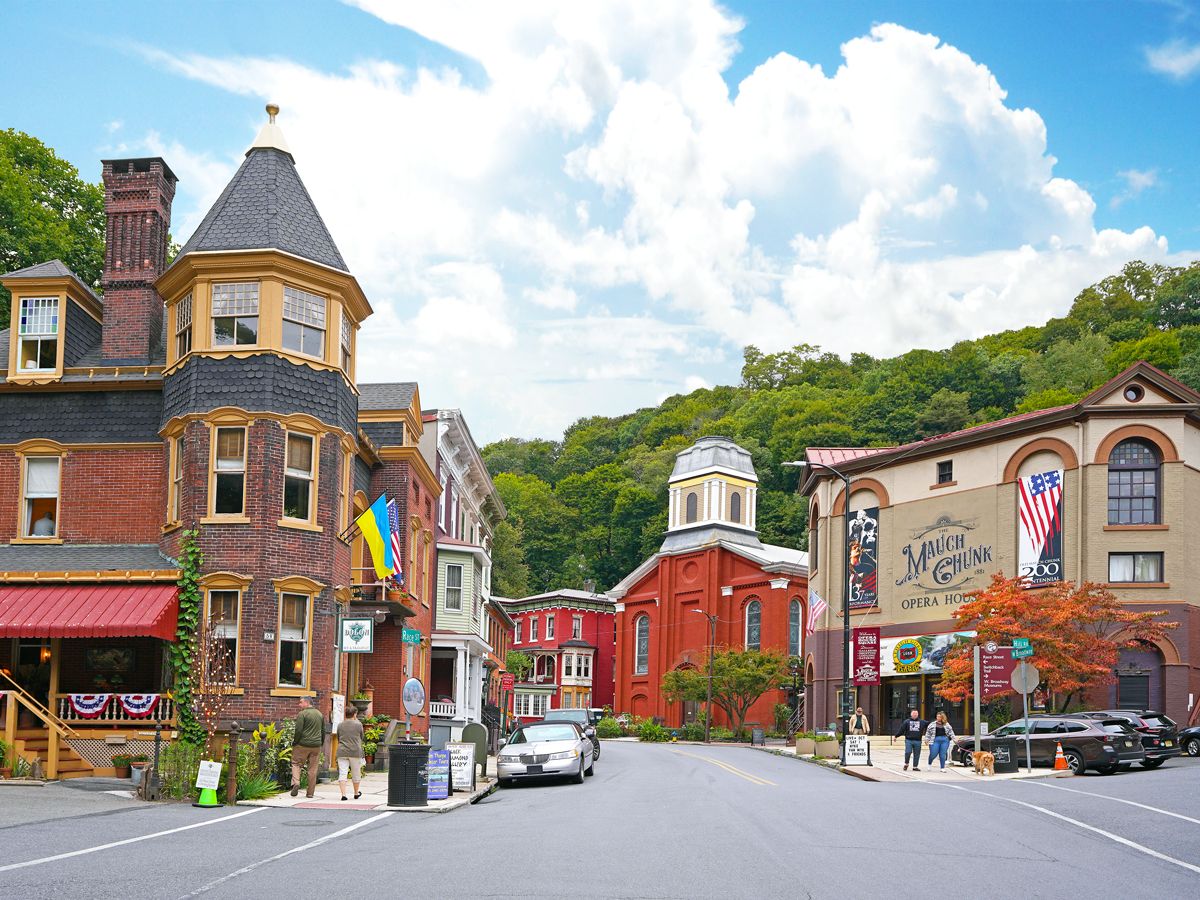
Nestled in Lehigh Gorge in rural Pennsylvania, the small community of Jim Thorpe is a popular stomping ground come autumn, when tourists flock to see the fall foliage of the Poconos. Many choose to admire the scenery aboard one of the historic open-air or glass observation dome trains that chug through Lehigh Gorge State Park along the Lehigh Gorge Scenic Railway. Founded in 1818 by the Lehigh Coal and Navigation Company, a pivotal player in the American Industrial Revolution, the town was originally called Mauch Chunk and still contains the elegant Victorian mansions once owned by some of the nation’s first millionaires.
In 1954, the town was renamed after legendary American track-and-field Olympian Jim Thorpe, whose memorial is located here along Route 903. Elsewhere, visitors will find quaint bed-and-breakfasts, art galleries, and mom-and-pop shops that go all out for the holidays. Other buildings, such as the Old Jail, are living museums so that visitors can witness their original purpose. Don’t miss checking out the Harry Packer Museum, which inspired Walt Disney World’s Haunted Mansion ride.
Chagrin Falls, Ohio
Credit: drnadig/ iStock via Getty Images Plus
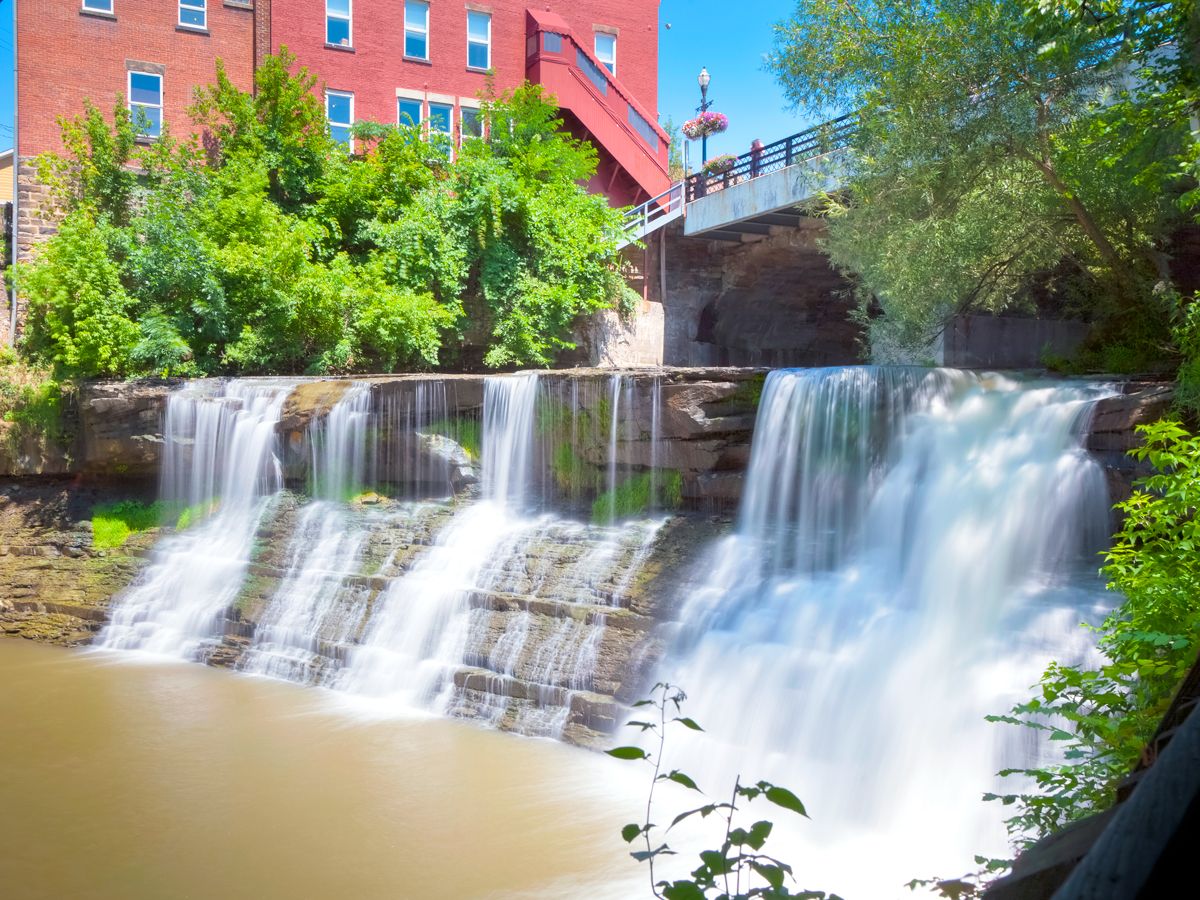
Incorporated as a village in 1844, Chagrin Falls is an idyllic Midwestern town. Though it sits just 20 miles east of Cleveland, it looks like it belongs in the film Back to the Future instead. The town’s red, white, and blue popcorn shop has been operating since 1949 and still sells its famous Chagrin-style kernels (kettle corn mixed with cheddar cheese).
On Main Street, visitors can peruse storybook shops selling local art and antiques, and admire historic properties near the town’s namesake waterfall. In late May, the town hosts the annual Blossom Time festival, an event with carnival games, a Ferris wheel, and other attractions that might make you feel as though you’re in a Rockwell painting of the American dream.
Terlingua, Texas
Credit: Robert Rutherford/ iStock via Getty Images Plus
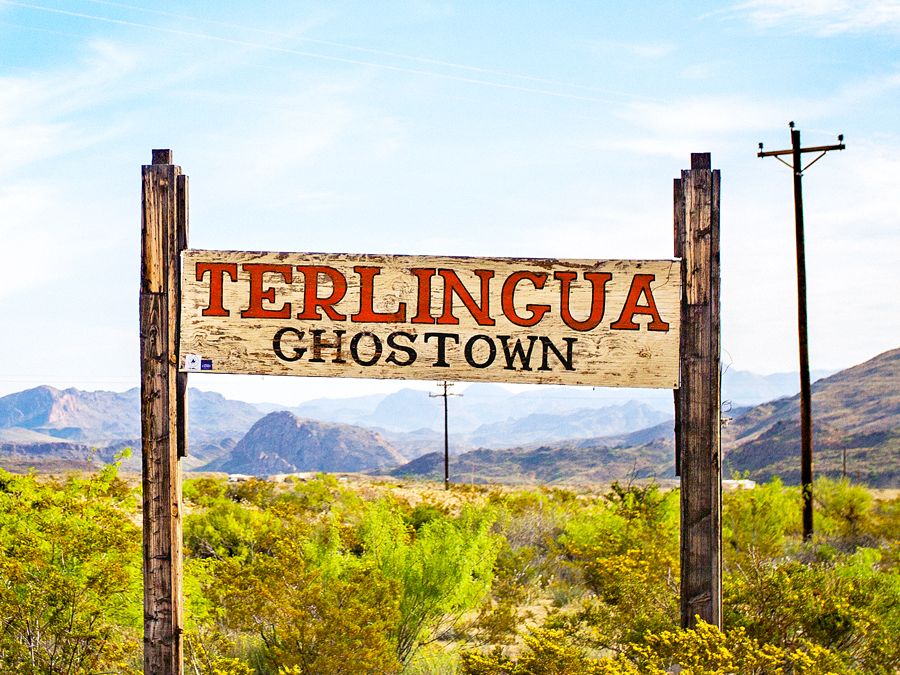
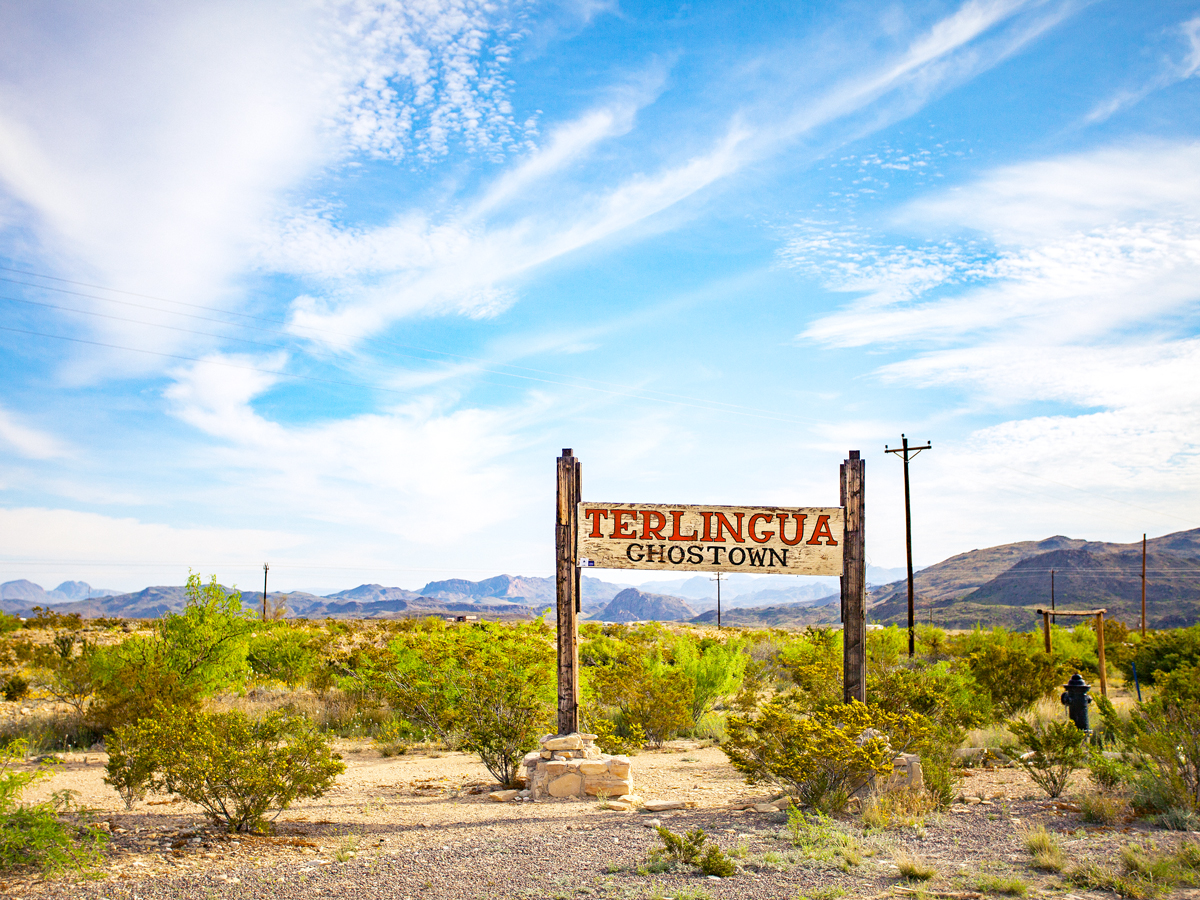
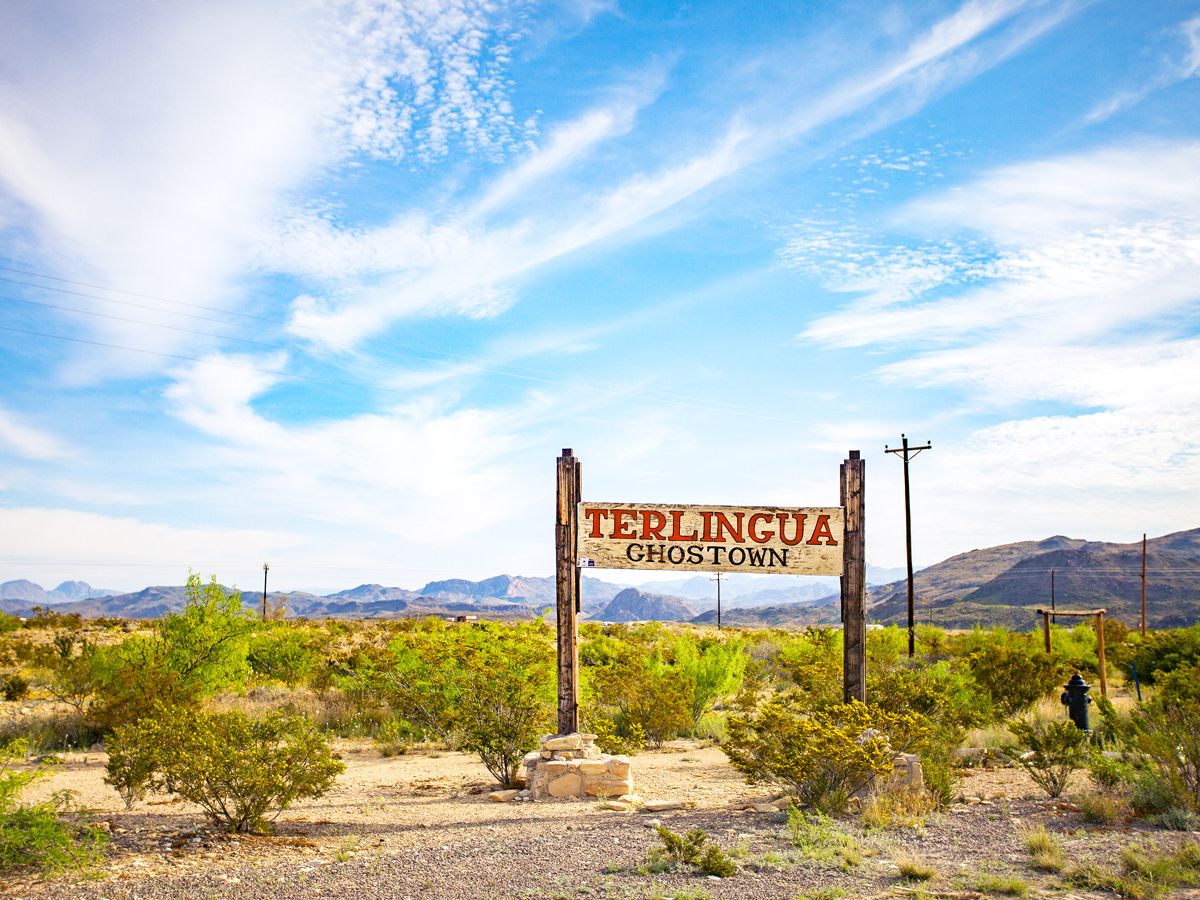
Those who take the long drive to Big Bend National Park in West Texas shouldn’t miss Terlingua. This former mining town was founded by the Chisos Mining Company in 1903 after the discovery of cinnabar, an ore that contains mercury. Now a ghost town, the remote village is home to just a few restaurants, galleries, gift shops, and bars — but that doesn’t deter visitors eager to get a glimpse into the region’s early 20th-century past.
Indulge on tacos and an ice-cold beer at a picnic table overlooking the Santa Fe de Los Pinos mountain range, located on the U.S.-Mexico border, before checking out the spooky final resting place of cowboys and miners at Terlingua Cemetery, the historic Starlight Theatre, and the weathered St. Agnes Church.
Plymouth, Massachusetts
Credit: DenisTangneyJr/ iStock via Getty Images Plus
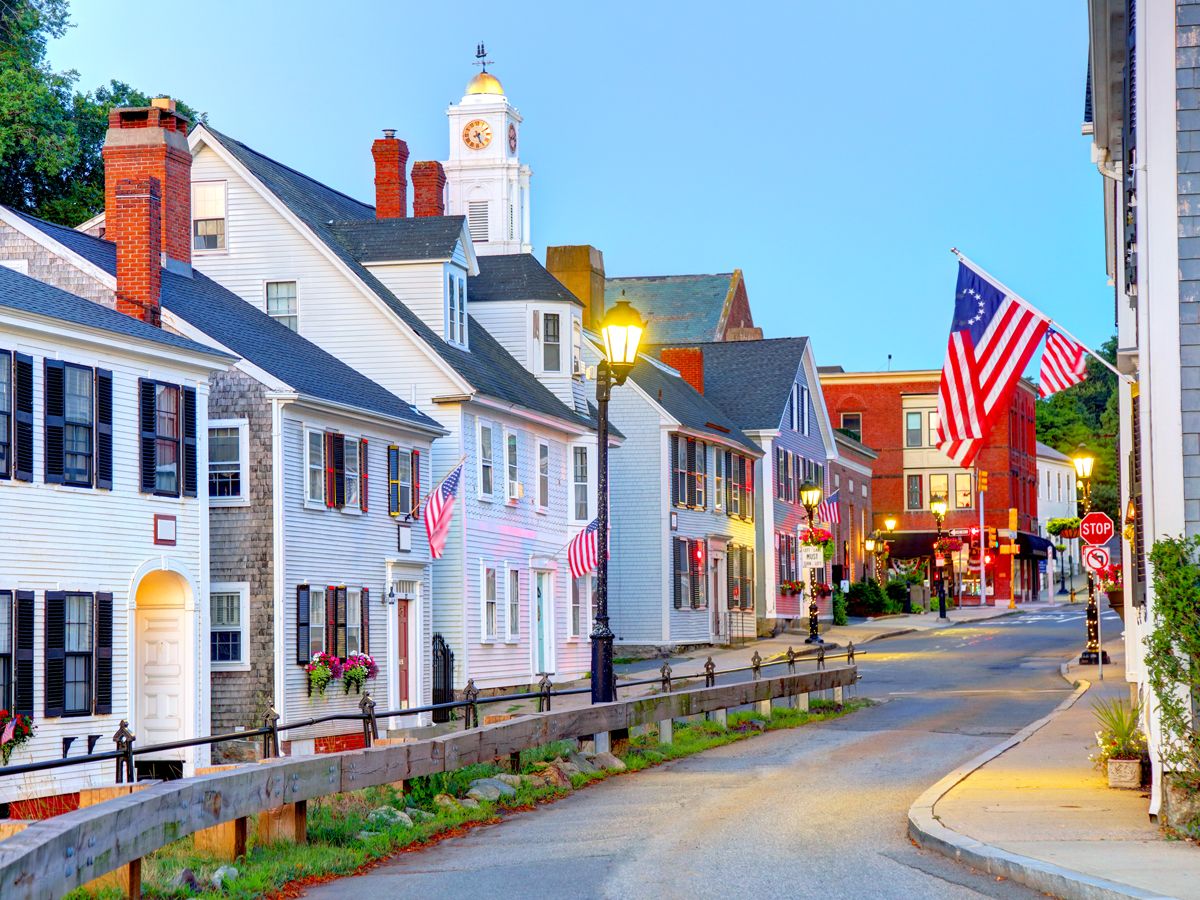
There’s perhaps no better place to take in America’s colonial past than Plymouth, Massachusetts, where the Mayflowerfirst docked 400 years ago. Today, the quaint New England town is home to cranberry farms, the famous Plymouth Rock, historic mills, colonial homesteads, and other well-preserved nods to the nation’s past. See the oldest dwellings in New England at Plimoth Patuxet, which includes the Patuxet Homesite, where early Indigenous peoples lived off the land for more than 12,000 years; a 17th-century English village; and the Mayflower II, a floating replica of the original ship.
Advertisement
More from our network
Daily Passport is part of Inbox Studio, an email-first media company. *Indicates a third-party property.
How Does Facial Recognition Work at Airports — and Can You Opt Out?
By
Peter Vanden Bos
Read time: 4 minutes
September 4, 2024
Updated: November 14, 2024
How Does Facial Recognition Work at Airports — and Can You Opt Out?
Tips •September 4, 2024•Updated: November 14, 2024
By Peter Vanden Bos
Author
Peter Vanden Bos
Peter is a Toronto-based journalist, editor, content strategist, and self-professed avgeek with 15 years of experience covering all things travel. Prior to joining Daily Passport, he oversaw newsletter publication for Travelzoo. His favorite destinations to explore include Japan, France, Chile, New Zealand, and his adopted home country of Canada.
One of the most important steps of the air travel process is identity verification — for everyone’s safety, the airline and TSA officials need to make sure it’s really you boarding the plane. With that in mind, a growing number of airports in the U.S. and worldwide are experimenting with facial recognition technology, which aims to make the verification process more secure — and potentially cut down the amount of time this step of the security process takes. So, how does it work? And can you opt out over privacy concerns? Here’s what you need to know about using facial recognition at airports.
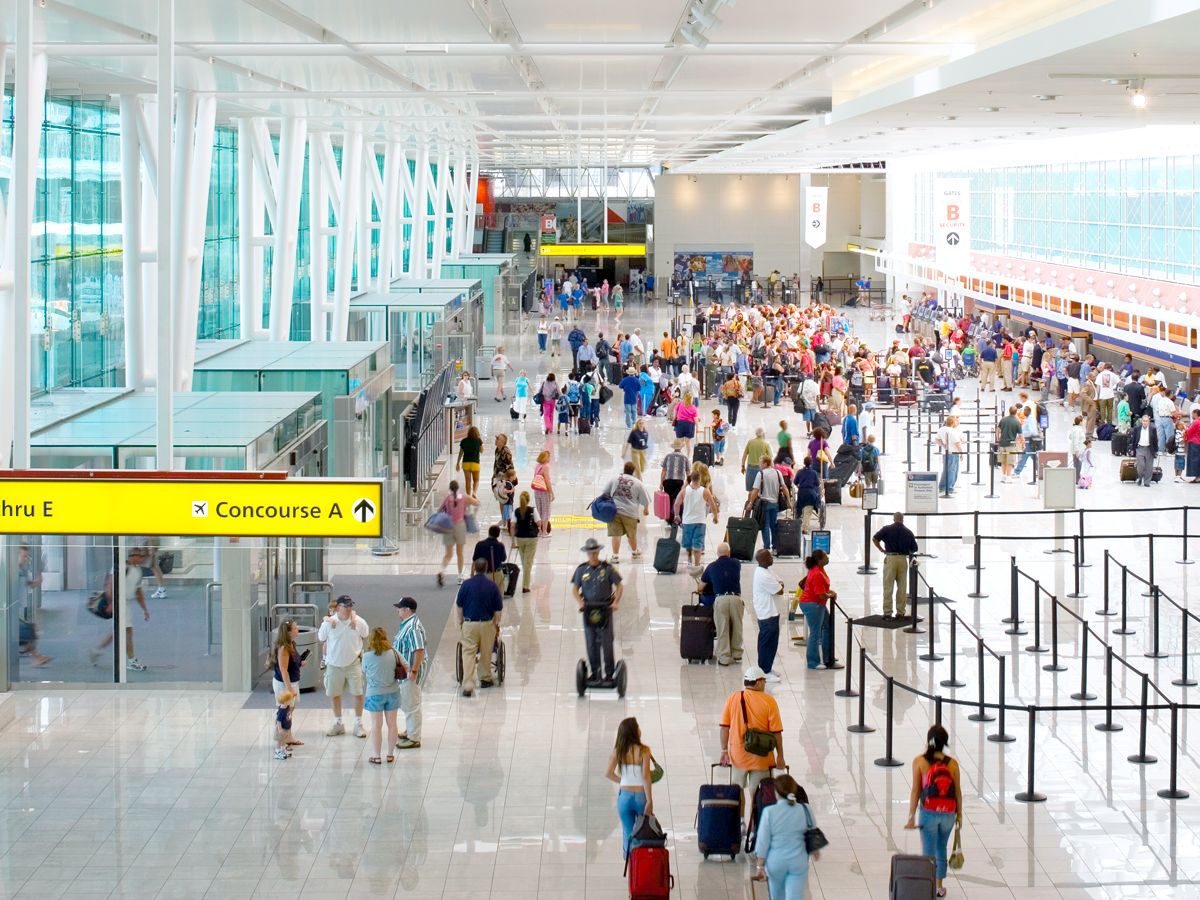
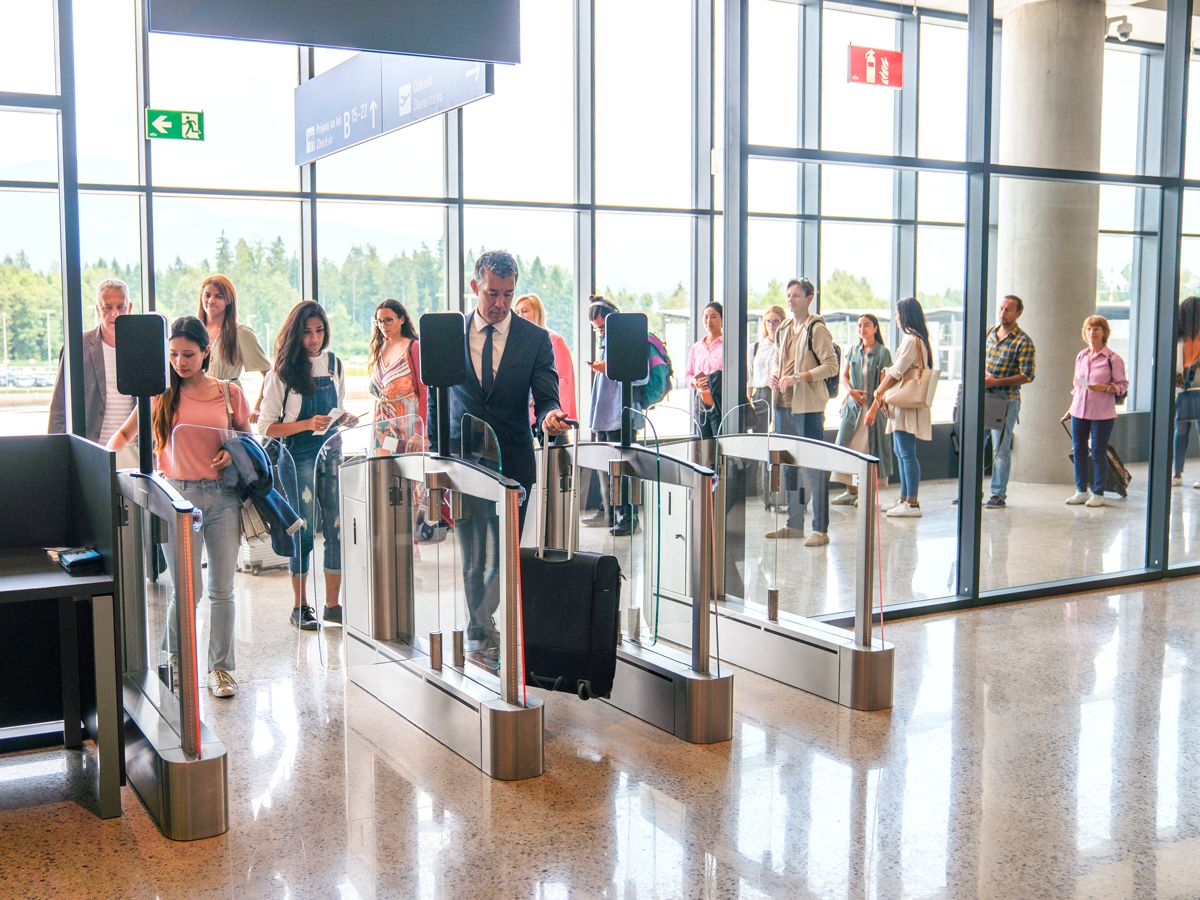
At airport security checkpoints enabled with facial recognition technology, eligible travelers will have their photo taken to verify their identity, in addition to presenting their physical form of identification. The software matches the image taken of the traveler to their passport or license to ensure it’s really them traveling. The traveler’s photo is then deleted shortly afterward, according to the TSA. The technology has potential benefits not only for checkpoint efficiency but also for tightening security. “It’s the future because it’s so much more effective than a manual comparison. This is better for security,” TSA administrator David Pekoske told CBS News.
After being introduced in 2019, facial recognition technology is now available at TSA checkpoints at more than 30 airports in the U.S. In the future, the TSA says it hopes to expand the technology to 400 more airports nationwide. The technology isn’t just being used at standard preboarding security checkpoints, either. U.S. Customs and Border Protection says more than 230 border checkpoints in additional U.S. airports — where passengers pass through after international flights — also utilize facial recognition.
For now, travelers will still have to present their physical ID in addition to having their photo taken. But the TSA is trialing a program for TSA PreCheck members, in partnership with several airlines, called Touchless ID. It works by having travelers submit scans of their identity documents to the airline’s app; the software then compares the photo taken at the security checkpoint with the scanned document the traveler has already uploaded. Participating airlines allow travelers to use the technology for check-in and bag drop-off, too, which could be a big time-saver at the airport.
Delta, which calls its version of the program Delta Digital ID, is available only to members of its SkyMiles loyalty program who have a U.S. passport and are also enrolled in TSA PreCheck. Travelers will need to opt into the program by adding the Known Traveler Number that comes with PreCheck enrollment on the airline’s website or app. As of mid-2024, the pilot program is available at Delta’s hubs in Atlanta, Detroit, Los Angeles, and New York (both JFK Airport and LaGuardia).
United Airlines’ Touchless ID is available to customers who have TSA PreCheck. Eligible travelers can access the technology to make use of the airline’s bag drop shortcut, and won’t need to show their boarding pass or physical ID at the checkpoint or to board the plane. As is the case with Delta, these touchless checkpoints are available only at select airports as of 2024, including Chicago, Los Angeles, and Newark.
In short, yes. The TSA states, “Travelers who do not wish to participate in the facial recognition technology process may decline the optional photo, without recourse, in favor of an alternative identity verification process, which does not use facial recognition technology to verify their identity.”
All you need to do is notify the TSA officer or airline employee before your picture is taken and request the standard verification process. Then, agents will manually check your passport or other form of government identification, as well as your boarding pass (though the TSA is also expanding a program where travelers don’t have to show their boarding passes).
However, there’s an important caveat: The U.S. Customs and Border Protection says that only U.S. citizens and permanent residents can opt out of having their picture taken at border checkpoints upon arrival after an international flight. All other international travelers will need to have their picture taken at checkpoints where facial recognition technology is enabled.
Advertisement
More from our network
Daily Passport is part of Inbox Studio, an email-first media company. *Indicates a third-party property.
Tips •September 4, 2024•Updated: September 4, 2024
By Peter Vanden Bos
Author
Peter Vanden Bos
Peter is a Toronto-based journalist, editor, content strategist, and self-professed avgeek with 15 years of experience covering all things travel. Prior to joining Daily Passport, he oversaw newsletter publication for Travelzoo. His favorite destinations to explore include Japan, France, Chile, New Zealand, and his adopted home country of Canada.
Flying from Point A to Point B should take the same amount of time in each direction, right? Well, not exactly. Take, for example, a flight from Los Angeles to New York — the eastbound flight might be scheduled for 5 hours and 15 minutes, but on the return leg, you’ll find the time to be nearly an hour longer. This isn’t because the return flight takes a different route or the skies are busier at certain times of day. Find out why flying in an airplane takes longer if you’re flying westbound versus eastbound.
The simple answer that explains why flights take longer when traveling westbound is wind. More specifically, it’s because of the jet stream, a rapidly moving air current found high in the atmosphere that circulates from west to east. Japanese meteorologist Wasaburo Oishi first wrote about the phenomenon in the 1920s, finding in his experiments with weather balloons that the jet stream is strongest approximately 6 to 8 miles above Earth’s surface — about the altitude that most commercial jets fly today.
Jet streams form because of both the planet’s rotation and the uneven distribution of surface temperatures (colder at the poles, warmer in the tropics). As the warmer and cooler air masses meet, they form a fast-moving current of air high in the atmosphere. By planetary standards, jet streams are pretty narrow — typically reaching about 100 miles across. And there isn’t just one jet stream, but several, including the most prominent polar and subtropical streams.
How Jet Streams Affect Flight Planning
Credit: gorodenkoff/ iStock via Getty Images Plus
Flight dispatchers and route planners make careful note of the jet streams when determining flight paths. Not only do they shift locations from north to south, but jet streams also vary in strength depending on season. They tend to be strongest in winter, reaching maximum speeds of up to 275 mph and becoming less intense during the summer months.
These changes also affect flight schedules, as Cathay Pacific Airways’ head of line operations explains. In 2023, the airline’s shortest flight time on its regular route from Hong Kong to Los Angeles was 12 hours and 12 minutes in December, while the longest flight during that same year was 13 hours and 38 minutes in July.
Because the jet stream is stronger in winter and the plane is flying westbound, in the direction of the prevailing winds, the December flight time was shortened by the jet essentially being able to “ride” the jet stream and being propelled by tailwinds. On the way back, flying the same route would mean going up against headwinds that add considerably to the flight time. By carefully planning flights around these jet streams, airlines can cut down on fuel costs and save time spent in the air.
If jet streams are particularly strong, you might also find some surprising flight plans. According to Cathay Pacific, in 2022 the airline operated some flights from New York to Hong Kong across the Atlantic, instead of the usual route over the Pacific. Though flying across the Atlantic was longer in distance, according to the airline, the “strong winds made it quicker to hitch a lift with the Atlantic jet stream. We saved 45 minutes.”
The Impact on Long-Haul Flights
Credit: kasto80/ iStock via Getty Images Plus
While jet streams can account for a difference of about an hour on a transcontinental flight in the U.S., the effect is more noticeable on transcontinental flights such as the aforementioned example. But flying from Los Angeles to Hong Kong is far from the longest flight you can take these days — thanks to advancements in aircraft technology, it’s now possible to fly nonstop between such far-flung places as Singapore and New York, which is currently the world’s longest flight.
However, as route planners push the range of an aircraft up to its limits, any variations in the jet stream can cause headaches. Take, for instance, Air New Zealand’s longest route, from Auckland to New York. The journey typically takes 17.5 hours, but if there’s a particularly strong jet stream, the aircraft will be forced to take on more weight in fuel, which means the airline has sometimes been forced to bump passengers or fly without their bags, according to aviation website Simple Flying.
Scientists also believe that the jet stream is responsible for a phenomenon known as clear air turbulence, which has been impacting more flights as of late. Aircraft flying near the edge of the jet stream can encounter this type of turbulence due to differences in wind speed, but the turbulence can be tricky to predict, as it often happens in cloudless skies and doesn’t show up on radar. That’s why it’s always important to pay attention to flight attendants’ instructions and keep your seat belt fastened while seated.
Advertisement
More from our network
Daily Passport is part of Inbox Studio, an email-first media company. *Indicates a third-party property.
Culture •September 3, 2024•Updated: March 13, 2025
By Rachel Gresh
Author
Rachel Gresh
Rachel is a Washington, D.C.–based travel and lifestyle writer with roots in the Great Lakes region. When she’s not writing for publications such as The Discoverer and Interesting Facts, you’ll find her wandering through museums or exploring destinations off the beaten path.
There’s something undeniably magical about traveling to a new country. Immersing yourself in its culture, history, and daily life can transform and deepen your understanding of the world. But have you ever wondered which countries’ citizens travels the most internationally? A recent survey looked at which countries spend the most time abroad, revealing the fascinating reasons behind these travel patterns. Check out the top 10 countries that travel the most internationally below.
The Top 10 Most-Traveled Countries
Credit: Alexander Spatari/ Moment via Getty Images
A 2023 Pew Research Center survey of 24 countries asked respondents how many countries they had traveled to outside of their own. Surprisingly, the U.S. isn’t even in the top 10 list of the most-traveled countries; it comes in at No. 13, with roughly three-quarters of Americans responding that they had traveled to at least one other country. According to a report from Skift, the average number of countries Americans have visited is three.
Meanwhile, the following 10 countries are the ones whose citizens travel abroad the most, based on the percentage of respondents who have visited at least 10 countries:
10. Greece – 19%
Greece lands at No. 10 on the list of countries whose citizens travel the most — nearly one in five (19%) reported visiting at least 10 countries. Interestingly, a majority of Greece’s citizens (79%) have traveled abroad at least once.
9. Spain – 20%
Only 15% of Spanish citizens have never been abroad, and one in five has visited at least 10 countries. The majority of Spain’s international travelers (42%) have visited between one and four other countries.
8. Canada – 22%
Despite being neighbors, more Canadians travel abroad than Americans. Nearly one-quarter of Canadians have been to 10 or more countries, and 92% have visited at least one. By contrast, 76% of Americans have been abroad at least once.
7. Italy – 25%
According to the Pew survey, one-quarter of Italians have visited 10 or more countries, while 61% have visited at least one other nation besides their own. This means that only 14% of Italians have never been abroad — but perhaps they’re just admiring the views that so many tourists flock to their country to enjoy.
6. France – 26%
Only 10% of French citizens have never been abroad. Most French travelers who have left the country have gone to just a few: 36% have visited between one and four other countries. However, 26% of survey respondents in France have visited 10 or more nations.
5. Australia – 32%
The only country in the Southern Hemisphere to make the list of most-traveled countries is Australia. Nearly a third of Aussies have gone to 10 or more countries, which is no easy feat considering their geographic isolation. Around 88% of Australia’s citizens have left the country at least once.
4. Germany – 36%
Despite being one of the largest countries in the European Union, with plenty to do and see close to home, Germany boasts a high travel culture. Around 96% of Germans have been to at least one other country, and more than one-third have visited 10 or more, making them one of the most-traveled countries in Western Europe.
3. United Kingdom – 43%
Despite the United Kingdom being an island nation, over 40% of its residents have visited 10 or more countries. Nearly all its citizens (94%) have been to at least one other country.
2. The Netherlands – 48%
Over 99% of Dutch citizens have traveled abroad, tying them with the No. 1 country whose citizens travel the most. However, because less than half have traveled to 10 or more countries, the Netherlands scored second place on the list.
1. Sweden – 57%
According to the survey, Swedish residents are the most traveled nationality in the world. Over half have traveled to 10 or more countries. Indeed, for Swedes, not traveling abroad is rare, with over 99% of them reporting having visited another country.
Of the top 10 most-traveled countries, eight are European. Remarkably, over 99% of citizens from Sweden and the Netherlands have traveled to at least one other country. Around 57% of Swedish citizens have visited 10 or more countries; by contrast, only 11% of Americans say they’ve done the same.
Overall, more than two-thirds of Europeans have traveled to another country, making them the leaders in international travel. A significant reason for this is the ease of travel for European Union residents, who have the right to free movement for work and travel in other member countries with few restrictions.
European countries are also geographically smaller than other countries surveyed. For example, France, the largest country by area in the EU, is smaller than Texas, and the Netherlands is smaller than West Virginia. Due to this difference in size, it’s little wonder that more Europeans travel abroad than Americans.
Travel Is a Privilege
Credit: bbsferrari/ iStock via Getty Images Plus
Reviewing the survey results reveals another interesting finding: Most people want to travel, even if they are unable to. In all of the lowest-scoring countries whose citizens travel the least, the majority say they still would like to travel abroad. In India, where only 3% of citizens have been abroad, 66% of survey respondents said they would like to travel to another country. Of the eight countries whose citizens travel the least, the majority of people in those countries said they would like to travel abroad if they had the opportunity. This revelation is an important reminder that traveling abroad and experiencing new countries is a privilege to be cherished.
Advertisement
More from our network
Daily Passport is part of Inbox Studio, an email-first media company. *Indicates a third-party property.
10 Stunning U.S. Natural Wonders That Belong on Your Bucket List
By
Daily Passport Team
Read time: 10 minutes
September 3, 2024
Updated: September 4, 2024
10 Stunning U.S. Natural Wonders That Belong on Your Bucket List
Outdoors •September 3, 2024•Updated: September 4, 2024
By Daily Passport Team
Author
Daily Passport Team
Daily Passport writers have been seen in publications such as National Geographic, Food & Wine, CBC, Condé Nast Traveler, and Business Insider. They're passionate about uncovering unique destinations and sharing expert tips with curious travelers.
As one of the world’s largest countries by area, America is filled with wonders both natural and human-made. As striking as America’s engineering and architectural marvels may be, if you ask us, Mother Nature really steals the show in the Land of the Free. But with so many options to choose from, where do you start? To help narrow your search, we’ve compiled our picks for America’s most stunning natural wonders that belong on every bucket list.
Bisti Badlands – New Mexico
Credit: Sean Pavone/ iStock via Getty Images Plus
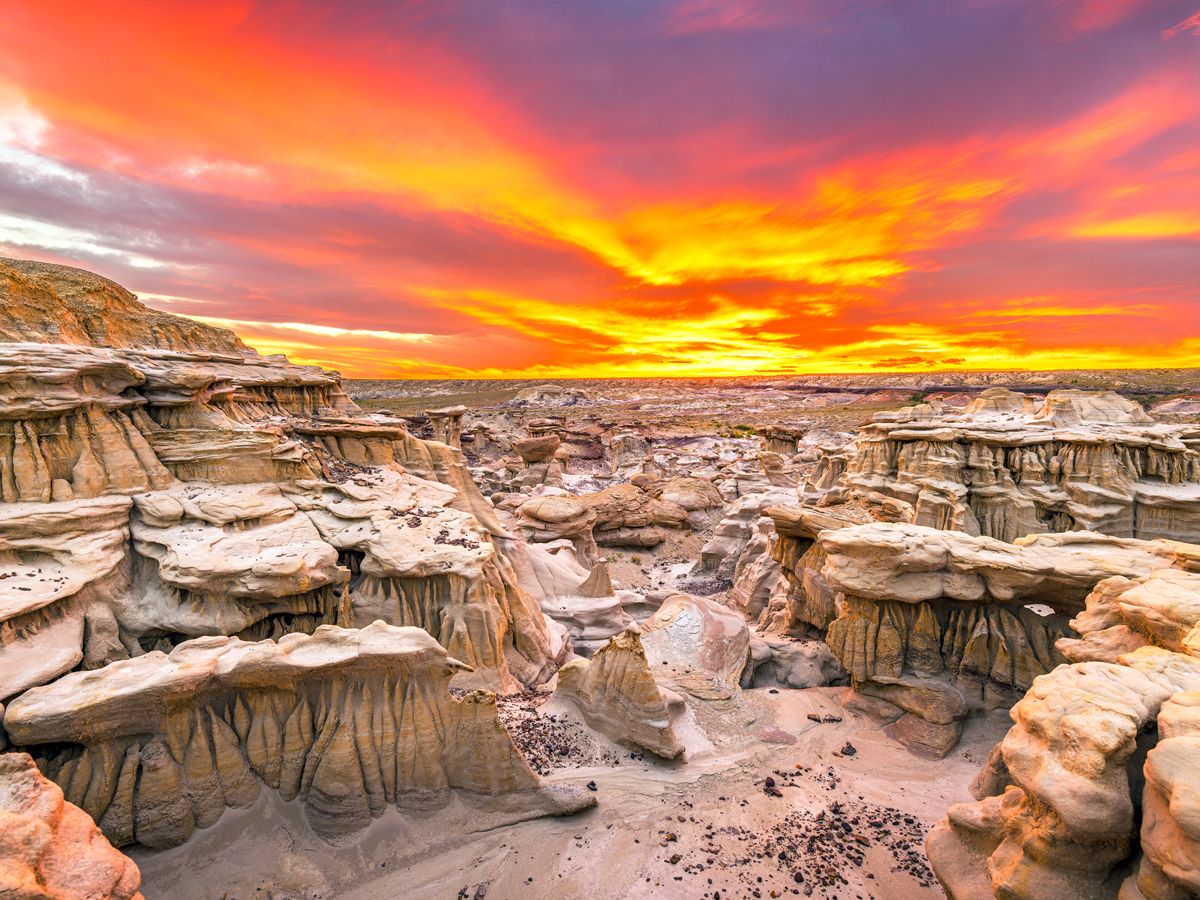
Move over, South Dakota: You’re not the only state known for its badlands. Contrary to its name, this area of northwestern New Mexico is ruggedly beautiful in an alien-like way — so much so that you may be surprised to learn it’s never served as a shooting location for a major sci-fi movie. The Badlands are formally known as the Bisti/De-Na-Zin Wilderness Area — “bisti” translates to “among the adobe formations” in the Navajo language, and “de-na-zin” refers to a crane (the avian kind) — but the area is still commonly referred to as the Bisti Badlands. And if it does one thing, it exemplifies New Mexico’s state motto: “Land of Enchantment.”
Covering about 45,000 acres, the Badlands are dotted with strange and memorable geological formations — mushroom-shaped rocks made of colorful soft sandstone and tall, thin hoodoos shaped by millions of years of erosion. A visit to Bisti may not be for casual explorers — there are no real amenities to speak of, so bringing your own supplies is a must — but a little effort is well worth the payoff: rugged, wide-open, and unbelievably wild wilderness as far as the eye can see.
Napali Coast – Kauai, Hawaii
Credit: BackyardProduction/ iStock via Getty Images Plus
Even if this 17-mile stretch of Kauai’s North Shore looks familiar (you may recognize it from Pirates of the Caribbean or Jurassic Park), there’s still a not-of-this-world look to these sacred razor-ridged cliffs. Their emerald slopes, some cascade-streaked, plunge dramatically into the Pacific, the occasional beach, sea cave, or valley hidden in their impossibly lush folds.
Though experienced hikers may be able to traverse the Napali Coast State Wilderness Park on foot (always check the latest trail conditions first, and make sure you’ve got proper permits and gear), arguably the best views are on offer from the water and air. For those who tour the coast by kayak, raft, or motorized boat, the potential bonus is a thrilling encounter with dolphins or humpback whales (or both), depending on the season. On the other hand, a helicopter tour affords mind-bending perspectives on such features as Manawaiopuna Falls, nicknamed the Jurassic Park Falls for their famous role in the opening scene of the original 1993 movie.
Antelope Canyon – Arizona
Credit: Horst Jost/ 500px via Getty Images
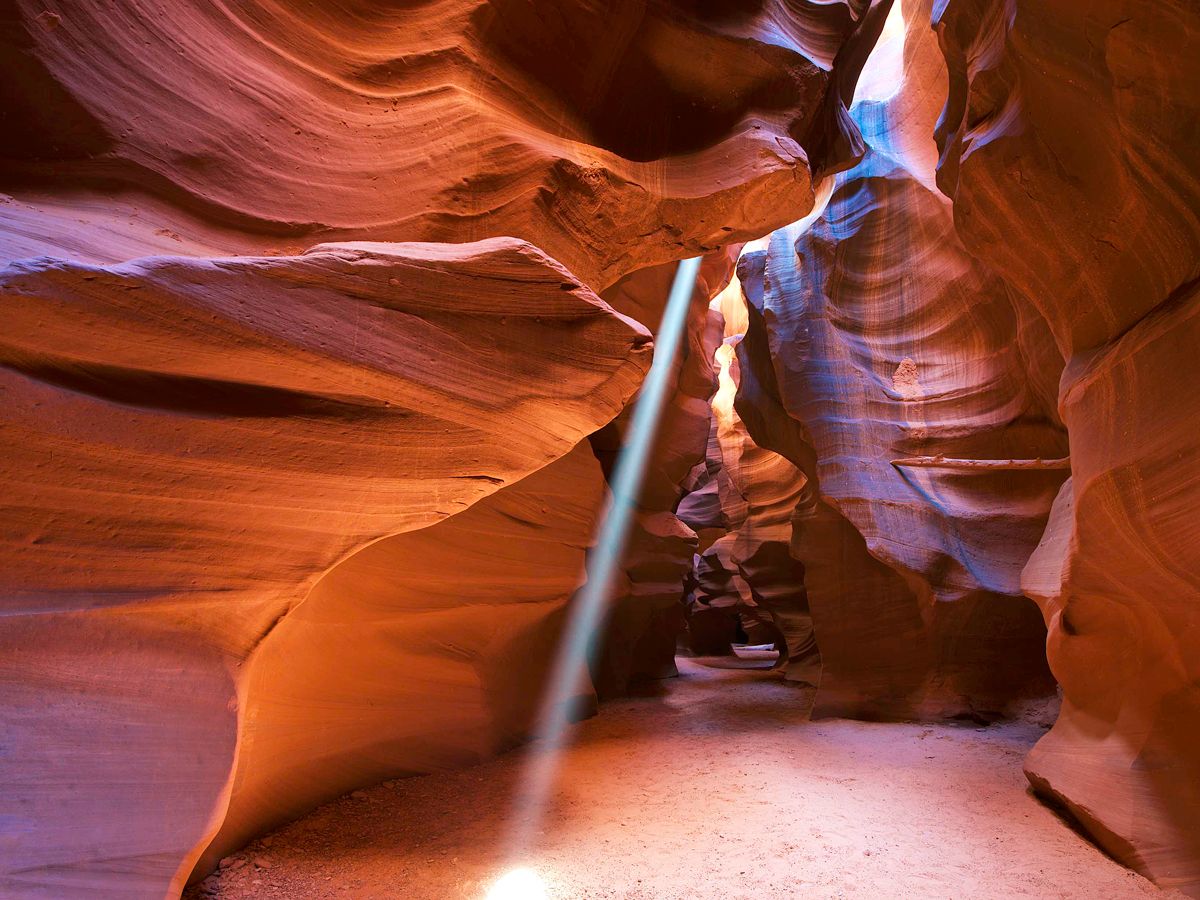
Taking its English name from the pronghorn antelope that used to turn up regularly here, Antelope Canyon goes by different names in the Navajo language. The people who call these lands home know the upper portion as Tse’bighanilini, or “the place where water runs through rocks” — as succinct a summation as you’ll find of slot canyon formation. For those interested in the slightly longer explanation: These tall, wavy chasms that wind a narrow path through deceptively solid rock are the result of an initial crack at the surface, some major flooding, and millions of years’ worth of sculpting by erosion.
While Upper Antelope Canyon is more accessible and better known — thanks to the rays of sunlight that famously bathe the space in ethereal light for much of the year — Lower Antelope Canyon is no less spectacular. This canyon is known in Navajo as Hasdestwazi (“spiral rock arches”) for reasons that will become obvious to anyone lucky enough to descend the five flights of stairs and eight ladders into this otherworldly network of caverns. At the end of the arduous descent, supremely photogenic beauty awaits. A Navajo guide is not only required for visitors, but also endlessly valuable to anyone hoping to gain an understanding of the site’s vast cultural and spiritual significance.
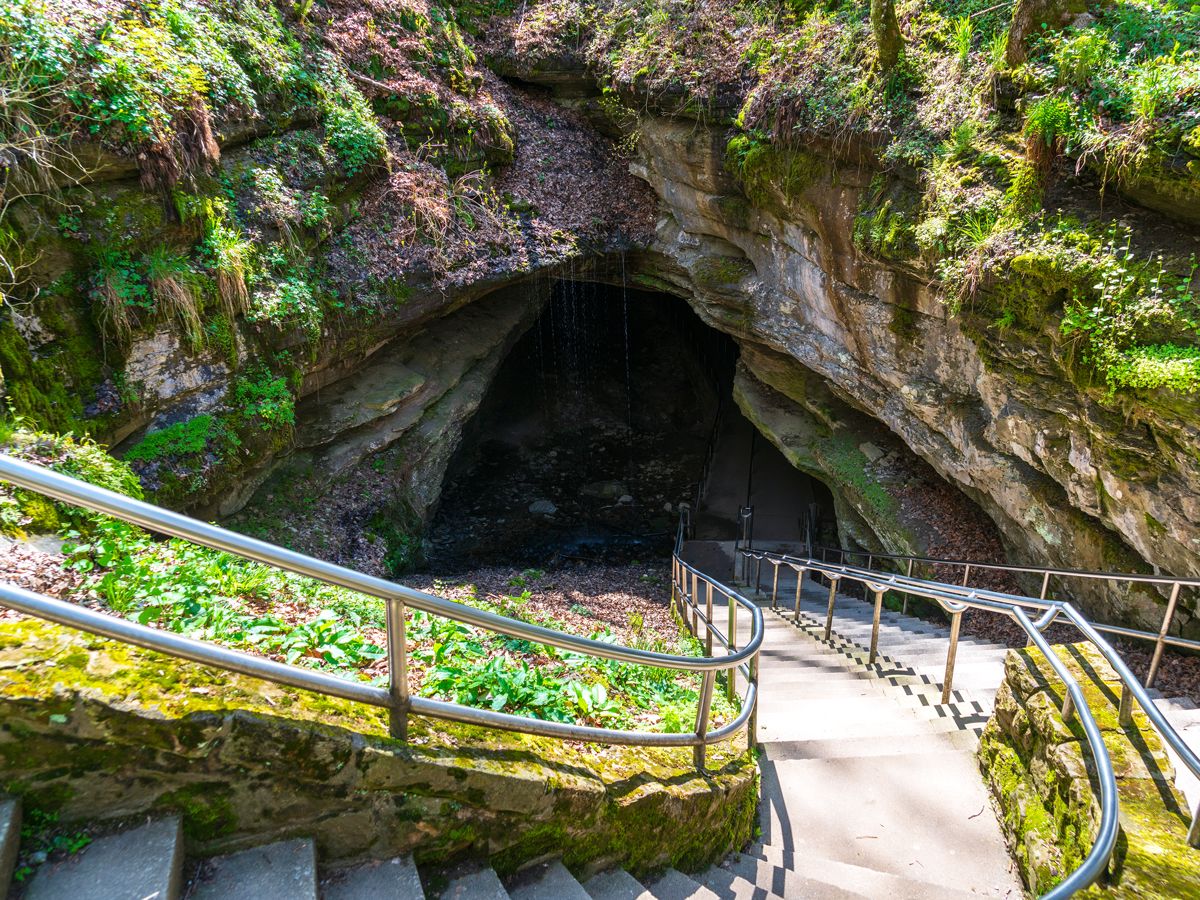
Mammoth Cave’s moniker just barely scratches the surface of how extensive this cave system really is. Located in west-central Kentucky, the underground complex consists of more than 412 miles of surveyed passageways — and that’s all scientists know about so far. Some estimate the cave system stretches for about 1,000 miles in total, and several more miles are discovered each year.
This underground labyrinth is the centerpiece of Mammoth Cave National Park and recognized as both a UNESCO World Heritage Site and an International Biosphere Reserve. Although the caves were only discovered by Europeans in the 18th century, humans have visited them for thousands of years. Mammoth Cave holds vast historical and ecological riches in its massive, stony walls. There are numerous impressive cave structures on display, including stalactites, stalagmites, and a type of gypsum formation called “gypsum flowers.” The dry, cool environment of Mammoth Cave also makes it an ideal habitat for several endangered forms of bat and cave shrimp.
Grand Prismatic Spring – Wyoming
Credit: tiny-al/ iStock via Getty Images Plus
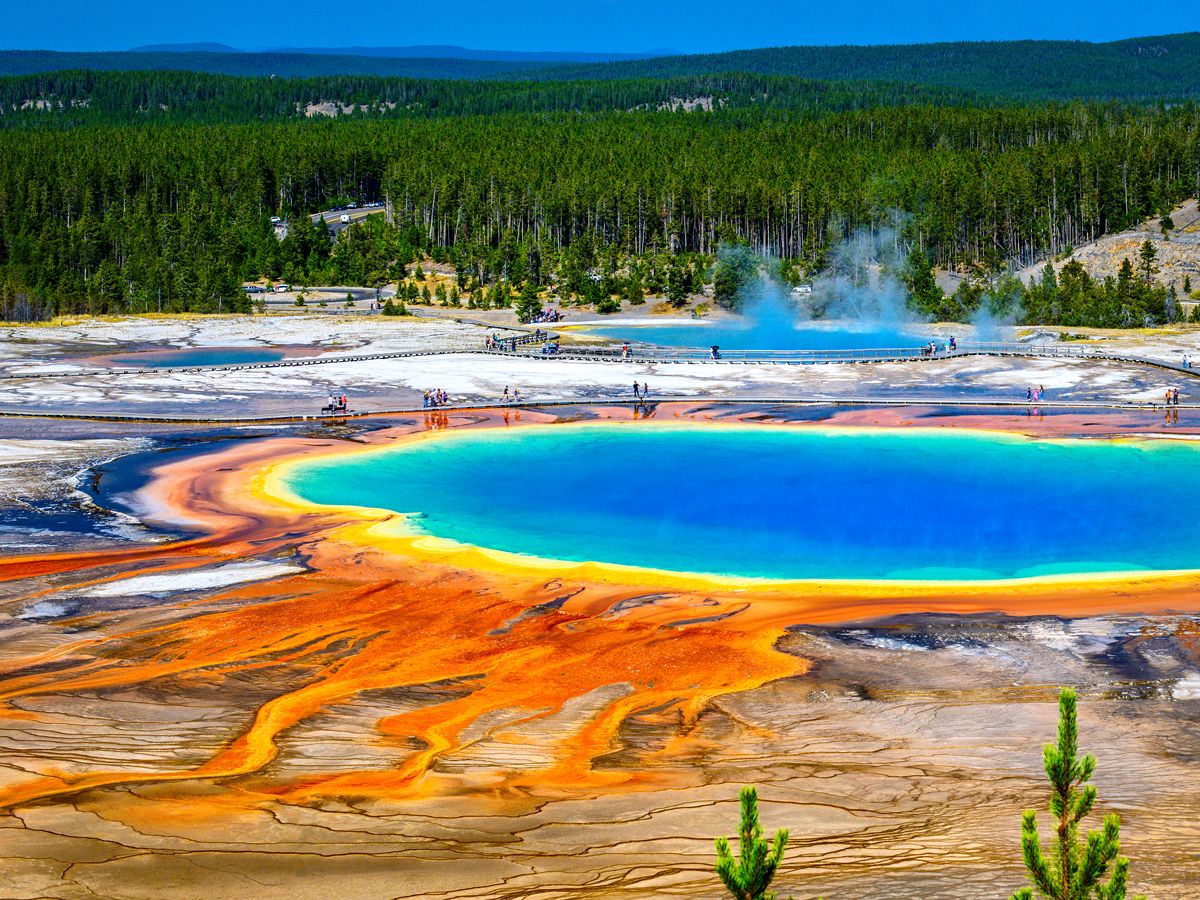
The punctual geyser Old Faithful may be the big draw in Wyoming’s Yellowstone National Park, but the Grand Prismatic Spring runs a close second. Wider than a football field and deeper than a 10-story building, the 160-degree Fahrenheit spring is the park’s largest, but that reason alone isn’t why so many visitors flock to see it. Vivid bands of yellow, orange, red, and green surround the deep blue center of the spring (and change with the seasons) — a stunning natural phenomenon that results from heat-loving microbes living in the blistering waters, which cool as they reach the spring’s edges.
Located in the Midway Geyser Basin, the Grand Prismatic Spring can be explored in a number of ways. An easy 0.8-mile boardwalk loops around it also circling Excelsior Geyser Crater, Opal Pool, and Turquoise Pool. For even better aerial views and no-filter-needed Instagram shots, hike to the overlook on the trail to Fairy Falls. Late risers are in luck: There’s no need to get up early for this visit, as the spring’s colors are obscured by mist in the mornings — for the best viewing, plan to see the spring at midday.
Natural Bridges – Utah
Credit: Sumiko Scott/ Moment via Getty Images
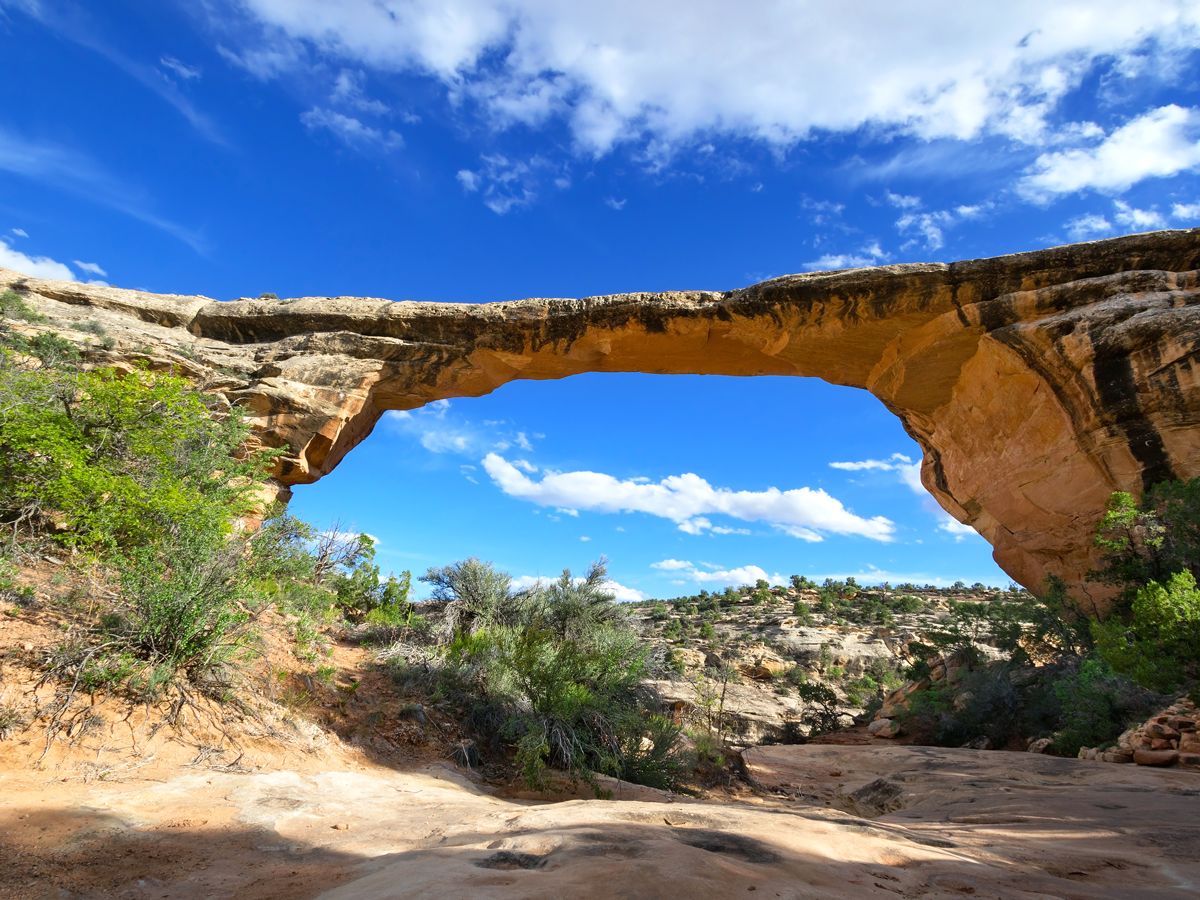
From stacked hoodoos to towering canyon walls carved by roaring rivers, Utah’s diverse landscapes are filled with fantastical geographical formations. And while most visitors high-tail it to one of the state’s “Mighty Five” national parks — Arches, Bryce Canyon, Canyonlands, Capitol Reef, and Zion — if you want to skip the inevitable crowds, the lesser-trafficked Natural Bridges National Monument is every bit as beautiful as its more famous neighbors.
Set in the southeastern corner of Utah, this monument covers over 7,00 acres of stunning terrain, including those iconic red rocks that curve and arch into three postcard-perfect natural bridges. Sipapu Bridge, the monument’s largest, spans 268 feet and reaches a height of 220 feet — taller than a 15-story building. Kachina, the second-largest bridge, features ancient petroglyphs and pictographs at its base left by the ancestral Puebloan people. And even though it’s the smallest of the three, Owachomo is the monument’s most popular, since it’s accessible via an easy half-mile hike from the parking area.
While many come for the hiking trails, consider spending the night under a blanket of stars, too. Like several other sites in Utah, Natural Bridges is also a certified International Dark Park, meaning it has some of the clearest night skies on the planet.
Denali – Alaska
Credit: Eder Maioli/ iStock via Getty Images Plus
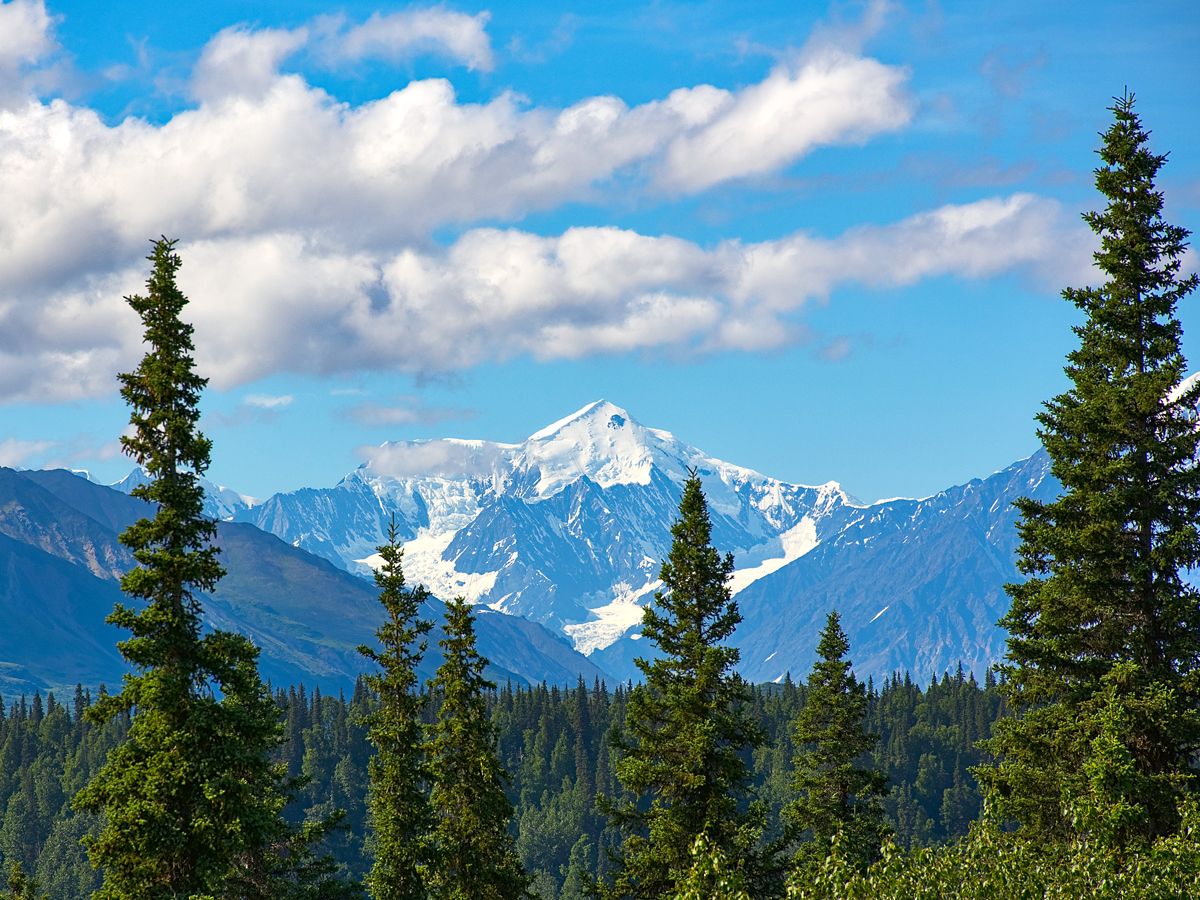
Seven of America’s 10 largest national parks are located in Alaska, but only one lays claim to Denali — the highest point in North America. Soaring 20,310 feet above sea level, Denali has lent its name to Denali National Park and Preserve (once known as Mount McKinley State Park) since 1980. Encompassing 6.1 million acres about a four-hour drive north from Anchorage, Denali is larger than the entire state of New Jersey. About 15% of this wondrous landscape is capped with glaciers, while the park and preserve also span more than 12,000 lakes and ponds. In the past 16 years, thousands of dinosaur trace fossils have been unearthed in the park, dating back as far as 72 million years.
Aside from its namesake peak, Denali has at least one other feature that makes it unique among national parks: It’s the only one to boast its own kennel of sled dogs. The park’s Alaskan Huskies draw their own sizable crowd — each summer, more than 50,000 people watch as park rangers lead sled dog demonstrations. At age nine, the sled dogs are retired and ready for adoption, so consider leaving the park not only with memories of the stunning scenery but also with a tail-wagger in tow.
Pictured Rocks Lakeshore – Michigan
Credit: Claude LeTien/ Moment via Getty Images
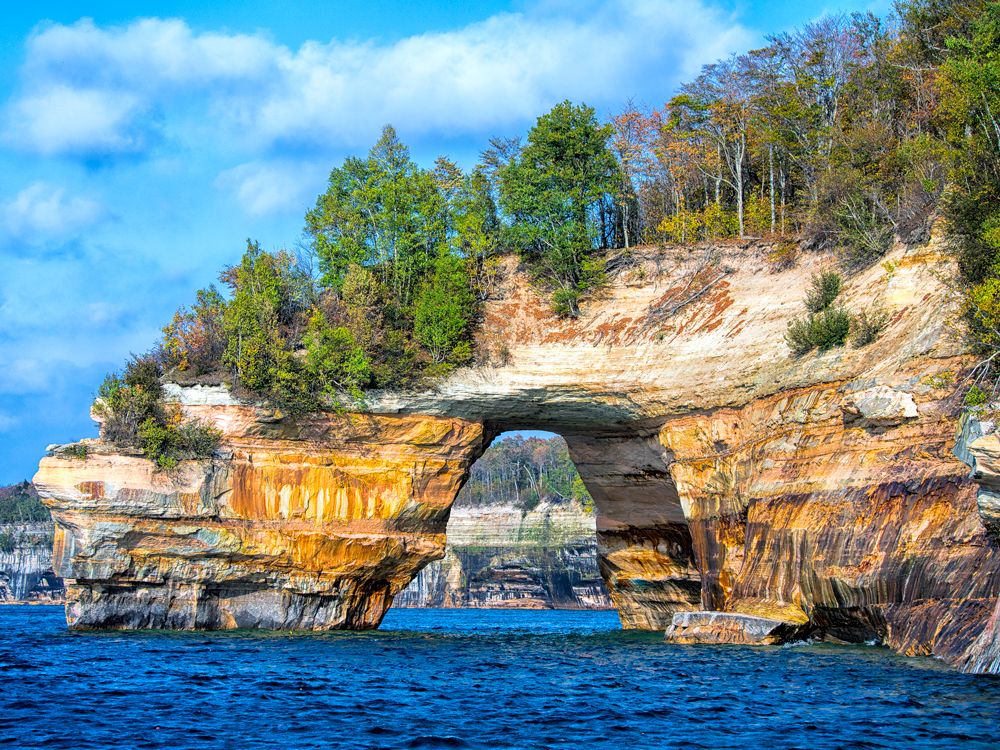
From the 15 miles of glacially carved cliffs that give this park its name to the nature that surrounds them (42 miles of shoreline, densely forested trails, and copious seasonal waterfalls), the wild beauty of Pictured Rocks National Lakeshore is reason enough to visit Michigan’s Upper Peninsula. But because of a few particularities, the park has also become a pilgrimage site for enthusiast groups.
Located on Lake Superior’s fabled Shipwreck Coast — where sandstone reefs, thick fog, and monster waves can form a fearsome trio — Pictured Rocks National Lakeshore is the final resting place of at least 45 vessels, some still protruding evocatively from the water. You can scuba dive and snorkel among them or tour Au Sable Light Station, the 19th-century lighthouse that ultimately didn’t do them quite enough good. And if you want to see multiple wreck sites, you can even embark on a glass-bottom boat tour.
Beyond the shipwreck and maritime history fans, though, ice climbers come here from around the world each winter, when the rock faces freeze over and sprout what look like milky stalactites. The best time to experience this scene is the annual Michigan Ice Fest in February, when climbers of all skill levels gather for demos, classes, clinics and ice-cold lakeside beers.
Columbia River Gorge – Oregonand Washington
Credit: Strekoza2/ iStock via Getty Images Plus
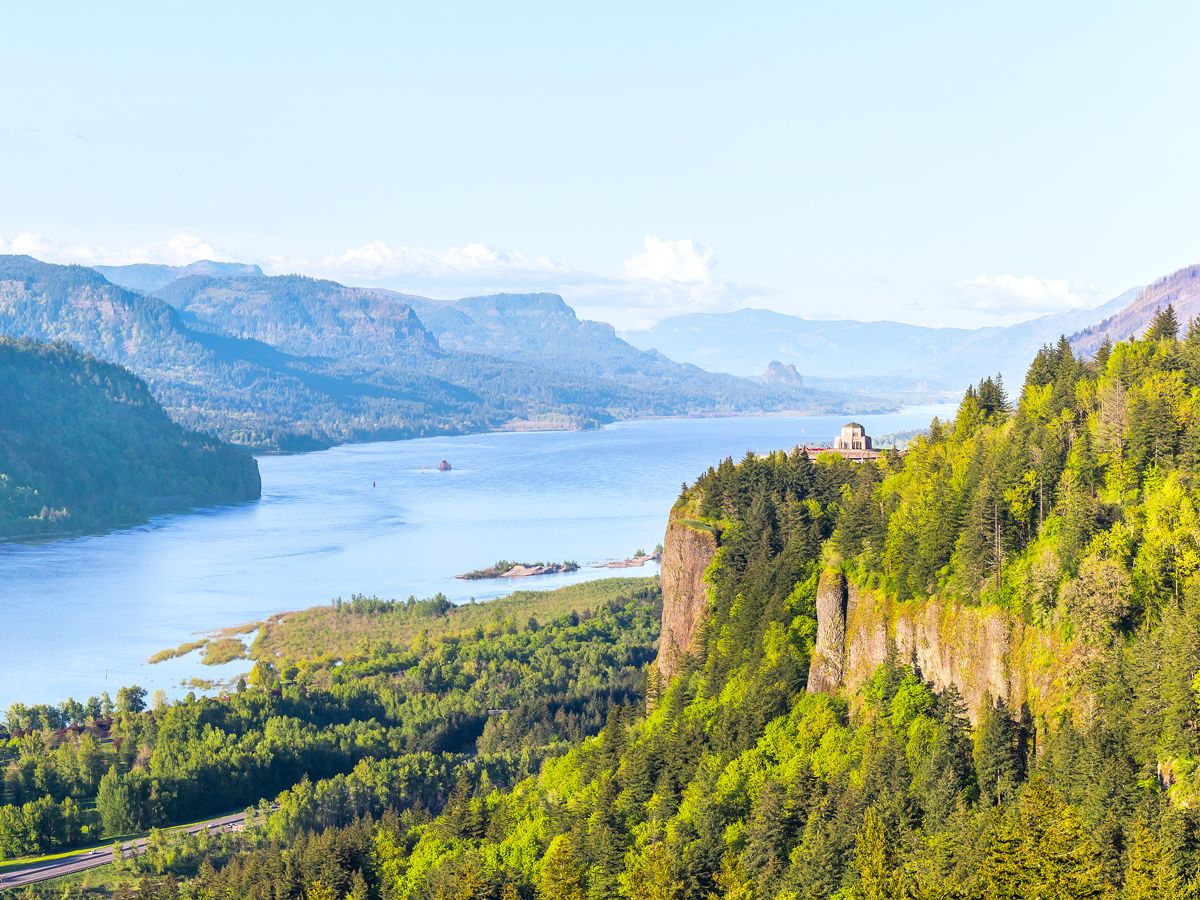
Only 30 miles east of Portland, you’ll find one of the most spectacularly beautiful wilderness areas in the Pacific Northwest. Stretching 85 miles along three counties in Oregon and three counties in Washington, the Columbia River Gorge National Scenic Area is home to more than 90 waterfalls and a river-carved canyon that, in certain areas, descends more than 4,000 feet. Also located here is Multnomah Falls, Oregon’s tallest waterfall, dropping 620 feet in two stages to the pool below. The falls flow throughout the year and are especially gorgeous when partly frozen during the winter months.
While the Columbia River Gorge is a paradise for outdoor recreation — including kiteboarding, hiking, rock climbing, cycling, and windsurfing — the surrounding area offers creature comforts like fine dining and hot springs lodges in Oregon’s fertile wine country. Drawing more than 2 million visitors a year, the rugged gorge is one of the rare wilderness areas that’s conveniently accessed without a car: A $10 daily shuttle provides transportation to highlights including Troutdale, Multnomah Falls, Cascade Locks, the Hood River, and the Dalles — a historic village that’s one of the oldest settlements on the West Coast.
Garden of the Gods – Colorado
Credit: pilgrims49/ iStock via Getty Images Plus
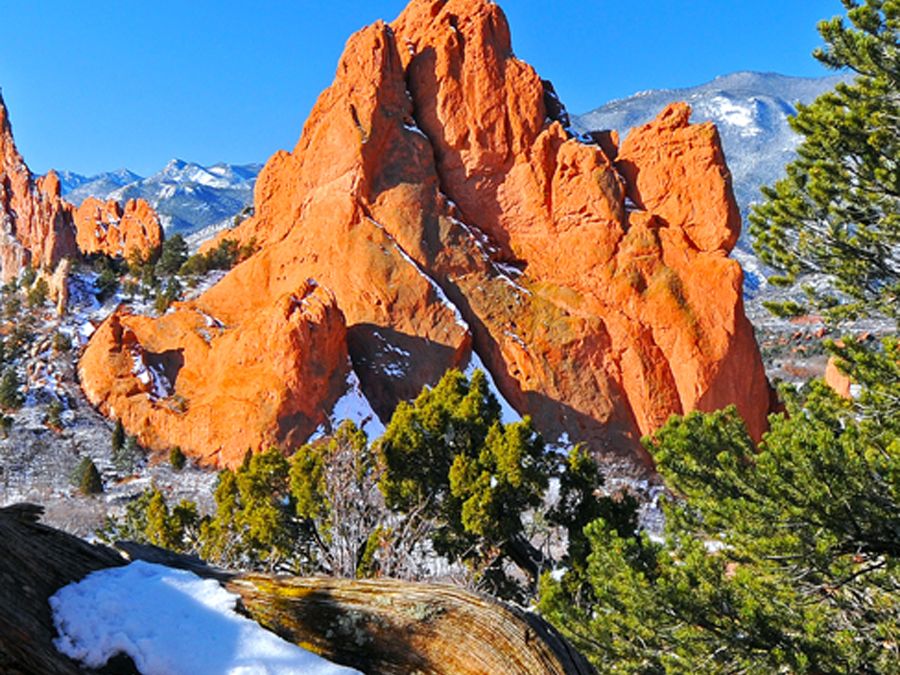
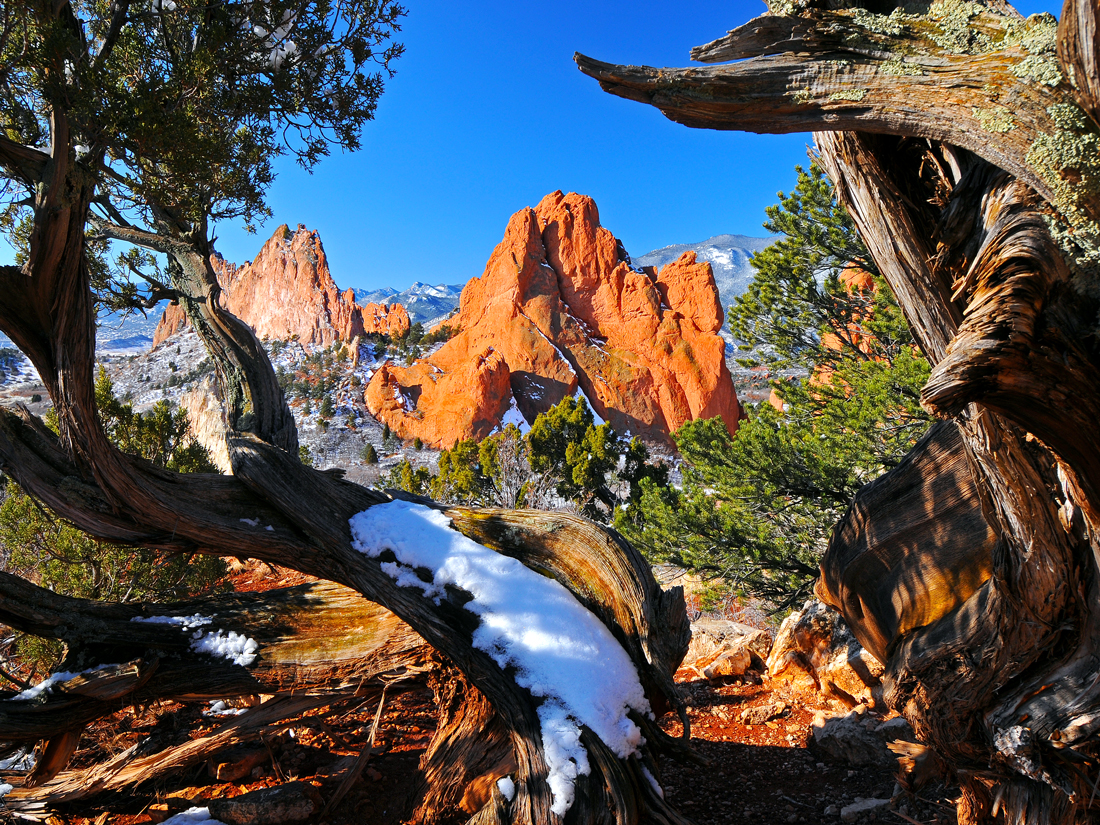
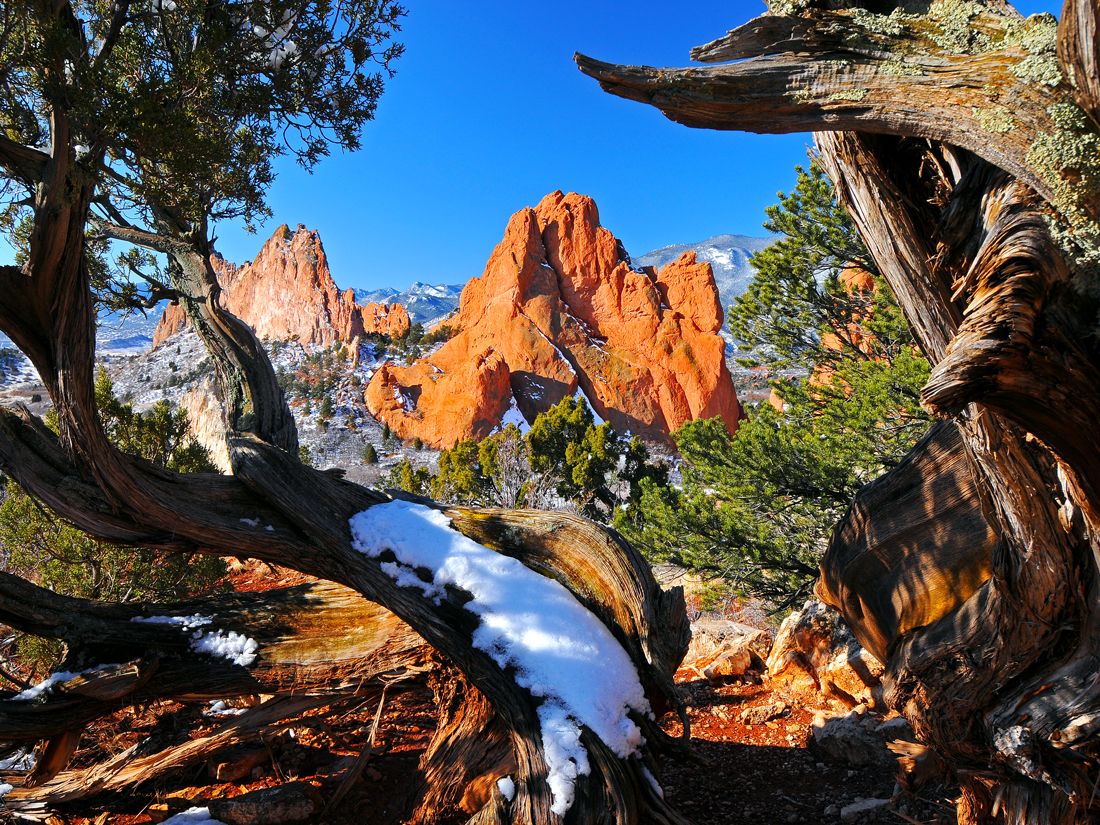
Approximately 250 million years ago, the area just west of Colorado Springs was dotted with sand dunes and shallow seas. Along the front range of the Rocky Mountains at the base of Pikes Peak, spires of red sandstone were formed by tectonic upheaval and erosion, creating a mysterious and sacred space that was revered by Native Americans long before European settlers arrived. In 1859, a surveyor named Rufus Cable proclaimed the stunning landscape “a fit place for the gods to assemble,” and so its name was born. Once privately owned, much of the land in Garden of the Gods was given to the city of Colorado Springs in 1909, with the provision that it be preserved as a public park.
More than 2 million visitors each year arrive to marvel at the massive monoliths, some of which have ridges where water once flowed. (Fossilized seashells and sharks’ teeth have been found, too.) Climbers come from around the world to challenge themselves on the sheer towers, and trails abound for hikers of all abilities. If you’re in a hurry, the garden is glorious even when viewed from the windows of a car.
Advertisement
More from our network
Daily Passport is part of Inbox Studio, an email-first media company. *Indicates a third-party property.
9 Must-Visit Historic Hotels That Are a Destination Themselves
By
Daily Passport Team
Read time: 9 minutes
September 3, 2024
Updated: September 3, 2025
9 Must-Visit Historic Hotels That Are a Destination Themselves
Architecture •September 3, 2024•Updated: September 3, 2025
By Daily Passport Team
Author
Daily Passport Team
Daily Passport writers have been seen in publications such as National Geographic, Food & Wine, CBC, Condé Nast Traveler, and Business Insider. They're passionate about uncovering unique destinations and sharing expert tips with curious travelers.
Sometimes, a hotel can be much more than just a place to rest your head after a day of sightseeing. Some properties are so grand and so unique that staying there can quickly become the highlight of your vacation. From one of the tallest hotels in the world overlooking the glittering coast of Dubai to a U.S. National Historic Landmark on Michigan’s Upper Peninsula with a unique claim to fame, these nine highly unique hotels are a destination themselves.
Fairmont Banff Springs – Banff, Canada
Credit: LynMc42k/ iStock Editorial via Getty Images Plus
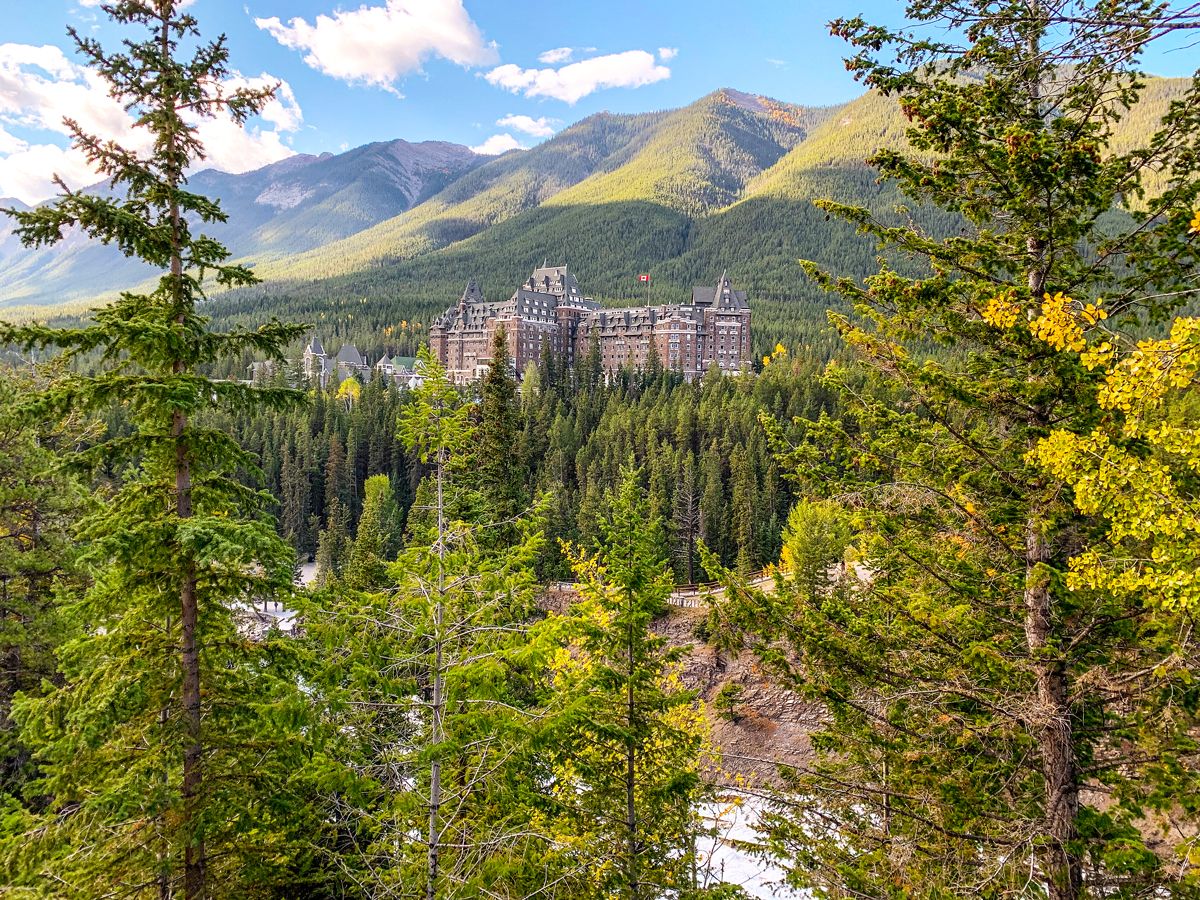
The grand dame of the Canadian Rockies, the Fairmont Banff Springs Hotel is set at the base of Rundle Mountain and overlooks the stunning Bow Valley in Banff National Park (Canada’s oldest national park). Clad in limestone and styled after Scottish baronial castles, the hotel was the tallest building in Canada when it opened its doors in 1888. Now with more than 700 rooms and operated by Fairmont, the property still draws visitors from around the world who come throughout the year for hot springs, skiing, golf, and pristine mountain vistas.
While the glorious natural surroundings are clearly the star of the show, they are far from the hotel’s only intrigue. Rumors of ghosts abound at the property, including one about a bride who continues to glide on the marble steps where she fell to her death on her wedding day. Room 873, the site of a grisly murder, has been permanently sealed, and guests still report receiving help from the friendly spirit of a longtime employee. Whether or not you believe in the paranormal, the hotel recently completed a $35 million renovation in 2023, turning Alberta’s “Castle in the Rockies” into even more of a showstopper.
Grand Hotel – Mackinac Island, Michigan
Credit: jimfeng/ iStock Unreleased via Getty Images
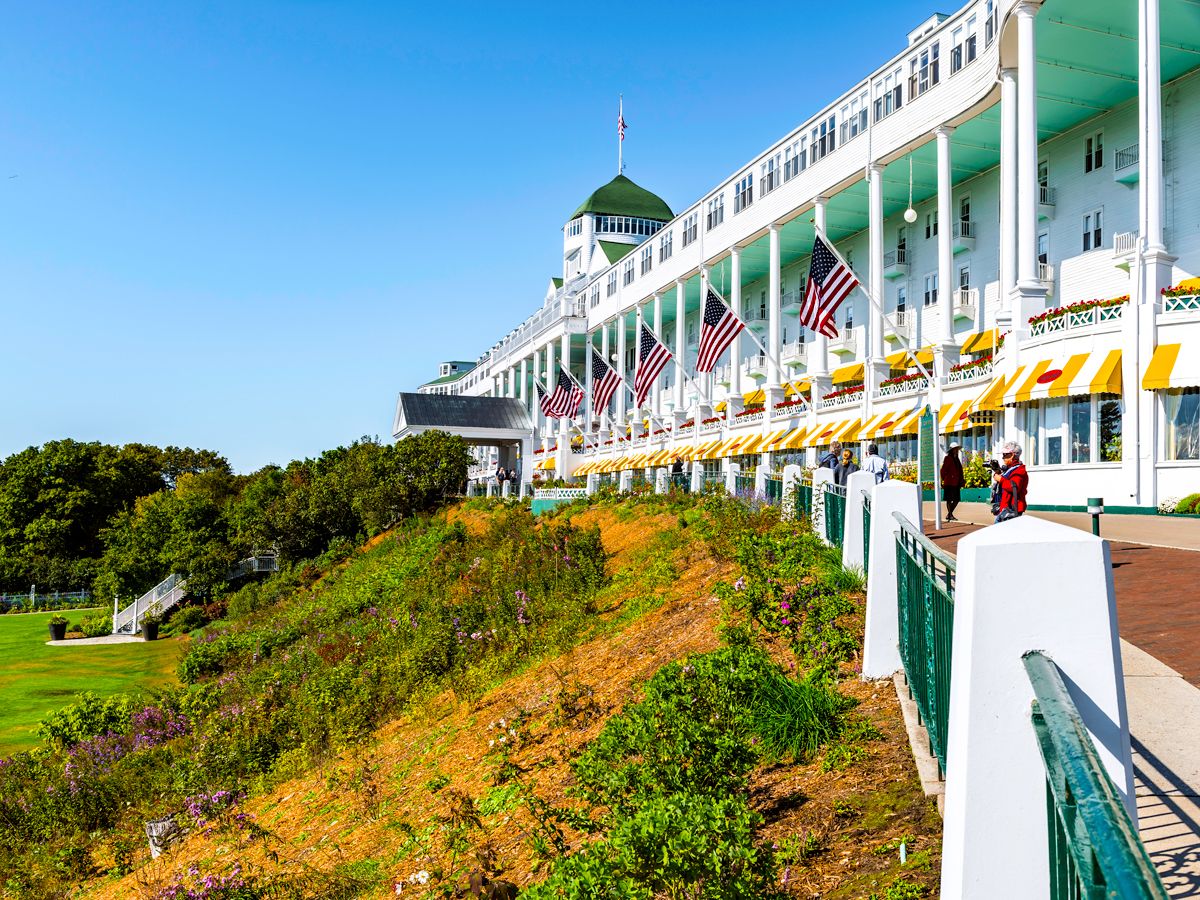
There’s no grander welcome to Mackinac Island (pronounced mack-in-awe) and its 4 square miles of carless tranquility than the front porch of the Grand Hotel. In fact, the hotel’s 660-foot-long front porch framed by towering white Colonial Revival columns is the world’s longest porch. It extends more than two football fields in length and is filled with dozens of rocking chairs inviting you to take a seat and gaze out over the Straits of Mackinac, located between Michigan’s two peninsulas. The hotel — a National Historic Landmark — is the crown jewel of this enchanting island. Since 1887, its guest book has been signed by five U.S. presidents, as well as luminaries ranging from John Jacob Astor III and Mark Twain to Robert De Niro and Madonna.
Open seasonally from May through October, the Grand Hotel maintains about 400 guest rooms, no two of which are alike. Each is decorated in a distinct panoply of pleasantly clashing colors and patterns. When dinner comes around, patrons are encouraged to dress for the occasion at the 14 in-house restaurants and bars. And once you’re finally ready to leave the hotel and see what the island has to offer, you might as well continue on the yesteryear theme by touring it in a horse-drawn carriage.
Burj Al Arab Hotel – Dubai, UAE
Credit: Joni_R/ iStock Unreleased via Getty Images
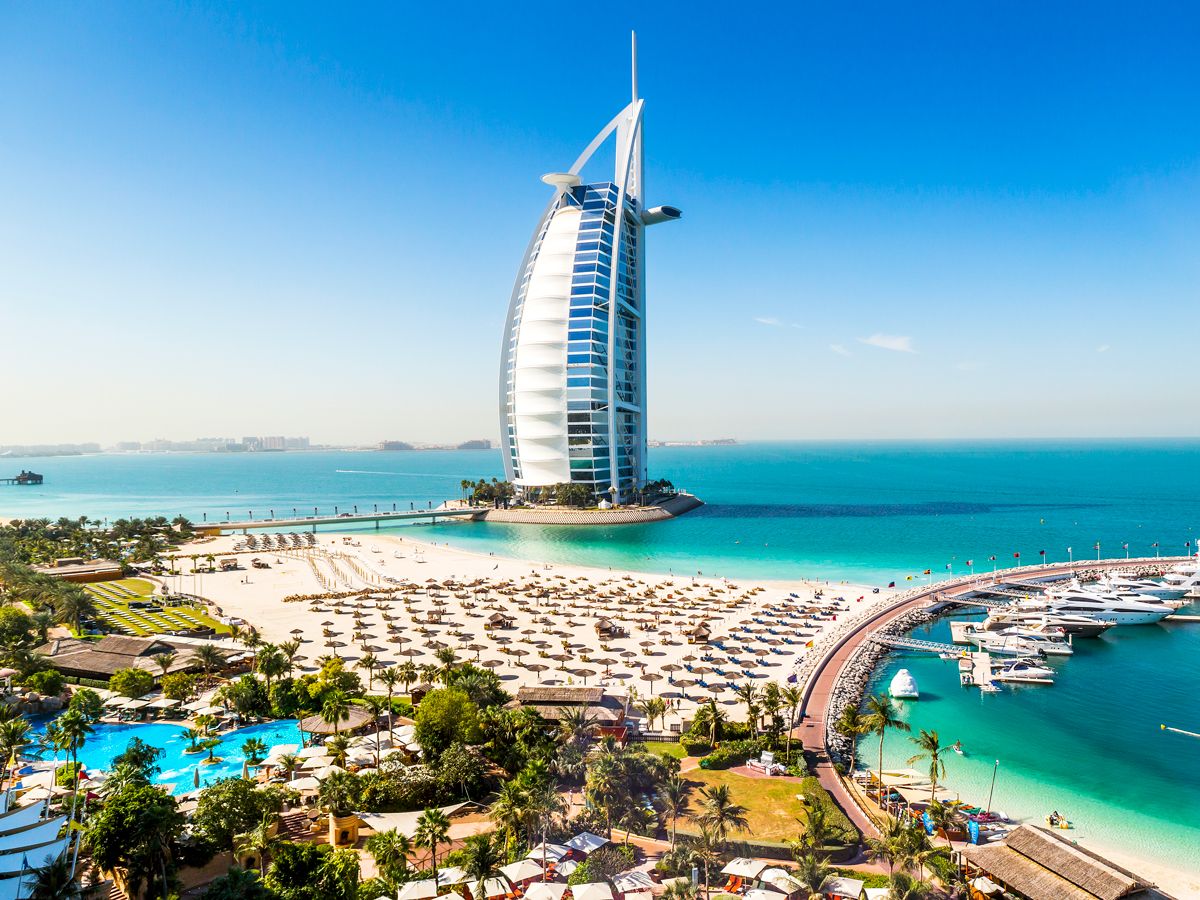
One of the world’s tallest hotels, the 1,053-foot Burj al Arab was designed to emulate a massive billowing sail and sits alone on an island just off the coast of Dubai. And as with most things in Dubai, “understated” isn’t part of the vocabulary here — guests select their pillows from a menu of 17 options, 30 different types of Italian Statuario marble embellish the interior (along with over 19,000 square feet of 24-karat gold leaf), and 16 staff florists create arrangements tailored to the tastes of each individual guest.
Designed by Tom Wright, the hotel opened in 1999 after five years of construction, including two years just to build the island it sits on. Guests arrive either in a Rolls Royce via the private 1,100-foot bridge or by helicopter. (As long as there are no special events, that is — the cantilevered helipad has hosted soirees with tennis pros, star DJs, race car drivers, and Hollywood stars.) Inside, the towering atrium and exuberant decor are Arabic opulence at its finest. Each of the 202 two-story suites starts at around $1,500 per night — for people who want to visit without staying, a tour of the property will set you back about $100.
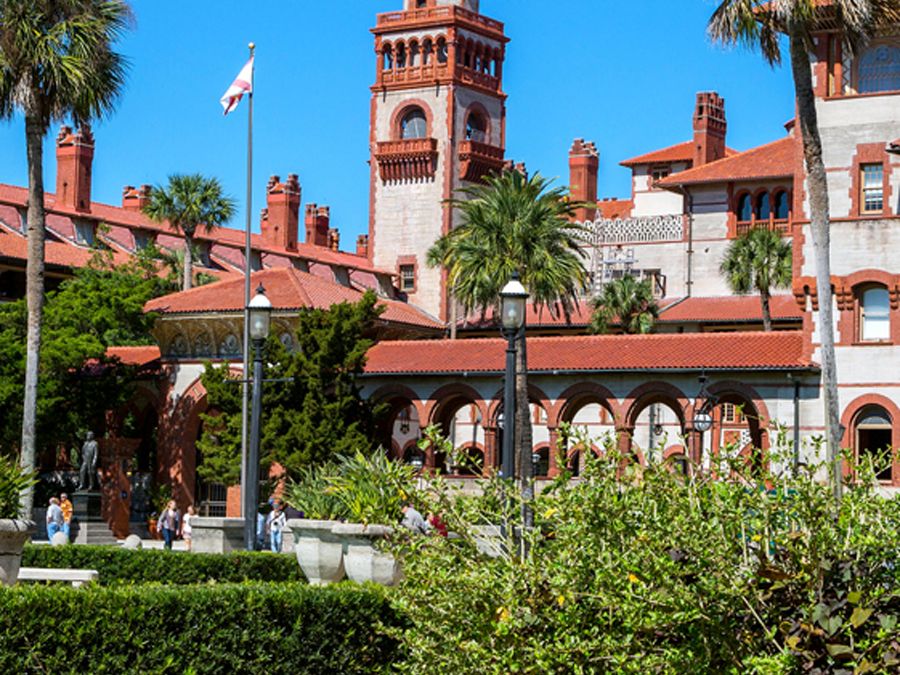
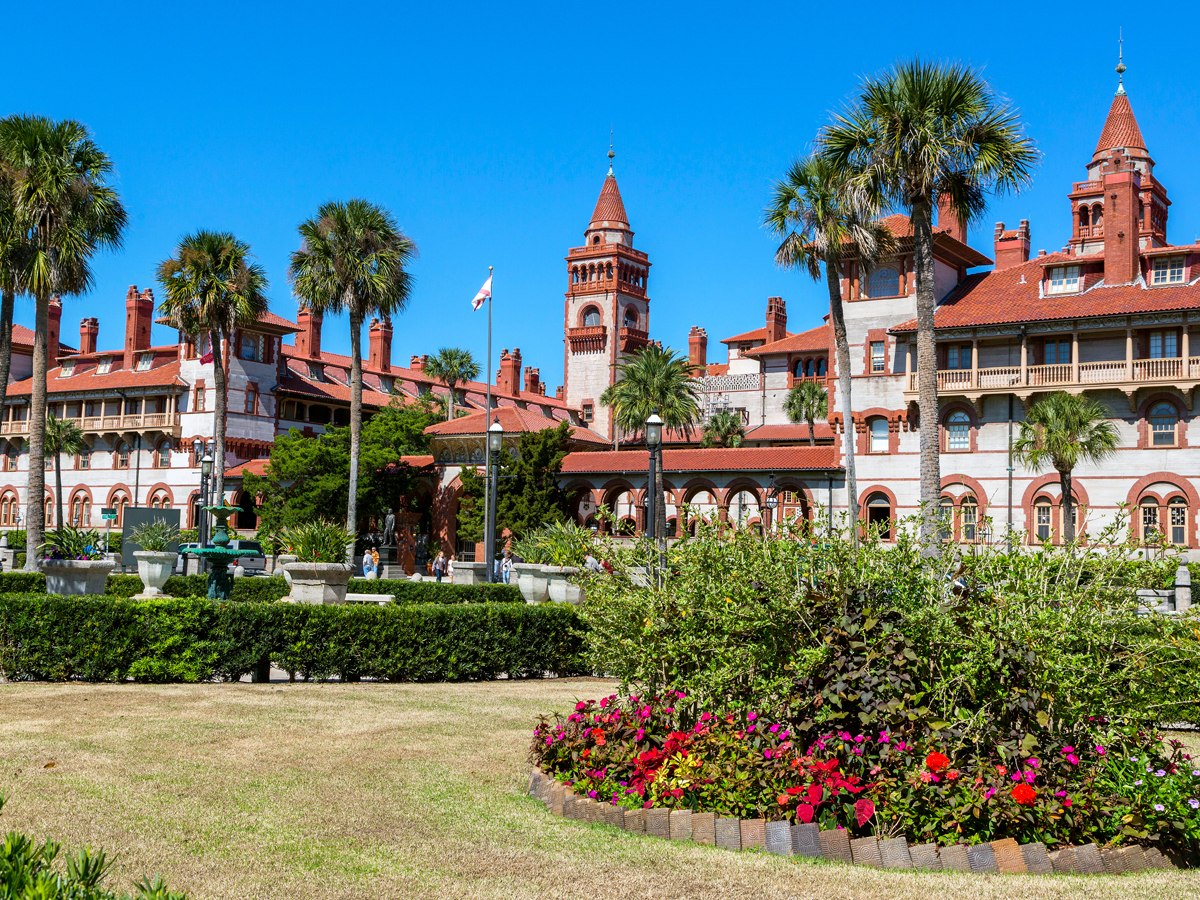
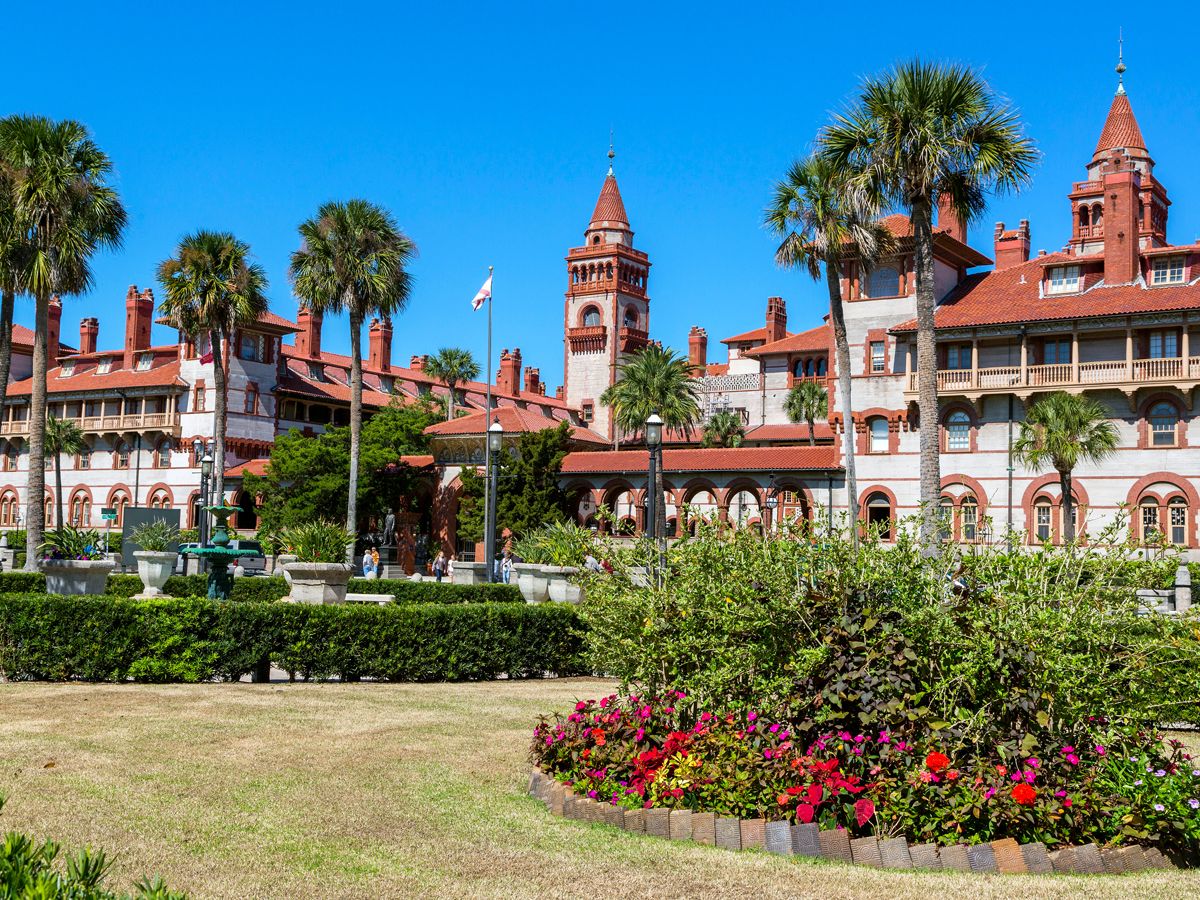
Before they drew blueprints for the New York Public Library, John Carrére and Thomas Hastings were the masterminds behind Hotel Ponce de León, a resplendent 540-room luxury hotel built at the height of the Gilded Age.
Located on 7.5 acres of Florida’s northeast coast, in 456-year-old St. Augustine, the hotel was funded by railroad and oil tycoon Henry M. Flagler. The Spanish-Renaissance style building features Austrian crystal chandeliers, a dazzling painted rotunda, a unique courtyard fountain that acts as a sundial, and one of the world’s biggest private collections of Tiffany stained glass. And thanks to 4,000 lights wired by Thomas Edison himself, the hotel has boasted electricity since opening in 1888 — a rarity at the time.
For eight decades, the hotel welcomed dozens of famous guests, including Mark Twain, Zora Neale Hurston, Ernest Hemingway, Babe Ruth, President Theodore Roosevelt, and teenage John F. Kennedy, who visited with his family. In 1968, the building was renamed Ponce de León Hall when it became part of Flagler College. Now a National Historic Landmark, the hall is open for daily tours.
Greenbrier Resort – West Virginia
Credit: EyeMark/ iStock Editorial via Getty Images Plus
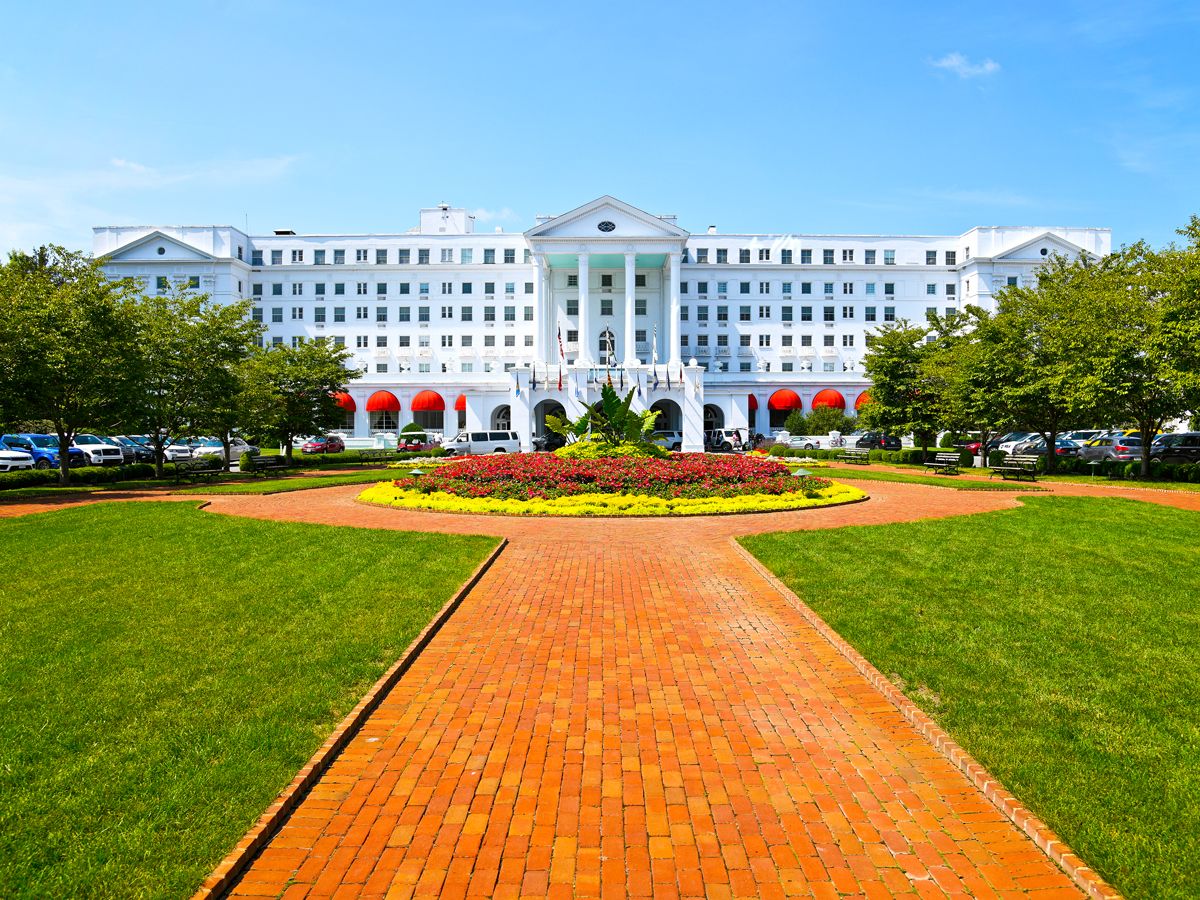
A six-story National Historic Landmark rising from the Allegheny Mountains, the resplendent Greenbrier Resort has also had quite an impressive guest list — from Joseph and Rose Kennedy on their 1914 honeymoon to Princess Grace and Prince Rainier III on a 1963 vacation, not to mention 28 U.S. Presidents. The Greenbrier is located in White Sulphur Springs, a city named for waters that have been touted for their healing properties since a visiting woman’s rheumatism was allegedly cured in 1778. A hotel was built on the property 80 years later, and its present successor — an extravagance of classical Georgian architecture — has been welcoming guests since, save for a short period when it served as a World War II hospital.
Comprising 710 rooms and cottages, the Greenbrier extends across 11,000 manicured acres. Activities and amenities abound, from carriage rides to golf courses, 20 restaurants and lounges, a mineral spa, whitewater rafting, an aerial adventure course, a movie theater, and even workshops devoted to fairy and gnome garden landscapes. Much of the distinctive interior palette was chosen in the late 1940s by decorating doyenne Dorothy Draper, who believed “color is magic” and loved juxtapositions.
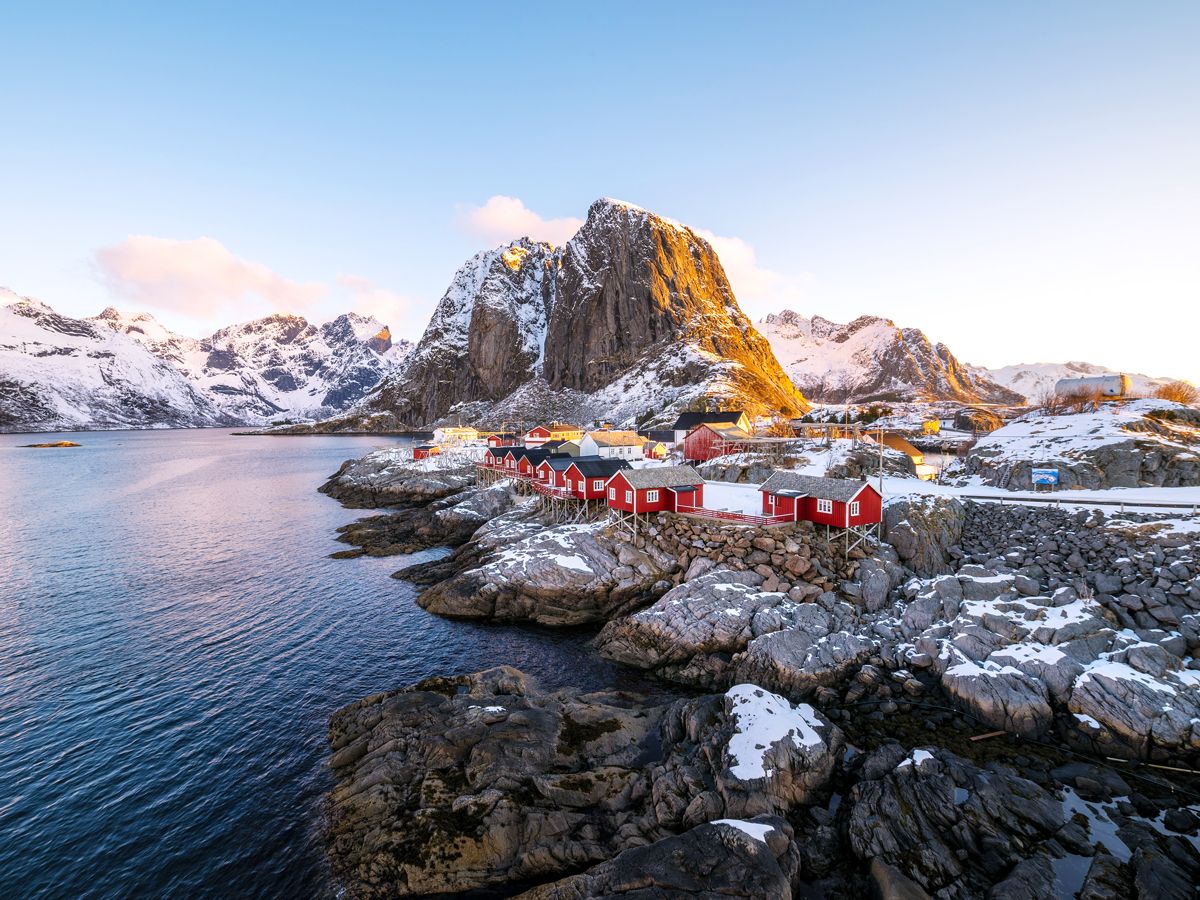
What makes a luxury retreat? For some travelers, it’s the luxury of being surrounded by nothing but nature, and the Arctic Hideaway — a resort made up of 12 wood buildings on a serene, almost entirely uninhabited island above the Arctic Circle in northern Norway — might be the ultimate calling.
Opened in 2014, the Arctic Hideaway started as the brainchild of a Norwegian jazz musician as a place to reflect and create. The approach to the island, via a 75-minute ferry ride from the town of Bodø on the mainland, reveals a series of small, angular buildings on steel stilts, arranged on a hillside above the dock. Four of the buildings are called “sleeping houses,” and though they have beds for sleeping, they lack curtains. Instead, guests are issued a sleep mask upon arrival — and the views of the ocean (and sometimes the northern lights) from the private houses may convince them that curtains would be a bad idea anyway.
The remaining buildings serve various purposes — a kitchen stocked with local delicacies, a sauna, a shared studio space — and when you’re ready to leave the property, trails around the tiny car-free island provide endless entertainment (as do sprawling sunsets, fleeting visits from sea birds, and long stretches of blissful silence).
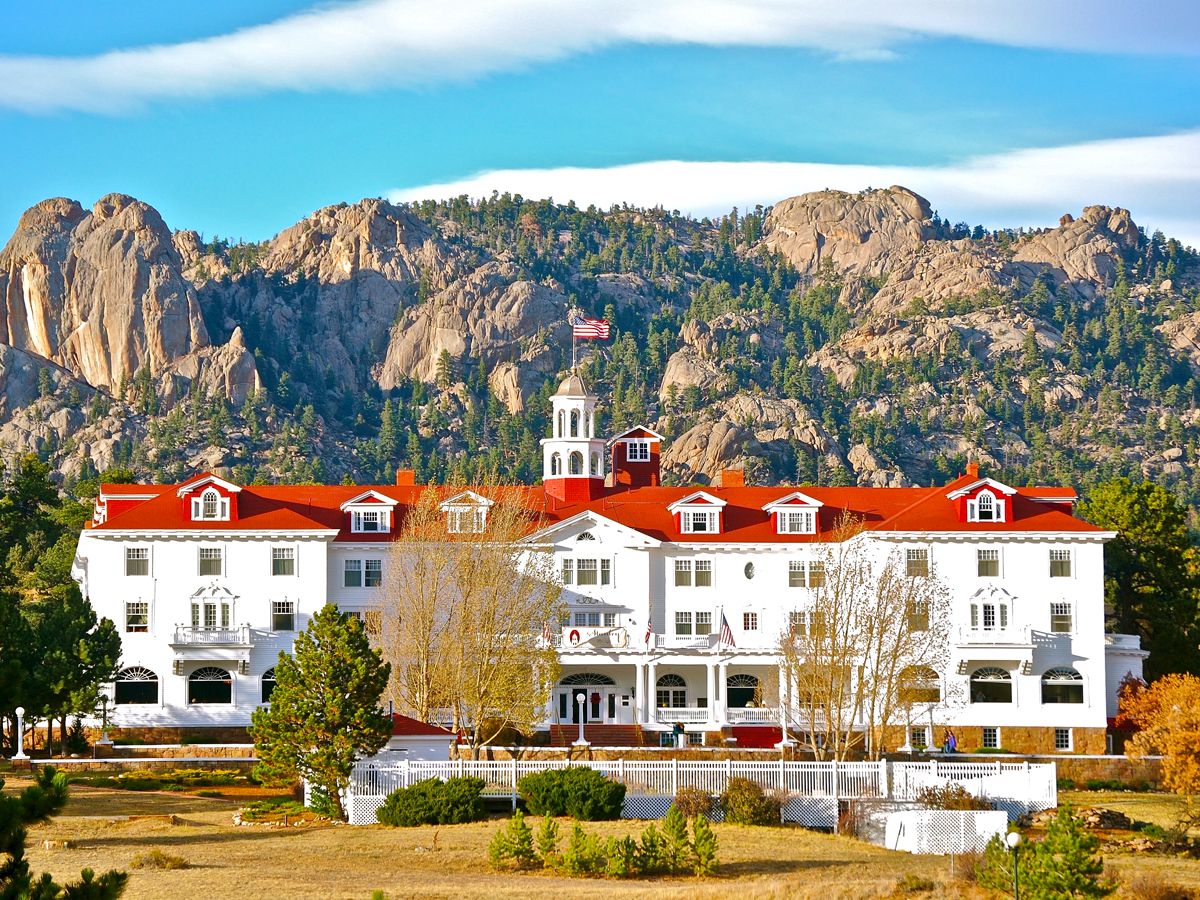
Even if you haven’t heard of the Stanley by name, there’s a good chance you’re familiar with its legacy — at least, if you’re a fan of psychological horror flicks. This historic hotel in Estes Park, Colorado, inspired the Overlook Hotel in Stephen King’s The Shining. Those who get the chance to stay here will find the experience quietly thrilling, particularly if you’re lucky enough to book one of the Spirited Rooms — those said to be haunted by such esteemed ghosts as Lord Dunraven, who owned the land on which the hotel was built. The most famous (and most requested) of these is Room 217, which King himself stayed in when he and his wife were the only guests at the hotel.
You don’t have to believe in ghosts to believe in beauty, however, and the Stanley is nothing if not beautiful. Opened in 1909, the landmark Colonial Revival building is set against the backdrop of the Rocky Mountains and Lake Estes. But if you’re here, you might as well embrace the hotel’s paranormal past and join one of the nighttime tours highlighting the Stanley’s many haunted tales — you may just want to sleep with one eye open.
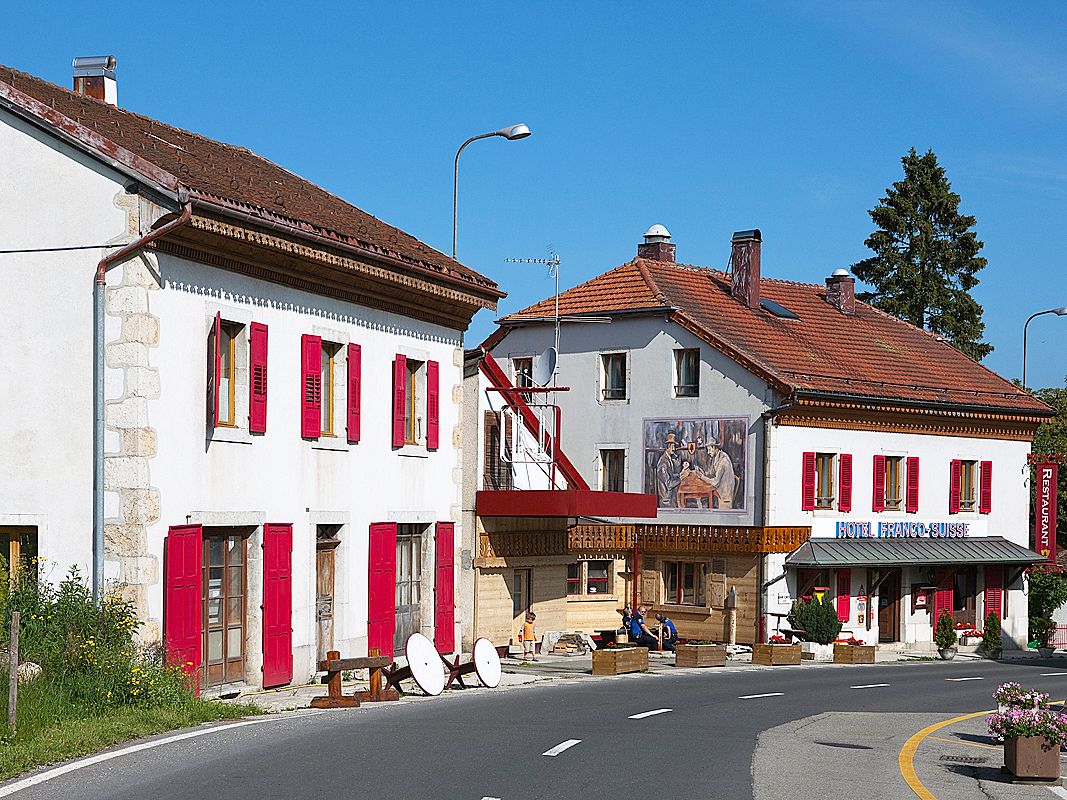
In 1862, to take advantage of a Napoleonic treaty that shifted the border of France and Switzerland to run directly through his property, a clever (and shifty) businessman built the edifice that would become Hotel Arbez directly on top of the borderline. On the French side of the building, he operated a bar, and on the Swiss side, a shop — an arrangement that enabled him to move smuggled goods between the countries without easy detection. During World War II, however, this handy border crossing allowed his descendants — who had converted the building to a hotel — to covertly move Jews and members of the Resistance from Nazi-occupied France to safety in Switzerland.
The hotel, about an hour north of Geneva, still serves visitors to this beautiful Haut Jura region, many of whom come to ski and hike the Jura Mountains. The hotel’s charm comes not just from its unusual location — in some rooms, guests sleep with their heads in France and their feet in Switzerland — but also from its wood-paneled decor and sturdy beamed ceilings, hand-carved furniture, and its brasserie serving rustic alpine cuisine and Jura wines.
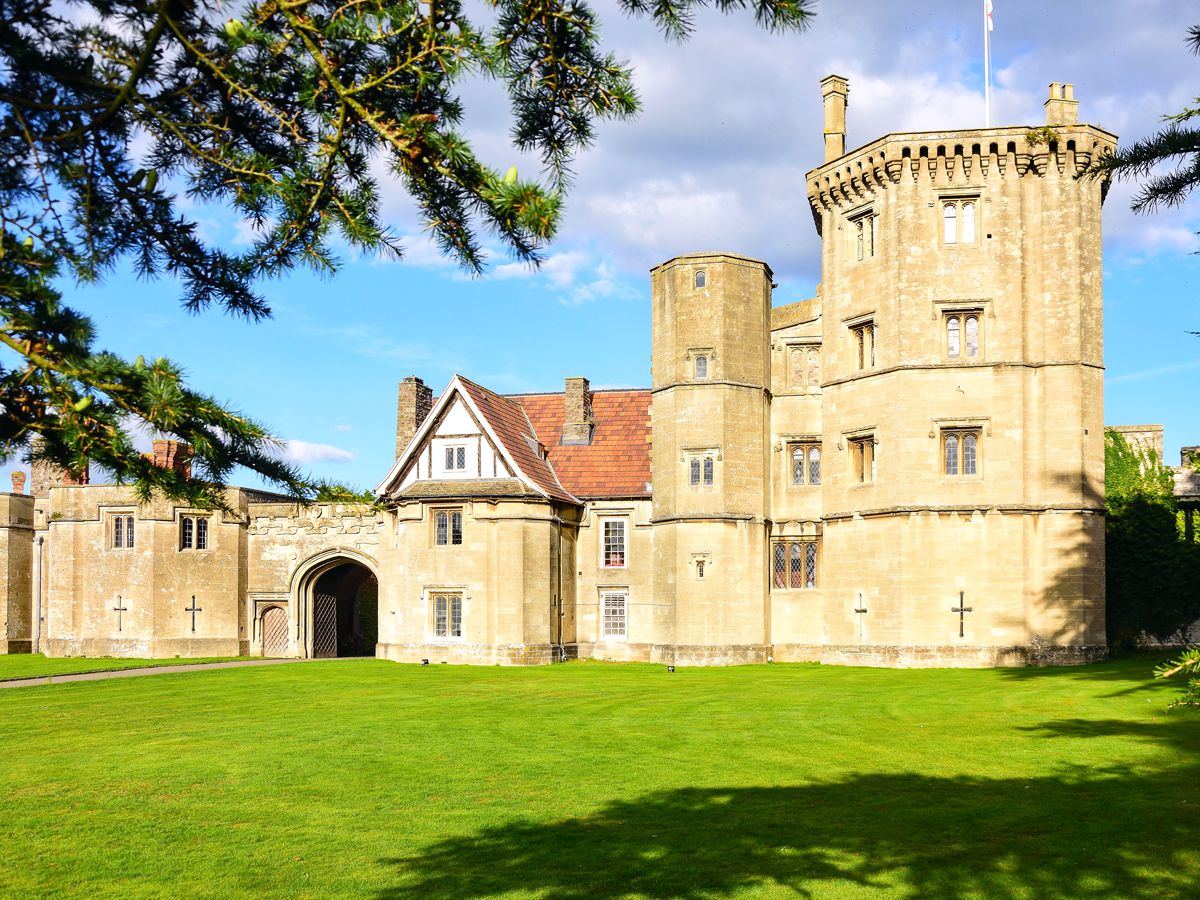
A fair number of England’s spectacular castles and manors were built or greatly transformed during the reign of the House of Tudor (1485-1603), but only one Tudor castle currently functions as a luxury hotel — giving guests the rare (and to some, unsettling) opportunity to rent the same suite King Henry VIII and Anne Boleyn stayed in during their honeymoon in 1535. Before Thornbury Castle belonged to the crown, Edward Stafford, the third Duke of Buckingham, built this fortress near Bristol in 1511. But after Stafford was executed for treason a decade later, the castle became Tudor property for 33 years, before it was returned to the Stafford family and later fell into ruins.
Renovations began in the 1850s, and Thornbury started welcoming overnight guests for the first time about a century later. Now fresh off a multimillion-dollar renovation, Thornbury Castle contains four beautifully restored dining rooms where the likes of Laurence Olivier and Sophia Loren have enjoyed sumptuous meals. Each of the 27 distinctly decorated guest rooms is named for a historical figure. (Request the Catherine of Aragon Tower Suite to sleep in the largest four-poster bed in any British hotel.) And outside the castle are 15 pristine acres fit for nobility, where guests can partake in croquet, falconry demonstrations, and archery lessons to work up an appetite for afternoon tea.
Advertisement
More from our network
Daily Passport is part of Inbox Studio, an email-first media company. *Indicates a third-party property.
Pan Am Will Fly Again in 2025, But There’s a Catch
By
Peter Vanden Bos
Read time: 4 minutes
September 3, 2024
Updated: December 20, 2024
Pan Am Will Fly Again in 2025, But There’s a Catch
Tips •September 3, 2024•Updated: December 20, 2024
By Peter Vanden Bos
Author
Peter Vanden Bos
Peter is a Toronto-based journalist, editor, content strategist, and self-professed avgeek with 15 years of experience covering all things travel. Prior to joining Daily Passport, he oversaw newsletter publication for Travelzoo. His favorite destinations to explore include Japan, France, Chile, New Zealand, and his adopted home country of Canada.
For much of the 20th century, Pan American World Airways — better known as Pan Am — was synonymous with intercontinental travel. As the unofficial flag carrier of the United States, Pan Am jumbo jets could be seen at airports across the world, and to many, the airline represented a more glamorous age of aviation. The trailblazing carrier ceased operations in 1991, but if you thought the Pan Am brand was long gone, think again: The airline recently announced its return to the skies in 2025 with a special 12-day trip around the world. Here are all the details.
An Iconic Brand
Credit: PA Images via Getty Images
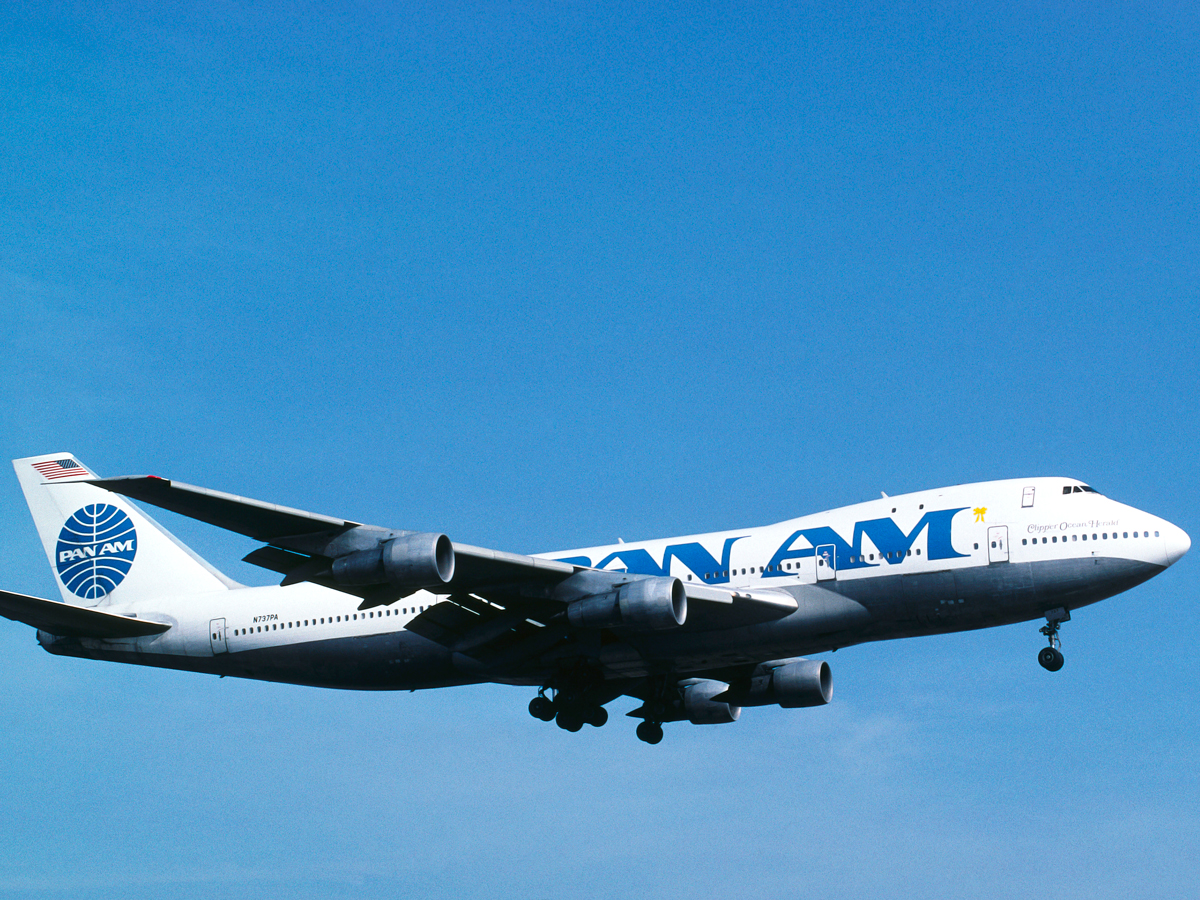
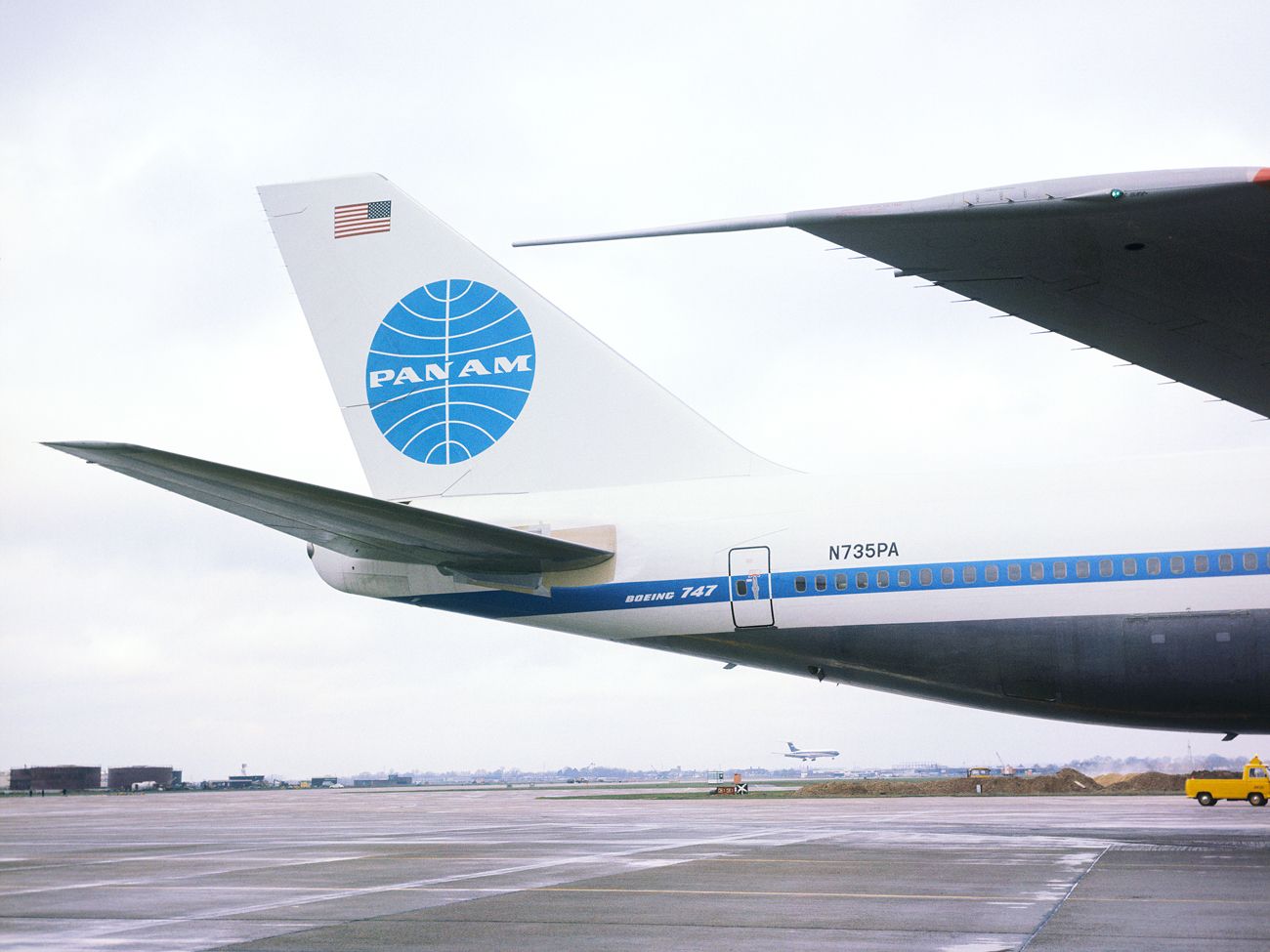
Pan American Airways was founded in 1927 and, like many of the world’s oldest airlines, traces its roots back to carrying airmail. Passenger service started a year later, and in the 1930s, Pan Am started flying long-range flying boats — the “Clippers” the airline became famous for — and introduced around-the-world flights. In 1958, Pan Am was the first airline to fly the Boeing 707, one of the world’s first passenger jets, which it used to further expand its international footprint as America’s unofficial flag carrier airline.
The following decade, Pan Am was also the first to introduce the iconic Boeing 747 jumbo jet. In the airline’s heyday of the 1950s and ’60s, it offered flights to 86 destinations on every continent except Antarctica. It was during this era that Pan Am became a cultural icon, representative of the glamour of a new age of intercontinental air travel.
But in 1978, the U.S. deregulated its aviation industry, meaning the government no longer set routes, schedules, and prices. As a result, Pan Am faced new competitive pressures and saw a sharp decline in its finances throughout the 1980s, before ultimately declaring bankruptcy in 1991. Though the airline’s trademark logo is no longer a fixture of global aviation, the Pan Am brand has endured as a remarkable symbol of a bygone era.
An Exclusive Journey
Credit: aviation-images.com/ Universal Images Group via Getty Images
In 2025, the Pan Am brand will once again take to the skies thanks to a partnership with Criterion Travel and Bartelings Associates. But there’s a catch — the airline won’t be offering regular scheduled passenger flights as it once did. Rather, this will be a special 12-day chartered journey retracing Pan Am’s original transatlantic routes. And it won’t come cheap: Prices for this once-in-a-lifetime trip start at a cool $59,950 per person, and the experience will be limited to just 50 passengers.
It all starts on June 27, 2025, in New York City, which was once Pan Am’s headquarters and biggest hub. From there, the 50 lucky passengers will spend nearly two weeks flying across the Atlantic and around Europe, as Pan Am’s earliest customers did almost a century ago on its flying boats. This time, though, passengers will fly on a Boeing 757 outfitted with modern amenities and spacious seats that convert into fully flat beds. The itinerary includes stops in Bermuda; Lisbon, Portugal; Marseille, France; London, England; and Foynes, Ireland.
As you’d expect for the price hefty tag, the experience will be top-notch and will be hosted by Craig Carter, the CEO of Pan American World Airways (the company which has licensed the former airline’s brand and logo). The package includes an open bar on all flights, luxury stays and gourmet meals in hotels like the Savoy in London, and special experiences such as a visit to a Pan Am Clipper replica in Ireland. The trip concludes on July 8, 2025, back in New York. If you miss this inaugural trip (or, understandably, need more time to save up), Carter says this will be “the first of many exclusive themed flights back into the luxury travel space.”
Other Ways To Experience the “Golden Age” of Aviation
It definitely doesn’t hurt to dream, but given the price, the reality is that most of us won’t be experiencing Pan Am’s splashy return to the skies next year. However, if you find yourself nostalgic for the so-called “golden age” of aviation, the airline also plans to bring back its popular Pan Am Experience. Though details are yet to be announced, the event will be hosted on a re-created Pan Am passenger jet in Los Angeles, where guests will be able to enjoy dinner and drinks aboard and step back into the 1960s for an evening.
During Pan Am’s peak, one of its biggest rivals was TWA (Trans World Airlines). Though that airline is also now defunct, its iconic former terminal at New York’s John F. Kennedy Airport has been turned into a luxury hotel that preserves much of its original design and features a vintage jet age-inspired theme throughout. Guests can delve into aviation history at the iconic Sunken Lounge, overlooking a giant retro departures board, or spend a memorable evening on the Lockheed Constellation parked outside that’s been turned into a cocktail bar.
Advertisement
More from our network
Daily Passport is part of Inbox Studio, an email-first media company. *Indicates a third-party property.