
Post Banner Image
Geography

Why Animals Don’t Cross This Invisible Border

By Bennett Kleinman
Read time: 5 minutes
November 20, 2024
Updated: November 21, 2024

Why Animals Don’t Cross This Invisible Border

By Bennett Kleinman
Author
Bennett Kleinman
Bennett is a New York City-based staff writer for Daily Passport. He previously contributed to television programs such as the Late Show With David Letterman, as well as digital publications like the Onion. Bennett has traveled to 48 U.S. states and all 30 Major League Baseball stadiums.

The geopolitical boundary between Asia and Oceania lies between Indonesia and the island of New Guinea. But international borders aside, there’s also an invisible line that cuts through the region that defines the zoological differences between the two continents. It’s called the Wallace Line, named for British naturalist Alfred Russel Wallace, who came to the Malay Archipelago in the mid-19th century to conduct biological research. Wallace’s findings proved something previously unknown about animal evolution and how the species differed on either side of this imaginary faunal boundary. Discover the fascinating history of the Wallace Line.

What Is the Wallace Line?

Dense rainforest in Tangkoko National Park, Indonesia
Credit: Vincent Pommeyrol/ Moment via Getty Images 

Wallace traveled to the Malay Archipelago in 1854 to collect biological specimens, and the naturalist spent the next eight years exploring the region — which is home to some 25,000 islands, including the nations of Indonesia, Malaysia, and Papua New Guinea. Wallace visited many of the archipelago’s islands during this time, and he noticed something unusual about how the types of animals differed. On many of the westernmost islands, the fauna was more akin to animals native to Asia. Toward the east, the species were more similar to those found in Australia.

As a result of his findings, Wallace proposed a concept in 1859 known as the Wallace Line. This invisible faunal boundary cuts through modern-day Indonesia, intersecting the islands of Bali to the north and Lombok to the south. It originates in the Indian Ocean and extends north toward the Pacific, separating nations including Brunei and the Philippines in the west from places such as Australia and Papua New Guinea to the east.

While Wallace was a contemporary of Charles Darwin, he independently developed his own theory of evolution. Wallace deduced that animals located to the west of this imaginary line — such as Sumatran tigers and rhinoceroses — had likely evolved from animals native to the Asian mainland. Creatures to the east, however, probably evolved from those found in Australia, such as the marsupials native to the island of Sulawesi.

A History of Shifting Terrain

Panorama Marine Reserve in New Guinea, seen from above
Credit: Strelyuk/ Shutterstock 

These distinct evolutionary patterns weren’t a recent phenomenon, but rather one stemming from millennia of rising sea levels and shifting terrain. Millions of years ago, most of the western islands of the Malay Archipelago were united as a large mass called the Sunda Shelf, which was connected to mainland Asia. In the east, there was the similarly large Sahul Shelf, containing land that would later form all the various parts of Oceania. 

Over the years, rising sea levels plunged parts of the shelves underwater, creating a system of islands where the larger landmasses used to be. Suddenly, various portions of the Sunda Shelf were no longer connected to mainland Asia. Animal species that originated in Asia were now effectively trapped on these smaller landmasses. 

In time, those species evolved in their own unique way, while maintaining similar characteristics to other species native to the Asian mainland. A similar phenomenon happened with the Sahul Shelf, which broke up into various parts also due to rising sea levels. The newer landmasses include Australia, the island of New Guinea, and other smaller islands. The Wallace Line cuts right through where the Sunda and Sahul shelves used to be.

Similar Boundaries Around the World

View from lookout of Rinjani volcano crater in Indonesia
Credit: Skazzjy/ iStock via Getty Images Plus 

Several of Wallace’s contemporaries noted certain flaws with his proposed boundary, and some researchers made slight modifications. For instance, biologist T.H. Huxley believed the true line should cut west of the Philippines, instead of east, as Wallace initially proposed. 

Zoologist Max Wilhelm Carl Weber, meanwhile, suggested that Wallace had placed the line too far west. He proposed a new line farther east, known as the Weber Line. This invisible line extends east around the islands of Lombok, Timor, and Sulawesi. 

Naturalist Richard Lydekker proposed the easternmost line of the bunch. Whichever theory is most accurate remains a fascinating biological argument. However, the entire region is now referred to as Wallacea, where the Wallace Line forms its western boundary, and the Lydekker line forms its eastern boundary.

Places To Visit Around the Wallace Line

River flowing through jungle on island of Sumatra, Indonesia
Credit: Alexpunker/ iStock via Getty Images Plus 

If you’re an animal lover, traveling throughout the Malay Archipelago — just as Wallace did all those decades ago — is an unforgettable experience. There are thousands of fascinating creatures to see on both sides of the invisible line. 

To the west, start with a trip to Borneo to visit the Danum Valley Conservation Area. This 130 million-year-old rainforest is home to many of the orangutans that the island is known for. It’s also worth heading farther west to Sumatra and stopping in Gunung Leuser National Park, one of the largest protected sites in Indonesia. This idyllic mountain expanse is home to many Sumatran tigers, rhinos, and other creatures whose biological ancestors originated in mainland Asia.

To the east of the Wallace Line, consider a stop at Tangkoko Nature Reserve on the island of Sulawesi. Here, you’ll find the rare Sulawesi bear cuscus, a marsupial of Australian descent. Sulawesi is also home to the tarsier, which is the smallest primate on Earth — it’s the size of a human fist. While you’re in the area, take a quick flight over to the nation of Timor-Leste, which offers some of the best whale-watching opportunities in the region. You’ll have the chance to spot blue whales, orcas, and sperm whales, all of which inhabit the surrounding waters.

Post Banner Image
Tips

This Iconic Fountain Now Charges a Fee To Visit

By Peter Vanden Bos
Read time: 4 minutes
November 19, 2024
Updated: February 9, 2026

This Iconic Fountain Now Charges a Fee To Visit

By Peter Vanden Bos
Author
Peter Vanden Bos
Peter is a Toronto-based journalist, editor, content strategist, and self-professed avgeek with 15 years of experience covering all things travel. Prior to joining Daily Passport, he oversaw newsletter publication for Travelzoo. His favorite destinations to explore include Japan, France, Chile, New Zealand, and his adopted home country of Canada.

In 2025, Rome had a record year for tourism, welcoming over 50 million visitors. It’s easy to see why the Eternal City shows no signs of slowing down. Visitors remain as eager as ever to explore its centuries-old attractions steeped in history, and the Colosseum, the Pantheon, and the Roman Forum top many tourists’ bucket lists. But to help manage the crowds and combat overtourism, city officials announced a new fee to visit one of Rome’s most iconic attractions, the Trevi Fountain. Here are all the details.

History of the Trevi Fountain

Full view of the Trevi Fountain in Rome, Italy
Credit: nantonov/ iStock via Getty Images Plus 

The Trevi is one of the world’s most famous fountains. Built in 1762, the baroque masterpiece was designed by Nicolo Salvi; after the architect’s death in 1751, Giuseppe Pannini oversaw the project’s completion. Standing 85 feet tall and 160 feet wide, the fountain — made out of Carrara marble — features a commanding statue of the god Oceanus riding a chariot pulled by seahorses and flanked by tritons. Even more remarkable is the fountain’s source: Its water is still supplied by the ancient Acqua Vergine aqueduct, a 12-mile-long structure built during the Roman Empire more than 2,000 years ago.

Close-up view of coins at the bottom of Rome's Trevi Fountain
Credit: Claude Durand/ Alamy Stock Photo

It’s not just the stunning architecture and impressive history that make the Trevi a Rome must-see. The fountain exploded in popularity after the 1954 film Three Coins in a Fountain, in which two of the lead characters throw coins into the waters of the Trevi. According to legend, doing so ensures the visitor will one day return to the Eternal City. The tradition has evolved somewhat over time — today visitors make any wish they’d like — but it’s more lucrative than ever. Local officials estimate that, each year, over a million euros’ worth of coins are tossed into the fountain, with the proceeds donated to a Catholic charity.


Major Renovations

Tourists surrounding scaffolding over the Trevi Fountain as renovations are underway
Credit: ANDREAS SOLARO/ AFP via Getty Images 

In 2024, in preparation for the Vatican‘s 2025 jubilee year, the Trevi Fountain was closed to receive a much-needed cleaning. According to the website Artnet, it was the fountain’s major renovation in over a decade, and the restoration was necessary to remove calcium buildup. The project took three months and cost an estimated $340,000. During the renovation work, those looking to partake in the famous coin-tossing tradition were able to do so in a small makeshift replacement pool that was installed in front of the fountain to prevent workers from being hit with coins during the repair work.
Details of the Trevi Fountain’s New Entry Fee

Tourists surrounding the Trevi Fountain in Rome
Credit: Vladislav Zolotov/ iStock via Getty Images Plus 

Now that the fountain has reopened, city officials have implemented a new ticketing system to get up close and personal with the landmark as of February 1, 2026.

Entrance tickets cost 2 euros (about $2.40) and can be booked online in advance at the fountain’s official website. Visitors can also book tickets at the city’s Civic Museums, tourist information centers, and select authorized retailers by cash or card, or pay in person at the fountain entrance (by card only). Rome residents are exempt from paying the fee, as are children under six years old and persons with people with disabilities (along with one accompanying person).

You’ll still be able to view the fountain from afar for free, but a ticket is required to enter the inner perimeter of the monument during opening hours. (It’s free to visit after hours.) The city says that the fee is necessary to manage overcrowding and to pay for the fountain’s upkeep; it is estimated to raise about 6.5 million euros ($7.6 million) per year. Admission will be capped to 400 visitors at a time.

Rome is far from the only city facing growing concerns about “overtourism.” Venice, its Italian neighbor to the north, recently introduced a daily tourist tax in an attempt to curb excess tourism, while Amsterdam — another booming European destination — announced a plan to curtail new hotel construction in the city. Rome has also introduced entrance fees at other popular landmarks, such as a 5-euro fee to visit the Pantheon.

Post Banner Image
Outdoors

5 Must-Visit Hot Springs Around the World

By Fiona Mokry
Read time: 4 minutes
November 19, 2024
Updated: November 19, 2024

5 Must-Visit Hot Springs Around the World

By Fiona Mokry
Author
Fiona Mokry
Fiona has spent her career exploring the world and working in the travel industry, turning her lifelong passion into a profession. From planning custom trips to sharing stories as a travel writer for publications such as The Discoverer, she’s all about helping others experience the world in a deeper, more meaningful way.

The world’s most stunning hot springs offer more than just unique landscapes; many of them are deeply intertwined with cultural traditions and rich histories. From the iconic terraced pools of Pamukkale in Turkey to the serene springs of Termas Geométricas in Chile, these natural thermal baths provide an ideal setting for relaxation and rejuvenation. Discover the rich minerals, lush surroundings, and cultural heritage of each of these five stunning hot springs around the world. 

Pamukkale Thermal Pools – Turkey

White travertine pools at Pamukkale, Turkey
Credit: Nick Brundle Photography/ Moment via Getty Images 

Pamukkale means “cotton palace,” and legend has it that these pools were formed from hardened cotton that was left over by giants. Whether you believe the local lore or not, the name is fitting for these stunning white travertine pools that cascade down a 650-foot-high cliff in western Turkey. According to scientists, the Pamukkale pools were formed by a mineral-rich spring that overflowed in the second century, cooling and solidifying over time into the remarkable formations you see today. 

With over a dozen terraced pools perfect for paddling, wading, and swimming, Pamukkale invites visitors to soak in its azure waters at a soothing 95 to 100 degrees Fahrenheit, all while enjoying views of the distant city of Denizli. This UNESCO World Heritage Site is also steeped in history — having once hosted Cleopatra, it served as the hot springs for the ancient city of Hierapolis, the ruins of which lie just behind the pools.

Termas Geométricas – Chile

Bridge leading to waterfall at Chile's Termas Geométricas
Credit: marktucan/ iStock via Getty Images Plus 

Located deep in central Chile’s Villarrica National Park, the 18 beautifully designed, human-made stone pools of Termas Geométricas are fed from 60 natural springs. Each pool gets progressively warmer as visitors work their way around the complex and cross the red bridges connecting each of the pools. The striking setting — pools that appear to be carved into the mountainside and shrouded in lush rainforest — makes Termas Geométricas one of Chile’s most popular springs.

In addition to the serene atmosphere, the springs are renowned for their mineral-rich composition, making them ideal for wellness. For those looking to invigorate their experience after a warm soak, follow the bridges to the end of the trail, where a stunning natural waterfall cascades into a refreshing and freezing cold plunge pool.

Kraus Hot Springs – Canada

Kraus Hot Springs in Canada
Credit: vadimgouida/ iStock via Getty Images Plus 

Reaching Kraus Hot Springs requires a bit of effort, but many deem the payoff well worth it. Located 310 miles west of Yellowknife in the Northwest Territories’ Nahanni National Park Reserve — one of the original 12 UNESCO World Heritage Sites — these springs are no doubt challenging to access, which results in a notable lack of crowds compared with others on this list. 

Embark on a multiday rafting journey down the South Nahanni River to reach the springs, which are nestled along the riverbank near Clausen Creek. Here, minerally rich, naturally-heated spring water bubbles up from the sandy bottom, forming a 9-foot-wide pool where paddlers can soak their aching muscles while enjoying uninterrupted views of the pristine wilderness. Often referred to as “Secret Paradise,” this protected land is among Canada’s most cherished and well-preserved natural treasures.

Banjar Hot Springs – Indonesia

Banjar Hot Springs in Indonesia
Credit: REDA/ Universal Images Group via Getty Images  

The island of Bali is awash in Buddhist spirituality, and Banjar Hot Springs in Singaraja are no exception. Sharing the grounds of the Brahmavihara Arama monastery, Banjar Hot Springs are among the most popular springs in Bali. Both the thermal waters — thought to have healing properties — and the site’s cultural significance attract locals and tourists who come to bathe in one of its three-tiered public hot spring pools. 

The picturesque pools feature traditional Balinese architecture, with eight stone dragon sculptures shooting water from their mouths. Many visitors bathe under these water streams and then move toward the larger pool for continued soaking. The spring is shrouded in lush jungle, with several human-made waterfalls contributing to the tranquil setting. 

Ojo Caliente Mineral Springs – New Mexico

Ojo Caliente Mineral Springs in New Mexico
Credit: Charles Mann/ Alamy Stock Photo

Opened in 1868, these New Mexico hot springs have attracted visitors for decades with their naturally sulfur-free, mineral-rich waters, which flow into stunning stone pools blending with the desert landscape. 

The nine public pools at Ojo Caliente Mineral Springs range from 80 to 105 degrees Fahrenheit, and are infused with beneficial minerals such as iron, soda, and lithia. A highlight is the Mud Pool, where guests can enjoy a purifying clay treatment, while the on-site sauna and steam room round out the southwest desert spa experience. 

Post Banner Image
Tips

Why TSA Liquid Rules Aren’t Changing Anytime Soon

By Bennett Kleinman
Read time: 4 minutes
November 19, 2024
Updated: November 19, 2024

Why TSA Liquid Rules Aren’t Changing Anytime Soon

By Bennett Kleinman
Author
Bennett Kleinman
Bennett is a New York City-based staff writer for Daily Passport. He previously contributed to television programs such as the Late Show With David Letterman, as well as digital publications like the Onion. Bennett has traveled to 48 U.S. states and all 30 Major League Baseball stadiums.

In 2006, the TSA imposed a strict 3.4-ounce limit on any liquids, gels, and aerosols brought through airport security in a carry-on bag. The liquids must be contained inside one quart-sized bag, and only one bag is allowed per passenger, earning this regulation the nickname of “the 3-1-1 rule.” In recent years, there have been rumors of a change to this rule, which would allow passengers to carry on larger bottles of toothpaste, moisturizer, and other personal items. But despite technological advances in the screening process, these rumors aren’t likely to come to fruition anytime soon. Here’s why you shouldn’t anticipate the TSA changing its liquid rules in the near future.

What Is Computed Tomography?

Computer screen showing scans of passenger bags at TSA airport security
Credit: EvgeniyShkolenko/ iStock via Getty Images Plus 

A major reason why airports currently impose a strict liquid limit is due to scanners in most major airports that are only capable of producing 2D images of a bag’s contents. This 2D rendering makes it impossible to accurately determine if a liquid could potentially be used as an explosive. However, a new technology known as computed tomography (similar to the technology found in hospitals) is slowly making its way to airports around the world. 

These highly advanced CT scanners produce 3D images that can be viewed and analyzed in greater detail, allowing TSA officers to determine if a bag’s contents pose any risk. Once these CT scanners are rolled out en masse, theoretically airline passengers won’t need to remove any liquids or laptops from their carry-ons — but that day is still a long way away.

A Rumored Change in Europe

Passenger placing items in bin on airport security belt
Credit: Chalabala/ iStock via Getty Images Plus 

In 2022, airports in the United Kingdom began rolling out new CT-equipped scanners aimed at streamlining the security process. Officials hoped that once the scanners were implemented, it would allow passengers to travel with liquids of up to 2 liters in their carry-ons — 20 times as large as the current 100-milliliter (3.4-ounce) limit throughout Europe. Additional nations followed suit; new CT scanners were installed at airports in Amsterdam, Rome, and other major cities. 

But hopes of a systemwide change were dashed, at least for the time being. The United Kingdom’s Department of Transport and the European Union both reaffirmed the 100-milliliter limit on liquids — a decision that was based on two primary factors. First, too many airports still lacked this advanced 3D technology, so a widespread change to the rules wasn’t yet feasible. Second, there were purported glitches with some of the scanners that caused them to function improperly. While there are hopes that, once these issues are addressed, many European countries will start to relax their liquid rules, only time will tell.

When Will TSA Liquid Changes Take Effect?

Aerial view of busy airport security screening area
Credit: Robert Alexander/ Archive Photos via Getty Images 

The TSA has also begun its rollout of airport security scanners equipped with computed tomography. They can be found at many major airports, such as Hartsfield-Jackson Atlanta, Los Angeles International, and New York-JFK. However, since the rollout of these machines is still incomplete, the TSA recently confirmed that there are no plans to relax the liquid rules anytime soon. 

“We are anticipating that it may not be until 2040 that we have CT units fully deployed across the nation,” a TSA spokesperson shared with Travel + Leisure. This incomplete deployment of the new scanners means that the TSA won’t be making any major adjustments to the airport screening process for an estimated 15 years. This includes the 3.4-ounce liquid limit, which is expected to remain the same.

What Passengers Can Do in the Meantime

Passengers placing toiletries in plastic bag in suitcase
Credit: New Africa/ Shutterstock 

Anytime you take a commercial flight, you are subject to the TSA’s rules and regulations for security screening. Until the agency relaxes the liquid limits, travelers have no choice but to abide by this guideline. Consult the TSA website here for a simple explanation of the rules, so that you know what liquids are allowed in your carry-on and what has to be put in your checked bag.

Any liquids that are purchased at the airport duty-free shop, however, are exempt from the 3.4-ounce rule. This includes liquids bought internationally before traveling to the U.S. on a connecting flight. Be sure the liquids are still in their secure, tamper-evident bags and were purchased in the last 48 hours, and keep your receipt handy in case a TSA agent asks to see it.

Post Banner Image
Culture

10 of the Most Beautiful Places To Visit in Southeast Asia

By Daily Passport Team
Read time: 9 minutes
November 19, 2024
Updated: November 19, 2024

10 of the Most Beautiful Places To Visit in Southeast Asia

By Daily Passport Team
Author
Daily Passport Team
Daily Passport writers have been seen in publications such as National Geographic, Food & Wine, CBC, Condé Nast Traveler, and Business Insider. They're passionate about uncovering unique destinations and sharing expert tips with curious travelers.

While getting to Southeast Asia requires a long flight for U.S. travelers, many would say the payoff at the other end is well worth the journey. The region is home to some of the planet’s most epic scenery, both natural and human-made, from its largest-volume waterfall to its biggest religious complex and its tallest island peak. While narrowing down a list of places to visit in Southeast Asia is next to impossible, here are 10 beautiful sites to start.

Old Bagan – Myanmar

Golden pagodas of Old Bagan, Myanmar
Credit: SeanPavonePhoto/ iStock via Getty Images Plus 

Golden pagodas rise above the mists of the Irrawaddy River valley in Myanmar’s mystical, mysterious Mandalay region, and nowhere in greater concentration than in the ancient city of Old Bagan. The seat of power for the Bagan Kingdom, the city reached its height between the 11th and 13th centuries, when its plains held more than 10,000 temples, stupas, and monasteries. 

While Bagan has since survived wars and earthquakes, and some of its historic religious structures fell into disrepair, about 2,500 Buddhist temples remain — and many are considered among the world’s most beautiful. The city only recently became a UNESCO World Heritage Site in 2019, and so it remains relatively untouristed. But an increasing number of visitors from across the globe are drawn to this sacred landscape. A hot air balloon ride is the most iconic way to experience the magic, but bicycle tours, boat trips, and Jeep safaris also provide a glimpse into this fascinating region.

Halong Bay – Vietnam

Karst monoliths in Halong Bay, Vietnam
Credit: EyeEm Mobile GmbH/ iStock via Getty Images Plus 

Around 1,600 jagged, rainforest-covered limestone pillars erupt from the emerald waters of Ha Long Bay — creating one of Vietnam’s dreamiest landscapes. The full name of this UNESCO World Heritage Site, Vịnh Hạ Long, translates to “Where the Dragon Descends to the Sea,” an evocative way to describe this 600-square-mile bay in the South China Sea’s Gulf of Tonkin that has become one of the country’s must-see tourist destinations.

Once an ideal hideout for pirates, the karst monoliths were made famous in the 1997 James Bond film Tomorrow Never Dies. Like Scotland’s Loch Ness, Ha Long Bay has its own mythical monster, a camera-shy sea serpent known as the Tarasque, but that doesn’t stop the hordes of visitors flocking to see the bay’s caves and beaches, peruse the area’s pearl farms, cruise on classic sailing vessels (junks) or explore under their own steam via kayak. About a three-hour drive from Hanoi, Ha Long has a huge selection of lodging options, from basic guesthouses to five-star resorts, but many visitors choose to stay overnight on the bay. 

Khone Phapheng Falls – Laos

View of Khone Phapheng Falls in Laos
Credit: Rudolf Ernst/ iStock via Getty Images Plus

Khone Phapheng Falls are found in southern Laos, near the border of Cambodia in the Champasak Province, but the river that forms it begins high on the Tibetan plateau. The mighty Mekong — which, at 2,703 miles in length, is Southeast Asia’s longest river — winds through Si Phan Don to create the Khone Phapheng Falls. These chocolate brown rapids stretch over 6.7 miles wide and fall at a rate of 2.5 million gallons per second — nearly double that of Niagara Falls. The falls contain the greatest volume of water of any waterfall on Earth, and the series of cataracts prevent the Mekong from being completely navigable into China. 

One of the country’s most popular tourist attractions, Khone Falls are home to a visitors center with a temple, museum, and observation deck. The region surrounding the falls is easily explored by bicycle, or opt for a kayak tour on the Mekong and encounter rare Irrawaddy dolphins. Don’t miss the historic (and now defunct) bridge built by the French to connect Don Det and Don Khone islands, and — if you dare — take a thrilling zipline over Li Phi Falls. 

Angkor Wat – Cambodia

Temple complex of Angkor Wat with reflection on water in Cambodia
Credit: Tumjang/ Moment via Getty Images 

Sprawling across more than 400 acres near the modern city of Siem Reap, Angkor Wat (“Temple City”) is the world’s largest religious structure — so big it’s visible to astronauts in space. Khmer Emperor Suryavarman II built this awe-inspiring temple complex in the 12th century for the Hindu god Vishnu (though it later became a Buddhist place of worship). It served as the capital of the Khmer empire for several centuries, its design an architectural nod to Mount Meru —  the center of both the Hindu and Buddhist universes.

Five towers represent the peaks of the mountain, and the moat and defensive wall symbolize the surrounding oceans and mountain ranges. Millions of sandstone blocks from a quarry at Phnom Kulen, Cambodia’s most sacred mountain, were used in the temple’s construction — some weighing as much as 3,300 pounds. Though it’s no longer in use, Angkor Wat remains Cambodia’s most famous temple — so entwined in the country’s history that its image graces the national flag.

Palawan – The Philippines

Boats docked in the Philippine island province of Palawan, seen from above
Credit: Westend61 via Getty Images

The only province in the Philippines with two designated UNESCO World Heritage Sites, the slender island of Palawan immediately draws you in with its array of natural wonders. The island province is one of southeast Asia’s most biologically diverse regions — much of which can be seen in the coral reefs surrounding the uninhabited islands of Tubbataha Reefs Natural Park, one of Palawan’s two UNESCO sites. Located in the Sulu Sea, the park is home to some of the world’s best scuba diving. And if shipwrecks are more to your liking, the waters around Coron are littered with the remains of World War II-era Japanese ships.

The province’s other UNESCO Site is Puerto Princesa Subterranean River National Park. Above ground, it features a spectacular landscape of limestone karsts, but the star of the show is the park’s namesake: a vast subterranean waterway (one of the world’s longest) that flows beneath an enormous cave dome filled with river channels, rock formations, and nine species of bats.

Chiang Mai – Thailand

Temple with reflection on water in Chiang Mai, Thailand
Credit: Sean Pavone/ Shutterstock

Most visitors flock to Thailand’s largest city, Bangkok, but they’d be missing out on the quieter wonders of the northern city of Chiang Mai, where there are more than 300 Buddhist temples to explore. Founded in 1296, Chiang Mai is the former capital of Lan Na, a kingdom that endured until the 16th century and promoted Buddhism’s Theravada tradition. In a nod to its history, Chiang Mai’s highly walkable Old City remains bordered by a moat and much of the original 700-year-old fortress wall. 

Another reason to visit is Chiang Mai’s easy access to nature. The city is the capital of a province of the same name that is home to around 1.2 million people, as well as more than 50 national parks. That includes Doi Inthanon National Park, which brings together the namesake Himalayan peak (the tallest in Thailand at 8,415 feet) and one of the country’s most beautiful waterfalls, Mae Ya Waterfall. Post-monsoon season, when temperatures turn balmy between November and February, many visitors seek out Chiang Mai for its numerous Asian elephant sanctuaries.

Gardens by the Bay – Singapore

Human-made "supertrees" in Singapore's Gardens by the Bay
Credit: primeimages/ iStock Unreleased via Getty Images

Singapore’s commitment to both futuristic technology and sustainability is on full display at the Gardens of the Bay, a stunning nature park built on 250 acres of reclaimed land. It’s part of a bid to transform this Southeast Asian city-state into a true “City in a Garden.” But this isn’t the urban garden you’re used to — here, the star of the show is a mechanical forest of 18 towering steel structures known as “Supertrees.”

Each soars an impressive 80 to 160 feet tall, with a trunk that forms a vertical garden covered in more than 158,000 plants. The Supertrees help nourish the plants by redistributing heat, collecting rainwater, and providing shade; many even collect solar power. A 400-foot-long aerial walkway winds between them, 75 feet above ground. Just make sure you don’t leave the gardens before sunset, when the Supertrees put on a dazzling, unforgettable light show against the backdrop of Singapore’s modern skyline.

Puncak Jaya – Indonesia

Puncak Jaya mountain peak in Indonesia
Credit: Almazoff/ Shutterstock  

Rising 16,024 feet like a fin of sheer rock out of dense jungle, Puncak Jaya (formerly called Carstensz Pyramid) is the tallest peak on New Guinea and the tallest island peak in the world. Dutch explorer Jan Carstensz reported seeing glaciers on the peak in 1623 and was ridiculed by Europeans, who insisted snow could not exist so near the equator. His claim was not verified for more than 200 years, and Puncak Jaya remains one of the world’s few tropical or equatorial mountains to contain glaciers.

Although the lowest in elevation of mountaineering’s famed Seven Summits — the highest peak on each continent — Puncak Jaya, located in the remote Sudirman mountain range, is considered to be the most technically difficult to climb. The journey to base camp requires a four- or five-day hike through dense jungle, in often heavy rains, and the sheer descent calls for rappelling or abseiling. Still, that didn’t stop Austrian climber Heinrich Harrer and his team from finally reaching the summit on February 13, 1962 — nor the thrillseekers who have followed in their footsteps since.

Golden Bridge – Vietnam

Golden Bridge in Vietnam, supported by giant stone hands
Credit: SeanPavonePhoto/ iStock via Getty Images Plus 

One might say you’ll be in good hands as you walk across this 500-foot-long pedestrian bridge suspended high above the mystical landscapes of Vietnam’s Da Nang mountains. Cau Vang (which translates to “Golden Bridge”) winds across the verdant mountain scenery of the popular Ba Na Hills amusement park and resort, but its practical purpose — to connect a cable-car station with the resort’s picturesque gardens — isn’t what draws millions of eager tourists each year.

That would be the pair of giant weathered stone hands that hold the bridge in place, stretching upward toward the sky as if they were plucked out of a centuries-old fairy tale. Opened in 2018, the awe-inspiring bridge was designed, according to its architects, to mimic the “giant hands of Gods, pulling a strip of gold out of the land.” As part of a multibillion-dollar investment to bring more visitors to the amusement park, it appears to have done the trick — the attraction, seemingly tailor-made for the Instagram age, went viral almost as soon as it opened. 

Phranang Cave Beach – Thailand

Aerial view of Phra Nang Beach and islands off the coast of Krabi, Thailand
Credit: AvigatorPhotographer/ iStock via Getty Images Plus 

Krabi province, on southern Thailand’s Andaman Coast, is home to some of the country’s most remarkable scenery, and breathtaking Phranang Cave Beach — accessible only by boat — is a must when visiting the province. Visitors from around the world come to relax on the palm-filled sugar-sand beaches, snorkel in the emerald waters, kayak, climb the dramatic limestone outcroppings, and explore the honeycomb of caves that dot the coast. At the beach itself, longtail food boats bob at the shore, waiting to serve the spicy and flavorful cuisine for which Thailand is famed.

At the edge of the beach is a cave said to be the home of a mythical sea princess. Local fishermen have filled it with statues that represent Shiva, the Hindu god, and are intended to promote fertility and prosperity. But for the best panoramic views of the beach, climb to the overlook above the Railay peninsula — it’s especially spectacular at sunset.

Post Banner Image
Tips

This Airline Is Cracking Down on People Who Cut the Boarding Line

By Peter Vanden Bos
Read time: 4 minutes
November 19, 2024
Updated: February 19, 2025

This Airline Is Cracking Down on People Who Cut the Boarding Line

By Peter Vanden Bos
Author
Peter Vanden Bos
Peter is a Toronto-based journalist, editor, content strategist, and self-professed avgeek with 15 years of experience covering all things travel. Prior to joining Daily Passport, he oversaw newsletter publication for Travelzoo. His favorite destinations to explore include Japan, France, Chile, New Zealand, and his adopted home country of Canada.

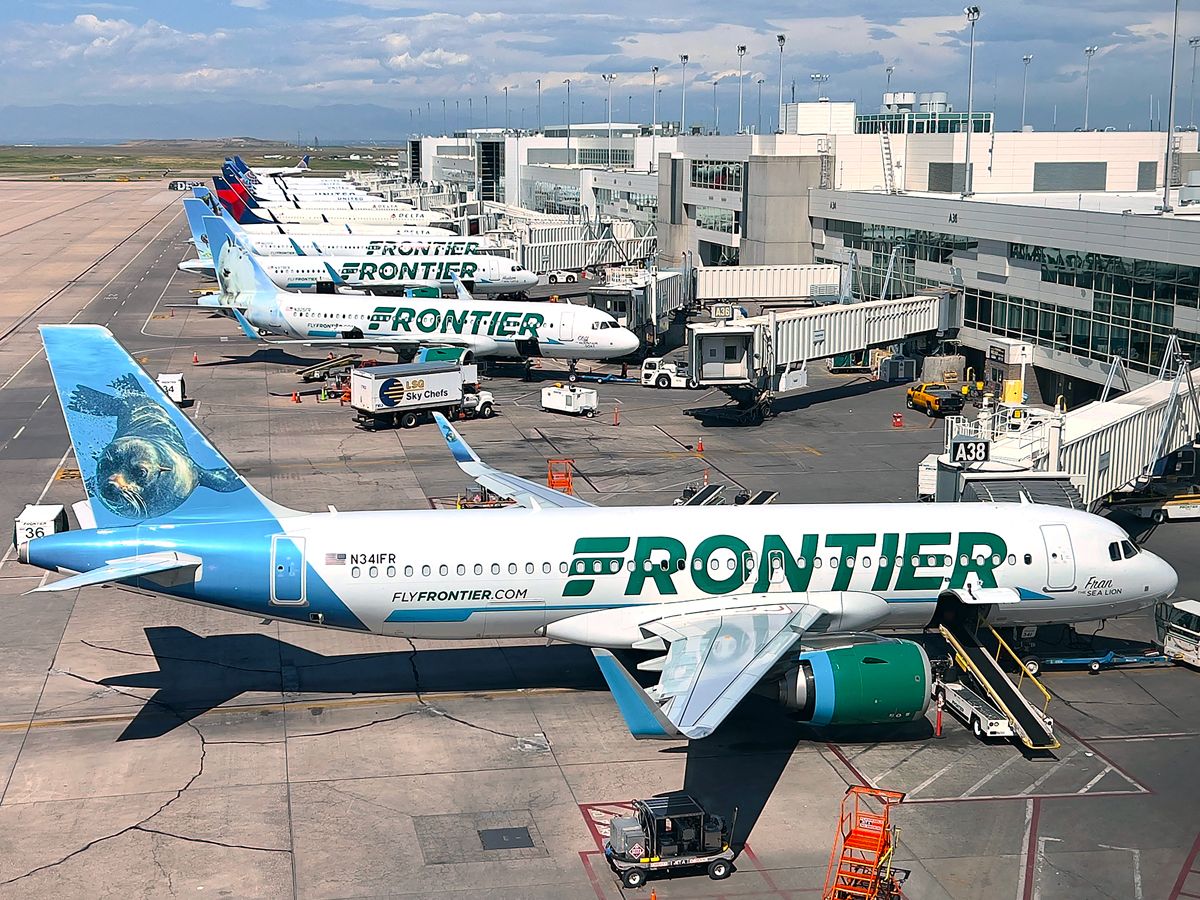
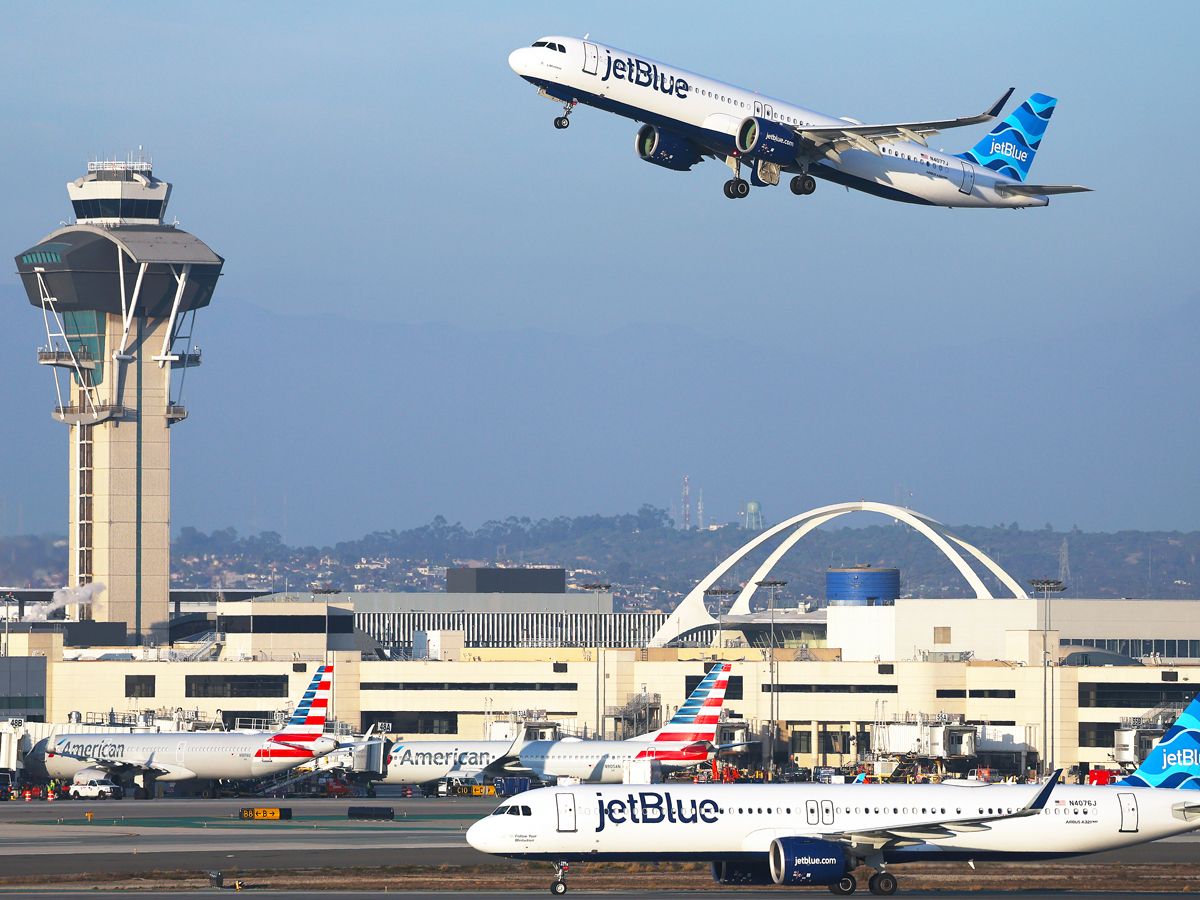
Few parts of the travel process can be more fraught than boarding an airplane. That’s evident to anyone who’s boarded a flight recently and witnessed groups of passengers line up to board even before the first zone (of many) is called. In fact, frequent flyers have a term for these overeager types: “gate lice.” It refers to passengers who crowd the boarding gate and attempt to jump ahead in line. And now, at least one airline is aiming to combat the trend with new technology. Find out how it works below.

Why Boarding a Plane Takes So Long

Passengers waiting at airport boarding gate
Credit: Jub Job/ iStock via Getty Images Plus 

The primary factor that slows down the boarding process is the time it takes for each passenger to store their overhead carry-on luggage, according to Jason Steffen, an astrophysicist at the University of Nevada. With the advent of baggage fees, travelers looking to avoid these fees — which keep going up — are bringing larger carry-ons, leaving less room in the overhead bins. 

While some airlines are attempting to address the problem by retrofitting aircraft with larger overhead bins, baggage fees remain an important source of revenue and are likely here to stay. That creates another problem: Travelers tend to crowd the gate area, anxious to find room for their full-size carry-on bags in the overhead bins, with some even attempting to jump the line. 

Kristie Tse, a psychologist with Uncover Mental Health Counseling, told Thrillist that “crowding the gate often stems from a mix of anxiety and a desire for control. Individuals may feel an overwhelming urge to secure their position, fearing they might miss out or face consequences if they don’t act quickly. This behavior can indicate underlying insecurities or a lack of trust in the process.” 

Another key issue is the complexity of boarding groups. While airlines have an obvious incentive to board a plane as quickly as possible (more time flying equals more revenue), an important consideration is segmentation. Airlines choose to reward their biggest spenders and credit card holders with boarding priority, even if that goes against the science of boarding most quickly. It also offers them an important upsell opportunity for those wishing to settle in sooner. 

Related: 26 Rules for Flying in 2026 Every Traveler Should Follow

American Airlines Introduces New Boarding Technology 

Airline passengers in queue to board
Credit: KSChong/ E+ via Getty Images 

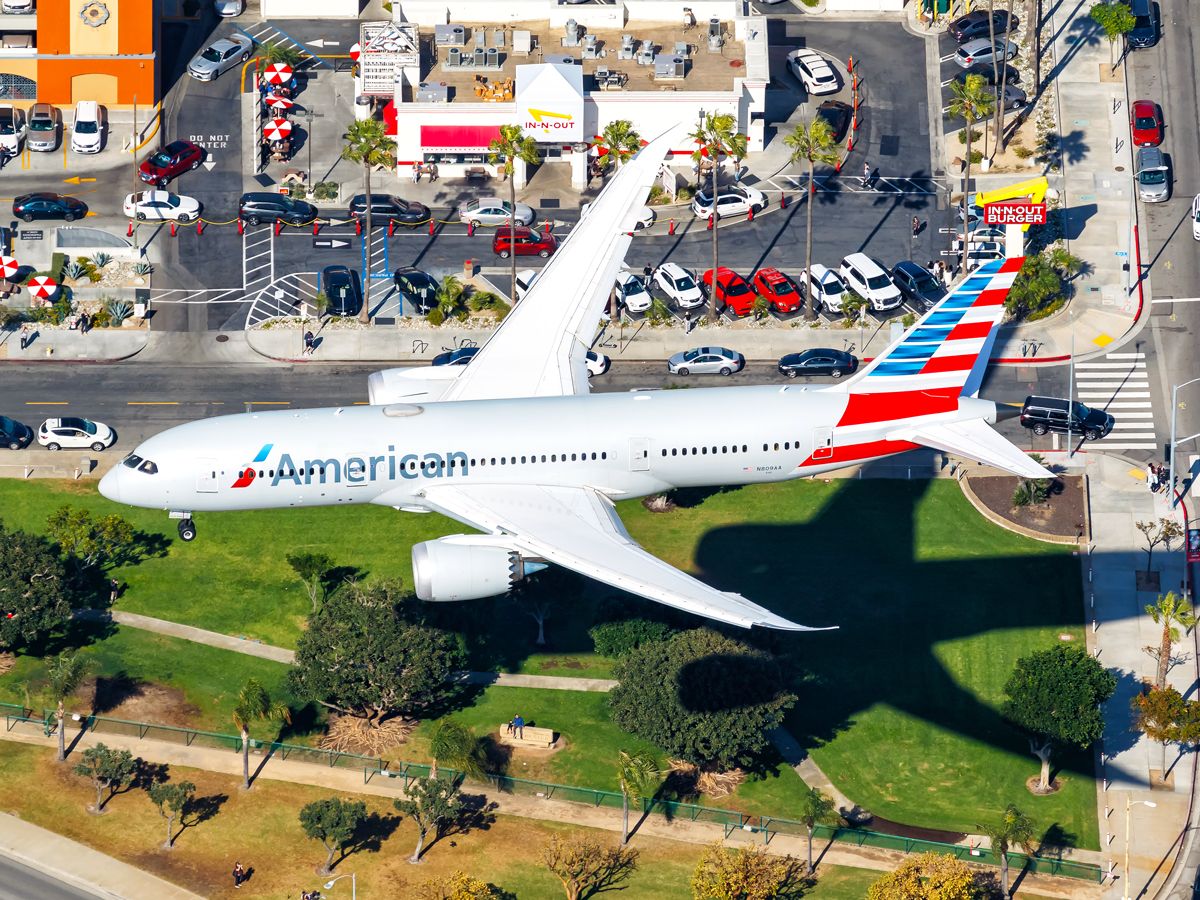
In October 2024, Dallas-based carrier American Airlines, the world’s largest airline by passengers carried, said that it was testing a new system at select airports that will produce an audible alert to gate agents if a passenger attempts to board before the assigned group on their boarding pass, prompting the agent to send the passenger to the back of the line. 

After successful trials, the carrier announced in mid-November that the new boarding technology would be expanded to more than 100 airports across the U.S., just ahead of the busy holiday travel season

In explaining the reasoning for the new technology, the airline shared in an interview with travel website The Points Guy, “Our customers want a calm boarding experience, they want it to be seamless, they want to be able to board with their group and not have other customers in front of them.”

It’s aimed at combating the “gate lice” problem: Not only do passengers line up before they’re called, but many passengers have figured they can get away with jumping ahead in the process since boarding enforcement is left up to busy and often overworked gate agents. The technology being trialed by American Airlines aims to take the burden of enforcement off gate agents to create a more orderly system.

How To Get Priority Boarding

Airline passenger gazing out window
Credit: FG Trade/ E+ via Getty Images 

Of course, playing by the rules and boarding with your assigned group often doesn’t alleviate the stress of finding space for your carry-on. Because of that, you may be looking to join an earlier boarding group on your next flight. 

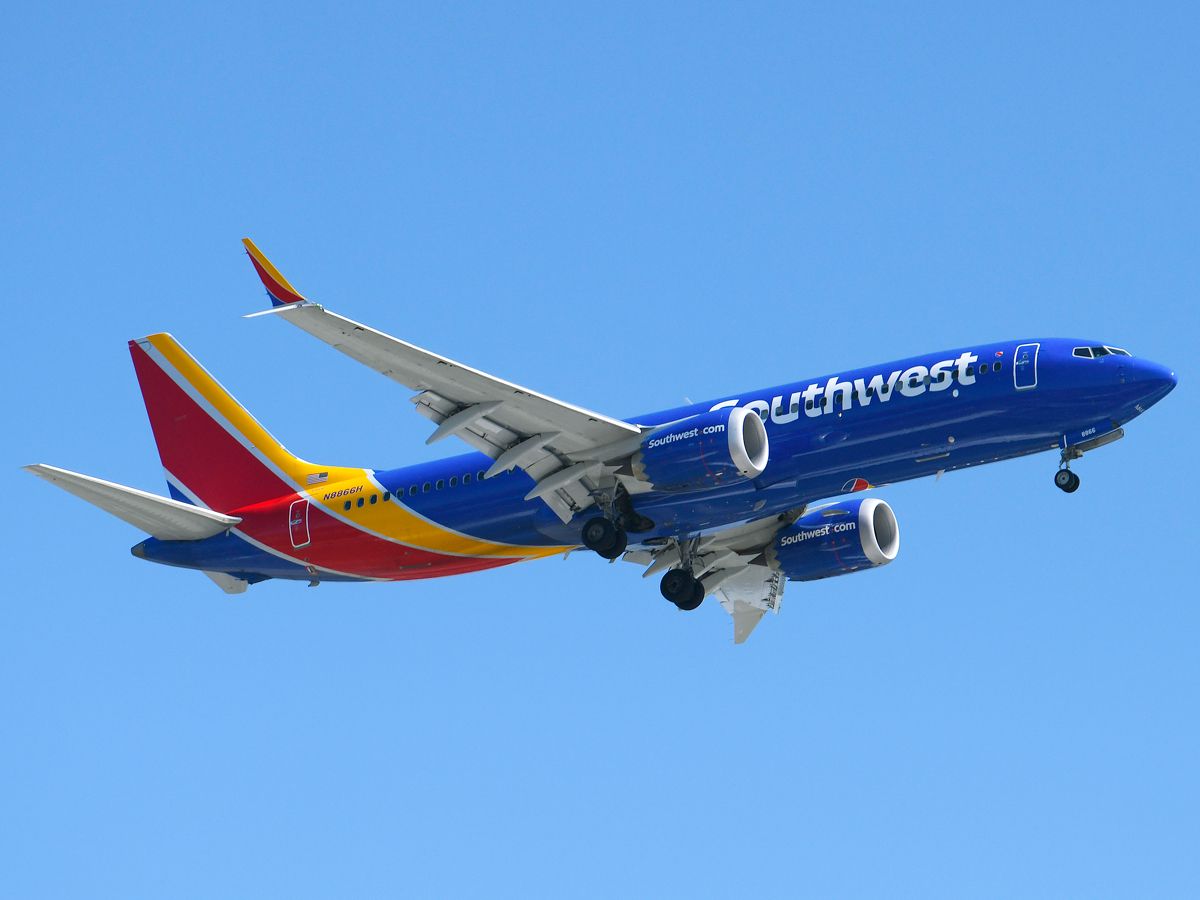
Unless you’re part of a qualifying group — such as those with disabilities, passengers traveling with small children, and active military personnel — you’ll have to shell out a little extra. First- and business-class tickets board in the earliest groups, and if you know where to look, those upgrades might be cheaper than you think. If first or business class isn’t in your budget, many airlines — including Southwest — offer a la carte options to secure a better boarding group for a fee. 

Post Banner Image
Architecture

7 Standout U.S. Buildings for Architecture Buffs To Visit

By Daily Passport Team
Read time: 7 minutes
November 19, 2024
Updated: November 21, 2024

7 Standout U.S. Buildings for Architecture Buffs To Visit

By Daily Passport Team
Author
Daily Passport Team
Daily Passport writers have been seen in publications such as National Geographic, Food & Wine, CBC, Condé Nast Traveler, and Business Insider. They're passionate about uncovering unique destinations and sharing expert tips with curious travelers.

If you’re an architecture fan, you probably gravitate toward bold buildings that make a statement. From the fantastical landmarks that look like UFOs to towers covered with 24-karat gold, these seven unique buildings from coast to coast reflect the diversity of American architecture and stand out in the best way possible.

Theme Building – Los Angeles, California

The Theme Building at Los Angeles International Airport
Credit: Raymond Boyd/ Michael Ochs Archives via Getty Images 

One of L.A.’s most recognizable architectural landmarks, the Theme Building at LAX Airport is playful and futuristic, a symbol of the Space Age during which it was built. Many liken its appearance to a giant UFO or spider. The structure, completed in 1961, consists of two 135-foot intersecting parabolic arches supporting a round, glass-walled restaurant and a rooftop observation deck that offers a 360-degree view of the airport and the City of Angels in the distance. 

The Theme Building is an exuberant example of Googie architecture, designed by the midcentury architectural firm Pereira and Luckman, which also did work for NASA. While the restaurant and observation deck are sadly closed for the time being, the airport’s new Automated People Mover train (scheduled to open in 2026) will bring travelers within a stone’s throw of the building. And while ideas were floated a while back for the iconic building to become a hotel, nothing yet has been finalized, and so the Theme Building’s future remains uncertain.

Parthenon of Nashville – Nashville, Tennessee

Parthenon of Nashville, Tennessee
Credit: f11photo/ Shutterstock 

More than 2,000 years after the original Parthenon was built in Athens, Greece, the city of Nashville capitalized on its “Athens of the South” nickname (a nod to its commitment to higher education) and commissioned a replica of the iconic monument for Tennessee’s 1897 centennial statehood celebration. 

Designed to mimic every last detail of the original — right down to the 42-foot statue of Athena — the structure was supposed to last for only six months. But by the time the centennial ended, locals were understandably reluctant to part ways with the classical glow it lent their city. The structure was saved from the wrecking ball to become the permanent centerpiece of Centennial Park.

While the original building took two years to build, the subsequent construction project to make it permanent — which involved replacing the deteriorating temporary materials with more permanent stone — lasted more than a decade. Today it houses an art museum and stands as a proud symbol of the city, and it’s the world’s only full-scale replica of the ancient Greek temple.

The Edge Observation Deck – New York, New York

The Edge in New York City, surrounded by other skyscrapers
Credit: CarlosDavid.org/ iStock Editorial via Getty Images Plus

Manhattan has no shortage of sky-high observation decks offering epic views of its famous skyline, but one of the newest additions to that list can claim a title no other viewing platform in the city can. Opened in 2020, the Edge is the tallest outdoor sky deck in the Western Hemisphere — hovering 1,131 feet above Manhattan’s glitzy new Hudson Yards development on the city’s West Side.

That’s not the only reason to hop on the 60-second elevator ride up to the 100th floor, though. The observation deck — as its name suggests — edges out over Manhattan, extending about 80 feet from the skyscraper and creating the illusion of being suspended in midair. At its center is a triangular glass floor where the brave at heart can peer more than a thousand feet under their feet to the city streets below. If you don’t count yourself among them, head inside to the Champagne bar and enjoy a glass with gorgeous sunset views over the Hudson River. 

Milwaukee Art Museum – Milwaukee, Wisconsin

Exterior of the Milwaukee Art Museum
Credit: Raymond Boyd/ Michael Ochs Archives via Getty Images 

Its collection is estimable — think 32,000-plus works spanning millennia and genres, with notable concentrations in everything from the Haitian Centre d’Art School to the American Ashcan School — but the Milwaukee Art Museum is also the kind of place you could easily visit for the architecture alone. 

A trifecta of modern masters is represented here, placing the complex squarely on the world stage: There’s Eero Saarinen’s 1957 modernist cross-shaped War Memorial Center, David Kahler’s 1957 Brutalist addition, and Santiago Calatrava’s 2001 neo-Futurist Quadracci Pavilion (often simply referred to as “the Calatrava”).

The latter is the most iconic of the three — so famous, in fact, that it’s become a visual stand-in for Milwaukee itself. No visit to the city is complete without experiencing the pavilion’s cathedral-evoking Windhover Hall, the giant avian-like Burke Brise Soleil (a moveable, 217-foot wing-like sunscreen that more or less flaps twice daily) and the pedestrian Reiman Bridge that connects the lakeshore museum to downtown.

Frank Lloyd Wright’s Fallingwater – Pennsylvania

Frank Lloyd Wright's Fallingwater, surrounded by Pennsylvania forest and waterfalls
Credit: Daniel Wilson/ Alamy Stock Photo

Some have called Fallingwater the world’s most beautiful house; others, the most famous modernist residence. Whatever your superlative of choice, there’s no disputing that Fallingwater represents a pivotal moment in Frank Lloyd Wright’s career — a masterpiece of organic architecture that thrust him back on the world stage after he’d largely been sidelined by the Great Depression, among other factors. 

The project was born when a young design enthusiast named Edgar Kaufmann jr. did a stint at the Taliesin Fellowship, Frank Lloyd Wright’s private architecture school in Arizona, in the early 1930s. When Kaufmann jr.’s parents — the prominent Pittsburghers Edgar and Liliane Kaufmann — visited him at Wright’s fabled estate, a meeting of the minds and a commission soon ensued. The Kauffmans asked Wright to design their family weekend house in Pennsylvania’s lush Laurel Highlands. 

There, instead of letting the residents simply gaze upon their favorite waterfall, Wright basically built it into the house, mirroring the pattern of the surrounding rock ledges with cantilevered concrete “trays” that stacked above the falls. Lucky for a public that couldn’t get enough of the place, it became a museum in 1964 and has been a hit ever since.

Gateway Arch – St. Louis, Missouri

Trees and pond surrounding Gateway Arch in St. Louis, Missouri
Credit: Photo by Mike Kline (notkalvin)/ Moment via Getty Images 

It’s one of the most famous buildings in the U.S., but did you know that the Gateway Arch is America’s tallest human-made monument? The arch, completed in 1965, soars over the St. Louis skyline in 886 tons of curving, gleaming stainless steel. And while the Gateway Arch has become an icon of the Missouri city, few realize it was intended as a commemoration of Thomas Jefferson’s 1803 Louisiana Purchase and America’s westward expansion in the 19th century. Master Finnish American Eero Saarinen, who is responsible for the design, modeled the arch’s shape on a catenary curve — a curve that emulates a flexible hanging chain or cable.

Today, millions visit the 100-acre Gateway Arch National Park each year, not only for the arch — which is both 630 feet tall and wide — but also for a host of other interesting exhibits, from the Museum of Westward Expansion (which focuses on fur trading and explorers including Lewis and Clark) to the the Old Courthouse, where Dred Scott sued for freedom from slavery. But clearly, the arch is the star of the show — especially the unique tram ride inside the arch, which offers unmatched views of the city and the winding Mississippi River below. 

Sunsphere – Knoxville, Tennessee

Gold-plated Sunsphere building over Knoxville skyline
Credit: Sean Pavone/ Shutterstock 

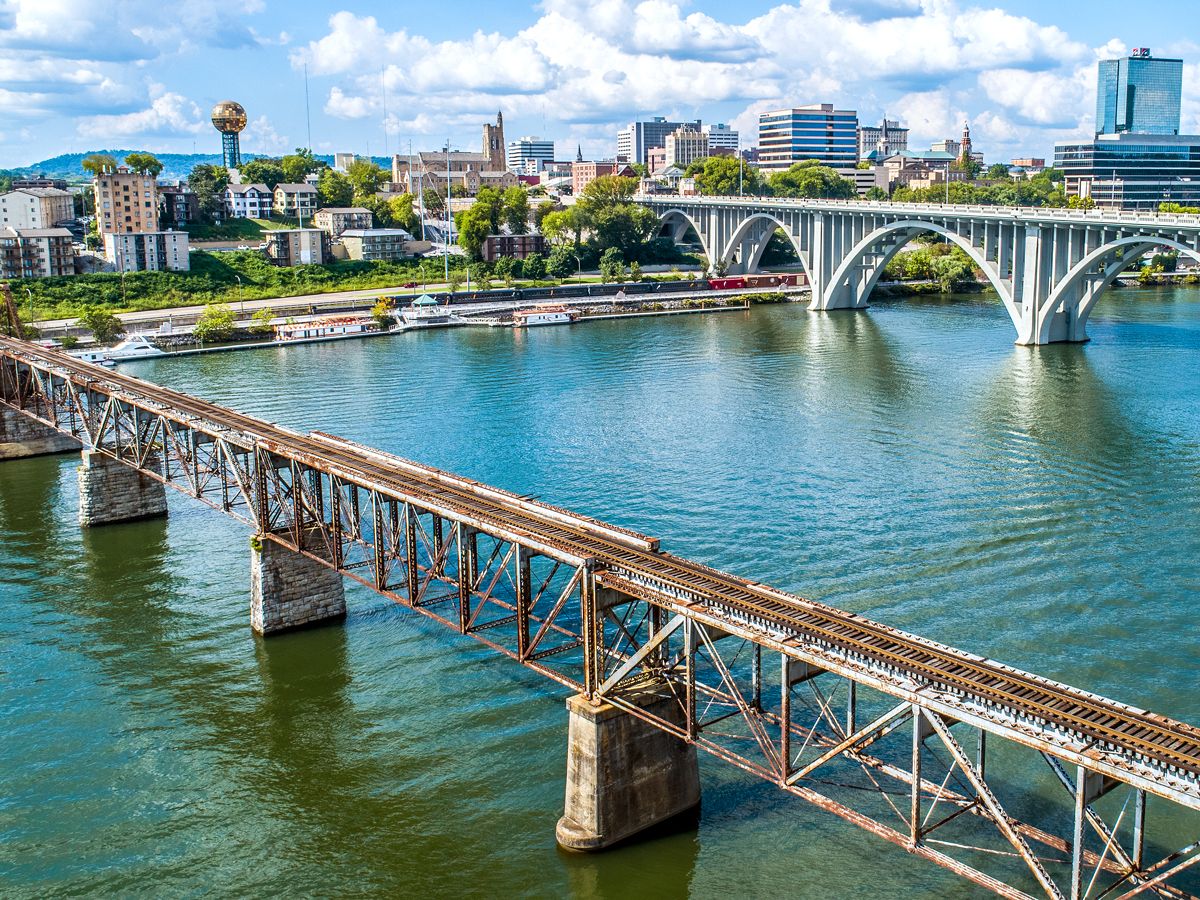
Constructed for the Knoxville International Energy Exposition (aka the 1982 world’s fair), the 26-story Sunsphere features a hexagonal steel tower topped by a striking golden orb. The 75-foot-wide circular structure is covered with 360 24-karat gold-infused panes, allowing it to brilliantly reflect the sun’s rays during the day and the city lights of Knoxville by night. The theme for the fair was “Energy Turns the World,” and Knoxville decided to showcase solar energy by making a replica of the sun.

After sitting vacant for many years, the Sunsphere opened its observation deck to the public in February 2022 — offering epic views of the Great Smoky Mountains, the Tennessee River, the University of Tennessee campus, and the original world’s fair site. The tower is part of a rare group of freestanding towers built specifically for world’s fairs and still standing today, along with Paris’ Eiffel Tower and Seattle’s Space Needle — and it offers a unique look at ingenuity from decades past.

Post Banner Image
Tips

How To Find the Best Black Friday and Cyber Monday Travel Deals

By Julia Hammond
Read time: 5 minutes
November 14, 2024
Updated: November 14, 2024

How To Find the Best Black Friday and Cyber Monday Travel Deals

By Julia Hammond
Author
Julia Hammond
Julia is a U.K.-based travel writer whose work has been featured in The Independent, The Telegraph, The New Zealand Herald, and Culture Trip, among others. She’s an enthusiastic advocate for independent travel and a passionate geographer who has had the privilege of traveling to more than 130 countries in search of a story.

Each year, Black Friday and Cyber Monday provide an irresistible opportunity to score savings with a barrage of travel deals coming at you from all directions. These sales events may bring unaffordable dream destinations within reach or make an additional getaway possible. Sifting through the mountain of deals can feel daunting, but if you arm yourself with knowledge and do some preparation in advance, your wallet will thank you. Here’s how to find the best travel deals for Black Friday and Cyber Monday.

When Are Black Friday and Cyber Monday?

Woman marking calendar in kitchen
Credit: Jose carlos Cerdeno/ iStock via Getty Images Plus 

In the U.S., Black Friday and Cyber Monday are two of the biggest shopping days of the year, attracting customers with deep discounts. In 2024, Black Friday falls on November 29, while Cyber Monday — focused on online retailers — will be on December 2. Of particular interest to anyone looking to take a trip in the U.S. or overseas is Travel Tuesday, which started in 2017. In 2024, Travel Tuesday falls on December 3. It could be worth waiting for this day, as businesses typically release additional discounts related to travel, such as flights, accommodations, and package deals. 

Be on the Lookout for Early Deals

Retro alarm clock on bedside table
Credit: BrianAJackson/ iStock via Getty Images Plus 

As with any sale, if you snooze, you lose. Early birds give themselves the best chance of grabbing a discount, so plan to get online as soon as you wake up. In recent years, companies also have been starting sales even earlier than the traditional Black Friday and Cyber Monday shopping days, so it’s worth checking in the days and weeks ahead, too. 

As with store-based sales, discounted rooms, airfares, and trips can be limited in numbers, meaning prices will rise as soon as these headline offers have been snapped up. So, plan to do some research ahead of time. If you have a preferred trip in mind, check which airlines serve the route you’re interested in or shortlist several hotels in the area where you’d prefer to stay. Alternatively, keep your options open and browse dedicated Travel Tuesday websites and apps such as the one offered by Hopper, where curated deals are advertised in one place. 

Sign Up for Email Alerts

Person using laptop computer
Credit: Sitthiphong/ iStock via Getty Images Plus 

Often, the first people to know about the headline deals are those who are signed up for mailing lists. Certain companies give loyalty program members — or anyone who has shown an interest in their brand — a head start on Black Friday and Cyber Monday offers, releasing them to these customers perhaps a day or two ahead of the general public. It usually costs nothing to sign up for mailing lists, and the discounts advertised can be substantial, so you’ll definitely want to be in the loop.

Woman browsing smartphone
Credit: Inside Creative House/ iStock via Getty Images Plus 

To reach as many potential customers as possible, travel-related businesses such as airlines, hotel chains, tour operators, and online travel agents will often post about upcoming sales or special offers via their social media channels. It’s a useful way of seeing what’s likely to be available, but check the handle carefully to make sure you are following a legitimate account. Once you’ve identified potential deals, visit the company’s website to see if anything is a good fit for your needs.

Don’t Forget the Add-Ons

Customer signing rental car agreement
Credit: Domepitipat/ iStock via Getty Images Plus 

While the headline travel deals on Black Friday and Cyber Monday are likely to feature flight savings and hotel offers, you might also find substantial savings with add-on elements. For example, see if there are any discounts on airport parking, car rental, or resort fees. Also check if hotels are offering free nights, room upgrades, complimentary breakfasts, or credit that can be used in on-site bars or restaurants. 

All of these extras add up, so keep an eye out for promo codes that could save you even more on your trip. Similarly, when booking a Black Friday or Cyber Monday offer, read the fine print and make sure it includes everything you need — for instance, a cheap flight that doesn’t include baggage or seat assignments might not be a great deal at all.

Be Ready To Book

Two women talking on sofa
Credit: Jacob Wackerhausen/ iStock via Getty Images Plus 

Unless you’re a solo traveler, or at least solely in charge of making travel plans for your family or group of friends, you’ll likely need to have had a conversation about the trip you’re booking before Black Friday, Cyber Monday, or Travel Tuesday arrives. Discuss preferences and priorities with your travel companions and figure out your budget so you can be ready to make a decision and snap up the best offers. During high-profile campaigns such as this, you don’t want to waste precious minutes calling or messaging as you try to get agreement — especially while others could be benefiting from the deals you’re allowing to slip through your fingers.

Set Price Alerts on Sites Like Google Flights

Close-up of smartphone travel app folder
Credit: Koshiro K/ Alamy Stock Photo

Whenever you’re trying to secure a cheap flight, signing up for alerts is a must. Using online tools such as Skyscanner Price Alerts or the price tracking function on Google Flights enables you to get a feel for what constitutes a deal — and protect your bank account balance from impulse buys that turn out to be duds. 

Alerts for price drops will give you the chance to scope out what’s on sale before some other travelers are even aware of it. If you can be flexible with dates, you open up even more possibilities. Some airlines have a flexible fare finder option, or you can try tools such as Google Flights’ explore feature on the homepage to see where your budget could take you.

Post Banner Image
Architecture

6 of the Largest Hotels in the World

By Daily Passport Team
Read time: 5 minutes
November 14, 2024
Updated: August 31, 2025

6 of the Largest Hotels in the World

By Daily Passport Team
Author
Daily Passport Team
Daily Passport writers have been seen in publications such as National Geographic, Food & Wine, CBC, Condé Nast Traveler, and Business Insider. They're passionate about uncovering unique destinations and sharing expert tips with curious travelers.

The concept of providing lodging for travelers can be traced back to early civilizations including ancient Egypt, Greece, and Rome. While these early examples were often simple inns offering food and rest to merchants on trade routes, the hotel industry has come a long way since. Some properties around the globe now have guest capacities similar to the populations of villages and small towns. From the Las Vegas Strip to Macau and Mecca, these are six of the biggest hotels in the world today by number of guest rooms.

Wynn and Encore Las Vegas – Las Vegas, Nevada

The Encore and Wynn hotel towers on the Las Vegas Strip
Credit: AaronP/Bauer-Griffin/ GC Images via Getty Images 

Number of rooms: 4,750

These two sister properties form one massive, upscale resort complex in the heart of the Las Vegas Strip. Wynn Las Vegas features 2,716 guest rooms and suites spread over a 45-floor tower, while Encore Las Vegas boasts 2,034 suites across its 48 floors, for a total of 4,750 rooms. Accommodations range from generously sized 640-square-foot standard rooms to a 5,829-square-foot duplex apartment with three bedrooms and separate billiard and exercise rooms. All rooms come with floor-to-ceiling windows affording epic views over Las Vegas.

The two resort towers are connected via a pedestrian esplanade, giving guests access to a plethora of amenities. There are more than 20 fine and casual dining establishments, eight bars and lounges, and entertainment options such as big-name headliners, stand-up comedy, and international DJs. The casino has 1,800 slot machines, while the shops include a roster of luxury accessory, clothing, and jewelry brands. 

The Londoner Macao – Macau

The Londoner hotel complex in Macau
Credit: Macau/ Alamy Stock Photo

Number of rooms: 6,000

Set on the neon-lit Cotai Strip, the Londoner Macao is a unique collection of five upscale hotel brands, all in one single location in this gambling mecca that goes by the nickname “the Las Vegas of Asia.” Together, these hotels have more than 6,000 rooms, all of which are designed to evoke the spirit of the Victorian era and reflect the renowned hospitality standards of London.

Notable accommodations include the 14 bespoke Suites by David Beckham at the Londoner Hotel, along with rooms inspired by London’s prestigious Mayfair district at the Londoner Grand. With 4,001 rooms, the Sheraton Grand Macao Hotel is the largest individual property of the resort’s five connected hotels.

The Londoner’s facade is modeled on the Palace of Westminster, while the gardens are inspired by the Kensington Palace royal residence. Every evening, the London Light and Sound Spectacular turns the outside of the building into a multimedia show accompanied by a British music soundtrack.

Abraj Al Bait – Mecca, Saudi Arabia

Aerial view of Abraj Al Bait and surrounding cityscape of Mecca, Saudi Arabia
Credit: hasan hatrash/ Alamy Stock Photo

Number of rooms: 6,000

Overlooking Islam’s holiest city, Abraj Al Bait (The Clock Towers) is a complex of towers that house a collection of seven hotels, with a combined total of more than 6,000 rooms. It’s part of the King Abdulaziz Endowment Project, a plan to modernize Mecca and provide accommodation for the millions of pilgrims who visit annually for Hajj and Umrah. The hotels blend luxurious contemporary designs with Islamic heritage and also feature shopping centers, restaurants, and prayer rooms. 

The most notable of the hotels is the Makkah Clock Tower Hotel. Part of the Fairmont brand, it features 1,650 rooms and suites spread throughout 76 floors of a colossal, 1,972-foot-tall tower designed in the art deco style. Many of the rooms have views over the Great Mosque and Kaaba. The hotel also boasts one of the world’s tallest observation decks and the largest clock faces. The viewing deck is accessible via the Clock Tower Museum, a four-floor museum with science and cosmology exhibits.

MGM Grand Resort – Las Vegas, Nevada

MGM Grand Resort on Las Vegas Boulevard
Credit: AaronP/Bauer-Griffin/ GC Images via Getty Images 

Number of rooms: 6,852

An icon of the Las Vegas Strip, the MGM Grand Resort boasts a staggering number of rooms that cater to all types of visitors. The Stay Well collection includes a range of one- and two-bedroom suites designed with relaxation and rejuvenation in mind, featuring state-of-the-art wellness technologies from Delos and Deepak Chopra. Meanwhile, the Skylofts are one-, two-, and three-bedroom lofts that feature incredible views, 24-hour butler service, and luxurious amenities such as Bvlgari bath items. 

Besides the luxurious rooms, the resort is renowned for its high-caliber entertainment. Cirque du Soleil and David Copperfield are resident performers, and the MGM Grand Garden Arena regularly hosts big-ticket music and sports events. The Grand Pool Complex covers 6.5 acres, made up of four pools, three whirlpools, waterfalls, and a lazy river. There are over 20 dining options ranging from buffets to celebrity chef restaurants. 

The Venetian Resort – Las Vegas, Nevada

Shops and replica Venice canal at the Venetian in Las Vegas, Nevada
Credit: LPETTET/ iStock Unreleased via Getty Images 

Number of rooms: 7,117

Also located in Sin City, the Venetian Resort is not only the largest hotel in Las Vegas but also the biggest hotel complex in the United States. Each of the 7,117 elegant suites offers a private living area and an opulent Italian-marble bathroom. Even the smallest rooms (which measure from 650 to 720 square feet) are considerably larger than the average Las Vegas room. The accommodations are split between two opulent towers. The Venetian, inspired by an Italian piazza, features a spectacular colonnade and collection of frescoes and sculptures, while its connected sister property, the Palazzo, exudes effortless Italian grandeur.

At the Venetian, guests can take gondola rides that evoke life in Venice, see cutting-edge concerts at the Sphere, and experience a year-round winter wonderland at the minus5° Ice Experience. Wolfgang Puck and Tetsuya Wakuda are among the celebrity chefs who preside over the resort’s many restaurants. There are also two pools, each with cabanas and daybeds, and upscale boutiques at the Grand Canal Shoppes. 

First World Hotel – Genting Highlands, Malaysia

Pool area and colorful hotel towers at First World Hotel in Malaysia
Credit: Azad Azahar Adnan/ Moment Open via Getty Images 

Number of rooms: 7,351

Located high up in the Titiwangsa Mountains in central-western Malaysia, the First World Hotel is the world’s largest hotel by number of rooms. Its 7,351 guest rooms occupy three brightly colored towers, which are the dominant feature of the Las Vegas-style Resorts World Genting. Rooms at this hotel are designed to cater to all budgets and vary in size from 180 to 430 square feet. This is one of nine hotels within the resort, which have a combined total of more than 10,000 rooms and suites. 

Visitors are drawn to the resort for its access to a wealth of entertainment attractions. A cable car takes passengers up to a nearby mountain peak and the scenic Chin Swee Caves Temple. Guests can also take advantage of an 18-hole golf course, nature trails inside a tropical rainforest, three shopping malls, and five amusement centers. Skytropolis Indoor Theme Park features 20 family-friendly and thrill rides, while Ripley’s Adventureland has everything from a dinosaur research center to a zipline and go-karting. 

Post Banner Image
Tips

Should You Pack This Popular Gadget for a More Comfortable Flight?

By Rachel Gresh
Read time: 4 minutes
November 13, 2024
Updated: November 14, 2024

Should You Pack This Popular Gadget for a More Comfortable Flight?

By Rachel Gresh
Author
Rachel Gresh
Rachel is a Washington, D.C.–based travel and lifestyle writer with roots in the Great Lakes region. When she’s not writing for publications such as The Discoverer and Interesting Facts, you’ll find her wandering through museums or exploring destinations off the beaten path.

It’s safe to say that airline seats are notorious for being uncomfortable. However, one clever travel accessory aims to ease the pain of confined seating: the foot hammock. Designed to elevate the feet and legs, these devices promise a more comfortable journey — but do they deliver? While some frequent flyers swear by them, there are potential drawbacks. Before you go wheels up — er, legs up — explore the pros and cons of using an airplane foot hammock.

Note: All featured products and deals are selected independently and objectively by the author. Daily Passport may receive a share of sales via affiliate links in content.

Potential Health Benefits

Passenger's foot poking into train aisle
Credit: BalkansCat/ iStock via Getty Images Plus 

During a recent long-haul flight from Washington, D.C., to London, I became increasingly restless while trying to catch some sleep. The culprit? Sore, swollen legs. As a 5-foot-2 traveler, I may seem lucky to have extra legroom, but even shorter travelers face challenges. When my feet don’t comfortably reach the ground, it leads to poor circulation and added pressure on my legs and lower back. My temporary solution — propping my feet on my backpack — was hardly ideal. I needed a better option.

Enter the foot hammock. This clever airline gadget alleviates the discomfort of airline seating by elevating the legs and feet. But it’s not just for those with shorter stature — travelers of all ages and heights might benefit from one. To use, simply release the tray table, hang the strap over it, and lock the tray back in place to secure the hammock. This creates a comfortable footrest while preserving precious personal space.

Choosing the Right Foot Hammock

Passengers seated on single-aisle aircraft
Credit: izusek/ E+ via Getty Images 

With hundreds of online options, selecting the right foot hammock can be challenging. Look for one with adjustable straps, which lets you customize the hammock’s height to ensure a perfect fit. Other features, such as the sling type and padding style, are based on personal preference.

Here are my top picks:

 Best Overall: Basic Concepts Airplane Foot Hammock
This Amazon bestseller features an easy-to-install design with a soft memory foam sling and adjustable straps, making it suitable for travelers 4 feet or taller. Its versatility allows for traditional footrest support, or the ability to move the sling up around the calves so you can stretch out your legs. 

 Best Hardboard Sling: Delfori Portable Airplane Footrest
This footrest combines the standard features — adjustable straps and a memory foam sling — with a removable hardboard base for added support. This firmer structure prevents the feet from getting “crunched” together, a common complaint of traditional soft slings. However, the hardboard may take up more space in your carry-on.

 Best Foot Separator: Everlasting Comfort Airplane Foot Hammock
This model features a unique sling with reinforced ribs and a foot separator. Like the hardboard base models, the foot separator keeps the feet and lower legs further apart. Adjustable straps accommodate a range of heights, though the manufacturer indicates it’s best suited for users under 6 feet.

Potential Drawbacks

Illuminated exit sign on ceiling of aircraft
Credit: Jackyenjoyphotography/ Moment via Getty Images 

There are a few things to consider with foot hammocks. First is the need for frequent readjusting. You can’t control your fellow passengers, so if the person in front of you decides to recline their seat, you’ll need to raise your hammock straps, or your feet will be back on the ground. Additionally, be aware that the hammock may annoy fellow passengers. Every time you tug on it to adjust your feet, the person in front of you will probably feel it.

Moreover, it’s important to note that some airlines, including British Airways, Emirates, and Qantas, have banned foot hammocks due to safety concerns, classifying them as “seat alterations.” Always check your airline’s regulations to avoid surprises at the gate. 

Alternative Options 

Child sleeping in airplane seat
Credit: RyanKing999/ iStock via Getty Images Plus 

If you’re traveling on an airline that has banned foot hammocks, or if you’re looking for an alternative, there are plenty of other travel accessories to keep you comfortable.

 Best Travel Compression Socks: Fitrell Compression Socks
If circulation and swelling are your primary concerns, consider investing in knee-high compression socks. They can be worn throughout your journey, not just during the flight. Fitrell’s bestselling unisex compression socks are made with moisture-wicking fabric and mesh, keeping your legs cool and dry, while the padded soles provide added comfort.

 Best Inflatable Foot Rest: Flypal Foot Rest
If a foot hammock doesn’t sound like the right option for you, consider an inflatable footrest. They can be inflated in a couple of minutes and deflated in seconds for easy packing. Flypal’s two-in-one design features two different-sized cushions that can be stacked or used separately, offering three different height options.

 Best Seat Extender: CozyBonder Toddler Airplane Bed
An extender between seats creates a safe, flat surface for small children to sit or sleep on. This model has a weight capacity of 55 pounds and a seat extension length of 31 inches. Similar to inflatable options, it eliminates the dangerous gap between seats, offering more stability to small children. Additionally, its adjustable straps hang around the tray table, conveniently leaving under-seat storage open. (Just be sure to check ahead with the airline if there are any restrictions with using this device onboard.)