





This Building Was Just Voted the World’s Best New Skyscraper
By
Michael Nordine
Read time: 3 minutes
November 26, 2024
Updated: November 26, 2024
This Building Was Just Voted the World’s Best New Skyscraper
Architecture •November 26, 2024•Updated: November 26, 2024
By Michael Nordine
Author
Michael Nordine
Michael is a staff writer for Daily Passport and film critic who writes the weekly newsletter Movie Brief. His writing and criticism have also appeared in the Los Angeles Times, Variety, and the Washington Post, among others. A native Angeleno, his favorite countries to visit are Norway and Japan.
The first skyscraper was built in 1885 and stood a vertiginous 138 feet tall. That record has been bested countless times since then, with Dubai’s 2,717-foot Burj Khalifa now looming over every other building in the world. And though we might not see a taller skyscraper anytime soon, structures like the Pan Pacific Orchard in Singapore continue to innovate and push boundaries in other ways. Find out why this groundbreaking new skyscraper was just named the world’s best.
Note: All featured products and deals are selected independently and objectively by the author. Daily Passport may receive a share of sales via affiliate links in content.
Reimagining the Future of Skyscrapers
Photo credit: Image courtesy of Darren Soh/ Pan Pacific Orchard, Singapore
In October 2024, the Pan Pacific Orchard — a new 461-foot hotel in Singapore — was named the world’s best new skyscraper by the Council on Tall Buildings and Urban Habitat (CTBUH). The global nonprofit organization described it as a “hotel in nature” that takes a “groundbreaking approach to high-density urbanism.”
“Pan Pacific Orchard represents the best in responsible vertical urbanism today,” CTBUH CEO Javier Quintana de Uña said in his announcement at the group’s annual conference. “It does so by considering the question at the very core of this year’s conference — New or Renew? — from a more encompassing and nuanced perspective: This isn’t a building refurbishment; it’s about reimagining entire communities in novel, forward-thinking ways. The significance of Pan Pacific Orchard cannot be overstated — it emphasizes the revitalization of urban spaces rather than relying solely on new developments.”
That’s clear from looking at the L-shaped building itself. Pan Pacific Orchard is divided into four stacks, each carrying a theme related to Singapore’s tropical environs: forest, beach, garden, and cloud. The ground-level forest terrace has a water plaza and dense foliage, the beach terrace features a lagoon-like swimming pool complete with greenery wrapping around the walls, the garden terrace has walking paths, and the cloud terrace offers striking views of the city from its event space.
Located in, and named for, Singapore’s busy Orchard shopping district, the hotel has proved popular with guests as well. It ranked ninth among all hotels in Singapore in the 2024 Condé Nast Traveler’s Reader’ Choice Awards with an overall score of 94.7. Pan Pacific has more than 40 hotels in such far-flung locations as Australia, Canada, Kenya, the United Kingdom, and Vietnam.
Pan Pacific Orchard stands 23 stories tall and has 347 rooms. Despite its modest stature, it’s eye-catching from any distance — a lush oasis in the middle of a bustling metropolis. It was designed by WOHA, a Singaporean architectural firm that’s also responsible for a housing complex for senior citizens that was named World Building of the Year at the World Architecture Festival in 2018. Rooms at the Pan Pacific Orchard start at around $250 a night — not exactly cheap, but not unreasonable for what’s sure to be a memorable stay.
Feature image credit: Image courtesy of Pan Pacific Orchard, Singapore
Advertisement
More from our network
Daily Passport is part of Inbox Studio, an email-first media company. *Indicates a third-party property.
Tips •November 26, 2024•Updated: November 26, 2024
By Bradley O'Neill
The introduction of trains in the 19th century revolutionized the way we travel. They made it possible to transport people and goods over long distances at faster speeds than ever before. Like trains themselves, the first railway stations originated in the United Kingdom, and many date back to the first half of the 19th century. Many began as simple platforms and later developed into iconic landmarks that welcome millions of passengers annually. Here are nine of the oldest stations that are still in use today.
Flinders Street Railway Station – Melbourne, Australia
The oldest train station in Australia, Flinders Street Railway Station started life in 1854 as a collection of simple weatherboard train sheds. As train travel increased in Melbourne, demand grew for a larger and more efficient station. Two employees from Victoria Railways won a competition held in 1899 to redesign the entire terminal. Today, it’s a striking blend of Edwardian baroque and French Renaissance architecture. Flinders Street is notable for its yellow-hued facade, red brick, and green copper dome. A row of clocks (once operated by hand) above the main entrance display departure times for the various train lines that serve the station.
Chhatrapati Shivaji Maharaj Terminus – Mumbai, India
An architectural marvel in Mumbai, India’s second-largest city, Chhatrapati Shivaji Maharaj Terminus is one of India’s oldest operational train stations. Trains first started rolling out of here in 1853, and the station now handles around 3 million passengers daily.
The station’s current design, for which it was named a UNESCO World Heritage Site, was the result of a 10-year redevelopment project that began in 1878. British architect Frederick WIlliam Stevens designed the terminal with the help of skilled local tradesmen. It’s a blend of classic Indian temple architecture and Victorian Italianate Gothic Revival styles. Notable features include the stone domes, castlelike towers, and carved medallions. Crowning the central dome is Progress, a marble statue portraying a woman holding a torch and spoke wheel that represent knowledge and progress.
London Paddington – London, England
Credit: AmandaLewis/ iStock Editorial via Getty Images Plus
Year opened: 1838
Plans for London Paddington station were first conceived in the 1830s. Civil engineer Isambard Kingdom Bruneul was tasked with building the London terminus of the Great Western Railway, which connected the British capital to Bristol. Due to rising costs, the original plan was scrapped and a temporary station was built in June 1838.
The project started up again in the 1850s, and in 1854 Brunel unveiled a majestic three-span iron and glass roof covering 13 platforms. This was expanded in the early 1900s to increase the number of platforms to 16. Paddington today is vital to London’s transport network and also has an underground station served by four lines. It’s famous in popular culture for being the place where Paddington Bear was found.
Vitebsky Railway Station – St. Petersburg, Russia
Credit: Serjio74/ iStock Editorial via Getty Images Plus
Year opened: 1837
Vitebsky Railway Station, originally called St. Petersburg-Tsarskoselsky, was the first train station built in the Russian Empire. In October 1837, a steam engine called Provorny departed on the country’s maiden rail journey. It took passengers from the city to the former royal residence of Tsarskoye Selo (Catherine Palace).
The station’s original wooden building has been refurbished twice. First, a two-floor stone structure was added; then, in 1902, came today’s magnificent Art Nouveau building. It’s characterized by grand staircases, ornate ironwork, and ceiling frescoes. Decorating the main hall are panels that tell the story of the Tsarskoye Selo Railway, the first public railway line in Russia.
Gare Saint-Lazare – Paris, France
Credit: chris-mueller/ iStock Editorial via Getty Images Plus
Year opened: 1837
Built during the reign of King Louis-Philippe I, Gare Saint-Lazare is synonymous with the opening of French railroads. It was the departure point for the country’s first passenger line, the Paris-St. Germain Line.
Several expansion projects have taken place over the years. In the 1840s, architect Alfred Armand and engineer Eugene Flachat added the station’s classical facades, glass canopy, and glass-roofed gallery. The station was immortalized in a series of oil paintings by Claude Monet, which are visible at the Musee d’Orsay in Paris and several other art museums.
Liverpool Lime Street Station – Liverpool, England
Credit: George Standen/ iStock Unreleased via Getty Images
Year opened: 1836
Opened in August 1836, Liverpool Lime Street Station lays claim to being the world’s oldest still-in-use mainline station. Throughout almost two centuries of operation, the busy terminal has grown from a basic shed to an 11-platform station, including one metro platform.
Fronting the station is an elegant Renaissance Revival-style building that once housed the historic North Western Hotel, which opened in 1871. During reconstruction works carried out between 2016 and 2018, workers unearthed three stone slabs from the original platform. They were engraved with a message about their historical significance and displayed on platforms No. 1, No. 3, and No. 5.
Deptford Station – London, England
Credit: ErithJohn/ iStock Editorial via Getty Images Plus
Year opened: 1836
London’s oldest railway station still in use is Deptford Station, which dates back to February 1836. Upon opening, it served as one of the stations on the London and Greenwich Railway between the neighborhoods of Bermondsey and Deptford. While it was initially a station with minimal features, streetside turrets inspired by the Choragic Monument of Lysicrates in Athens were added in 1840.
A waiting room was built the following year, although passengers could only access it by walking across the tracks. Closed from 1915 to 1926, the station has since been demolished and rebuilt twice. It’s now popular for its location close to the shops and restaurants of Deptford Market Yard.
The first trains left Hexham Railway Station in 1835 as part of the Newcastle and Carlisle Railway. This historic station in northeast England was refurbished several times between 1835 and 1901. The station features a striking canopy supported by cast-iron columns and a footbridge with a lattice parapet rail. The ticket office has two Gothic-style windows, and the waiting room has an original fireplace. Regular daily services operate from the station to major cities such as Carlisle, Newcastle, and Whitby.
The oldest train station still in operation is Broad Green Station, which opened in September 1830. (The oldest existing train station is Liverpool Road Station in Manchester; it closed in 1975 and is now a museum.) Located in the Liverpool suburb of the same name, Broad Green Station was built as part of the Liverpool and Manchester Railway. It began to appear on timetables in 1831.
Despite the station’s age, the present-day buildings are from 1972. They were erected by the London and North Western Railway. Around the same time, the station was reduced from four to two platforms following the construction of the nearby M62 highway. Since 2015, electric trains from Merseyrail have been connecting the station to Liverpool and Manchester city centers.
Advertisement
More from our network
Daily Passport is part of Inbox Studio, an email-first media company. *Indicates a third-party property.
Tips •November 22, 2024•Updated: November 22, 2024
By Bennett Kleinman
Author
Bennett Kleinman
Bennett is a New York City-based staff writer for Daily Passport. He previously contributed to television programs such as the Late Show With David Letterman, as well as digital publications like the Onion. Bennett has traveled to 48 U.S. states and all 30 Major League Baseball stadiums.
When traveling throughout the United States, you’re likely to pick up a few souvenirs along the way. Maybe it’s a mug from your favorite national park or a T-shirt from a delightful local eatery. However, the list price you see typically isn’t what you’ll end up paying — when you go up to the cash register, you’ll be charged a state sales tax (and other local taxes) on top of that. This can range anywhere from an additional 2.9% in Colorado to 7.25% in California — the state with the highest sales tax in the country. But the good news is that there are five U.S. states that don’t have a statewide sales tax.
Delaware
Credit: DenisTangneyJr/ iStock via Getty Images Plus
America’s “First State” is also one of the last few holdouts without any state sales tax. But unlike the other states without any statewide tax, there are no local sales taxes in Delaware, either. Whether you’re in Wilmington buying a ticket to the storied Delaware Art Museum or patronizing shops in the 17th-century-era settlement of New Castle, you won’t pay a penny above list price for goods and services.
The only exception applies to Delaware-based business owners, who are subject to a gross tax based on total sales. But for the average visitor, there’s no better state for affordable souvenirs than Delaware. (In all five sales tax-free states, however, be aware that if you travel there to purchase expensive goods such as a car sans sales tax, you may be subject to a use tax back in your home state.)
Whether you’re perusing the gift shop at Denali National Park or enjoying delicious locally sourced salmon, you won’t have to worry about paying state sales tax in America’s largest state. However, while there’s no statewide sales tax, there are a few local tax rules travelers should be aware of.
For example, 107 of the 165 municipalities in Alaska levy a general sales tax between 1% and 7% on purchases such as seafood, hotels, liquor, and fuel. In Alaska’s capital city, Juneau, a 5% sales tax is charged on goods purchased within the city limits. Other cities such as Anchorage, however, pride themselves on their lack of any sales tax, and encourage visitors to shop for Indigenous crafts, tasty fare, and other local wares without paying extra in taxes.
Montana
Credit: jim Schlett/ iStock via Getty Images Plus
While there’s no statewide sales tax in Montana, many popular resort areas charge local sales taxes within their jurisdiction. Notable examples include the 4% resort tax levied within the Big Sky Resort Area District, a popular ski destination in the southern part of the state. There’s also a 3% fee levied by the town Whitefish, which lies next to the Whitefish Mountain Resort and is a short drive to the stunning Glacier National Park.
Similarly, a 4% local tax is imposed in the town West Yellowstone, which sits on the western boundary of Yellowstone National Park. So, keep in mind that if you plan to visit these popular Montana tourist areas, you may be subject to small taxes on goods. Statewide, you may also be subject to a services or use tax of 4% on accommodations, campgrounds, and rental vehicles.
New Hampshire
Credit: Walter Bibikow/ DigitalVision via Getty Images
If you’re considering a move to New Hampshire, be aware of the fact that their 2.09% average property tax rate is one of the highest in the country. But if you’re just traveling through the Granite State, then you likely won’t need to spend a single dime on taxes, as there’s no state sales tax or even a general sales tax in local municipalities. There are, however, a few select goods that are subject to taxes: a 23.83 cent tax on each gallon of gasoline and a $1.78 tax if you’re purchasing cigarettes. Other than that, you can shop for souvenirs ’til you drop without paying taxes on the majority of goods sold statewide.
The fifth and final state without a statewide sales tax is Oregon, the Beaver State. As you travel throughout Oregon, you might notice that there’s one municipality in the state that levies a local tax: the city of Ashland. Here, expect to pay a small tax if you buy any food or beverages. Outside of that example, there’s no sales tax levied on any item sold in Oregon.
However, there’s a specific tax law to be aware of if you purchase a vehicle out of state and plan to register it in Oregon — expect to pay 0.5% on the retail price as part of a vehicle use tax. Otherwise, the state makes up for the sales tax revenue it misses out on by collecting sizable personal income and property taxes instead.
Advertisement
More from our network
Daily Passport is part of Inbox Studio, an email-first media company. *Indicates a third-party property.

Why Your Airplane Seat Has To Be Upright for Takeoff and Landing
By
Michael Nordine
Read time: 3 minutes
November 22, 2024
Updated: November 22, 2024
Why Your Airplane Seat Has To Be Upright for Takeoff and Landing
Tips •November 22, 2024•Updated: November 22, 2024
By Michael Nordine
Author
Michael Nordine
Michael is a staff writer for Daily Passport and film critic who writes the weekly newsletter Movie Brief. His writing and criticism have also appeared in the Los Angeles Times, Variety, and the Washington Post, among others. A native Angeleno, his favorite countries to visit are Norway and Japan.
Here’s something you’ve heard on every flight you’ve ever taken: “Ladies and gentlemen, please make sure your seat backs and tray tables are in their full upright and locked position. Make sure your seat belt is securely fastened and all carry-on luggage is stowed beneath the seat in front of you or in the overhead compartments.” In all likelihood, you’ve happily complied with those instructions every time a flight attendant has given them. But have you ever stopped to wonder about the reasoning behind them? Here’s why your airplane seat has to be upright for takeoff and landing.
Safety, Safety, Safety
Credit: Nansan Houn/ iStock via Getty Images Plus
The simple reason why these instructions exist, as with most aspects of flying, is safety. As per part 121 of the U.S. Code of Federal Regulations, “No certificate holder may take off or land an airplane unless each passenger seat back is in the upright position.” In this case, “certificate holder” refers to the air carrier, and passengers have to follow the law just as much as they do.
As for why it’s safer, the most important part of that ubiquitous instruction is the word “locked.” When your seat is secured, it’s better prepared to withstand any impact that could arise from turbulence or bumpy landings. Because airplane seats are unlocked when reclined, a change in speed or an abrupt stop could hurt you or the passenger behind you — you could go flying forward or their knees could get crushed, depending on the situation.
Evacuation factors into it as well. As anyone who’s ever flown in economy knows, having the person in front of you recline their seat limits your movement when you get up to use the restroom or stretch your legs. Having unobstructed access to the aisle in the event of an emergency is considerably more important, which is also why seats in front of the exit row either don’t recline or recline less than other seats. Even the tray tables in the exit rows on some planes are configured so that passengers don’t unintentionally unlock them during an evacuation.
Why Takeoff and Landing Are So Critical
Credit: izusek/ E+ via Getty Images
It’s no coincidence that you have to do this during takeoff and landing, whereas actual flight time is fairly relaxed. Takeoff and landing are indeed the most dangerous parts of flying, though statistically they’re still quite safe.
A study by Airbus confirmed that the vast majority of all accidents occur during those phases. “Approach and landing are highly complex flight phases, which place significant demands on the crew in terms of navigation, aircraft configuration changes, communication with Air Traffic Control, congested airspace, and degraded weather conditions,” per the study. Boeing’s research had similar findings.
Though there’s no cause for alarm — flight remains the safest way to travel by a considerable margin — there are plenty of reasons to listen to the cabin crew when they tell you to return your seat to its full upright and locked position.
Advertisement
More from our network
Daily Passport is part of Inbox Studio, an email-first media company. *Indicates a third-party property.

2024 Year in Travel: The Places Daily Passport Readers Loved Most
By
Daily Passport Team
Read time: 10 minutes
November 22, 2024
Updated: November 22, 2024
2024 Year in Travel: The Places Daily Passport Readers Loved Most
Culture •November 22, 2024•Updated: November 22, 2024
By Daily Passport Team
Author
Daily Passport Team
Daily Passport writers have been seen in publications such as National Geographic, Food & Wine, CBC, Condé Nast Traveler, and Business Insider. They're passionate about uncovering unique destinations and sharing expert tips with curious travelers.
2024 is soon coming to a close, and what a year it’s been on Daily Passport. We’ve introduced you to the world’s smallest towns, highest mountains, oldest buildings, happiest countries, and hundreds of other fascinating places in nearly every corner of the globe. All those stories got us wondering: What were the places you loved discovering the most? To recap the year in travel, here are 12 of the most-clicked destinations by Daily Passport readers in 2024.
Not up for the long flight to Europe? Americans craving a slice of the European lifestyle can head to Frankenmuth as a worthy alternative. You could easily mistake your location for Germany once you step foot in this Michigan town, which was settled by German immigrants in 1845. The sight of the Holz Brücke (wooden bridge) is the first sign you’ve arrived, while the charming Bavarian architecture, year-round German festivals (like the Frankenmuth Oktoberfest and the World Expo of Beer), and German cuisine served at many restaurants all add to the atmosphere. You can even attend a Sunday service at St. Lorenz Lutheran Church entirely in German.
Favorite Booming U.S. City – Charleston, South Carolina
Credit: Peter Unger/ Stone via Getty Images
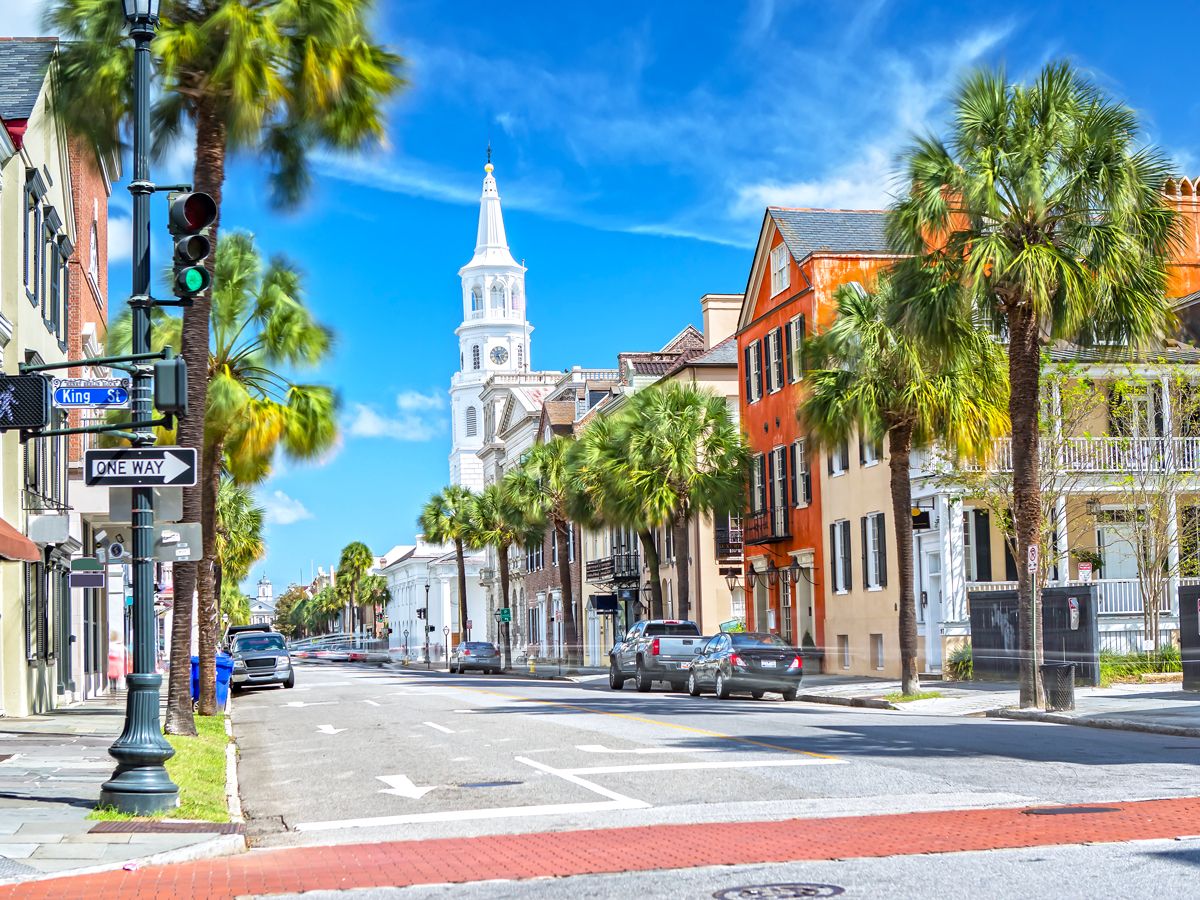
It’s tough to call Charleston anything other than charming — which is perhaps why so many Americans are moving to this coastal South Carolina city. Charleston’s colorful architecture and historic cobblestones are a draw for anyone who appreciates aesthetic appeal, but the city is also known for its refined culture. It is home to notable institutions including the Gibbes Museum of Art and the Charleston Museum, and hosts annual gatherings such as the Charleston Food and Wine Festival that draw thousands of attendees. Charleston’s temperate climate is appealing to boaters, beachgoers, and anglers, while history buffs flock to landmarks like Fort Sumter and the Charleston Battery.
Credit: PaaschPhotography/ iStock via Getty Images
Stretching 113 miles along the Gulf of Mexico, Padre Island in southern Texas is the world’s longest barrier island. The island — located about a 30-minute drive from Corpus Christi — is connected to the mainland by Park Road 22, which leads to the JFK Causeway. That makes it quick and easy for visitors to access its miles of pristine beaches and warm waters year-round.
Padre Island National Seashore offers excellent opportunities for camping, stargazing, hiking, and bird-watching within a pristine and protected area of the isle. Both Padre Island and its sister island, South Padre, are popular spring break destinations, so it’s advisable to avoid visiting in March unless all-night parties are on your agenda.
Favorite Natural Wonder – Rotomairewhenua, New Zealand
Credit: CK NG/ 500Px Plus via Getty Images
Rotomairewhenua — better known as the “Blue Lake” — is frequently cited as the clearest lake in the world. In 2011, a group of scientists studied the remote lake and discovered some of the cleanest waters on the planet. Surrounded by 15 other lakes in New Zealand’s Nelson Lakes National Park, Rotomairewhenua reaches 252 feet deep, and visitors can see well into its watery depths, thanks to the glacial waters that feed it, keeping it clean and clear.
In order to reach Rotomairewhenua, you can either hike through the wilderness for four to seven days, or take a water taxi to Lake Rotorua, and then hike approximately 5 miles to Blue Lake Hut, which provides bunks for overnight travelers. Because the lake is a sacred body of water to the area’s Indigenous peoples, swimming is prohibited to keep Rotomairewhenua in its pristine, natural condition.
Guatapé is a small, colorful town located 50 miles west of Medellín, making it a popular day trip or weekend destination for those seeking a slower pace. The town is famous for its bright facades (known as zócalos) painted on the sides of homes and storefronts, but, most of all, for El Peñón de Guatapé, a 650-foot rock that towers above everything else.
A brick staircase with 740 steps is embedded into a large crack that runs the height of the rock, transporting climbers in a zigzag fashion all the way to the peak. On average, the climb to the summit takes about 30 minutes. But those efforts will certainly pay off — at the top, you’ll be rewarded with panoramic views of the expansive lake system and rolling emerald hills surrounding Guatapé.
Favorite Nostalgic Vacation Destination – Niagara Falls, Canada/U.S.
Credit: AerialPerspective Images/ Moment via Getty Images
Alongside its reputation for daredevil feats and shocking stunts throughout the 19th century, Niagara Falls also emerged as a honeymoon destination around the same time, billing itself as the “Honeymoon Capital of the World.” In the early 1800s, famous figures like Napoleon Bonaparte’s brother Jerome Bonaparte and American socialite Theodosia Burr, daughter of future Vice President Aaron Burr, celebrated their nuptials with a getaway to this (still highly popular) natural wonder.
These high-profile honeymooners inspired others of the same social ilk, and while the destination initially remained exclusive to the wealthy, the opening of the Erie Canal in 1825 helped make it more accessible for middle-class honeymooners, too. The popularity of Niagara Falls as a honeymoon destination endured for generations, but it began to dwindle with the dawn of the early 1960s jet age, when international air travel started to become a reality for the average American. Still, the falls retain a nostalgic charm today, and honeymooners can easily find accommodations with vintage heart-shaped hot tubs for their romantic getaway.
Overlooking the glittering waters of the Adriatic Sea, Dubrovnik is the dazzling jewel of Croatia’s coastline. Its walls were designed to be indestructible, a human-made rock face more than 80 feet high and up to 20 feet thick. These days, they don’t do so well in repelling advances, as cruise ship passengers and overnight visitors arrive en masse to experience one of Europe’s most spectacular walled cities, dating back to the seventh century.
Walk atop the walls to get your bearings and gaze out over a sea of terracotta tiles before getting lost in Dubrovnik’s winding alleyways. At some point, you’ll find yourself in front of the ornate carved masks that adorn Onofrio’s Fountains, the graceful arches of the Sponza Palace, or the 15th-century Gothic-Renaissance Rector’s Palace, which hosts the city’s Cultural History Museum. A word of advice: Come in the off-season (November to February) if you want a bit of breathing space.
Favorite Historic Hotel – Grand Hotel, Mackinac Island, Michigan
Credit: jimfeng/ iStock Unreleased via Getty Images
There’s no grander welcome to Mackinac Island (pronounced mack-in-awe) and its 4 square miles of carless tranquility than the front porch of the Grand Hotel. In fact, the hotel’s 660-foot-long front porch framed by towering white Colonial Revival columns is the world’s longest porch. It extends more than two football fields in length and is filled with dozens of rocking chairs inviting you to take a seat and gaze out over the Straits of Mackinac, located between Michigan’s two peninsulas. The hotel — a National Historic Landmark — is the crown jewel of this enchanting island. Since 1887, its guest book has been signed by five U.S. presidents, as well as luminaries ranging from John Jacob Astor III and Mark Twain to Robert De Niro and Madonna.
Open seasonally from May through October, the Grand Hotel maintains about 400 guest rooms, no two of which are alike. Each is decorated in a distinct panoply of pleasantly clashing colors and patterns. When dinner comes around, patrons are encouraged to dress for the occasion at the 14 in-house restaurants and bars. And once you’re finally ready to leave the hotel and see what the island has to offer, you might as well continue on the yesteryear theme by touring it in a horse-drawn carriage.
Favorite Road Trip – Crater Lake National Park, Oregon
Credit: JeffGoulden/ E+ via Getty Images
Crater Lake National Park’s 33-mile Rim Drive encircles a caldera that was formed over 7,700 years ago. When the volcano erupted and collapsed, it resulted in a crater that became the deepest lake in the U.S. and the seventh-deepest in the world.
The Rim Drive offers wide-open vistas of the lake’s deep blue waters and surrounding mountains, including the park’s two highest peaks, Mount Scott and Hillman Peak. Visitors can pull over at 30 designated lookouts that were designed to highlight specific views. These include distinct geologic formations, like the Wizard Island cinder cone, or the region’s subalpine meadows, some of which bloom in bright red fleece flowers in the short summer season. The high altitude makes this one of the snowiest places in the inhabited U.S., so it’s best to check park conditions for frequent road closures before planning your trip.
2024 was a big year for this roadside trucking mecca, as it celebrated its 60th year in operation. Over those six decades, the Iowa 80 Truckstop has earned its reputation as the “World’s Largest Truckstop,” and for good reason — there are more than 900 parking spots for trucks alone.
Truckers can venture inside the truck stop — located alongside Interstate 80 in the town of Walcott, just a few miles west of the Iowa-Illinois border — and take advantage of a wide array of unexpected amenities. They range from dentistry to laundry, an in-house chiropractor, a barber, and even a movie theater. But you don’t have to be a professional long hauler in order to visit — the Iowa 80 Truckstop serves 5,000 customers a day from all walks of life. Grab a bite at the family-owned Iowa 80 Kitchen or buy some merchandise at the expansive gift shop to commemorate your visit.
The highlight of this wacky highway oasis, though, is the Iowa 80 Trucking Museum, a vast exhibit hall loaded with antique memorabilia and vintage trucks, showcasing the storied history of the American trucking industry. While the museum is open year-round, July is a particularly popular time to visit and attend the annual Walcott Truckers Jamboree. Highlighted by truck beauty contests and the Trucker Olympics, this popular event celebrated 45 years of festivities in summer 2024.
Credit: Harry Collins/ iStock via Getty Images Plus
Inaugurated in 1955, the Canadian is an epic transcontinental rail journey from Toronto to Vancouver. Over four nights and 2,775 miles, passengers will experience the spectacular natural landscapes that make Canada famous. From Ontario in the east to British Columbia in the west, the train visits five diverse provinces, with the scenery shifting from the shimmering Great Lakes and thick deciduous forests of Ontario to the sprawling prairies of Manitoba, the big blue skies and bright-yellow canola fields of Saskatchewan, and the majestic Rocky Mountains of Alberta.
The Canadian offers three seating classes, with the Prestige Class featuring a concierge service and suites with domed, glass windows to enjoy the scenery. A la carte meals are available to all, and there’s even an onboard wine tasting, too. For those preferring to break up the journey, the Canadian can easily be turned into a hop-on, hop-off rail adventure. Overnight stays are possible in destinations like Winnipeg, Edmonton, and Jasper.
Favorite Airport View – Princess Juliana International Airport, St. Maarten
Credit: UCG/ Universal Images Group via Getty Images
Airplane enthusiasts from all over the world flock to Maho Beach, on the Dutch side of the Caribbean island of St. Maarten. What makes this particular stretch of sand so special are the unforgettable views of planes as they arrive at Princess Juliana Airport. The airport’s runway is just over 7,500 feet in length and reaches almost to the sand, forcing pilots to come in low across Simpson Bay and use nearly the entire length of the runway. And when the planes take off, the force results in waves of white sand kicked up by their powerful jet blast. Plane spotters set up in the sand with chairs, binoculars, and (hopefully) ear protection to get unbelievably close views of jets as they make their thrilling low-altitude approaches.
Tips •November 22, 2024•Updated: November 22, 2024
By Rachel Gresh
Author
Rachel Gresh
Rachel is a Washington, D.C.–based travel and lifestyle writer with roots in the Great Lakes region. When she’s not writing for publications such as The Discoverer and Interesting Facts, you’ll find her wandering through museums or exploring destinations off the beaten path.
Small towns, stargazing, and tennis matches are topping the list of 2025 travel trends, according to a new survey conducted by Priceline. The post-pandemic “revenge travel” trend is out the window, and a new era of “intentional travel” has been ushered in, marked by savvy spending and personalized itineraries. If you’re looking for fresh travel inspiration, check out the industry’s eight emerging trends for 2025.
Embracing Local Lifestyles
Credit: Peter Unger/ The Image Bank Unreleased via Getty Images
In 2025, travelers are expected to forgo tourist hot spots in favor of local flair, giving them insight into what life is really like in their destination. They’ll do this by visiting smaller neighborhoods, eating at local gems, and even visiting the corner grocery store. These travelers believe it helps them create a stronger connection to the destination, giving them a more authentic experience.
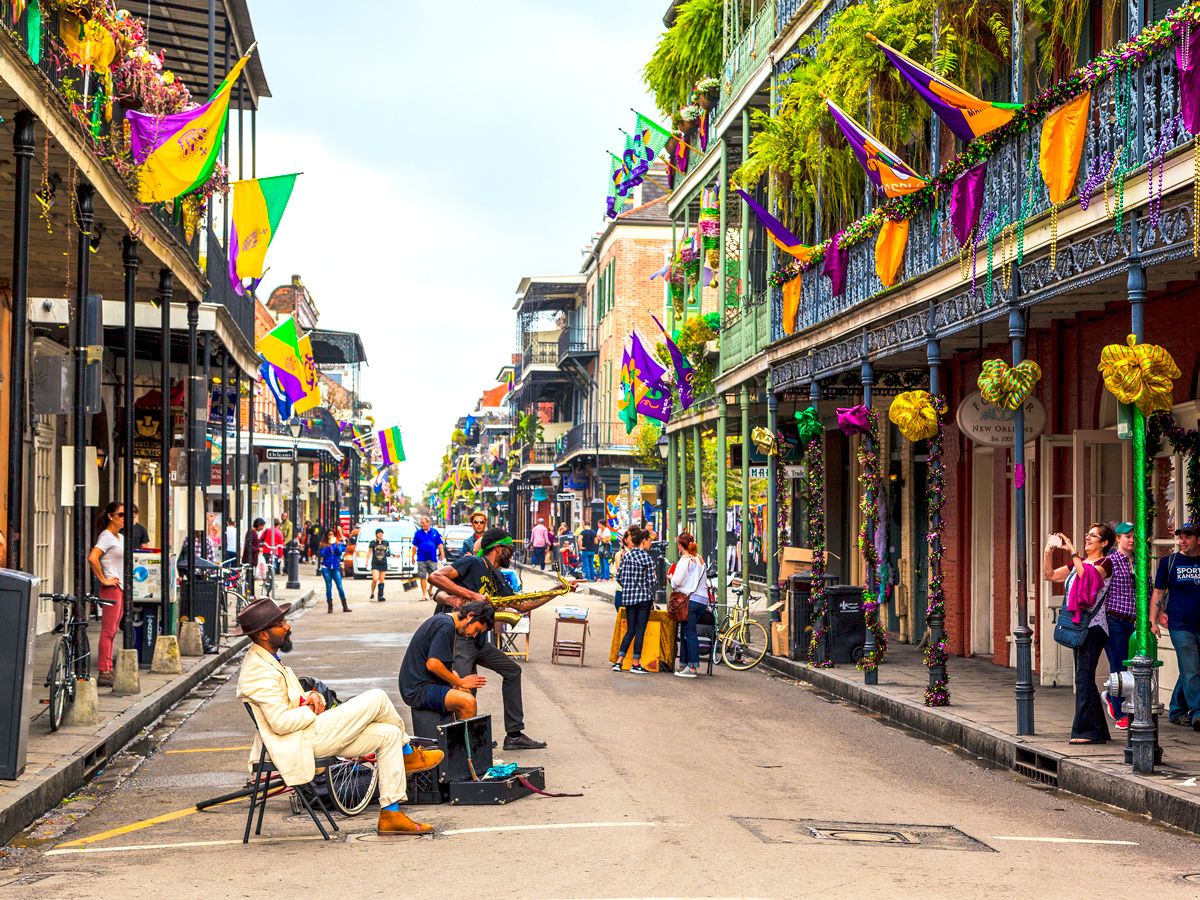
The top U.S. neighborhoods that 2025 travelers surveyed in the report are most excited to visit include the French Quarter of New Orleans, the Capitol Riverfront in Washington, D.C., Miami’s Wynwood, and Boston’s North End. These neighborhoods are all tied to larger cities but have their own distinct culture, making them more appealing than the hustle and bustle of downtown tourist traps.
Even international travel is trending toward quaint locations. Searches for Vanves, France — a Paris suburb known for its flea market — have increased by 407% this year. Other lesser-traveled international cities on the most-searched list include Algarve, Portugal; Tbilisi, Georgia; Field, Canada; Penang, Malaysia; and Querétaro, Mexico.
Making Friends
Credit: AleksandarNakic/ E+ via Getty Images
Some 2025 travelers, especially the younger crowd, are searching for ways to make friends while traveling, and it is directly impacting where and how they vacation. Many Gen Z travelers are hanging out in hotel bars or going on cruises, signaling a surge of interest in communal travel spaces (and possibly a decrease in interest in private vacation rentals).
These travelers will also head to social hot spots at their destinations, including cultural events, music festivals, nightlife, beaches, parks, and other public spaces. To make these connections in 2025, Gen Z travelers are heading to major cities with plenty of social opportunities, like Las Vegas, Houston, Orlando, Atlanta, Chicago, Tokyo, Cancun, London, Paris, and Toronto.
Stargazing
Credit: Sjo/ E+ via Getty Images
In 2024, many people around the globe traveled to see astronomical events, including a total solar eclipse and the northern lights. In 2025, travelers, especially younger generations, are expected to continue that trend by trekking to areas with low light pollution, particularly International Dark Sky Places, to see meteor showers, eclipses, super moons, or planetary alignments.
Of the travelers polled, 35% said they would travel to see the northern lights, which are predicted to be visible again across North America in 2025. The most-searched destinations for viewing the northern lights are Whitehorse, Canada; Fairbanks, Alaska; Mackinaw City, Michigan; Medora, North Dakota; and Bayfield, Wisconsin.
These aren’t the only trending places with epic celestial views, either. Urban Night Sky Places — such as Querétaro, Mexico, and American Fork, Utah — will also be popular for viewing astronomical events, because they’re more accessible than remote towns.
Getting Physical
Credit: andreswd/ E+ via Getty Images
Travelers aren’t just vacationing to relax on the beach with a good book. They’re signing up for marathons, playing tennis and pickleball matches, enjoying golf, and pursuing new hiking trails or surf spots. Activity-based travel is predicted to draw in high numbers of tourists in 2025, with the location being dependent on desired sports.
This is especially popular with younger travelers, such as millennials, who are 80% more likely than the average traveler to plan a vacation around playing tennis, for instance. Not only will these travelers hope to play sports during their trips, but they’ll also travel to watch them. Priceline has seen a surge in travel searches for tennis tournaments in early 2025, namely the BNP Paribas Open in Indian Wells, California; the Australian Open in Melbourne, Australia; and the Miami Open in Florida.
Exploring New Career Paths
Credit: AzmanJaka/ E+ via Getty Images
The 2025 travel trends report also revealed that Gen Z travelers are 3.3 times more likely than the average traveler to try out a new job at their destination. This creates fun, new experiences but can also result in lasting, lifelong skills they can leverage in their current jobs or utilize in a career change.
According to Priceline’s survey, Gen Z has an eclectic list of destination jobs they dream about trying or experiencing. These include candlemaking in Hong Kong; knitting in Oslo, Norway; shoemaking in São Paulo, Brazil; pineapple farming in Bacolod, Philippines; wool farming in Geelong, Australia; and baking in Paris, France.
Running to New Destinations
Credit: skynesher/ E+ via Getty Images
While all sports travel is surging, running is making major headway. Athletes and casual runners alike are traveling to experience their sport in a new environment. These travelers say running is the perfect way to explore a new city and discover new neighborhoods, restaurants, or shops off the beaten path.
While vacationing, partaking in local running clubs also helps younger travelers make new friends, as they’ll find like-minded people at local clubs. This means travelers will look for hotels or accommodations near city parks or trails, especially in running-friendly areas like Cherry Creek in Denver or Yoyogi Park in Tokyo, for example. The top trending 2025 marathons for travelers include the Chevron Houston Marathon, Tokyo Marathon, Toronto Marathon, and Walt Disney World Marathon in Orlando.
Searching for Small Towns
Credit: Leadinglights/ iStock Unreleased via Getty Images
While some travelers will flock to major cities to make new friends or run a marathon, others are heading to small towns for a more laid-back vacation. Small-town travel inquiries are surging across all generations — from baby boomers, who feel it’s the most relaxing way to travel, to Gen Zers, who appreciate the authenticity of a small town, which might remind them of their favorite comfort movies and television shows.
Around 31% of travelers surveyed in the Priceline report want to visit a small town in 2025. The top trending U.S. small towns are Three Rivers, situated in the Sierra Nevada foothills of California; Panguitch, near southern Utah’s national parks; Bretton Woods in New Hampshire’s largest ski area; South Yarmouth, a coastal town on Cape Cod Bay in Massachusetts; and Ouray, Colorado, touted as the “Switzerland of America.”
Parents Seeking R&R
Credit: PeopleImages/ iStock via Getty Images Plus
There’s one group of travelers you may not see running marathons during their next vacation: tired parents. This exhausted group of vacationers is more focused on catching up on rest during their 2025 getaways. Citing mental and physical exhaustion, these travelers are ready to unwind at resorts or destinations with self-care activities and services — and comfortable beds. Among the most popular activities for weary parents are rage rooms (businesses where you can smash a room full of objects to relieve stress), in-room spa services, moon rituals, art classes, yoga, and enhanced sleep services.
Advertisement
More from our network
Daily Passport is part of Inbox Studio, an email-first media company. *Indicates a third-party property.

5 Architectural Marvels That Light Up During the Holidays
By
Fiona Mokry
Read time: 4 minutes
November 22, 2024
Updated: November 22, 2024
5 Architectural Marvels That Light Up During the Holidays
Architecture •November 22, 2024•Updated: November 22, 2024
By Fiona Mokry
Author
Fiona Mokry
Fiona has spent her career exploring the world and working in the travel industry, turning her lifelong passion into a profession. From planning custom trips to sharing stories as a travel writer for publications such as The Discoverer, she’s all about helping others experience the world in a deeper, more meaningful way.
Nothing lifts the spirits during the darkness of winter like a fabulous holiday light show. Around the world, iconic buildings that are architectural marvels by day are transformed by night into eye-catching landmarks that are guaranteed to bring joy during the festive season. Here are five iconic buildings that put on an extra-special show for the holidays.
The Shard – London, England
Credit: shomos uddin/ Moment via Getty Images
During the holidays, a seasonal themed light show adds an extra wow factor to London’s tallest building. Constructed in 2009 near London Bridge on the U.K. capital’s South Bank, Renzo Piano’s soaring mixed-use building with a “vertical city” concept revolutionized the city’s skyline. Each year, spanning Advent and the Christmas period, the 1,016-foot skyscraper becomes the canvas for a mesmerizing art installation.
In 2023, talented designers from the London School of Mosaics partnered with the Shard to create colorful, animated displays across the top 20 floors of this London landmark. Three separate animations were featured: The “Shard Snowman” appeared wearing a red scarf before melting away, the “Festive Candle” burned bright against a striking blue background, and during “Festive Pattern,” a green-and-gold pop art-inspired brooch added a touch of Christmas sparkle to the London skyline. The 2024 theme, which launched on November 14, focuses on the nation’s favorite Christmas carols and promises to be just as exciting.
The top floors of the Empire State Building are famously lit each night to raise awareness about worthy causes or to honor important events. During the holidays, however, the art deco landmark lights up in festive colors to celebrate the season. The Rockettes kick things off in November as the skyscraper turns green and red to honor the long-running group’s first show of the season. For Hanukkah, the displays turn blue and white, while on Thanksgiving, the tower takes on fall hues. And on New Year’s Eve, multicolored sparkling lights set the tone for the Big Apple to see out the old year and welcome the new.
Commemorative lights have been a feature of this New York landmark since the beginning, when then-President Herbert Hoover officially dedicated it on May 1, 1931. Today’s programmable LEDs ramp things up with musical light shows that are far more sophisticated than the building’s original floodlights.
The world’s tallest building certainly doesn’t disappoint when it comes to seasonal light shows. Dubai’s needlelike, 2,722-foot skyscraper goes all out to put on a memorable spectacle with LED lights that display images and animations of seasonally appropriate artwork, including snowflakes and Christmas trees.
A mind-boggling 17 miles of lights are employed in the skyscraper’s media façade, creating a stunning show that impresses locals and visitors alike. Interestingly, the lights used on the Burj Khalifa today aren’t the original ones — new ones were installed in 2017 with pixel control that allows designers to control each individual light separately.
Galleria Vittorio Emanuele II – Milan, Italy
Credit: photooiasson/ iStock Editorial via Getty Images Plus
In stylish Milan, this elegant shopping arcade — named after the first king of a united Italy — typically opts for a sophisticated theme for its Christmas lights. At the center of Galleria Vittorio Emanuele II stands a 40-foot-tall Christmas tree lit by Swarovski crystals and sparkling lights. Above it, the glass atrium of this 19th-century arcade is accentuated with a canopy of twinkling lights that mimic the stars in the night sky.
In 2023, the Galleria’s tree was sponsored by Gucci, and it broke with tradition. Instead of a classic fir, they installed a tree-shaped pile of 78 gift boxes bearing the luxury clothing brand’s logo. Opinion was divided, with some embracing the uniqueness of the installation and others labeling it a fashion misstep. While officials haven’t officially announced anything as of late November 2024, many expect a return to the traditional tree this year.
Each evening throughout the year, the Eiffel Tower sparkles with around 20,000 LED bulbs. The first illumination of the iconic Parisian building marked the new millennium on New Year’s Eve 1999, and it took a team of 25 steeplejacks five months to install. For five minutes at the top of the hour, from dusk until the early hours of the morning, the glittering spectacle remains a highlight for anyone taking a boat trip or stroll along the Seine.
The light show ramps up for the holidays, when the usual white bulbs are swapped out for a festive palette of red, green, and gold. Holiday-themed projections and animations add to the atmosphere, while a seasonal ice rink — installed 187 feet above the ground — is a popular family-friendly attraction. (Those who manage to stay upright are treated to stellar views of the city laid out beneath them.) Finish off the night with a warming glass of mulled wine as you admire the Eiffel Tower’s holiday light show one last time.
Advertisement
More from our network
Daily Passport is part of Inbox Studio, an email-first media company. *Indicates a third-party property.

Tips •November 22, 2024•Updated: November 22, 2024
By Julia Hammond
Author
Julia Hammond
Julia is a U.K.-based travel writer whose work has been featured in The Independent, The Telegraph, The New Zealand Herald, and Culture Trip, among others. She’s an enthusiastic advocate for independent travel and a passionate geographer who has had the privilege of traveling to more than 130 countries in search of a story.
Whether you’re a frequent flyer or someone who only boards a plane when it’s time for a vacation, aviation industry safety is something we should all be aware of. Modern aircraft benefit not only from the latest technology but also decades of learned experience, making accidents exceptionally rare when we place them in the context of the number of hours flown. But have you ever given much thought to how pilots in the flight deck navigate at night? Here’s how flying an airplane when it’s light out compares with navigating after dark.
Turbulence can be concerning to passengers. Even though most instances pass without incident, few passengers can honestly say they enjoy a flight when it’s bumpy and unpredictable. At night, however, the chance of encountering low-altitude turbulence actually drops. Often, turbulence is associated with pockets of warm air, so when the air is cooler at night, there’ll be less chance of turbulence.
Turbulence forecasting service Turbli analyzed more than 25 million flight measurements and concluded that it was safer to fly at night, concerning the prevalence of turbulence specifically. However, the company also noted that once a plane reached its cruising altitude, the difference was minimal, so this factor really only comes into play on short regional hops or during takeoffs and landings.
The Impact of Circadian Rhythms
Credit: Xavier Arnau/ E+ via Getty Images
Circadian rhythms are the natural changes to our physical and mental state that we experience as we go through a 24-hour cycle. They impact our cognitive function, ability to deal with stress, and energy levels. As a result of the irregular schedules, long working hours, and the impact of traveling through multiple time zones within a single shift, pilots and other members of the flight deck and cabin crew are impacted by disruptions to their circadian rhythms.
Dealing with the resulting exhaustion and fatigue is one reason why working in commercial aviation is a challenging career. As passengers, however, we can be reassured that flight crew training is rigorous and many regulations are put in place to ensure those flying the plane are competent to do so — day or night.
The Importance of Instruments
Credit: Fabian Gysel/ E+ via Getty Images
The instruments pilots rely on in the flight deck are crucial to ensuring they can safely navigate, no matter what time of day they are flying. Pilots undergo hours of training that gives them the necessary skills and knowledge to equip them for night flights. Modern navigation systems, weather radar, autopilot capabilities, and communication with personnel in air traffic control towers each play a vital role during a commercial flight. Visibility can be affected by numerous factors, including light levels and the amount of cloud cover, so day or night, the flight crew rely on the aircraft’s instruments to ensure they can take off, land, and fly safely — whether there’s good visibility or not.
The Role of Lighting
Credit: Takosan/ iStock via Getty Images Plus
One essential aspect of safe flight navigation is adequate lighting. Each type of lighting at an airport plays a specific role, preventing collisions, enhancing visibility for ground personnel, and supporting flight crews. For example, white approach lights indicate to the pilot the direction of the runway, while taxiways are illuminated by blue lights. Lighting systems such as Precision Approach Path Indicator (PAPI) are standard across the industry. They ensure that a pilot knows what the correct line is on approach and whether they are coming in at the appropriate height for a successful landing.
Rules and Regulations
Credit: Hinterhaus Productions/ DigitalVision via Getty Images
At the end of the day, the aviation industry is one of the most heavily monitored on the planet. Governments, aviation authorities, and airlines worldwide must adhere to a strict set of rules and regulations that cover every aspect of air travel. In the U.S., the Federal Aviation Authority oversees and regulates civil aviation, tasked with maintaining a safe airspace and operating effective air traffic control systems. It doesn’t matter whether you fly during the day or at night, as these standards are meticulously enforced. Nothing is left to chance — not least headings, altitudes, and air speeds — as there is too much at stake.
Ultimately, flying at night is unavoidable in our global economy, as consumers demand that goods are delivered in a timely fashion and travelers want as many flight options as possible. Fortunately, flying during the night is no less safe than doing so in daylight, so whenever you board, buckle up, relax, and enjoy the ride.
Advertisement
More from our network
Daily Passport is part of Inbox Studio, an email-first media company. *Indicates a third-party property.

This Popular NYC Attraction Just Got an Epic Upgrade
By
Bennett Kleinman
Read time: 4 minutes
November 22, 2024
Updated: November 22, 2024
This Popular NYC Attraction Just Got an Epic Upgrade
Architecture •November 22, 2024•Updated: November 22, 2024
By Bennett Kleinman
Author
Bennett Kleinman
Bennett is a New York City-based staff writer for Daily Passport. He previously contributed to television programs such as the Late Show With David Letterman, as well as digital publications like the Onion. Bennett has traveled to 48 U.S. states and all 30 Major League Baseball stadiums.
From One World Observatory to the top of the Empire State Building, several of New York City’s tallest landmarks are known for their world-class observation decks. The same can be said for the Top of the Rock, a spectacular viewpoint located atop 30 Rockefeller Plaza in Rockefeller Center. This must-see observation deck welcomes millions of visitors annually, and it just received a major upgrade that’s likely to make it more popular than ever. Here are all the details.
The 19 commercial buildings that comprise Rockefeller Center were constructed in the 1930s. The center’s star architectural attraction is 30 Rockefeller Plaza (formerly known as the RCA Building), a 70-foot-tall art deco marvel that opened in 1933.
Since then, 30 Rock has become an indelible part of New York City culture, serving as the home for the television studios where NBC shows such as The Tonight Show and Saturday Night Liveare filmed. Each year, the famous Rockefeller Center Christmas tree is lit in front of 30 Rock. But throughout the year, its most popular tourist attraction is the Top of the Rock observation area, which occupies the 67th, 69th, and 70th floors.
Top of the Rock also opened in 1933, becoming the first major attraction in Rockefeller Center open to the public. It was an immediate sensation, welcoming 1,300 daily visitors at the time. In 1986, Top of the Rock was closed for extensive renovations, finally reopening in 2005. Today’s visitors will find themselves 850 feet above the streets of midtown Manhattan, with panoramic views of Central Park, the Statue of Liberty, and an array of other New York City landmarks.
On October 1, 2024, a cutting-edge feature opened atop the observation deck. The Skylift is an open-air mechanical platform that takes visitors an additional three stories into the sky above 30 Rock. Complementing the building’s original design, it also features an art deco style and is adorned with 96 LED flutes, allowing for spectacular light displays.
Once you’re settled in, the 5-foot glass barrier will keep you safe and secure as you ascend. After the platform reaches its apex at nearly 900 feet above ground, you’ll be treated to panoramic and unobstructed views of New York City as you revolve 360 degrees around. As a bonus, the Skylift automatically captures footage of each guest’s journey, offering you the chance to purchase photographic keepsakes to remember this one-of-a-kind experience.
The Skylift operates daily between 8 a.m. and midnight, and costs an additional $35 on top of the general admission observation deck ticket. People of all heights and ages are welcome, but minors must be accompanied by an adult.
Skylift isn’t the only must-see recent addition at Top of the Rock. In late 2023, a new attraction called the Beam opened, commemorating the famous 1932 photograph titled “Lunch Atop a Skyscraper.” The iconic photo depicts several men who helped build Rockefeller Center eating their lunch while seated atop a steel beam suspended dozens of stories over Manhattan. The Beam experience allows guests to recreate that iconic photo in a modern, safe setting.
Guests can purchase supplemental tickets to experience a replica steel beam that was installed on the 69th floor of 30 Rock. After guests are strapped in with their safety harnesses, the beam ascends 12 feet high and rotates 180 degrees over the course of 90 seconds. Guests are photographed sitting atop the beam, much like the original construction workers who posed for the 1932 photo. (Unfortunately, no eating is allowed on the Beam, so leave your lunch at home.)
Tickets to the Top of the Rock observation area can be purchased on the official website, and it’s recommended to do so early in case your desired time slot sells out. There are various times available throughout the day, and you can also upgrade to an Express or VIP Pass for an added fee. The VIP Pass gets you access to a private experience on both the Skylift and the Beam, as well as expedited entry, which could be particularly useful if you’re trying to visit multiple New York City attractions in one day.
Advertisement
More from our network
Daily Passport is part of Inbox Studio, an email-first media company. *Indicates a third-party property.

10 Best Places To Travel in 2025, According to Our Editors
By
Michael Nordine
Read time: 7 minutes
November 22, 2024
Updated: November 22, 2024
10 Best Places To Travel in 2025, According to Our Editors
Tips •November 22, 2024•Updated: November 22, 2024
By Michael Nordine
Author
Michael Nordine
Michael is a staff writer for Daily Passport and film critic who writes the weekly newsletter Movie Brief. His writing and criticism have also appeared in the Los Angeles Times, Variety, and the Washington Post, among others. A native Angeleno, his favorite countries to visit are Norway and Japan.
It’s nearly the end of 2024, which means it’s time to start planning your 2025 travel itinerary in earnest. And while you might not need anyone’s help to put places like Paris or Tokyo on your radar, other cities and countries that are well worth visiting require a bit more thought. Luckily, in the upcoming year, once difficult-to-reach destinations are becoming easier to visit, others are marking the occasion with exciting new attractions, and a select few remain relatively untouristed gems — for now. Here are our picks for the 10 best places to go in 2025.
Greenland
Credit: KenWiedemann/ E+ via Getty Images
If you think the world’s biggest island is simply too hard to get to, think again. Greenland has three new airports in development, the first of which is set to open soon in the capital of Nuuk. This means that in 2025, direct flights will finally be offered from Greenland to the United States and Europe for the first time.
United is the first U.S. airline to introduce service, with flights from Newark/New York commencing on June 14. The nonstop flight will take just over four hours, making it a convenient getaway from the East Coast. Despite Greenland’s own tourism website featuring a page called “Why Greenland May Not Be For You,” adventurous travelers will find a lot to love in this autonomous territory of Denmark. There’s epic whale watching, the midnight sun, dog sledding, and a chance to truly get away from it all in an unspoiled natural paradise — complete with spotty cell service.
Marrakech, Morocco
Credit: Wirestock/ iStock via Getty Images Plus
Speaking of first-ever direct flights from the U.S., now’s your chance to fly to Marrakech, Morocco, without an overseas connection. In October, United launched nonstop flights from Newark that will operate three times a week, becoming the first U.S. carrier to serve the North African city.
One of Morocco’s four imperial cities alongside Fez, Meknes, and Rabat — all of which have been its capital at one point in time — Marrakech (also spelled Marrakesh) is famous for its red walls and historic Medina. Walking through the old city, you can still feel Marrakech’s centuries of history — it’s nearly a millennium old, in fact — as well as its importance to Morocco itself, which derives its name from the Spanish and Portuguese names for Marrakech.
Though there’s certainly no bad time to visit Japan, with its cherry-blossom springs and snow-capped winters, 2025 is an especially good time. The exchange rate has been highly favorable for U.S. travelers as of late, even in the three most popular cities of Tokyo, Osaka, and Kyoto. For something a bit off most tourists’ radars, though, try Kanazawa. (And score a free domestic flight from Japan Airlines while you’re at it.)
At the top of any itinerary to the city of half a million would have to be Kenroku-en, one of the Three Great Gardens of Japan, which dates back to the 17th century and has nearly 9,000 trees to its name. There’s also a castle that has burned down and been rebuilt several times, an incredible selection of museums, and one of the country’s best day trips: Shirakawa-go, a UNESCO World Heritage Site that looks like something out of a fairy tale.
Quebec City, Canada
Credit: Leonid Andronov/ iStock via Getty Images Plus
There’s no Canada like French Canada, especially Quebec City. Being there feels like being in Europe — without a transatlantic flight — and it’s about to be even more of an essential stop for foodies when Michelin releases its first-ever guide to Quebec in 2025.
The city’s ramparts, which surround Old Quebec and were built in 1690, are the only fortified city walls in North America north of Mexico that still stand — part of the reason the area has been a UNESCO World Heritage Site since 1985. The city is so lovely in such a distinct way that you won’t want to leave, but it’s still nice to know that the 3-mile wall has many exits for when you do have to head home.
Curaçao
Credit: BriBar/ E+ via Getty Images
Currency enthusiasts, get thee to Curaçao. Along with neighboring Sint Maarten, the island nation is launching the world’s newest currency, the Caribbean guilder, next year. Tourism has been booming in the Dutch Caribbean this year, with 2025 looking to be even busier — but not so much that you’ll feel crowded. Newhotels, colorful architecture in the capital city of Willemstad, and a UNESCO World Heritage Site are just a few of the reasons to visit the small-but-gorgeous island. Another is so you can say you did so before everyone else realized what a singular destination it is.
Seoul, South Korea
Credit: Jackyenjoyphotography/ Moment via Getty Images
While it’s theoretically possible that another city has better fried chicken than Seoul, it seems unlikely — and there’s certainly no better place to eat Korean barbecue. South Korea’s capital is among the world’s premier food cities, with tucked-away restaurants on nearly every block enticing passersby with appetizing scents and flavorful dishes.
Then, there’s everything else about the city that earns it a spot on our list of best places to go in 2025 — from the youthful nightlife of Hongdae and the glorious views from Bukhansan National Park to the many palaces and even a “Gangnam Style” statue (yes, really). K-pop, Squid Game, Parasite, and other cultural exports have made South Korea more relevant than ever, but Seoul’s appeal feels timeless.
Patagonia, Chile
Credit: jon chica parada/ iStock via Getty Images Plus
If you’ve been holding off on visiting this famously beautiful region because it didn’t feature the world’s southernmost hotel, you’re officially out of excuses. Silversea Cruises is building a new 150-room luxury hotel in Puerto Williams, Chile, to accommodate guests about to board one of the company’s cruises to Antarctica.
While that’s certainly a bucket list voyage for many travelers, there are plenty of reasons to stay on land. Chilean Patagonia stretches more than 1,000 miles from north to south and is an absolute haven for outdoors-inclined travelers, with spots like Torres del Paine and the country’s many fjords and glaciers deserving a place at the top of your 2025 travel list.
You might not think of Arizona’s second-largest city as having a rich food history, but UNESCO, at least, disagrees. The organization named Tucson a City of Gastronomy in recognition of its culinary heritage, which dates back 4,000 years and is based on both Native American and Mexican traditions. No other U.S. city has received that distinction.
Plus, there’s the fact that Tucson is simply a wonderful place to visit, especially during the cooler winter months. Make sure to stop by the stunning San Xavier del Bac mission, which was founded in 1692, as well as Saguaro National Park, where a 78-foot-tall cactus once grew.
Helsinki, Finland
Credit: syolacan/ iStock via Getty Images Plus
Finland has been named the world’s happiest country an amazing seven years in a row. Why not visit its capital city in 2025 and find out why? Perhaps it’s the unusually large concentration of heavy metal bands, the ever-serene “Chapel of Silence,” or the adorable (and highly efficient) tram system? Well, that and the health care and education systems, most likely.
Though former Prime Minister Sanna Marin acknowledged earlier this year that Finns “are not perhaps the most cheerful people in the globe,” they have “a good nation and we have a good society.” Juhana Vartiainen, Helsinki’s mayor, agreed, adding that the Nordic countries are happier in general because they “combine material wealth with a social consciousness.” Perhaps a visit to the city should include a pen and paper to take notes on which aspects of Finnish culture the rest of us should be emulating.
Bhutan
Credit: Kardd/ iStock via Getty Images Plus
Bhutan has only been open to foreign visitors for 50 years, making the South Asian country, in its own way, one of the world’s most exclusive destinations. And while tourism is still regulated in keeping with its “high value, low volume” philosophy, a trip to the Thunder Dragon Kingdom (its actual nickname) is well worth it — especially since it’s gotten cheaper. The country charges a daily tourism fee that goes toward sustainable development, but it’s been cut in half from $200 USD to $100 USD through 2027.
It’s still a pricey place to visit, but there’s simply no other place like Bhutan, which stands as the only country on the planet with an actual Gross National Happiness index, the only Buddhist monarchy, and the only country contained entirely within the Himalayas. If you’re an eco-minded tourist, you’ll appreciate that Bhutan is the world’s first carbon-negative country, too.
Advertisement
More from our network
Daily Passport is part of Inbox Studio, an email-first media company. *Indicates a third-party property.