





Post Banner Image
Tips

7 Obscure Airline Rules You Might Not Know About

By Peter Vanden Bos
Read time: 6 minutes
July 30, 2025
Updated: August 6, 2025

7 Obscure Airline Rules You Might Not Know About

By Peter Vanden Bos
Author
Peter Vanden Bos
Peter is a Toronto-based journalist, editor, content strategist, and self-professed avgeek with 15 years of experience covering all things travel. Prior to joining Daily Passport, he oversaw newsletter publication for Travelzoo. His favorite destinations to explore include Japan, France, Chile, New Zealand, and his adopted home country of Canada.

Anyone who’s flown on an airplane at least a few times is probably familiar with the basic rules and regulations of air travel: Arrive at the airport at least two hours before your flight, keep carry-on liquids to 3.4 ounces or less, make sure your bags don’t weigh more than 50 pounds, and don’t try to cut the boarding line to board before your group is called. But there are also a few lesser-known — and sometimes downright bizarre — airplane policies that only frequent flyers and industry insiders are clued into. Discover seven weird airline rules you probably didn’t know existed.

Pilots Can’t Chit-Chat Below 10,000 Feet

Pilot and co-pilot in airplane cockpit
Credit: Maravic/ E+ via Getty Images 

Ever heard of the “Sterile Cockpit Rule”? The FAA introduced a regulation in 1981 that forbids pilots from engaging in any nonessential conversation during critical phases of flight, particularly below 10,000 feet. That makes perfect sense, considering pilots have a lot on their plates — and even more so right after takeoff and during descent. The rule was implemented after a series of accidents that investigations later revealed were due to pilots being distracted by conversation. 

Related: 6 Secrets and Rules of the Cockpit

Certain Seats Are Off-Limits

Empty economy-class seats on airplane
Credit: tonefotografia/ iStock via Getty Images Plus

Airlines are businesses, and ideally they want to fill every available seat on every flight to maximize profits. So how do you explain a seat blocked with a “Do Not Occupy” sign? In some cases, that could be due to a broken or malfunctioning seat, but on Croatia Airlines, seat 31E at the back of the airline’s Airbus A220 aircraft must remain empty on every flight due to safety regulations

Interestingly, the European Union Aviation Safety Agency (EASA) has certified that model for only 149 seats, while Croatia Airlines has outfitted theirs with 150 seats. In order for that seat to be sold, the airline would need to go through a costly process to add additional overwing exits, so it decided to keep it empty instead.

You Can Be Denied Boarding for Smelling Bad

Passengers waiting in line to board airplane
Credit: shironosov/ iStock via Getty Images Plus 

Whenever you purchase an airline ticket, you are agreeing to the airline’s contract of carriage — a legal contract between the company and you, the passenger. You can find this on the airline’s website, but most of us have probably never read one through front to back. So, a few rules may come as a surprise. One is that airlines can technically deny boarding for poor hygiene. For example, in Delta’s contract of carriage, it states that the airline “may refuse to transport or remove passengers from its aircraft… when the passenger’s conduct, attire, hygiene, or odor creates an unreasonable risk of offense or annoyance to other passengers.”

Related: 5 Reasons You Can Be Denied Boarding an Airplane

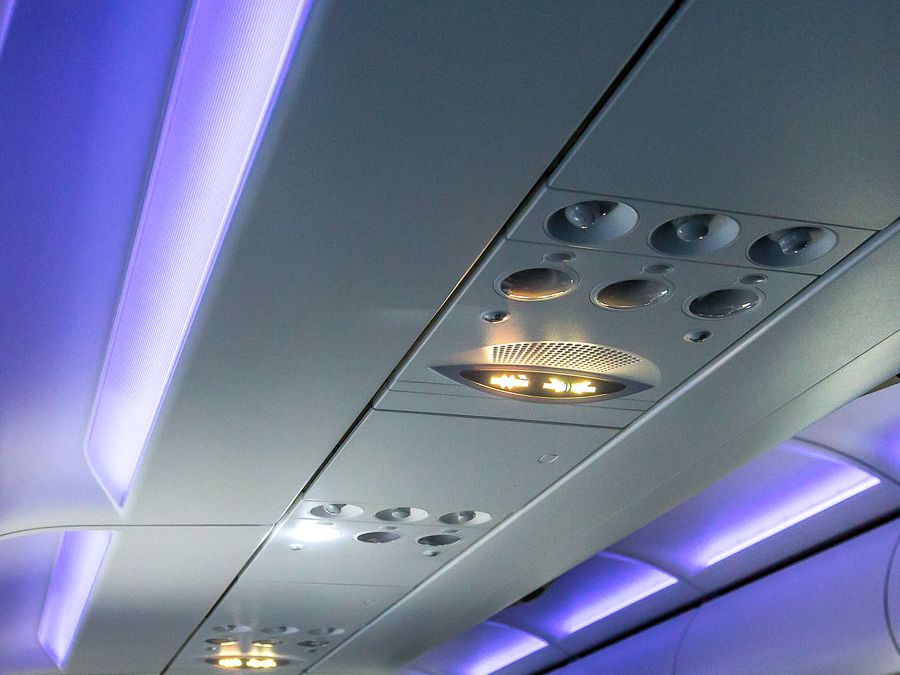
“No Smoking” Signs Still Have To Function

Illuminated "no smoking" and "fasten seatbelt" signs on aircraft
Credit: marako85/ iStock via Getty Images Plus 

It’s been 25 years since in-flight smoking was fully banned in the United States, so many people were left scratching their heads when, in early 2024, United Airlines temporarily grounded its newly delivered Airbus A321neo planes because the “No Smoking” signs couldn’t be switched on or off. 

A (perhaps outdated) 1990 FAA regulation stipulates that flight crews must be able to manually adjust these signs in order for an aircraft to be airworthy, unless the agency approves an exemption. However, United’s previously approved exemption didn’t specifically list the Airbus A321neo model, which it introduced in 2023. The issue was quickly rectified, and the planes are back in service with the no-smoking signs illuminated at all times.

Flight Attendants Often Don’t Get Paid During Boarding

Flight attendant greeting passengers boarding aircraft
Credit: Caia Image/ Collection Mix: Subjects via Getty Images 

In most industries, as soon as you get to work, you’re on the clock. But that’s not usually the case for flight attendants, whose hourly pay technically starts as soon as the aircraft boarding door is closed. All that time doing safety checks and standing in the aisle greeting passengers with a smile and helping fit bags into overhead bins? It’s unpaid work. 

Airlines argue that flight attendants technically are compensated for their time through a scheme known as guaranteed minimum pay, but flight attendants are, understandably, trying to change this long-standing practice through contract negotiations. Delta was the first to implement boarding pay in 2022 — still only at half of flight attendants’ regular hourly wages — and American followed suit in 2025.

Seat 1A Has Special Rules on Some Planes  

Airline passenger gazing out window
Credit: FG Trade/ iStock via Getty Images Plus 

Ah, the airplane window shade. As with the issue of seat recline, the etiquette can get a little fuzzy when it comes to who gets final say on when you should (and shouldn’t) open your shade, which can sometimes lead to uncomfortable confrontations on board. But if you’re lucky enough to be ticketed up front in seat 1A, there’s no debate, at least during takeoff and landing. Because some smaller regional jets do not have the portholes typically found in boarding doors on larger planes, airline regulations require that the passenger seated in 1A keep the window shade up during critical phases of flight, allowing the crew to see out the window if necessary. 

Related: Should You Keep Your Airplane Window Shade Up or Down?

It’s Against the Rules To Skip Your Last Leg

Passenger walking through airport terminal with suitcase
Credit: vitapix/ E+ via Getty Images 

Generally, people like to fly nonstop and prefer not to have a layover. But some crafty travelers intentionally book a connecting flight with no intention of ever stepping foot on the last leg. It’s a practice known as skiplagging or hidden city ticketing, and it’s used when it’s cheaper to book the connecting flight to a different destination than the direct flight to your intended destination.

Say you want to fly from Rome to Atlanta. Delta is the only carrier offering nonstop routes on that route, so it can charge a hefty premium. But if you book a flight from Rome to, say, New York with a connecting flight through Atlanta, your fare may be cheaper since there are several other airlines competing on that route. A skiplagger would simply get off the plane in Atlanta and leave the airport. 

However, this practice violates pretty much every airline’s contract of carriage. If you skip any leg in your planned itinerary, the airline will most likely cancel the rest of your ticket as a no-show, potentially leaving you stranded if you’re in the middle of a trip. They also reserve the right to penalize you by revoking your frequent-flyer miles, so for most travelers it’s probably not worth the risk. 

Related: Everything You Need To Know About Booking Separate Airline Tickets
Post Banner Image
Culture

5 of the Most Famous State Fairs Across the U.S.

By Daily Passport Team
Read time: 4 minutes
July 30, 2025
Updated: July 30, 2025

5 of the Most Famous State Fairs Across the U.S.

By Daily Passport Team
Author
Daily Passport Team
Daily Passport writers have been seen in publications such as National Geographic, Food & Wine, CBC, Condé Nast Traveler, and Business Insider. They're passionate about uncovering unique destinations and sharing expert tips with curious travelers.

Today, the largest fairs across the country draw millions of attendees each summer and fall to celebrate their state’s unique identity and enjoy outdoor entertainment. Certain attractions are a given — towering Ferris wheels and fried food go hand-in-hand — but that’s just the tip of the iceberg. With chart-topping musicians to homemade local delicacies and unique competitions, these are five of the best state fairs in the U.S. that go all out for fair season.

Great New York State Fair – Syracuse, New York

Aerial view of the Great New York State Fair
Credit: Vespasian/ Alamy Stock Photo

America’s first state fair was held in Syracuse, New York, in 1841, attracting around 10,000 to 15,000 people. The nation’s oldest state fair is still one of its biggest —approximately 1 million people visit the sprawling fairgrounds of the Great New York State Fair annually. In fact, the grounds are so big, trolleys and chairlifts are on hand to shuttle fair-goers from one area of the event to the other. 

Want to learn how to milk a goat? You can at the petting zoo. Meanwhile, thrilling amusement rides and games dominate the Midway section, while food plays a central theme throughout. The popular Taste NY event also introduces patrons to local vendors who offer up complimentary samples of their made-in-New-York goodies, from pizza fritte and sausage sandwiches to wine slushies. 

Alaska State Fair – Palmer, Alaska

People browsing stalls at the Alaska State Fair
Credit: Gerry Reynolds/ Alamy Stock Photo

The Alaska State Fair is best known for its impressive giant fruit and vegetable competition, where past heavyweight champions have included a 2,051-pound pumpkin and 138-pound cabbage. The rhubarb pie contest and baked goods contests (which include breads, cakes, candies, and cookies) keep feeding locals’ love of friendly competition. The Alaska State Fair also offers a wide variety of arts and crafts, ranging from exquisite beadwork and clay pottery to natural Alaskan art (including antlers, fur, and dried flowers) and handmade quilts. 

There’s plenty of local food favorites on hand, too, from open-pit prepared Alaskan salmon to fresh oysters, doughnut burgers, and Denali cream puffs. Lastly, there’s the much-anticipated farm exhibit that provides attendees the chance to mingle with baby animals, watch chicks hatch, and see a milking demonstration (and even get in on the action themselves). 

State Fair of Texas – Dallas, Texas

Entrance to the State Fair of Texas
Credit: leekris/ iStock Editorial via Getty Images Plus

The largest state fair in the U.S. hosts well over 2 million people annually, proving once again that everything really is bigger in Texas. Visitors have 24 days to visit Fair Park and catch a concert, cheer on a rodeo, ride the famous 212-foot Texas Star Ferris wheel, and sample dozens of imaginative fried food creations. The livestock Birthing Barn and its adorable baby animals are a popular attraction, and the Cotton Bowl Stadium (located inside the fairgrounds) draws crowds for two days of college football that takes place during the fair. 

For visitors interested to learn more about Texas culture and history, the historic Fair Park encompasses multiple museums and discovery centers, including the African American Museum, the Continental Dar House, the Children’s Aquarium, and the Lone Star Nature Arts Competition Gallery.

Kentucky State Fair – Louisville, Kentucky

Concessions stand and Ferris wheel at the Kentucky State Fair
Credit: Daniel Dempster Photography/ Alamy Stock Photo

Come for the live musical acts; stay for the pulled pork, smoked turkey legs, and beef brisket. If there are two things the Kentucky State Fair does well, it’s music and food; however, there’s much more than that happening during the 11-day affair. In fact, visitors will probably need a few days to experience it all, considering the fair has over 1.3 million square feet of indoor space, an outdoor area spanning 300 acres, nine stages, and eight giant tents. 

Agland dedicates an acre of space to local agricultural vendors to showcase interactive displays of farm equipment, live animals, and other exhibits. The World’s Championship Horse Show is a renowned competition that draws competitors from around the globe. And for some good old-fashioned entertainment, visit Heritage Hall for a tent full of games, music, dancing, and bingo. 

Minnesota State Fair – Falcon Heights, Minnesota

Crowds enjoying amusement park rides at the Great Minnesota Get-Together
Credit: AaronP/Bauer-Griffin/ GC Images via Getty Images

The Minnesota State Fair’s nickname, “The Great Minnesota Get-Together,” is an understatement when you consider that it’s the second-biggest state fair in the country, welcoming roughly 2 million people annually. In addition to the famous headliners to rock the fairground — past headline acts include Tim McGraw and the Doobie Brothers — food is taken quite seriously.

The expansive menu of 500 options includes chocolate malts, deep-fried smelt (don’t knock it till you try it), and frozen cider pops. An underrated feature of the Minnesota fair is the Miracle of Birth Center, a free educational exhibit that teaches about and facilitates the birth of 200 calves, lambs, goats, and piglets over the fair’s duration.

Related: 7 Famous U.S. Landmarks Built for World’s Fairs 
Post Banner Image
Culture

The New Happiest City in the World for 2025

By Rachel Gresh
Read time: 5 minutes
July 30, 2025
Updated: August 6, 2025

The New Happiest City in the World for 2025

By Rachel Gresh
Author
Rachel Gresh
Rachel is a Washington, D.C.–based travel and lifestyle writer with roots in the Great Lakes region. When she’s not writing for publications such as The Discoverer and Interesting Facts, you’ll find her wandering through museums or exploring destinations off the beaten path.

What makes a city truly joyful to live in? Surely, there’s no one-size-fits-all answer, but that hasn’t stopped the researchers at the Institute for Quality of Life from attempting to find out. They analyzed 82 indicators of happiness in cities worldwide based on six key categories — citizens, governance, environment, economy, health, and mobility — to come up with the 2025 Happy City Index. As program director Dr. Bartosz Bartoszewicz explains, “A happy city is one that listens — to children, students, workers, and elders alike. True urban well-being means designing places where everyone can thrive today, without compromising the needs of tomorrow.” Read on to discover the top 10 happiest cities around the globe and take a closer look at this year’s new winner.

Copenhagen: The World’s Happiest City for 2025

Aerial view of busy public square in Copenhagen, Denmark
Credit: Alexander Spatari/ Moment via Getty Images 

Denmark’s coastal capital takes the No. 1 spot for 2025, scoring the highest out of the 600 major cities analyzed. Copenhagen adopts a holistic approach to enhancing the quality of life for its 1.39 million residents, with sustainability, civic engagement, and innovation serving as hallmarks of the city’s character. 

Life expectancy in Copenhagen stands at 79.9 years, well above the worldwide average of 73.5 years. This longevity is bolstered by universal health care coverage and healthy work-life balance, with an average workweek of just 37 hours. Outdoor living is a way of life here, and residents need not go far to find green spaces: Copenhagen boasts nearly one park per square kilometer. 

A key driver in Copenhagen’s happiness is its thriving economy. With approximately 230 businesses per 1,000 residents, the city encourages economic growth and entrepreneurship. Education is another pillar of Copenhagen’s success; Denmark’s high-quality, affordable system ensures university students from the EU attend tuition-free. 

But it isn’t just residents who are happy — life is good for tourists in the Danish capital, too. Highlights include the Renaissance-era Rosenborg Castle and the current home of the Danish Parliament, Christiansborg Palace. Nearby, Tivoli Gardens, an amusement park, offers fun for the entire family, and the seaside Little Mermaid statue draws crowds as a tribute to the famous fairy-tale writer Hans Christian Andersen. While sights like these draw in around 30 million tourists annually, Copenhagen’s robust public transit system keeps things moving efficiently, and nearly 70% of all travel within the city is environmentally friendly.

2025 Top 10 Happiest Cities

Skyline of Singpoare
Credit: guvendemir/ E+ via Getty Images 

The rest of the top 10 list spans just two continents: Europe and Asia. From economics to community spirit, these global cities lead the way in resident happiness:

1. Copenhagen, Denmark 
2. Zurich, Switzerland 
3. Singapore, Republic of Singapore 
4. Aarhus, Denmark 
5. Antwerp, Belgium 
6. Seoul, South Korea 
7. Stockholm, Sweden 
8. Taipei, Taiwan 
9. Munich, Germany 
10. Rotterdam, The Netherlands 

Notably, Denmark is the only country with two cities ranked in the top 10: Copenhagen and Aarhus. Aarhus, ranked the No. 1 city in the 2024 Happy City Index, now sits in fourth place in the 2025 report. This lesser-known Danish city, situated on the eastern side of the Jutland peninsula, is rich in Viking history and seaside charm. 

For the second consecutive year, Zurich claims second place. The picturesque lakeside city is a global hub for banking and finance, boasting a high GDP per capita that makes it one of the most prosperous cities in the world. 

In third place, the Southeast Asia city-state of Singapore continues to foster a strong sense of community happiness despite its dense population of over 6 million. As a beacon for research and innovation, Singapore is home to some of the world’s top universities. Life expectancy there is also among the highest of any city on the index list, averaging 83 years, supported by a strong health care system and balanced lifestyles.

Belgium’s medieval port city, Antwerp, claims fifth place thanks to its strong economy and high level of citizen involvement in government, with 21.1% of employed individuals working in government-related roles. Thanks to high civic engagement and ample access to health care, Antwerp’s residents enjoy a strong sense of community.

Seoul, South Korea, home to over 9.6 million residents, claims sixth place. With an average life expectancy of 85 years, Seoul’s residents live longer than those in any other city on the top 10 world’s happiest cities list, in part due to access to health care and low rates of obesity and violence. Sweden’s capital city, Stockholm, is another city where residents live longer, an average of 83.6 years. This capital city climbed from 11th place in 2024 to seventh in 2025. Stockholm prioritizes sustainability and the preservation of its cultural heritage, along with universal health care, efficient public transportation, and ample green spaces.

Landing in eighth place this year, Taipei, the capital of Taiwan, maintains high levels of public safety and civic engagement, despite being a large, bustling city of over 2.5 million. The city’s investments in education, health care, and technology also contribute to a sense of pride and community among residents.

Germany’s happiest city, and the ninth-happiest in the world, is Munich, the cultural heart of Bavaria. Though this city is best known to international tourists as the gateway to the Bavarian Alps, for its residents, Munich is a sustainable, well-governed city with a focus on education, health care, and green transportation. 

Rounding out the top 10 list is Rotterdam, home to Europe’s largest seaport. The city’s economy thrives on maritime industries and global trade, which supports a healthy local job market and steady influx of investment. The city’s modern infrastructure boasts a robust public transportation system and many green technology advancements.

Related: Top 10 Happiest Countries in the World for 2025

Featured image credit: Dado Daniela/ Moment via Getty Images 

Post Banner Image
Tips

Will Standing-Only Airplane Seats Be Here Soon?

By Bennett Kleinman
Read time: 5 minutes
July 30, 2025
Updated: August 6, 2025

Will Standing-Only Airplane Seats Be Here Soon?

By Bennett Kleinman
Author
Bennett Kleinman
Bennett is a New York City-based staff writer for Daily Passport. He previously contributed to television programs such as the Late Show With David Letterman, as well as digital publications like the Onion. Bennett has traveled to 48 U.S. states and all 30 Major League Baseball stadiums.

Between the narrow seats, limited legroom, and fighting over seat recline, flying for the vast majority of travelers is far from the most comfortable experience these days. But according to recent industry rumblings, things have the potential to become even more uncomfortable in the form of standing-only seats. (Yes, you read that right.) Here’s a closer look at the controversial vertical seat concept and whether or not you should expect them to debut in the near future.

The Skyrider Standing Seat

Standing-only airplane seat prototype

Photo credit: Image courtesy of Aviointeriors

In 2010, the Italian company Aviointeriors unveiled a concept for a new type of airline seat called the Skyrider. The firm debuted its first prototype in 2012, with the most recent 3.0 version of the seat arriving in 2019. Each chair features a rigid back attached to a small seat cushion that’s similar in nature to a traditional bike seat. Passengers are meant to straddle the seat cushion with their legs hanging over the sides, resulting in a half-standing, half-sitting position. Since the seats aren’t designed to recline,  you’ll effectively be upright for the duration of a flight.

The logic behind this design has to do with lessening seat pitch, the distance from one point on a seat to the very same point on the seat behind it. The shorter the pitch, the more seats airlines can theoretically fit into the cabin. Today, the average seat pitch in economy class hovers around 30 inches, but with the Skyrider 3.0, the average pitch can be lowered to just 23 inches.

Aviointeriors claims that these seats would allow airlines to potentially increase cabin capacity by up to 20%, which would likely add to their bottom line. Furthermore, the company notes that the Skyrider 3.0 is 50% lighter than a standard economy-class seat. This means less weight on the aircraft, which results in less fuel consumption. The seats also require less maintenance, which means the planes can spend more time in the air and less on the ground. These cost savings may be compelling for some airlines, even though they come at the expense of customer comfort.

Rumors of a 2026 Debut

Ryanair Boeing 737 departing into partly cloudy skies
Credit: csfotoimages/ iStock Editorial via Getty Images Plus

Some publications, such as the Daily Mail, have reported that a few low-cost carriers are mulling over the idea of rolling out standing-only seats as soon as 2026. According to Euro Weekly News, the seats would be intended for flights of two hours or less, as their design would make them too uncomfortable for long-haul journeys. 

One of the most vocal proponents of standing-only seats is Ryanair CEO Michael O’Leary. Back in 2012, O’Leary proposed a plan to install these seats on his company’s airplanes, which would have bumped up average capacity from 189 seats to 230 seats. At the time, O’Leary suggested that anyone willing to stand would pay a discounted ticket price. That plan never materialized, though similar concepts have been pitched in the 13 years since.


Why You Shouldn’t Be Worried

Prototype of standing-only airplane seats
Photo credit: Image courtesy of Aviointeriors

If you’re worried about standing-only seats popping up on your next flight, you can breathe a sigh of relief — for now. A spokesperson for the European Union Aviation Safety Agency (EASA) told Birmingham Live in May, “In terms of standing seats in aircraft, EASA has yet to have any applications for such an approach nor have we seen any practical use cases because the design of the fuselage does not provide space for standing passengers right across to the window. Any organization applying to use standing seating would face considerable challenges in redesigning aircraft to accommodate them and to demonstrate their ability to meet the safety and evacuation requirements.”

Both the EASA and the Federal Aviation Administration (FAA) require airplane seats to pass dynamic testing that proves they can handle turbulence, and there’s no confirmation that the Skyrider 3.0 seats have undergone this testing yet. It remains to be seen what type of impact these seats would have on the human body in the case of severe turbulence, as the upright position of the seats distributes force in a different manner compared with more traditional airplane seats.

Additionally, the configuration of these standing-only seats may pose complications when trying to evacuate the aircraft, as more people onboard means larger crowds and less mobility. Given that the FAA requires every plane to be evacuable in around 90 seconds, the seats are unlikely to be certified unless those requirements are changed. Furthermore, the configuration of the airplane cabins themselves would likely need to be reconfigured, as the seats are designed in a way that means both the seats and passengers will be higher off the ground and closer to the overhead luggage bins and low cabin ceilings. 

All told, if and when certification takes place, it will be a lengthy process, and it remains to be seen whether such seats will ever take to the skies. For what it’s worth, aircraft manufacturer Airbus also filed a patent in 2014 for a fold-down, bicycle-style seat meant to maximize cabin space, but, like the Skyrider, this seat has yet to come to fruition.

But perhaps the most conclusive evidence to dispel these 2026 rumors comes from Aviointeriors itself. The company recently took to its social media pages to issue a statement, sharing, “The Skyrider, often mistaken for a finalized airline seat ready for takeoff, is in fact a conceptual prototype design.” The company added, “For now the Skyrider is not part of the official lineup. But who knows what the future of aviation may hold?”

Related: 5 Predictions for the Future of Air Travel
Post Banner Image
History

5 U.S. Cities With Surprising Nicknames

By Fiona Mokry
Read time: 4 minutes
July 30, 2025
Updated: July 30, 2025

5 U.S. Cities With Surprising Nicknames

By Fiona Mokry
Author
Fiona Mokry
Fiona has spent her career exploring the world and working in the travel industry, turning her lifelong passion into a profession. From planning custom trips to sharing stories as a travel writer for publications such as The Discoverer, she’s all about helping others experience the world in a deeper, more meaningful way.

Some city nicknames — the Big Apple, the Big Easy, the Windy City — are immediately obvious. Others may leave you scratching your head. From the “Biggest Little City in the World” to the “Athens of America,” these five lesser-known nicknames for U.S. cities prove there’s always more than meets the eye.

Indianapolis, Indiana – “Naptown”

Park in downtown Indianapolis, Indiana
Credit: Ron and Patty Thomas/ iStock via Getty Images Plus 

Given its “Naptown” nickname, you might assume Indianapolis is a dull city, but that couldn’t be further from the truth. The term emerged from the 1920s jazz scene, when musicians began shortening Indianapolis to the most prominent syllable, “Nap.” Over time, the nickname gained a negative connotation, suggesting the city was slow or boring. However, locals these days embrace the term, which celebrates the laid-back, relaxed atmosphere that many Indianapolis residents appreciate. 

Despite having nearly a million residents, Indianapolis feels more easygoing than many other similarly sized Midwestern cities — and it’s far from boring. From the world-famous Indianapolis Motor Speedway to its thriving food and craft beer scene, the city offers plenty of excitement. Meanwhile, historic neighborhoods such as Old Northside and Irvington add historic charm with their 19th-century homes and architecture.

Reno, Nevada – “The Biggest Little City in the World”

Bridge over river in Reno, Nevada
Credit: DenisTangneyJr/ iStock via Getty Images Plus 

Reno is often overshadowed by the bigger and brighter Las Vegas, about 450 miles to the southeast. But Reno embraces its compact size while proudly offering the perks of a much bigger city with its nickname, the “Biggest Little City in the World.” The founding of the University of Nevada, Reno, in 1874 transformed the city from a railroad stop into a cultural hub, and when Nevada legalized gambling, Reno became one of the first cities to merge hotels with casinos, boosting its tourism and gaming industries. 

Today, Reno is a midsize city of under 300,000 people, spread out across 109 square miles. For many travelers, it offers the best of both worlds — it’s close to the Truckee River and Lake Tahoe for outdoor adventures, but the city itself is filled with casinos, resorts, museums, and local markets, all wrapped up in a chill, welcoming vibe.

Sacramento, California – “City of Trees”

Tree-filled park in downtown Sacramento, California
Credit: benedek/ iStock via Getty Images Plus 

You might be surprised to learn that California’s capital is defined by its lush greenery, particularly its trees. In June 2025, Sacramento doubled down on its commitment to greenery by passing the Urban Forest Plan. This forward-thinking initiative aims to double the city’s current tree canopy by 2045, further enhancing Sacramento’s natural beauty and environmental sustainability. 

The importance of trees to the city is nothing new; Sacramento has been known as the “City of Trees” since 1855. However, it was originally dubbed the “City of Plains” due to its lack of greenery; tree planting began as a way to provide shade. Over the decades, community efforts and government initiatives led to Sacramento’s expanding tree coverage, with the neighborhood of Land Park now boasting the densest canopy in the city. Sacramento currently ranks second to Paris for tree coverage per capita, and with its ambitious goal to double the canopy, it could soon claim the top spot.

Hartford, Connecticut – “Insurance Capital of the World”

Green space and skyscrapers in Hartford, Connecticut
Credit: DutcherAerials/ iStock via Getty Images Plus 

“Insurance Capital of the World” may not be a glamorous nickname, but it is an accurate depiction of what Hartford does best: insurance. The Connecticut capital has long been recognized as a hub for the insurance industry, with major insurers and Fortune 500 companies establishing their headquarters in the city. 

Hartford’s connection to insurance dates back to colonial times and is tied to its strategic position on the Connecticut River, which established it as a major trading post between Europe and the Caribbean. Merchants from around the world often met in Hartford and made informal agreements about risk-sharing. These casual agreements laid the framework for more formal arrangements, and the city soon became known as the birthplace of insurance. The Great New York City Fire of 1845, which devastated much of that city’s financial district, led to further growth in Hartford’s reputation as a leading insurance hub. Today, Hartford is home to more than 1,300 insurance providers, solidifying its reputation and ensuring the city’s powerhouse economy for years to come.

Annapolis, Maryland – “Athens of America”

Cityscape of Annapolis, Maryland, at sunset
Credit: Sean Pavone/ iStock via Getty Images Plus 

While Annapolis may not physically resemble Athens, it shares deep cultural and historical ties with the Greek capital. Nicknamed the “Athens of America,” Annapolis earns this title through its strong emphasis on the arts and education, as well as its long-standing reputation as a center of democracy and civic life. The city has long valued individual participation in democracy, much like the ideals once held in ancient Athens. 

Although Annapolis’ architecture doesn’t date back nearly as far as Athens’ Parthenon, its layout was thoughtfully designed by colonial administrator Francis Nicholson, who modeled the street plan after grand European capitals, incorporating Baroque-style design also seen in cities such as London and Paris. Present-day Annapolis boasts more original 18th-century buildings than any other U.S. city, with the well-preserved city center still exuding a sense of Old World charm and sophistication befitting of the city’s nickname. 

Post Banner Image
Culture

10 Unexpected Cultural Faux Pas Around the World

By Fiona Mokry
Read time: 5 minutes
July 28, 2025
Updated: July 28, 2025

10 Unexpected Cultural Faux Pas Around the World

By Fiona Mokry
Author
Fiona Mokry
Fiona has spent her career exploring the world and working in the travel industry, turning her lifelong passion into a profession. From planning custom trips to sharing stories as a travel writer for publications such as The Discoverer, she’s all about helping others experience the world in a deeper, more meaningful way.

Visiting a new country gives us a chance to experience life from a different perspective. But without knowing the local customs, it’s easy to make a cultural misstep. From chopstick etiquette in China to coffee taboos in Italy, here are 10 unexpected cultural faux pas to avoid around the world.

Immediately Accepting Gifts

Person holding wrapped gift
Credit: fotostorm/ E+ via Getty Images 

Gift-giving is an important aspect of Japanese culture, both in personal relationships and in professional settings. When offered a gift, it is customary to politely refuse it a few times before finally accepting, as immediately accepting a gift can be seen as overly eager or impolite. This practice is common even in situations where a gift is expected, such as on a birthday. 

Additionally, it is customary to take the gift with both hands, instead of just one, which is seen as a sign of respect, as is waiting to open the gift in private later. A polite way to say thank you is “arigatō gozaimasu” (pronounced like “ah-ree-gah-toh goh-zah-ee-mahs”). And if you plan to see the gift giver in the future, don’t forget to return the favor at your next meeting. 

Related: 10 of the Most Beautiful Places To Visit in Japan

Touching Someone’s Head

Tourist riding in traditional Thai long-tail boat
Credit: Fiordaliso/ Moment via Getty Images 

In Thai Buddhism, the head, as the highest point on the body, is considered the most sacred part of the body and should never be touched by another person. Doing so is seen as very disrespectful, even as a playful gesture with children, and it could land you in hot water with locals. On the other hand, feet are considered the least pure part of the body. In Thailand, always remove your shoes before entering a temple or someone’s home, and try not to point with your feet or show the bottom of your feet when sitting.

Wearing Shoes Inside the Home

Sandals lined up in entryway
Credit: kohei_hara/ E+ via Getty Images 

Many cultures around the world encourage removing shoes before stepping into a home, which is a sign of respect to the host and also keeps the floors clean. In places such as Japan, Thailand, South Korea, Hawaii, and parts of Europe such as Scandinavia and Turkey, it’s common practice to remove your shoes. In many cultures, a host will provide slippers to guests; in Japan, these indoor house shoes are known as uwabaki

Blowing Your Nose in Public

Woman sitting at computer and blowing nose
Credit: dowell/ Moment via Getty Images 

Blowing your nose in public, particularly at restaurants, is considered poor form in China. (The same is true in several other countries in Asia and the Middle East, such as Japan, Saudi Arabia, and South Korea.) If you need to blow your nose, it’s best to excuse yourself from the table or the public setting, and do so as discreetly as possible. It would also be considered rude to blow your nose with a handkerchief and return it to your pocket, so stick with one-use tissues and an inconspicuous space.  

Greeting While Sitting 

Two people shaking hands
Credit: PeopleImages/ iStock via Getty Images Plus 

In Pakistan and many other countries, it is considered disrespectful to remain seated when introduced to a stranger or an elder. Instead, you’ll observe Pakistanis rising from their chairs to greet and show respect to an elder or stranger when they enter a room. If more than one person is introduced or entering a room at the same time, the elder should always be greeted first. In Pakistan, it is also considered rude to sit with your legs outstretched. 

Smiling at Strangers

Woman sitting on bench smiling at another person
Credit: DjelicS/ iStock via Getty Images Plus 

In America, it may be common to smile at strangers you pass on the street, but in several other cultures, including South Korea, this action may be viewed as strange. A smile suggests friendliness and familiarity, and due to the strong respect for hierarchy and a tendency to be more formal and keep to themselves, many Koreans are less likely to engage with strangers in the casual, familiar way that’s common in many Western cultures.

Drinking a Cappuccino After Noon

Woman drinking coffee and eating breakfast on terrace
Credit: Gary Yeowell/ DigitalVision via Getty Images

Coffee with milk — like a cappuccino — is typically considered a morning beverage in countries such as Italy and Spain, best enjoyed with breakfast. Ordering one after noon is often seen as unusual, as milk is thought to disrupt digestion, so it’s better to consume it in the morning and give your body more time to process it. This doesn’t mean you can’t get your caffeine fix, though — coffee culture thrives in both Italy and Spain. Espresso is the go-to choice for an afternoon pick-me-up, commonly enjoyed while standing at a coffee bar and quickly sipped in a few gulps before continuing with the day.

Related: 4 Rules for Drinking Etiquette in Other Cultures

Public Displays of Affection 

Couple admiring Dubai skyline
Credit: SHansche/ iStock via Getty Images Plus 

In many predominantly Muslim countries in the Middle East, such as the United Arab Emirates, kissing, cuddling, and even holding hands is not acceptable in public. Public displays of affection not only are viewed as inappropriate and indecent, but they also can result in fines and arrest. To avoid an awkward or potentially more serious situation, it’s best to refrain from any PDA while in the UAE. Additionally, avoid practices such as swearing, public drunkenness, and dressing immodestly, all of which can carry more significant consequences here.

Using Chopsticks Improperly

Person using chopsticks to eat bowl of noodles
Credit: miodrag ignjatovic/ E+ via Getty Images 

Dining with chopsticks in China comes with its own set of etiquette rules. For starters, it’s considered impolite to point with chopsticks or use them to move bowls around the table. One of the most disrespectful gestures is leaving chopsticks standing upright in a bowl of rice, as this resembles incense offerings made to the deceased. When not in use, chopsticks should be placed on a chopstick rest or laid horizontally across your bowl.

Chewing Gum

Woman holding coffee cup and placing bubble gum in mouth
Credit: frantic00/ iStock via Getty Images Plus 

Chewing gum isn’t just a faux pas in Singapore — the sale of it is actually illegal. Getting caught chewing gum can result in a fine, while bringing it into the country could land you in legal trouble. The law was introduced in 1994 after multiple issues occurred with vandals sticking gum on Mass Rapid Transit (MRT) door sensors, preventing them from closing properly. Additionally, improper disposal of chewing gum was costing the city about $150,000 a year in cleanup. Littering, spitting in public, and even eating on the metro can also result in a fine in Singapore, which is considered one of the cleanest countries in the world. 

Related: 5 Common Fashion Faux Pas in Foreign Countries
Post Banner Image
Tips

5 Tips for Flying American Airlines

By Peter Vanden Bos
Read time: 7 minutes
July 28, 2025
Updated: July 28, 2025

5 Tips for Flying American Airlines

By Peter Vanden Bos
Author
Peter Vanden Bos
Peter is a Toronto-based journalist, editor, content strategist, and self-professed avgeek with 15 years of experience covering all things travel. Prior to joining Daily Passport, he oversaw newsletter publication for Travelzoo. His favorite destinations to explore include Japan, France, Chile, New Zealand, and his adopted home country of Canada.

These days, no matter which airline you fly, traveling around the U.S. can seem remarkably similar — and not all that glamorous. Yet, there are a few key differences among each of the major U.S. airlines, and understanding them can turn a mediocre experience into a positive one. American Airlines — the world’s largest airline by number of seats — operates hubs in Charlotte, Chicago, Dallas/Fort Worth, Los Angeles, New York, Miami, Philadelphia, Phoenix, and Washington, D.C. If you’re planning an upcoming trip on American, be sure to check out these five helpful tips before you book.

Understand Your Options (and Beware of Basic Economy)

View inside airplane cabin
Credit: Frazao Studio Latino/ iStock via Getty Images Plus 

Like many airlines these days, American offers customers quite a few choices when it comes to the travel experience, and the number of options may overwhelm you. Let’s start with the basics: basic economy. This is American’s lowest-priced option, but it comes with a few important restrictions:

  • After a 24-hour grace period, basic economy tickets cannot be changed or refunded. You’ll be able to cancel for a future travel credit if you added your AAdvantage loyalty number to your booking, but it will cost a $99 fee. 
  • American allows one free carry-on and personal item on basic economy tickets, but checked bags will be extra. 
  • You can choose your seat prior to check-in for a fee; otherwise, one will be assigned to you (and it may be apart from your family or group).

American also offers a standard economy-class option called main cabin. Tickets can be changed without a fee, though you will have to pay any fare difference. Nonpreferred seats can be selected free of charge, but checked bags are extra. As an upgraded experience within the economy cabin, Main Cabin Extra comes with perks like a few extra inches of legroom, early boarding, and complimentary alcoholic beverages.

If you’re looking to upgrade your flight, American has several options:

  • When flying domestically, first class is American’s highest cabin offering. It includes a wider seat with more legroom at the front of the cabin with a dedicated flight attendant, hot meals, and perks like priority boarding and free checked baggage.
  • On shorter international flights (think Mexico, the Caribbean, and Central America), American offers business class. This is the same recliner seat you’ll find in domestic first class on aircraft like the Boeing 737 or Airbus A319.
  • On wide-body aircraft like the Boeing 777 and Boeing 787, American offers premium economy. This is a similar seat to domestic first class or short-haul business class, but it comes with elevated amenities and upgraded meals. It’s available flying to long-haul destinations in Asia, Europe, and South America, plus on select domestic flights, including some flights to Hawaii. 
  • On those same long-haul flights, American also offers Flagship business class. Seats recline into fully flat beds and have direct access to the aisle, and access to the Flagship lounge is included before you take off. (American also currently offers Flagship first class, but this is being phased out.) 

Pro tip: Keep a lookout on the American app or by managing your itinerary online for any upgrade offers, which can typically be purchased using miles or cash. You may be able to score a better deal by upgrading after the fact, as the airline looks to sell unsold seats closer to departure.

Bring Your Own Devices

Airline passenger using tablet
Credit: izusek/ E+ via Getty Images 

If you’re flying on a wide-body aircraft such as the Boeing 777 or Boeing 787 on a longer international flight, you can expect built-in screens in all cabins. 

However, American Airlines is in the process of removing seatback screens from narrow-body aircraft (e.g., Boeing 737s) serving domestic and shorter international flights. On these flights, instead of seatback screens, American offers free entertainment streamed to your personal device, such as a phone, laptop, or tablet. That means you’ll want to come prepared if you’re looking to stay entertained during your flight.

Fortunately, most American planes offer power ports (and the airline is in the process of installing more) so you can keep your devices charged. Currently, Wi-Fi is available for purchase starting at $10 per flight, but American has also announced plans to roll out fleetwide free Wi-Fi, following other airlines such as Delta, United, and JetBlue.

Related: Another U.S. Airline Just Announced Free In-Flight Wi-Fi

Don’t Try To Cut the Boarding Line

Passengers queuing to board aircraft
Credit: South_agency/ E+ via Getty Images 

The internet likes to call them “gate lice,” but even if you’re unfamiliar with this term, there’s a good chance you’ve observed them in action before a flight. They’re the people who stand around crowding the gate before their group is called, often hoping to board earlier to stow their carry-on bags as quickly as possible. With busy and often overworked gate agents, gate lice often make it on the plane before their group is called. 

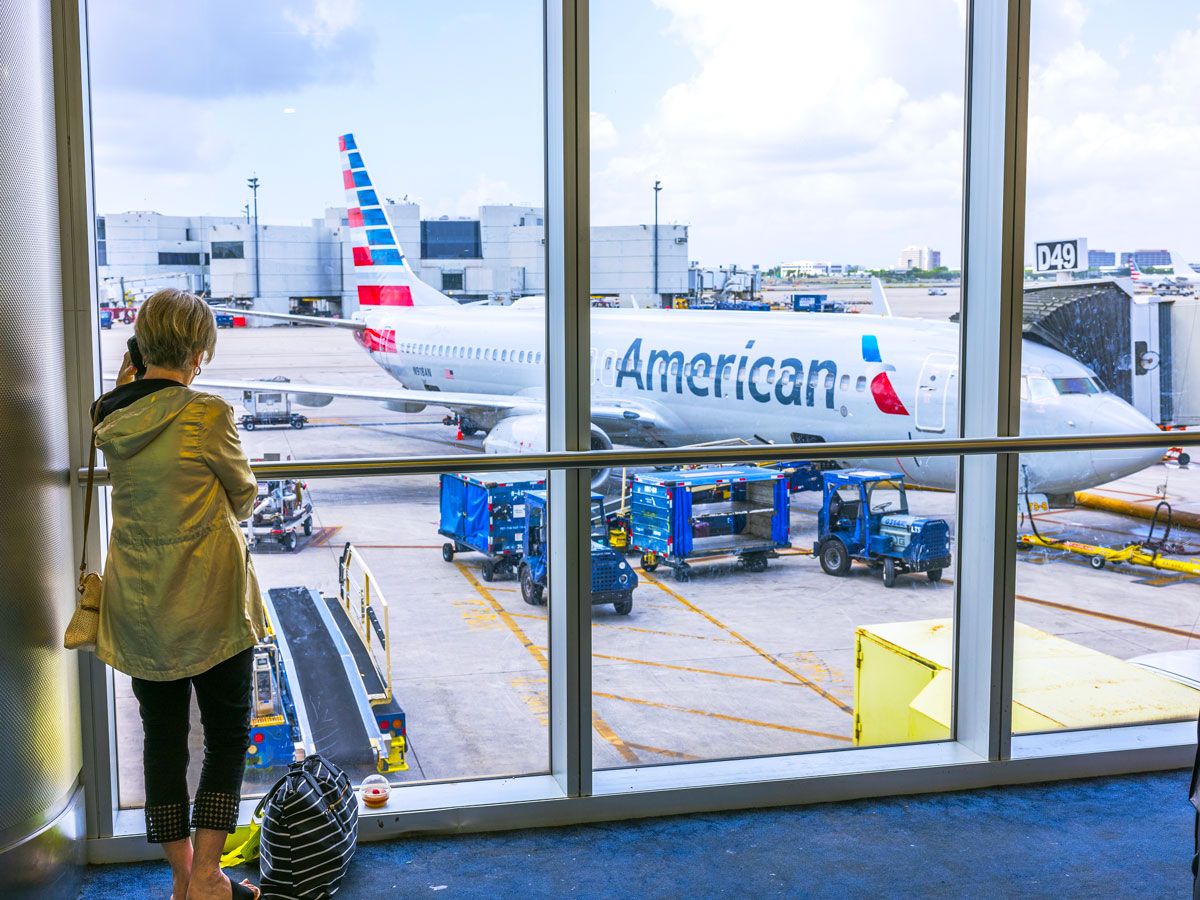
While this is common on many airlines, American has introduced new technology to crack down on the problem. Now, an audible alert lets the gate agent know if a passenger attempts to board before the assigned group on their boarding pass, prompting the agent to send the passenger to the back of the line. So, if you want to avoid potential public shaming, make sure to stay calmly seated until your group is called. 

Of course, many passengers worry about overhead bin space running out before they get a chance to stow their baggage. In that case, you can look to upgrade your boarding priority on American by flying in a premium cabin or by holding elite status or certain American Airlines-branded credit cards. American also offers an a la carte option to purchase early Group 4 boarding on economy-class tickets. 

Related: This Airline Is Cracking Down on People Who Cut the Boarding Line

Rack Up Points (and Other Perks) on Everyday Spending

Customer tapping credit card on payment machine
Credit: andreswd/ E+ via Getty Images 

If you’re flying American, it’s a no-brainer to sign up for AAdvantage, the airline’s free loyalty program, and add your frequent flyer number to your reservation. (Fun fact: AAdvantage was the world’s first frequent flyer program when it launched in 1981.) When you fly American, you’ll earn at least 5 AAdvantage miles per dollar spent on airfare (except basic economy, which earns 2 miles). These miles can be redeemed for free flights, upgrades, and much more.

But flying isn’t the only way to unlock value from AAdvantage: You can also earn points when you shop online or dine out at thousands of stores and restaurants, when you book hotels or car rentals through American, and when you spend on an American Airlines co-branded credit card. You can also earn when you fly on airlines in the Oneworld alliance and other partner airlines.  

Additionally, in 2022, American introduced Loyalty Points. The miles you earn from flying and spending now also count as Loyalty Points, which unlock elite status and other perks. For example, when you hit 15,000 points in the program year, you’ll receive perks such as coupons for preferred seating and priority check-in and security for one trip. At 40,000 points, you’ll reach Gold status, which offers complimentary upgrades, free checked bags, and more points earned per flight. 

Moral of the story: Even if you don’t think you’ll fly enough on American to unlock these perks, keep in mind there are many other ways to earn them, particularly through everyday spending on a credit card or online purchases. 

Unlock Greater Value With Partner Award Tickets

Flight attendant serving drink to passenger
Credit: Caia Image/ Collection Mix: Subjects via Getty Images 

As travel credit cards and loyalty programs have grown in popularity and more travelers are racking up points, some airlines have taken to increasing (often without much notice) the cost required to redeem miles for a free flight. 

So, while you may have been able to redeem, say, 70,000 Delta SkyMiles for a flight from the U.S. to Europe back in 2018, that might cost anywhere from 300,000 to 500,000 miles now. Airlines have also made pricing of award tickets fully dynamic, rather than at fixed prices, so there’s less transparency about the true cost and value of these points.

However, American Airlines has approached this situation a bit differently. At least for now, the airline is alone among major U.S. carriers by still publishing a useful award chart, explaining the starting prices for the amount of miles you’ll need to redeem based on region. Plus, American still offers valuable fixed-price redemptions on many of its international partner airlines. 

According to The Points Guy, this is one of the best ways to redeem AAdvantage miles. For example, as of mid-2025, you can still fly from the U.S. to Europe on an American partner airline such as Iberia or Aer Lingus for the starting price of 57,500 miles in Business Class — far fewer points than are required on other airlines (or even American Airlines’ own flights). The catch is that these awards are classified as “Saver,” and American only releases them in limited quantities, so they might be difficult to find — try to book as early as possible and be flexible with your travel dates and destinations to find the best value.

Post Banner Image
Outdoors

7 States Home to Unique Animal Populations

By Jersey Griggs
Read time: 6 minutes
July 28, 2025
Updated: August 6, 2025

7 States Home to Unique Animal Populations

By Jersey Griggs
Author
Jersey Griggs
Jersey is a travel and lifestyle writer whose work has appeared in publications such as Condé Nast Traveler, Business Insider, and Bust. When she’s not exploring her adopted home state of Maine, she’s likely planning her next big trip.

From exotic seabirds off the coast to piglike creatures roaming the desert, the U.S. is home to some pretty unique animal populations. Some of these creatures, like the African oryx, were introduced to these ecosystems, while others, like the American bison, have lived here all along. Read on to learn about seven states with unusual animal populations — and how to see them for yourself.

Maine – Puffins

Puffins on the rocky coast of Maine
Credit: Scott Suriano/ Moment via Getty Images 

Although puffins typically reside closer to the Arctic, you don’t have to travel all the way to Iceland or Norway to see these unusual seabirds. The only place in the U.S. where Atlantic puffins reside is coastal Maine, where they gather on small, rocky islands to breed and nest. With their black and white plumage, orange beaks, and waddling gait, these unique birds somewhat resemble penguins, despite having no relation.

To view the puffins up close, excursions are available along Maine’s midcoast, with boat tours taking groups out to the various islands inhabited by the seabirds. The National Audubon Society runs tours that cruise by the puffin colony on Eastern Egg Rock, while excursions to Machias Seal Island allow visitors to disembark and view the puffins from a distance on land.

Arizona – Javelinas

Javelina roaming through trees in Arizona
Credit: rtrible/ iStock via Getty Images Plus 

Arizona is home to a unique animal known as the javelina, a four-legged creature with hooves and a large snout. These wild animals may resemble pigs, but they are unrelated, as they are members of the peccary family. Originally brought to the U.S. by European explorers, the species can be found in North, Central, and South America.

Javelinas tend to reside in desert-type ecosystems, usually at an elevation below 5,500 feet, and herds of them can be found throughout Arizona (as well as New Mexico and Texas). They eat a variety of vegetation, including roots and flowers, favoring the succulent desert plants found throughout the Southwest. A great place to spot them in the wild is Saguaro National Park, where they are most active during the coolest parts of the day, especially in the early morning.

Florida – Manatees

Manatees swimming in Florida river
Credit: DrewsPhotos/ iStock via Getty Images Plus 

Manatees are gentle, aquatic mammals that are most closely related to elephants. They are often found in shallow bodies of water, such as slow-moving rivers, estuaries, and saltwater bays. They feed on seagrass and freshwater vegetation, and as migratory animals, they flock to Florida during the winter.

There are several spots in Florida to watch manatees in their natural habitat. During the winter, they tend to congregate in large numbers at Three Sister Springs, which offers kayak rentals and boat tours for prime viewing opportunities. Blue Spring State Park is also a good place to spot them from land, thanks to the park’s numerous boardwalks and overlooks. And the city of Tampa is home to a Manatee Viewing Center, with a large tidal walkway perfect for spotting the gentle creatures.

Related: 6 Underrated Spots in Florida Where You Can Beat the Crowds

Montana – Bison

Bison grazing on grassy plain in Montana
Credit: Wander Photography/ iStock via Getty Images Plus 

Though they once roamed North America in the millions, there are now only about half a million bison left in the United States. Much of this population can be found in Montana, where bison have resided for thousands of years. Weighing up to 2,000 pounds, these massive animals are known for their low-hanging heads, sharp horns, and shaggy coats.

Yellowstone National Park is one of the best places to see bison, with large herds that live on the protected land year-round. In summer, they graze on the grasslands in Lamar and Hayden valleys; in winter, they prefer the hydrothermal areas around Gardiner Basin, the Madison River, and Blacktail Deer Plateau. The Bison Range near Moiese is also home to a 19-mile driving loop, allowing ample opportunity to view bison in their natural habitat. 

New Mexico – African Oryx

African oryx in the wild
Credit: Bill Gorum/ Alamy Stock Photo

New Mexico has a population of roughly 6,000 African oryx, also known as gemsbok. This large antelope species native to the Kalahari Desert is known for its distinctive black and white face, dark underbelly, and protruding horns that reach up to 47 inches. Oryx have thrived in New Mexico since being introduced to the region in the 1970s. At the time, they were brought to the U.S. to provide hunters with more opportunities to pursue exotic big game.

After the animals were released in the White Sands Missile Range, however, it was discovered that African oryx were not a healthy addition to the region’s ecosystem. A large fence has been installed to keep the oryx out of the nearby White Sands National Park and ensure the park’s native species aren’t affected. Still, oryx can often be spotted near the Missile Range or Vevillete National Wildlife Refuge. 

New York – Seneca White Deer

Seneca white deer standing in forest
Credit: DebraMillet/ iStock via Getty Images Plus 

The Finger Lakes region in upstate New York is home to a unique white-tailed deer called the Seneca white deer. They are not a different species than their fawn-colored brethren, nor are they albino — instead, the deer carry a recessive genetic trait known as leucism that causes white fur. They began to flourish in the region during the 1940s after the U.S. Army enclosed the former Seneca Army Depot, inadvertently protecting the white deer from predators.

After decades of passing on the recessive trait with every generation, they’ve now grown to a population of around 300. The herd lives peacefully on the site of the former army depot, which has since been christened Deer Haven Park. To see this unofficial local mascot in person, self-guided auto tours and bus tours are available through the park.

Hawaii – Green Sea Turtles

Underwater view of sea turtles swimming off the coast of Hawaii
Credit: Philip Thurston/ E+ via Getty Images 

Known as honu to Native Hawaiians, the green sea turtle is considered a sacred animal in Hawaii. A symbol for wisdom and good luck, these special creatures have been endangered since the 1970s, although numbers have recently increased due to conservation efforts.  Roughly 96% of the turtles’ nests can be found within the French Frigate Shoals, the largest atoll in the Northwestern Hawaiian Islands, with turtles migrating between feeding grounds and nesting beaches. 

There are quite a few spots around Hawaii where you can spot these large turtles, which have a lifespan of up to 80 years. On Oahu’s North Shore, the aptly named Turtle Beach is known for frequent sightings of turtles on land. They can also be spotted on Punaluʻu Beach on the Big Island, although snorkeling tours give you a better chance of seeing them in the water. Planning a trip between May and September will increase your chances of spotting one in the wild.

Related: Take Your Knowledge of North American Animals to the Next Level
Post Banner Image
Tips

This Airline Is Finally Ending Its Open Seating Policy

By Peter Vanden Bos
Read time: 4 minutes
July 28, 2025
Updated: July 28, 2025

This Airline Is Finally Ending Its Open Seating Policy

By Peter Vanden Bos
Author
Peter Vanden Bos
Peter is a Toronto-based journalist, editor, content strategist, and self-professed avgeek with 15 years of experience covering all things travel. Prior to joining Daily Passport, he oversaw newsletter publication for Travelzoo. His favorite destinations to explore include Japan, France, Chile, New Zealand, and his adopted home country of Canada.

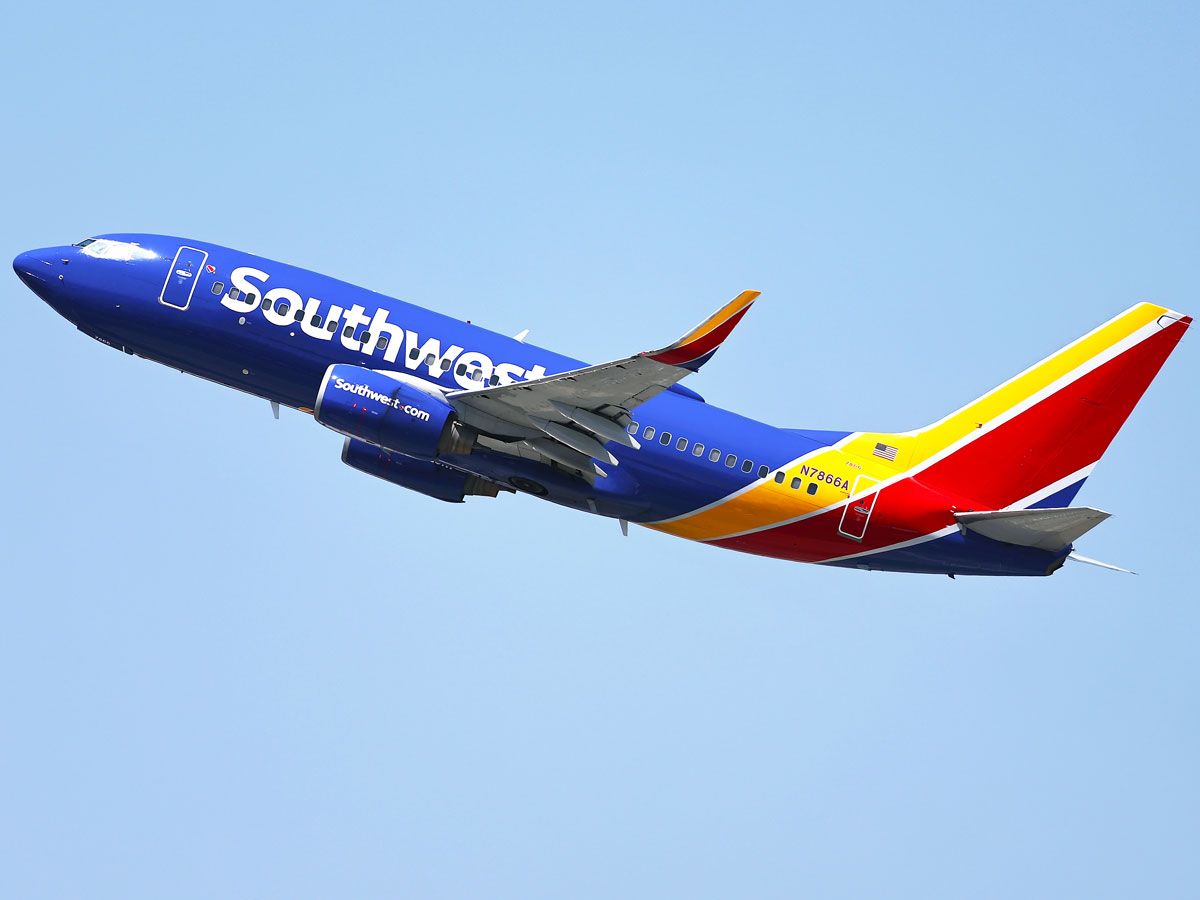
While the vast majority of airlines assign seats ahead of departure, for decades, one airline has bucked the trend: Southwest. The Dallas-based airline is famous (or infamous, depending on whom you ask) for its open-seating policy, in which customers are assigned a boarding number based on their time of check-in and can choose any available seat when they walk on the plane. But after more than 50 years, the airline is done holding out. Find out when Southwest will finally make the switch to assigned seats — and what other big changes are in store at America’s fourth-largest airline.

When Will Southwest Start Assigning Seats?

Empty interior of Southwest Airlines airplane
Photo credit: Image courtesy of Southwest Airlines 

Southwest Airlines has long been known for doing things differently. When the airline launched flights in 1971, the carrier earned a reputation for offering low fares, frequent flights, and no-frills service. 

To keep costs low, Southwest operated only Boeing 737s and scheduled them to have quick turnaround times. While other airlines could have planes sitting at the gate for up to an hour between flights, Southwest became famous for allotting as little as 10 to 20 minutes between flights. Open seating aided in those quick turnarounds, as it was generally faster to board an airplane when people could choose any open seat. 

Since Southwest did things differently from other airlines, it was a reason to choose the carrier and have the flexibility to simply sit down in any available seat. On the contrary, there are some travelers who prefer the certainty of knowing where they’ll be sitting — and not having to set an alarm to check in exactly 24 hours before departure to secure a good boarding position — who might have booked away from the airline.

Times have changed, however. With profits lagging behind those of competitors, Southwest recently announced it was taking steps to boost profitability. For many travelers, the biggest headline is that flights with assigned seats will be available for purchase as of July 29, 2025, with the first flights to feature assigned seating taking off on January 27, 2026. Fans of the open-seating policy have a few more months to take advantage of it before it goes away for good.

New Boarding Process and Seating Options

Passengers lining up to board airplane
Credit: Hinterhaus Productions/ DigitalVision via Getty Images 

Assigned seating isn’t the only change to Southwest’s business model. The airline is refitting its Boeing 737s to introduce an extra-legroom section at the front of the cabin and near exit rows, which will feature — for an extra fee — up to 5 extra inches of legroom along with dedicated overhead bin space and upgraded snacks and beverages .

Travelers will also be able to pay extra for a “preferred” seat on Southwest. Though these don’t feature extra legroom, they are located near the front of the cabin, so customers will be able to deplane sooner. To make space for the new extra-legroom seats, Southwest will be reducing legroom for standard seats, which make up the rest of the plane.

Once assigned seating rolls out in January 2026, Southwest will also introduce a new boarding process. Gone are the lettered boarding groups and assigned boarding numbers; in their place will be eight numbered boarding groups, similar to on other airlines. Among the first groups to board will be those who purchased an extra-legroom seat or an upgraded fare bundle, along with elite members and holders of a Southwest credit card. 

Also New: Baggage No Longer Flies Free

Passengers rolling luggage through airport check-in lobby
Credit: South_agency/ E+ via Getty Images 

After American introduced checked baggage fees in 2008 and other airlines quickly followed, Southwest once again bucked the trend by continuing to offer two free checked bags to all passengers. Unfortunately, that generous policy ended for reservations booked on or after May 28, 2025. Now, checked bag fees will apply to most customers, except those who hold elite status or a co-branded credit card. 

Along with baggage fees, Southwest also introduced basic economy fares for the first time. Like on other airlines, passengers holding a basic-economy ticket will have their seat assigned at check-in (unless they pay an extra fee) and board the aircraft last. These tickets also earn fewer frequent-flyer points and have restrictions on changes and cancellations. 

Clearly, change is in the air at Southwest, and it remains to be seen how it all shakes out with customers. At least for the time being, the announcements have certainly stirred some controversy in online forums and with industry experts, with Skift proclaiming that Southwest is “now just like every other airline.”   

Related: Why Your Checked Bags Are Getting More Expensive

Featured image credit: Courtesy of Southwest Airlines

Post Banner Image
Outdoors

9 Hidden Natural Wonders Around the World

By Daily Passport Team
Read time: 9 minutes
July 23, 2025
Updated: August 6, 2025

9 Hidden Natural Wonders Around the World

By Daily Passport Team
Author
Daily Passport Team
Daily Passport writers have been seen in publications such as National Geographic, Food & Wine, CBC, Condé Nast Traveler, and Business Insider. They're passionate about uncovering unique destinations and sharing expert tips with curious travelers.

The world’s most famous natural wonders — the likes of the Grand Canyon, the Great Barrier Reef, and Yellowstone National Park — all draw millions of visitors each year. But those destinations only scratch the surface of the planet’s most fascinating natural attractions. From a bioluminescent sea in the Maldives to a rainbow river in Colombia, discover nine of our favorite lesser-known natural wonders around the world.  

Waitomo Caves – New Zealand

Steps leading into New Zealand's Waitomo Caves
Credit: Westend61 via Getty Images 

One of the most sublime natural wonders on New Zealand’s North Island has an unassuming star: the tiny, yet mighty glowworm. At the Waitomo Caves, thousands of these insects dangle by their silken threads from the cave ceilings, their namesake glow — a distinctive bluish-green hue — illuminating the subterranean roofs like a starry night sky. The glow of these insects serves to attract prey for food, but to visitors, the luminescence creates an atmosphere reminiscent of a fairy tale. 

The worms, which are actually a species of fungus gnat called Arachnocampa luminosa, are endemic to the island country. The caves the glowworms dwell in are no less spectacular than the insects themselves, formed from limestone that dates back some 30 million years. Visitors can traverse an intricate system of footpaths through this underground world or quietly float beneath the glowworms in rope-led boats — either is an unforgettable experience, and one you can’t find anywhere else but in New Zealand. 

Related: 7 of the Coolest Caves You Can Visit Around the World

Wadi Rum – Jordan

Reddish desert landscape of Wadi Rum in Jordan
Credit: Mateescu Mugur/ iStock via Getty Images Plus 

It’s easy to see why Wadi Rum — a fantastical desert valley in southern Jordan, near the Saudi Arabia border and the Red Sea — is also known as the Valley of the Moon. The landscape of nearly vertical red sandstone gorges, natural sandstone arches, and massive caverns is thrillingly disorienting and could easily be mistaken for an alien planet. Hollywood directors have noticed, too, using the valley as an otherworldly stand-in for films such as Dune, Prometheus, and The Martian. But Wadi Rum’s most famous starring role was as itself, in the 1962 classic film Lawrence of Arabia, a movie that put Jordan’s tourism industry on the map.

In 2011, UNESCO declared Wadi Rum (which translates to “dry valley”) a World Heritage Site, not just for the spectacular scenery but also for the region’s human history, which dates back up to 12,000 years. There are an estimated 25,000 petroglyphs throughout the valley — gorgeous rock art that provides a fascinating glimpse into the lives of Wadi Rum’s earliest inhabitants. 

Colca Canyon – Peru

Overlook of Peru's Colca Canyon
Credit: tobiasjo/ E+ via Getty Images 

High in the Andes Mountains of southern Peru lies one of the planet’s deepest canyons, a chasm that — at its lowest point — cuts approximately 11,155 feet into the earth. Nearly twice as deep as the Grand Canyon, the spectacular Colca Canyon extends for more than 62 miles, filled with wonders both natural and human-made. The sloping landscape is famous for Andean condors, whose wingspan can stretch up to 10 feet, but it’s also home to at least a dozen Indigenous settlements, including the Chivay and Yanque peoples. The wititi, an elaborate costumed love dance from the Yanque culture, originated in the region and is listed on UNESCO’s list of Intangible Cultural Heritage of Humanity

Expectedly, Colca Canyon offers visitors many opportunities to work up a sweat, including rafting, kayaking, biking, hiking, or even zip-lining between the canyon walls. But for those more inclined toward relaxation, the canyon’s proximity to dozens of volcanoes has created a number of thermal baths that are open to the public. All of this is accessible via a bus ride from Machu Picchu, allowing visitors to combine two of Peru’s most epic sights in one journey.

Related: 5 Breathtaking Canyons Around the World

Shilin Stone Forest – China

Towering karst formations of China's Shilin Stone Forest
Credit: ImpaKPro/ iStock via Getty Images Plus 

Some 270 million years ago, this stretch of western China’s Yunna province was a shallow sea, but today a beguiling limestone labyrinth rises in its place. Shilin (which actually means “stone forest”) is one of the world’s only examples of this unique karst topography, where the forces of erosion have slowly (over millennia) created a rocky fairyland of towering tree-like spires and mushroom-shaped stones. 

Part of the South China Karst UNESCO World Heritage Site, the enchanting “forest” covers almost 200 square miles. In addition to the surreal limestone towers, Shilin contains caves, an underground river, waterfalls, and lakes, including one with a small island at its center.  And don’t leave without visiting the famous Ashima Stone: According to a local legend among the Sani people, it was created when a beautiful girl named Ashima was turned to stone after drowning in a flood that was caused by a rejected suitor.

Tunnel of Love – Ukraine

Railroad track surrounded by a tunnel of trees in Ukraine
Credit: Alina Rudya/Bell Collective/ Photodisc via Getty Images 

Just outside the city of Klevan in western Ukraine, a private train transports lumber to a factory that produces sheets of plywood. That doesn’t sound particularly like a natural wonder, but a 4-mile stretch of the track is lined with closely spaced trees, their branches mingling overhead to form a beautiful leafy arch plucked straight out of a fairy tale. Although the trees were planted during the Cold War to obscure the visibility of a Soviet-era military installation, the resulting “tunnel” has become a popular spot for tourists around the world, and particularly for sweethearts — legend has it that lovers strolling underneath will be granted a wish, and the intimate scene also makes it a popular place for proposals.

If you want to walk along the tunnel yourself, it’s only a short stroll from the center of Klevan. (Or catch a marshrutka, one of the small buses that are ubiquitous in Ukraine, from nearby Rivne or Lutsk.) The leaves are at their brightest in spring and summer, but fall colors prove equally as magical. Just be sure to keep a sharp eye out for the train — this is a working railway, after all.

Chocolate Hills – The Philippines

The Chocolate Hills of the Philippines
Credit: Nimei/ 500px via Getty Images 

Though they sound like something out of Willy Wonka, the Chocolate Hills of the Philippines’ Bohol province won’t satisfy your sweet tooth. They may take your breath away, though. This collection of more than 1,200 small, conical brown hills takes its name from the brown grass covering the peaks in the dry season. But while the 20-square-mile landscape filled with these geological oddities is surely mesmerizing, geologists still aren’t sure exactly how they came to be in the first place. 

One (plausible) theory is that the conical hills resulted from thousands of years of marine limestone buildup over hardened clay, giving them their unique shape. Local lore has also attempted to fill in the gaps — one origin story tells of a giant named Arogo who was in love with Aloya, a mortal woman. When Aloya died, Arogo was heartbroken and couldn’t stop crying, and his tears formed the hills. One thing that’s for certain: For some of the best vistas, head to Carmen or Sagbayan (both of which have resorts with viewing platforms) in late afternoon, and watch the sun setting over the chocolatey mounds as far as the eye can see.

Caño Cristales – Colombia

Colombia's rainbow-colored Caño Cristales river
Credit: Claudio Sieber/ iStock via Getty Images Plus 

For much of the year, this 62-mile-long river located about 175 miles south of Bogotá wouldn’t be worth going out of your way for. But in-the-know travelers who make the trek between July and November will witness Colombia’s “Liquid Rainbow” — a natural phenomenon found nowhere else on the planet. During these months, the otherwise unassuming river explodes into an array of psychedelic colors, all thanks to a blooming river weed called Macarenia clavigera.

Part of the Sierra de La Macarena National Natural Park — tucked into a stunning mountain range near the Andes — the fast-moving river and its falls have carved pits into the rocks along its bed over time, creating a perfect environment for the Macarenia clavigera to thrive. The plant mostly blooms in deep reds, maroons, and pinks, but where there’s shade over the water, the blooms grow bright green and yellow and sometimes even blue — giving the river its nickname, the “River of Five Colors.” But some onlookers, putting it even more simply, have dubbed it the “most beautiful river on Earth.” 

Sete Cidades Lake – Portugal

Viewpoint of Sete Cidades Lake in the Azores islands of Portugal
Credit: DaLiu/ iStock via Getty Images Plus 

The average American traveler might be hard-pressed to pinpoint the Azores on a map, but the fact that this chain of volcanic islands remains relatively untouristed (by European standards, at least) is a big part of their allure. Belonging to Portugal and located about 800 miles off the country’s Atlantic coast, the Azores sit at the meeting point of the African, American, and European tectonic plates — a marriage that is responsible for the islands’ dramatic landscapes filled with natural volcanic wonders, from mud pots to fumaroles and caves.

One of these wonders you may at least recognize from postcards: Sete Cidades Lake. Roughly 3 miles wide and surrounded by bright-green forest, Sete Cidades is actually a twin lake that fills two sides of an extinct volcanic cauldron on São Miguel Island, separated by a narrow strait. Remarkably, the lakes are different colors — one bluish, one greener — due to the different algae found in each. (According to local legend, one lake formed from the tears of a shepherd and the other from a princess with whom he shared a forbidden love.) To get the best view, hike up to the aptly named Vista do Rei lookout, which translates to “King’s View.”

Related: Why Portugal’s Azores Islands Should Be on Your Bucket List

Sea of Stars – The Maldives

The "Sea of Stars" along sandy beach in the Maldives
Credit: AtanasBozhikovNasko/ iStock via Getty Images Plus 

A dazzling aquatic light show transforms the surf of Mudhdhoo Island in the Maldives into a “Sea of Stars,” much like the night sky above. Although it looks like a path strewn with countless blue Day-Glo beads, no mermaid’s jewel box has washed ashore here — the light source is thanks to firefly-like ostracod crustaceans, some as small as sesame seeds. When these tiny creatures react with oxygen, they emit beams for up to minutes at a time, a protective process known as bioluminescence that is meant to scare off marine predators. 

While bioluminescent ostracods surface in various locales, including the Caribbean, rarely are they as conspicuous as on Mudhdhoo Island, one of the nearly 1,200 coral islands that make up this Indian Ocean archipelago. Part of the Baa Atoll, the island is accessible via a 15-minute speedboat ride from the Maldives’ capital, Malé. Some of the island’s local residents advise visiting when a new moon brings saturated darkness and you can tiptoe through the magical tide.