

Post Banner Image
Tips

What Is the “Townsizing” Travel Trend?

By Bradley O'Neill
Read time: 7 minutes
August 4, 2025
Updated: August 6, 2025

What Is the “Townsizing” Travel Trend?

By Bradley O'Neill
Author
Bradley O'Neill
Bradley is an English travel writer who’s wandered through 50-plus countries and lived on four continents while chasing waves, the perfect pint, and family adventures. Bradley's work has appeared in publications such as Skyscanner and Matador Network, and he now splits his time between Buenos Aires and Uruguay.

While big cities never sleep, an increasing number of travelers are choosing to hit the snooze button instead. Some of the most in-demand getaways are now the quietest ones — think laid-back small towns with walkable main streets, idyllic countrysides, and unhurried afternoons. Dubbed “townsizing,” this growing travel trend is not only about where you travel, but also about how you feel when you’re there. Find out more and our top places to try it below.

Why Are People Turning to Townsizing?

Steps leading to park in Galena, Illinois
Credit: Alexis Gonzalez/ iStock via Getty Images Plus 

According to Priceline’s 2025 travel trends report, townsizing is all about the search for, or return to, simplicity. For some travelers, it’s the rediscovery of something that feels familiar and relaxing. For others, it can be an opportunity to step into the storybook charm of their favorite TV movies or series. In fact, the Priceline report found that 89% of Gen Zers are leaning toward this latter preference, with 67% of those surveyed craving a small-town feel. Here’s what’s fueling the shift:
  • Slower Way of Life: Forget the agendas and alarm clocks — townsizing destinations are places that invite you to linger over breakfast, wander without maps and apps, and allow days to unfold naturally. It’s less about checking the boxes of visiting big tourist destinations and popular cities and more about discovering places that are off the tourist radar. 

  • More Personal Local Experiences: Whether it’s a farmers market, a mom-and-pop diner, or a community-run gallery, you’ll be face-to-face with the actual people who bring them to life. Townsizing encourages travelers to skip the chain stores and focus on who and what really make a place special. 
  • Affordability and Accessibility: Many of these towns sit just outside major cities, offering a fresh perspective without the hassle and logistics of a full-blown vacation. You’ll typically find fewer crowds and lower price tags, perfect for budget-friendly and spontaneous trips. 
  • Peace and Quiet: In a world seemingly wired for noise, townsizing offers something radical: stillness. Think streets free from honking horns, nights without sirens, and mornings with a soundtrack of birdsong. 
  • Connection With Nature: Going completely off-grid isn’t the only way to feel connected with nature. Townsizing destinations combine the best of both worlds and often have farmland, forests, lakes, and mountains at their doorsteps.

6 Great Places for Your Next Townsizing Trip

White church with tall steeple surrounded by fall foliage in Stowe, Vermont
Credit: haveseen/ iStock via Getty Images Plus 

Curious about where to try townsizing? The movement doesn’t refer to one specific destination, but rather anywhere that promises charm, tranquillity, and a timeless allure. That could be a coastal village with a historic lighthouse and a gentle sea breeze or a mountain retreat close to hiking trails and fishing spots. It’s all about local businesses, traffic-free roads, and easy access to the countryside. 

Forks, Washington

Welcome sign for the town of Forks, Washington
Credit: miroslav_1/  iStock Editorial via Getty Images Plus

Forks, where the popular Twilight series is based, sits on Washington’s Olympic Peninsula, nestled between the Olympic mountains and the wild Pacific coastline. About a four-hour drive from Seattle, the town started out as a logging community, a proud heritage celebrated at the Forks Timber Museum. Its fame rocketed in the late 2000s with the cinematic release of The Twilight Saga. Today, fans flock to the Forever Twilight in Forks Collection to explore locations featured in both the books and movies. 

While Forks offers plenty of pop culture appeal, it also serves as a gateway to the fresh air and misty forests of the Olympic Peninsula. Hiking trails wind through the soaring moss-covered trees of Hoh Rain Forest — one of the planet’s most biodiverse rainforests and one of the quietest places in the U.S. — while dramatic sea stacks decorate the shores of Rialto Beach. 

Galena, Illinois

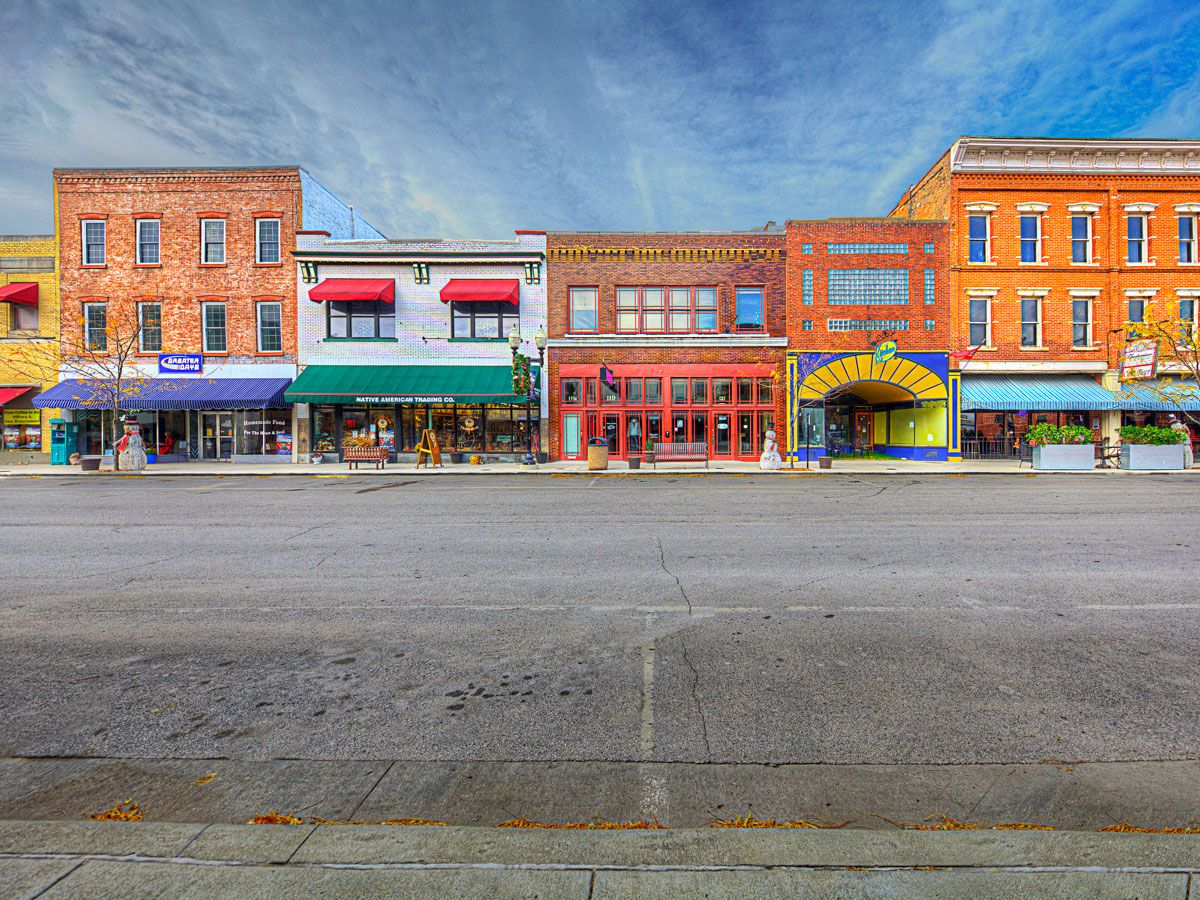
Boutiques in downtown Galena, Illinois
Credit: Wirestock/ iStock Editorial via Getty Images Plus

Around three hours by car from Chicago, Galena blends 19th-century charm with outdoor activities in the hills of northwest Illinois. The town was once a prominent mining hub and river port, but today life revolves around its picture-perfect Historic Main Street, lined with boutique shops and independent cafés in well-preserved brick buildings. Explore the town’s history by seeing the Civil War monuments at Grant Park and retracing presidential footsteps at the Ulysses S. Grant Home

Galena is also a short hop from countryside vineyards and the Mississippi River bluffs, where visitors can enjoy activities such as biking, boating, golfing, and hiking. Whether you’re coming for the cross-country skiing and snowshoeing at Casper Bluff in winter or the Great Galena Balloon Race in summer, Galena is an appealing year-round destination to hop on the townsizing trend. 

North Wildwood, New Jersey

Boardwalk along the beach in North Wildwood, New Jersey
Credit: Creative-Family/ iStock Editorial via Getty Images Plus

Located on the northern tip of Five Mile Beach, North Wildwood was established in 1885 as a fishing village called the Borough of Anglesea. For centuries prior to this, it was a prime fishing and hunting spot for generations of Indigenous peoples. The name was changed in 1906 to link it to neighboring Wildwood, which was growing in popularity as a seaside resort. North Wildwood now offers a coastal beauty that’s quieter and more relaxed than Jersey Shore hot spots like Atlantic City and Ocean City.

Wildwoods Boardwalk, stretching for 38 blocks, is a great place for early-morning bike rides, nostalgic tram trips, and classic funfair adventures. The quintessential Surfside Pier features roller coasters, water rides, and other family-friendly attractions. Meanwhile, a tour of Hereford Inlet Lighthouse delves into the history of one of the most significant landmarks on Five Mile Beach. 

Old Saybrook, Connecticut

Lighthouse on the coast of Old Saybrook, Connecticut
Credit: lucky-photographer/ iStock via Getty Images Plus 

Old Saybrook is a waterfront gem located where the Connecticut River meets the Long Island Sound. One of Connecticut’s oldest towns, it was first home to the Algonquin Nehantic peoples and later settled by Europeans in the 1600s. The story of its development is showcased at the Old Saybrook Historical Society’s Hart House. 

Townsizing fans will surely appreciate Old Saybrook’s small-town vibe, with inviting cafés, seafood restaurants, and old pubs that are housed in colonial-era buildings. For culture buffs, the old town hall doubles as the Katharine Hepburn Cultural Arts Center, a theater and museum dedicated to the town’s most famous former resident. After visiting, enjoy walks and swimming at Harvey’s Beach and Town Beach, or visit the nearby Stewart B. McKinney National Wildlife Refuge, which brings visitors up close with undeveloped coastal habitats. The town is located just 30 miles east of New Haven.

Stowe, Vermont

Chair lift in Stowe, Vermont, during fall
Credit: AlbertPego/ iStock via Getty Images Plus 

Small-town charm and spectacular landscapes beckon in Stowe, located between the Green Mountains and Worcester Range in northern Vermont. Once mostly farmland and lumber country, Stowe has evolved into a year-round tourist destination. Set against a backdrop of lush green countryside, Main Street is home to wood-framed buildings that host boutiques, cafés, and cozy inns. Towering above town is the Stowe Community Church, featuring the state’s tallest steeple.

Outside the town center, follow the 5.3-mile Stowe Recreation Path along the banks of the Little River or experience more of Vermont’s natural beauty via the Green Mountain Byway. For snow sports enthusiasts, Stowe Mountain Resort has over 100 trails spread across two mountains. And for film fans, the von Trapp Family Lodge and Resort is owned by the real-life family who inspired The Sound of Music.

Three Rivers, California

Kaweah River flowing through the town of Three Rivers, California
Credit: bradleyhebdon/ iStock via Getty Images Plus 

Three Rivers sits at the edge of Sequoia and Kings Canyon National Parks, roughly a four-hour drive from both Los Angeles and San Francisco. Straddling the Kaweah River, it was home to the Yokut peoples before becoming popular with European ranchers. Today, Three Rivers is the type of place that invites you to slow down while also having easy access to nature and outdoor pursuits. The small community is home to a mix of artists, craftspeople, musicians, and writers, who are celebrated at annual events such as Jazzaffair and the Rebud Arts and Crafts Festival

Finding outdoor activities nearby is never a problem. Depending on what time of year it is, you can go biking, hiking, or horseback riding — or perhaps try water-based sports such as boating, fishing, and kayaking. Sequoia National Park, famous for its enormous sequoia trees, turns into a playground for cross-country skiing, sledding, and snowshoeing in winter. 

Post Banner Image
Geography

What Is the Tropic of Cancer? Earth’s Imaginary Lines, Explained

By Nicole Villeneuve
Read time: 5 minutes
August 4, 2025
Updated: August 6, 2025

What Is the Tropic of Cancer? Earth’s Imaginary Lines, Explained

By Nicole Villeneuve
Author
Nicole Villeneuve
Nicole is a writer and researcher with over 15 years of experience seeking out arts, culture, and lifestyle stories in places like remote northern Quebec and the unforgettable streets of Amsterdam. Her work has also appeared in PureWow, Brit + Co, AUX TV, and CBC.

When you look at a globe or world map, you’ll probably notice it’s crisscrossed with a series of horizontal and vertical lines, circles, and curves. None of these physically exists on Earth, but each serves a purpose. Some help us describe exact geographical positions, while others are symbolic, serving as tools we use to divide the Earth into hemispheres. If you’ve ever wondered what the Tropic of Cancer or the equator are, below we explain some of the best-known imaginary lines on Earth.

Equator

Equator monument near Quito, Ecuador
Credit: Sebastián Crespo Photography/ Moment Open via Getty Images 

The equator, the most well-known of Earth’s imaginary lines, runs horizontally around the planet at 0 degrees latitude. It represents the exact middle of the planet, falling between the North and South poles. Ancient Greek scholars first understood the idea of the Earth’s circumference circa 240 BCE, and later, European explorers mapped the equator’s location. 

Because of the Earth’s tilt and orbit, equatorial regions receive more direct sunlight throughout the year than other parts of the planet. The steady exposure keeps temperatures warm and fairly consistent, though high humidity and frequent rainfall aren’t unheard of. Elevation can also make quite a difference: Quito, Ecuador, for example, sits right on the equator, but because it’s high in the Andes mountains, the city enjoys cool, springlike temperatures year-round. Crossing the equator means moving between the Northern and Southern hemispheres — something you can actually do on foot in places such as Ecuador, Kenya, and Indonesia

Related: 8 Fascinating Facts About Equatorial Countries

Tropic of Cancer

Roadside sign marking the Tropic of Cancer
Credit: Chris Allan/ iStock via Getty Images Plus 

Located approximately 23.5 degrees north of the equator is the Tropic of Cancer. This imaginary latitudinal line marks the northernmost point where the sun can be seen directly overhead at noon, though it happens just once a year during the summer solstice in June, the longest day of the year in the Northern Hemisphere.

The Tropic of Cancer was named around 2,000 years ago. At the time, the sun appeared in the constellation Cancer during the June solstice. (It has since shifted to the Taurus constellation, but the name stuck.) This line also marks the northern edge of the tropics, the warm, humid band that covers almost 40% of the planet’s surface. The Tropic of Cancer passes through 16 countries, including Mexico, Egypt, India, and China.

Tropic of Capricorn

Tropic of Capricorn sign in Jujuy, Argentina
Credit: Solange_Z/ iStock via Getty Images Plus 

The Tropic of Cancer’s southern counterpart is called the Tropic of Capricorn. Located about 23.5 degrees south of the equator, this line marks the southernmost latitude where the sun can appear directly overhead at noon. Because the Tropic of Capricorn is a seasonal opposite to the Tropic of Cancer, this happens during the December solstice, the longest day of the year in the Southern Hemisphere. 

This line also marks the southern boundary of the tropics; it passes through countries including Brazil, Chile, South Africa, and Australia. The Tropics of Cancer and Capricorn were crucial for ancient navigators who relied on the position of the sun to find their way. 

Arctic Circle

Remote Arctic village of Kulusuk, Greenland
Credit: AscentXmedia/ E+ via Getty Images 

Located at approximately 66.5 degrees north latitude, the Arctic Circle denotes the southern edge of the Earth’s northern polar region. What makes it special isn’t just the region’s geography — it’s also the sunlight. 

Because of the Earth’s tilt, at this latitude the sun stays below the horizon all day during the winter solstice, the shortest day of the year. In summer, the opposite happens. The sun can shine at midnight, casting a surreal glow over the landscape, a phenomenon known as the “midnight sun.” As you travel farther north from the Arctic Circle toward the North Pole, those periods of continuous sunlight or darkness get longer.

The Arctic Circle runs through parts of Norway, Sweden, Finland, Russia, Alaska, Canada, and Greenland. It’s not always the easiest trek, but experiencing 24-hour daylight or 24-hour darkness is a bucket-list-worthy adventure for many travelers. 

Antarctic Circle

Snow- and ice-covered landscape of Antarctica
Credit: Ashley Cooper/ The Image Bank via Getty Images 

The Antarctic Circle mirrors the Arctic Circle, but in the Southern Hemisphere. It’s located at 66.5 degrees south and marks the edge of Earth’s southern polar region. Like its northern counterpart, it experiences at least one full day of sunlight in summer and darkness in winter.

However, unlike the Arctic, which has many human settlements, the area within the Antarctic Circle is not permanently inhabited. It is home only to scientific research stations and, of course, wildlife such as penguins, seals, and seabirds. The land here is covered by the Antarctic ice sheet, which contains about 60% of the world’s fresh water.

Prime Meridian

Sign marking the Prime Meridian, with Eastern Hemisphere on one side and Western Hemisphere on the other
Credit: Lemanieh/ iStock via Getty Images Plus 

The prime meridian is a line representing 0 degrees longitude that runs vertically from the North Pole to the South Pole. Unlike latitude lines, which relate to sunlight and climate, the prime meridian is a human-made reference point used to measure east and west around the Earth. It also serves as the foundation for Coordinated Universal Time (UTC), which is the standard for world time zones. Clocks around the world are set ahead or behind based on their distance from this line.

The prime meridian passes through Greenwich, England, which is why it’s sometimes referred to as the Greenwich meridian. If you visit Greenwich today, you can stand at the site where the prime meridian was established in 1884.

International Date Line

Aerial view of Fanning Island Atoll
Credit: Gail Shotlander/ Moment via Getty Images 

The international date line may be the most fascinating of Earth’s imaginary lines. Unlike the relatively straight prime meridian, the international date line zigzags (mostly) along the 180-degree line of longitude in the middle of the Pacific Ocean. This line wasn’t chosen randomly: It was established during the 1884 International Meridian Conference and was drawn that way to avoid passing through land. The prime meridian was set at the same time, and together the two imaginary lines divide the Earth into its Eastern Hemisphere and Western Hemisphere. 

The international date line marks the geographic spot where one calendar day ends and the next begins. Crossing it westward means jumping forward a full day; crossing eastward sends you back in time by one day. It’s a one-of-a-kind experience that few other places on Earth can offer travelers. 

Related: 8 Geographical Extremes To Add to Your Travel List
Post Banner Image
Culture

Which States Eat the Earliest and Latest Dinners?

By Julia Hammond
Read time: 4 minutes
August 4, 2025
Updated: August 6, 2025

Which States Eat the Earliest and Latest Dinners?

By Julia Hammond
Author
Julia Hammond
Julia is a U.K.-based travel writer whose work has been featured in The Independent, The Telegraph, The New Zealand Herald, and Culture Trip, among others. She’s an enthusiastic advocate for independent travel and a passionate geographer who has had the privilege of traveling to more than 130 countries in search of a story.

Mealtimes are a movable feast. If you study the history books, you’ll see that when we eat, and how much, has evolved over the centuries. Cultural influences, changing work schedules, class, and personal preference combine to determine what constitutes dinner time, which helps to explain why there are so many pronounced geographical differences both between and within countries. In the U.S., for instance, average dinner time varies considerably by state. According to data collected from the American Time Use Survey and published by FlowingData, there is more than a 90-minute difference between the state with the earliest average dinner time and the state with the latest. Read on to find out where your state lands. 

Group dining together
Credit: FreshSplash/ iStock via Getty Images Plus 

In the early days of the nation, immigrants to the U.S. most likely followed the customs and traditions they were accustomed to back home. According to the Oxford Encyclopedia of Food and Drink in America, breakfast in the 1700s and 1800s “was eaten immediately upon rising or a few hours later, after the earliest chores [had] been completed.” Then, “working men and schoolchildren returned home for dinner, the main meal of the day, which was traditionally served in the early or late afternoon.” And finally, “supper, the last meal of the day, was light and, sometimes, optional. It was eaten in the early evening.”

However, household manuals from the turn of the 20th century in America — when a variety of other technological and social factors were at play — tell a different story. These manuals would have been aimed at the upper and middle classes, who typically dined later and with company. Advice given in The Good Housekeeping Hostess, published in 1904, asserted that dinner fell between 6:30 p.m. and 8 p.m. However, the Twentieth Century Home Cook Book, published in 1905, advocated a commonsense approach: “The best time for a heavy dinner is after the hard work of the day is over and a couple or more  hours can be given to comfortable rest, reading, conversation or light amusement.”

Earliest and Latest Diners

Couple cooking together in kitchen
Credit: South_agency/ E+ via Getty Images 

Fast-forward more than a century, and we can see that mealtimes still vary across the nation. According to the American Time Use Survey, most households in America eat dinner between 5:07 p.m. and 8:19 p.m. The “peak” dinner time across the nation — the time at which the highest percentage of people eat dinner — was 6:19 p.m. The survey found that, of all 50 states and the District of Columbia, Pennsylvanians ate the earliest, with an average peak dinner time of 5:37 p.m. A 2023 report from the Philadelphia Inquirer suggests this trend may be age-driven, though other states have similarly elderly populations.

The same survey found that D.C. residents ate their evening meal latest, with a peak at 7:10 p.m. Interestingly, due to the relatively small physical area and similarities between work and commuting patterns, D.C. had a narrower range of mealtimes compared with other states in the survey.

Average Dinner Time in Other States

Host serving dinner to guests
Credit: FreshSplash/ E+ via Getty Images 

With a peak dinner time around 5:40 p.m., Maine wasn’t far behind Pennsylvania in the survey. Next were Wyoming, New Mexico, North Dakota, and Alaska, which all eat around 6 p.m, according to the survey. At the opposite end of the spectrum, residents in Mississippi and Texas typically sit down to eat at 7:02 p.m., while those in Arkansas and Tennessee dine at 7 p.m., Nebraska residents sit down at an average time of 6:51 p.m., and Missouri eats at 6:34 p.m. on average. Californians fell right in the middle of the survey, with a peak dinner time at 6:19 p.m. The findings illustrate just how much variation there is from state to state and make it difficult to spot any regional trends in mealtimes. 

Curious where your state falls? You can study the findings here.

The Rise of Mealtime Outsiders

Person eating omelette and toast
Credit: Thai Liang Lim/ E+ via Getty Images 

Overall, Americans tend to dine relatively early compared to people in some other parts of the world. That could be set to change, however. A 2023 study commissioned by analysts Partners & Napier found that for 32 million Americans, there was a trend toward eating much later. These “Mealtime Outsiders,” as the report labels them, typically don’t have breakfast until around 10 a.m. or lunch until 3 p.m. As a consequence, dinner, the main meal of the day, is pushed back even further in their busy schedules, typically to 8 p.m. or later.

About the data: To compile this list, we referenced data published by statistician Nathan Yau, published on his blog FlowingData. The report referenced the American Time Use Survey from the U.S. Bureau of Labor Statistics from two periods, from 2018 to 2019, and from 2021 to 2022, to determine the percentage of U.S. households who were eating dinner at a given time. You can view the full report here.

Related: 4 Countries That Eat the Latest Dinners
Post Banner Image
Tips

Why the Type of Plane You Fly Matters

By Peter Vanden Bos
Read time: 7 minutes
August 4, 2025
Updated: August 6, 2025

Why the Type of Plane You Fly Matters

By Peter Vanden Bos
Author
Peter Vanden Bos
Peter is a Toronto-based journalist, editor, content strategist, and self-professed avgeek with 15 years of experience covering all things travel. Prior to joining Daily Passport, he oversaw newsletter publication for Travelzoo. His favorite destinations to explore include Japan, France, Chile, New Zealand, and his adopted home country of Canada.

When booking a flight, most travelers typically have two things on their minds: getting the best deal on airfare and arriving safely (and preferably on time) at their destination. The majority of airline passengers aren’t quite so concerned with the type of aircraft operating their flight — or maybe they can’t distinguish an Airbus A320 from a Boeing 737 in the first place. But the type of plane you choose to fly can affect your experience in different ways. Here are five factors to consider when booking your next trip.

Narrow-Body vs. Wide-Body Aircraft

Passengers inside narrow-body aircraft
Credit: enviromantic/ E+ via Getty Images 

There are two main classifications of commercial planes: narrow-body aircraft and wide-body aircraft. A narrow-body (or single-aisle) aircraft has one aisle between two sets of seats on either side. For domestic and short-haul flights, this is the most common configuration — one you’ll find on Airbus A320 and Boeing 737 aircraft, the two most popular aircraft types in service today. The typical arrangement on these planes is three seats on each side of the aisle, but some models, like the Airbus A220, are arranged two-by-three, and others, like smaller regional jets, have just two seats on each side (hooray for no middle seat).

Wide-body (or twin-aisle) aircraft are found on long-haul jets such as the Airbus A330 and Boeing 777. These aircraft feature two aisles on either side of a center section of seats. A typical configuration is three seats on one side, three seats in the center, and three seats on the other side. Wide-body aircraft have a more spacious feel thanks to the wider cabin and higher ceilings, making them a better choice for longer flights. 

If you’re jetting off to a far-flung destination, chances are you’ll be on a wide-body airplane, as these aircraft generally offer greater range. But increasingly, you’ll find narrow-body planes operating longer flights. 

For example, the Airbus A321LR and Airbus A321XLR feature an extended range that make them capable of operating transatlantic flights. It’s worth being aware of this when you’re booking; if you have a choice, you’ll probably want to go with the flight that’s on the wide-body. You can also sometimes find wide-bodies on domestic U.S. flights, particularly on routes with high demand between an airline’s hubs or on premium routes like New York to Los Angeles. 

Cabin Layout

Airline passenger stowing bag in overhead bin
Credit: Space_Cat/ iStock via Getty Images Plus 

Even among narrow-body and wide-body planes, there are differences. For example, the Airbus A320 series (which includes the A318, A319, A320, and A321 models) has a cabin that measures 12 feet, 1 inch wide. Its chief competitor, the Boeing 737 family of planes, has a cabin that’s 11 feet, 7 inches wide. 

While that may seem like little more than a rounding error, it can make a subtle difference in your comfort on board. The wider cabin on an Airbus plane means that each coach seat measures 18 inches across, while on Boeing 737s you’ll have an inch less shoulder space. The Airbus A220, operated by airlines such as Delta and JetBlue, has even roomier seats at 18.5 inches wide. 

Another difference that can make your flight smoother? Having room to store your carry-on bag. Airlines are finally playing catch-up by retrofitting older planes with more spacious bins, but if you want the best chance of a roomy overhead, look for flights that operate on a newer model like the Airbus A321NEO or the Boeing 737 MAX series, both of which feature the latest generation of bins capable of storing more bags. 

Lastly, if you’re traveling with pets, you should be aware that different plane types have different requirements when it comes to maximum dimensions of pet carriers. It’s worth researching ahead of time and choosing carefully, so there aren’t any unexpected surprises when you and Fido show up to the airport. 

Cabin Pressurization

Airline passenger sleeping in seat
Credit: Santiaga/ iStock via Getty Images Plus 

Unlike older planes, whose fuselages were built primarily with aluminum, the latest generation of long-haul aircraft incorporate composite carbon fiber into their construction. One of the interesting benefits of this material is that it allows the cabin to have higher cabin pressure, which can help reduce jet lag. 

Pressurization in aircraft cabins allows passengers to breathe normally while cruising thousands of feet above ground. On older models, like the Boeing 777, the aircraft’s pressurization system draws air into the airplane cabin and pressurizes it to an altitude equivalent to about 8,000 feet on Earth. But on newer composite planes, the stronger building material allows the cabin to be pressurized to an equivalent altitude of 6,000 feet. 

This higher pressure — coupled with higher humidity in the cabin and a better air filtration system — makes the cabin more comfortable, particularly when you’re flying for 17 hours straight. More oxygen can reach your bloodstream, and you’re less likely to be dehydrated, which contributes to jet lag. So, if you have a choice when you’re booking a long-haul flight, seek out the newer Airbus A350 or Boeing 787 models, both of which will have these jet lag-reducing benefits.

Related: How to Actually Beat Jet Lag, According to Science

Regional Routes

SkyWest CRJ-200 regional jet on approach
Credit: dpa picture alliance/ Alamy Stock Photo 

Regional jets are smaller airplanes designed for short-haul flights. Typically outfitted with 50 to 76 seats, these jets provide feed at airline hubs, often connecting them to smaller airports with less passenger demand. 

In the U.S., regional jets are typically operated by regional airlines under the banner of a larger airline — for example, SkyWest Airlines operates flights from American Eagle, Delta Connection, and United Express. The most popular regional jets in the U.S. are the Bombardier CRJ series (which includes the CRJ-200, CRJ-700, and CRJ-900) and Embraer’s E-jet family (which includes the E-145, E-170, and E-175).

Depending on your route and destination, flying on a regional jet is sometimes unavoidable. Even still, there are few things to be aware of. While the coach layout on a regional jet is typically two-by-two (meaning there’s no middle seat), the cabin isn’t as spacious as a mainline jet and can feel more cramped. This is particularly noticeable with the overhead bins, many of which cannot fit larger carry-on bags. These bags must be gate checked, so it might be in your best interest to pack light and keep anything you’ll need during the flight in a smaller bag or backpack.

Additionally, when it comes to irregular operations like air traffic control congestion or weather issues, flights operated by regional jets are often the first to be disrupted. Many airlines will prioritize flights with larger airplanes so fewer passengers are affected, but that can often leave regional passengers among the first to be stranded. 

Environmental Impact

Passenger boarding jet via air stairs
Credit: Oscar Wong/ Moment via Getty Images 

Another consideration when choosing a plane type is the environment — broadly speaking, both the cabin environment and your flight’s impact on the planet. Newer plane models are designed with newer engines and more efficient aerodynamic features, which can have a noticeable impact on cabin volume. So if you have a choice between, say, a flight on an Airbus A320 and a flight on an Airbus A320NEO (which stands for “new engine option”), you might opt for the latter since it’s the newer type.

Newer engines are also more fuel-efficient, meaning less fuel is wasted and less carbon is emitted into the atmosphere. If you’re using a site like Google Flights to compare airfares — which you probably should be doing, anyway — you’ll see a handy feature that lists the average emissions of a flight based on the type of aircraft. For example, flying from Chicago to Seattle, you’ll notice that United’s flights operated by their newer Airbus A321NEO emit 19% less than those operated by older Boeing 737s.

How To Check Your Plane Model

Woman typing on laptop computer
Credit: damircudic/ E+ via Getty Images

By now, you have a better idea of the ideal aircraft to choose, but where exactly is aircraft information listed when you’re booking a flight? You should be able to tell when going through the booking process on an airline’s website or an online travel agency such as Expedia. Some websites list aircraft information clearly, but with other airlines you’ll have to click on a section for the flight number or flight details to see a pop-up with aircraft information. If you still can’t find that information, consult a flight-tracking website such as FlightAware or FlightRadar24

Aside from the booking process, it’s always worth doing some research into the seat map in the fleet or aircraft section of an airline’s website. For example, some seats might offer extra legroom or more favorable configurations, or some might have limited recline. Plus, you can find more information about average seat pitch (legroom), seat width, and entertainment options on each plane. 

One important caveat, however, is that equipment is always subject to change — essentially, airlines can swap the plane at any point up until departure. So while it often pays to do your research, like many things with travel, it also helps to have a flexible mindset in case things change on the day of your trip. 

Related: How To Get a Better Seat on Your Next Flight
Post Banner Image
Tips

9 Airlines With the Best In-Flight Food

By Cynthia Barnes
Read time: 5 minutes
August 4, 2025
Updated: August 6, 2025

9 Airlines With the Best In-Flight Food

By Cynthia Barnes
Author
Cynthia Barnes
Cynthia kicked around the world for a while before landing in Colorado. Her work has appeared in Food & Wine, the Boston Globe, and National Geographic, among others. She loves dives — both scuba and bars — baseball, the Oxford comma, and live music.

Whole lobster, stuffed squab, or filet mignon? During the golden age of aviation, this was all in a day’s dinner for in-flight diners. But following airline deregulation in 1978, those marvelous, guaranteed meals for every passenger went the way of paper tickets. That said, there’s still great grub to be had at 35,000 feet. Unfortunately, you won’t find much of it when flying on U.S. carriers. “U.S. airlines generally run far behind the pack when it comes to top-notch in-flight dining,” Julian Kheel, founder and CEO of the expert travel website Points Path, shares in an interview. “You’ll inevitably find the best dishes on international carriers such as Singapore, JAL, and Emirates.” With that in mind — and in no particular order — here are our top picks for fine dining in the sky. Bon appetit!

Turkish Airlines

Bread basket on Turkish Airlines
Credit: RLFE Pix/ Alamy Stock Photo

Grilled delicacies like kebabs, toothsome canapés, and elaborate breakfast spreads — including fresh cheeses, olives, and breads — are just some of the hallmarks of in-flight dining aboard Turkish Airlines. As with most of our picks, menus change frequently, but on Turkish Airlines, they will usually include a mix of traditional Turkish flavors along with destination-focused culinary offerings. And the fine food isn’t just for the front of the plane — economy-class passengers rave about the airline’s delicious gourmet sandwiches and plentiful snacks. Turkish Airlines has also launched an initiative called “Fly Good, Feel Good,” which features wellness tips along with a selection of teas to boost immune function, improve digestion, and reduce flight-induced swelling. 

Korean Air

Korean Air Boeing 787 approaching runway
Credit: NurPhoto via Getty Images 

Bibimbap, a traditional Korean dish of rice, pepper paste, vegetables, and proteins is a must-try when flying Korean Air. But if that bowl doesn’t bowl you over, there’s still a world of flavor to be found in the sky. The airline just underwent its largest rebranding in four decades, including a new livery and improved dining options with updated menus. First-class options might include delicacies like scallop carpaccio and watercress bisque, and there’s an award-winning wine program to pair with the cuisine. Economy also features a fun new mid-flight snack: corn dogs!

Japan Airlines

Japanese cuisine served on Japan Airlines
Credit: EQRoy/ Alamy Stock Photo

Japan’s flag carrier offers a variety of elevated dining options in all flight classes. Business- and first-class passengers can preselect meals from Japanese, international, or international (non-beef) menus, all carefully prepared and beautifully executed. Japan Airlines (JAL) really shines when it comes to accommodating dietary needs with a menu of no fewer than 26 special meals, offering everything from low-dairy, low-salt, and low-fat options to colorful meals specially designed to appeal to children.

Emirates

Emirates meal on aircraft tray table
Credit: teamtime/ iStock Editorial via Getty Images Plus

You might want to fly Emirates just for the food alone — the Dubai-based airline has long been known for its outstanding dining options in every category. First class will of course have Champagne and caviar, and on Emirates your options for bubbles will include Dom Perignon. Vegans can expect entrees such as zucchini tart, jackfruit biryani, and vegan mapo tofu, while omnivores will delight in Australian Angus beef and fine Italian cheeses. Economy-class passengers also receive well-presented, multicourse meals, with dishes such as pizza, paella, and caramel apple tart.

Singapore Airlines

Singapore Airlines flight attendant serving meals to economy-class passengers
Credit: Heorshe/ Alamy Stock Photo

Another standout when it comes to in-flight cuisine, Singapore Airlines goes the extra mile. Cabin pressure affects the taste of food, so the airline’s culinary test cabins simulate that pressure, ensuring that every bite tastes right at altitude. Then, there’s their acclaimed “Book the Cook” program. Offered in the airline’s suites, first class, business class, and premium economy class, it gives passengers the opportunity to select dishes that aren’t available on board unless ordered ahead of time, and includes creations from the airline’s International Culinary Panel. Singapore’s menus change frequently, but the signature chicken satay with spicy peanut sauce is a perennial favorite.

Air France

Air France Airbus A321 departing runway
Credit: Björn Forenius/ iStock Editorial via Getty Images Plus

Air France collaborates with the country’s finest chefs for their in-flight dining program, which features fresh local products, vegetarian options, and 100% French meats. Gastronomic standouts include duck breast, steak, and, of course, unlimited warm French bread with artisanal butter. Finish with a luscious cheese course or a delicious dessert such as vanilla chou craquelin (or both!).

Cathay Pacific

Economy-class meal on Cathay Pacific
Credit: Brostock/ iStock Editorial via Getty Images Plus

The flavors of Hong Kong are front and center on Cathay Pacific’s extensive in-flight offerings, which include dishes such as congee, dim sum, soup noodles, and irresistible egg tarts. In addition, there’s an excellent selection of international entrees like roast pork and roasted mushroom ravioli. Flyers will also love the fluffy eggs and crisp bacon at breakfast and coffee drinks from an onboard espresso machine. Cathay Pacific even offers a pale ale specially brewed to be enjoyed at altitude.

Etihad Airways

Etihad Airways Airbus A330 on approach
Credit: Jetlinerimages/ iStock Unreleased via Getty Images 

Etihad Airway, based in Abu Dhabi in the United Arab Emirates, recruits its chefs from the finest Michelin-starred restaurants around the world. All meals are halal (and kosher with advance request), while special kid’s menus are also available. The business class a la carte menu allows passengers to dine whenever they wish, while first class pulls out all the stops with a broad menu of both Emirati specialties (think camel kofta and mezze) and continental delights such as caviar and steak frites.

Qatar Airways

Qatar Airways flight attendant preparing meals in aircraft galley
Credit: Richard Baker/ In Pictures via Getty Images 

Arabic specialties and international offerings are always on point on Qatar’s flag carrier. Expect dishes such as coconut waffles with mango curd maple syrup and fresh berries at breakfast, and classic mezze, chili prawns, burrata salad, Gulf-style chicken biryani with cashews and raita, or herb-crusted lamb rack with Espagnole sauce during other mealtimes. An on-demand a la carte menu is available at any point for first- or business-class passengers.

Bonus Bites

Shake Shack meal served aboard Delta Air Lines
Photo credit: Image courtesy of Delta Air Lines 

These days, a number of onboard partnerships are also bringing restaurant favorites to the friendly skies. For instance, on select flights, first-class flyers on Delta can now enjoy burgers from Shake Shack, while passengers in the front on United flights can snack on Magnolia Bakery’s banana pudding wafer cookie bits. And on some of JetBlue’s flights, peckish passengers in Mint business class and Core economy class can dig into vegetable-forward favorites from local New York City eatery Dig Inn.

Post Banner Image
Culture

20 of the Strangest U.S. State Symbols

By Daily Passport Team
Read time: 12 minutes
August 4, 2025
Updated: August 6, 2025

20 of the Strangest U.S. State Symbols

By Daily Passport Team

Most states have appointed an official song, bird, beverage, or other common symbol that represents the particular culture, economy, geology, or history of the region. But sometimes, a state can get creative (and in some cases, highly specific) with what they choose to designate an official state symbol. In California’s case, it’s a state fabric. And in Arkansas, a state historic cooking vessel. Here are 20 state symbols that may surprise you.

Alabama’s State Shell

Gulf Coast of Alabama
Credit: dvest/ iStock via Getty Images Plus 

Alabama boasts several scenic and recreational coastal spots along the Gulf. The sandy shores aren’t just a place for play, however: They’re home to a variety of wildlife, including the large sea snails who leave behind Johnstone’s Junonia seashells, the state’s official shell since 1990. The scientific name for the shell is the Scaphella junonia johnstoneae. The spotted mollusk exoskeleton is common to the Gulf Coast and was named in honor of Kathleen Yerger Johnstone, an amateur conchologist (someone who studies mollusk shells) from Mobile, Alabama. In total, 15 states have named one of their regional maritime mollusks as an official state shell.

Arizona’s State Neckwear

Close-up view of a bolo tie
Credit: Emily_M_Wilson/ iStock via Getty Images Plus 

Decades before Southwestern style became all the rage, Arizona named the bolo tie its official state neckwear. The bolo tie (sometimes called a bola tie) is a staple of the Western look: The necktie consists of a cord or piece of braided leather that is fed through a sliding clasp, which tightens around the neck and is finished with decorative metal tips. Often associated with cowboys, the bolo tie was invented in the 1940s but wasn’t widely available until after it appeared in a Western wear catalogue in the mid-1950s. Arizona named the ubiquitous Western piece its official neckwear in 1971, and it has since gotten its due in museum exhibits around the state. New Mexico and Texas also named the bolo tie their official state tie in 2007.

Arkansas’ State Historic Cooking Vessel

Dutch oven over camp fire
Credit: Svetlanka777/ iStock via Getty Images Plus 

Since 2001, Arkansas has recognized the Dutch oven as its official state historic cooking vessel. The kitchen staple has evolved over the years into a colorful, enamel-coated dish that is as much a piece of decor as it is versatile cookware, but the tool originated as a sturdy black cast iron pot resembling a small cauldron. Brought into the state by early settlers, Dutch ovens were common by the early 1800s and considered a necessity by pioneers, who used them for just about all fireside cooking — they were (and still are) handy for roasting, braising, frying, boiling, and baking. One other state also designated the Dutch oven its state cooking pot — Utah made it official in 1997.

California’s State Fabric

Person wearing denim jacket
Credit: Luis Alvarez/ DigitalVision via Getty Images 

In 1853, German immigrant Levi Strauss moved to San Francisco in the midst of the gold rush and founded his namesake denim company. To recognize its success, the state named the fabric an official state symbol in 2016. The bill, sponsored by California Democrat assembly member Marc Levine, stated that California was responsible for about 75% of the premium denim sold around the world. In Southern California alone, the denim industry reportedly employs more than 200,000 people, making it the largest fashion manufacturing hub in the United States. (Despite the company’s origins, however, Levi’s are not manufactured in California.) The bill also likened the history of denim to the history of California itself: practical, hard-working, and a symbol of American culture.

Connecticut’s State Heroine

The Prudence Crandall Museum in Connecticut
Credit: Barry Winiker/ Stockbyte Unreleased via Getty Images 

In 1995, Connecticut became the only state with an official state heroine. Schoolteacher and activist Prudence Crandall opened the first school for Black women in New England after first attempting (unsuccessfully) to integrate her classroom. She opened the new school in 1833 but soon found herself in harm’s way for the deed. Crandall was arrested, spent a night in jail, and wound up on trial twice for opening the school. Sadly, after only 18 months, Crandall closed the school and left Canterbury, but today she remains the state’s official heroine for the inroads she made toward equality. Connecticut is also the only state with an official hero, Nathan Hale, an American soldier and spy who was captured during an intelligence-gathering mission in the Revolutionary War.

Florida’s State Day

Entrance to the Fountain of Youth in St. Augustine, Florida
Credit: wanderluster/ Alamy Stock Photo 

Every year on April 2, Florida celebrates itself on Pascua Florida Day. The official state day, designated by the Legislature in 1953, honors Spanish explorer Juan Ponce de León’s first European expedition to the state; he arrived on the shores of present-day St. Augustine in search of gold and the mythical Fountain of Youth in 1513. Historians believe the state’s name came from the discovery date’s proximity to Easter, or “Pascua” in Spanish — a very important date to the Catholic explorer — and one of Spain’s celebrations of the religious holiday, known as “Pascua Florida,” or Feast of Flowers.

Georgia’s State Beef Barbecue Championship Cook-Off

Ribs on barbecue grill
Credit: Kanawa_Studio/ E+ via Getty Images 

Southern cooking is serious business. That became even more evident in 1997, when the General Assembly of Georgia designated the Shoot the Bull Barbecue Championship as the state’s official beef barbecue championship cook-off. The Legislature’s bill recognized not only the cook-off’s contributions to the community, but also the “quality and flavor” of the barbecue. Competitors and spectators come from all over the state. Georgia also recognizes an official state pork barbecue championship cookoff, the Big Pig Jig.

Kansas’ State Red and White Wine Grapes

Grapes on vine
Credit: underworld111/ iStock via Getty Images Plus 

Most states count several agricultural items among their official state symbols, but Kansas is the only one to have official red and white wine grapes. Although the state is perhaps better known for its production of wheat, corn, and cattle, it’s also an abundant grape grower during particularly favorable seasons. In 2019, the Chambourcin grape, a French-American hybrid grape, became the state’s official red wine grape, and the Vignoles grape, another hybrid grape, became the white wine grape. The committee — who joked about sampling the goods before passing the bill — recognized the designation as a great marketing opportunity for the state’s 50 vineyards and wineries.

Maryland’s State Sport: Jousting

Jouster on horseback
Credit: carrollphoto/ iStock via Getty Images Plus 

Of the 50 states, only 14 have declared official sports. Maryland was the first state to do so, designating jousting in 1962. The medieval sport, in which knights engaged in a lance fight while on horseback, has been popular in Maryland since the colonial 1600s; the state’s first governor, Cecil Calvert, introduced the sport from his native England. Its popularity took off during the Civil War, when tournaments were held to raise money for communities in need. The modern version of the sport, passed down through Maryland families, remains popular but is much more civil — “ring tournaments” see competitors race their horse along a track and spear rings with their lance along the way, taking the place of the violent duels of the past.

Massachusetts’s State Muffin: Corn Muffin

Corn muffins on napkin
Credit: olyina/ Adobe Stock 

One doesn’t typically think of Massachusetts when thinking of corn, but cornbread and corn muffins have long been a staple of New England cooking. (And, of course, corn is a must-have in all those Bay State seafood bakes and boils.) In 1986, after a petition by the state’s schoolchildren, the Legislature recognized the corn muffin as the official state muffin. The Massachusetts corn muffin follows in the tradition of northern — or Yankee — cornbread and is known to be exceptionally sweet. Two other states have also named official state muffins — Minnesota has the blueberry muffin, and New York has the apple muffin.

Minnesota’s State Photograph

Minnesota welcome sign on side of highway
Credit: AndreyKrav/ iStock via Getty Images Plus 

Minnesota boasts one of the most unique official symbols of all — it’s the only state to have a state photograph. “Grace,” captured by photographer Eric Enstrom in Bovey, Minnesota, around 1920, features a white-bearded elderly man bowing his head to give thanks over a bowl of soup and loaf of bread. Enstrom has said he composed the photograph to represent not only the humble circumstances of the area’s first immigrants, but also their survival in the face of hardships. In 2002, “Grace” was appointed as the state’s official photograph.

Mississippi’s State Toy

Teddy bear sitting on box
Credit: Westend61 via Getty Images 

The state of Mississippi has a special connection to this fuzzy childhood favorite. In 1902, President Theodore Roosevelt — often referred to as “Teddy” — was on a hunting trip in the Magnolia State when, after three days of no catch, he was offered a captive bear to hunt. Roosevelt refused in the name of good sportsmanship; the news traveled throughout the country, with political cartoonist Clifford Berryman depicting the story in The Washington Post. Soon after, a New York toy store owner received permission to market a stuffed bear as “Teddy’s Bear,” and the nickname “Teddy bear” caught on as a descriptor for the plush children’s toy. In 2002, a group of children from Plantersville School urged their government to recognize the stuffed animal, and in 2002, the Teddy bear became the official state toy. 

Nebraska’s State Soft Drink

Person holding glass of Kool-Aid
Credit: Wira Thigosee/ iStock via Getty Images Plus 

Many states have an official state beverage (the most popular: milk), but Nebraska is the only one with an official state soft drink. Edwin Perkins invented Kool-Aid in Hastings, Nebraska, in 1927. It was first sold as a bottled liquid concentrate called Fruit Smack, but after shipping proved too difficult, it was separated into its best-known powdered form, which came in packets that Perkins designed and printed himself. The Cornhusker State is particularly proud of the popular juice crystals and celebrates accordingly: Kool-Aid was named the state soft drink in 1998, and the state has a Kool-Aid Museum, an award-winning annual festival, and even the Kool-Aid Man’s footprints immortalized in cement. 

New Mexico’s State Insect

Wasp on flower
Credit: Dominic Gentilcore/ Adobe Stock 

Of all the official state insects, none has a name so intimidating as New Mexico’s tarantula hawk wasp. The wasp — official name Pepsis formosa — is one of the largest in the U.S. The stingers alone in females grow as long as one-third of an inch, causing a sting that is said to be one of the most painful of any insect. The tarantula hawk wasp was named for its unique egg-laying habits: It hunts and paralyzes tarantulas, then drags them back to the wasp’s their burrows and lays eggs on them; when the babies hatch, they feast on the spider. The wasp was designated the official state insect after elementary students from Edgewood, New Mexico, selected three potential state insects and asked other students around the state to vote. The entire class attended the legislative hearing in Santa Fe when the bill was introduced in 1989.

North Carolina’s State Toast

Lighthouse on the Outer Banks of North Carolina
Credit: The best photo is earned/ iStock via Getty Images Plus 

A toast can be as simple as a clink of the glass and a “cheers” with friends, but in North Carolina, it’s much more complex. A poem called “The Old North State: A Toast” (also known as “The Tar Heel Toast”), by Leonora Monteiro Martin, has long been associated with the state’s celebration of independence. It was written for and first recited at a 1904 dinner in honor of the state’s history, and within a few years was recognized as a patriotic and nostalgic tribute to the early pioneers. In the early 1930s, the poem was set to music by composer Mary Burke Kerr, a music teacher in Sampson County; the General Assembly requested that Raleigh radio station WPTF play the song, and from that point on, North Carolinians adopted it as a rallying cry. “A Toast” became the official state toast in 1957.

Oklahoma’s State Flying Mammal

Mexican free-tailed bats flying around at dusk
Credit: milehightraveler/ iStock via Getty Images Plus 

Oklahoma had already named the buffalo its official mammal in 1972. So when the state decided to honor one of its most unusual inhabitants, it got more specific, making the Mexican free-tailed bat its state flying mammal in 2006. Oklahoma happens to be the breeding ground for the bat, whose skinny, mouse-like tail is the reason for its name and makes it an anomaly in the bat world. Migratory patterns bring the bats from Mexico to the caves of Oklahoma, where they have new offspring, and back to Mexico come fall. Their arrival delights tourists, who flock to the Selman Bat Cave to see the hundreds of thousands of bats every year. Buthe Mexican free-tailed bats aren’t just a great tourism attraction; they also help keep the local mosquito population in check.

Oregon’s State Microbe

Spoonful of yeast flakes
Credit: Nedim_B/ iStock via Getty Images Plus 

In 2013, Oregon became the first state to name a microbe an official state symbol. Saccharomyces cerevisiae — commonly called brewer’s or baker’s yeast — turns sugar into ethanol (aka alcohol) and is a key component in the production of beer, wine, and spirits. Oregon, known as a craft beer hub around the world, owes more than just its tasty brews to the unassuming microorganism; in 2019, the beer industry contributed an impressive $6.6 billion to Oregon’s economy, accounting for about 43,000 jobs. In 2019, New Jersey also named a state microbe, and in June 2020, Illinois did as well.

Rhode Island’s State Beverage

Glass of coffee milk on placemat
Credit: Gina Nistico/ The Washington Post via Getty Images

One of the most common categories of state symbols is food and drink; within that, 28 states have designated their own state beverage. Milk is the most common official state beverage, followed by various kinds of fruit juices. But Rhode Island stands out as the only one to name coffee milk as its state beverage. What exactly is coffee milk? Rhode Islanders will find it in the refrigerated section of the grocery store next to other flavored milks such as chocolate or strawberry, only this is made with sweet coffee syrup or coffee extract. It first became popular in America’s smallest state in the 1920s and has remained a regional favorite ever since.

South Carolina’s State Lowcountry Handcraft

Table filled with sweetgrass baskets
Credit: JHVEPhoto/ iStock via Getty Images Plus 

Sweetgrass basket weaving has been a tradition in South Carolina’s lowcountry since the 17th century, when it was brought to the U.S. by enslaved peoples from West Africa. The baskets, though originally (and still occasionally) made primarily out of bulrush, are woven out of tightly coiled regional sweetgrass and are revered for not only their sturdy construction, but also their intricate craftsmanship. Today, makers sell their wares in markets and on busy streets in downtown Charleston and throughout the state. South Carolina honored the tradition and became the only state with an official craft when it designated the sweetgrass basket as the official state lowcountry handcraft in 2006. 

Vermont’s State Amphibian

Northern leopard frog sitting on tree trunk
Credit: Karel Bock/ iStock via Getty Images Plus 

State symbols often represent little more than the prevalence of a particular plant or animal to a region. In Vermont, however, the northern leopard frog was named the state’s official amphibian in 1998, for reasons much more thoughtful. The bill acknowledged that a declining northern leopard frog population was indicative of unhealthy and alarming environmental changes — for animals and humans alike. Additionally, the senate bill highlighted the frog’s appearance (ranging from golden to green, with spots that are surrounded by light halos) and likened it to the natural beauty of the state. Lastly, the northern leopard frog was recognized for its role in keeping Vermont’s wetlands clean and helping to maintain the state’s stunning landscape. Not bad for a humble amphibian.

Related: Can You Match the State With Its Official Symbol?
Post Banner Image
Outdoors

5 of the Most Remote Places in the U.S.

By Daily Passport Team
Read time: 5 minutes
August 4, 2025
Updated: August 8, 2025

5 of the Most Remote Places in the U.S.

By Daily Passport Team
Author
Daily Passport Team
Daily Passport writers have been seen in publications such as National Geographic, Food & Wine, CBC, Condé Nast Traveler, and Business Insider. They're passionate about uncovering unique destinations and sharing expert tips with curious travelers.

The many national parks and wilderness refuges around the U.S. are a great place to get lost in your own thoughts and take some time to appreciate the natural world. But Ryan and Rebecca Mean, a pair of conservation ecologists from Florida, have taken “going off the grid” to a whole new level. Using GIS (geographic information systems) data, the couple set out to identify the most remote locations in each state based on their distances from a road. They disqualified locations in the middle of a lake or flood plain. All of their choices are habitable, but remain largely unexplored. Here are five of these ultra-remote places in the U.S. that make for an excellent off-the-grid vacation.

Frank Church River of No Return Wilderness – Idaho

River of No Return Wilderness in Idaho
Credit: Todd Jackson/ iStock via Getty Images Plu

As the state with the seventh-lowest population density (at only 20 people per square mile), Idaho offers many opportunities to get away from the crowds. Those seeking a truly solitary experience may find what they desire in the remote River of No Return Wilderness. It’s the largest contiguous wilderness in the lower 48, and the Middle Fork of the Main Salmon River flows serenely through it.

Don’t let the wilderness area’s name intimidate you: The name originated in the 1800s, when enterprising men moved lumber to downstream settlements via the Salmon River. To transport the lumber, the men used hand-built flatboats called sweep scows. However, the boats never made their way back up due to the ferocious currents. Upon arrival, the boats were disassembled and sold as lumber; the men, however, would return through other means to make the trip again. 

Today, boats are still allowed on the river with the proper permits. Modern-day jet boats can even slice through the waters to defy the ominous River of No Return. A Leave No Trace conservation policy ensures that this bit of wilderness stays pristine for everyone’s enjoyment. 

Bob Marshall Wilderness – Montana

Flower blooms beside mountain in Bob Marshall Wilderness, Montana
Credit: mtnmichelle/ iStock via Getty Images Plus 

Even more sparsely populated than Idaho (with just seven people per square mile), Montana is another state with lots of space. The most remote place in Big Sky Country is the Bob Marshall Wilderness. Comprised of an astonishing 1.5 million acres, Bob Marshall Wilderness contains the kind of stunning natural beauty most people envision when contemplating a wild escape.

The area is also well-known for its wildlife sightings, and it is home to the second-largest grizzly bear population in the U.S. Visitors can also spot bald eagles and trumpeter swans, the largest waterfowl species in North America. Conservation efforts have resulted in these once-endangered species making a comeback at Bob Marshall Wilderness. 

This pristine location also includes one of the most preserved natural mountain ecosystems in the world — filled with rugged terrain, majestic forests, clear lakes, cascading waterfalls, and wide river valleys. It’s easy to lose yourself in awe when contemplating the vast expanse of this natural wonder.

Related: 10 Stunning U.S. Natural Wonders That Belong on Your Bucket List

Yellowstone National Park – Wyoming, Idaho, and Montana

Mountainous landscape of Yellowstone National Park
Credit: kellyvandellen/ iStock via Getty Images Plus 

Undoubtedly, Yellowstone National Park is one of the most popular travel destinations in the world. Home to the famous geyser Old Faithful, the park welcomed 4.7 million visitors in 2024. If you’re looking for a secluded escape, the park’s main touristy areas are unlikely to offer what you crave, but Yellowstone’s impressive expanse offers many opportunities for enjoying solitary reflection.

The most remote spot in the park, according to Ryan and Rebecca’s data-based calculations, is an impressive 21.6 miles from the nearest road. However, visitors probably won’t need to travel quite that far to find some peace and quiet — plenty of hiking trails will take you through rugged terrain if you’re game.

Denali Wilderness – Alaska

Rivers, meadows, forests, and mountain peaks in the Denali Wilderness of Alaska
Credit: Uwe-Bergwitz/ iStock via Getty Images Plus 

As the state with the lowest population density (only 1.3 people per square mile), Alaska is well-known for its natural beauty and often unforgiving landscape. Many parts of the state are uninhabitable throughout part of the year, and their seclusion has allowed wilderness to thrive.

The centerpiece of the Denali Wilderness is Mount Denali, which has the distinction of being the highest point in North America. The site has long been an attractive one for mountain climbers and hikers who prize a pristine, rugged environment.

If you visit, you will only few humans to keep you company. However, that doesn’t mean you’ll be entirely alone. The Denali Wilderness is home to more than 37 mammal species and 159 species of birds. Sightings of grizzly bears, caribou, and moose are common. Those seeking seclusion with modern amenities will be happy to know the park offers stays in well-equipped remote cabins.

Apostle Islands National Lakeshore – Wisconsin

Lighthouse along the rocky coastline of the Apostle Islands National Lakeshore in Wisconsin
Credit: dlewis33/ iStock via Getty Images Plus 

Wisconsin probably isn’t the first place you would go to find seclusion, but the Apostle Islands National Lakeshore at the northern tip of the state definitely fits that bill. The lakeshore’s 21 islands and 12 miles of shoreline became part of the National Park Service back in 1970.

Despite the park’s remote location, visitors have plenty of activities to keep them busy. Backcountry camping options at 16 of the islands allow for a true roughing-it experience. There are also water taxi and kayak tours in the summer. One of the most popular winter activities at Apostle Islands is to visit the spectacular ice caves.

Related: Buckle Up for a Journey to the World’s Most Remote Places
Post Banner Image
Culture

The 10 Friendliest U.S. Cities

By Rachel Gresh
Read time: 6 minutes
July 30, 2025
Updated: August 6, 2025

The 10 Friendliest U.S. Cities

By Rachel Gresh
Author
Rachel Gresh
Rachel is a Washington, D.C.–based travel and lifestyle writer with roots in the Great Lakes region. When she’s not writing for publications such as The Discoverer and Interesting Facts, you’ll find her wandering through museums or exploring destinations off the beaten path.

Who doesn’t love to be greeted with a friendly smile or given helpful recommendations when visiting a new destination? To find the friendliest U.S. cities, the language-learning company Preply conducted a survey of residents in the 25 most populous U.S. cities to determine which has the nicest inhabitants. The survey revealed that friendliness is an integral part of the culture in some American cities, and with one state claiming four spots on the list, there’s a clear winner when it comes to making strangers feel right at home. These are the top 10 friendliest big cities in the United States as of 2025.

10. Los Angeles, California

Beachfront homes in Los Angeles, California
Credit: benedek/ iStock via Getty Images Plus 

Score: 6.83 (out of 10)

Los Angeles is no stranger to tourism — the home of Hollywood, beaches, and world-famous theme parks sees around 50 million tourists annually. Fortunately for these visitors, they’re often greeted by friendly locals. According to the Los Angeles Tourism Board, the country’s second-most-populous city prides itself on its hospitality, stating, “Los Angeles is a dynamic, ever-evolving destination — where diversity thrives, and everyone is welcome.” Indeed, L.A. is known for its culturally diverse neighborhoods, and one of the top friendly actions highlighted in the survey was Angelenos’ willingness to help others with language translation.

9. Oklahoma City, Oklahoma

Skyline of Oklahoma City
Credit: traveler1116/ iStock via Getty Images Plus 

Score: 6.87

Oklahoma City is known as “the Modern Frontier” for its history of cowboy culture. The city is home to more than 680,000 residents, who welcome visitors to enjoy an array of downtown entertainment, family-friendly cultural attractions, and outdoor adventures along the Oklahoma River. While the Preply survey lists this city as the ninth-friendliest in America, residents might argue it should be in first place. After all, Oklahoma City has also earned the nickname “the Big Friendly” due to the kindness of its locals — there’s even a brewery in downtown OKC that proudly bears this moniker.

8. Nashville, Tennessee

Neon signs for bars on Broadway in Nashville, Tennessee
Credit: EyeEm Mobile GmbH/ iStock via Getty Images Plus 

Score: 6.90

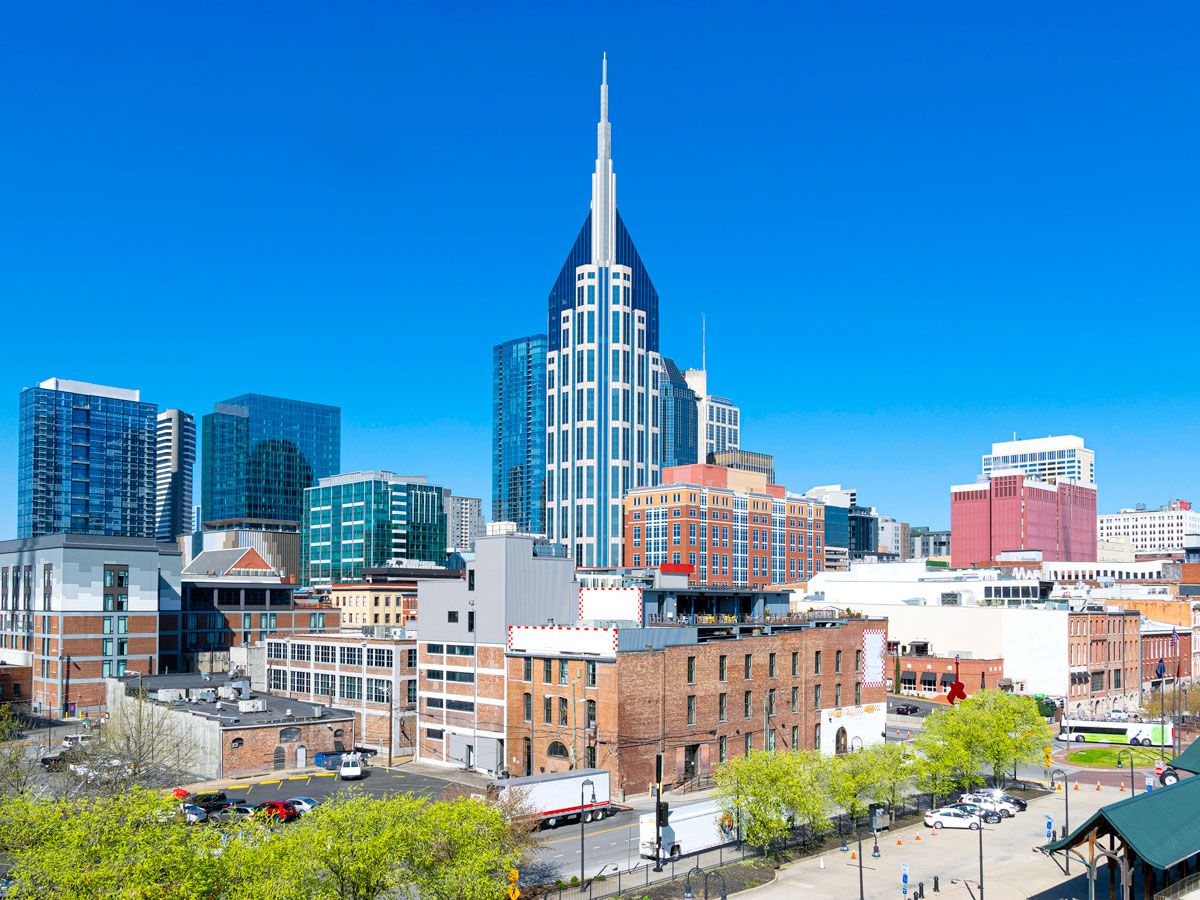
Music City is home to more than 700,000 residents, but on any given day, expect the city to be filled with thousands of tourists — around 17 million are projected to visit in 2025. Some come for the country and blues music, others for a hockey game or a hot chicken sandwich, but we’d wager a bet that all of them stay for the Southern hospitality. Among the survey responses, residents noted that Nashvillians are especially welcoming to children and pets, creating a family-friendly environment for both locals and visitors.

7. Fort Worth, Texas

Fort Worth Stock Yards in Fort Worth, Texas
Credit: benedek/ iStock via Getty Images Plus 

Score: 7.02

In Fort Worth, “y’all means all” — at least that’s what the city’s famous mural on West 7th Street says. Situated just west of Dallas, Fort Worth has a reputation for being more easygoing than its bustling neighbor. The city’s million-plus residents (and more than 11 million annual visitors) can enjoy Texan hospitality at the rodeos of Fort Worth Stockyards or delve into the region’s history at the National Cowgirl Museum. Expect a friendly gesture when you’re out and about in town — according to the survey, residents of Fort Worth were the most likely to greet people around them in public.

6. San Diego, California

Waves crashing along coast of San Diego, California
Credit: jsnover/ iStock via Getty Images Plus

Score: 7.04

Not only is San Diego the sixth-friendliest city in the U.S., but it’s also the friendliest place on the West Coast. For proof, look no further than the city’s official tourism slogan, “Happiness is calling!” Whether you’re visiting the scenic Balboa Park or wildlife watching at La Jolla Cove, don’t be afraid to ask a local to snap your picture — according to the survey, residents of San Diego are particularly known for offering to take photos for strangers.

5. El Paso, Texas

Stores and restaurants in downtown El Paso, Texas
Credit: DenisTangneyJr/ iStock via Getty Images Plus 

Score: 7.10

Home to more than 680,000 residents, this border city is renowned for its rich cultural heritage, blending American Southwest influences with those of Mexico. And it’s little wonder its residents are so happy, as El Paso was named the second-best big city to live in by U.S. World News and Report in 2025. The Preply survey on America’s happiest cities also reveals that El Paso is the friendliest city in the country toward both children and strangers, making it a perfect family-friendly destination.

2. San Antonio, Texas (tie)

The River Walk in San Antonio, Texas
Credit: FOTOGRAFIA INC./ iStock via Getty Images Plus 

Score: 7.16

There’s a three-way tie for No. 2 in the ranking of friendliest U.S. cities. Kicking it off is San Antonio, best known for attractions such as the Alamo and the River Walk. San Antonio residents who were surveyed reported that their peers are notably friendly toward strangers, fostering a welcoming environment for all. With more than 1.5 million residents, San Antonio’s thriving economy and tourism sector also contribute to its high quality of life.

2. Columbus, Ohio (tie)

Riverfront trails with view of Columbus skyline
Credit: TraceRouda/ iStock via Getty Images Plus 

Score: 7.16

The friendliest city in the Midwest is Ohio’s state capital, home to more than 930,000 residents. In 2024, Columbus welcomed more than 50 million tourists, in part due to major events such as the solar eclipse and the MLS All-Star Game. But the city is also home to year-round entertainment, from fall football games at Ohio Stadium to summers in the Metro Parks and winter days spent at museums. According to the survey, Columbus is listed as one of the friendliest cities toward strangers.

2. Charlotte, North Carolina (tie)

Fountain with Charlotte skyline in background
Credit: traveler1116/ iStock via Getty Images Plus 

Score: 7.16

Charlotte is also tied in second place in the ranking of America’s friendliest cities. Residents here are more likely than folks in any other city surveyed to give guidance or recommendations to tourists or new residents. That should be welcome news, considering how much there is to see and do in the Queen City, whether it’s brewery hopping downtown or heading to the outskirts of the city for an adventure at the U.S. National Whitewater Center.

1. Austin, Texas

Entertainment district in Austin, Texas
Credit: benedek/ iStock via Getty Images Plus 

Score: 7.45

Texas’ state capital is the friendliest city in the U.S. It’s where residents are more likely to strike up a conversation with a stranger than in any other city in the country. Home to nearly 1 million residents, this outdoorsy city is known for its live music and entertainment scene.

Austin was also recently ranked as the No. 2 most dog-friendly city in the country by Sniffspot, and the city is known for its numerous dog-friendly establishments. In fact, according to the Preply survey, Austin residents are friendlier to pets than residents of any other city in the country. But don’t worry, Austin’s residents welcome plenty of human visitors, too, to the tune of 30 million annually. 

About the data: To compile this list, we consulted a 2023 report from Preply, a language-learning company, which surveyed 1,258 Americans in the 25 biggest U.S. cities about how friendly the residents of their city are. The survey included a range of friendly actions, such as how likely residents were to greet someone on the street, offer directions, hold the door open from someone, and so forth. You can read the full report here.

Related: What Are the World’s Friendliest Cities?
Post Banner Image
Culture

How To Eat Like a Local in Italy

By Michael Nordine
Read time: 4 minutes
July 30, 2025
Updated: August 6, 2025

How To Eat Like a Local in Italy

By Michael Nordine
Author
Michael Nordine
Michael is a staff writer for Daily Passport and film critic who writes the weekly newsletter Movie Brief. His writing and criticism have also appeared in the Los Angeles Times, Variety, and the Washington Post, among others. A native Angeleno, his favorite countries to visit are Norway and Japan.

Few countries take food more seriously than Italy, and with good reason: Their cuisine is among the best in the world — indeed, countless people who’ve never even visited the Boot consider Italian cuisine their favorite. But next time you’re lucky enough to actually find yourself in Italy, go for the most authentic experience possible by following these six tips for eating like a local.

Skip the Savory Breakfast

Person eating breakfast pastries
Credit: Stefania Pelfini, La Waziya Photography/ Moment via Getty Images 

Most of the dishes we consider classically Italian are savory, not sweet: pasta, pizza, and paninis, just to name a few. None of those is a breakfast food, however, and that isn’t a coincidence. By and large, Italians prefer to start their day with something sweet, with cornettos (the Italian take on croissants) being among the most popular. These and other pastries are almost always paired with coffee, especially cappuccino or espresso — one study found that 84% of Italians drink coffee as soon as they wake up every morning.

And Go for a Late Dinner

Late-night diners on sidewalks of Rome, Italy
Credit: Gary Yeowell/ DigitalVision via Getty Images

Anyone who’s ever visited Rome in the summer knows there’s something uniquely appealing about a late dinner accompanied by an equally late sunset. Regardless of what time day ends and night begins, however, Italians prefer to eat the last meal of the day later than folks in most other countries. You aren’t likely to find an early-bird special in Venice or Turin, as dinner often doesn’t begin until 8 or 9 p.m. And the farther south you go, the later dinner will be. This is due to both warmer weather and ingrained traditions that, like your nonna’s lasagna recipe, won’t be changing anytime soon.

Related: 4 Countries That Eat the Latest Dinners

Eat Pasta as a Starter

Diner eating spaghetti
Credit: kotijelly/ iStock via Getty Images Plus 

Those of us who love our carbs tend to think of pasta as an entree or main course. Not so in Italy, where it’s usually the primo (first course) rather than secondo (second course). The latter will usually be meat or fish, with a smaller portion of spaghetti, lasagna, or even gnocchi whetting your appetite first.

Don’t Drink Cappuccino in the Afternoon

Person drinking espresso on balcony
Credit: Alexander Spatari/ Moment via Getty Images 

The flip side of 84% of Italians drinking coffee first thing in the morning is that they have strong opinions on exactly what type to drink — and when. Cappuccino is considered a morning beverage due to its high milk content, making it a faux pas to order one in the afternoon. This isn’t purely based on arbitrary traditions: Milk is considered fairly difficult to digest, so only having it in the morning is thought to give your body more time to process it and avoid a funny tummy before bed. If you do need a caffeine fix in the p.m., go for an espresso or macchiato.

Related: 4 Rules for Drinking Etiquette in Other Cultures

Think Locally

Person holding dish of pasta
Credit: RossHelen/ iStock via Getty Images Plus 

Though we tend to associate a number of classic dishes with Italy as a whole, many of them are regional specialties. You wouldn’t expect a Philly cheesesteak from San Diego to be as authentic as one from Philadelphia, so why would you expect to find the same kind of Bolognese in Rome as you would in Bologna? Florence, for instance, is known more for its meat than it is for its pasta, especially the famed bistecca alla Fiorentina, which literally means “beefsteak Florentine style.” If you’re in Bologna, go for the delicious lasagna Bolognese. Wherever you travel to in Italy, do your research ahead of time and focus on regional specialties as much as possible.

Be Mindful of Opening and Closing Times

Patio of restaurant in Rome, Italy
Credit: benedek/ E+ via Getty Images 

Italian restaurants tend to close for several hours between lunch and dinner, which has surely perplexed many a traveler used to more generous hours. And while there’s much to be said for the convenience of finding a spot that’s open between the hours of, say, 4 p.m. and 7 p.m., locals might warn that these establishments cater to tourists and are therefore less authentic. Italians eat dinner late, often taking a post-work evening stroll known as la passeggiata before doing so, which means that the spot around the corner from your hotel that doesn’t open until 7:30 at night likely offers a more authentic experience.

Related: 7 of the Most Beautiful Places To Visit in Italy
Post Banner Image
History

9 of the Newest U.S. National Monuments

By Bradley O'Neill
Read time: 6 minutes
July 30, 2025
Updated: July 30, 2025

9 of the Newest U.S. National Monuments

By Bradley O'Neill

America’s national monuments are places of profound historic, cultural or scientific significance, ranging from ancient Indigenous sites to iconic battlefields. Devils Tower in Wyoming was the country’s first national monument, designated under the Antiquities Act of 1906. Today, there are more than 130 national monuments that highlight often-overlooked stories, helping future generations learn about the country’s fascinating history. Read on to discover nine of the newest national monuments in the United States.  

Avi Kwa Ame National Monument – Nevada

View of mountains through desert fauna at Nevada's Avi Kwa Ame National Monument
Credit: ZUMA Press, Inc./ Alamy Stock Photo

Avi Kwa Ame National Monument protects over 500,000 acres of desert landscape located in the southern tip of Nevada. The monument is centered around Avi Kwa Ame, also known as Spirit Mountain, a sacred site and place of origin for 10 Yuman-speaking tribes, including the Hualapai, Mojave, and Quechan peoples. 

Designated in 2023, the monument preserves a large corridor of the Joshua tree-filled Mojave Desert — a natural habitat for bighorn sheep, Chuckwalla lizards, golden eagles, and one of Nevada’s largest populations of desert tortoise. Avi Kwa Ame also offers solitude for backpackers, hikers, and horseback riders. Its sweeping views lure photographers, while the dark night skies free from urban light pollution are ideal for stargazing.  

Related: The Best Spots for Stargazing in the U.S.

Castner Range National Monument – Texas

Desert and mountains in the Castner Range National Monument in Texas
Credit: John Coletti/ Photodisc via Getty Images 

Located at the eastern edge of El Paso’s Franklin Mountains, Castner Range National Monument was designated in 2023 as the first military-managed monument in 90 years. Covering 6,600 acres, it holds significance for both military veterans and Indigenous peoples, whose history on the land dates back approximately 10,000 years. 

Between 1926 and 1966, military personnel stationed at Fort Bliss used the area as a weapons training facility. Much of the site is closed due to unexploded ordinance; however, javelinas, mountain lions, and mule deer still thrive here. It’s also notable for a springtime Mexican gold poppy bloom that decorates the Chihuahuan Desert landscape. 

Emmett Till and Mamie Till-Mobley National Monument – Illinois and Mississippi

Statue of Emmett Till at namesake national monument in Mississippi
Credit: Scott Olson via Getty Images News 

Split between two sites located more than 600 miles apart, Emmett Till and Mamie Till-Mobley National Monument commemorates a turning point in the Civil Rights Movement. It details the life and 1955 murder of 15-year-old Emmett Till and the activism of his mother, Marnie Till-Robley. 

In Sumner, Mississippi, the Tallahatchie County Courthouse was the scene of the controversial acquittal of Till’s murderers. Across the street, the Emmett Till Interpretive Center features exhibits about the case and Till-Robley’s fight to prove her son’s innocence. The other part of the monument, established in 2023, is located on the South Side of Chicago at Roberts Temple Church of God in Christ, which was the location of Emmett Till’s open-casket memorial service. 

Baaj Nwaavjo I’tah Kukveni – Arizona

Forest and mountains in the Baaj Nwaavjo I'tah Kukveni-Ancestral Footprints of the Grand Canyon National Monument of Arizona
Credit: David McNew via Getty Images News 

Also established in 2023, Baaj Nwaavjo I’tah Kukveni-Ancestral Footprints of the Grand Canyon National Monument comprises about a million acres of land surrounding Grand Canyon National Park. It protects the ancestral homelands of 13 tribes, including the Havasupai, Navajo, and Yavapai-Apache peoples. Its name, Baaj Nwaavjo, translates to “where Indigenous peoples roam.” 

The monument’s landscape spans buttes, canyons, plateaus, and pinyon-juniper forests, providing habitats for ferruginous hawks, golden eagles, and pinyon jays. The monument is split into three areas for visitors: The Southern Parcel is crossed by a section of the 800-mile Arizona Trail, the Northeastern Parcel incorporates the Historic Navajo Bridge, and the Northwestern Parcel is best accessed with a four-wheel-drive vehicle. 

Springfield 1908 Race Riot National Monument – Illinois

Springfield 1908 Race Riot National Monument in Springfield, Illinois
Credit: UCG/ Universal Images Group via Getty Images

Located in Abraham Lincoln’s hometown, the Springfield 1908 Race Riot National Monument, established in 2024, commemorates a two-day uprising that erupted between the city’s white and Black communities. Seven people lost their lives, 40 homes and 24 businesses were destroyed, and thousands were displaced. The events led to the formation of the National Association for the Advancement of Colored People (NAACP). 

Today, artworks and monuments retrace this turbulent period in American history, including the multimedia 1908 Race Riot Mural and the Acts of Intolerance memorial, located outside the Abraham Lincoln Presidential Library and Museum. The self-guided 1908 Race Riot Walking Tour visits seven city locations related to the riot. 

Related: The Best U.S. Cities to Visit for Civil Rights History

Carlisle Federal Indian Boarding School National Monument – Pennsylvania

Carlisle Federal Indian Boarding School National Monument in Carlisle, Pennsylvania
Credit: Carol Highsmith/ Library of Congress Prints and Photographs Division

A traumatic tale of family separation and forced education is hidden within the walls of Carlisle Federal Indian Boarding School National Monument, established in 2024. Here, from 1878 to 1918, more than 7,800 Native American children from 140 tribes were schooled after being forcibly removed from their families. The site, which became a model for other similar institutions around the country, was established by controversial Army officer Richard Henry Pratt and was notorious for violence. As part of a working Army base, the school is off-limits to today’s visitors, but those interested in learning more about this tragic history can visit exhibits and take a self-guided tour at the U.S. Army Heritage and Education Center.

Frances Perkins National Monument – Maine

Home of Frances Perkins at Frances Perkins National Monument in Maine
Credit: Jack Milton/ Portland Press Herald via Getty Images

Opened in 2024, Frances Perkins National Monument in Newcastle, Maine, celebrates the achievements of the first woman to serve in the U.S. presidential Cabinet. The monument is located on the family homestead and saltwater farm Perkins visited for inspiration throughout her career. An exhibition called “The Life and Legacy of Frances Perkins” occupies the 1837 Homestead Barn family home and features historic documents, objects, and photographs related to her life as an advocate for workers’ and women’s rights. Visitors can also explore a walking trail through the gardens, meadows, and woodlands of the 57-acre site, passing the remnants of clay pits and kilns used for the family’s brickmaking business.

Sáttítla Highlands National Monument – California

View of mountain peak over treetops at California's Sáttítla Highlands National Monument
Credit: Myung J. Chun/ Los Angeles Times via Getty Images 

Sáttítla Highlands National Monument, established in January 2025, covers almost 225,000 acres of volcanic terrain and diverse landscapes in the foothills of California’s Mount Hoffman, including parts of the Klamath, Modoc, and Shastha-Trinity national forests. The monument protects Medicine Lake Volcano, a sacred site of the Pit River Tribe and Modoc peoples. 

Around 85 of the plant species that grow here are used by Indigenous peoples for everything from food to medicine to ceremonial objects. For visitors, biking, camping, hiking, and snowmobiling are all possible within the monument — offering the chance to appreciate a landscape of buttes, cinder corners, craters, and lava flows. Visitors can also spot bald eagles, Cascade frogs, and long-toed salamanders. 

Chuckwalla National Monument – California

Mountainous landscape of Chuckwalla National Monument in California
Credit: David McNew via Getty Images News 

Located near Joshua National Park, Chuckwalla National Monument, also established in January 2025, protects ancestral lands belonging to the Iviatim, Nüwü, Pipa Aha Macav, Kwatsáan, and Maara’yam peoples. It spans 740,000 acres of terrain where the Sonoran and Mojave deserts merge and is home to numerous threatened wildlife species, including the Agassiz’s desert tortoise and desert pupfish. Corn Springs Campground is known for its 70-foot-tall fan palms and 10,000-year-old petroglyph rock art, while the Mecca Hills Wilderness shelters the Painted Canyon, a maze of narrow and steep canyons.