Bradley is an English travel writer who’s wandered through 50-plus countries and lived on four continents while chasing waves, the perfect pint, and family adventures. Bradley's work has appeared in publications such as Skyscanner and Matador Network, and he now splits his time between Buenos Aires and Uruguay.
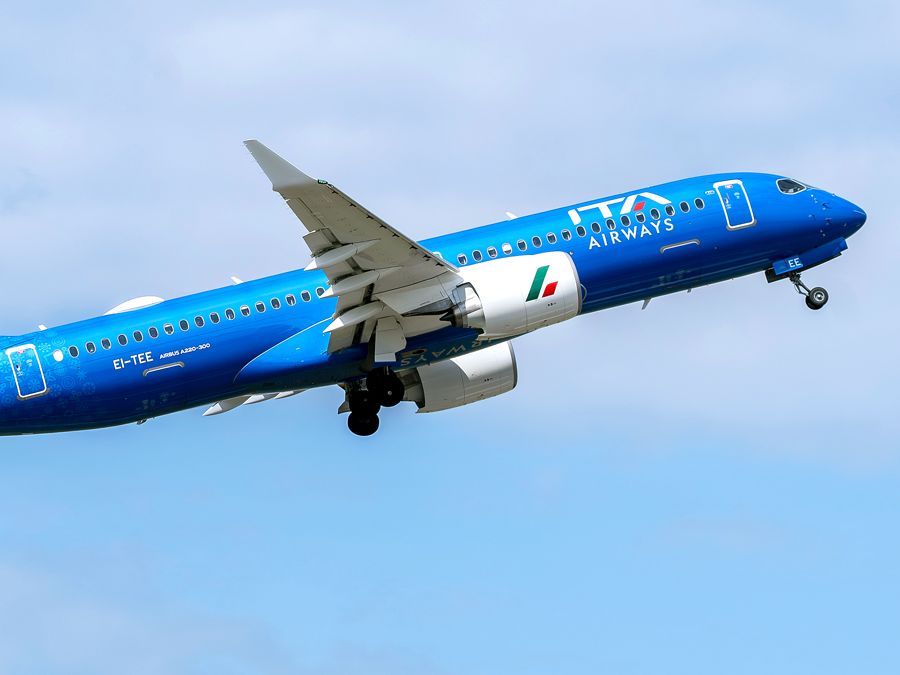
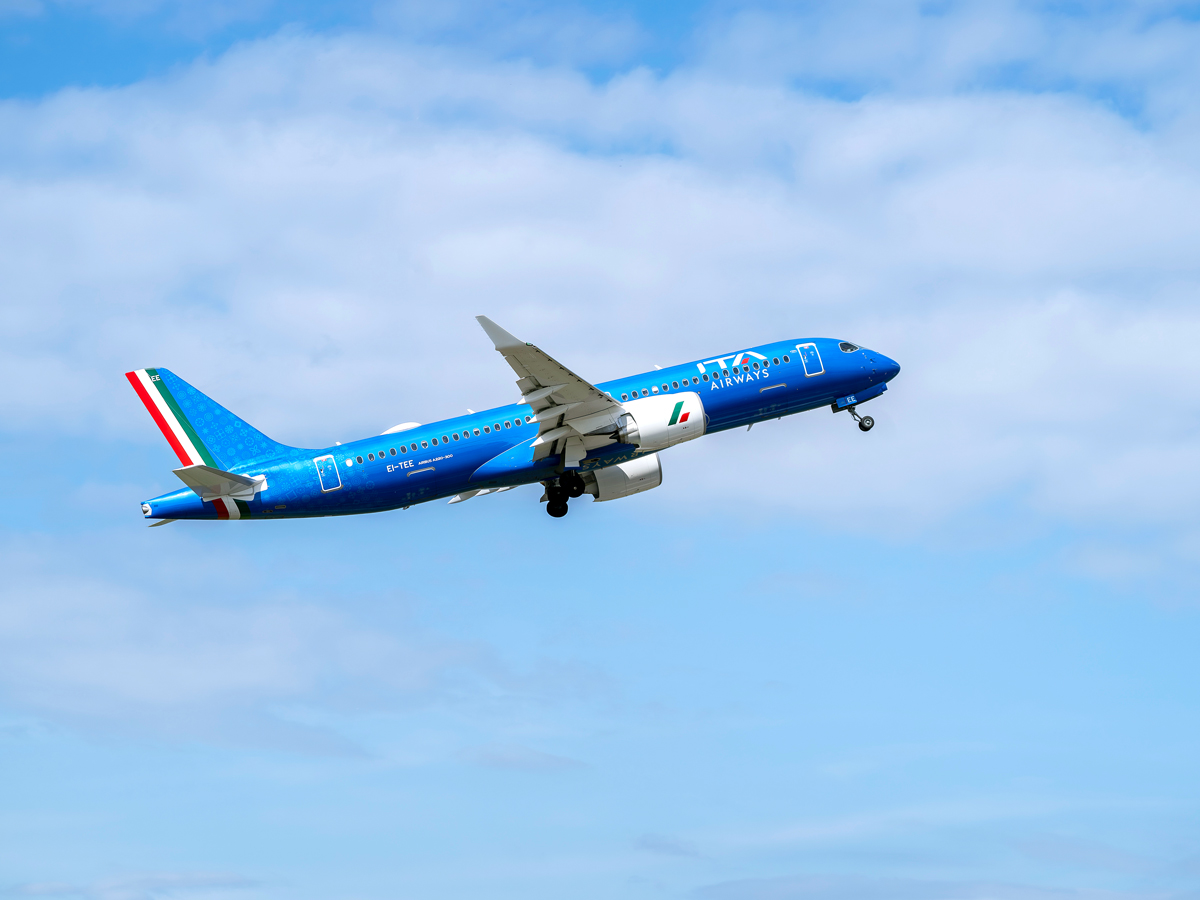
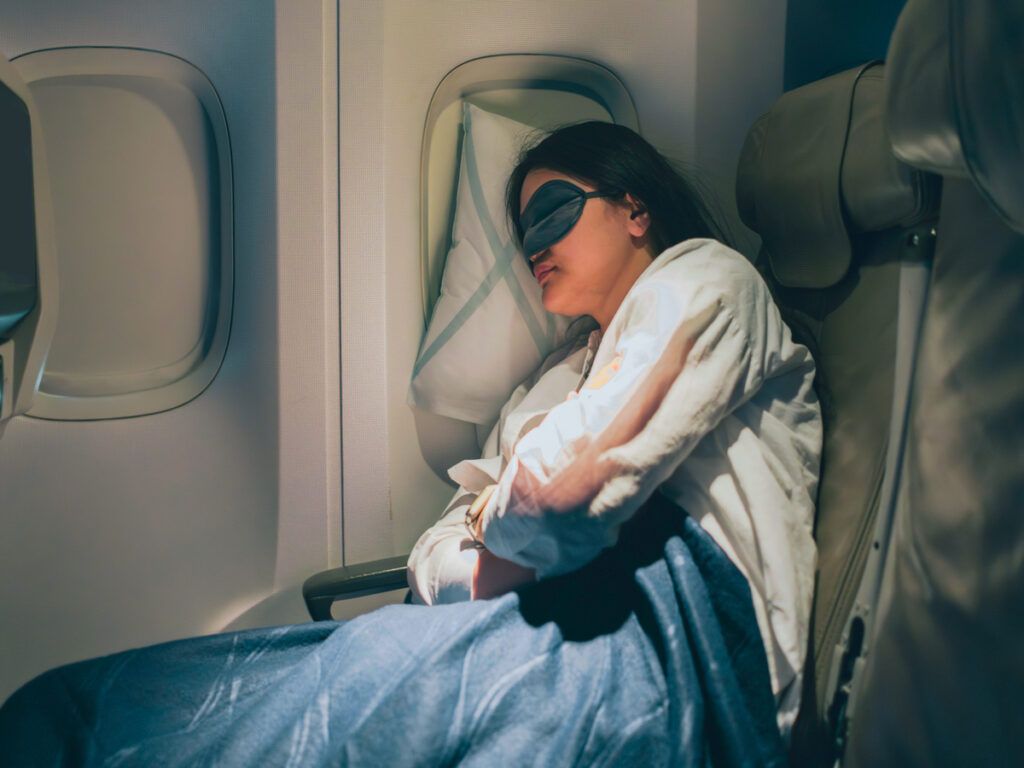
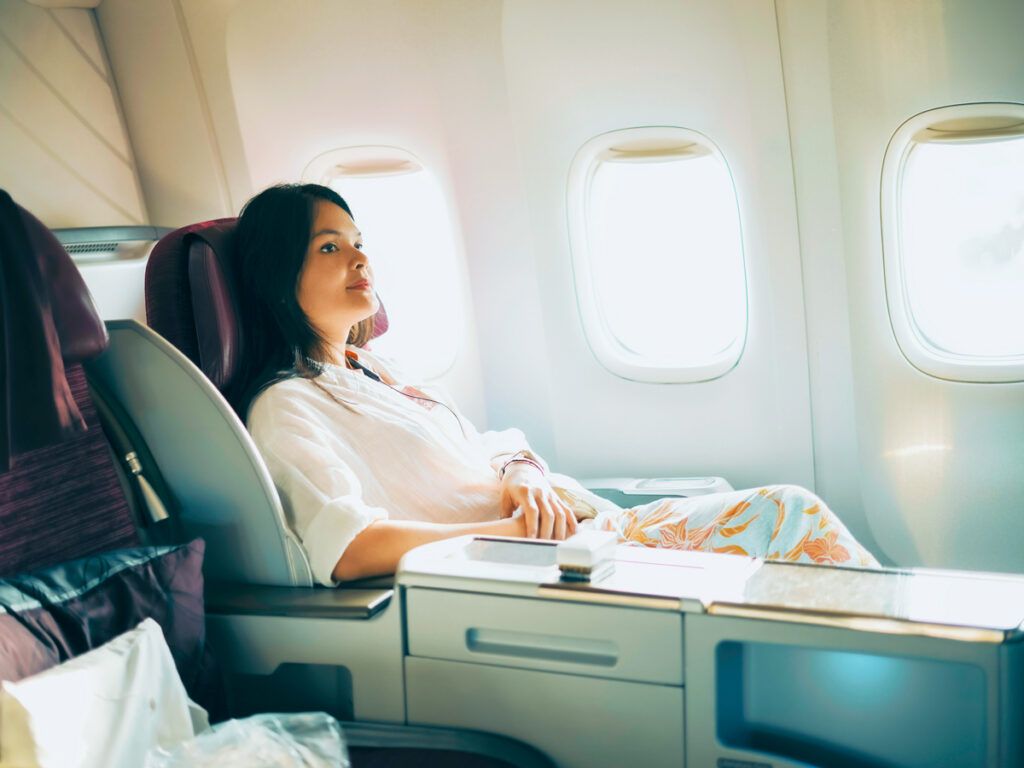
Anyone who’s flown long distances knows that jet lag isn’t fun. And while it’s primarily caused by crossing multiple time zones, the aircraft itself can play a role in how you feel when you land. Some planes leave passengers feeling groggy and dehydrated, while others boast modern cabin technology that can improve sleep and minimize fatigue, making long journeys less punishing. Here are the aircraft you should seek out for your next long-haul journey.
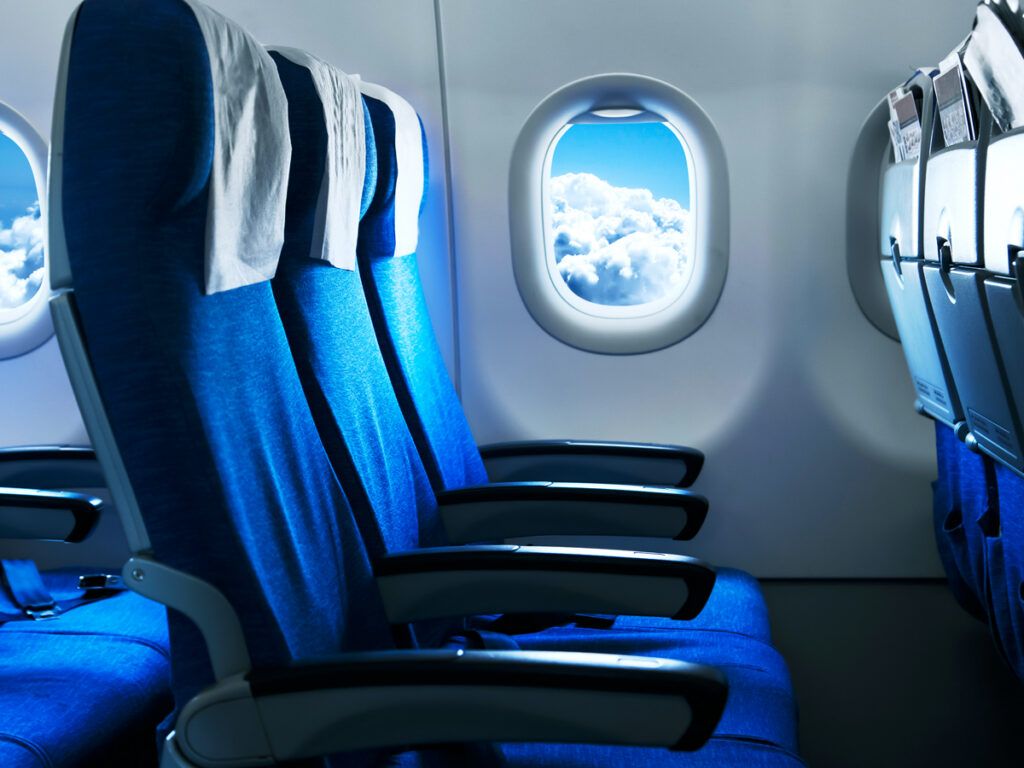
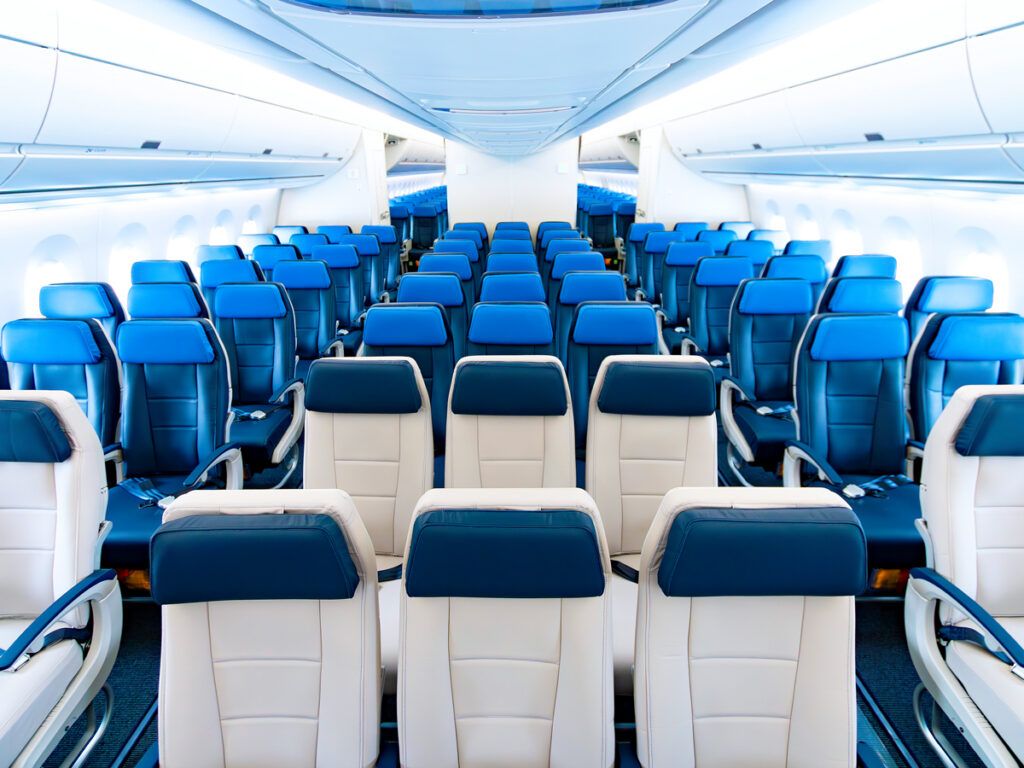
While we may notice if it’s a narrow-body or wide-body plane, or whether there are in-flight entertainment screens, beyond that, most of us barely register the type of aircraft we fly on. However, the cabin environment of each specific aircraft can have an impact on how we feel following the flight. Aircraft material, cabin pressure, humidity levels, and lighting all contribute to this.
Cabin pressure is arguably the biggest factor. At cruising altitude, aircraft cabins are artificially pressurized to mimic a specific elevation above sea level. Older planes are generally pressurized to around 8,000 feet, but newer models can maintain lower cabin altitudes of around 6,000 feet, which often results in a fresher, less sluggish sensation on arrival.
Another important variable is humidity. Dry cabin air can trigger headaches, sore eyes, and broken sleep. A major reason why newer planes leave you feeling better is their carbon-fiber construction. Unlike with traditional aluminium bodies, the use of carbon fiber allows these planes to safely maintain higher humidity levels without the issue of long-term corrosion.
Cabin lighting systems also play their part. The gradual shifting of brightness and color tones while airborne replicates daylight patterns, allowing the body to adjust to new time zones. Many airlines have installed mood-lighting systems, even on older aircraft, which can improve the passenger experience overall.
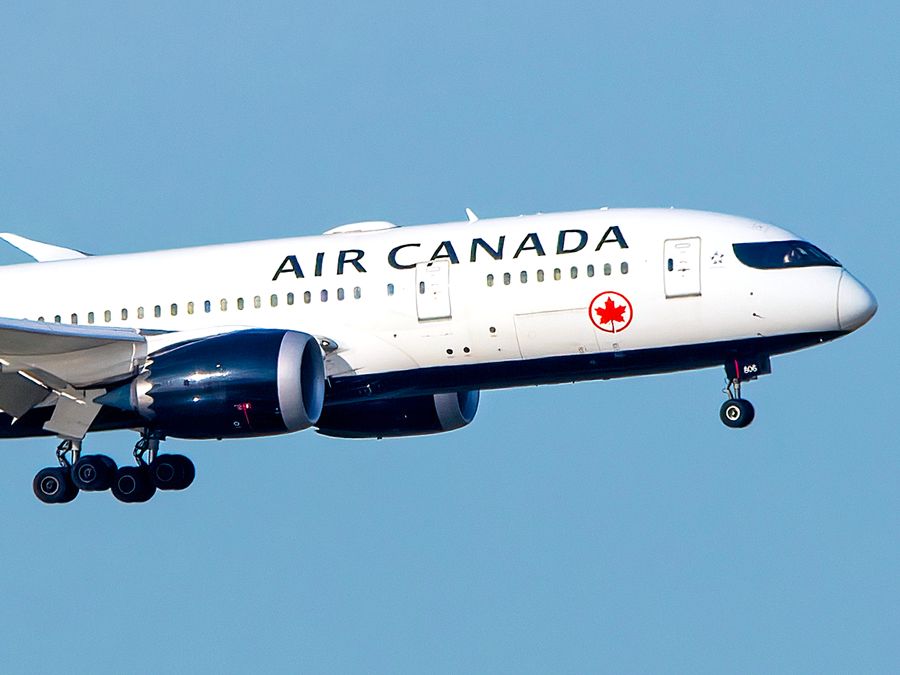
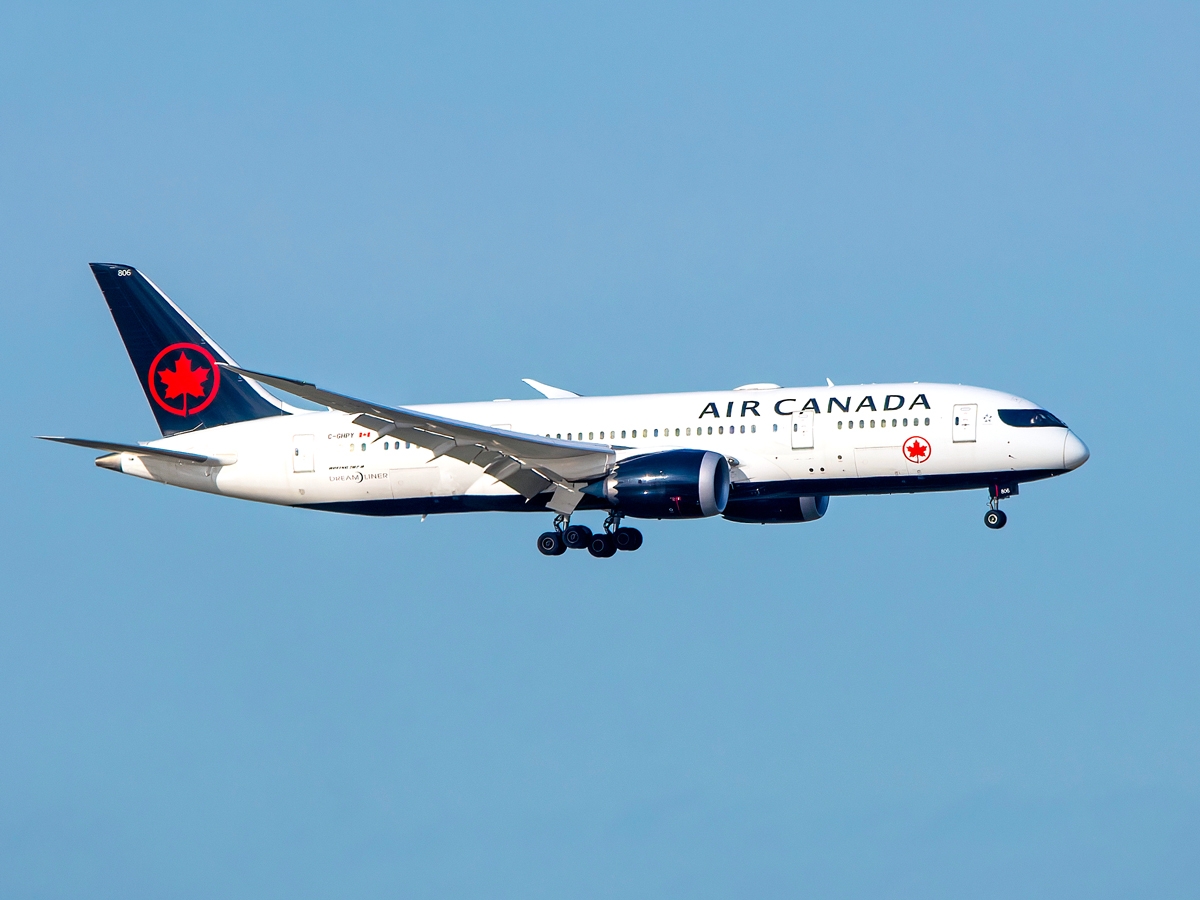
If you’re serious about long-haul comfort and fatigue reduction, two aircraft stand out: the Airbus A350 and Boeing 787 Dreamliner. Both have carbon-fiber composite fuselages, so they maintain higher cabin humidity levels and a lower altitude for pressurization. Travelers report suffering less from dehydration and fogginess, and being more functional after long and overnight flights.
Compared with previous planes, these modern wide-bodies are noticeably quieter, too. The cabin of the 787 is around 20% quieter than older jets such as the Boeing 767 or 777. This is due to design factors like more efficient high-bypass engines and the use of engine chevrons and sound-absorbing linings.
A newer aircraft can help you arrive less drained, especially on overnight flights. However, it won’t magically eliminate jet lag. Flight timing, sleep schedule, hydration, seat comfort, and how you adapt to a new time zone still matter more. Think of your aircraft choice as giving your body a better starting point, rather than a cure-all.
Instead, experts say that a few small habits can make a big difference. Drink plenty of water, avoid excessive alcohol, and start adjusting your sleep schedule before departure. Make sure you’re comfortable during the flight by packing a sleep kit, such as a neck pillow and an eye mask. You should be careful with caffeine, too, as a poorly timed coffee can make it harder to rest when your body needs it most. Some travelers also swear by jet lag apps like StopJetLag, Timeshifter, and Uplift, which offer guidance on how to prepare your body ahead of time to adjust to a new time zone.
Nicole is a writer and researcher with over 15 years of experience seeking out arts, culture, and lifestyle stories in places like remote northern Quebec and the unforgettable streets of Amsterdam. Her work has also appeared in PureWow, Brit + Co, AUX TV, and CBC.
Every day, tens of millions of passengers travel through airports around the world. While most are likely familiar with the typical areas of a terminal — check-in, security, departure gates — many travelers may not realize just how carefully those spaces are designed and maintained. From deliberate seating placement to the ways staffers monitor passenger behavior, many of these choices help keep operations running smoothly and maximize revenue for the airport and its vendors, without the majority of travelers even realizing it. Here are six things that airports don’t exactly advertise.
Arriving at the Airport Early Isn’t Just About Scheduling
You know the standard advice: Arrive at the airport two to three hours before your flight. And while that buffer of time does help reduce stress for travelers, it also works in the airport’s favor.
Airports are designed to maximize what’s known as dwell time. Simply put, it’s the amount of time passengers spend inside the terminal. Once travelers clear security, stress levels typically drop, and if they’ve arrived early, they’re left with time to fill before boarding. In the world of airport retail, this period is often called the golden hour — the first 60 minutes after security, when passengers are most likely to browse and make impulse purchases.
According to airport industry research, a significant share of global airport revenue (around 40%) now comes from non-aeronautical sources such as retail and food. Spending just one hour more at an airport adds up to about $7 more spent per passenger, so your early arrival is a bonus for the airport’s business model.
After security, most travelers instinctively try to find a suitable spot to post up near their gate. But in many airports, seating is far from random. The most comfortable chairs —cushioned seats, loungers, or even rocking chairs — are often placed near retail and dining areas rather than tucked away by quieter gates.
That’s because comfortable seating can be used to slow passenger flow and increase dwell time in central, retail-heavy parts of a terminal. The same goes for where information screens are placed. Studies in airport design also suggest that small conveniences such as charging stations or seating with cup holders can subtly influence how long travelers choose to stay in one place.
You probably don’t give much thought to the floor at the airport (other than how dirty it might be), but there’s actually some solid strategy underfoot. The walk from check-in to security is usually built with durable surfaces such as tile or linoleum. These are practical choices for heavy traffic and easy maintenance. But once passengers reach gate areas, the environment shifts to a slightly cozier one, with carpeted floors, softer lighting, and quieter seating zones.
Studies have long linked relaxed travelers with higher retail engagement. Industry surveys have found that happier passengers tend to spend more in airports — on average about 7% more on retail and roughly 10% more on duty-free purchases. So it’s no wonder many airports are doubling down on relaxation, adding wellness rooms and even mini-spas to help keep passengers in a spending mindset.
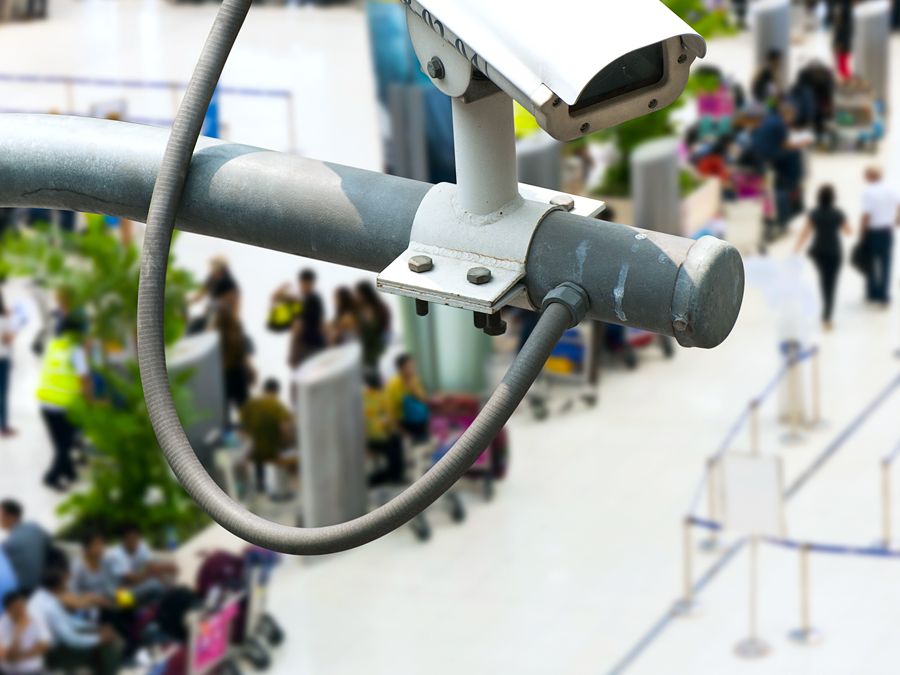
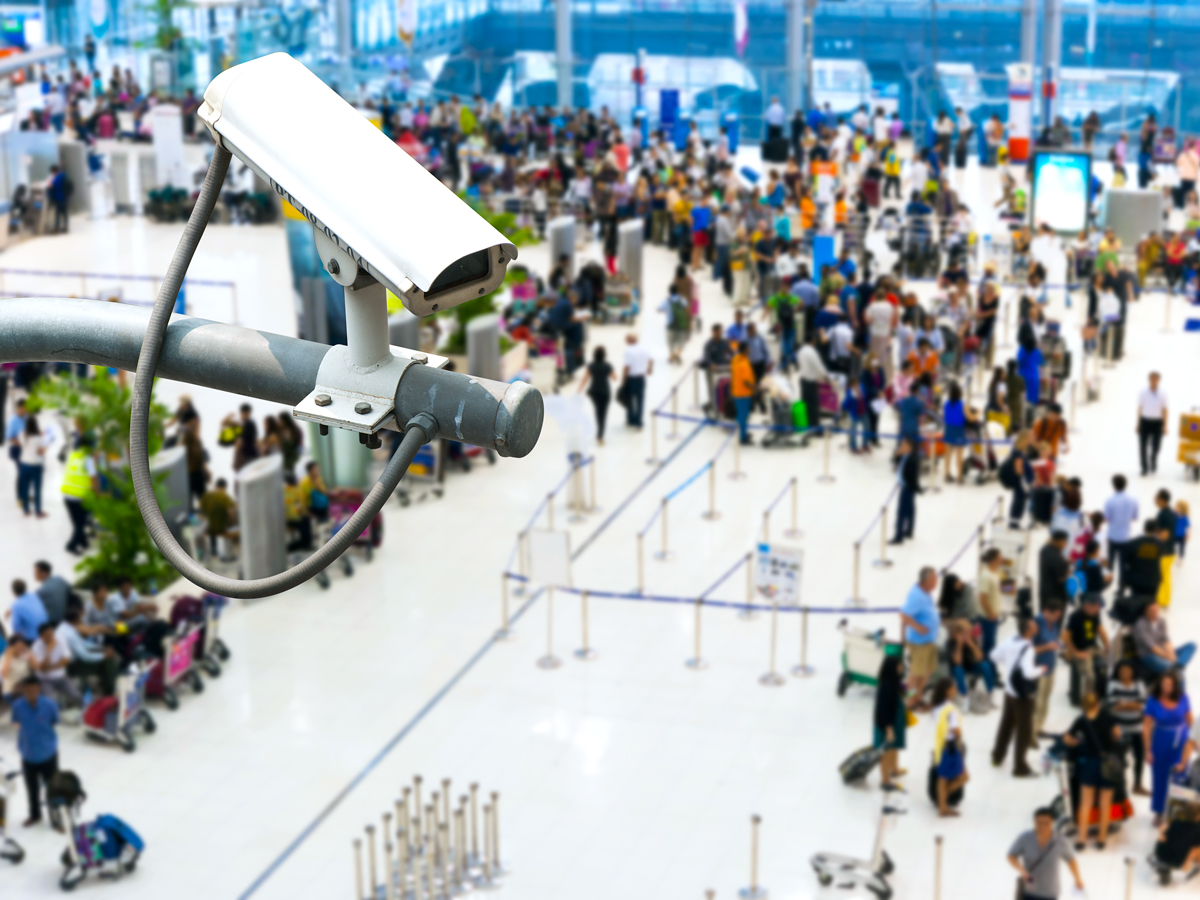
Modern airports are measuring passengers as much as they’re moving them. From the moment you clear security, your movement may be tracked using overhead sensors and Wi-Fi signals to provide anonymized location data. The goal isn’t to identify people, but to understand how passengers move through the airport and pinpoint where they slow down, where they bottleneck, and which areas they’re drawn to.
The information is used in planning and operations. For example, if certain areas get congested, layouts and signage can be adjusted. If others have higher volumes of foot traffic, that space could potentially be assessed for retail value.
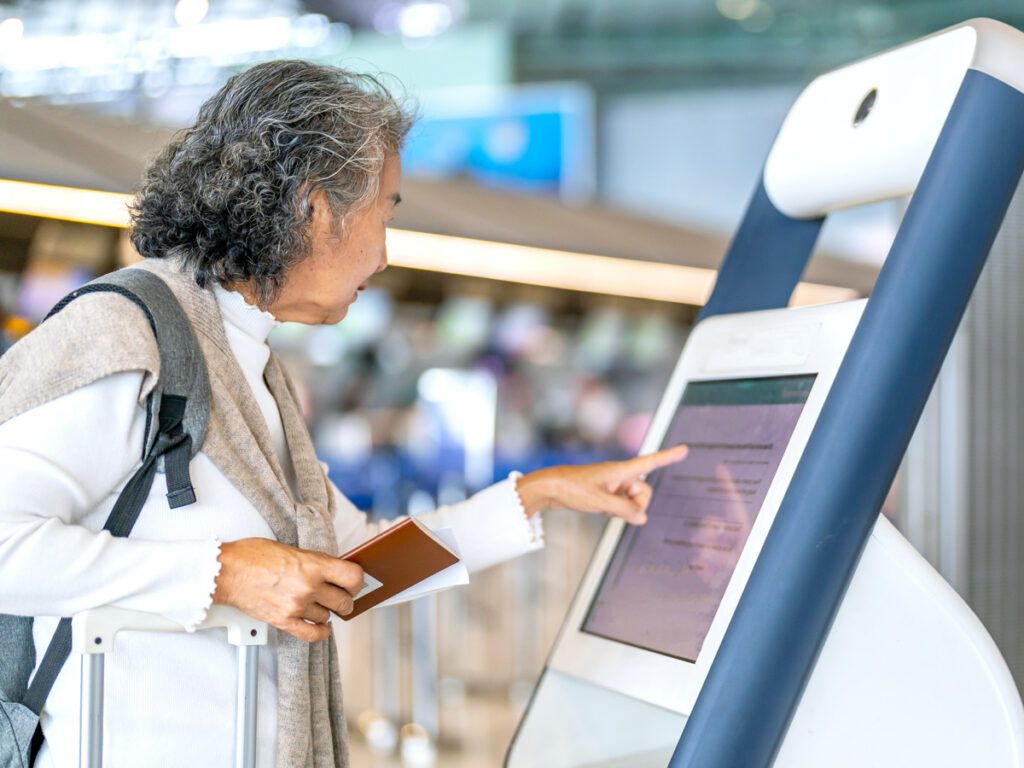
Self-service kiosks, bag-drop machines, and automated boarding gates (which American Airlines will begin incorporating in 2026) can speed up the check-in and boarding process for passengers. But they also happen to be strategic time-savers for the airport.
Research suggests these systems can significantly reduce processing times, with automated check-in kiosks operating up to 25% faster than staffed counters. That can translate into an extra 10 to 30 minutes per trip — time that a passenger can spend inside an airport terminal instead of in a line.
This means more opportunities to browse shops, visit restaurants, and even use airline lounges, converting those saved minutes into lucrative dwell time. One study found that for every 10 minutes a passenger spends in a security line, retail spending can drop by as much as 30% — a solid reason for airports to embrace automatic screening technologies sooner rather than later.
Security Staff Might Be Chatting You Up for a Reason
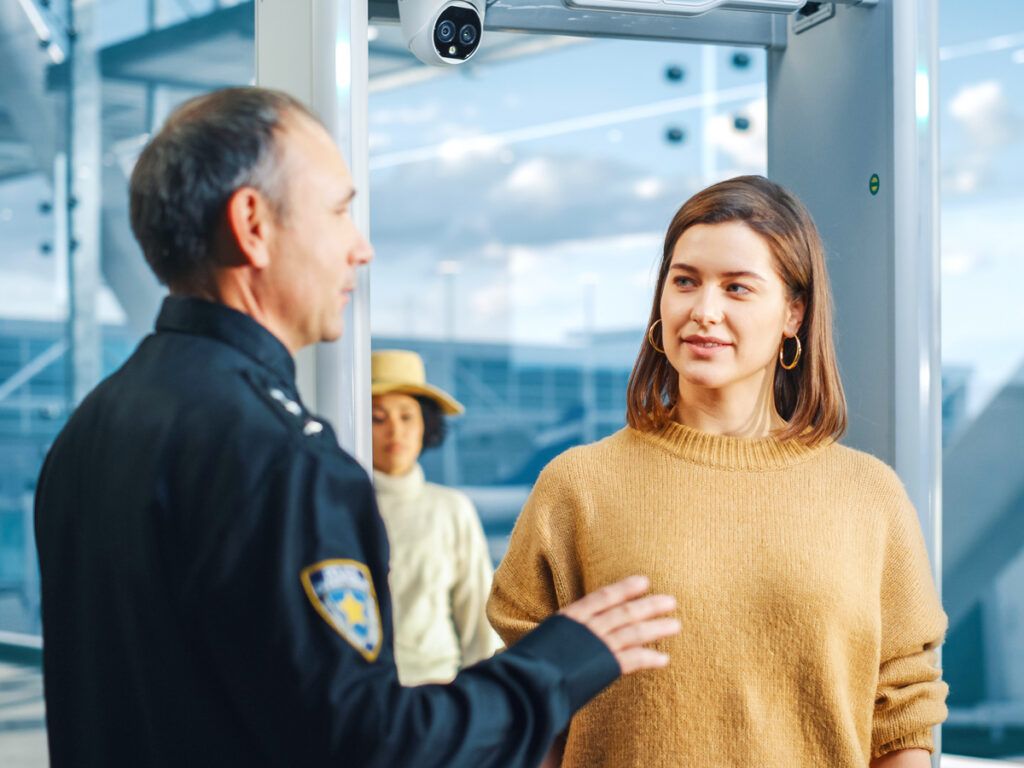
If you ever feel like you hit the TSA lottery with a friendly, chatty officer, luck may just be on your side. But it also might be an enhanced screening tactic. A TSA behavior-detection program known as Screening of Passengers by Observation Techniques (SPOT) was developed with input from psychologists to spot behavioral red flags such as sweating, fidgeting, avoiding eye contact, or even a passenger being too chatty themself.
If flagged, passengers may be asked open-ended questions about their travel plans or background as a way to determine a baseline. From there, the casual-seeming chitchat may continue to try to pinpoint inconsistencies. If it’s in your nature to be polite and friendly, don’t think you need to turn it off — just try to keep things factual and professional.
Advertisement
More from our network
Daily Passport is part of Inbox Studio, an email-first media company. *Indicates a third-party property.
Bennett is a New York City-based staff writer for Daily Passport. He previously contributed to television programs such as the Late Show With David Letterman, as well as digital publications like the Onion. Bennett has traveled to 48 U.S. states and all 30 Major League Baseball stadiums.
Our phones are essential tools for navigating unfamiliar cities. When you feel lost, opening the maps app can guide you toward where you need to go. But while traveling abroad, you don’t always have access to Wi-Fi or a cell network. Without an internet connection, you might assume that the maps app is useless, but here’s a clever hack to access maps on your phone without connecting to any network.
Google Maps allows you to download maps onto any Android or iPhone device so you can consult them even if you’re offline. Note that you do need to be connected to Wi-Fi when you download the maps.
If you have an Android device, here’s how it works:
First, open the Google Maps app and search for a location (e.g., Paris or San Francisco).
Next, swipe right on the information panel at the bottom of your screen until you see the “more” button.
Click it and press “download offline map” followed by the “download” button, and the map will be saved to your phone.
Tap the name or address of the place and swipe right on the menu bar at the bottom to find the “download offline map” button.
Set the range for the map you want to download, and hit “download” to complete the process.
When you open the app, click your profile picture or initials in the upper right corner of the screen, and you’ll see all the maps that you’ve downloaded. Just keep in mind that while you’ll be able to look at the maps, there are no step-by-step walking, transit, or driving directions available when using Google Maps offline.
Additionally, downloaded maps may expire after a certain time period. According to some reports, they may auto-delete within 15 days or less; however, other users report having maps available for up to a year. To avoid any maps deleting themselves too quickly, try to download them as close to the start of your trip as possible, or while connected to the hotel Wi-Fi after arrival.
Apple Maps also allows you to download maps for offline use. However, this service is available only for Apple-brand devices such as iPhones or iPads, so it’s more limited in nature.
Touch and hold until a pin marker appears, and then press the “download” button.
Adjust the selected area to be as big or small as you’d like, and press “download” again to save the map to your device.
To access any maps you’ve downloaded, open Apple Maps and click on your picture or initials next to the search field. Click on “offline maps” to select a map, and use it as normal. It’s worth noting that, unlike Google Maps, Apple Maps still allows for step-by-step directions offline. You can also access information such as store or restaurant hours, ratings, and more.
First, maps take up storage space on your device, though the exact amount of space depends on the size of the map. This may be an issue if your phone is low on available storage, or if you’re planning to take a lot of photos on vacation that would otherwise need that space. However, you’ll be able to see the size of a map prior to downloading it, so you’ll know ahead of time how much memory it will take up.
There are also restrictions that prevent people from downloading maps in certain regions due to security concerns or geopolitical events, among other factors. According to Google Maps Help, “You can’t download offline maps in some countries or regions because of contractual limitations, language support, address formats, or other reasons.” Apple Maps states, “Offline maps are only available in select areas. An offline map for a specific region is not intended for use in all regions.” While there’s no definitive list of where it’s prohibited, it’s worth being aware of nonetheless.
Lastly, in the rare case you don’t use an Android or Apple device, there may be no option to download offline maps with Google or Apple. However, there are third-party services that offer users the ability to download maps, such as HERE WeGo, Organic Maps, and Maps.me. You can use these services on Android or Apple devices, too.
Advertisement
More from our network
Daily Passport is part of Inbox Studio, an email-first media company. *Indicates a third-party property.
Nicole is a writer and researcher with over 15 years of experience seeking out arts, culture, and lifestyle stories in places like remote northern Quebec and the unforgettable streets of Amsterdam. Her work has also appeared in PureWow, Brit + Co, AUX TV, and CBC.
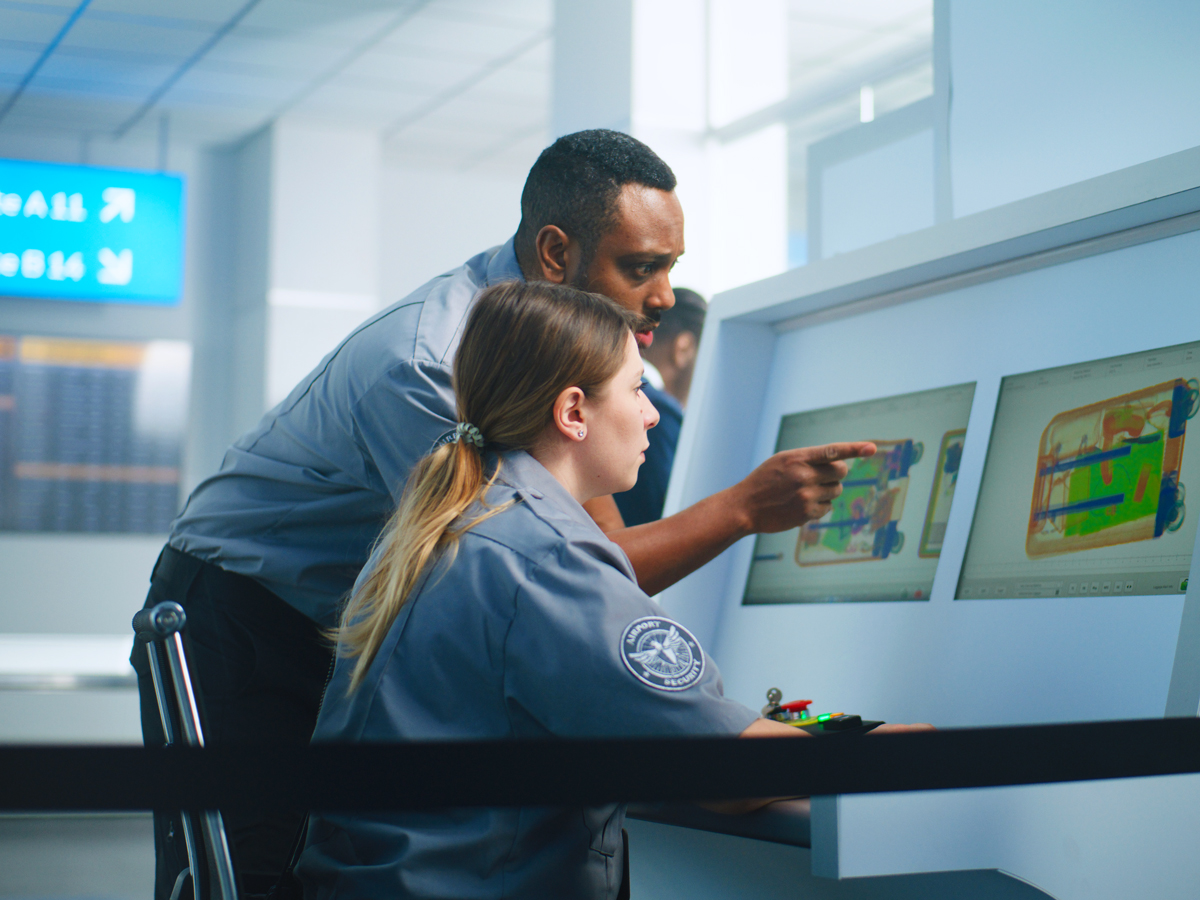
If life were more like a movie, TSA officers would spend their days intercepting dramatic contraband such as weapons or suspicious substances. But in reality, most of the items surrendered at airport checkpoints are quite ordinary. The TSA screens approximately 3.3 million carry-ons and 1.3 million checked bags each day, and officers say the overwhelming majority of prohibited items they find come from travelers who claim to have simply forgotten something was packed in their luggage. Here are some of the most common items TSA officers flag, so you know what to avoid before your next flight.
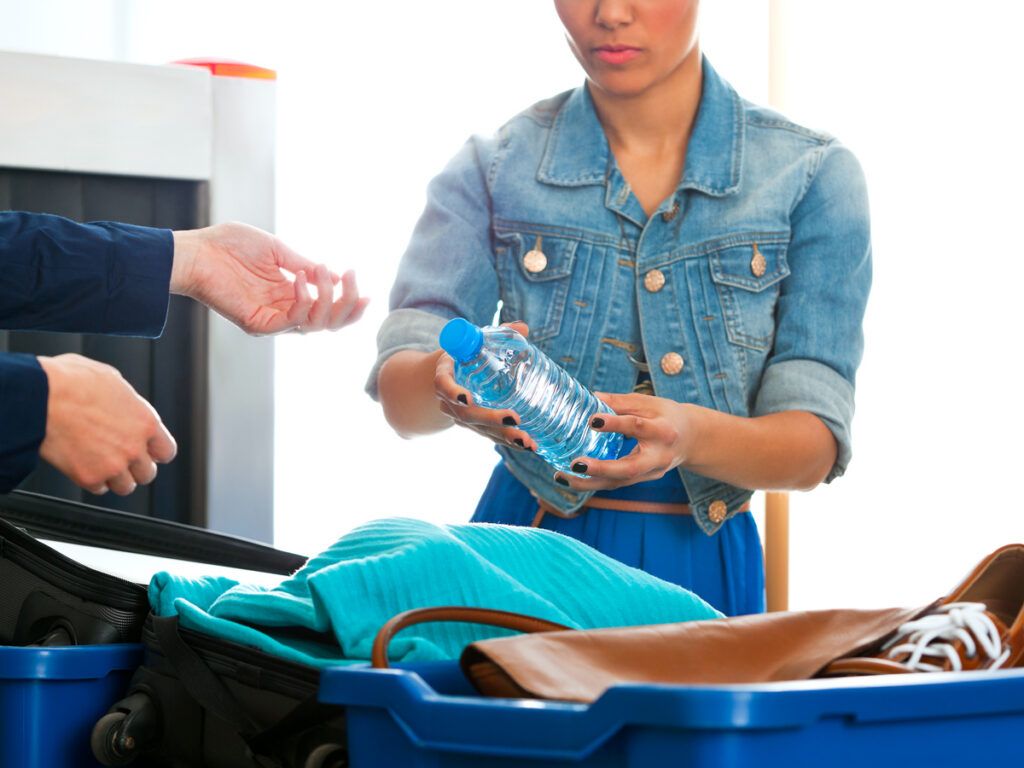
Former TSA officer Caleb Harmon-Marshall told Travel + Leisure that water bottles are by far the most commonly surrendered items at TSA checkpoints. The no-liquids rule is well known, but travelers may forget they’re still carrying their half-full tumbler from home or the coffee or water bottle they grabbed before security. The issue isn’t necessarily the bottle or mug itself, of course, but the question of what liquid is inside.
Under TSA’s 3-1-1 liquids rule, containers larger than 3.4 ounces or 100 milliliters generally aren’t allowed through screening. An exception is made for medically necessary items such as medications or breast milk, formula, toddler drinks, or baby food, pending disclosure and TSA examination. Most airports now have liquid disposal stations right before security and refill stations immediately after. This makes it easy to stay hydrated, but remember to finish your iced matcha early so you don’t end up dumping a perfectly good drink.
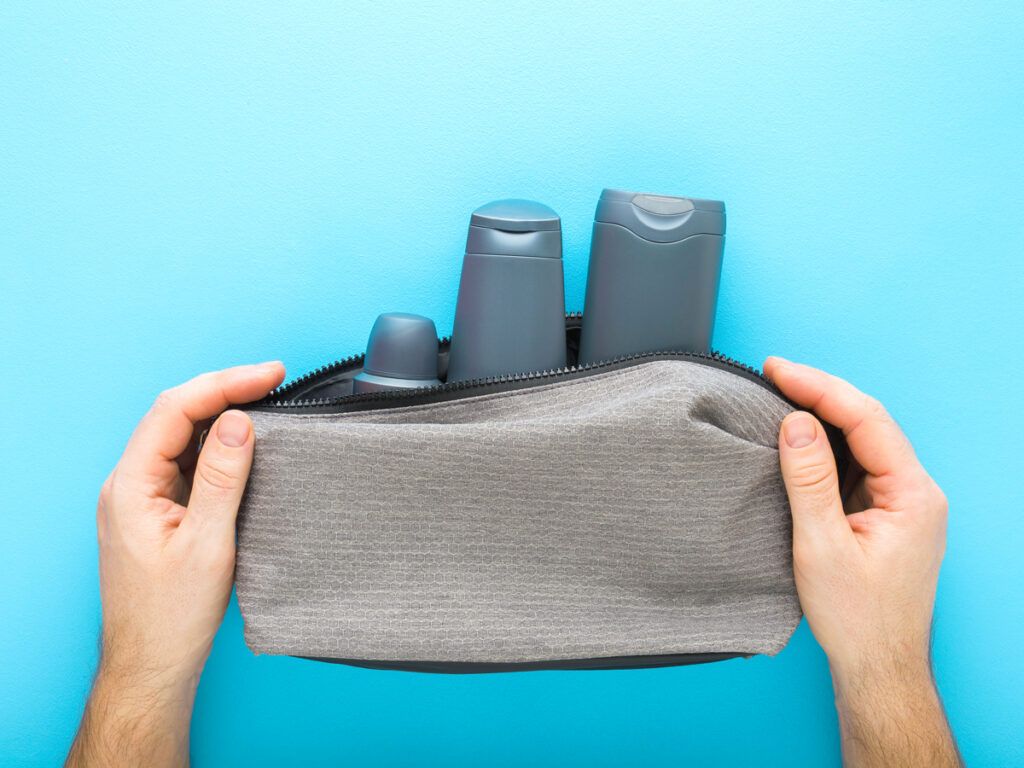
Despite the liquids rule being in place since 2006, oversized toiletries remain one of the biggest repeat offenders at TSA checkpoints. Body wash, sunscreen, hair and skin care products, and toothpaste are all regularly pulled from carry-ons because the containers exceed the volume limit. Former TSA officers have noted that oversized fragrances are also commonly confiscated.
Partially used larger bottles that contain less than 3.4 ounces of your favorite product won’t cut it. The container itself must be 3.4 ounces (100 milliliters) or less, and all containers must fit together in a single, clear, resealable quart-size bag — one per person.
Toy guns, including some water pistols, are a surprisingly common issue at airport security, especially during busy summer travel months. While smaller versions are considered harmless toys and are technically allowed by the TSA, the agency advises passengers to pack them in checked luggage. The TSA also requires that any water toys be empty before going through security, and officers will draw the line at anything that looks too realistic, such as a massive Super Soaker that is made to resemble a real weapon.
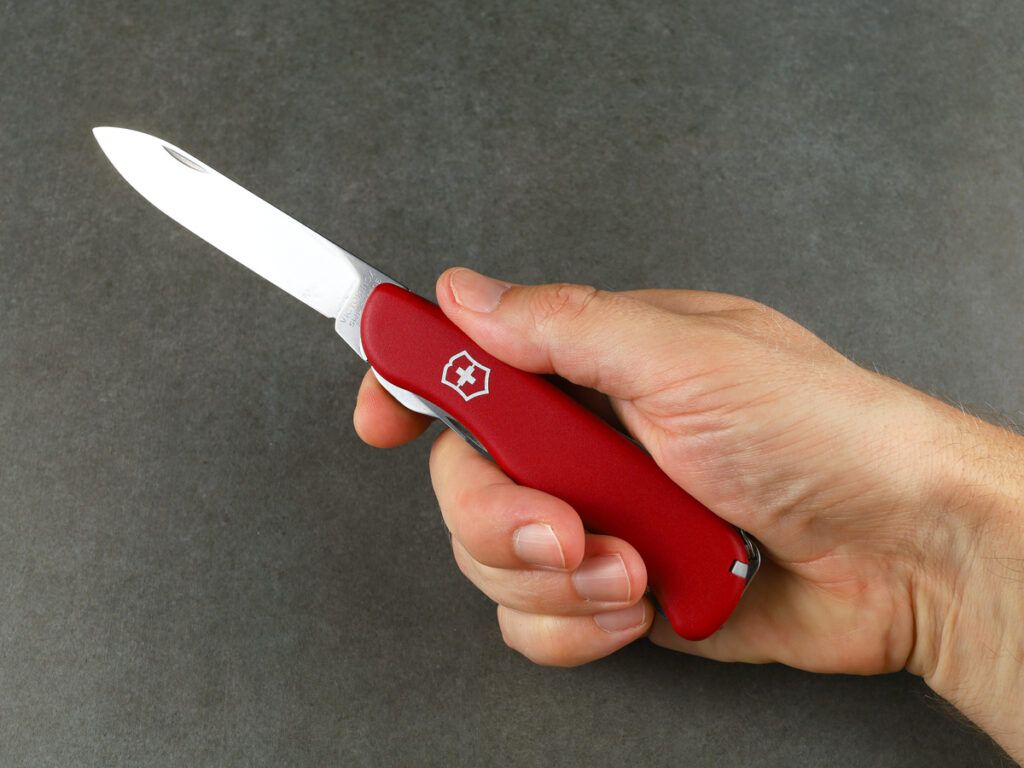
It might sound obvious to not put a knife in your carry-on, but the ones flagged by TSA are often everyday tools that can be easy for travelers to overlook. At the checkpoint, TSA officers see everything from small pocket knives to folding blades with belt clips and locking mechanisms.
Leatherman-style multi-tools are also commonly flagged. These small devices, which typically contain pliers, small blades, screwdrivers, scissors, and more, are popular with hikers, DIYers, and generally handy people — which is partly why they show up so often at airport security. Regardless of their intent, though, knives or multi-tools aren’t allowed in carry-on luggage; owners will need to surrender them or put them in a checked bag instead.
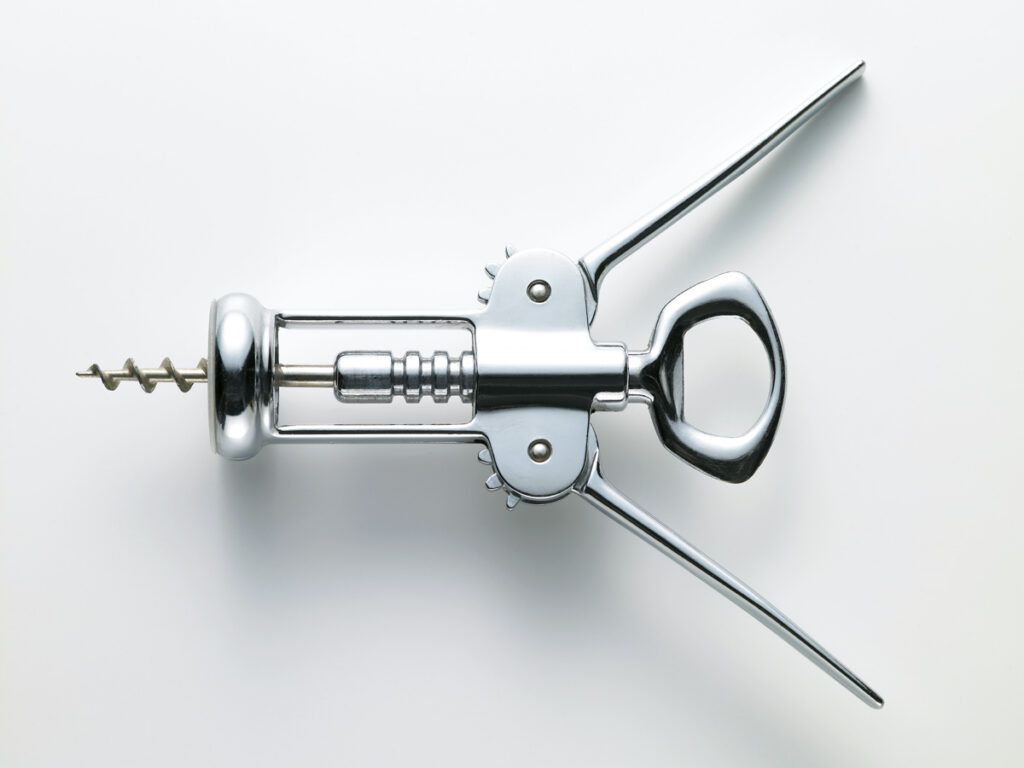
Another way that blades often sneak into a carry-on is in a corkscrew. Many designs are actually allowed on board, but corkscrews that include a small, folding, foil-cutting blade are not — they must be checked or surrendered to the TSA.
A TSA officer at LaGuardia airport in New York shared with a Wall Street Journal reporter that corkscrews, along with pocket knives, are among the top confiscated items at that airport. Like other items surrendered or left at the TSA checkpoint, they’re sent to a state surplus facility in Pennsylvania, where they’re often auctioned off online. If you want to bring home your wine-country souvenir in your carry-on, consider an electric or manual corkscrew without a blade instead.
For those of us obsessed with snacks, don’t worry: Plenty of food items, from crackers to cookies to granola bars and even sandwiches, are indeed allowed on board. But when it comes to spreadable foods such as jars of peanut butter, jam, yogurt, hummus, or other similar items, they’ll likely be flagged if the container exceeds TSA’s liquid limit.
That’s because security rules treat semisolid foods such as these similarly to gels or pastes. While a standard-sized PB&J sandwich should be fine, an entire jar of peanut butter can technically violate the same rule as a full-sized bottle of shampoo. Many organic materials — including permitted food items such as coffee grounds or chocolate — also often look similar to explosives through the X-ray screener. Depending on how easy it is to tell the item’s shape, these may require an additional check but will still be allowed on board.
These Airlines Let You Name Your Price for Upgrades
By
Peter Vanden Bos
Read time: 4 minutes
June 8, 2026
Updated: June 9, 2026
These Airlines Let You Name Your Price for Upgrades
Tips •June 8, 2026•Updated: June 9, 2026
By Peter Vanden Bos
Author
Peter Vanden Bos
Peter is a Toronto-based journalist, editor, content strategist, and self-professed avgeek with 15 years of experience covering all things travel. Prior to joining Daily Passport, he oversaw newsletter publication for Travelzoo. His favorite destinations to explore include Japan, France, Chile, New Zealand, and his adopted home country of Canada.
More and more travelers are forking over thousands of dollars for premium airline tickets, but that doesn’t necessarily mean flight upgrades are out of reach for your vacation budget. A number of airlines let you name your own price for a lie-flat business-class pod or a roomier premium-economy seat. If said airline accepts your bid, you could be flying in the pointy end of the plane at a significant discount. Here’s how airline upgrade bid programs work and which carriers participate.
Typically, if you want to fly in first or business class, you have to book that fare outright, though some airlines offer fixed-price upgrades (either in cash or points) after you purchase your ticket. Bid upgrades work a little differently.
With these online auctions, travelers are invited to submit a bid for an upgrade within a certain time frame before their flight departs. There’s typically a minimum bid (so, unfortunately, you won’t be able to score an upgrade for pennies on the dollar) and a maximum bid for each flight segment. Once you decide on a bid, you enter your payment details and receive an email confirmation.
When the bidding window closes, the airline chooses whether or not to accept your offer. If the airline informs you (by email) that they’ve accepted your bid, your credit card will automatically be charged and your ticket will be upgraded. If your bid isn’t accepted, you’ll keep your original seat.
If you’re really hoping for the upgrade, bidding higher will boost your chances of the airline accepting your offer. However, unlike in a traditional auction, you won’t be able to see what other passengers have bid, though some airlines, like Air Canada, may offer clues as to what constitutes a “good” offer.
Upgrades aren’t available on all routes. Some airlines will send an email inviting you to place an offer. With others, you can log on to the airline’s website (more on that below) and enter your booking details to confirm you’re eligible.
More than 50 airlines worldwide offer passengers the option to bid for a premium upgrade, though, sadly for American travelers, not one of them is based in the U.S. Hawaiian Airlines used to allow passengers to bid for upgrades, but the program was eliminated after the airline merged with Alaska Airlines.
That said, if you’re headed to places like Canada, Mexico, or Europe, a number of popular international carriers participate. We’ve included a few of them below. Click on each link to find out more about the airline’s terms, such as when bidding opens and closes, when you will be informed of the airline’s decision, and which fares and routes are eligible.
Airlines offer these programs to fill unsold seats and boost their bottom lines — the more seats that are available close to departure, the better your odds are of securing a cheap upgrade. There are many other variables, though, such as the type of route (leisure vs. business), the time of year, and even the time of day, as early-morning and late-night flights tend to be less popular with business travelers. To guide your bid, you can always try a dummy booking for your flight to see what the current prices are and how many seats are left unsold.
If your bid is successful, you could be flying at the front of the plane for a fraction of the price. For instance, there are many reports of successful bids of around 400 to 700 euros ($465 to $815 USD) to move from economy class to business class on transatlantic flights. An economy fare might range from $1,000 to $1,500 on a route like Washington, D.C., to Frankfurt, but business class can easily cost three or four times as much. Even a 700-euro successful upgrade offer represents a good chunk of savings.
Plus, upgrades don’t just come with more perks once you’re on the plane. In the airport, you can also take advantage of benefits like priority check-in, express security lines, free checked bags, and lounge access. However, you likely will still earn miles or points per the terms of your original economy-class ticket.
For many travelers, the tradeoff is uncertainty. You won’t know until shortly before you leave whether you’ve been upgraded, and some people prefer to lock in the upgrade early. Certain airlines, like Air Canada, will offer a “buy now” price if you’d like to bypass the bid process altogether. Otherwise, you may be able to find a better last-minute offer by refreshing your booking on the airline’s app, particularly if you’re looking to burn unused points for the upgrade.
Could the Last Row of Coach Soon Become the Best Row?
By
Michael Nordine
Read time: 3 minutes
June 8, 2026
Updated: June 8, 2026
Could the Last Row of Coach Soon Become the Best Row?
Tips •June 8, 2026•Updated: June 8, 2026
By Michael Nordine
Author
Michael Nordine
Michael is a staff writer for Daily Passport and film critic who writes the weekly newsletter Movie Brief. His writing and criticism have also appeared in the Los Angeles Times, Variety, and the Washington Post, among others. A native Angeleno, his favorite countries to visit are Norway and Japan.
Like the middle seat, the last row of an airplane tends to be, well, a last resort — the spot you choose only when there’s nothing else available. It’s right next to the galley and lavatories, it’s where you’ll feel the most turbulence, and it means you’re always the last one on and off the plane. It’s not universally disliked, of course — some people find confined spaces cozy rather than claustrophobic — but in the minds of most travelers, the last row lives up to its name. That could be changing soon, however, as one company has reimagined those undesirable seats in an undeniably appealing way.
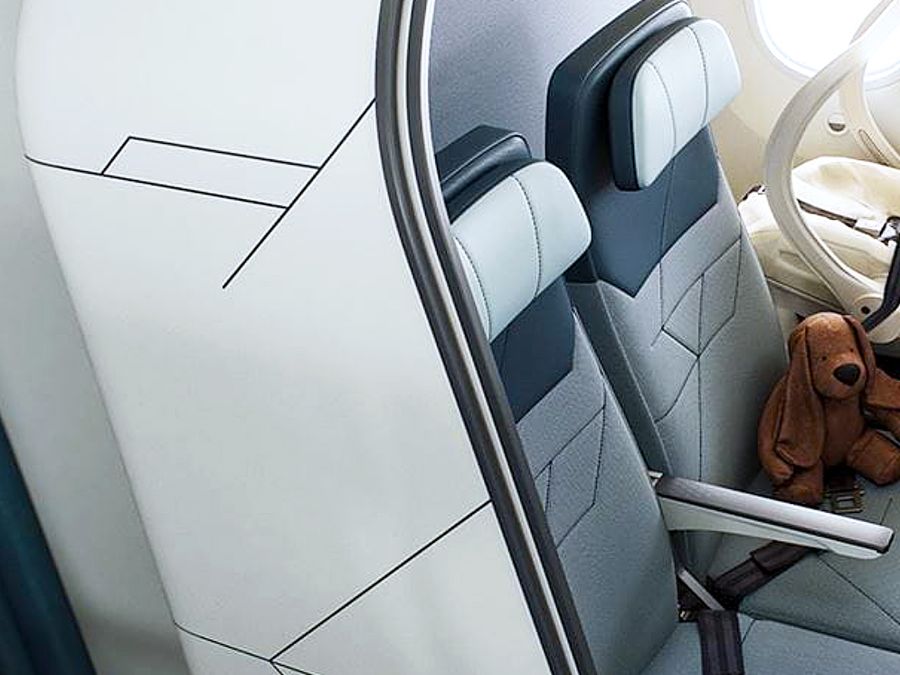
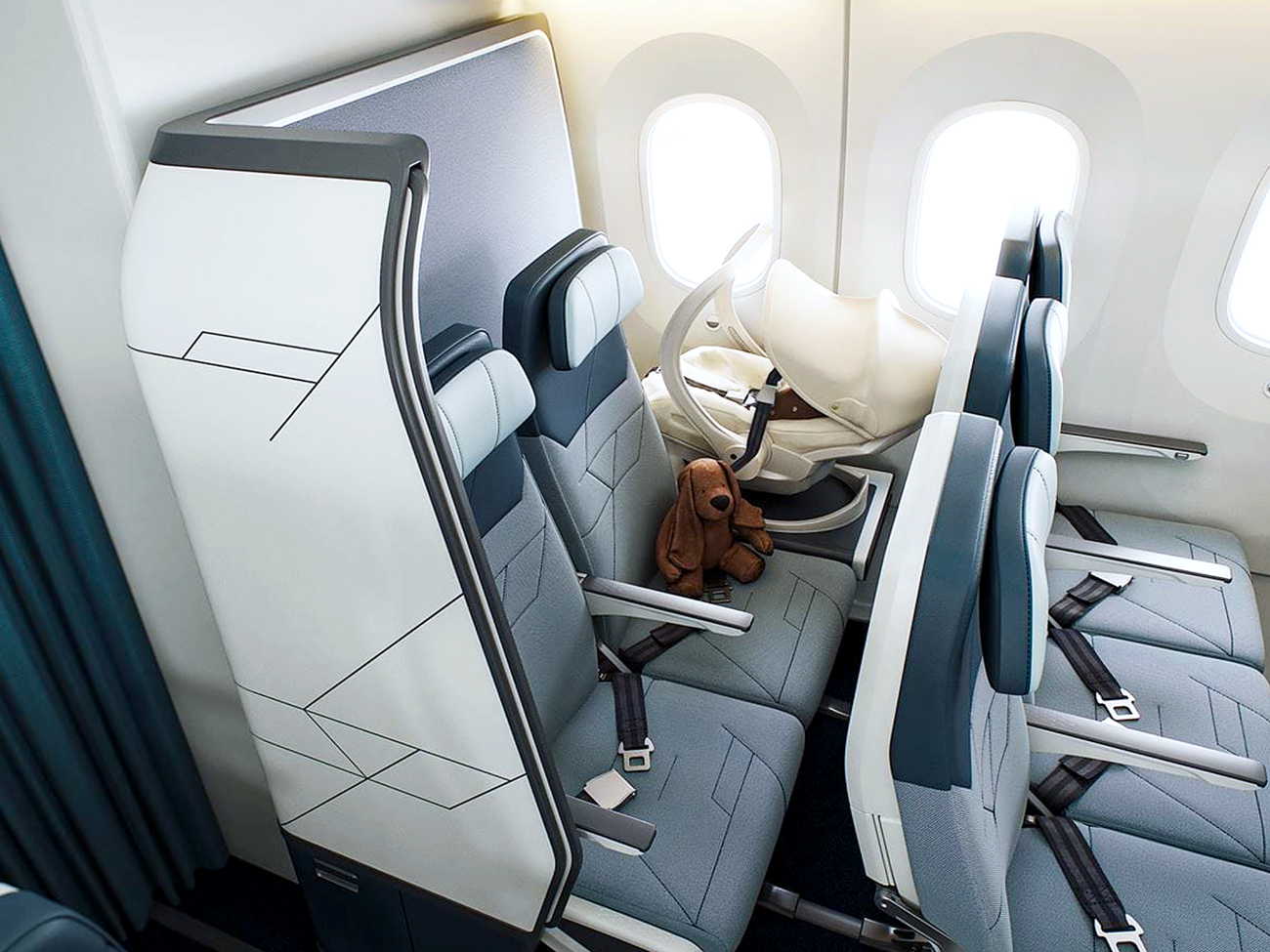
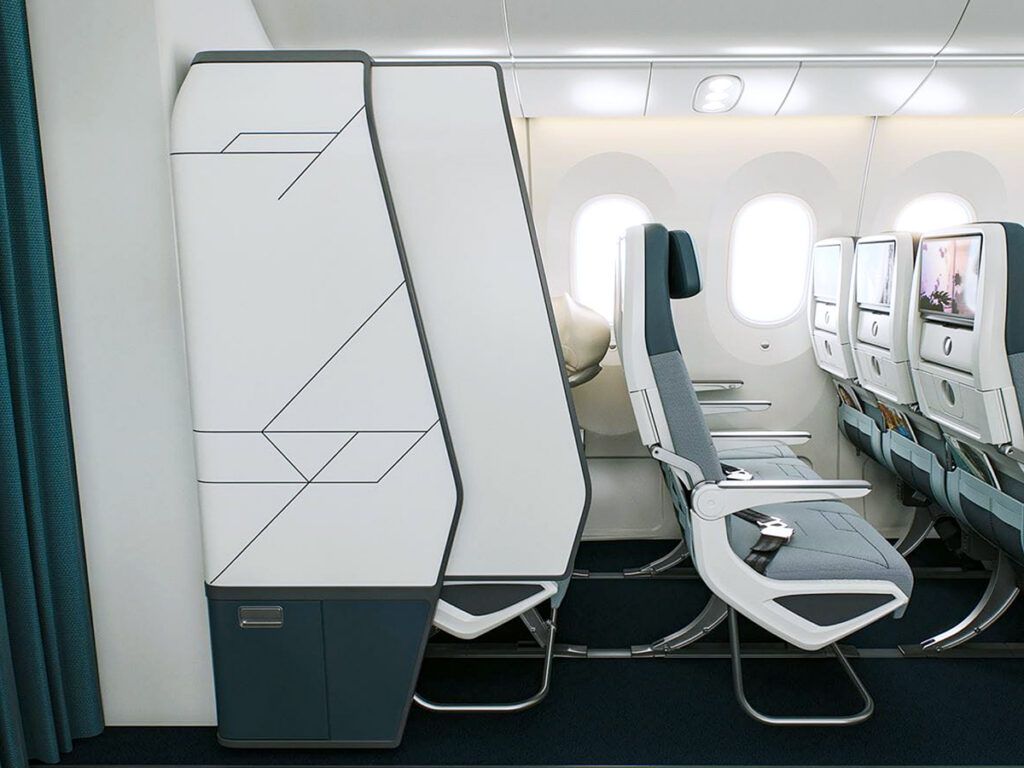
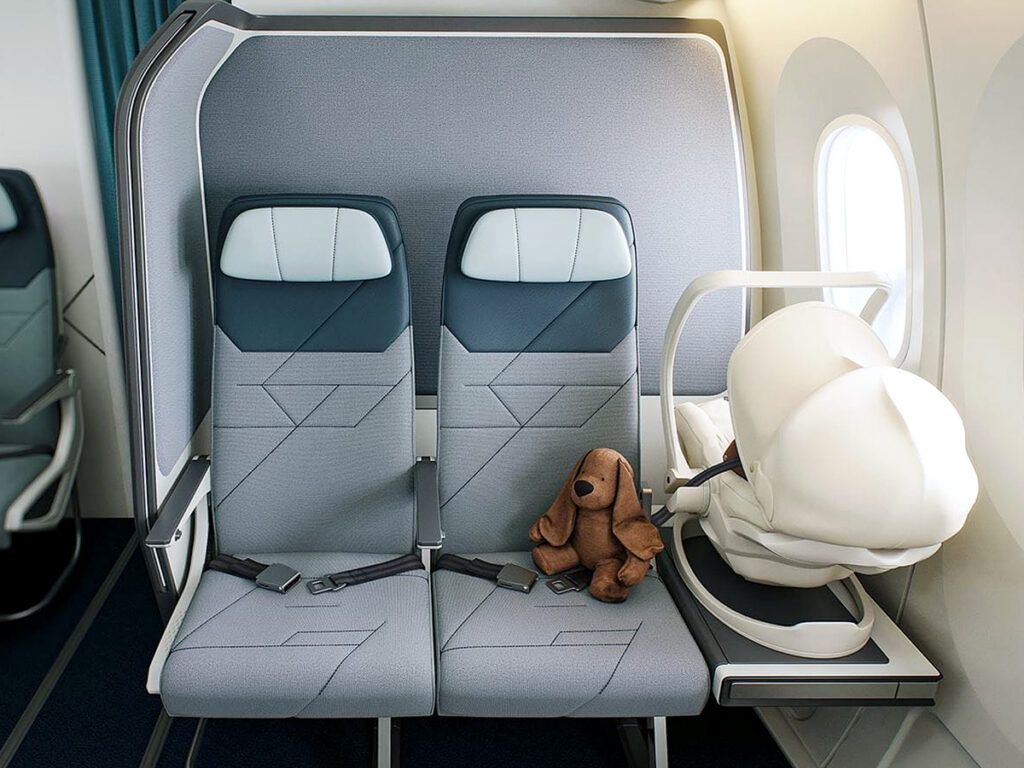
The SkyNook concept from Collins Aerospace is billed as a “semiprivate retreat” at the back of a wide-body plane. The cabins of such aircraft, which you’ll most often find on long-haul intercontinental routes, typically narrow toward the rear, meaning the last row or two can’t fit the standard three seats by each window. Instead, airlines will have only two seats and a somewhat awkward gap of empty space by the window.
Collins Aerospace says that the “SkyNook solution reclaims commonly underutilized space with a convertible console” that can be used for a bassinet, pet carrier, car seat, or side table for working or eating. Plus, it has a privacy divider along the aisle — something most passengers experience only in first or business class, and a helpful means of reducing noise and other distractions as flight attendants walk by and passengers line up for the lavatory.
Though the concept has yet to enter service, it’s already garnering buzz in the aviation community. After the company won a Crystal Cabin Award for the concept in April 2026, Jefferey McKee of Collins Aerospace said in a press release that SkyNook “exemplifies” the company’s commitment to improving air travel, “transforming a frequently overlooked area into a serene retreat that maximizes functionality, comfort, and flexibility for families, passengers with service animals, or those with sensory considerations.”
The SkyNook hasn’t entered production and doesn’t have any confirmed airline customers as of yet (or any airlines that have publicly expressed interest). Nonetheless, Collins recently showed the product off at the 2026 Aircraft Interiors Expo in Hamburg, Germany. It’s easy to imagine couples who frequently fly with a baby (whether of the human or fur variety), besties flying to Europe for a backpacking trip, and other traveling duos jumping at the opportunity to use the SkyNook on a regular basis if and when it’s possible to do so.
For now, several other airlines are taking steps to improve the economy-class product. Air New Zealand recently announced a new concept called the Skynest, which introduces a cluster of bunk beds in the center of the coach cabin. Passengers can reserve one to lay down in and nap for a few hours.
The airline also offers a product called the Skycouch, in which a regular row of economy-class seats can be converted into a flat space for lounging or sleeping. United Airlines will be the first to bring that concept to the U.S. with its “Relax Row,” set to debut in 2027.
Julia is a U.K.-based travel writer whose work has been featured in The Independent, The Telegraph, The New Zealand Herald, and Culture Trip, among others. She’s an enthusiastic advocate for independent travel and a passionate geographer who has had the privilege of traveling to more than 130 countries in search of a story.
When you’re traveling overseas, it’s often convenient to take taxis or rideshares to get around. But issues can arise, especially in unfamiliar destinations, so it pays to do a little research prior to your trip. Here are seven mistakes that travelers make when using taxis or rideshares in other countries.
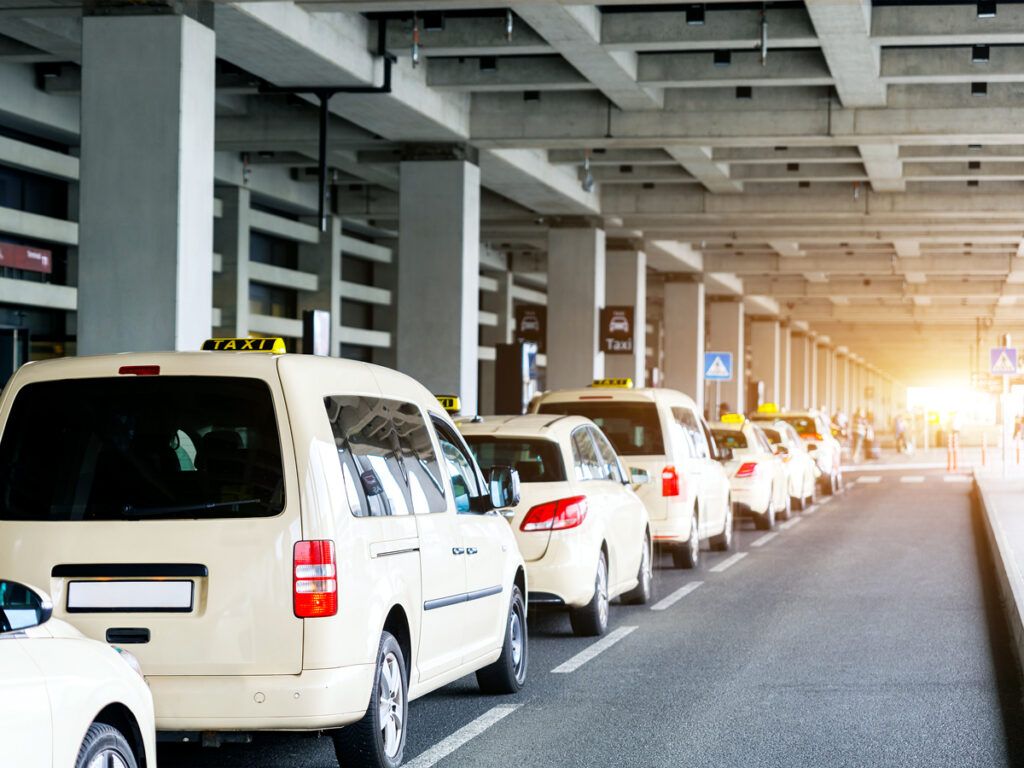
Hailing an unofficial taxi is always more risky than using a reputable licensed operator. In crowded, unfamiliar locations such as the airport arrivals area or a city bus terminal, you might be greeted by someone asking if you need a taxi. When you’re jet-lagged or travel weary, it can be easy to mistake them for a licensed operator, but in many places, drivers are not permitted to solicit rides this way. Instead, look for an official stand, kiosk, or office. That way, you can be confident that you are paying a fair rate and will (hopefully) reach your intended destination without incident.
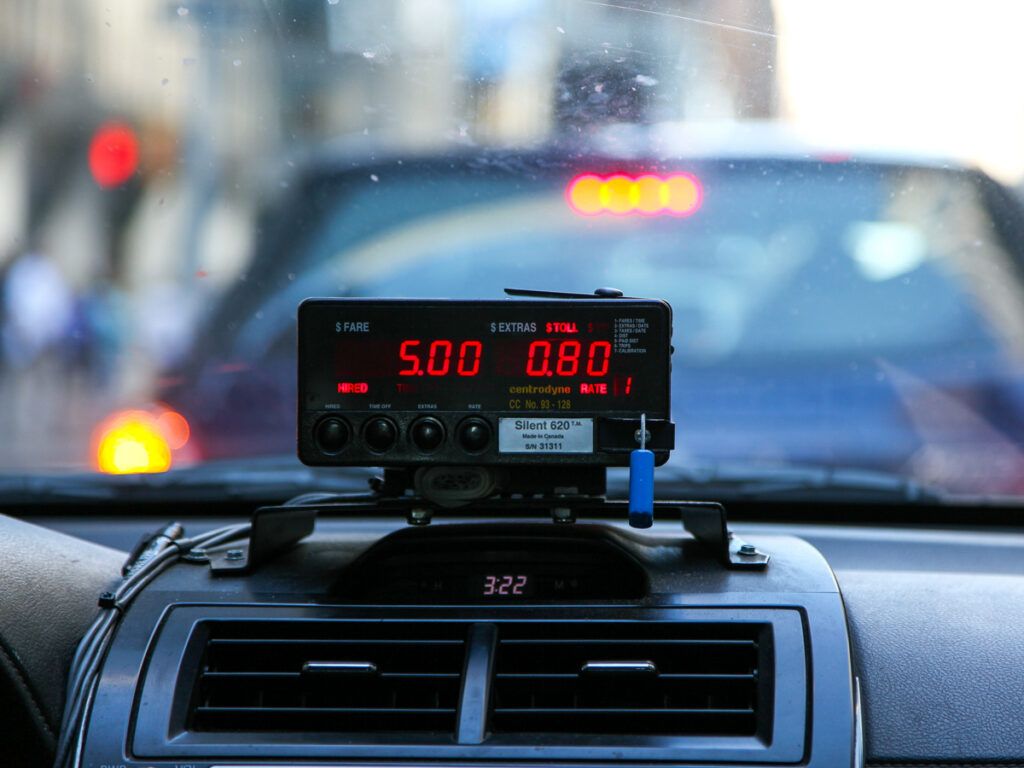
Whether you check for a price on an app such as Uber, a list of flat-rate fares, or with the driver directly, it’s good practice to be sure you have at least a rough idea of how much your journey is going to cost before getting into a vehicle. If you check up front or agree beforehand with the driver on an exact rate, there should be no unpleasant surprises once you reach your destination. In areas where a meter is used, one way to guard against expensive, roundabout routes is by asking a local or your hotel concierge for an approximate figure, which you can reconfirm with the driver.
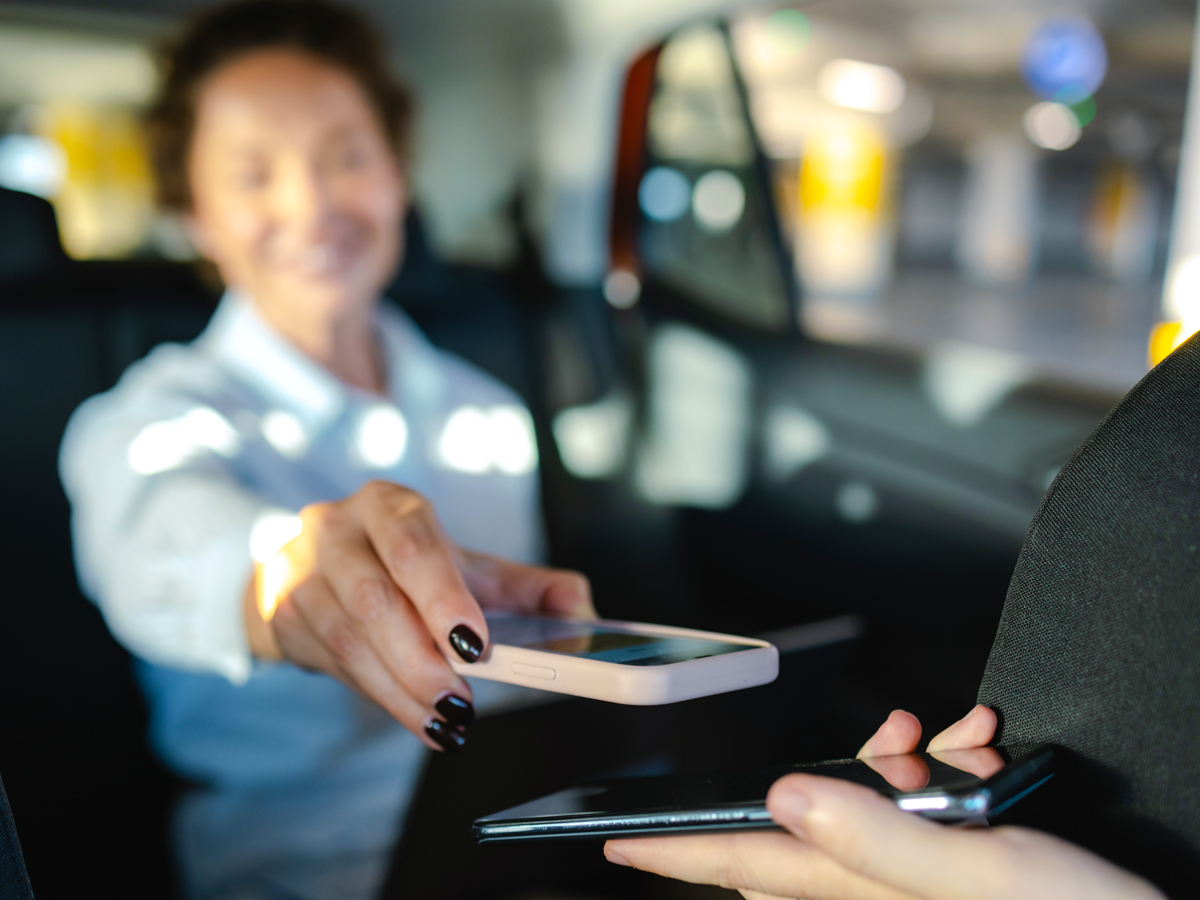
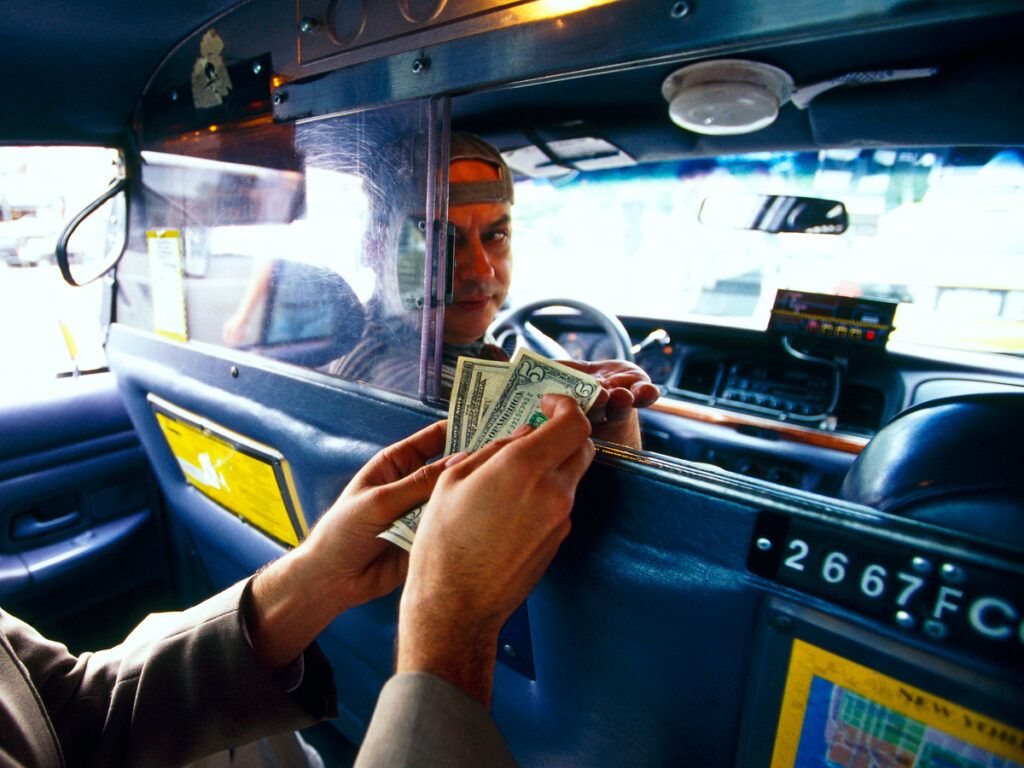
In some parts of the world, you’ll still be expected to pay in cash for a taxi ride. However, think twice before handing over a large bill and expecting change. You may have to wait while the driver wanders off to find someone to break it for them. Or worse, the driver may claim that they have no change. If you are not able to pay by credit card or via an app, make sure you have plenty of smaller bills and coins to be able to settle the fare with the exact amount. If that’s not possible, ask if the driver can give you change before getting in the cab.
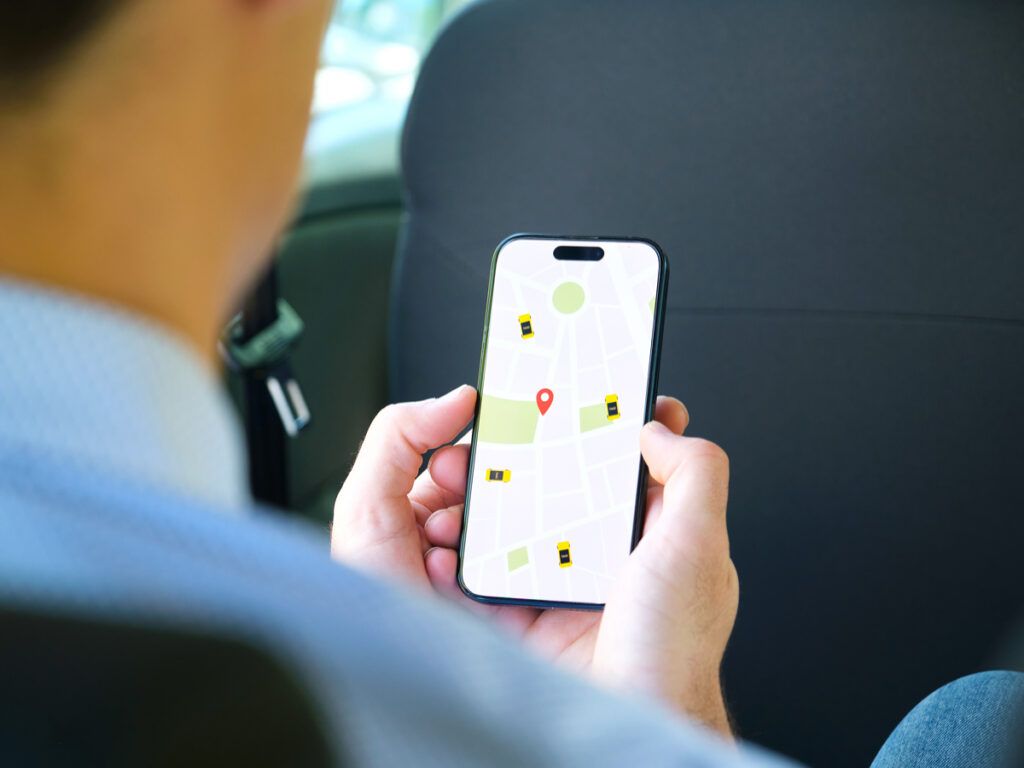
To reduce the chance of being scammed into a pricey and unnecessary detour, it pays to research how far your journey is and the most common routes to reach your destination. During the ride, follow the route on your phone so that you know where you should be going. Though unexpected traffic jams and street closures can necessitate deviations, you’ll be able to check that you’re still more or less on the right track. This will give you peace of mind, especially if you’re a solo traveler or riding late at night.
Unless you’ve opted for a shared service, it’s rarely a good idea to ride in a taxi with a complete stranger. You could find yourself in an awkward situation or even vulnerable to robbery, harassment, or assault. Even if the other passengers seemingly pose no threat, the journey could take considerably longer if you aren’t the first to be dropped off. Sharing can also cause issues when splitting the fare. If you do opt to ride with someone, at least make sure you agree on how much each person will pay.
While rideshares of some kind are available in many parts of the world, not all companies operate everywhere. If you plan to use a rideshare app to help you get around, research your destination in advance so you know which one is the best local option.
You might be used to using Lyft at home, for example, but it’s available in only nine European countries — and none in Asia. Additionally, in the past, Uber has been banned in European capitals such as London and Budapest. Those disputes have been resolved and you can currently use the service in both cities, but if your travels take you to, say, Iceland, you’ll need to use the local alternative, Hopp, or a regular taxi.
With rideshares, you may be offered multiple ways to pay, but it’s usually not sensible to default to U.S. dollars. Rideshare companies will most likely make sure that the conversion rate is in their favor, meaning you’ll pay more. You may also pay for the convenience of being charged in a currency with which you’re familiar. For example, Uber’s Preferred Currency Pricing comes with a 1.5% surcharge that can quickly amount to a significant markup on longer rides. Check your settings in the app and make sure you aren’t defaulting to this option so you don’t pay more than you need to.
Advertisement
More from our network
Daily Passport is part of Inbox Studio, an email-first media company. *Indicates a third-party property.
Bennett is a New York City-based staff writer for Daily Passport. He previously contributed to television programs such as the Late Show With David Letterman, as well as digital publications like the Onion. Bennett has traveled to 48 U.S. states and all 30 Major League Baseball stadiums.
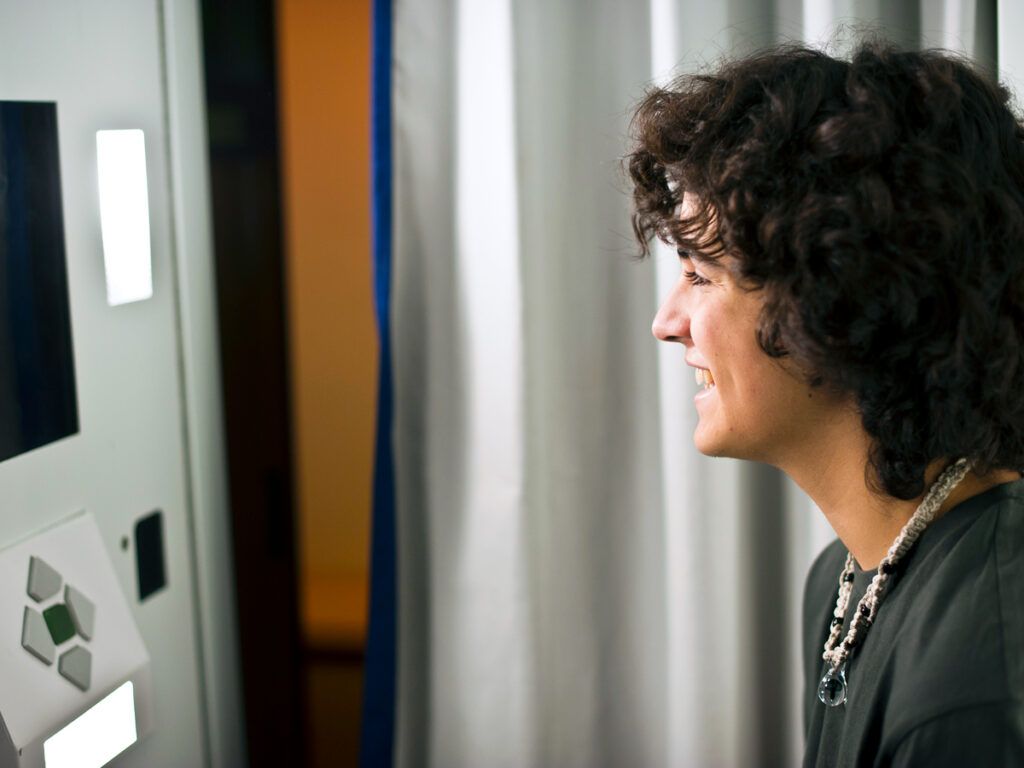
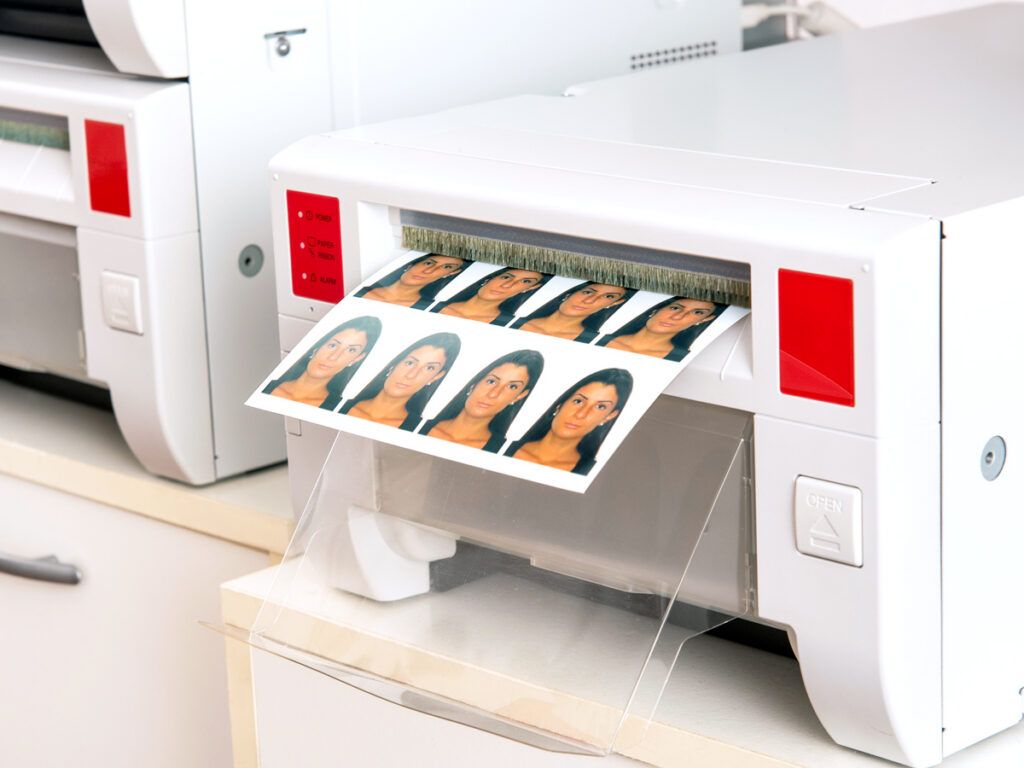
Taking a passport photo is a relatively straightforward process. Many post offices and convenience stores offer it as a quick and easy service. But there are a number of reasons why the photo may be rejected with your passport application, forcing you to get another picture taken. Knowing the requirements can help ensure you get it right the first time. With that in mind, here are some of the most common reasons why passport photos get rejected.
According to the U.S. Department of State, improper lighting and unwanted shadows are among the most common issues with passport photos. Overly bright lights can cause an image to be overexposed, dim lighting may lead to shadows that obscure the face, and a poorly placed overhead lamp can create uneven distribution of light. To ensure that your passport photo gets approved, make sure that lighting is evenly distributed on the face without any shadows in the foreground or background.
Passport photos are often rejected because the applicant is wearing eyeglasses, so be sure to remove yours beforehand. That said, there are medical exceptions that allow you to keep your glasses on. According to the State Department, “If you cannot remove your glasses for medical reasons, please include a signed note from your doctor with your application.”
When it comes to attire, avoid wearing any uniforms and camouflage clothing. Additionally, remove any masks, headphones, hands-free devices, or other accessories that obscure your face or identity. Jewelry and facial piercings are permitted as long as they don’t obstruct your facial features.
Lastly, be sure to remove hats or head coverings, except those of a religious or medical nature. Religious headwear is permitted as long as you submit a signed statement affirming you wear it each day (and it doesn’t obscure your face), while medical headwear is allowed with a signed doctor’s note. That said, headwear should still allow the face to be fully visible, and the item must be one color without any patterns.
When taking a passport photo, always stand in front of a plain white or off-white background with no patterns, lines, objects, or shadows. A white brick wall, for instance, may result in rejection due to the textured nature of the brick, and a wall that has windows will also be flagged. That said, there are rare medical exceptions in which it’s permitted for an item to appear in the background — for example, if you sit in a wheelchair with a visible headrest. (You must include a medical note in your application that states the need for a wheelchair, however.)
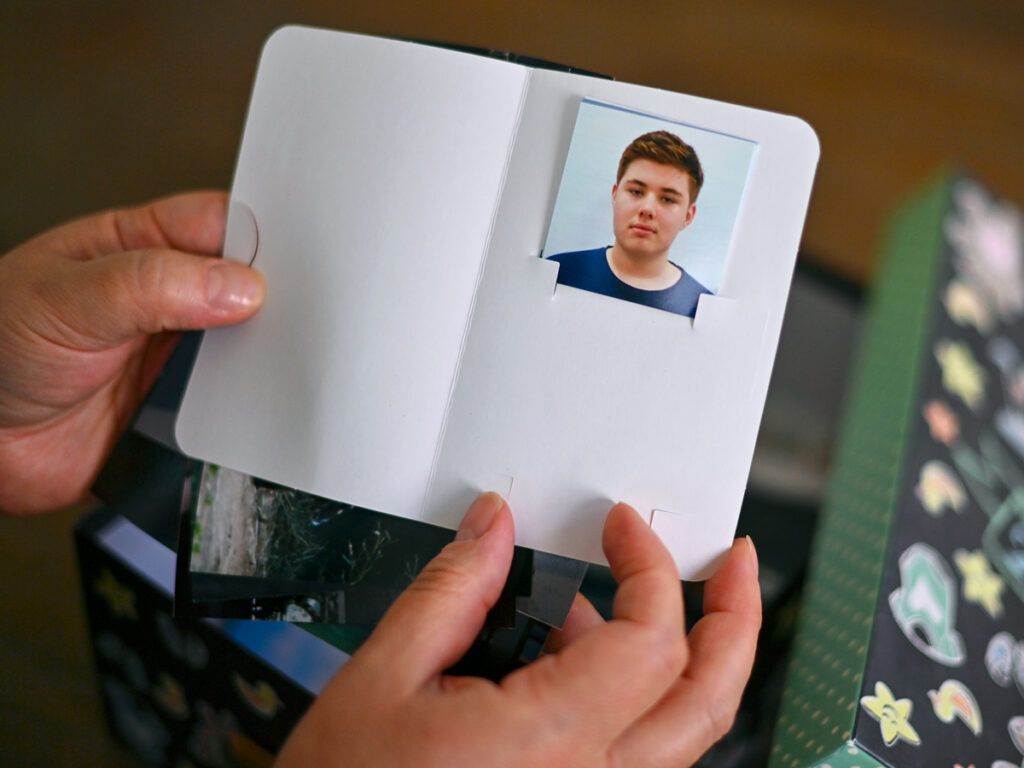
While you might like to make a goofy face when taking personal photos, always maintain a neutral expression when taking your passport photo. Keep both eyes open, too, so the color of your pupils is clearly visible. And while smiling is allowed, you should keep your mouth closed and avoid displaying any teeth. Lastly, it’s important to face directly toward the camera. Turning your head to the side or angling it upward or downward increases the odds that your photo will be rejected.
Passport photos must be 100% unaltered images; any edits or filters will result in rejection. For instance, say you snap a passport picture in front of a black wall, and then use digital editing software to remove the black paint and make it white. You may think this is a clever workaround, but the cropped photo will likely be flagged since you retouched the outline of your head and neck. The passport photo must remain in its original, authentic condition.
The State Department has strict guidelines when it comes to passport photo quality. Use only high-resolution images, and avoid anything that’s grainy, pixelated, or blurry. Also, your photo must be printed on matte or glossy photo paper; lower-quality photocopies are likely to be rejected. Lastly, the photo should measure exactly 2 inches by 2 inches, and the size of your head in the photo must be between 1 inch and 1 3/8 inches from the bottom of the chin to the top of the scalp.
Advertisement
More from our network
Daily Passport is part of Inbox Studio, an email-first media company. *Indicates a third-party property.
Peter is a Toronto-based journalist, editor, content strategist, and self-professed avgeek with 15 years of experience covering all things travel. Prior to joining Daily Passport, he oversaw newsletter publication for Travelzoo. His favorite destinations to explore include Japan, France, Chile, New Zealand, and his adopted home country of Canada.
Airplane cabins are getting tighter and tighter. Seat pitch — a term airlines use for the distance between a point on one seat and the exact same point on the seat directly in front of it — has shrunk from an average of more than 33 inches in economy class in the 1980s to around 30 to 31 inches today. But some airlines shrink that even further by squeezing more seats into their cabins. These are often budget carriers, and for customers, the tradeoff for tight legroom is usually a low fare. But if you’re tall or simply looking for a little more room to spread out, you may want to avoid these airlines that offer the least amount of legroom in economy class.
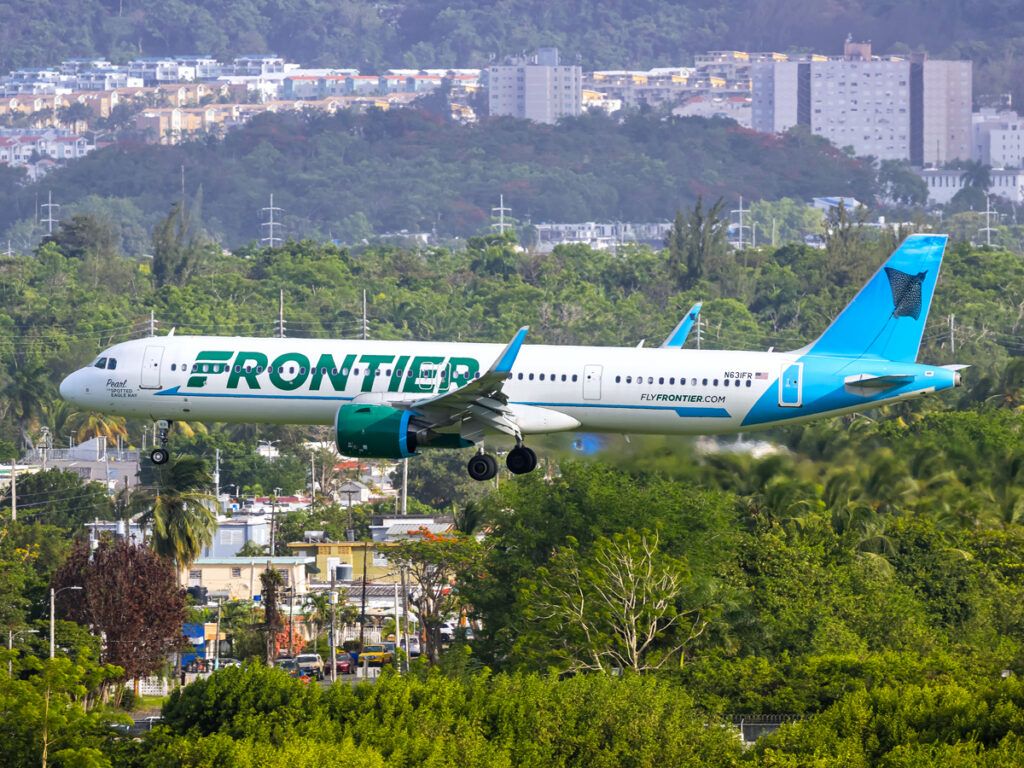
Frontier Airlines is America’s largest ultra-low-cost carrier (ULCC), serving over 120 destinations. It’s known for its low-frills, bare-bones service — just about the only thing passengers don’t have to pay extra for is a small cup of water during the flight. To keep fares low, the airline crams as many seats as possible into its fleet of Airbus A320 and A321 aircraft. The typical seat pitch on Frontier is 28 to 29 inches, compared with 30 to 31 inches on legacy airlines such as American, Delta, or United.
While 1 to 2 inches might not sound like a lot, it can make a noticeable difference in terms of comfort. Most Frontier seats don’t recline, either, but at least you won’t have to worry about the passenger in front of you impeding your already-limited space. If you’re looking for a little extra clearance, rows at the front of the cabin and at the exit rows offer a few additional inches of legroom. In late 2025, Frontier also began installing two rows of first-class seating on all of its aircraft.
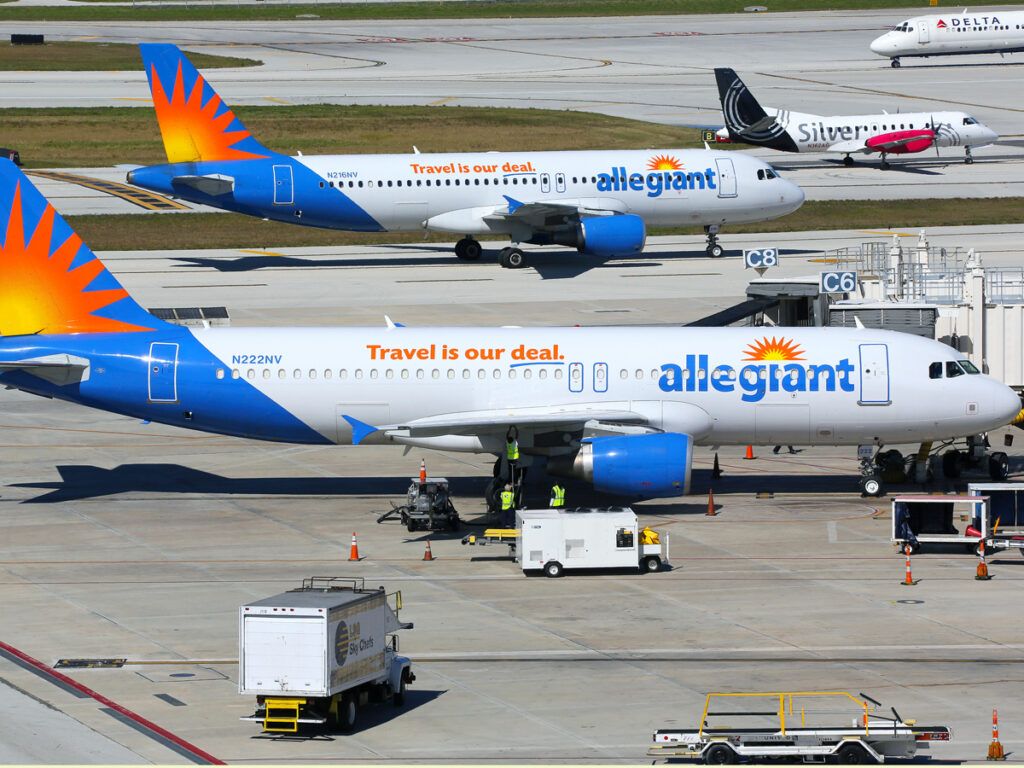
Allegiant, another ULCC, focuses on offering service to underserved airports in the U.S. For many travelers, it’s their only nonstop option to places such as Florida or Las Vegas, but there’s a tradeoff — limited legroom on board.
Like Frontier, Allegiant outfits many rows with just 28 inches of seat pitch, which is the tightest you’ll find at any U.S. airline. The airline’s newest plane, the Boeing 737 MAX 8-200, has the exact same fuselage and dimensions as the standard 737 MAX-8 you’ll find at airlines such as American and Southwest, but its manufacturer, Boeing, added an extra pair of exit doors so airlines can add even more seats. Allegiant’s high-density version has a whopping 190 seats, compared with 175 at Southwest.
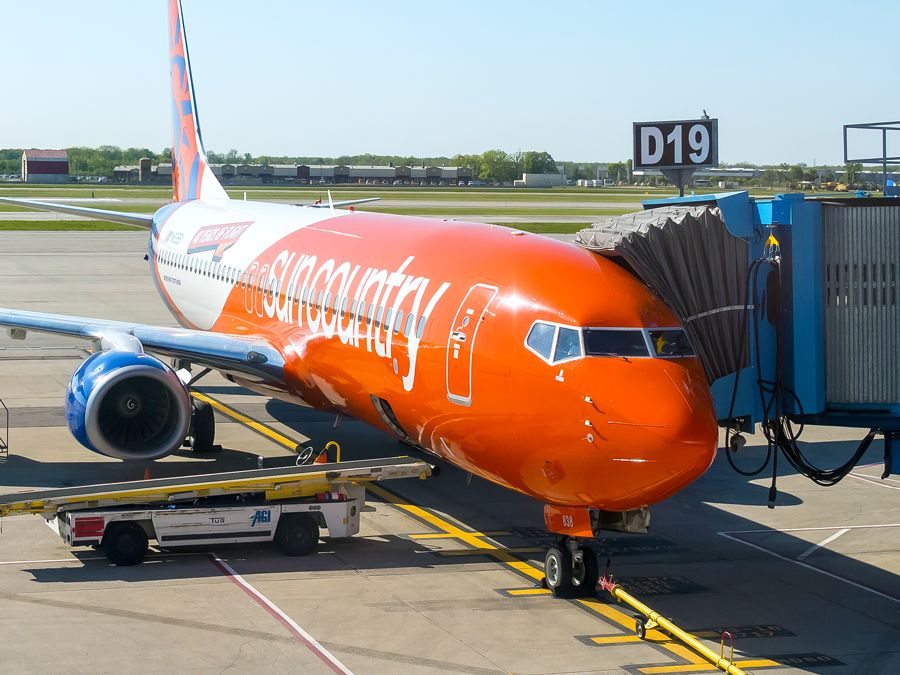
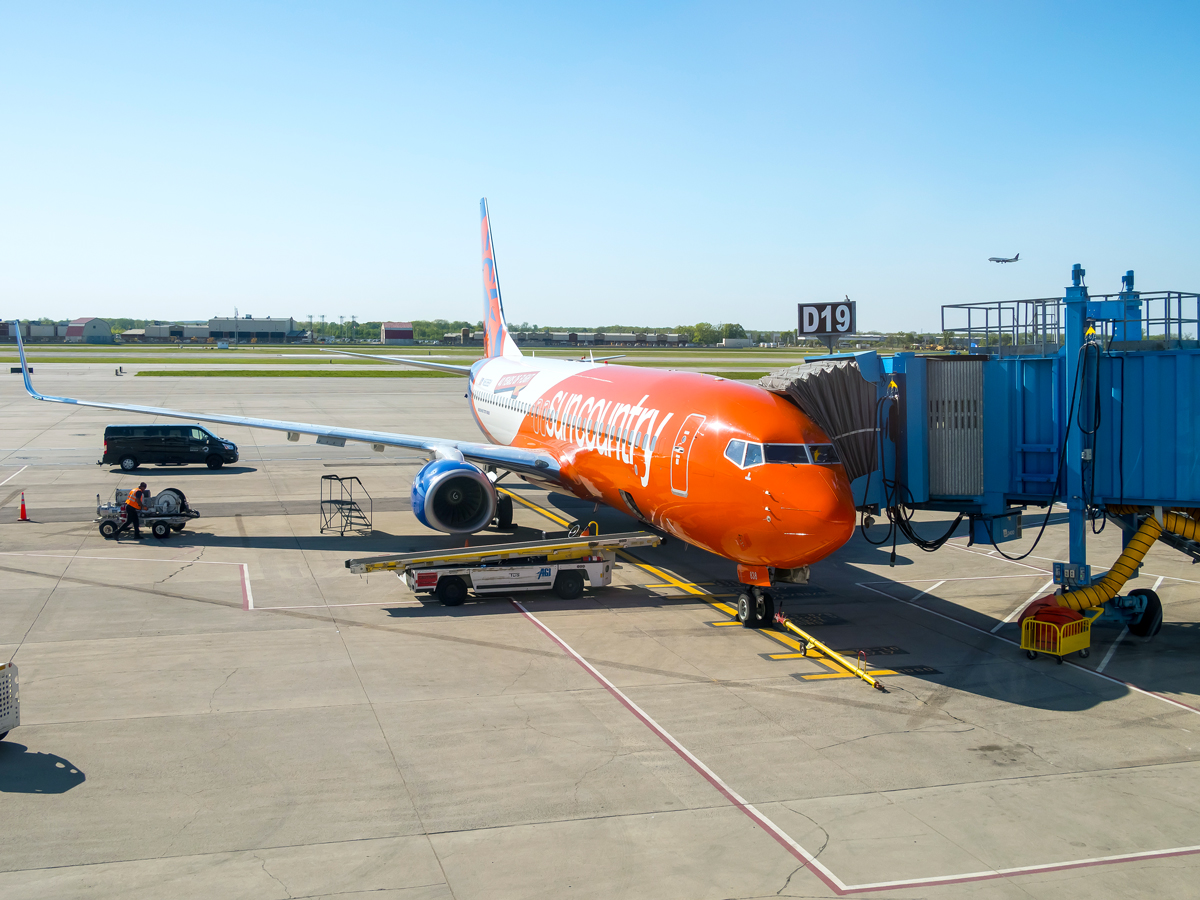
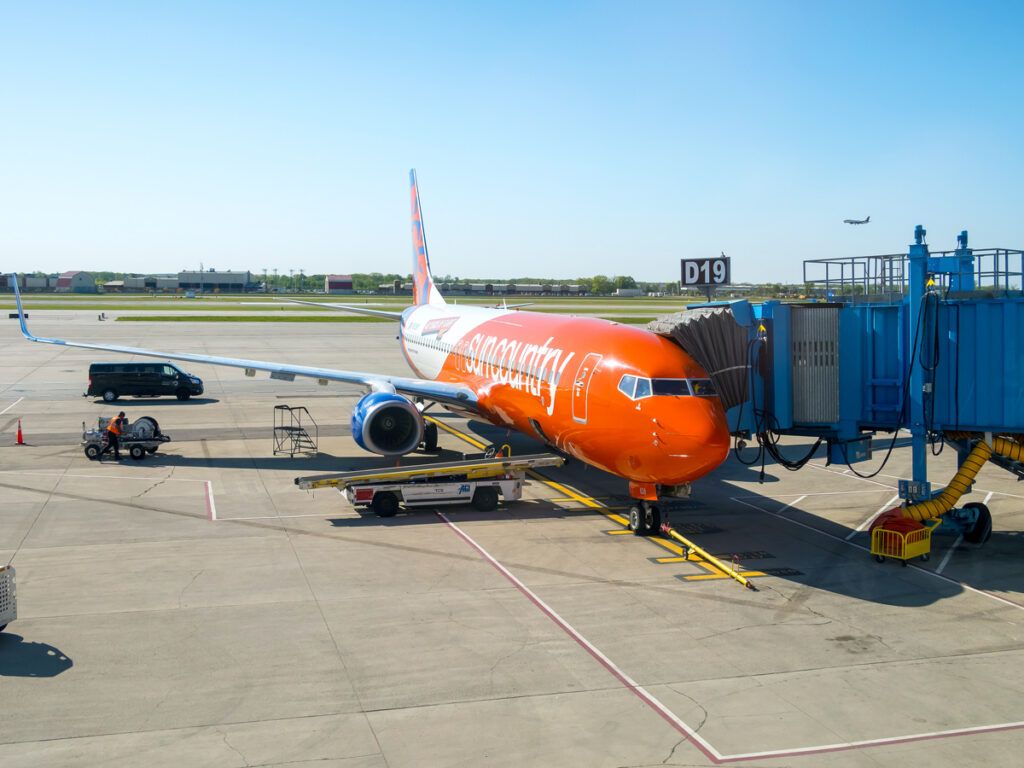
Allegiant recently acquired Minnesota-based Sun Country Airlines, but for the time being, the two airlines are still operating under separate brands. Sun Country operates a small fleet of Boeing 737-800s from its main hub at Minneapolis-St. Paul International Airport, and they’re configured with 186 seats in an all-coach configuration. The vast majority of them have a tight 29-inch seat pitch, but a few rows of seats sold as “better” or “best” offer more legroom.
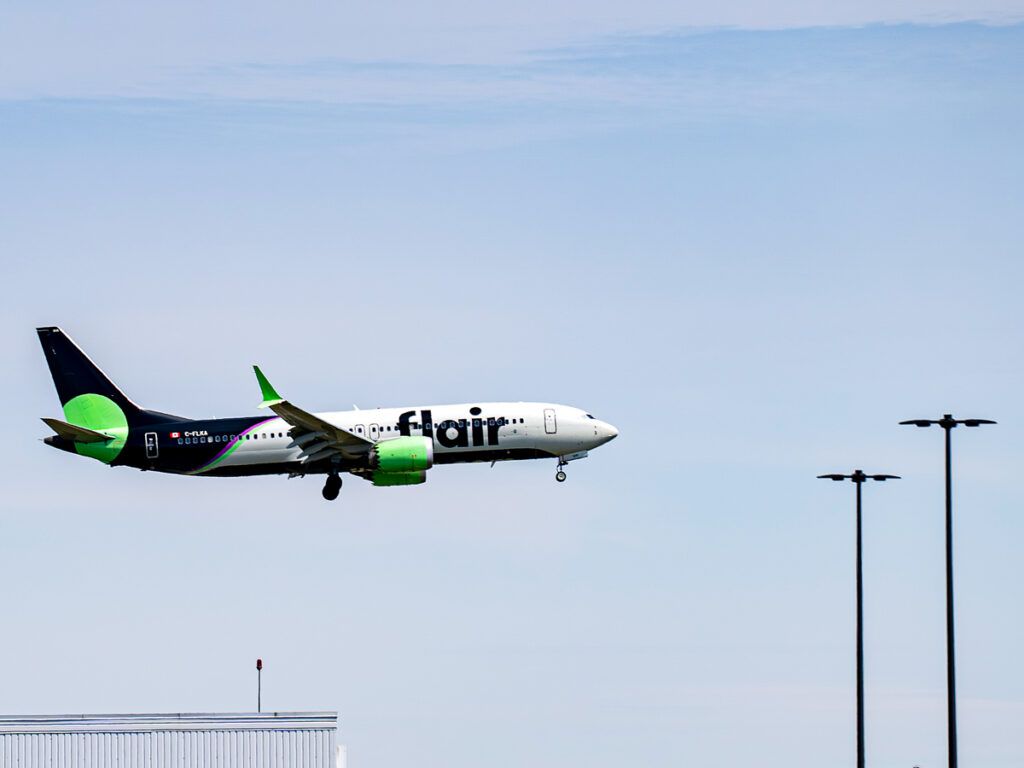
If you’re traveling overseas, the story is similar: Flying with a low-cost airline equals less legroom (typically 28 to 29 inches). In Canada, the list includes Flair Airlines and select aircraft on WestJet, though the latter airline recently announced it was backtracking on its decision to reduce seat pitch in some rows after consumer backlash. In Mexico, Viva Aerobus and Volaris both have similarly restricted legroom.
In Europe, the continent’s largest airline, Ryanair, has long led the charge on densifying cabins — its CEO has even been a vocal proponent for standing-only seats. For now, the airline configures its Boeing 737 MAX 8-200s with 197 seats — which is seven more than Allegiant’s version. Ryanair’s biggest competitors in Europe, easyJet and Wizz Air, are also known for their tight cabins.
In Asia, you’ll find a standard 28- to 29-inch seat pitch on airlines such as AirAsia, IndiGo, and Cebu Pacific. The latter airline, based in the Philippines, offers one of the world’s tightest configurations of the Airbus A320NEO, with a whopping 194 seats. For comparison, JetBlue operates all-economy Airbus A320s with just 162 seats.
So, which airlines offer the most room to spread out in economy class? In the U.S., JetBlue proudly proclaims to offer the most legroom in coach, with a standard of 32 inches across its fleet. However, the airline recently announced plans to add first-class seats, which will eventually reduce the legroom for passengers in economy.
Southwest Airlines, meanwhile, recently reconfigured its planes so it could sell some seats with extra legroom. Now, those premium seats at the front have 34 to 36 inches, while standard coach seats have 31 inches — which is still an inch more than you’ll find on many American, Delta, and United planes.
10 Bizarre Tourist Attractions You Won’t Believe Exist
By
Bradley O'Neill
Read time: 8 minutes
June 4, 2026
Updated: June 4, 2026
10 Bizarre Tourist Attractions You Won’t Believe Exist
Culture •June 4, 2026•Updated: June 4, 2026
By Bradley O'Neill
Author
Bradley O'Neill
Bradley is an English travel writer who’s wandered through 50-plus countries and lived on four continents while chasing waves, the perfect pint, and family adventures. Bradley's work has appeared in publications such as Skyscanner and Matador Network, and he now splits his time between Buenos Aires and Uruguay.
For every run-of-the-mill monument around the world, you’ll find many other, far weirder tourist attractions. Think: temples overflowing with rats, islands ruled by cats, and museums dedicated to hair and heartache. Whether fascinating, unsettling, or borderline absurd, these tourist sites prove that travel is sometimes most memorable when things get a little bizarre. Check out 10 of the planet’s most unusual tourist attractions.
If you’re the type of traveler who enjoys close encounters with local wildlife, consider Tashirojima. Commonly known as “Cat Island,” this rural islet off Japan’s northeastern Oshika Peninsula is ruled by felines. Cats are estimated to outnumber humans by roughly four to one, and it’s neither natural nor accidental. They were originally introduced to protect the island’s silkworm farms from rats. Later, local fishermen came to see them as symbols of good luck, even observing their behavior to predict weather and fishing conditions.
Today, though the silkworm farms are long gone, cats still roam the island’s quiet lanes, fishing ports, and forest paths with confidence. Cars are largely absent, and perhaps most importantly for the feline residents, dogs are banned altogether. Visitors can hike to the tiny Myori Shrine, dedicated to a cat accidentally killed by a falling rock, or stay overnight in quirky cat-shaped cabins on nearby Manga Island.
From the Golden Temple to the Taj Mahal, India is spoiled with magnificent works of architecture. At first glance, Karni Mata Temple, with its ornate silver doors and marble floors, is another shining example. But inside, an estimated 25,000 rats await worshippers and visitors. These rodent inhabitants roam freely, darting between the bare feet of temple visitors, drinking from bowls of milk, and snacking on crumbs left for them by priests and pilgrims.
The rats, locally known as kabbas, are believed to be reincarnated descendants and devotees of Karni Mata, herself an incarnation of the Hindu goddess Durga. According to legend, when Karni Mata’s son died, she struck a deal with Yama, the god of death. For the return of her son, she promised that her followers would turn into sacred rats before reincarnating as humans. Nowadays, paying respect to the rats, or even having one scurry across your feet, is said to bring health and prosperity.
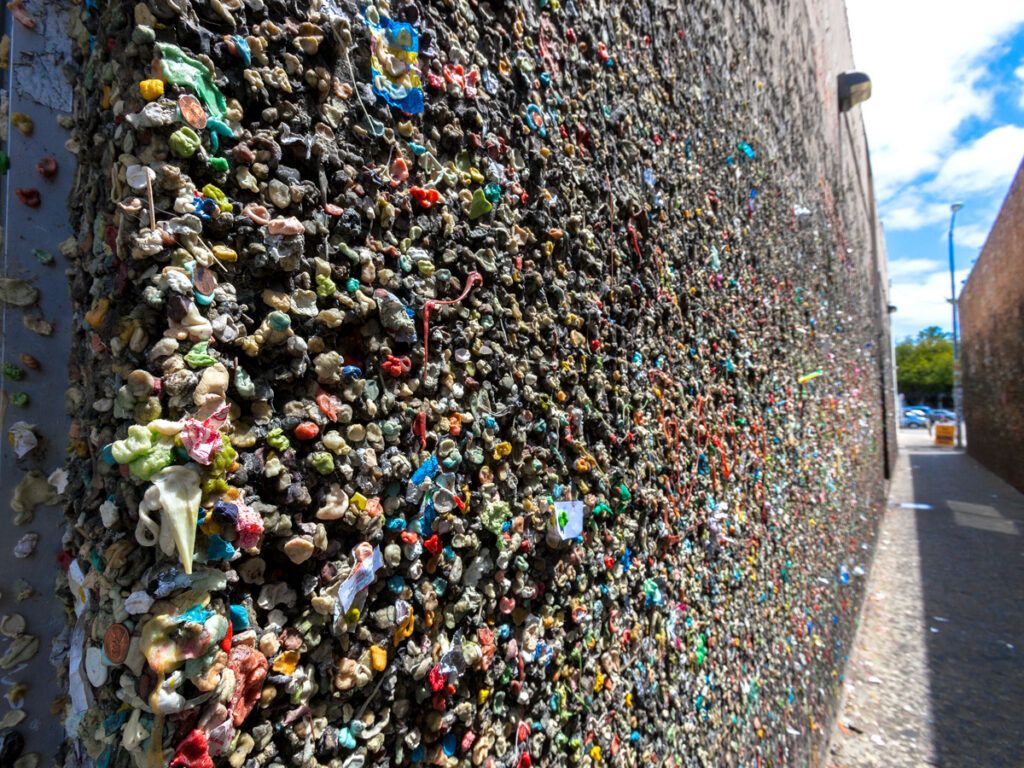
Tucked away in downtown San Luis Obispo, Bubblegum Alley is exactly as it sounds: a 15-foot-high and 70-foot-long alleyway plastered in used gum. For some, it’s a sticky, germ-covered nightmare. For others, it’s an ever-evolving piece of public art, with locals and visitors contributing colorful additions daily. Some just attach their chewed gum to a free space, while others get creative by forming pictures and letters.
The origins of this unusual attraction are debated. One story traces back to a rivalry between students of San Luis Obispo High School and Cal Poly in the 1950s. Another references a San Luis Obispo High School graduation event that started after World War II. Either way, Bubblegum Alley has gained international recognition in the years since. Musician Weird Al Jankovic even mentioned the alley in his 2017 song “Take Me Down.”
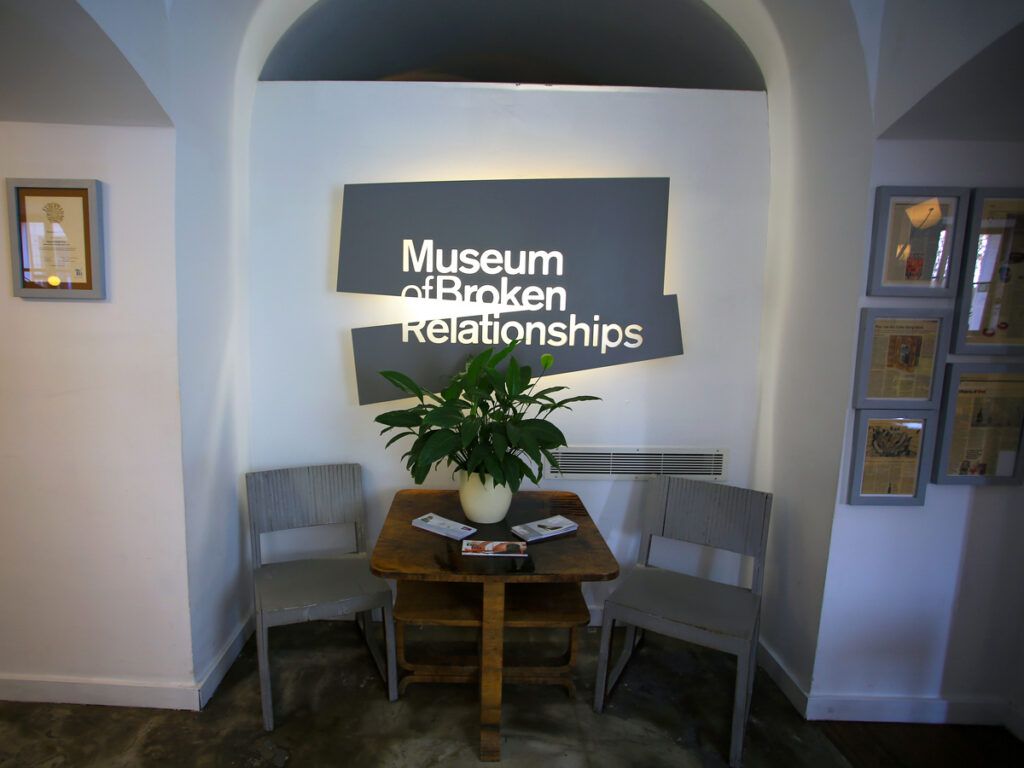
It’s a familiar story all around the world: A couple breaks up, but neither person knows what to do with the objects left behind. This was the spark for one of Europe’s most unlikely exhibition spaces, the Museum of Broken Relationships in Zagreb, Croatia. It began as an art project by Olinka Vištica and Dražen Grubišić after their own relationship ended. Instead of dividing up their shared belongings or throwing them out, the former couple put them on display. Eventually, they acquired items from other couples and opened a museum dedicated to the concept in 2006.
Inside the museum are items donated from all over the world. Some are romantic, some are funny, and others are downright peculiar. There are toys, locks of hair, a 27-year-old scab from a first love’s wound, and even an axe used to destroy an ex-partner’s furniture. The museum’s success led to a sister museum opening in Chiang Mai, Thailand, in 2024.
The Catacombe dei Cappuccini di Palermo in Sicily dates to the 16th century, when it began as a cemetery for Capuchin (members of a Catholic religious order) monks. In 1599, when friars were moving 45 bodies to a larger resting place, they found a group of perfectly preserved corpses. The stunning discovery was deemed an act of God, and the mummies were later put on display.
Today, a visit to the eerie catacombs takes you through corridors filled with over a thousand mummified bodies. Some stand in niches, while others hang from walls, dressed in their original clothing and with facial features intact. The bodies are arranged by social status, gender, and profession, with 2-year-old Rosalia Lombardo being one of the best-preserved mummies. If you’re interested in more of the macabre, nearby Palermo Cathedral houses the tombs of Roman and Sicilian royalty.
When considering what to do with an old salt mine located in the heart of Transylvania, officials had an unconventional idea: Turn it into a vast, subterranean leisure and entertainment complex. The history of Salina Turda dates back to ancient times. Following its closure in 1932, it was reused as a World War II air raid shelter and a cheese warehouse, before opening to the public in 1992.
Today, glass-doored elevators descend into the cathedral-like natural chambers around 390 feet below the surface. There, visitors will find a Ferris wheel, a mini golf course, bowling lanes, sports courts, and a boating lake. Those in the mood for pampering and wellness treatments can also make use of Jacuzzis, saunas, and freshwater pools.
In 2007, former retail consultant Roz Edwards had an idea to salvage and restore unwanted mannequins. She has since amassed around 15,000 fiberglass and plastic human bodies, creating what many call the “Mannequin Graveyard” in Fulbeck, England. Some have been recovered from landfill sites, while others were acquired from clothing stores that went out of business. The mannequins are available for rent and purchase, with many ending up in art exhibitions and television series. Edwards even supplied 20 pieces to Lady Gaga for her 2009 Glastonbury performance.
On the second Saturday of the month from March to October, the collection is open to the public, offering visitors a chance to experience the art and history of the humble mannequin. The ultimate experience, however, is the Drive Through Body Part Heist. For a 50-pound fee, mannequin fanatics will have 15 minutes to fill their trunk with as many body parts as will fit as part of a game.
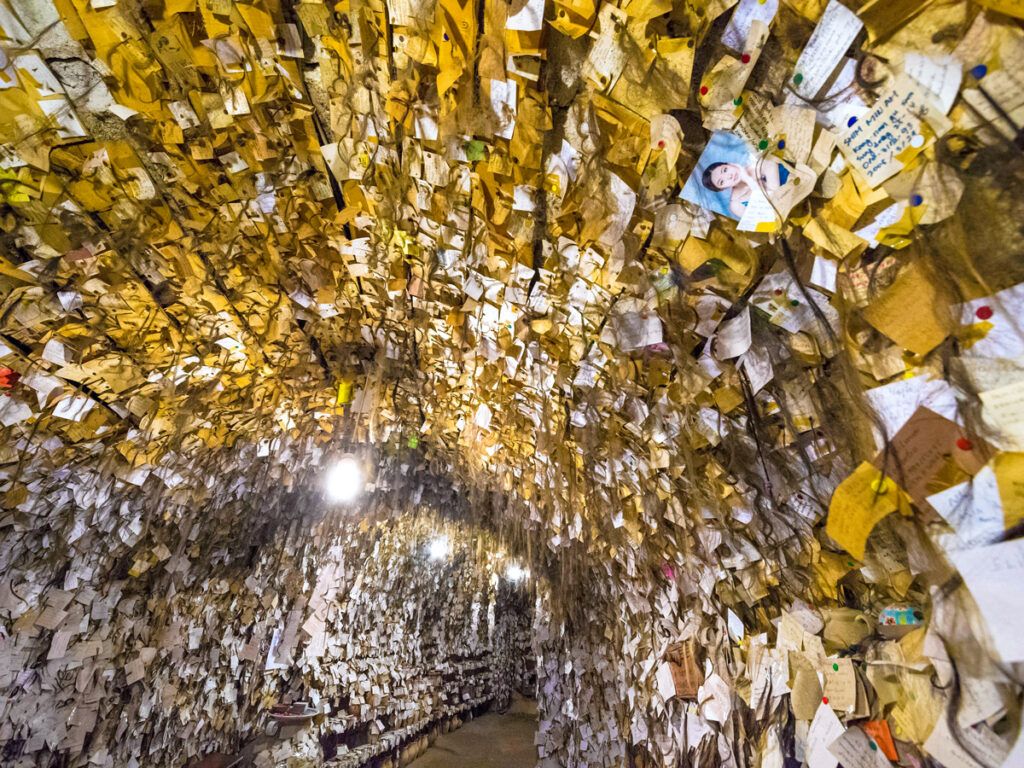
Turkey’s Cappadocia region is famous for its rock formations, cave dwellings, and hot-air balloon rides. Head to Avanos, a town famous for millennia-old pottery traditions, and you’ll find a somewhat stranger attraction. Beneath the studio of potter Galip Körükçü is the one-of-a-kind Avanos Hair Museum, a cavelike space decorated floor to ceiling with 16,000 locks of women’s hair of varying colors, lengths, and styles. Each lock has a handwritten note detailing the donor’s name and place of residence.
The donations began over 30 years ago, when Körükçü had to say a tearful farewell to a friend. To soften the departure, the friend gave Körükçü a lock of hair as a memento. Since then, women entering the shop have been invited to leave a piece of their own hair. And twice a year, the first customer to enter the shop is asked to select 10 locks from the display. The owners of the chosen ones are invited on a weeklong trip to Cappadocia with free pottery workshops.
Scarecrows are typically used by farmers to distract birds from feeding on their crops and seeds. But in the small, riverside village of Nagoro, the human-shaped decoys have been given a new lease on life. There are an estimated 350 scarecrow residents (outnumbering human residents of the village), who can be seen sitting at bus stops and inside school classrooms, fishing by the river, performing road maintenance, or simply hanging out along the street.
The scarecrow story started in 2009, when village resident Tsukimi Ayano made one to resemble her father. She placed it in her garden but noticed that locals would stop and say “hello.” So, she decided to make an entire population of scarecrows, which has since turned into one of Japan’s most fascinating outdoor art exhibitions. Ayano displays a scarecrow registry outside her house, which gives the name, age, sex, personality traits, and life story of each one.
Carved from over 1,000 tons of coral, this striking limestone landmark in Homestead, Florida, is the work of Latvian-born engineer Edward Leedskalnin. Heartbroken after being abandoned at the altar, he decided to create a labor of love. He worked alone, mostly at night, for almost 30 years, from 1923 to 1951, to create an open-air, mazelike complex of surreal structures.
The landmark feels equal parts sculpture park and engineering marvel, and experts still don’t fully understand how Leedskalnin achieved it all. Touring the castle reveals dozens of architectural and artistic curiosities, including an exhibition of the creator’s personal items, the tools he used, and newspaper articles about him. Interestingly, this is the castle’s second location: It first stood in Florida City, before being moved a couple of miles north to Homestead.
Advertisement
More from our network
Daily Passport is part of Inbox Studio, an email-first media company. *Indicates a third-party property.