



Post Banner Image
Outdoors

5 Forbidden Islands You Can’t Visit (And Why They’re Off-Limits)

By Cynthia Barnes
Read time: 4 minutes
March 5, 2026
Updated: March 5, 2026

5 Forbidden Islands You Can’t Visit (And Why They’re Off-Limits)

By Cynthia Barnes
Author
Cynthia Barnes
Cynthia kicked around the world for a while before landing in Colorado. Her work has appeared in Food & Wine, the Boston Globe, and National Geographic, among others. She loves dives — both scuba and bars — baseball, the Oxford comma, and live music.

Travelers are often fascinated — and tempted — by the allure of the hidden and the forbidden. Islands provide a natural barrier to casual explorers, and governments and private owners have restricted a number of them, for a number of reasons. Some islands are simply too dangerous to allow unauthorized visitors, while others are home to military installations, delicate ecosystems, isolated tribes, or (maybe) hoards of as-yet-undiscovered hidden treasures. Here are five islands that are strictly (or mostly) off-limits to tourists. 

Bikini Atoll – Marshall Islands

Rocky coastline on Bikini Atoll
Credit: © Brandi Mueller—Moment/Getty Images 

On July 1, 1946, the U.S. government began testing nuclear weapons in the central Pacific, dropping a 20-kiloton atomic bomb on this tiny coral atoll in the Marshall Islands, located roughly halfway between Hawaii and Australia. At the end of World War II, the islands became part of the United Nations Trust Territories; by 1958, the U.S. had conducted 23 nuclear tests there, and the atoll had lent its name to the new two-piece swimsuit. It gained independence in 1979.

Unfortunately, deadly radiation remained, forcing the island’s 167 residents — and others from nearby atolls — to abandon their homes. Eighty years after the first blast, palm trees fringe Bikini’s powder-sand beaches, and fish flourish in the azure waters. But the groundwater and vegetation remain contaminated, making the island itself effectively uninhabitable. However, recreational scuba divers who obtain the required certifications and special permits can explore the historic shipwrecks and surprisingly resilient reefs offshore.

Little Ross Island – Scotland

View of Little Ross Island and lighthouse in distance
Credit: © James Johnstone—500px Prime/Getty Images 

In the 19th century, the hazardous coastline off Little Ross Island, at the mouth of southwest Scotland’s Kirkcudbright Bay, resulted in a number of deadly shipwrecks, necessitating the building of a lighthouse on the island in 1843. But it was another more recent death that brought the island its current notoriety. 

On August 18, 1960, a father and son planning to picnic on the island made a grisly discovery — the body of lighthouse keeper Hugh Clark, who had been murdered by his assistant Robert Dickson. Dickson was apprehended and took his own life while sentenced to life in prison. Shortly after the murder, the lighthouse was automated. Today, Little Ross is privately owned and off-limits to visitors. 

Ilha de Queimada Grande – Brazil

Ilha de Queimada Grande seen across water
Credit: © Leo Francini/Alamy 

If you suffer from ophiophobia (fear of snakes), this hiss-filled island around 20 miles off the southeastern coast of Brazil will definitely give you nightmares. Commonly known as “Snake Island,” Queimada Grande is the only home on the planet of one of the world’s deadliest reptiles — and there are thousands of them. 

Rising seas isolated the island from the mainland about 11,000 years ago, trapping a species of pit viper known as the golden lancehead (Bothrops jararaca). Deprived of its previous diet of mainland mammals, the vipers’ descendants evolved a faster-acting, more lethal venom in order to bring down migratory birds. Today, it’s estimated that there may be one golden lancehead pit viper every square meter. Snake Island is off-limits except to scientific researchers and members of the Brazilian navy, who maintain the island’s lighthouse.

Diego Garcia – British Indian Ocean Territory

Sandy beach on Diego Garcia island
Credit: © roc8jas—iStock/Getty Images Plus

Located about 1,200 miles from both Mauritius and the Seychelles, the Chagos archipelago comprises more than 50 idyllic atolls in the Indian Ocean. In 1784, the French began forcibly relocating enslaved peoples from Mozambique, Malagasy, and Mauritania to work on the islands’ coconut plantations. A few decades later, in 1814, the islands were ceded to Great Britain. 

Then, between 1965 and 1973, the British government exiled the entire population — around 2,000 Chagossians — to make way for Naval Support Facility Diego Garcia, which is used by both the British and American navies. Today, the militaries strictly control access to Diego Garcia, but recently, in February 2026, several exiled residents demanding the right to settle in their homeland attempted a return.

North Sentinel Island – India

Aerial view of North Sentinel Island
Credit: © DigitalGlobe/ScapeWare3d—Maxar/Getty Images 

The Indigenous Sentinelese peoples living on North Sentinel Island in Southeast Asia’s Andaman Sea would like to be left alone. The island’s inhabitants — estimated to number between 50 and 200 people — are serious about their solitude, and interlopers attempting to intrude on one of the world’s last uncontacted tribes have found themselves paying with their lives. 

In 2018, American adventure blogger and evangelical missionary John Chau defied bans by the Indian government and accessed North Sentinel, where he was promptly killed. (It’s worth noting that the isolated islanders have no immunity to outside diseases, and exposure to Chau might well have wiped out the entire population.) The Indian government strictly forbids access to the island, but in 2025, another American social media influencer, Mykhailo Viktorovych Polyakov, defied the ban and landed on the island for about five minutes. He was arrested upon his return and faces a five-year prison sentence.

Related: No Visitors Allowed at These 5 Forbidden Destinations
Post Banner Image
Tips

These Are the World’s Most Stressful Airports

By Bennett Kleinman
Read time: 4 minutes
March 3, 2026
Updated: March 3, 2026

These Are the World’s Most Stressful Airports

By Bennett Kleinman
Author
Bennett Kleinman
Bennett is a New York City-based staff writer for Daily Passport. He previously contributed to television programs such as the Late Show With David Letterman, as well as digital publications like the Onion. Bennett has traveled to 48 U.S. states and all 30 Major League Baseball stadiums.

Many travelers book vacations to escape the stresses of everyday life. But some airports really make you work for that escape. Certain travel hubs are notorious for having excessive delays and cancellations, others for time-consuming security screening processes, and still others for terrible traffic to reach them in the first place. To determine the worst of the worst, the travel insurance comparison service iSelect surveyed travelers for a study in October 2025, resulting in a ranked list of the most stressful airports out of 50 major airports around the globe. Here’s a look at the top five worst offenders.

5. Chicago O’Hare International Airport – Illinois

Passengers inside Terminal 5 at Chicago O'Hare International Airport
Credit: Image courtesy of O’Hare International Airport 

Study satisfaction score: 31.01 (out of 100)

According to the study, Chicago’s busiest airport — and the third-busiest in the U.S. — presents travelers with one of the most stressful flying experiences anywhere in the world. Factors in O’Hare’s fifth-place ranking include average flight delays of 22.86 minutes, coupled with the 1.03% of departing flights that are outright canceled, which may leave travelers scrambling to find an alternative.

In the study, 22% of travelers reported finding it stressful to get to and from the airport, which is located over 15 miles west from the heart of downtown Chicago via Interstate 90 — one of America’s most congested highways. Once at the airport, 81% of people reported being satisfied with the check-in process, but things get worse from there. Twenty-three percent of flyers said they encountered undue stresses during security screening, 30% reported problems with the long wait times at immigration and customs, and 28% found baggage claim to be stressful to navigate.

4. John F. Kennedy International Airport – New York

AirTrain connecting terminals at New York's JFK Airport
Credit: © Markus Mainka/stock.adobe.com

Study satisfaction score: 26.83

New York City’s busiest airport is also its most anxiety-inducing one. JFK is rated as the fourth-most-stressful airport of the 50 major global airports ranked in the iSelect study. Part of the reason for JFK’s low rating is that 24% of travelers found it difficult to get there. Passengers need to either take an expensive taxi — which will almost certainly get caught in traffic — or transfer from the subway to the AirTrain, which can be confusing to navigate if it’s your first time visiting New York City.

On the positive side, JFK has the lowest flight cancellation rate of any airport on this list, at just 0.91%. But 20% of travelers say that the check-in process made them feel stressed, 29% had concerns about the difficulties of passing through security, and a staggering 33% reported issues with the long wait times at customs. The stresses continue even once you’re cleared by immigration, with 26% of respondents saying they felt overwhelmed at baggage claim.

3. Manchester Airport – United Kingdom

Terminal 3 drop-off area at Manchester Airport in England
Credit: © Markus Mainka/stock.adobe.com

Study satisfaction score: 23.1

Manchester Airport is the busiest airport in the U.K. after London’s Heathrow and Gatwick airports. Its ranking as the third-most-stressful airport worldwide is largely due to the fact that it achieved the lowest satisfaction rate of any airport in the study in two separate categories: security and baggage claim.

Travelers didn’t have many nice things to say about immigration and customs, either, as 29% of people lamented the long wait times and other related stresses. On top of that, departing flights experienced average delays of 23.26 minutes, as well as an average cancellation rate of 1.18%. On the positive side, 81% of passengers said that Manchester Airport was easy to get to.

2. Lisbon Humberto Delgado Airport – Portugal

Light-filled concourse at Humberto Delgado Airport in Lisbon, Portugal
Credit: © bennymarty/stock.adobe.com

Study satisfaction score: 22.51

Humberto Delgado Airport, which serves the Portuguese capital city of Lisbon, is rated as the most stressful airport outside of the United States. Lisbon’s airport had the highest average departure delays (27.39 minutes) of any airport in the study, as well as the third-highest departing flight cancellation rate (1.49%). 

Happily, Humberto Delgado Airport is located close to the city center, and 84% of respondents said they had no difficulties in getting there. But the experience goes downhill once you arrive at the airport — 21% of passengers reported issues with check-in, 23% with security, 25% with wait times at immigration, and 28% with baggage claim.

1. Newark Liberty International Airport – New Jersey

Aerial view of Terminal A at Newark Liberty International Airport
Credit: © johnemac72—iStock Editorial/Getty Images Plus

Study satisfaction score: 18.46

The world’s most stressful airport is Newark Liberty International, according to the iSelect study. With 451 daily flights on average (the 10th-highest total in the U.S.), Newark serves as a gateway to New York City and northern New Jersey. Interestingly, average departure delays rank as the lowest of any airport on this list at 21.40 minutes; however, Newark had a sky-high cancellation rate of 1.43%.

Additionally, 26% of respondents said that getting to the airport was stressful, 23% reported concerns with the check-in process, 30% had issues with security, 34% complained about the long wait times for immigration, and 29% found it stressful to navigate baggage claim.

Related: The 10 U.S. Airports With the Most Delays
Post Banner Image
Culture

6 of the Best Free Museums To Visit Around the World 

By Fiona Mokry
Read time: 5 minutes
March 3, 2026
Updated: March 3, 2026

6 of the Best Free Museums To Visit Around the World 

By Fiona Mokry
Author
Fiona Mokry
Fiona has spent her career exploring the world and working in the travel industry, turning her lifelong passion into a profession. From planning custom trips to sharing stories as a travel writer for publications such as The Discoverer, she’s all about helping others experience the world in a deeper, more meaningful way.

From iconic masterpieces to immersive cultural experiences, some of the world’s greatest museums welcome visitors for free. Whether you’re exploring the Smithsonian museums in Washington, D.C., or admiring European paintings at the National Gallery in London, there’s no shortage of incredible collections around the world to enjoy without an entry fee. Here are six of our favorite free museums to visit.

Smithsonian Museums – Washington, D.C.

Exterior of the Smithsonian Museum of Natural History in Washington, D.C.
Credit: © eurobanks/stock.adobe.com

The Smithsonian Institution operates more than 20 museums and galleries, with all but two of them located in the D.C. area. Aside from the Cooper Hewitt, Smithsonian Design Museum in New York City, all Smithsonian museums are free to the public. Guided by its mission to “increase and diffuse knowledge,” the Smithsonian keeps admission free through a combination of U.S. government funding and private support. 

One of its most popular museums is the National Museum of Natural History, which is among the most-visited museums in the world and home to dinosaur fossils, famous gems like the Hope Diamond, and many fascinating cultural exhibits. The National Air and Space Museum, meanwhile, is a major draw for aviation and space enthusiasts, featuring historic aircraft and spacecraft (including Apollo 11 artifacts) along with interactive science displays. 

Other must-sees include the National Museum of American History — showcasing U.S. cultural, political, and social history with iconic artifacts like the original Star-Spangled Banner — and the Smithsonian American Art Museum, home to one of the world’s most extensive American art collections.

National Museum of Korea – Seoul, South Korea

Outdoor pagoda exhibit at the National Museum of Korea
Photo credit: © Lorraine Murray

The National Museum of Korea boasts more than 12,000 pieces displayed in six permanent exhibitions, which are all free to the public. Detailing more than 5,000 years of Korean art and history, the museum’s collections span ancient archaeological discoveries, royal artifacts, Buddhist sculptures, celadon ceramics, and traditional calligraphy and painting. 

Standout exhibits include the 10-story-tall Gyeongcheonsa Pagoda, built in the 14th century, and the Pensive Bodhisattvas, Buddhist statues from the sixth and seventh centuries — both named National Treasures. The Silla Gold Crowns and the large Buddhist art collection are other highlights. Admission to the main permanent exhibition halls and the Children’s Museum at the National Museum of Korea is free; however, there is a charge to access the Special Exhibition Gallery, which varies.

Trafalgar Square and the National Gallery in London, England
Credit: © Mistervlad/stock.adobe.com

The National Gallery is housed in a grand 19th-century neoclassical building crowned with a dome and Corinthian columns overlooking London’s Trafalgar Square. While the building is captivating even before you step inside, within, it holds one of the world’s finest collections of Western European paintings, with over 2,400 works from Dutch, French, Italian, Spanish, and British artists. 

Masterpieces include Leonardo da Vinci’s “The Virgin of the Rocks,” Vincent van Gogh’s “Sunflowers,” Johannes Vermeer’s “Girl with a Pearl Earring,” and several of J. M. W. Turner’s luminous seascapes. As you follow the evolution of European painting from the Renaissance through impressionism, you can also experience works by Botticelli, Rembrandt, Caravaggio, and Monet. Admission to the permanent collection is free, but some special exhibitions may require paid entry. 

Museo Nacional de Bellas Artes – Buenos Aires, Argentina

Sculptures and paintings inside Buenos Aires' Museo Nacional de Bellas Artes
Credit: © Tolo/stock.adobe.com

One of South America’s most prestigious art museums, the Museo Nacional de Bellas Artes was founded in 1896 and houses a diverse collection spanning several centuries and artistic styles. The museum holds one of the more impressive collections of 19th- and 20th-century European art outside of Europe itself, and masters such as Goya, El Greco, Van Gogh, and Manet are strongly represented. 

Balancing these international highlights is a rich presentation of Argentine art, featuring celebrated artists such as Antonio Berni and Prilidiano Pueyrredón. The museum’s permanent collection includes 688 major works, along with more than 12,000 sketches, fragments, ceramics, and other pieces, all of which are free to access.

Museum of New Zealand Te Papa Tongarewa – Wellington, New Zealand

Building museum of Te Papa Tongarewa in Wellington, New Zealand
Credit: © Travelanza/stock.adobe.com

New Zealand’s national museum, the Museum of New Zealand Te Papa Tongarewa in Wellington, offers an engaging introduction to the country’s identity and history. Exhibits on Māori heritage and taonga (cultural treasures) are displayed throughout the museum, alongside dynamic, interactive galleries of natural history, art, and contemporary culture. 

Don’t miss “Gallipoli: The Scale of Our War,” with its imposing figures depicting the stories of eight New Zealanders who fought in World War I. There’s also the colossal squid, the world’s largest squid specimen by mass, weighing nearly 1,000 pounds, as well as hands-on ecology exhibits featuring an earthquake simulator and kiwi house where you can see New Zealand’s national animal up close. Free to enter, Te Papa is a must-visit for anyone wanting a deeper understanding of the country’s rich culture.

Petit Palais – Paris, France

Exterior of Petit Palais in Paris, France
Credit: © lapas77/stock.adobe.com

The Petit Palais, home to the City of Paris Museum of Fine Arts, is located steps from the Champs-Élysées. Its permanent collection, which is free to access, holds approximately 5,000 paintings, sculptures, and decorative arts, with a strong emphasis on French artists such as Gustave Courbet, Claude Monet, Edgar Degas, Paul Cézanne, and Auguste Rodin. There are also many notable works by Spanish, Dutch, Flemish, and Italian masters. 

Spanning French romanticism, realism, and impressionism through the early 20th century, the works are displayed in galleries that reflect the building’s elegant beaux arts design. Equal parts museum and architectural marvel, the Petit Palais offers a refined, yet totally free art experience in France’s capital, with far fewer crowds than other major Paris museums like the Louvre or Musée d’Orsay.

Related: Paris for Pros: 9 Landmarks to Visit Besides the Eiffel Tower
Post Banner Image
Geography

The States With Multiple Time Zones (And the Travel Mistakes It Causes)

By Bennett Kleinman
Read time: 6 minutes
March 3, 2026
Updated: March 10, 2026

The States With Multiple Time Zones (And the Travel Mistakes It Causes)

By Bennett Kleinman
Author
Bennett Kleinman
Bennett is a New York City-based staff writer for Daily Passport. He previously contributed to television programs such as the Late Show With David Letterman, as well as digital publications like the Onion. Bennett has traveled to 48 U.S. states and all 30 Major League Baseball stadiums.

Most U.S. states are confined to a single time zone, but there are some instances where parts of a state are an hour ahead of or behind other areas within the same state. While many locals have adjusted to these unusual circumstances, the odd time differences may create headaches for uninformed visitors. Take a look at the U.S. states split into multiple time zones and why it can be a problem for travelers.

States Split Into Multiple Time Zones

Coastal town in Alaska
Photo credit: © B Calkins/Shutterstock.com

There are 15 U.S. states split into two time zones. (No state has more than two.)

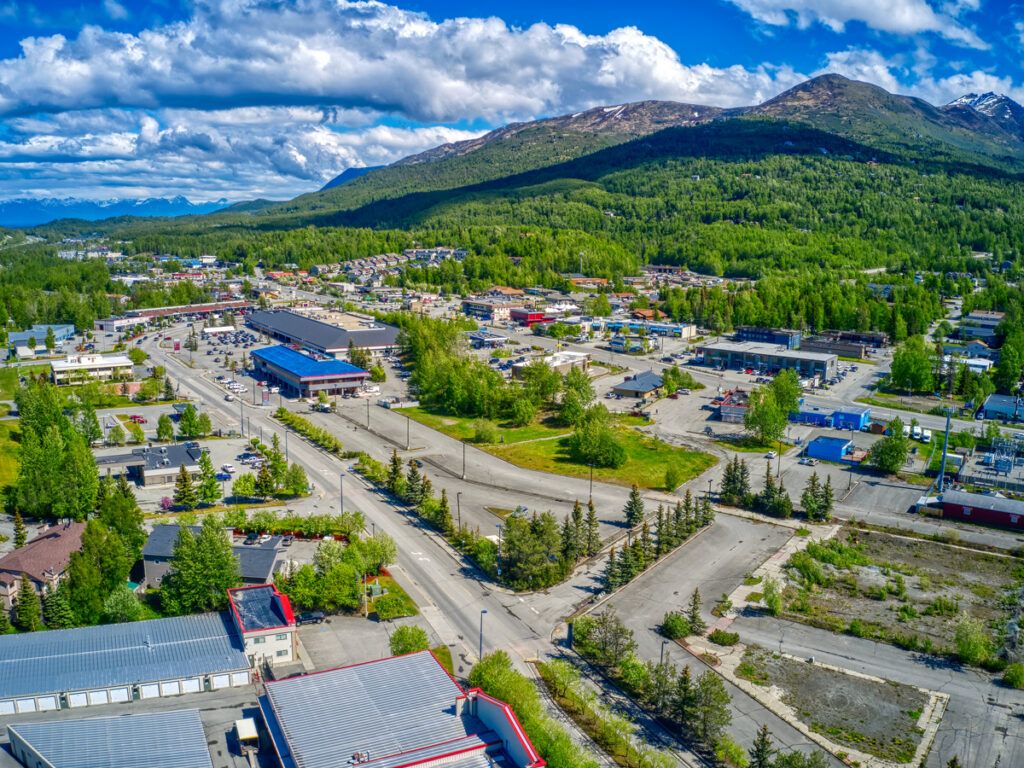
Alaska: Alaska had four different time zones until 1983, when it was simplified to two. Today, the majority of Alaska observes Alaska time, which is an hour behind Pacific time. This includes the capital, Juneau; the state’s biggest city, Anchorage; and many of Alaska’s most beloved natural wonders. However, the westernmost part of the Aleutian Islands — which extend westward from the mainland into the Bering Sea — are located in the Hawaiian-Aleutian time zone, which is an hour behind Alaska time.

Arizona: Arizona observes Mountain Standard Time, but during daylight saving time, the state is divided into two time zones. This is due to the fact that most of Arizona does not observe daylight saving time and remains on Mountain Standard Time year-round (which effectively means it’s on the same time as Pacific Daylight Time). However, the Navajo Nation in northeastern Arizona does observe daylight saving time, which means that, from early March until early November, most Arizonans operate one hour behind those in the Navajo Nation.

Florida: Most of Florida is located within the Eastern time zone, including major cities such as Miami, Tampa, and Orlando. But the westernmost part of the state along the Florida Panhandle observes Central time. The Apalachicola River bisects the Sunshine State into its two separate time zones: Everything east of the river observes Eastern time, and everything west of the river (including Pensacola) observes Central time.

Idaho: Most of Idaho is located in the Mountain time zone, including the state capital, Boise. But along Highway 95, just north of the city of Riggins, you’ll find the Time Zone Bridge, which spans the Salmon River and divides Idaho into two separate time zones. Everything north of the bridge in the Idaho Panhandle observes Pacific time.

Indiana: Until 1961, the entirety of Indiana was located in the Central time zone, but that year the eastern half of the state shifted to Eastern time. In 1969, the map changed again, resulting in more of the state being moved to Eastern time. Today, there are only 12 Indiana counties still located in the Central time zone — six in the northwestern part of Indiana and six in the southwest.

Kansas: Most of the Sunflower State observes Central time, but there are four counties (out of 105 statewide) that observe Mountain time: Greeley, Hamilton, Sherman, and Wallace. These counties are all located in the western part of the state bordering Colorado.

Kentucky: The city of Louisville switched to Eastern time in 1961, and the eastern and northern portions of the state later followed suit. Today, cities like Louisville, Frankfort, and Lexington observe Eastern time, whereas places in western Kentucky, including Bowling Green and Paducah, lie in the Central time zone.

Michigan: Michigan observed Central time until 1915, when Detroit made the shift to Eastern time. By 1931, most of the state followed Detroit’s lead, leaving just four counties in the Upper Peninsula that still observe Central time: Gogebic, Iron, Dickinson, and Menominee counties, which all border Wisconsin.

Nebraska: More than half of Nebraska sits in the Central time zone, including major cities such as Omaha and Lincoln. The western third of the state, which includes the Nebraska Panhandle, observes Mountain time.

Nevada: Nearly the entirety of Nevada is located within the Pacific time zone. The lone exception, which observes Mountain Time, is the city of West Wendover, located along the Utah border and next to the city of Wendover, Utah. The Department of Transportation says the decision for West Wendover to observe Mountain time was “designed to facilitate commerce and reduce confusion” between the similarly named jurisdictions.

North Dakota: Most of North Dakota observes Central time, including Bismarck, the capital, and Fargo. But a small portion in the southwestern corner observes Mountain time. This includes the town of Medora, which is home to Theodore Roosevelt National Park and the future Theodore Roosevelt Presidential Library.

Oregon: All of Oregon observes Pacific time, save the northern part of Malheur County, which observes Mountain time due to its close ties with Idaho. This corner of the Beaver State includes small towns such as Harper, Juntura, and Riverside.

South Dakota: The western part of South Dakota observes Mountain time, while the eastern two-thirds of the state (including Sioux Falls) follow Central time. Many of the state’s popular attractions are located in the Mountain time zone, including Mount Rushmore and the Black Hills National Forest.

Tennessee: While Memphis, Nashville, and the majority of Tennessee observe Central time, that’s not the case statewide. Eastern cities such as Knoxville and Chattanooga observe Eastern time.

Texas: There are only two counties in Texas that observe Mountain time: El Paso and Hudspeth. The vast majority of the state observes Central time, including Austin, Dallas, Houston, and San Antonio.

Time Zone Travel Issues

Mountainous landscape
Photo credit: AdstockRF

There are some states where the difference in time zones won’t have much of an effect on visitors. For instance, unless you’re taking a boat far out into the Aleutian Islands during a trip to Alaska, you probably don’t have anything to worry about. The same can be said when visiting Kansas, Michigan, Nebraska, Nevada, and Oregon. The outliers in these states tend to be small and not particularly known for being tourist destinations, so it’s unlikely you’ll encounter any time zone issues as a traveler.

But let’s say you’re visiting Arizona and planning to drive up to the Navajo Nation to visit the popular Antelope Canyon or gaze upon the vast expanses of Monument Valley. If you’re not aware of the time zone change, you may arrive an hour later than you planned, only to find that you’ve missed your guided tour (which is mandatory in Antelope Canyon). A similar issue may occur while staying in El Paso, Texas, before driving to Big Bend National Park, since you lose an hour during the drive.

These time zone changes also affect the operating hours for local businesses. For instance, say you’ve spent the day enjoying the honky-tonks of Nashville, knowing you need to be in Chattanooga for a 7 p.m. reservation at a popular barbecue spot. Nashville is located in Central time, while Chattanooga is an hour ahead. If you aren’t aware of this, you’ll arrive at the restaurant an hour late.

Or perhaps you’ve spent the day exploring Indiana Dunes National Park and have a flight to catch out of Indianapolis International Airport that evening. The park sits in the Central time zone, while the airport observes Eastern time, so you’ll need to plan carefully to avoid missing the flight.

The aforementioned examples concern traveling from west to east, during which you lose an hour. But while traveling east to west, you gain an hour, meaning you could arrive for a reservation or ticketed event too early. You may be happy to have a little extra time to explore, but say you depart Sioux Falls early in the morning because you want to be at Mount Rushmore the moment the gates open — in that case, you’ll actually arrive too early. Consider this your friendly reminder to always keep time zones in mind when visiting the 15 states that span two time zones.

Featured image credit: © Rixie/stock.adobe.com

Post Banner Image
Tips

8 of the Rudest Things Travelers Do at Hotels

By Rachel Gresh
Read time: 6 minutes
March 3, 2026
Updated: March 3, 2026

8 of the Rudest Things Travelers Do at Hotels

By Rachel Gresh
Author
Rachel Gresh
Rachel is a Washington, D.C.–based travel and lifestyle writer with roots in the Great Lakes region. When she’s not writing for publications such as The Discoverer and Interesting Facts, you’ll find her wandering through museums or exploring destinations off the beaten path.

What’s the quickest way to aggravate hotel staff and fellow guests? While obvious missteps like leaving trash behind or being a noisy neighbor are certainly frowned upon, they aren’t necessarily the biggest offenders. So, what actions cross the line? To answer that question, we compiled results from hotel etiquette surveys conducted by YouGov and Hotels.com, along with insights from national etiquette expert Diane Gottsman, to uncover which behaviors travelers and hotel staff find most offensive. Here’s what the hotel guests and experts had to say. 

Taking Items From the Room

Bathrobe laying on hotel bedspread
Credit: © Garun Studios/stock.adobe.com

A whopping 93% of respondents in the YouGov survey said taking home items from the hotel — like towels, coat hangers, or Bibles — is unacceptable, making it the most disliked hotel behavior among the 25 actions listed in the survey. Etiquette expert Diane Gottsman seconds this, adding that items like robes, beach umbrellas, pillows, and in-room kitchenware (such as coffee makers and tea cups) are not for guests to take. You’ll be charged a substantial fee if housekeeping notices the missing items, and you may even be banned from the individual hotel or hotel chain.

That’s not to say that you can’t take anything from your room. Single-use travel-sized toiletries in the bathroom, including body wash, lotion, and hair products, are yours for the taking — just don’t grab any large, reusable containers that hotel staff refill after each guest. If you must leave with a plush monogrammed hotel robe as a souvenir, ask the front desk — many hotels sell them.

Related: 5 Items You Should Never Take From Your Hotel Room

Smoking in Nonsmoking Rooms

No-smoking sign posted on window
Photo credit: © Sergey/stock.adobe.com

Today, most hotel rooms are smoke-free, but that doesn’t stop some guests from ignoring the rules. In the YouGov survey, 92% of respondents agreed that smoking is unacceptable. Not only is it a health hazard for those with health conditions, but it’s also a fire hazard.

Any traveler who breaks this rule will likely be fined for smoking in nondesignated areas, including rooms, the lobby, or pool areas. In fact, many hotels are now 100% smoke-free, including most brands under Hilton and Marriott. If the hotel finds evidence of you smoking, fees can amount to several hundred dollars.

Not Informing Hotel Staff of Room Damage

Desk chair with detached wheel
Credit: © Anthony Lee—OJO Images/Getty Images 

Broken or damaged items in a hotel room shouldn’t be overlooked; in fact, Gottsman urges travelers to inform hotel staff immediately if anything in the room is damaged. Often, hotel managers can fix it quickly or move you to a different room, and it’s a common courtesy for the next guest. Participants in the YouGov survey agree: 85% of respondents said that failing to inform hotel staff of room damage is unacceptable.

But what if you accidentally break something? Gottsman explains that it’s helpful to try to clean it up yourself before informing staff, particularly if it’s a hazardous item. For instance, if you drop a glass bottle from the mini bar, try your best to safely collect the glass shards so that an unknowing housekeeper doesn’t injure themself.

Sneaking a Pet into the Room

Dog chewing on bone
Photo credit: © Seventyfour/stock.adobe.com

According to the YouGov survey, 83% of respondents think it’s unacceptable to sneak a pet into a hotel room without advance notice. Since hotels often have limited numbers of pet-friendly rooms, always let the front desk know ahead of time if you have a furry travel companion.

This helps keep travelers with severe allergies safe by separating pet-friendly rooms on select floors or in specific room types. Most hotels also charge pet fees to cover extra cleaning upon departure, ensuring the room is in tip-top shape for the next guests.

If you’re searching for hotels without pet fees, consider Kimpton Hotels. Most of the brand’s hotels require no pet deposit or cleaning fee, have no weight limit, and often offer complimentary amenities like water bowls and pet hygiene bags.

Related: 5 Tips for Traveling With Pets, From Someone Who’s Done It

Dressing Inappropriately

Two people walking barefoot next to pool
Credit: © DragonImages/stock.adobe.com

According to the Hotels.com poll, walking around common areas barefoot is the most annoying thing a fellow traveler can do, with 94% of respondents firmly opposed. It seems that “no shoes, no shirt, no service” is favored for most hotel areas, sans the pool and beach. Indeed, most hotels have common-area shoe policies for safety reasons.

Moreover, 92% of respondents said that wearing a robe in the lobby is another faux pas, and 76% said even pajamas at breakfast are a no-go. Gottsman agrees, noting that the hotel lobby isn’t your living room — pajamas and bare feet simply aren’t acceptable.

Public Displays of Affection

Two people kissing in public
Credit: © Igor Kardasov/stock.adobe.com

According to Hotels.com, 86% of its respondents dislike PDA from hotel guests. While hotels typically don’t have formal, written policies on public displays of affection, there are unspoken rules of etiquette to prevent unpleasant situations.

Unfortunately, some ill-mannered travelers ignore these guidelines, making fellow travelers uncomfortable. While PDA policies in the U.S. are lax, other countries have stricter regulations in public areas, as well as cultural considerations that might be more conservative than those in your home country.

Reserving Pool Chairs

Hat and towel on pool chair at hotel
Credit: © happyimages/stock.adobe.com

Another action that came up in Hotel.com’s survey was reserving pool chairs in advance. Three out of five respondents said it’s rude to claim a pool chair for yourself, but unfortunately, this is an everyday occurrence at many resorts.

In the early morning, guests often venture down to the pool area before it opens to place personal items (such as a beach towel, bag, or book) on a few chairs to reserve them for their party. But Gottsman says that if the rest of your party isn’t arriving promptly, it’s polite to give up their seats when the pool area is busy.
Some hotels actually have strict rules against reserving chairs — instead of operating on a first-come, first-served basis, these hotels will place a time-stamped token on chairs with belongings. Items left alone for a certain period — say, an hour — will be removed and held by staff for the owners to retrieve. This allows fair use of the pool chairs for everyone currently at the pool, not for those who are off doing other things.

Related: 6 Hotel Pools You Need To See To Believe

Checking Out Late

Guests at front desk of hotel
Credit: © bignai/stock.adobe.com

In the YouGov survey, 79% of respondents said that checking out of a hotel more than an hour late without prior notice is downright rude. Housekeeping has a limited window to turn rooms around between guests, so when the previous guest is late, it often creates a ripple effect, delaying the next guest’s check-in.

This is why most hotels charge fees for unexpected late checkouts. To avoid extra charges, request a later checkout the night before you’re set to leave, or, at the very latest, the morning of your departure. Sometimes, staff can move future guests’ room assignments to accommodate your request, thus avoiding a fee, but there are no guarantees.

That said, some hotels do offer to guarantee a late checkout for an extra fee. Additionally, some loyalty programs, such as Marriott Bonvoy, offer guaranteed late checkout as a perk for elite members at most brands.

Post Banner Image
Architecture

The Tallest Statue on Every Continent

By Jersey Griggs
Read time: 5 minutes
March 3, 2026
Updated: March 3, 2026

The Tallest Statue on Every Continent

By Jersey Griggs
Author
Jersey Griggs
Jersey is a travel and lifestyle writer whose work has appeared in publications such as Condé Nast Traveler, Business Insider, and Bust. When she’s not exploring her adopted home state of Maine, she’s likely planning her next big trip.

Whether a statue is built to memorialize the past, express religious beliefs, or honor distinguished citizens, it’s a piece of art that is meant to last. And while art can’t necessarily be compared, it can be measured — especially when it comes to height. Soaring high in the sky, the following statues are among the tallest in the world. Check out the tallest statues on each of the continents (sans Antarctica, which has no permanent inhabitants).

Statue of Unity – India (Asia)

Statue of Unity towering over the Narmada River in India
Photo credit: © Rutvik Patel/Dreamstime.com

Soaring to a dizzying height of 597 feet, the Statue of Unity is not only the tallest statue in Asia but also the tallest statue in the world. This massive monument pays tribute to Sardar Vallabhbhai Patel, who served as the first home minister of an independent India from 1947 to 1950. Commonly known as the “Architect of Modern India,” Patel was a criminal lawyer who used his extraordinary organization and leadership skills to piece together the princely states to create a united nation. 

Built along the Narmada River, the Statue of Unity was inaugurated on October 31, Patel’s birthday, in 2018. Designed and sculpted by Ram V. Sutar, the massive statue combines 77,000 tons of mixed materials, including iron, bronze, concrete, and steel, as a way to honor Patel’s other nickname as the “Iron Man of India.”

African Renaissance Monument – Senegal (Africa)

Steps leading to hill with the African Renaissance Monument in Dakar, Senegal
Photo credit: © Kemaltaner/Dreamstime.com

Climbing 171 feet high, Africa’s tallest statue is the African Renaissance Monument in Dakar, Senegal. The towering statue depicts a man, woman, and child climbing upward, their gazes fixed upon a distant spot on the horizon. Intended to be a progressive symbol of Africa breaking free from its colonial past, the statue was ultimately met with some controversy. 

Since Senegal is predominantly Muslim, the partially clothed statues were deemed as scandalous and insensitive to the majority of the faith. The statue was also extremely costly, with funds up to $27 million dollars used to build and install it. Despite public outcry, however, the African Renaissance Monument is the city’s most famous landmark and remains a popular tourist draw for Dakar.

The Motherland Calls – Russia (Europe)

The Motherland Calls statue in Russia depicting a giant woman with a sword
Photo credit: © Iuliia Timofeeva/Dreamstime.com

Standing on a grassy hill overlooking Volgograd (formerly Stalingrad) is the world’s tallest statue of a woman — and the tallest statue in Europe. The Motherland Calls depicts a 172-foot-tall woman stepping forward with her arms outstretched, holding a 108-foot-long sword up to the sky. From its base, the total height of the statue is 279 feet. 

The statue symbolizes Russia (“the Motherland”) calling its people into battle. Designed by Yevgeny Vuchetich, the statue took eight years to complete; at the time of its unveiling in 1967, it was the world’s tallest statue. The Motherland Calls is the focal point of a memorial complex that commemorates the Battle of Stalingrad, which took place during World War II. A 200-step staircase, which represents the 200-day duration of the battle, leads from the foot of the complex to the statue’s base.

Birth of the New World – Puerto Rico (North America)

Birth of the New World statue depicting Christopher Columbus, located in Puerto Rico
Credit: © miami2you/stock.adobe.com

Perched above the sugar-sand Caribbean beaches of Puerto Rico’s northern coastline is North America’s tallest statue. The 350-foot-tall Birth of the New World comprises 6,500 tons of bronze, copper, and steel, and depicts Christopher Columbus on his voyage toward the Americas. It’s the work of Zurab Tsereteli, a Russian sculptor known for his often-controversial and large-scale projects. 

Curiously, Puerto Rico wasn’t the planned site of the statue. It was first offered to several U.S. cities in the early 1990s to mark the 500th anniversary of Columbus’ landfall in 1492. They all turned it down due to its size and concerns regarding Columbus’ legacy. However, in 2016 it found a home in the town of Arecibo, Puerto Rico.

Monumento a la Virgen de la Paz – Venezuela (South America) 

Looking up at the Monumento a la Virgen de la Paz statue in Venezuela
Credit: © Leonardo/stock.adobe.com

Although this 154-foot-tall statue of the Virgin Mary was unveiled in 1983, its origins go back to the 16th century. Constructed in the Venezuelan countryside outside the city of Trujillo, Monumento a la Virgen de la Paz was built to honor the Virgin Mary, who, according to legend, was often spotted by locals in the 1550s, walking on a hillside known as Peña de la Virgen. 

Thanks to this legend, the area was chosen as the site to honor the Mother of Peace with a giant statue that provided panoramic views of the entire region. The statue’s interior has five different lookout points at various body parts, including her knees, hands, waist, and eyes. The site also contains a chapel and bell tower, making it a spiritual excursion for worshippers and tourists alike.

Big Merino – Australia

Big Merino statue in Goulburn, Australia
Credit: © Manfred Gottschalk—The Image Bank Unreleased/Getty Images

The tallest statue in Australia is a 49-foot-tall statue of a merino ram, aptly named Big Merino. Located in Goulburn, New South Wales, and constructed in honor of the country’s wool industry, Big Merino was modeled after a local stud ram named Rambo who resided on a nearby sheep farm. The giant sheep stands three stories high and is made entirely of concrete and steel. 

The interior of Big Merino features an exhibition designed by Australian Wool Innovation, which details the history and importance of wool in Australia over the course of the last two centuries. Merino wool, the darling of the fine wool industry due to its softness and moisture-wicking abilities, is also showcased inside the statue, alongside a gift shop, displays, and an observatory view from the ram’s eyes.

Post Banner Image
Tips

4 of the Most Expensive U.S. Airports To Park At

By Fiona Mokry
Read time: 4 minutes
March 3, 2026
Updated: March 3, 2026

4 of the Most Expensive U.S. Airports To Park At

By Fiona Mokry
Author
Fiona Mokry
Fiona has spent her career exploring the world and working in the travel industry, turning her lifelong passion into a profession. From planning custom trips to sharing stories as a travel writer for publications such as The Discoverer, she’s all about helping others experience the world in a deeper, more meaningful way.

Most travelers are used to sky-high prices at airports these days, but it’s not just overpriced snacks and souvenirs that add up. Parking can come as one of the biggest sticker shocks, even before you enter the terminal. Often, however, early flights, late returns, or limited transit options make parking unavoidable, even when the prices feel excessive. At some airports, those daily fees add up very quickly. Here are four airports with some of the highest on-site parking costs in the country, according to findings from a 2025 study from Casino.ca.

LaGuardia Airport – New York, New York

Roadway in front of parking garage and air traffic control tower at LaGuardia Airport
Photo credit: Image courtesy of LaGuardia Gateway Partners

LaGuardia Airport (LGA) is one of three main airports serving New York City. Given that the Big Apple has the highest cost of living in the country, it probably comes as no surprise that parking here is among the priciest of any airport in the U.S.
The most affordable option is prepaying for economy parking, which runs $40 per day, with free shuttles to Terminals B and C running every 12 to 15 minutes. Parking in the closer lots for Terminals A, B, or C puts you within a short walk of each terminal, with daily prepaid rates of $50, $55, and $60, respectively. (Drive-up rates are $75, $80, and $89 for the terminal lots.) Premium parking spaces, located closest to the terminals they serve, are available at each terminal’s parking lot for an additional $10 above the standard rate. 
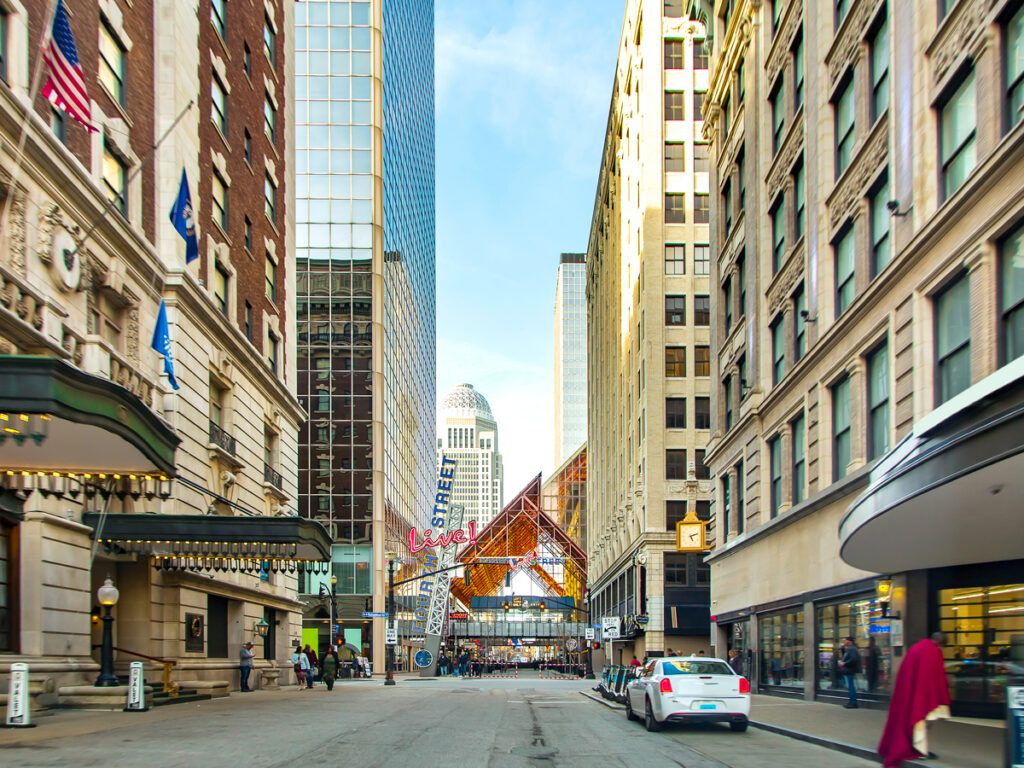
LaGuardia allows you to prebook parking online and make changes or amendments to your parking reservation up to one hour before your scheduled time of arrival. All official airport lots are self-park only, and the airport does not offer valet parking directly. However, nearby private lots run by companies like ParkForU provide valet service with shuttle transport to the terminals.

San Francisco International Airport – California

Parking garage at San Francisco International Airport
Photo credit: © Karl Nielsen

San Francisco International Airport (SFO) offers several airport parking options, with prices ranging from $27 to as high as $68 per day. However, like at LaGuardia, travelers can also prebook their parking for lower rates, which start at $18 for long-term economy parking, the most affordable option. It’s connected to the terminal by the free AirTrain, which runs 24/7 and takes 13 to 20 minutes.

The most expensive self-parking option is ParkFAST at $60 per day, offering reserved premium spaces and a dedicated entry lane. With just 236 spots available, it’s a limited but highly convenient option, with walking access to all terminals in approximately two to 11 minutes. The domestic and international garages are closest to the terminals, with rates around $4 per 30 minutes and daily maximums between $34 and $39 per day, ideal for short trips or quick access. Valet parking offers premium service including curbside drop-off for $68 per day.

San Diego International Airport – California

Curbside drop-off area at San Diego International Airport
Credit: Image courtesy of San Diego International Airport 

At San Diego International Airport (SAN), parking is straightforward but expensive. The Terminal 1 and Terminal 2 parking plazas sit directly across from their respective terminals, with rates starting at $2.50 per 15 minutes up to a $38 daily maximum — ideal for short stays. The walk from the Terminal 1 plaza to Terminal 1 takes about five to 10 minutes, while the Terminal 2 plaza is just two to three minutes from Terminal 2. Complimentary shuttles connect each plaza to the opposite terminal for added convenience. Valet parking is also available curbside at both Terminal 1 and Terminal 2, providing a premium option for $60 per day. Reservations can be made up to 30 days in advance on the airport’s user-friendly website

Boston Logan International Airport – Massachusetts

Delta aircraft parked at Boston Logan International Airport
Credit: Image courtesy of Boston Logan International Airport

Boston Logan International Airport is another U.S. airport known for its steep parking fees. The economy parking garage, the lowest-priced option, costs $37 per day and requires a free shuttle ride of approximately five to 15 minutes to reach the terminals. A limited number of spots are available to book in advance from $29 per day. 

For those who prefer to walk, the central parking garage, which charges $46 per day, is accessible on foot to Terminals A, B, C, and E in about five to 15 minutes, depending on the terminal. Travelers departing from Terminal B can also use the Terminal B garage, which offers similar pricing. Parking can sell out days and sometimes even weeks in advance, so booking early is strongly recommended. Valet parking is not offered directly through Massport, which manages the airport’s official parking facilities, but private valet services are available through third-party providers.

Related: 10 Things You Should Never Buy in an Airport

Post Banner Image
Tips

10 States With the Highest Sales Taxes

By Bennett Kleinman
Read time: 5 minutes
March 3, 2026
Updated: March 3, 2026

10 States With the Highest Sales Taxes

By Bennett Kleinman
Author
Bennett Kleinman
Bennett is a New York City-based staff writer for Daily Passport. He previously contributed to television programs such as the Late Show With David Letterman, as well as digital publications like the Onion. Bennett has traveled to 48 U.S. states and all 30 Major League Baseball stadiums.

When traveling to another state, you may want to pick up a couple of keepsakes to bring back home. But heads up — the sales tax may be different from what you’re used to. There are currently 45 U.S. states that impose a statewide sales tax, with 38 that allow local sales taxes on top of that. The average combined sales tax rate across all states is 7.53%, but you may pay more or less depending on where you are. Looking to stick to a strict budget on your next domestic getaway? You may want to avoid souvenir shopping in these 10 states with the highest average combined state and local sales tax rates, according to data from the Tax Foundation (a nonprofit research group focused on tax policy).

10. New York

Empire State Building and Manhattan skyline illuminated at night
Photo credit: © FitchGallery/stock.adobe.com

Average sales tax: 8.54% 

The Empire State levies the highest average sales tax of any state in the Northeast. Statewide, the sales tax rate is 4%, though local sales taxes add an average of 4.54% on top of that rate. The highest local sales tax rate in the state is levied in New York City, where buyers pay a 4.875% city tax on top of the 4% state sales tax. However, if you’re shopping for clothing, you may be in luck — New York offers a sales tax exemption for clothing and footwear sold for less than $110 per item (or pair). This exemption applies to the state sales tax and any jurisdictions which have adopted it, which includes New York City.

9. Kansas

Kansas cityscape and river
Photo credit: © Wellesenterprises/Dreamstime.com

Average sales tax: 8.69%

Shoppers in the Sunflower State are subject to a 6.5% statewide sales tax on all purchases made in the state. Furthermore, local jurisdictions levy an average local sales tax of 2.19%. The highest combined sales tax rate currently sits at 10.25%; however, beginning April 1, 2026, tax rates are expected to change in Finney, Jackson, and McPherson Counties — resulting in new combined sales tax rates as high as 11.5%.

8. Illinois

Marquee for Chicago Theatre in downtown Chicago, Illinois
Credit: © FiledIMAGE/stock.adobe.com

Average sales tax: 8.96%

With a 6.25% statewide sales tax and local sales taxes that average 2.71%, Illinois has the eighth-highest combined sales tax rate in the U.S. In the city of Chicago, state and local taxes amount to a sales tax rate of 10.25% for each purchase. And in some jurisdictions in Cook County, such as Calumet City and Glenwood, combined sales tax rates climb as high as 11%.

7. California

Santa Monica Beach in Southern California
Credit: © Lux Blue/stock.adobe.com

Average sales tax: 8.99%

California’s 7.25% statewide sales tax rate is the highest in the country, though the Golden State has a comparatively low average local sales tax of 1.74%. While that averages out to a rate of 8.99%, some cities levy a sales tax a few percentage points higher. Lancaster and Palmdale, both located in Los Angeles County, charge a combined sales tax rate of 11.25%. Cities such as Alameda, Culver City, and Santa Monica aren’t far behind at 10.75%.

6. Oklahoma

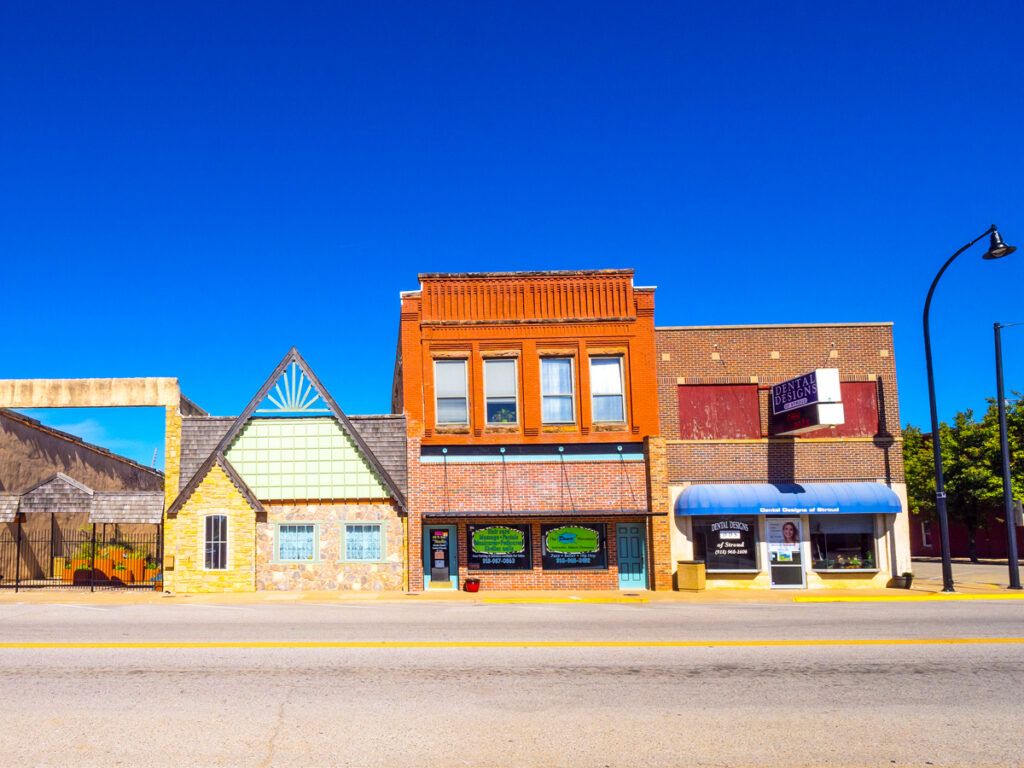
Small town of Stroud, Oklahoma
Credit: © 4kclips/stock.adobe.com

Average sales tax: 9.06%

The Sooner State levies one of the lowest statewide sales tax rates of any state in this list, sitting at just 4.5%. But a 4.56% average local sales tax rate brings the combined total up to 9.06%, which is the sixth-highest combined average sales tax rate in the U.S. Local sales taxes reach 10.12% in parts of Oklahoma City and 11% in Clinton.

4. Alabama (tie)

Street corner in Montgomery, Alabama
Credit: © mark/stock.adobe.com

Average sales tax: 9.46%

With a statewide sales tax of just 4%, Alabama is tied with New York for having the lowest statewide sales tax on this list. But Alabama also imposes the highest average local sales tax rate of any U.S. state (5.46%). Total sales tax rates balloon as high as 11.5% in the town of Shorter and the city of Tuskegee, while locations such as Camden and Jemison levy a combined sales tax of 11%.

4. Arkansas (tie)

Arkansas River in front of Little Rock skyline
Credit: © Christopher Boswell/stock.adobe.com

Average sales tax: 9.46%

Arkansas has the ninth-highest statewide sales tax rate in the U.S. at 6.5%, coupled with a 2.96% average local sales tax rate. The highest combined sales tax is in Sevier County, which levies a 6.125% local rate on top of the 6.5% state rate, followed by Chicot County, where local sales tax rates come in at 6%.

3. Washington

Space Needle and Seattle skyline
Photo credit: © Caroline Purser—The Image Bank/Getty Images

Average sales tax: 9.51%

The Evergreen State charges consumers a 6.5% sales tax, while local municipalities levy an additional average sales tax of 3.01%. The local rate is highest in four jurisdictions in Snohomish County, which is located north of Seattle. Edmonds, Lynwood, Mill Creek, and Mukilteo all levy a 10.6% combined sales tax. Seattle comes in just below that figure, with a sales tax rate of 10.55%.

2. Tennessee

Nashville skyline and river at sunset
Photo credit: © Sean Pavone—iStock/Getty Images Plus

Average sales tax: 9.61%

Tennessee has the second-highest combined sales tax rate in the U.S. This is due to its 7% state sales tax (which ranks second in terms of highest state sales tax) combined with an average local sales tax rate of 2.61%. While some Tennessee counties levy a local rate as low as 2%, the vast majority impose a local tax of 2.75%, bringing the average combined tax rate in most parts of Tennessee up to 9.75%.

1. Louisiana

Traditional architecture in New Orleans, Louisiana
Photo credit: © Meinzahn/Dreamstime.com

Average sales tax: 10.11%

The state with the highest combined state and average local sales tax rate in the U.S. is Louisiana. While its 5% statewide sales tax rate ranks 32nd overall, local municipalities in the state levy a 5.11% local sales tax rate on average — second only to local tax rates in Alabama. These taxes rose 0.55% in 2025 after a statewide overhaul of the tax system. The highest rate in the state belongs to Ouachita Parish, which includes the city of Monroe and is located in the north-central part of the state. In Ouachita, consumers pay 13.5% in combined sales tax.

Related: 5 States That Don’t Have Sales Tax
Post Banner Image
Tips

These Popular Destinations Have Added New Tourist Fines

By Michael Nordine
Read time: 4 minutes
March 3, 2026
Updated: March 3, 2026

These Popular Destinations Have Added New Tourist Fines

By Michael Nordine
Author
Michael Nordine
Michael is a staff writer for Daily Passport and film critic who writes the weekly newsletter Movie Brief. His writing and criticism have also appeared in the Los Angeles Times, Variety, and the Washington Post, among others. A native Angeleno, his favorite countries to visit are Norway and Japan.

Overtourism is a growing concern across the globe, but nowhere is the issue more evident than in Europe. A number of European destinations that receive millions of visitors every year have grown impatient with tourists of late, as the influx of visitors can not only drive up local costs, such as housing, but also lead to noisy and unruly behavior. Aside from being a nuisance to locals, irresponsible tourism can pose safety risks and damage the old cobblestone streets and historic monuments that make these destinations so appealing to visit in the first place. As a result, a growing number of popular European destinations are implementing new fines to curb the negative effects of tourism. Here’s what to watch out for on your next trip.

Attenzione in Italy

The Spanish Steps in Rome, Italy, at night
Credit: © elxeneize/stock.adobe.com

Italy has had as much trouble with overtourism as anywhere — if not more. Cities like Venice have implemented new tourist taxes and day-visit fees to discourage crowding in the historic center, along with new fines. For instance, you’ll want to avoid swimming in the city’s historic canals, which could lead to a 450-euro fine and expulsion from the city for 48 hours. 

In recent years, Rome, too, has increased regulations around its countless historical monuments. Now, sitting, lounging, eating, loitering, or rolling your suitcase on or near the Spanish Steps can get you stopped by local authorities and result in a 250-euro fine because of potential damage to the monument.

You can also expect to be fined anywhere from 25 euros to 500 euros ($29 to $590) in Portofino if you linger in public spaces with your baggage, picnic equipment, or loudspeakers. And in 2023, for safety reasons, the city instituted a ban on tourists stopping at and clogging popular viewpoints in designated no-waiting zones (or risk a 275-euro fine).  

Be on Your Best Behavior in the Balearic Islands

Aerial view of Mallorca, Spain
Photo credit: © Anton Petrus—Moment/Getty Images

Though famous party islands like Ibiza and Mallorca may seem like the ideal place to drink in public, the Spanish government would really prefer that you didn’t. As part of a crackdown on “excessive tourism,” visitors who drink on the street in those sought-after destinations can face up to 3,000 euros ($3,533) in fines.

“The rules, while they might sound rigid and punitive when listed out, are all about encouraging responsible and empathetic traveling,” Jessica Harvey Taylor, head of press at the Spanish Tourism Office in London, told the BBC. “They are designed to protect the holiday experiences of the vast majority of people who behave responsibly on holiday.” Other popular cities, such as Dubrovnik, Croatia, are also following suit with hefty fines (up to 700 euros) for public drinking.

Cover Up in Cannes

Marina and waterfront buildings in Cannes, France
Credit: © vichie81/stock.adobe.com

Another regulation in several cities is clear in its intent: Swimwear belongs on the beach, not in the city proper. Cities including Cannes, France; Venice, Italy; Barcelona, Spain; Split, Croatia; Sorrento, Italy; and Albufeira, Portugal, have instituted fines of up to 1,500 euros ($1,766) against tourists who aren’t dressed appropriately once they’ve stepped away from the beach. In Albufeira in particular, this is part of a larger code of conduct that’s meant to curb public nudity, drinking in the street, sleeping overnight in public areas, and other acts deemed against the spirit of the city.

The fines also extend to footwear — if you’re renting a car in countries such as France, Greece, Portugal, or Spain, make sure you leave the sandals in your beach bag, as you could face a fine for driving in flip-flops. 

Elsewhere in Europe

Tourist rolling suitcase through Gothic Quarter of Barcelona, Spain
Credit: © martin-dm—E+/Getty Images

Barcelona’s siesta-loving government has instituted a 500-euro fine for violating the quiet hours between 11 p.m. and 7 a.m. — one of a number of popular cities that are taking a stand against late-night drunken revelry and other noisy behavior. Other cities like Amsterdam and Prague have banned loudspeakers, bar crawls, and beer bikes, which can clog up traffic and damage old streets.

Related: This City Won't Be Building Any New Hotels Anytime Soon — Here's Why
Post Banner Image
Tips

How To Use Touchless ID To Save Time in the TSA Line

By Peter Vanden Bos
Read time: 3 minutes
February 25, 2026
Updated: March 19, 2026

How To Use Touchless ID To Save Time in the TSA Line

By Peter Vanden Bos
Author
Peter Vanden Bos
Peter is a Toronto-based journalist, editor, content strategist, and self-professed avgeek with 15 years of experience covering all things travel. Prior to joining Daily Passport, he oversaw newsletter publication for Travelzoo. His favorite destinations to explore include Japan, France, Chile, New Zealand, and his adopted home country of Canada.

The next time you fly through a U.S. airport, you might be able to skip awkwardly searching through your bag for your ID and boarding pass in the security line. The Transportation Security Administration (TSA) is expanding its Touchless ID program, which uses biometric facial comparison technology (instead of physical IDs) to verify eligible travelers at checkpoints. As the TSA expands the program to 65 airports by this spring, find out how to enroll in Touchless ID to save time at the security checkpoint.

How To Use Touchless ID

Lanes for TSA PreCheck and TSA PreCheck Touchless ID at airport security screening checkpoint
Credit: © Greggory DiSalvo—iStock Editorial/Getty Images Plus 

To be eligible for the TSA’s Touchless ID, travelers must first be enrolled in TSA PreCheck, a Trusted Traveler program that allows passengers to use dedicated screening lanes and skip removing laptops and other large electronics. Those who enroll in TSA PreCheck receive a Known Traveler Number (KTN), which is used to opt into Touchless ID.

You’ll need to opt in directly with a participating airline and have an active frequent flyer profile with the carrier. Travelers must also hold a valid U.S. passport. There are currently five airlines participating in Touchless ID; you can click on the links below to find detailed instructions on how to opt in for each airline.

Once you check in, make sure you have the TSA PreCheck Touchless ID indicator on your boarding pass and follow signs to the dedicated lines for TSA PreCheck Touchless ID.

How It Works

Travelers having biometric photos taken in TSA's Touchless ID lane
Photo credit: Image courtesy of the TSA

Instead of presenting a physical ID and a boarding pass at the security checkpoint, passengers in the Touchless ID lane will look into a biometric camera, which uses advanced facial comparison technology to match their live photo against their stored passport in around 10 seconds or less. 

According to the TSA, “Facial comparison technology and digital IDs improve the performance and security of TSA operations by increasing the accuracy and reliability of passenger identity verification. Facial comparison technology automates part of the current manual procedures and allows professional screening personnel to leverage their training and experience to focus more on alarms and error resolution.”

On its website, the agency indicates that all images and personal data are processed securely and will be deleted within 24 hours of each passenger’s scheduled flight departure. The TSA also says the images are not used for surveillance or shared with law enforcement or other entities. 

Lastly, an important note: The TSA still requires that all travelers, even if they’re enrolled in Touchless ID, always carry a physical REAL ID or another acceptable form of identification to present if asked by a TSA officer. 

Related: How Does Facial Recognition Work at Airports — and Can You Opt Out?

Where Is Touchless ID Available?

Passenger terminal at Chicago O'Hare International Airport in Illinois
Photo credit: Image courtesy of O’Hare International Airport

Since beginning with a pilot at Detroit Metropolitan Wayne County Airport in 2021, TSA PreCheck Touchless ID has expanded to more than 50 U.S. airports (at the time of publication). Check the handy map on the TSA website for an up-to-date list of participating airports.

Travelers should take note that Touchless ID lanes are not available at all security checkpoints, and they may be available only when traveling with specific airlines at a participating airport. As the rollout continues, you should also check with your airline for participating airports at the following links before your travel:

Featured image credit: Image courtesy of the TSA