6 Movies That Will Make You Want To Travel the World
By
Michael Nordine
Read time: 4 minutes
March 13, 2025
Updated: December 5, 2025
6 Movies That Will Make You Want To Travel the World
Culture •March 13, 2025•Updated: December 5, 2025
By Michael Nordine
Author
Michael Nordine
Michael is a staff writer for Daily Passport and film critic who writes the weekly newsletter Movie Brief. His writing and criticism have also appeared in the Los Angeles Times, Variety, and the Washington Post, among others. A native Angeleno, his favorite countries to visit are Norway and Japan.
Movies, more than any other medium, can transport us to places we’ve never been. And while visiting fantastical settings dreamt up by visionary filmmakers is uniquely immersive, there’s something even more thrilling about seeing a place you can actually visit once the credits roll. Here are six movies that will inspire you to travel.
Baraka (1992)
More of a cinematic tapestry than a conventional documentary, Ron Fricke’s nonfiction classic features no narrative or even narration to guide the way. What it does have is 97 minutes of arresting imagery filmed in 24 countries, a partial list of which includes Nepal, Japan, the Vatican, Egypt, Brazil, Australia, the United States, Tanzania, and Cambodia. The only continent Fricke and his team didn’t visit during the 14-month production period was Antarctica. It’s a singular viewing experience, though it will leave you with an impossible question to answer: Which of the 152 filming locations should you visit first?
The Before Trilogy (1995–2013)
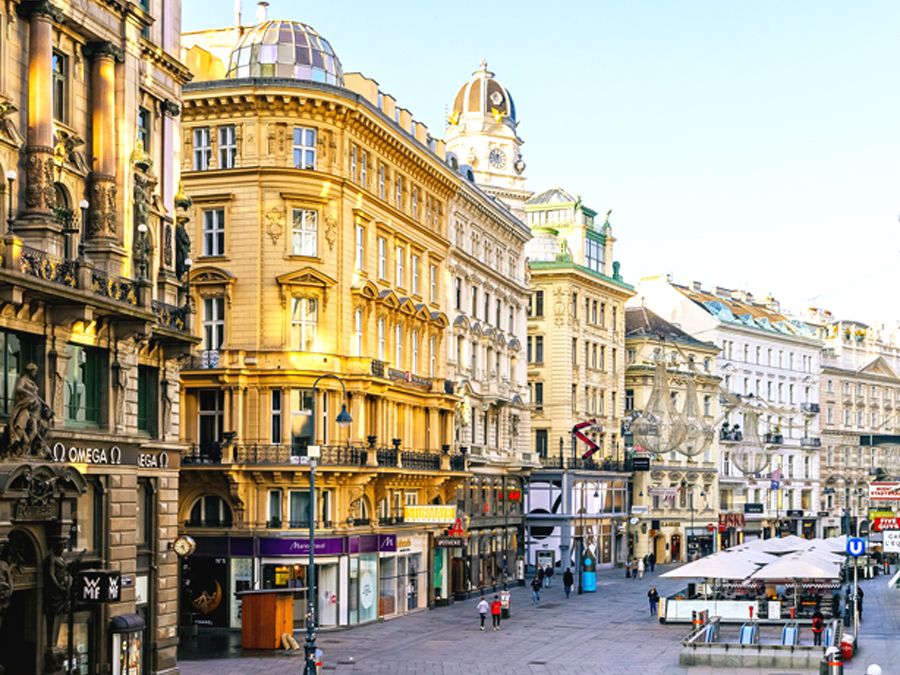
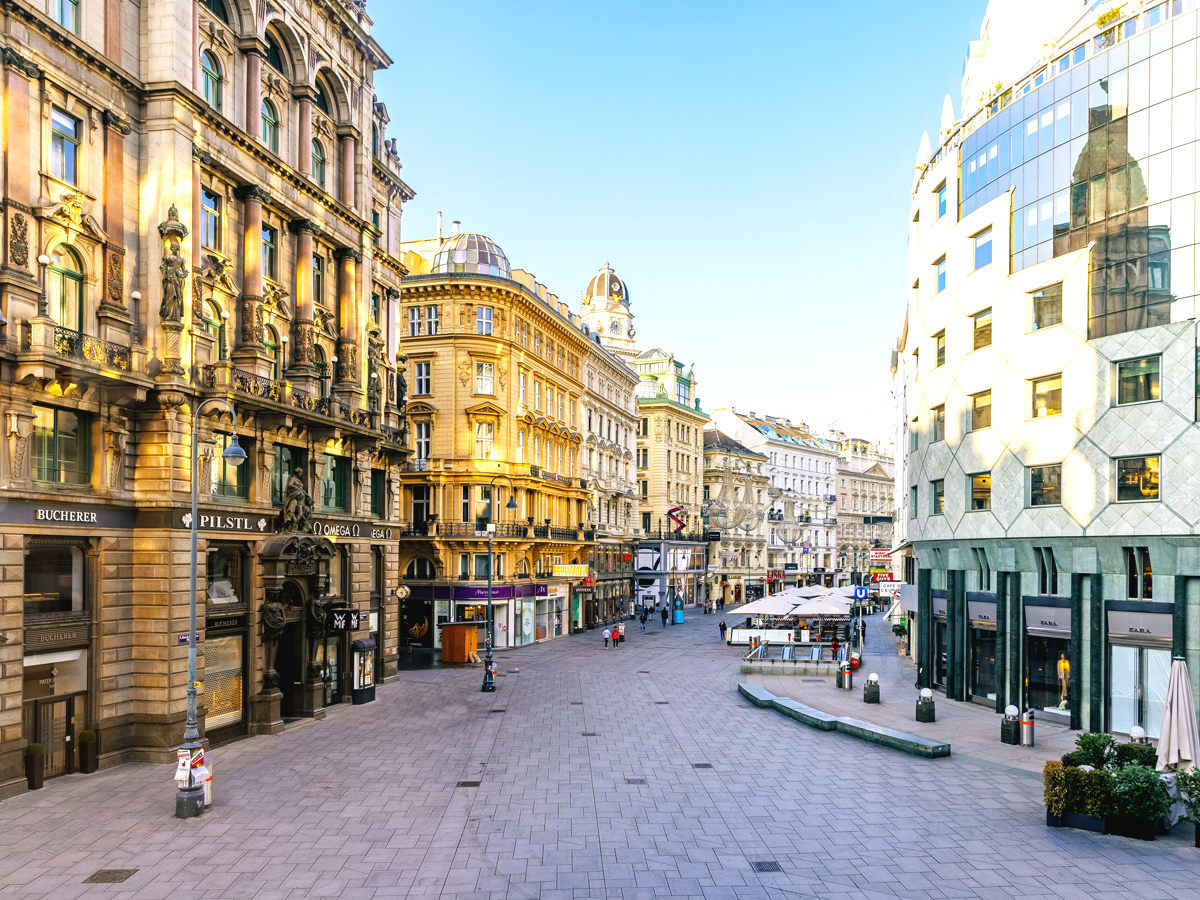
Richard Linklater’s three romantic dramas, the latter two of which he co-wrote with stars Julie Delpy and Ethan Hawke, aren’t exactly travelogues. But they are dreamy showcases for the three European locales where they take place: Vienna in Before Sunrise, Paris in Before Sunset, and Greece’s Peloponnese coast in Before Midnight.
Consisting of little more than a daylong conversation between the two leads as they meet, fall in love, and promise to meet again in six months, the first film in particular is among the most romantic ever made — much of which is owed to the backdrop of Austria’s gorgeous capital city.
A lot of movies make people want to travel. The Endless Summer made countless people actually do it. Surfers caught waves in heretofore unknown breaks like South Africa’s Cape St. Francis thanks to Bruce Brown’s watershed documentary, which introduced surf culture (including its music) to the wider world. As relaxed as it is riveting, The Endless Summer won’t just inspire you to visit places like Tahiti and New Zealand — it’ll make you want to bring a surfboard, too.
Lost in Translation (2003)
“If I had to eat only in one city for the rest of my life,” Anthony Bourdain wrote years before his untimely passing, “Tokyo would be it.” Sofia Coppola’s endlessly whimsical romantic drama isn’t about food, but it will make you want to visit the world’s most populous city just as much as Bourdain’s endorsement does.
Scarlett Johansson and Bill Murray play the leads, two lost souls who meet by chance at the Park Hyatt Tokyo and spend a few bittersweet days wandering the city together. You’ll probably want your trip to be less melancholy, but anyone would be lucky to have as memorable an experience in Tokyo as they do.
Monsoon Wedding (2001)
If attending an Indian wedding isn’t already on your bucket list, it will be after watching Mira Nair’s romantic melodrama. The soundtrack will get stuck in your head, the visuals will entrance you, and the setting will inspire you to set a price alert for flights to New Delhi. The story is modern, but the traditions date back centuries, providing a unique insight into a family — and a culture — at a crossroads.
The Motorcycle Diaries (2004)
Walter Salles is top of mind among moviegoers the world over after winning the Academy Award for Best International Feature Film with 2024’s I’m Still Here, the first Brazilian film to do so. It was a worthy win, but far from Salles’ first movie that deserved to be similarly honored.
When The Motorcycle Diariesfailed to receive a nomination in the same category due to the Academy’s byzantine rules, it set off a wave of deserved controversy. This adaptation of Che Guevara’s memoir of the same name is a classic all the same, with Gael García Bernal playing the future revolutionary as a young man traveling across South America with a friend. Argentina, Chile, Peru, Colombia, and Venezuela are visited during the 8,700-mile journey, and the movie proved so successful that it inspired tourist trails across several of its featured locations.
For similar articles, subscribe to our sister brand Movie Brief, brought to you by our resident film critic Michael Nordine. You’ll receive a weekly review and recommendation of a new movie, whether in theaters or available to stream, as well as a list of 25 must-see movies when you first sign up.
Advertisement
More from our network
Daily Passport is part of Inbox Studio, an email-first media company. *Indicates a third-party property.
Julia is a U.K.-based travel writer whose work has been featured in The Independent, The Telegraph, The New Zealand Herald, and Culture Trip, among others. She’s an enthusiastic advocate for independent travel and a passionate geographer who has had the privilege of traveling to more than 130 countries in search of a story.
Without volcanoes, our planet would be a very different place. Not only do some volcanic eruptions form new land, but heat from deep within the Earth can also be harnessed for geothermal energy. Mineral-rich rocks give us metals such as gold, nickel, and copper, while weathered volcanic material creates the fertile soils that support agriculture. Of course, it’s not all positive — eruptions can be tricky to predict and hazardous to life. Yet, volcanoes are deeply fascinating, providing one of nature’s greatest spectacles. Take a look at some of the world’s most active volcanic regions and explore why they have an enduring appeal to travelers.
Iceland
Credit: Mumemories/ iStock via Getty Images Plus
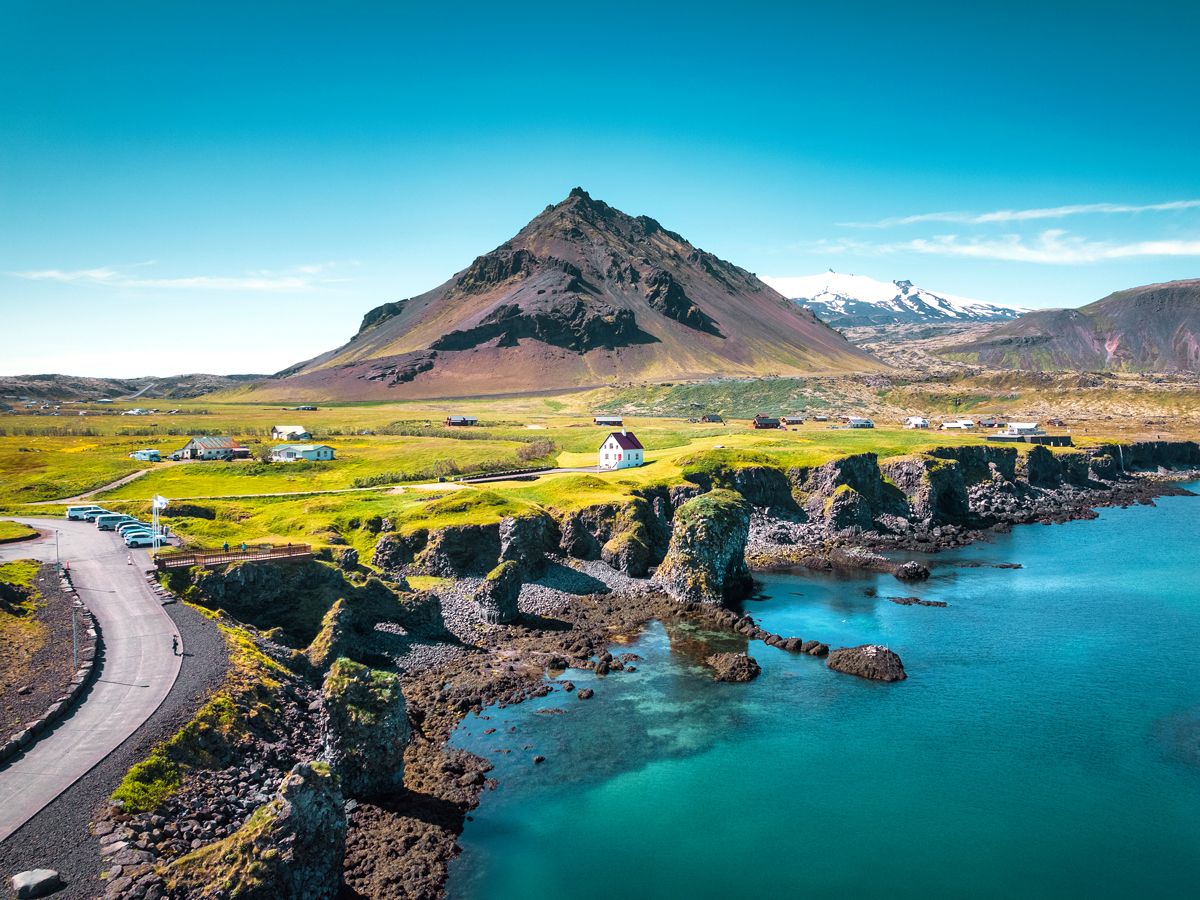
Iceland owes its very existence to a volcanic mantle plume through which magma is able to find its way to the surface. The country sits on the Mid-Atlantic Ridge and is home to an estimated 130 volcanoes, of which around 35 are active. Approximately one-third of the lava that has spewed from the Earth’s surface in the last 500 years is found in Iceland.
Some of this lava created the new island of Surtsey, now a UNESCO World Heritage Site, during an eruption that lasted from 1963 to 1967. Most recently, attention has turned to the Reykjanes peninsula, where ongoing activity has been impacting the region since Mount Fagradalsfjall sprang to life in 2021.
Hawaii
Credit: mphillips007/ iStock via Getty Images Plus
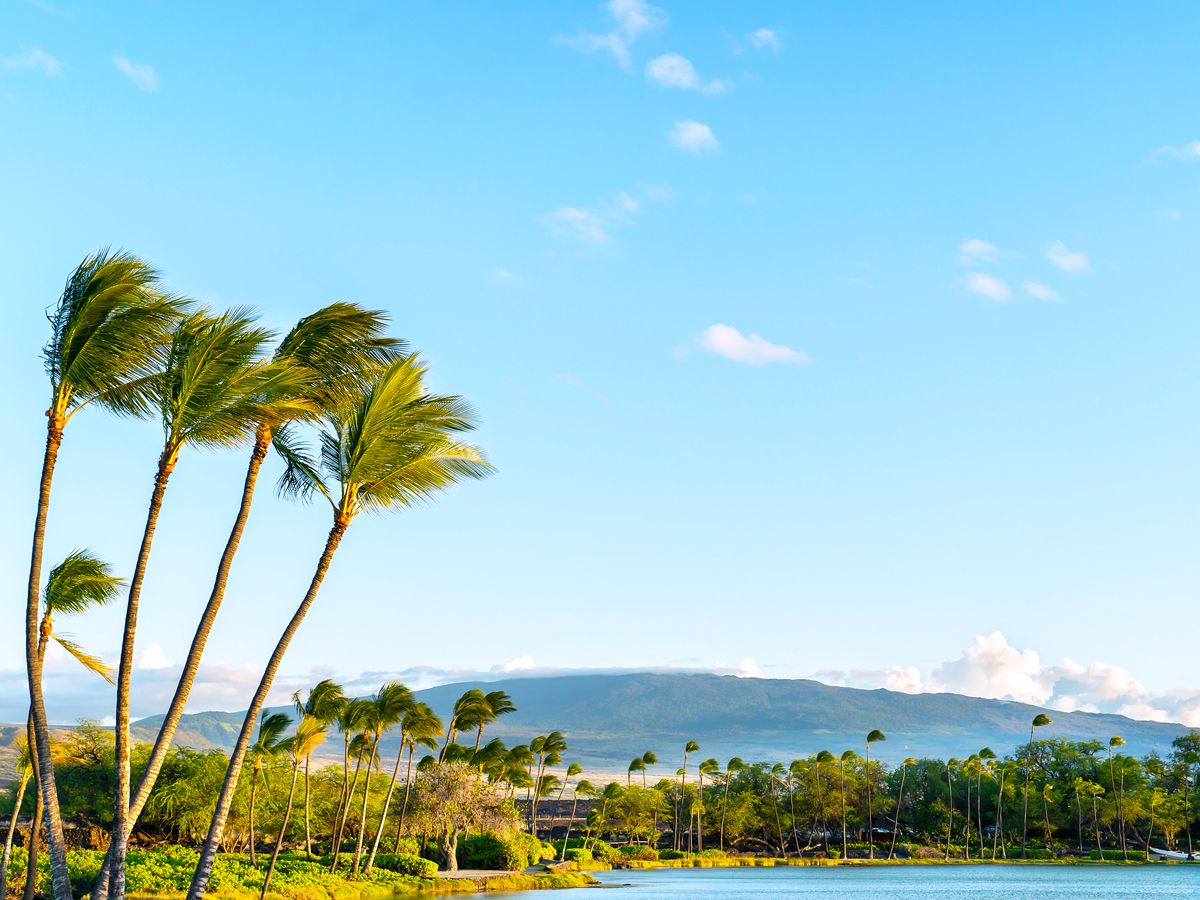
According to the Smithsonian Institution’s Global Volcanism Program, the U.S. is the country with the most volcanoes that have erupted during the last 12,000 years. Nowhere is that more evident than in the state of Hawaii. The United States Geological Survey (USGS) recognizes Mauna Loa as the largest active volcano on the planet — its summit rises more than 10 miles above its base, making it the second-tallest mountain on Earth when measured from base to peak. (Yes, even taller than Everest.).
But Hawaii’s volcanic headliner is without a doubt Kilauea, geologically the youngest and the most active of the five volcanoes that make up Hawaii’s Big Island. This extraordinary shield volcano, whose name most likely translates to “spewing” or “much spreading,” has barely stopped erupting in recorded history.
Credit: Stefan_Alfonso/ iStock via Getty Images Plus
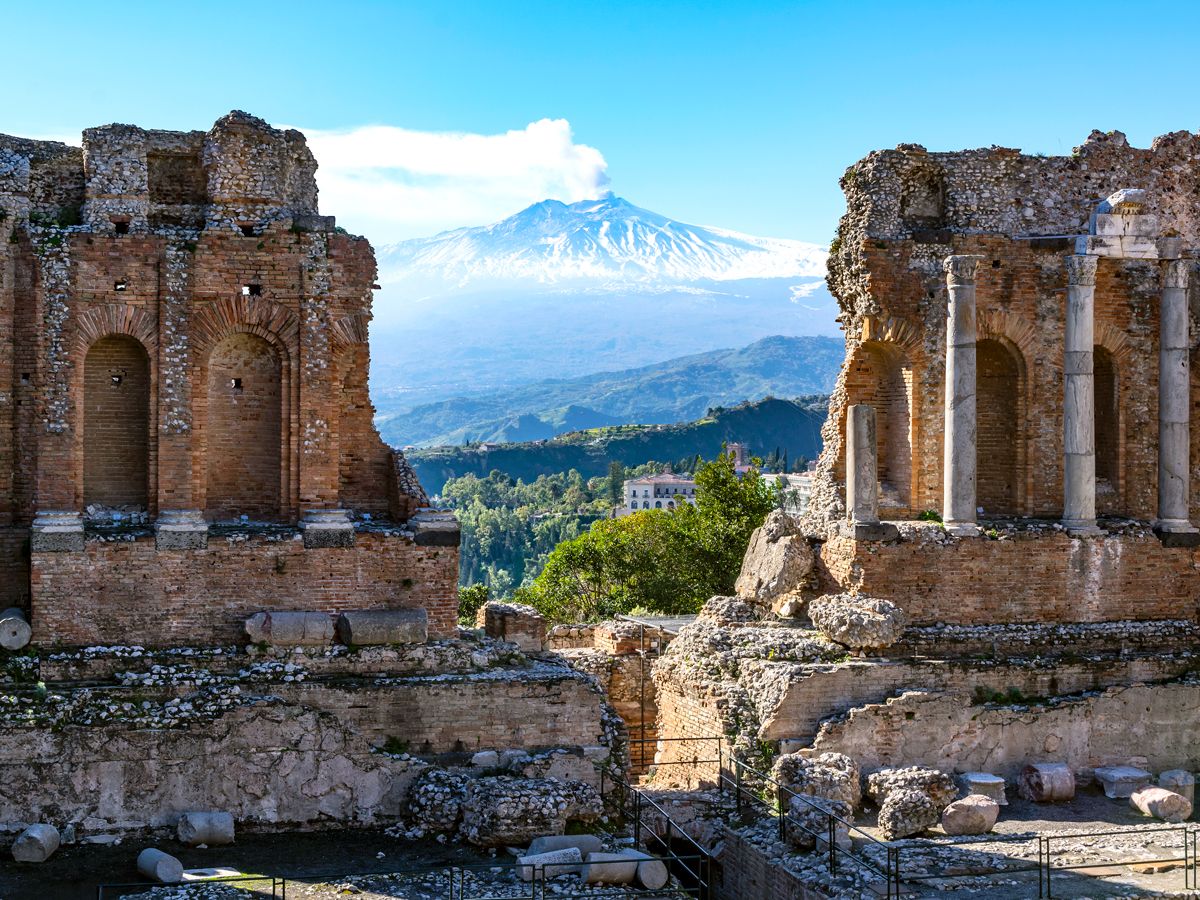
Italy is home to 12 volcanoes, nine of which are considered active. Mount Vesuvius famously destroyed Pompeii in 79 CE; it last erupted in 1944. Vesuvius is considered one of the world’s most dangerous volcanoes because it tends to erupt violently and with little warning, and it looms over the densely populated Bay of Naples, home to around 3 million people.
Dominating the island of Sicily, Mount Etna is the largest active volcano in Europe. This stratovolcano erupts often, though the smoke rings that were emitted in 2024 were an unusual sight. From Sicily, it’s an easy day trip to the Aeolian Islands, a volcanic archipelago home to Stromboli and Vulcano.
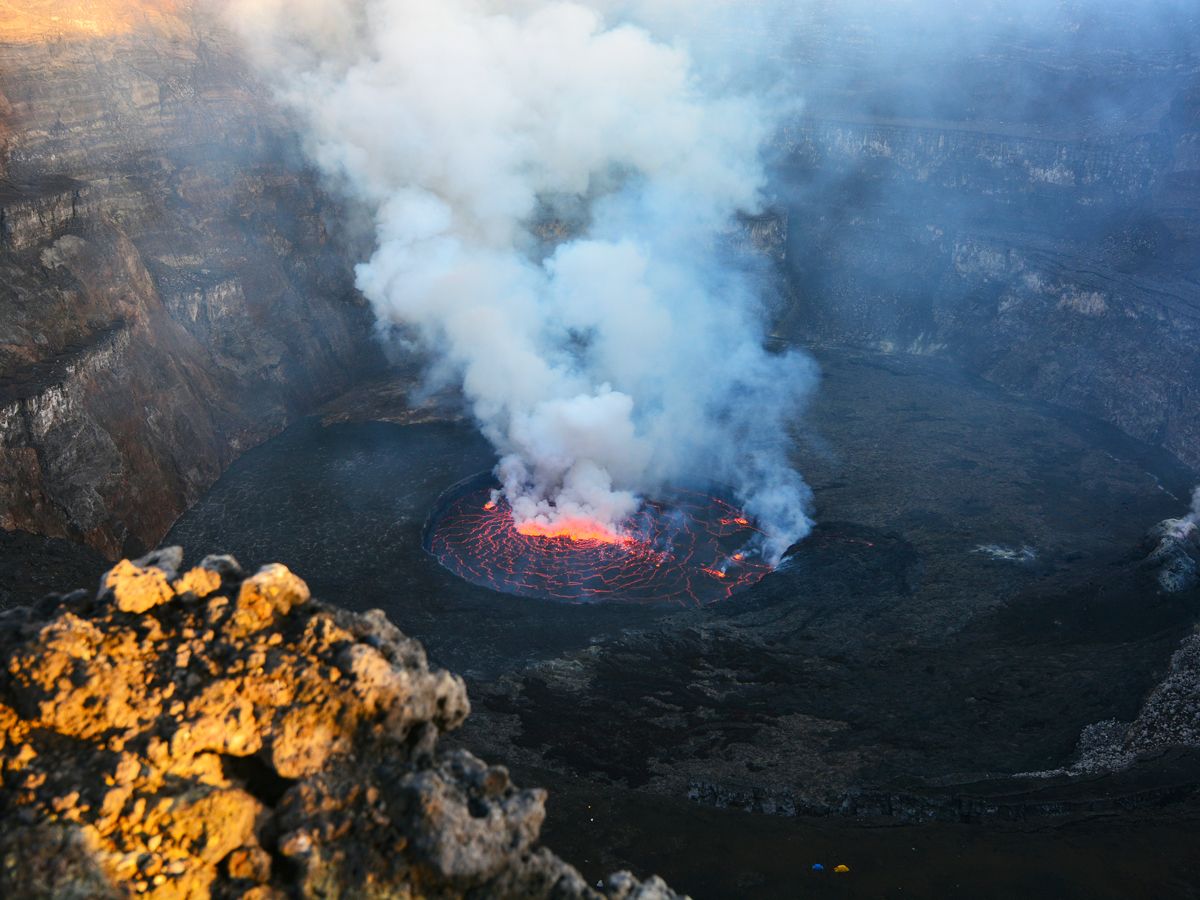
Africa’s most active volcanic region is located in the Virunga Mountains, close to the border between the Democratic Republic of the Congo and Rwanda. Some of the area’s volcanoes, such as Karisimbi and Bisoke, straddle the border. However, the most active are found in Congo — including Mount Nyamulagira and Mount Nyiragongo, both of which have erupted recently.
Nyiragongo’s crater is also home to the world’s largest lava lake. Every so often, it empties. Lava with characteristically low viscosity pours down its steep flanks as easily as water might, faster even than the flows seen in Hawaii. When it reaches populous cities such as Goma, it can have devastating consequences.
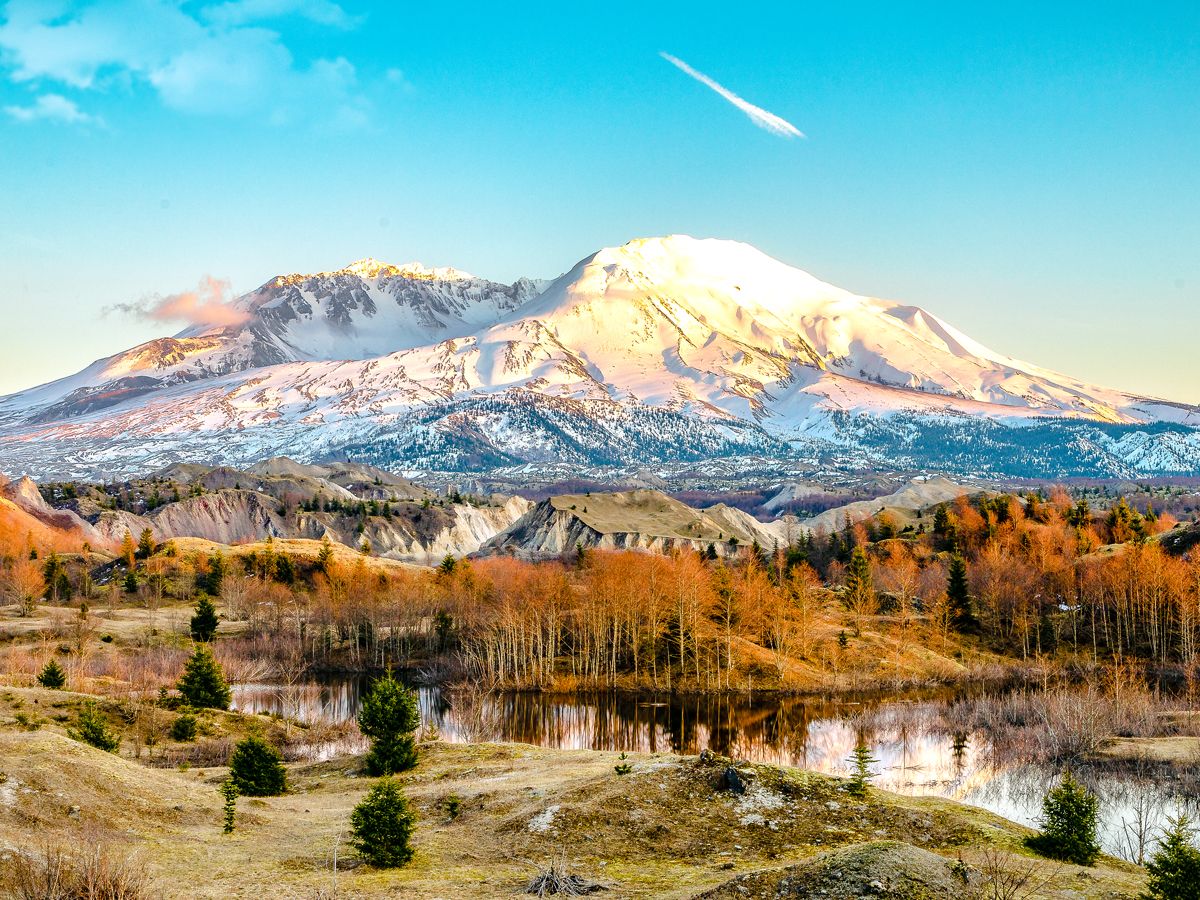
More than 450 active volcanoes, around three-quarters of the world’s total, encircle the Pacific Ocean. Found near tectonic plate boundaries, these volcanoes form a horseshoe-shaped belt that’s known as the Ring of Fire. From Alaska in the north to Chile in the south, much of the west coast of the Americas is part of the Ring of Fire.
When dormant, these volcanoes become a playground for nature lovers, who hike the sylvan trails that surround Mount St. Helens in Washington state, ski down Volcán Villarica in Chile, luxuriate in hot springs beneath Ecuador’s Mount Tungurahua, or seek out the elusive quetzal bird-watching on the slopes of Barú in Panama. In Nicaragua, it’s possible to scramble up a vertiginous trail and then sandboard down the flanks of Cerro Negro. If that sounds like too much effort, you can instead drive right up to the rim of Volcán Masaya and peer down into its sulfurous abyss.
Indonesia
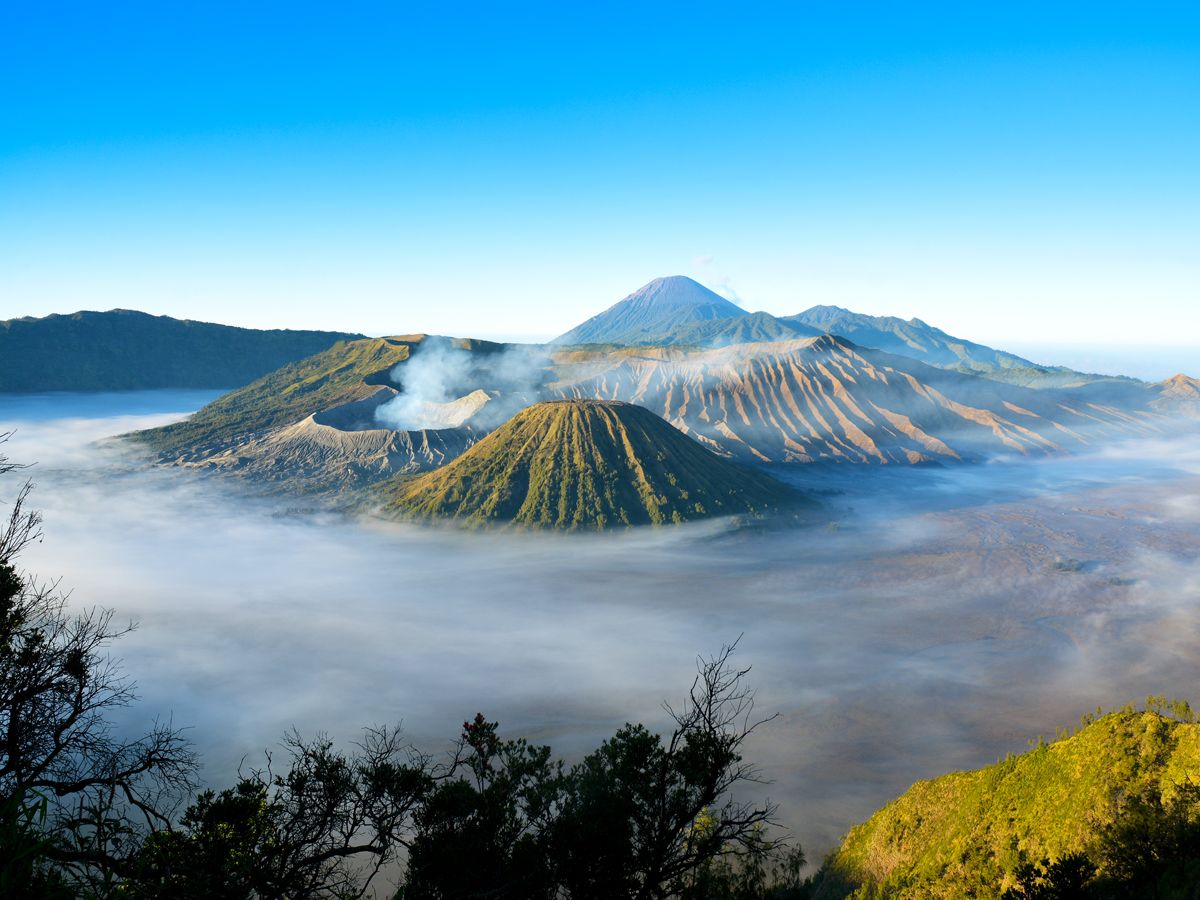
Credit: Eriz Razak/ E+ via Getty Images
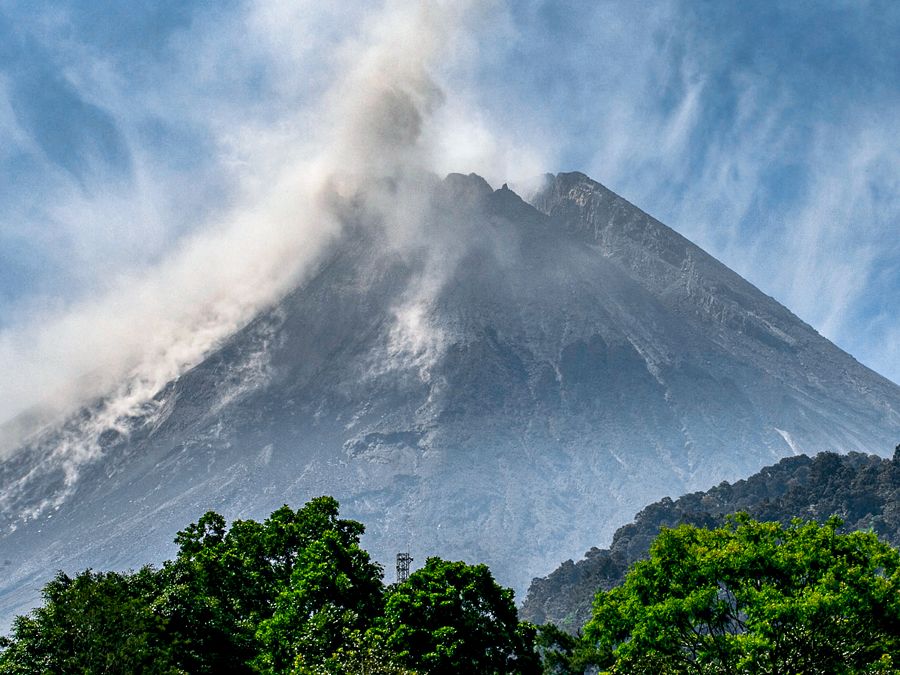
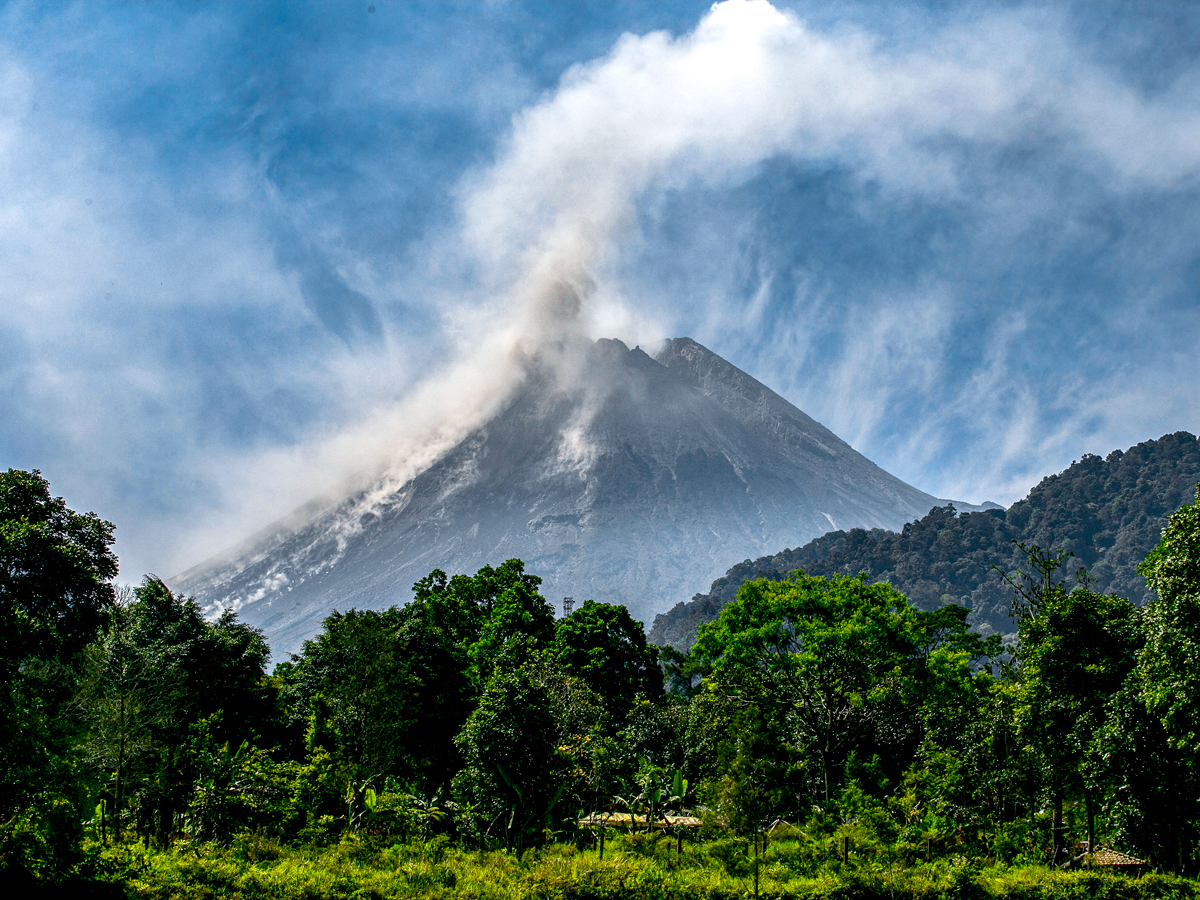
Indonesia, which also lies within the Ring of Fire, is home to some of the most active volcanoes in the world. Yet, when its volcanoes are dormant, there’s a serene beauty to these landscapes. That’s certainly the case at Bromo Tengger Semeru National Park, where Mount Bromo, Mount Batok, and Mount Semeru line up to be admired.
Tragically, the 1883 eruption of Krakatau (Krakatoa) was so great that the volcano collapsed in on itself. Many died from pyroclastic flows, falling tephra, and consequential tsunamis. A new volcanic cone grew within that caldera, known as Anak-Krakatau (Child of Krakatoa). More devastating still was the 1815 eruption of Tambora, widely considered to be the most powerful volcanic eruption in recorded history.
Japan
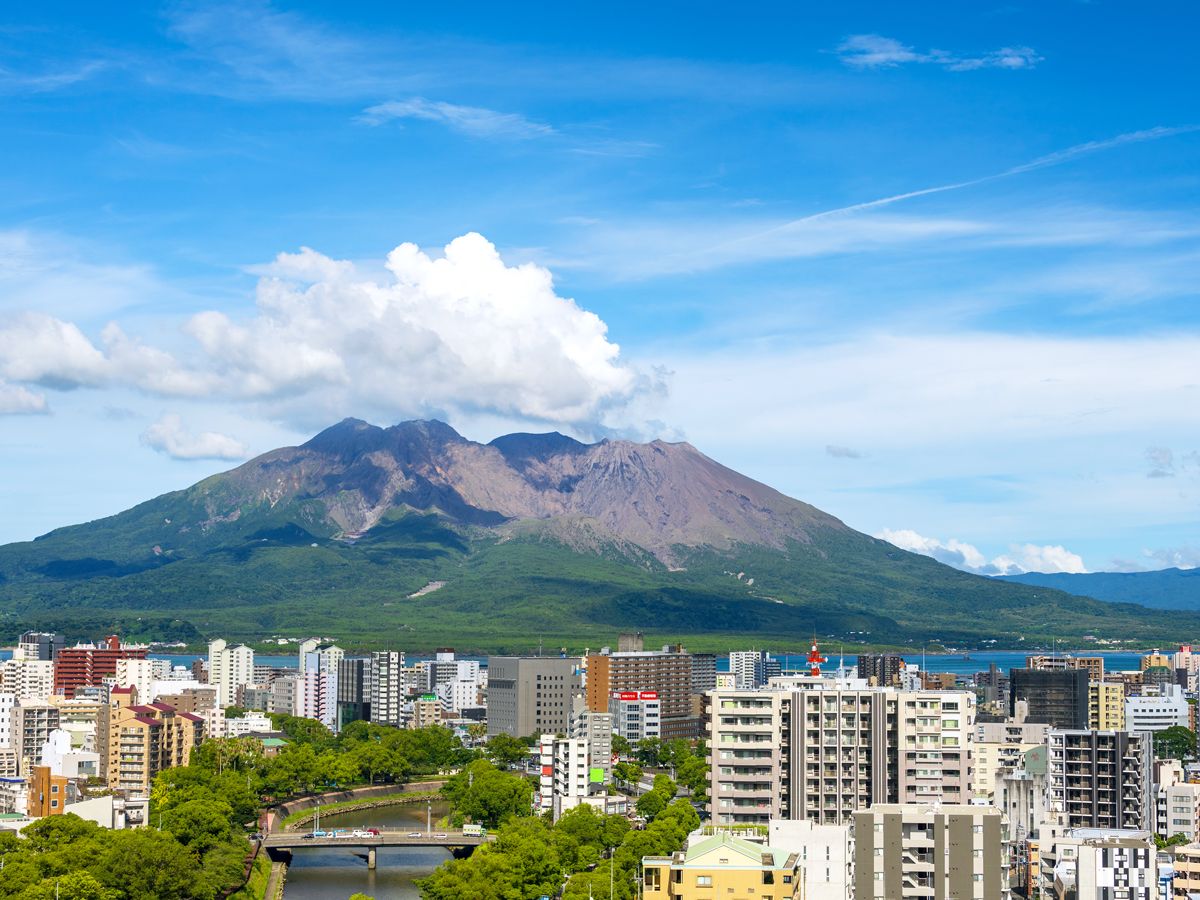
Credit: winhorse/ E+ via Getty Images
There are 111 active volcanoes in Japan, many of which are located in the country’s national parks. The most iconic is Mount Fuji, a 12,389-foot-high stratovolcano that’s the tallest in the country. Mount Fuji’s climbing season lasts from early July until mid-September, but it’s also possible to catch a glimpse of it from a passing shinkansenhigh-speed train.
Another volcano worth seeking out is Sakurajima, which puffs away almost constantly and is a short ferry ride away from the city of Kagoshima in Kyushu. The closest viewing point is the Yunohira Observation Point, which overlooks the crater. Hikers can also follow the Nagisa Lava Trail, which winds through the lava field deposited during the 1914 eruption.
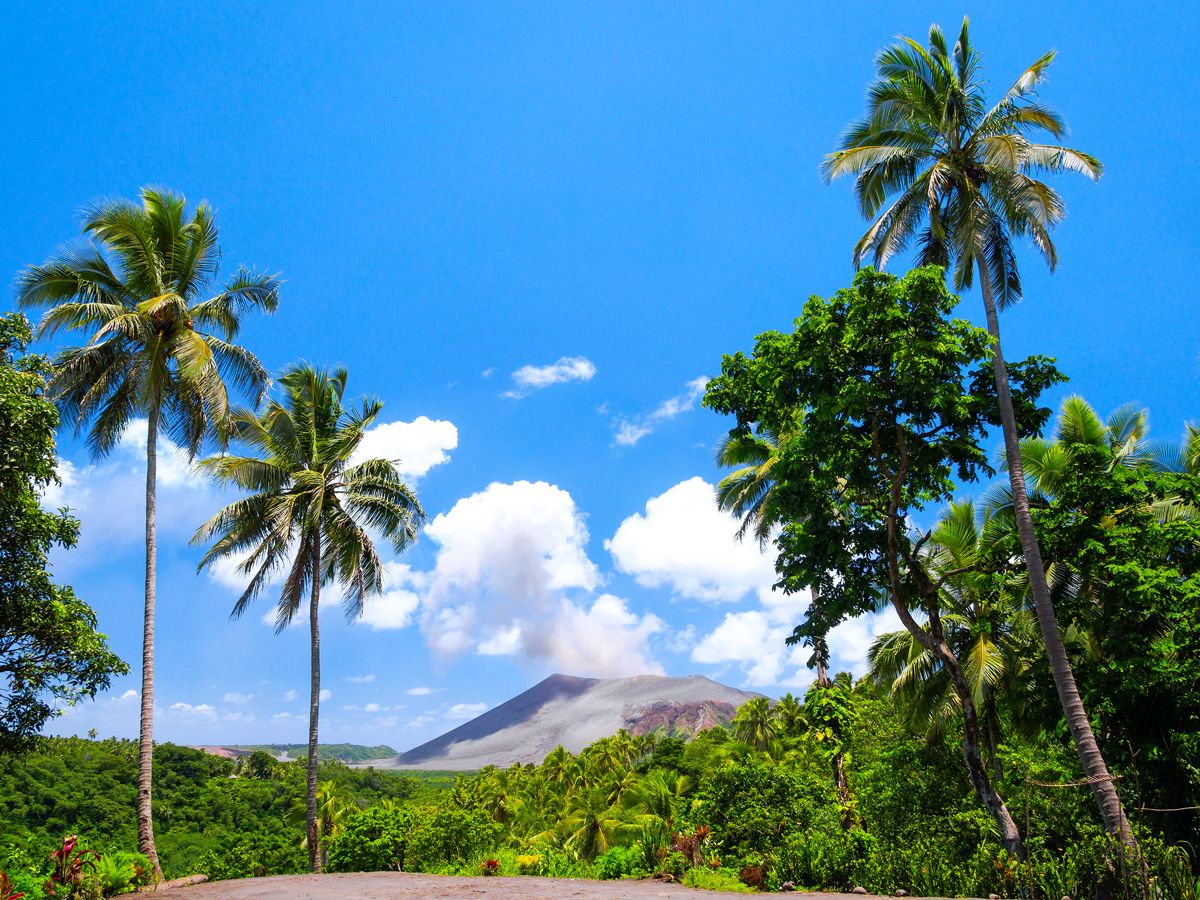
One of the most accessible volcanoes in the world, assuming you discount the time it takes to reach the tiny South Pacific island nation of Vanuatu, is Mount Yasur. This volcano, located within an ash plain on the island of Tanna, has been erupting nearly constantly since at least 1774 — and perhaps for as long as eight centuries.
As dusk falls, Yasur puts on a Strombolian show of incandescent lava fountains that resemble a fireworks display, delighting those who join a guided tour that leads just shy of the crater. Be sure to bring a pen to write your postcards: There’s even a post collection box close to the volcano’s rim.
10 of the World’s Rarest Flowers — and Where To See Them
By
Marissa Kozma
Read time: 7 minutes
March 13, 2025
Updated: March 13, 2025
10 of the World’s Rarest Flowers — and Where To See Them
Outdoors •March 13, 2025•Updated: March 13, 2025
By Marissa Kozma
Author
Marissa Kozma
Marissa is a cheap airfare aficionado who loves exploring offbeat destinations with her husband. Based in Los Angeles and Joshua Tree, Marissa has been featured in publications such as San Diego Magazine, Palm Springs Life Magazine, 303 Magazine, and Mountain Living.
No two flowers are alike, which means that every single flower has its own distinct color, variation, and petal shape. And with an estimated 369,000 species of flowering plants around the world, the opportunities for a magnificent garden of epic proportions are seemingly endless. If you’ve ever traveled to witness the wildflower “superbloom” phenomena or spent lengthy hours in your local nursery, a trip to see one of Earth’s rarest plant specimens should be on your list. Here are 10 places that are home to the world’s rarest flowers.
This white flowering tree of the tea family (Franklinia alatamaha) is native to the Altamaha River in Georgia, but it has been extinct in the wild since the early 19th century. Fortunately, the species was preserved by early American colonists after they observed its decline in the southeastern United States. It’s fitting that you can now find this specimen named after Benjamin Franklin in his home state of Pennsylvania at Scott Arboretum, located on the grounds of Swarthmore College.
The gardens are free to the public and open daily, but the best time to visit is between July and August, when the trees are in full bloom and emit a sweet-smelling fragrance reminiscent of orange blossom and honeysuckle.
Corpse Flower – Washington, D.C.
Credit: Zach Gibson/ AFP via Getty Images
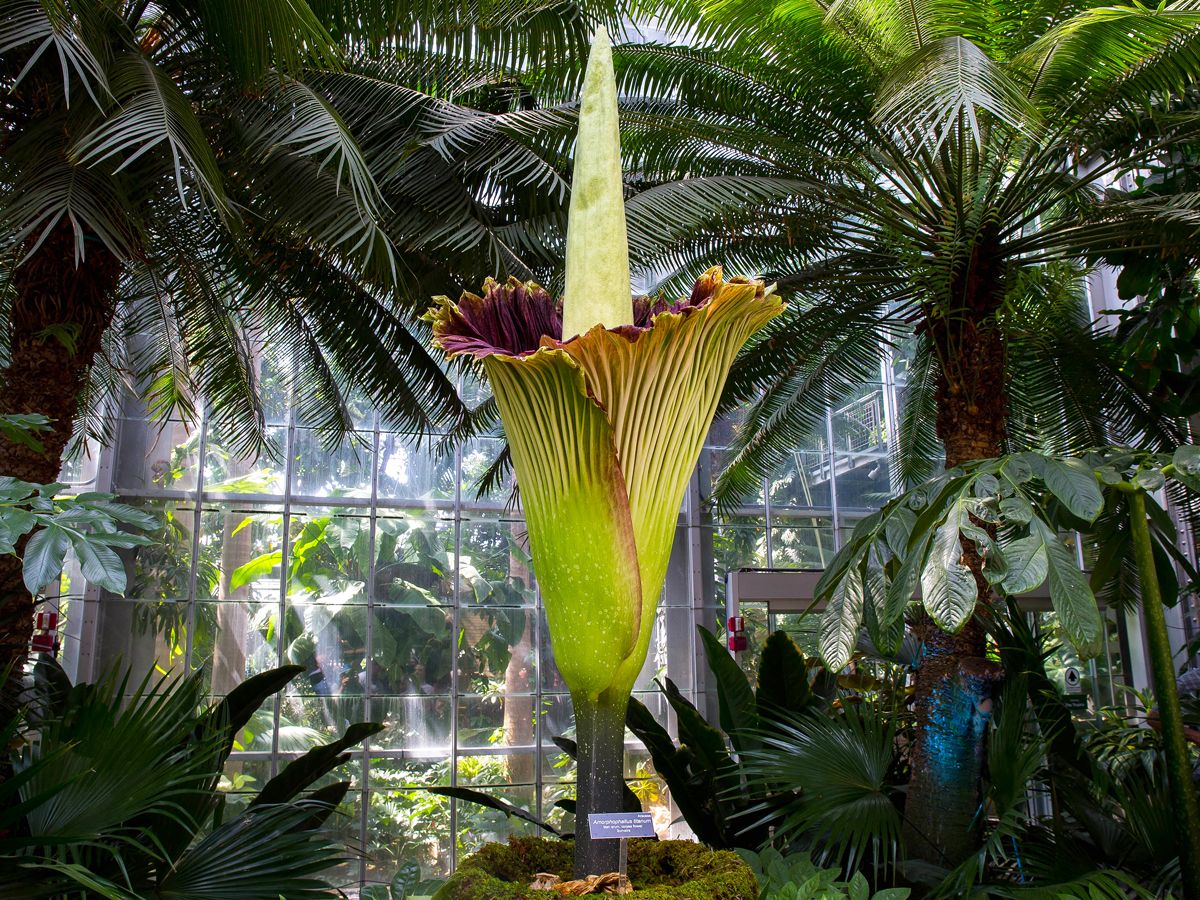
With some comparing the stench of the corpse flower (titan arum) to that of rotting flesh, it’s clear that morbid curiosity is what compels so many to seek out the flower for a closer inspection. Visitors often crowd the halls of the United States Botanic Garden on the days when botanists estimate the plant will bloom and emit its unpleasant odor.
Odd in shape and size, with a tall single leaf that can grow up to 9 feet tall and distinct maroon coloring at the base, the unusual flower is native to the rainforests on the Indonesian island of Sumatra. It doesn’t have an annual blooming cycle, only unfurling for roughly two days every two to three years. Many gardens across the country have a corpse flower, but the U.S. Botanic Garden in Washington, D.C., is home to several specimens, so the odds of smelling one are even better.
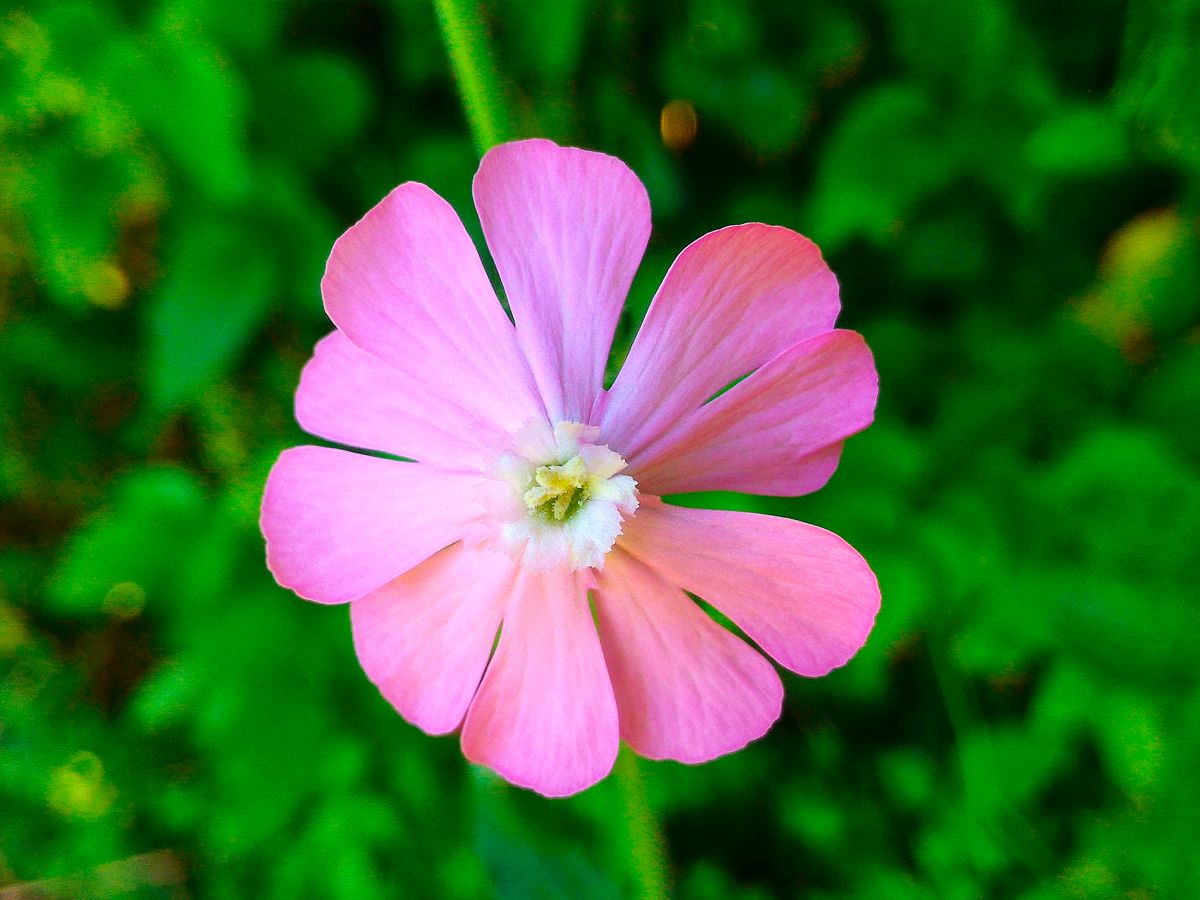
The extremely rare Gibraltar campion(Silene tomentosa) is a perennial with beautiful white or pale violet-pink flowers. Endemic to the British overseas territory of Gibraltar, the plant is so rare that it was believed to be extinct in 1992, but it was later rediscovered in the Gibraltar Nature Preserve atop the Upper Rock of Gibraltar in 1994.
Your best chances of spotting the specimen are by visiting the preserve in the spring. You can reach the Upper Rock by riding the cable car or climbing the Mediterranean Steps to the top. Even if you don’t get the chance to see the campion’s blossoms, the view is incredible. Another place to spot the flowers is the Gibraltar Botanic Gardens.
With a name like “ghost orchid” (Dendrophylax lindenii), it’s no surprise that spotting this unusual orchid specimen pollinated by giant sphinx moths is a rare occurrence. A completely leafless orchid, the all-white blossom appears to float detached in the wild with no stem, resembling a ghost. Its scent is often compared to apples.
Finding the phantom-like flower is no easy feat: It only blooms once a year for a few weeks (or not at all). The flower grows in just three southwestern counties in Florida, the Bahamas, and Cuba. Plus, it is well camouflaged among overgrown roots and shrubs in its native swamp habitat. For the best likelihood of seeing the rare blooms, visit the Audubon Corkscrew Swamp Sanctuary, a 2.25-mile boardwalk adventure through the heart of the Everglades in Florida.
(To help preserve the ghost orchid, you can support Everglades restoration initiatives to reduce polluted water discharge threatening its swamp habitat.)
Jade Vine – New York, New York
Credit: magicflute002/ iStock via Getty Images Plus
It’s not often that you find a turquoise-colored flower, but the jade vine (Strongylodon macrobotrys), a blue-green member of the pea family, is as striking as the gemstone for which it’s named. Endangered in the Philippine rainforests where it’s endemic, the jade vine relies on bats for pollination, which makes cultivation difficult, and deforestation of its natural habitat is causing the risk of extinction. Luckily, you can enjoy the exquisite vine at the New York Botanical Garden in the Bronx, which contains more than 1 million plants in total.
Catherine-Wheel Pincushion – Cape Town, South Africa
Credit: tamara_kulikova/ iStock via Getty Images Plus
The spindly protea named the Catherine-wheel pincushion (Leucospermum catherinae) is a firework pincushion native to the Western Cape province of South Africa. Mentioned on the IUCN Red List of Threatened Species, the flower is in decline due to drought, fires, invasive species, vineyard cultivation, and overgrazing in the low footslopes of the mountains where it grows.
The best chance to spot the flower is by visiting Kirstenbosch Botanical Gardens in Cape Town. Located on the eastern slopes of Cape Town’s Table Mountain, it is considered to be one of the best botanic gardens in the world. Plan your trip from summer to early fall, when the fiery blossoms are a beautiful shade of orange.
(To help preserve the Catherine-wheel pincushion, you can support nonprofits such as Greenpop, which is devoted to forest restoration, urban greening, and food gardening.)
Studied by Charles Darwin during his voyage around South America in the 1830s, Darwin’s sipper (Calceolaria uniflora) is a cool-climate species native to the Tierra del Fuego archipelago of Chile and Argentina. The main identifiers of the flower are its tongue-shaped leaves and yellow, white, and auburn coloring.
Due to its remote habitat, the species of slipper is so rare that counterfeit seeds of the plant are commonly sold, making cultivation difficult. To see Darwin’s slipper up-close, you can visit the University of California Botanical Garden in Berkeley.
Hailed as the most expensive rose in the world, the Juliet rose (Ausleap) was introduced in 2006 by renowned breeder David Austin, who reportedly spent 15 years and £3 million to grow his vision in England. The peach rose has distinct cupped petals and a tantalizing sweet fragrance, so it is very recognizable among other rose varieties. You can see this beauty up-close at various botanic gardens across the U.S., such as the Dallas Arboretum and Botanical Garden in Texas.
Credit: DMVPhotography/ iStock via Getty Images Plus
With a 7-foot-tall stalk and unusually rare metallic turquoise-and-orange blossoms, the blue Puya or sapphire tower (Puya alpestris) is closely related to the pineapple. It is endemic to the southern Andes of Chile and Argentina. Taking up to 10 years to flower, the bromeliad is drought-tolerant, so it thrives in desert climates.
You can view the otherworldly specimen at Blue Mountains Botanic Garden in Mount Tomah, Australia — an alpine rainforest surrounded by a UNESCO World Heritage Area wilderness and home to cool-climate plants from around the world.
Middlemist Red Camellia – Waitangi, New Zealand, and London, England
Credit: Pridannikov/ iStock via Getty Images Plus
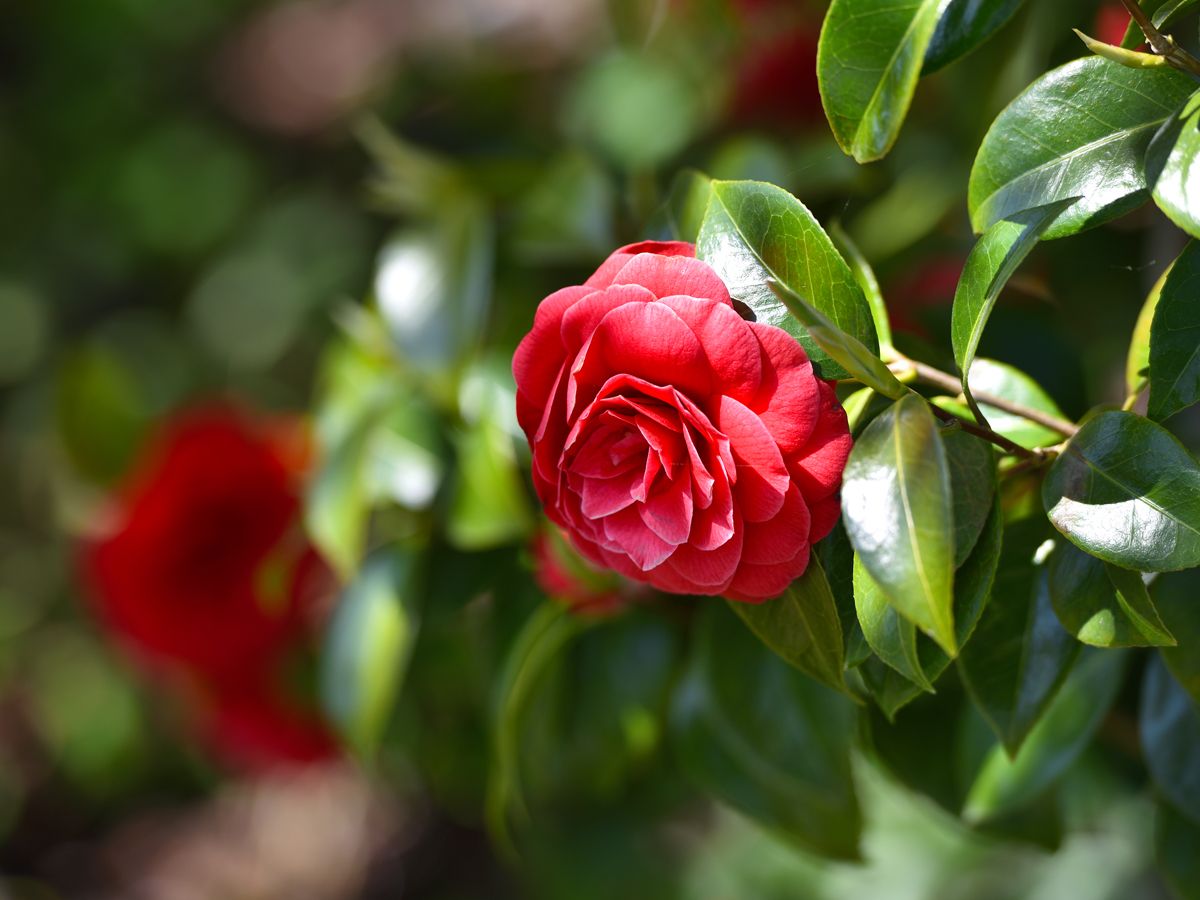
Generally considered the world’s rarest flower, the Middlemist red camellia is a cultivar of the common camellia (Camellia japonica). There are only two known specimens in existence. One is found at the Treaty House, the former house of James Busby, the British Resident in New Zealand from 1833 to 1840, that is now a historic site in Waitangi, New Zealand. The other is at the Chiswick House and Gardens, an 18th-century villa with 65 acres of gardens in London.
Endemic to China, these plants have flowered for more than two centuries. The camellia was imported to Britain as a luxury item in 1804 but later became extinct in Asia. Scientists who have studied the flower have also discovered its antioxidant properties, which may be beneficial to fighting cancer and cardiovascular diseases.
Although the camellia is relatively simple to cultivate, botanists are hesitant to use its cuttings to propagate since they don’t want to harm the two plants in existence. Luckily, the two camellias continue to thrive today — although one was almost lost when a bomb dropped near Kew Gardens, where it was originally housed in England during World War II.
Advertisement
More from our network
Daily Passport is part of Inbox Studio, an email-first media company. *Indicates a third-party property.
10 Structures You Didn’t Know Were Designed By Famous Architects
By
Bennett Kleinman
Read time: 10 minutes
March 13, 2025
Updated: July 1, 2025
10 Structures You Didn’t Know Were Designed By Famous Architects
Architecture •March 13, 2025•Updated: July 1, 2025
By Bennett Kleinman
Author
Bennett Kleinman
Bennett is a New York City-based staff writer for Daily Passport. He previously contributed to television programs such as the Late Show With David Letterman, as well as digital publications like the Onion. Bennett has traveled to 48 U.S. states and all 30 Major League Baseball stadiums.
Individuals like Antoni Gaudí, Zaha Hadid, and Frank Lloyd Wright are internationally renowned for their revolutionary architecture. But even the most famous architects may fly under the radar on occasion, and at times, these visionaries have taken on smaller projects with less fanfare. From an unusual coffee shop in Japan to an Austrian ski jump and a seemingly nondescript condo building in New York City, here are 10 structures you may not have known were designed by architectural pioneers.
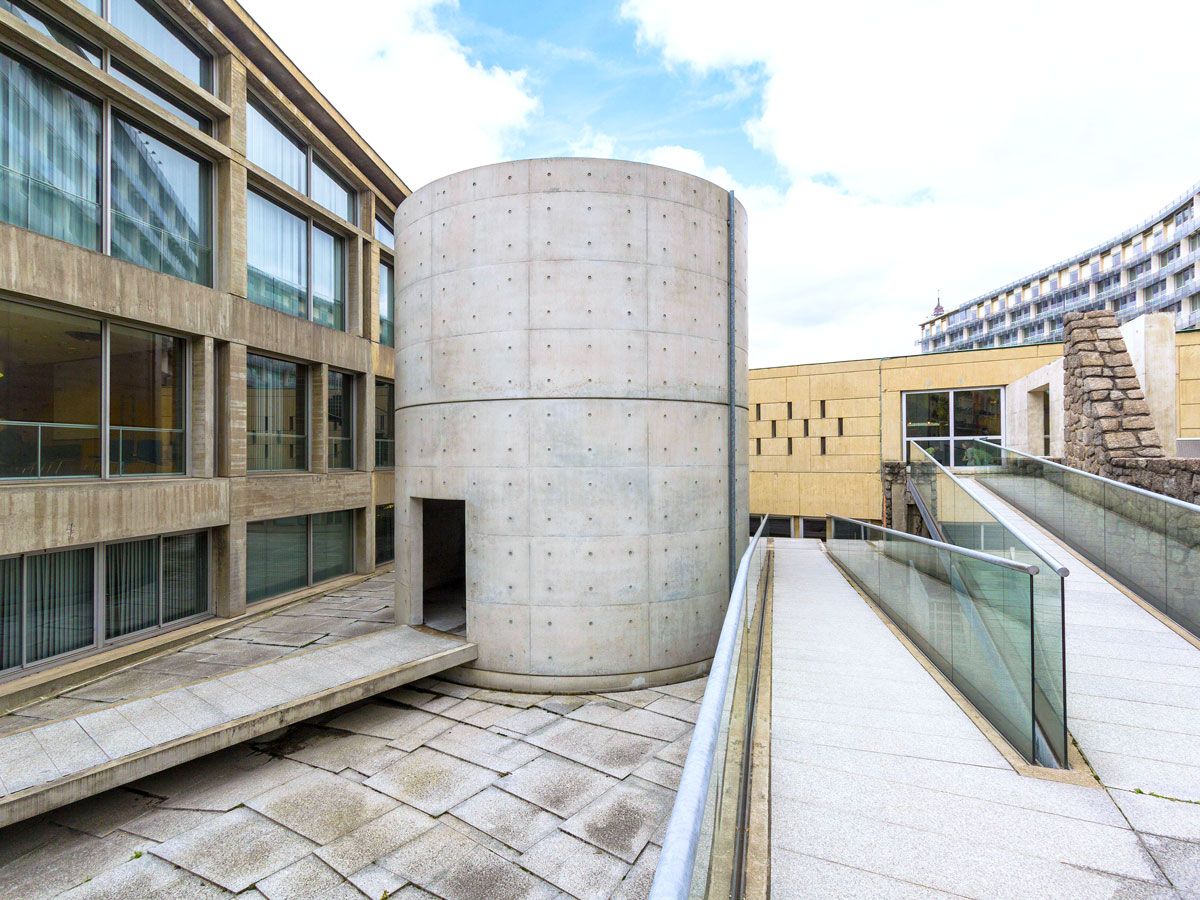
Pritzker Award-winning Japanese architect Tadao Ando is known for visionary works such as the Church of Light in Osaka and the Church of Water in Hokkaido. While the vast majority of Ando’s designs are located in Japan, his impact can also be felt in the meditation space outside the UNESCO headquarters in Paris, France, which he designed in 1995 in celebration of UNESCO’s 50th anniversary.
Ando sought to create a space where people could quietly contemplate the idea of a peaceful world without conflict. To do so, he designed a hollow concrete cylinder as the space’s main centerpiece. The cylinder, which measures roughly 20 feet high by 20 feet wide, has chairs where visitors can sit and meditate. A thin open sliver between the walls and roof allows a tiny amount of light to permeate inside the cylinder, which is otherwise removed from the outside world.
One of the most fascinating elements of Ando’s design is the type of stone he chose to use. From Hiroshima, he imported and reclaimed granite slabs which were exposed to radiation when the U.S. dropped an atomic bomb on the city during World War II in 1945. Ando used those stones to create portions of the flooring and the base of the pond located outside the cylinder — a chilling, poignant reminder of the past that offers food for thought for those who meditate here.
Louis Kahn was an influential 20th-century architect who was renowned for monumental works such as Bangladesh’s National Parliament House and the Yale University Art Gallery. But, surprisingly, one of his most highly regarded buildings is a tiny changing room facility that’s next to a community pool in Ewing Township, New Jersey. This historic building is called Trenton Bath House, despite the fact that it’s neither a bath house nor located in the city of Trenton.
Kahn designed this utilitarian structure to be part of a planned Jewish community center in Ewing Township that never came to fruition. The facility comprises four square rooms, each topped with a pyramidal roof that appears to float above the sidewalls. This creates a series of unusual lights and shadows that add a level of playfulness to the otherwise simple spaces. Each roof contains a small opening at its apex that allows for a single shaft of light to enter the inside and illuminate the space within.
The Trenton Bath House opened in 1955, and it had a significant influence on Kahn’s career, until his passing in 1974. Kahn considered the structure to be a personal turning point, as he applied similar design elements to future creations. He once referred to the seemingly simple structure as “a generative force which is recognizable in every building which I have done since.”
Annunciation Greek Orthodox Church – Wauwatosa, Wisconsin
Credit: James Leynse/ Corbis via Getty Images
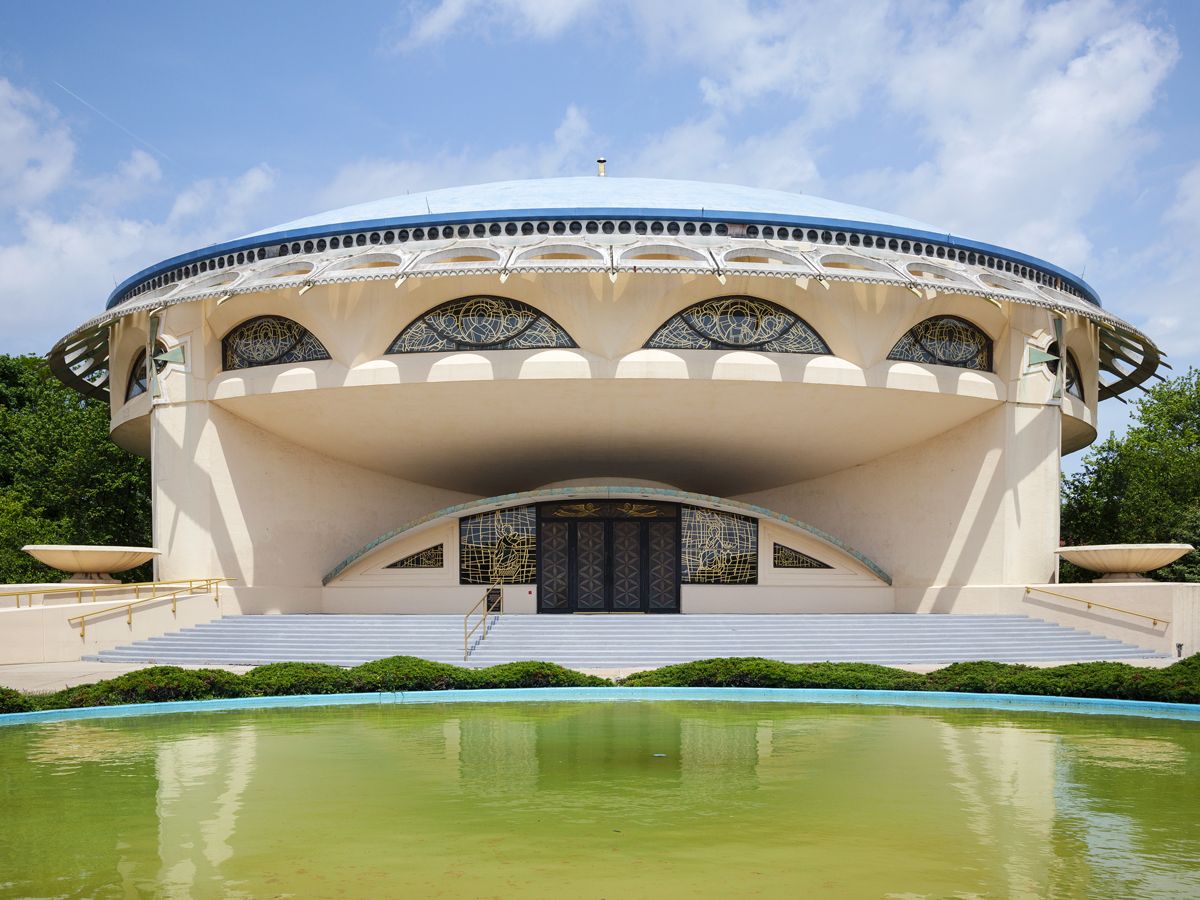
Visionary architect Frank Lloyd Wright’s career was winding down in the mid-1950s when he assumed one of his last major undertakings: the Annunciation Greek Orthodox Church in Wauwatosa, Wisconsin. Wright wasn’t exactly known for designing Greek-inspired structures, but he consulted his wife, Olgivanna, who was of Eastern Orthodox heritage, for the project.
This Orthodox church, however, exemplified Wright’s unorthodox design style. The architect took traditional Byzantine concepts and updated them to fit a modern Midwest aesthetic. One of the most impressive features is the 106-foot-wide dome — instead of being affixed to the rest of the structure, it floats atop thousands of ball bearings.
Unfortunately, construction on the church didn’t begin until five weeks after Wright’s death in 1959, so he never saw this project come to life. When it finally opened in 1961, the church captured the hearts and minds of many, and it remains one of Wright’s most fascinating works.
Starbucks Coffee at Dazaifu Tenmangu Shrine Omotesando – Fukuoka, Japan
Credit: TChareon/ iStock Editorial via Getty Images Plus
Japanese architect Kengo Kuma is known, in part, for designing the Japan National Stadium for the 2020 Summer Olympics. But you may be surprised to learn that he’s also the visionary behind several unique Starbucks locations throughout Asia. One of his most intricate creations is a Starbucks located in Fukuoka, Japan, near the Dazaifu Tenmangu Shinto shrine.
Kuma and his associates created an X-shaped support system using roughly 2,000 long cedar dowels, resulting in a visual spectacle that’s both practical and awe-inspiring. Kuma’s ingenuity is also on display at a Tokyo-based Starbucks roastery, a multiterraced facility adorned with hundreds of faux cherry blossoms made from copper. You’ll also find Kuma’s influence at a Starbucks that is contained inside 29 stacked shipping containers in Hualien, Taiwan.
East Beach Café – Littlehampton, England
Credit: View Pictures/ Universal Images Group via Getty Images
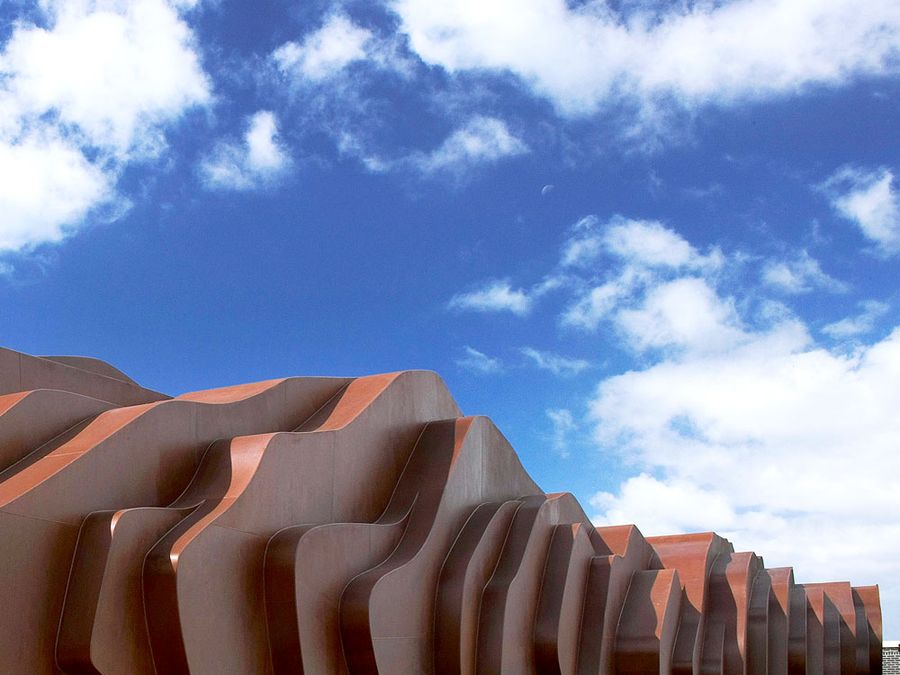
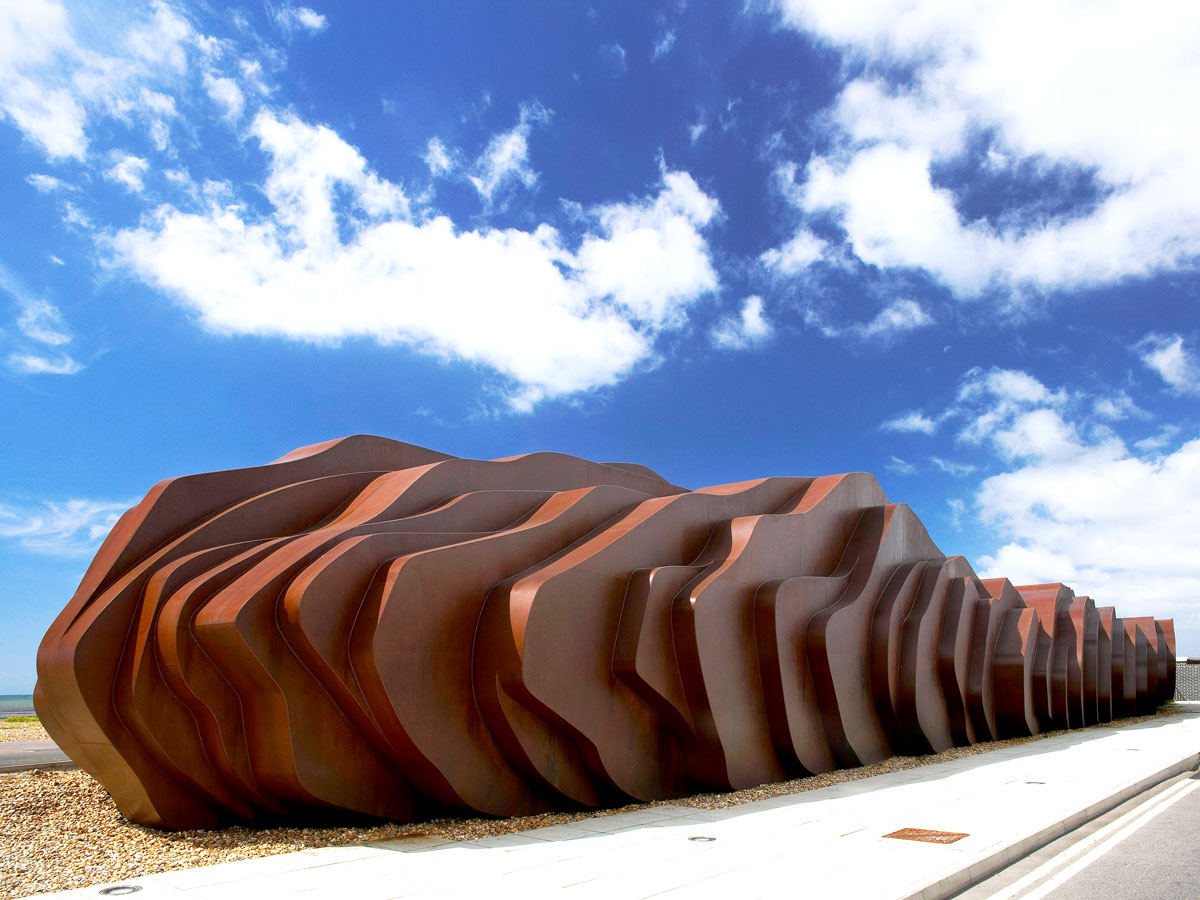
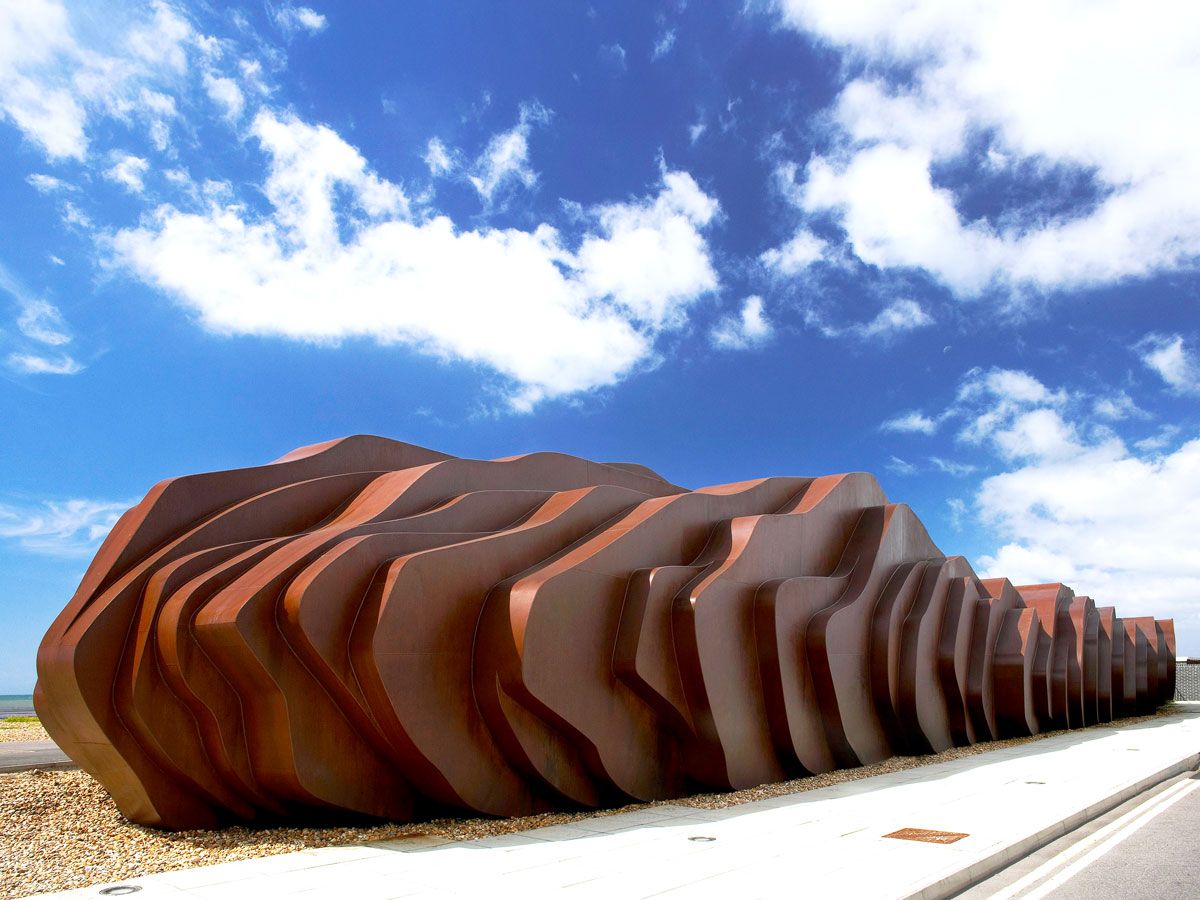
Renowned architect Thomas Heatherwick is best known for designing the 2012 Summer Olympics cauldron and the Vessel in New York City’s Hudson Yards neighborhood. But his career began in 2007, when Heatherwick was commissioned to design East Beach Café in Littlehampton, a town located along the English Channel.
Café proprietors Jane Wood and Sophie Murray commissioned a then-unknown Heatherwick to design a unique eatery. Heatherwick’s vision called for a building that evoked the idea of driftwood that had washed up on shore. He designed the roof to look rusted and weathered, much like a piece of wood you’d find while strolling the beach. There are also expansive windows facing the sea so that guests can enjoy scenic water views as they eat.
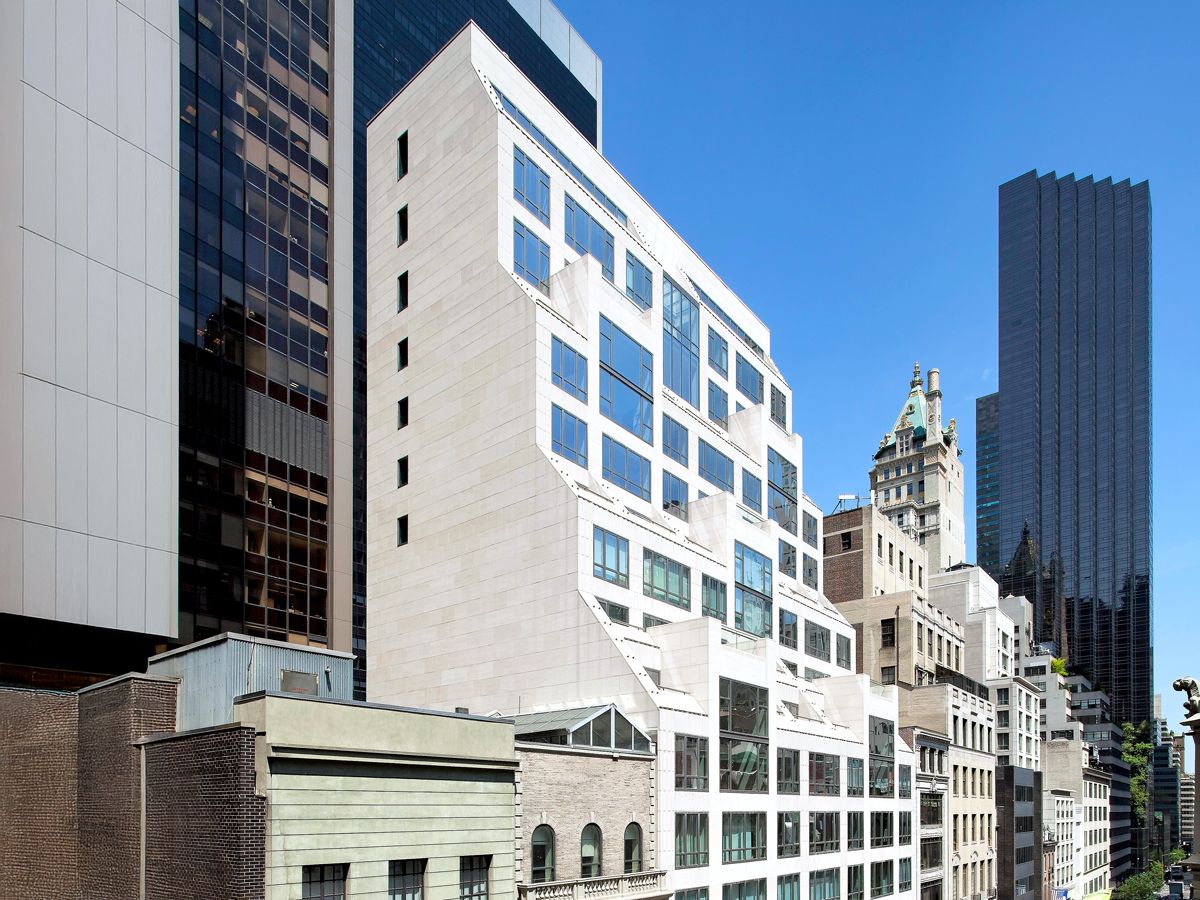
We can thank I.M. Pei for some of the world’s most gorgeous pyramidal structures, such as the Louvre Pyramid in Paris and the Rock & Roll Hall of Fame in Cleveland. But in a stark departure from his most innovative designs, Pei is also responsible for designing a luxury condominium building on West 56th Street in New York City.
The Centurion is the first ground-up residential condo complex designed by Pei, who enlisted the help of his son, Sandi, while working on the project. Its design features various angled setbacks, symmetrical windows, and limestone that Pei imported directly from a favorite French quarry.
If you’re a busy New Yorker hustling down the sidewalk, it’s easy to overlook the fact that this seemingly quotidian apartment complex was designed by one of history’s greatest architects. The building opened in 2009, adding to a laundry list of New York City-based projects designed by Pei, including the Four Seasons Hotel and the Jacob Javitz Center.
Credit: saiko3p/ iStock Editorial via Getty Images Plus
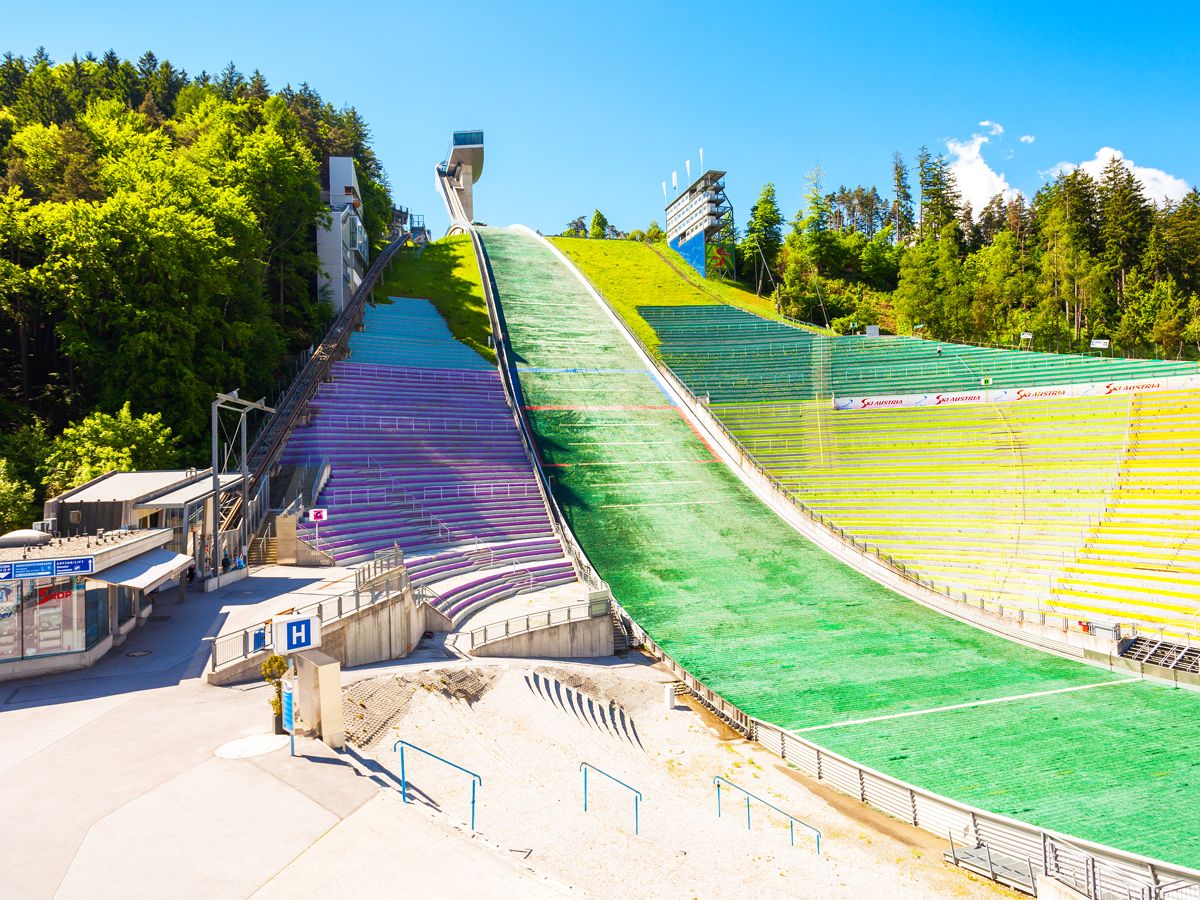
The Bergisel Ski Jump, the crown jewel of Innsbruck, Austria, played a pivotal role in both the 1964 and 1976 Winter Olympics, but its modern redesign is what makes it truly special. While the ski jump had existed in one form or another since 1926, the Austrian Ski Federation hoped to make the once-rudimentary structure into a standout attraction.
The federation enlisted the help of a then up-and-coming architect by the name of Zaha Hadid to bring their vision to fruition. Hadid took on the project in 1999, and she redefined the idea of a traditional ski jump, adding a tower that contained a cafe and viewpoint. Not only did this offer a bird’s-eye view of the athletes, but it also provided a place to gaze out upon the surrounding Alps.
The Bergisel Ski Jump was also highly acclaimed for its minimalist, sleek design — a far cry from the many rudimentary ski jumps that preceded it. Hadid’s work was completed in 2002, and the tower now plays an important role in local tourism. The project also helped Hadid gain much-deserved global recognition.
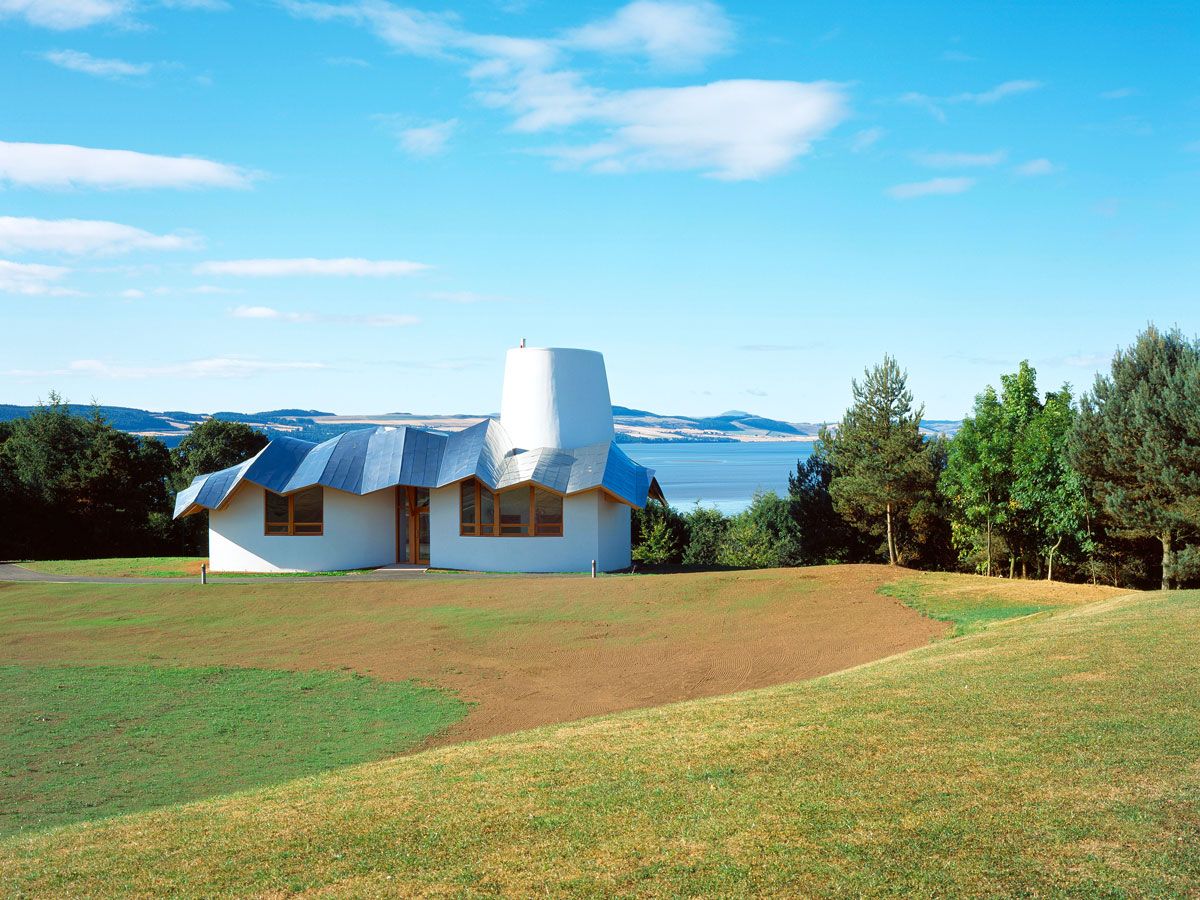
Maggie’s is a U.K.-based cancer support center offering care and guidance to those impacted by the disease. In the early 2000s, the organization caught the attention of famed architect Frank Gehry, known for the Guggenheim Museum Bilbao and the Walt Disney Concert Hall in Los Angeles, among other influential works. Gehry took it upon himself to design a new building for Maggie’s in Dundee, Scotland, which opened in 2003.
Maggie’s Dundee, Gehry’s first building in the U.K., features a visually striking roof made of wavy stainless steel. Yet much of Gehry’s design drew inspiration from a simple and traditional style of Scottish building called a “but and ben,” which is typically a two-room cottage. After the project was complete, Gehry said, “I really hope that in some small way it might contribute to a sense of rejuvenated vigour for moving forward and living life.”
In addition to Gehry’s design, the center features a labyrinthine garden designed by landscape artist Arabelle Lennox-Boyd, and a humanoid sculpture by artist Anthony Gormley titled Another Time X. Gehry isn’t the only world-renowned architect to lend time and services to Maggie’s, as architects such as Zaha Hadid and Daniel Libeskind have also designed buildings for the organization throughout the U.K.
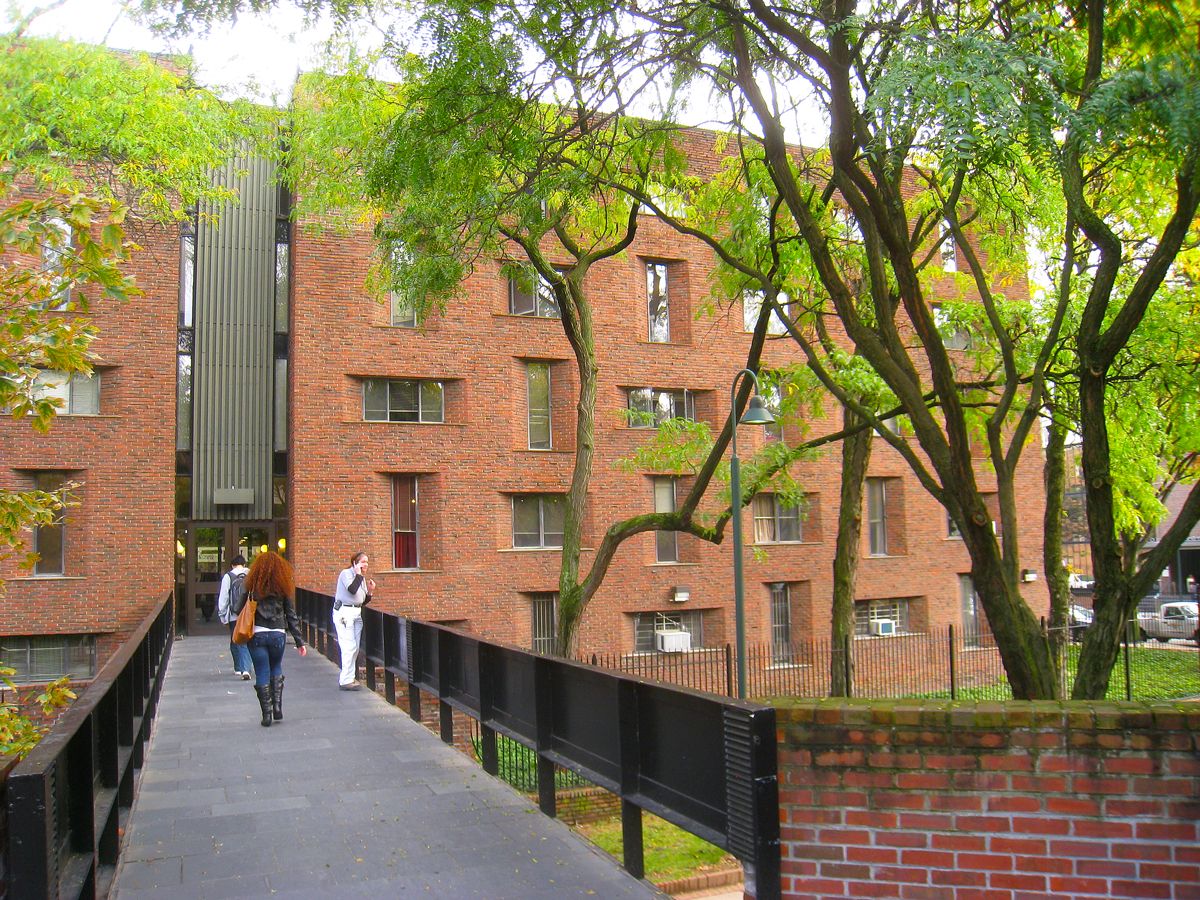
Hill College House is a first-year dormitory located at the University of Pennsylvania. But even though it may come across as your standard college dorm at first glance, the building is far from ordinary, as it was designed by Eero Saarinen — a Finnish-American architect who created the Gateway Arch in St. Louis, among many other iconic structures.
According to legend, Saarinen met with school officials in the late 1950s to discuss the idea for a new women’s dormitory. School officials stressed that the new building had to be safe and secure above all else, and those words are said to have heavily influenced Saarinen’s final design.
He created a fortress-like structure, going so far as to incorporate a drawbridge, a moat, and a spiked fence into the plan. Construction lasted from 1957 to 1960, overlapping with Saarinen’s work on the famous TWA Terminal at JFK Airport in New York City. The building was updated in 2017 to include more modern amenities such as air conditioning, though Saarinen’s original design concepts are still present today.
Many know famed architect Maya Lin for her work in designing the Vietnam Veterans Memorial in Washington, D.C., but one of her lesser-known works is located on the University of Michigan campus in Ann Arbor. Completed in 1995, the Wave Field is a 10,000-square-foot grassy landscape designed to look like an undulating series of water waves.
Lin combined her knowledge of fluid dynamics, aerodynamics, and aerospace engineering in conceiving of this unusual design. It’s appropriate, then, that the field sits right outside the Francois Xavier Bagnoud Aerospace Engineering Building. Unlike traditional grassy lawns found on other college campuses, this landscape features a series of bumps that guests are invited to walk around and interact with. The field can also be viewed from campus buildings above, which allows you to appreciate it in all its splendor.
The Wave Field was the first of several similar creations by Lin. She brought the concept to Miami in 2005 with a work titled Flutter, and later to the Storm King Art Center in New Windsor, New York, in 2009. There, she created an even more expansive array of bumps titled Storm King Wavefield, measuring 240,000 square feet in area.
What Is the Schengen Area? A Guide to Europe’s Border-Free Zone
By
Julia Hammond
Read time: 5 minutes
March 13, 2025
Updated: March 13, 2025
What Is the Schengen Area? A Guide to Europe’s Border-Free Zone
Tips •March 13, 2025•Updated: March 13, 2025
By Julia Hammond
Author
Julia Hammond
Julia is a U.K.-based travel writer whose work has been featured in The Independent, The Telegraph, The New Zealand Herald, and Culture Trip, among others. She’s an enthusiastic advocate for independent travel and a passionate geographer who has had the privilege of traveling to more than 130 countries in search of a story.
Understanding travel regions and entry requirements is often a crucial part of pre-trip preparations. For those planning a transatlantic trip, one term you’ll want to be familiar with is “the Schengen Area.” Knowing the extent of this zone is important, particularly for frequent travelers, holders of passports that require a visa to visit Europe, and those planning a multicountry itinerary or longer stay. Let’s take a deep dive into the Schengen Area and see how it could impact your travel preparations.
What Is the Schengen Area?
Credit: Franz Marc Frei/ The Image Bank via Getty Images
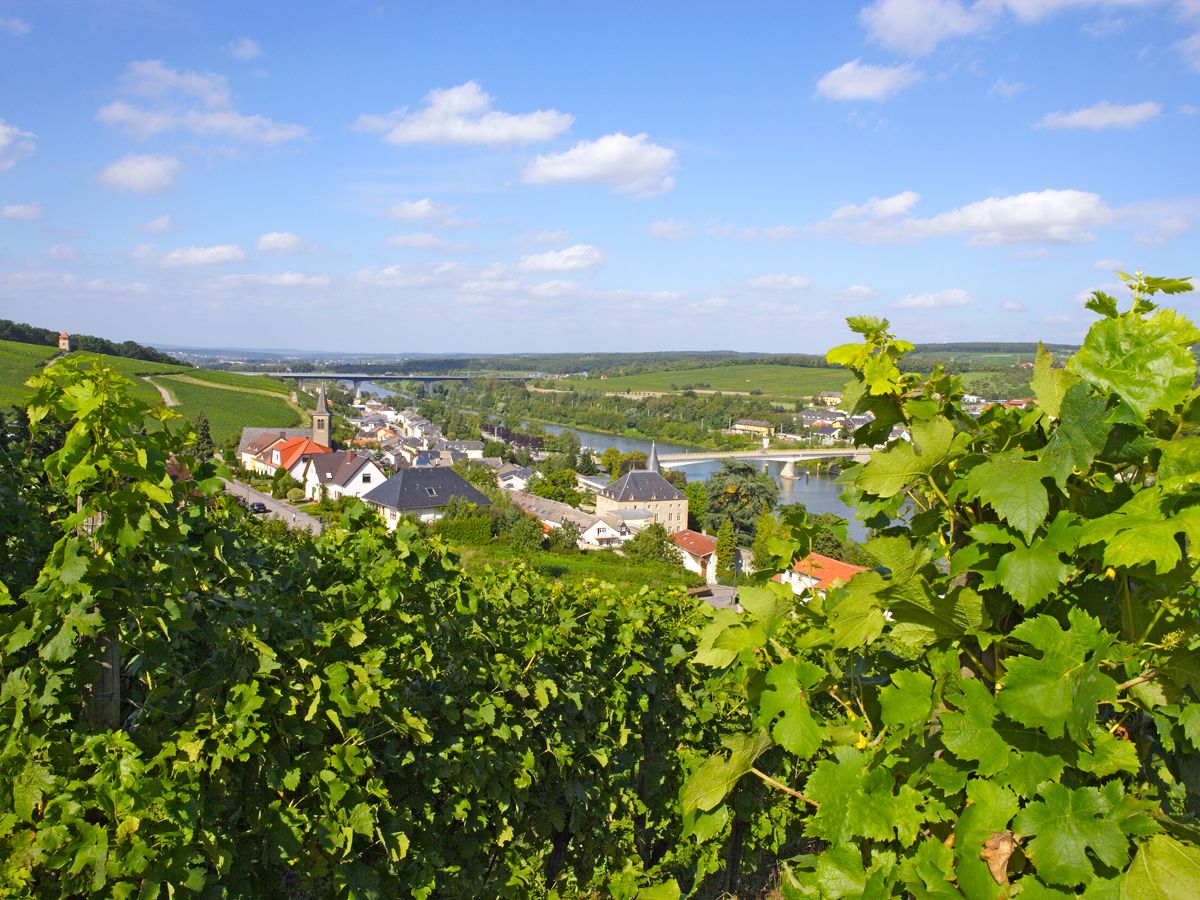
Established in 1985, the Schengen Agreement gets its name from the village in Luxembourg where officials met to sign it. The agreement was originally signed by five European countries: Belgium, France, Germany, Luxembourg, and the Netherlands all agreed to remove border controls, allowing for the free movement of people between them. Over time, the framework’s agreements and laws were formalized, becoming part of EU legislation.
Today, 25 EU member states and four European Free Trade Association (EFTA) countries — Iceland, Norway, Switzerland, and Liechtenstein — are part of the Schengen Area. Bulgaria and Romania are the two most recent signatories and have been full Schengen members since January 1, 2025. According to the EU, “Every day around 3.5 million people cross internal borders for work or study or to visit families and friends, and almost 1.7 million people reside in one Schengen country while working in another.”
However, the distinction between the EU itself and the Schengen Area is an important one. For example, the Republic of Ireland is an EU member state but not part of the zone, so the border and travel rules between Ireland and Schengen countries are different.
What Does the Schengen Area Mean for U.S. Travelers?
To a certain extent, the Schengen Area takes away the border formalities for travelers who visit more than one country within the zone. Entry into one Schengen country usually means that there are no border controls between that country and other nations within the Schengen Area. If you don’t require a visa for one member country, it’s the same for all. For those who do, a one-time Schengen visa makes travel simpler.
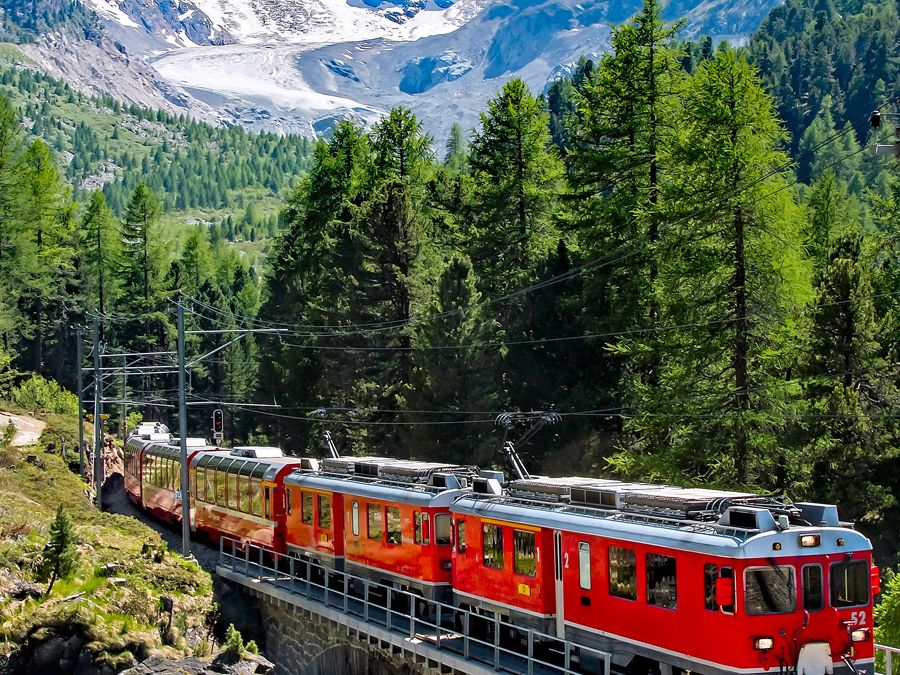
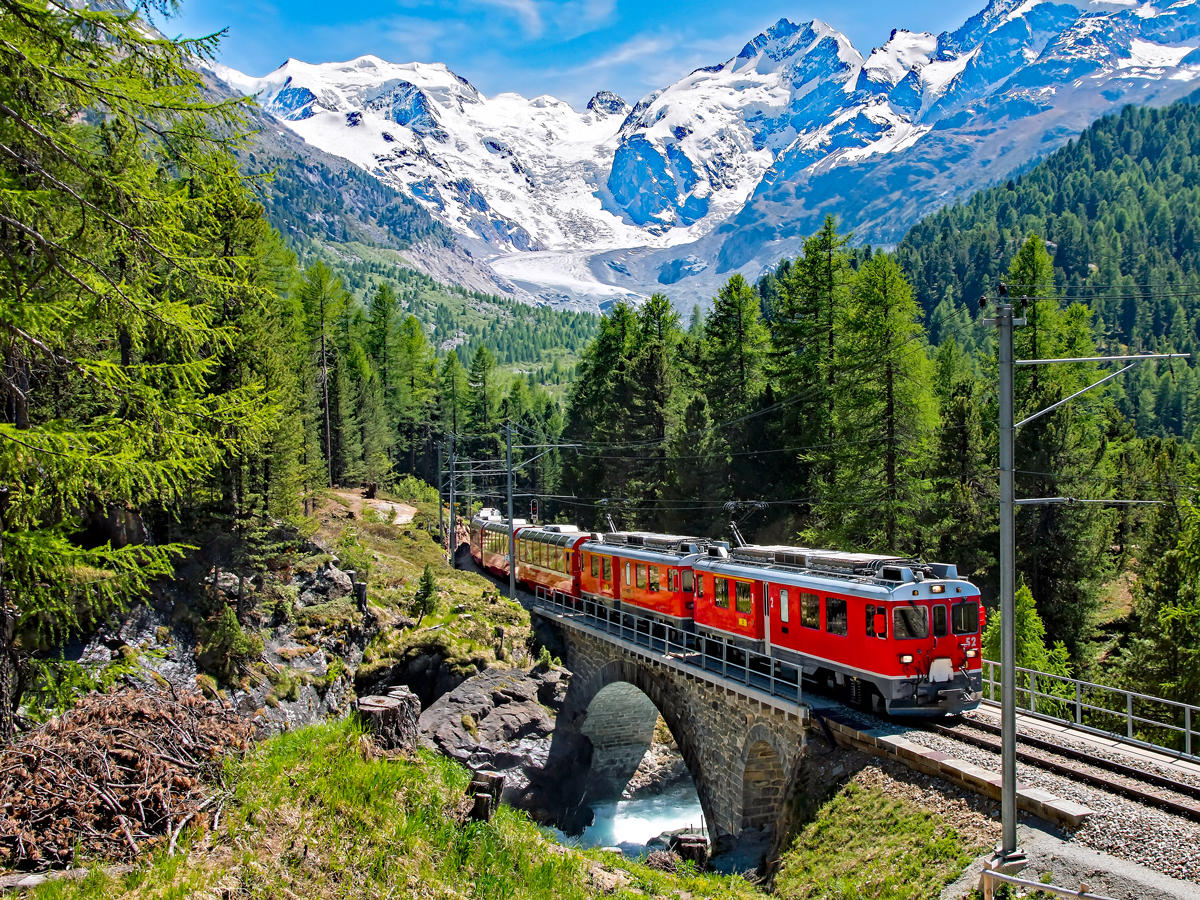
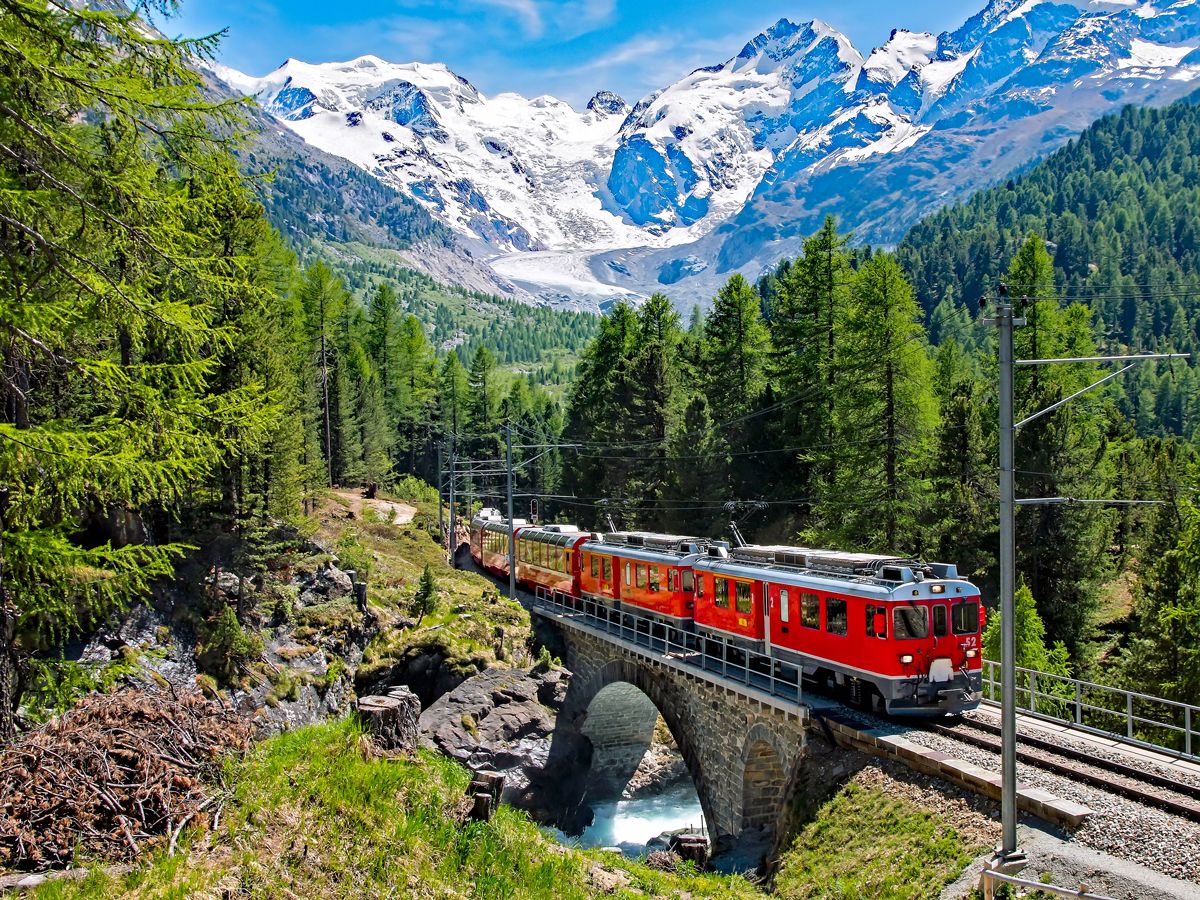
For instance, you might land at an airport in Italy, complete border formalities there — either with a Schengen visa or a visa waiver, whichever applies — and then travel overland into France or Switzerland without further checks. In some cases — if, for example, you are traveling on an international train such as the Bernina Express — you might not even realize you have crossed a border.
Credit: choochart choochaikupt/ iStock via Getty Images Plus
Under the agreement, individual countries are allowed to carry out document spot checks by police, but as a consequence of certain concerns, such as a heightened threat of terrorism or an increased incidence of illegal migration, some governments have chosen to temporarily reintroduce border checks. These aren’t universal, nor do such regulations always affect every land border. Nevertheless, if you are planning any cross-border travel, even for a day out, you should always carry your passport with you.
For instance, as of early 2025, if you travel to Austria and intend to cross a land border into Hungary or Slovenia, you’ll need to show your passport. The Netherlands has instigated the same policy for air and land borders with Belgium and Germany. Such rules are in place for fixed periods of time, and the situation changes frequently. For a current list of exemptions to Schengen practice, take a look at the official EU website.
How Long Can U.S. Passport Holders Stay in the Schengen Area?
Credit: Cavan Images via Getty Images
Third-country nationals (the term the EU uses to refer to those holding passports from outside its borders, such as those from the U.S.) need to pay close attention to the length of time they spend within the Schengen Area. For those who qualify for a visa waiver for tourism purposes, travel is permitted for a maximum of 90 days out of a 180-day period.
This figure is calculated according to all travel that takes place in any Schengen Area country, starting with the current day and working backward. You’ll need to tally up separate trips within that 180-day period in the same way as you would count one single vacation. Rack up more than 90 days and you’ll run afoul of immigration, just as you would in a country where you overstay a visa.
Visiting Non-Schengen Countries
Credit: Maksym Belchenko/ iStock via Getty Images Plus
For travelers lucky enough to be able to visit Europe for more than 90 days, there’s a workaround if you can’t face the prospect of going home just yet. Remember that original distinction we made between the EU, the Schengen Area, and Europe as a whole? There’s no reason why you can’t extend your vacation in European countries that aren’t part of the Schengen Area, such as the U.K. or Ireland.
Other non-Schengen countries that you could consider include Albania, Bosnia & Herzegovina, Serbia, Montenegro, and North Macedonia. Travel to any of these countries doesn’t count for your 90-day allowance within a 180-day period, though it’s wise to check specific entry requirements before finalizing your plans.
Advertisement
More from our network
Daily Passport is part of Inbox Studio, an email-first media company. *Indicates a third-party property.
Marissa is a cheap airfare aficionado who loves exploring offbeat destinations with her husband. Based in Los Angeles and Joshua Tree, Marissa has been featured in publications such as San Diego Magazine, Palm Springs Life Magazine, 303 Magazine, and Mountain Living.
If you live in a big city, you might find yourself craving the slower pace of small-town life from time to time. But if you don’t have access to a car or don’t want to deal with the hassle of driving and traffic, the journey almost doesn’t seem worth it. Luckily, we’ve found seven charming destinations that are merely a quick train ride away from major U.S. cities such as Chicago, Los Angeles, and New York. Whether you book your seat in advance or simply feel spontaneous at the station, these excursions are ideal for getting out of dodge for the day — without even having to make a hotel reservation.
New Buffalo, Michigan
Credit: MattStansfield/ iStock via Getty Images Plus
Distance: 1 hour from Chicago, Illinois
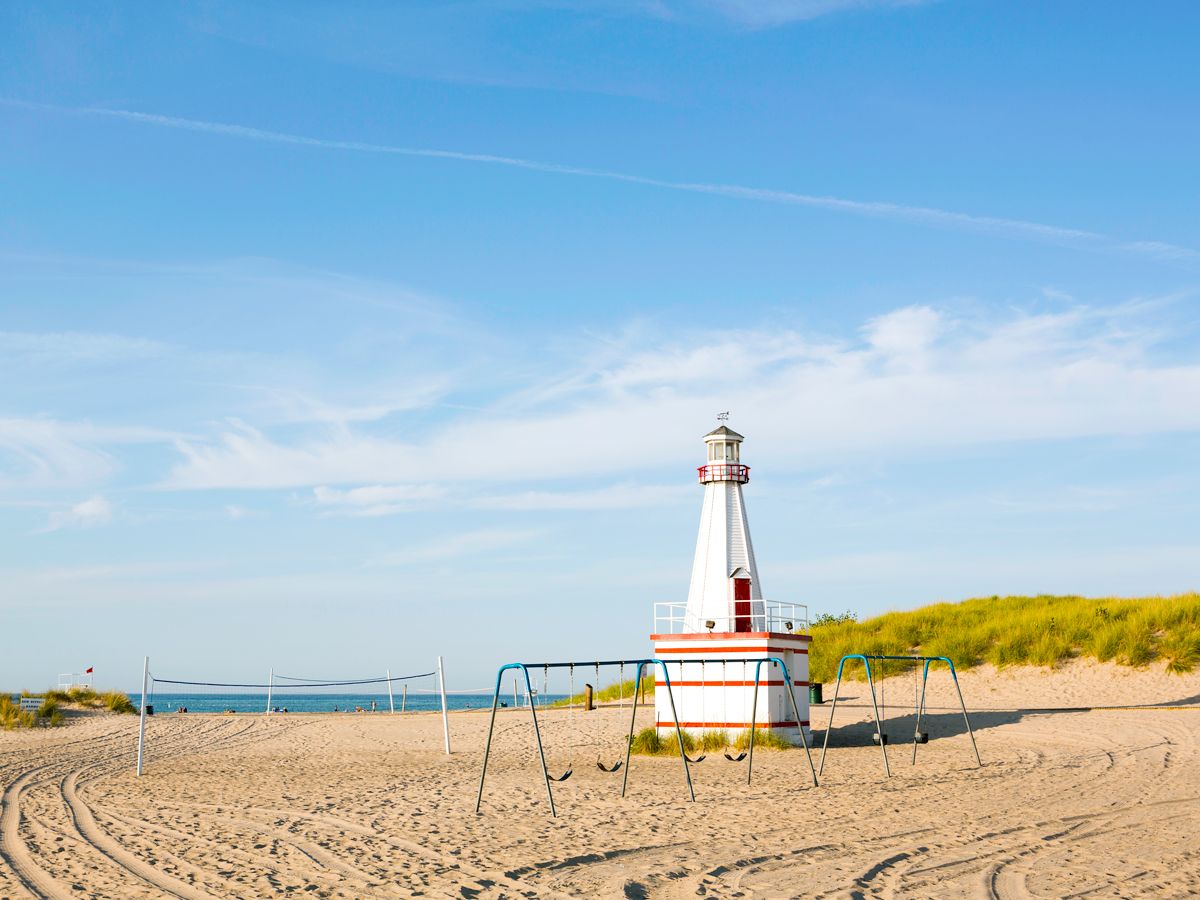
New Buffalo is a hidden gem just 70 miles from downtown Chicago via Amtrak’s Wolverine and Blue Water trains along the south shore of Lake Michigan. While it might be across state lines, this charming Midwestern town takes just about an hour to reach from the Windy City.
Once there, visitors can take advantage of a dune-backed beach perfect for watersports; a healthy offering of boutiques, mom-and-pop candy shops, and art galleries; a massive casino with 130,000 square feet of slot machines; numerous award-winning breweries; and an official wine-tasting trail. (In fact, the lakefront region surrounding New Buffalo is home to 40% of Michigan’s wine grape production.) Whether you decide to shop, sample reds and whites, or relax on the beach, your day spent in New Buffalo promises to be a memorable retreat.
San Juan Capistrano, California
Credit: ShaneWThompson/ iStock via Getty Images Plus
Distance: 1 hour, 15 minutes from Los Angeles, California
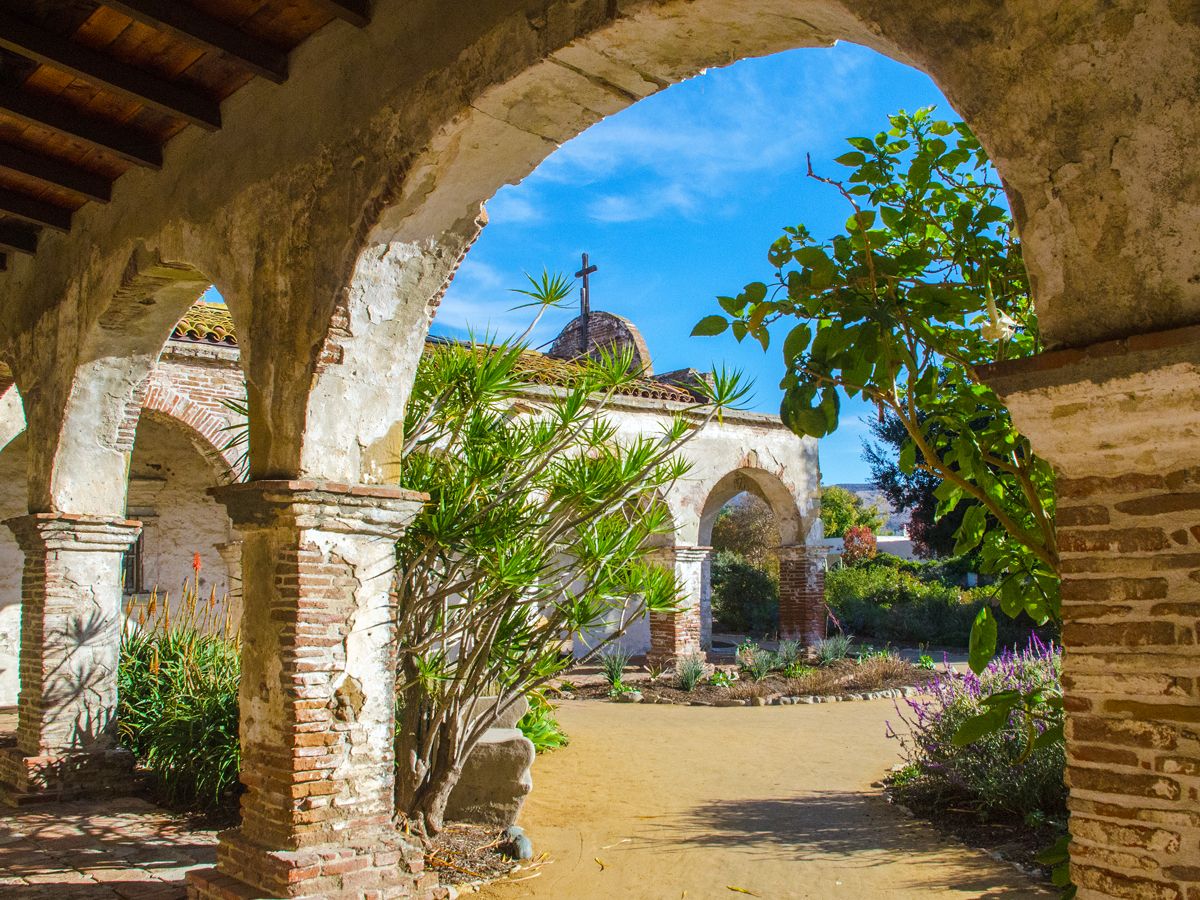
San Juan Capistrano is an easy day trip via Amtrak’s Pacific Surfliner or Metrolink trains from L.A.’s Union Station. The picturesque city is named for the Mission San Juan Capistrano. One of the most stunning Spanish missions in the state, it was built in 1776 and still celebrates traditions like St. Joseph’s Day (March 19) to mark the annual return of the mission’s famous resident swallows.
Along the train tracks, you’ll find colorful neighborhood streets within Los Rios Historic District, Mexican pottery shops, whimsical antique stores for all kinds of lawn ornaments, a petting zoo, coffee shops and tea houses, the mouthwatering Heritage Barbecue, and El Adobe de Capistrano — a reportedly haunted Mexican restaurant that has been standing since the city was founded.
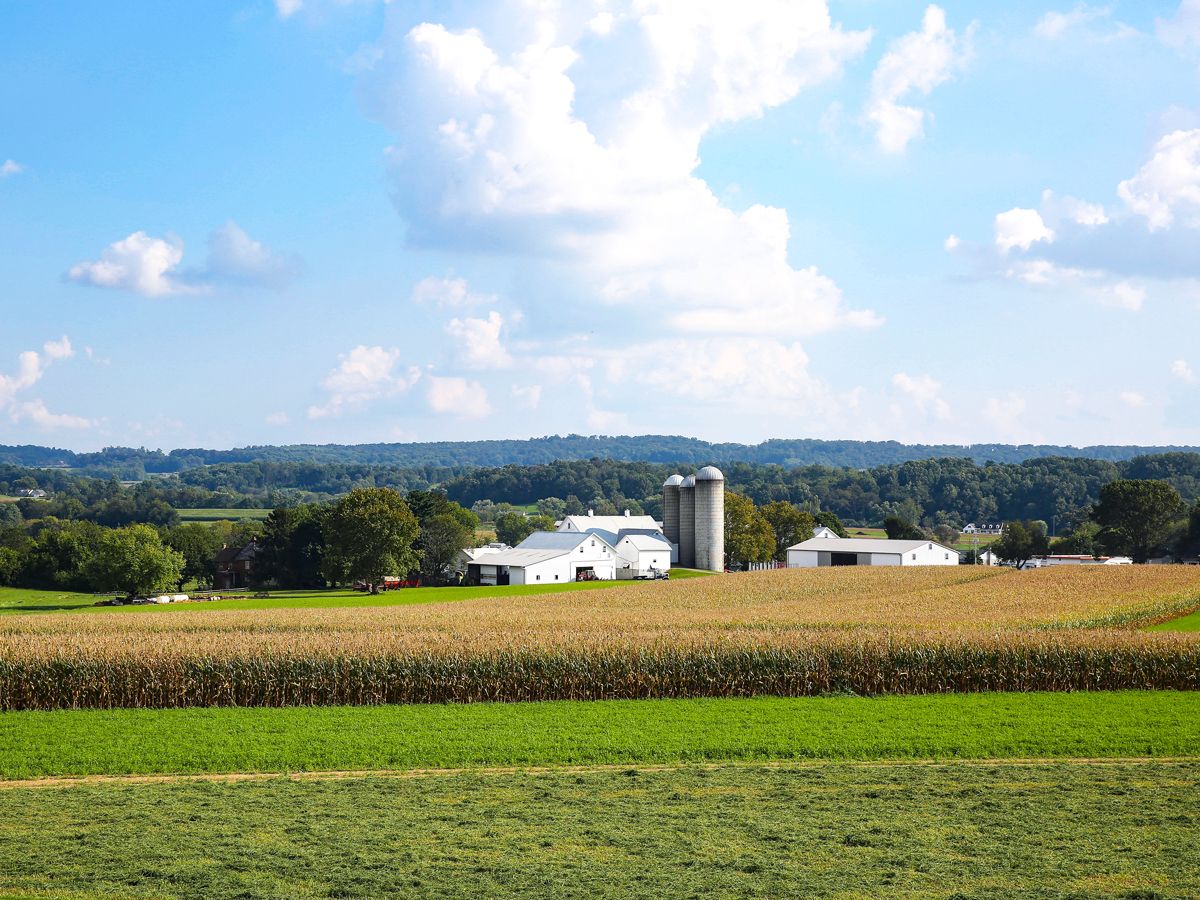
Distance: 1 hour, 15 minutes from Philadelphia, Pennsylvania
The oldest Amish communities in the United States are in Pennsylvania Dutch Country. Learn all about the region’s history and culture by taking the hour-long train ride aboard Amtrak’s Keystone Service Train from Philadelphia to Lancaster.
For a memorable way to spend the afternoon, head to the famous Lancaster Central Market — the oldest farmers market in America, established in 1730 — to sample Amish-made jams, pretzels (with hand-churned butter), pickles, pastries, and other traditional foods. Be sure to also visit a historic Amish homestead, catch a show at the historic Fulton Theatre, or learn about the history of medicine and early American hospitals at the Lancaster Medical Heritage Museum.
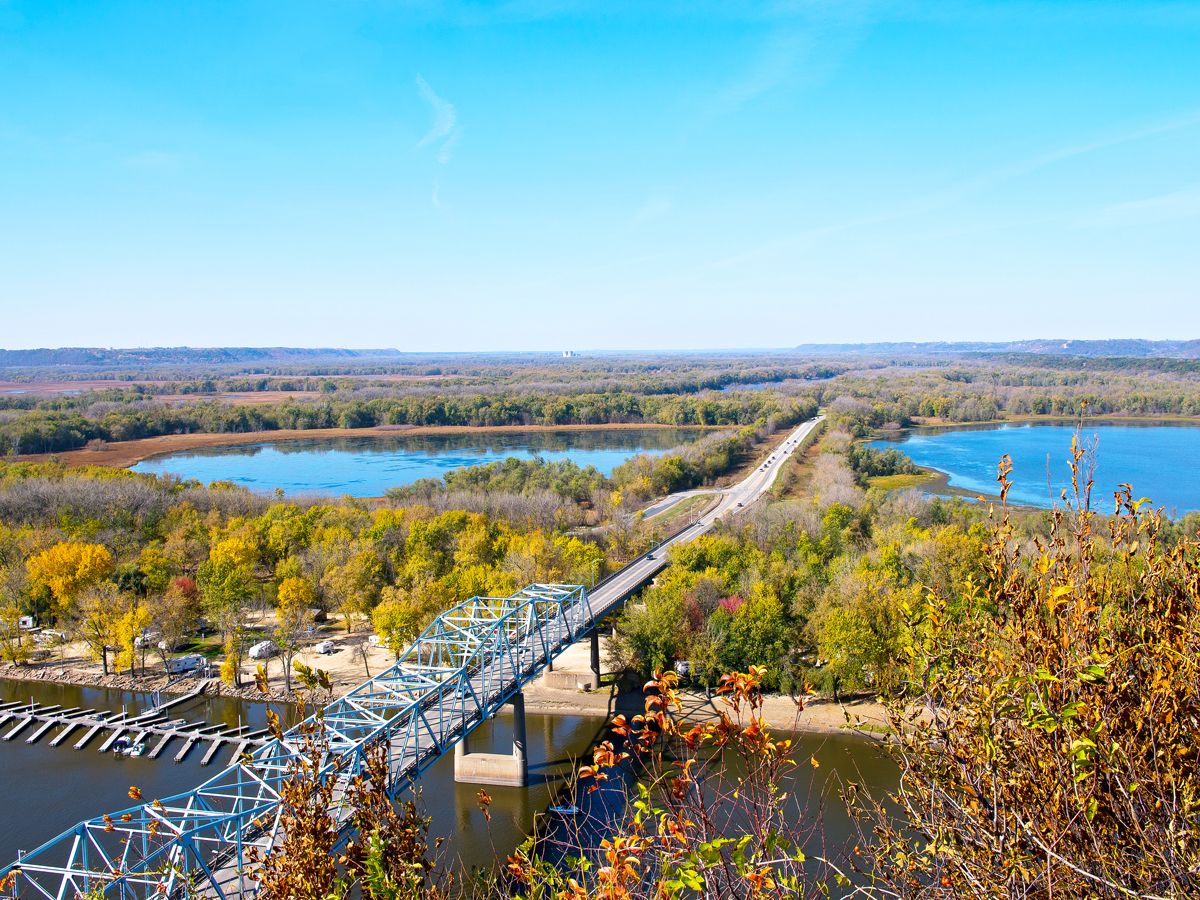
Distance: 1 hour from Minneapolis/St. Paul, Minnesota
Red Wing, Minnesota, is best known for its iconic pottery and the boot brand that bears the same name. The town is only a short train ride from the Twin Cities aboard Amtrak’s Empire Builder or Borealis trains. Nestled along the Mississippi River, Red Wing is a great place to unwind in nature with many bike paths, nature trails, and public parks with water access and picnic pavilions.
Credit: DenisTangneyJr/ iStock via Getty Images Plus
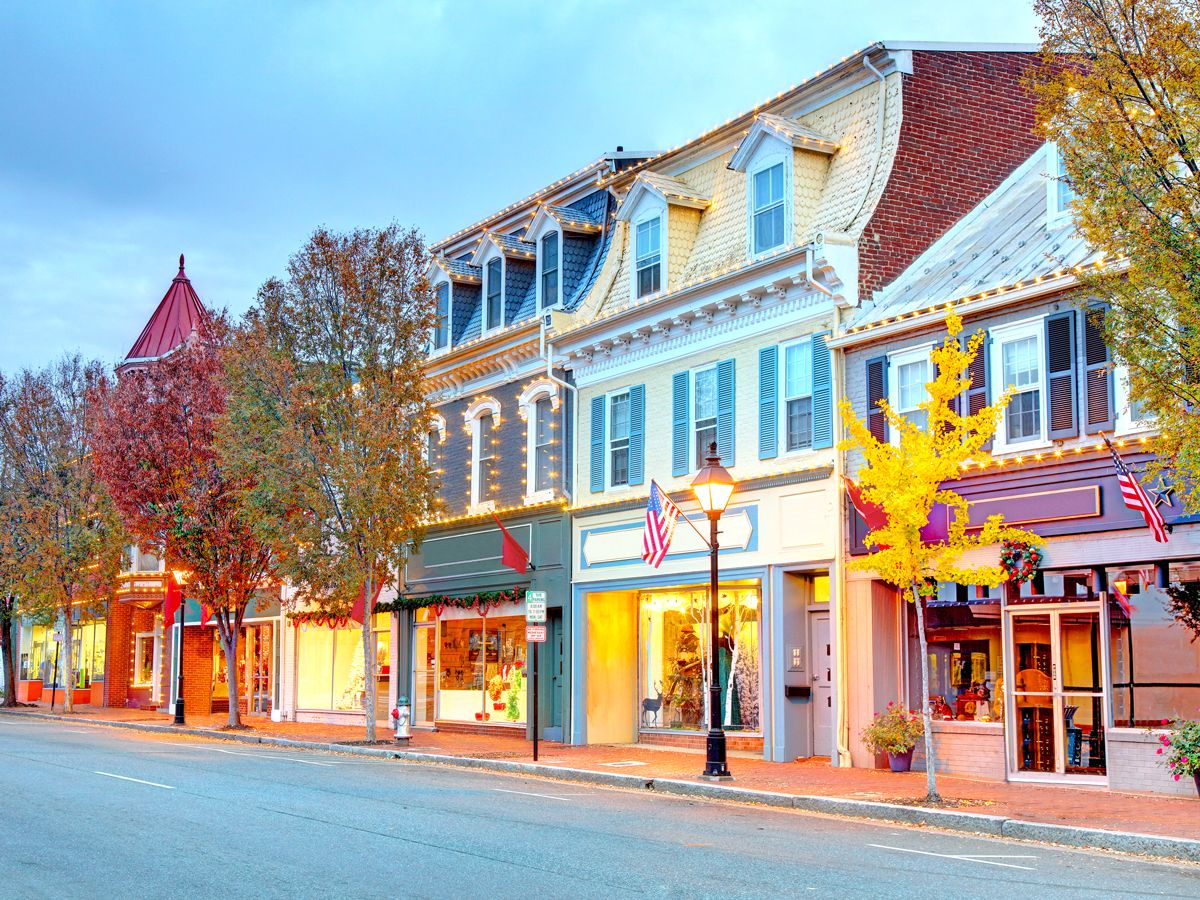
Distance: 1 hour, 10 minutes from Washington, D.C.
Hop aboard Amtrak’s Northeast Regional or Carolinian train for a 70-minute journey from the nation’s capital to historic Fredericksburg, Virginia — one of the most pivotal battleground sites of the American Civil War.
History buffs can visit the National Military Park for a deeper dive into the events of the Civil War and head to the Washington Heritage Museums to see landmarks that held significance to the nation’s first president. The site includes George Washington’s mother’s home, a tavern built by his brother, and a replica of his childhood home. After you’re done taking in all the history, end the day sampling bourbon at the A. Smith Bowman Distillery and enjoying a hearty meal before you head back to D.C.
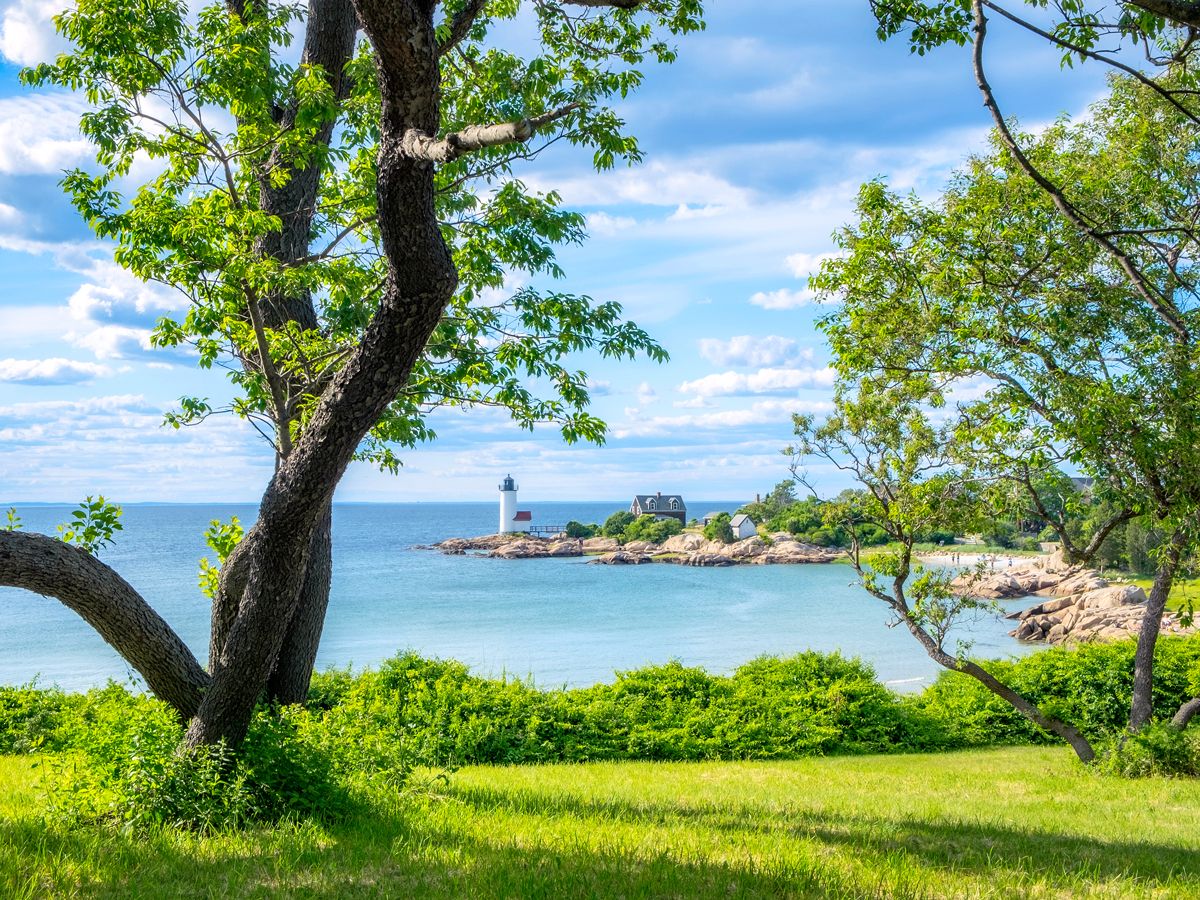
Distance: 1 hour, 10 minutes from Boston, Massachusetts
The Massachusetts Bay Transportation Authority’s Newburyport/Rockport line provides easy access to many of the state’s appealing coastal communities. If you’re looking to escape Boston and get a fresh breath of salty Atlantic air, Gloucester is a cozy hamlet to let worries wander away.
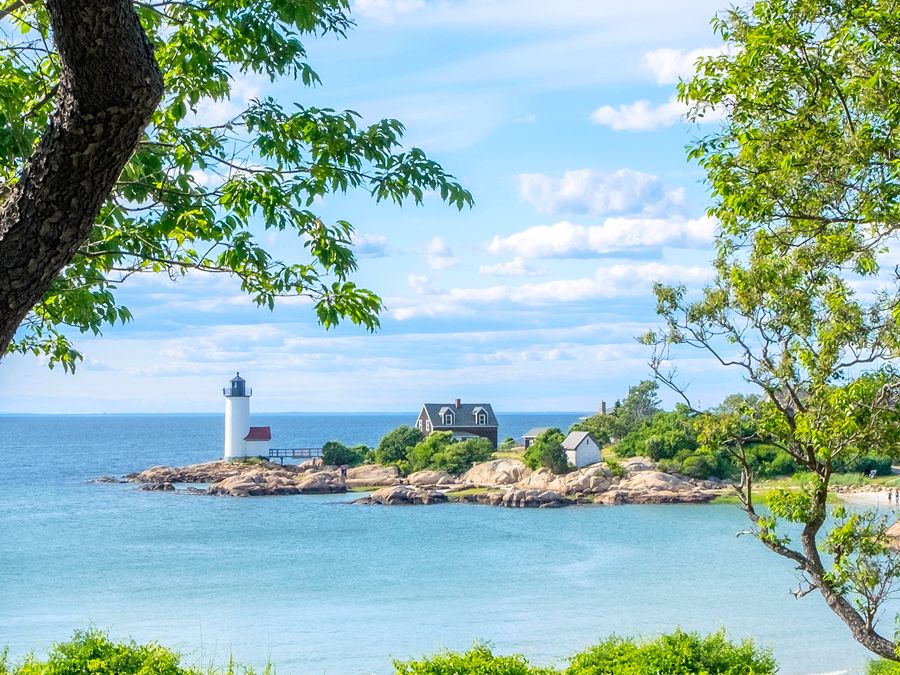
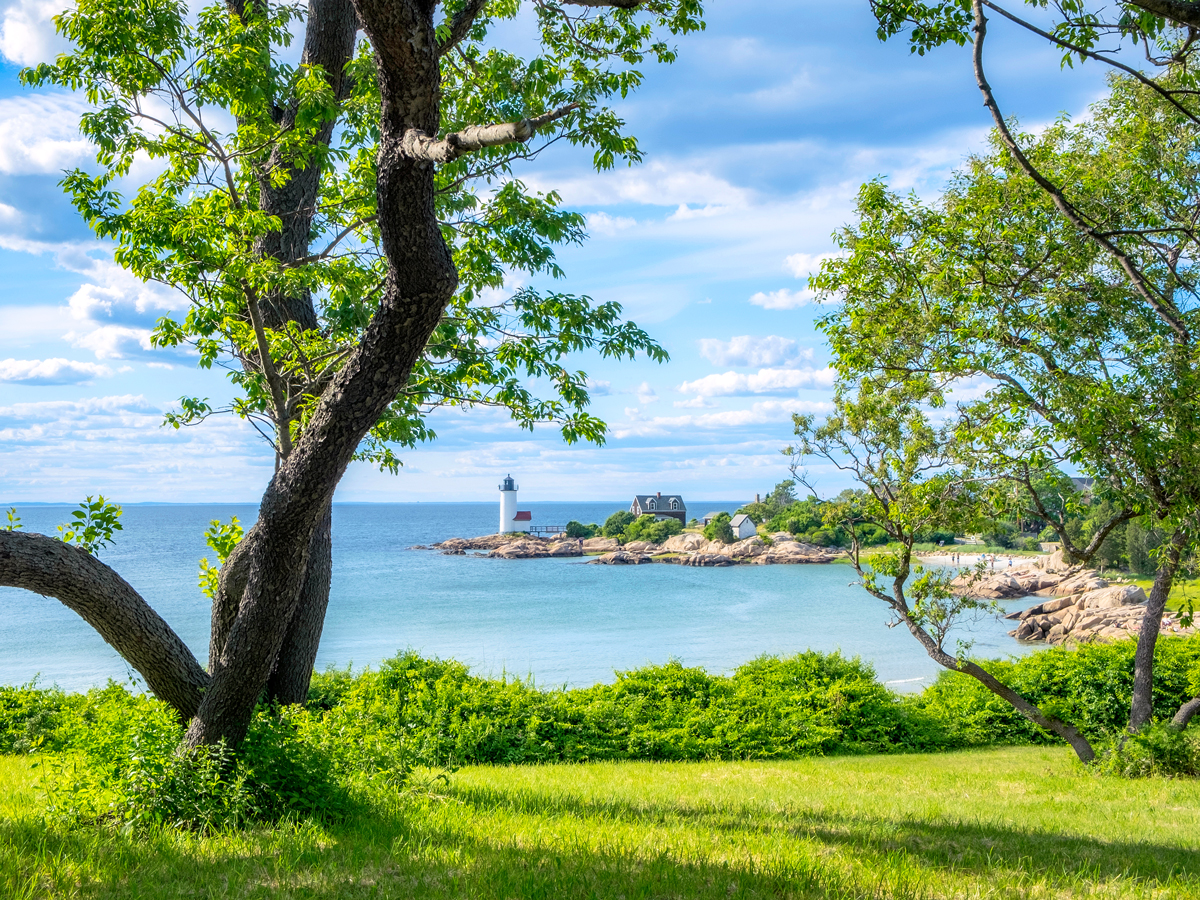
The town is home to America’s oldest seaport and oldest working art colony, maritime and history museums, seafood shacks by the dozens, lighthouses, and art galleries. Have a picnic on the beach before walking to Eastern Point Lighthouse, take a whale-watching tour before warming up with a hot bowl of clam chowder, attend an exhibition at the North Shore Arts Association, or wander the grounds of a real-life castle.
Cold Spring, New York
Credit: nancykennedy/ iStock via Getty Images Plus
Distance: 1 hour, 30 minutes from New York, New York
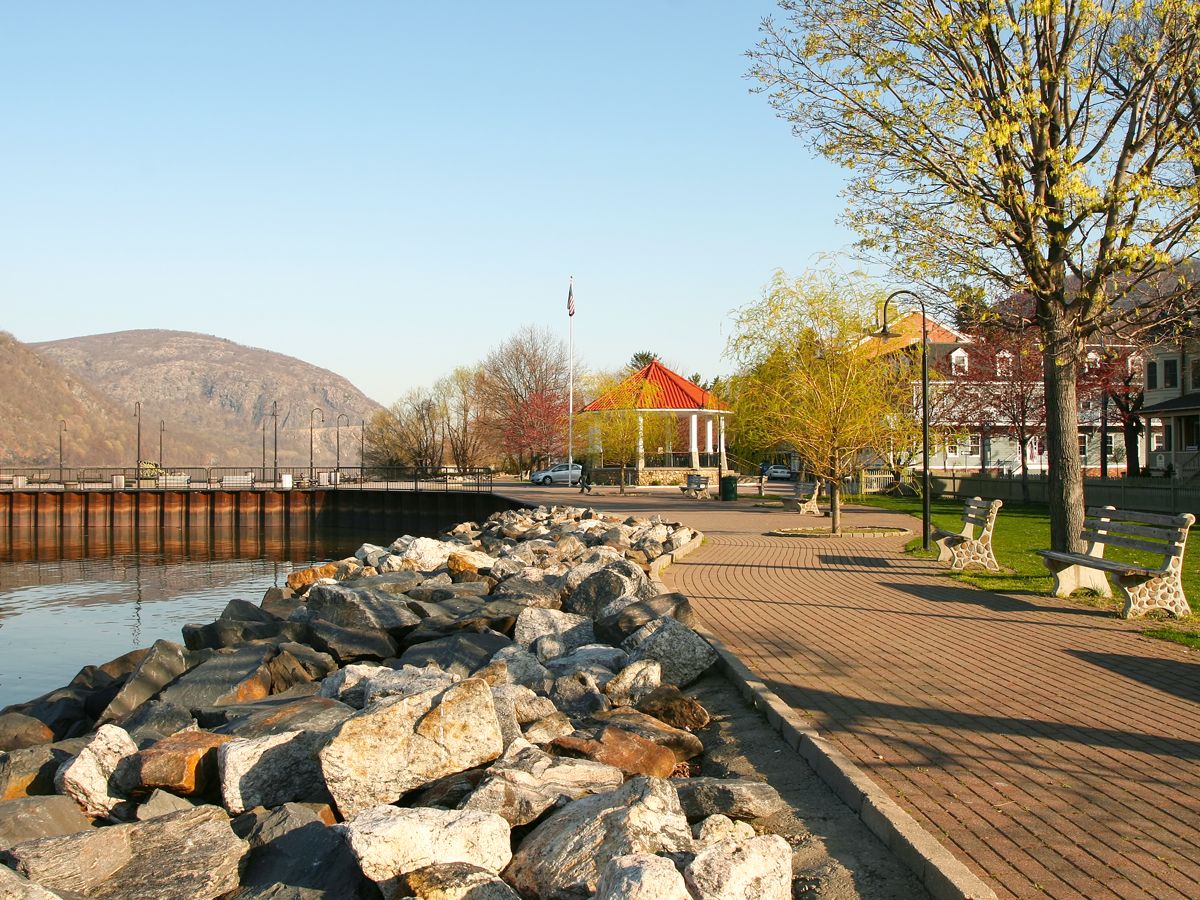
The Hudson River Valley is a popular retreat for New Yorkers, and just a 90-minute train ride aboard Metropolitan Transportation Authority’s Harlem or Hudson line is the ticket to unwinding from the hustle and bustle of the Big Apple.
The bucolic town of Cold Spring, New York, is home to a slew of antique shops, al fresco restaurants serving farm-to-table fare, cozy coffeehouses, and nature trails along babbling brooks and streams. In fall, the foliage is a fiery mix of red, orange, and yellow — making it a popular destination for leaf peepers — but the beauty of the Hudson Valley is magical no matter what season.
Advertisement
More from our network
Daily Passport is part of Inbox Studio, an email-first media company. *Indicates a third-party property.
Peter is a Toronto-based journalist, editor, content strategist, and self-professed avgeek with 15 years of experience covering all things travel. Prior to joining Daily Passport, he oversaw newsletter publication for Travelzoo. His favorite destinations to explore include Japan, France, Chile, New Zealand, and his adopted home country of Canada.
While we’ll never take hopping on a plane and flying somewhere new for granted, at the end of the day most flights are fairly routine, whether they’re short-haul, long-haul, on time, or delayed. But every now and then, travelers get to board a flight that stands out for a special reason. From a nonstop, 19-hour journey halfway across the world to one that lands at one of the world’s most dangerous airports, here are 10 interesting flights that belong on any aviation fan’s bucket list.
The Longest Flight in the World
Credit: sharrocks/ iStock Unreleased via Getty Images
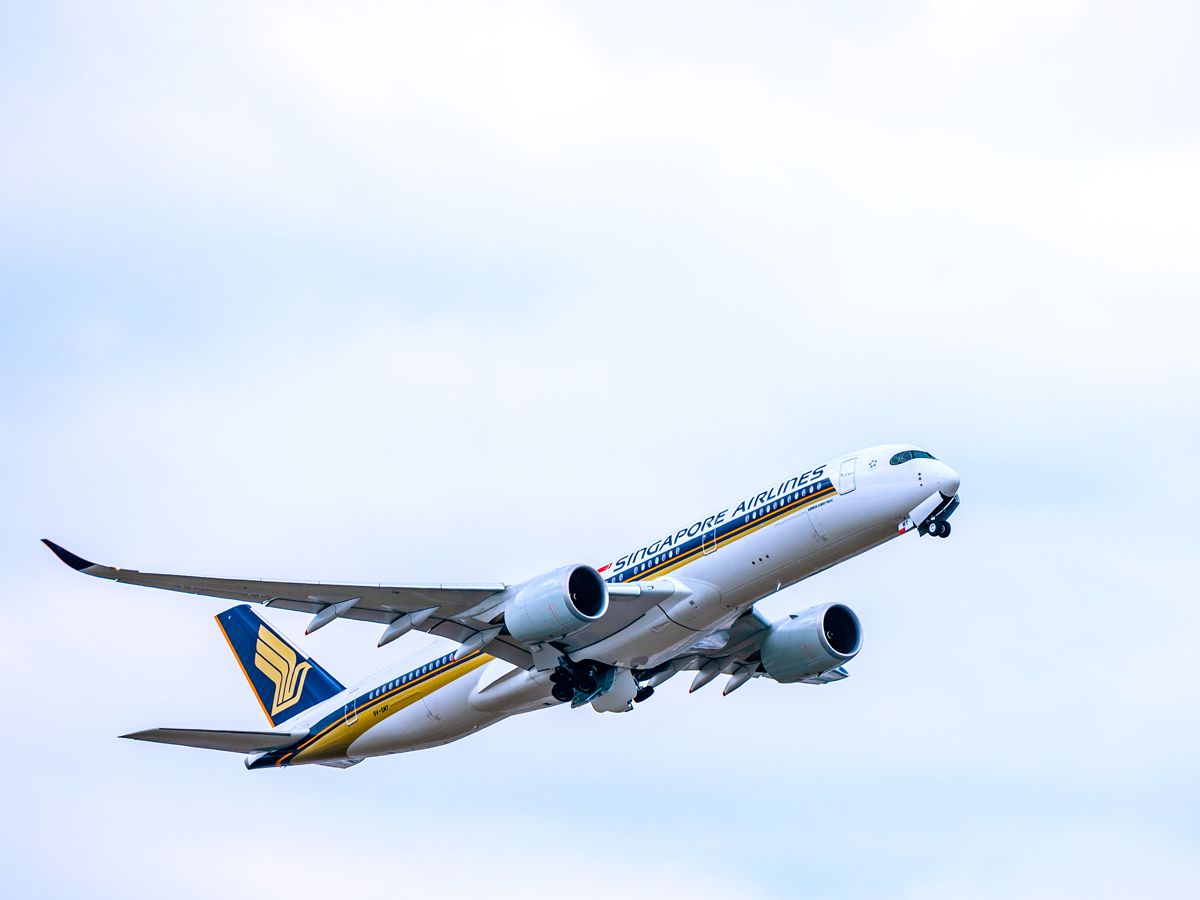
In 2021, Singapore Airlines launched direct flights from Singapore to New York’s JFK Airport. Covering a distance of 9,527 miles with a flying time in excess of 19 hours, the route is currently the longest flight you can take nonstop. But if you’re worried about being cramped in coach for that many hours, fear not: Singapore Airlines configures its Airbus A350-900ULR aircraft on the route with only Business Class and Premium Economy seats that offer more legroom and greater seat width.
While Singapore has claimed the “longest nonstop flight” record for four years and counting, it might not hold onto it for long: Australian carrier Qantas is planning nonstop flights between Sydney and London and Sydney and New York. Dubbed “Project Sunrise,” the services are expected to launch in mid-2026 and will take around 20 hours to fly nonstop.
If the idea of being stuck in a metal tube for hours on end doesn’t appeal to you, might we suggest the 1.7-mile hop between two of Scotland’s Orkney Islands? The Loganair service between Westray and Papa Westray typically takes less than two minutes from takeoff to touchdown — or as little as 53 seconds when winds are favorable. Passengers squeeze into a plane that has room for just eight passengers, with the pilot sitting in an open cockpit just inches away from the passenger seats.
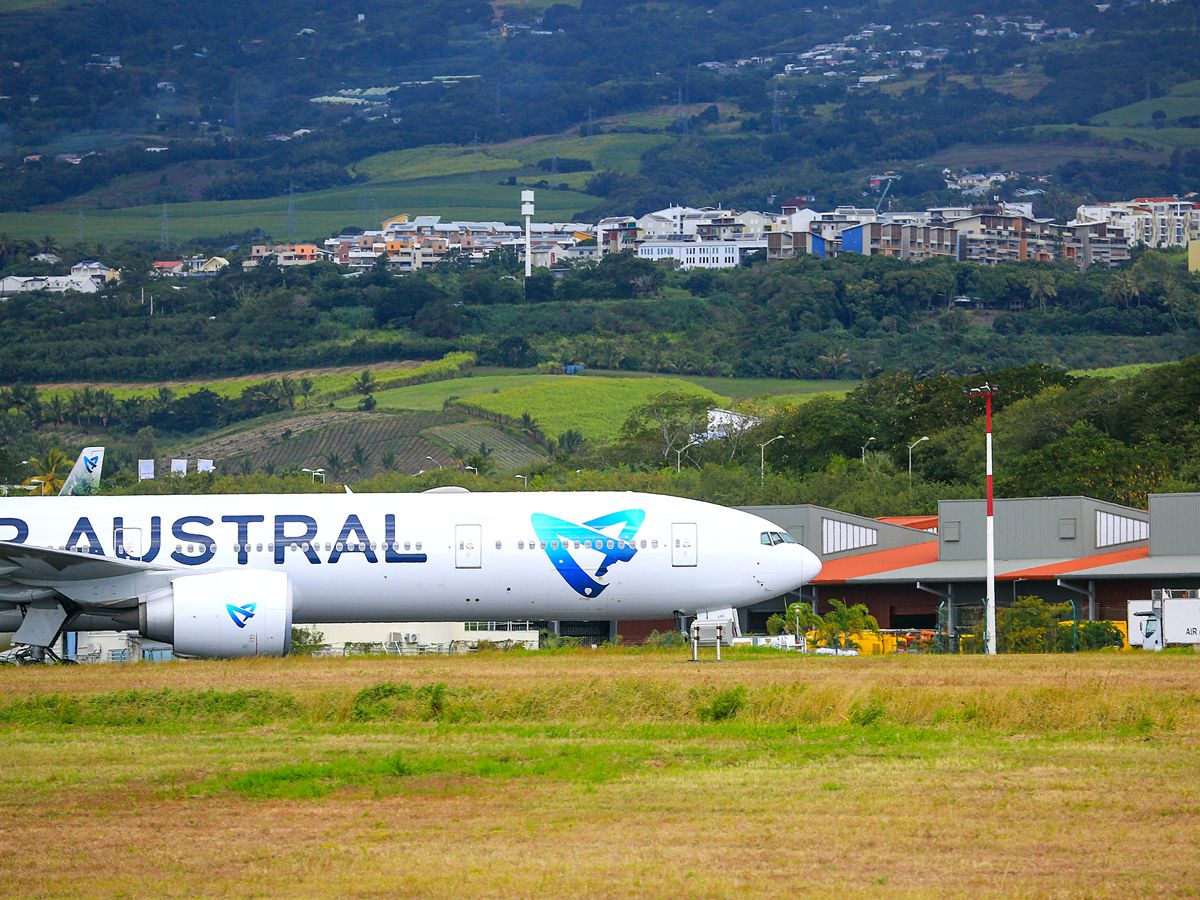
Though the island lies in the western Indian Ocean about 420 miles east of Madagascar, Réunion is one of France’s overseas departments and regions. Because of the great distance from mainland France, the nonstop flights on Air France and Air Austral between Saint-Denis, the capital of Réunion, and Paris Charles de Gaulle Airport are currently the longest domestic services in the world. The journey covers a distance of more than 5,800 miles and takes nearly 12 hours.
However, during the COVID-19 pandemic, Air Tahiti Nui briefly held the record for longest domestic flight in 2020, when it flew its Boeing 787-9 aircraft nonstop for 9,765 miles from Tahiti, another French overseas colony, to Paris. The flight typically requires a refueling stop in Los Angeles, but it benefited from favorable tailwinds and lower passenger loads thanks to restrictions on air travel.
Located in the Himalayas, the highest mountain range on Earth, Nepal’s Tenzing-Hillary Airport, also known as Lukla Airport, is often cited as one of the most dangerous airports in the world. The airport sits at an altitude of 9,383 feet above sea level and has just one, extremely short 1,729-foot runway.
Because air density lessens at high altitudes, pilots are required to land at higher speeds, while at the same time navigating the terrain and typical high winds of the surrounding mountains. Pilots require special training to be able to land at the airport, which serves as a popular gateway for Mount Everest treks.
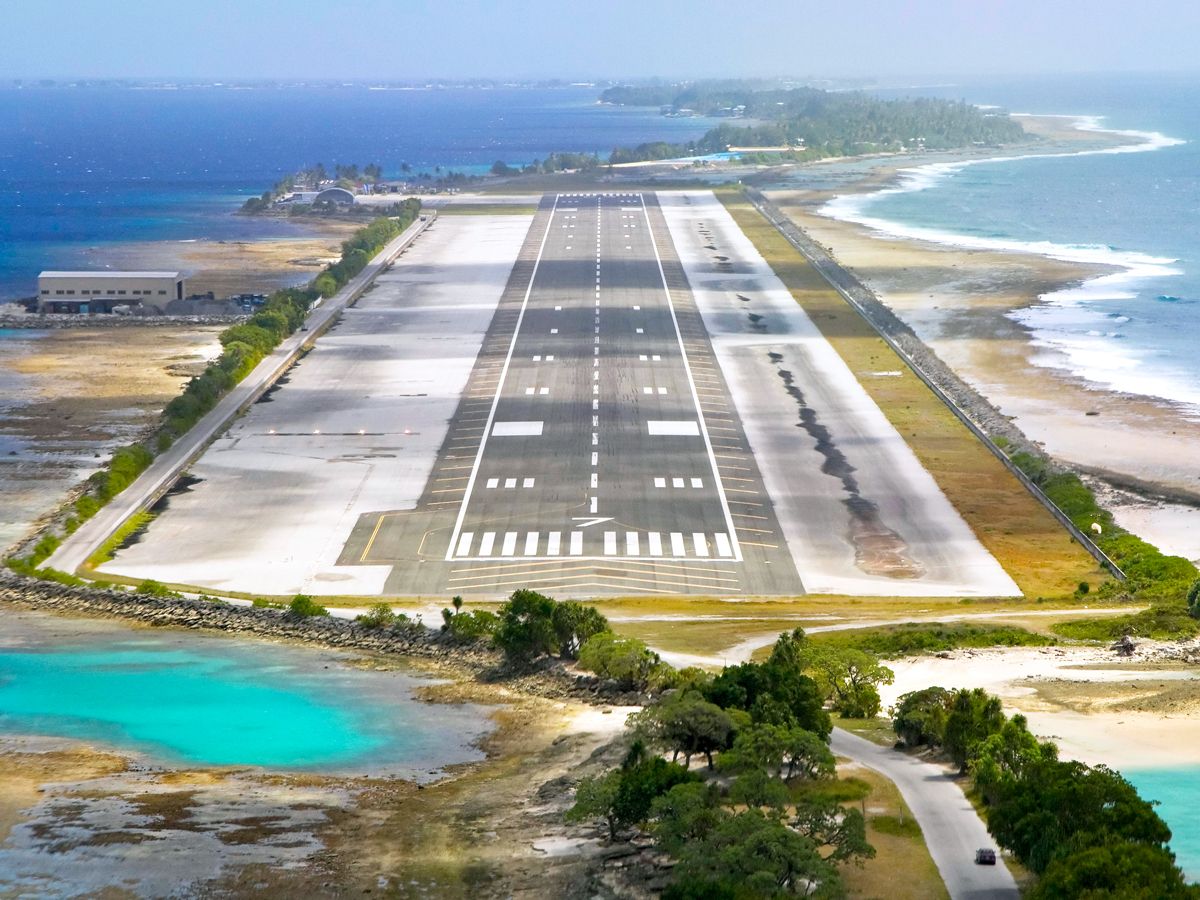
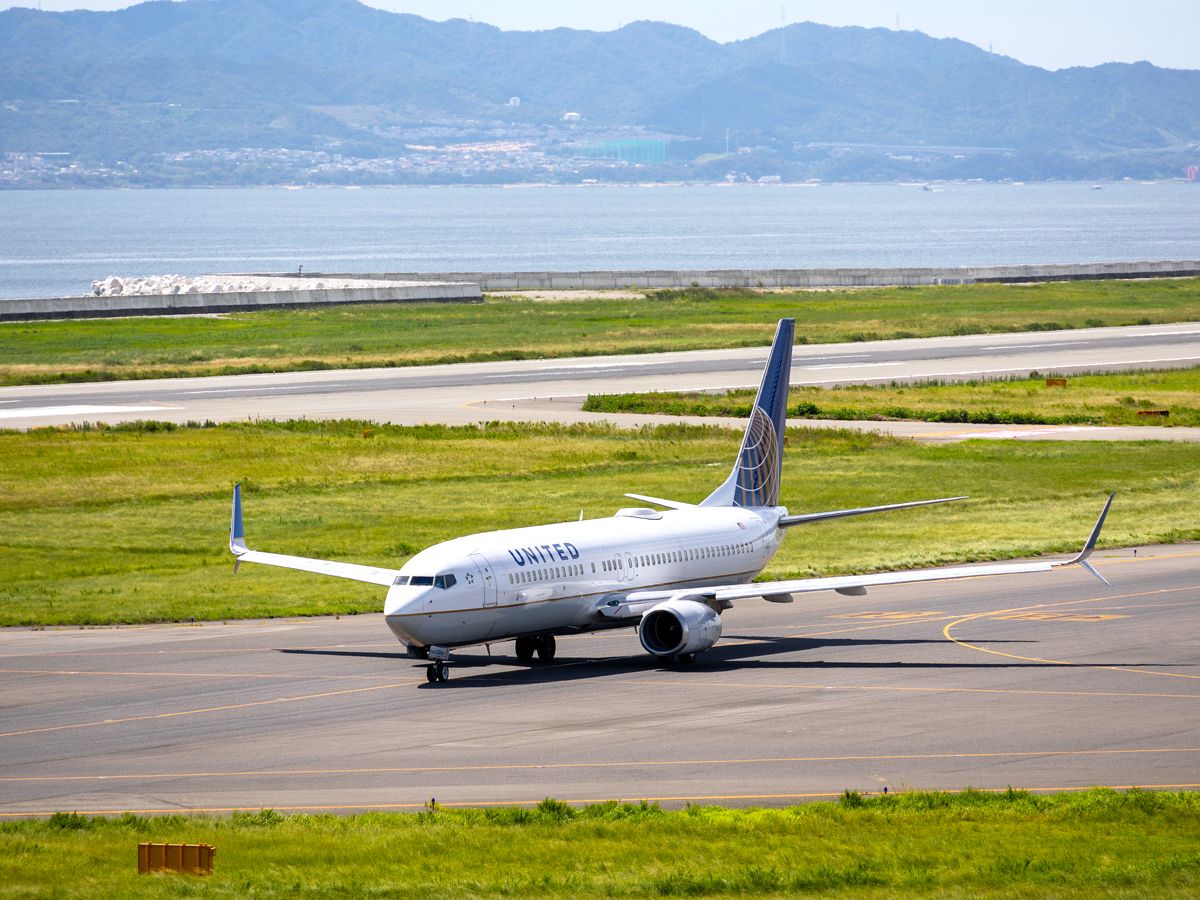
If you happen to be flying from Majuro, the capital of the Marshall Islands, to Honolulu, Hawaii, on United’s Flight 133, you’ll take off around 8 p.m. and land around 2 a.m. But instead of arriving the next day, you’ll arrive approximately 18 hours earlier on the same day — about the closest you can get to traveling back in time in real life.
This scheduling quirk is thanks to the international date line, an imaginary boundary that travels through the middle of the Pacific Ocean and separates one calendar day from the next. United’s flight is one of many around the world that are scheduled to arrive at an earlier time in the destination time zone than the time they took off.
United even planned a special flight on January 1, 2024, from Guam to Honolulu, that was scheduled to arrive in Honolulu on New Year’s Eve in 2023, giving passengers the unique opportunity to celebrate the new year twice. Unfortunately, thanks to an unexpected delay, that flight didn’t go quite as planned.
An Island Hopper Service
Credit: winhorse via Getty Images
Speaking of United Airlines, the route between Majuro and Honolulu is part of a unique service known as the Island Hopper. No other U.S. airline operates anything quite like it. The multistop route connects Honolulu and the U.S. territory of Guam, by way of several smaller islands in the Marshall Islands and the Federated States of Micronesia.
The Island Hopper serves as a crucial link for many of these remote island communities by providing their only regular air service. The specially configured Boeing 737-800 aircraft carry extra parts and even a spare mechanic onboard given the remote location and lack of facilities at the island airports.
A Flight That Lands on the World’s Shortest Runway
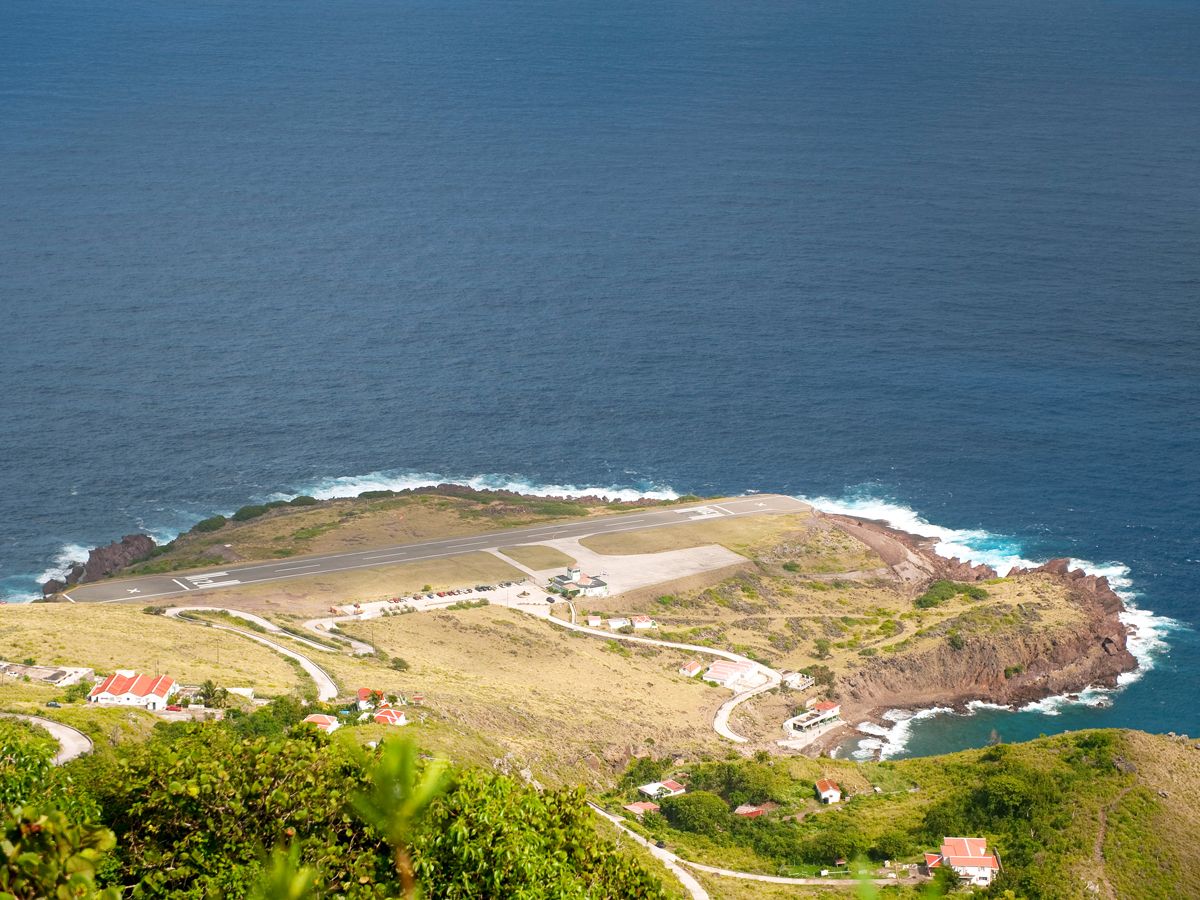
Juancho E. Yrausquin Airport on the Dutch island of Saba in the Caribbean is one of the smallest commercial airports in the world. It also holds a singular record: At just 1,300 feet, the airport’s runway is the shortest commercial runway on the planet. Not only that, but the terrain on either end of the runway also makes landing here a real challenge for pilots — but a real thrill for passengers on the short 15-minute hop from nearby St. Maarten.
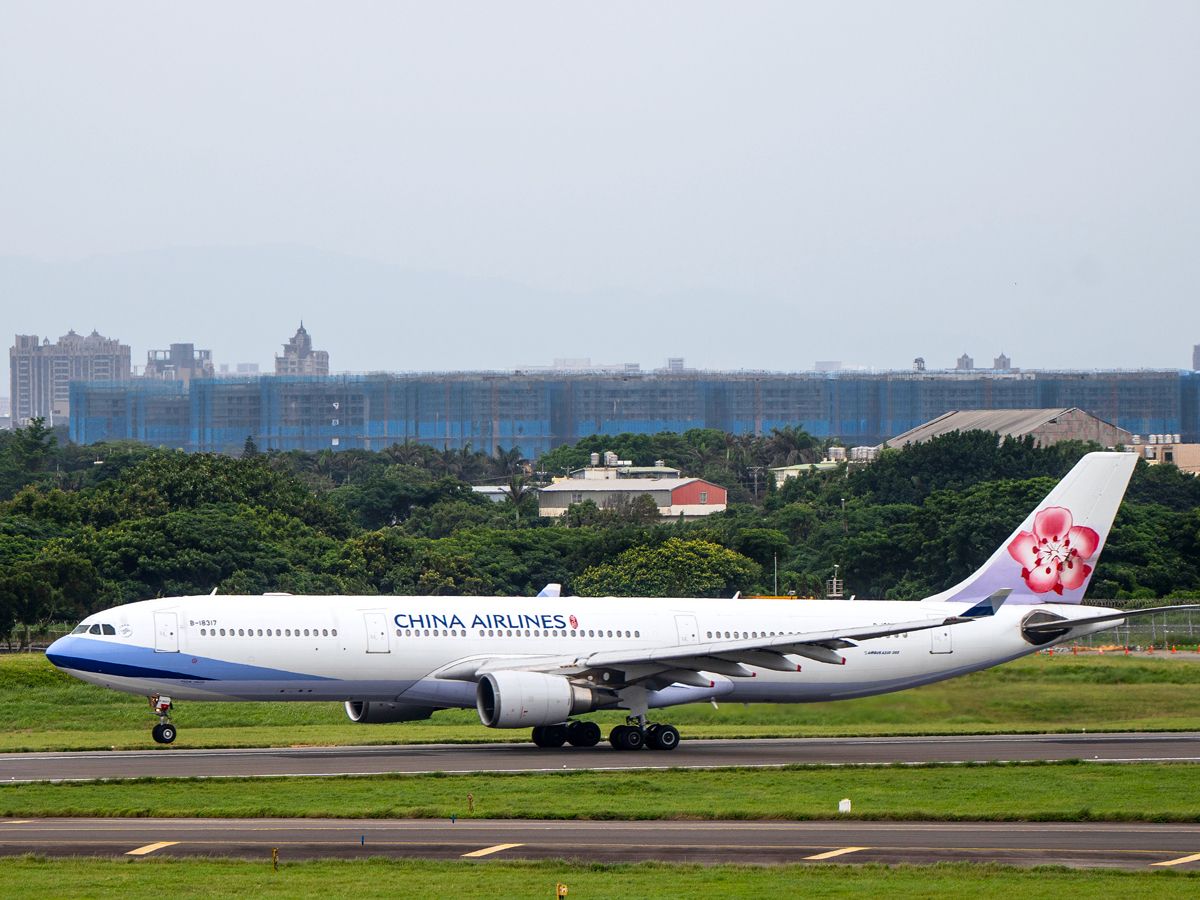
If you find yourself flying the two-hour hop from Taipei, Taiwan, to Hong Kong, you certainly won’t be alone. With a staggering 6.78 million seats for sale in 2024, it currently ranks as the busiest flight route in the world.
On a typical day, you’ll be able to choose from more than three dozen flights on several airlines, including Cathay Pacific, China Airlines, Eva Air, Hong Kong Airlines, and Starlux Airlines. The Hong Kong-to-Taipei route jumped up two spots from No. 3 in the 2023 rankings. In 2024, the busiest route originating in North America was from New York to London, ranking No. 10 with 4.01 million seats.
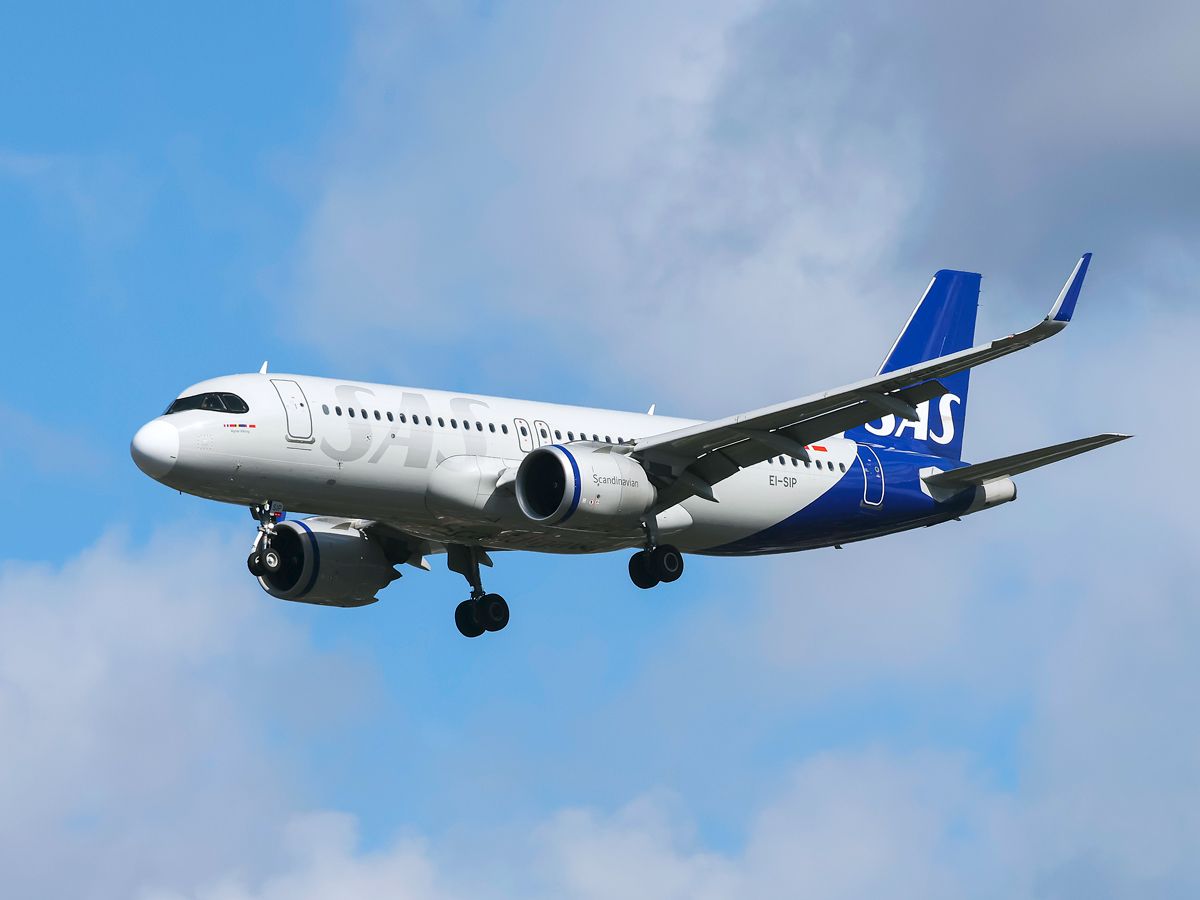
In 1954, Scandinavian carrier SAS was the first airline to operate a commercial flight over the North Pole — a feat that took four years of careful planning and innovations in technology to make reality. It significantly reduced flight times and emissions by taking advantage of the Earth’s curvature, opening up new nonstop routes that weren’t possible before.
Today, flying over the North Pole is no longer a rarity — several airlines regularly schedule flights on what’s known as “Polar Routes.” These include long-haul services from Dubai to Los Angeles, from Delhi to San Francisco, and from Doha to Seattle, among many others. But if you’re lucky enough to fly one of them, you’ll at least earn some bragging rights — as Parker Posey’s character did when she flew to Thailand in season 3 of the hit HBO show White Lotus.
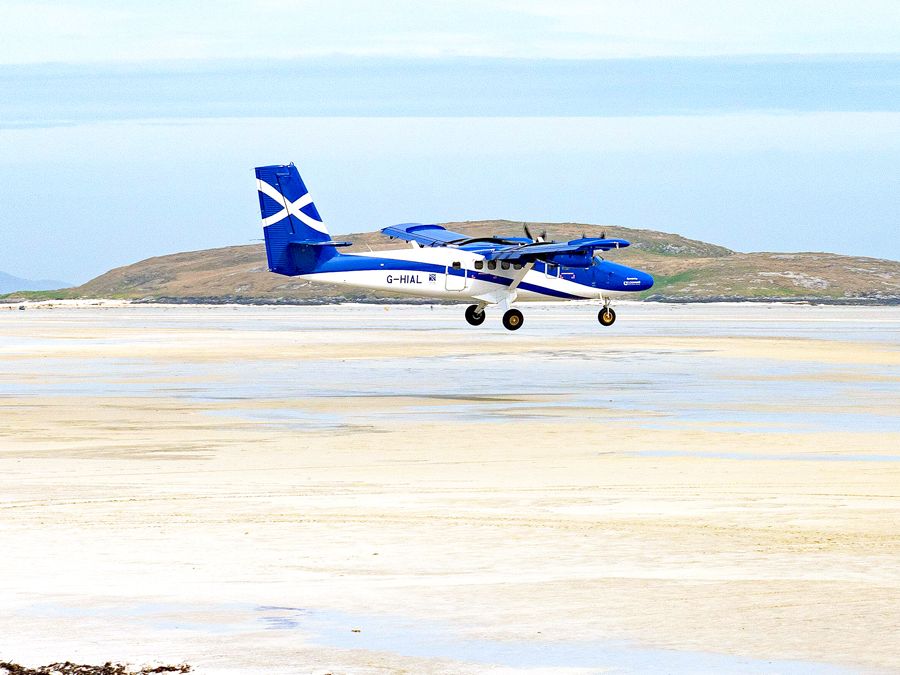
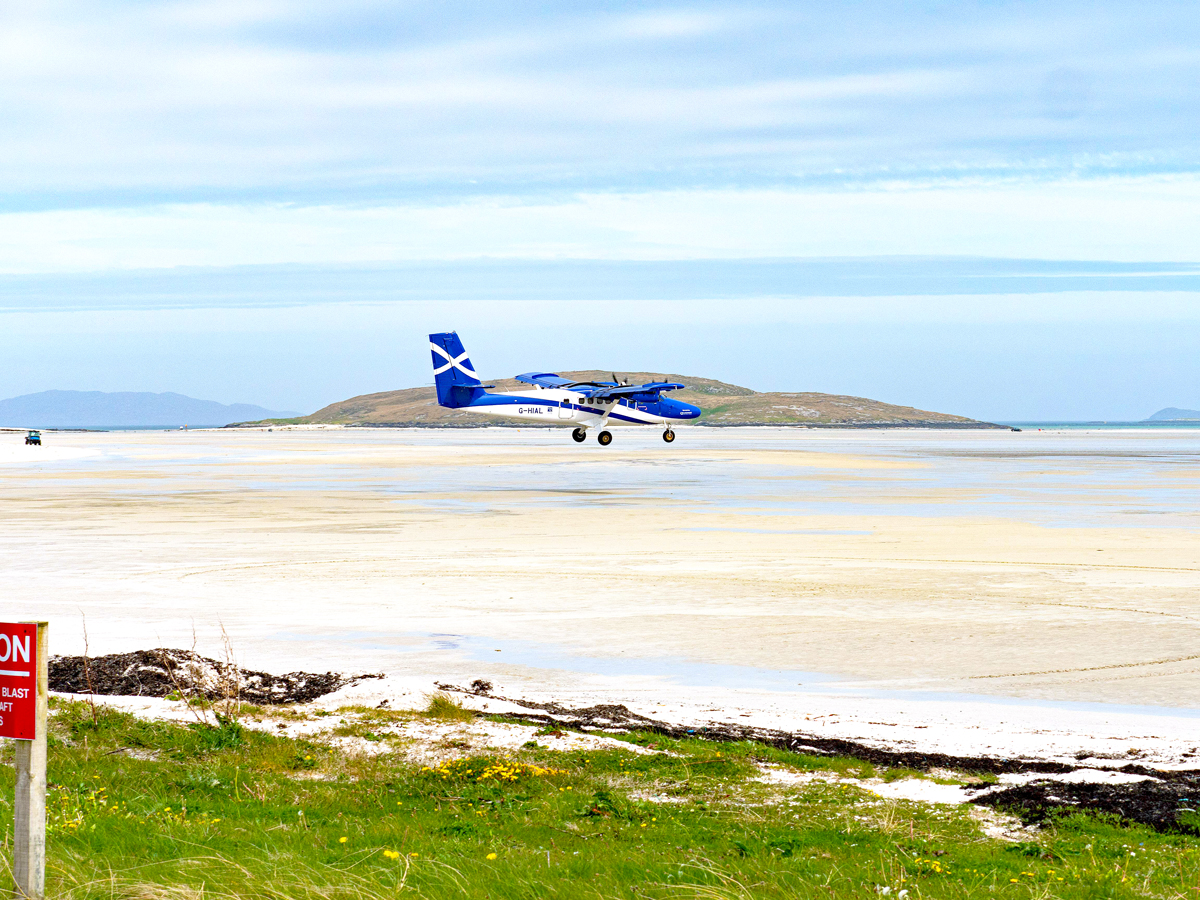
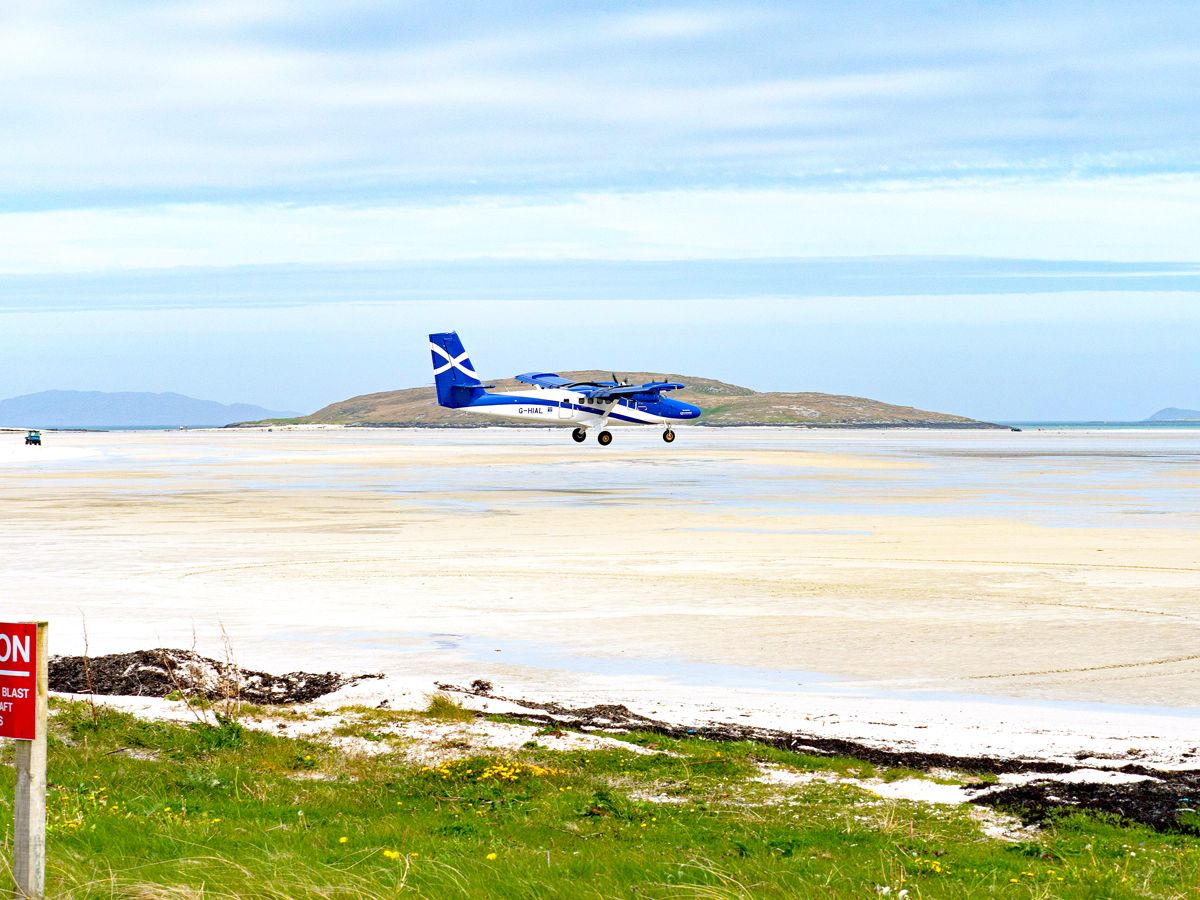
Looking for a beach getaway? Scotland’s Barra Airport in the windswept Outer Hebrides islands probably isn’t exactly what you had in mind, but when you arrive, at least you won’t have to go far to dip your toes in the sand. That’s because the hard-packed sands on the bay of Traigh Mhòr are the runway — the only one of its kind in the world. Due to the lack of asphalt, pilots and air traffic control need to keep a close eye on the tides and frequently changing weather conditions to operate the hour-long regular services to Glasgow.
Advertisement
More from our network
Daily Passport is part of Inbox Studio, an email-first media company. *Indicates a third-party property.
5 Fascinating Abandoned Amusement Parks Around the World
By
Fiona Mokry
Read time: 5 minutes
March 10, 2025
Updated: April 11, 2025
5 Fascinating Abandoned Amusement Parks Around the World
History •March 10, 2025•Updated: April 11, 2025
By Fiona Mokry
Author
Fiona Mokry
Fiona has spent her career exploring the world and working in the travel industry, turning her lifelong passion into a profession. From planning custom trips to sharing stories as a travel writer for publications such as The Discoverer, she’s all about helping others experience the world in a deeper, more meaningful way.
Abandoned amusement parks offer a unique glimpse into the past, telling fascinating stories of innovation and ambition to decline and unrealized dreams. From Pripyat Amusement Park near Chernobyl to the unfinished Fantasy World in the Philippines, these are five of the most fascinating abandoned amusement parks around the world.
Fantasy World – Lemery, The Philippines
Credit: Wirestock/ iStock Editorial via Getty Images Plus
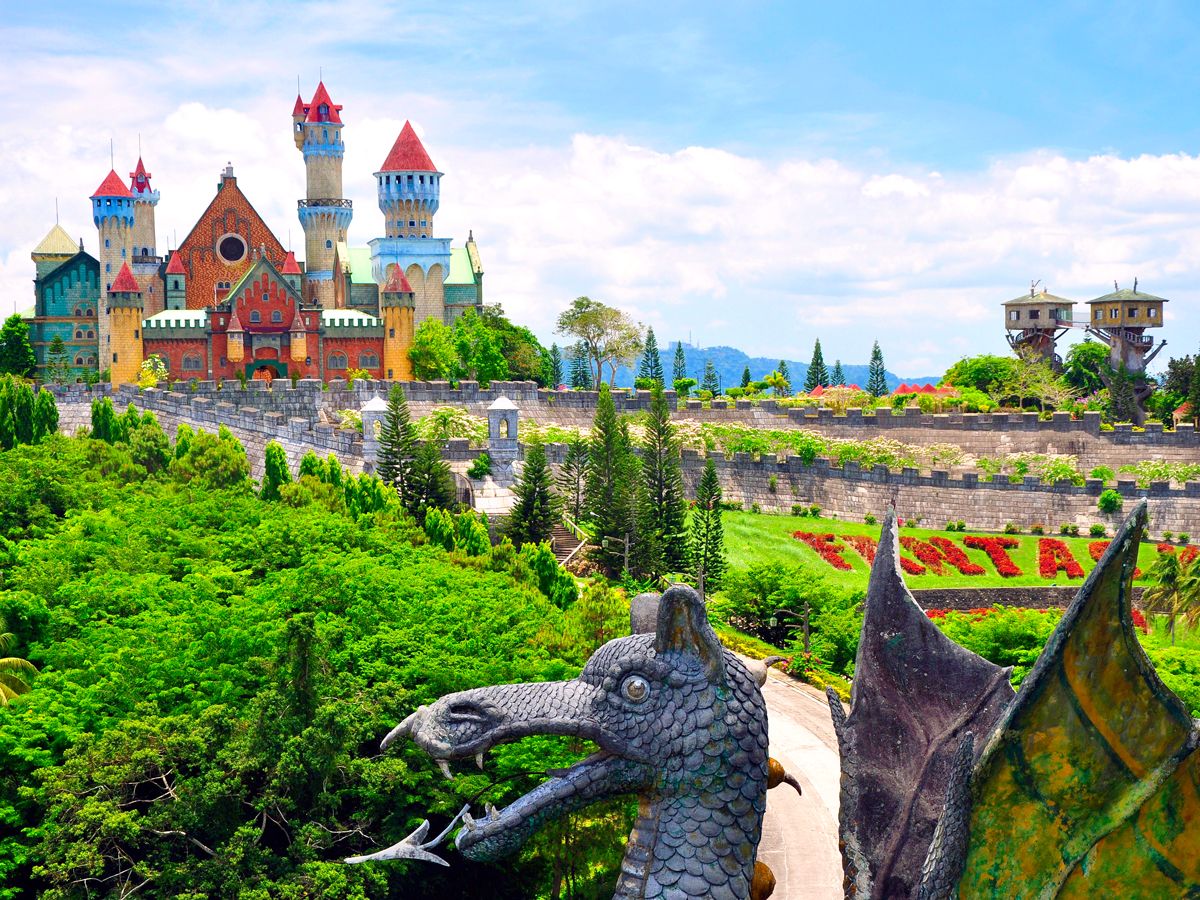
Known colloquially as the “Disneyland of the Philippines,” Fantasy World was a highly anticipated amusement park originally slated to open in 2005. Nestled in the hills of Lemery, its colorful, multiturreted medieval-style castle still stands out as an unexpected sight in the Philippines, drawing visitors from near and far — even though the park never actually opened.
The builders behind the venture initially envisioned a members-only amusement park, but the plans expanded to include a resort theme park. However, due to financial hardships, the park was left incomplete. Despite the financial setback, the park eventually opened as an attraction showcasing what could have been.
The castle’s stairs are open to climb, offering panoramic views of the lush landscape surrounding the walls, and a bridge allows visitors to cross into a treehouse. The park also serves as a popular backdrop for professional photo shoots. Although Fantasy World’s debut didn’t go as planned, it reinvented itself as a unique, abandoned attraction.
Credit: John S Lander/ LightRocket via Getty Images
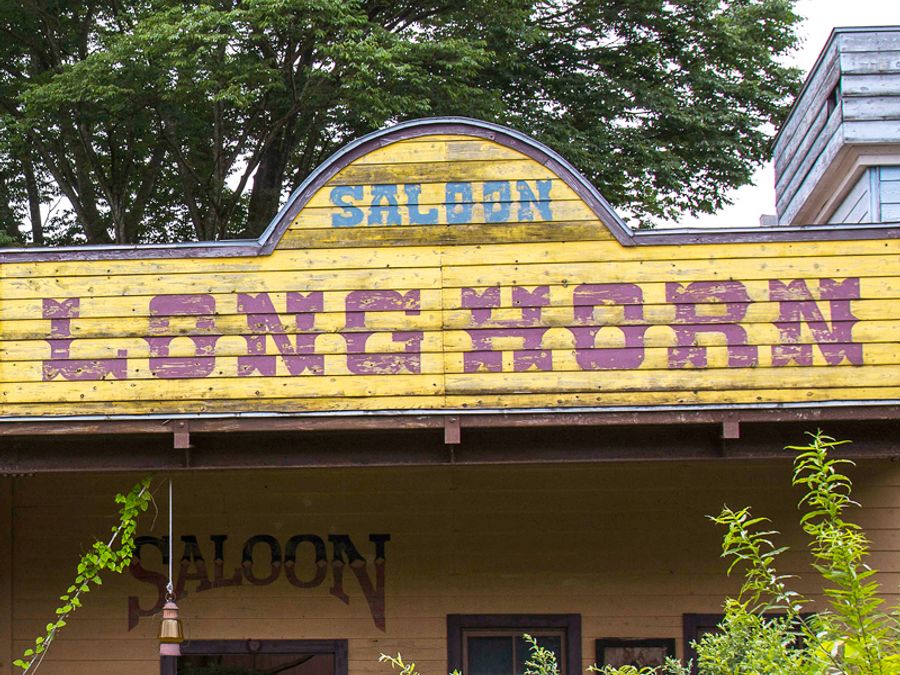
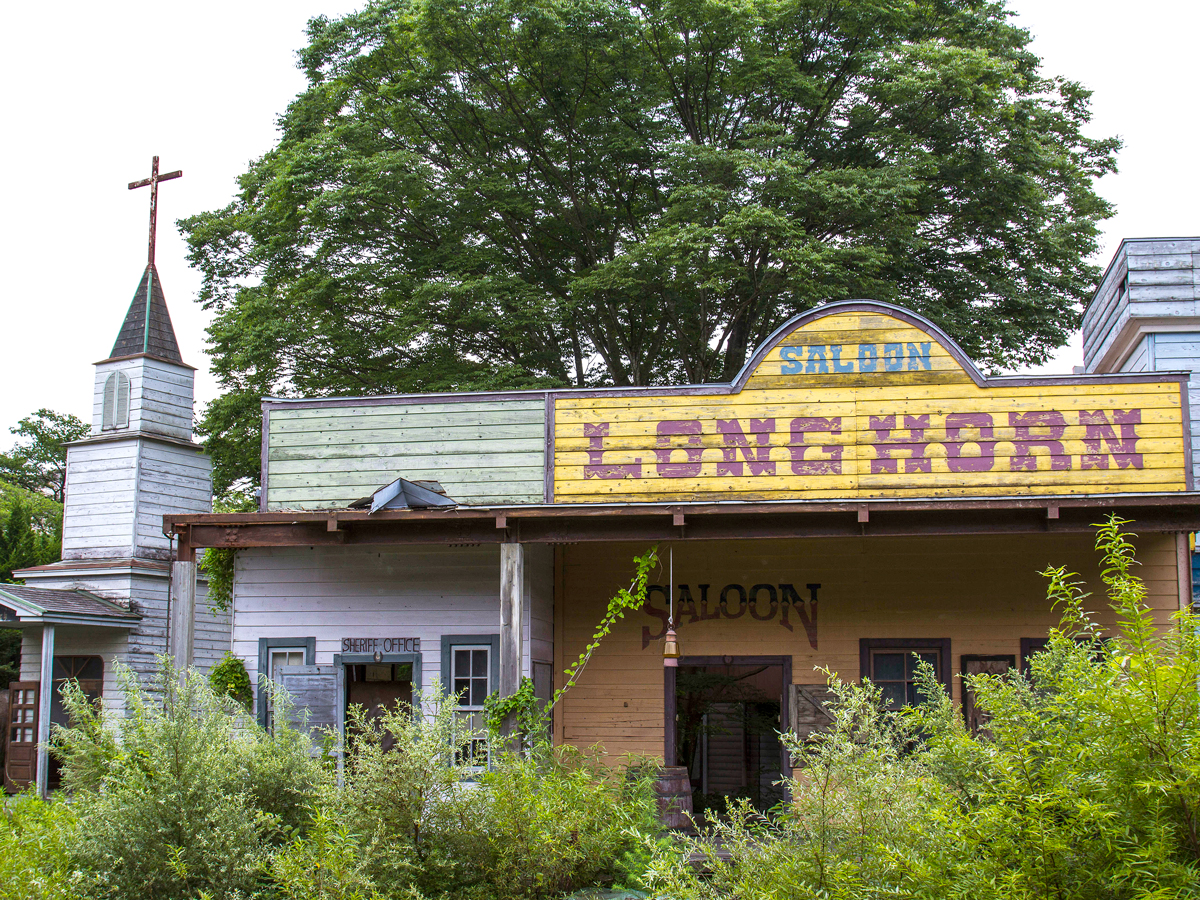
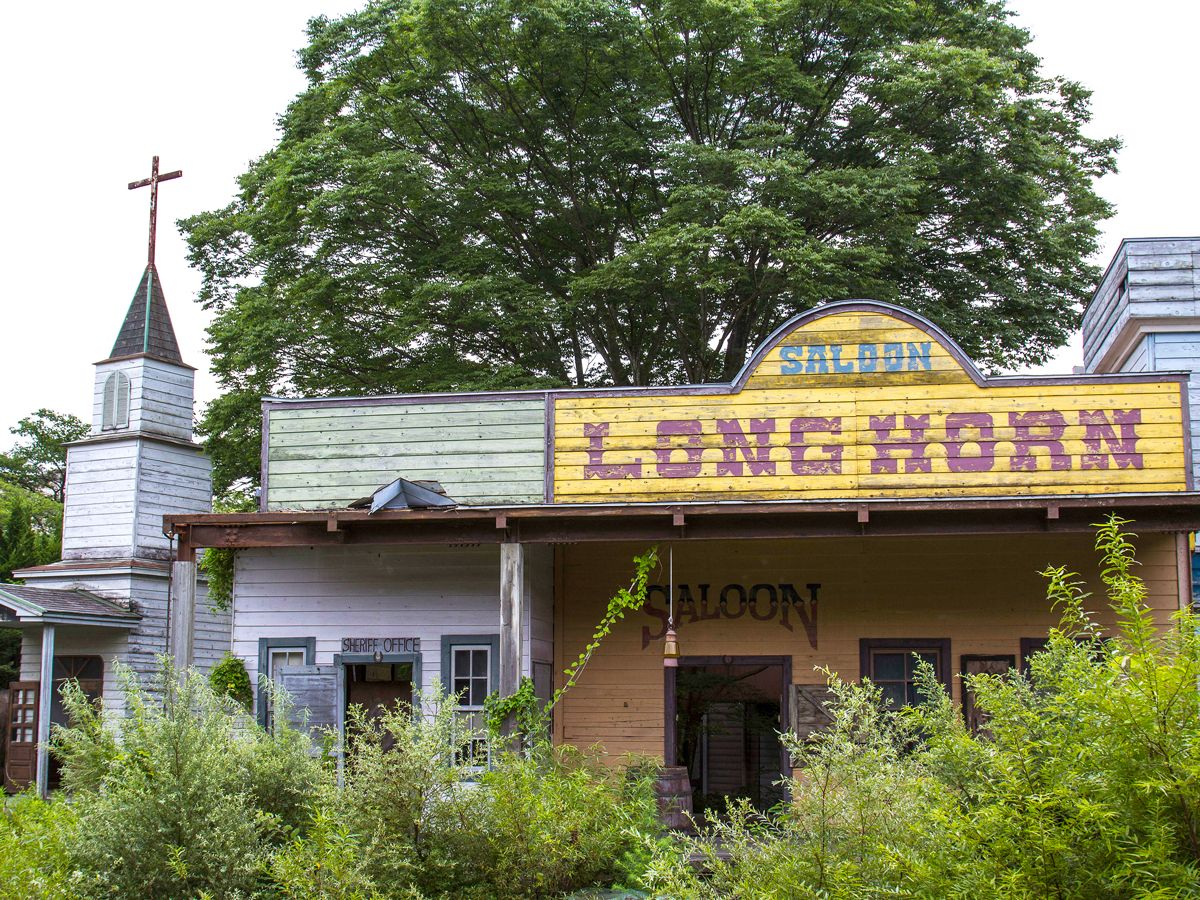
The aptly named Western Village was a Western-themed amusement park located near Nikko, a city of around 77,000 people in Japan’s Tochigi Prefecture. Opened in 1973, the park was inspired by American and Italian Western films, as well as the 1973 sci-fi film Westworld, which featured evil robots attacking visitors. At its peak, the strange yet fascinating park attracted over 1 million visitors annually and was occasionally used as a film set.
However, its popularity eventually declined, and by 2007, the park closed its doors. Since its closure, Western Village has attracted tourists who are now drawn to the eerie environment. They wander through the park’s iconic Mount Rushmore replica and its Main Street with a general store, barber shop, saloon, and sheriff’s office. Each building is still filled with unsettlingly lifelike cowboys and cowgirls, and the park’s eerie atmosphere is underscored by robot figures who are frozen in place and appear as though they could come to life at any moment.
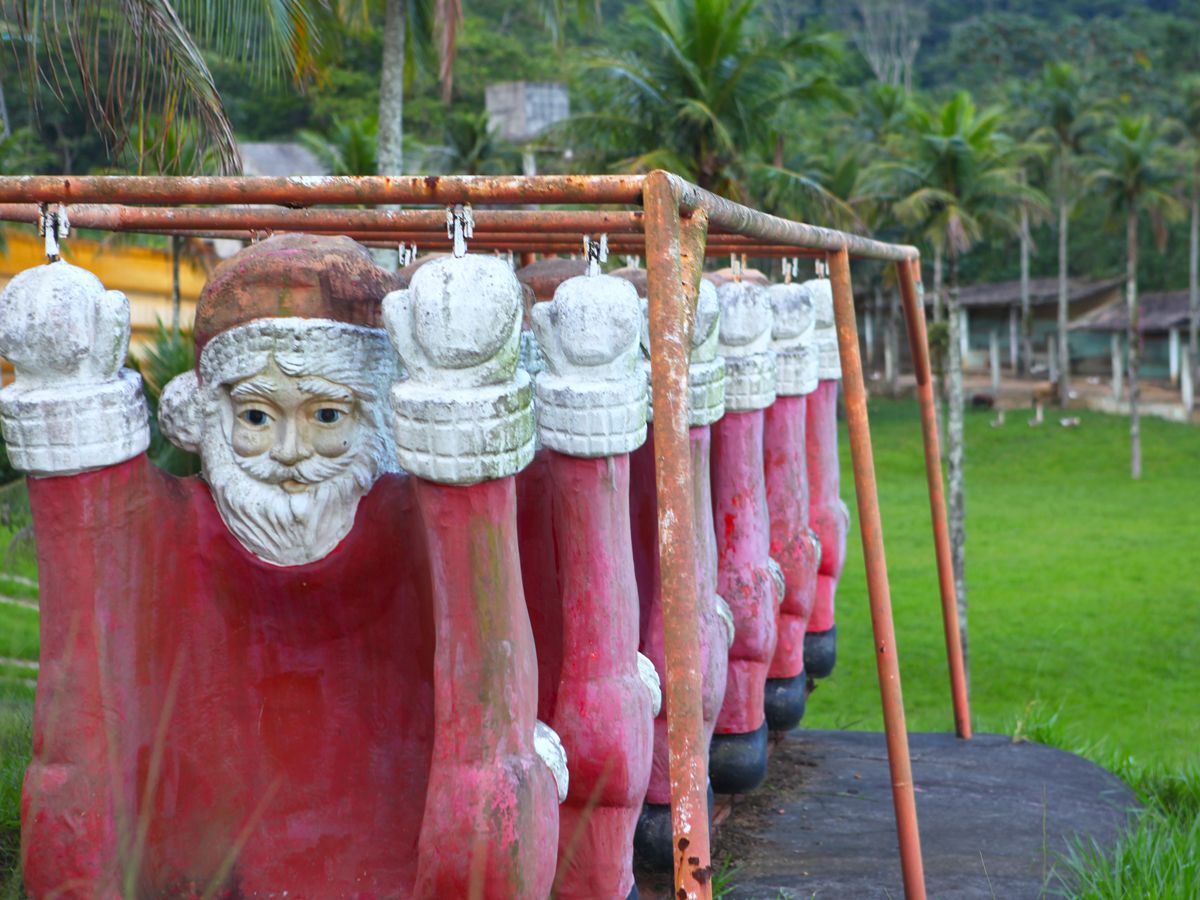
Located approximately 50 miles outside Rio de Janeiro in Itaguaí, Park Albanoel is a Christmas-themed attraction created by Antonio Albano Reis, a well-known politician affectionately dubbed “the Santa Claus of Quintina” for his tradition of dressing as Santa each Christmas. The park was planned to span over 300 million square feet and was designed to feature everything from water slides to a Wild West-themed town and a concert hall.
Construction started in 2000, but the project halted when Reis tragically died in a car crash near the park in 2004. Only the Santa-themed section was finished, and the park was open to the public for just a few years before the rest of its construction ceased. Today, Park Albanoel stands abandoned and is slowly being overtaken by nature. The Santa attractions are now rusting and decaying, while the surrounding jungle, complete with a beautiful waterfall, gradually reclaims the land.
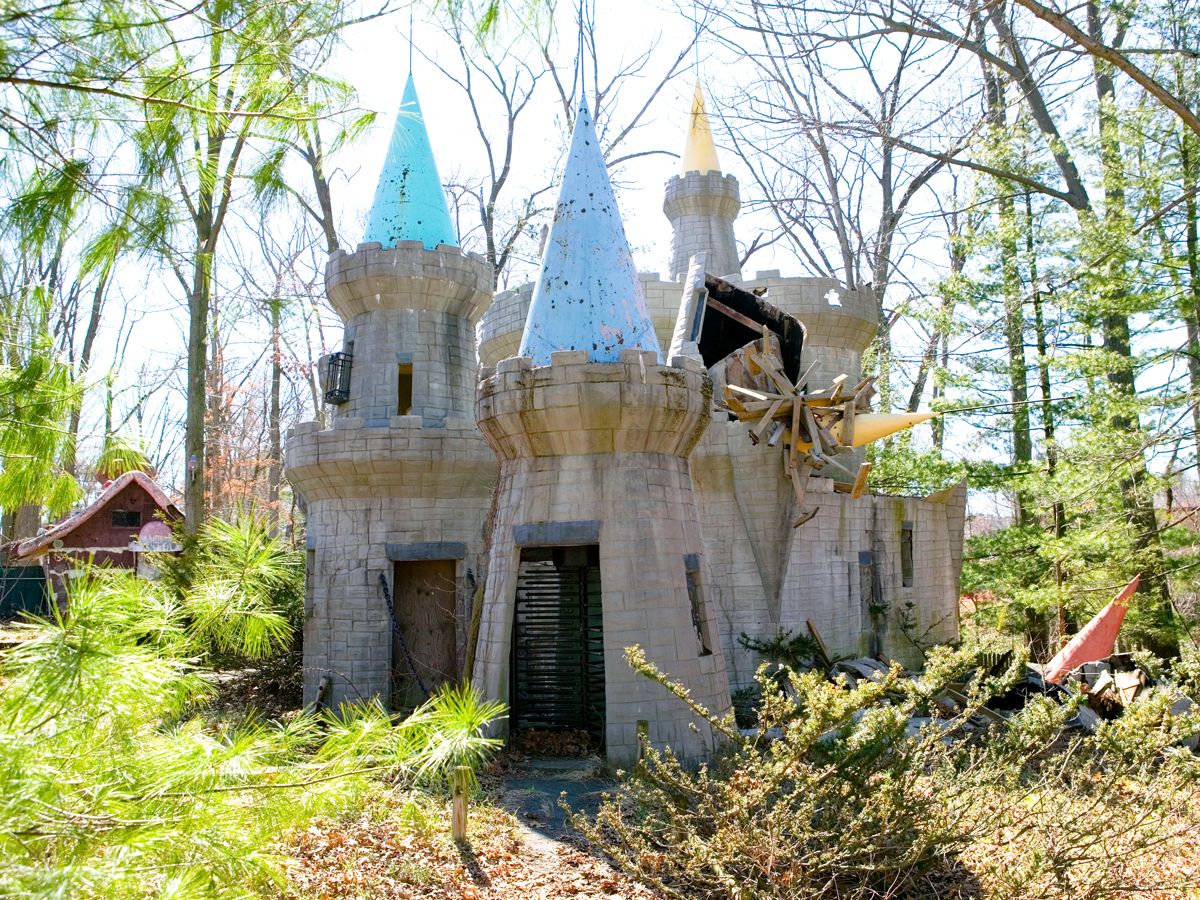
The abandoned Hansel and Gretel house in the woods of Maryland is one of the most beloved relics of the Enchanted Forest, once one of the oldest theme parks in the U.S. Opened in 1955 by the Harrison family in Ellicott City, 15 miles west of Baltimore, the park was inspired by favorite nursery rhymes of the era. The Harrisons sold their hotel business to fund the project and hired Baltimore-based artist Howard Adler to bring their vision to life.
Alongside a 10-person team, Adler crafted all of the park’s attractions — such as Willie the Whale, Old Woman’s Shoe, Alice in Wonderland, and Cinderella’s pumpkin coach — in a Baltimore shop using chicken wire, paper-mache, and a fiberglass-style material known as silastic. The park was a hit, and it flourished for five decades before its popularity declined and it closed in the 1990s.
The park lay abandoned until 2004, when community members formed the Friends of the Enchanted Forest and moved the attractions a few miles down the road to Clark’s Elioak Farm in Howard County, where they are still on display today. Visitors can wander among these charming relics and be transported back to the whimsical world of the former theme park in its heyday in the 1950s and ’60s.
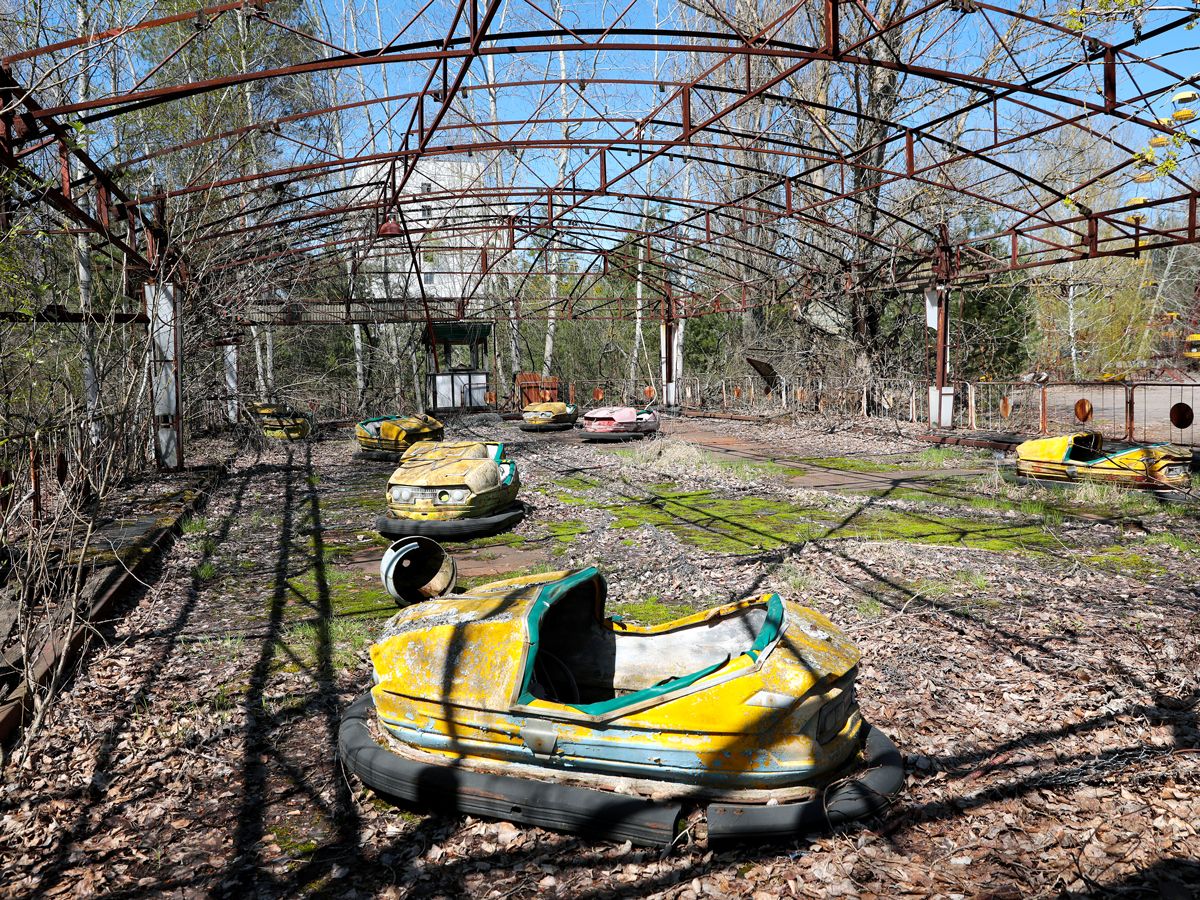
The grand opening of Pripyat Amusement Park was originally slated for May 1, 1986, to coincide with the city’s May Day celebrations. However, the park’s debut was tragically cut short by the Chernobyl disaster, which struck just a few miles away on April 26, 1986. Although it never opened to the public, Pripyat Amusement Park boasted an 85-foot-tall Ferris wheel, bumper cars, swing boats, and a paratrooper ride, among other attractions.
Today, the abandoned park — particularly the forlorn Ferris wheel — stands as an eerie symbol of the catastrophe that unfolded nearby. Planned as a vibrant place of family fun, the park rests, never to be used, in the heart of the still-contaminated Chernobyl Exclusion Zone (CEZ). What was once a symbol of joy has now become a haunting reminder of the worst nuclear disaster in history.
Advertisement
More from our network
Daily Passport is part of Inbox Studio, an email-first media company. *Indicates a third-party property.
Michael is a staff writer for Daily Passport and film critic who writes the weekly newsletter Movie Brief. His writing and criticism have also appeared in the Los Angeles Times, Variety, and the Washington Post, among others. A native Angeleno, his favorite countries to visit are Norway and Japan.
Switzerland has dominated the watch industry for centuries, which is no accident: Their timepieces live up to their reputation just as surely as their trains do. There’s even a joke about Swiss punctuality. If a train scheduled to depart at 8:00 leaves when the station clock shows 8:05, either the train isn’t Swiss or the clock isn’t — it’s simply unrealistic that one or the other wouldn’t be entirely accurate. But how and why did this come to be? It has a lot to do with Swiss culture. Take a look below.
The Punctuality of Swiss Railways
Credit: Boarding1Now/ iStock via Getty Images Plus
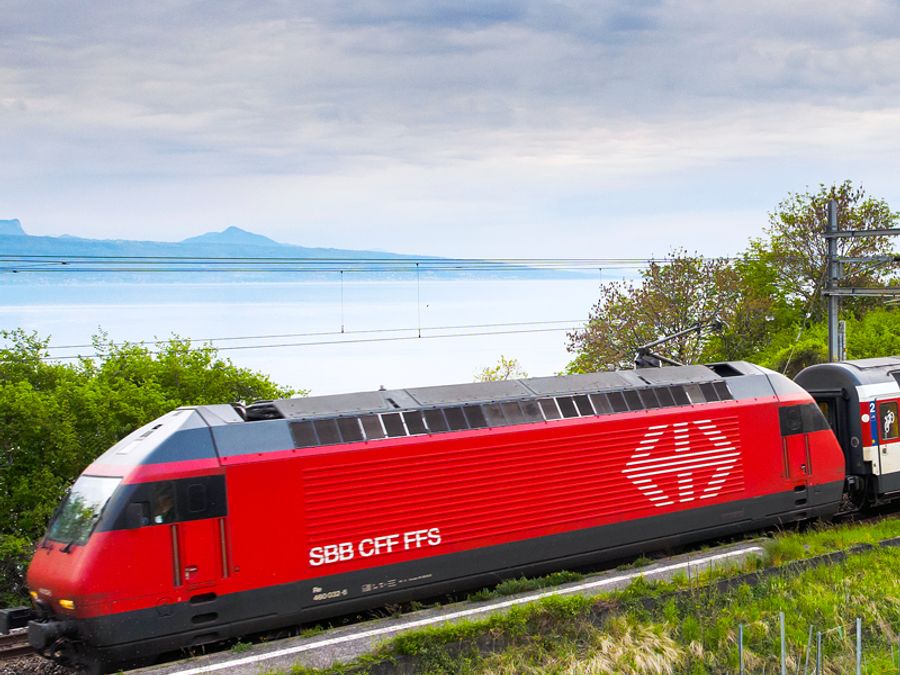
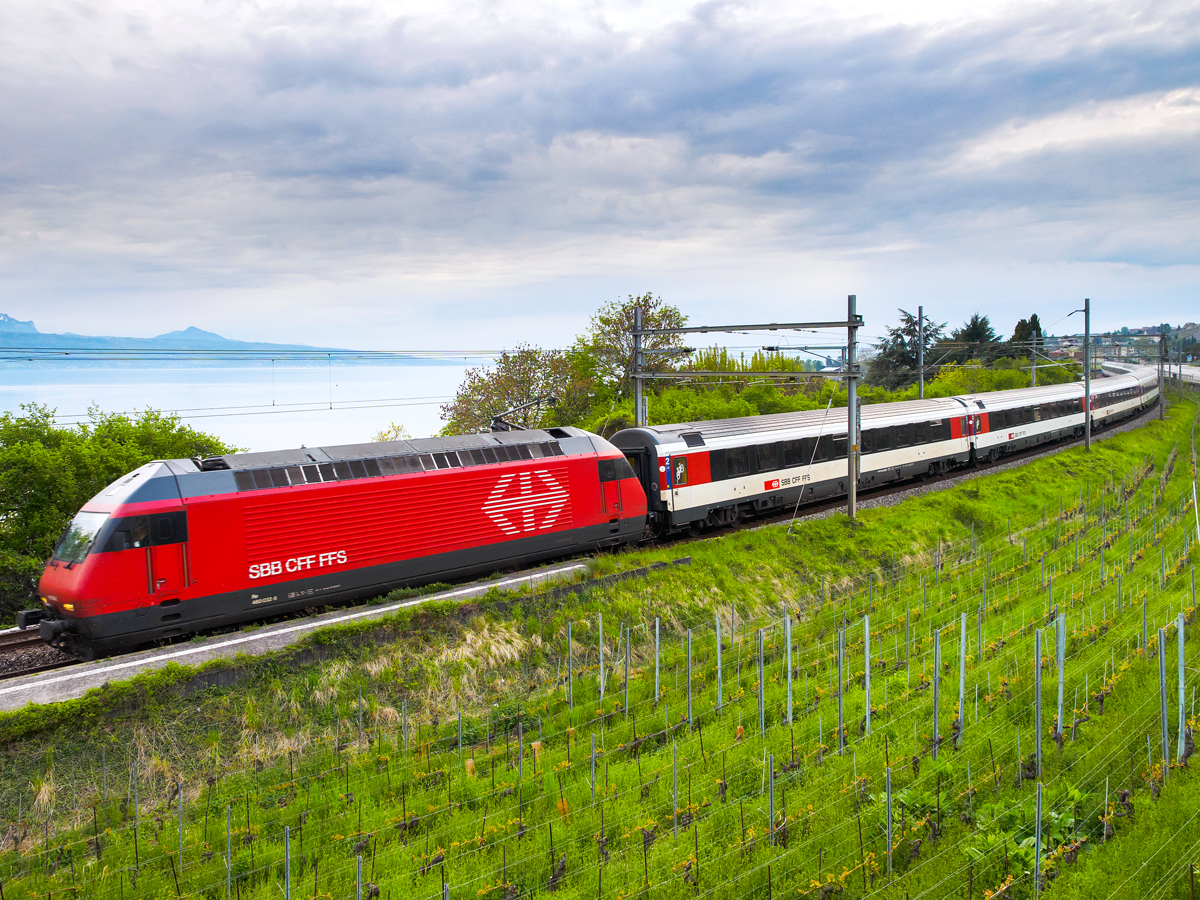
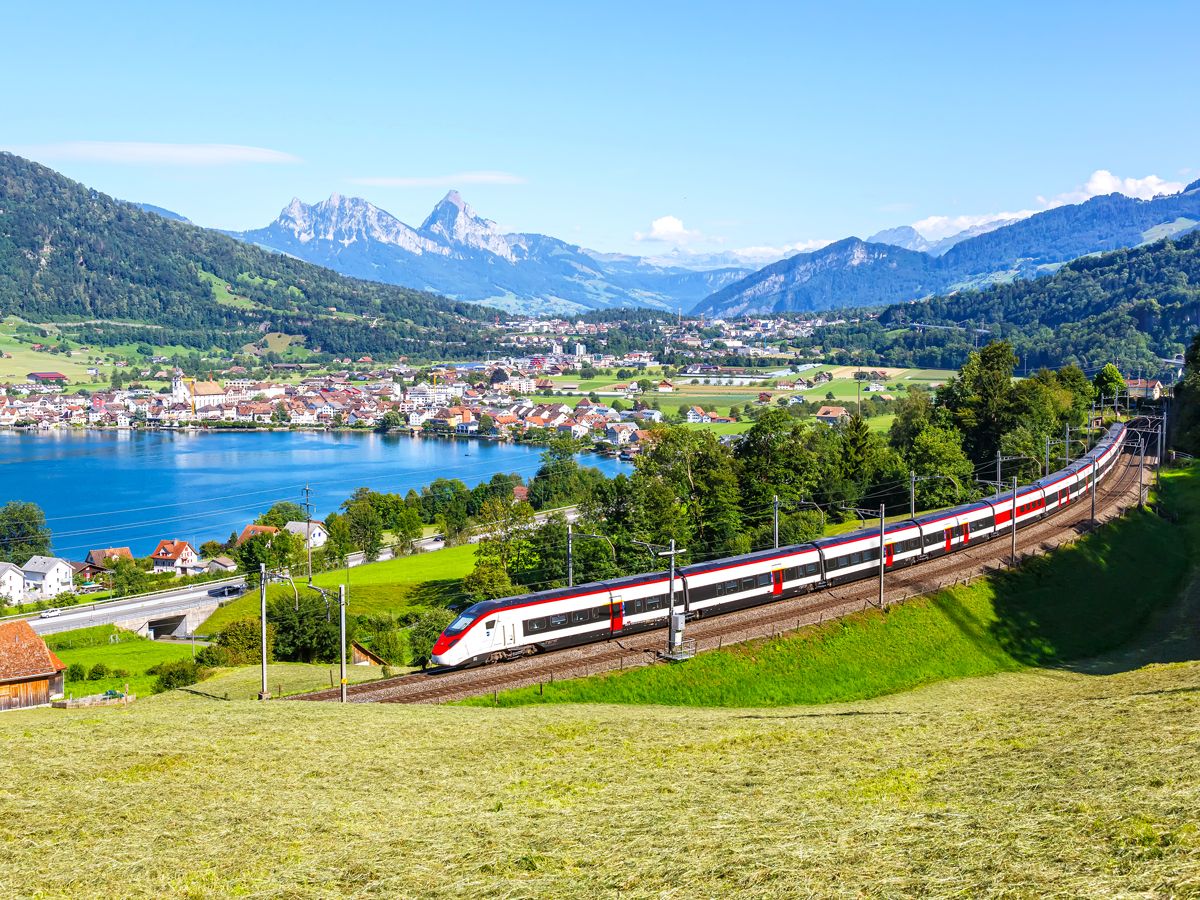
Swiss Federal Railways (SBB) has been Switzerland’s national railway company since 1902. The company has earned a reputation for unmatched punctuality during its century-plus of business. But unlike some conventional wisdom, the idea that Swiss trains are always on time is based in reality.
SBB’s punctuality rate was 92.5% in 2023 and 93.2% in 2024, a new record for the company. (Compare that to Amtrak’s on-time rate, which averages less than 80%.) During both years, connection punctuality, which measures the percentage of passengers who make their train connections, was at an astounding 98.7%. Customer satisfaction with punctuality on arrival, meanwhile, stood at 87.6%.
Those stats are all the more impressive when you consider the Swiss rail network is one of the busiest in the world — in fact, the Swiss have the highest per-capita usage of trains of any country on Earth.
The 2017 European Railway Performance Index, which was based on three factors — intensity of use, quality of service, and safety — ranked Switzerland No. 1 on the continent, with a score of 7.2 out of 10. Next in the rankings were Denmark (6.8) and Finland (6.6). Zürich Hauptbahnhof, the country’s busiest train station, has also been ranked the most popular in Europe.
Cultural Roots
Credit: Bogdan Lazar/ iStock via Getty Images Plus
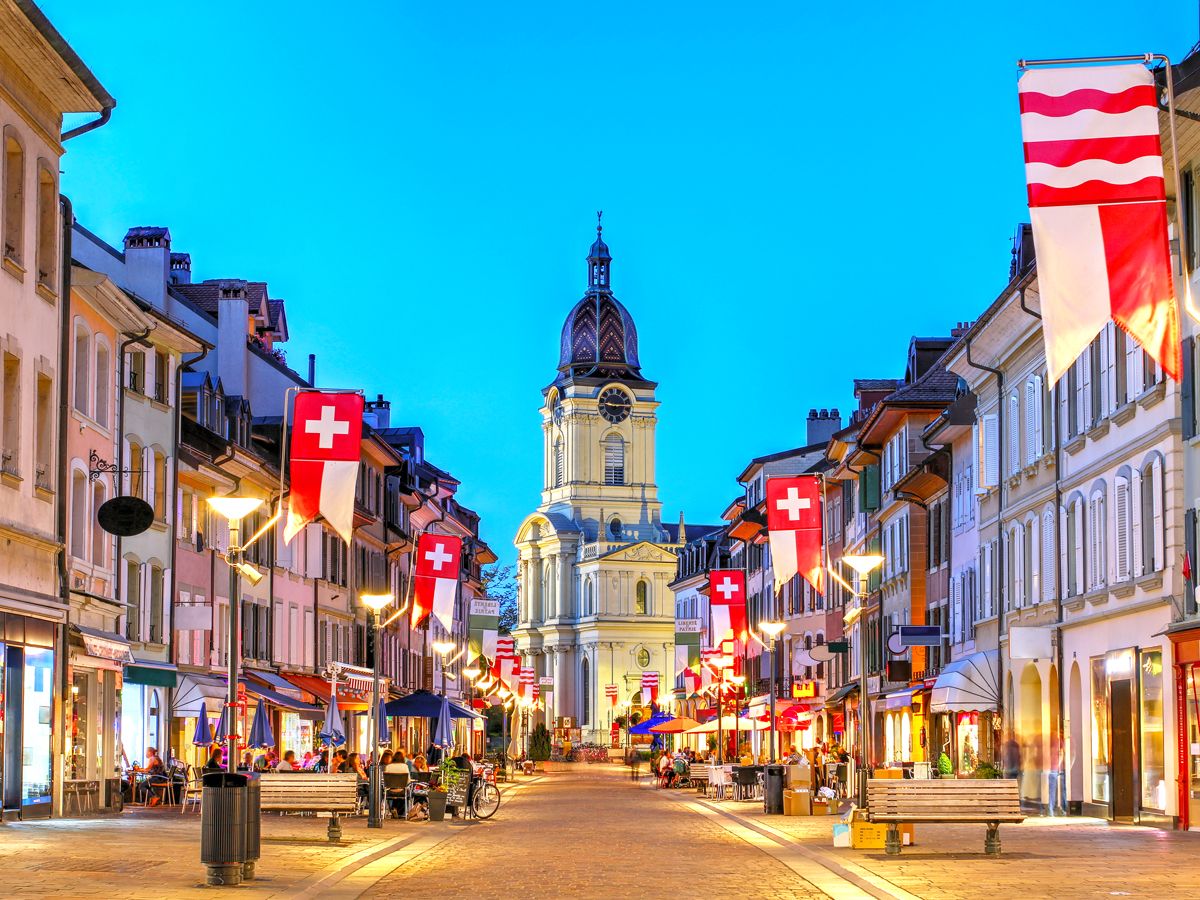
It isn’t just the trains that are punctual in Switzerland — it’s the people. The country officially known as the Swiss Confederation has been called “the nation that hates to be late.” It is a nation populated by people who derive “deep contentment” from being on time. The Swiss consider it a sign of respect and consideration; to be on time is to tell whomever you’re meeting that you value them and their time equally.
One theory suggests this has its roots in the country’s mountainous terrain, which made sustenance farming not only difficult but a matter of life and death: If you didn’t plant and harvest crops on time, you and your loved ones could perish.
This reputation for punctuality might have its drawbacks — Swiss coffee shops have a habit of being extremely busy at the exact same time every day, for instance — but few in Switzerland would argue that the benefits don’t massively outweigh these occasional quirks.
The Role of Technology
Credit: Denis Linine/ iStock Editorial via Getty Images Plus
Cultural heritage isn’t enough to ensure a massive rail network covering thousands of miles is almost literally always on time, of course. And while it’s true that Switzerland’s small size makes efficiency easier — at 15,940 square miles, it’s about the same size as Vermont and New Hampshire combined — plenty of equally diminutive countries have highly inefficient rail networks.
According to the transport association LITRA, “the stability of the entire system depends heavily on the number, average speed, and heterogeneity of trains.” This means that the people making the timetables know exactly what their trains are capable of and, rather than allow for a sizable margin of error when listing arrival and departure times, make precise calculations that account for variables like rail traffic and inclement weather. The emphasis on punctuality starts at the top and carries through every level of the operation, including, of course, conductors themselves.
Switzerland isn’t the only country with a reputation for transportation timeliness, either. Japan’s trains run famously on schedule — so much so that in 2017, a Tokyo train company made headlines by apologizing to customers for a train running just 20 seconds late.
And on the rare occasion that your train in Japan is running more than five minutes behind schedule, you’ll be covered with a delay certificate (chien-shomeisho) which you can present to your employer as an official excuse for tardiness. The practice of issuing delay certificates is also common in Germany, another country which is known for keeping to a strict schedule.
Featured image credit: Enzojz/ iStock Editorial via Getty Images Plus
Advertisement
More from our network
Daily Passport is part of Inbox Studio, an email-first media company. *Indicates a third-party property.
Architecture •March 10, 2025•Updated: April 11, 2025
By Julia Hammond
Author
Julia Hammond
Julia is a U.K.-based travel writer whose work has been featured in The Independent, The Telegraph, The New Zealand Herald, and Culture Trip, among others. She’s an enthusiastic advocate for independent travel and a passionate geographer who has had the privilege of traveling to more than 130 countries in search of a story.
A significant number of the world’s largest urban areas rely on underground transportation networks to enable their populations to get around quickly and safely. That is the case in New York City, Paris, London, and Singapore, among many other cities. Yet in other places, beneath city streets are underground complexes packed with shops and services. Born out of necessity in places where the weather is extreme, where real estate is pricey enough above ground to make it an attractive commercial proposition, or in response to perceived threats to national security, the following five fascinating underground complexes in major cities are worthy of closer inspection.
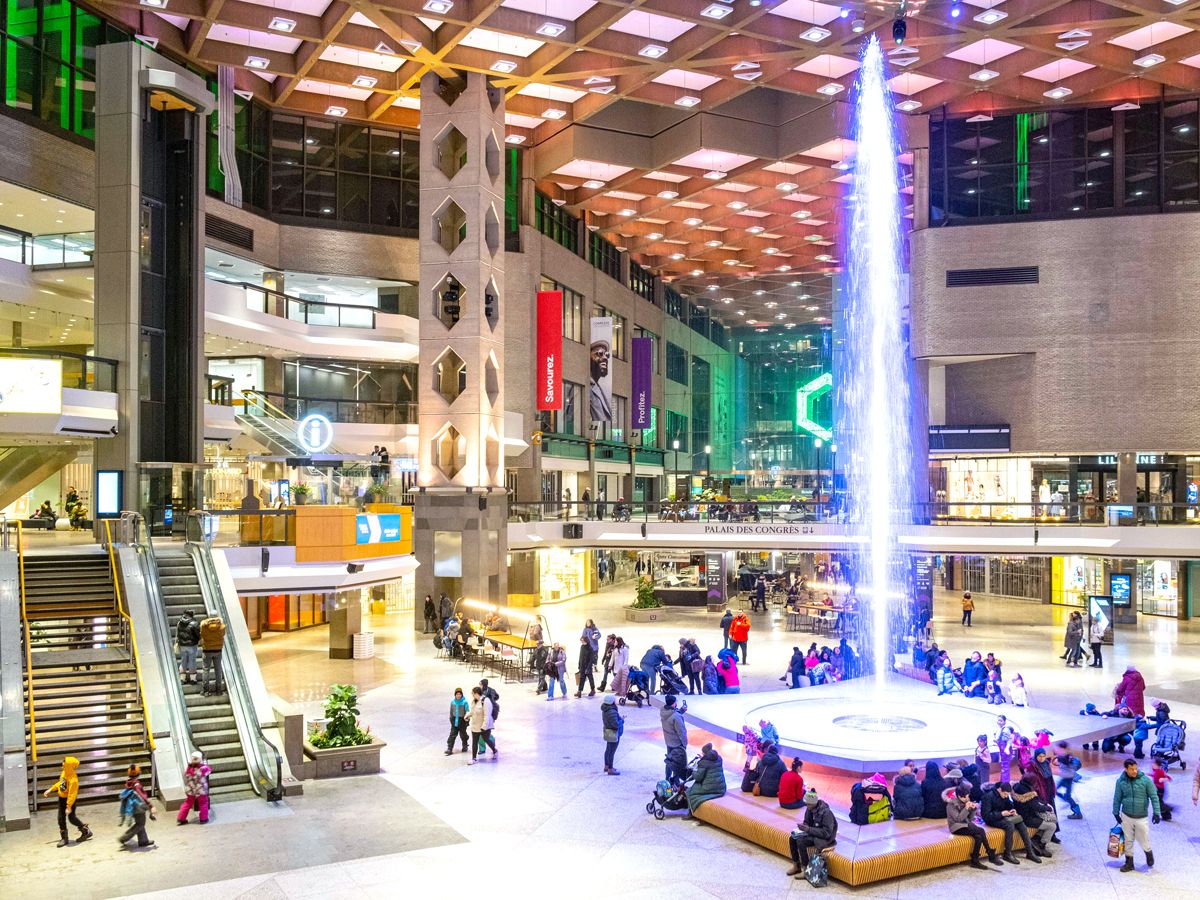
Also known as the Underground City or La ville souterraine, RÉSO is Montréal’s sprawling subterranean business district. Guinness World Records officially recognizes it as the world’s largest pedestrian subway network. Built partly as an answer to the city’s extreme weather — hot in summer and cold in winter — RÉSO comprises almost 20 miles of linked underground transit, offices, shopping malls, restaurants, cinemas, and residential blocks.
From a visitor perspective, this interconnected space is a tourist attraction in its own right. The complex connects to street-level facilities such as the Bell Centre hockey arena and a skybridge, making this as much an indoor city as an underground one.
Finland shares a long border with Russia, so it’s perhaps no surprise to learn that its capital, Helsinki, built a series of tunnels and bunkers in the 1960s when Cold War insecurities were at their peak. Fast-forward to the present day, and you’ll find an unusually diverse array of amenities in those underground spaces.
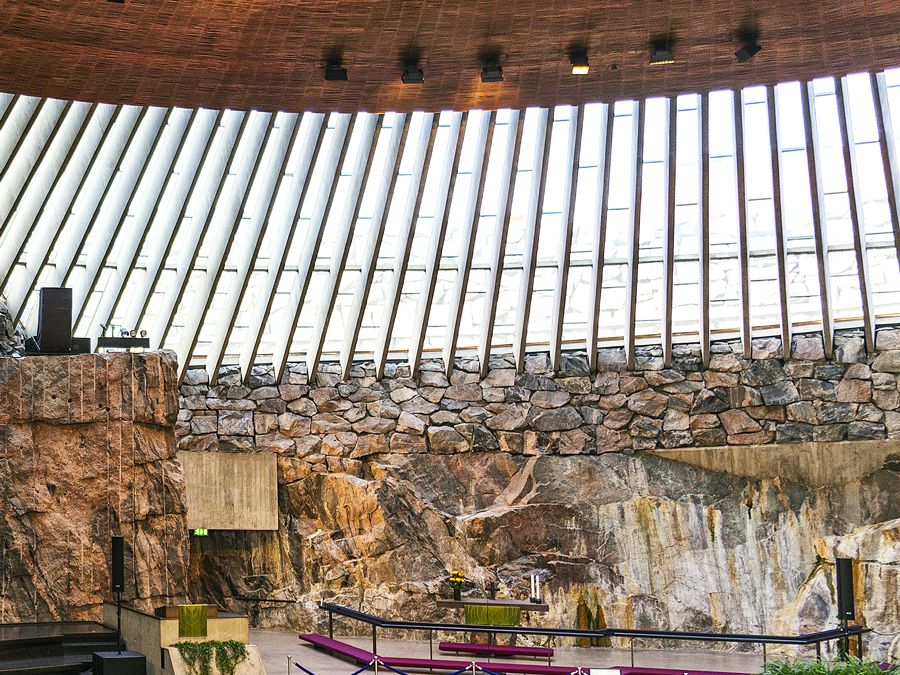
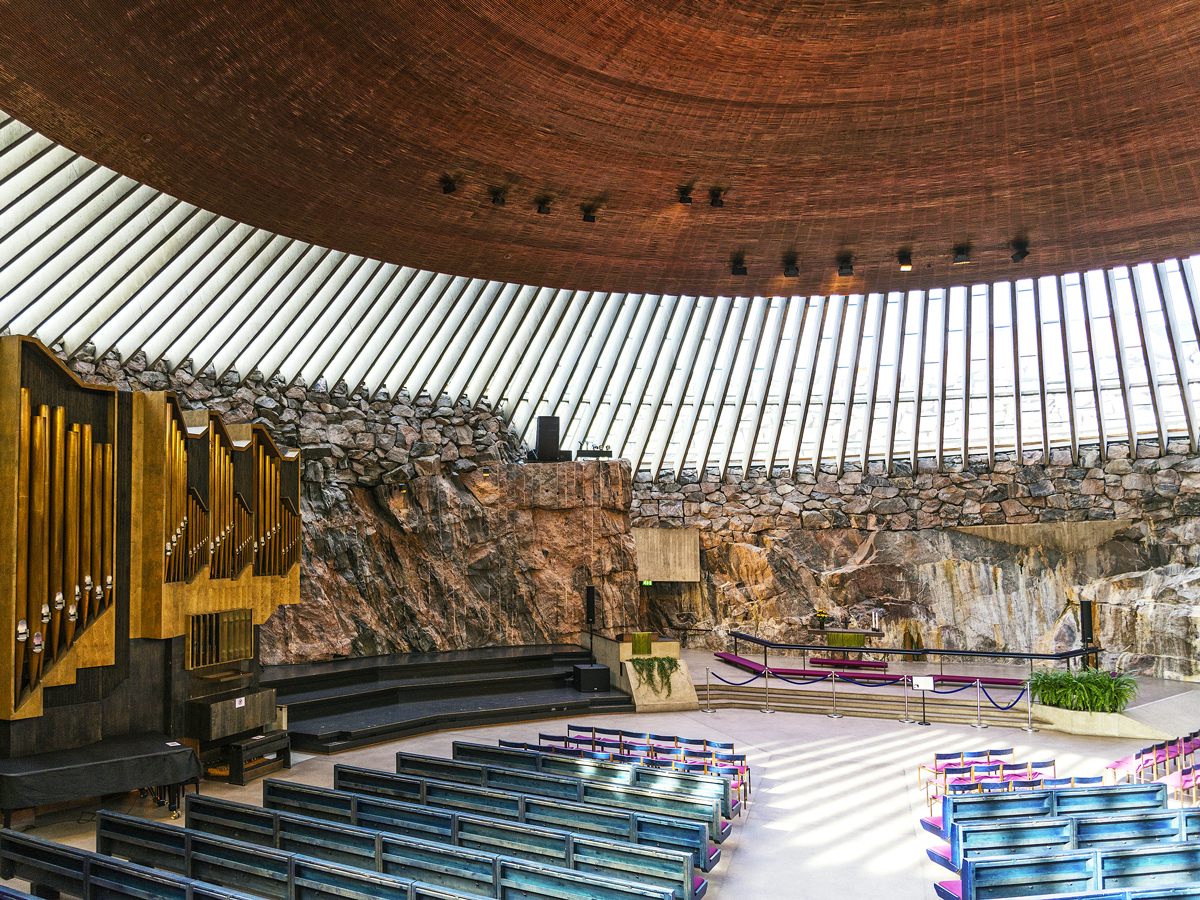
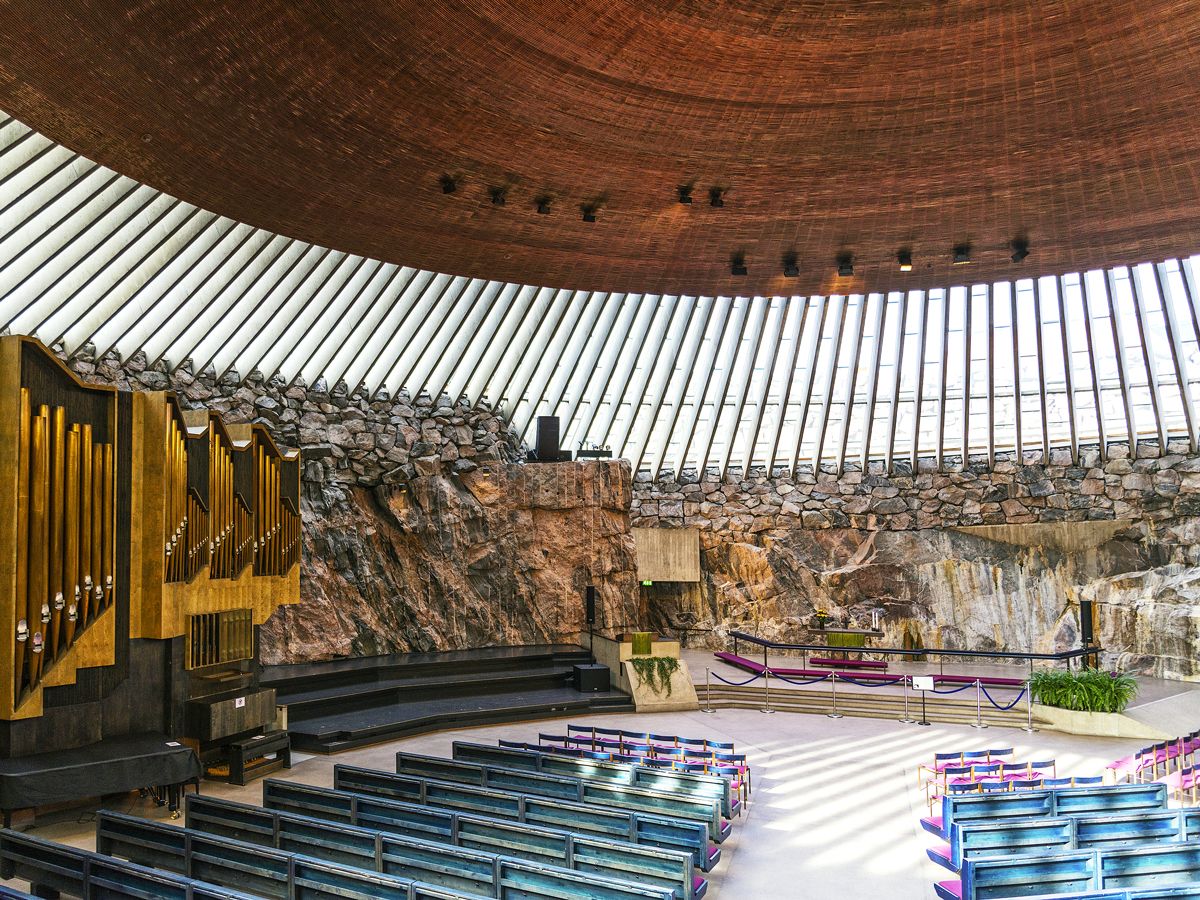
One of the most interesting attractions is Temppeliaukio Church, a Lutheran place of worship carved right out of the rock. Also worth checking out are the underground galleries of Amos Rex, a contemporary art museum. But there’s a serious side to this part of Helsinki, too. While the cavernous Itakeskus Swimming Hall boasts four underground pools, a spa, a solarium, and a Turkish bath, it’s one of many spaces underneath the city that can be converted into a capacious bunker should the need arise.
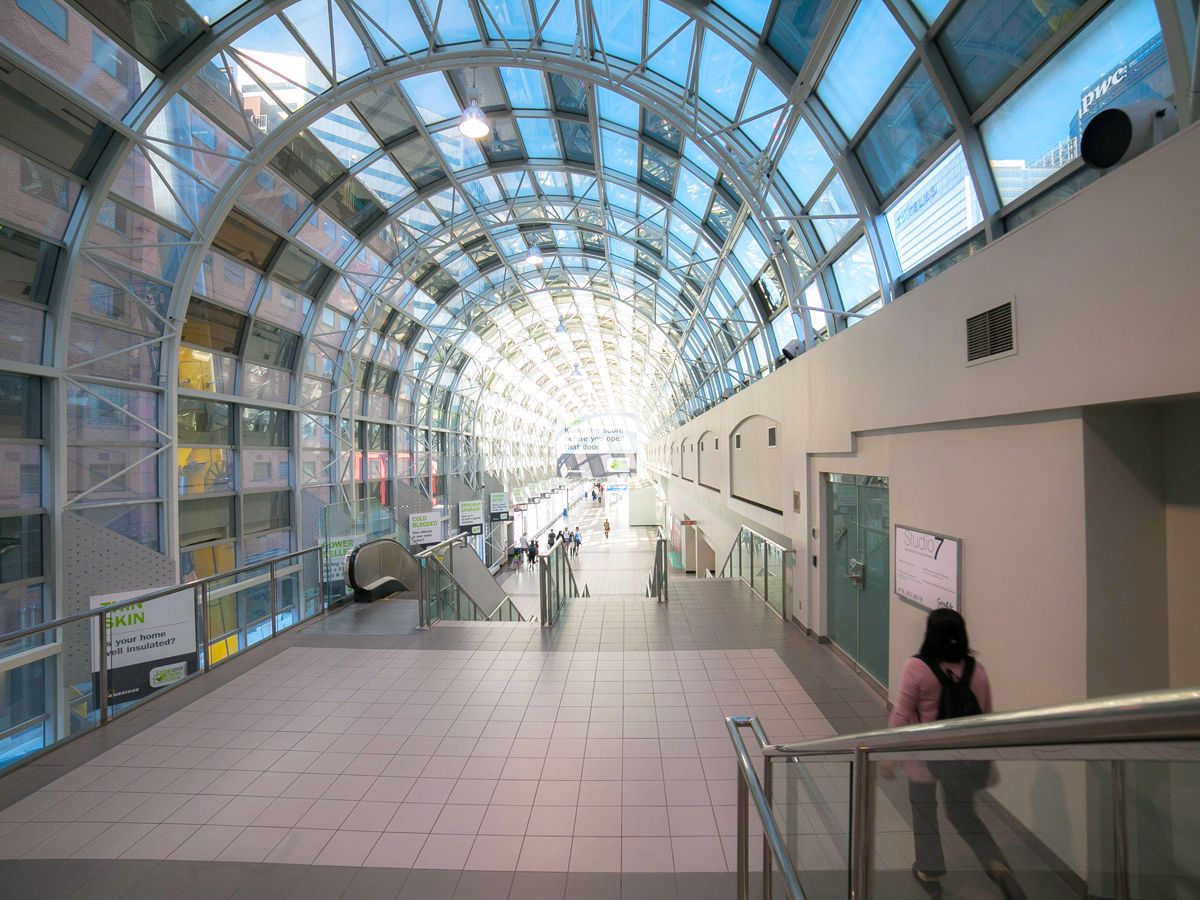
PATH is the name given to the network of pedestrian walkways that links many of downtown Toronto’s businesses, including shops, restaurants, entertainment, and transportation links. Its history dates to 1900, when retailer T. Eaton Company dug a tunnel to connect its store on Yonge Street to its bargain annex.
The PATH has been vastly expanded since then, especially since the 1970s. Its stats are impressive: Via more than 18 miles of walkways, it comprises 3.7 million square feet of retail space, 1,200 restaurants, nine hotels, six subway stations, and access to attractions such as the Hockey Hall of Fame, Roy Thomson Hall, and Union Station. The PATH is particularly popular in winter, offering a climate-controlled alternative to the freezing streets above.
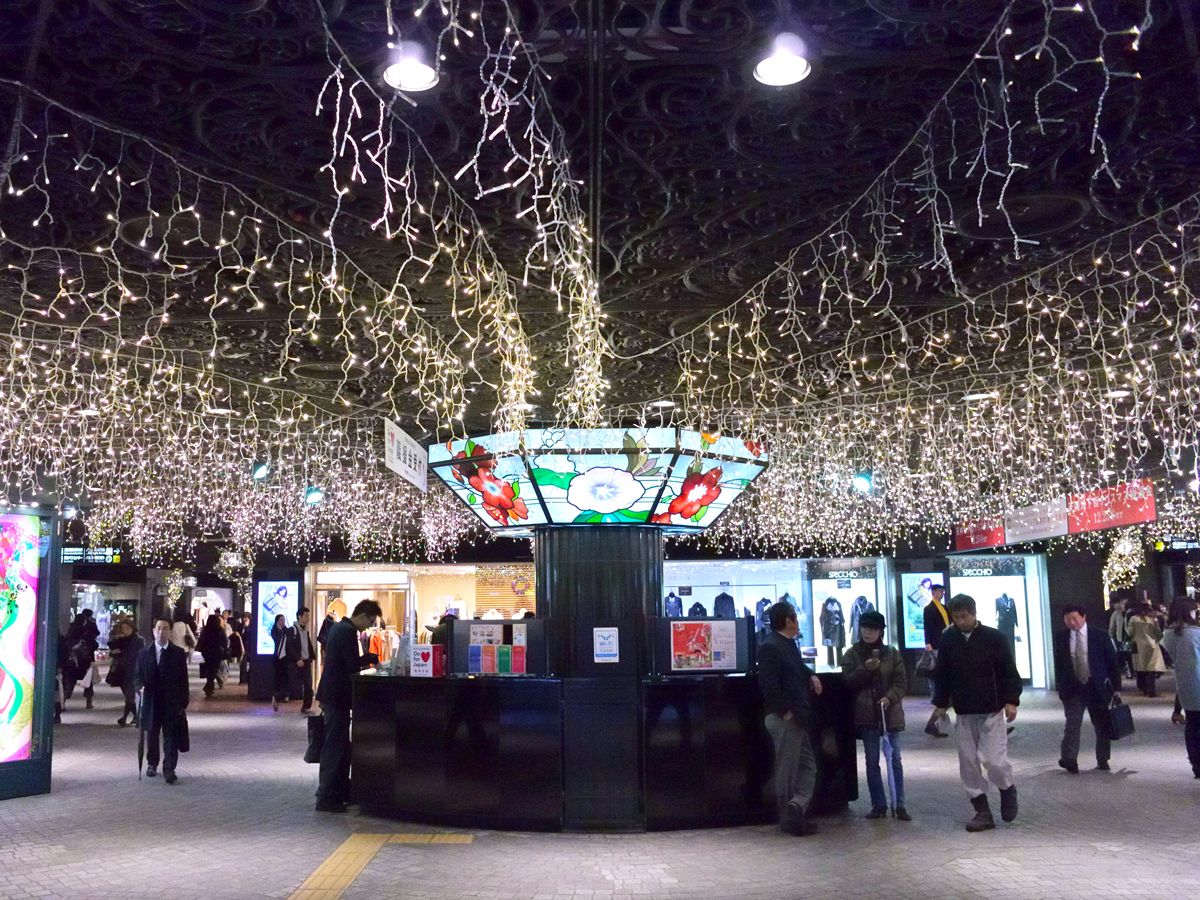
Tenjin Chikagai is the largest subterranean shopping center on the island of Kyushu in Japan. You’ll find it at the heart of downtown Fukuoka, beneath the Tenjin neighborhood, which is known for its abundance of retailers. The complex opened in 1976 and boasts a dozen avenues lined with approximately 150 shops and service providers.
The complex is linked by underground passageways to a number of city transit hubs, including the subway with connections to Hakata Station and Fukuoka Airport, as well as direct access to the Nishtietsu Tenjin Expressway Bus Terminal. However, the design of Tenjin Chikagai doesn’t feel especially Japanese — instead, there are nods to European heritage in its cobblestone floors and to the Middle East and North Africa via its Arabesque-style ceilings.
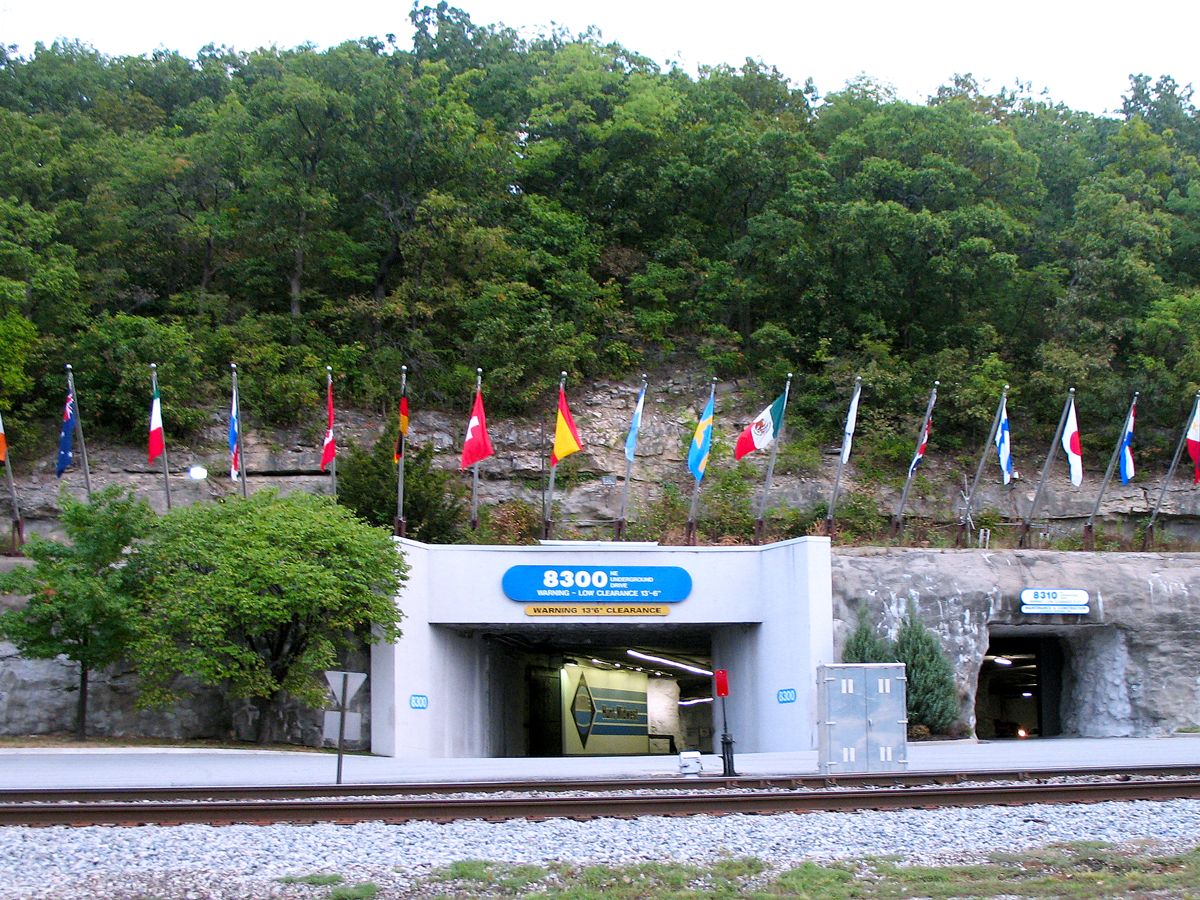
Hunt Midwest, the company that owns SubTropolis in Kansas City, proudly states that it is the world’s largest underground business complex. Housed a hundred feet below the surface in a former limestone mine, it has a capacity of more than 9 million square feet, yet is just a 10-minute drive to downtown Kansas City.
The backstory of SubTropolis provides a salutary lesson in adaptability. In the 19th and early 20th centuries, limestone was excavated here in large quantities, fueled by Kansas City’s construction boom. As demand tailed off, all that usable space was going to waste. Leasing it to businesses for storage seemed the obvious answer.
The naturally climate-controlled space reopened in its new guise in the 1960s. Ford and the U.S. Postal Service are among the companies that have benefited from the space, which is also home to the original reels of movies like Gone With the Wind and TheWizard of Oz, since its stable temperature (around 65 to 70 degrees Fahrenheit) makes it suitable for preserving delicate artifacts.
Advertisement
More from our network
Daily Passport is part of Inbox Studio, an email-first media company. *Indicates a third-party property.