


Post Banner Image
Culture

6 Surprising Pairs of ‘Sister Cities’ Around the World

By Daily Passport Team
Read time: 5 minutes
February 13, 2024
Updated: February 9, 2026

6 Surprising Pairs of ‘Sister Cities’ Around the World

By Daily Passport Team
Author
Daily Passport Team
Daily Passport writers have been seen in publications such as National Geographic, Food & Wine, CBC, Condé Nast Traveler, and Business Insider. They're passionate about uncovering unique destinations and sharing expert tips with curious travelers.

When visiting some destinations around the world, you might have noticed a declaration of their “sister cities” or “twin towns” — that is, an agreement with another municipality, usually far across the world, to promote cultural and economic ties. The concept of sister cities arose in the 1950s, and since then more than 500 municipalities in the U.S. alone have formed sister city partnerships with municipalities near and far. While some of these pairings seem like a natural fit, others may leave you scratching your head. Discover the surprising ties behind six unexpected pairs of sister cities around the world.

Alexandria, Egypt & Cleveland, Ohio

Fortress of Alexandria, Egypt, along waterfront
Photo credit: krechet/ Shutterstock

Known as the “Pearl of the Mediterranean,” Alexandria has been a sister city of Cleveland since 1977. Since its founding in 331 BCE by Alexander the Great, the city has been a place of immense cultural significance. It was also the home of the famous Library at Alexandria as well as one of the Seven Wonders of the Ancient World: Pharos, more commonly known as the Lighthouse of Alexandria.

While the Egyptian city is an icon of the Hellenistic Age, Cleveland — located on the shores of Lake Erie in Ohio — is known primarily for its role in the industrial history of the American Rust Belt. The two sisters have one thing in common, though: Cleveland, too, has a lighthouse — the 63-foot-tall Cleveland Harbor West Pierhead Lighthouse, opened in 1911. However, thanks to the harsh Midwest winters, the Ohio lighthouse has had to endure quite different conditions than anything seen in Alexandria.

Niles, Illinois & Pisa, Italy

The Leaning Tower of Niles, Illinois
Photo credit: ZUMA Press, Inc./ Alamy Stock Photo

Constructed beginning in 1173, the Leaning Tower of Pisa remains one of the most recognizable pieces of architecture in the world. Known as the laboratory for Galileo’s experiments with gravity, the site today brings approximately 1 million tourists every year to the Tuscan city. Pisa has no shortage of other historical wonders, though, including the marble Cattedrale di Pisa on the opposite side of the lawn.

Pisa’s sister city of Niles, Illinois — a suburb north of Chicago — may not have all that medieval history, but it does have its own Leaning Tower. Although the replica, built in 1934, doesn’t bring in quite the number of visitors as the original, it has — like many oddities in rural America — become a roadside attraction. It also made a relationship between the two cities an all-too-obvious choice. They made it official in 1991 with the signing of their sister city partnership.

Cambridge, Massachusetts & Yerevan, Armenia

Ruins of the Zvartnos temple in Yerevan, Armenia, with Mount Ararat in the background
Photo credit: MindStorm/ Shutterstock

The intellectual hub of New England and the capital of the former Soviet state of Armenia may, at first glance, appear to have little in common. However, the official sisterhood between the two, formed in 1987, is what ties these two cities together. And they each boast rich historical and cultural significance.

Yerevan is one of the oldest continuously inhabited cities in the world, with archaeological evidence dating back to the eighth century BCE. Today, the Matenadaran holds one of the most impressive collections of manuscripts anywhere on the planet. It holds texts that date back to A.D. 405 and that range from original Armenian works to classic Greek and Arabic manuscripts. Similarly, Cambridge is home to Harvard University, the oldest university in the United States. It’s similarly known as a repository of knowledge and research from around the globe.

Boulder, Colorado & Dushanbe, Tajikistan

View of the central square of Dushanbe, Tajikistan
Photo credit: Truba7113/ Shutterstock

Another surprising sister city relationship is the one between the capital of a former Soviet state and a city in the Rocky Mountain region of the United States. However, the link between Boulder, Colorado, and Dushanbe, Tajikistan, has given rise to a couple of very tangible symbols of the towns’ friendship over the years.

For example, the Boulder Dushanbe Teahouse is one of Boulder’s most distinctive sights and a must-see location for afternoon tea. Find it near the popular Pearl Street Mall in downtown Boulder. Many of the teahouse’s components, including the colorful hand-painted tiles and ornately carved, wooden columns, were created in Tajikistan, packaged, and sent to Boulder. Once they reached their new home, they were reassembled by master Tajik craftsmen before the teahouse eventually opened in 1998.

Dubai, United Arab Emirates & Dundee, Scotland

Stone steps leading to the Macmanus galleries in Dundee, Scotland
Photo credit: strelka/ Shutterstock

The capital of the United Arab Emirates is known as an oasis of luxury and innovation. It is home to the iconic Burj Khalifa — the tallest building in the world — and is a major global player in business and finance, thanks in large part to its oil revenue.

Dundee, in comparison, is a quaint city on the east coast of Scotland, with plenty of historical and cultural delights for tourists but none of the modern monetary sway for which its sister city is known. Nevertheless, the two have been linked since 2004, and report nothing but benefits from the ongoing exchange of ideas and culture across the continents.

Fort Worth, Texas & Mbabane, Eswatini

Texas Water Gardens in downtown Fort Worth
Photo credit: Megan McHatten/ Shutterstock

Mbabane is the capital and largest city of Eswatini, a southern African country formerly known as Swaziland. This city has been a sister city to Fort Worth, Texas, since 2004. While Eswatini may be thousands of miles away from Texas, these two cities actually share some surprising similarities.

Both cities developed in the latter half of the 19th century, making them relatively young among world metro areas. Fort Worth began as a literal fort along the Chisholm Trail, a route used to drive cattle westward. Meanwhile, Mbabane was built up near the cattle kraal — a traditional enclosure often surrounded by huts — of the then-Swazi king, before becoming an official administrative outpost of the British Empire in 1902. In keeping with their founding, cattle have continued to play an important role in the industries of both sister cities.

Post Banner Image
Tips

Everything You Need To Do if You Get Sick Overseas

By Bennett Kleinman
Read time: 4 minutes
February 13, 2024
Updated: September 17, 2024

Everything You Need To Do if You Get Sick Overseas

By Bennett Kleinman
Author
Bennett Kleinman
Bennett is a New York City-based staff writer for Daily Passport. He previously contributed to television programs such as the Late Show With David Letterman, as well as digital publications like the Onion. Bennett has traveled to 48 U.S. states and all 30 Major League Baseball stadiums.

No matter how diligently you prepare ahead of time, unexpected ailments can turn any vacation upside down. A long-awaited getaway can suddenly become stressful if you get ill abroad, as potential language barriers can make navigating those unfamiliar medical systems challenging. It’s important to do some research beforehand so that you’re not caught completely flat-footed if a worst-case health scenario occurs. Here’s what to do if you get sick in another country.

Do Your Best to Prepare Before Your Trip

Close-up image of person packing suitcase
Photo credit: Pekic/ iStock

If you’re concerned about getting sick at any point during your upcoming trip, there are steps you can take beforehand to be as prepared as possible. Before doing anything else, contact your health insurance provider to determine if your specific health plan covers illness abroad. Notably, plans such as Medicare do not cover costly expenditures such as evacuation back to the U.S. If you’re an older individual who relies on Medicare, you can consult this guide from AARP and contact your provider to learn more about your options. 

If you don’t have medical coverage abroad, it may be worth buying short-term coverage for the duration of your vacation. Travel insurance can cover costs related to hospital visits, medication, and other medical costs incurred overseas. Contact insurance providers to learn more about each individual plan. Longer-term travel insurance is also offered to expats located abroad.

It’s also important to know your blood type before traveling internationally, as certain countries may have less reliable blood screening systems than in the U.S. You should also carry a list of the generic names for medication that you’re currently taking, as they may not sell U.S. brand-name medications overseas. The International Association for Medical Assistance to Travellers is a helpful source for finding English-speaking medical providers in countries where the English language is limited.

Steps to Take After Getting Sick

Traveler gazing out window at golden temple
Photo credit: Pyrosky/ iStock

You did your due diligence, but just as you feared, illness strikes in the middle of your vacation. So, what do you do next? Depending on the severity of your situation, contact any local U.S. embassy or consulate if you’re able to do so — the U.S. State Department provides a list of those locations in each country. They can help direct you to local medical providers, and may also be able to help you procure wired funds from friends and family back home in the event that you need additional financial assistance to cover the impending medical bills.

If you purchased travel insurance, then contact the provider immediately to alert them about your condition and see if they have any advice on how to proceed. Some travel insurance providers won’t cover medical costs abroad unless they authorize it first, so take the time to check in and learn more about your options. You may need to pay for medical costs upfront, but you’ll be able to file an insurance claim once you return from your trip and are feeling better.

In the event of a serious situation in which your life is at risk, you may have no choice but to contact local emergency services and deal with the financial consequences later on. You may want to find out the local phone number for emergency services, so it’s handy in the event of a worst-case scenario.

Use Translation Apps to Communicate

Pair of travelers looking at cell phone
Photo credit: MStudioImages/ iStock

No matter how well prepared you may be, language barriers can still pose a major hurdle for communication abroad. Consider downloading translation apps to your smart device such as iTranslate, Google Translate, and SayHi. These apps will make it easier for you to chat with a non-English-speaking doctor and tell them what’s bothering you. Many of these apps also come with both audio dictation and audio playback features, so you don’t have to worry about pronouncing unfamiliar words correctly.

Stay Hydrated and Comfortable

Couple in hotel room looking out window
Photo credit: Boyloso/ iStock

Short of seeking medical care, there are other ways to avoid making your condition worse. It’s essential to stay hydrated, and in order to do so, you should always drink bottled water. Some countries have unreliable tap water, so avoid potential contamination and stick to bottled water. It’s also important to avoid other agitators that may irritate the stomach, such as trigger foods like spicy dishes or anti-diarrhea medication. Drink plenty of water until you can speak with a medical professional.

And if it’s not an emergency, it’s important to stay calm and get as much rest as possible. For example, try to have food delivered to your room. Don’t push yourself to get better just to get back to your itinerary — you’ll want to make sure your body is fully healed before you hit the tourist sites again. They’ll still be there when you’re better!

Post Banner Image
Geography

These Are the Most Populous States Around the World

By Bradley O'Neill
Read time: 6 minutes
February 13, 2024
Updated: November 22, 2024

These Are the Most Populous States Around the World

By Bradley O'Neill

Many countries around the world are split into states, provinces, and other similar subdivisions. Within their boundaries exists a tapestry of traditions, languages, and fascinating histories. From the sprawling landscapes of Texas and California to the bustling metropolises of Guangdong, São Paulo, and Uttar Pradesh, here’s a selection of 10 of the world’s biggest states and provinces by population. 

10. Texas – United States

Aerial view of Austin, Texas, skyline and river
Photo credit: Sean Pavone/ Shutterstock

The Lone Star State sprawls across over 268,000 square miles, making it America’s second-largest state by area, after Alaska. Over 29.1 million people live in Texas, spanning vast prairies and desert lands to scenic Hill Country and the 350-mile-long Gulf Coast shoreline. Texas is known for its agricultural production, as well as for its oil and natural gas resources. The state has also made its mark on American culture with its legendary cowboy heritage, country music, and the state’s signature Tex-Mex and barbecue cuisine. The largest cities in Texas are Houston, followed by San Antonio, Dallas, and Austin (the state capital). 

9. California – United States

People relaxing on grass next to California beach
Photo credit: f11photo/ Shutterstock

The Golden State has been the most populous in the U.S. since the early 1960s, and more than 39.5 million people live in California today — greater than the entire population of Canada. More than three-fourths of Californians reside in the coastal Los Angeles, San Francisco, and San Diego metropolitan areas. From the rainy northern coast to the arid Colorado Desert in the south and the lofty Sierra Nevada mountain range along the Nevada border, California is a land of stunning contrasts. Adventure seekers can find excellent hiking, camping, and other opportunities for outdoor recreation at world-famous national parks such as Yosemite, Sequoia, and Redwood. Meanwhile, a strong surf culture awaits at coastal spots like Encinitas, Huntington Beach, and Malibu. 

8. Oromia – Ethiopia

Sandstone hills in Oromia, Ethiopia
Photo credit: Artush/ Shutterstock

Home to the ancestral Oromo peoples, the Ethiopian state of Oromia is the largest in the East African country, encompassing an expansive 136,560 square miles. With a projected 2023 population of 40.8 million people, Oromia borders the Somali, Amhara, and Afar regions. Its capital, Addis Ababa (Finfinnee in Oromo), is the state’s beating heart and cultural hub. Oromia offers a unique African landscape, ranging from the semi-arid desert steppe to the afro-alpine highlands, which reach up to 14,360 feet above sea level at the Sanetti Plateau. A trip to Bale Mountains National Park offers an insight into this varied geology and the chance to spot native wildlife species such as the Ethiopian wolf. 

7. São Paulo – Brazil

Suspension bridge over river with view of Sao Paulo, Brazil, skyline
Photo credit: Thiago Leite/ Shutterstock

The state of São Paulo — with a population of over 44.4 million people living within its 95,834 square miles — is the most populous state in Brazil. It’s home to more than one-fifth of Brazil’s population and produces more than half of the country’s manufactured products, making it the most economically productive in the country. In 2020, São Paulo accounted for 32% of the country’s GDP. The eponymous capital is the largest city in Brazil, the biggest in all of Latin America, and the seventh-largest in the world. Alongside this giant metropolis, the state offers 370 miles of coastline and mountain ranges such as Serra do Mar, which has areas that rise to around 3,000 feet above sea level.

6. Rajasthan – India

Hawa Mahal Palace in Rajasthan, India
Photo credit: Jan Wlodarczyk/ Alamy Stock Photo

Rajasthan is India’s largest state by area, encompassing over 132,139 square miles. The last census of 2011 reported a population of 68.5 million, although it was projected that by 2023 this number would have risen to 83.5 million. Around 60% of Rajasthan’s land area is covered by the Thar Desert, home to an estimated 40% of the state’s population and varied wildlife such as the blue bull and Indian gazelle. The Rajasthani peoples celebrate their cultural heritage through traditional dance, music, and colorful festivals such as the Teej Festival. The state is also recognized for its emblematic and regal landmarks, including Jaipiur’s Hawa Mahal, Jodhpur’s Mehrangarh Fort, and Udaipur’s Lake Palace.

5. Shandong – China

Laoshan Mountain beside lake in Shangdong, China
Photo credit: Juan He/ Shutterstock

Located along the Yellow Sea, Shandong boasts a diverse geography of serene coastlines, rolling hills, and fertile plains. With over 101.6 million people, Shandong is China’s second-most populous province. Located within the province is the historic city of Qufu, the birthplace of revered philosopher, politician, and educator Confucius in 551 BCE. Today, it’s possible to visit his tomb at the Temple of Confucius and learn more about his teachings and profound influence via museum exhibits. Elsewhere in the province, one can travel to the UNESCO-listed Mount Taishan, a sacred destination scattered with temples and an ancient source of inspiration for artists, poets, and writers. Other provincial highlights include experiencing the charm of Qingdao’s German architecture and sampling the local Tsingtao beer

4. Guangdong – China

Busy pedestrian street in Guangdong, China
Photo credit: Tuul and Bruno Morandi/ Alamy Stock Photo

Guangdong is China’s most populous province, home to over 125.5 million people. From the fertile Pearl River Delta to a coastline dotted with over 1,400 islands and high-altitude areas like the northern Nanling Mountains, there’s no shortage of varied terrain in Guangdong. Home to a Cantonese population, the province is known for its distinctive Guangdong (aka Cantonese or Yue) cuisine. Among the most typical dishes are char siu (Chinese barbecue pork) and clay pot rice. Iconic sites such as the historic Chen Clan Ancestral Hall, the avant-garde Guangzhou Opera House, and the vibrant global tech hub of Shenzhen showcase Guangdong’s fascinating fusion of tradition and modernity.

3. Maharashtra – India

Gandhi memorial at Aga Khan Palace in Maharashtra, India
Photo credit: Aleksandar Todorovic/ Shutterstock

Maharashtra is India’s second-largest state, with an estimated population of around 126 million in 2023. It stretches across the lush Western Ghats, over expansive plateaus, and along the Arabian Sea coastline. The state is split into five main regions: Konkan, Paschim Maharashtra, North Maharashtra, Marathwada, and Vidarbena. It’s home to the majority of India’s Marathi peoples. Visitors can witness their cultural traditions on display at festivals such as Ganesh Chaturthi, a 10-day event that honors the birth of the elephant-headed deity, Ganesh. Architectural and natural wonders are found throughout Maharashtra, including Mumbai’s Gateway of India and the ancient Ajanta Caves and Ellora Caves.

2. Punjab – Pakistan

Tomb of Bibi Jawindi in Punjab, Pakistan
Photo credit: thsulemani/ Shutterstock

Punjab is home to a vibrant community of over 127.6 million people, making it Pakistan’s most populous province. A region of fertile plains and mountainous areas, it’s often called the “Land of Five Rivers.” This is a reference to all five of the country’s main rivers flowing through the province. Lahore, the provincial capital, boasts cultural gems such as Lahore Fort and the red sandstone Badshahi Mosque, which both embody a rich Mughal history. The Punjabi peoples of Pakistan honor their heritage through traditional music, dance, and festivals. One of the most celebrated events is Baisakhi, an annual harvest that marks the start of the new year and is notably important among Sikhs.

1. Uttar Pradesh – India

Agra Fort built of red sandstone in Uttar Pradesh, India
Photo credit: Roop_Dey/ Shutterstock

With an estimated population of over 241.4 million people, Uttar Pradesh is not only India’s most populous state but also the world’s most populous state or province. It’s home to more than six times the population of California, America’s largest state. Situated in northern India, between the Gangetic plains and the Himalayan foothills, Uttar Pradesh is filled with history and iconic landmarks. Within its 93,933 square miles are six UNESCO World Heritage sites. Three of these — Agra Fort, Fatehpur Sikri, and the iconic Taj Mahal — are located in the city of Agra. Another highlight of Uttar Pradesh is the Varanasi waterfront, a stretch of the Ganges River revered as a site of religious rituals and its 84 ghats, ceremonial steps that lead to bathing and cremation sites. 

Post Banner Image
Tips

The Secret to Finding the Best Deals on Flights

By Peter Vanden Bos
Read time: 5 minutes
February 13, 2024
Updated: February 19, 2025

The Secret to Finding the Best Deals on Flights

By Peter Vanden Bos
Author
Peter Vanden Bos
Peter is a Toronto-based journalist, editor, content strategist, and self-professed avgeek with 15 years of experience covering all things travel. Prior to joining Daily Passport, he oversaw newsletter publication for Travelzoo. His favorite destinations to explore include Japan, France, Chile, New Zealand, and his adopted home country of Canada.

These days, travelers have no shortage of options for booking flights online. While there are many tips and tricks out there for finding the cheapest fares, the pros at finding cheap flights have a single go-to site: Google Flights. The search engine is not only extremely simple to use, but it also offers a number of handy features — like telling you when’s the best time to book or offering money back if you find a cheaper flight elsewhere. Ready to book a cheap flight? Here’s everything you need to know about finding the best airfare deals using Google Flights.

The Basics of Google Flights

Close-up image of woman using computer
Photo credit: Delmaine Donson/ iStock

First thing’s first: Google Flights differs from other flight booking sites you may be familiar with such as Expedia, Orbitz, or Travelocity. Those are considered online travel agencies (OTAs), which sell you the flights themselves. Google Flights, on the other hand, is a search engine that displays dozens of flight options from nearly every airline, pointing you in the direction of the cheapest flights and completing your transaction there. (Note: In some cases, you can complete the transaction without leaving Google, but the site is only securely passing along your info to the airline.)

A key benefit of Google Flights is that it allows travelers to book directly with more than 300 airlines, which can be preferable to booking with a third-party OTA in case plans go awry on the day of travel. In those cases, it’s almost always better to deal directly with the carrier operating your flights than have to go through customer service with a third party. 

How to Search and Book on Google Flights

Man looking at cell phone in hand
Photo credit: gradyreese/ iStock

One of the most useful features of Google Flights is that it’s incredibly quick and easy to search for cheap flights by using the calendar feature to find the lowest fares. Start by entering your origin and destination, number of passengers, class of service, and type of trip (round-trip, one way, or multi-city). When you click into the departure date field, a calendar will automatically pop up and immediately load fares — dates with the lowest prices are shown in green.

Once you settle on a departure and return date, click “search” and you’ll be led to the results page. Shown at the top are what Google calls the “Best Departing Flights” — flights that are both attractively priced and convenient, for example itineraries with more reasonable layovers. Below those flights, you’ll see “Other Departing Flights,” which show the rest of the results. 

Be sure to take note of the extensive filter options at the top of the page. Travelers can enter their planned number of bags to factor in those extra fees, their preferred number of stops (such as one stop or fewer), or even their preferred airlines or airline alliances (such as SkyTeam or Star Alliance). You can also sort the results by lowest price, departure or arrival time, or total duration.

After selecting flights, you’ll be directed to a page that gives you booking options, and you’ll complete the transaction either with the airline directly or at an online travel agency. Helpfully, Google Flights will also display prices for airlines’ many different economy fares, such as basic economy, standard economy, or extra-legroom economy. The options describe in detail which features are included with each fare. Note that in some cases, the end checkout price may not reflect the same price on Google once you pay with the airline for additional items such as seats and bags.

Related: 26 Rules for Flying in 2026 Every Traveler Should Follow

Helpful Tools You Should Be Using With Google Flights

Couple with dog on couch looking at laptop
Photo credit: Goodboy Picture Company/ iStock

Not sure where you want to go? You don’t even need a destination to find deals with Google Flights. On the homepage, you’ll see suggested trips based on price and can click on “explore destinations” to open a map feature that will highlight specific destinations and deals. You also don’t need a specific departure date — for example, you can search for a weeklong trip anytime in the next six months or a two-week trip in October. And instead of searching for flights from your departure city to “anywhere,” you can tailor your search to specific regions like Europe.

Once you’ve settled on a destination, Google Flights also provides a handy price history and analysis on the results page. The search engine will analyze historical pricing data to tell you if prices are currently low, average, or high for your itinerary. It will also provide a recommended window for the cheapest time to book based on similar trips. You can also see a detailed price graph with prices over the past few months. 

If the site is telling you to wait to book, you don’t have to come back and check every day — just toggle on the site’s price tracking feature. Make sure you’re logged into your Google account, and you’ll automatically receive emails when the price drops. You can input specific dates or broader time windows. 

Finally, in 2023, Google Flights introduced a valuable new feature that can take the stress out of flight shopping. The free price guarantee will refund travelers up to $500 per calendar year on up to three flight bookings, should the price drop between the time they booked and the departure date. There are a few caveats, though: It’s only valid for select flights from the U.S. booked in U.S. dollars with a U.S. billing address, and you’ll need to pay through Google Pay in order to be eligible for a refund. The guarantee applies to flights with a dollar sign badge — these are the itineraries the search engine’s algorithm is most confident won’t drop in price. 

Post Banner Image
Outdoors

These Are America’s Strangest Natural Wonders

By Nicole Villeneuve
Read time: 5 minutes
February 8, 2024
Updated: March 17, 2025

These Are America’s Strangest Natural Wonders

By Nicole Villeneuve
Author
Nicole Villeneuve
Nicole is a writer and researcher with over 15 years of experience seeking out arts, culture, and lifestyle stories in places like remote northern Quebec and the unforgettable streets of Amsterdam. Her work has also appeared in PureWow, Brit + Co, AUX TV, and CBC.

Some of the most memorable landmarks in the U.S. are more than just visually stunning — sometimes, they’re just downright weird. Of course, strangeness and beauty are not mutually exclusive, and often, a geological rarity can also cut a striking image. From a seemingly nondescript pile of rocks in Pennsylvania to the ancient badlands of New Mexico, discover the interesting histories and unique geology of seven of America’s most intriguing earthly oddities. 

The Wave – Arizona

Undulating, striated sandstone valley of the Wave in Arizona
Photo credit: Pung/ Shutterstock

Arizona certainly has no shortage of astonishing natural wonders — it is the Grand Canyon State, after all. But on the slopes of Arizona’s Coyote Buttes, an area of mesmerizing swirling color patterns and unusual striations in the Navajo Sandstone awaits. Unfortunately, this surreal formation is no longer a secret: These days, access to the Wave is highly restricted, with only a limited number of permits issued per day to preserve the site’s natural rock. 

The six-mile hike through the Vermillion Cliffs National Monument — part of the 112,500-acre Paria Canyon-Vermilion Cliffs Wilderness on the border of Arizona and Utah — is more than worth the effort, though. Along with the Wave, you’ll come across the strange rock formations of the Boneyard and a stunning stone structure known as the Melody Arch.

Ringing Rocks Park – Pennsylvania

Gray stone of Ringing Rocks Park in Pennsylvania surrounded by green trees
Photo credit: christianthiel.net/ Shutterstock

At first glance, a pile of rocks doesn’t exactly evoke any whimsical wonder, but in Pennsylvania’s Ringing Rocks Park, there’s more than meets the eye. Miraculously, when struck, these sonorous stones seem to “sing.” Located 45 miles north of Philadelphia in the village of Upper Black Eddy, the famous field of boulders emits ringing metallic tones that resemble chiming bells when hit with a hammer or another hard object.

Scientists believe the unique mineral composition of the rocks — particularly large amounts of iron — is what makes them ring. The tones that come from these mysterious stones are actually lower than the human ear can hear; it’s only when the sound waves interact with each other that they’re audible. Plus, the eight-acre Ringing Rocks Park offers much more than the boulder field: There are also hiking and biking trails, as well as Bucks County’s largest waterfall, High Falls, just five minutes away from the geological wonder.

Devils Postpile – California

Hexagonal basalt rock formations of Devils Postpile in California
Photo credit: Robert Bohrer/ Shutterstock

Although it appears to be a human-made wonder, the Devils Postpile is instead a rare geological formation. Made of hexagonal basalt columns, the landmark’s stunningly symmetrical appearance was formed by the cooling and contracting of lava flows around 100,000 years ago. The scale of the site has eroded over time, but some of the stones still rise as high as 60 feet

In 1911, Devils Postpile was under threat of demolition in order to build a dam, but President William Howard Taft proclaimed the site a U.S. national monument to protect it from any future development. The mosaic-like appearance of the formation stands in stark contrast to the surrounding Sierra Nevada mountains. During the summer months, when the monument is open to the public, visitors can also enjoy a short 2.5-mile walk to the nearby Rainbow Falls.

Bisti Badlands – New Mexico

Strangely shaped rock formations of New Mexico's Bisti Badlands
Photo credit: Colin D. Young/ Shutterstock

It’s obvious from the first sight of New Mexico’s Bisti Badlands that this alien-like landscape is significant. The expansive 45,000-acre area, also known as the Bisti/De-Na-Zin Wilderness, features surreal hoodoos and other eroded sandstone structures, which are the result of ancient river and swamp deposits that also make it one of the most fossil-rich places on Earth. 

Bisti’s bizarre labyrinth of undulating hills offers astonishing sites at every turn. Some of the best-known stone structures go by names such as “Cracked Eggs” and “Stone Wings.” Bisti is a Navajo word meaning a “large area of shale hills,” and De-Na-Zin comes from the word for “standing crane.”

Painted Hills – Oregon

Rainbow-hued Painted Hills in Oregon
Photo credit: Christian Petrone/ Shutterstock

The Painted Hills are more than a mind-bending natural masterpiece. Millions of years of history make up the unexpected multi-colored layers of this ancient landscape in central Oregon. Located in the John Day Fossil Beds National Monument, the rainbow-hued hills started as volcanic fallout and continued to form over millions of years of climatic changes and geological processes. 

The spectrum of colors splashed across the rock formations — which range from deep red and purple to golden yellow and inky black — are the result of the soil’s unique minerals and rock formations. The colors can change from time to time, based on the lighting and the moisture levels in the ground, but for the best chance of seeing the hills in their most surreal state, visit during the late afternoon light. 

Bonneville Salt Flats – Utah

Bonneville Slat Flats under partly cloudy sky with mountains in the distance
Photo credit: R.L.Hausdorf/ Shutterstock

At first glance, it looks like a vast snow-covered expanse. But then you remember you’re in the arid climate of northwestern Utah, and instead of snow, it’s salt. The 30,000-acre Bonneville Salt Flats stretch so far, and are so barren, that some claim you can see Interstate 80 following the curve of the Earth in the distance on a clear day. Formed from the remnants of the Ice Age-era Lake Bonneville, the flats are more than that a marvel to look at — they’re also home to the Bonneville Speedway, a stretch of the land used for extreme motorsports and where several land speed records have been set through the years.

Caverns of Sonora – Texas

Interior of the Caverns of Sonora, Texas, filled with cave rock formations
Photo credit: IrinaK/ Shutterstock

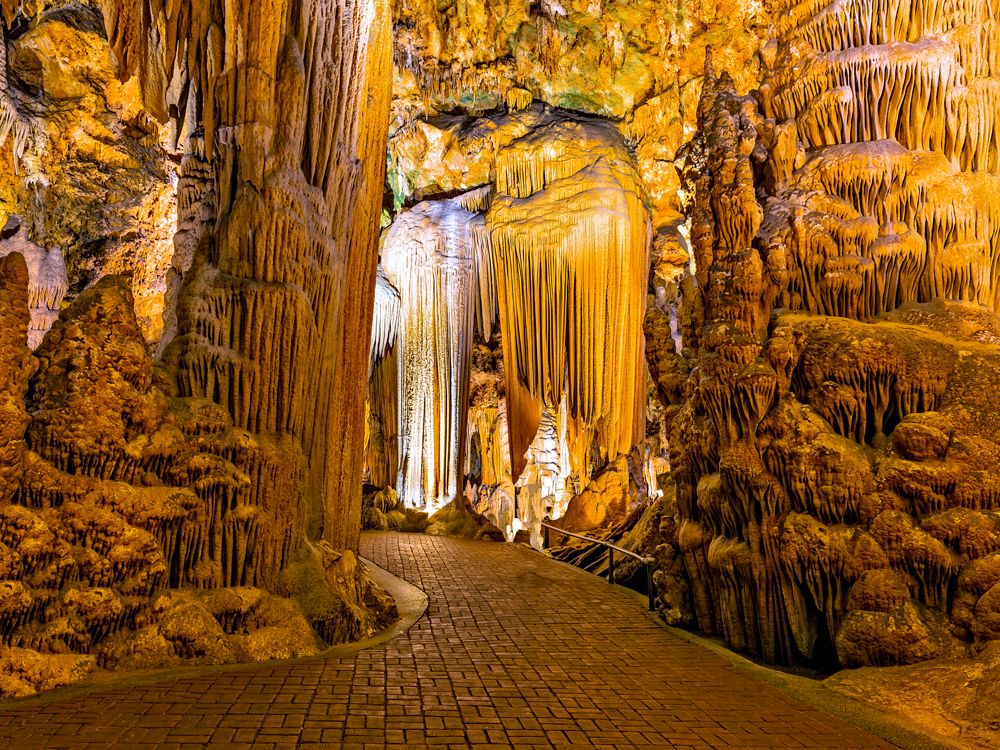
In the early 1900s, one of the country’s most spectacular underground sites was discovered by accident under the ranch lands of Sonora, Texas, about halfway between San Antonio and Big Bend National Park. Since then, the Caverns of Sonora have become renowned for their otherworldly array of mineral deposit formations, including imposing stalactites, intricate stalagmites, and delicate, shimmering calcite crystals. Perhaps the most famous among the many natural sculptures is a pair of symmetrical fishtail helictites known as the Butterfly. In 1966, the cave system was made a National Natural Landmark. With about 95% of its formations still growing, the site, while open to the public, remains protected.

Post Banner Image
Culture

5 Unexpectedly Romantic Getaways Around the World

By Fiona Mokry
Read time: 5 minutes
February 8, 2024
Updated: February 8, 2024

5 Unexpectedly Romantic Getaways Around the World

By Fiona Mokry
Author
Fiona Mokry
Fiona has spent her career exploring the world and working in the travel industry, turning her lifelong passion into a profession. From planning custom trips to sharing stories as a travel writer for publications such as The Discoverer, she’s all about helping others experience the world in a deeper, more meaningful way.

The romantic appeal of some destinations is obvious — we’re looking at you Paris, the Amalfi Coast, and Bora Bora — but these places tend to be swarming with lovestruck couples. Instead, grab your partner and explore a new, unexpectedly romantic place this year, one that offers a balance of adventurous activities and intimate experiences to deepen your bond. Here are five of our favorite underrated romantic trip ideas for couples.

Maribor, Slovenia

Aerial view of vineyard on sloping hillside in Maribor, Slovenia
Photo credit: Matic Stojs Lomovsek/ Shutterstock

The relatively small, central European country of Slovenia is often passed up for bigger-name neighboring destinations like Italy, Croatia, and Austria. But it would be a mistake to overlook Slovenia’s stunning landscapes, charming cities, and long-standing wine regions. In fact, Slovenians love wine so much that it’s estimated there is one vineyard for every 70 residents — and very little of the wine is exported. If you and your partner both have an appreciation for fine wine, head straight to Maribor, Slovenia’s second-largest city. 

As Slovenia has yet to be discovered by the masses, vineyard tours and wine tastings here feel more intimate in Maribor than many places in Western Europe. The world’s oldest grape vine still bearing fruit grows in the middle of Maribor, and several walking wine tours are offered throughout the city. To access Slovenia’s largest wine-growing region, Podravje, rent a car and drive into the beautiful countryside to sample unique varietals like rebula. Back in town, the romantic vibes continue with time spent in the charming Old Town cafes, wandering arm-in-arm around the city’s back alleys, and admiring the Gothic and Renaissance architecture at every turn. 


Reykjavik, Iceland

Dramatic river canyon at sunset in Iceland
Photo credit: Mike Ver Sprill/ Shutterstock

There’s something truly special about witnessing the otherworldly landscapes of Iceland in person — and it can strengthen the bond of anyone experiencing it together. Located roughly 50 miles from the capital of Reykjavik is Thingvellir National Park, where you can stand together between two tectonic plates, snorkel in the clear waters of the Silfra Fissure, gaze upon waterfalls, and explore majestic mountains, glaciers, and craggily valleys. 

When it’s time to unwind from epic adventure days, take a dip in the Blue Lagoon’s healing waters. As evening temperatures drop, couples can find a local bar or restaurant in the quaint capital and warm up with Brennivín, Iceland’s unique national beverage. With so much to do in and around Reykjavik, you might be spending your spare moments planning your next trip to Iceland. 

New Orleans, Louisiana

Colorful buildings in New Orleans, Louisiana
Photo credit: William Morgan/ Alamy Stock Photo

If both music and food are your love language, then the Big Easy is one of the best cities to experience with your other half. Known for its jazz scene and vibrant nightlife, Bourbon Street is a must-see, but don’t let it define your time in New Orleans. Instead, soak up NOLA’s true character at the best music venues in the city, along Frenchmen Street in the Faubourg Marigny neighborhood. 

For a taste of authentic Creole cuisine, book a table for two at Antoine’s, the oldest restaurant in the city (and the birthplace of several culinary classics). Or for a more casual outing, grab a spot in line at Domilise’s for one of the best po’boys in town. Be sure to dive into New Orleans’ rich history with a visit to world-class museums like the New Orleans Museum of Art and National World War II Museum — or perhaps hold each other in a tight embrace for one of the city’s famous ghost tours

Marrakech, Morocco

Bold blue home and gardens in Marrakech, Morocco
Photo credit: Alexander_Magnum/ Shutterstock

If your dream of romance is wandering aimlessly around the endless alleyways of a UNESCO World Heritage Site with your partner, then the magic of Marrakech will be evident from your first step inside this ancient walled city. Explore the labyrinth of the medina, which leads to countless shops selling locally made goods, a century-old kasbah, authentic hammams, and famous tanneries. 

Soak up the excitement of the beating heart of Marrakech, the Jemaa El-Fnna, over mint tea and tagine from a restaurant overlooking the historic market, or enjoy time together in a rooftop pool of a lavish riad, a traditional Moroccan villa with a lavish interior courtyard. When you need a break from the buzzing souks, make your way to Le Jardin Secret, a peaceful botanic refuge nearby. When you’re ready to venture out again, check out Jardin Majorelle. Designed by French artist Jacques Majorelle in the 1920s, it’s famous for its vibrant blue accents, stately fountains, and exotic plants.  

Puerto Rico

Cobblestone street in Old San Juan, Puerto Rico, at night
Photo credit: Dennis van de Water/ Shutterstock

This U.S. territory doesn’t require a passport to travel to but still feels a world away from the rest of the continental U.S. Hop on a direct, often inexpensive flight from many cities on the East Coast or Midwest, and you’ll touch down in paradise a few hours later. 

Founded by Spanish colonists in the 16th century, Old San Juan is packed with brightly colored buildings, domes, arches, and balconies typical of Gothic, Renaissance, and Baroque architecture. The city is fringed with historic fortifications, and a visit to either Castillo San Felipe del Morro, Castillo San Cristóbal, and La Fortaleza provides valuable historic context while offering uninterrupted views of the Caribbean. After discovering San Juan, rent a car and head west for laid-back, romantic beach towns and world-class surfing. Driving east will take you to El Yunque National Forest or Vieques Island’s Mosquito Bay for an unforgettable bioluminescence experience. 

Post Banner Image
Tips

Where Is Tipping Considered Rude? Tipping Rules You Need to Know

By Daily Passport Team
Read time: 4 minutes
February 8, 2024
Updated: April 28, 2026

Where Is Tipping Considered Rude? Tipping Rules You Need to Know

By Daily Passport Team
Author
Daily Passport Team
Daily Passport writers have been seen in publications such as National Geographic, Food & Wine, CBC, Condé Nast Traveler, and Business Insider. They're passionate about uncovering unique destinations and sharing expert tips with curious travelers.

Even seasoned travelers can get confused when it comes to tipping etiquette. It might be an expectation in some cultures, particularly in North America, while in others, such as Japan, it might even be considered offensive. Figuring out how much extra to add to your bill at a restaurant abroad can be awkward and frustrating, and if you leave too much or too little you may be running afoul of local tipping customs. So, it’s best to do a little research before you head to a new country — here are a few helpful tips for tipping that you should know.

Where Does Tipping Culture Come From?

Melrose Abbey and cemetery in Scotland
Photo credit: Chad Bontrager/ Shutterstock

As an American, you might be so used to tipping that you haven’t given much thought to where the custom originated. Tipping has its roots in the Middle Ages, but it didn’t become widespread until the 19th century in Tudor England, according to the book Tipping: An American Social History of Gratuities. Visitors to private homes gave their host small sums of money, known as vails, for their kindness. By the beginning of the 19th century, guests at Britain’s stately homes could expect to dish out a sizable sum of money to their staff. As Americans began to travel overseas, they took notice of the practice and adopted it.

Where Should You Tip?

Red double-decker buses on curving street in London, England
Photo credit: Prisma by Dukas Presseagentur GmbH/ Alamy Stock Photo

These days, though tipping is usual in restaurants, you won’t find as widespread of a tipping culture in the U.K. as in North America. It’s customary to tip between 10% to 15% of the bill when ordering a meal at a restaurant, but note that some restaurants will levy a service charge instead, in which case there’s no need to tip. And it’s not as common to tip for takeout or counter service, or in pubs and bars. If you take a taxi and are paying cash, rounding up is still the norm, or you can tip around 10%. Hotel guests generally tip porters and other workers, though this isn’t always expected. 

Tipping rules vary in other European countries, but in general — if a service charge is not already included in your bill — tipping between 5% to 10% is customary for restaurants with table service. In France, most restaurants automatically add a 15% service charge by law, so it’s not necessary to tip on top of that (though a few extra euros or rounding up your bill is always appreciated). It’s a similar situation in Switzerland, where service is included in the bill by law. 

In Southern European countries such as Italy, Portugal, and Spain, you’ll often find as little as 5% is considered an acceptable tip. Similarly, in Benelux and Scandinavia, 5% to 10% will suffice if there’s no service charge on your bill. In many establishments in Germany and Austria, a server comes to your table wearing a money belt. The tip in these situations (and in many other European countries) is paid by cash, and you’re only expected to round up your bill by a few euros, whether you’re paying for a round of drinks or a tableful of meals. Use the phrase stimmt so or even a simple danke to indicate that you don’t require change.

Where to Avoid Tipping

Pedestrian-filled Tokyo street lined with billboards
Photo credit: Yuen Man Cheung/ Alamy Stock Photo

In most Asian countries, such as Japan or South Korea, there’s no ingrained tipping culture. Concierges, waiters, and porters are likely to refuse a tip and may even be offended if offered one. In Japan, you’ll be greeted with quizzical looks if you attempt to round up your bill after a meal — it’s a little like offering your supermarket cashier the option to keep the change when you’re paying for your groceries. In addition, the strong work ethic and culture of hospitality negates the rationale of a tip as being an incentive to work harder. One exception, however, are tour guides, who are likely to politely accept a small token of your appreciation.

China is another country that doesn’t have a long history of tipping. Aside from luxury hotel chains, it would be out of the ordinary to offer extra cash for good service. In Hong Kong and Macau, however, the culture is slightly different, thanks to the colonial influence of Great Britain and Portugal. There, you’ll find things more in line with a European experience, and tipping may be appreciated in certain situations. 

When in Doubt, Look Around

Vintage yellow car parked in front of Parisian sidewalk café
Photo credit: Brian Jannsen/ Alamy Stock Photo

Elsewhere, such as Latin America or Africa, tipping isn’t usually expected (but always appreciated). It’s usually customary to add up to 10% to the bill at a restaurant, though — especially upscale ones. When in doubt, look around: Are the locals around you leaving a few extra coins on their check at the restaurant? Did everyone else in the tour group hand the driver some cash? If you didn’t do your research ahead of time, you can always follow the lead of others. 

Post Banner Image
Culture

The Best Places for Chocolate Lovers to Travel

By Daily Passport Team
Read time: 7 minutes
February 8, 2024
Updated: February 21, 2024

The Best Places for Chocolate Lovers to Travel

By Daily Passport Team
Author
Daily Passport Team
Daily Passport writers have been seen in publications such as National Geographic, Food & Wine, CBC, Condé Nast Traveler, and Business Insider. They're passionate about uncovering unique destinations and sharing expert tips with curious travelers.

Who doesn’t love chocolate? No matter how you consume it — as a chunky candy bar, baked into cookies, swirled into ice cream — chocolate is one of the world’s most beloved flavors. Many countries have their own unique take on the sweet treat, so for cocoa connaisseurs, there’s a world of chocolate out there waiting to be discovered. Here are eight of the best places to travel if you’re a chocolate lover.

Brussels, Belgium

Street lined with apartment buildings in Brussels, Belgium
Photo credit: Adisa/ Shutterstock

With some 500 chocolatiers in the Belgian capital, it’s no surprise that Brussels is considered by many to be the “world capital of chocolate.” The city’s love affair with chocolate dates back to the 17th century, when Spain ruled Belgian territory and imported cocoa beans from their colonies in South America. Belgium’s wealthy elite couldn’t get enough of the tasty treat, and hot chocolate shops sprung up all over the city.

The recipe for chocolate largely stayed the same in the centuries that followed. But in the mid-1900s, a Swiss immigrant named Jean Neuhaus had a novel idea. Neuhaus, a pharmacist by trade, came up with the idea to coat his medicines in chocolate. His grandson took the concept and ran with it, coating bite-sized nuts, nougats, and other candies in a thin layer of chocolate. Jean Neuhaus Jr.’s wife Louise designed a box to protect the family’s creations, et voilà — pralines were born. Neuhaus now has shops all over the world, but Bruxellois have their own favorite artisanal chocolatiers. Try Chocolaterie Mary, beloved by the Belgian royal family, for iced chestnuts and choco-coated yuzu peel.

Hershey, Pennsylvania

View of Hershey factory across grounds in Hershey, Pennsylvania
Photo credit: Kristoffer Tripplaar/ Alamy Stock Photo

An entire city in Pennsylvania is named after the company founded by Milton S. Hershey, America’s original chocolate king. The city of Hershey, which was built up around his factory, was incorporated in 1908, and is now home to chocolate-centric gardens, amusement parks, shops, and museums.

When visiting the self-proclaimed “Sweetest Place on Earth,” your first stop should be the Hershey Museum on Chocolate Avenue, where you can read all about the ups and downs of the eccentric, charitable businessman who started it all. Then head over to Hershey’s Chocolate World, where mascots dressed as Hershey’s Kisses and peanut butter cups welcome you into their sugary domain. Make your own chocolate bar and customize the wrapping to your taste, or witness the theatrical, steampunk-style show about the art and science of chocolate tasting.

Located next door is Hersheypark, a sprawling amusement complex with chocolate-themed rides such as the Candymonium and the Cocoa Coaster. If you weren’t already filled to the brim with chocolate, you can indulge in chocolate-infused foods at the Chocolatier, from cocoa-dusted short ribs to pizzas with a chocolatey balsamic glaze.

Birmingham, England

Brick buildings surrounding canal in Birmingham, England
Photo credit: Tupungato/ Shutterstock

Britain’s bustling “second city” is perhaps best known for two foods: curry and chocolate. Fans of purple foil-wrapped Cadbury confections should make a pilgrimage to Cadbury World, which offers tours not only of the Victorian-era factory, but also of the fascinating village the philanthropic Cadbury family constructed. The Cadbury family found their fortune selling hot cocoa in Birmingham’s pollution-choked city center of the 19th century.

In 1878, the family bought a vast plot of land outside the city to build a “factory in a garden” and create a healthier working environment for their workers. The result was Bournville, a pretty suburb filled with cottages, entertainment venues, and plenty of green space where employees could spend their time off. Explore Bournville before visiting Cadbury World, where the fascinating factory tour tells the complete story of Cadbury’s chocolate, offers you the chance to try your hand at molding, and boasts the world’s biggest Cadbury store. Save room for dessert — you’ll get plenty of free chocolate on your tour.

Zurich, Switzerland

Bridge over river in Zurich, Switzerland, illuminated at night
Photo credit: Nataliya Hora/ Shutterstock

Switzerland is home to some of the world’s best-known chocolate brands. In Zurich, you’ll find the enormous Lindt-Sprüngli factory, which began operations in 1845, when two brothers produced the first solid chocolate in the German-speaking part of Switzerland. It was a roaring success, and other chocolatiers soon capitalized on their idea.

In 1879, a pharmacist named Rodolphe Lindt and his brother came up with another revolutionary idea in the world of chocolate. They created the melt-on-your-tongue Lindt truffle by removing excess liquid from the manufacturing process; this stopped the sugar inside the bars from crystallizing, which often made the product too hard. Lindt and Sprüngli merged in 1899, and in 2020, the company opened its Home of Chocolate, where you can view the production line and marvel at a chocolate fountain almost 30 feet high.

Oaxaca, Mexico

Colorful buildings and red flowering tree in Oaxaca, Mexico
Photo credit: Oliver Gerhard/ Alamy Stock Photo

Europe may be home to the world’s chocolate capitals, but Mexico is the place where it all began, with the cultivation of cocoa beans by ancient Mesoamerican societies some 4,000 years ago. While the city of Oaxaca isn’t known for growing the stuff, the flower-filled city has plenty of tasty and traditional ways of eating it. Stroll down Mina Street to take in the aroma of chocolate-grinding shops, where cocoa is finely ground and dusted into a variety of Oaxacan recipes. 

Chocolate’s Nauhautl name, xocolatl, means “bitter water,” so the next thing to tick off your bucket list should be sipping a mug of champurrado from a street cart. The corn-based drink is popular all over Mexico, but in the Oaxacan version, tejate, the corn is toasted and the cacao beans are fermented.

Next, move on to Oaxaca’s preferred main course: anything with mole negro on it. The sauce is an incredibly complex concoction, with usually at least 25 ingredients, but the key addition is bittersweet chocolate. The elegant Casa Oaxaca serves up a succulent slow-cooked turkey doused in the indulgent sauce.

St. Lucia

View of the Pitons mountain and boats in bay in St. Lucia
Photo credit: BlueOrange Studio/ Shutterstock

In addition to sun and sea, St. Lucia’s natural environment also offers cacao pods in abundance. The island’s volcanic soil and tropical climate means its beans are some of the best on the planet, and they have been exported to Europe since the 1700s. Every August is Chocolate Heritage Month, during which the whole island celebrates its connection to the confection with festivals and food stalls. Try the island’s rich cocoa tea, with added vanilla and cinnamon, for a tasty Caribbean pick-me-up.

If you’re keen to learn more about the bean-to-bar process, visit a chocolate estate, where cacao is grown and harvested before being exported. Discover the traditional cocoa-rina dance, a method in which lively human footwork was used to polish the raw beans. Plus, learn how fermentation works, and how beans are dried and roasted to bring out their intoxicating taste. Many of these estates also offer luxurious hotel suites and pampering spas for chocoholics to enjoy. You’ll struggle not to lick the chocolate off your skin during a chocolate facial, and enjoy dishes made with locally cultivated chocolate.

San Francisco, California

Couple walking in Ghirardelli Square with company sign in San Francisco, California
Photo credit: Rosangela Lima/ Alamy Stock Photo

Wander along San Francisco’s Fisherman’s Wharf, and you’ll soon discover a picturesque clock tower and an illuminated arch welcoming you to Ghirardelli Square, the city’s famous hot fudge sundae hangout. Founded in 1852, Ghirardelli’s is the oldest continuously operating chocolate maker in the U.S., and although it doesn’t actually manufacture chocolate in San Francisco anymore, the city is still one of the best places in the country for chocolate lovers to get their fix.

Chocolate first came to California during the Gold Rush, when French and Italian immigrants, including Dominico Ghirardelli himself, began producing it on a small scale. Another Californian chocolate company founded during this era was the artisanal Guittard, which doesn’t offer factory tours, but does sell some of America’s best couverture chocolate, using original formulas and traditional French methods. 

Turin, Italy

City square flanked by twin churches and clock tower in Turin, Italy
Photo credit: Alessandro Cristiano/ Shutterstock

The list of chocolate-loving cities concludes with another European chocolate capital to satisfy your sweet tooth. Café culture has always been a staple of northern Italian life, and over the last 500 years, creative chocolatiers have put this palatial city on the chocolate map. The “Italian chocolate capital” is now home to an annual chocolate festival, Cioccolatò, where hundreds of chocolatiers compete for your attention with their finest products.

Turin’s city center is even home to a chocolate district, where you can buy a cup of bicerin, a decadent fusion of drinking chocolate, espresso, and hot milk. The original (and arguably best) place to try it is Caffe al Bicerin, a gorgeous wood-paneled salon where politicians, artists, and philosophers have mingled over warm chocolate since 1763.

Post Banner Image
Culture

5 Secret Spots in NYC Most Tourists Don’t Know About

By Bennett Kleinman
Read time: 6 minutes
February 8, 2024
Updated: October 16, 2025

5 Secret Spots in NYC Most Tourists Don’t Know About

By Bennett Kleinman
Author
Bennett Kleinman
Bennett is a New York City-based staff writer for Daily Passport. He previously contributed to television programs such as the Late Show With David Letterman, as well as digital publications like the Onion. Bennett has traveled to 48 U.S. states and all 30 Major League Baseball stadiums.

Travelers from all over the world descend on the “City That Never Sleeps” to experience the singular culture of New York City. For first-time visitors, Central Park, Times Square, a Broadway show, the Empire State Building, the Brooklyn Bridge, a visit to MoMA, or an afternoon in Little Italy or Chinatown will likely be on the agenda. But what about those lesser-known spots that even some New Yorkers don’t know about? Discover five “secret” New York City sites that will deepen your understanding of the city’s history and lore. 

City Hall Station

Abandoned City Hall Station in Lower Manhattan, New York City
Photo credit: Media Drum World/ Alamy Stock Photo

Lower Manhattan’s City Hall Station offers a fascinating glimpse into a bygone era of the Big Apple. Dating to 1904 as a part of New York City’s original subway line, this defunct station was designed in a Romanesque Revival style, featuring tile-clad vaulted ceilings, chandeliers, stained glass, and skylights. The station’s most distinctive feature, though, is its gracefully curving platform — and it’s that whimsical touch that ultimately shut down the station. As ridership increased, cars had to be lengthened, and those longer trains required longer platforms to navigate. Now, City Hall Station serves as a time capsule from a more genteel period of Manhattan’s transportation history.  

Seeing City Hall Station can be tricky: It’s located at the end of the downtown-bound number 6 train, which ends at the Brooklyn Bridge stop just before those stunning vaults come into view. In-the-know passengers can attempt to stay aboard the train as it changes directions to head back uptown. As it does so, stowaways can get a peek of through the legendary station. Otherwise, look for tours led by the New York Transit Museum — which are free but infrequent (be sure to book well in advance).

Renwick Smallpox Hospital

Ruins of the Renwick Smallpox Hospital
Photo credit: Jannis Werner/ Alamy Stock Photo

Built in 1856 in the Gothic Revival style, Renwick Smallpox Hospital is a must-see for anyone who gets a kick out of exploring abandoned buildings. The historic New York City landmark — now in ruins — is located on Roosevelt Island. This was a strategic choice: Its isolated location in the middle of the East River made the whole of the island (then known as Blackwell’s Island) a quarantine zone. 

In those days, New York’s population density and constant influx of immigrants made it an epicenter for smallpox. Fortunately, in the late 19th century, a successful vaccine eradicated the disease, and the hospital was closed. Since then, time, weather, and vandals have decimated the building, leaving only its crumbling facade. Today, the ruins are viewable but fenced off and home to a feral cat colony, but a public park is planned for the area.

Aside from the hospital, the rest of Roosevelt Island is an off-the-beaten-path destination worth exploring. Accessible via the bright red Roosevelt Island Tram, which offers sweeping views of the city, the island is also home to the Blackwell Island Lighthouse, dating to 1872, and the Octagon, an imposing eight-sided structure that once served as an asylum entrance. Also on the island is the Blackwell House, one of the oldest structures in New York City, along with FDR Four Freedoms Park — a tribute to former President Franklin Delano Roosevelt. Designed in the 1970s by world-famous architect Louis Kahn, it was only recently completed in 2012.

City Reliquary

Entrance to City Reliquary in Brooklyn, New York City, with brightly colored awning
Photo credit: Hemis/ Alamy Stock Photo

What started as a resident’s quirky window display of found objects is now a museum displaying an impressive array of New York’s everyday relics and ephemera. From the outside, Dave Herman’s City Reliquary looks like a classic New York City bodega or deli — complete with a vintage, multicolored awning. 

But instead of snacks and lottery tickets, the tiny space is packed with a rotating assemblage of subway tokens and turnstiles, postcards and handbills, cornerstones and cobblestones, antique bottles and baseball cards — even a fortune-teller’s booth and a burned-out lightbulb from the Statue of Liberty’s torch. With a scope that is both broad and entertaining, there is truly something for everyone: sports buffs, amateur historians, and burlesque fans alike.

The collection — which includes artifacts donated by museum visitors — is located across the East River from Manhattan, in Brooklyn’s Williamsburg neighborhood. It chronicles a sort of cultural history of New York through everyday and often disposable items. In addition to the exhibits, the Reliquary hosts events throughout the year ranging from crafting nights and tag sales to podcast tapings, music tributes, and film screenings. The shop is also worth a visit for one-of-a-kind New York souvenirs, from classic tchotchkes to artist-made items. 

Snug Harbor Cultural Center

Greenhouse and gardens at the Snug Harbor Cultural Center on Staten Island in New York City
Photo credit: AA World Travel Library / Alamy Stock Photo

A scenic (and free) ride on the iconic Staten Island Ferry might already be on your itinerary — so you might as well add a wholly unique cultural stop while you’re at it. A visit to Staten Island’s Snug Harbor features fascinating exhibitions on local history and contemporary art, a concert hall, a children’s museum, and manicured gardens — including the Chinese Scholar’s Garden, a recreation of Ming Dynasty-era Chinese gardens built by 40 Chinese artisans and shipped to Staten Island.

Snug Harbor stems from Robert Richard Randall, an heir to a shipping fortune who passed away in 1801. His will dictated that the family’s assets be used to build a sort of retirement community for “aged, decrepit, and worn-out sailors.” Over the next century, some 50 architecturally significant structures were built across 83 acres to house and enrich the lives of retired sailors from all over the world. The campus was essentially self-sustaining, with farms and a dairy, a power plant, a chapel and cemetery, a power plant, a hospital, dormitories, and green spaces. 

In the 20th century, as both the endowment and number of residents dwindled, the complex began to fall into disrepair. But in the 1960s, the newly formed New York City Landmarks Commission saved several remaining buildings as the city’s first landmark structures. And by the 1970s, the city purchased the property as a cultural destination and ultimately merged it with the Staten Island Botanical Gardens.

Panorama of the City of New York

View of the Panorama of New York exhibit at the Queens museum from above
Photo credit: Richard Levine/ Alamy Stock Photo

Now that you’ve traveled from Manhattan and Roosevelt Island to Brooklyn and Staten Island, it’s time to visit Queens. The Panorama of the City of New York, a permanent exhibit at the Queens Museum, is a 9,335-square-foot model of the entire city’s five sprawling boroughs. It’s built to a scale of 1:1,200 — one inch equals 100 feet, making the Empire State Building about 15 inches tall. 

Urban planner Robert Moses conceived of the project to celebrate the city’s infrastructure for the 1964 world’s fair. Led by Raymond Lester and Associates, the model was constructed by around 100 artisans over the course of three years. In the 1990s, the Panorama was overhauled to more accurately depict the city’s approximately 895,000 individual structures, streets, and parks — making it somewhat of a time capsule.

The museum is located in Flushing Meadows Corona Park. On one end, the park features Citi Field — home of the New York Mets — and on the other you’ll find several experimental structures and buildings erected for the 1964 and 1939 world’s fairs. These include the Unisphere, a 12-story spherical stainless steel representation of the Earth and the UFO-shaped New York State Pavilion and lookout towers. The park also hosts the annual U.S. Open tennis tournament, and includes the New York Hall of Science, the Queens Zoo, a huge public marina, and the Fountain of the Planet of the Apes.

Post Banner Image
Outdoors

9 Incredible Private Islands You Can Actually Stay At

By Fiona Mokry
Read time: 7 minutes
February 8, 2024
Updated: February 10, 2026

9 Incredible Private Islands You Can Actually Stay At

By Fiona Mokry
Author
Fiona Mokry
Fiona has spent her career exploring the world and working in the travel industry, turning her lifelong passion into a profession. From planning custom trips to sharing stories as a travel writer for publications such as The Discoverer, she’s all about helping others experience the world in a deeper, more meaningful way.

Dreaming of leaving the world behind on your next vacation? While there are plenty of islands where you can travel to soak up the sun and escape the crowds, nothing says “off the grid” like booking a getaway to a private island. Look no further than these nine private islands that you stay at — or even rent out entirely — on your next tropical vacation. 

Cayo Espanto – Belize

Aerial view of villa on Cayo Espanto private island resort in Belize
Photo credit: Image courtesy of www.aprivateisland.com

Covering only 4 acres, Cayo Espanto is a tiny, ultra-exclusive private island tucked off Ambergris Caye, Belize’s largest island. It’s a quick eight-minute boat ride from Ambergris Caye, but the moment you arrive, it feels worlds away from your typical island resort. Seven elegant wooden villas and bungalows are set along the island’s edge, and the generous spacing between them makes it possible to never cross paths with another guest. Each one features its own private dock and loungers, beachfront access, an outdoor plunge pool, and airy, open interiors. 

The private island resort’s excellent kitchen customizes meals to guests’ tastes, using fresh tropical ingredients for a menu that changes daily. Days here can be active or laid-back, with snorkeling, kayaking, fishing charters, bird-watching, and scuba diving all right at your doorstep. And if you’re traveling with a large group, the entire island can also be rented exclusively for up to 18 guests.

Related: 7 Surprising Destinations Where English Is Widely Spoken

Song Saa – Cambodia

Waterfront villages at Song Saa private island resort in Cambodia
Photo credit: Geordie Torr/ Alamy Stock Photo

Travelers often visit Cambodia to see cultural treasures such as the temple ruins of Angkor Wat, but many skip over the islands off the coast of the backpacker-frequented town of Sihanoukville. They’re missing out: These islands — part of the Koh Rong archipelago — beckon sun-seeking travelers with clear turquoise waters and pristine white sand beaches fringed with emerald jungle. Among them is the private slice of paradise called Song Saa, home to a 24-villa resort

When designing the resort, sustainability was front and center — including crafting felled timber into the bungalows and upcycling driftwood into room decor — but luxury never takes a backseat here. The overwater and jungle villas boast infinity pools, sun decks, day beds, and spacious bedrooms and living areas with lofted ceilings. Outside the villa walls, guests can partake in activities like snorkeling, scuba diving, nature safaris, yoga, bioluminescence trips, and Buddhist ceremonies.

Kokomo Private Island – Fiji

Traditional dance performance with palm trees and beach in background at Kokomo Private Island in Fiji
Credit: Laura Carey via Getty Images News 

There’s no shortage of private islands and luxury resorts in Fiji, an island nation made up of more than 300 islands. While five-star stays are easy to find, Kokomo Private Island stands out from the pack. A 45-minute helicopter or seaplane ride from Nadi International Airport, the picture-perfect island is fringed with powdery beaches and rises into dramatic interior peaks, with hiking trails and hidden waterfalls built into the landscape. Accommodations range from 21 beachfront villas — each with infinity pools and tropical gardens — to five hilltop luxury residences with sprawling views of the South Pacific and neighboring islands. (Buggies are needed to navigate the steep terrain.) 

Kokomo is known for its commitment to wellness and sustainability, from dock-to-dish and farm-to-table dining to a spa inspired by ancient Pacific island healing traditions. Guests can also enjoy snorkeling, scuba diving, fishing, kayaking, and jungle hikes, or venture farther on guided trips to nearby islands for waterfall hikes and cultural village walks.

Thanda Island – Tanzania

Sandy white beach in Tanzania
Photo credit: Robin Batista/ Shutterstock

After marveling at Tanzania’s incredible land-dwelling animals, sail across the Indian Ocean for a stay on the privately-owned Thanda Island. The five-bedroom villa with an outdoor pool is the only accommodation on the teardrop-shaped island off the coast of East Africa. It’s an ideal holiday beach house for small groups or families (babysitting services are even available). Villa rental also allows access to two nearby bandas (traditional tented beach chalets) for guests to experience an authentic slice of Tanzanian life. 

A protected marine reserve surrounds Thanda Island, and visitors can book water excursions like swimming with whale sharks, scuba diving and snorkeling with tropical marine life, or sailing on a traditional Arab dhow boat. Refuel with meals crafted by a private chef with a focus on fresh seafood like lobster, crab, tuna, and snapper caught off Thanda — and finally, finish with ice cream made with homemade coconut milk. 

Isla Palenque – Panama

Pool area at Isla Palenque in Panama
Photo credit: Image courtesy of Isla Palenque

Set in the Gulf of Chiriquí, this lush island resort may feel remote, but it delivers polished, five-star luxury. Isla Palenque (“Sanctuary Island”) is home to old-growth forest and wildlife that captivated its now-owner Ben Loomis, who spent nights sleeping in a hammock on Palenque Beach before transforming the island into a thoughtfully designed retreat. 

Today, Isla Palenque features eight beachfront casitas and six luxury villas with artisanal furnishings. Dining at Las Rocas Restaurant and Bar showcases Panamanian cuisine, island-grown produce, and sustainably sourced seafood, with experiences like beachfront picnics and sunset cocktails available on request. Kayaking, paddleboarding, snorkeling, jungle hiking, whale watching, and guided nature tours are also available to guests. 

Amilla – The Maldives

Pier leading to overwater bungalows in the Maldives
Photo credit: Mohamed Saamy/ Shutterstock

The Maldives may be the world’s flattest country, but with roughly 1,200 islands making up 26 different atolls, you’ll find paradise at nearly every turn. The island nation is home to a whopping 132 private islands, most with just one resort per island. Built on the oblong islet of Amilla in 2014, Amilla Maldives Resort and Residences is one of the most spacious among them and has a focus on eco-friendly and sustainable practices. 

Guests stay in light-filled, ocean-facing villas or tree-top bungalows, surrounded by the cerulean Indian Ocean and reefs teeming with marine life. Snorkeling and scuba diving, cultural activities, and divine culinary experiences are popular, but the 58-acre resort island is also an ideal place to just relax by wandering amongst the coconut trees and sunbathing on sugar-sand beaches while gazing out at the seemingly endless horizon.

Little Palm Island – Florida Keys

Cabanas and lounge chairs on beach of Little Palm Island Resort in the Florida Keys
Photo credit: Image courtesy of Little Palm Island Resort & Spa

Billed as America’s sole true private island resort, Little Palm Island in the Florida Keys is accessible only by boat or seaplane. This adults-only escape is designed for those who are looking to truly unplug — the thatched-roof bungalows are free of TVs, and the use of electronics is gently discouraged (although Wi-Fi is available throughout the resort). Instead, guests enjoy candlelit dinners, long conversations, and deep relaxation free of distractions. 

Dining is al fresco, with ocean views and a rotating menu from a chef who has worked in Michelin-starred establishments. Each of the 30 bungalow suites offers private beach access and cabanas. Two lagoon pools anchor either end of the island, while a tranquil spa sits beneath a soaring, jungle-shrouded atrium. Offshore, guests can scuba dive, kayak, paddleboard, fish, or hop on a sunset cruise. The island can also be booked for private retreats or full buyouts for up to 60 guests, making it an ultra-exclusive setting for weddings or special celebrations.

Moskito Island – British Virgin Islands

Cove with sandy beach, turquoise waters, and sailboat in the British Virgin Islands
Photo credit: S.E.A. Photo/ Alamy Stock Photo

British business magnate Richard Branson purchased this Caribbean jewel in 2007 and transformed it into the Branson Beach Estate on Moskito Island. The three villas at this luxurious Balinese-inspired property can be reserved individually or all together to ensure the most exclusive stay. Each bungalow sleeps six to eight people and offers direct beach access, miles of ocean views, indoor and outdoor lounge areas, and an infinity pool. 

The property spreads across 19,000 square feet, and guests can access a fully-equipped gym, tennis courts, walking trails, private beaches, and beach barbecue facilities. Deep-sea fishing, snorkeling, kite surfing, sailing, and day trips to nearby islands can be arranged on request. 

Medjumbe Island – Mozambique

Pristine white-sand beach on Medjumbe Island in  Mozambique
Credit: ROBIN MCKELVIE/ Alamy Stock Photo 

Part of the protected Quirimbas Archipelago, Medjumbe is a tiny private isle off Mozambique’s northern coast. Less than a mile long and only a few hundred feet wide, this swirl of white sand and lush greenery is home to the ultra-exclusive Anantara Medjumbe Island Resort. The island has just 12 beachfront villas, each with a thatched roof, African-inspired design, a private plunge pool, an outdoor shower, and sweeping ocean views. 

Getting here is part of the experience: Guests fly into Pemba, then take a scenic helicopter ride or short domestic flight straight to the island’s private airstrip. Life on Medjumbe moves slowly, with days spent diving and snorkeling among pristine reefs, sailing, deep-sea fishing, dolphin and whale watching, or hopping over to nearby islands. Dining is equally special, whether it’s a private meal with your feet in the sand or an intimate dinner in the open-air lounge overlooking the ocean. Remote, serene, and elegant, Medjumbe is truly a bucket-list destination.