Marissa is a cheap airfare aficionado who loves exploring offbeat destinations with her husband. Based in Los Angeles and Joshua Tree, Marissa has been featured in publications such as San Diego Magazine, Palm Springs Life Magazine, 303 Magazine, and Mountain Living.
Across all 50 states, the U.S. is home to stunning collections of plants. From manicured rose gardens to tropical arboretums and Japanese gardens filled with koi ponds, botanical gardens entice travelers from around the world to witness the wonders Mother Earth created. Here are six of the most mesmerizing botanical gardens in the U.S.
United States Botanic Garden – Washington, D.C.
Credit: OlegAlbinsky/ iStock Unreleased via Getty Images
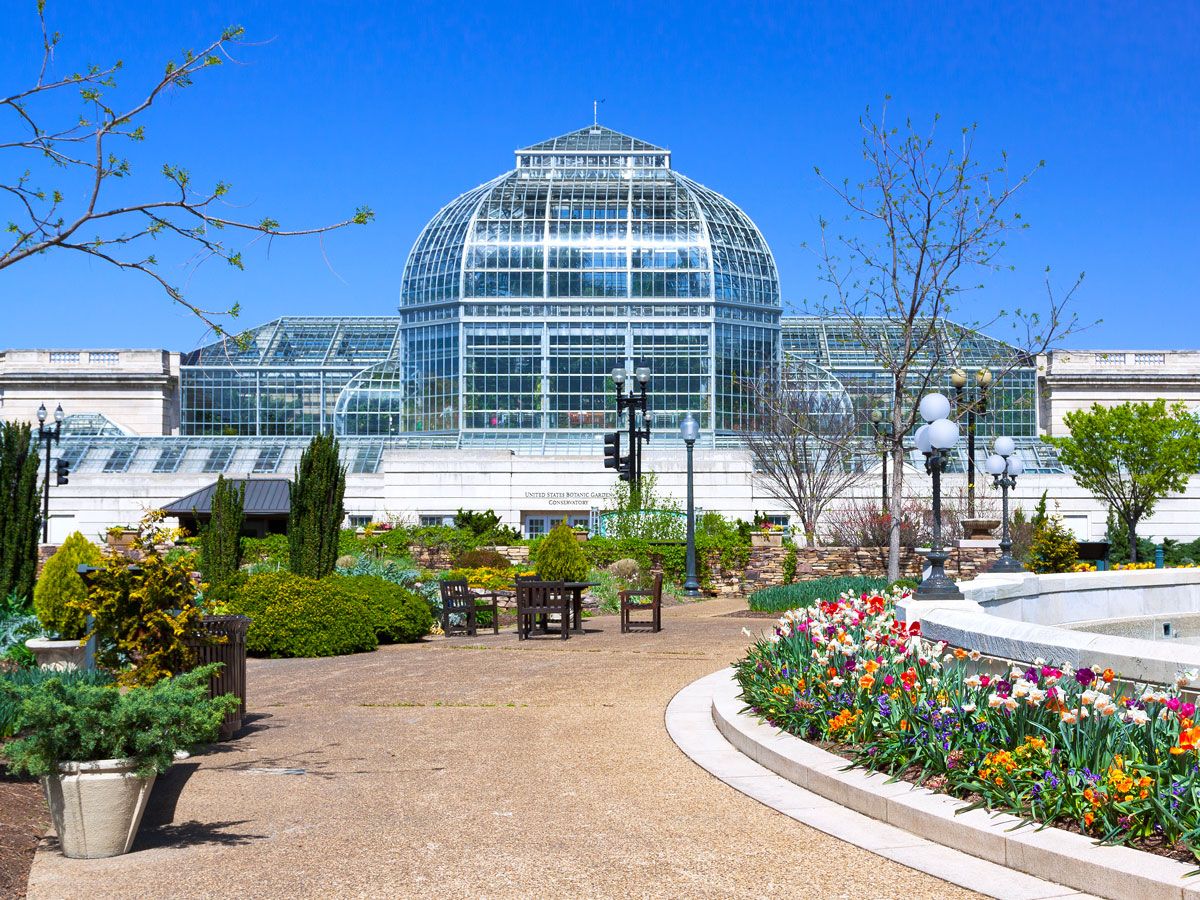
Located on the grounds of the Capitol, the United States Botanic Garden opened in 1850, making it the oldest continuously operating public garden in the nation. George Washington’s wish to have a national botanical garden became a reality when the Wilkes Expedition of the Pacific Ocean in 1842 brought a collection of living plants from around the globe to D.C. Four of those original plants are still part of the current collection, which includes 44,000 plants, ranging from a rare corpse flower and unusual orchids to medicinal herbs and other noteworthy specimens of historical significance.
Attractions at the garden include the Bartholdi Fountain, which was designed by Statue of Liberty architect Frédéric Auguste Bartholdi; the historic Lord and Burnham greenhouse dating back to 1933; the Garden Court, featuring economic and ethnobotanical plants used for medicine, food, and clothing; and the National Garden, showcasing native plants of the United States.
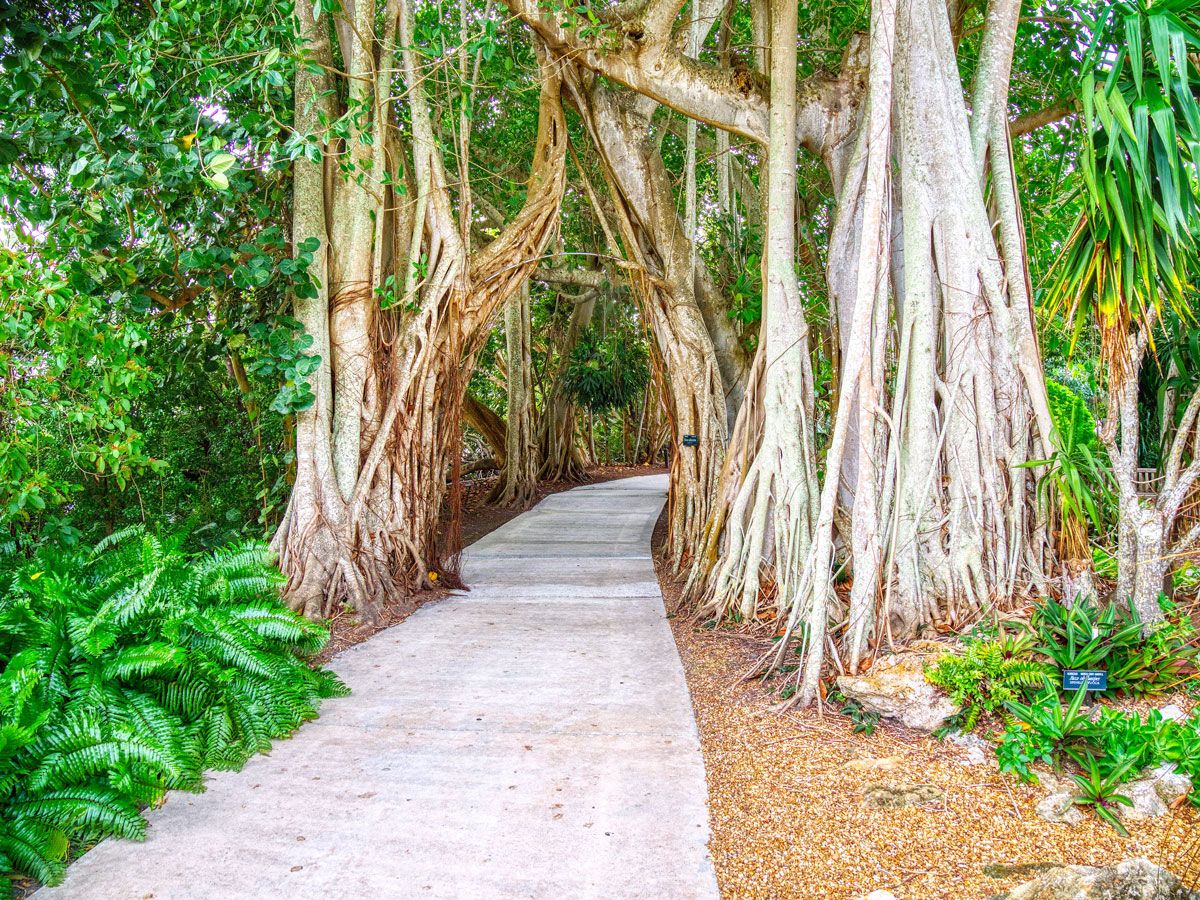
The Marie Selby Botanical Gardens are located on 45 acres across two campuses in Sarasota, Florida. This bayfront oasis features nature trails through old mangrove trees, boardwalks around a koi pond with a babbling waterfall, and the Museum of Botany and the Arts, which contains nature-related exhibits by legends such as Andy Warhol, Marc Chagall, and Paul Gauguin.
There’s also a bromeliad exhibit (which inspired the gardens’ creation), a fern garden, a tropical conservatory, a butterfly garden, a bamboo garden, and the historic Spanish-style Selby House built in the early 1920s. Sarasota resident and gardener Marie Selby bequeathed her estate to the general public when she died in 1973, and the botanical gardens have been a place to study and preserve orchids, bromeliads, ferns, and other tropical plants ever since.
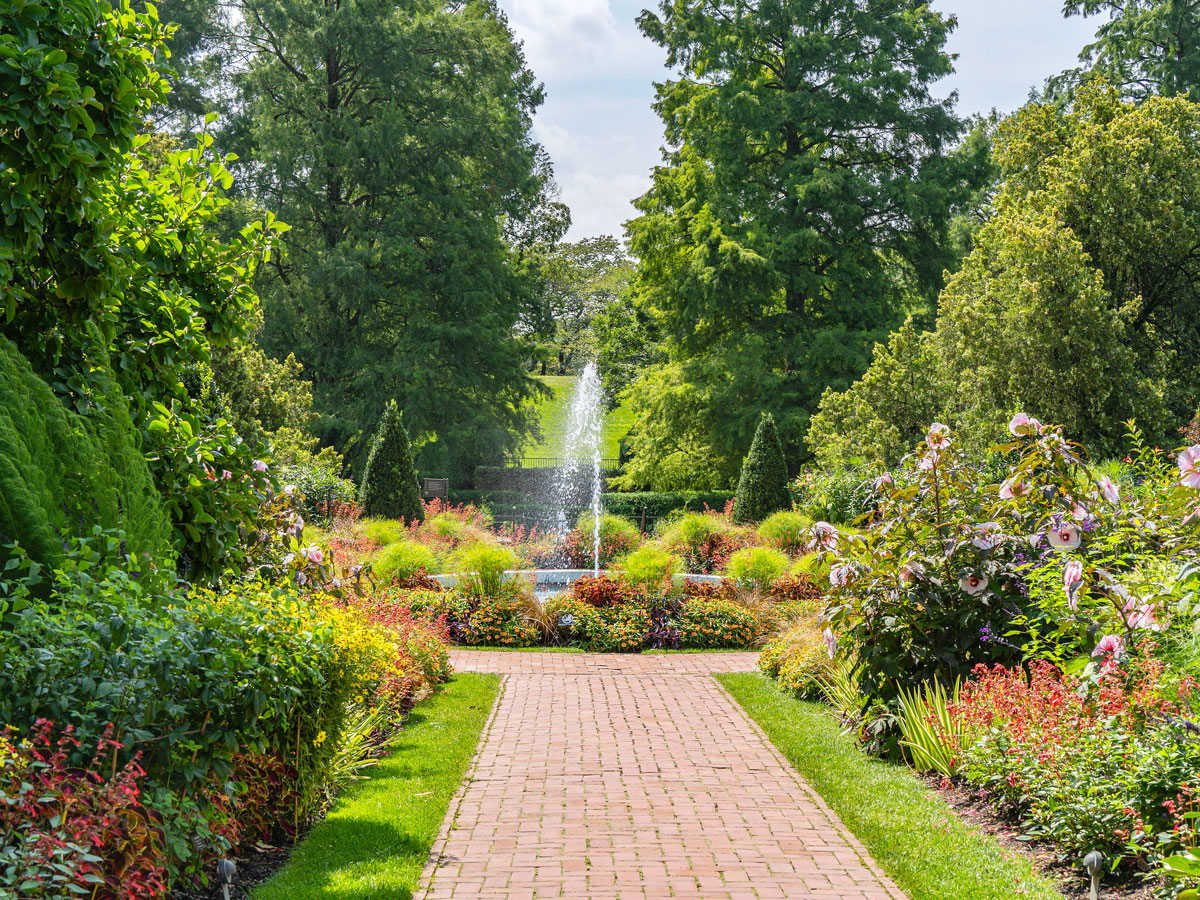
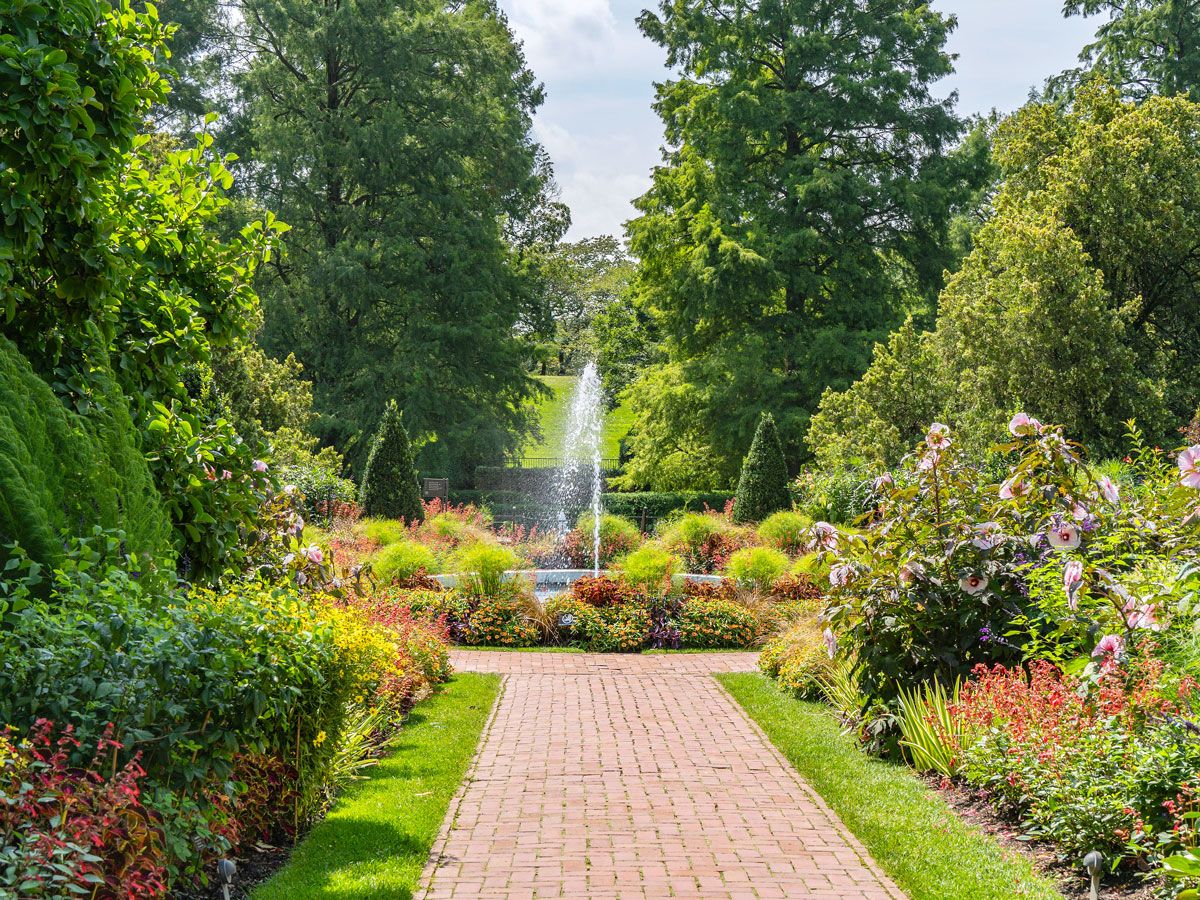
With more than 1,100 acres of meadows and woodlands, Longwood Gardens in the Brandywine Creek Valley is often touted as one of the Northeast’s best botanic gardens. The garden was once a Quaker family farm, which later opened as a public greenspace in 1921.
The collection is especially famous for its Orchid Extravaganza, held from January to March each year. The celebration features roughly 5,000 species in dizzying displays inside the Peirce-du Pont House, a historic conservatory built in 1730. In April, the Flower Garden Walk comes alive with 600 feet of brightly colored spring blossoms.
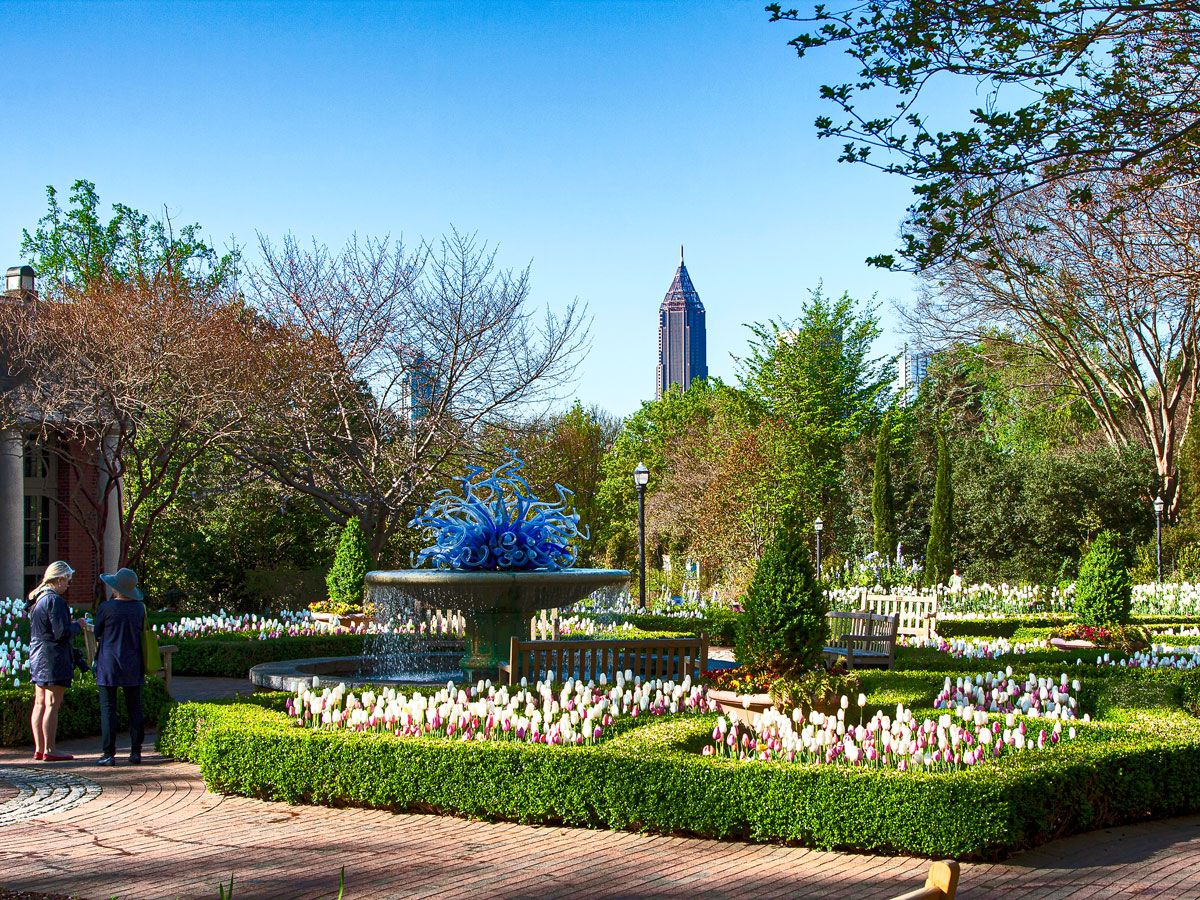
Incorporated in 1976, the Atlanta Botanical Garden showcases 30 acres of stunning blooms within Piedmont Park. The award-winning Children’s Garden features climbing nets, a water painting wall, and a treehouse, while elsewhere the garden is praised for its whimsical displays, sustainable design and programs, and hands-on exhibits.
The garden’s Alice in Wonderland attraction includes 38 larger-than-life sculptures inspired by Lewis Carroll’s timeless tales. Other highlights include Chihuly glass sculptures, the visitor center with a living green roof, a 100,000-gallon cistern for collecting rainwater for plant consumption, and Storza Woods — a canopy walk featuring a suspension bridge over the woodlands.
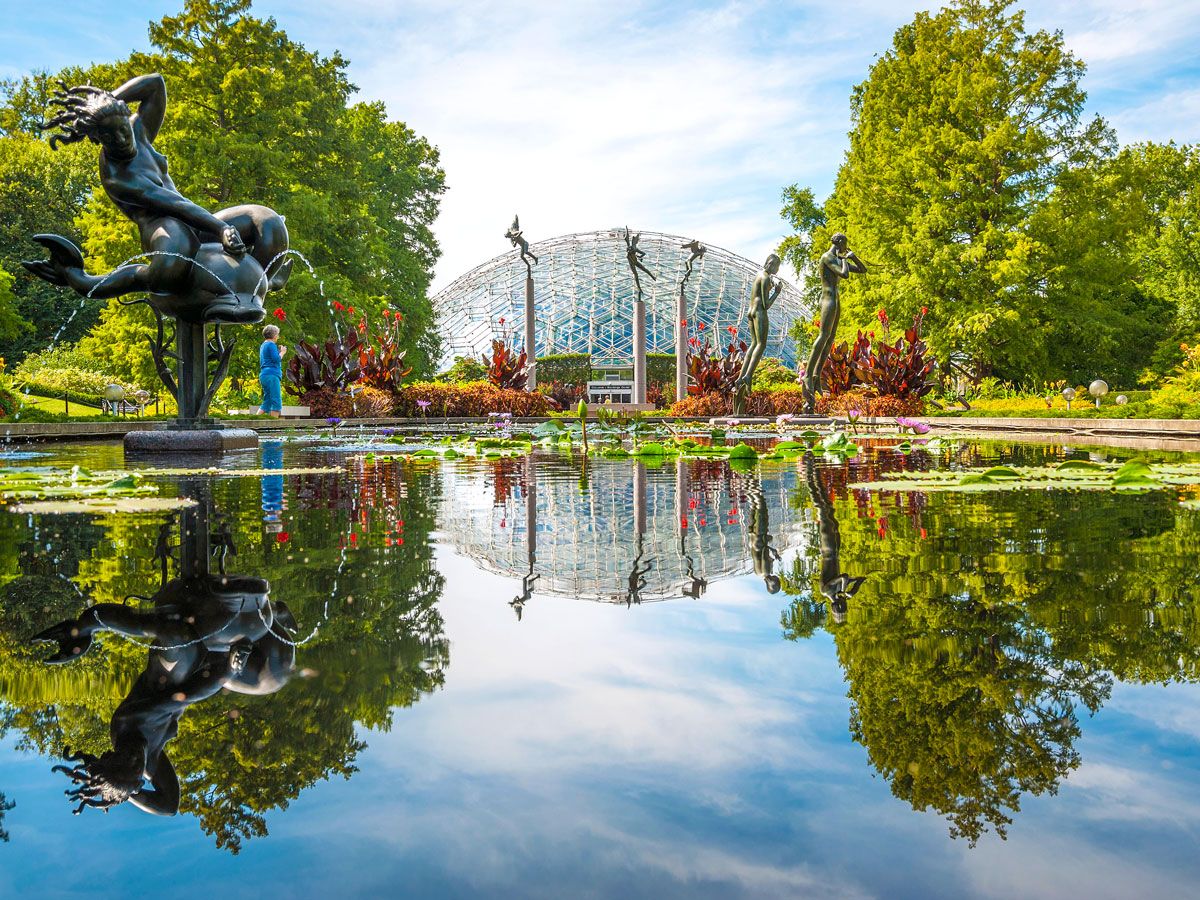
While many botanic gardens are renowned for their historic Victorian-style conservatories, Missouri Botanical Garden’s Climatron is the showstopper at this popular garden in St. Louis. The geodesic dome greenhouse houses a lowland tropical rainforest with approximately 1,500 plants adjacent to lovely ponds filled with massive lily pads and water sculptures. The dome has no interior support, which allows for more light to fill the space.
Other memorable features of the garden include the Victorian District, with several Victorian-style homes and gardens; one of the largest Japanese gardens in America, covering 14 acres; an herbarium with specimens dating to the 18th century; and a riveting azalea and rhododendron garden.
Huntington Botanical Gardens – San Marino, California
Located in San Marino, north of Los Angeles, the Huntington Library, Art Museum, and Botanical Gardens has 16 themed gardens across 130 acres. The world-renowned cultural and educational institution is also home to an art museum with more than 45,000 works from Asia, Europe, and America, spanning 500 years. It also hosts one of the world’s largest independent research libraries, housing roughly 12 million items — including the Gutenberg Bible, the Ellesmere Chaucer, and first editions of Shakespeare’s plays.
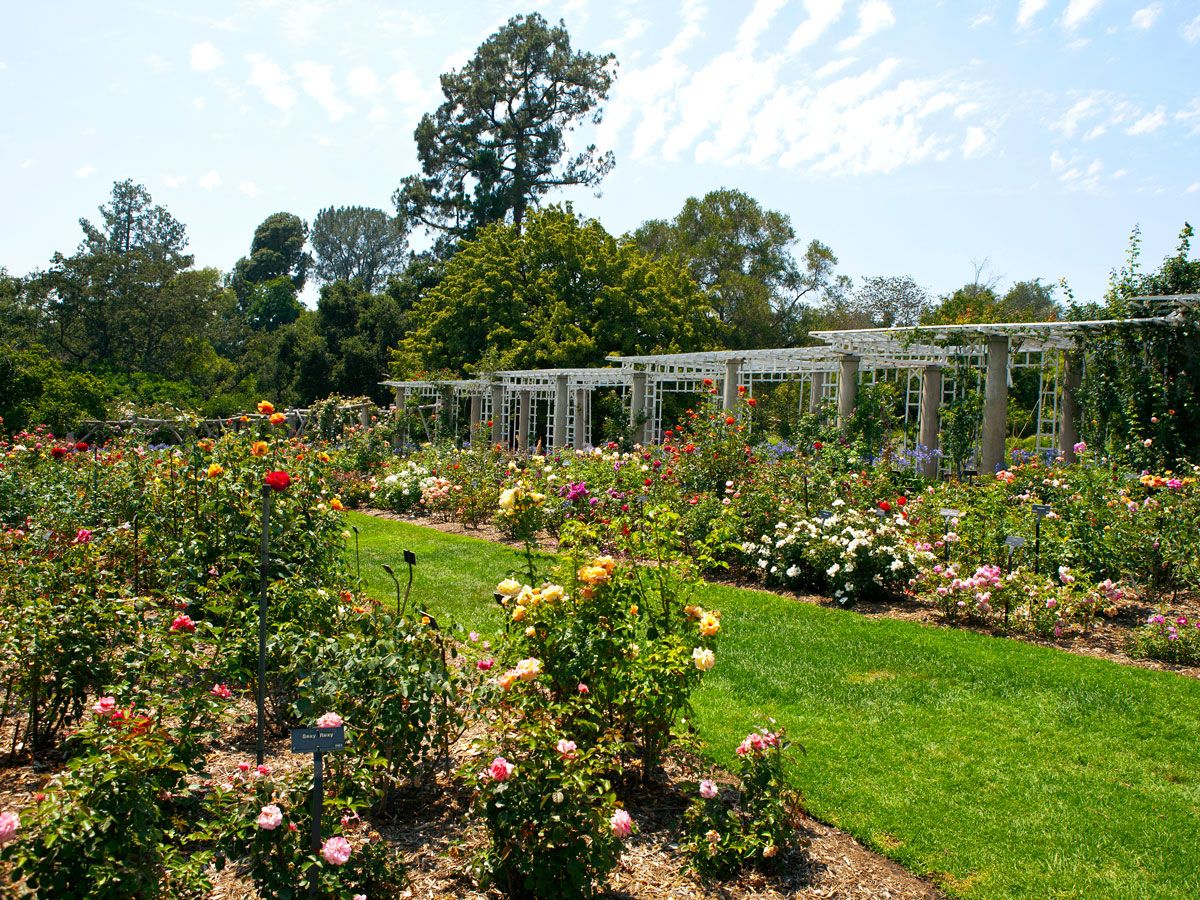
Railroad tycoon Henry Huntington paid $240,000 for his 600-acre ranch in 1903, which became a research center open to the public in 1928. The gorgeous grounds include a desert garden with thousands of succulents and surreal-looking cactuses, a Chinese garden with koi ponds, a Japanese garden with bonsai trees, and a rose garden with a tea room serving English high tea.
Rachel is a Washington, D.C.–based travel and lifestyle writer with roots in the Great Lakes region. When she’s not writing for publications such as The Discoverer and Interesting Facts, you’ll find her wandering through museums or exploring destinations off the beaten path.
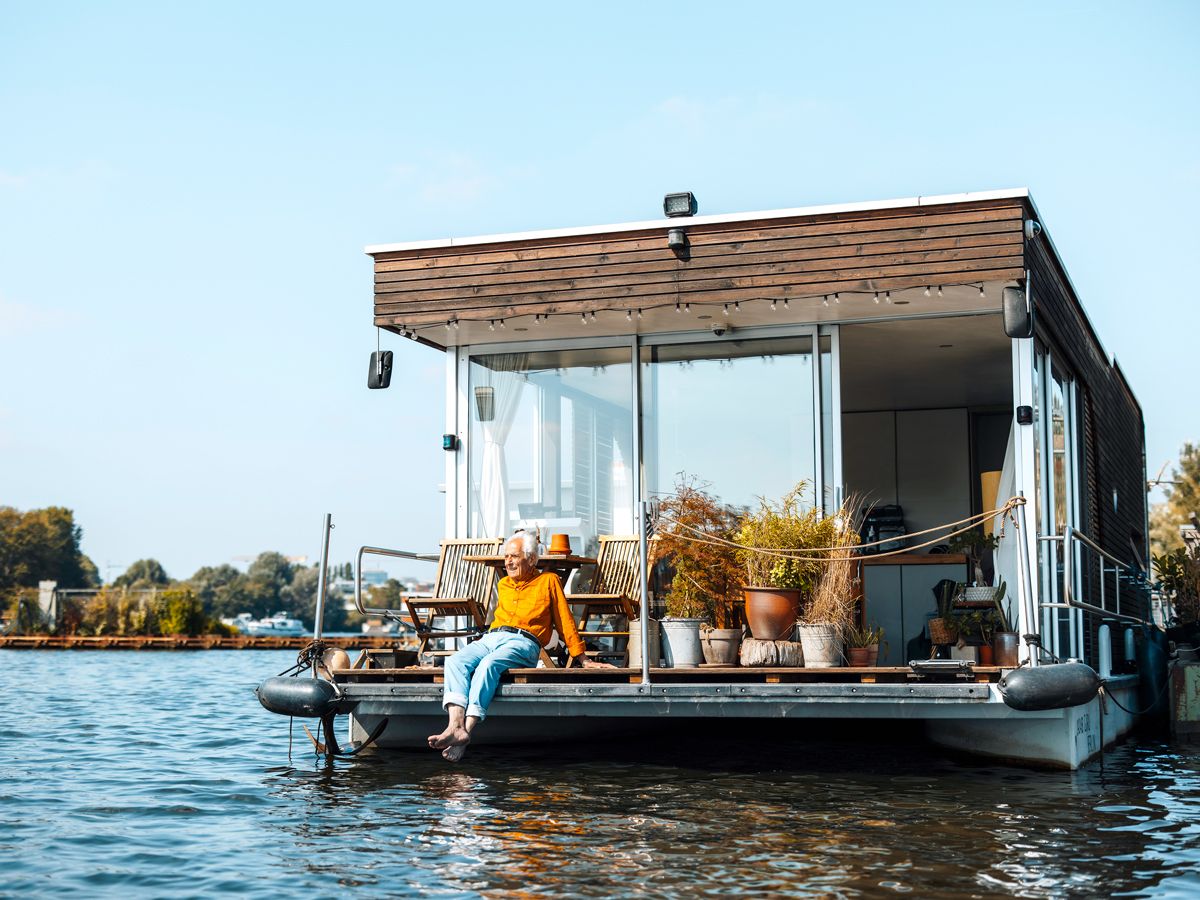
Forget finding waterfront accommodations — for a truly unique vacation, consider staying on the water in a houseboat. Houseboats blend the freedom of boating with all the comforts of home in your own cozy cabin. The best part is that you don’t need to own a boat to experience it. Houseboats — just like cabins, condos, and hotel rooms — are readily available to rent to vacationers around the world. Interested in trying one for yourself? Here are a few helpful tips for first-time houseboaters.
Houseboats are a step above your average boat rental. Unlike pontoons or speedboats that you can rent for a day trip, houseboats are essentially floating homes that are outfitted with the essentials: kitchens, bathrooms, bedrooms, Wi-Fi, and plumbing. Most can be piloted around calm lakes and rivers, but some houseboats are stationary and require a tugboat to move them, or they remain docked in place.
If they do move, they’re best for slow, scenic cruising over the course of several days (or weeks), typically maxing out at 15 mph. They’re well suited for the calm waters of lakes, rivers, or coastal inlets, rather than the open ocean. In contrast, luxury yachts are designed to travel long distances on the high seas at much faster rates.
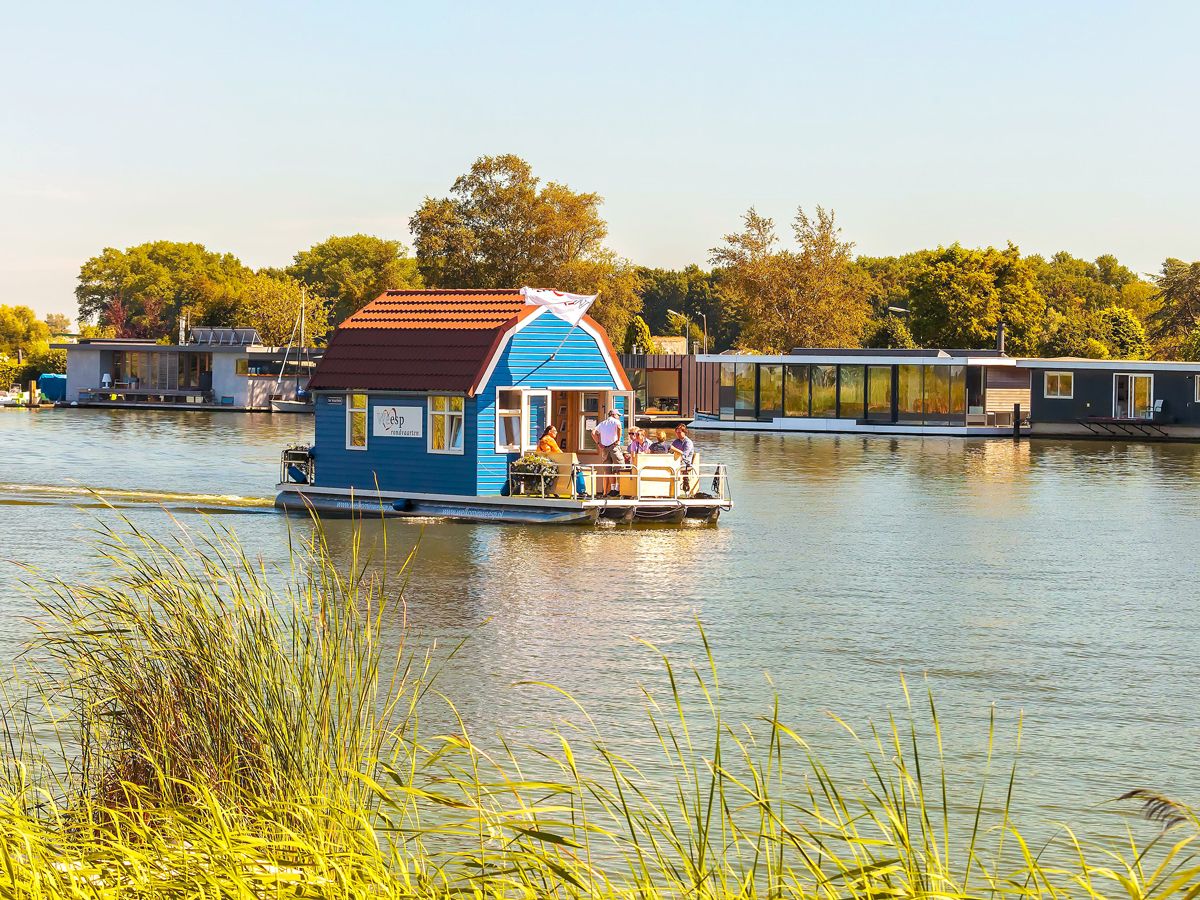
Similar to vacation home rentals, houseboat rentals come in all shapes and sizes, from ones with bare-bones cabins to accommodations with hot tubs, personal chefs, and waterslides. You can find homes available to rent in waterways around the world — you just have to know where to look.
Vacation rental platforms like Airbnb and Vrbo now feature houseboat listings, many with unique features like rooftop lounges, wraparound decks, kayaks, fishing equipment, or jet skis. When using a vacation rental platform, you can read reviews from other travelers before you book and choose from more than 200 countries and regions around the world.
If you’re looking for a site solely dedicated to water-based retreats, Le Boat offers one of the largest fleets of canal boats in Europe and Canada, with easy-to-navigate vessels that don’t require a captain’s license. (Instead, you’ll receive a temporary permit after completing a boating lesson.) Many of these rental options are also dog-friendly, making them an excellent choice for the entire family.
Many travelers choose to book a houseboat through a reputable vendor like HouseBoating.org, which offers houseboats in lakes, rivers, and canals across the U.S. and Canada. Or, if you have a specific destination in mind, a quick search for local houseboat rental companies in your chosen destination can often turn up hidden gems not listed on the big platforms.
If you’ve ever stayed at a vacation rental, many of the same tips apply to houseboats, with a few extra considerations because you’re staying on the water. First and foremost, check the licensing rules of the destination where you’re staying. If the houseboat isn’t going to be docked for your entire stay, you might need a boating license or a short certification course in order to captain the boat. The owner of your rental should provide you with this information.
Storage is typically more limited on houseboats than in other types of vacation rentals, so pack light and only bring the essentials. Most houseboats have a full kitchen, so you may be able to make some of your meals on board. However, if you’re staying in a more remote location, grocery stores might be scarce, so plan ahead and pack your own snacks, beverages, and other groceries. Along with regular toiletries and medications, you may also want to bring along some remedies for motion sickness — even if the boat is docked, it might gently rock.
As for cost, the price of a houseboat varies greatly, just like any other vacation rental, depending on location, amenities, and season. Houseboating is ideal for families and small groups, who can typically save money by booking accommodations with several bedrooms and shared living spaces. This can make even high-end houseboat rentals surprisingly affordable.
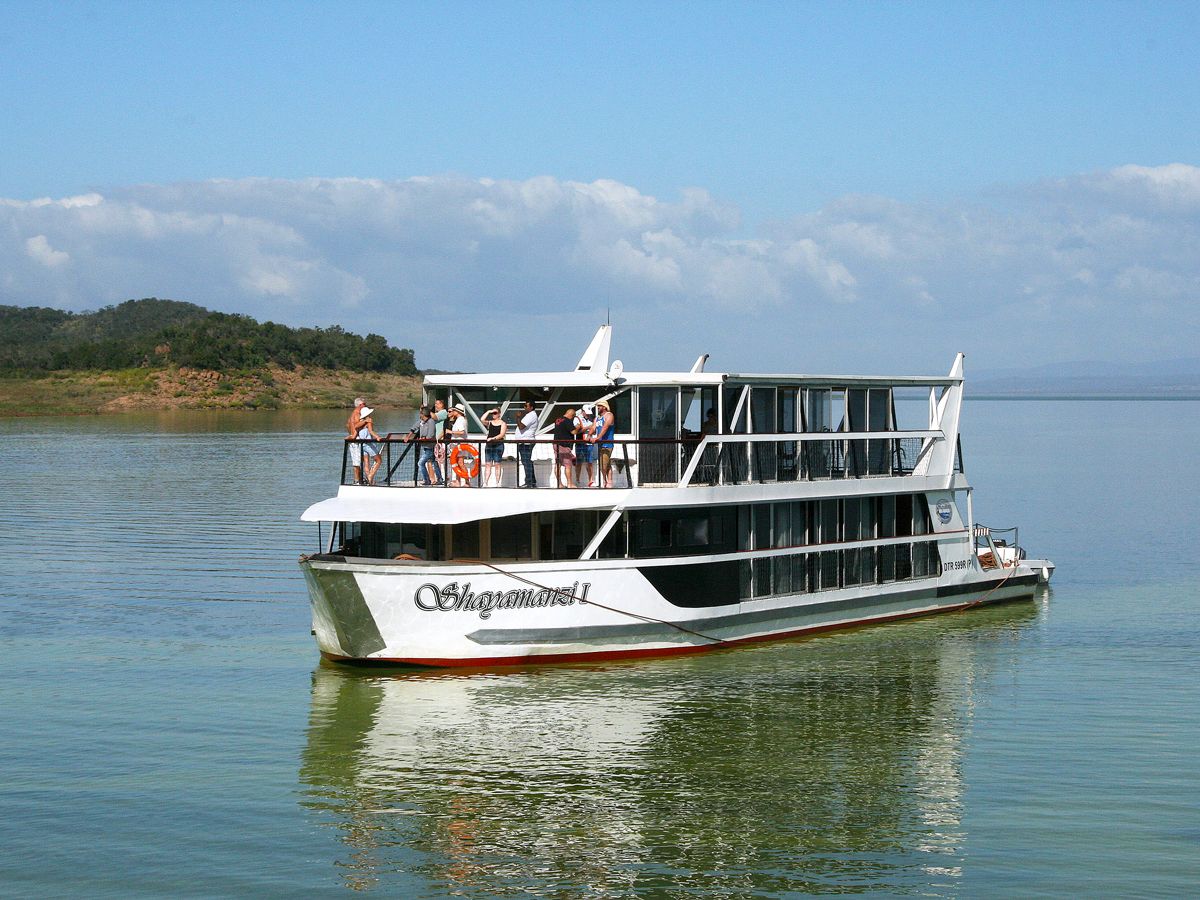
For adventurous travelers, a houseboat vacation with Shayamanzi Houseboats in South Africa may be a dream trip. These fully catered accommodations are located on Lake Jozini in the Pongola Game Reserve, offering a blend of a boating and safari trip. Guests can fish for tigerfish, a popular African game fish, or spot wildlife from the deck, all while enjoying freshly prepared meals on board.
Australia is another appealing option. From exploring the remote gorges of the Kimberley region on the guided Nyawoorn houseboat to leisurely drifting along with Murray River Houseboats in Victoria, Australia’s waterways offer incredible diversity.
For even more immersion into nature, travelers can cruise through the heart of the Amazon Rainforest in South America on a private, eco-friendly houseboat. Tour companies such as Rainforest Cruises offer customizable packages.
In Egypt, you can take a vacation on one of the most famous waterways in the world, the Nile River. One of the most popular rental options, Houseboat65 in Cairo, offers several inviting rooms with river views.
While traditional houseboats are excellent options, also consider a stay on a dahabiya. These classic Egyptian sailing vessels have been traveling the Nile River for centuries. They’re essentially floating boutique hotels, offering private rooms, gourmet meals, and exciting activities and excursions along the Nile. Tour companies like Dahabiya Nile Sailing specialize in these unforgettable journeys.
Not up for the long flight to reach your houseboat rental? You don’t have to travel far to have a memorable houseboat vacation. From skyline views in Seattle to an off-the-grid floating fishing cottage in Key West, the U.S. has many options for houseboat rentals.
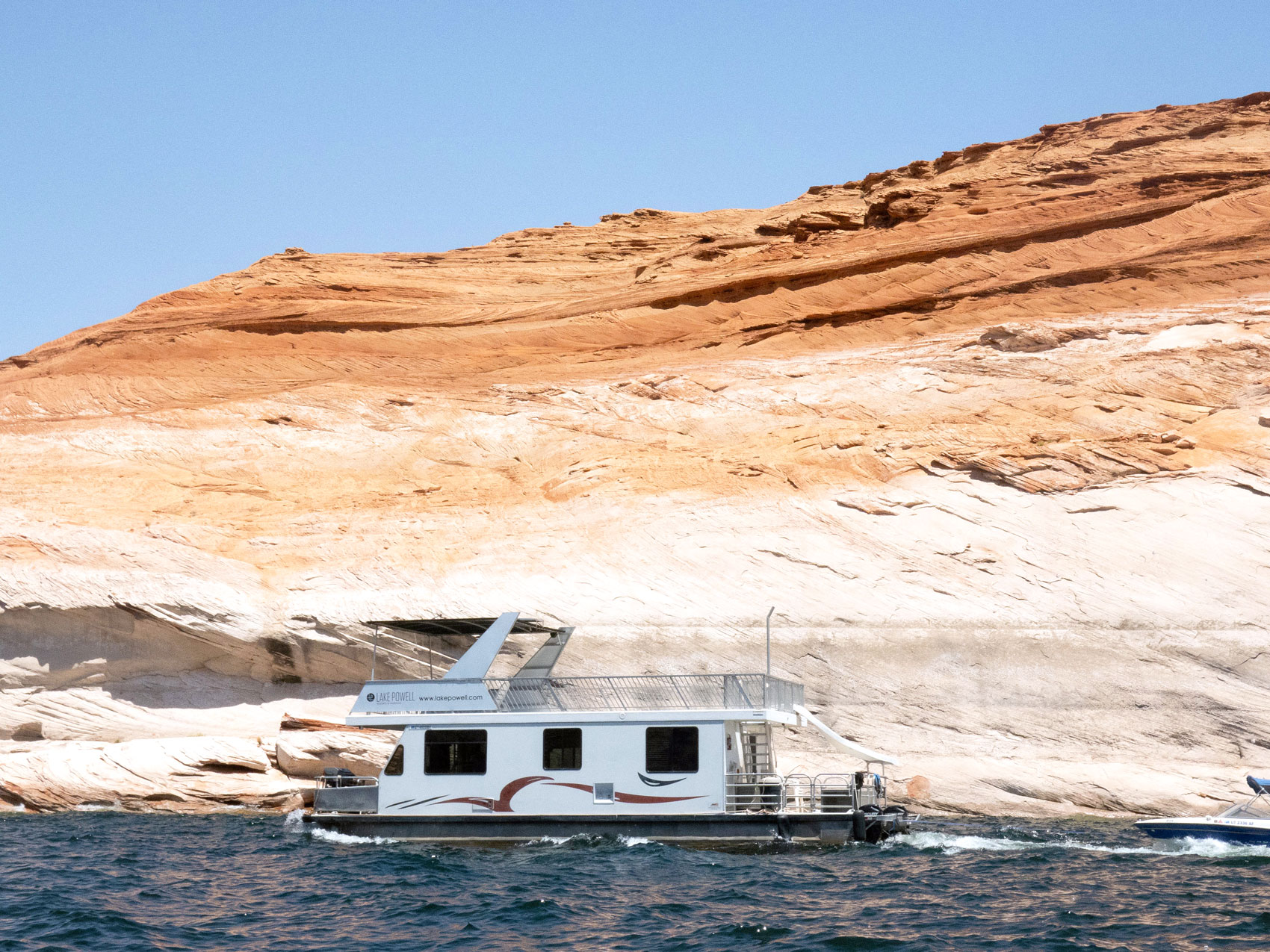
One of the top houseboating destinations in the country is Lake Powell, which straddles the Utah-Arizona border and boasts over 2,000 miles of shoreline. At Lake Powell Resorts and Marinas, first-time boaters can learn how to pilot a houseboat rental with a quick lesson. Spend your days exploring sandstone canyons while enjoying what houseboating is all about: an unforgettable vacation on the water.
Fiona has spent her career exploring the world and working in the travel industry, turning her lifelong passion into a profession. From planning custom trips to sharing stories as a travel writer for publications such as The Discoverer, she’s all about helping others experience the world in a deeper, more meaningful way.
Glass buildings don’t just look sleek — they often push the limits of modern architecture with innovative design and forward-thinking sustainability measures. From Paris to Abu Dhabi, these architectural landmarks define their city skylines and captivate onlookers. Check out five of the most interesting glass structures around the world.
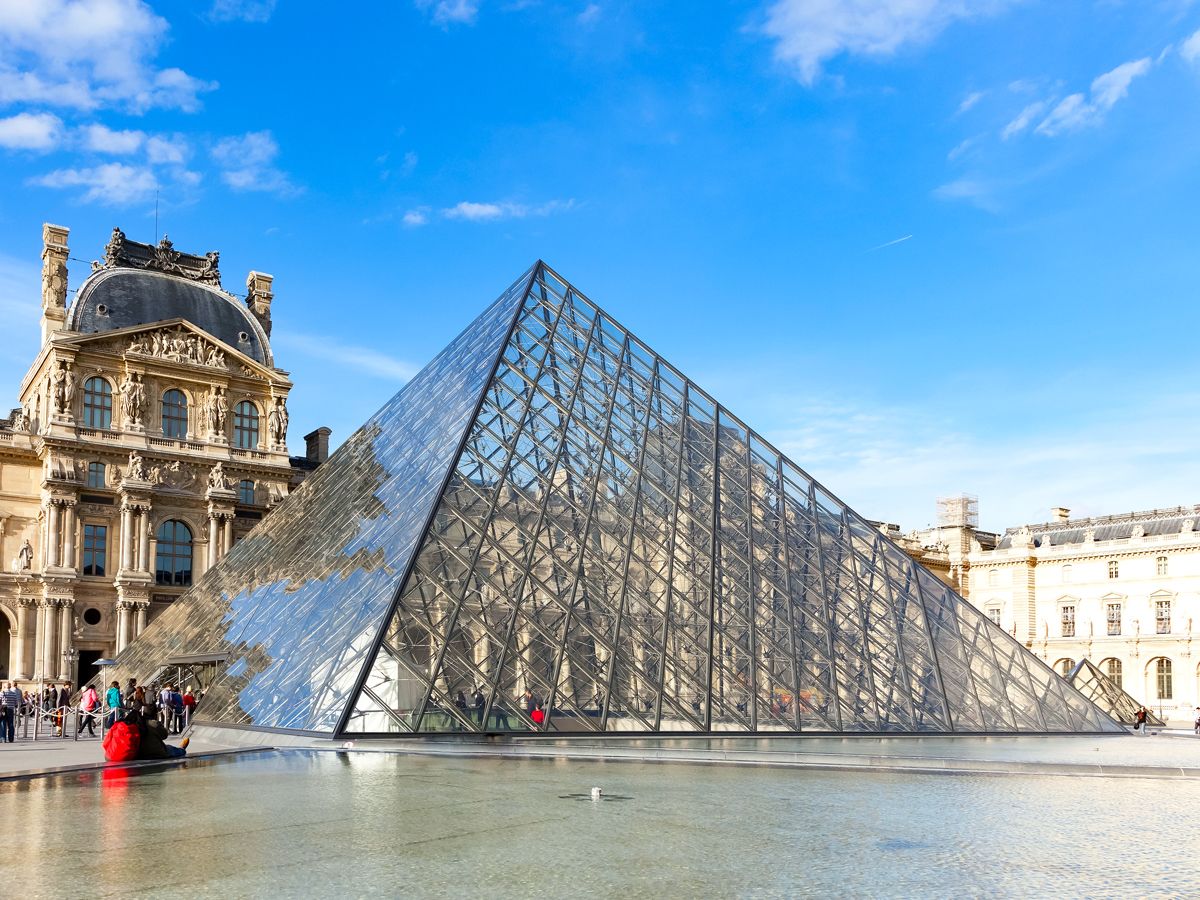
The Louvre is the most-visited museum in the world, attracting nearly 9 million visitors in 2024. It’s renowned for its vast art collection, including the “Mona Lisa,” the Venus de Milo, and the Winged Victory of Samothrace. But before you even get to the art inside, you encounter the Louvre’s famous glass pyramid entrance, designed by Chinese American architect I. M. Pei and completed in 1989 as part of the Grand Louvre Project to modernize the museum.
Instead of entering through the Louvre Palace, visitors now enter through the glass structure and descend into the museum’s main lobby. It took two years of research to develop the specially formulated, extra-clear glass used for the pyramid, which was chosen to provide unobstructed views of the Louvre Palace from both inside and outside. Situated in the center of Cour Napoléon, the expansive main courtyard of the Louvre Palace, the pyramid — though controversial at first — has become an enduring symbol of the iconic Parisian museum.
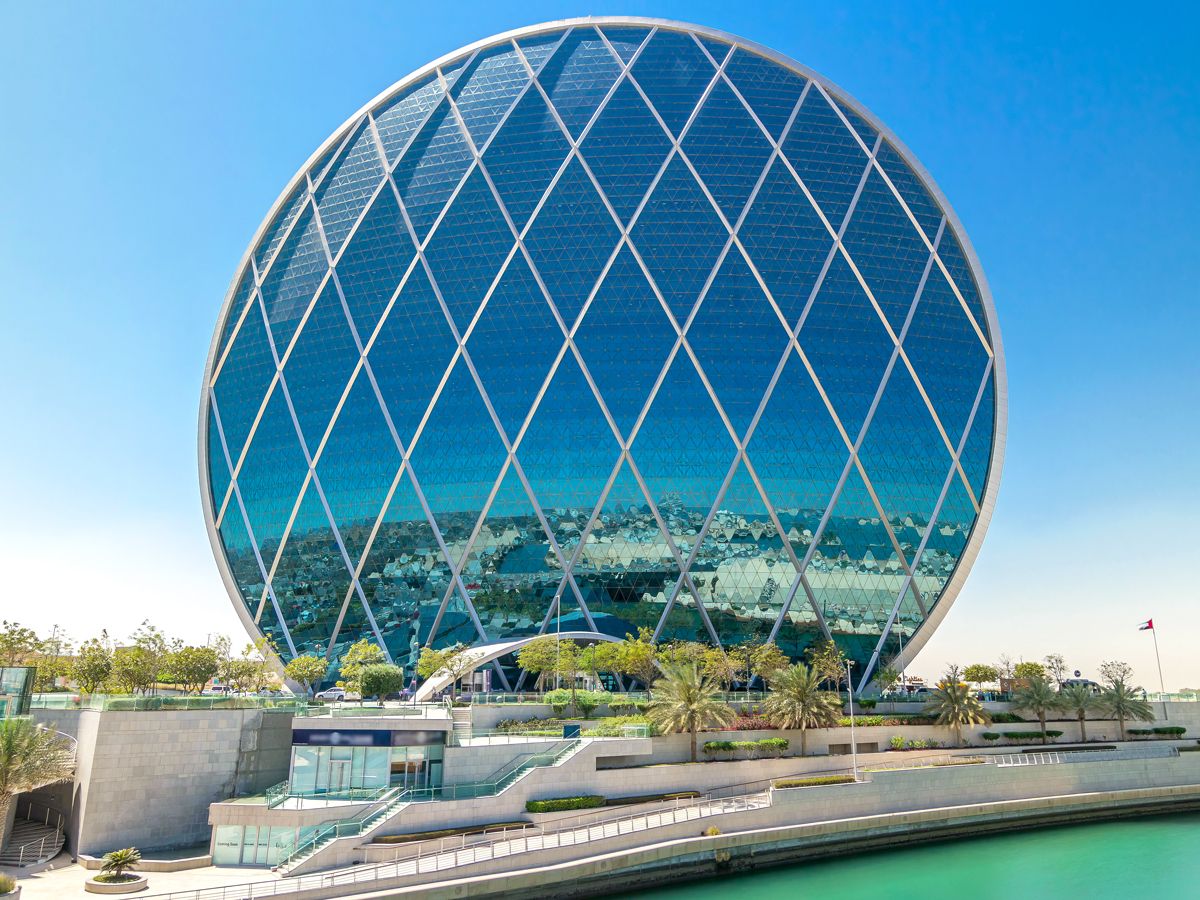
The Aldar Headquarters Building, completed in 2010, was the first spherical skyscraper in the Middle East. Located in the Al Raha area of Abu Dhabi and designed by MZ Architects, the innovative glass building was inspired by the shape of a clam shell. It features an east-west orientation, allowing natural light to stream through the glass panels, especially at sunrise and sunset.
One of the building’s most distinctive features is the lack of internal columns; instead, a diagonal steel diagridsupports the building’s unique curves. The Aldar Headquarters was also a pioneer in sustainable construction in the UAE — a significant portion of the structure was built with recycled materials, including its 270,000 square feet of glass.
National Centre for the Performing Arts – Beijing, China
Credit: Dove Lee/ Moment Unreleased via Getty Images
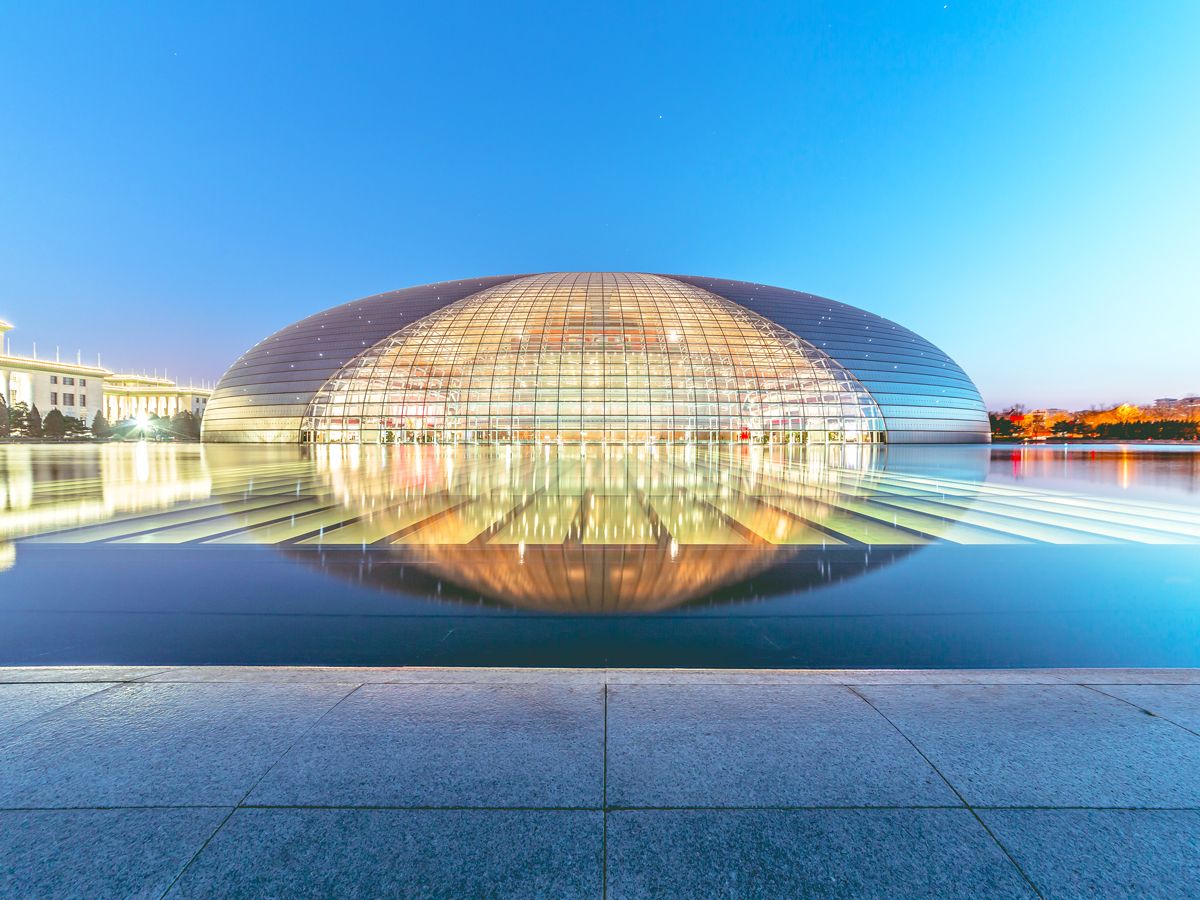
Designed by French architect Paul Andreu, Beijing’s National Centre for the Performing Arts (NCPA) is known as “the Giant Egg” for its oval shape. It is the largest performing arts complex in Asia, featuring a 2,416-seat opera house, a 2,017-seat concert hall, and two theaters. Construction began in 2001 and was completed in 2007 at a cost of $400 million. Since then, the National Centre for the Performing Arts has hosted a wide range of modern and traditional Chinese dance and theatrical performances.
Approximately 2 million people visit the NCPA each year, not only for the world-class performances, but also because the building is a landmark in itself. Its exterior shell, made from 18,000 titanium plates and 1,200 pieces of ultra-wide glass, gleams in the light, making it one of Beijing’s most iconic buildings. The structure sits at the center of a human-made lake, where the still water reflects both the sky and its massive dome, earning it another nickname — “Pearl on Water.”
Basque Health Department Headquarters – Bilbao, Spain
Credit: P. Eoche/ Stockbyte Unreleased via Getty Images
The polyhedral mirrored prism of the Basque Health Department Headquarters stands in striking contrast to the surrounding 20th-century architecture of Bilbao. Completed in 2008, the building was inspired by the form of natural diamonds. Its glass facade is visually striking and allows copious amounts of natural light to stream into the interior.
Architects Juan Coll-Barreu and Daniel Gutiérrez Zarza incorporated a unique folded facade to cleverly address Bilbao’s strict building code that mandated stepped setbacks for buildings along the city’s main boulevards. The double-skin glass exterior offers additional benefits, including sound insulation, improved energy efficiency, and a natural ventilation system that reduces the need for air-conditioning. Though designed for practical use, the building has become one of Bilbao’s most recognizable landmarks.
The Gherkin – London, England
Credit: John Lamb/ The Image Bank via Getty Images
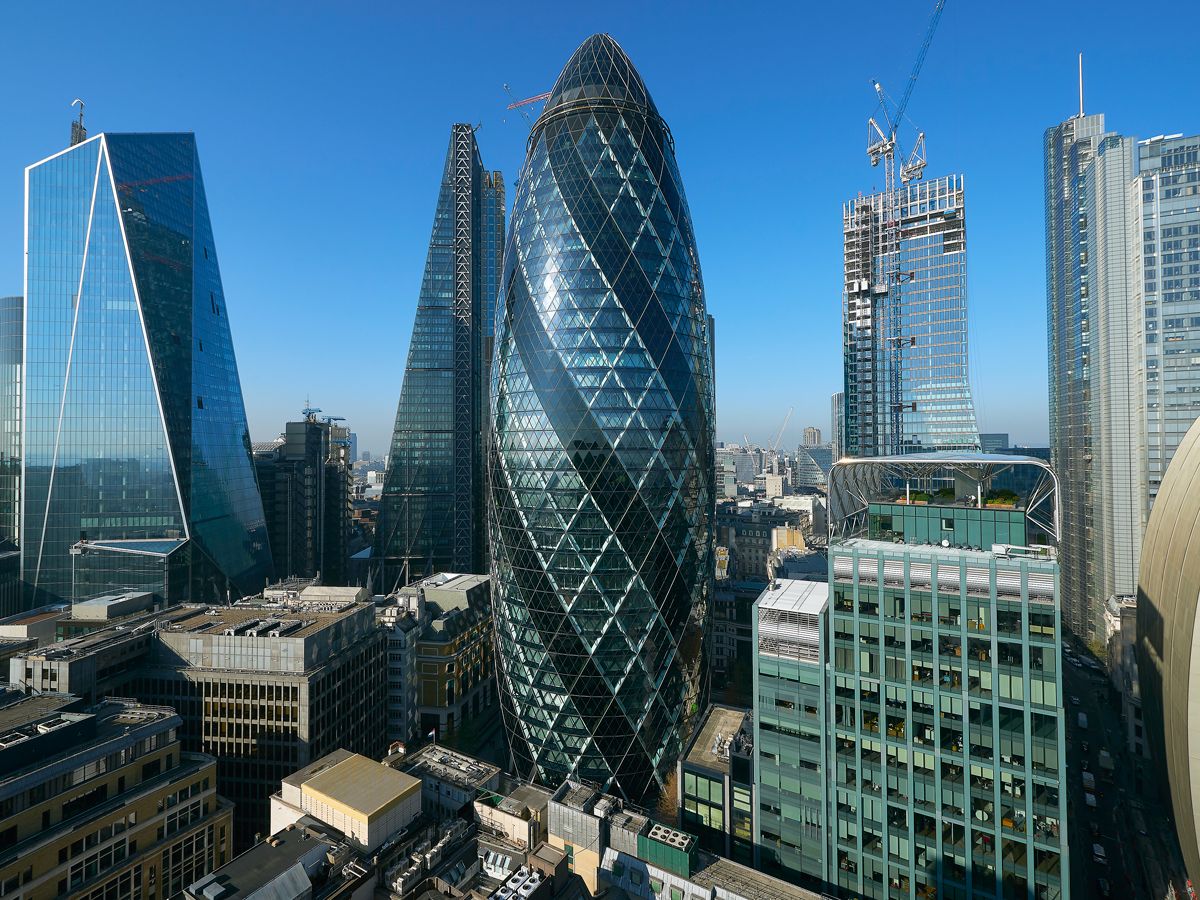
This glittering cylindrical building in London’s financial district is officially known as 30 St Mary Axe, but it’s more commonly called “the Gherkin” due to its resemblance to a pickled cucumber. The landmark building houses a range of financial, legal, and insurance firms, including Swiss Re, Kirkland & Ellis, and the Falcon Group.
Its distinctive facade — made up of a steel frame and triangular glass panels — is cleverly designed to create the illusion of a spiraling form, even though none of the glass panes is actually curved. This visual trick, along with its energy-efficient features and striking silhouette, has helped make the Gherkin one of the most recognizable buildings on the London skyline.
Michael is a staff writer for Daily Passport and film critic who writes the weekly newsletter Movie Brief. His writing and criticism have also appeared in the Los Angeles Times, Variety, and the Washington Post, among others. A native Angeleno, his favorite countries to visit are Norway and Japan.
While America may be home to some beautiful airports, if you want to experience the world’s best airports, you’ll most likely have to leave the country. In fact, you’d have to travel abroad to see any of the 20 best airports — at least according to Skytrax. The international air transport rating association just released its 2025 World Airport Awards, a customer satisfaction survey of 575 airports around the globe, published annually since 1999. Check out the 20 best airports for 2025 below.
A Repeat Winner
Credit: Mlenny/ iStock Unreleased via Getty Images
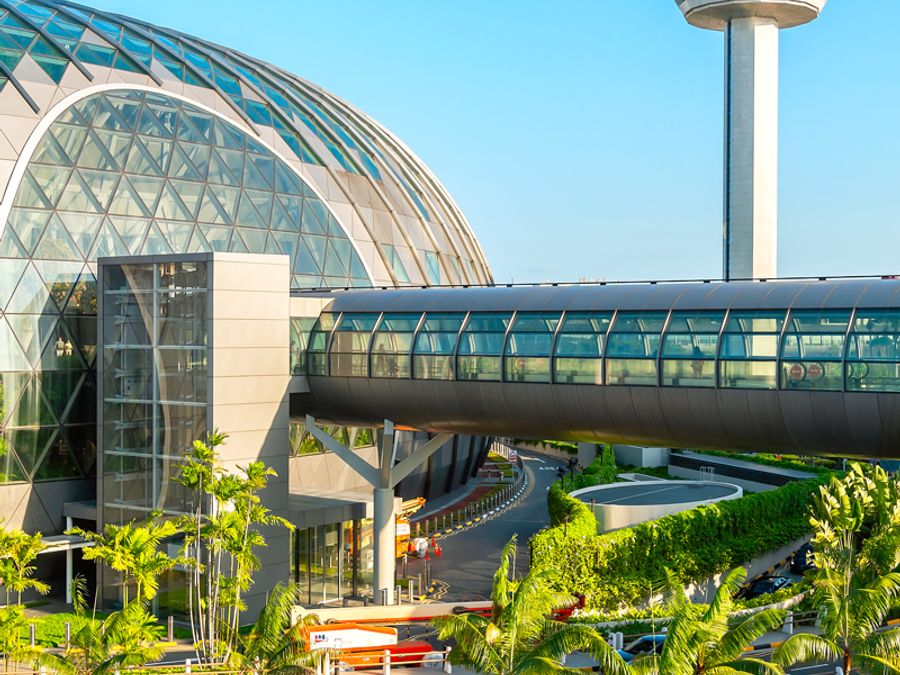
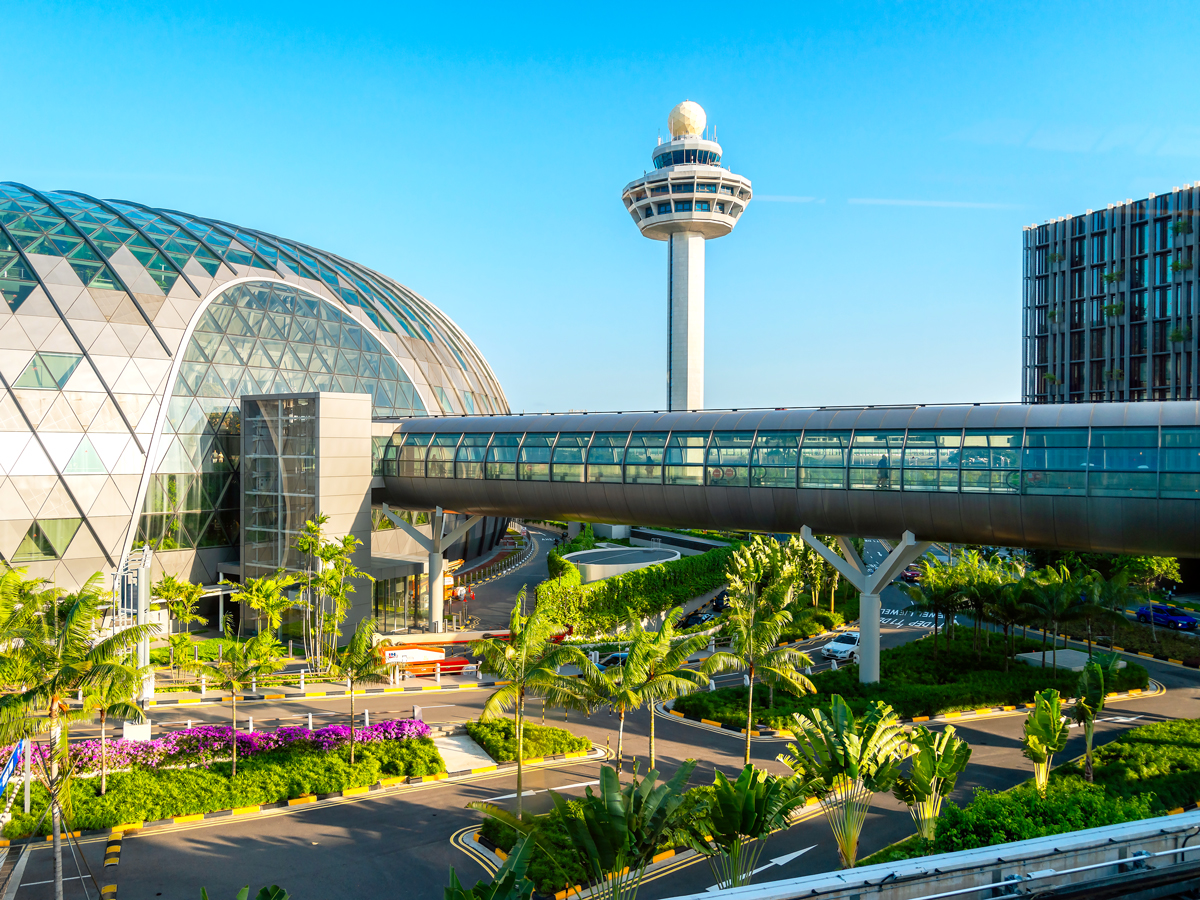
Anyone familiar with the World Airport Awards will be unsurprised by the winner: Singapore’s Changi Airport, which took the top spot as the world’s best airport for the 13th time. Changi also won Skytrax’s individual award categories for the World’s Best Dining and World’s Best Washrooms, the latter of which was just introduced this year.
Changi is the rare airport to be thought of not only as a waystation but also as a destination in and of itself. It features a 10-story shopping mall, indoor gardens and a koi pond, a dinosaur theme park, a rooftop pool, a movie theater, and the world’s largest indoor waterfall — all of which helped draw more than 80 million people to the airport last year. Passengers are allowed to drop off their bags up to 48 hours in advance, making it all the easier to enjoy Changi’s amenities before departing.
Not content with its current standing, Changi is also investing $2 billion to both improve its four terminals and add a fifth, which is scheduled to open in the 2030s.
Credit: hasan zaidi/ iStock Editorial via Getty Images Plus
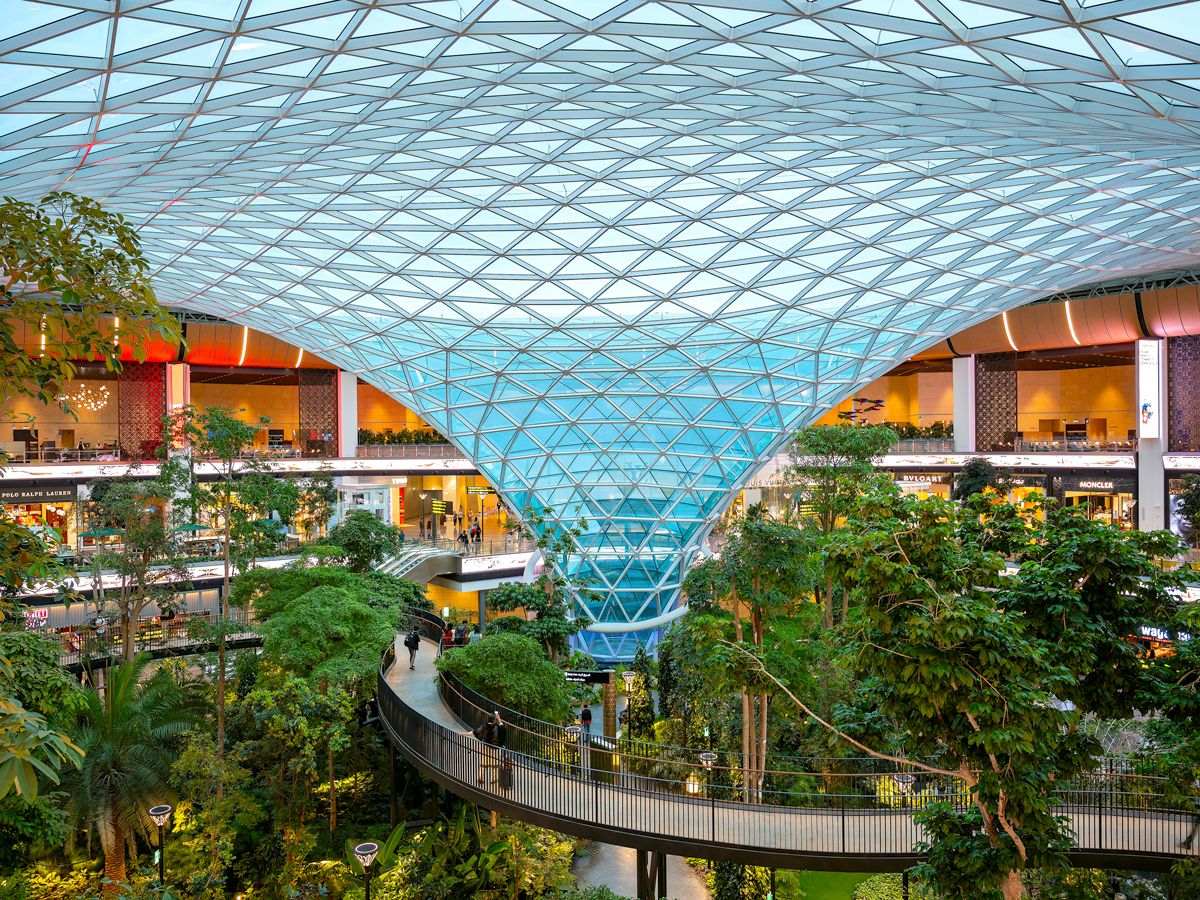
While Singapore stole the spotlight in this year’s list of the world’s best airports, it’s far from the only exceptional airport out there. Next on the list is Doha, Qatar’s Hamad International Airport, which held the top spot last year. At No. 3 in the rankings is Tokyo’s Haneda Airport, which also won a slew of individual recognitions: World’s Cleanest Airport, World’s Best Domestic Airport, and World’s Best Airport PRM & Accessible Facilities.
Other honorees include Seoul Incheon Airport (No. 4), which also won World’s Best Airport Staff; Taiwan Taoyuan International Airport (No. 43), which was singled out for World’s Best Airport Baggage Delivery; Copenhagen Airport (No. 18), which won World’s Best Airport Security Processing; and the Houston Airport System for the World’s Best Airport Art (which includes Hobby, at No. 29, and George Bush Intercontinental at No. 33).
Skytrax surveyed 565 passengers from over 100 nationalities around the globe to compile its rankings. A few things stand out among the top 20 airports in the world. Location is particularly significant: Almost all of the world’s best airports are found in Asia, Europe, and the Middle East, with the only exceptions being Melbourne Airport in Australia and Vancouver International Airport in Canada. Check out the full list of the top 20 best airports in the world for 2025 below:
1. Singapore Changi Airport – Singapore 2. Doha Hamad International Airport – Qatar 3. Tokyo Haneda Airport – Japan 4. Seoul Incheon International Airport – South Korea 5. Tokyo Narita Airport – Japan 6. Hong Kong International Airport – Hong Kong 7. Paris Charles de Gaulle Airport – France 8. Rome Fiumicino Airport – Italy 9. Munich International Airport – Germany 10. Zurich Airport – Switzerland 11. Dubai International Airport – United Arab Emirates 12. Helsinki-Vantaa Airport – Finland 13. Vancouver International Airport – Canada 14. Istanbul Airport – Turkey 15. Vienna International Airport – Austria 16. Melbourne Airport – Australia 17. Chubu Centrair International Airport – Japan 18. Copenhagen Airport – Denmark 19. Amsterdam Schiphol Airport – The Netherlands 20. Bahrain International Airport – Bahrain
Since America’s first zoo, the Philadelphia Zoo, opened in 1874, zoos have played an important role in wildlife conservation and public education about wildlife in the United States. Over time, they’ve evolved from small exhibition spaces to vast parks that offer everything from breeding programs to immersive activities and overnight stays. Today, 226 institutions across the country are members of the Association of Zoos and Aquariums (AZA). Check out 13 of the largest zoological parks in the U.S., all of which are AZA-accredited and ranked below by the number of animals they house.
Created with just two deer and two mountain lions in 1888, Dallas Zoo is the oldest zoo in Texas. The 2,000-plus animals at the zoo represent over 400 species and live in habitats spread across 106 acres. One of the most notable areas is the Giants of the Savannah exhibit, where elephants, giraffes, and lions roam freely around a vast habitat. Visitors can also observe giraffe and tortoise feedings, in addition to bird of prey displays. Meanwhile, school-age children can enroll in single-day and weeklong summer camps that offer fascinating behind-the-scenes educational experiences.
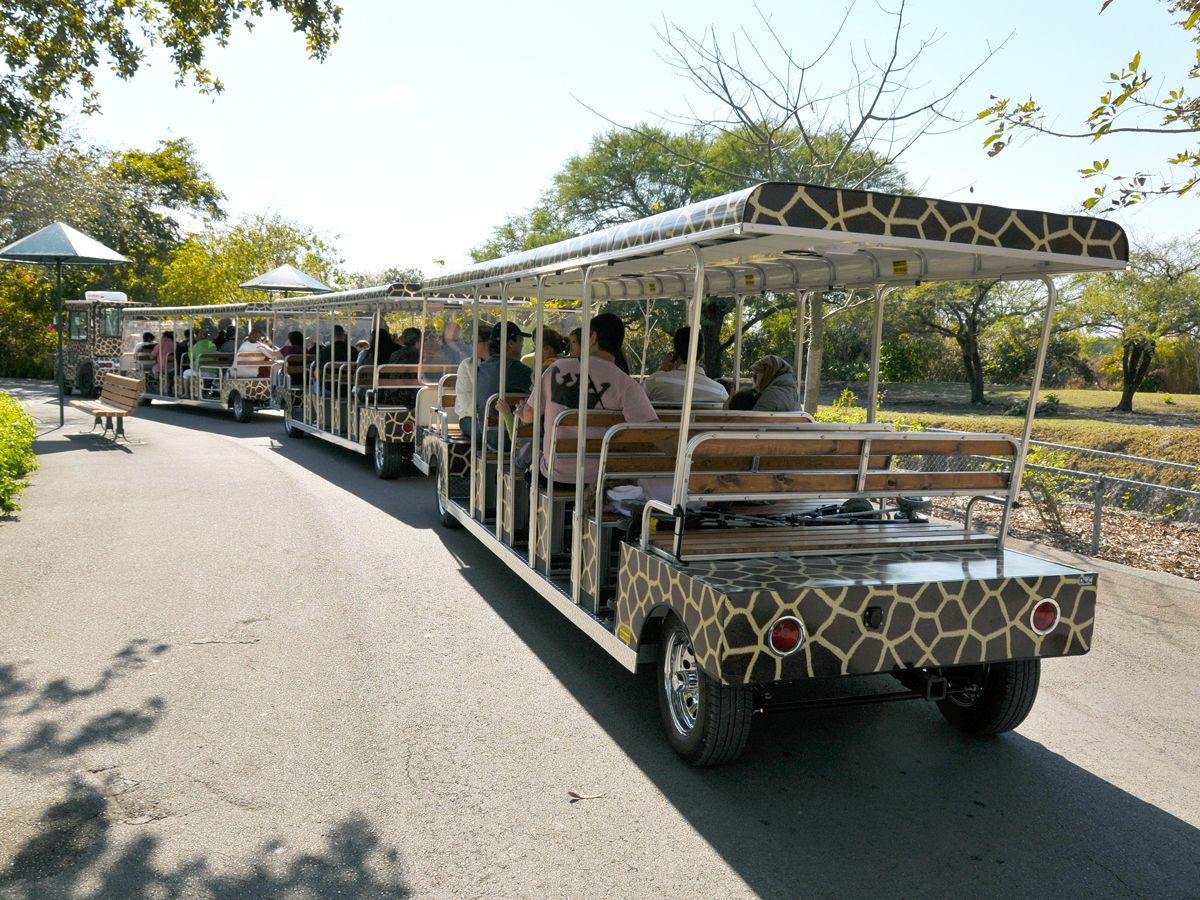
Zoo Miami (also known as the Miami-Dade Zoological Park and Gardens) is Florida’s largest and oldest zoo. Established in 1948, it occupies 750 acres and has 4 miles of walkways offering views of over 2,000 animals. The animals here represent more than 375 species from Asia, Africa, Australia, and the Americas. Of these, around 130 are considered endangered.
Animals at Zoo Miami are grouped according to their native region. You’ll find African elephants and lions, Sumatran tigers, and western lowland gorillas from the Congo Basin, among many other notable species. Visitors can also explore a butterfly garden and succulent garden, join a nocturnal tour, or rent a Safari Cycle to explore the zoo.
Opened in 1889, the National Zoo in D.C. is part of the world-famous Smithsonian Institution. Admission is free to see the zoo’s more than 2,200 animals that represent 400 species. Popular attractions include the Reptile Discovery Center, featuring Komodo dragons, and the Asia Trail, which is home to a habitat of giant pandas.
Daily talks and demonstrations highlight the life and conservation of Andean bears, big cats, and primates, among other animal residents. Special events at the zoo include an adults-only Halloween party and holiday season light displays. On hot days, visitors are also invited to cool off in the Squirt Zonewading pool.
Riverbanks Zoo and Garden is home to over 3,000 animals, from the American flamingo and red kangaroo to the Galapagos tortoise and leopard shark. About 400 species live within the South Carolina zoo’s 170 acres. Hands-on activities here include giraffe, tortoise, and lorikeet feeding programs, along with behind-the-scenes viewings of the zoo’s western lowland gorillas.
Complementing the animals is the lush and technicolored Riverbanks Botanical Garden. It spreads across 70 acres and has 10 themed areas displaying more than 5,700 native and exotic plants. Gardening enthusiasts can sign up for horticulture classes and workshops.
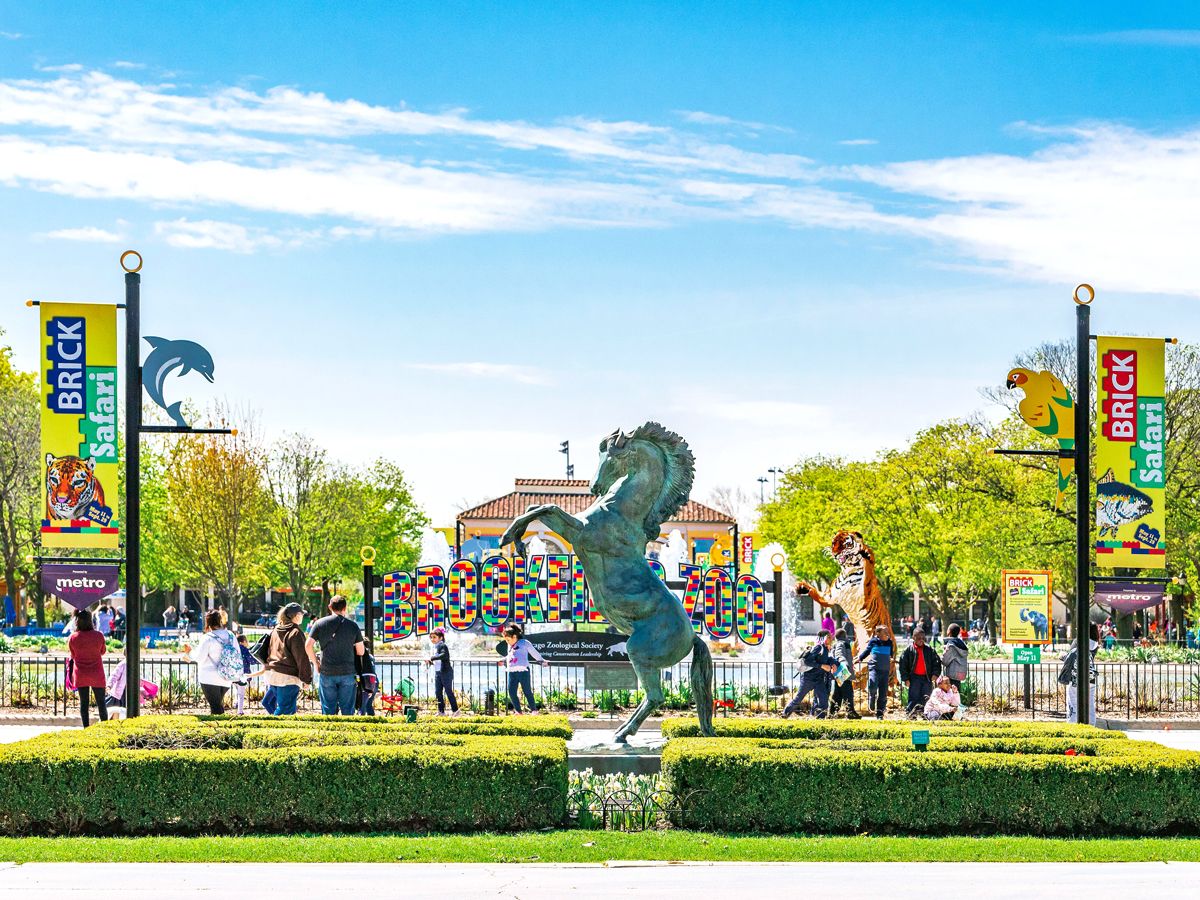
Spreading across 216 acres in the western Chicago suburb of Brookfield, this zoo is home to over 3,400 animals and more than 511 species. Since opening in 1934, the Brookfield Zoo has been a pioneer in animal conservation. It was one of the first zoos in the country to introduce barless exhibits. The first panda exhibited in the United States arrived at Brookfield Zoo in 1937, and in 1941, Georgie-Joe was the first black rhino born in a zoo.
The Animal Loops are the best way to discover the zoo today. The five color-coded trails include the Bird and Reptile Loop, the Large Animal Loop, the Carnivore and Pinniped, the Small Child Loop, and the Nature Walk. Visitors can also see the many habitats via the Motor Safari or partake in behind-the-scenes encounters with flamingos, giraffes, penguins, and sharks.
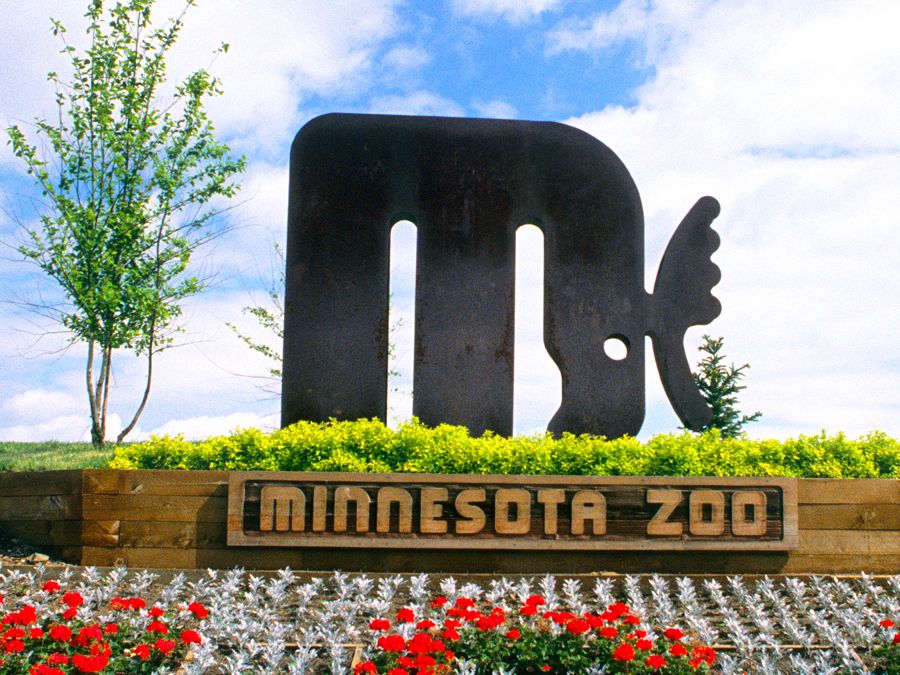
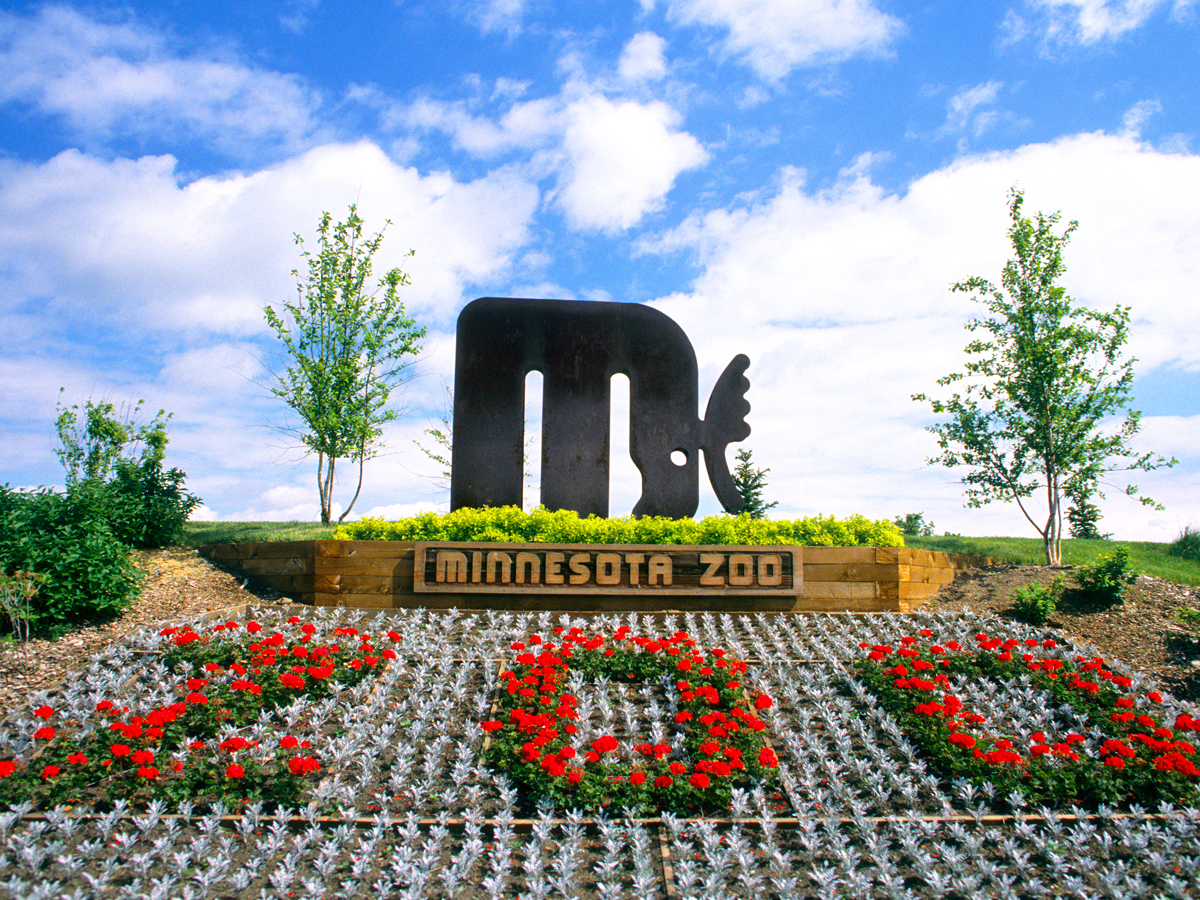
When it opened in 1978, Minnesota Zoo was recognized for its innovative approach to animal exhibits. It was one of the first zoos in the U.S. to organize displays by habitat rather than species. It’s also one of the few state-supported zoos in the country.
Today, the Minnesota Zoo shelters over 4,500 animals and has an annual visitation of around 1.3 million guests. Here, visitors can discover African fruit bats, Malayan tapir, and other curious creatures among the 500-plus species. A highlight is Discovery Bay, a marine education center home to Hawaiian monk seals, seadragons, seahorses, and a 218,000-gallon shark tank.
7. Houston Zoo – Houston, Texas
Credit: Brett Coomer/ Houston Chronicle via Getty Images
Number of animals: over 6,000
Houston Zoo is a 55-acre wildlife center situated in Hermann Park, in the Houston Museum District. It shelters over 6,000 permanent residents that represent over 600 species. It also contributes to 49 conservation programs in 27 countries.
Notable exhibits include the African Forest — home to chimpanzees, gorillas, rhinos, and ostriches — and Birds of the World, a popular area consisting of three aviaries focusing on African, North American, and South American birds. Visitors can also purchase guided encounters with anteaters, elephants, Galapagos tortoises, and penguins. There are overnight programs for all ages, and adults can register to be part of the 350-strong volunteer team.
6. Kansas City Zoo and Aquarium – Kansas City, Missouri
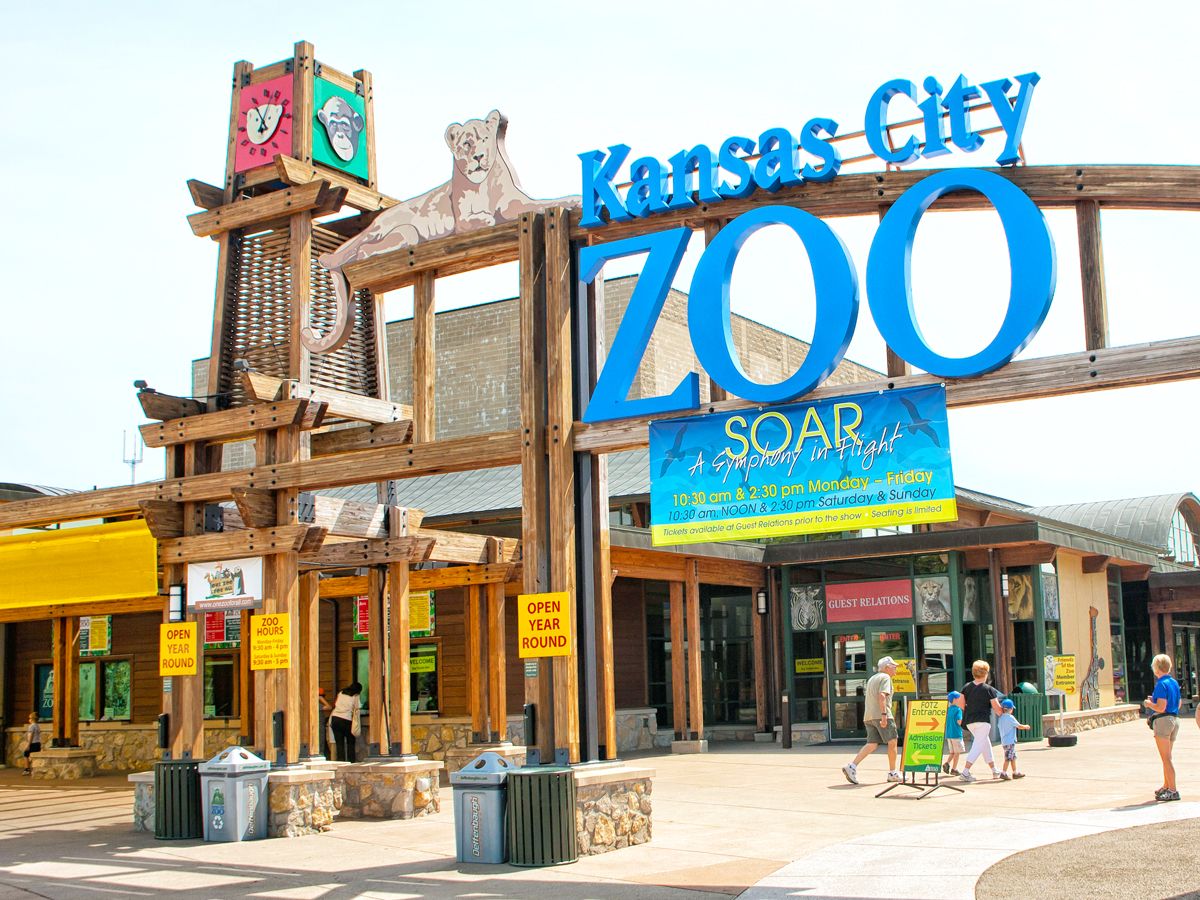
Kansas City Zoo and Aquarium occupies 202 acres in the northern section of Swope Park. Its 10,000-plus inhabitants represent 200 species and are split between a zoological park and the Sobela Ocean Aquarium. The zoo opened in 1909 with an animal collection that included four lions, three monkeys, a wolf, a fox, a coyote, a badger, and a lynx, along with an eagle and other birds. Today, everything from African elephants and polar bears to porcupines have been added to the zoo’s roster.
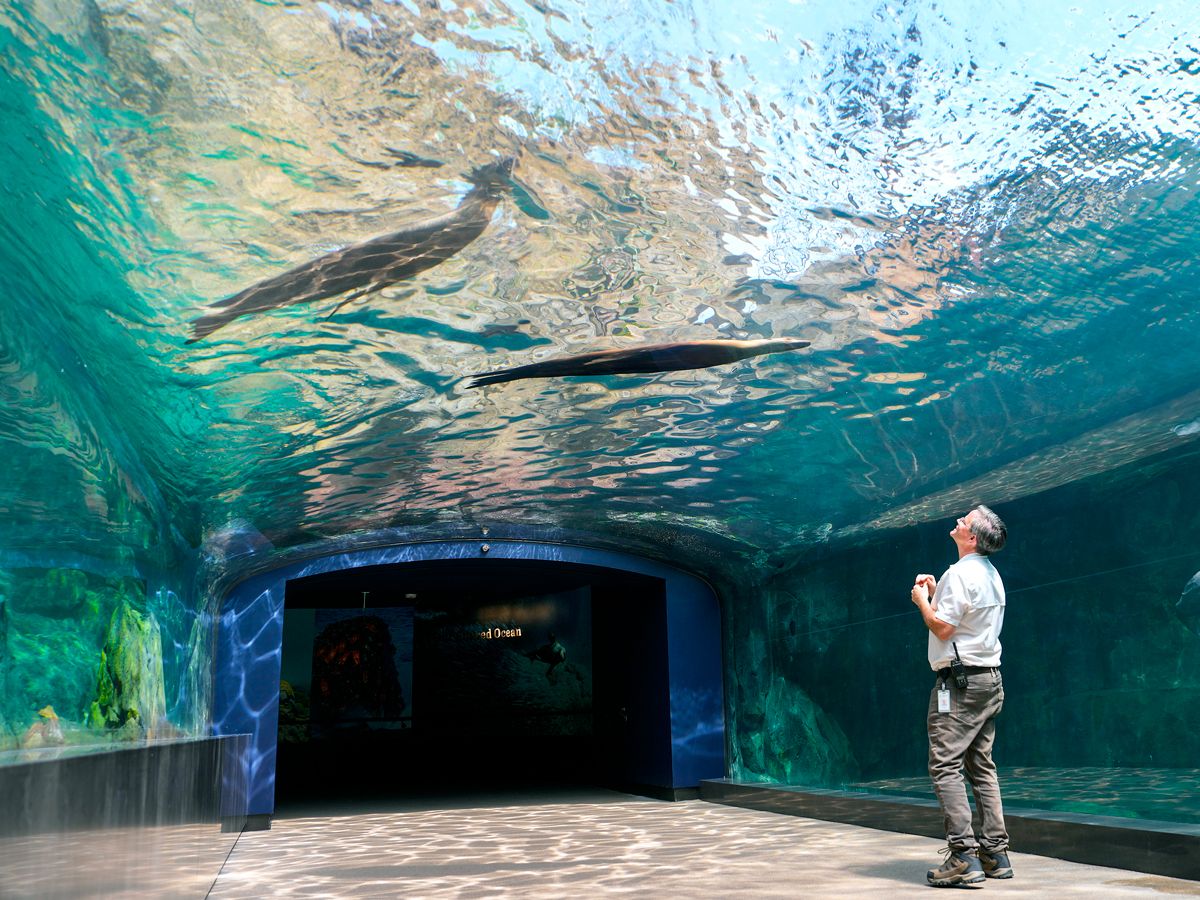
Sobela Ocean Aquarium opened in 2023 as an educational center to showcase how ocean currents connect the world. It features a 650,000-gallon exhibit space divided into six sections and 34 habitats. The aquarium alone is home to approximately 200 species, including clownfish, sharks, and stingrays.
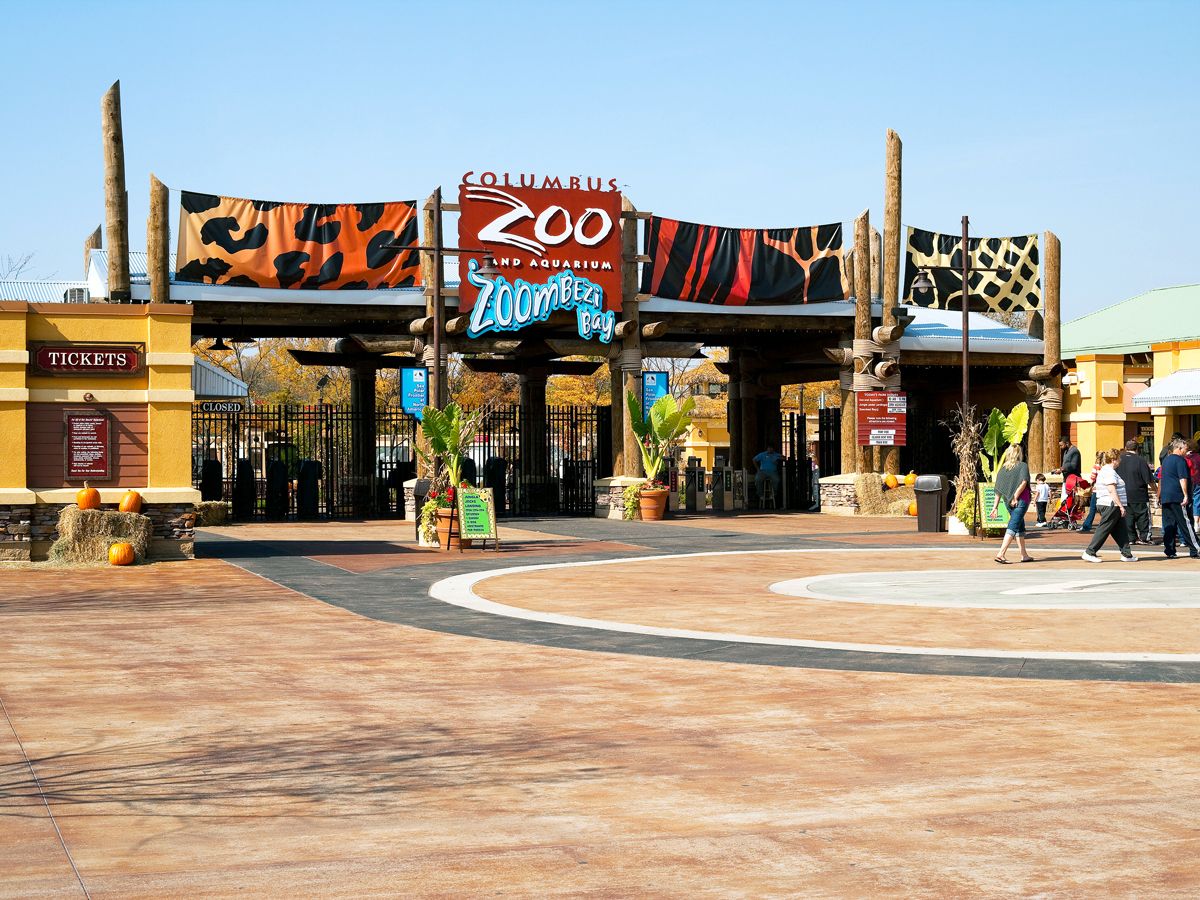
Founded in 1927, Columbus Zoo and Aquarium welcomes an estimated 2.2 million annual visitors, who come to discover over 10,000 animals from around 600 individual species. In 1956, the zoo achieved international fame with the birth of Colo, the first gorilla born under human care.
Famed American zookeeper Jack Hanna, the zoo’s director from 1978 to 1992, was responsible for incorporating exhibits such as the African Forest and Manatee Coast. The latter is a rescue and rehabilitation clinic for the Florida manatee. Other popular areas include Discovery Cove, home to seals and sea lions, and Polar Frontier, where brown bears and polar bears roam.
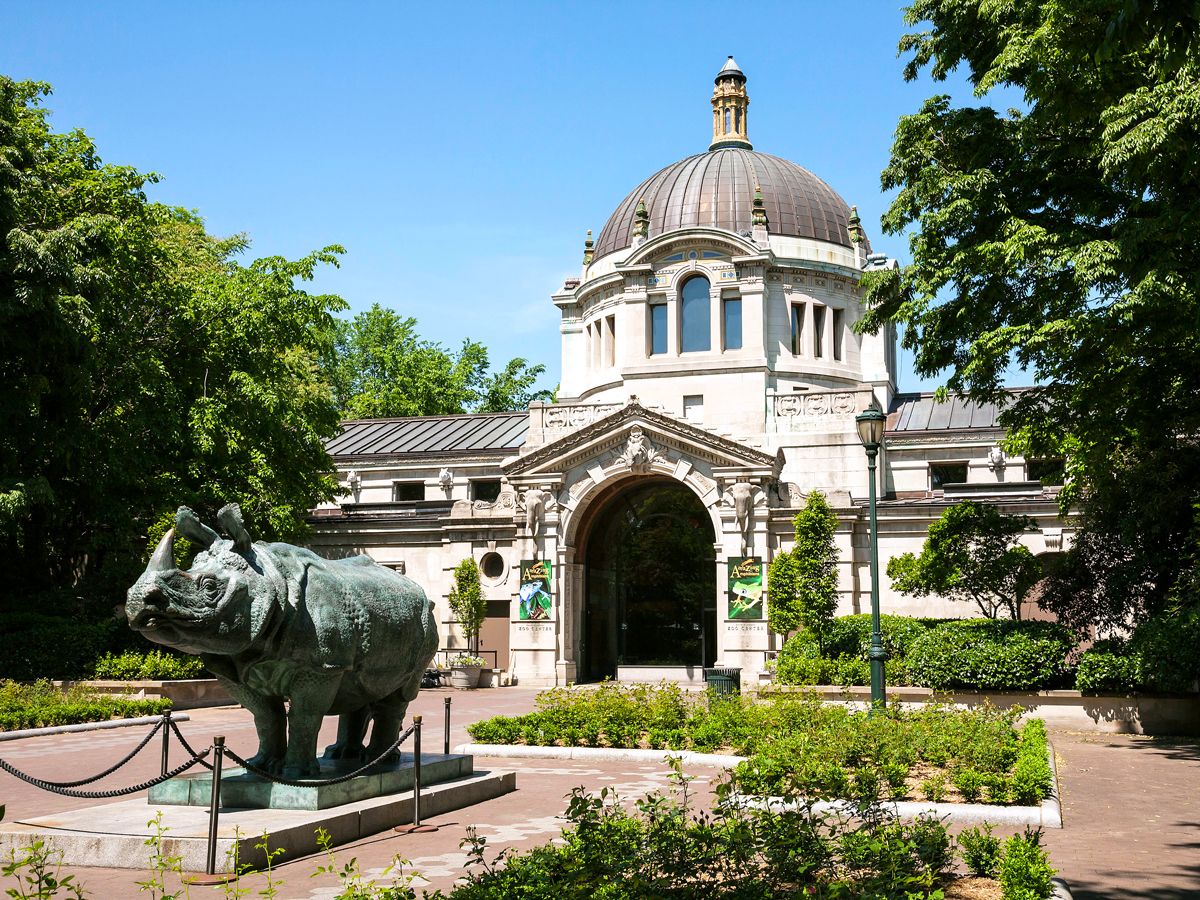
Bronx Zoo covers 265 acres and features more than 11,000 animals representing around 650 species. It’s the headquarters and flagship park of the Wildlife Conservation Society, an organization dedicated to advanced wildlife conservation and zoology education. From the American alligator and African wild dog to the Cuban parrot and Magellanic penguin, the zoo’s residents come from all corners of Earth.
One of the Bronx Zoo’s most popular attractions is the Congo Gorilla Forest, a 6.5-acre exhibit where gorillas live alongside hornbills, mandrills, okapi, and approximately 400 plant species. Another is the Dinosaur Safari, a Jurassic journey with 60 life-size animatronic dinosaurs and fossil digging activities.
The St. Louis Zoo opened in 1910 with the formation of the Zoological Society of St. Louis. Covering 90 acres in the city’s Forest Park, it’s now home to over 12,000 animals and 450 different species. Animals are split into six individual zones, each accessible via paved walkways and the Emerson Zooline Railroad. At the Discovery Center, you can see more than 100 species of live insects. The Wild is home to apes, bears, and penguins, and you can spot sea lions, seals, and stingrays at Lakeside Crossing.
Visitors can sign up for hands-on programs ranging from vet hospital tours to bear training sessions and seasonal tours with zookeepers. Also look out for specialty events such as animal-inspired theater shows.
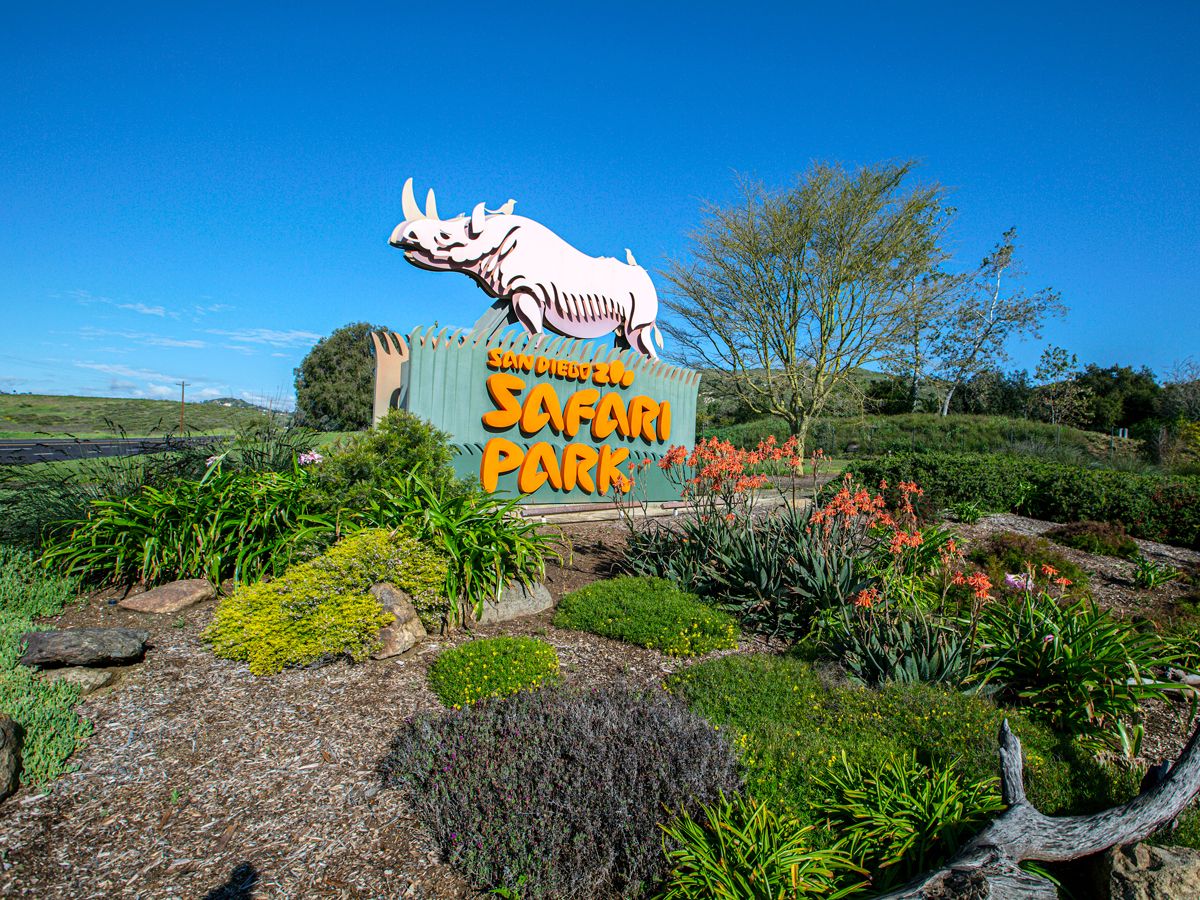
Home to over 12,000 rare and endangered animals representing 680 species, San Diego Zoo is one of the most famous zoos in the world. This 1,000-acre park is located within the city’s historic Balboa Park. It’s managed by the nonprofit San Diego Zoo Wildlife Alliance, which also manages the larger San Diego Zoo Safari Park.
The zoo is notable for its cageless exhibits and authentic replicas of natural habitats. A few of the most beloved areas include Polar Bear Plunge, featuring more than 30 Arctic animals, and Panda Ridge, currently home to two giant pandas. An easy way to explore the exhibits is via the 35-minute guided bus tour and Skyfari Aerial Tram, which offers bird’s-eye views. The park is also a designated botanical garden, showcasing some 700,000 plants.
1. Henry Doorly Zoo and Aquarium – Omaha, Nebraska
The Henry Doorly Zoo and Aquarium has come a long way since it opened as Riverview Park in 1894. From an early collection of around 120 animals, the zoo has grown to become the largest zoo in the United States by animal numbers. Today, it houses more than 17,000 animals (from 962 species) in 20 unique exhibits spread around 160 acres of parkland. Species such as the red panda, orangutan, Indian rhino, and lemur all roam here.
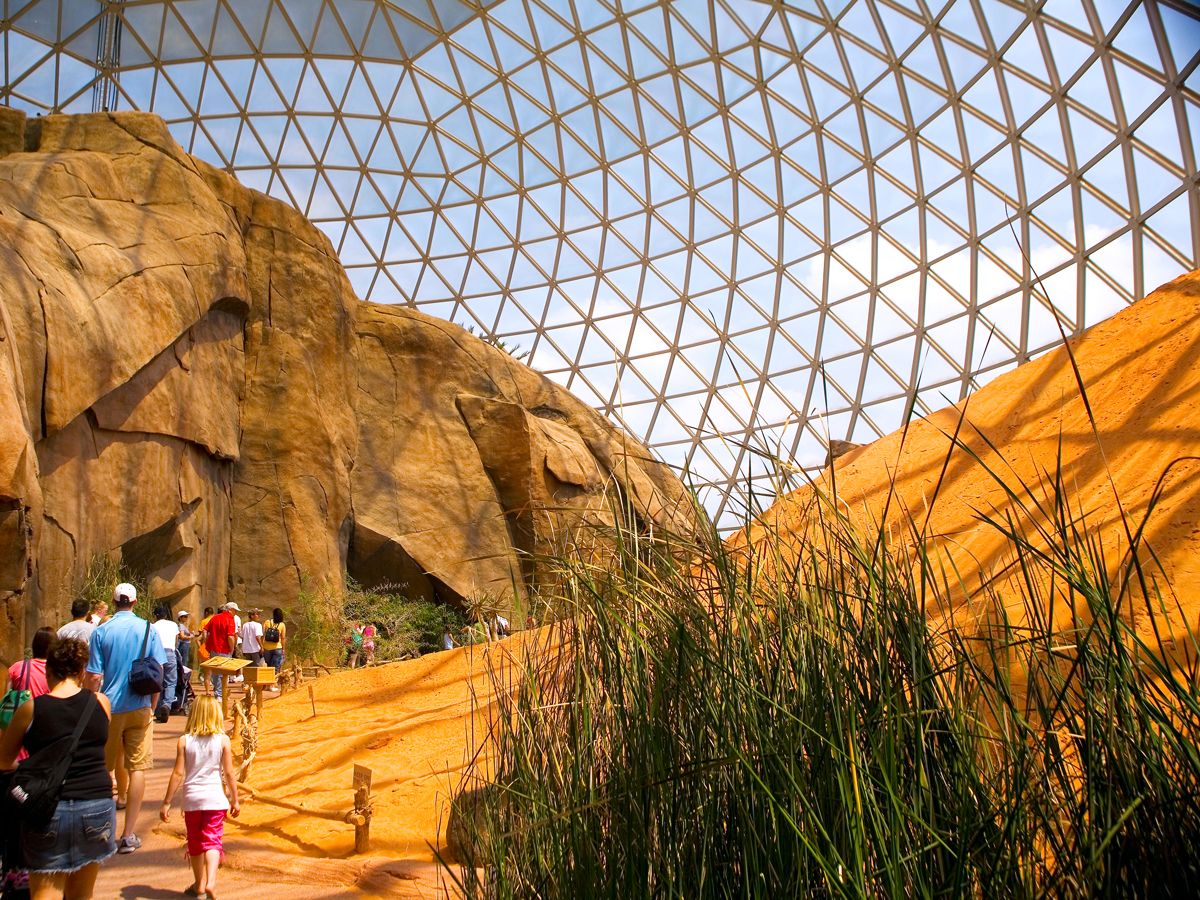
A particular highlight is the Desert Dome,the world’s largest indoor desert, housed under the largest glazed geodesic dome in the world, according to the zoo’s website. It features recreations of the Namib Desert, the Red Center of Australia, and the Sonoran Desert of the southwestern U.S. and Mexico. Also popular is the Lied Jungle, which highlights the biodiversity of rainforests in Africa, Asia, and South America.
Jersey is a travel and lifestyle writer whose work has appeared in publications such as Condé Nast Traveler, Business Insider, and Bust. When she’s not exploring her adopted home state of Maine, she’s likely planning her next big trip.
For seekers of knowledge, libraries are akin to the sacred. Not only do they contain vast reserves of information, but they’re also totally free to the public. When built on a large scale, public libraries become even more mind-blowing — some are home to collections that soar into the millions. Here’s a look at some of the world’s largest libraries, according to data from each library’s official website, and the treasures that are stored inside.
National Library of France – Paris, France
Credit: Jerome LABOUYRIE/ iStock Editorial via Getty Images Plus
The National Library of France, or the BnF for short, was established in the 14th century, when King Charles V decided to found a royal library within the Louvre Palace. Since then, the BnF has amassed a collection totaling up to 40 million books and other treasures. The library is located at the Richelieu historical site in Paris, which is also home to a museum with multiple exhibits that range from antiquity to present day. Of the museum’s many impressive rooms, the Mazarin Gallery is a true highlight, showcasing a classic Baroque gallery with painted ceilings and historic artwork.
The library’s collections range from ancient coins and gems to a massive digital library known as the Gallica, the oldest and largest digital library in the world. But the BnF’s pièce de résistance is its impressive Oval Room, a circular-shaped room that contains 20,000 books, a massive skylight, and plenty of seating.
No, the National Diet Library is not a collection devoted to losing weight. In Japan, the National Diet is the national legislature, equivalent to the U.K. Parliament or U.S. Congress. Its library was created to keep Japan’s leaders informed on policy research, providing all the necessary information needed to complete government duties. After being established in 1948, the library amassed the largest collection in the country. It has 47 million books, publications, DVDs, and maps, due to national law dictating that anything published in the country must be submitted to the library.
Today, the National Diet Library is divided into two locations. The Tokyo Main Library houses the political and legislative materials used by Japan’s lawmakers, while the branch in Kyoto prefecture is a large-scale research library, home to digital archives and space to learn, read, and perform research.
New York Public Library – New York, New York
Credit: Chris Babcock/ iStock Editorial via Getty Images Plus
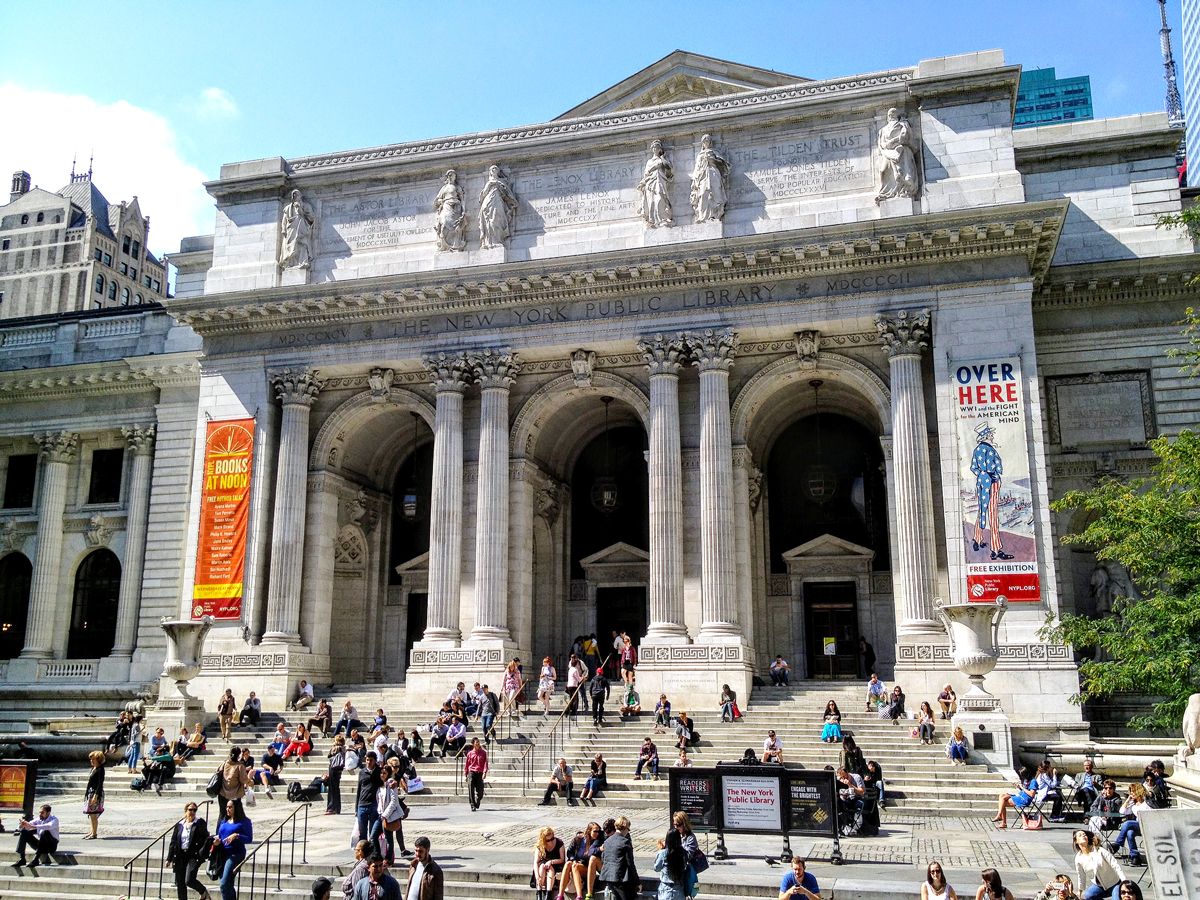
For New Yorkers, the New York Public Library is a beloved city institution. Guarded by the library’s famous feline mascots, Patience and Fortitude, the flagship location is a bustling city landmark, thanks in large part to the Rose Main Reading Room, with its soaring ceilings, rows of books, and plentiful seating. When the library opened in 1911, its collection totaled 1 million items; today the collection ventures upwards of 50 million.
Home to unique pieces of history, NYPL contains the original stuffed animals that inspired Winnie-the-Pooh, Virginia Woolf’s diaries (and her cane), and a draft of Thomas Jefferson’s Declaration of Independence. For lovers of literature, the library’s Berg Collection includes manuscripts from the archives of legendary American authors, including Henry David Thoreau, Walt Whitman, and Jack Kerouac.
The largest public library in China is also one of the tallest libraries in the world. The Shanghai Library soars to nearly 350 feet high and is home to a collection of 58 million items. Since merging with the Shanghai Institute of Scientific and Technical Information (ISTIS) in 1995, it has served as a dual library and research center. Visitors can find quiet reading rooms, extensive research facilities, large conference halls, and music rooms spread across the library’s many floors.
The fourth floor contains a collection of foreign-language publications, including books in English. Otherwise, you can expect a wide array of Chinese newspapers, journals, literature, and ancient Chinese texts, including one that dates back 1,400 years. The library is also a depository for Chinese genealogy, with 18,000 titles that delineate the origin of 342 family names.
British Library – London, U.K.
Credit: UCG/ Universal Images Group via Getty Images
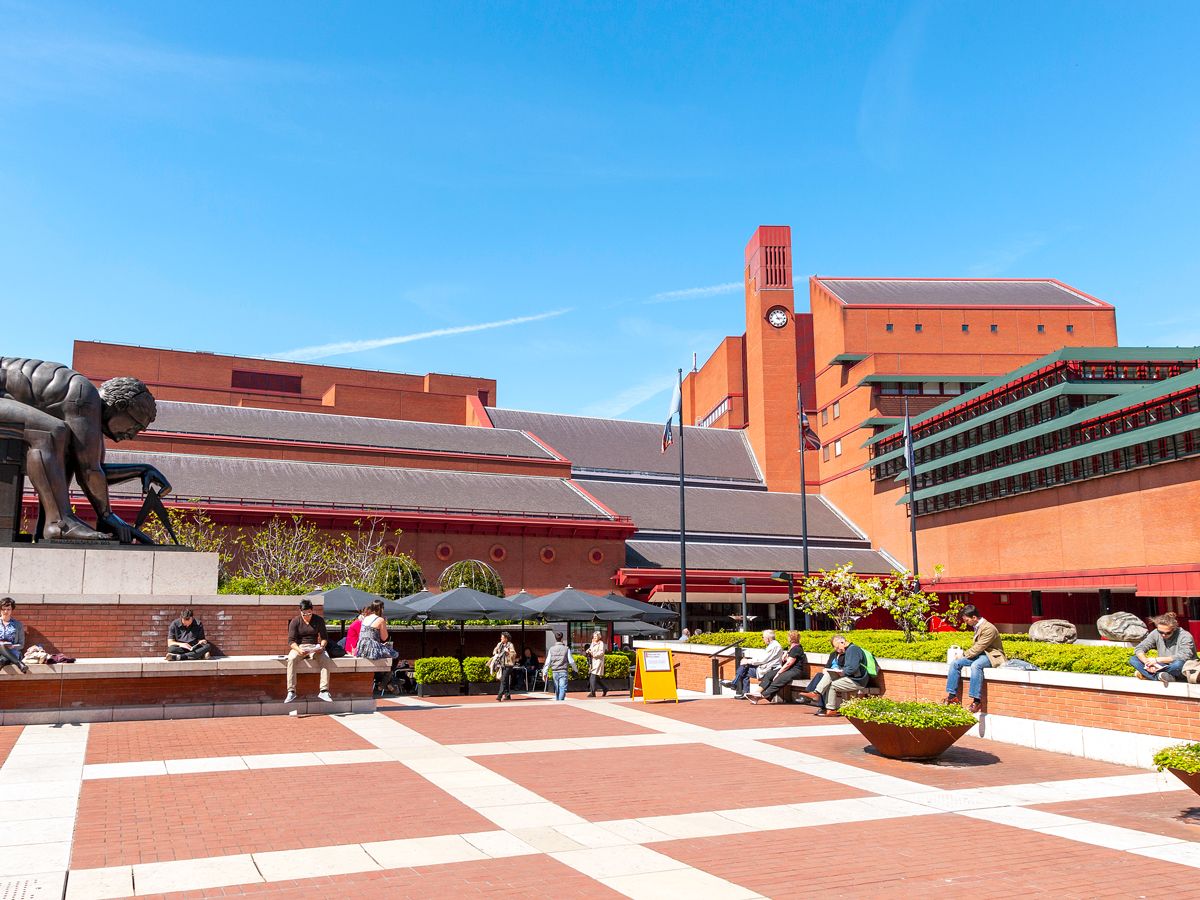
Ranging from books and manuscripts to sound recordings and patents, the British Library has a collection of more than 170 million items. In addition to your everyday publications, the library’s collections venture into the antique, rare, and precious. This includes the Magna Carta (dating back to 1215), original manuscripts by Jane Austen and William Shakespeare, notebooks that once belonged to Leonardo da Vinci, and handwritten lyrics by the Beatles.
The collections are so massive that the displays can’t cover it — the library has designed an underground storage system to house its excess items. Don’t miss the King’s Library Tower, a glass bookcase that rises six stories and contains 65,000 books collected by King George III over the course of 57 years.
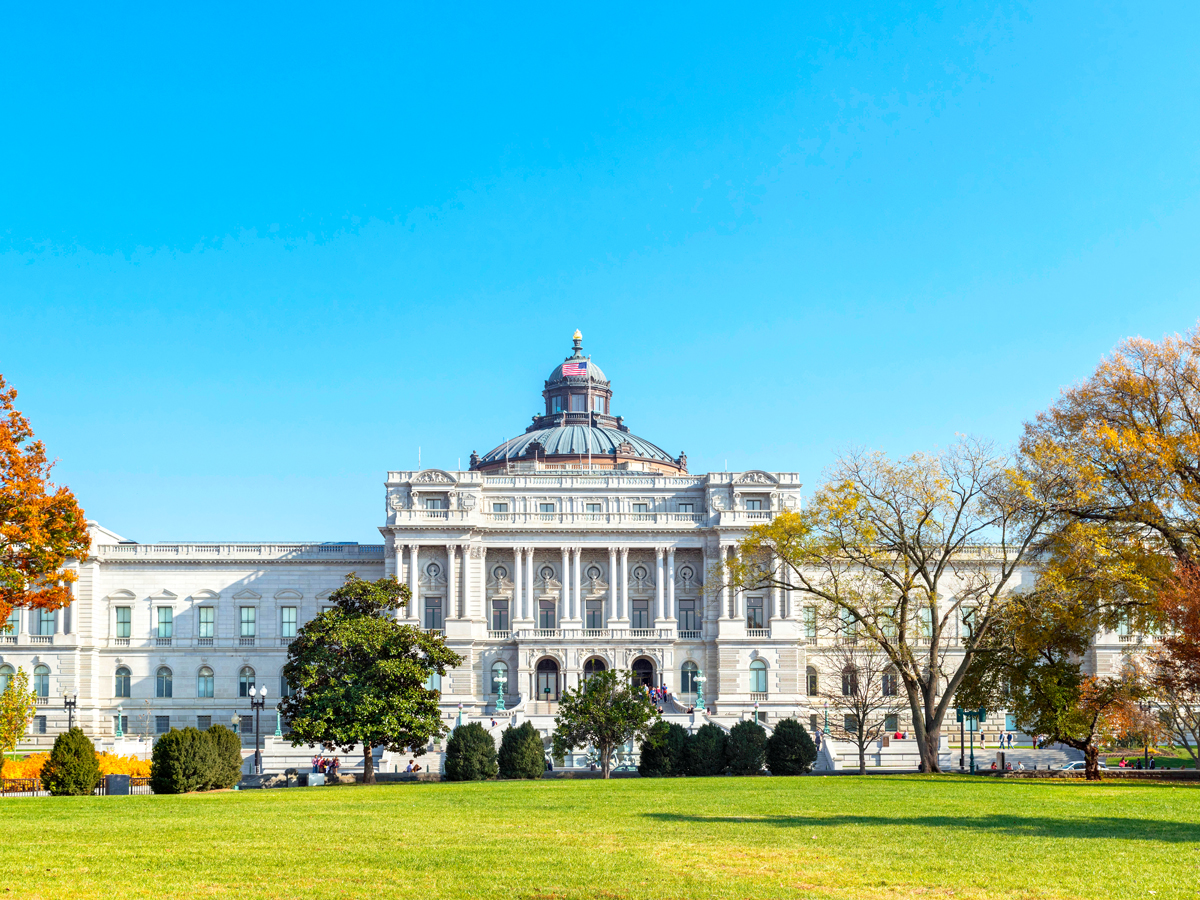
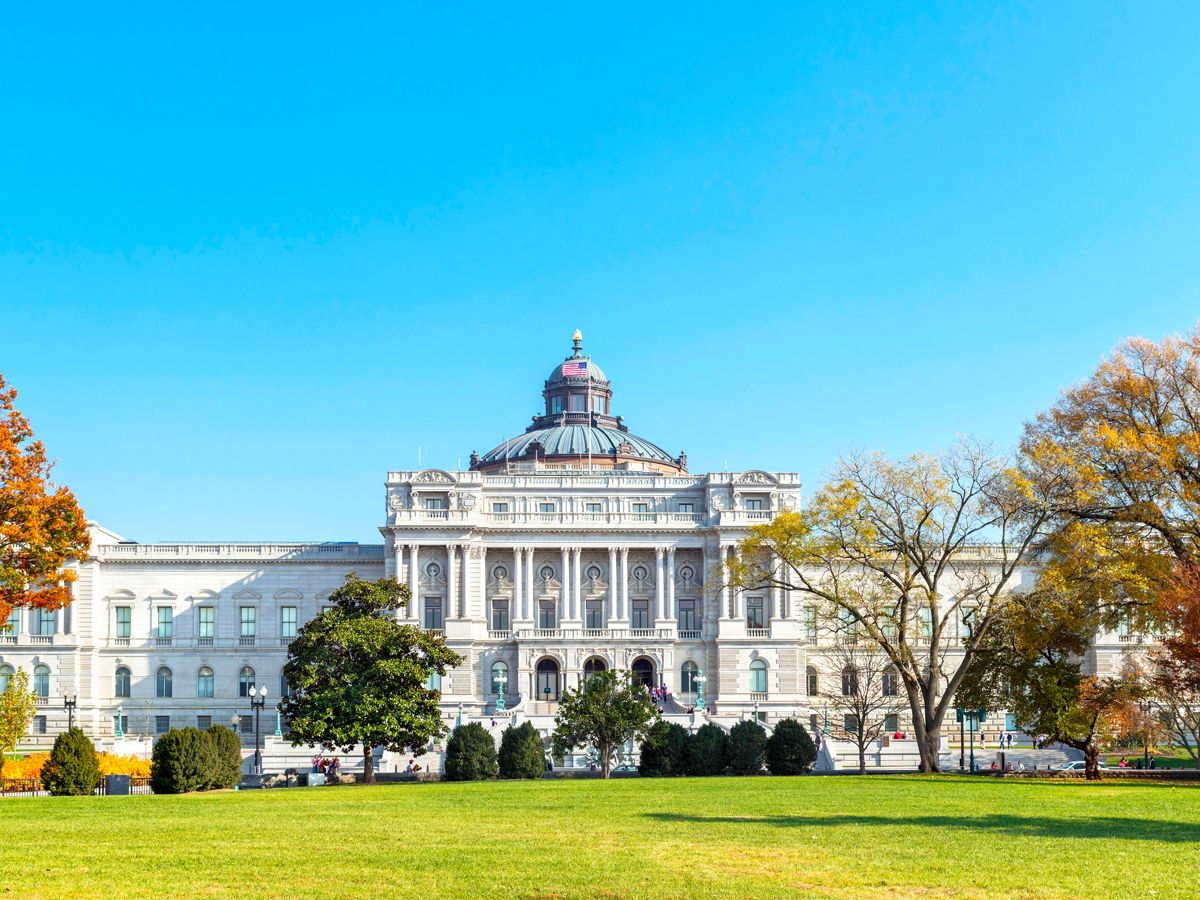
After the original congressional library burned down during the War of 1812, the Library of Congress was reborn, thanks in large part to Thomas Jefferson. To replace the collection lost to the fire, Jefferson sold his personal library to Congress, trading 6,487 books for $23,950. From these humble beginnings, the library’s collection has grown to 178 million items today.
Not only is the Library of Congress the world’s largest law library, but it’s also home to the official copyright office of the United States. Any piece of work that has been registered for copyright is included in the library’s archives, with books, movies, music, architectural designs, and software all part of the library’s ever-growing collection.
Advertisement
More from our network
Daily Passport is part of Inbox Studio, an email-first media company. *Indicates a third-party property.
What’s the Difference Between a Hotel, a Motel, and a Resort?
By
Bennett Kleinman
Read time: 5 minutes
June 16, 2025
Updated: June 16, 2025
What’s the Difference Between a Hotel, a Motel, and a Resort?
Tips •June 16, 2025•Updated: June 16, 2025
By Bennett Kleinman
Author
Bennett Kleinman
Bennett is a New York City-based staff writer for Daily Passport. He previously contributed to television programs such as the Late Show With David Letterman, as well as digital publications like the Onion. Bennett has traveled to 48 U.S. states and all 30 Major League Baseball stadiums.
Hotels, motels, and resorts share many similarities: They all provide a place to sleep, a warm shower with a few fresh towels, and the privacy of having a room to yourself. But despite offering the same basic amenities, each of these accommodations comes with a distinct set of expectations. For instance, staying at a motel is a much more bare-bones experience than a resort offering a plethora of lavish perks. Let’s take a look at what makes hotels, motels, and resorts unique from one another.
In the most straightforward sense, a hotel is an establishment that provides lodging, basic services, and sometimes meals to travelers at a cost. But there’s no strict set of rules for what defines a hotel, as they can be big or small, luxurious or simple, expensive or cheap. Hotels also aren’t confined to any single area — they can be found in major cities, alongside rural roads, and even in unusual locales such as in caves or underwater. And they can vary wildly in size — smaller hotels may have just a few rooms, while the world’s largest hotel (First World Hotel in Malaysia) has 7,351.
That said, there are several traditional features you can reasonably expect to find at a standard hotel. These amenities generally depend on the hotel’s star rating. One-star hotels may provide only a bed and bathroom, while two-star hotels may offer breakfast and a daily housekeeping service. The more stars a hotel has, the greater the range of amenities, with high-end hotels offering perks such as a business center, pool, and concierge service.
Hotel guests should also expect to share communal spaces with other visitors. This includes the reception desk, any bars or restaurants, the hotel gym, and so on. While some hotels may offer private dining options or a dedicated concierge, this is far from the norm, and you should expect to interact with other guests during your stay.
Ultimately, “hotel” is a broad, umbrella term in the world of hospitality, and it can be used to describe a wide variety of accommodations. In fact, it may be easier to note what’s not a hotel than what is. Hostels, for instance, aren’t considered hotels, given they offer shared sleeping spaces as opposed to private rooms. Airbnb or similar vacation rental listings are also in a separate category of their own, as a person’s private home is just that — a home, not a hotel. Bed-and-breakfasts aren’t classified as hotels either, as the proprietor traditionally lives onsite. So like Airbnbs, this makes B&Bs a private home, only one that’s been converted to accommodate several paying guests at any given time.
Motels are a specific type of hotel — the term is a portmanteau coined in the 1920s that combines the words “motorside” and “hotel.” Motels were originally designed amid a boom in personal vehicle ownership. According to the Library of Congress, the number of passenger cars in the U.S. grew from 6.5 million in 1919 to 23 million in 1929, and the motel industry began as a way to cater to this new vehicle-centric way of life.
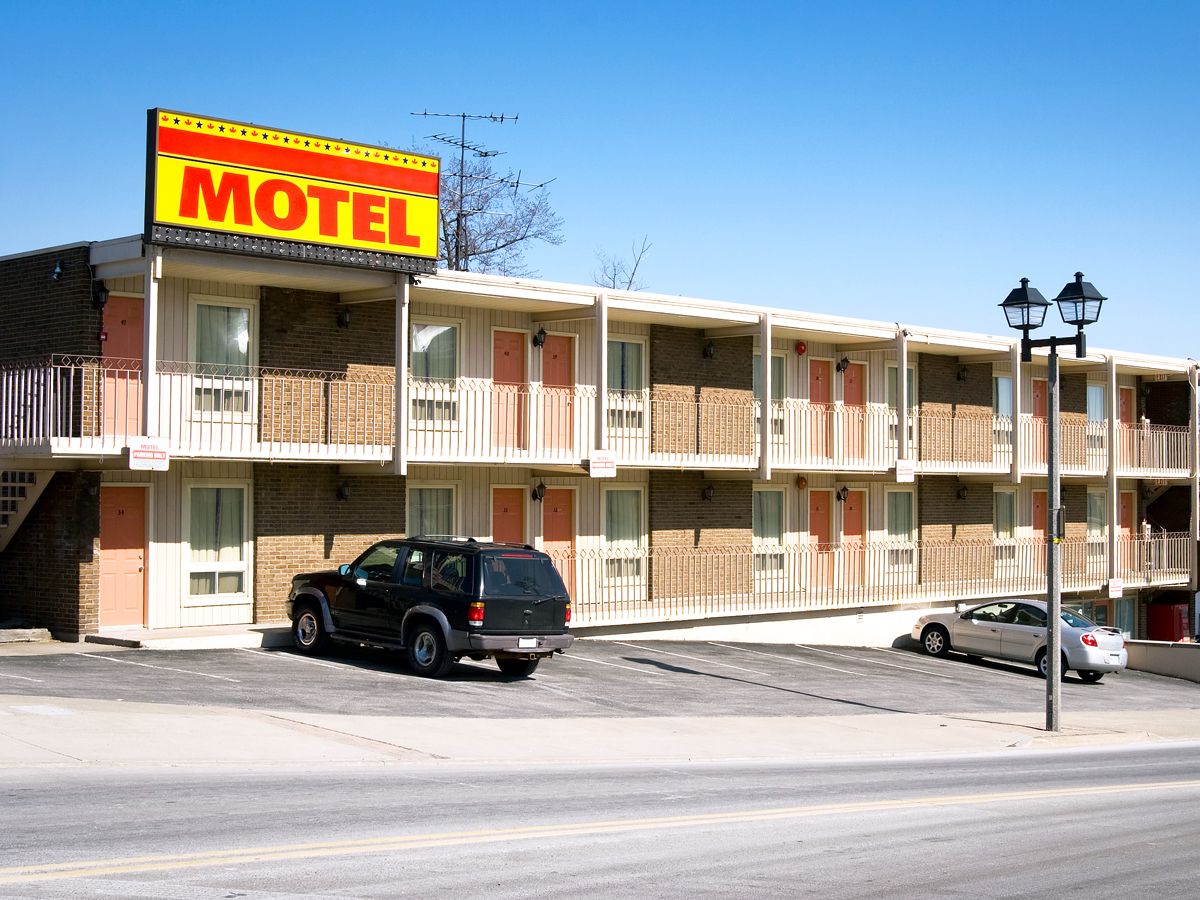
With car ownership on the rise, motor lodges began popping up alongside major thoroughfares around the country. Early motels were intended to provide a quick night’s stay for drivers taking a longer journey. They were also designed to accommodate many vehicles, as evidenced by their large, complimentary parking lots. As a result, few motels existed in major cities, where space came at a premium.
Motels made travel easier for drivers, who previously had to venture into the city and find a garage to park in before walking several blocks to a hotel — what a 1926 Los Angeles Times article described as “a long walk through dark streets in a strange town.” A 1925 article in the San Luis Obispo Daily Telegram noted of motels, “A traveler arriving at night, or at any other time, need not climb out of his car and go into the office to register… Instead, the man in charge comes out to the car and one may register without leaving the car at all.”
This is also why motels were designed to face directly onto the parking lot. Rather than venture through a communal lobby, drivers could pull their vehicle right up to the door to their room and head directly inside.
However, motels began to dwindle in popularity during the 1950s. After the introduction of the Interstate Highway System, many large chain hotels built traditional roadside accommodations of their own, taking away business from the boutique motels. Today, the word “motel” implies a design aesthetic more than anything, reflective of those days when these establishments catered to motorists. Most remaining motels are still just one or two stories tall, and each room can be accessed directly from the parking lot.
While resorts often feature hotels on the property, the term generally refers to a larger area that offers more than accommodations. Resorts may include a hotel as well as a dedicated entertainment venue, several restaurants, and more. It would be more apt to describe the area where guests sleep as the “resort hotel” rather than just the “resort.”
Unlike at a standard three-star hotel, the idea of a resort is to offer guests everything they need right on the property, so they don’t need to travel elsewhere. Resorts are often all-inclusive experiences that offer dining, entertainment, spa access, and a comfortable bed or suite. Resorts are also designed with leisure in mind, and guests rarely go for business purposes. Compare that to a normal hotel, which some people visit for business and others for pleasure.
Resorts come in a variety of shapes and sizes. You may stay at a mountainside ski resort where everyone has their own chalet, or perhaps at a resort on the beach, where guests stay in a high-rise overlooking the ocean. The one constant is that they offer more than just the accommodations. Resorts are also often destinations in themselves, whereas most hotels are usually a place to sleep before heading to the main event.
Bennett is a New York City-based staff writer for Daily Passport. He previously contributed to television programs such as the Late Show With David Letterman, as well as digital publications like the Onion. Bennett has traveled to 48 U.S. states and all 30 Major League Baseball stadiums.
There are many factors to consider when deciding where to live — the weather, proximity to your loved ones, and nearby job opportunities, to name a few. But for some folks, especially those on a fixed income, one of the most crucial things to consider is a low cost of living. Here’s a look at some of the most affordable states in the U.S., according to data provided by the Council for Community and Economic Research.
Indiana is one of two states tied for the 10th-lowest cost of living in the country, ranking roughly 9.5% below the national average across the board. The Hoosier State is particularly notable with regard to its housing costs, which rank nearly 23% below the national average. The real estate brokerage firm Redfin puts the median sale price of homes in Indiana at $265,300, while also noting that homes in cities such as Gary, Terre Haute, and Muncie can be purchased for less than $100,000.
Local radio station 93.1 WIBC-FM notes that Logansport — located roughly 80 miles north of downtown Indianapolis — is arguably the cheapest city in Indiana; the average household there pays $1,207 in monthly bills, which is 43% lower than the national average.
Tennessee is tied with Indiana for having the 10th-lowest cost of living in the U.S., ranking lower than Indiana in five of the six major categories: groceries, utilities, transportation, health care, and miscellaneous. However, housing costs in Tennessee are slightly higher, especially in popular cities such as Nashville, thus bringing up the state’s overall cost-of-living average.
The financial institution SoFi suggests the average Tennessean should expect to pay an average of $42,469 annually to reside in the state, with roughly $389 per month going toward utilities and $251 toward groceries. Just keep in mind that the cost of living in Nashville is significantly higher than in any other city in the Volunteer State. While a Nashville home is likely to run you around $420,000, a home in Memphis averages $195,000 less.
The Wolverine State has the ninth-lowest cost of living in the U.S., thanks in part to housing costs that are significantly lower than the national average. Cities such as Flint come with a median home price of just $50,000, according to Redfin, making them among the lowest in the country.
Michigan also offers relatively low transportation costs, thanks in part to the Michigan 2-1-1 program, which provides free or cheap transportation to people who need assistance. The Michigan Economic Development Corporation even offers this helpful calculator to see how the cost of living in Michigan compares to where you currently live.
Though transportation costs in Iowa are only 2.4% below the national average, groceries are 3.6% more affordable, health-related expenses are 4.2% cheaper, utilities cost 7.1% less, and housing comes in at a whopping 25.2% below the national average. To further explain just how significant this gap is, we used Nerd Wallet’s “compare cities” feature to pit Davenport, Iowa, against New York City. The tool determined that life in the Big Apple is 160% more expensive than living in Davenport, with the cost of housing coming in at a staggering 651% more.
Missouri has the lowest transportation costs anywhere in the nation — nearly 13% below the national average. According to the Council for Community and Economic Research data, life in Missouri is most affordable in the city of Joplin, followed closely by Springfield. While the cost of living is slightly more expensive in hubs such as St. Louis and Kansas City, it’s still roughly 10% lower than the national average.
6. Arkansas (tie)
Credit: Thomas Faull/ iStock via Getty Images Plus
Arkansas is tied with Missouri as the sixth-most-affordable state in the nation, though the cost of living is much lower in certain categories, including health care, which is the lowest of any state. Arkansans should also expect to pay 10% less than the average American for transportation, and utilities are nearly 10% less as well.
Indeed, the Arkansas Democrat-Gazetteclaims Arkansas to be the second-cheapest U.S. state based on housing and utility costs. While this ranking may be up for debate, we can’t deny the low cost of home rentals in Arkansas, which equal roughly $850 a month — $400 less than the U.S. national average.
Alabama’s low cost of living is largely thanks to its low housing costs. In fact, housing prices in the Yellowhammer State are more than 30% lower than average prices in the United States. This more than makes up for the fact that utility costs in Alabama are right in line with the national average. Health care in the state of Alabama is also a relative bargain; it has the second-lowest health-related expenses in the U.S. SoFi claims that you’ll pay an average of $39,657 annually to live in Alabama, with average monthly housing costs coming in around $664.
Alabama’s neighbor Mississippi has a cost of living more than 12% below the national average. Mississippians should expect to pay 3.7% less for groceries, 10.2% less for transportation, 11.1% less for utilities, and 26.1% less for housing. Forbes notes that the average Mississippian may pay $32,336 per year in essential expenses, though Mississippi also has the lowest average annual salary at $47,569.
To paraphrase Dorothy Gale, there’s no place like Kansas — especially if you’re looking for an affordable place to live. In fact, Kansans spend the least of any state on groceries. If you’re looking for an affordable city to move to, Redfin mentions Topeka as one of the cheapest in Kansas, with a median home price around $160,995. But this low cost of living doesn’t mean you’ll have to sacrifice a good quality of life in the Sunflower State. According to U.S. News & World Report, Kansas ranks in the top half of U.S. states for K-12 education and 12th in higher education.
The cost of living in Oklahoma is about 15% cheaper than the national average, particularly with regard to housing, which is 31.4% more affordable. With a median home cost of $147,000, Enid (about a 90-minute drive north of Oklahoma City) has the cheapest housing in the state, according to Redfin.
SoFi reports the average Oklahoman should expect to pay $38,650 in essential annual costs, roughly 17.8% of which will go toward health-related expenses, whereas 16.3% will likely go toward housing. Even the state capital of Oklahoma City isn’t particularly expensive compared to the rest of the nation, as the average home cost is around $213,555.
As of 2024, the most affordable U.S. state to live in is none other than West Virginia, where residents pay nearly 16% less for essentials than folks in other parts of the United States. The bulk of what makes West Virginia so affordable is its low housing costs, which are more than 40% less than the national average. In fact, housing in West Virginia is 250.1% cheaper than in Hawaii, which has the least affordable homes in the U.S. This accessible real estate market has led to West Virginia having the highest homeownership rate in the nation, at 78.2% as of 2020, according to the Department of Economic Development.
About the data: To compile this list, we consulted data from the Council for Community and Economic Research, which looked at the average cost of housing, groceries, utilities, health care, and transportation in all 50 states. You can view the full report here.
Advertisement
More from our network
Daily Passport is part of Inbox Studio, an email-first media company. *Indicates a third-party property.
Bennett is a New York City-based staff writer for Daily Passport. He previously contributed to television programs such as the Late Show With David Letterman, as well as digital publications like the Onion. Bennett has traveled to 48 U.S. states and all 30 Major League Baseball stadiums.
With an area of 836,330 square miles, Greenland is the world’s largest island. But what about Australia? When you see Australia on a map, it looks just like any other island, surrounded by water on all sides, albeit much larger (to the tune of 2.97 million square miles). Some geographers refer to Australia as an “island continent.” Others say that the Land Down Under’s continental status precludes it from also being an island, as islands and continents are largely viewed as distinct entities. To better understand the debate, let’s take a closer look at Australia’s unique geographical status.
Is Australia a Continent or an Island?
Credit: Gallo Images/ Brand X Pictures via Getty Images
Let’s start with the Oxford English Dictionary, which defines an island as “a piece of land completely surrounded by water.” Encyclopedia Britannicaadds that, by definition, islands are “smaller than a continent.” So while Australia is indeed surrounded by water, it’s considered a continent, which means that it can’t also be an island — a fact many geographers agree with.
Meanwhile, National Geographicnotes that the largest type of island is known as a “continental island.” Continental islands are large land fragments that were once connected to a continent eons ago. This group includes Madagascar and Greenland.
But according to Nat Geo, the fact that Australia is a continent precludes it from being a continental island, or any other type of island for that matter. Continents are separated into a class of their own due to their immense size. So, while Australia may be the world’s smallest continent, it’s still three times bigger than the world’s largest island. This is a sizable enough gap for geographers to draw the line between islands and continents.
It’s not just Australia’s size that makes it a continent instead of an island — there are additional factors at play. The Oxford English Dictionary notes, “There are no strict criteria for defining continents,” but adds that they “can also be defined along cultural lines.” Britannica states that continents are classified not just by their size, but also by various biological and anthropological factors.
Geologically speaking, Australia sits on its own tectonic plate, whereas Greenland, for example, shares one with the rest of North America. Australia is also home to a vast array of endemic plant and animal species and is the longtime home of the Aboriginal peoples, who reside solely on the Australian continent. As a point of comparison, Greenlanders share their heritage with other Indigenous peoples throughout the Arctic regions of North America and Russia.
All of these factors combine to elevate Australia to its continental status. Of course, Australia is also a country — the only country in the world that spans an entire continent.
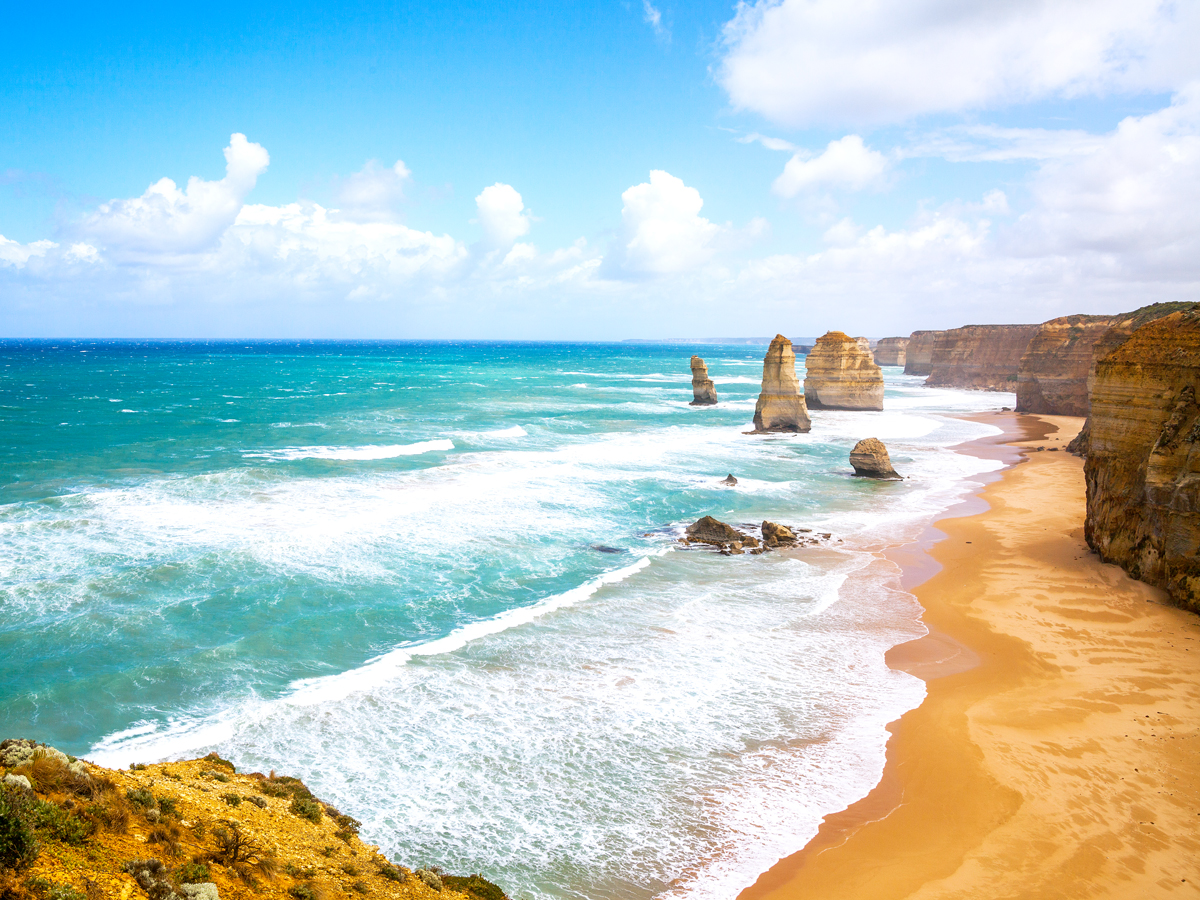
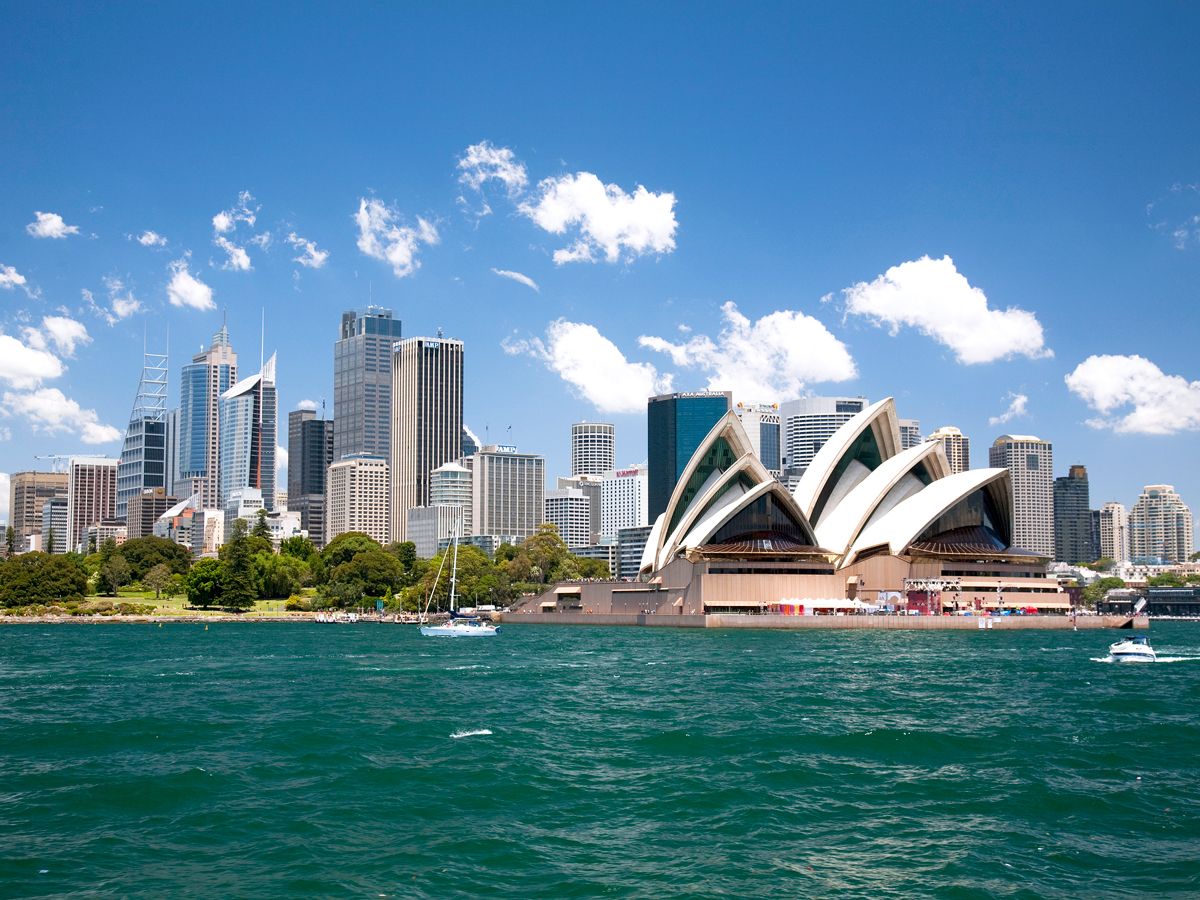
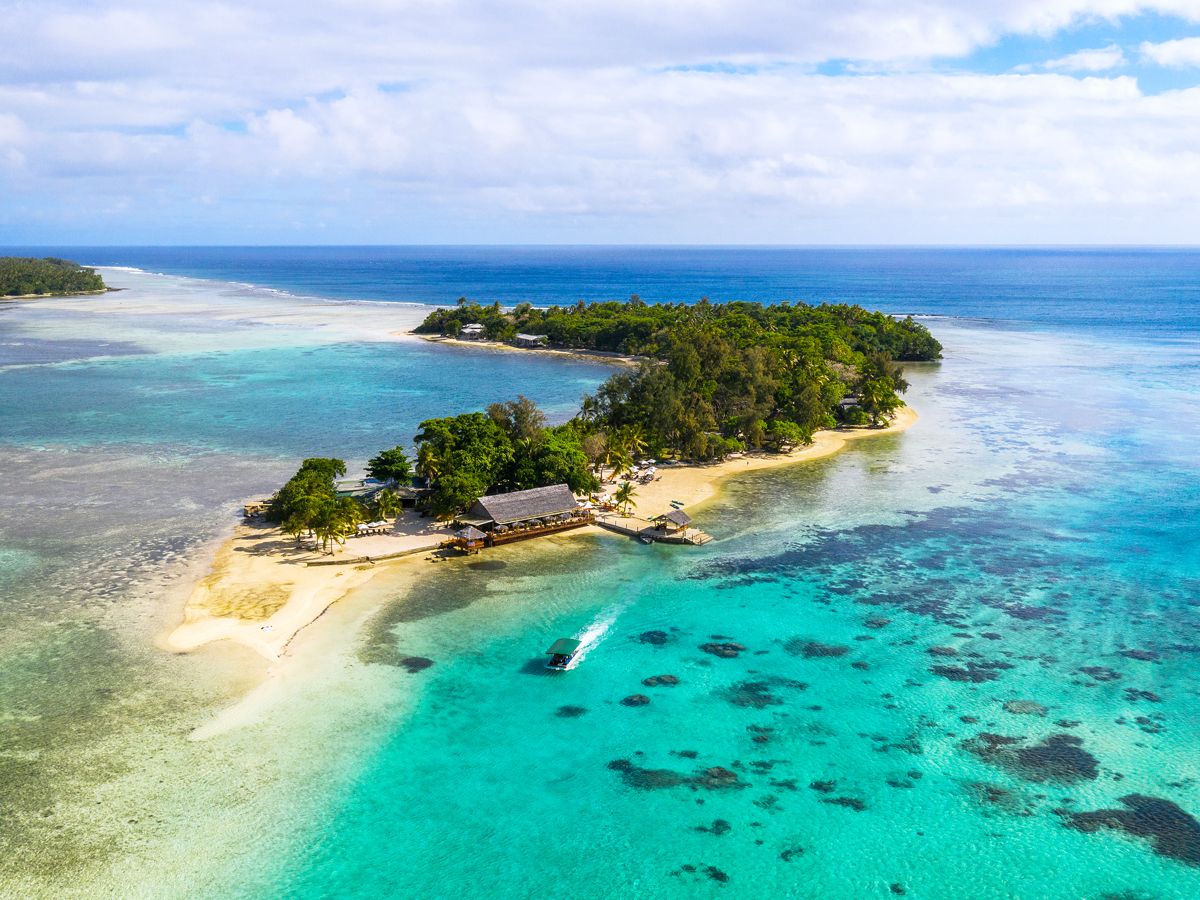
While it may not be viewed as an island itself, Australia does contain many islands — 8,222 of them, in fact. Of those islands, 3,747 are located in Western Australia, which is the most of any Australian state. The largest island on the Australian continent is 2,234-square-mile Melville, which is located in the Northern Territory. Australia also contains the island-state of Tasmania, which has an area of 26,410 square miles and is located 150 miles south of the mainland.
Lastly, you may also be familiar with the term “Oceania,” but is it used interchangeably with Australia to describe the continent? Or do the terms refer to different things?
According to the Oxford English Dictionary, Oceania is a collective name for “the islands and island-groups of the Pacific Ocean and its adjacent seas… and sometimes also Australasia and the Malay Archipelago.” The name Australasia refers to the geographic region encompassing Australia and New Zealand, though it sometimes also includes Papua New Guinea and other surrounding islands.
So, while New Zealand is part of Oceania (and Australasia), it’s not considered part of the continent of Australia. In general, most English speakers use the name Oceania to refer to the grouping of islands, whereas Australia is the more accurate term for the large continental landmass.
Nicole is a writer and researcher with over 15 years of experience seeking out arts, culture, and lifestyle stories in places like remote northern Quebec and the unforgettable streets of Amsterdam. Her work has also appeared in PureWow, Brit + Co, AUX TV, and CBC.
Retiring to an island might sound like a far-off fantasy, but for some seniors, it’s a reality. Whether you’re chasing warmer weather, a lower cost of living, or just a slower pace of life, the right island can offer all of that — with the bonus of a vacation-worthy view every day. Of course, as with any big move, there’s more to consider than scenery — health care access, infrastructure, language, and visa rules all play a role as well. From Mediterranean gems to laid-back Caribbean communities, here are some of the best, most practical islands to consider for retirement.
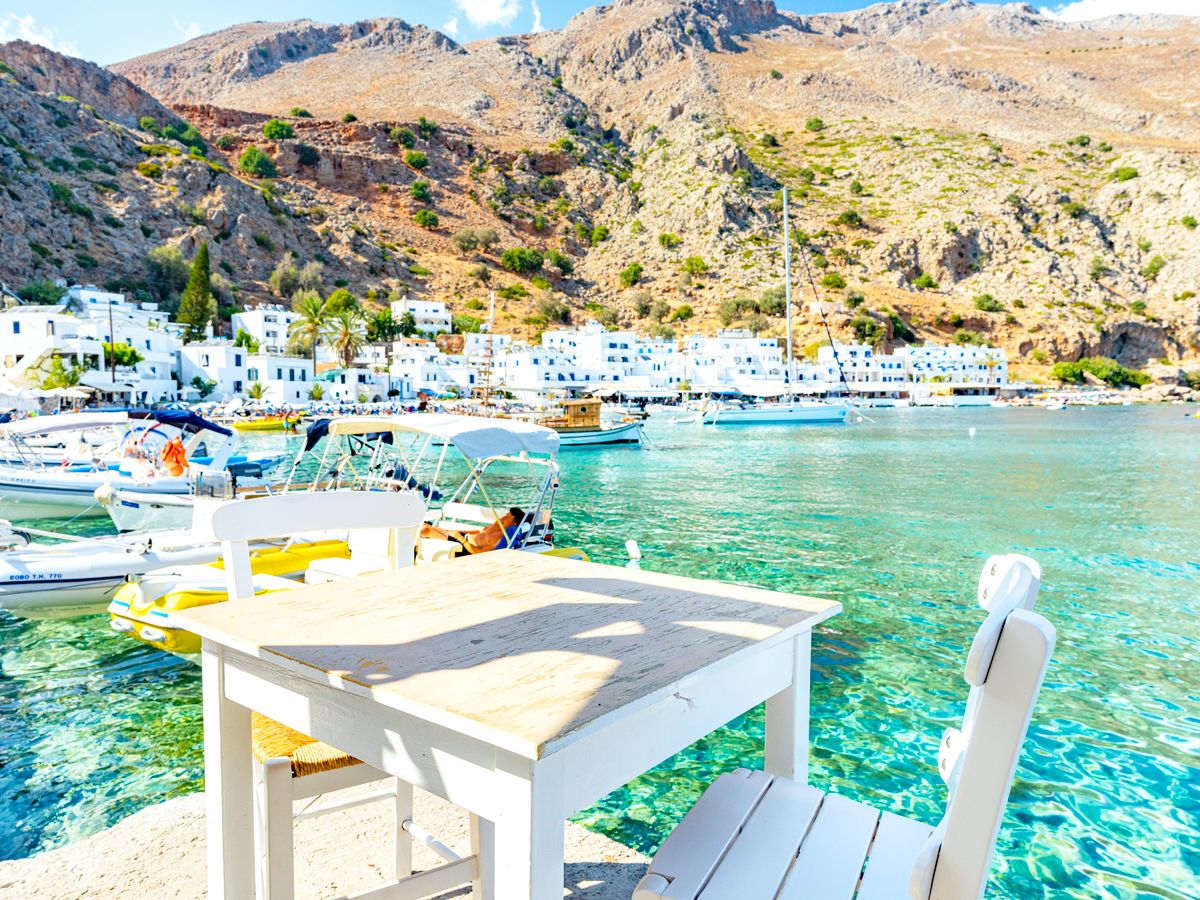
Crete, the largest Greek island, offers a rare blend of island beauty and accessibility for retirees. Thanks to Greece’s long-stay visa and retirement residency options, retirees from many countries — including the United States, the U.K., and Canada — can stay beyond the standard 90 days with minimal hassle. Crete is relatively affordable, too: Monthly expenses for two people typically start around $1,800.
The historic port city of Chania, with its Venetian Harbor and lively markets, is a favorite among expats. A hike through the White Mountains (Lefka Ori), a swim at the famous pink-sand Elafonissi Beach, or a taste of fresh olive oil from nearby groves can become part of your weekly routine. The island also offers easy airport access and reliable public and private health care.
There are a few trade-offs: Winters, while mild, can still get cool, with average highs around 60 degrees Fahrenheit, and coastal towns can feel quiet and windswept during these months. Still, Crete’s affordability, natural beauty, and welcoming community make it a compelling island retirement option.
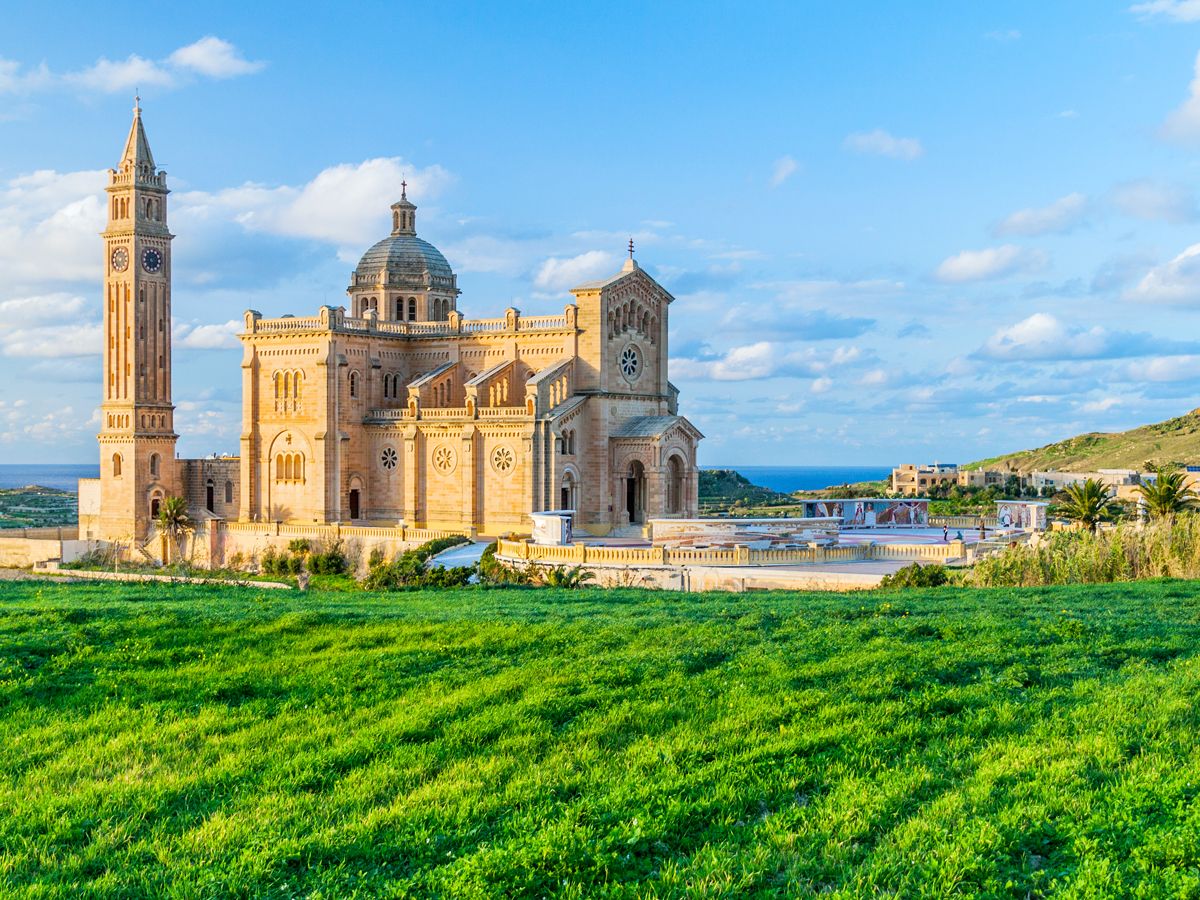
Less than a 45-minute ferry ride from Malta’s main island, Gozo offers a quieter, greener, and more traditional take on Mediterranean living. Known as “the Island of the Three Hills,” Gozo features rustic rolling landscapes, charming stone farmhouses, and a slower pace, making it perfect for retirees looking for a peaceful lifestyle without total isolation. While amenities are more limited than on the main island, residents still have access to health care and essential services. Regular budget flights from Malta make traveling around Europe easy and affordable, too.
Malta also offers retirement visa options, making long-term stays possible. Basic monthly living costs for two range from roughly $1,500 to $1,800, which is cheaper than living in Malta’s busier cities. Gozo’s capital, Victoria, is home to the historic Citadel and a walkable town center. And for seaside relaxation, Ramla Bay offers one of the most picturesque beaches in Malta.
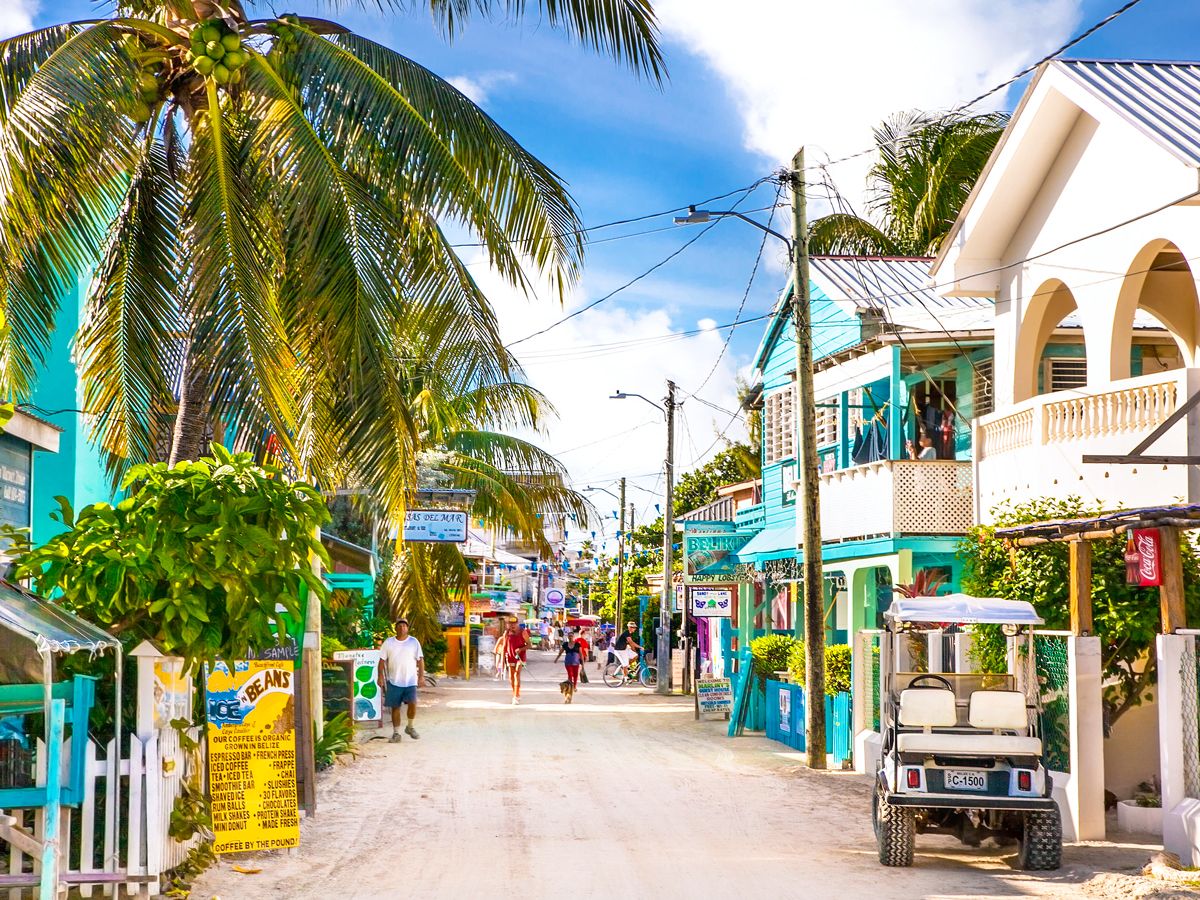
This small Caribbean island about 20 miles off the coast of Belize is known for its motto: “Go slow.” While the motto was originally plastered around the island on speed limit signs, the words live up to their promise for retirees looking for a relaxing spot to start the next chapter of life. In fact, the island doesn’t even have cars — the “go slow” signs were for cyclists or golf carts navigating around pedestrians.
Caye Caulker is accessible only by boat or a 15-minute flight from Belize City, which is important to consider if you prefer easier access to amenities and services such as specialized health care. If you don’t mind a bit of isolation, though, the turquoise waters that surround the 5-mile-long island are perfect for snorkeling, kayaking, diving, or simply enjoying the view.
Like in nearby Belize, the island’s official language is English and the U.S. dollar is widely accepted. Belize’s popular Qualified Retirement Program (QRP) makes long-term residency relatively easy for foreigners over 45. Life here can also be quite affordable, with monthly expenses coming in between $1,500 and $2,000 for a couple.
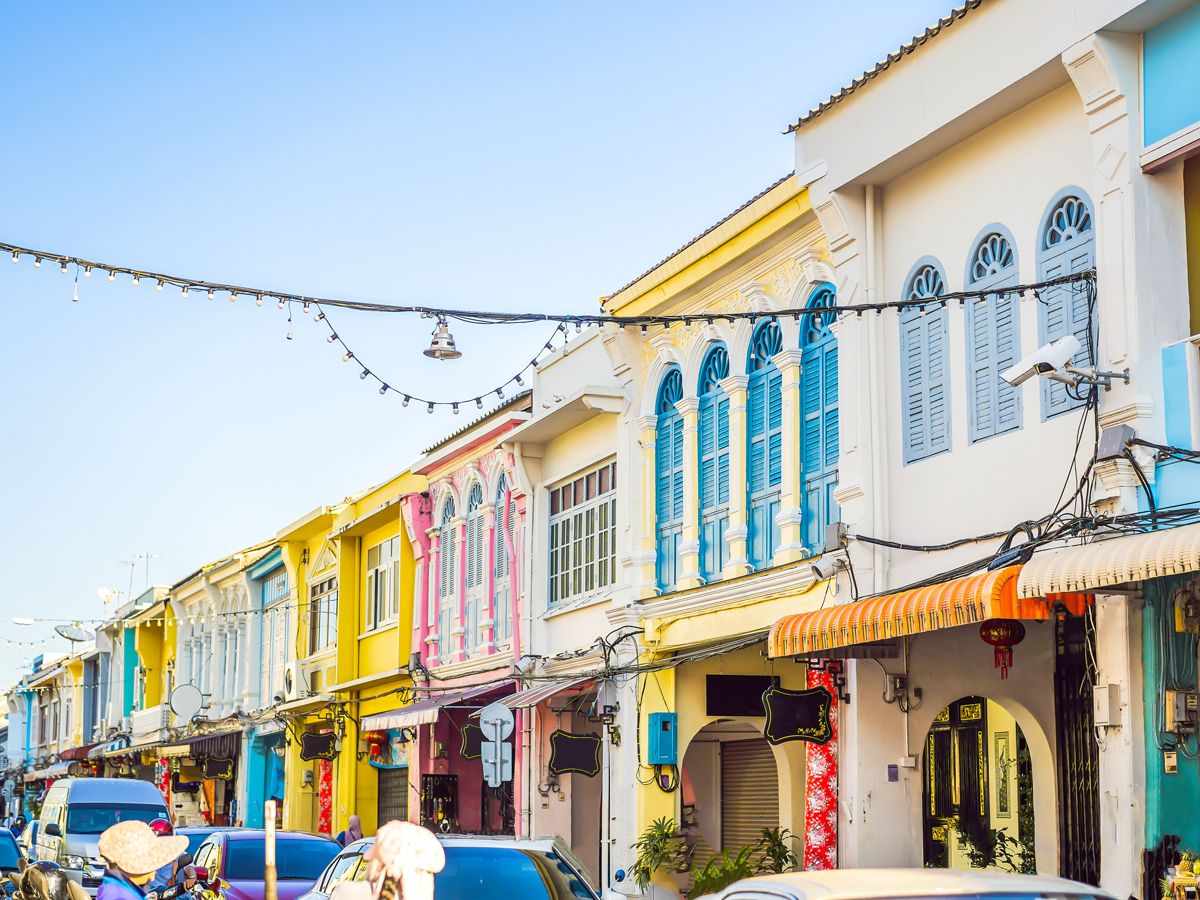
Thailand’s largest island has long attracted expats with its surreal tropical beauty, investments in reliable infrastructure, and affordable cost of living. Living in Phuket costs about 45% less than living in Philadelphia, according to the popular cost-of-living database Numbeo, or upwards of 80% less than San Diego, California. Retirees will find that their monthly budget stretches far here, with expenses often starting at around $1,500 for two people.
Those aged 50 and up can apply for Thailand’s retirement visa, which is relatively straightforward with the right financial documentation and easily renewable. While Phuket does offer the option of private hospitals (and a thriving medical tourism industry), a potential drawback is that public health care may be more limited for foreigners. Communication could be an issue, too, but English is often spoken in tourist areas like Phuket.
Another downside is the rainy monsoon season through September and October, but the laid-back beach town of Rawai, known for its local seafood, could be a welcome reprieve during the hot, humid season.
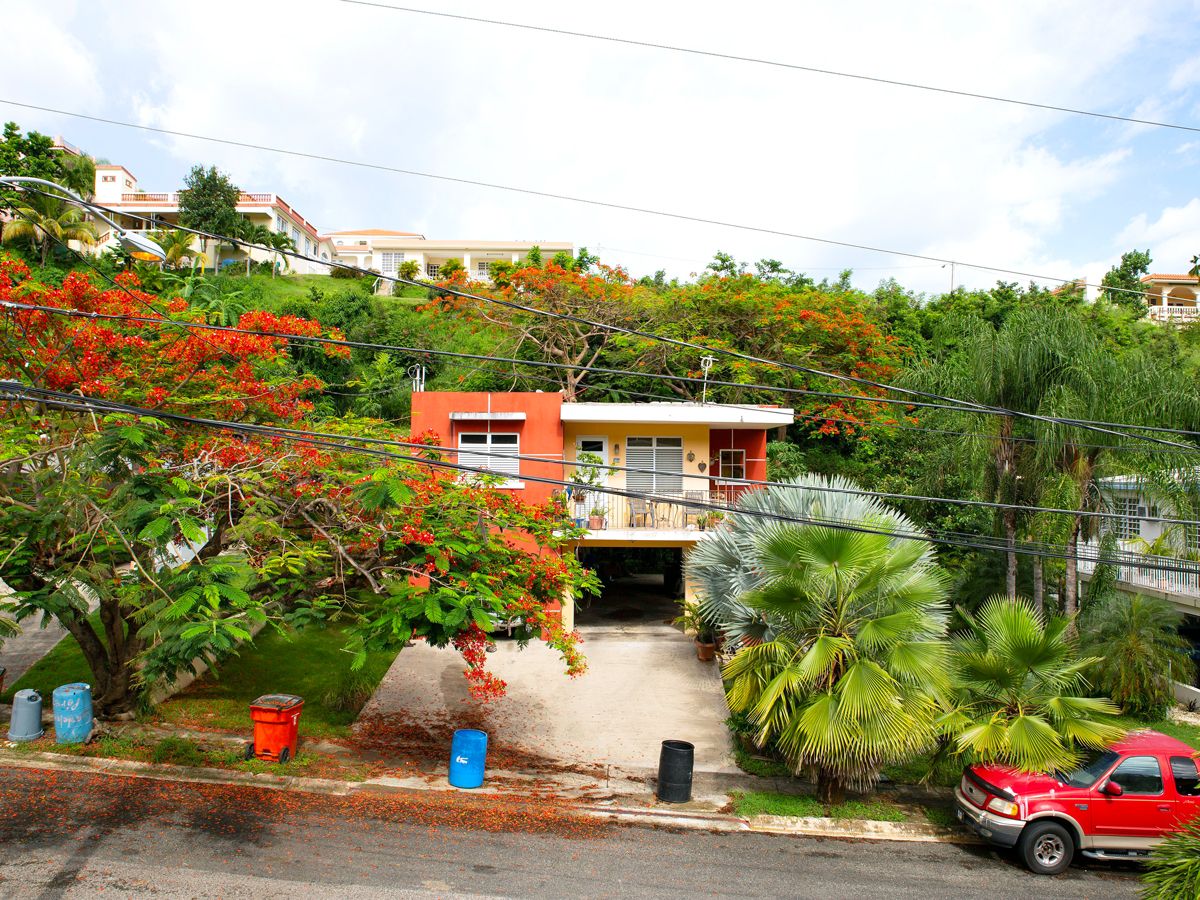
Puerto Rico blends Caribbean living with the practical perks of a U.S. territory. Americans can buy property and live there without a visa, and retirees who spend at least half the year on the island can benefit from tax breaks on passive income through the Individual Investors Act. Plus, Medicare is available for eligible residents.
Costs in Puerto Rico run lower than in most mainland U.S. cities, although not as low as on some of the other islands on this list. Retired couples can expect to spend about $2,000 per month in smaller towns or outside major resort areas.
While places like Dorado, Rincon, and the gated Palmas del Mar community have vibrant expat enclaves and modern amenities, infrastructure in some rural areas can be inconsistent, and the island is indeed vulnerable to hurricanes during the late summer and fall. However, the year-round warmth, familiar bureaucratic systems, and relaxed pace of life may be worthy trade-offs.
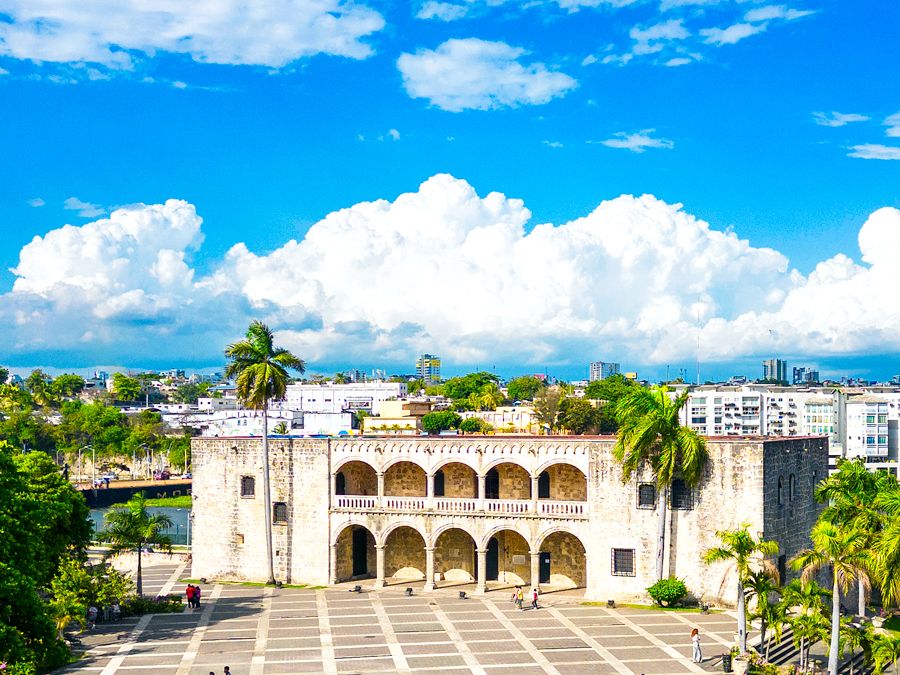
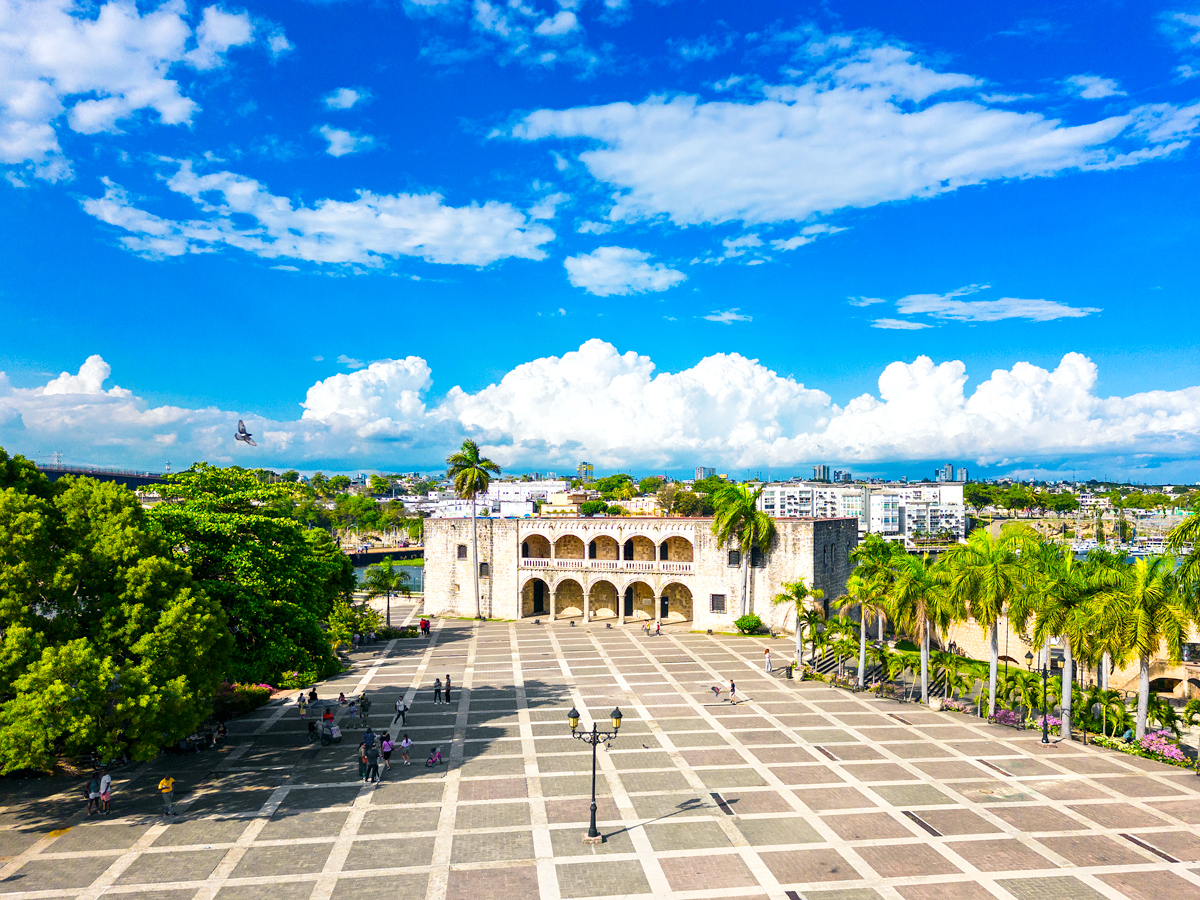
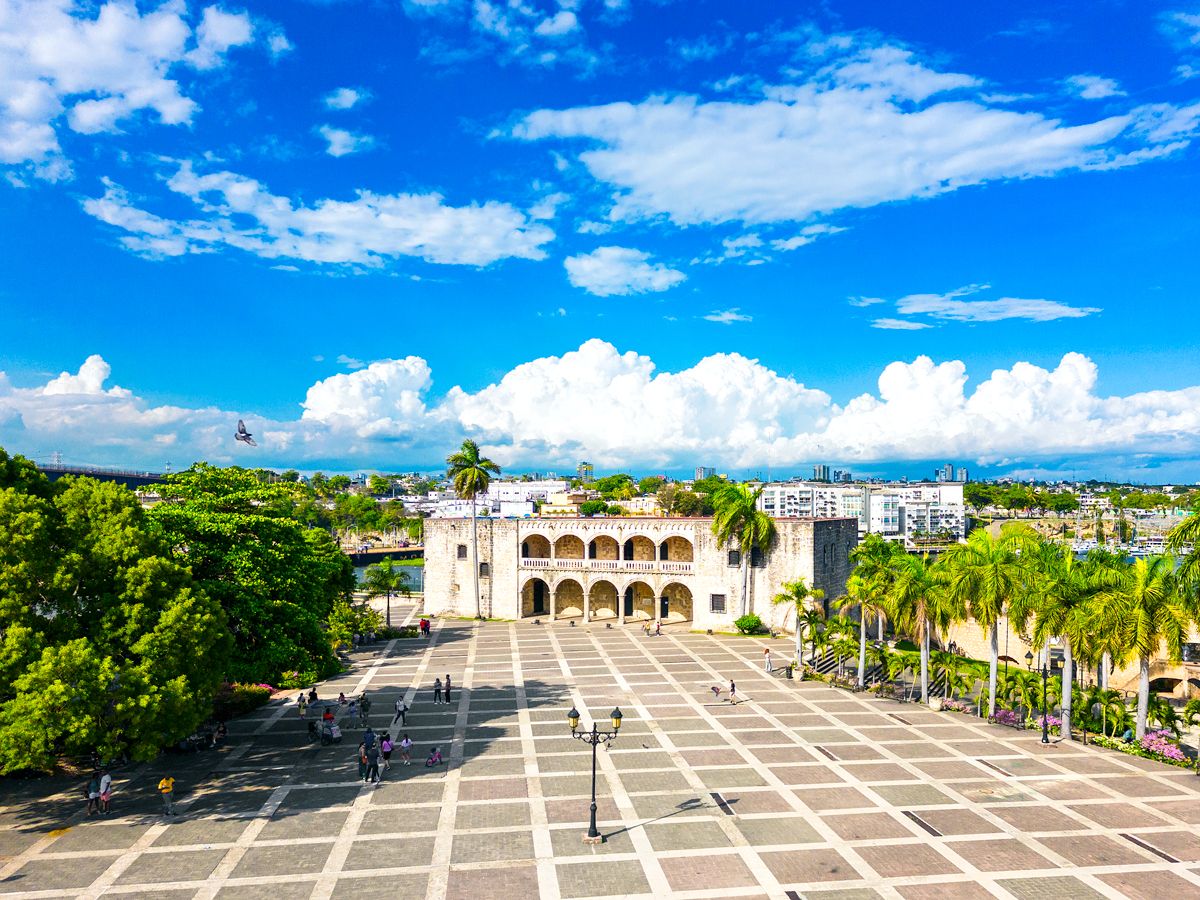
The Dominican Republic promises not only Caribbean beauty, but also a well-developed expat infrastructure that includes a retiree residency program for those with a reliable pension income. It’s also one of the most affordable Caribbean countries to retire in. Two people can often manage monthly expenses around $1,500, or even less in smaller towns and inland areas.
Getting to and from the U.S. is easy, and if you’re not drawn to main cities such as the capital, Santo Domingo, or Santiago, you may find your slice of paradise in beach towns like the former fishing village of Las Terrenas or the coastal gem of Cabarete. Hurricanes are a seasonal risk and infrastructure can vary by region, but the Dominican Republic’s low cost of living and natural beauty are truly hard to beat in your golden years.