




Post Banner Image
Tips

7 Free Travel Perks Anyone Can Get (Even if You Don’t Have Status)

By Peter Vanden Bos
Read time: 5 minutes
September 10, 2024
Updated: September 11, 2024

7 Free Travel Perks Anyone Can Get (Even if You Don’t Have Status)

By Peter Vanden Bos
Author
Peter Vanden Bos
Peter is a Toronto-based journalist, editor, content strategist, and self-professed avgeek with 15 years of experience covering all things travel. Prior to joining Daily Passport, he oversaw newsletter publication for Travelzoo. His favorite destinations to explore include Japan, France, Chile, New Zealand, and his adopted home country of Canada.

Who doesn’t like getting perks while traveling? While some of the most exclusive travel benefits are reserved for top-paying customers in airline and hotel elite loyalty programs or folks with a premium credit card, there are a host of other perks that are available to all types of travelers — and that don’t require you to shell out anything extra. Here are seven of the best free travel perks anyone can ask for. 

Free Pooling of Frequent Flyer Miles 

Person lounging on beach chair
Credit: Paul Biris/ Moment via Getty Images 

Saving up frequent-flyer miles to redeem them for a free vacation? It can take a while. But if you participate in an airline program that offers free pooling with family or friends, those points can add up much more quickly. Say you’re sitting on a stash of 50,000 miles, but you’re eyeing a ticket to Cancun that costs 75,000 miles. With this handy perk, you’d be able to combine points with other members of your family to top off your account and secure an award ticket faster. While restrictions vary from program to program, JetBlue’s TrueBlue points pooling is among the most generous — any member over 21 years old can create a pool to share points with up to seven family members or friends for free.

Free Wi-Fi by Signing Up for a Loyalty Program

Airline passenger using tablet
Credit: laddawan punna/ iStock via Getty Images Plus 

Getting online is a priority for many travelers, but many airlines have been slow to roll out reliable onboard Wi-Fi. When they do offer it, it often comes at a steep cost and can be painfully slow. Ground-based hotel Wi-Fi is a better bet, but it often isn’t free, either. However, many hotel chains — such as Marriott — will offer guests free basic in-room Wi-Fi simply for being a member of their free loyalty program. And in the sky, Delta Air Lines recently announced it was installing faster satellite-based Wi-Fi throughout its fleet — and all you have to do to access it completely free is be a member of its SkyMiles frequent flyer program.

Free Hotel Happy Hours

Hotel guests enjoying happy hour
Credit: AzmanL/ E+ via Getty Images 

Sure, you’ve probably seen the free pot of coffee sitting in the hotel lobby in the morning, but did you know some hotels go above and beyond when it comes to free beverages? Kimpton Hotels, in particular, are known for hosting complimentary wine hours for guests each evening, so if you’re a wine lover, it could be worth going out of your way to book a stay with them. If you’re not interested in wine, just ask the front desk what other free amenities they might be able to provide, such as a personal hygiene kit if you forgot your toothbrush or a complimentary bike rental. 

Free Access to a Faster Airport Security Line

Traveler scanning boarding pass at airport gate
Credit: AzmanL/ E+ via Getty Images 

The airport security line is seemingly never easy to navigate, with queues that can often snake around terminals and force travelers to show up to the airport earlier than they’d like. Enter: RESERVE, a program offered by biometrics company CLEAR. With RESERVE, any traveler can make a free reservation at the security checkpoint for select airports. There are dedicated lanes for appointment holders at airports where the service is offered, which means the lines typically move faster and the experience is more predictable. To find participating locations and to make a free appointment, visit the RESERVE website.

Free Airline Perks for Families 

Family walking through airport with luggage
Credit: Jacob Wackerhausen/ iStock via Getty Images Plus 

It’s no secret that flying with young children comes with challenges, but many airlines offer family-friendly amenities onboard if you simply ask a flight attendant. For example, United Airlines offers a “Children’s Travel Kit,” designed by the people behind Sesame Street, which includes crayons, an activity book, a puzzle, and a sensory strip to calm anxiety in young ones. Meanwhile, Delta Air Lines has a secret trading card program, in which passengers can collect card designs featuring different aircraft in the airline’s fleet. All you have to do is ask your pilot if they’re available — and they’re just as fun for adults as they are for kids.

Free Meals or Hotels for Flight Delays

Hotel guest sitting on bed next to suitcase
Credit: Oscar Wong/ Moment via Getty Images 

Flight delays and cancellations can happen to anyone — and sometimes they result in an unexpected overnight layover if you miss a connecting flight. But if the delay wasn’t due to weather and falls within the airline’s control, you shouldn’t have to pay out of pocket for meals and accommodations. Be sure to ask customer service staff not only to cover your hotel stay but also for a meal voucher to be used at airport restaurants. Some airlines even offer a portal where you can choose a hotel and receive free ground transportation to and from, without having to pay out of pocket. Rules vary by airline, so read up and prepare yourself in case you encounter any travel disruptions. 

Free City Tours on Long Layovers

Person browsing market stalls
Credit: urbazon/ E+ via Getty Images 

Have a long layover between international flights? Sitting at the airport and twiddling your thumbs for hours isn’t your only option. Some cities, in partnership with local tourism boards, offer travelers free city tours during a longer layover. For example, if you’re flying Turkish Airlines through Istanbul and have longer than six hours before your connecting flight, you can sign up for a guided tour of some of the city’s most famous sights, such as the Blue Mosque or the Grand Bazaar. Other airports offer free hotel stays for overnight layovers, making them an attractive option for your next long-haul layover. 

Post Banner Image
Culture

7 of the Most Beautiful Places To Visit in Italy

By Daily Passport Team
Read time: 7 minutes
September 10, 2024
Updated: September 18, 2024

7 of the Most Beautiful Places To Visit in Italy

By Daily Passport Team
Author
Daily Passport Team
Daily Passport writers have been seen in publications such as National Geographic, Food & Wine, CBC, Condé Nast Traveler, and Business Insider. They're passionate about uncovering unique destinations and sharing expert tips with curious travelers.

There’s a reason Italy is one of the world’s most popular countries to visit. From the ancient history of Rome to the vineyards of Tuscany and the gorgeous Amalfi Coast, there’s just about something for every type of traveler. While it’s just about impossible to cover all Italy has to offer in one trip, the following seven sites are among the country’s must-sees from north to south.

The Dolomites

Mountain scenery of the Dolomites in northern Italy
Credit: Achim Thomae/ Moment via Getty Images 

In a country that’s famously home to the highest number of UNESCO World Heritage Sites on Earth (59), one site that’s exponentially lesser known than, say, Venice or Rome is also among the most striking. The 18 peaks that make up the Dolomites, a sub-range of the northern Italian Alps, passed UNESCO’s Outstanding Universal Value test thanks to “a variety of spectacular vertical forms such as pinnacles, spires and towers, with contrasting horizontal surfaces including ledges, crags and plateaux,” among other standout features. 

But it’s not just the astonishing nature that makes these mountains unique: Having once belonged to Austria, a swath of this region retains much of that heritage — as you’ll discover if you’re visiting one of the local ski resorts during the snowy season, when the best refueling options include goulash, dumplings, and strudel. And though winter in the Dolomites is also magical for all the intimate, tucked-away holiday markets — complete with local takes on glühwein — the summer hiking among these dramatic peaks and valleys is equally tempting.

Trevi Fountain – Rome 

Image of Trevi Fountain in Rome, Italy
Credit: fokkebok/ iStock via Getty Images Plus 

Considering the famous legend surrounding this stunning Baroque fountain (toss a coin in, and you’ll return to Rome someday), it’s fitting that the origins of the monument also pack plenty of lore. The official version of events holds that Roman architect Nicola Salvi won the rights to the project in a 1730 design contest. But there’s a backstory: Alessandro Galilei — yes, same family as Galileo — won first. But since he was a Florentine, the local outcry was so great that Salvi was awarded the commission instead. 

As for the fountain’s waters, even their original source — an ancient aqueduct called Acqua Vergine — comes with its own mythology. The sixth-century senator Cassiodorus once reportedly said, “The Aqua Virgo runs with delightful purity… as a never-clouded sky.” Either way, this water was so special that the Vatican used to have a standing order. No longer potable, what fills the fountain now boasts a different value: around $1.6 million in visitor coinage annually. Popularized by Frank Sinatra’s 1955 rendition of “Three Coins in the Fountain” in the film of the same name, the traditional Trevi toss helps fund everything from local food pantries to shelters.

Il Duomo – Milan

Tourists standing in front of Il Duomo cathedral in Milan, Italy
Credit: Noppasin Wongchum/ iStock via Getty Images Plus 

At almost 110,000 square feet and with room for 40,000 people, this gothic cathedral is Italy’s largest church. But Milan’s Il Duomo goes big on more than sheer size: The construction took nearly six centuries to complete, from 1386 to 1965, and to this day requires fresh supplies of Candoglia marble to touch up the stunning yet susceptible rosy-white facade. Then there are the big names involved in the project, from Leonardo da Vinci (one of many artists and architects who attempted a design for the difficult lantern tower) to Napoleon Bonaparte, whose coronation here spurred the completion of the facade. 

A standout figure of a different kind? The tally of resident statues, said to outnumber any other church in the world There are more than 3,400 in all — including an estimated 2,000 on the roof, where walking tours through the iconic spires tend to note the most prominent saints (the golden Madonnina), the least expected celebrities (20th-century heavyweight champ Primo Carnera), and everyone in between. For some visitors, however, the church’s biggest draw is actually quite small: a single nail believed to have come from Jesus’ cross.

Bridge of Sighs – Venice

Bridge of Sighs over canals of Venice, Italy
Credit: GISTEL Cezary Wojtkowski/ iStock via Getty Images Plus 

Rare is the span of limestone (or anything, for that matter) that inspires an opera, a Pittsburgh prison, and a bid for eternal love. But rarity is Venice’s calling card, so if such a bridge were to be found anywhere, why not above the narrow canal that separates the courts of the Doge’s Palace from the prisons? 

However apocryphal, the backstory is as follows: when Venetian convicts got their last glimpse of the city as they crossed this 17th-century Baroque bridge to their subterranean fate, audible sighing routinely ensued. Thanks at least in part to one very famous translator — Lord Byron, who dubbed il Ponte dei Sospiri (“the Bridge of Sighs”) in an 1812 poem — the arch took hold of the popular imagination. Among the homages built in subsequent decades, Pittsburgh’s version was the only to link a jail to a courthouse.

A slightly more romantic take on the bridge emerged in 1861 with Jacques Offenbach’s operetta “Le Pont des Soupirs” (the French translation of its name) in which the bridge played a central role. But the most romantic possible appropriation of the bridge is now a time-honored Venetian tradition: Drift underneath in a gondola at sunset, as the bells of St. Mark’s Basilica toll, and kiss your beloved to ensure everlasting bliss together.

Boboli Gardens – Florence

Overview of Boboli Gardens and cityscape of Florence, Italy
Credit: Massimo Borchi/Atlantide Phototravel/ Corbis Documentary via Getty Images 

Hidden behind Florence’s Pitti Palace is one of the most extraordinary examples of the Italian garden — a Renaissance fixture that became the fashion at every European royal court from Luxembourg to Versailles to Peterhof. Blending geometrically arrayed landscape elements with architectural installations, monumental statues, and various water features, these 111 acres have since become an open-air museum, with centuries’ worth of expansion and revision represented. 

Though work on the grounds began in the 1400s, the gardens didn’t get going in earnest until 1549, when Eleanor of Toledo — wife of the Grand Duke of Tuscany Cosimo I de’ Medici — bought the estate with grand-scale alfresco entertainment in mind. Medici court artist il Tribolo worked on the initial design, until his death ushered in a whole series of successors. Some of their most notable additions include the Buontalenti Grotto, the amphitheater’s obelisk (originally from Luxor), and, not least, the famed 18th-century rococo-style pavilion called the Kaffeehaus. While you won’t find refreshments there, you’ll at least find drinking fountains in some incredibly scenic spots, such as the Grotto of Adam and Eve, the Meadow of Columns, and the Garden of Madama.

Arco Naturale – Capri

Arco Naturale rock arch perched over coast of Capri, Italy
Credit: Mauro_Repossini/ iStock via Getty Images Plus 

Ubiquitous on bucket lists and honeymoon itineraries, Italy’s island of Capri is famous for its breathtaking natural beauty, and perhaps nowhere is that on better display than the island’s Arco Naturale (Natural Arch). It starts with the journey there: a leisurely stroll from boutique-lined Via Camerelle to Via Tragara — home to luxurious hotels and private villas. The street ends in a large terrace offering incredible views of the sea, the Amalfi Coast, the island’s mountaintops, and the famous Faraglioni rocks. From there, you’ll follow the narrow, coastline-hugging Pizzolungo footpath to the spectacular arch. 

Located on the eastern coast on the island, the Arco Naturale dates to the Paleolithic era and is all that remains of a deep, underground grotto that was only discovered in the aftermath of a landslide. The arch spans 39 feet and is about 59 feet high — a natural bridge of limestone framing a postcard-perfect view of the Mediterranean’s sparkling blue water. While there, don’t miss  the Grotta di Matermania, a cave where sacred rituals were believed to be practiced thousands of years ago. 

Teatro Greco – Taormina

View of Mount Etna and Sicilian coast from the ancient Teatro Greco in Taormina
Credit: Peter Adams/ Stone via Getty Images 

Boasting dramatic views of the Ionian coast and nearby Mount Etna (one of the tallest active volcanoes in Europe), this ancient Greek theater on the east coast of Sicily was carved directly from the rock of Mount Tauro sometime around the third century BCE. Though originally built for dramatic performances by the Greeks, the Teatro Greco was later taken over by the Romans in the second century CE and repurposed for gladiator contests. The stunning amphitheater holds upwards of 5,000 spectators, making it the second-largest ancient theater in Sicily, after one located in Syracuse. 

The massive stone structure is divided into several distinct parts: a scene (stage) where the actors perform which features six Corinthian columns raised in the 1800s, an orchestra where either the musicians sat or gladiators fought, and a cave where spectators were seated. Though it’s nearly 2,500 years old, the theater continues to host performers such as Elton John, Bob Dylan, and Sting, and is also home to the Taormina Film Fest each June.

Post Banner Image
Tips

These Destinations Offer Free Perks for Eco-Friendly Tourists

By Bennett Kleinman
Read time: 4 minutes
September 10, 2024
Updated: September 10, 2024

These Destinations Offer Free Perks for Eco-Friendly Tourists

By Bennett Kleinman
Author
Bennett Kleinman
Bennett is a New York City-based staff writer for Daily Passport. He previously contributed to television programs such as the Late Show With David Letterman, as well as digital publications like the Onion. Bennett has traveled to 48 U.S. states and all 30 Major League Baseball stadiums.

In many places, sustainability has become an integral part of the collective identity. That’s increasingly true in popular destinations such as Venice and Amsterdam, which are looking to combat the effects of overtourism. As a result, a new crop of destinations are now encouraging not just residents, but also out-of-towners to embrace that eco-friendly attitude. Earlier in 2024, officials in Copenhagen established a new program to offer up cultural and culinary perks as an incentive for participating in sustainable practices. Find out what to expect from this innovative program and explore destinations around the world that are offering similar perks for eco-friendly tourists.

What Is Copenhagen’s CopenPay?

Nyhavn canal in Copenhagen, Denmark, seen from above
Credit: CHUNYIP WONG/ iStock via Getty Images Plus

Introduced in July 2024, CopenPay was designed as a rewards program to encourage both residents and tourists alike to engage in sustainable behaviors. To take advantage of the program, all participants had to do was partake in an eco-friendly activity, such as taking public transportation or riding a bike. They were also asked to provide evidence of their participation if possible, which could be as simple as a receipt or photograph.

After completing an eligible and sustainable activity, individuals could cash in for a number of benefits at one of 24 different attractions. The rewards included experiences such as a free beer at the Zoku rooftop bar, a complimentary kayak tour through the city’s coastal waters, or even free access to the historic gardens at the Karen Blixen Museum.

Though the pilot program ended in August, officials are hopeful it will be implemented again as soon as next year — and possibly on a grander scale throughout other parts of the country. But Copenhagen is just one of several locations around the world that have embraced the idea of rewarding tourists and locals who show interest in preserving the environment. Below are a few other examples that are currently ongoing or set to debut soon.

Florida Keys

Homes and palm trees reflecting on water in the Florida Keys
Credit: Meinzahn/ iStock via Getty Images Plus 

The Florida Keys Eco-Experience Trail is both free and simple to use. The pass is texted directly to your phone, and once you’ve signed up, you can show it at a number of businesses located along the entirety of the 125-mile-long stretch of the Florida Keys. The pass can be used for discounts with fishing companies, at scuba diving facilities, or to acquire free merchandise. It’s part of a larger initiative to bring eco-minded tourists to the region and convince them to take action to help preserve the environment.

Hawaii

Aerial view of famous Waikiki Beach in Honolulu, Hawaii
Credit: Maridav/ iStock via Getty Images Plus 

On the opposite end of the country, in Hawaii, you’ll find a program called Malama Hawaii, which is derived from the Hawaiian word for “to care for.” This eco-friendly initiative offers visitors the chance to volunteer with any number of sustainable organizations, which may involve tending to a tropical garden or helping to clean up the coastline. In exchange for this support, participants can swap their volunteer hours for perks such as free meals and up to 15% off hotel rooms.

Palau

Lush island landscape of Palau, seen from above
Credit: Norimoto/ iStock via Getty Images Plus 

Palau is a Pacific microstate that, despite its small size, is hoping to make a big impact in preserving the environment. One of the key initiatives is a program set to launch later in 2024 called Ol’au Palau. Individuals are asked to partake in activities like visiting culturally significant sites or patronizing businesses that pride themselves on sustainability. In return, those volunteers are rewarded in the form of unique experiences that aren’t normally available to the public. This may include gaining access to a private taro farm for a tour or even a local meeting house to gain a deeper understanding into local culture. If you find yourself in this stunning, off-the-radar Pacific island nation, consider downloading Ol’au Palau once it’s available and experience the country in a way that few other visitors have.

Squamish, British Columbia

Aerial view of Squamish, British Columbia, surrounded by mountains
Credit: edb3_16/ iStock via Getty Images Plus 

Squamish, a small Canadian town located about 40 miles north of Vancouver and known for its beautiful scenery, has seen a huge boost in tourism in recent years. In an effort to mitigate the impact of tourism on the local environment, the town of Squamish has implemented a new Red Bag Program through September 2024, which could be reintroduced in the near future if deemed successful. As part of this eco-friendly initiative, ambassadors are stationed at popular trails and parks in the city to hand out red plastic bags. Those who receive a bag are encouraged to pick up any trash they create or find along the way. Then, they return the bags to the information center in exchange for tantalizing free rewards such as a beer, coffee, or ice cream cone.

Post Banner Image
Architecture

The Most Beautiful Official Residences You Can Visit Around the World

By Cynthia Barnes
Read time: 4 minutes
September 10, 2024
Updated: September 11, 2024

The Most Beautiful Official Residences You Can Visit Around the World

By Cynthia Barnes
Author
Cynthia Barnes
Cynthia kicked around the world for a while before landing in Colorado. Her work has appeared in Food & Wine, the Boston Globe, and National Geographic, among others. She loves dives — both scuba and bars — baseball, the Oxford comma, and live music.

It’s good to be king — or president, for that matter — for a lot of reasons, but luxurious lodgings are definitely a perk of the position. Some official residences still house their heads of state and are used mainly to conduct government business, while others are open for tours and welcome the public throughout the year — or at least on special occasions. Many official residences are often architectural manifestations of a nation’s pride and wealth. (In that regard, America’s White House is unusually modest.) If it’s governmental grandeur you’re looking for, here are seven of the most splendid official residences on the planet that welcome you for a visit.

Drottningholm Palace – Drottningholm, Sweden

Manicured gardens in front of grand exterior of Sweden's Drottningholm Palace
Credit: AYImages/ E+ via Getty Images

The Swedish royal family makes their home in this opulent palace on an island in Lake Mälar, located near Stockholm, Sweden’s capital. Inspired by the palace of Versailles, Drottningholm was built in the late 1600s and is often cited as an outstanding example of European architecture from that period. The grounds also contain the Palace Theatre — which still uses its original 18th-century stage, sets, and machinery — and the glorious Chinese Pavilion. Except for the southern wing of the palace, which is the royal family’s private quarters, the palace and gardens are open to the public throughout the year.

Rashtrapati Bhavan – New Delhi, India

Grand entrance to Rashtrapati Bhavan official residence in New Delhi, India
Credit: saiko3p/ iStock via Getty Images Plus 

It’s fitting that the most populous nation on Earth has one of the largest official residences on the planet. While Rashtrapati Bhavan can’t hold anywhere close to India’s almost 1.5 billion inhabitants, it still has an unbelievable amount of room to spare. Situated on 330 lushly landscaped acres, the pink-and-cream sandstone palace was originally called the Viceroy’s House when it opened in 1929, while India was under British colonial rule. There are 340 rooms in the Neoclassical New Delhi residence, which covers almost 5 acres and is lavishly embellished with a 180-foot copper dome. Tours of the main building — including the library, ceremony room, and banquet hall — are available to visitors.

Buckingham Palace – London, England

Buckingham Palace with gardens and golden statue in London, England
Credit: maziarz/ Shutterstock 

Tourists can always observe the famous changing of the guard at the front gates of Buckingham Palace, but the iconic London residence of the British monarchy also opens its doors to visitors each summer. Originally built in the early 17th century, the palace was significantly expanded under Queen Victoria in the 19th century, when it became her official home. Today, Buckingham continues to serve as the backdrop for large royal state visits, official ceremonies, weddings, and other national celebrations.

La Fortaleza – San Juan, Puerto Rico 

Image of La Fortaleza in San Juan, Puerto Rico
Credit: todamo/ iStock via Getty Images Plus 

While the White House may be (relatively) unassuming, the official residence of the governor of Puerto Rico is positively palatial. La Fortaleza (“The Fortress”) is just that — a military fort built to protect the Spanish colonial stronghold of San Juan. Construction began in 1533, and the imposing structure is now the oldest executive mansion in the Western Hemisphere. Free guided tours, available in English and Spanish, cover the dungeon (the fortress once served as a prison), the military fort, the circular tower, and the impressive Moorish gardens.

Imperial Palace – Tokyo, Japan

Bridge through gardens of the Imperial Palace in Tokyo, Japan
Credit: ike-yama/ Shutterstock 

Surrounded by the gleaming skyscrapers of modern-day Tokyo, the grounds of the Imperial Palace are an oasis of calm and beauty. They take visitors back to the days when Japan was ruled by a shogun who built the fortresslike Edo Castle that originally occupied the site. A new Imperial Palace was constructed in 1888, and rebuilt in a similar style after its destruction during World War II. Guided tours of the palace grounds are available in Japanese and English year-round, but the inner grounds of the palace are open to the public only on January 2 and the emperor’s birthday, February 23.

Royal Alcázar – Seville, Spain

Yellow facade of the Royal Alcázar of Seville, Spain
Credit: Marco_Fernandes/ Shutterstock 

Spanish monarchs added their own flourishes to this 10th-century Moorish fort, making the Royal Alcázar of Seville an intriguing blend of styles that traces the country’s heritage and history. The Spanish royal family continues to use the upper levels of the property as their official residence when in Seville, making it one of Europe’s oldest occupied royal palaces. Tours of the grand halls and gardens are available to visitors, and Game of Thrones fans will surely recognize Alcázar as the home of the Martell family, who ruled the Kingdom of Dorne in the hit HBO series. 

Prague Castle – Prague, Czech Republic

Tourists in front of Prague Castle in Prague, Czech Republic
Credit: Vaclav Sebek/ Shutterstock 

Almost continuously under expansion, repair, and renovations since its construction around the year 880, Prague Castle is — according to Guinness World Records — the largest ancient castle in the world. Covering 17 acres, the castle serves as the official residence of the president of the Czech Republic, and also houses priceless works of art, the crown jewels, remains of monarchs, and many important historical artifacts. Many areas of Prague Castle are open to the public, with guided and self-directed tours available year-round.

Post Banner Image
History

6 U.S. Cities That Used To Be State Capitals

By Jersey Griggs
Read time: 4 minutes
September 10, 2024
Updated: September 10, 2024

6 U.S. Cities That Used To Be State Capitals

By Jersey Griggs
Author
Jersey Griggs
Jersey is a travel and lifestyle writer whose work has appeared in publications such as Condé Nast Traveler, Business Insider, and Bust. When she’s not exploring her adopted home state of Maine, she’s likely planning her next big trip.

If you ever memorized all the state capitals during elementary school, then you already know that the capital is not always the state’s biggest or most well-known city. This is because state capitals need to tick off a lot of boxes to serve constituents best. When the U.S. was growing and expanding, some states’ original capital were moved due to strategic reasons involving location, infrastructure, or politics. Discover six U.S. cities that used to be the capitals of their state, and why they moved.

Detroit, Michigan

Cityscape of Detroit, Michigan
Credit: Photo by Mike Kline (notkalvin)/ Moment via Getty Images 

Before Lansing became the capital of Michigan in 1847, Detroit held the honor for 42 years. Founded in 1701 as a French trading post, Detroit was Michigan’s original capital city largely due to its size and location along a river. The latter meant it was an excellent hub for trading and a strategic spot for defense, making it a natural choice for the seat of government in a burgeoning territory. However, after Michigan officially became a state in 1837, officials felt a more centrally located capital was necessary. Since it was located in the middle of the state and had plenty of land to offer for development, Lansing was the ideal choice.

Newport, Rhode Island

Sailboats in harbor off the coast of Newport, Rhode Island
Credit: DenisTangneyJr/ iStock via Getty Images Plus 

For such a small state, Rhode Island has had its fair share of capital cities. In addition to Providence and Newport, the towns of Kingston, Bristol, and East Greenwich were capitals for Rhode Island’s rotating General Assembly from 1681 until 1854. Eventually, officials sought to establish a permanent capital, whittling down the number of choices to two, with Newport and Providence being the most logical options. Due to its location along the coast, Newport was a center for trade, making it integral in the rum and molasses imports that brought large profits to the region in the 18th century. The northern city of Providence, however, had stronger industrial ties and better infrastructure, making it the ideal choice for Rhode Island’s permanent capital in 1854.

Savannah, Georgia

Spanish moss trees draped over path leading to fountain in Savannah, Georgia
Credit: DesiDrew Photography/ iStock via Getty Images Plus 

When the coastal city of Savannah officially became a royal colony in 1754, it was the home of the royal governor, legislative assembly, and British court system. After Georgia officially became a state in 1776, it made sense to keep it as the seat of the new government — for a time. By the next century, all eyes were on an up-and-coming Georgian city called “Terminus.” Named for its location at the end of the railroad line, the city was a centralized railroad hub, with several lines all converging in the burgeoning city. By 1845, Terminus was renamed Atlanta, after the Atlantic Railroad, and within another 23 years, the centrally located city was named the official state capital.

New Orleans, Louisiana

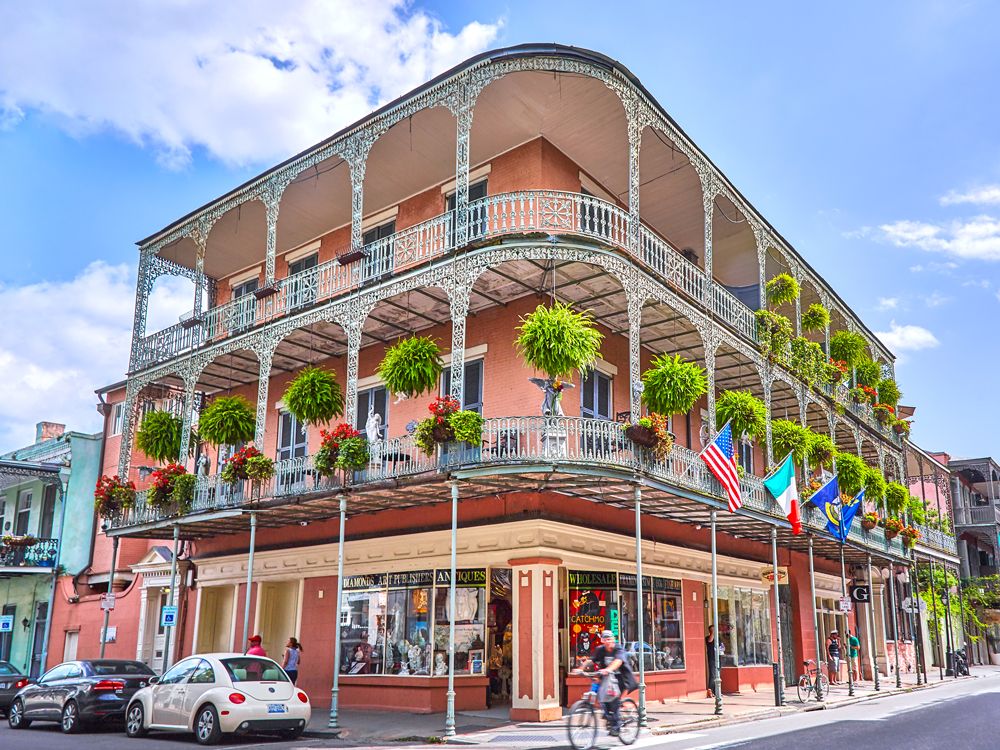
Street in New Orleans' French Quarter with view of modern skyscrapers in distance
Credit: Susanne Neumann/ iStock via Getty Images Plus 

Founded by the French in 1718, New Orleans quickly grew to be a cultural, economic, and political hub in the South. But as the city grew, state representatives became increasingly worried that politicians were too concentrated in New Orleans, and that their agendas were too focused on the capital city instead of the state as a whole. Although Baton Rouge was a considerably smaller city at the time, it became the site of the new state capital in 1846 after the city donated a large plot of land for the Capitol building — which became the country’s tallest Capitol building at 450 feet. Officials also deemed Baton Rouge a safer location to build the infrastructure a capital city required, compared with New Orleans’ hurricane-prone location along the Gulf of Mexico.

Williamsburg, Virginia

Horse-drawn carriage in Williamsburg, Virginia
Credit: Greg Meland/ iStock via Getty Images Plus 

The historic city of Williamsburg was the capital of Virginia for 81 years, after taking the title from Jamestown in 1699. However, during the Revolutionary War, Thomas Jefferson and other early leaders of the nation decided that Williamsburg was no longer the right fit for Virginia’s state capital. The city’s proximity to the coast and the James River meant it was exposed, making it primely positioned for British attacks. The inland city of Richmond was seen as a much safer choice, in addition to being more accessible to all Virginians. The move to Richmond also allowed for more modernization in government, including a new state Capitol building that was designed by Jefferson himself.

San Francisco, California

Street lined with homes facing downtown San Francisco, California
Credit: Alexander Spatari/ Moment via Getty Images 

Before Sacramento became the official capital of California in 1854, four other cities held the distinction: Monterey, San Jose, Vallejo, and Benicia. However, eight years after it became the capital, Sacramento suffered severe flooding and could not remain the seat of the government. During this time, San Francisco became the temporary capital of California, with operations being relocated to the Merchants Exchange Building. Eventually, the legislature moved back to Sacramento, which was chosen as the permanent capital for several reasons. For one, it was an economic hub due to the gold rush of the 1850s, and it had space for infrastructure. The city also donated its municipal courthouse to the state government, which was something the other California capital cities hadn’t been able to offer, and it has remained the state capital ever since.

Post Banner Image
Tips

6 Most Commonly Forgotten Items When Packing for Vacation

By Julia Hammond
Read time: 5 minutes
September 10, 2024
Updated: September 10, 2024

6 Most Commonly Forgotten Items When Packing for Vacation

By Julia Hammond
Author
Julia Hammond
Julia is a U.K.-based travel writer whose work has been featured in The Independent, The Telegraph, The New Zealand Herald, and Culture Trip, among others. She’s an enthusiastic advocate for independent travel and a passionate geographer who has had the privilege of traveling to more than 130 countries in search of a story.

Some travelers are highly organized when it comes to packing, even going so far as to create a customizable packing list. Others tend to rush around at the last minute, throwing things in a suitcase. If the latter sounds familiar, at some point you’ve probably forgotten something important when packing for a vacation. It’s not always a big deal if you’ve planned a city getaway where you’re likely to find yourself close to a shopping mall, but if you’re heading somewhere small or remote, that missing item could prove to be pretty inconvenient. To make sure your next vacation goes off without a hitch, we’ve rounded up six of the most common things people overlook when packing, so you can make doubly sure you haven’t left them behind.

Passport

Traveler packing passport and other items into suitcase
Credit: miniseries/ E+ via Getty Images 

If you’re heading overseas, you won’t get far without your passport. Without it, you risk being denied boarding and having to rework your plans at the last minute — sometimes at considerable expense. So, before you leave, tape a note to the inside of your front door (or another highly visible location) to remind you to pack it. Before the return leg, place it with something you’re absolutely certain you won’t forget, such as inside the shoes you plan to wear on the journey home or with the keys to your rental car. That’s especially important if you’ve tucked it out of sight for safekeeping. (And if you happen to lose your passport on vacation, here’s a helpful guide.)

Phone Charger (and Adapter)

Train passenger using cellphone
Credit: frantic00/ iStock via Getty Images Plus 

Nothing reminds you how much you depend on a smartphone as much as a low battery and no way of charging it. These days, cellphones are far more than a tool for keeping in touch; they act as a place to store boarding passes and hotel confirmations, a method of payment, a navigational aid, a camera, and so on. To make sure you don’t find yourself in a sticky situation, check that you have remembered to pack your charger and cable. If you do forget, the hotel front desk might be able to lend you one. And if you’re traveling overseas, always check the type of electrical sockets you’re likely to encounter and make sure you pack the correct adapter, too.  

Toothbrush

Man brushing teeth and holding mirror while standing next to suitcase on bed
Credit: Eleganza/ E+ via Getty Images 

A toothbrush is another commonly forgotten item when packing. Unless you’re sufficiently organized to have a dedicated travel amenities kit — a must-have if you’re a frequent flyer — then it’s likely that at some point you may have forgotten one. The same goes for other personal care items that you’re likely to use right before you leave home, such as a comb, deodorant, or razor. The good news is that many hotels will be able to supply replacements free of charge if you ask, and even if they can’t, it’s usually fairly easy to locate a nearby drugstore and stock up on what you’re missing. 

Swimwear

People jumping into river
Credit: AleksandarNakic/ E+ via Getty Images 

Whether you’ve just arrived at a Mexican beach resort or are about to soak in one of Iceland’s luxurious geothermal lagoons, nothing will spoil the mood faster than the realization that you’ve forgotten your swimsuit. Though in most cases you can purchase one in the resort, prices tend to be higher on property. And in any case, you’ll want to avoid wasting precious vacation time searching local stores for better-value alternatives. Sun seekers should also double-check they’ve packed other poolside essentials such as sunglasses, flip-flops, and sunscreen
Over-the-Counter Medicines

Traveler packing suitcase on bed
Credit: Artit_Wongpradu/ iStock via Getty Images Plus 

Not every traveler packs a first-aid kit out of habit. However, if you’ve ever been sick on vacation, the thought of forgetting your stash of basic, over-the-counter medicines will fill you with unease. It’s easy to develop a headache or pick up a cold while traveling, but fortunately, both are straightforward to deal with if all you have to do is reach for your bag. But without it, you’ll potentially find yourself confused by local brand names. For example, ask for Tylenol at the front desk of a British hotel and you’ll be met with a blank look — on the opposite side of the pond, acetaminophen is known as paracetamol.

Spare Eyeglasses or Contacts

Person reading book in hammock
Credit: Inside Creative House/ iStock via Getty Images Plus 

Whether you wear contact lenses or rely on glasses to help bring things into focus, on occasion, you’ll need a spare pair. At home, you’ll reach for them without a second thought, but on vacation, you don’t want to find that they’re thousands of miles away if you lose, break, or otherwise damage your main pair. However, if you do forget to pack your spare, you might be able to fashion a temporary repair, though it’s also wise to carry a copy of your prescription in case of an emergency. If all else fails, see if you can locate an affordable pair of reading glasses as a temporary measure. They should partially correct your vision, allowing you to get by for a few days until you return home. 

Note: All featured products and deals are selected independently and objectively by the author. Daily Passport may receive a share of sales via affiliate links in content.

Post Banner Image
Culture

6 Unique and Unexpected Museums To Visit Around the U.S. 

By Daily Passport Team
Read time: 6 minutes
September 6, 2024
Updated: September 17, 2024

6 Unique and Unexpected Museums To Visit Around the U.S. 

By Daily Passport Team
Author
Daily Passport Team
Daily Passport writers have been seen in publications such as National Geographic, Food & Wine, CBC, Condé Nast Traveler, and Business Insider. They're passionate about uncovering unique destinations and sharing expert tips with curious travelers.

Museums take on many shapes and forms throughout the globe. Some are downright tiny — no more than a humble shed — while others cover thousands of square feet and exhibit centuries’ worth of history. In the United States, there’s a museum for just about every interest, and some contain collections that provoke fascination and wonder like few other cultural attractions can. Here are six of the most unique and unexpected museums to visit from coast to coast. 

Isabella Stewart Gardner Museum – Boston, Massachusetts

Interior courtyard at Isabella Stewart Gardner Museum in Boston, Massachusetts, seen from above
Credit: Boston Globe via Getty Images

Born in 1840, enigmatic socialite Isabella Stewart Gardner built up a personal collection of thousands of artworks during her lifetime. Her collection grew to include paintings, sculptures, textiles, manuscripts, photographs, artifacts, and letters from all over the world, so she built a mansion in Boston’s Back Bay Fens to house it all. Her four-story brick and stucco palazzo was inspired by Venice and embellished with original Roman, Gothic, and Renaissance architectural elements. Inside, the collection is both eclectic (see: a 17th-century silver ostrich from Germany) and world-class, with masterpieces by Botticelli, Raphael, and Matisse, among many others.

Gardner moved into the fourth floor when construction finished in 1901; the rest opened to the public as a museum in 1903. And the mansion — grand but intimate, surrounding a courtyard lush with palms — is just as she left it, as Gardner stipulated that nothing be rearranged or sold. But as sensational as the collection is, the Gardner may be most famous for an unsolved 1990 art heist that robbed the museum of priceless artwork, including pieces by Degas and Rembrandt.

Academy Museum of Motion Pictures – Los Angeles, California

Exterior of the Academy Museum of Motion Pictures in Los Angeles, California
Credit: Kevin Winter via Getty Images Entertainment

The Academy Museum of Motion Pictures opened in 2021, over budget and behind schedule, but the 300,000-square-foot museum was worth the wait. Designed by architect Renzo Piano, the striking institution encompasses two movie theaters flanking seven floors of exhibition space — the world’s largest museum dedicated to the art and science of moviemaking. 

The permanent collection includes cinematic treasures such as Rosebud, the sled from Citizen Kane; the only surviving full-size shark model from Jaws; the Mount Rushmore backdrop from North by Northwest; and costumes, set pieces, and ephemera from The Wizard of Oz, Black Panther, Star Wars, and everything in between.

Aside from preserving and celebrating these classic artifacts, the museum also intends to inspire dialogue about the future. The collection highlights filmmakers with diverse backgrounds and lesser-known movies — for example, an inaugural exhibit juxtaposed the canonical Citizen Kane with Real Women Have Curves, a landmark (if rarely seen) 2002 coming-of-age film hailed for its nuanced portrayal of Mexican American heritage.

Crystal Bridges Museum of American Art – Bentonville, Arkansas

Exterior of the Crystal Bridges Museum of Art in Arkansas
Photo credit: Ian G Dagnall/ Alamy Stock Photo

“Walmart” and “fine art” aren’t typically associated, but big-box heiress Alice Walton has founded a stunning museum dedicated to American art — and it’s free to the public. Situated on 120 forested acres in Bentonville, Arkansas (where the retailer is headquartered), the Crystal Bridges Museum of American Art was built in 2011 and designed by renowned architect Moshe Safdie. 

The museum contains a world-class collection of American art, from colonial to contemporary, including masterworks by Andy Warhol, Jackson Pollock, Georgia O’Keeffe, and many more. In addition to Crystal Bridges’ permanent collection, the museum frequently hosts exhibitions which bring in rarely seen works from private collections, as well as loans from other institutions around the world.

The site also contains Frank Lloyd Wright’s famed Usonian House, which was dismantled and moved from its original flood-threatened New Jersey location and reconstructed on the museum’s campus. And surrounding the museum are five miles of pristine trails that are open to the public for walking and bicycling. 

Storm King Art Center – New Windsor, New York

Outdoor sculpture on grassy field at Storm King Art Center in New York
Credit: James Talalay/ Alamy Stock Photo

Storm King Art Center is only about an hour north of Manhattan, but it might as well be worlds away. Spanning 500 acres of rolling hills, woodlands, and grassy meadows, this bucolic outdoor sculpture garden is home to more than 100 monumental pieces by superstar sculptors from Alexander Calder to Maya Lin, Donald Judd, Richard Serra, Roy Lichtenstein, and Louise Bourgeois. 

Metal manufacturing moguls Ralph Ogden and H. Peter Stern purchased this Hudson Valley estate in 1959, intending to open a small museum dedicated to Hudson River School artists inside the property’s chateau. Storm King — named for the nearby mountain — opened in 1960, displaying works on paper, but Ogden shifted gears a few years later with a series of sculptures by Dan Smith. He thought the large-scale forms would work better against Storm King’s evolving outdoor landscape — which now features one of the largest collections of contemporary outdoor sculptures in the country. 

The Neon Museum – Las Vegas, Nevada

Collection of discarded neon signs at the Neon Museum in Las Vegas, Nevada
Credit: Jason Ogulnik/ Alamy Stock Photo

What began as a graveyard for Sin City’s retired neon signage is now the Neon Museum, spanning two acres in the city’s downtown area. The so-called “Neon Boneyard” features more than 200 neon pieces from past and present Vegas properties, including Caesars Palace, the Moulin Rouge, the Golden Nugget, and even Aladdin’s lamp from the long-gone Aladdin Casino. The iconic signs tell the story of Las Vegas’ rise, fall, and transformation from camp and kitsch into the sprawling and modern tourist mecca it is today. 

The museum’s guided tour begins at the former La Concha Motel lobby — designed by Paul Revere Williams, it was saved from demolition and relocated to serve as the museum’s visitors center. Back in the boneyard, you’ll take a trip back to the golden age of Vegas, with nine immaculately restored signs plus dozens of others in various states of disrepair. Salt Lake City-based sign producer Young Electric Sign Company (YESCO) has maintained this glittering resting place for Vegas’ neon markers since 1996.

Andy Warhol Museum – Pittsburgh, Pennsylvania

Exterior of the Andy Warhol Museum in Pittsburgh, Pennsylvania
Credit: Ian Dagnall/ Alamy Stock Photo

After groundbreaking artist Andy Warhol passed away in 1987, his hometown of Pittsburgh, Pennsylvania, honored him with North America’s largest museum dedicated to a single artist. The 88,000-square-foot space first popped up over a century ago as a distribution hub for milling and mining equipment. Following a major renovation, the Andy Warhol Museum debuted in style in May 1994 with a 24-hour party and more than 25,000 attendees during its opening weekend. 

Start on the top floor — the chronology of Warhol’s life and work unfolds as you descend. Throughout 17 galleries, you’ll encounter many of the pop art pioneer’s most renowned pieces, including paintings of Campbell’s soup cans and Coca-Cola bottles, and silkscreens of Marilyn Monroe, Elvis Presley, and Jackie Kennedy. Outside, even the parking attendant booth replicates a Warhol Brillo Box. In all, you’ll leave with a much greater understanding of Warhol’s life and work — the full collection includes approximately 60 feature films, 100 sculptures, 200 screen tests, 900 paintings, 1,000 prints, 4,000 photographs, and 4,000 videos.

Post Banner Image
Culture

8 Must-Try Street Foods Around the World

By Bennett Kleinman
Read time: 5 minutes
September 6, 2024
Updated: September 6, 2024

8 Must-Try Street Foods Around the World

By Bennett Kleinman
Author
Bennett Kleinman
Bennett is a New York City-based staff writer for Daily Passport. He previously contributed to television programs such as the Late Show With David Letterman, as well as digital publications like the Onion. Bennett has traveled to 48 U.S. states and all 30 Major League Baseball stadiums.

One of the best ways to experience a new culture is by trying the local cuisine. Often, some of the most authentic recipes are served up from a street cart. Street food is delicious, affordable, and found in pretty much every country around the world — but the definition of street food can vary wildly depending on where you are. Sometimes, it’s a saucy noodle dish, while other times it’s a loaded hot dog. Some street food dishes are so popular that they’ve been embraced as emblems of national pride. From the streets of South Korea to Egypt, here are eight of the most popular street foods around the world.

Currywurst – Germany

Cobblestone street lined with colorful buildings in Nuremberg, Germany
Credit: xbrchx/ iStock via Getty Images Plus 

Currywurst is perhaps as much a part of Germany’s national identity as the Autobahn or Oktoberfest. The dish dates back to 1949, when a street vendor named Herta Heuwer made use of what limited ingredients she had available in the wake of World War II to create this tasty snack, which can now be found on street corners around the country — especially in the cities of Berlin and Hamburg. Currywurst consists of a boiled and fried bratwurst that is then sliced and covered with a thick curried tomato sauce. The plate is finished with a side of crispy fries and sprinkled with yellow curry powder for added kick.

Elote – Mexico

Narrow street lined with brightly painted homes in San Miguel de Allende, Mexico
Credit: Elijah-Lovkoff/ iStock via Getty Images Plus 

Elote is the Spanish word for corn, as well as the name of a popular street food served up in Mexico and parts of the United States. The simple cooking process involves either boiling or grilling a whole cob over an open flame. Once cooked, the corn is slathered with a combination of mayonnaise and lime before the cob is dipped into cotija cheese and chili powder. The result is a delicious mixture of crunchiness, creaminess, and a bit of heat. The origins of elote date back to the 15th century and the Aztec and Maya peoples, who would cook corn cobs over an open flame and then top them with the various spices they had available.

Gamja Hot Dog – South Korea

Traditional homes with modern skyscrapers in distance in Seoul, South Korea
Credit: GoranQ/ iStock via Getty Images Plus 

Koreans put a unique twist on the traditional hot dogs you’d find in the United States. Firstly, calling them hot dogs is a bit misleading, as they’re coated in a batter that makes them more akin to corn dogs. To make a gamja hot dog, first decide what goes on the skewer — you can opt for a hot dog, only cheese, or a combination of the two. The skewered meat and cheese is then coated in a batter that sometimes contains chunks of potato for added crunch and flavor. After the dog is fried, it’s topped with a variety of condiments that range from the more traditional mustard and ketchup to unique options such as mayo or sugar.

Koshari – Egypt

Egyptian flag flying in front of mosque in Sharm El Sheikh, Egypt
Credit: Diy13/ iStock via Getty Images Plus 

The streets of Cairo are lined with vendors serving up hot bowls of koshari, the national dish of Egypt. This beloved local delicacy was inspired by a similar Hindu dish known as khichri, which contains a mix of rice and lentils. However, Egyptian chefs made the recipe their own by adding macaroni noodles and slathering the whole thing in a spicy tomato sauce. Koshari is cooked by slowly simmering the stew for hours before it’s poured into a bowl and topped with a combination of fried vermicelli and browned onions. Heartier versions can contain chunks of lamb or beef, too.

Arepas – Colombia

Flowers blooming on residential street in Cartagena, Colombia
Credit: Juergen Ritterbach/ Photodisc via Getty Images 

A staple of street corners throughout the country, Colombian arepas are circular corn patties that have been fried and stuffed with various fillings. A popular breakfast variant is the arepa de huevo, in which the corn patties are stuffed with eggs and then fried. Arepa de queso is another popular option, consisting of dough filled with a gooey queso fresco; these types of arepa are commonly paired with a cup of hot chocolate. While Colombia is known for its arepas, it isn’t the only country in the region where you can find them. In Venezuela, one of the most popular types is the arepa reina pepiada, which is filled with shredded chicken, avocado chunks, lime, and cilantro.

Takoyaki – Japan

Boat cruising on river through busy downtown Osaka, Japan
Credit: f11photo/ iStock via Getty Images Plus 

Takoyaki was created in the Osaka area around 1935. The dish is often credited to a street vendor named Endo Tomekichi, who was known for selling a similar pancake dish called chobayaki. His decision one day to add octopus meat resulted in an iconic dish that’s now eaten in every major Japanese city. Takoyaki contains multiple balls that are made of egg batter and stuffed with hearty chunks of octopus, before being cooked in a special pan that helps them achieve their circular shape. The savory dish is typically garnished with ingredients such as scallions, ginger, and dried fish flakes.
Pastel de Nata – Portugal

Colorful hillside buildings along waterfront of Porto, Portugal
Credit: Sean Pavone/ iStock via Getty Images Plus 

Pastel de nata is a creamy Portuguese pastry that translates literally to “custard tart.” The treat dates back to before the 18th century, when monks at the Church of Santa Maria de Belém used leftover egg yolks to create this unique gooey pastry. Though the original recipe remains secret, that hasn’t stopped other proprietors from creating recipes of their own. Each pastel de nata is essentially a small egg custard stuffed inside a puff pastry. The treat is cooked until the top layer of custard begins to develop a bit of a crisp, and then it is dusted with cinnamon before being served.

Halo-Halo – The Philippines

Cityscape of Angeles, Philippines, seen from above
Credit: Nate Hovee/ iStock via Getty Images Plus 

If you’re traveling in the Philippines, a refreshing treat known as halo-halo is a must-try. This dessert is a hodgepodge of ingredients that work surprisingly well together. The base is usually a mix of chopped fruit and beans, which is then topped with finely crushed ice and either sweet milk or ice cream. Popular additional toppings include bananas, coconuts, or chickpeas — each cup of halo-halo can be customized depending on personal preference. The result is a colorful and tantalizing treat that really hits the spot during those hot and humid summer days.

Post Banner Image
Tips

How To Use Your Phone When Traveling Abroad

By Bennett Kleinman
Read time: 4 minutes
September 6, 2024
Updated: September 6, 2024

How To Use Your Phone When Traveling Abroad

By Bennett Kleinman
Author
Bennett Kleinman
Bennett is a New York City-based staff writer for Daily Passport. He previously contributed to television programs such as the Late Show With David Letterman, as well as digital publications like the Onion. Bennett has traveled to 48 U.S. states and all 30 Major League Baseball stadiums.

These days, it can seem like phones are as essential as oxygen — especially when traveling. But if you’re in a far-off country, using your phone as you normally would isn’t so simple. For starters, you may find yourself dealing with unreliable service and hefty charges for international data usage. The good news is that those problems can easily be avoided if you plan ahead and know what apps to download and products to buy. Here’s a helpful guide to using your phone during your next international vacation.

First, Talk With Your Cell Provider

Tourist standing beside sidewalk cafe holding cellphone
Credit: andresr/ E+ via Getty Images 

Before departing on your trip, it’s important to contact your cellphone provider and know exactly what your existing plan offers in terms of international coverage. Some U.S.-based plans come with unlimited free calls and texts if you’re traveling to a neighboring country such as Canada or Mexico, but they may tack on roaming charges if you’re traveling to another continent. Review your plan details in your online account, or call and speak to a customer service representative who can explain your current benefits in greater depth.

If your plan doesn’t include international calls or texts, you might be able to add that capability for the duration of your vacation for an additional fee. For example, Verizon offers users the ability to purchase a TravelPass for $5 per day in Canada and Mexico, and $10 per day everywhere else. For $100, you can purchase an International Monthly Plan, which is ideal for longer trips. AT&T sells an International Day Pass for $12 per day, while T-Mobile offers up one of their own for $5. Once you’ve enrolled, you can use your phone abroad without incurring any unexpected charges, but beware of potential data limits with international plans.

Or Buy a SIM Card

Person using cellphone
Credit: mihailomilovanovic/ E+ via Getty Images 

Cellphones contain a SIM card (which stands for subscriber identity module) that allows the user to connect with local mobile networks, whether at home or abroad. But when you’re traveling internationally, using your phone’s standard SIM card can incur hefty fees if you don’t have international phone coverage. This is why you should consider purchasing an international SIM card before your trip (as an alternative to buying an international plan directly with your phone provider). You can easily install a new SIM card in your phone for temporary use, allowing you to make calls and texts without incurring those pricey roaming charges.

To purchase an international SIM card, contact your service provider and ask what they have available or purchase a prepaid travel card at the airport once you’ve landed. Either way, once you’ve acquired the card, check your phone’s instruction manual to see how to shut down your phone, remove the current SIM card, and replace it with the new SIM card. If you’d rather not deal with physical SIM cards, another option is to purchase an eSIM instead. These digital cards download all necessary information wirelessly, so you don’t have to worry about installing anything.

Rely on Wi-Fi

Woman sitting on railing using cellphone
Credit: F.J. Jimenez/ Moment via Getty Images 

If you mainly need internet access instead of the ability to make calls and send texts, then relying on local Wi-Fi networks is another option for using your phone abroad. Just be sure to turn off cellular service or your phone’s roaming feature, so you don’t accidentally incur any charges. Then, turn on Wi-Fi and connect to any available networks. 

This allows you to use apps such as WhatsApp or iMessage to communicate with people you’d normally call or text. WhatsApp is one of the most popular communication apps in the world, and its messages are encrypted, ensuring added security in the event you’re sharing sensitive info. Best of all, it doesn’t cost you anything to use Wi-Fi, as long as the network is free to access wherever you’re visiting — just beware of any potential security risks with public networks.

Pre-Download Maps

Person using map on cellphone to navigate city
Credit: d3sign/ Moment via Getty Images 

Cellphone apps such as Google Maps or Apple Maps are invaluable for navigating unfamiliar cities, but if you don’t plan on paying for international service, there’s a useful hack to know about. Both Google Maps and Apple Maps allow you to pre-download maps using a Wi-Fi connection, storing them for future use when you’re out and about exploring a new city. While you’re at your hotel, take time the night before to download any maps you might need for sightseeing the next day. That way, you won’t have to worry about finding good service or asking a stranger for directions if you get lost.

Just Use the Camera

Tourist taking photo of cityscape with cellphone
Credit: Hello Lovely/ Tetra images via Getty Images 

Don’t forget about your phone’s camera. Even if there’s no internet connection or cell service, it’s still worth bringing your phone on your trip to capture special moments. Phone cameras have come a long way since those low-quality flip phones of yesteryear, and they now have some of the best lenses available on the market. If you don’t plan to use your phone for communication or navigation, at least bring it to chronicle the memories you’ll make.

Post Banner Image
Tips

The 6 Most Annoying Things You Can Do as a Tourist Abroad

By Julia Hammond
Read time: 5 minutes
September 6, 2024
Updated: September 6, 2024

The 6 Most Annoying Things You Can Do as a Tourist Abroad

By Julia Hammond
Author
Julia Hammond
Julia is a U.K.-based travel writer whose work has been featured in The Independent, The Telegraph, The New Zealand Herald, and Culture Trip, among others. She’s an enthusiastic advocate for independent travel and a passionate geographer who has had the privilege of traveling to more than 130 countries in search of a story.

Visiting a new country is a privilege, but heading abroad — especially for the first time — can also be overwhelming. With so much to discover, tourists may find themselves experiencing sensory overload. Though your new surroundings are bound to have a profound impact in such circumstances, it’s important that your reaction doesn’t provoke annoyance among the local population. Take a look at six of the most annoying things tourists do abroad so that you can try not to follow suit. 

Clog Up Tourist Hot Spots With a Photo Shoot

Ponte Vecchio bridge with reflection on river in Florence, Italy
Credit: Fani Kurti/ iStock via Getty Images Plus

While there’s no harm in grabbing a quick selfie or souvenir photo, some tourists take the concept to extremes. It’s not a problem, so long as others aren’t impacted. But in popular spots, roads and sidewalks can quickly become clogged, and the lack of respect shown for others can really start to grate. Sometimes, locals fight back: In 2023, the city of Portofino, Italy, introduced no-waiting zones; later the same year, a road was closed in Pomfret, Vermont, to deny visiting fall foliage selfie-takers the chance to disrupt local traffic. 

Confuse Your Heritage With Your Place of Birth

Castle ruins beside lake in Cork, Ireland
Credit: e55evu/ iStock via Getty Images Plus 

Travelers often seek to find common ground with those they encounter along their journey. United by shared interests or backgrounds, they feel an affinity to the place they’re visiting, and those valuable connections create lasting memories. However, a word to the wise: Having a great-great-grandfather who was born in Ireland does not make you Irish. Your family might, of course, enthusiastically and diligently maintain certain traditions and customs that celebrate your heritage and have helped mold your identity. Nevertheless, semantics matter — being Irish American (of Irish descent and living in the United States), for example, is different from someone who was born and still lives there. During a visit, don’t be shy about revealing your heritage, but be clear where your own story began — the locals will appreciate you for it.

Try To Cover Too Much Ground in Too Little Time

Tourists in the Grand Place in Brussels, Belgium
Credit: Massimo Borchi/Atlantide Phototravel/ Corbis Documentary via Getty Images 

If you live in North America, you might be aware that the amount of paid time off employees receive is typically stingy in comparison to what people get in other parts of the world, such as Europe. Chances are, you’ll also be used to making long journeys. So, when your vacation allowance is dwindling, it can be tempting to plan as much sightseeing as possible on a long-haul trip. However, where population densities are higher, so too is the concentration of visitor attractions and the traffic you’ll encounter between them. Thus, you may want to reconsider if your planned itinerary covers six European countries in only two weeks — hurriedly rushing from site to site not only will cause stress, but also might irritate those who realize such places are far more rewarding when given more time.  

Tip Where It’s Not a Thing 

Diners at sidewalk cafes in Budapest, Hungary
Credit: Walter Bibikow/ DigitalVision via Getty Images 

Adding a tip for your server is routine in some parts of the world, and in the U.S., many service sector workers have come to rely on gratuities. However, this practice is not universal, and elsewhere, a higher minimum wage means that employees aren’t so reliant on tips to top up their wages. In some countries, tipping not only is not expected but also can be considered rude. but in places where international travelers have repeatedly ignored this cultural norm, businesses have often sought to capitalize on the practice. To locals, however, a newly installed tip jar in a café can feel unwelcome. After your check has been settled, generously depositing a fistful of notes or coins could annoy the regular clientele if they think they might be judged for not following suit. 

Complain There’s No Ice

Patio with empty tables and chairs overlooking Lisbon, Portugal
Credit: Rrrainbow/ iStock via Getty Images Plus 

If you’re used to being presented with a large glass of iced water at a restaurant or filling your cup full of ice cubes at a soda fountain, it can feel strange to be in a place where that’s not the norm. In Europe, for example, if you want a glass of water, you’d be expected to ask for it, and if you don’t specify that you mean tap water, you’ll be charged for a bottle. And though a cold drink is likely to be served chilled, don’t expect the glass that accompanies it to contain more than a few cubes of ice (if any). Instead of complaining about it, politely ask for ice, and locals will usually be happy to oblige. 

Be Too Loud

Woman in yellow dress standing by pool admiring rock formations in Krabi, Thailand
Credit: Panuwat Dangsungnoen/ iStock via Getty Images Plus 

Culture and background have an influence on how loudly it is deemed appropriate to talk. A volume that’s normal to one nationality can be considered rude by another. Being unaware of your indoor voice can be a huge faux pas when traveling overseas on public transit, dining out, or visiting quiet attractions such as museums. Likewise, no one wants to relax beside the pool and have to listen to other people’s conversations over their own. Avoid incurring the wrath of fellow tourists and locals alike by respecting the fact that it’s their space, too. Listen for a minute and gauge what’s appropriate for where you are, then set your own volume to match.