Fiona has spent her career exploring the world and working in the travel industry, turning her lifelong passion into a profession. From planning custom trips to sharing stories as a travel writer for publications such as The Discoverer, she’s all about helping others experience the world in a deeper, more meaningful way.
Why settle for a traditional stay away from home when you could immerse yourself in a fun and flamboyant theme? The U.S. is home to a variety of themed hotels that are an experience in themselves, welcoming guests into what feels like another dimension. These hotels are creative, eclectic, diverse, and offer the same elevated amenities and comfort you’d expect from a typical hotel. All of them claim a truly immersive environment that offers guests a fantastical escape from reality. Here are five of America’s coolest themed hotels.
Credit: Phillip Reed/ The Washington Post via Getty Images
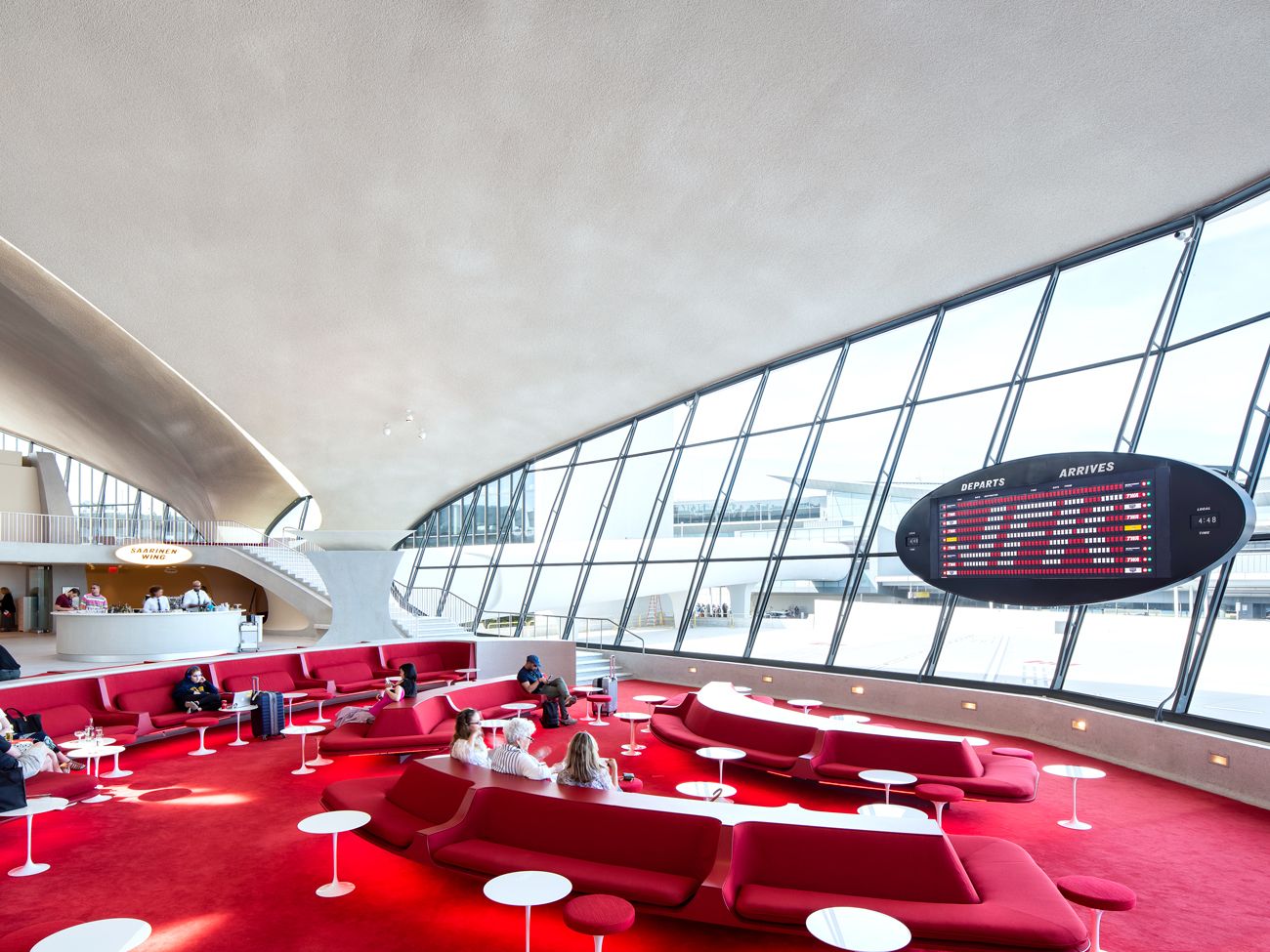
The TWA Hotel at JFK Airport is far from your typical airport hotel. Named after the now-defunct Trans World Airlines (TWA), it occupies the carrier’s original terminal building in Queens, New York. The iconic, jet age-inspired terminal — designed by Finnish-American architect Eero Saarinen — was in operation from 1962 to 2001. The head house has been adapted as part of the TWA Hotel that opened in 2019, along with two other new buildings constructed for guest rooms and other hotel functions.
Aviation history is on full display at the TWA Hotel — look no further than the vintage Lockheed Constellation parked outside that’s been turned into a cocktail bar. It’s also the only hotel located within JFK and is easily accessible from the airport terminals. With 512 guest rooms (many boasting exceptional views of the busy JFK runways), a year-round rooftop infinity pool, a Twister room where guests can take part in a wall-to-wall version of the iconic 60s game, and vintage decor throughout that’s reminiscent of the golden age of air travel, the TWA Hotel goes above and beyond the standards of most airport accommodations.
The family fun doesn’t stop when you leave the famous LEGOLAND California theme park in Carlsbad, — as long as your visit includes a stay at LEGOLAND Castle Hotel. The neighboring accommodation was tailor-made for kids with its medieval LEGO castle theme. The turrets and towers were built in mismatching LEGO colors, and even the shape and structure of the hotel resembles the popular toy building blocks.
The hotel also boasts an outdoor cinema with LEGO-themed movies, activities like a hotel-wide scavenger hunt, a castle-themed outdoor playscape, and themed rooms such as the Knights & Dragons, Wizards, and Princess rooms. With LEGOLAND California just steps away and constant entertainment found within the hotel, a stay at the LEGOLAND Castle Hotel is a child’s dream come true.
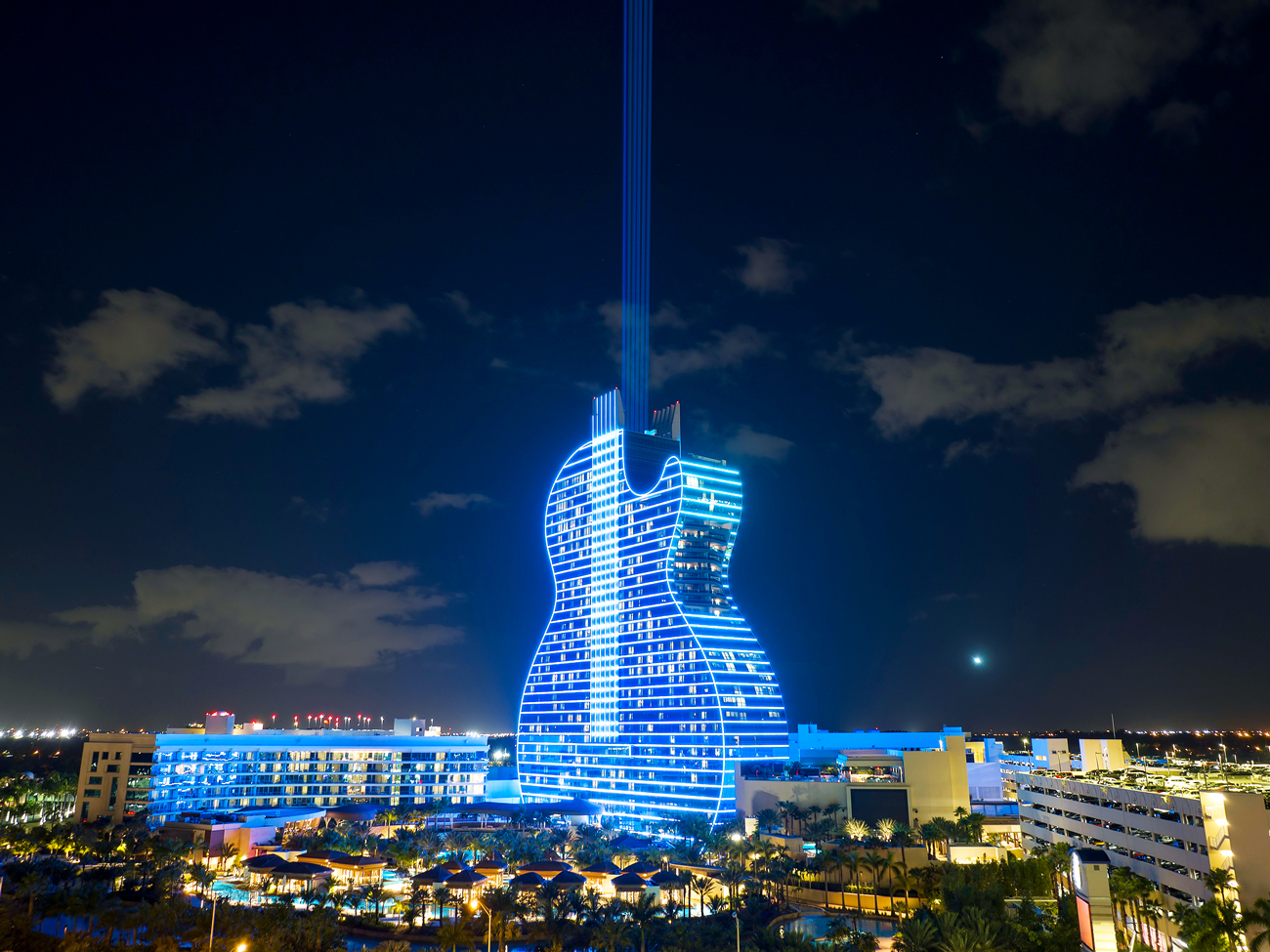
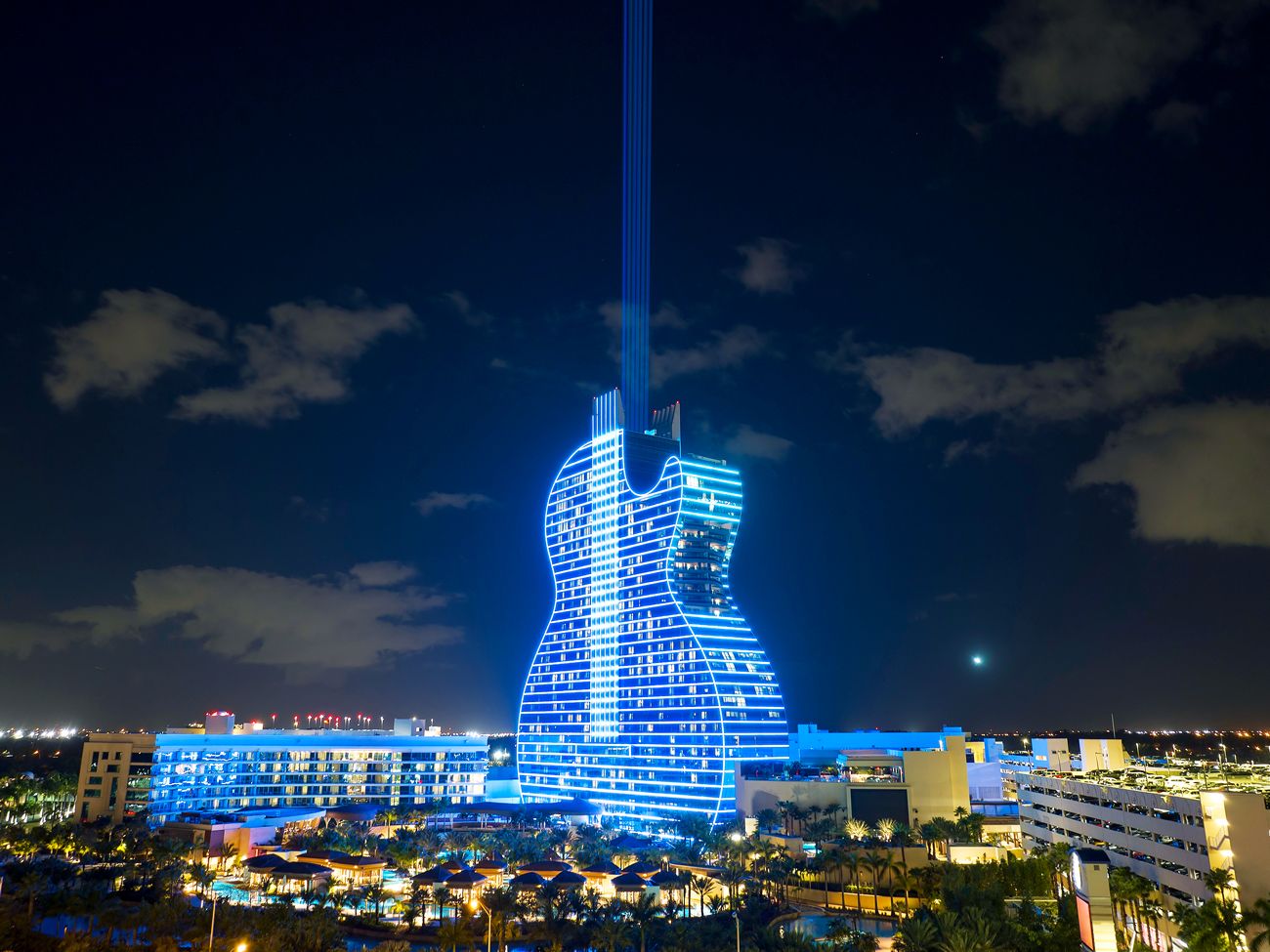
No stay in southern Florida is flashier than a few nights at the world’s first guitar-shaped hotel, the Guitar Hotel at the Seminole Hard Rock Hollywood Hotel. The hotel’s main tower takes the shape of a giant 450-foot-tall guitar that’s decked out with illuminated strings, floor-to-ceiling glass panes, and 638 guest rooms inside.
Nightly light shows showcase the hotel’s 2.3 million LED lights with an impressive performance of changing light colors and intensities, all choreographed to music. The show is accentuated by six high-powered beams stemming from the guitar strings that soar 20,000 feet into the sky. Guests can choose to stay in the Guitar Tower or at two of the hotel’s other arms flanking the guitar (the Oasis Tower or the Hard Rock Hotel). All of them have access to the hotel’s casino, a variety of fine dining and casual restaurants, and the lagoon-style pool with poolside cabanas.
Credit: Tayfun Coskun/ Anadolu Agency via Getty Images
In 1958, Alex Madonna and his wife Phyllis opened this kitschy motel a few miles outside downtown San Luis Obispo (nicknamed SLO) with a total of 12 rooms. A few years later, the motel grew to include 40 rooms, plus a wine cellar, bakery and coffee shop, spa, banquet room, and gift shop. Today, Madonna Inn is a top-rated hotel that boasts 110 unique and individually themed rooms, each with eclectic decor and design. Pink, white, and gold are the main color schemes, while the interior is adorned with ornate accents, brightly-colored vinyl, floral carpet patterns, and vintage wallpaper.
Each room boasts its own name, like Barrel of Fun, Jungle Rock, Sugar & Spice, and Love Nest. Some come equipped with circular beds, gold throw blankets, and sequined walls, while others feature giant boulder walls, waterfall showers, and auto shop-inspired brick backdrops. All of the rooms are bright and cheerful, reflecting the hotel’s playful 1960s theme. A stay at the Madonna Inn isn’t all about the lodging, either — SLO is a beautiful city on California’s Central Coast that boasts outdoor adventures, beaches, and plenty of shopping and dining in its historic downtown.
Big Idaho Potato Hotel – Boise, Idaho
Credit: Courtesy of the Idaho Potato Commission
Idaho grows the most potatoes of any state, so it’s only fitting that the state’s quirkiest hotel experience revolves around a giant potato. In 2012, a six-ton steel, plaster, and concrete potato was made to celebrate the 75th anniversary of Idaho’s Potato Commission, the agency responsible for promoting and protecting the “Grown in Idaho” seal. For seven years, the human-made spud traveled the country on a flatbed before returning to Idaho, where Kristie Wolfe, a member of the truck touring team, used her construction skills to turn the potato into a hotel.
Now located on 400 acres overlooking the Owyhee Mountains in South Boise, the 28-foot long, 12-foot wide, and 11.5-foot tall potato offers guests a true taste of Idaho. Water usage and heating and cooling methods have been designed to be eco-friendly, and the detached bathroom is more like a spa — boasting a whirlpool, fireplace, and skylight for stargazing. Guests can currently book a stay at Big Idaho Potato hotel on Airbnb.
Note: All featured products and deals are selected independently and objectively by the author. Daily Passport may receive a share of sales via affiliate links in content.
Advertisement
More from our network
Daily Passport is part of Inbox Studio, an email-first media company. *Indicates a third-party property.
Rachel is a Washington, D.C.–based travel and lifestyle writer with roots in the Great Lakes region. When she’s not writing for publications such as The Discoverer and Interesting Facts, you’ll find her wandering through museums or exploring destinations off the beaten path.
The world’s most affluent countries have more in common than their wealth — many are also home to some of the world’s most famous tourist sites. From the spectacular modern architecture of Singapore Qatar to the natural wonders of Iceland and Norway, these countries are not only great places to live but also great places to visit. To determine what countries are the wealthiest, the International Monetary Fund tracks GDP in U.S. dollars per capita, which is the gross domestic product (the prices of goods and services produced there) divided by the current population. This measures the success of a country’s overall economic activity based on how many people live there. Below, we reveal the 10 richest countries in 2024 and the best places to visit in each one.
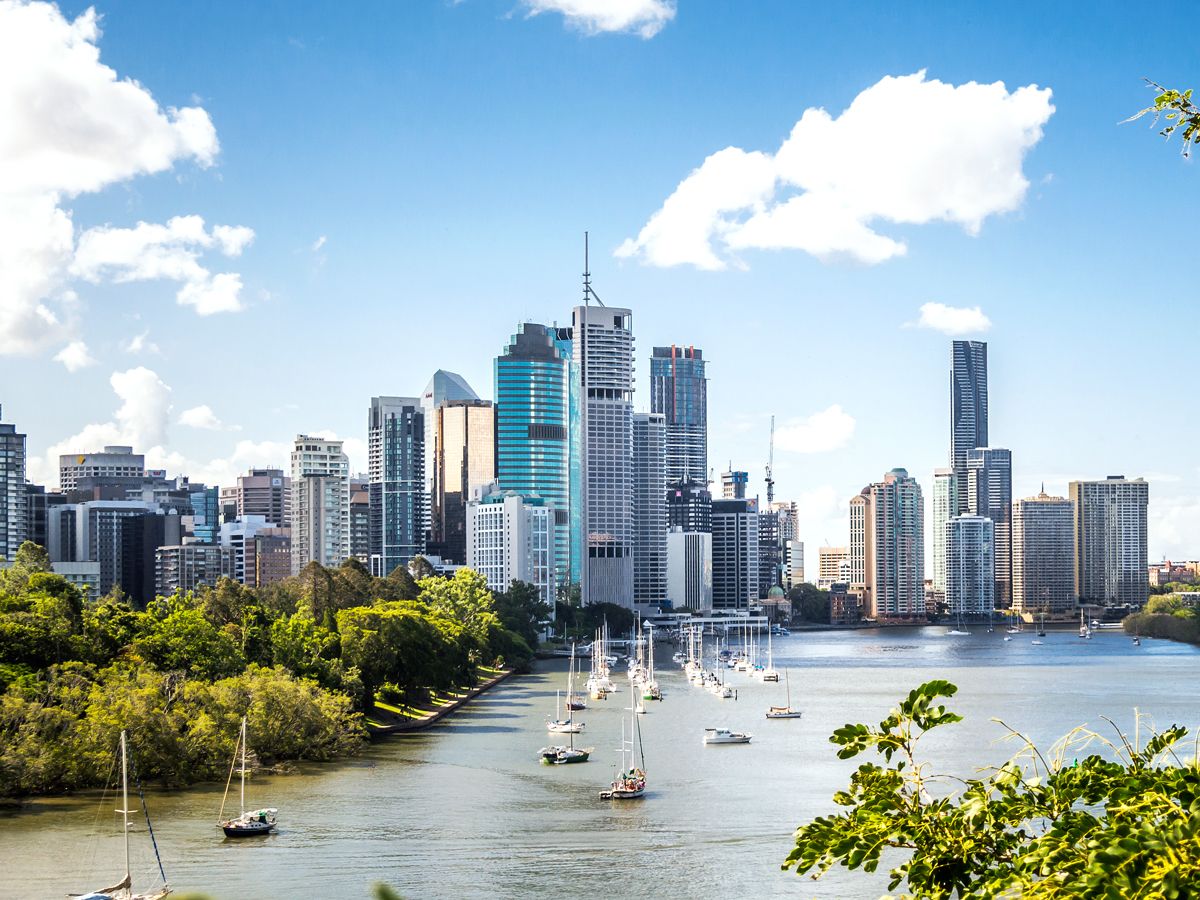
Australia’s GDP per capita is the 10th-highest globally, thanks in large part to it being one of the world’s largest exporters of coal, wheat, and iron ore. But the nation also draws millions of tourists a year, bolstering the country’s already robust economy. New South Wales, the most-visited Australian state, is home to the coastal city of Sydney and its famous namesake opera house. Nearby, Blue Mountains National Park boasts hiking through lush forests to waterfalls and guest houses that line its scenic mountain ridges. Elsewhere in the land Down Under, highlights include snorkeling in the Great Barrier Reef, exploring the red sandy desert of the rugged Outback, and road-tripping along Great Ocean Road. Tourism is also a significant factor in the country’s wealth — in 2023, tourists spent $34.5 billion in Australia.
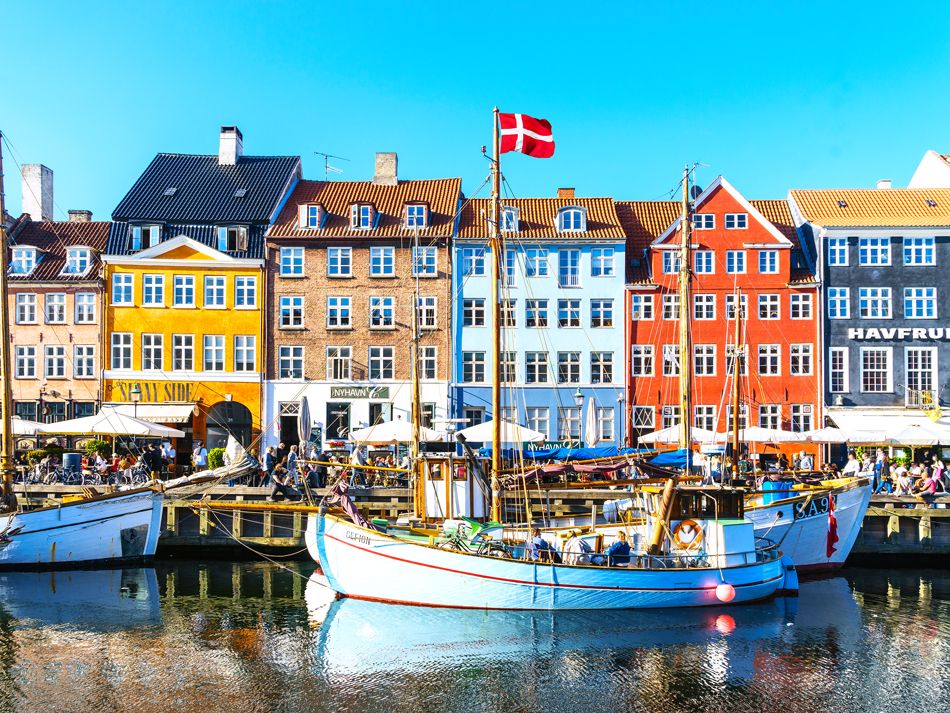
Denmark is a leading exporter of pharmaceuticals, but it also boasts the largest tourism market in the Nordic region. Its capital city, Copenhagen, welcomes visitors to tour its stunning royal palaces, such as Christiansborg Palace and Rosenborg Castle, and to see immaculate gardens and the Danish crown jewels. Nearby, the Tivoli Gardens amusement park and the Little Mermaid statue are also must-sees. Or, head to the Danish countryside to explore charming medieval towns with well-preserved cobblestone streets and half-timbered homes.
8. Qatar
Credit: Mlenny/ iStock via Getty Images
GDP per capita: $81,400
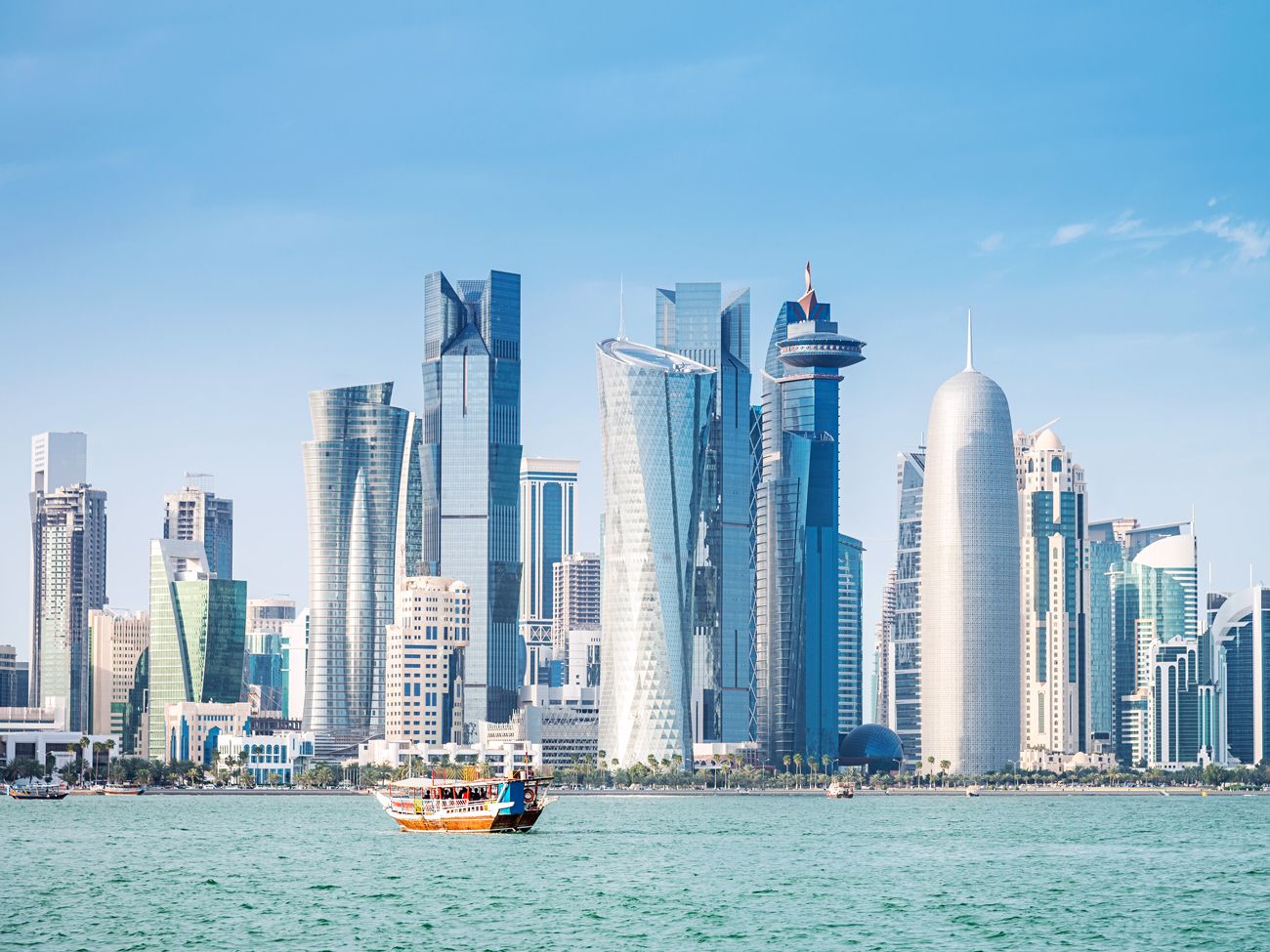
Qatar is one of the world’s largest exporters of petroleum gas, accounting for 50% of its total exports and making it an incredibly wealthy country. Located on the Persian Gulf, Doha is its capital city and a major financial hub. Doha’s Hamad International Airport, named the world’s best airport of 2024 (Skytrax Passengers’ Choice Awards) sets the tone for visitors, who come to explore attractions such as the world-class Museum of Islamic Art (designed by renowned architect I. M. Pei) and the Pearl, an artificial island home to luxury villas and high-end shopping. Tourism is one of Qatar’s most important economic sectors as of late. In 2023, it amounted to $22.3 billion, accounting for 10.3% of the country’s total economic output.
7. Iceland
Credit: larigan – Patricia Hamilton/ Moment via Getty Images
GDP per capita: $84,590
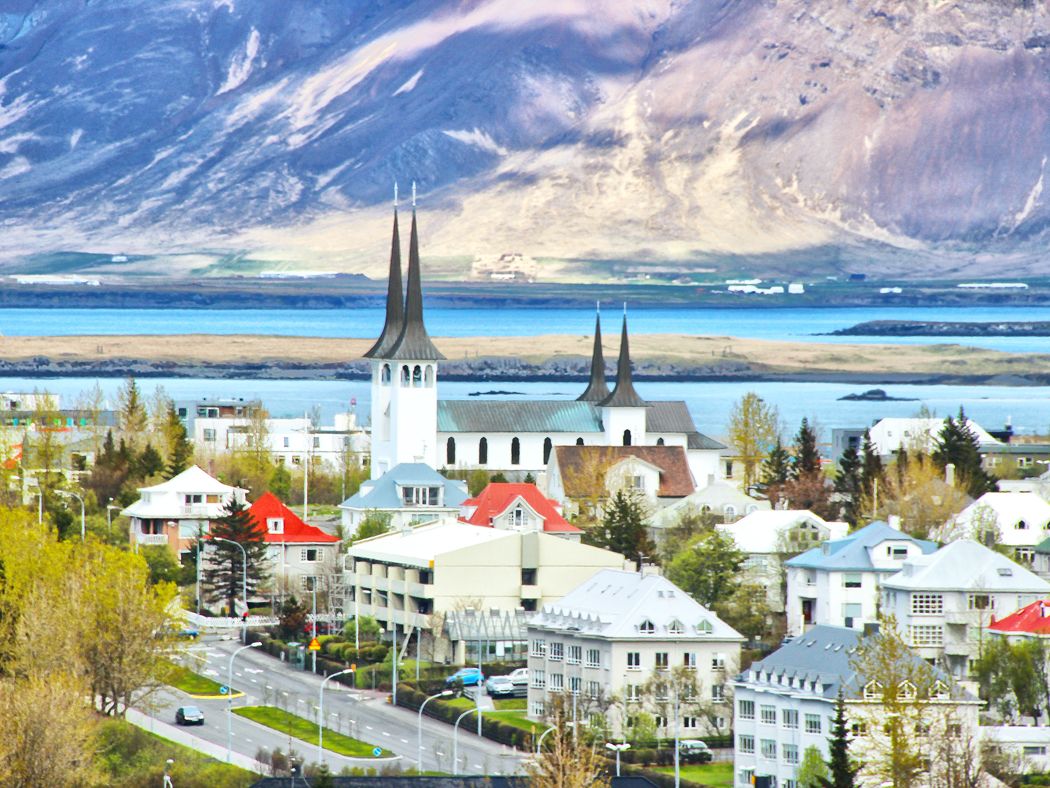
Dotted with volcanoes, geysers, hot springs, and glaciers, this Nordic island nation is an outdoor adventurer’s paradise. Iceland’s economy thrives on tourism, along with exporting aluminum and seafood. Its bustling capital city, Reykjavik, became Iceland’s first permanent settlement in 874 CE. Today, it is home to Iceland’s national museums and two-thirds of the country’s population. The nearby geothermal Blue Lagoon is a bucket-list spot for many visitors to Iceland. Remnants of Iceland’s Viking history are found all around the country, from open-air museums to centuries-old burial grounds and artifacts.
6. United States
Credit: Ershov_Maks/ iStock via Getty Images
GDP per capita: $85,370
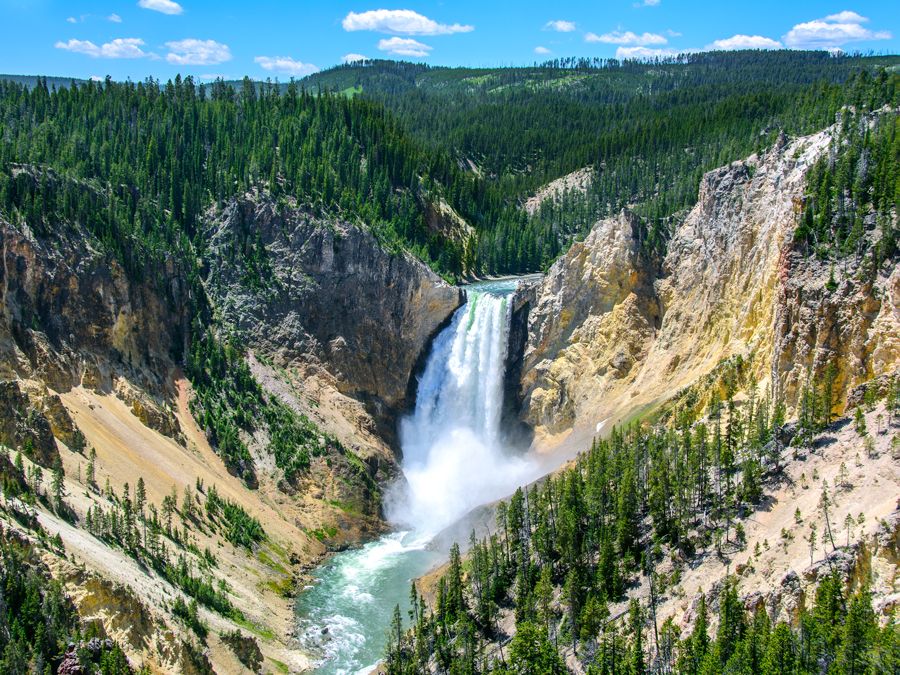
The United States is the only country in North America to make the top 10 on the world’s wealthiest countries list. The U.S. is a top exporter of refined petroleum, contributing to its high GDP, and it has long been a top tourist destination, accounting for 14.5% of global tourism spending. Indeed, vacationers spend more here than in any other country. With such diverse cultural regions and contrasting landscapes, America offers visitors seemingly endless things to do and see. The most popular attractions include Grand Canyon National Park, the Statue of Liberty, Yellowstone National Park, and Niagara Falls.
5. Singapore
Credit: f9photos/ iStock via Getty Images
GDP per capita: $88,450
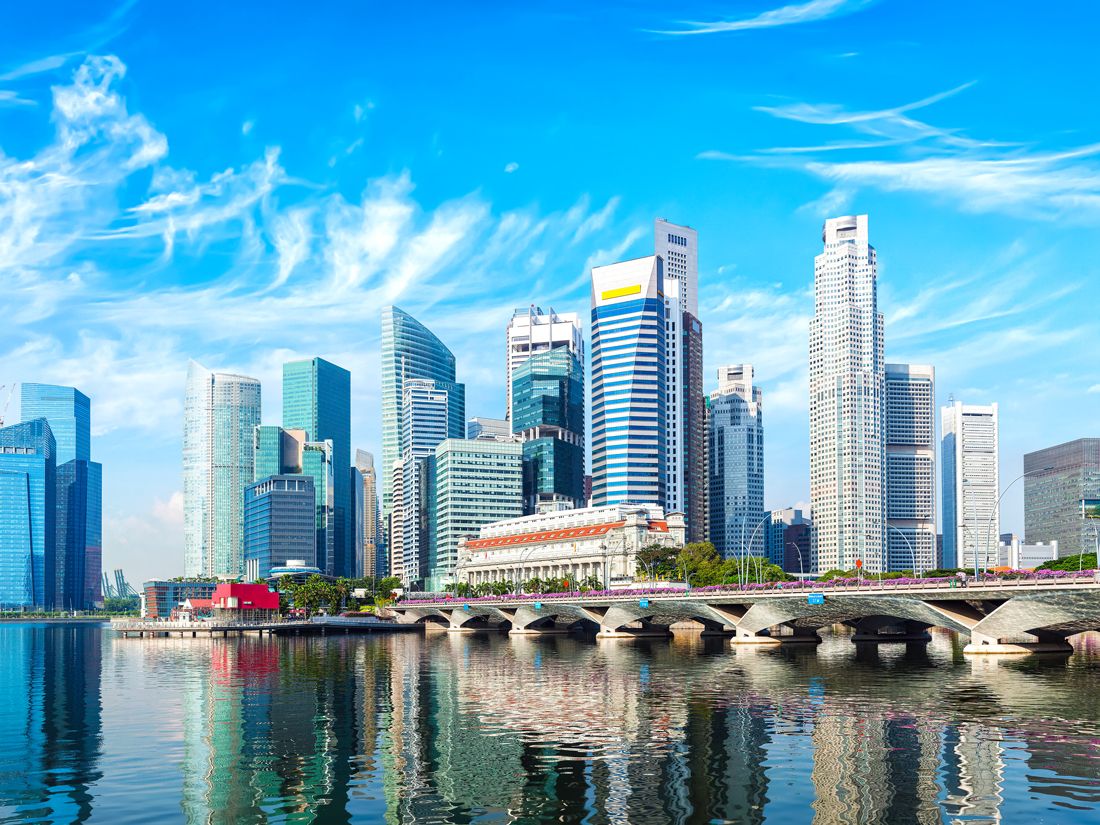
The Southeast Asian city-state of Singapore is a leader in technology and innovation and is the world’s top exporter of computer microchips. From the time visitors arrive at the award-winning Changi Airport, they experience state-of-the-art architecture and technology. Singapore’s bayfront skyline boasts the luxury Marina Bay Sands Hotel, with its famous rooftop pool, and the Gardens by the Bay, known for its artificial light-up “supertrees” and the Flower Dome — the largest glass greenhouse in the world. Singapore’s vibrant nightlife is also a favorite pastime of visitors and locals alike — visit a rooftop bar to enjoy skyline views while sipping the country’s national drink, the Singapore sling.
4. Norway
Credit: primeimages/ E+ via Getty Images
GDP per capita: $94,660
Many visitors come to Norway to spend as much time in nature as possible, taking advantage of the country’s scenic mountain and glacier hikes and picturesque fjord cruises. Norway’s economy is based primarily on oil, gas, and seafood products (the latter of which is fueled by its robust fishing industry). As such, trying local seafood is a must for visitors. Norway’s capital city of Oslo, known for its green spaces and museums, is the country’s most-visited city. Up near the Arctic Circle, lucky visitors are treated to views of the northern lights from fall through spring. Throughout the country, preserved Viking villages give guests a glimpse into the region’s storied past.
3. Switzerland
Credit: alxpin/ E+ via Getty Images
GDP per capita: $105,670
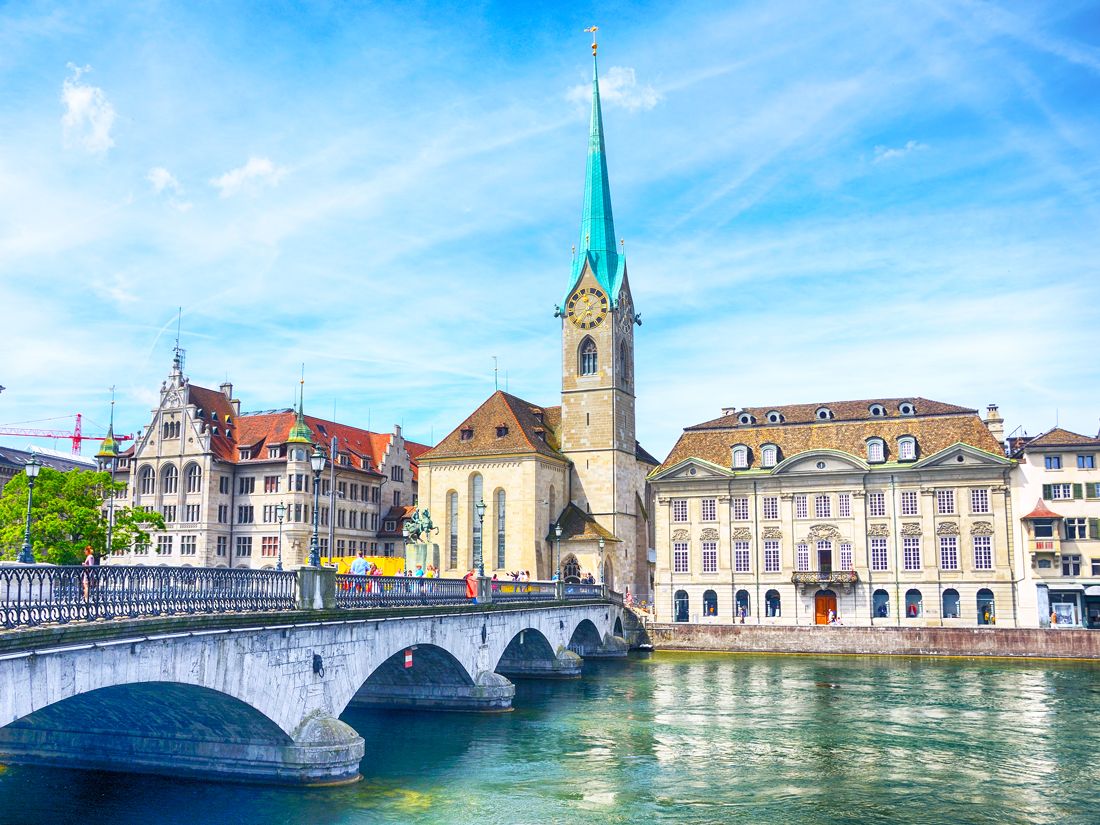
The Swiss Alps are famous for skiing, hiking, gastronomy, and shopping— and it’s no secret that a vacation to this small European nation often comes with a hefty price tag. But for the many tourists who choose to visit, the luxury hotels and spas with sprawling views of the mountains are well worth the price tag. Zurich, Geneva, and Lucerne are among the most famous Swiss cities to visit, but quaint mountain villages such as Grindelwald and Lauterbrunnen provide peaceful respite for travelers and locals alike. Gold is Switzerland’s top export, and its economy revolves around its banking and finance industries — along with chocolate, a must-try for visitors. Switzerland’s tourism industry is projected to reach nearly $6 billion in 2024.
2. Ireland
Credit: MNStudio/ iStock via Getty Images
GDP per capita: $106,060
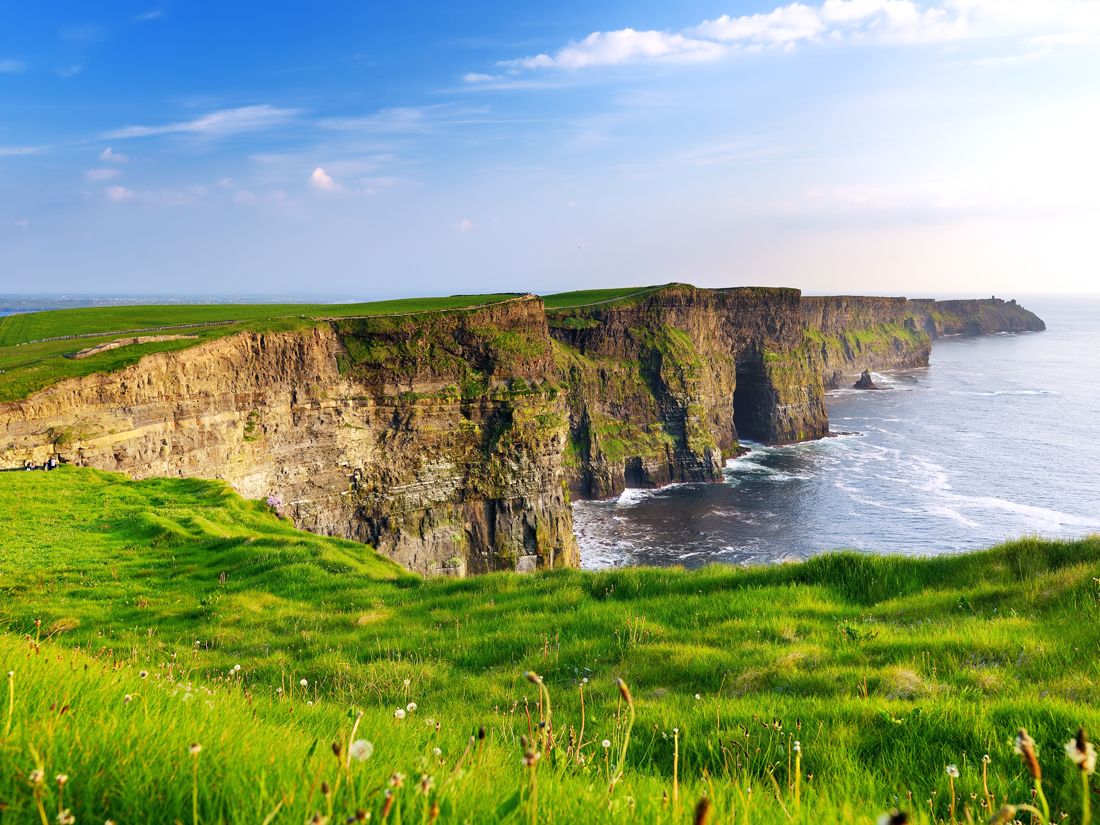
The tourism industry in the Emerald Isle earned over $5 billion in 2023, making it one of Ireland’s largest employers. The country is a top travel destination, particularly for North American tourists, and its popularity shows no signs of slowing down. Ireland’s strong economy is thanks to its corporate tax policies, which encourage investment from multinational tech and pharmaceutical companies. Its top exports are medicinal and pharmaceutical products. But visitors don’t come for the economy — they visit Ireland for its natural wonders (including the famous Cliffs of Moher), historical monuments, churches, castles, and breweries such as the world-famous Guinness Storehouse in Dublin.
1. Luxembourg
Credit: Haykal/ Moment via Getty Images
GDP per capita: $131,380
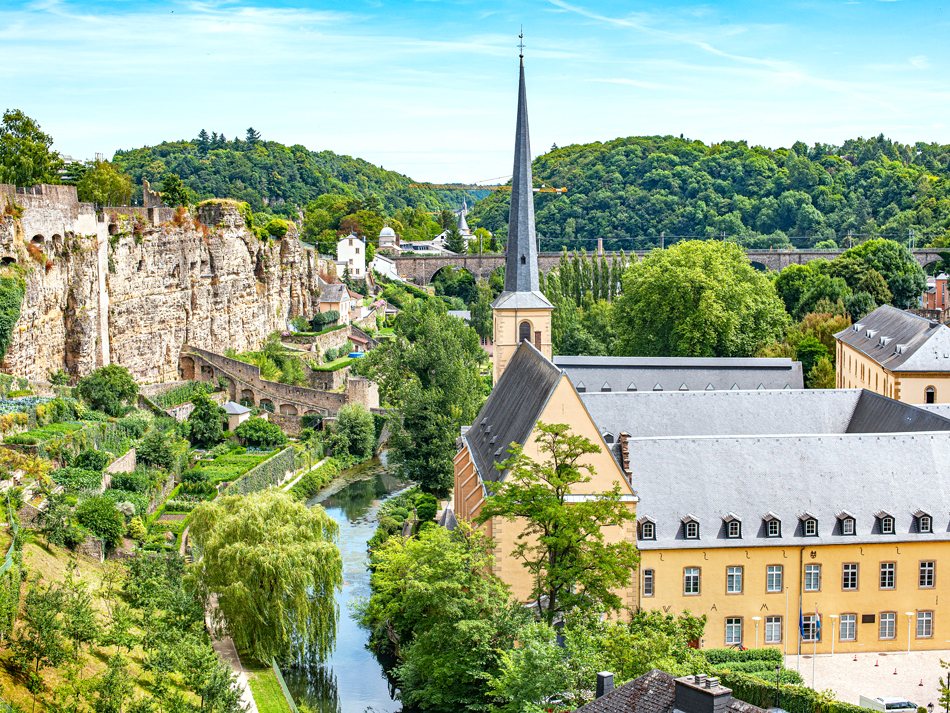
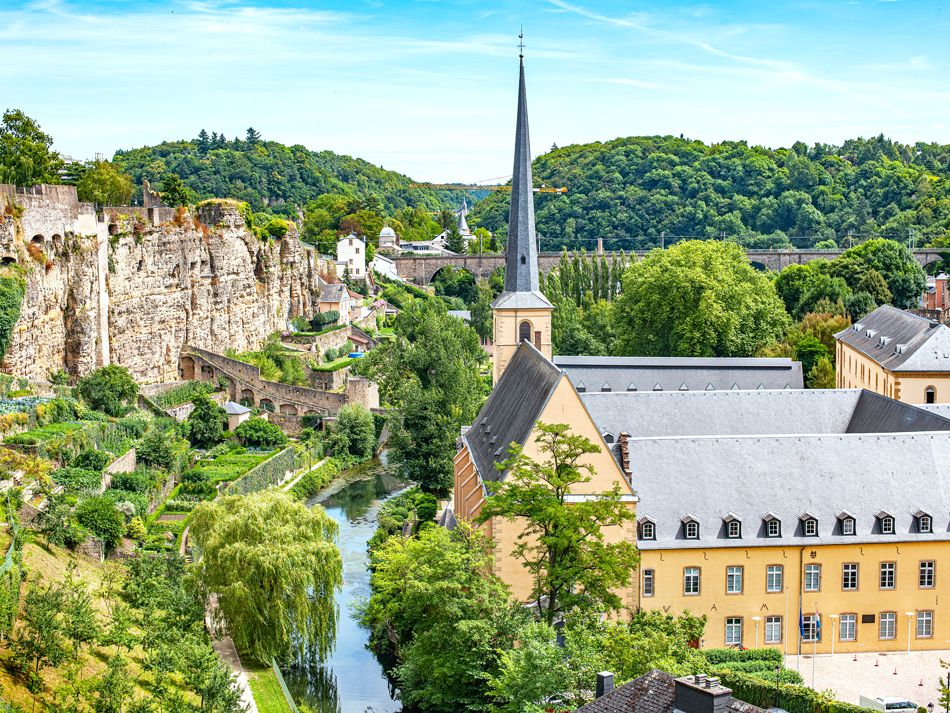
This tiny European country — sandwiched between Germany, France, and Belgium — is home to just 660,000 residents but boasts the highest GDP per capita in the world. Luxembourg’s economy is bolstered by its banking, steel, and industrial sectors, with iron being its top export. Its tourism sector continues to grow, and there’s plenty to do and see for outdoor enthusiasts and history buffs alike. One of the most-visited places in the country is the city of Luxembourg, the country’s capital and a historic fortified medieval city that’s now a UNESCO World Heritage Site. Luxembourg is also home to one of Europe’s densest networks of hiking trails. The Ardennes region boasts lush forests and several fascinating World War II sites and museums.
Advertisement
More from our network
Daily Passport is part of Inbox Studio, an email-first media company. *Indicates a third-party property.
6 Secret Airline Perks Most Travelers Don’t Know About
By
Peter Vanden Bos
Read time: 6 minutes
May 31, 2024
Updated: May 31, 2024
6 Secret Airline Perks Most Travelers Don’t Know About
Tips •May 31, 2024•Updated: May 31, 2024
By Peter Vanden Bos
Author
Peter Vanden Bos
Peter is a Toronto-based journalist, editor, content strategist, and self-professed avgeek with 15 years of experience covering all things travel. Prior to joining Daily Passport, he oversaw newsletter publication for Travelzoo. His favorite destinations to explore include Japan, France, Chile, New Zealand, and his adopted home country of Canada.
We can probably all agree that the golden age of air travel is long behind us, but that doesn’t mean flying these days has to be run-of-the-mill — you just have to know what to look for. From helpful (and free) amenities for families to the invite-only memberships airlines keep under wraps for their most loyal customers, these are six of the coolest secret airline perks you never knew existed.
Hidden Check-In Lounges
Credit: Koh Sze Kiat/ E+ via Getty Images
If you’re willing to shell out the big bucks for first or business class (though it might be cheaper than you think), you can expect quite a few more perks than you’d receive flying in economy class. These include early boarding, larger seats with more legroom, free meals and booze, and, often, access to airport lounges.
As the competition among airlines heats up, some are going even further to woo top-dollar customers. While first- or business-class tickets almost always grant you access to a priority check-in line at the airport, some airports offer even more exclusive areas. In 2023, Delta opened a private check-in section for its business-class (Delta One) customers at Los Angeles International Airport (LAX) that most customers probably don’t realize exists. That’s because it’s on an entirely different level, separate from the regular check-in lines. It’s downstairs by the baggage claim, and you have to show your Delta One ticket just to enter.
Once inside, you can sit back and relax with a glass of bubbly or a snack as the check-in agents take care of everything for you. Then, you’ll go through a private security screening area that leads straight to the Sky Club lounge upstairs — a far cry from the typical airport experience.
Invite-Only Elite Status
Credit: jacoblund/ iStock via Getty Images
If you’ve joined an airline loyalty program, you’re probably familiar with the concept of elite status. Airlines award their most frequent flyers with perks such as priority boarding, free upgrades, waived baggage fees, and more. There are usually a few levels of elite status — at Delta, it starts with Silver, followed by Gold, Platinum, and Diamond Medallion. The more you spend, the higher you climb in the ranks.
But did you know that some airlines have secret elite status tiers? Membership in these programs is so exclusive that the airlines don’t even publish the details of how to qualify — in fact, the only way in is typically by receiving an invite from the airline. While it’s anyone’s guess as to how much you have to fly (and spend) with the airline, it’s typically well above $50,000 on plane tickets in a calendar year. At American, it’s called Concierge Key; at Delta, it’s known as Delta 360; and at United, it’s named Global Services.
With those requirements, obviously only a select group will qualify, but those lucky few can expect an incredibly elevated travel experience. Not only will these members have upgrade priority over other customers, but they’ll also receive personal escorts through the airport and often free, private transfers between connecting flights. If you’ve ever arrived at the airport and seen a Mercedes-Benz marked with the airline’s logo parked by the gate, it’s usually there to whisk away a top-tier elite status member to their next flight, so they don’t even have to step foot in the airport.
Free Family-Friendly Perks
Credit: Anchiy/ E+ via Getty Images
Even if you don’t splurge for business class or spend enough to qualify for elite status, there are plenty of other perks you can get with airlines that are entirely free — particularly for family travel. In recent years, the U.S. Department of Transportation (DOT) has urged airlines to accommodate families with young children so they can sit together without having to pay extra for seat assignments, even with basic economy fares. The DOT launched a handy dashboard that shows which airlines guarantee adjacent seats for children 13 or under and an accompanying adult.
It’s no secret that flying with young children comes with its challenges, but many airlines also offer free child amenities onboard. Simply ask a flight attendant if one is available on your flight. For example, United offers a “Children’s Travel Kit,” designed by the people behind Sesame Street, which includes crayons, an activity book, a puzzle, and a sensory strip to calm anxiety in young ones. Plus, Delta has secret trading cards, a program created by employees in which passengers can collect card designs featuring different aircraft in the airline’s fleet. All you have to do is ask your pilot if they’re available — and they’re just as fun for adults as they are for kids.
Let’s say you’ve racked up some credit card points and are looking to cash them in for a free flight. While in most cases that would be a simple round-trip ticket from point A to point B, a few airline loyalty programs let you get creative with your points, essentially allowing you to add another city to your trip for the same price.
This is what’s known as a “stopover,” which is typically defined as staying more than 24 hours in a connecting city along your journey (versus a typical layover at an airport). Say you’re booking a trip from New York to South Africa, and you’ll be connecting in Amsterdam. With Air France-KLM’s Flying Blue loyalty program, you might be able to stay a few days to explore the Dutch capital before continuing your journey. Other programs that offer free stopovers include Air Canada’s Aeroplan and Alaska Airlines’ Mileage Plan.
Nobody likes waiting an hour at baggage claim after a long flight for their checked bags to arrive at the carousel. And most airlines won’t offer you anything for the inconvenience. Thankfully, there are a few exceptions. Delta Air Lines has a 20-minute bag guarantee, promising that your bag will arrive in 20 minutes or less at the carousel after a domestic U.S. flight. If your bag takes longer, you can complete this simple form online and automatically receive 2,500 bonus miles toward your next flight. Alaska Airlines offers a similar guarantee, but with a $25 credit instead of miles.
Free Checked Wine
Credit: Mykhailo Lukashuk/ Tetra images via Getty Images
If you’re a wine lover, you’re probably familiar with this scenario: You’ve enjoyed tastings at a few (or quite a few) wineries on vacation and decided to purchase some bottles to enjoy later. But getting them home is tricky. The unique “Wine Flies Free” program from Seattle-based Alaska Airlines simplifies things. This valuable perk allows passengers to check an entire case of wine without having to pay extra baggage fees. It’s offered from 32 West Coast cities, including ones near renowned wine regions such as Napa Valley or Willamette Valley.
Advertisement
More from our network
Daily Passport is part of Inbox Studio, an email-first media company. *Indicates a third-party property.
Architecture •May 28, 2024•Updated: April 16, 2025
By Bradley O'Neill
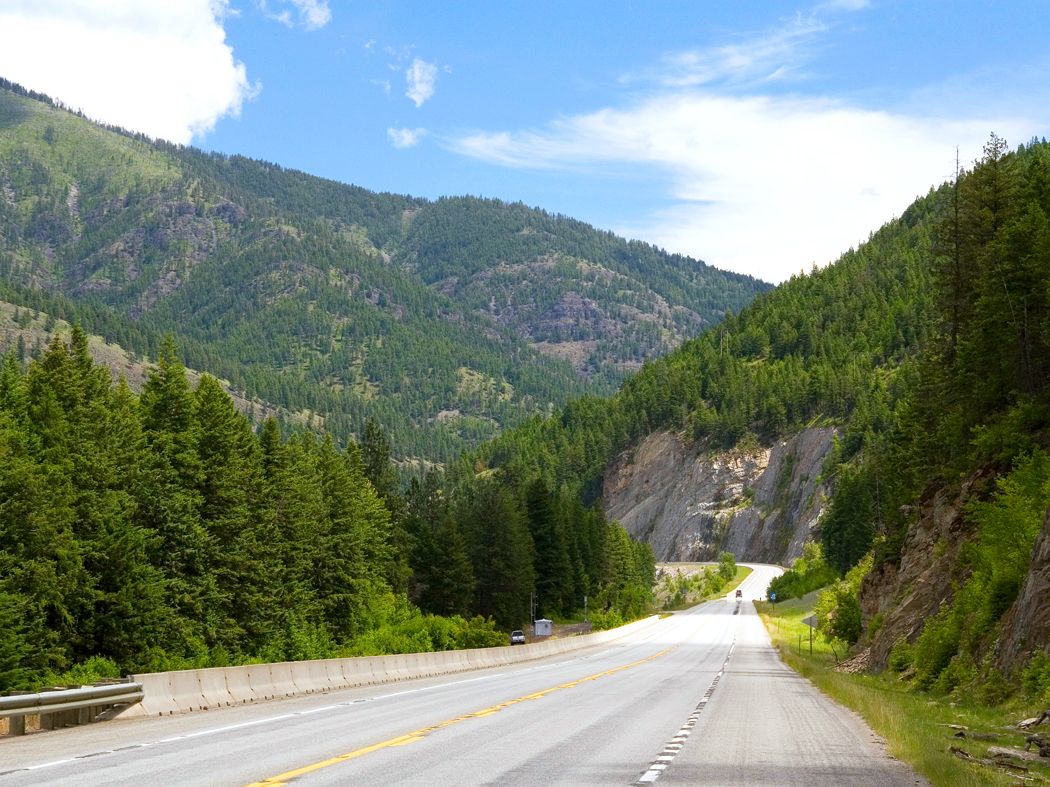
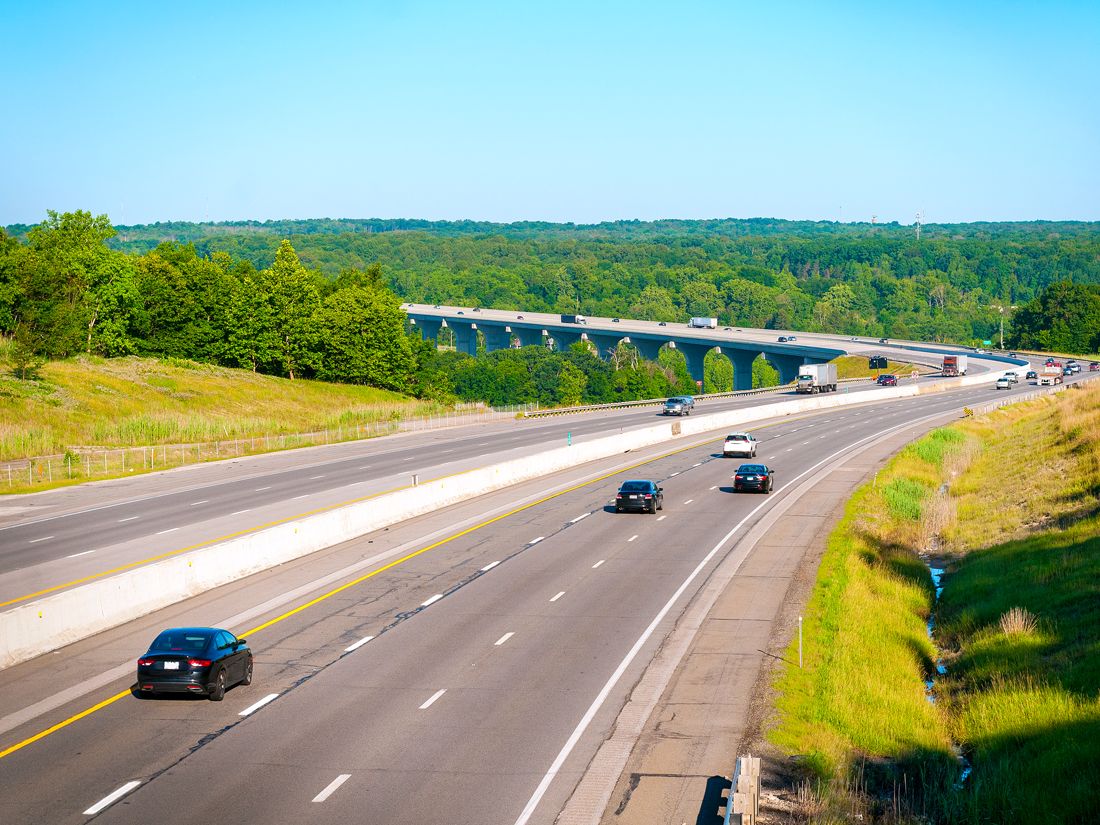
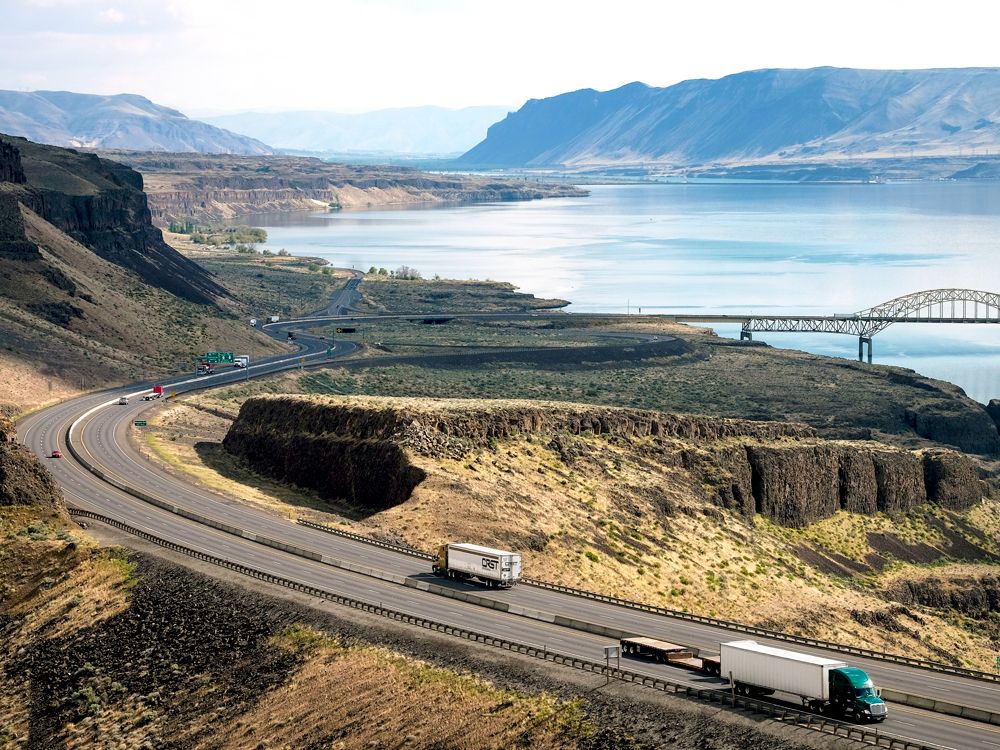
The longest highway in the U.S. stretches over 3,000 miles from coast to coast. With all those miles comes plenty of history: From Indigenous peoples to the pioneers of the American West, cross-country travel and exploration has long been an integral part of American heritage. In 1956, the creation of the Dwight D. Eisenhower National System of Interstate and Defense Highways further paved the way for uninterrupted automobile journeys throughout the contiguous United States. Today, a network of over 46,000 miles of major highways in America zigzags from north to south and coast to coast. Buckle up and embark on epic road trips on the 20 longest highways in the United States.
20. Interstate 5
Credit: halbergman/ E+ via Getty Images
Total length: 1,381 miles
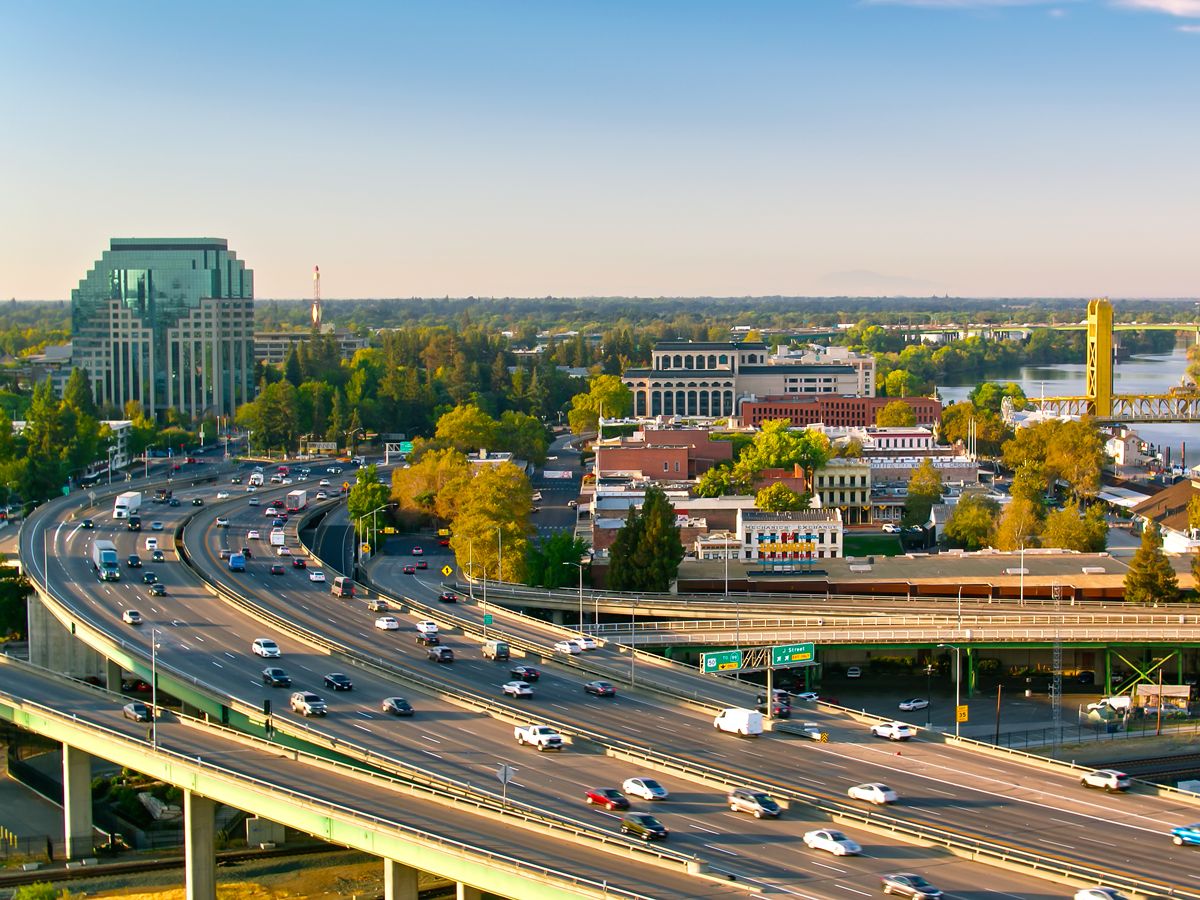
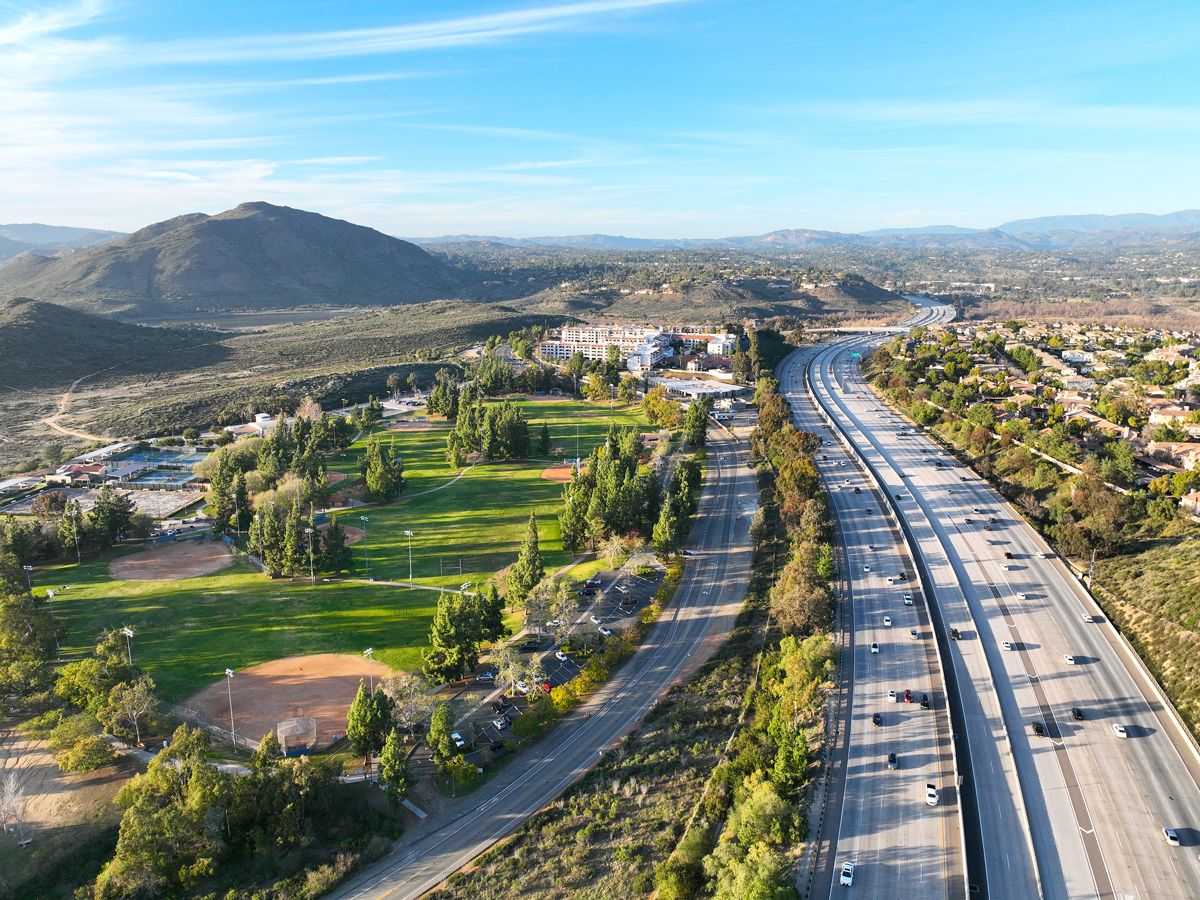
Interstate 5 runs the entire length of the U.S. West Coast, linking some of the largest cities in California, Oregon, and Washington. Starting in San Ysidro, on the U.S.-Mexico border, I-5 stretches north through San Diego, Los Angeles, Sacramento, Portland, and Seattle. It reaches its terminus in Blaine, Washington, at the U.S.-Canada border.
A road trip along I-5 offers a mix of small towns, vibrant cities, and diverse landscapes. The highway passes through the coastal cities of Encinitas and Oceanside in Southern California, ascends the 4,160-foot Tejon Pass north of Los Angeles, and winds through the dense forests of Shasta-Trinity National Forest in Northern California. In Oregon, it crosses the Willamette River via the Marquam Bridge, a double-decked structure built to handle heavy traffic in Portland.
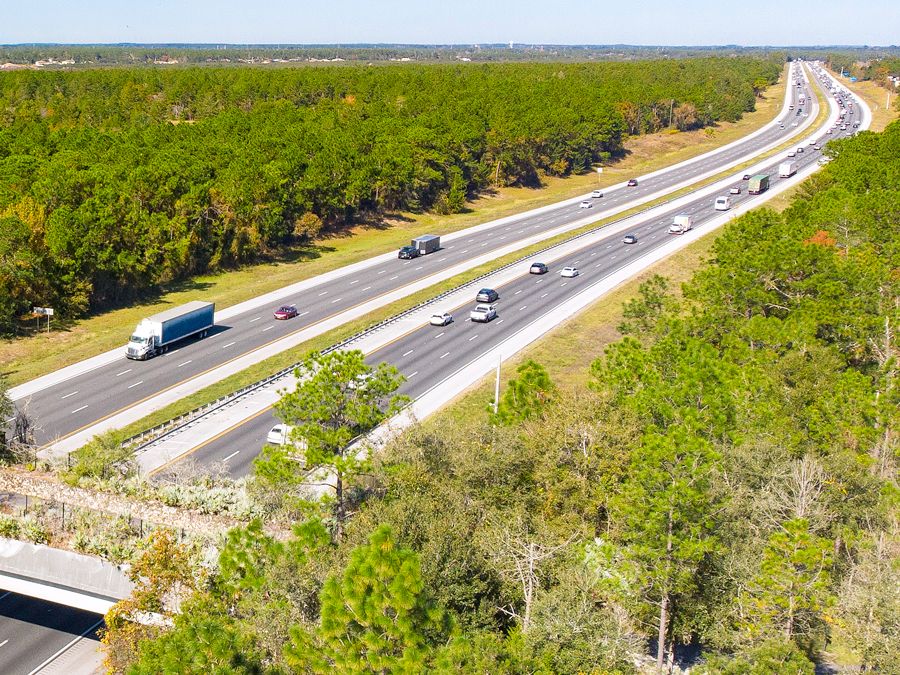
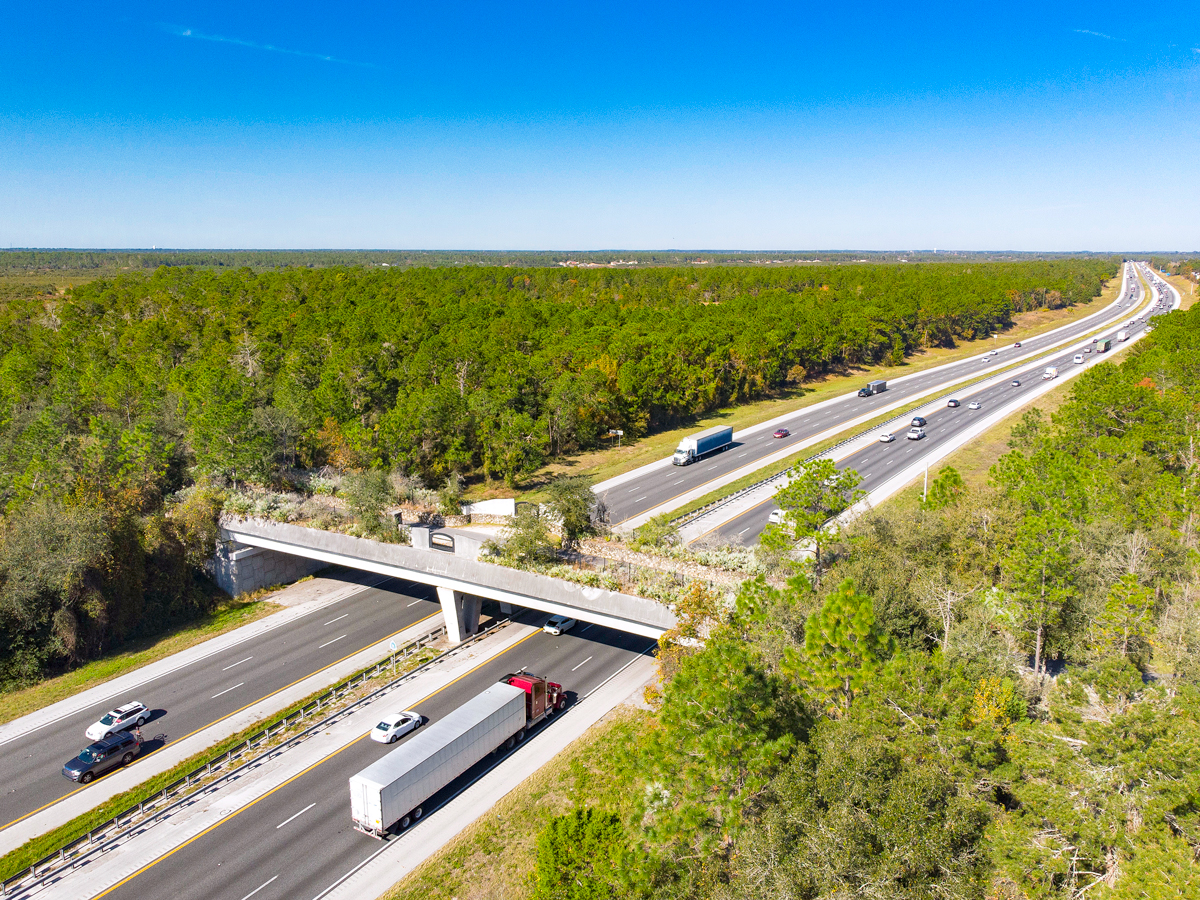
Interstate 15 also starts its journey in San Diego County. From Mission Valley, the highway travels north through Riverside County before turning inland across Southern California toward Nevada. The interstate briefly enters Arizona and then continues north through Utah, Idaho, and Montana. The northernmost point of I-15 is Sweetgrass, Montana, located on the U.S.-Canada border. Mostly built in the early 1970s, I-15 follows the historic route of U.S. 91.
Between Southern California and Salt Lake City, the highway is part of the I-15 Corridor System, a vital route for transcontinental trade and tourism. Along the way, it passes some of the most famous attractions in the West, including the Las Vegas Strip, Utah’s Zion National Park, Idaho’s Shoshone Falls, and Montana’s Gates of the Mountains Wilderness.
18. U.S. Route 101
Credit: DaveAlan/ E+ via Getty Images
Total length: 1,540 miles
Continuing the West Coast theme, U.S. Route 101 (aka Highway 101) links Los Angeles with Olympia, Washington. The southern terminus of the highway, which was originally designated in 1926, was once in San Diego, but the section between San Diego and Los Angeles was later incorporated into Interstate 5. Today, the 808-mile stretch from L.A. to the Oregon border is California’s longest stretch of continuous highway.
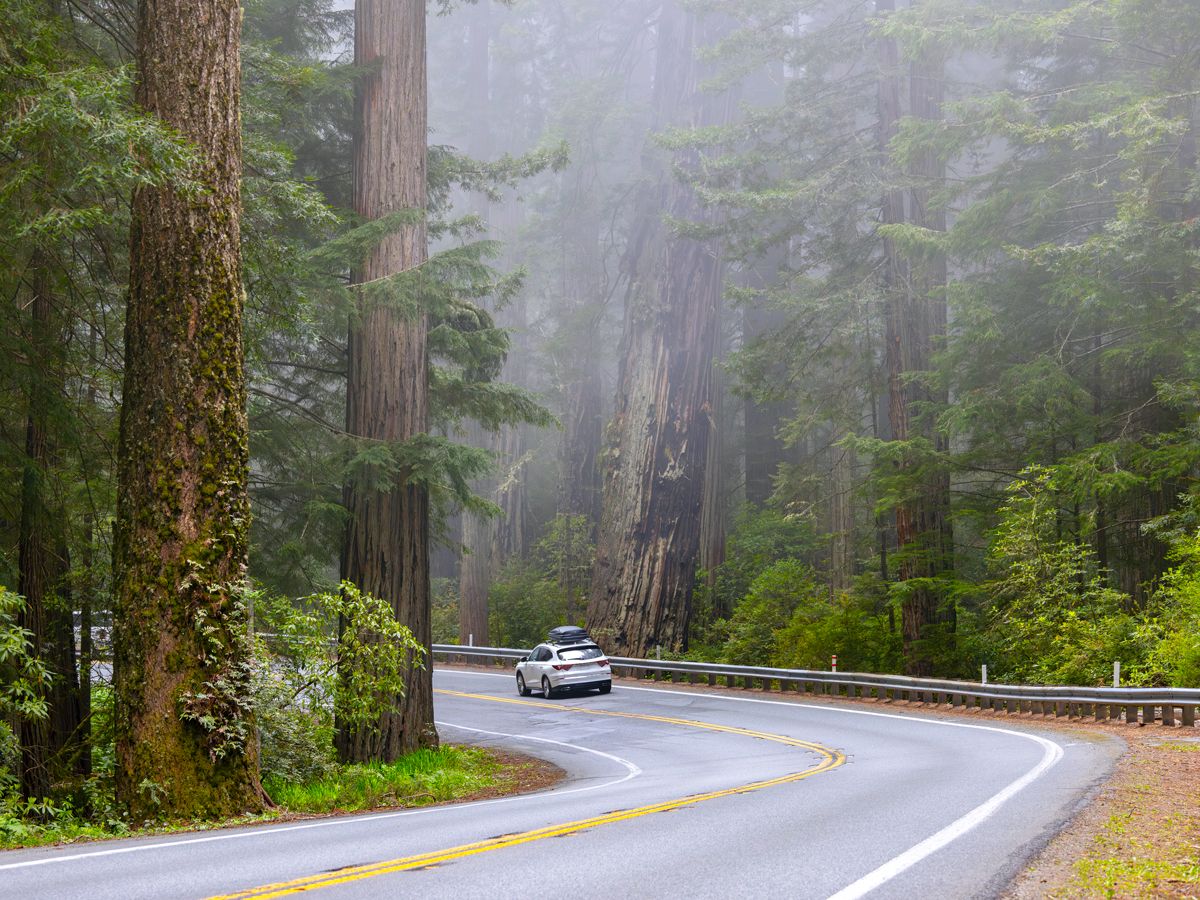
Heading north, U.S. Route 101 winds through the towering trees of Redwood National and State Parks before tracing nearly the entire length of the Oregon coastline. Along the way, the route passes scenic spots such as Cannon Beach, home to the iconic Haystack Rock. Upon entering Washington, the highway loops around Olympic National Park, serving as the primary access route to the park’s trails and attractions.
Traveling from New Orleans, Louisiana, to Rouses Point, New York, U.S. Route 11 spans an impressive 10 states. Its official southern terminus is at Bayou Sauvage Urban National Wildlife Refuge, where it merges with Interstate 90. Part of the highway follows the historic Great Wagon Road, a major migration route that once carried settlers from Philadelphia through Virginia’s Shenandoah Valley to the Carolinas and Georgia.
A journey along U.S. Route 11 offers a scenic drive in the shadow of the Appalachian Mountains. This mostly rural highway winds through small towns and rolling hills, making it an ideal route for travelers seeking a slower pace. History buffs will find numerous sites linked to colonial and Civil War history, including New Market Battlefield State Historical Park and Cedar Creek and Belle Grove National Historical Park.
16. Interstate 75
Credit: Michael Warren/ iStock via Getty Images Plus
Total length: 1,786 miles
Interstate 75 connects Southwest Florida with Michigan’s Upper Peninsula. Passing through six states — Florida, Georgia, Tennessee, Kentucky, Ohio, and Michigan — it serves as a major north-south corridor in the eastern U.S. The road’s northern terminus is Sault Ste. Marie, Michigan.
Credit: Shobeir Ansari/ Moment Open via Getty Images
Total length: 1,917 miles
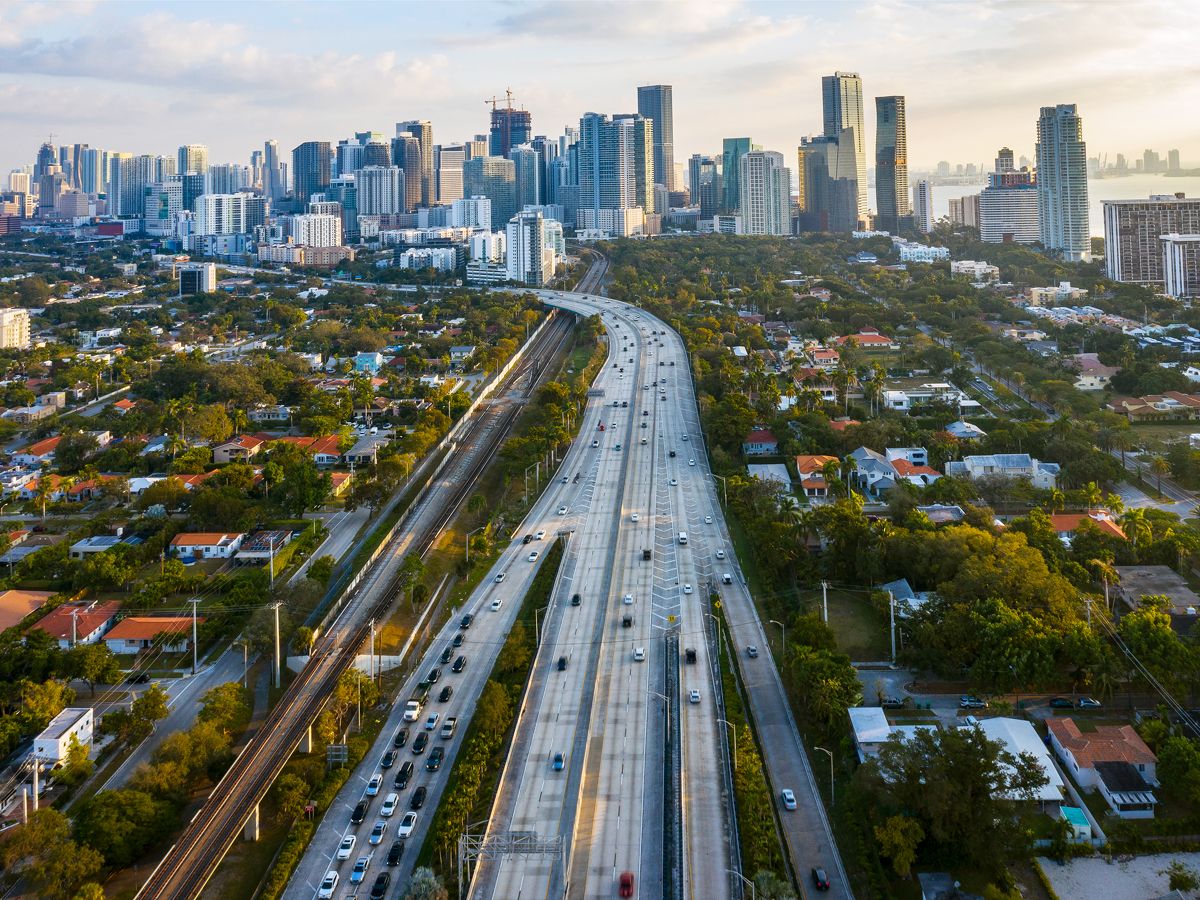
Spanning 15 states along the Eastern Seaboard, Interstate 95 is the longest north-south interstate in the United States. It runs largely parallel to the Atlantic Ocean and U.S. Route 1, connecting Miami, Florida, with Houlton, Maine. The highway also traces routes linked to the American Revolution, including the King’s Highway, a 17th-century colonial road between Boston and Charleston.
With the coastline never far away, scenic beaches, such as Florida’s iconic Daytona Beach, are easily accessible. Quirky roadside attractions, including the Smallest Church in America in Townsend, Georgia, add further character to the drive. For a historical detour in Virginia, consider a visit to Fredericksburg and Spotsylvania National Military Park.
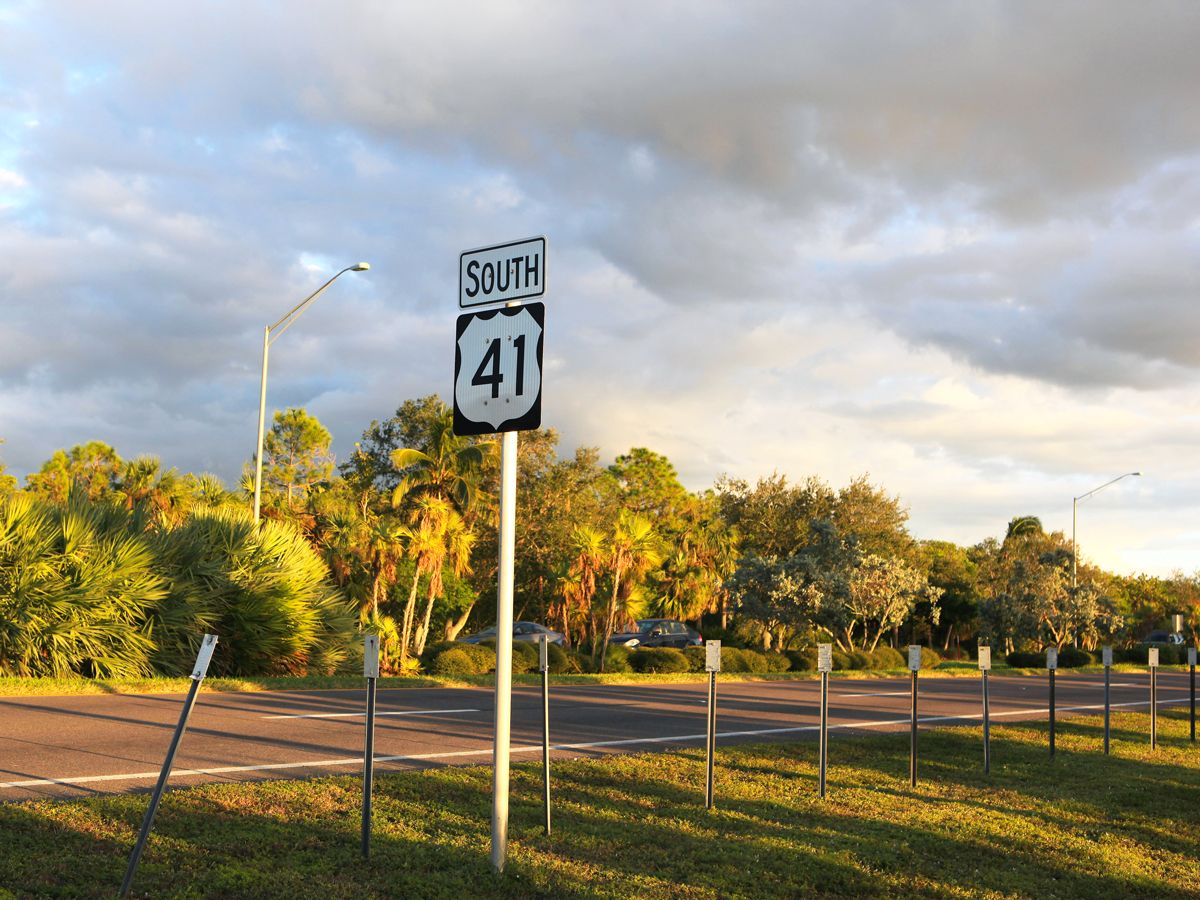
U.S. Route 41 stretches from Miami, Florida, to Copper Harbor, Michigan. Originally constructed in 1915, it was one of the country’s first long-distance highways. The route weaves together Native American trails, pioneer roads, and historic auto trails.
The section between Miami and Tampa is known as the Tamiami Trail, a scenic stretch that cuts through the Everglades and Seminole tribal lands. Farther north, the highway follows parts of the Trail of Tears between Tennessee and Kentucky. In the Windy City, the route turns into Chicago’s Lake Shore Drive, where drivers are treated to sweeping views of both Lake Michigan and the city’s iconic skyline.
Starting in Charleston, South Carolina, U.S. Route 52 cuts a diagonal path across 12 states to Portal, North Dakota, located on the U.S.-Canadian border. Its direction is contrary to most even-numbered national highways, which typically run east to west.
In the Upper Midwest, Route 52 forms part of the Great River Road National Scenic Byway, which traces the Mississippi River. Farther east, it merges with the Ohio River Scenic Byway, a 943-mile route extending into Indiana and Illinois. And, as it nears its southern terminus, Route 52 climbs into Virginia’s Blue Ridge Mountains, where it meets the Blue Ridge Parkway at Fancy Gap, offering stunning mountain views.
Credit: John Coletti/ The Image Bank via Getty Images
Total length: 2,153 miles
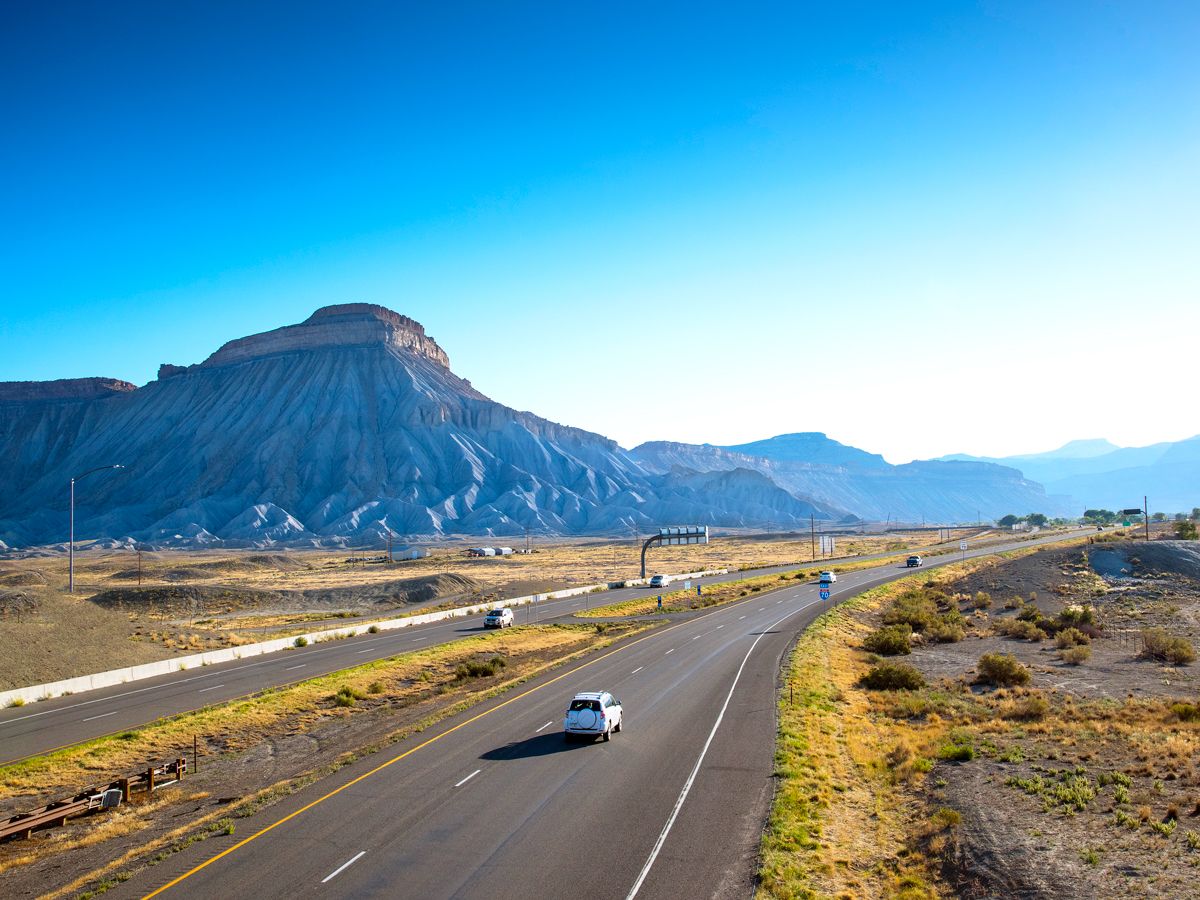
Interstate 70 is a major east-west highway spanning nearly the entire width of the United States. Beginning in Baltimore, Maryland, it crosses 10 states before reaching its western terminus in Cove Port, Utah. Along the way, I-70 traverses diverse landscapes, from the Appalachian foothills to the vast Great Plains and the rugged Rocky Mountains. It also connects major cities such as Columbus, Indianapolis, Kansas City, and Denver.
Because it covers such a varied section of the country, I-70 offers no shortage of remarkable sights. In Colorado, the Eisenhower-Johnson Memorial Tunnel — sitting over 11,000 feet high in the Rockies — marks the highest point in the U.S. Interstate Highway System. Meanwhile, Maryland’s Sideling Hill Cut reveals 810 feet of exposed rock layers, offering a glimpse into over 300 million years of geological history.
11. U.S. Route 1
Credit: Buena Vista Images/ Stone via Getty Images
Total length: 2,321 miles
As the longest north-to-south highway in the U.S., Route 1 spans 14 states along the East Coast. The route is filled with iconic landmarks and attractions, including the natural beauty of Acadia National Park and the tropical beaches of the Florida Keys.
History is also a key feature of U.S. Route 1, with stops like St. Augustine, Florida — one of the country’s oldest settlements — and the Washington-Rochambeau Revolutionary Route. Over the years, the highway has earned many nicknames, such as the “Atlantic Highway” and the “Boston Post Road,” the latter of which refers to a 17th-century mail delivery route between Boston and New York City. Like Interstate 95, U.S. Route 1 also follows part of the King’s Highway, an old colonial route from Boston to Charleston.
10. U.S. Route 12
Credit: Bim/ iStock via Getty Images
Total length: 2,484 miles
Created in 1926, U.S. Route 12 traverses 2,484 miles across the northern U.S. from Detroit, Michigan, to Aberdeen, Washington. Large parts of the route follow the historic Yellowstone Trail, which was the first east-to-west automobile highway through the northern states.
Interstate 40 is one of the top 10 longest interstates in the U.S. The western terminus of I-40 is found in Barstow, California, which was part of the historic Route 66 and is now home to the Route 66 Mother Road Museum. Traveling east, Interstate 40 heads through eight states on its way to Wilmington, a seaside city in North Carolina.
A mix of breathtaking landscapes, bustling cities, and important cultural sites are found along the length of the 2,555-mile highway. Among them are Grand Canyon National Park and Acoma Pueblo, a Native American community set atop a mesa in New Mexico. Interstate 40 also provides easy access to the Blue Ridge Parkway, a 469-mile scenic drive through the Appalachian Mountains that’s billed as “America’s Favorite Drive.”
Nicknamed the “Great Northern” after the pioneering railroad route that runs parallel to its western section, U.S. Route 2 spans 10 states, plus a segment in Canada. The eastern section begins at the border town of Houlton, Maine, then passes through the lush landscapes of New Hampshire and Vermont to Rouse Point, New York.
The highway continues to Montreal and Ottawa in Canada, before returning to the United States in St. Ignace, Michigan, on the shores of Lake Huron. The western section passes through the wide-open spaces of the Great Plains and over to the Cascade Mountains near Everett, Washington. From bustling cities to Victoria-era villages and national parks, there’s plenty to see along the way, including Glacier National Park and the Hiawatha National Forest.
7. U.S. Route 60
Credit: Jeff Greenberg/ Universal Images Group via Getty Images
Total length: 2,670 miles
Completed in 1926, U.S. Route 60 meanders for 2,670 miles across the country from Virginia Beach, Virginia, to Brenda, Arizona. The original idea was for the highway to link Chicago with Los Angeles, but that plan later took shape as the famous Route 66.
A trip on U.S. Route 60 offers excellent opportunities for both outdoor adventure and cultural experiences. For example, you’ll find stunning views over the Phoenix valley via the Echo Canyon Hike, which skirts Camelback Mountain. In Oklahoma, Bartlesville is famous for its art deco buildings, including Frank Lloyd Wright’s Price Tower.
6. Interstate 80
Credit: PapaBear/ iStock via Getty Images
Total length: 2,899 miles
Interstate 80 connects two of the largest metropolitan areas in the United States — New York City and San Francisco — located on opposite coasts. This transcontinental route crosses 11 states and retraces historic emigrant routes. One of these is the California Trail, which mountain explorers and fur traders used to travel between Missouri and California during the 1840s and 1850s.
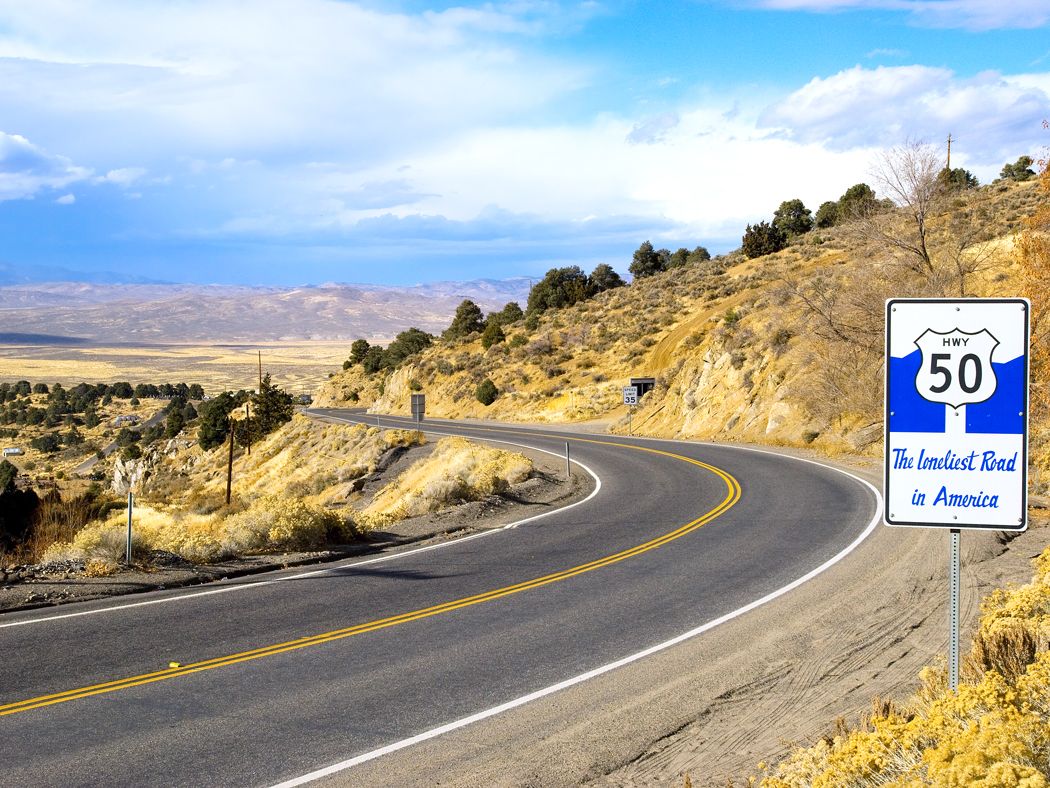
Stretching from Ocean City, Maryland to Sacramento, California, U.S. Route 50 incorporates some of the country’s most mesmerizing landscapes. Along the highway, road trippers will encounter the Appalachian, Rocky, and Sierra Nevada mountain ranges, in addition to the Great Plains. Noteworthy sights include California’s Lake Tahoe and the rocky wonderlands of Utah’s Arches and Canyonlands National Parks.
In Nevada, one of the top 10 longest states to drive through east to west, a barren 300-mile stretch of the highway through the Great Basin Desert is dubbed “the Loneliest Road in America.” Drivers in Nevada can also discover the historic cowboy culture of Lone Pine, which has been the backdrop for western movies since 1939’s Gunga Din starring Cary Grant, and intriguing natural sites like the speleothem-rich Lehman Caves and singing dunes of Sand Mountain.
From the shorelines of Lake Erie and Lake Michigan (two of the Great Lakes) to the Great Plains of South Dakota and the Rocky Mountains, Interstate 90 passes through many areas of breathtaking natural beauty. This east-west highway starts in Boston, travels through 13 states in the northern United States and ends in Seattle, Washington.
If you choose to drive the entire length, you will cross spectacular mountain passes like Washington’s Snoqualmie Pass, Lookout Pass on the Idaho-Montana border, and Montana’s Homestake Pass, where the highway reaches an elevation of 6,329 feet above sea level. Other notable places along the way include Minnesota’s 55-foot-tall Jolly Green Giant Statue, Mount Rushmore National Monument, and the Garnet ghost town in Montana.
Another highway that connects the country’s Atlantic and Pacific coastlines is U.S. Route 30. This long-distance roadway starts in Atlantic City, New Jersey, and ends in Astoria, Oregon. A significant stretch between Pennsylvania and Wyoming follows the historic Lincoln Highway, including the 200-mile Lincoln Highway Heritage Corridor in Pennsylvania. The Lincoln Highway Experience in Latrobe offers the chance to delve into highway nostalgia. Other standout sights include curious roadside attractions such as The Coffee Pot in Bedford, Pennsylvania, and the Haines Shoe House in York, which can be rented for an overnight stay.
U.S. Route 6 begins in Provincetown, Massachusetts, near the site of the iconic Mayflower landing in 1620. It then traverses 14 states on its way to Bishop, California. In 1953, the route was given the name “Grand Army of the Republic Highway” to commemorate Civil War veterans.
Linking Kenmore Square in Boston, Massachusetts, with the Pacific coast town of Newport, Oregon, U.S. Route 20 is America’s longest highway. Over its 3,365-mile coast-to-coast journey, it runs mostly parallel to Interstate 90 and passes through 12 states. From the rural pastures of Pennsylvania and Ohio to the Rocky Mountains, U.S. 20 offers a fascinating glimpse of the country’s ever-changing landscapes.
Why You Should Think Twice Before Moving to That Empty Airplane Seat
By
Bennett Kleinman
Read time: 4 minutes
May 28, 2024
Updated: February 19, 2025
Why You Should Think Twice Before Moving to That Empty Airplane Seat
Tips •May 28, 2024•Updated: February 19, 2025
By Bennett Kleinman
Author
Bennett Kleinman
Bennett is a New York City-based staff writer for Daily Passport. He previously contributed to television programs such as the Late Show With David Letterman, as well as digital publications like the Onion. Bennett has traveled to 48 U.S. states and all 30 Major League Baseball stadiums.
If you’re on an airplane and notice an unoccupied row where you’d be able to stretch out and enjoy the rest of the flight in comfort, do you get up and move? Are you even allowed to switch seats? With all of the strict rules and regulations regarding airplane travel, you may be wondering if it’s okay to move to an empty seat on a plane. So, we took a look at the facts to find out.
Don’t Move Without Asking
Credit: Anchiy/ E+ via Getty Images
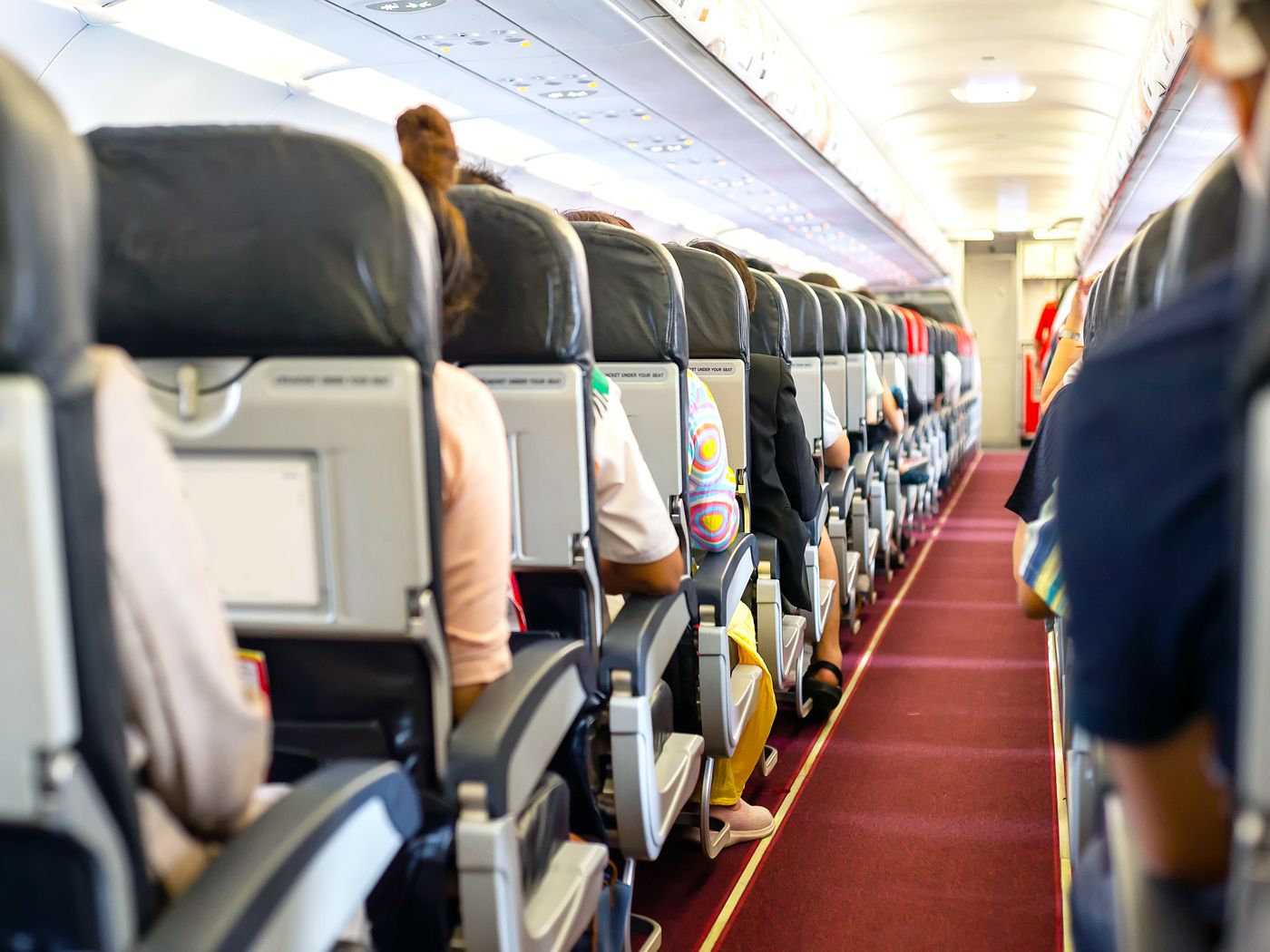
Before standing up and switching seats, you should always check with the flight attendant first, for a number of reasons. Before takeoff, the pilots perform a weight and balance check to make sure that weight is properly distributed in the cabin. While this is less of a concern on large commercial airliners, an unbalanced cabin could create problems for smaller ones. So, if you do notice an empty seat, it may have been left open intentionally to ensure proper weight distribution and a safe takeoff. Don’t just assume it’s there for the taking until you ask a staff member.
Another reason why certain seats may remain empty is for members of the cabin crew. Often, rows toward the back of the plane are left intentionally empty so that flight attendants can sit comfortably during their break periods. With these factors in mind, be sure to flag down a flight attendant before switching seats. If you’re polite, many flight attendants will be happy to accommodate your request so long as there are no valid reasons not to.
Accept Being Told “No”
Credit: eyesfoto/ E+ via Getty Images
It’s the job of flight attendants to enforce the policies of each airline, which may include strict rules that prevent passengers from switching seats. Some airlines charge more for specific seat selections, and so switching locations would be unfair to other travelers who paid an extra fee. In the event you’re told that switching seats isn’t feasible, you’ll need to be prepared to accept the answer for what it is.
You never know if additional passengers will board the airplane at the last minute, so it’s best not to jump the gun and move too early. From people waiting on standby to travelers sprinting across the terminal to make their connection, some passengers board the plane seconds before the door closes. This is why you should always wait until the boarding process is complete before investigating any empty seat options that may be available.
Know What’s Off Limits
Credit: keanu2/ iStock via Getty Images
From first class to basic economy, the cost of a plane ticket can vary substantially. This is true even within the economy section, as some seats may cost more than others due to a preferable location toward the front or an extra couple inches of legroom. If you’re looking to move locations, a good rule of thumb is to look over your shoulder toward the back of the aircraft cabin. Plus, an empty row in the back of economy may be a whole lot more comfortable than a crowded section toward the front.
Consider the Comfort of Other Passengers
Credit: Viktor Cvetkovic/ E+ via Getty Images
If you see an empty seat next to another passenger, they’re probably thrilled about the fact that they can stretch out and enjoy their flight. So, try to keep a comfortable distance between yourself and others if you choose to move seats. This tip also applies to situations where you could slide over one seat to create room between yourself and another passenger. Let’s say you’re in the middle of a three-seat row, and the seat by the window is unoccupied. You shouldn’t expect any trouble for sliding over in the same row, and your seatmate will likely be thrilled about the additional space you’ve created.
Advertisement
More from our network
Daily Passport is part of Inbox Studio, an email-first media company. *Indicates a third-party property.
Would You Board This “Mystery Flight” to a Secret Destination?
By
Peter Vanden Bos
Read time: 3 minutes
May 28, 2024
Updated: May 28, 2024
Would You Board This “Mystery Flight” to a Secret Destination?
Culture •May 28, 2024•Updated: May 28, 2024
By Peter Vanden Bos
Author
Peter Vanden Bos
Peter is a Toronto-based journalist, editor, content strategist, and self-professed avgeek with 15 years of experience covering all things travel. Prior to joining Daily Passport, he oversaw newsletter publication for Travelzoo. His favorite destinations to explore include Japan, France, Chile, New Zealand, and his adopted home country of Canada.
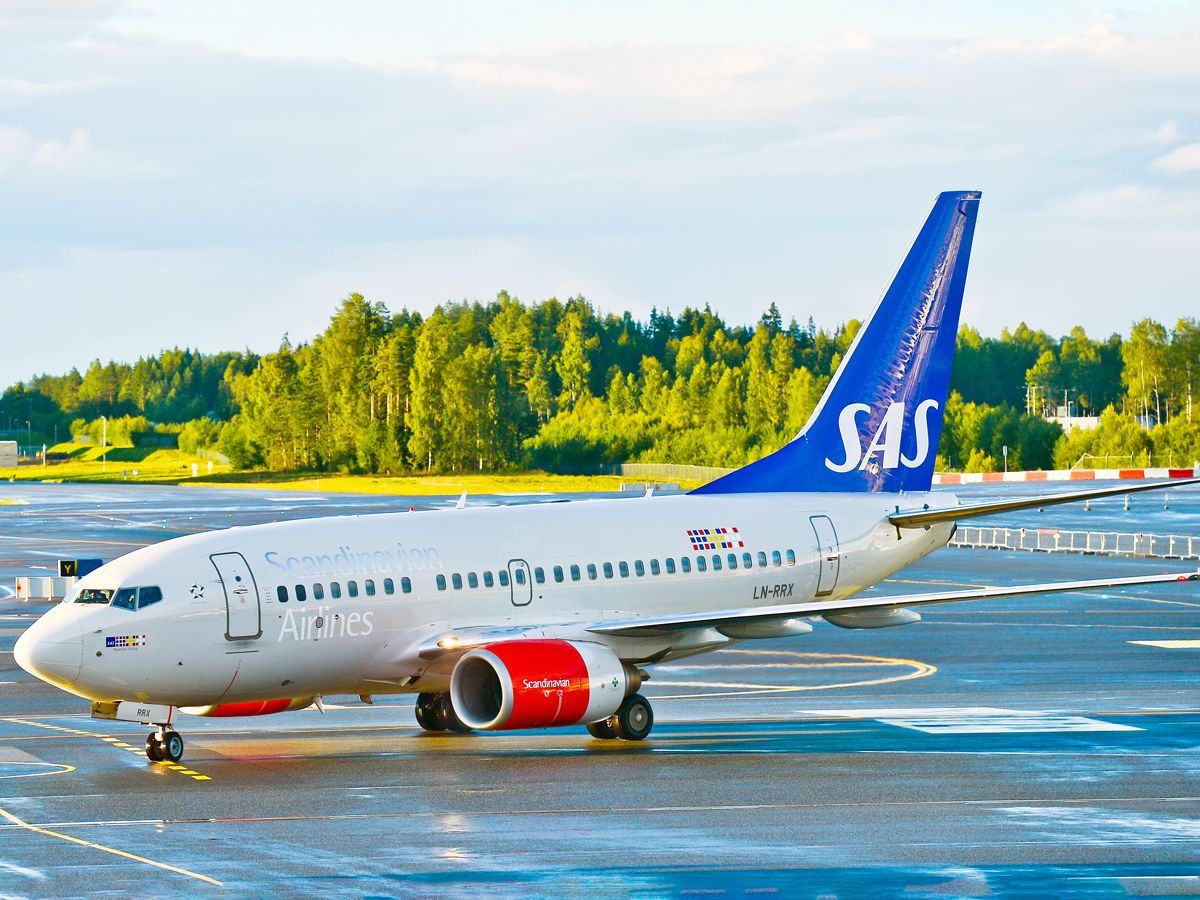
Before you visit a new destination, it’s likely that you spend a significant amount of time researching it. You plan which famous landmarks to visit, uncover the coolest secret gems, and book reservations at the best places to eat and sleep. But what if you threw all that out the window and embraced your spontaneous side? That’s exactly the appeal of a unique concept recently introduced by Scandinavian Airlines (SAS). A group of adventurous passengers recently boarded a flight to a city only the pilots knew of beforehand — here’s how it played out.
Huge Interest
Credit: Artur Widak/ NurPhoto via Getty Images
In February 2024, Sweden-based SAS launched “Destination Unknown,” offering members of its loyalty program the chance to book a mystery flight in April to a secret destination. According to a press release from the airline, more than 6,000 people signed up for the chance to participate in the experience, including more than 1,000 within minutes of the announcement. The airline also reserved six seats for a special contest that attracted 20,000 entries.
In the end, 180 lucky passengers were randomly chosen to score tickets for the mystery trip, which could only be booked using the airline’s rewards points and cost just 30,000 points round-trip. Perhaps the huge interest wasn’t all that surprising: As Paul Verhagen, EVP and chief commercial officer at SAS, put it, “The prospect of embarking on an adventurous and mysterious journey with fellow enthusiasts, finding new connections and friendships along the way, is truly exciting.”
Destination Revealed
Credit: Dave G Kelly/ Moment via Getty Images
On April 5, passengers boarded an SAS airplane at Copenhagen Airport set to take off at 9:25 a.m. local time, returning on April 8. According to an interview with the Daily Mail, only the pilots knew of the destination beforehand — even the airline’s CEO didn’t know where the plane was headed, and passengers didn’t find out until about two hours into the journey. The airline made special tweaks to its usual processes, including marking boarding passes with “XXX” instead of the typical three-letter airport code.
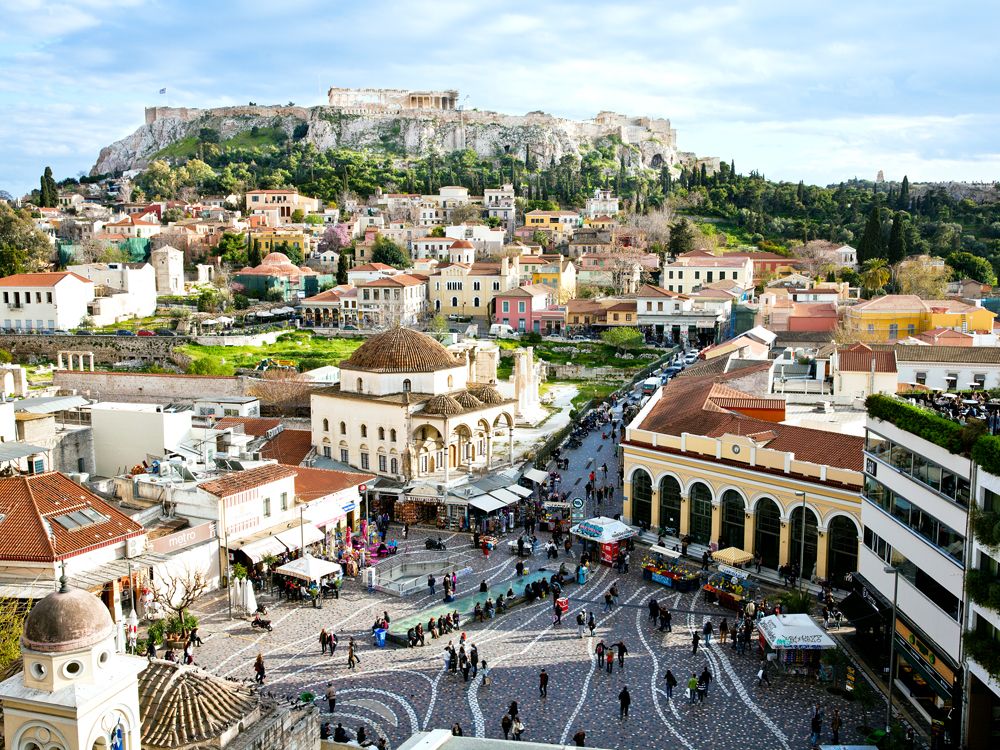
The mysterious destination turned out to be Athens, Greece. Once there, travelers could explore one of the world’s oldest cities, first settled sometime between the seventh and 11th centuries BCE, and home to iconic landmarks such as the ruins of the Parthenon at the Acropolis of Athens (where the travelers received a VIP tour). The airline also arranged special hotel rates, cocktail parties, dinner reservations, and other tours — promising a memorable getaway for those lucky enough to experience it.
Other Mystery Flights
Credit: izusek/ E+ via Getty Images
Though the first foray was clearly a hit, SAS hasn’t said yet if it will offer the “Destination Unknown” program again in the future. Other airlines, including German carrier Lufthansa, have offered similar promotions in the past. There are also companies that specialize in surprise vacations. With Pack Up + Go, for example, you provide a budget and a few other parameters, and the company plans the entire trip for you — all the details are sealed in an envelope you open right before you depart.
Or, if you’re feeling spontaneous, consider taking advantage of an unlimited flight pass. For instance, the Go Wild! All-You-Can-Fly Pass from U.S. budget carrier Frontier Airlines lets travelers book last-minute flights to any destination the airline flies. And there are benefits in waiting to book a hotel room until the last minute, too.
Advertisement
More from our network
Daily Passport is part of Inbox Studio, an email-first media company. *Indicates a third-party property.
Fiona has spent her career exploring the world and working in the travel industry, turning her lifelong passion into a profession. From planning custom trips to sharing stories as a travel writer for publications such as The Discoverer, she’s all about helping others experience the world in a deeper, more meaningful way.
A number of American universities are ranked among the top institutions of higher education in the world. They are known for their exceptional quality of educational programs, cutting-edge research and innovation, and lively student life. Many of them also have been around for centuries. In some cases, they were founded by some of the nation’s most influential historical leaders, and in others, they still operate out of some of the country’s oldest buildings. Check out the five oldest universities in America and the histories which make them fascinating places to visit — even if your student days are long behind you.
5. University of Pennsylvania – Philadelphia, Pennsylvania
Credit: aoldman/ iStock via Getty Images
The plans for the University of Pennsylvania date back to 1740 — 36 years before the signing of the Declaration of Independence. However, budget challenges stalled the project for nearly a decade. In 1749, founding father Benjamin Franklin banded together 24 fellow Philadelphians with his influential essay “Proposals Relating to the Education of Youth,” which set the project back on track, and the University of Pennsylvania (formerly named the Academy of Philadelphia, and later, the College of Philadelphia) welcomed its first students in 1751.
Today, the university is composed of 12 individual schools, the most famous of which is the Wharton School of Business, recognized as one of the world’s top business schools. Often called Penn for short, the university also goes by another nickname: “Social Ivy,” a nod to the “work hard, play hard” mentality of the student body. But Penn is clearly also serious about academics, offering top-rated graduate programs in education, science, law, and medicine, as well as prestigious undergraduate programs in business, management, marketing, science, and health-related fields. Famous alumni include singer John Legend, businessman Warren Buffett, and former U.S. President Donald Trump.
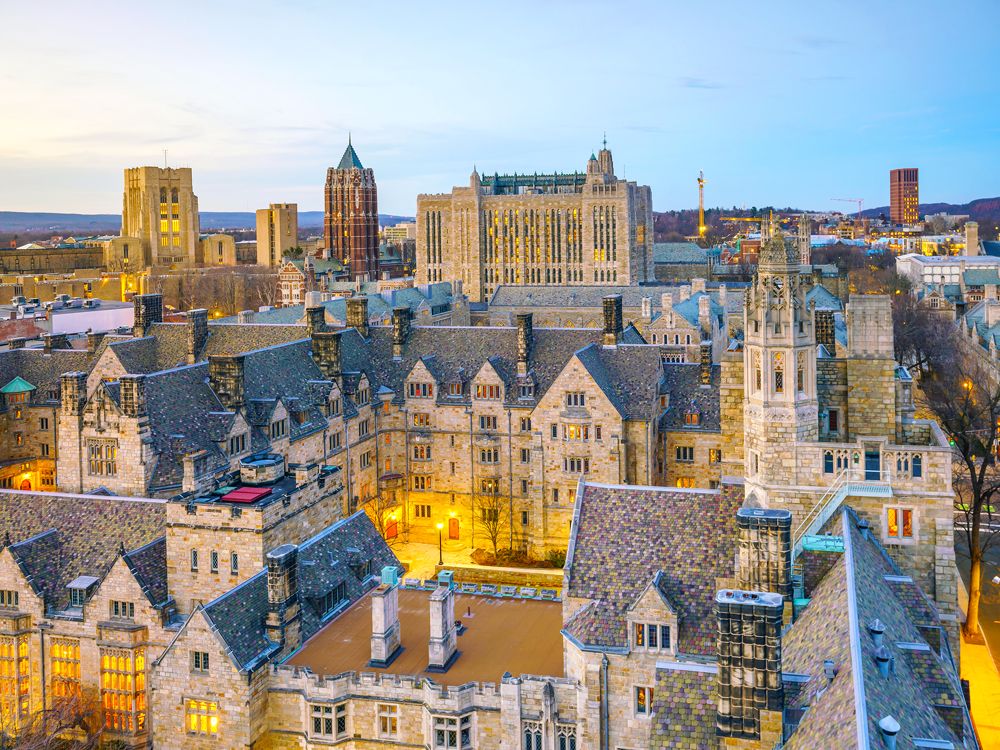
The second Ivy League school on this list, Yale University was founded in 1701 in Saybrook, Connecticut, later moving in 1716 to New Haven. Yale boasts a broad range of programs and degrees but is perhaps most renowned for its cutting-edge science research programs and some of the country’s best performing arts and literature programs.
Yale’s mission statement — “improving the world today and for future generations through outstanding research and scholarship, education, preservation, and practice” — attracts a broad range of students from all corners of the country and the world. The university’s list of famous alumni includes five U.S. Presidents, 19 U.S. Supreme Court justices, 13 living billionaires, and multiple foreign heads of state.
3. St. John’s College – Annapolis, Maryland, and Santa Fe, New Mexico
St. John’s College is a private liberal arts college that was originally founded as King William’s School in 1696. In 1784, the college adopted its current name. Four of the school’s founders — Charles Carroll, Samuel Chase, William Paca, and Thomas Stone — were American patriot leaders who supported the separation of Maryland from Great Britain’s rule, and they ultimately signed the Declaration of Independence in 1776.
Today, students can seamlessly switch between the original campus in Annapolis, Maryland, and a second campus in Santa Fe, New Mexico, that opened in 1964. St. John’s College claims a host of notable alumni, one of which was Francis Scott Key, who wrote his famous poem “The Star-Spangled Banner” while watching the British invade Baltimore’s Fort McHenry in 1814.
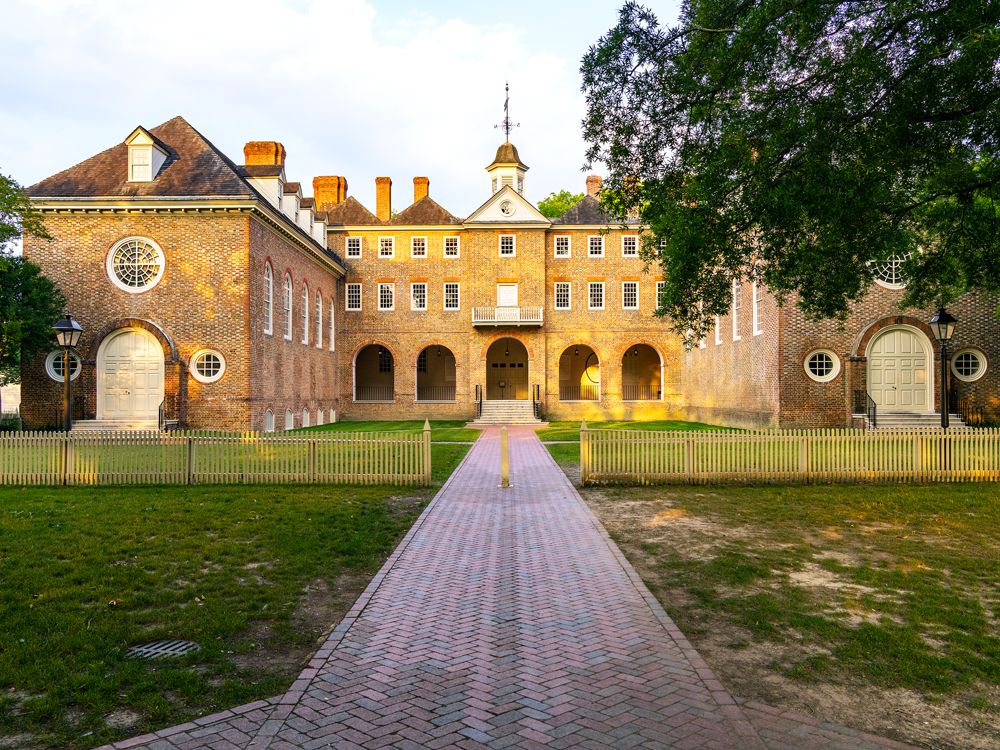
2. The College of William & Mary – Williamsburg, Virginia
Credit: BackyardProduction/ iStock via Getty Images
The College of William & Mary, the second-oldest college in America, was founded in 1693 by Scottish-born clergyman James Blaire and named for King William III and Queen Mary II of England, who signed the charter for the school. The purpose of the institution was to create a “perpetual College of Divinity, Philosophy, Languages, and other good Arts and Sciences,.” according to the charter. Blaire was named the college’s first president, a position he maintained until his death in 1743.
While the College of William & Mary isn’t the oldest university in the U.S., it does claim plenty of other superlatives: America’s oldest college building still in use today (the Sir Christopher Wren Building), the first U.S. institution with a royal charter, the country’s first Greek-letter society (Phi Beta Kappa, founded in 1776), the first student honor code, and the first law school in America. Many prestigious students have attended the college over the years, including American Presidents George Washington, Thomas Jefferson, John Tyler, and James Monroe.
Also a member of the Ivy League, Harvard University is not only the oldest university in America, but also one of the most famous institutions of higher education in the world. The Great and General Court of Massachusetts Bay approved the university’s founding in 1636, and it was originally named New College. The school’s initial purpose was to provide clergy training to the anticipated 17,000 Puritans migrating from England. In 1639, the name was changed to Harvard to honor Reverend John Harvard, a Londoner and Cambridge University alum who willed his library of 400 books and half of his estate to the new college.
In 1642, Harvard celebrated its first commencement with a graduating class of nine students, who went on to pursue prosperous careers in religion and politics. Famous later Harvard graduates include former U.S. Presidents John Adams, John F. Kennedy, and Barack Obama — as well as influential Supreme Court Justice Ruth Bader Ginsburg and celebrities such as Natalie Portman, Rashida Jones, Matt Damon, and Mark Zuckerberg.
Advertisement
More from our network
Daily Passport is part of Inbox Studio, an email-first media company. *Indicates a third-party property.
Should You Be Wearing Compression Socks When You Fly?
By
Daily Passport Team
Read time: 4 minutes
May 28, 2024
Updated: September 17, 2025
Should You Be Wearing Compression Socks When You Fly?
Tips •May 28, 2024•Updated: September 17, 2025
By Daily Passport Team
Author
Daily Passport Team
Daily Passport writers have been seen in publications such as National Geographic, Food & Wine, CBC, Condé Nast Traveler, and Business Insider. They're passionate about uncovering unique destinations and sharing expert tips with curious travelers.
Between tight seats and limited legroom, flying can often be an unpleasant experience. The physical toll that flying takes on the body is very real, especially on longer journeys. Fortunately, there are ways to mitigate that discomfort so you arrive at your destination feeling fresh and energized. One particularly helpful method involves wearing compression socks, which fit around the leg more tightly than regular socks. Compression socks provide a wide range of benefits for travelers — here’s why you should consider them for your next flight.
Being seated for long periods of time, whether on an airplane or elsewhere, may lead to circulatory issues that cause swelling, blood clots, and even deep vein thrombosis. While situations that require immediate medical attention are rare, many airline passengers regularly experience some level of leg discomfort during their journey. Airplane cabins are also highly pressurized, which means that passengers breathe in less oxygen; lower oxygen levels in the blood make clots more likely to form.
Who Should Wear Compression Socks?
Credit: Morsa Images/ DigitalVision via Getty Images
You don’t have to suffer from circulation issues to enjoy the benefits of compression socks, but there are some circumstances in which wearing these socks is recommended. People aged 40 or older, for example, are at risk of worsening circulation and should consider compression stockings for their next trip. You also may be at increased risk of developing blood clots if you’ve had surgery within the last three months. Other at-risk groups include pregnant people, those with a BMI over 30, people with varicose veins, and anyone with a medical history of coronary or circulatory issues.
The Benefits of Wearing Compression Socks
Credit: Lu ShaoJi/ Moment via Getty Images
Studies show that, thanks to their clever design, compression socks help improve blood flow and prevent conditions such as swelling and DVT. Compression socks are often made of a flexible fabric that forms a tight seal around the leg without being too restrictive. Many variations are also tighter around the ankles and loosen as they make their way up the calves, which encourages upward blood flow toward the heart. By wearing a pair, your legs are much less likely to feel achy and swollen once you disembark the plane, and the odds of developing related medical issues also decrease.
Pro tip: To ensure that compression socks are right for you, try them on before the day of your trip. Wear the socks a few days in advance and take them on a quick test run — that way, you can know if they work for you. Assuming the socks help lessen swelling and discomfort, you can change into the socks right before you board the plane to ensure a comfortable trip ahead.
Compression socks have a few risks one should be aware of. The socks may actually become too tight, to the point that they cut off circulation. If you feel too much pressure, just take them off and change into your normal socks. Also keep an eye out for any redness or chafing, as this could be a sign of an allergic reaction to the material. Lastly, if you have a condition such as diabetes or peripheral artery disease, check with a doctor before buying compression socks to ensure that it won’t make matters worse.
There are three common types of compression socks: graduated compression socks, nonmedical support hosiery, and anti-embolism stockings. The first type places additional pressure around the ankles and then tapers off as it runs up the leg. However, in many cases these graduated compression socks require a prescription and fitting, so you can’t just head to the store and grab a pair. Nonmedical support hosiery, available without a prescription, is more flexible and less restrictive. Anti-embolism stockings are designed for people at risk of DVT and those who suffer from limited mobility, and they also require getting a prescription from your doctor.
Choosing the right compression sock for you can be overwhelming, so here are a few of our favorites:
Sockwell: These stylish and durable women’s socks use a mix of fine merino wool and rayon, which will help you stay comfortable on long plane journeys.
Levsox: With a wide variety of vibrant colors available, these socks will not only keep you feeling good, but also make a bold fashion statement.
Bluemaple: These socks come highly recommended for pregnant women — or anyone looking for that added circulation boost. They’re even great for athletics and can be worn while running for help with circulation.
Comrad: Sold in either regular or wide-calf fits, these nylon, knee-high socks will conform to any leg shape and leave you feeling cozy and secure.
Dickies: If you’re looking for socks that are effective and simple, these socks may be for you. They come in a range of basic colors (such as white, black, and tan) and do a great job at maintaining proper circulation.
Note: All featured products and deals are selected independently and objectively by the author. Daily Passport may receive a share of sales via affiliate links in content.
Advertisement
More from our network
Daily Passport is part of Inbox Studio, an email-first media company. *Indicates a third-party property.
5 Real-Life Optical Illusions That Will Boggle Your Mind
By
Daily Passport Team
Read time: 5 minutes
May 28, 2024
Updated: May 28, 2024
5 Real-Life Optical Illusions That Will Boggle Your Mind
Outdoors •May 28, 2024•Updated: May 28, 2024
By Daily Passport Team
Author
Daily Passport Team
Daily Passport writers have been seen in publications such as National Geographic, Food & Wine, CBC, Condé Nast Traveler, and Business Insider. They're passionate about uncovering unique destinations and sharing expert tips with curious travelers.
Optical illusions occur when the human eye perceives things differently than they actually are. But they aren’t just an abstract concept — there are plenty of examples found in nature. From a surreal salt flat that’s almost as big as the state of Connecticut to a mind-boggling waterfall seemingly made from fire, these are five of the most unreal looking optical illusions you can see in real life.
Firefall – Yosemite National Park, California
Credit: Jorge Villalba/ iStock via Getty Images
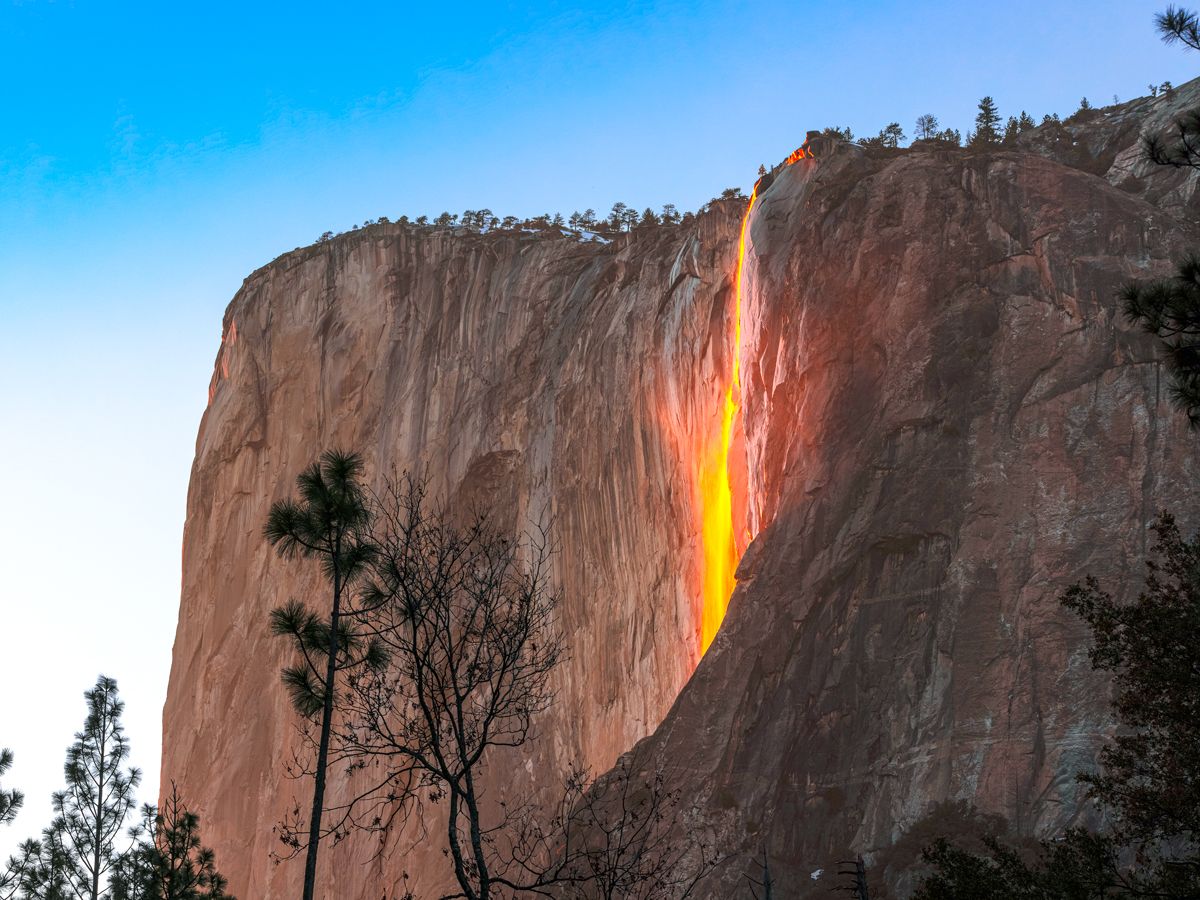
For most of the year, Horsetail Fall is just a small waterfall on the famous El Capitan rock formation in Yosemite National Park. However, something magical happens to the waterfall at sunset towards the end of February. During this time, the waterfall looks as if it’s on fire, which has earned it the nickname “Firefall.” The reflection of the sun hitting the falling water at just the right angle is what makes it look like lava pouring over the edge of the mountain.
It’s not only the time of day and the time of year that you’ll need to get right, however. There is an element of luck if you want to see this optical illusion in its full glory. You’ll need Mother Nature to cooperate — if there is even a little bit of cloud cover, it can ruin your chances of seeing the epic “Firefall.” But visitors remain undaunted: The optical illusion is now so popular that it has forced the National Park Service to implement new rules. There are now limited areas for viewing in an effort to reduce traffic jams.
Rakotzbrücke – Germany
Credit: DieterMeyrl/ E+ via Getty Images
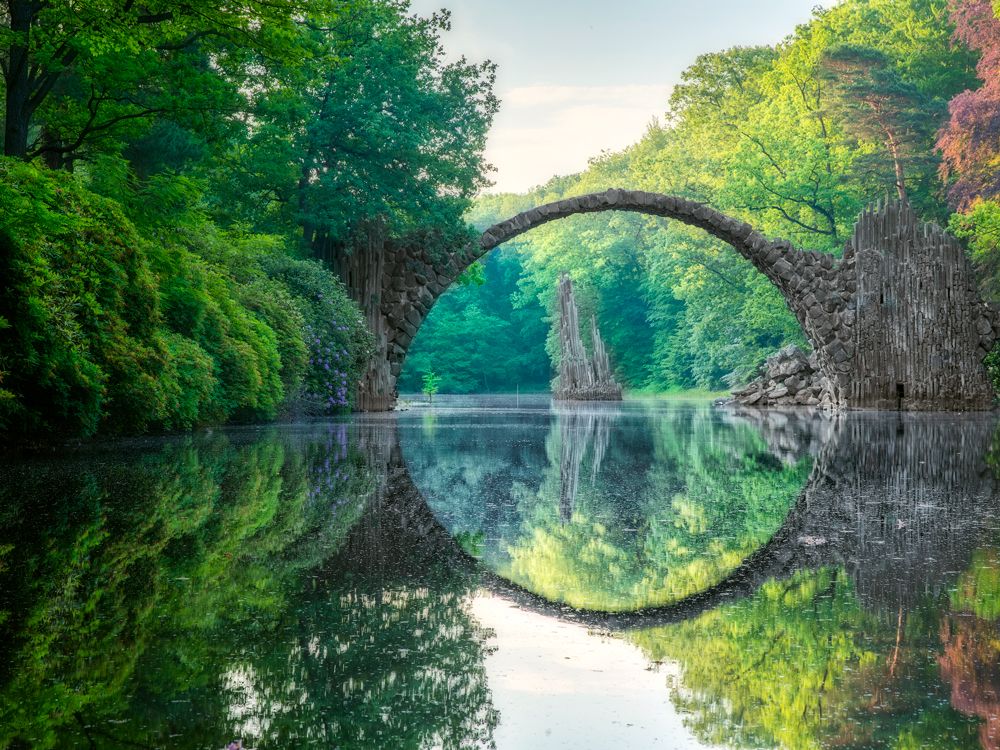
Rakotzbrücke is known to many as the “Devil’s Bridge,” but don’t let that moniker deter you. The forest-shrouded, 19th-century stone bridge and its reflection on the water below creates one of the most tranquil scenes in all of Europe. Located in Gablenz, Germany — about a two-hour drive from Berlin — the delicate footbridge features thin spires at both ends, which arch up from the ground in a near-perfect semicircle. But most park-goers are hoping to visit on a clear day with calm winds, when they can witness the incredible illusion of a full circle made with the reflective lakewater below.
The bridge was commissioned in 1860 by a local knight, Friedrich Hermann Rötschke, as the centerpiece of the Azalea and Rhododendron Park Kromlau, a 200-acre park he created and financed. Rakotzbrücke is not the only Devil’s Bridge in Europe, either — the name was given to several bridges with local legends behind them. In the case of Rakotzbrücke, it’s said that the bridge’s designer consulted with the devil when coming up with its gravity-defying shape. Though crossing the bridge is no longer permitted to preserve the structure, thousands still pay a visit each year to capture a photograph of this mythical wonder.
Salar de Uyuni – Bolivia
Credit: M_Panzetti/ iStock via Getty Images
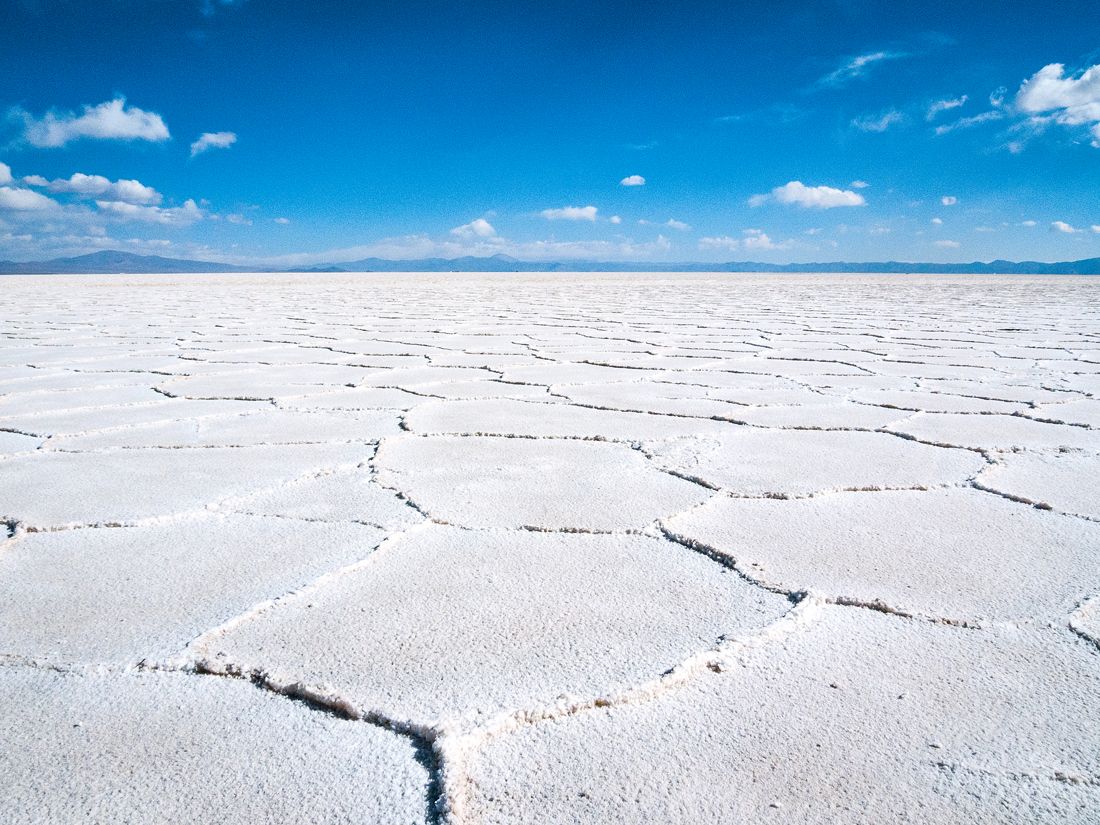
The largest salt flat in the world covers more than 4,000 square miles of Bolivia’s windswept western landscape — which, incredibly, is almost the size of the state of Connecticut. Resembling a shattered slab of ice, Salar de Uyuni (Uyuni Salt Flat) formed when a lake dried up between 10,000 and 25,000 years ago. The Indigenous Aymara peoples have long gathered cooking salt from here, and today, the sprawling natural wonder, located 12,000 feet above sea level, serves as a major source of salt for the entire country. Uyuni contains vast amounts of untapped lithium beneath the surface, the result of prehistoric volcanic eruptions.
It’s also increasingly popular with visitors, though it can be challenging to get to. Many of them come to experience the Palacio de Sal (Salt Palace), the world’s first salt hotel. Located on the edge of the salt flat, the lodging is built entirely of salt. The best time to appreciate the salt flat in all its glory is usually between December and April, the season when Salar de Uyunicollects rainwater to create an astonishing mirrored reflection on its surface.
Underwater Waterfall – Mauritius
Credit: GoodOlga/ iStock via Getty Images
A tropical island nation about 700 miles east of Madagascar, Mauritius is geographically isolated enough to merit its own time zone — and a trove of geological wonders found nowhere else. Within the past decade, mineral samples estimated to be 3 billion years old have been extracted from underneath the island’s beaches. Researchers believe that an ancient, lost continent called Mauritia compressed and sunk into the Indian Ocean, a disruption partly responsible for the volcano that generated this island.
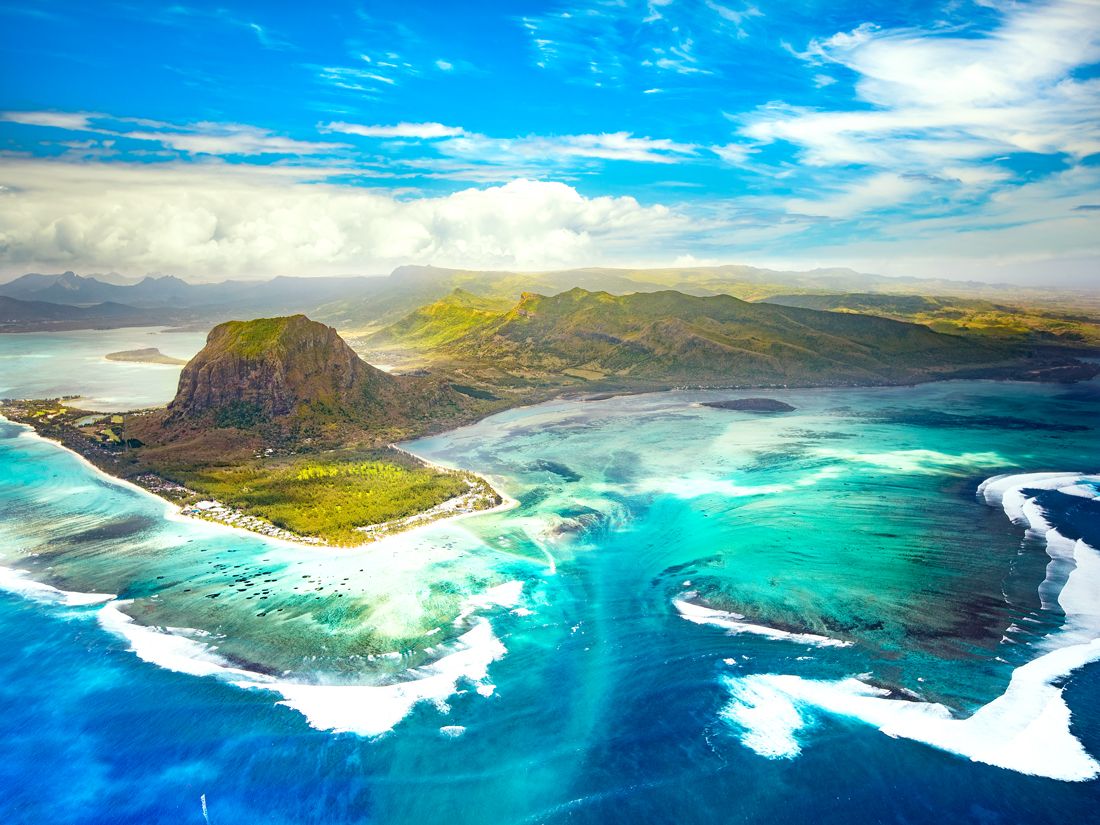
Mauritius sits on an ocean shelf sprawling about 500 feet below sea level — and there’s a steep 2.5-mile drop to the ocean floor from the shelf’s edge. From above, you’ll see what resembles an underwater waterfall off the island’s southwest coast. In reality, currents are forcing sand from the beaches and ocean shelf to greater depths. Although there’s technically no waterfall, the churning sediment creates a glistening medley of blues, greens, and whites. The best way to experience the phenomenon is on one of the many helicopter tours that fly above the climactic seascape, and also provide a bird’s-eye view of nearby Black River Gorges National Park and Le Morne Brabant Mountain.
Sossusvlei – Namibia
Credit: Mlenny/ E+ via Getty Images
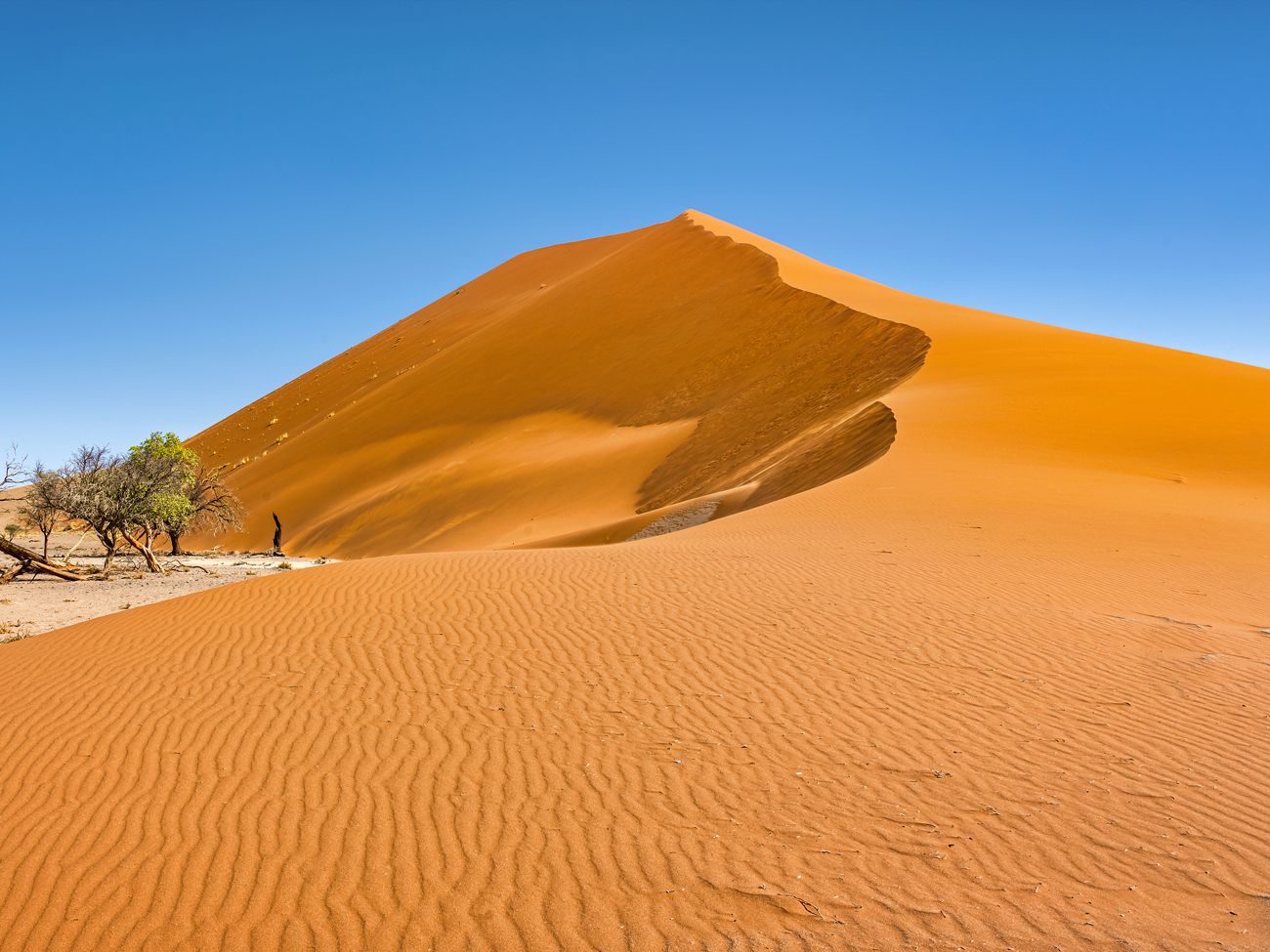
Southwestern Namibia is home to some of the world’s tallest sand dunes — windswept, rust-colored giants that tower as high as 1,200 feet above the scorched earth of the Namib Desert. The dunes are part of the planet’s oldest desert — estimated to date back 55 million years — and wrap around a 12,000-square-mile salt and clay pan known as Sossusvlei. Translating to “dead-end marsh,” Sossusvlei sprawls at the furthest reaches of the Tsauchab River, where the dunes come together to stop its flow just 37 miles short of the Atlantic Ocean.
Part of what makes the view so remarkable is that the empty pan accentuates the height of the sand dunes surrounding it. Area winds blow from every direction, causing the undulating dunes to shift and erase ostrich, springbok, and hyena footprints, while concealing thirsty camel thorn tree roots that extend hundreds of feet below ground. The most popular dune to visit is Dune 45, which stands roughly 278 feet tall and can be climbed in an hour, but an unforgettable way to take in the incredible scenery is a sunrise hot air balloon ride.
Advertisement
More from our network
Daily Passport is part of Inbox Studio, an email-first media company. *Indicates a third-party property.
6 Iconic City Skylines and the Buildings That Define Them
By
Jersey Griggs
Read time: 5 minutes
May 22, 2024
Updated: May 28, 2024
6 Iconic City Skylines and the Buildings That Define Them
Architecture •May 22, 2024•Updated: May 28, 2024
By Jersey Griggs
Author
Jersey Griggs
Jersey is a travel and lifestyle writer whose work has appeared in publications such as Condé Nast Traveler, Business Insider, and Bust. When she’s not exploring her adopted home state of Maine, she’s likely planning her next big trip.
A city might be the sum of its parts, but at first glance, the skyline defines it. Visible from all angles, urban skylines are not only symbolic, but also reveal crucial details about a city’s history and culture. From London to New York City to Dubai, here are six of the most famous city skylines and a guide to the landmarks that make them memorable.
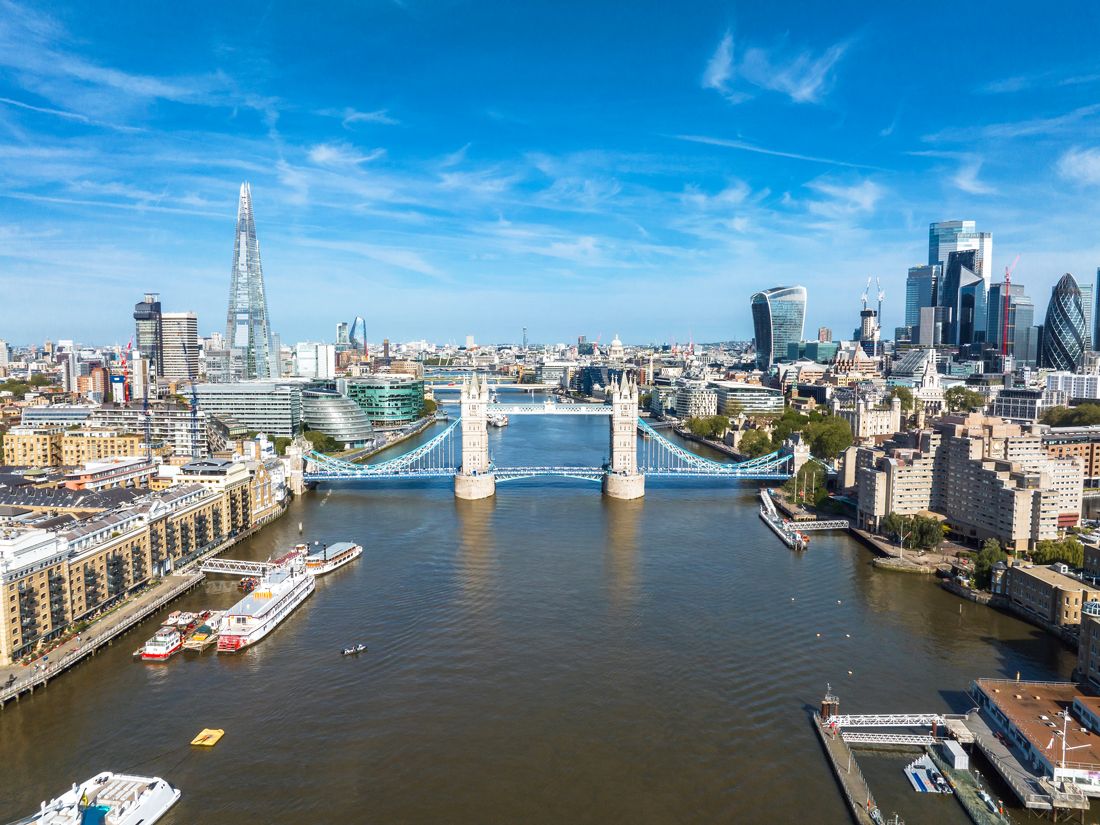
London’s skyline is defined by a mixture of grand, historic structures and soaring modern skyscrapers. A fixture of the skyline since the late 1800s, London’s Tower Bridge has allowed citizens to cross the River Thames for over a century. The Victorian Gothic suspension bridge even remained operational during the Blitz in World War II and continues to be one of the most popular sights in the city today.
More modern landmarks include the Gherkin, a distinctive building named for being shaped like a pickle — and a reference that displays the Brits’ penchant for dry humor. Within the same eyeline, the Shard is a 95-story pinnacle-shaped tower that is home to the highest habitable floor in the city (floor 72). And of course, the London Eye is unmissable — the 135-foot observation wheel, originally a temporary fixture for London’s millennium celebration in 2000, provides some of the best panoramic views of the city.
New York, New York
Credit: benedek/ E+ via Getty Images
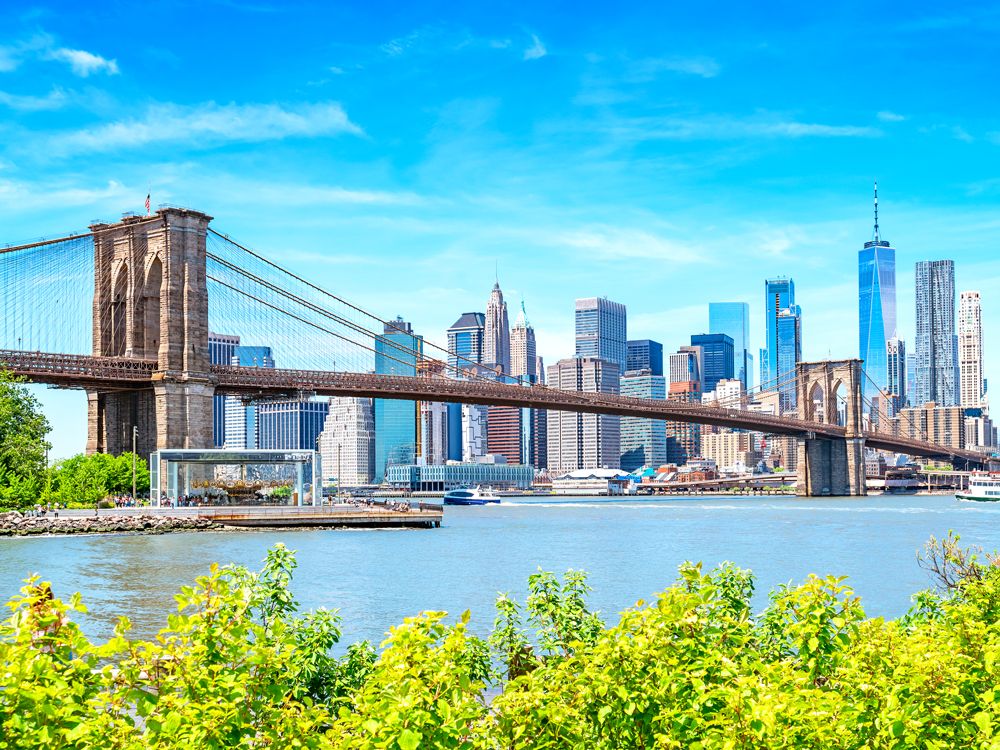
As the first city in the world to fully embrace the skyscraper, the Big Apple’s skyline is home to numerous “supertall” buildings and many historic masterpieces. Of these historic buildings, the most recognizable is the Empire State Building, an art deco skyscraper completed in 1930 that is often considered a symbol of the city itself. Finished the same year, the Chrysler Building is another art deco skyscraper that was briefly the tallest building in the world before the Empire State Building claimed the title.
The skyline’s modern landmarks include One World Trade Center, currently the tallest building in the Western Hemisphere. With a symbolic height of 1,776 feet, the building replaced the Twin Towers that were destroyed in the September 11 attacks and serves as a memorial for the many lives lost. Another new addition, completed in 2019, is 30 Hudson Yards. As the second-tallest building in the city, 30 Hudson Yards is home to New York’s highest observation deck, making it the perfect place to take in the legendary skyline.
Dubai, United Arab Emirates
Credit: DedMityay/ iStock via Getty Images
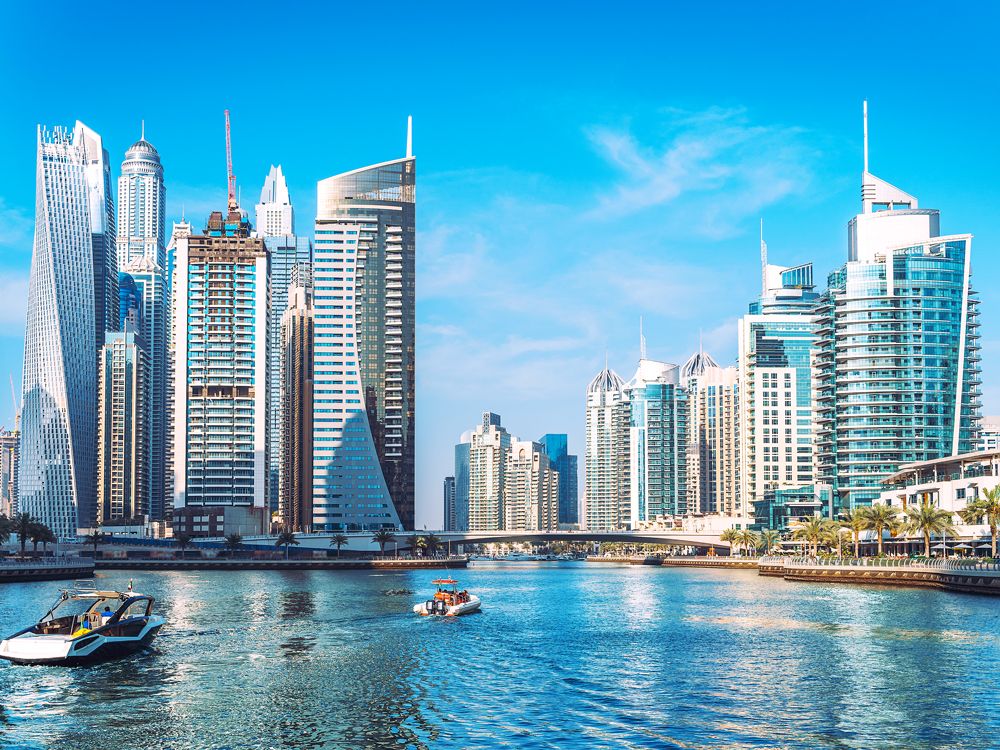
In the past 30 years, Dubai has undergone a rapid transformation that has resulted in one of the most modern and innovative skylines in the world. The city is now home to several world-famous landmarks, including the Burj Khalifa. Completed in 2010, it remains the tallest skyscraper in the world, with a distinctive needle spire that stretches to an astounding 2,717 feet tall.
Several other buildings also define Dubai’s extraordinary skyline. Cayan Tower’s unique design showcases a twisted exterior that allows for panoramic views from inside the building, while the Dubai Mall features an asymmetrical glass exterior that surrounds a central atrium. Also notable are the Emirates Towers, two complementary skyscrapers with contrasting angles that mimic each other.
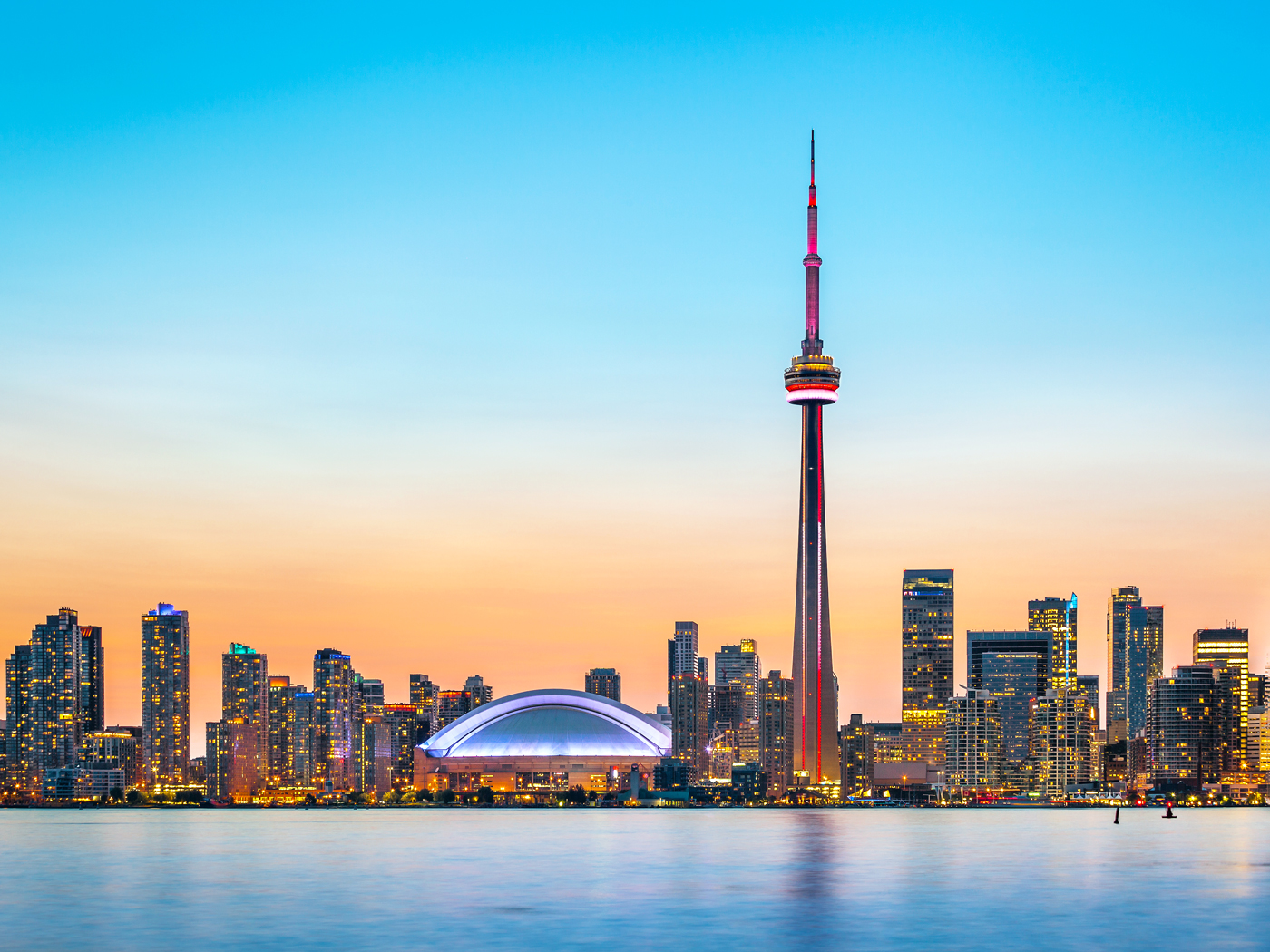
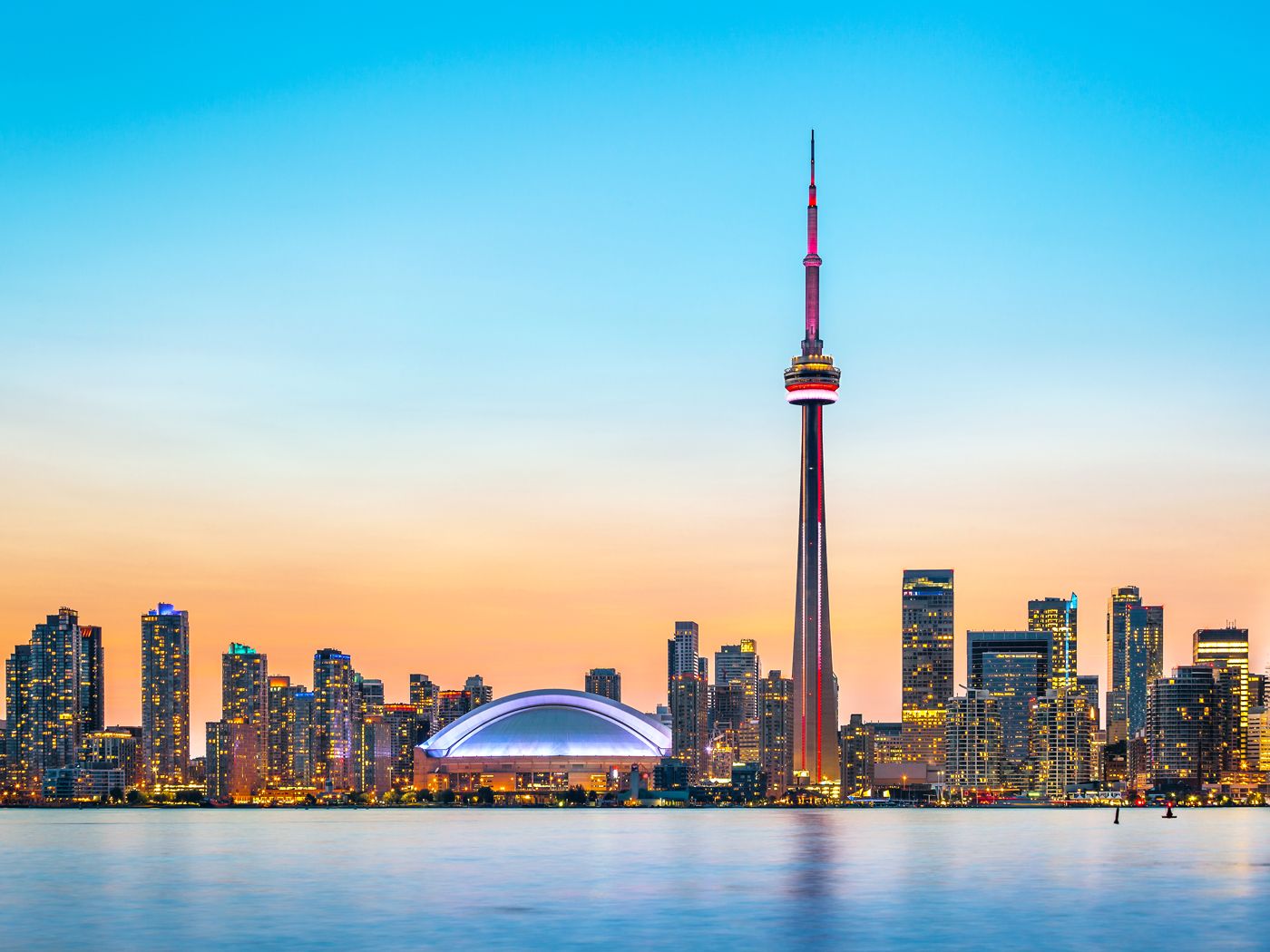
As a city celebrated for its diversity and love of the arts, Toronto is also heralded for its unique skyline along Lake Ontario. Dominating the city’s skyline is the CN Tower, a spire-shaped concrete communications and observation tower that rises to 1,815 feet. Until 2007, it was the world’s tallest freestanding structure, and today it continues to offer unparalleled views of the city from its observation decks. Situated at the base of CN Tower is the Rogers Centre, a stadium with a retractable roof that hosts the Toronto Blue Jays and large-scale concerts.
Another distinctive landmark is Toronto City Hall, also known as “New City Hall,” which was designed by functionalist Finnish architect Viljo Revell. It features a (somewhat divisive) modernist style, with a pair of curved towers that house the offices of the mayor and city councillors. Queen Elizabeth II attended its opening in 1965.
Sydney, Australia
Credit: Onfokus/ iStock via Getty Images
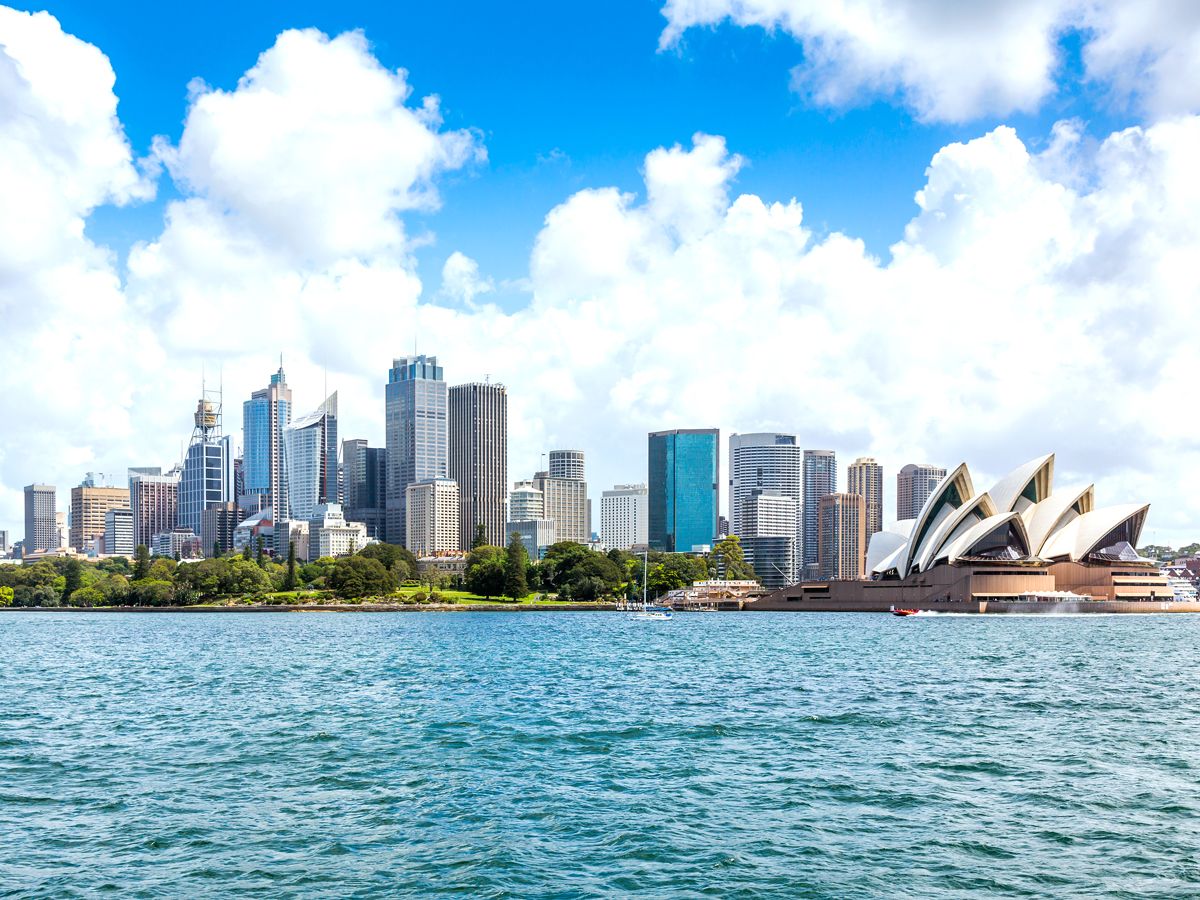
Sydney has one of the most recognizable skylines in the world, thanks in no small part to the Sydney Opera House. Set against the backdrop of Darling Harbor, the UNESCO World Heritage Site has a memorable sail-like shape that has served as a symbol for both the city and the country since it was completed in 1973.
The city’s tallest structure, Sydney Tower Eye, is another easily recognizable building. Home to a unique golden crown that doubles as an observation deck, it provides panoramic views of the surrounding area from over 1,000 feet above ground. Meanwhile, the Quay Quarter Tower has become a recent star of the skyline. Rather than demolishing the old AMPTower that once stood in its place, architects repurposed 95% of that building’s original material, resulting in a modern, upcycled skyscraper that reaches 617 feet tall.
Rio de Janeiro, Brazil
Rio de Janeiro undoubtedly has one of the most beautiful skylines in the world, but unlike other cities, it is not one dominated by skyscrapers. Instead, the city’s most iconic landmarks come from the natural world. Built upon the stunning Guanabara Bay, one of the Seven Natural Wonders of the World, Rio is lined by the world-famous Copacabana and Ipanema beaches and surrounded by the Tijuca Forest, the world’s largest urban forest.
Perhaps the skyline’s most distinctive landmark is Sugarloaf Mountain, with a 1,299-foot summit that can be accessed via cable car. Translating to “hunchback” in Portuguese, Corcovado Mountain is another uniquely shaped pinnacle that hovers over the city. It’s home to the colossal 1922 statue known as Christ the Redeemer, named one of the New Seven Wonders of the World.
Advertisement
More from our network
Daily Passport is part of Inbox Studio, an email-first media company. *Indicates a third-party property.