

Post Banner Image
History

6 Destinations That Are Virtually Unrecognizable From 100 Years Ago

By Jersey Griggs
Read time: 6 minutes
August 22, 2024
Updated: August 22, 2024

6 Destinations That Are Virtually Unrecognizable From 100 Years Ago

By Jersey Griggs
Author
Jersey Griggs
Jersey is a travel and lifestyle writer whose work has appeared in publications such as Condé Nast Traveler, Business Insider, and Bust. When she’s not exploring her adopted home state of Maine, she’s likely planning her next big trip.

What a difference a century can make. Over the course of 100 years, a number of U.S. destinations have undergone major metamorphoses. Development, infrastructure, and clever engineering have helped to transform these desert outposts, swampy islands, and dense forests into glitzy cities, sleek beaches, and streamlined parks. See how six popular U.S. tourist destinations have dramatically changed over the last 100 years.

Miami Beach – Florida

Historical photo of beach goers in Miami Beach, Florida
Credit: Bettmann via Getty Images 

A century ago, Miami Beach was little more than a sandbar in the Atlantic Ocean. Formerly the site of a coconut plantation, the swampy spit of land was a hospitable environment for mangrove trees, alligators, and mosquitoes, and not much else. It wasn’t until developer Carl Fisher got involved — helping to fund a bridge that connected the sandbar to the mainland and pumping out muck from the bay — that terra firma appeared. And thus, Miami Beach was chartered on March 26, 1915.

High-rise buildings along Miami Beach today
Credit: Pola Damonte/ Moment via Getty Images 

A self-made millionaire, Fisher was also involved in the development of the luxury hotels and high-end estates that began to dominate the barrier island’s coastline. Over the next 100 years, this type of development defined Miami Beach as tourists flocked to its artificial sandy shores. With time, Miami Beach became a trendy hot spot for tourists, beachgoers, nightclubbers, and art lovers — a far cry from its humble beginnings.

National Mall – Washington, D.C.

Historical view of undeveloped National Mall in Washington, D.C., seen from above
Credit: H. Armstrong Roberts/ClassicStock/ Archive Photos via Getty Images 

Using the word “mall” to describe a park might seem counterintuitive, but the term was coined to describe a green space where the 18th-century lawn game pall-mall was played. Before long, “mall” became a descriptor for a tree-lined park, and it was with this in mind that the National Mall was included in the 1791 design of Washington, D.C. Although the park was delayed more than 100 years, the McMillan Plan breathed new life into the idea in the 20th century.

Aerial view of the National Mall in Washington, D.C. today
Credit: vPaulTech LLC/ iStock via Getty Images Plus 

At the turn of the century, the National Mall was little more than a collection of unplanned forested parks, a set of old train tracks, and “tempos,” a nickname for temporary concrete structures built during World War I. Introduced in 1901, the McMillan Plan proposed a more streamlined landscape, unifying the open space between the Capitol, the Lincoln Memorial, the White House, and the Jefferson Memorial, and allowing for the Washington Monument to stand centrally among these locations. Today, several additional museums and institutions face the park, without impeding the symmetry or natural beauty of the iconic tree-lined space. 

Niagara Falls – New York

Historical photo of tourists at Niagara Falls in New York
Credit: Hulton Deutsch/ Corbis Historical via Getty Images 

In the course of its 12,000-year lifespan, 100 years is a drop in the bucket for Niagara Falls. But in the past century, the famous falls have seen their fair share of change. In 1950, Canadian and U.S. officials diverted the flow of Niagara Falls by redirecting half of the water to fuel hydroelectric turbines. At certain times of the day, the falls’ current was cut another 50%, which means the Niagara Falls of 100 years ago were vastly more powerful than what we see today. 

Aerial view of Niagara Falls today
Credit: Starcevic/ E+ via Getty Images 

In order to study the region’s geology, engineers also allowed for the falls to run dry over the course of a five-month period in 1969. Around this time, they excavated the landscape and modified Horseshoe Falls to improve it aesthetically and create a crest over the falls. Other human-made endeavors, such as the addition of the Rainbow Bridge in 1941 and the addition of the Table Rock Visitor Center in 1926, have vastly changed the original appearance of this natural wonder over the past century.

Venice Beach – California

Historical photo of people gathered on boardwalk in Venice Beach, California
Credit: American Stock Archive/ Archive Photos via Getty Images 

At the turn of the 20th century, Venice Beach was unrecognizable from the place we know today. Now a lively beach town and boardwalk, Venice back then was no more than a simple fishing village, home to about 2,000 people who lived and worked by the sea. In 1905, a developer named Abbot Kinney saw potential in the quiet town and implemented a grand plan to transform it into a profitable resort.

Aerial view of Venice Beach boardwalk today
Credit: Adam Mustafa/ iStock via Getty Images Plus 

Inspired by Venice, Italy, Kinney built a network of narrow canals to connect various establishments, including a hotel, a restaurant, and a bathing pavilion. Gondolas were employed to ferry guests along the water, and romantic footbridges and piazzas were built to add to the resort’s European vibe. As the town prospered and grew, many of the canals were later filled with cement in order to accommodate the newfangled automobiles of the era.

By the 1920s, Venice Beach had become a major tourist destination, especially beloved by Hollywood celebrities, wealthy entrepreneurs, and flappers, who were drawn to the town’s open-minded attitude. In this vein, the spirit of Venice Beach has changed little, as it remains an inclusive, vibrant, and carefree destination in Southern California.

Yellowstone National Park – Wyoming and Montana

Historic photo of group of people on horseback crossing river in Yellowstone National Park
Credit: Education Images/ Universal Images Group via Getty Images 

If you were to time travel to Yellowstone National Park 100 years ago, you might be surprised at how much it’s changed. For starters, the first national park was astonishingly affordable. For a grand total of around $50, you could book a five-day package, including meals, lodging, and stagecoach tours. You’d also find the park’s flora and fauna to be vastly different, partially due to the reintroduction of wolves in the 1990s and the devastating wildfires of the 1980s, which impacted a total of 500,000 acres. 

Landscape of Yellowstone National park today
Credit: Oleg Shabunin/ 500px via Getty Images 

What you wouldn’t find throughout the park would be smooth roads. Although the park has over 300 miles of paved roads today, modern roads did not yet exist a century ago. This meant traveling by car was a bumpy, adventurous, and somewhat dangerous experience that required traversing muddy historic roads and crossing rickety wooden bridges. Back then, the railway was the primary mode of transportation, with five different train stations located throughout the park. As the popularity of automobiles increased over the decades, the park depended less on trains, and the tracks were eventually removed in the 1980s. 

Fremont Street – Las Vegas, Nevada

Historical photo of Fremont Street in Las Vegas, Nevada
Credit: Donaldson Collection/ Michael Ochs Archives via Getty Images 

These days, Las Vegas is wild because of its nightlife, but 100 years ago, it was better known as the Wild West. Fremont Street — the six-block pedestrian-only avenue in downtown Las Vegas — was an entirely different landscape at the turn of the century. Back then, the area was a remote desert outpost with unpaved streets, horses hitched to wagons, and frontier-style architecture.

Sign over Fremont Street today in Las Vegas, Nevada
Credit: Ron Buskirk/ Alamy Stock Photo

By 1925, Fremont Street was transformed into a leafy oasis, with a grove of trees planted on the corner of Fifth Street to shade pedestrians from the intense desert heat. Eventually, the trees were removed and the Neonopolis complex was erected, complete with concrete towers, bright city lights, and a zip line. Across from the Fremont Street Experience, the Plaza Hotel, a Las Vegas institution by today’s standards, was built on the site of the town’s original railroad depot. But for those in search of authentic Las Vegas history, the railways’ original tracks are still located behind the famed hotel. 

Post Banner Image
Tips

These Are the Worst Things Travelers Do on Airplanes

By Peter Vanden Bos
Read time: 3 minutes
August 22, 2024
Updated: February 19, 2025

These Are the Worst Things Travelers Do on Airplanes

By Peter Vanden Bos
Author
Peter Vanden Bos
Peter is a Toronto-based journalist, editor, content strategist, and self-professed avgeek with 15 years of experience covering all things travel. Prior to joining Daily Passport, he oversaw newsletter publication for Travelzoo. His favorite destinations to explore include Japan, France, Chile, New Zealand, and his adopted home country of Canada.

We all hope for a smooth travel experience, but with airline passengers taking to the skies in record numbers these days, there’s a good chance we’ll encounter a few hiccups along our journey. Case in point: The Federal Aviation Administration (FAA) has reported an increase in unruly passenger incidents in recent years. And there are many other, often less serious passenger offenses that can make or break a flight. To find out which practices passengers find most irritating, we looked to a 2024 report from public opinion company YouGov. Here are the worst things you can do on an airplane, according to your fellow passengers. 

The Most Annoying Behaviors on Airplanes

Passenger using armrest in airplane seat
Credit: Farknot_Architect/ iStock via Getty Images Plus

The survey asked participants to rate a wide range of passenger behaviors — from making a phone call to eating smelly food or removing shoes in-flight — as either “acceptable,” “unacceptable,” or “not sure.” A few behaviors were found acceptable by a strong majority of respondents. These included seemingly harmless acts such as pushing the flight attendant call button to ask for refreshments (67% found it acceptable), waking up a seatmate to use the bathroom (72%), or using a laptop on the tray table (81%).

Meanwhile, over 60% of passengers rated the following behaviors as unacceptable: not setting their device to airplane mode, exiting before people in the front rows, not listening to the safety demonstration, eating strong-smelling food, using both armrests when someone is sitting next to them, and leaving trash in the seatback pocket. 

Finally, there were a few passenger behaviors deemed unacceptable by over 80% of respondents. These included watching a movie without headphones (81% disapproved), leaving their seat during turbulence (82%), getting drunk (82%), and — in the top spot on the survey — letting their kids play in the aisle (86%). The moral of the story? Make sure to keep those preflight drinks to a minimum, keep a close eye on little ones, always obey the seat-belt sign, and make sure to pack a pair of noise-canceling headphones.  

Related: 26 Rules for Flying in 2026 Every Traveler Should Follow

Honorable Mentions

Passenger talking on cell phone on airplane
Credit: Andrey Sayfutdinov/ iStock via Getty Images Plus 

Other airplane passenger behaviors proved a bit more divisive. One of the biggest debates in airplane cabins revolves around seat recline — are you rude if you do it, or are you rude if you ask the passenger in front of you not to do it? In the survey, 55% of respondents said it was acceptable to recline, while 26% found it unacceptable, and 20% weren’t sure. To help settle the debate, we asked flight attendants and travel experts for their advice, which you can read here.

Another hotly debated topic? Switching seats. It’s one of the things flight attendants hate the most, too, as asking a fellow passenger to move their seat — especially when they might have paid extra to assign themselves that seat — can lead to delays during boarding and unnecessary confrontations. In the survey, 51% said that it was acceptable to ask to switch seats, while 26% deemed it unacceptable, and 23% weren’t sure. One thing’s for sure, however — if, in the rare case, there happens to be an empty seat on the airplane, you should definitely ask a flight attendant before switching. 

Featured image credit: Credit: rudi_suardi/ E+ via Getty Images 

Post Banner Image
Tips

The Safest Countries for Road Trips

By Peter Vanden Bos
Read time: 5 minutes
August 20, 2024
Updated: August 20, 2024

The Safest Countries for Road Trips

By Peter Vanden Bos
Author
Peter Vanden Bos
Peter is a Toronto-based journalist, editor, content strategist, and self-professed avgeek with 15 years of experience covering all things travel. Prior to joining Daily Passport, he oversaw newsletter publication for Travelzoo. His favorite destinations to explore include Japan, France, Chile, New Zealand, and his adopted home country of Canada.

In some countries, particularly ones known for their stunning natural scenery, the best way to explore is by hitting the open road. But when you do so, it’s important to consider road trip safety. Countries differ greatly in the quality of their road infrastructure, traffic laws, and incidence of fatal traffic accidents, which makes some places a safer bet than others for a road trip. Car subscription service FINN studied these factors to determine which countries have the safest roads. Check out the 10 safest countries for road trips below. 
10. Japan

Road winding through lush green valley in Japan, seen from above
Credit: Tom Vining/ iStock via Getty Images Plus 

Japan scored 6.71 out of 10 for overall road safety in the report, which considered the following factors: number of road deaths per 100,000 people, road quality score, traffic levels, percentage of drivers wearing seat belts, percentage of road deaths attributed to alcohol, and maximum speed limits in towns and on motorways. Notably, Japan had the lowest score in the top 10 for percentage of deaths attributed to alcohol. And while there’s plenty to see on a road trip in the “Land of the Rising Sun,” it’s just as easy to explore the country by high-speed train or in one of its many pedestrian-friendly cities

9. Germany

Bridge across Rhine River with view of Cologne Cathedral in Cologne, Germany
Credit: saiko3p/ Shutterstock 

Next on the list of countries with the safest roads is Germany, which may come as a surprise considering the country is home to the famous Autobahn, known for large stretches with no posted speed limit. However, Germany earned top marks for safety in several other categories, particularly the 98% seat belt usage rate. Germany is also home to one of the highest number of UNESCO World Heritage Sites of any country, so renting a car is a great way to check many of them off your list.

8. Iceland

Dirt road leading to church in Iceland, with snowy mountains in background
Credit: Vadim_Nefedov/ iStock via Getty Images Plus 

With its dramatic glaciers, waterfalls, volcanoes, and black sand beaches, the so-called “Land of Fire and Ice” was seemingly made for road trips. It’s fortunate, then, that Iceland is one of the world’s safest countries for drivers. Though it scored lower than other countries for the quality of its roads, Iceland makes up for it with its low incidence of road trip deaths — just 2.05 per 100,000 people, the lowest rate on this list. 

6. Finland (tie)

Cityscape and river of Turku, Finland, seen from above
Credit: Mlenny/ E+ via Getty Images 

Finland is consistently rated the world’s happiest country, and it also happens to be a happy place to drive. Not only are Finnish roads among the safest in the world, but visitors will find plenty to do and see along the route — from peaceful lakeshore cabins and rural retreats to opportunities to see the spectacular northern lights and experience the country’s unique sauna culture. 

6. United Kingdom (tie)

Road leading toward Ben Stack mountain in the Scottish Highlands
Credit: ValeryEgorov/ iStock via Getty Images Plus 

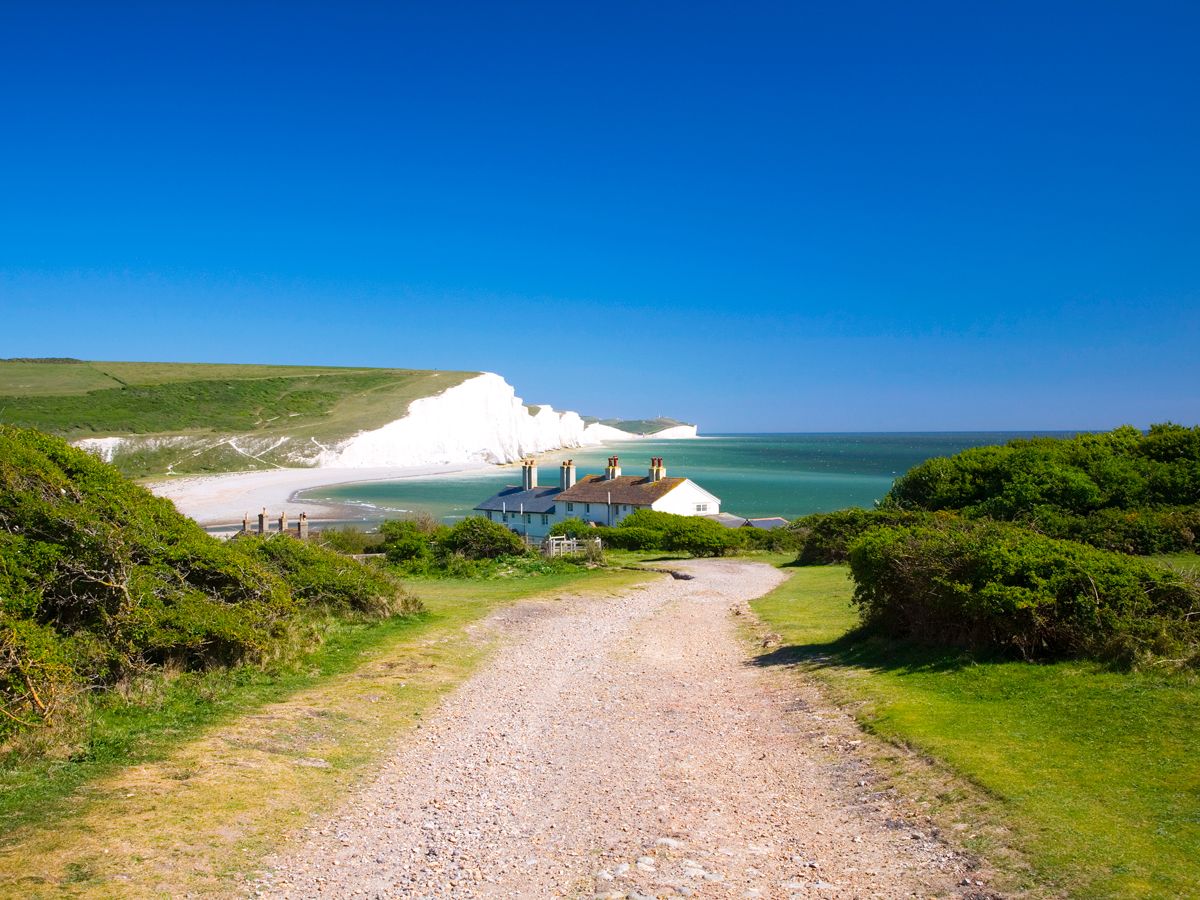
Tied with Finland in the report is the United Kingdom, which also scored 7.09 out of 10 for overall road safety. That’s good news for road trippers, as the U.K. is home to over 6,000 villages and small communities spread throughout England, Northern Ireland, Scotland, and Wales. Renting a car is a great way to see many of them during your trip, while also enjoying the famous scenery of areas such as England’s Lake District or the Scottish Highlands. 
5. Spain

City street in Valencia, Spain
Credit: Alexander Spatari/ Moment via Getty Images 

Spain ranks as the fifth-safest country in the world for road trips. Covering nearly 200,000 square miles, the European nation is almost as big as the state of Texas, so there are countless routes waiting to be explored. But once you’re done driving, consider turning in the rental car and spending some time wandering Spain’s charming cities on foot. Madrid is ranked one of the friendliest cities in the world, while Barcelona is transforming its cityscape with pedestrian-friendly “superblocks.” 

3. Estonia (tie)

View of Old Tallinn, Estonia, through medieval Viru Gate
Credit: walencienne/ iStock via Getty Images Plus 

Compared with Spain, Estonia is downright tiny, covering less than 18,000 square miles. But with fewer crowds than its bigger neighbors, this lesser-known nation is a hidden gem, with many charming seaside villages along the Baltic to get lost in. The good news is that you probably won’t get stuck in much traffic, as Estonia has some of the lowest traffic levels on the list.

3. Sweden (tie)

Aerial view of rooftops and church towers of Gothenburg, Sweden
Credit: xbrchx/ iStock via Getty Images Plus 

Located just across the Baltic Sea from Estonia, Sweden tied its neighbor for road safety with a score of 7.42 out of 10. This Scandinavian country isn’t just a safe bet for road trippers — it’s also one of the most eco-friendly travel destinations on the planet. Sweden has a robust infrastructure for electric vehicles, and the country is even planning to build the world’s first road that charges them as they drive. 

2. Norway

Aerial view of the Atlantic Ocean Road in Norway
Credit: © Marco Bottigelli/ Moment via Getty Images 

Norway is the land of fjords — there are about 1,700 of them — and a road trip is a great way to explore these glacier-carved sea inlets framed by steep cliffs. Fortunately, Norway has some of the safest roads on the planet, with just 2.12 traffic deaths per 100,000 people and low speed limits that encourage safer driving. If you find yourself in the northern Lofoten archipelago, be sure to stop by the small village that’s famous for its short name. In fact, it’s just a single letter — Å — pronounced like the “o” in “born.”

1. The Netherlands

Cobblestone bridge lined with traditional dutch homes in Amsterdam, the Netherlands
Credit: George Pachantouris/ Moment via Getty Images 

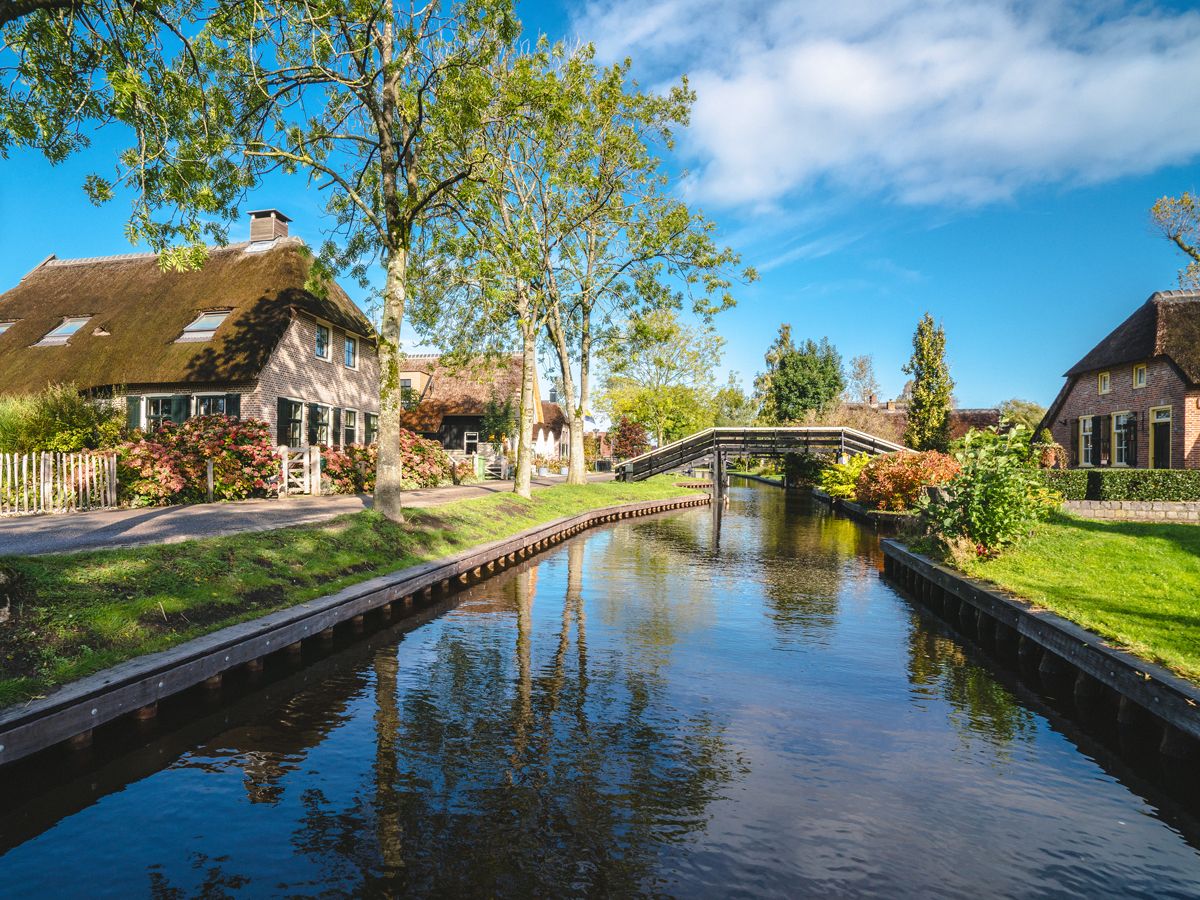
The country with the safest roads is the Netherlands, and there are several good reasons for that. The Netherlands scored top marks for road quality — higher than any other country on this list — and it has a high proportion of seat belt users and low traffic levels. The lack of congestion is helped by the fact that the Netherlands is one of the most bicycle-friendly nations in the world, with an average of 1.74 bikes per person in this country of 17.6 million. And the Netherlands’ biggest city, Amsterdam, is not only a major draw for tourists, but also one of the best-planned cities in the world.

Post Banner Image
History

7 Can’t-Miss Historic Sites Along the Underground Railroad

By Jersey Griggs
Read time: 6 minutes
August 20, 2024
Updated: August 20, 2024

7 Can’t-Miss Historic Sites Along the Underground Railroad

By Jersey Griggs
Author
Jersey Griggs
Jersey is a travel and lifestyle writer whose work has appeared in publications such as Condé Nast Traveler, Business Insider, and Bust. When she’s not exploring her adopted home state of Maine, she’s likely planning her next big trip.

In the decades leading up to the Civil War, the Underground Railroad — a network of people, places, and routes leading from the South to the free states in the North — allowed for an estimated 100,000 people to escape the bondage of slavery. As their work was illegal at the time, members of the Underground Railroad used a coded language to shroud their activity, referring to the runaway enslaved people as “passengers,” and the people who housed them as “station masters.” Station masters throughout the North operated discreet rescue missions by opening their homes as safe havens for passengers on the journey to freedom. Today, the following seven historic sites from the Underground Railroad tell the story of the station masters who helped to ensure the safe passage of thousands of people seeking freedom, making them an essential visit for any U.S. history buff.

Harriet Tubman National Historical Park – Auburn, New York

Brick home at Harriet Tubman National Historical Park in Auburn, New York
Credit: Zack Frank/ Shutterstock 

Harriet Tubman National Historical Park encompasses Tubman’s former house and church in Auburn, located in the Finger Lakes region of upstate New York. The historic site also features the Harriet Tubman Home for Aged and Indigent Negroes, which Tubman started to help elderly members of her community, and where she passed away in 1913. In the pre-Civil War era, Auburn was the perfect choice for Harriet Tubman’s permanent home after she escaped slavery herself. Not only did the upstate hamlet have a strong abolitionist community, but it also served as a secret nexus for the Underground Railroad. 

Arguably the most famous conductor of the Underground Railroad, Tubman worked tirelessly to free enslaved African Americans from bondage. In the space of 10 years, she personally rescued about 70 people, including several members of her own family, and led many to Canada, where slavery was illegal. Today, the Harriet Tubman National Historical Park offers educational programs and exhibits about Tubman’s life and her crucial work as a freedom fighter.

Seward House – Auburn, New York

Exterior of the Seward House historic site from the Underground Railroad in Auburn, New York
Credit: Zack Frank/ Shutterstock 

William H. Seward was a fellow resident of Auburn, a longtime friend of Harriet Tubman, and an active conductor on the Underground Railroad. A wealthy and prominent politician, Seward engaged in several illegal acts to personally help Tubman, including selling her home in Auburn and housing Tubman’s niece after her niece escaped to the North.

A regular station on the Underground Railroad, Seward House has been turned into a museum that showcases the lives of the Seward family and the work of the Underground Railroad. The house’s location in central New York was ideal, as it bordered Canada. At their home, Seward and his wife Francis often provided shelter, food, and assistance to people escaping slavery, using a room above the woodshed as a secret dormitory to house freedom seekers. 

Plymouth Church of the Pilgrims – Brooklyn, New York

Statue in front of Plymouth Church of the Pilgrims in Brooklyn, New York
Credit: Nikreates/ Alamy Stock Photo

Nicknamed the “Grand Central Depot” of the Underground Railroad, Brooklyn’s Plymouth Church of the Pilgrims was a highly frequented station in New York City. Using the church’s basement to hide passengers, station masters provided food, shelter, and assistance for escaped enslaved peoples, serving as a welcome safe haven for over a decade leading up to the Civil War.

The church’s leader was Henry Ward Beecher, who was the brother of Harriet Beecher Stowe, the author who penned the influential 1852 antislavery book Uncle Tom’s Cabin. As the church’s pastor for 40 years during the height of slavery, Beecher, a staunch abolitionist, worked endlessly to condemn the practice, often preaching its evils from his pulpit in Brooklyn.

John Rankin House – Ripley, Ohio

Steps leading uphill to the John Rankin House in Ripley, Ohio
Credit: Jordan Gast/ Alamy Stock Photo

Unassuming as it may be, the John Rankin House was a prominent station on the Underground Railroad in southern Ohio. Located directly across the Ohio River from Kentucky, a slave state, the home was the first stop in a free state for many passengers. A committed abolitionist, Rankin routinely opened his home to passengers and was responsible for helping approximately 2,000 people escape to freedom. 

Rankin devised a system to communicate with runaways from a distance. By placing a lantern in the window, Rankin indicated the river was safe to cross, allowing passengers to use the light as a beacon to access his home. In addition to housing, feeding, and clothing freedom seekers, Rankin coordinated with other station masters farther north to personally ensure the safe passage of thousands of people.

John Brown Farm and Gravesite – Lake Placid, New York

Overview of John Brown Farm and Gravesite in Lake Placid, New York
Credit: Randy Duchaine/ Alamy Stock Photo

John Brown was a prominent abolitionist who aided passengers on the Underground Railroad by opening his home and other properties to runaways seeking refuge on the journey north. Located in Lake Placid, the John Brown Farm State Historic Site commemorates and honors Brown, who fought against the institution of slavery throughout his life.

In addition to organizing the League of Gileadites, a secret organization that attempted to protect runaways from the so-called “slave catchers” who pursued them, Brown also played an integral role in the Harper’s Ferry Raid of 1859. The purpose of the raid was to inspire a revolt by appropriating and distributing weapons to enslaved peoples. Unfortunately, Brown was captured and later executed during the raid. He was buried at his home and future historic site in upstate New York.

Dr. Nathan Thomas House – Schoolcraft, Michigan

White picket fence in front of Dr. Nathan Thomas House in Schoolcraft, Michigan
Credit: Jim Roberts/ Wikimedia 

Dr. Nathan Thomas and his wife, Pamela, were some of the most active members of the Underground Railroad in Michigan. As members of the Quaker faith, a staunchly antislavery religion, the pair were firmly rooted in the abolitionist movement. Their home in Schoolcraft was a busy stop for passengers fleeing the South for the safety of Canada, and it is believed they housed at least 1,000 formerly enslaved peoples over the course of 20 years. 

As a physician, Nathan was uniquely suited to help passengers on their journey north, providing aid and medical care, while Pamela took care of logistics. All the while, the two were forced to act under the utmost secrecy, in order to secure the safety of the passengers in their care. Their home, the Dr. Nathan Thomas House, has since been designated as a historic site by the National Register of Historic Places.

Gerrit Smith Estate National Historic Landmark – Peterboro, New York

Brick home surrounded by snowy landscape at Gerrit Smith Estate National Historic Landmark in Peterboro, New York
Credit: Sandra Foyt/ Alamy Stock Photo

After assuming a great amount of wealth in the fur trade, Gerrit Smith became the richest landowner in New York state during the mid-19th century. In the years after making his fortune, Smith dedicated his time and money to support the abolitionist movement. He gave away parcels of land in order to help freed Black families become self-sufficient in the North and often purchased enslaved peoples directly from enslavers in order to free them. 

A vocal advocate against the evils of slavery, Smith worked closely with Frederick Douglass and John Brown, offering his estate to host meetings and gatherings associated with the abolitionist movement. The Gerrit Smith Estate in upstate New York is now a National Historic Landmark and remains open to the public, with several historical events held during the summer.

Post Banner Image
Architecture

6 of the Steepest Streets on the Planet

By Daily Passport Team
Read time: 5 minutes
August 20, 2024
Updated: August 20, 2024

6 of the Steepest Streets on the Planet

By Daily Passport Team
Author
Daily Passport Team
Daily Passport writers have been seen in publications such as National Geographic, Food & Wine, CBC, Condé Nast Traveler, and Business Insider. They're passionate about uncovering unique destinations and sharing expert tips with curious travelers.

While many roads and streets around the planet follow a predictable path, others take a much more adventurous route. From the South Island of New Zealand to the northwest coast of Wales, there are some streets with slopes that are built at dizzying gradients — a figure calculated by dividing the vertical height of a street by its horizontal distance. Can you brave six of the steepest streets on the planet? Find out below.

Lombard Street – San Francisco, California

Aerial view of cars winding down Lombard Street in San Francisco, California
Credit: DianeBentleyRaymond/ iStock via Getty Images Plus 

As one of the hilliest cities in the world, San Francisco is known for its steep streets. However, the steepest among them — a portion of Bradford Street in the Bernal Heights neighborhood — isn’t the city’s most famous stretch. That honor surely belongs to Lombard Street. More than 2 million tourists each year flock here to see the so-called “Crookedest Street in the World” — not to mention the many film and TV productions that have filmed on it, including, aptly, Alfred Hitchcock’s 1958 thriller Vertigo.

The eight rapid-succession hairpin turns on the one-way block between Leavenworth and Hyde Streets make for a dizzying drive down the street’s 27% gradient. The bends were installed in 1922 to make a too-steep roadway navigable by newly popular automobiles, but nearly a century later, the switchbacks now face a potential new challenge. All those visitors tend to create traffic backups and daily nuisances for the residents of Russian Hill, so this stretch of Lombard Street may soon require a reservation. Pedestrians who opt instead for the pretty flower-flanked path alongside the road would almost certainly be exempt — and as always, rewarded with leisurely photo-taking opportunities from top to bottom.

Eldred Street – Los Angeles, California

Homes along Eldred Street in Los Angeles, California
Credit: Vince Compagnone/ Los Angeles Times via Getty Images 

Given the city’s reputation, you’d be forgiven for thinking San Francisco is home to the steepest street in California. But you’d be mistaken. Eldred Street, located in the Highland Park neighborhood of Los Angeles, boasts a 33.3% grade that extends for more than 400 feet. The stretch was built back in 1912, before the city instituted a maximum 15% grade for new streets. In fact, Eldred Street is one of several super-steep L.A. streets to be built before the restrictions, along with 28th Street in the San Pedro neighborhood and Fargo Street in Silver Lake (home to a popular annual climbing challenge). 

As a consequence of its steep grade, those who live on Eldred Street won’t get mail delivered to their mailboxes — instead, the Postal Service uses a special P.O. box at the bottom where residents collect their mail. The city’s waste management service also employs special garbage trucks to serve the notoriously steep street. 

Ffordd Pen Llech – Harlech, Wales

Ffordd Pen Llech, one of the world's steepest streets, in Harlech, Wales
Credit: Alister Firth/ Alamy Stock Photo

The Wales Coast Path, which extends for 870 miles around southwest Great Britain, opened in 2012 as the world’s first coastal path to follow the entire length of a country’s coastline. Those who traverse its length will encounter gorgeous coastal scenery, historic architecture, and notable landmarks along the way, including the U.K.’s smallest city — St. David’s — as well as its steepest street: Ffordd Pen Llech.

Found in the town of Harlech, located in the northwest corner of Wales within Snowdonia National Park, Ffordd Pen Llech has a gradient of 26.8%, according to Guinness World Records. The street is believed to be more than 1,000 years old and is one of several historic attractions in this charming village, which is also home to a 13th-century castle built by Edward I.

Baldwin Street – Dunedin, New Zealand

House alongside steep gradient of Baldwin Street in Dunedin, New Zealand
Credit: Adwo/ Shutterstock 

In 2019, Guinness World Records named the aforementioned Ffordd Pen Llech in Wales the world’s steepest street. The move was considered a bit of an upset, as Ffordd Pen Llech took over the title from the previous record holder, Baldwin Street in Dunedin, New Zealand. But local officials in New Zealand weren’t going to give it up without a fight. After arguing that the claimed gradient for Ffordd Pen Llech (37.45%) was inaccurate, Guinness sent a team to reassess the two streets, and Baldwin took back its title in 2020. 

Today, many visitors still flock to Baldwin Street to gaze at slanted-roofed homes that appear ready to careen down the asphalt, set at a gradient of 34.8%. Pronounced “done-Eden,” this South Island city sits on a harbor and peninsula belonging to an extinct shield volcano that erupted between 16 million and 10 million years ago. Aside from its record-holding street, Dunedin is also home to New Zealand’s oldest university and its only castle

Canton Avenue – Pittsburgh, Pennsylvania 

Person walking up Canton Avenue in Pittsburgh, Pennsylvania, one of the world's steepest streets
Credit: James Hackland/ Alamy Stock Photo

Though “avenue” might be overstating the case for something that stretches only about a tenth of a mile, what this quaint, cobbled roadway lacks in length, it more than makes up for in gradient. Located in the Beechview neighborhood of Pittsburgh, Canton Avenue reaches a maximum gradient of 37% — though, like Ffordd Pen Llech and Baldwin Street, this figure has been the subject of debate. Some authorities, including Google Earth, put Canton Avenue’s figure closer to 30%.

Nonetheless, Canton’s incline has been taken as a challenge by everyone from cyclists to runners, who routinely participate in events here. But when a pro race car driver took on the famously steep road during the 2016 Quattro Challenge staged by Audi and Redbull, the result was one of the most memorable car commercials ever — with a skier, biker, and snowboarder barreling down the hill alongside the car.

Waipio Valley Road – Hawaii

Road hugging lush cliffside in Hawaii
Credit: Mark van Dam/ Shutterstock 

Though it doesn’t hold the official Guinness record, Waipio Valley Road on Hawaii’s Big Island might be the steepest street on this list. Though the road’s average gradient is about 25%, some sources have put its maximum grade closer to 40%. The tightly twisting, adrenaline-inducing roadway descends about 900 feet in less than a mile, into a sacred place known in Hawaiian culture as the “Valley of Kings.” It’s where centuries of Hawaiian rulers once lived before the arrival of Europeans in the 18th century.

Unfortunately, if you’re looking to experience the thrill of driving Waipio Valley Road today, you’re out of luck: The road has been closed to nonresident traffic since 2022 due to potentially hazardous conditions, and as of mid-2024, there’s no word of a reopening date. 

Post Banner Image
Tips

The Secret Language of Airline Pilots

By Bennett Kleinman
Read time: 5 minutes
August 20, 2024
Updated: August 20, 2024

The Secret Language of Airline Pilots

By Bennett Kleinman
Author
Bennett Kleinman
Bennett is a New York City-based staff writer for Daily Passport. He previously contributed to television programs such as the Late Show With David Letterman, as well as digital publications like the Onion. Bennett has traveled to 48 U.S. states and all 30 Major League Baseball stadiums.

Ever eavesdropped on airline pilots chatting away? You may have heard them say the word “Zulu,” refer to someone named “George,” or even use an expression like “flying dirty.” Though these terms may sound unfamiliar to the untrained ear, they’re all part of a coded language that pilots use to communicate in a discreet yet effective manner, much like flight attendants do. Here are some popular terms that make up the “secret” language of airline pilots.

Deadhead

View of single-aisle aircraft cabin from back to front
Credit: EllenMoran/ E+ via Getty Images 

The term “deadhead” doesn’t necessarily mean that the pilot is a Grateful Dead fan. Instead, it refers to the practice of “deadheading,” where off-duty crew members use empty seats on a commercial aircraft. If a pilot says there are deadheads aboard, that means there are employees on the flight who are treated like passengers, but are getting paid to reposition to or from another airport for active duty. In some instances, these employees can bump paid passengers from their seats, though those circumstances are rare.

Zulu Time

Flight attendant standing in aircraft cabin checking watch
Credit: Yaroslav Astakhov/ iStock via Getty Images Plus 

“Zulu” is a term that pilots use for Greenwich Mean Time, the universal time zone measured by the Royal Observatory in London. Aircraft around the world use Zulu time to coordinate with other pilots and air traffic controllers, as things would get too confusing if every plane communicated using whatever time zone they were currently flying through. That said, pilots generally use the destination’s time zone when speaking over the PA to passengers.

Air Pocket

Passengers fastening seatbelts in airplane row
Credit: urbazon/ E+ via Getty Images 

“Air pocket” refers to a change in wind current or air pressure that often creates a bumpy and somewhat tumultuous journey. In other words, it’s turbulence. Some pilots may use the term “air pocket” because it sounds less ominous than “turbulence,” and is thus less likely to induce panic among passengers.

George

Pilot adjusting instruments in aircraft cockpit
Credit: Portra/ E+ via Getty Images 

When pilots refer to someone named “George,” they aren’t actually talking about a human. Instead, they’re using a lighthearted nickname for the aircraft’s autopilot system. Pilots often turn on “George” when they’re at cruising altitude in the middle of a long-haul flight.

Boredom Tube

Passenger wearing headphones sleeping in window seat of airplane
Credit: SDI Productions/ E+ via Getty Images 

Those long-haul flights can be boring for passengers, and the crew isn’t immune to that feeling, either. In fact, some pilots humorously refer to the airplane cabin as the “boredom tube,” especially on those long-haul journeys where they’re cooped up in the cockpit for hours on end. But just because pilots use the term doesn’t mean they’re taking their job any less seriously — they’re just expressing one of the more mundane aspects of air travel in a lighthearted way.

Flying Dirty

Aircraft flying above clouds
Credit: © Philippe LEJEANVRE/ Moment via Getty Images 

While in the air, airplanes “fly clean” in order to optimize their aerodynamic performance. This means pulling up the landing gear and flaps after takeoff. “Flying dirty” is a phrase that comes into play just before landing, referring to when pilots lower the landing gear and flaps. This process helps slow down the aircraft as it descends toward the runway.

Tree, Fife, and Niner

Pilot in cockpit making announcement over PA
Credit: Juan Silva/ The Image Bank via Getty Images 

Conveying numbers over the radio can get confusing, whether you’re talking about the runway or the tail number of a plane. In order to cut back on this confusion, pilots use alternative words for numbers that may sound alike. For instance, pilots say “fife” instead of “five” and “niner” in place of “nine.” “Three” is also commonly swapped out for “tree,” as the lack of an “h” sound makes it easier to pronounce for non-English speakers.

Chop

View of single-aisle aircraft cabin from back to front
Credit: AwaylGl/ iStock via Getty Images Plus

“Chop” is a word used to convey low levels of turbulence, much like choppy waves in the water. Those smaller waves are far more navigable than large waves that crash into the side of the boat. The same goes in the air, where a “choppy” atmosphere is a lot less disruptive for passengers to fly through than intense turbulence.

Souls

Aircraft on final approach to runway
Credit: dima_sidelnikov/ iStock via Getty Images Plus

Pilots use “souls” to refer to every living body aboard the aircraft. This includes passengers, crew members, and in some instances, registered pets located throughout the cabin and cargo hold. This term is primarily used during emergency situations, as the pilot alerts rescue crews about the total number of souls to search for in the event that things go awry.

Pan-Pan

Pilot in cockpit using headset to communicate with air traffic control
Credit: Portra/ E+ via Getty Images 

“Pan-pan” is another rare term related to emergency situations. Essentially, it’s a synonym for telling everyone in earshot to “shut up and listen.” This term is mainly reserved for communication between pilots and air traffic controllers to convey a potential emergency. For instance, pilots may use the term if there is an issue with the engines and they’re requesting an emergency landing.

Keep the Blue Side Up

Flight crew walking across tarmac with suitcases to aircraft
Credit: Svitlana Hulko/ iStock via Getty Images Plus 

You’ve heard the term “break a leg” for theatrical performances. Similarly, “keep the blue side up” is how most pilots wish each other well and convey a message of good luck. The term stems from instructions given to pilots who become disoriented and struggle to tell which way is up. By keeping the blue side up, you’re keeping the plane properly oriented with the sky still above you.

Post Banner Image
History

The Fascinating History of Route 66, America’s Most Famous Road

By Nicole Villeneuve
Read time: 5 minutes
August 20, 2024
Updated: August 20, 2024

The Fascinating History of Route 66, America’s Most Famous Road

By Nicole Villeneuve
Author
Nicole Villeneuve
Nicole is a writer and researcher with over 15 years of experience seeking out arts, culture, and lifestyle stories in places like remote northern Quebec and the unforgettable streets of Amsterdam. Her work has also appeared in PureWow, Brit + Co, AUX TV, and CBC.

Route 66 holds a special place in U.S. history. Stretching from the Midwest to Southern California, the iconic highway was one of the earliest of its kind, connecting a swath of cross-country landscapes and communities for the first time. Today, its significance extends beyond its function as just a road — the once-essential highway symbolizes an early 20th-century spirit of aspiration, opportunity, and an idealization of Americana. Discover the fascinating history of Route 66 and what makes it America’s most famous road.

Where It All Started

Route marker for Historic U.S. 66 in Arizona desert
Credit: BWBImages/ E+ via Getty Images 

Route 66’s early origins date back to the Federal Aid Highway Act of 1916, a funding initiative that set the stage for the country’s eventual national highway system. In 1926, America’s independent transportation trails were integrated into a unified numerical system, the United States Numbered Highway System, and Route 66 was officially established. Advertised as “the shortest, best, and most scenic route from Chicago through St. Louis to Los Angeles,” the highway was planned to traverse 2,400 miles through eight states and three time zones. Its path was plotted along a loose combination of existing local, state, and national roads, a strategic route chosen to connect rural regions to major cities across the country.

Route 66 wasn’t the country’s first major paved highway — the Lincoln Highway, stretching 3,000 miles between New York and San Francisco, predated Route 66 by over a decade  — but it was the first all-weather, year-round, fully paved highway. For a country growing increasingly infatuated with and reliant on the automobile, that made travel of all kinds more accessible.

An Instant Hit

Vintage gas station and cafe along Route 66 in the Mojave Desert of California
Credit: PATRICK T. FALLON/ AFP via Getty Images 

Upon its completion in the late 1930s, Route 66 quickly became a vital corridor. It helped farmers in rural communities more easily transport their grain and produce, and it was a shorter route through more temperate climates for transport trucks between the Midwest and the Pacific coast

The highway also served as a vital link for migrants heading west during the Great Depression and the Dust Bowl of the 1930s, when devastating dust storms ravaged crops in the country’s southern plains. While exact figures still remain a matter of debate, some estimates suggest upwards of 400,000 people sought refuge and new opportunities in California, many of whom were able to use Route 66. It was also a key military route. During World War II, equipment and personnel frequently traveled to bases in Missouri, New Mexico, Arizona, and California, all of which were established on or near Route 66.

Mythology Is Born

Route 66 marking on highway through Mojave Desert in California
Credit: trekandshoot/ Alamy Stock Photo

For all its useful purposes, Route 66 was more than a utilitarian throughway. In the prosperous postwar era, many Americans had affordable cars, paid vacation time, and reliable highways for the first time. They took to the road like never before, and for road-trippers in the 1950s and ’60s, Route 66 was the quickest path to the great American West that dominated their TV and movie screens. Yellowstone and the Grand Canyon were popular natural attractions, while Las Vegas and Los Angeles drew record numbers of people seeking sunshine and glamour. 

Following the route’s popularity surge, roadside diners, motels, and attractions began to spring up across the country. Although author John Steinbeck had already dubbed Route 66 “the Mother Road” in his 1939 novel The Grapes of Wrath, it was Jack Kerouac’s 1957 book On the Road that cemented a generation’s love of road trips. Route 66 became more than just a road — it became a symbol of American optimism and adventure. Its popularity soared through the 1950s and ’60s, thanks in part to its portrayal in literature and music, including Nat King Cole’s “(Get Your Kicks On) Route 66.” Route 66 even had an eponymous 1960s TV series that romanticized the idea of a cross-country trek along the storied highway.

Keeping History Alive

Empty two-lane stretch of historic Route 66 leading toward rock formations in Monument Valley, on the border of Arizona and Utah
Credit: jon chica parada/ iStock via Getty Images Plus 

By 1970, however, Route 66 was in decline. President Eisenhower, inspired by the efficiency of Germany’s Autobahn, had signed the Federal Aid Highway Act in 1956, and over the next decade, Route 66 underwent significant changes. Sections of the original road were gradually upgraded, bypassed, or entirely replaced by new multilane highways designed for higher speeds and heavier traffic. Throughout the 1970s, the famed route was mostly replaced by a series of interstate highways. In 1984, after the completion of Interstate 40, Route 66 was officially decommissioned.

Many of the the mom-and-pop shops and motels that relied on the Mother Road’s traffic faded away, but a new nostalgic experience took over. Since it lost its official highway status, historic associations, local governments, and businesses have worked to safeguard Route 66’s legacy, preserving landmarks and restoring the beloved kitschy vintage signage that dots its path. Several segments of Route 66 are now listed on the National Register of Historic Places, while others, like New Mexico’s sun-drenched slice of the legendary road, have earned National Scenic Byway designations. 

Small towns along the route continue to celebrate their connection to Route 66 with festivals, museums, and annual events, ensuring that its legacy is preserved for future generations. Tourists along the famous trek are certainly less numerous than before, but now, the experience is all about quirkiness and nostalgia. For example, many flock to the Cadillac Ranch art installation in Amarillo, Texas, eager to leave their own mark on the graffiti-covered cars, while others visit some of the strip’s long-standing motels, such as the Wagon Wheel near Cuba, Missouri, or the Blue Swallow in Tucumcari, New Mexico. What these attractions lack in luxury, they more than make up for in atmosphere and history. 

Post Banner Image
Culture

6 Incredible Homes of Famous Artists You Can Visit

By Daily Passport Team
Read time: 6 minutes
August 20, 2024
Updated: August 22, 2024

6 Incredible Homes of Famous Artists You Can Visit

By Daily Passport Team
Author
Daily Passport Team
Daily Passport writers have been seen in publications such as National Geographic, Food & Wine, CBC, Condé Nast Traveler, and Business Insider. They're passionate about uncovering unique destinations and sharing expert tips with curious travelers.

Visiting an artist’s former residence sheds light on their creative process and the surroundings that inspired their most famous works, from novels to paintings, songs, and films. When visiting these museums, guests can peruse decades of artifacts and memorabilia — whether that’s Ernest Hemingway’s former typewriter or Elvis Presley’s first guitar — and learn more about their lives and legacy. Here are six incredible homes of famous artists you can visit across North America.

Hemingway Home and Museum – Key West, Florida

Brightly painted exterior of the Hemingway Home and Museum in Key West, Florida
Credit: Buddy Mays/ Corbis Historical via Getty Images 

After leaving Paris in the 1920s, Ernest Hemingway traded the City of Light for the palm trees of Key West and moved into this Spanish colonial mansion on Whitehead Street. Gifted to Hemingway by his second wife’s uncle, the house was where the American author wrote his 1929 novel A Farewell to Arms, along with parts of Death in the Afternoon and For Whom the Bell Tolls. And it was while living in this house that Hemingway took up a new obsession that he later became famous for: deep sea fishing.

Today, the house is open to the public and filled with Hemingway memorabilia, including his typewriter and some 60 cats — supposedly the descendants of Hemingway’s original feline friends. Also of note is Hemingway’s luxurious pool nestled among the tropical plantings — when he built it at enormous cost in the 1930s, it was the only residential in-ground swimming pool within a hundred miles. 

Elvis Presley Birthplace – Tupelo, Mississippi 

Humble white home where Elvis Presley once lived at the Elvis Presley Birthplace historic site
Credit: CRobertson/ iStock Editorial via Getty Images Plus

While Elvis Presley’s most famous residence is a Memphis mansion called Graceland — now a National Historic Landmark — the musician’s life began in a humble two-room shotgun house in Tupelo, Mississippi. Months before Presley’s January 1935 birth, his father, Vernon, built the house with relatives after securing a $180 loan. However, the Great Depression meant that the family could no longer afford to live there, and they moved out by the time the future superstar turned three. 

Today, the Elvis Presley Birthplace belongs to a 15-acre park that includes the Assembly of God Church — where the entertainer learned to love gospel music — a museum, and the Fountain of Life, where 13 upper and 29 lower waterspouts signify Presley’s years in Tupelo and Memphis, respectively. A bronze statue captures Presley toting his first guitar, a purchase his mother, Gladys, made at a Tupelo hardware store. Visitors flock to see the “X” where Presley stood when he first held the instrument that went on to change music history.

Frida Kahlo Museum – Mexico City, Mexico

Entrance to the cobalt blue Frida Kahlo Museum in Mexico City, Mexico
Credit: Dorling Kindersley ltd/ Alamy Stock Photo

As soon as you see the brilliant cobalt blue exterior of the Frida Kahlo Museum, you’ll understand why locals refer to it as “la Casa Azul” (the Blue House). The legendary Mexican artist grew up in the home built by her father in 1904, and later shared it with her equally influential artist husband Diego Rivera. After Kahlo’s death in 1954, Rivera donated the home and its contents, establishing what is now one of Mexico City’s most visited and treasured museums

The 10-room museum — which envelopes an airy courtyard decorated with lava rock, cacti, and tropical foliage — is located in the Colonia del Carmen area of the Coyoacán neighborhood. It features a handful of works by both Kahlo and Rivera, but mainly highlights their personal effects: her signature Tehauna-style dresses, the couple’s impressive collection of Mexican folk art, a great number of pre-Hispanic artifacts, and even Kahlo’s recipe for mole sauce. Kahlo and Rivera’s marriage was famously contentious, but the museum offers a fascinating peek at the lifestyle of two of Mexico’s most enduring artists.

Edgar Allan Poe House and Museum – Baltimore, Maryland

Colonial-style exterior of the Edgar Allan Poe House and Museum in Baltimore, Maryland
Credit: Traveler1116 RM/ Alamy Stock Photo

In 1941, the West Baltimore row home Edgar Allan Poe lived in from 1833 to 1835 was nearly demolished. The beloved author and poet occupied the house — a small, brick duplex with five rooms across 2.5 stories — with his aunt, grandmother, and two cousins when he was in his 20s. Though Poe resided there for only about two years, he wrote several stories and poems in the house before moving to Richmond, Virginia. 

Fortunately, the Edgar Allan Poe Society of Baltimore convinced the city to preserve the house, and after years of negotiations and renovations, it opened to the public in 1949 — just in time for the centennial of Poe’s death. Today, the well-maintained home, though unfurnished, features original horsehair plaster walls, brick fireplaces, and uneven wooden plank flooring. Inside, visitors can peruse a small collection of Poe ephemera, including his portable writing desk and his aunt’s china. The space also features various exhibitions and events that shed additional light on one of America’s most revolutionary storytellers. 

Georgia O’Keeffe Museum – Santa, Fe New Mexico 

Adobe exterior of the Georgia O'Keeffe Museum in Santa Fe, New Mexico
Credit: Wolfgang Kaehler/ LightRocket via Getty Images 

Famous for her depictions of flowers, animal skulls, and southwestern landscapes, 20th-century painter Georgia O’Keeffe was a trailblazer of American modernism. In the 1920s, she became the first female artist to make a splash in the art world of New York City. Her former residence lies on a 12-acre parcel of land in northern New Mexico. The entire 21,000-acre property was part of a dude ranch called Ghost Ranch when O’Keeffe bought her plot in 1940. 

Although you cannot get a tour of O’Keeffe’s home, you can still visit the Ghost Ranch, which today serves as a retreat center, offering horseback riding, classes, and tours. Her museum in Santa Fe displays over 3,000 of O’Keeffe’s works, including 140 oil paintings. O’Keeffe’s two homes in New Mexico are also maintained by the museum.

Jack London State Park – Glen Ellen, California 

Stone ruins of Jack London's former residence at Jack London State Historic Park in California
Credit: Purplexsu/ iStock via Getty Images Plus 

Known for novels like The Call of the Wild and White Fang, Jack London was one of the most successful American authors of the early 20th century and an outspoken social activist. London grew up in the Bay Area and didn’t look far when he wanted to build himself a bucolic escape later in life. Named Beauty Ranch, the impressive site was located just 60 miles north of San Francisco in the picturesque town of Glen Ellen, in the Sonoma Valley. London lived there until its death, and in 1959 the property was given to the state of California. 

More than 800 acres have been preserved as Jack London State Historic Park. On the grounds, visitors can tour London’s cottage, a second house which he used as a study to write in, and the ruins of a third — the “Wolf House” — which the London family had intended to move into before it tragically burned down.

Post Banner Image
Tips

Is It Rude To Recline Your Airplane Seat?

By Daily Passport Team
Read time: 5 minutes
August 16, 2024
Updated: September 16, 2025

Is It Rude To Recline Your Airplane Seat?

By Daily Passport Team
Author
Daily Passport Team
Daily Passport writers have been seen in publications such as National Geographic, Food & Wine, CBC, Condé Nast Traveler, and Business Insider. They're passionate about uncovering unique destinations and sharing expert tips with curious travelers.

Boarding a flight is the kickoff to a great vacation, but poor airplane etiquette can quickly ruin the experience. There are some unspoken rules when traveling 30,000 feet up — use headphones, don’t turn on the reading light during a red-eye, and so on — but there is one hotly debated topic that passengers can’t seem to agree on: seat reclining. Are you rude if you do it? Are you rude if you ask the person in front of you not to recline their seat? Flight attendants and travel experts have weighed in — check out their advice on the controversial topic below.

Disappearing Legroom

View of passenger's leg under airplane seat in front
Credit: Jaromir Chalabala/ Shutterstock 

It’s a fact: The space between airline seats is shrinking, as are the seats themselves. As passengers feel increasingly cramped on commercial flights, the debate over reclining continues to heat up. In a little over a decade, the average pitch (the distance between the back of one seat to the back of another) on airplanes has decreased by 4 inches. This reduced legroom allows airlines to fit more seats in the cabin, but it comes at a cost. Frustrated passengers can’t recline, move around, or sit as comfortably as they once did.

The Verdict: Should You Recline?

View of seatback entertainment screen on airplane
Credit: Burak Karademir/ Moment via Getty Images 

Aside from during takeoff and landing, reclining your airplane seat is always allowed — but whether you should recline is up for discussion. This gray area causes many in-air arguments, much to the dismay of weary flight attendants. “Besides lack of Wi-Fi or a broken entertainment system, flight attendants hear more complaints about reclined seats than anything else,” U.S. flight attendant and author Heather Poole says. Like many flight attendants, Poole acknowledges that passengers can technically recline their seats at any time (except during takeoff and landing, per FAA regulations) because it is part of the seat function they pay for. However, there are best practices to be courteous to others — and there are times when it may be inappropriate to recline.

Travel Channel host and travel expert Samantha Brown weighed in on the unspoken rules of airplane seating, explaining that reclining depends on the situation. “Do I recline? Yes and no.” She explained, “I do not recline if the trip is under three hours. Over three hours, I want to get comfortable. So yes, I am going to recline.” In addition to flight time, there are other important considerations when deciding to recline, including awareness of passengers around you.

Sara Nelson, International President of the Association of Flight Attendants-CWA, AFL-CIO, also shared her thoughts. Although she doesn’t recline while flying, she understands that many passengers do. “If you really want to do it, at least check behind you. Make sure you’re not going to be spilling somebody’s coffee on them,” she suggests. The takeaway from this expert advice reveals that reclining can be OK if you pay attention to your neighbors and surroundings.

Related: 26 Rules for Flying in 2026 Every Traveler Should Follow

Always Ask First

Passenger dozing off on airplane
Credit: izusek/ E+ via Getty Images 

As long as airline seats recline, passengers will recline them. However, there are ways to help ease the tension while reclining to ensure everyone is comfortable during the flight. One of the most common recommendations from flight attendants, etiquette experts, and travel gurus is to simply ask the passenger behind you before hitting that little silver button. This is particularly important during short flights or on small planes where people are less likely to expect you to recline. (On the contrary, it’s almost always expected that a passenger will recline on a long-haul or red-eye.)

If you get the green light from your neighbor, go ahead and recline, but do so slowly to avoid causing problems for the person behind you. Too often, an unlucky passenger has ended up with a lap full of ginger ale because the person in front of them lowered their seat too quickly. Avoid reclining during meal or drink services when other passengers will likely have their tray tables out and full. Not only does this cause spills, but many flight attendants have witnessed broken laptops, cracked tablets, and other unfortunate accidents from seats reclining without warning.

Flight Attendants Can Help

Passenger seating in window seat on airplane
Credit: Jaromir Chalabala/ Shutterstock 

If you and your neighbor disagree about reclining, ask for a flight attendant. After all, they’re trained to keep passengers safe and comfortable. For example, if you’d like to recline your seat on a long flight to help ease back pain, but the person behind you doesn’t want you to recline because they’re working on their laptop, you might need help fixing the situation. It’s possible that the flight attendant can move one of you to an empty seat to solve the issue. It’s never worth arguing with a fellow passenger, as is often seen in viral videos on social media.

The Bottom Line

Reclined seat on airplane
Credit: Slick Stock Images/ Alamy Stock Photo

Ultimately, your fellow passengers aren’t the problem — cramped airline seating is the culprit. So, try to be courteous and communicate calmly to solve problems. “Really, this isn’t a war on reclined seats. This is about space, and most airlines give you the option to purchase more space. So, remember that next time you’re searching for the cheapest flight,” Poole says. It might be worth shopping around for more space in an exit row or premium economy if this is important to you. Remember, there are no rules against reclining your seat (unless you are taking off or landing), so it is up to you to decide when it is appropriate for you and those behind you.

Post Banner Image
Outdoors

10 U.S. Cities With the Best Weather

By Rachel Gresh
Read time: 6 minutes
August 16, 2024
Updated: October 7, 2024

10 U.S. Cities With the Best Weather

By Rachel Gresh
Author
Rachel Gresh
Rachel is a Washington, D.C.–based travel and lifestyle writer with roots in the Great Lakes region. When she’s not writing for publications such as The Discoverer and Interesting Facts, you’ll find her wandering through museums or exploring destinations off the beaten path.

Weather can make or break a vacation. After all, it’s more fun to experience a new city on a sunny stroll than through a rain-covered taxi window. To find destinations likely to have idyllic blue skies, we collected weather data for major U.S. cities from the NOAA National Centers for Environmental Information to identify places with the mildest temperatures (between 60 and 80 degrees Fahrenheit) and sunniest days. Cities with the most days of cloud cover and hottest temperature extremes didn’t make the cut. When it comes to climate, these 10 U.S. destinations with the best weather always fit the bill.

10. Honolulu, Hawaii

Sandy beach with Honolulu, Hawaii, skyline behind
Credit: SCStock/ Shutterstock 

Hawaii’s capital ranks as one of the happiest cities in the U.S. — thanks in no small part to its beautiful year-round weather. Rich in cultural heritage, natural wonders, and sunshine, Honolulu has consistently mild temperatures, making it a favorite for outdoor adventures. The city’s average highs hover in the 80s throughout the year, and lows rarely drop below the mid-60s. And although the rainy season runs from October through April, enjoying a sunny day at world-famous Waikiki Beach or during a hike to Diamond Head — the 762-foot-tall volcanic crater that looms over the coast — is possible throughout the year.

9. Charlotte, North Carolina

Cityscape of Charlotte, North Carolina, with reflection in park pond
Credit: f11photo/ Shutterstock 

Catch a ball game or NASCAR race under blue skies in the Queen City, one of the mildest cities in the South. With its far inland location at the edge of the Blue Ridge Mountains, Charlotte boasts pleasant seasonal changes and lows that stay above freezing, making it one of the best major U.S. cities for enjoying the outdoors all year long. Head to the nearby 1,300-acre U.S. National Whitewater Center to experience one of Charlotte’s most popular outdoor adventures. 

8. Riverside, California

Aerial view of Spanish architecture in Riverside, California
Credit: DenisTangneyJr/ iStock via Getty Images Plus 

Riverside’s mild weather made it the birthplace of California’s citrus industry, but the city’s climate isn’t just great for fruits — Riverside residents enjoy year-round activities in the SoCal sun. Situated between Los Angeles and Palm Springs in the Inland Empire region, Riverside boasts family-friendly amusement parks, scenic hiking trails, and the California Citrus State Historic Park. The city does have some of the hottest summers on the list, with highs averaging in the 90s, but winters are some of the most pleasant, with lows in the 40s and highs in the upper 60s. 

7. Virginia Beach, Virginia

Waves crashing beside Virginia Beach boardwalk
Credit: DenisTangneyJr/ iStock via Getty Images Plus 

It’s almost always a good day to walk down Virginia Beach’s famous boardwalk, where you’ll find shops, vendors, live entertainment, special events, and a statue of Neptune standing watch over the popular tourist area. This quintessential beach town is the only spot on the Atlantic Coast to join the list of U.S. cities with the best weather. Although it experiences more temperature fluctuations than other cities, Virginia Beach’s average lows stay above freezing during winter, and summertime highs average in the upper 80s. Moderate precipitation and cloud cover make it a comfortable year-round destination for outdoor activities, including boating, fishing, camping, and swimming at Virginia Beach’s many beaches and state parks.

6. Atlanta, Georgia

Highway interchange with Atlanta high-rises in background
Credit: SeanPavonePhoto/ iStock via Getty Images Plus 

Whether you’re wandering through Centennial Olympic Park or heading to Zoo Atlanta, chances are it’s a beautiful day in Georgia’s capital city. According to NOAA’s data, Atlanta has the mildest climate of any major city in the eastern U.S., with over one-third of the year (141 days) ranging between a comfortable 60 and 80 degrees Fahrenheit. From exploring nearby hiking and biking trails to catching a Braves game on a warm summer evening, you’ll likely have the perfect weather for your outdoor activities in Atlanta.

5. San Jose, California

Aerial view of downtown San Jose, California
Credit: NicolasMcComber/ iStock via Getty Images Plus 

Silicon Valley’s largest city is no stranger to picturesque weather. Wintertime lows rarely fall below the 40s, and summertime highs stay in the mid-80s. Known for its cultural diversity, San Jose is home to year-round outdoor festivals celebrating food, music, art, and more — all under nearly constant sunny skies. The city’s Mediterranean climate provides perfect growing locations for vineyards, making San Jose a prime destination for winery tours in the Santa Cruz Mountains and Santa Clara Valley.

4. San Francisco, California

Victorian homes of San Francisco known as the "Painted Ladies," seen at sunset with skyline in background
Credit: Spondylolithesis/ E+ via Getty Images 

Whether taking a boat to Alcatraz Island or viewing the Golden Gate Bridge, you will likely have comfortable weather in San Francisco. This arts and culture hub in the Bay Area experiences some of the mildest temperatures in the country, consistently hovering between the 40s and 70s. Golden Gate Park is among the best places to take in the beautiful weather, with walking trails, botanical gardens, sports fields, and playgrounds for little ones. San Francisco was also named the best U.S. city for dogs in 2024, as 100% of residents have access to a park within 10 minutes of their home. 

3. Sacramento, California

Riverboat docked on Sacramento River with high-rise buildings behind
Credit: Davel5957/ iStock via Getty Images Plus 

California’s capital city has the fewest cloudy days on this list, boasting 3,608 hours of sunlight annually, which amounts to about 78% of daylight hours. This underrated capital city holds a historic gold rush past that is revealed in the Old Sacramento neighborhood, where visitors can explore the scenic waterfront along the Sacramento River. Home to family parks, a zoo, live music venues, and seasonal festivals such as the annual California State Fair, Sacramento has no shortage of outdoor activities to enjoy under sunny skies. 

2. San Diego, California

Red tram running through downtown San Diego, California
Credit: Sean Pavone/ iStock via Getty Images Plus 

California’s southernmost city boasts the mildest temperatures in the U.S., with 319 days a year falling between 60 and 80 degrees Fahrenheit. Like Sacramento, San Diego is also one of the sunniest cities in the country, boasting 3,055 hours of sun annually. Known for its beautiful sunsets, upscale seaside hotels, surfing beaches, sporting events, and city parks, San Diego has just about every outdoor activity that a city dweller could hope for. Adventure seekers need only look to the ocean for activities, from whale-watching cruises to kayaking with sea lions, all under typically clear skies.

1. Los Angeles, California

Fountain in front of Los Angeles City Hall in downtown Los Angeles, California
Credit: Mark Zhu/ Shutterstock 

In Los Angeles, visitors can experience the glitz and glam of the Hollywood lights accompanied by warm, mild evenings and splendidly sunny days. L.A. takes the top spot on the list of U.S. cities with the best weather by having slightly more days of sunshine than its southern neighbor San Diego. With wintertime lows in the 50s and summer highs in the upper 70s, L.A. is the ideal place for al fresco dining, shopping, beachgoing, sports, hiking, and many other outdoor adventures.