





Post Banner Image
Tips

Here’s What Flight Attendant Training Is Really Like

By Rachel Gresh
Read time: 5 minutes
December 23, 2025
Updated: December 23, 2025

Here’s What Flight Attendant Training Is Really Like

By Rachel Gresh
Author
Rachel Gresh
Rachel is a Washington, D.C.–based travel and lifestyle writer with roots in the Great Lakes region. When she’s not writing for publications such as The Discoverer and Interesting Facts, you’ll find her wandering through museums or exploring destinations off the beaten path.

Have you ever dreamed about turning your love of travel into a rewarding career? Or maybe you’ve wondered how flight attendants make their jobs look effortless while juggling safety requirements and customer service. Behind that calm confidence — and those awesome travel perks — is a training process that is far more rigorous and competitive than most travelers would imagine. To get the full picture, we went straight to the source: official U.S. airline training guides and firsthand accounts from U.S. flight attendants who’ve gone through the process. Here’s what flight attendant training is really like, from the moment you apply until the day you earn your certification.

Requirements To Become a Flight Attendant

Flight attendants performing beverage service in flight
Credit: CandyRetriever/ iStock via Getty Images Plus 

The requirements to apply to be a flight attendant vary, but most major U.S. airlines have a few nonnegotiables for candidates, including age- and education-based requirements. For instance, all applicants must have a high school diploma or GED equivalent and must possess a passport before applying. Fluency in English is required at U.S. airlines, and bilingual qualifications are often an asset. Effective communication skills in high-stress situations are also a must.

There are physical requirements, too, as flight attendants spend much of their time on their feet performing safety procedures and assisting passengers. United Airlines, for example, requires the ability to “stand, walk, kneel, bend, stoop, stretch, reach, and lift heavy objects,” as well as to push and pull a beverage cart weighing up to 250 pounds. Similarly, American Airlines specifies that “height and weight must allow for safe aircraft operation.” This includes the ability to sit in a jump seat and fasten the harness, and to navigate the cabin aisle and operate emergency exits.

The final major requirement is age. All airlines have age minimums for application, but these also vary. At United Airlines and Delta Air Lines, it’s 21 years, but at American Airlines and Southwest Airlines, it’s 20 years.

Initial Interview

Person writing in notebook
Credit: PeopleImages/ iStock via Getty Images Plus 

Though airlines have different hiring processes, in general, passing one or more interviews and obtaining a conditional job offer are required before the training process begins. Megan, an Orlando-based flight attendant we interviewed, shared that she was invited to a phone interview after applying online. 

The following month, she attended an in-person interview, after which she received a conditional job offer. “I say ‘conditional’ because I still had to pass flight attendant training,” she explained. For Megan, the entire process, from application through passing training, took about seven months. Other flight attendants we interviewed echoed similar experiences, with two or three rounds of interviews before they secured a training spot.

Rachael, a Pittsburgh-based flight attendant, explained that the interviews consist of practical questions and tests: “You have to pass a variety of tests that gauge your experience, personality, and how you handle stressful situations.” 

Training Overview

Flight attendants taking notes in training course
Credit: Iparraguirre Recio/ Moment via Getty Images 

Typically, flight attendant training begins a few weeks after the candidate receives a conditional job offer at the final interview. Kaitlyn, a Philadelphia-based flight attendant, explained that the company flies the candidate to a designated training facility, where they are paid for their time and given hotel accommodations. 

Megan, the Orlando-based flight attendant, shared that, while every airline does training a little differently, it generally ranges from three to eight weeks. She recalled an array of topics from her training: “flight regulations, evacuation drills, case scenarios, firefighting, CPR, trafficking, intoxicated passengers, security threats, and so much more!”

Delta Air Lines, for one, conducts its training at its headquarters in Atlanta, Georgia, in six-week sessions for new hires and shorter requalification sessions for current crew members. Casandra, a certified flight instructor and former Delta Air Lines flight attendant, detailed her experience in Delta’s training program in a series of online videos. Typical training hours are Monday through Friday for six hours a day, plus study time for exams and evening homework. Flight attendant candidates must put everything else on hold during training because it is a full-time job. 

Hands-On Experience

Flight attendant performing safety demonstration in aircraft aisle
Credit: Tunvarat Pruksachat/ Moment via Getty Images 

From the very beginning, flight attendants are trained to be prepared for the unexpected. The training process features classroom-style lectures, group work, and hands-on training in simulators and life-size model airplanes. For instance, during her first week, Casandra recalled sitting in on a mock emergency in which the cabin lost air pressure, while her instructors initiated emergency protocols. 

In each training module, flight attendants prepare for serious, albeit rare, events, such as medical emergencies, evacuations, and cabin depressurization. From smoky cabins to unconscious passengers, flight attendants learn to handle any situation with a calm, professional approach.

A notable component of flight attendant training is water-emergency-exit training, conducted in a swimming pool in the center. These simulations teach the crew how to use life vests, identify exits, escape the aircraft, and assist passengers in swimming to safety rafts, all while staying calm in a sinking plane. This builds muscle memory to help future flight attendants remain calm in high-stress situations.

Final Exam and Certification

Flight attendant closing aircraft overhead bin
Credit: yacobchuk/ iStock via Getty Images Plus 

Following training, candidates must complete an initial operating exam to showcase their new knowledge, which usually involves a combination of written assessments and practical, hands-on evaluations. The exam comprises all aspects of being a flight attendant, including safety, security, emergency procedures, equipment operation, general aviation knowledge, and customer service. 

Although requirements vary by airline, after passing the exam, the final step to becoming airline-ready is to receive a Certificate of Demonstrated Proficiency from the Federal Aviation Administration, which is issued after all requirements are met. New flight attendants then report to their initial base assignment, which is typically a major hub for the airline they work for. Then, their journey in the skies officially begins. 

Post Banner Image
Tips

10 U.S. Cities With the Highest Cost of Living

By Rachel Gresh
Read time: 5 minutes
December 22, 2025
Updated: December 22, 2025

10 U.S. Cities With the Highest Cost of Living

By Rachel Gresh
Author
Rachel Gresh
Rachel is a Washington, D.C.–based travel and lifestyle writer with roots in the Great Lakes region. When she’s not writing for publications such as The Discoverer and Interesting Facts, you’ll find her wandering through museums or exploring destinations off the beaten path.

Have you ever wondered which U.S. cities have the highest cost of living? Perhaps you’re considering a big move, or maybe you’re curious about a city you plan to visit. Even if you won’t be worrying about rent or property taxes when you visit, as a traveler, local cost of living is still an important consideration for dining out, getting around, and choosing things to do. To find America’s most expensive cities, we turned to Numbeo, a cost-of-living database, which analyzed over 60 major North American cities. These are the 10 U.S. cities with the highest cost of living, as of 2025.

10. Miami, Florida

Skyline of Miami, Florida
Credit: Cassanas/ iStock via Getty Images Plus 

Cost of living index: 74.9

Renowned for its palm-tree-lined beaches, luxury real estate, and vibrant nightlife, Miami is the most expensive major city in the Southeast. The cost of buying or renting a home in Miami is 55% above the Florida average, with a median home listing price of $625,000. Prices soar to more than $100 million in some neighborhoods, such as Fisher Island, once a winter escape of the Vanderbilt family. And the city’s dining scene, though expensive, is touted as one of the best in the country — there are 15 Michelin-starred restaurants in the greater Miami area. 

8. San Diego, California (tie)

Santa Fe Depot in San Diego, California
Credit: pawel.gaul/ E+ via Getty Images Plus 

Cost of living index: 76.3

This Southern California city makes up for its high cost of living with plenty of sun and surf. Ranked eighth in the nation for cost of living, San Diego was also recently named one of the country’s most expensive cities to retire to, with higher taxes, housing, and transportation among the biggest costs to consider. The most expensive neighborhood in San Diego is Hidden Valley, a community on the northern side of Mount Soledad in La Jolla, where the median home price is more than $4 million. But there is some relief: Health care and food costs in San Diego are slightly lower than the state average. 

8. Los Angeles, California (tie)

Pier and palm trees in Manhattan Beach, California
Credit: Dmitry Vinogradov/ iStock via Getty Images Plus 

Cost of living index: 76.3

Los Angeles is tied with its neighbor to the south as the eighth-most expensive city in the nation. As an international entertainment hub, the City of Angels attracts millions of visitors each year, but living in sunny SoCal full-time is expensive. Housing costs are 18% higher in Los Angeles than the state average in California — an already costly state. L.A.’s most expensive neighborhood in 2025 was the Hill Section of Manhattan Beach, with a median sale price of $9.4 million. The neighborhood is known for its scenic beach pier, brunch cafes, boutiques, and sprawling views of the Pacific Ocean.

7. Washington, D.C.

Street leading to U.S. Capitol in Washington, D.C.
Credit: f11photo/ iStock via Getty Images Plus 

Cost of living index: 82.5

Housing is a major contributor to high costs in the nation’s capital — not only is rent among the costliest in the nation, but so are purchase prices. The median home price in D.C. is $595,000, well over the national median of $424,200. However, there are ways to save in this pricey city. For instance, there’s plenty of free entertainment at the Smithsonian museums, home to exhibits on art, culture, history, aeronautics, and animals. The robust public transport system also helps reduce costs. 
Related: 14 of the Best Free Attractions in Major U.S. Cities

6. Boston, Massachusetts

Acorn Street in Boston, Massachusetts
Credit: joe daniel price/ Moment via Getty Images 

Cost of living index: 82.7

Boston is the most expensive city in New England. Beantown draws in visitors and new residents with its blend of rich colonial history and industries such as higher education, health care, financial services, and technology. However, the perks of excellent health care, charming neighborhoods, and big-city entertainment come at a cost. A recent report also ranked Boston as the most expensive city in the U.S. to raise a child, with an annual cost of nearly $40,000. 


5. San Jose, California

Hayes Mansion in San Jose, California
Credit: cwinegarden/ iStock via Getty Images Plus 

Cost of living index: 83.7

California’s Bay Area consistently ranks among the most expensive regions in the country. San Jose, situated on the southern shores of the San Francisco Bay, is the second-most expensive city in the area. Here, the median home price is a whopping $1.2 million — more than twice the national average. One of the most expensive estates in San Jose, the Hayes Mansion, was recently converted into a Hilton luxury hotel, with 20 acres of property to explore.

4. Seattle, Washington

Cityscape of Seattle, Washington
Credit: RyanCSlimakPhoto/ iStock via Getty Images Plus 

Cost of living index: 86.0

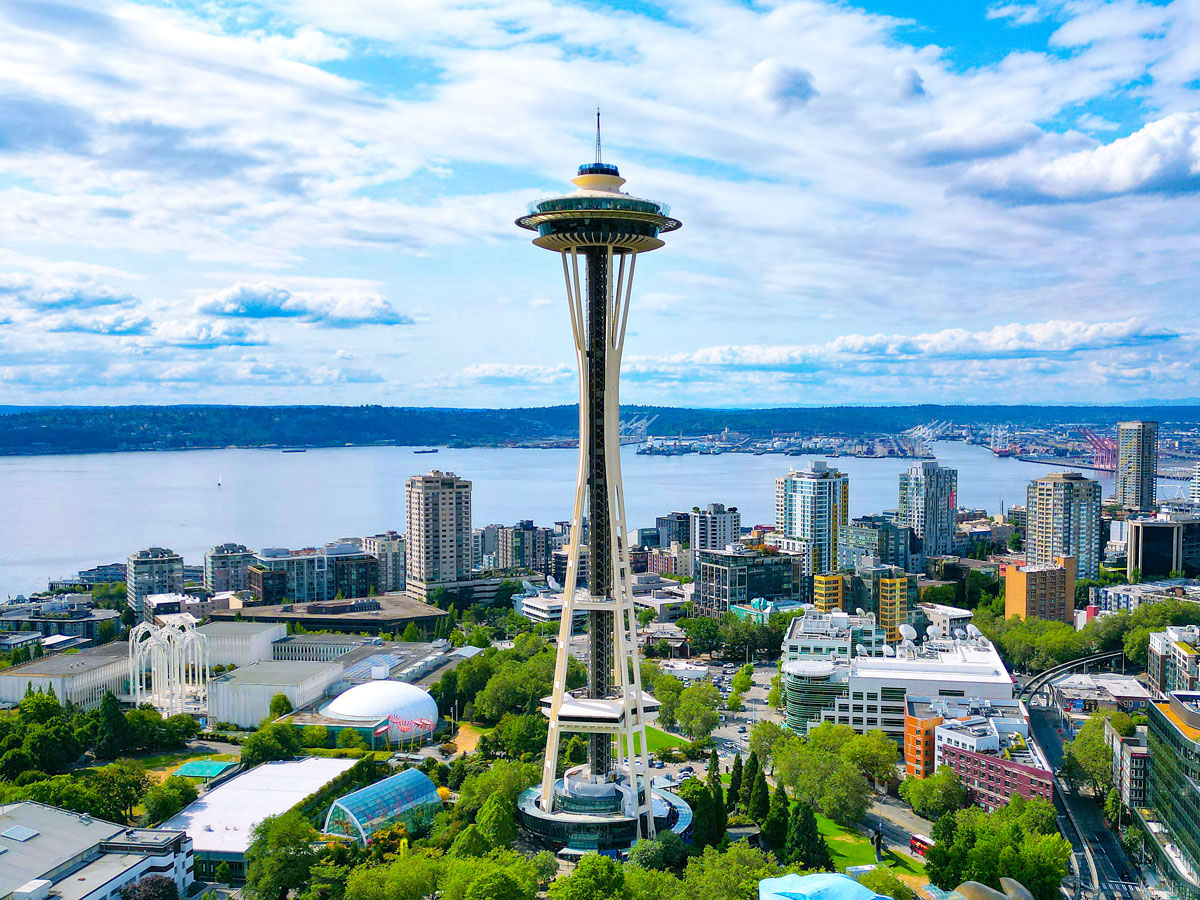
The median home price in Seattle recently jumped to $709,000, thanks to the city’s burgeoning tech industry, which has led to a limited supply of housing. However, while Seattleites endure high costs, there is plenty to love about the Emerald City, from historic markets like Pike Place to waterside attractions on the Puget Sound. 

3. San Francisco, California

The Painted Ladies, row of Victorian and Edwardian homes, in San Francisco, California
Credit: SerrNovik/ iStock via Getty Images Plus 

Cost of living index: 90.7

In San Francisco, housing is 29% more expensive than the state average, making it one of the costliest markets in the country. The median home price in San Francisco is $1.2 million, tying it with its Bay Area neighbor, San Jose. In 2022, one of the famous Painted Ladies — a row of colorful Victorian and Edwardian homes — sold for $3.55 million. More recently, the house from the sitcom Full House sold in April 2025 for $6 million. 

2. Honolulu, Hawaii

Waikiki Beach in Honolulu, Hawaii
Credit: ak_phuong/ Moment via Getty Images 

Cost of living index: 94.4

Honolulu is the second-most expensive city in the U.S., in part due to sky-high grocery prices. In fact, among the 400-plus global cities Numbeo analyzed in 2025, Honolulu’s groceries ranked as the most expensive in the world, mainly due to shipping costs and limited locally sourced food options. However, the median house price in Honolulu for the end of 2025 was $610,000, about half the cost of the median price in San Francisco. Visitors should also expect to pay extra for their beach vacation: A recent study found that Honolulu charges the highest tourist tax in the world, at 10.25%. 

Related: Which U.S. Cities and States Have the Highest Tourist Taxes?

1. New York, New York

Central Park and Manhattan skyline
Credit: Alexander Spatari/ Moment via Getty Images 

Cost of living index: 100.0

Home to more than 8 million residents, America’s most populous city is also its most expensive. The average rent in Manhattan is $5,632, well above the national average of $1,743. Restaurants in New York are also the most expensive of any major city in the country, but quality and quantity reign supreme in New York. As an international cuisine destination, the city boasts 72 Michelin-starred restaurants, dozens of James Beard Award-winning chefs, and unbeatable culinary diversity.

Post Banner Image
Tips

How Do Airlines Decide Which Routes To Fly?

By Michael Nordine
Read time: 4 minutes
December 22, 2025
Updated: December 22, 2025

How Do Airlines Decide Which Routes To Fly?

By Michael Nordine
Author
Michael Nordine
Michael is a staff writer for Daily Passport and film critic who writes the weekly newsletter Movie Brief. His writing and criticism have also appeared in the Los Angeles Times, Variety, and the Washington Post, among others. A native Angeleno, his favorite countries to visit are Norway and Japan.

Depending on how often you fly, and where most of your air travel is to and from, you may not have put much thought into airline routes. As with most else in the world of aviation, however, it’s both more complex and more fascinating than you might imagine. With increasingly frequent headlines about major carriers adding new routes, like the first nonstop service between Newark and Greenland or Alaska Airlines’ first-ever European flight, a question naturally arises: Just how do airlines decide which routes to fly, anyway? Let’s dive into the details.

Supply and Demand

Passengers in queue at airport
Credit: Vinh HN/ iStock via Getty Images Plus 

As you might imagine, airline route planning mostly comes down to money and efficiency. The reason so many airlines offer flights from Los Angeles to New York City, for example, is simple: Lots of people fly between the two most populous cities in the country, so there’s a smaller chance of empty planes that don’t generate any profit. If you need to get from Boise to Albany, meanwhile, you’re going to have fewer options — and none of them will be direct.

Let’s say an airline hypothetically decides that the latter two cities are on the cusp of becoming the next big thing, and that it’s time for a nonstop flight covering the roughly 2,500 miles between them. Beyond simply choosing to add a route, a number of other logistical concerns have to be addressed: How often should the flight operate? Daily, weekly, only on the weekends, or somewhere in between? What size aircraft should be used? (It’s better to fill a 100-seat plane than to leave a 300-seat plane half-empty.) What kind of traveler is most likely to fly between these two destinations, and which other airlines, if any, will be competing for their business?

You’re probably getting a sense of why so many potential routes never get off the ground. Even if a route is eventually launched, it could be suspended within months if it doesn’t generate enough revenue to make it worthwhile for the airline.

Hubs, Spokes, and Points

United Boeing 757 taking off at Los Angeles International Airport
Credit: Mario Tama via Getty Images News 

Any new passenger traffic needs to fit within a carrier’s existing framework. Experienced air travelers will be familiar with the concept of hubs, which are airports where a given airline concentrates a significant amount of its traffic as part of the hub-and-spoke model. 

This allows airlines to serve smaller cities that wouldn’t otherwise have much demand by feeding into larger hubs, where those passengers can connect to hundreds of other destinations. Denver and Houston are United hubs, for example, while Atlanta and Seattle serve as hubs for Delta, and Phoenix and Miami are hubs for American Airlines. (If you tend not to enjoy your time at LAX, it may be because it’s a hub for all three of those major airlines.)

But that isn’t the only model airlines use. There’s also the point-to-point approach, which is exactly what it sounds like: flying from one major city to another without a layover in between. This model is efficient for destinations that receive a lot of direct traffic, like Los Angeles to Tokyo or New York to London. 

Other Considerations

TV monitors above seats in airplane
Credit: Richard Drury/ DigitalVision via Getty Images 

None of these decisions is made at random. Airlines have entire teams devoted to planning new routes, many of them dedicated solely to international ones, and these teams don’t just work with other departments within the airline. Some cities’ tourism boards will lobby airlines directly in order to persuade them to begin flying direct service, sometimes going so far as to provide airlines subsidies or to spend their own money marketing the new route to boost travel.

If you’ve ever wondered why there’s seasonal service directly from Charleston, South Carolina, to London, for instance, it’s because the city’s Convention and Visitors Bureau took an active role in making it happen, in an effort to establish Charleston as an attractive destination for European travelers. So, the next time you look up at the departures board at the airport and see a surprising or unusual route, you’ll know just how much planning went into it. 

Post Banner Image
Culture

Gallery: What Famous Landmarks Look Like From Other Angles

By Nicole Villeneuve
Read time: 6 minutes
December 22, 2025
Updated: January 7, 2026

Gallery: What Famous Landmarks Look Like From Other Angles

By Nicole Villeneuve
Author
Nicole Villeneuve
Nicole is a writer and researcher with over 15 years of experience seeking out arts, culture, and lifestyle stories in places like remote northern Quebec and the unforgettable streets of Amsterdam. Her work has also appeared in PureWow, Brit + Co, AUX TV, and CBC.

Some landmarks around the world don’t need any introduction. They’re instantly recognizable from postcards or textbooks, framed and preserved from the same considered angles that made them so famous. But what if you took a different view? Move to the west or east, look up or down, and suddenly those familiar spots can look quite different. Often, these alternate perspectives reveal complex engineering or added context that visitors normally miss. Check out six famous landmarks seen from unusual angles, reminding us that even the most well-known places can still have surprises hidden in plain sight.

Golden Gate Bridge – San Francisco, California 

  • View underneath the Golden Gate Bridge in San Francisco
  • Golden Gate Bridge seen from beneath

From below, the Golden Gate Bridge feels less like a beautiful bridge and more like an enormous piece of machinery. The familiar framework becomes an impressive web of steel beams, rivets, and cross braces, all luminous in the structure’s distinctive shade of International Orange. Even still, the art deco geometry is unmistakable, and from a different perspective, its lattice, symmetry, and structural elegance can be appreciated in a whole new way.

The Golden Gate Bridge was completed in 1937 after just four years of construction. During the planning, the project’s chief engineer Joseph Strauss made sure to incorporate an arch at the south end of the bridge in order to preserve Fort Point, a Civil War-era fort that predates the bridge by more than 70 years. 

Today, underneath that arch, the historic site provides one of the best vantage points to see the underside of the landmark. For a more immersive experience, guided boat tours depart from Fisherman’s Wharf and pass directly underneath the heart of the bridge’s span, giving you a memorable view from the churning waters of the bay.

When your neck needs a break from gazing upward, take a look around for the wildlife who call the area home, including pelicans, sea lions, and, if you’re lucky, an occasional gray or humpback whale.

Great Sphinx of Giza – Egypt 

  • Great Sphinx of Giza in Egypt seen from behind
  • Side and rear view of the Great Sphinx of Giza

Seen from behind, the Great Sphinx of Giza loses the mystery in its famous face, but what it reveals may be even more striking: its sheer scale. Carved during Egypt’s fourth dynasty around 2500 BCE, the Sphinx is widely believed to represent the pharaoh Khafre, whose pyramid towers nearby. While the front of the Sphinx invites much myth and speculation, especially around its missing nose, the back will make you wonder why not as much is said about the massive tail that wraps around its right rear lion’s paw.

The tail — along with the powerful haunches, back paws, and torso — make up a big portion of the Sphinx’s 240-foot length. Not unlike the front, the rear shows significant weathering from thousands of years of desert winds and sandstorms — wear that would be even worse if not for substantial restorations and layers of limestone blocks added over the years. To take in this lesser-seen perspective yourself, walk the perimeter path around the Sphinx enclosure and face east. There, you’ll also see the nearby urban sprawl that belies images of the mighty Sphinx in the middle of an empty desert.

Eiffel Tower – Paris, France

  • View of iron lattice work inside Eiffel Tower looking down
  • View of Paris from within Eiffel Tower

The Eiffel Tower is a Parisian icon, known for its elegant iron frame and glittering nighttime lights. But venture inside and look straight down, and its engineering feats will take on a whole new meaning. There are layers upon layers of crisscrossed beams, exposed elevator shafts and all their required mechanisms, and platforms with people milling about like ants. It’s (quite literally) a dizzying display.

Completed in 1889, the Eiffel Tower was built with more than 18,000 iron pieces, held together by some 2.5 million rivets. From the inside, it certainly feels more mathematical than ornamental. The best way to take in all the nooks and crannies of the tower is to take the 327 stairs from the ground floor to the first floor and an additional 347 steps from there to the second floor. For many, the unique view is worth the climb,  and you’ll get stellar vistas of the Paris skyline and the wide-open patchwork of grass and walkways of the Champ de Mars.

Mount Rushmore – Keystone, South Dakota

  • Side view of Mount Rushmore with profile of George Washington
  • Mount Rushmore seen from side angle

The idea for Mount Rushmore began in 1923 as a tourism pitch, and just over a century later, over 2 million people visit the famous site in the Black Hills every year. Of course, the most familiar view is of the 60-foot faces of U.S. Presidents George Washington, Thomas Jefferson, Theodore Roosevelt, and Abraham Lincoln. Visitors typically view the national memorial after walking up the Avenue of Flags and following the Presidential Trail to various lookouts — or as a drive-by on the scenic Iron Mountain Road.

But there’s another way to see Mount Rushmore from a completely different perspective. From the side, George Washington’s profile remains intact, but as your eyes move behind his stone head, you’ll see the rough granite in its uncarved state, with jagged drop-offs and the geological layers that make up some of the oldest rocks in the western U.S. Luckily, this angle is easily accessible: Head west of the main monument on South Dakota Highway 244 and pull over in the designated spot for a unique profile peek.

Related: What’s Inside the Secret Chamber at Mount Rushmore?

Pyramids of Giza – Egypt

  • Pyramids of Giza seen beyond Cairo skyline at sunset
  • Skyline of Cairo, Egypt, on hazy day with Pyramids of Giza in distance

The three main Pyramids of Giza — Khufu, Khafre, and Menkaure — were built as symbols to eternity, and they’ve become just that, even if it’s not necessarily in the way their builders originally envisioned. The structures date back to Egypt’s Old Kingdom about 4,500 years ago, and time has certainly changed the pyramids’ surroundings. As Cairo expanded throughout the 20th century, modern skyscrapers shot up; now, city sightlines include the ancient structures, and the view is somewhat surreal.

On particularly hazy days, the pyramids can appear almost like distant mountains. But the illusion doesn’t last: At the edge of the Giza plateau are apartment complexes, busy tour buses, and even the glow of a Pizza Hut restaurant placed improbably across the street from the 4,500-year-old wonders. 

Stonehenge – Wiltshire, England 

  • Stonehenge in Wiltshire, England, seen from above
  • Aerial view of Stonehenge

Stonehenge began to take shape at least 5,000 years ago on Salisbury Plain, now part of Wiltshire, England. The prehistoric ruins have an air of mystique. Up close, the ring of massive standing stones, each around 13 feet tall, 7 feet wide, and weighing around 25 tons, feel inscrutable, but from the air, the pattern looks deliberate — a space shaped not only by the stones but by what surrounds them.

In aerial photos, Stonehenge is arranged in a clear design. The stones form deliberate patterns, aligned with and oriented toward the movement of the sun, most notably in the solstice lines that mark its rising and setting. This has led to theories that the site may have been a primitive observatory. Overheard views also show nearby burial mounds and ancient pathways, an important perspective that reveals Stonehenge may have been part of a carefully planned ceremonial landscape.

Related: The Fascinating, Mysterious Histories of 6 World-Famous Ruins
Post Banner Image
Tips

The Hotel Chains With the Highest (and Lowest) Resort Fees

By Bennett Kleinman
Read time: 4 minutes
December 22, 2025
Updated: December 22, 2025

The Hotel Chains With the Highest (and Lowest) Resort Fees

By Bennett Kleinman
Author
Bennett Kleinman
Bennett is a New York City-based staff writer for Daily Passport. He previously contributed to television programs such as the Late Show With David Letterman, as well as digital publications like the Onion. Bennett has traveled to 48 U.S. states and all 30 Major League Baseball stadiums.

Resort fees can be a major headache, especially if you’re trying to stick to a budget. By the time you finally reach the checkout page when booking a hotel, these extra fees can bring the total price much higher than first advertised. If you’re hoping not to bust your budget with resort fees or to avoid them altogether on your next trip, discover the major hotel chains that charge the highest — and lowest — resort fees, according to data provided by the personal finance blog NerdWallet.

What Are Resort Fees?

Resort guest riding bike on walkway leading to overwater bungalows
Credit: Mystockimages/ E+ via Getty Images 

Whether they’re called “resort fees,” “destination fees,” or “facility fees,” these additional charges are added to your bill to cover extra amenities a hotel may offer. They are calculated on a per-night basis and tacked onto the room’s base rate. According to NerdWallet’s analysis of more than 400 different hotels, the average resort fee in 2024 was $35. While this denoted a decrease from the prior year’s average of $38.82, it still meant that guests were paying an additional 8.1% per night to stay at any of the hotels that charge such fees.

When the first resort fees were introduced in 1997, they weren’t associated with price gouging quite like they are today. Back then, they were a way for world-class resorts to cover the cost of luxury perks that their clientele was likely to use — activities like snorkeling expeditions, bike rentals, the use of the tennis courts, and so on. But over time, hotel brands began charging these fees for basic amenities that many travelers would argue should already be included in the base rate — for example, Wi-Fi or gym access.

Perhaps what’s most frustrating about resort fees is that you’re almost always obligated to pay them, whether you use the perks or not. You may never rent a bicycle or use the gym, but you’ll still end up paying an additional $35 per night. This is why so many hotel guests seek out hotels that don’t levy a resort fee.

How Hotel Chains Compare

Bellagio fountain show in Las Vegas
Credit: apilarinos/ iStock Editorial via Getty Images Plus

When searching for hotels, it’s helpful to get an idea of how the major brands stack up when it comes to resort fees. According to NerdWallet’s analysis of major hotel brands, Hilton resorts levy the highest resort fees: 4.6%, or an average of $40 per night on top of the base rate. After Hilton is IHG (InterContinental Hotels Group), whose resort fees averaged 3% of the base rate, followed by Hyatt (2.7%) and Marriott (1.9%). The best was Wyndham, which charged an average of 0.7% of the room rate, six times less than Hilton’s 4.6%.

NerdWallet primarily analyzed large brands, which means it wasn’t all-encompassing. For example, there are dozens of independent Las Vegas-based hotels that impose substantial resort fees, too. NerdWallet notes how, in December 2024, the Luxor Hotel & Casino offered rooms for $25 a night with a $45 mandatory resort fee. In general, the fees in Vegas have jumped 11% from 2024 to 2025, so don’t be surprised if you end up paying an extra $50 to $55 per night at top-tier hotels such as the Aria or Bellagio.

How To Avoid Resort Fees

Hotel guest speaking to front desk employee
Credit: Zoran Zeremski/ iStock via Getty Images Plus 

The simplest way to avoid resort fees, of course, is to book a hotel that doesn’t charge them. Luckily, there are chains that forgo charging resort fees altogether. Some, such as Best Western and Choice Hotels, offer limited amenities in return. Others — such as Drury, Disney, and Ovolo — offer a high-end experience without any junk fees. 

If those hotels aren’t an option, there are a few other strategies you can employ. First, if you belong to a hotel chain’s loyalty program, consider booking with your points. Hilton Honors and World of Hyatt, for example, waive these fees completely on reward bookings. That’s not the case for all programs, though, so be sure to comb the checkout page carefully.

There’s also a chance you may be able to have the resort fee waived upon arrival. Speak to a hotel employee and (kindly) explain how you won’t be using any of their amenities. In some cases, the employee may be authorized to waive the fees. However, this is far more often the exception than the norm. If all else fails, it’s always worth your while to do a little research on what the resort fee covers and take advantage of those amenities — and hopefully feel a bit more that you’re getting your money’s worth. 

Post Banner Image
Culture

The 10 Most-Visited Counties in the World

By Bradley O'Neill
Read time: 7 minutes
December 22, 2025
Updated: December 22, 2025

The 10 Most-Visited Counties in the World

By Bradley O'Neill
Author
Bradley O'Neill
Bradley is an English travel writer who’s wandered through 50-plus countries and lived on four continents while chasing waves, the perfect pint, and family adventures. Bradley's work has appeared in publications such as Skyscanner and Matador Network, and he now splits his time between Buenos Aires and Uruguay.

The world saw 1.47 billion international tourist arrivals in 2024, an impressive 12.4% increase from the previous year. One pattern is clear: Over and over again, travelers return to lauded destinations, making sure that France’s chateau-dotted countryside, Japan’s lantern- and neon-lit streets, and Italy’s piazza-filled cities remain as popular as ever. Take a closer look at the world’s 10 most-visited countries, according to the U.N. World Tourism Organization’s latest available data from 2024. 

10. Greece

Clifftop monastery in Meteora, Greece
Credit: Thomas Roche/ Moment via Getty Images 

International tourist arrivals in 2024: 36 million

As the 10th-most-visited country in the world, Greece lures travelers with its fascinating blend of ancient landmarks, idyllic islands, and Mediterranean charm. Athens is a popular starting point for adventures in Greece; it’s where the Acropolis and Parthenon overlook streets buzzing with tavernas and local vendors. Beyond the capital, Meteora dazzles with clifftop monasteries, while Thessaloniki offers stunning beaches alongside Roman, Byzantine, and Ottoman landmarks. 

Many tourists come for the islands, of which there are around 6,000 in Greece (227 of which are inhabited). From the whitewashed buildings in the villages of Mykonos and Santorini to towns that mix history, nightlife, and watersports on Crete, travelers can’t go wrong with whichever island they choose. 

9. Japan

Arashiyama Bamboo Grove near Kyoto, Japan
Credit: Sergii Rudiuk/ iStock via Getty Images Plus 

International tourist arrivals in 2024: 36.9 million

In Japan, international tourist arrivals in 2024 rose by a whopping 47% from the previous year, the largest increase on this list. Much of the tourism boom was due to a weakened Japanese yen, which made discovering the country’s fascinating mix of ancient culture and modern lifestyles somewhat of a bargain for many travelers. 

Highlights in the Land of the Rising Sun include Honshu island’s bustling cities (like Tokyo and Osaka), mystical bamboo forests in Arashiyama, and Buddhist temples and Shinto shrines in Kyoto. Japan’s second-largest island, Hokkaido, invites visitors to discover world-class ski and hot spring resorts, while beach lovers can kick back along the tropical shorelines of the country’s southernmost island, Okinawa. 

Related: This Popular Destination Is Hiking Its Tourist Tax by up to 900%

8. Germany

Cobblestone streets and sidewalk cafes in Ravensburg, Germany
Credit: Kai Kottwitz/ iStock via Getty Images Plus 

International tourist arrivals in 2024: 37.5 million

Europe’s seventh-largest country by area, Germany packs in a huge variety of attractions. Travelers head to Berlin for its captivating history, world-class museums, and famous nightlife scene, and to Munich for its centuries-old Old Town and Oktoberfest. One city that flies under the radar as a cheaper alternative to the big hitters is Dresden, often called “Florence on the River” for its arts and architecture. 

Germany offers much more than historic cities, though. In the Rhine Gorge, mighty castles rise above half-timbered towns and steep vineyards. Meanwhile, the Black Forest offers hiking and skiing, and the North and Baltic Sea coastlines enchant visitors with their windswept beaches.

7. United Kingdom

Village of Warwickshire at sunset
Credit: AndyRoland/ iStock via Getty Images Plus 

International tourist arrivals in 2024: 42.6 million 

The U.K. is four countries in one, squeezed into an area around the same size as Wyoming. Visitors are drawn to its rolling hills and sprawling countryside, which spills down into picture-perfect villages, iconic cities, and dramatic coastlines. In 2024, the British Museum and the Natural History Museum in London each welcomed over 6 million visitors, placing them among the world’s most-visited museums

Other popular destinations in the U.K. include the cozy Cotswolds, the remote coastline of the Scottish Highlands, and the mountains of Wales. Literature enthusiasts can discover the life of Shakespeare in Stratford-upon-Avon or Jane Austen in Bath, while music fans can discover rock ’n’ roll heritage in Manchester and Liverpool. There’s ancient mythology to uncover, too, especially at Northern Ireland’s Giant’s Causeway and Scotland’s Loch Ness. 

6. Mexico

Metropolitan Cathedral in Mexico City, Mexico
Credit: stockcam/ E+ via Getty Images 

International tourist arrivals in 2024: 45 million

With 7.4% more tourist arrivals than the previous year, Mexico surpassed its pre-pandemic tourist numbers for the first time in 2024. It’s easy to see the appeal: Urban centers like Mexico City and Guadalajara channel centuries of history into world-class museums and food scenes that often influence global trends. 

Venturing outside Mexico’s cities, don’t miss the Pueblos Magicos (“Magic Towns”), a group of 177 towns and small cities recognized for retaining their authentic culture. Of course, Mexico’s beaches are spectacular, too — namely the white sands of Tulum and surf breaks of Puerto Escondido. And no visit is complete without seeing the Aztec pyramids of Teotihuacán and Maya ruins of Chichén Itzá.

5. Italy

Colorful clifftop buildings in Cinque Terre, Italy
Credit: serts/ E+ via Getty Images 

International tourist arrivals in 2024: 57.7 million

From the Alps to the Mediterranean, Italy is all about variety. See: the glacier-cut valleys of the Dolomites, the vineyards of Tuscany, and volcanic islands with thousands of years of history. Travelers from all over the world come for iconic sights like Rome’s Colosseum, Florence’s Renaissance galleries, Venice’s canals, and Cinque Terre’s cliffside beach towns. 

From regional pasta traditions and slow-cooked sauces to morning cappuccinos and evening Chiantis, food and drink shapes the rhythm of daily life in Italy. Beyond tourism, the country attracts those looking to relocate abroad with its “Case 1 Euro” program, an initiative designed to revive rural towns and welcome new residents looking to buy their ideal home for just 1 euro. 

Related: Want To Move to Italy? Another Town Is Selling Homes for 1 Euro

4. Türkiye

Cave houses in Cappadocia, Türkiye
Credit: Elena Odareeva/ iStock via Getty Images Plus 

International tourist arrivals in 2024: 60.6 million

Türkiye (formerly known as Turkey) is home to two of the most-visited cities around the globe. In 2024, Istanbul and Antalya ranked second and sixth with 23 million and 19.3 million arrivals, respectively. Sitting at the crossroads of Europe and Asia, Istanbul is a city of compelling history and contrasts, from the iconic Hagia Sophia to endless shopping in the Grand Bazaar. 

Don’t miss the opportunity to travel into Cappadocia to spot “fairy chimneys” on a hot air balloon ride and sleep in underground hotel rooms. Add in the beaches of Antalya and Bodrum, plus culinary delights like baklava and kebabs, and you have all the makings of a memorable getaway.  

3. United States

Meadow in Great Smoky Mountains National Park
Credit: WerksMedia/ iStock via Getty Images Plus 

International tourist arrivals in 2024: 72.4 million

Though visitor numbers declined in 2025, the United States remained a tourism powerhouse in 2024 thanks to its sheer scale and diversity of attractions. For international visitors, favorites include New York City’s multicultural boroughs, California’s surfer-friendly beaches, Florida’s theme parks, and Colorado’s ski resorts. 

Across America, natural wonders were a huge draw, with over 330 million recreational visits recorded at the country’s national parks. From hiking the Appalachian wilderness of Great Smoky Mountains National Park to escaping the crowds while snorkeling at Dry Tortugas National Park, each park has a unique charm. The U.S. is also a paradise for road-trippers, with scenic and historical routes covering the length and breadth of the country. For those who prefer train travel, Amtrak runs 30 cross-country routes that pass through breathtaking landscapes. 

2. Spain

Gran Vía in Madrid, Spain
Credit: Rudy Sulgan/ The Image Bank via Getty Images 

International tourist arrivals in 2024: 93.8 million

Spain is one of those places that effortlessly surprises travelers. One day, you’ll be standing beneath the Alhambra’s intricate arches, while the next you’ll be discovering Barcelona’s Gaudí landmarks, walking the ancient Camino de Santiago in Galicia, or soaking up art and culture in the capital, Madrid, famous for the Prado Museum, regal palaces, and chic tapas bars.

Off the mainland, Spain’s Balearic Islands, such as Mallorca and Ibiza, offer sun-kissed beaches, medieval towns, and energetic nightlife. Further afield, on Africa’s northwest coast, the volcanic Canary Islands (which are part of Spain) boast some of Europe’s most dramatic landscapes. 

Related: 8 of the Most Beautiful Places To Visit in Spain

1. France

Cobblestone street in Montmarte district of Paris, France
Credit: Alexander Spatari/ Moment via Getty Images 

International tourist arrivals in 2024: 102 million

France might be synonymous with cheese, wine, and the Eiffel Tower, but its appeal runs far deeper for the more than 100 million people who visited in 2024. From the sidewalk cafés and iconic art museums of Paris to the Route des Vins d’Alsace wine route and rugged cliffs of Normandy, France blends art, food, history, and nature in a way few places can match. 

There are over 50 UNESCO World Heritage Sites here, including popular attractions like Mont-Saint-Michel and the Palace of Versailles. Elsewhere in France, you’ll find alpine adventures in Méribel, world-famous surfing in Biarritz, and seaside glamour in Saint-Tropez. Aside from being the most popular country in the world for international tourism, France also has the most Michelin-starred restaurants globally (641 in 2025), cementing itself as a preeminent capital of culinary excellence. 

Post Banner Image
Tips

This Popular European City Is Banning Outdoor Dining

By Bennett Kleinman
Read time: 3 minutes
December 22, 2025
Updated: December 22, 2025

This Popular European City Is Banning Outdoor Dining

By Bennett Kleinman
Author
Bennett Kleinman
Bennett is a New York City-based staff writer for Daily Passport. He previously contributed to television programs such as the Late Show With David Letterman, as well as digital publications like the Onion. Bennett has traveled to 48 U.S. states and all 30 Major League Baseball stadiums.

Overtourism is a very real issue, especially in Europe’s biggest tourist hot spots. The influx of visitors can put a strain on local infrastructure, and the heavy congestion is often a detriment to locals who just want to go about their lives. To help curb the issue, some cities have imposed restrictions such as tourist taxes or limits on rental properties. But one popular destination is taking these measures to a new level by banning outdoor dining in tourist-centric areas.

A Growing Issue in Florence

People walking through Piazza dlla Signoria in Florence, Italy
Credit: Nico Tondini / robertharding/ Collection Mix: Subjects via Getty Images 

Only 380,000 residents call Florence, Italy, their full-time home — a tiny group compared with the 16 million-plus tourists who visit each year (more than 40,000 visitors each day).

One of the most popular areas of Florence is the UNESCO-protected city center, where the large crowds make it difficult to navigate the neighborhood’s narrow streets. Walkways are further limited due to the many tables, chairs, and semipermanent dining structures set up by eateries hoping to attract customers with alfresco dining options.

In an effort to address these concerns, Florentine officials plan to ban outdoor dining structures in the city center and regulate setups elsewhere. These measures are set to take effect in the early part of 2026, once the city council approves, and the changes will affect restaurants located along 50 streets in the main historic area, as well as at 73 additional locations around Florence.

Interestingly, the reaction to these new regulations has been almost universally negative — though not for the reasons you may expect. Some residents claim the ban doesn’t go far enough, saying stricter guidelines are essential to make streets more navigable. However, restaurateurs, as you might guess, are concerned about how this change will affect their bottom line, as fewer outdoor tables will mean fewer customers. But despite this pushback, the plan is still expected to take effect in early 2026.

Which Locations Are Affected?

Piazza Santa Maria Novella in Florence, Italy
Credit: Atlantide Phototravel/ Corbis Documentary via Getty Images 

The ban will cover popular sites (and the areas surrounding them) such as Piazzale degli Uffizi, a courtyard situated between two long galleries of the Uffizi Gallery art museum; the Palazzo Vecchio (town hall); and Ponte Vecchio, a medieval stone bridge that has many well-trafficked restaurants nearby.

There are another 73 streets subject to a partial ban. According to the Florence Daily News, outdoor dining setups will be permitted but highly regulated, in order to cut back on large, semipermanent, enclosed spaces. Many restaurants will be limited to only a few tables, chairs, and small umbrellas, while others will be granted some leniency to install partial enclosures with transparent side panels during the colder months.

As of the time of publication, there’s still work to be done to determine the exact specifications for the city’s four “noble squares” — Piazza della Signoria, Piazza Santa Maria Novella, Piazza Pitti, and the Piazza della Repubblica. The city hopes to limit outdoor dining in these squares to maintain the central open space. In the case of Piazza della Repubblica, for example, all dining installations will be forced to adhere to a strict symmetry. Further guidelines are set to be implemented within 30 days of city council approval.

Additional Restrictions

Restaurant at Piazza della Repubblica in Florence, Italy
Credit: anouchka/ iStock Unreleased via Getty Images 

In addition to cutting back on congestion, a goal of these new measures is to protect the historic aesthetic of Florence. This means removing eyesores that would otherwise obstruct the artistic and architectural features of the city center.

All restaurants will be prohibited from using plastic materials, including any sheets or tarps that would have previously served as temporary roofing or protection against the wind. Additionally, all advertising, bright lights, or branded signage will be banned. Lastly, restaurants and cafes are being advised to decorate their outdoor spaces with seasonal plants and flowers that are locally grown and sustainable, as to make these exteriors more attractive using Italian foliage.

Post Banner Image
Tips

The Real Reason Flight Attendants Greet You at the Boarding Door

By Julia Hammond
Read time: 3 minutes
December 22, 2025
Updated: December 22, 2025

The Real Reason Flight Attendants Greet You at the Boarding Door

By Julia Hammond
Author
Julia Hammond
Julia is a U.K.-based travel writer whose work has been featured in The Independent, The Telegraph, The New Zealand Herald, and Culture Trip, among others. She’s an enthusiastic advocate for independent travel and a passionate geographer who has had the privilege of traveling to more than 130 countries in search of a story.

When you board an aircraft, your mind is likely focused just on finding your seat and settling in. If you’re greeted by a flight attendant, you may just think they’re offering a friendly welcome aboard and nothing more. But in fact, this fleeting interaction is more important than you might think.

Flight Attendants Are Assessing Your Mood and Physical State

Flight attendants greeting passengers at boarding door
Credit: Mongkol Chuewong/ Moment via Getty Images 

A simple greeting and a smile from the cabin crew isn’t all it may seem. Flight attendants use those few seconds to determine if a passenger is in a fragile state emotionally, is a high-maintenance or nervous flyer, or is displaying any important indicators, such as the sunflower lanyard worn by those with hidden disabilities. 

They’ll also be looking for clues that any passenger may be intoxicated and could become uncooperative — flight attendants want to be confident that passengers are going to comply with instructions. Identifying potentially unruly passengers helps cabin crew ensure that everyone has a safe and smooth journey. 

They’re Determining Who May Need Assistance During the Flight

Children on airplane
Credit: Anchiy/ E+ via Getty Images 

Flight attendants also need to know who may need physical assistance during the flight and crucially, in the event of an emergency. Safety is their top priority, so they’ll be looking out for anyone who might appreciate a helping hand, such as an adult traveling solo with young children or an elderly passenger who may take longer to deplane in an emergency. 

Knowing this in advance helps the crew be more prepared and enables them to make a mental note of anyone that they may need to check on a little more frequently while in the air. Similarly, flight attendants are also clocking able-bodied passengers (ABPs) who have the capacity to look after others or assist with heavy doors in an emergency, and can be called upon by cabin crew if required. 

It’s an Opportunity To Look for Anything Suspicious or Unusual

Passengers stowing bags as they board a plane
Credit: Serhii Ivashchuk/ iStock Editorial via Getty Images Plus

Even though airports carefully screen passengers and their luggage before they make it to the gate, the ultimate responsibility for passengers while in the air remains with the pilot and, by extension, their crew. So, it makes sense that those greeting passengers as they board will take the opportunity to assess whether anything appears out of the ordinary. Airline staff might also check boarding pass as another security measure to make sure no one sets foot on the plane who isn’t supposed to be there.

Additionally, anyone attempting to board with excessively large carry-ons or too many bags will be flagged at this stage, especially because it can slow down the boarding process. On wide-body aircraft, flight attendants often check boarding passes to tell passengers which aisle is best to use to reach their seat.

The Greeting Sets the Tone for the Flight

Flight attendants talking in aisle and placing bags in overhead bin
Credit: Caia Image/ Collection Mix: Subjects via Getty Images 

Passengers have their first interaction with the cabin crew as they board the plane, and it’s in everyone’s interest to get off to a good start. This is the first instance in which flight attendants can set the tone — some airlines are more formal than others, but friendliness and mutual respect should be universal. A congenial greeting helps foster a welcoming and inclusive atmosphere onboard where everyone can be comfortable. 

Related: 6 Things Flight Attendants Really Want You To Stop Doing
Post Banner Image
History

10 Nostalgic U.S. Vacation Spots

By Bennett Kleinman
Read time: 8 minutes
December 22, 2025
Updated: December 22, 2025

10 Nostalgic U.S. Vacation Spots

By Bennett Kleinman
Author
Bennett Kleinman
Bennett is a New York City-based staff writer for Daily Passport. He previously contributed to television programs such as the Late Show With David Letterman, as well as digital publications like the Onion. Bennett has traveled to 48 U.S. states and all 30 Major League Baseball stadiums.

Modern cities such as Dubai and Tokyo are among the most popular tourist destinations in the world. But some travelers prefer to escape the hustle and bustle and venture somewhere quieter, perhaps a place with a more retro feel. Old-fashioned vacation spots might be few and far between, but you can still find them throughout the U.S. if you know where to look. With vintage hotels, historic architecture, and horse-drawn carriages instead of gas-guzzling cars, here are 10 of America’s quaintest and most nostalgic vacation destinations.

Catalina Island, California

Walkway to casino overlooking harbor on Catalina Island in California
Credit: Gerald Zaffuts/ iStock via Getty Images Plus 

Catalina Island is a car-free paradise — visitors are prohibited from bringing cars or even renting them on the island. Instead, walking is encouraged. Fortunately, charming downtown Avalon, the island’s main town, covers less than 3 square miles. Golf carts are also available for rent, and select hotels offer limited shuttle service.

The island is easily accessible by ferries departing from San Pedro, Long Beach, Dana Point, and Newport Beach. Once you’ve arrived, you can take in Southern California’s oldest golf course (built in 1892), lace up a pair of vintage roller skates at the Wrigley Ballroom, or try your luck at the oceanside art deco-style Catalina Casino, which dates to 1929. You can even venture out on a bison expedition to gaze upon descendants of animals that were left on the island back in the 1920s.

Mackinac Island, Michigan

View from hilltop over Mackinac Island
Credit: ovidiuhrubaru/ iStock via Getty Images Plus 

Located in Lake Huron between Michigan’s Lower and Upper Peninsulas, Mackinac Island is home to roughly 500 full-time residents. But it attracts a staggering 1-million-plus visitors each year, many of whom are seeking out a sense of quiet nostalgia. Part of what makes Mackinac Island so special is that, like Catalina Island, private cars are strictly prohibited. Instead, residents and tourists alike get around by horse-drawn carriage, on foot, or by bike. There’s no shortage of the latter — more than 1,400 bicycles are ready to rent on any given day.

In 1875, Mackinac Island was established as the country’s second national park, after Yellowstone. Two decades later, the land was turned into Michigan’s first-ever state park, and 82% of the island is part of that park. In addition to the various hiking trails, Mackinac is home to Michigan’s largest lilac tree, as well as the world’s longest porch, which is located at the Grand Hotel and measures 660 feet.

Cape May, New Jersey

Victorian buildings in Cape May, New Jersey
Credit: benedek/ iStock via Getty Images Plus 

The land Cape May sits on, at the southern tip of New Jersey along the shores of the Atlantic, was first chartered in 1611. In the 18th century it became a popular vacation spot for Philadelphians, earning Cape May the distinction of being “the nation’s oldest seashore resort.”

Part of what makes Cape May so nostalgic is its expansive collection of Victorian homes, many of which were built after an 1878 fire destroyed much of the town. Other quaint sites worth seeing include the Historic Cold Spring Village, with 26 restored buildings where historic interpreters live and teach guests about life back in the late 18th and early 19th centuries. And don’t miss the Cape May Lighthouse — dating to 1859 and opened to the public in 1988, it offers panoramic views of the ocean as far as the eye can see.

Branson, Missouri

Bench beside bridge and river in Branson, Missouri
Credit: Christine_Kohler/ iStock via Getty Images Plus 

Located in the Ozark Mountains in southern Missouri, Branson bills itself as the “Live Entertainment Capital of the World,” thanks to the city’s thriving live theater and music scene. While 13,000 or so people call Branson their full-time home, some 7.5 million tourists flock here annually. Many of those visitors head downtown to the theater district, where there are over 50 theaters with upwards of 60,000 seats collectively — more seats than there are on Broadway in New York City.

No visit to Branson is complete, however, without stopping by the Silver Dollar City, an 1880s-themed amusement park. Other attractions include the Butterfly Palace, the Titanic Museum (where over 400 artifacts are on display), and the World’s Largest Toy Museum, which contains more than a million toys.

Tangier Island, Virginia

Water tower overlooking marsh on Tangier Island
Credit: Frank Brennan/ iStock via Getty Images Plus 

If you’re looking to experience life in a quiet fishing village, look no further than Tangier Island in Chesapeake Bay. Many of the current residents can trace their lineage back to colonial times, when their ancestors made a living fishing, crabbing, and oystering in the surrounding waters. This lifestyle still exists among the 500 or so locals who call this 12-mile-wide island home.

In recent years, Tangier Island has seen a spike in tourism, too. The island is accessible only by ferry or boat, and there are no cars to get around once you arrive. Instead, expect to travel by bicycle or golf cart. 

In addition to the island’s rich fishing history, it played a fascinating role during the War of 1812. During that conflict, Tangier provided a haven to escaped enslaved people who chose to fight for the British in search of freedom. Learn about these events and more at the Tangier Island History Museum, which is open seven days a week and costs just $3 to visit.

Lake George, New York

Waterfront buildings on Lake George in New York state
Credit: DenisTangneyJr/ iStock via Getty Images Plus 

Lake George, located just a little over 200 miles north of New York City, offers a peaceful and serene setting with retro flair to boot. The lake itself measures 32 miles from north to south (making it the state’s longest) and is one the cleanest lakes in the country, thanks to strict environmental regulations that have kept it crystal-clear. In fact, Thomas Jefferson once referred to Lake George as “the most beautiful water I ever saw,” and it has since earned a reputation as the “Queen of American Lakes.”

In town, there are many must-see attractions that’ll appeal to your nostalgic side. Stop by the Lake George Steamboat Company to cruise the lake with a company that’s been offering rides for over 200 years. Or visit the Fort William Henry Museum, where you can witness live reenactments of events that took place during the French and Indian War. Roads are lined with throwback roadside motels, classic drive-in restaurants, and stores selling trinkets to help you remember your time in the Adirondacks.

Deadwood, South Dakota

Historic buildings in Deadwood, South Dakota
Credit: Walter Bibikow/ DigitalVision via Getty Images 

Looking to experience the old Wild West? The historic town of Deadwood is one of the best places in the country to do so. Founded in 1876, Deadwood was declared a National Historic Landmark in 1961. Much of its old-timey architecture still lines the city streets, giving the town a similar charm as what it had back when figures such as Wild Bill Hickok and Calamity Janes visited in the 19th century.

The Main Street Shootouts are a highlight for visitors. Taking place three times a day, six days a week, the event features costumed gunslingers (with fake guns, of course) who pour into the streets and reenact old Wild West shootouts — and admission is free. Also be sure to visit the Days of ’76 Museum. Open since 1924, this museum exhibits over 50 historic vehicles, plenty of antique firearms, and even a 95 million-year-old set of marine reptile bones discovered in 1934.

Williams, Arizona

Entrance sign for Williams, Arizona, with slogan "Gateway to the Grand Canyon"
Credit: Richard Green/ Alamy Stock Photo

The “Gateway to the Grand Canyon” is the final stop before you head north along the lonely road up to the national park. But as much of a highlight as the Grand Canyon is, Williams, located along the historic Route 66, is very much worth visiting in its own right, with a fascinating array of historic buildings and quirky shops that call back to yesteryear.

In town, you’ll find the Route 66 Museum, which was originally built in 1958 and has recently been restored to its original state. It features vintage gasoline tanks and other signage that’ll take you back to that road trip you took after college. Other historic sites in Williams include the rail depot dating to 1901, the Yellow House built in 1893, and the Grand Canyon Hotel, which dates to 1891 and claims to be Arizona’s oldest hotel.

Monhegan Island, Maine

Dirt road with view of sea on Monhegan Island in Maine
Credit: EJJohnsonPhotography/ iStock via Getty Images Plus 

Located 10 miles from the mainland and encompassing less than a single square mile of total area, Monhegan Island is easy to miss unless you know about it. This tiny island has relied on two major industries since the 1800s: fishing and tourism. As the first settled place in Maine, it can trace its history back even further; Basque fisherman wrote about the island as early as 1390.

One of the most popular activities for visitors is the 9-mile hike on the “wildlands” trails, which take you along untouched, rocky ocean cliffs. Others prefer to venture into town and down to Main Street, a quaint unpaved road lined with art galleries, restaurants, and shops. It’s also worth seeing the 47-foot-tall Monhegan Lighthouse, which was built in 1850 and remains an active post for the U.S. Coast Guard. And be sure to try some local lobster — residents of the island have been cooking it up for centuries.

Harpers Ferry, West Virginia

Road through Harpers Ferry, West Virginia
Credit: DenisTangneyJr/ E+ via Getty Images 

Harpers Ferry, founded in 1763, is famous for an 1859 raid led by abolitionist John Brown, who fought for the freedom of enslaved folks in the leadup to the Civil War. Today, Harpers Ferry is a far cry from those tumultuous times. The quiet town is located at the confluence of the Potomac and Shenandoah rivers, at the intersection of West Virginia, Virginia, and Maryland. Only 342 people call it home year-round — far less than the 300,000 annual tourists.

Step back in time on Harpers Ferry’s many cobblestone streets and check out historic buildings such as John Brown’s Fort — an 1848 armory where the famed abolitionist had his last stand. There’s also the historic Lockwood House, which was built in 1848 and served as a Civil War hospital and later as a school and living quarters for formerly enslaved men and women. Jefferson Rock, another popular site, is the spot where Thomas Jefferson stood on October 25, 1783, and proclaimed the surrounding terrain “one of the most stupendous scenes in nature.”

Post Banner Image
Tips

What Is the 24-Hour Rule for Airline Tickets?

By Peter Vanden Bos
Read time: 4 minutes
December 22, 2025
Updated: December 22, 2025

What Is the 24-Hour Rule for Airline Tickets?

By Peter Vanden Bos
Author
Peter Vanden Bos
Peter is a Toronto-based journalist, editor, content strategist, and self-professed avgeek with 15 years of experience covering all things travel. Prior to joining Daily Passport, he oversaw newsletter publication for Travelzoo. His favorite destinations to explore include Japan, France, Chile, New Zealand, and his adopted home country of Canada.

Ever clicked “buy” on an airline ticket and instantly regretted it? Maybe you accidentally picked the wrong date or airport, maybe you spotted a better fare with another airline, or perhaps you simply reconsidered the trip altogether. That’s where the 24-hour rule comes into play. This helpful government policy affords you the flexibility of a full refund on the price you pay for an airline ticket within 24 hours, with certain conditions. Here’s everything you need to know. 

A Guide to the 24-Hour Cancellation Rule

Woman sitting on couch with laptop and mug
Credit: Creative Images Lab/ Moment via Getty Images 

The U.S. Department of Transportation stipulates that:

  • Airlines are required to allow customers to cancel their reservation for any reason, without penalty, for a 24-hour period after the ticket is purchased. 
  • Airlines must provide a full refund to the original form of payment, instead of only a voucher or travel credit. 
  • Alternatively, airlines can offer a free hold, prior to purchase, to allow customers to secure the price of the ticket for 24 hours. (However, airlines don’t have to offer both a free hold and a refund without penalty.)  
  • This policy applies on flights to, from, or within the United States, whether the airline is based in the U.S. or internationally. 
  • Importantly, the rule applies only for tickets that are purchased at least seven days or more in advance of the scheduled departure date.

It doesn’t matter which type of ticket you buy, so yes, it even works for basic economy. However, airlines aren’t required to provide free ticket changes within 24 hours — only refunds. So if you see the price has gone down after you purchase, but there’s a change fee associated with your ticket, it’s probably a better bet to just cancel your original ticket (if it’s been less than 24 hours) and buy a new one. 

When the 24-Hour Rule Does Not Apply

Signs at airport customs and immigration facility
Credit: dmbaker/ iStock Editorial via Getty Images Plus

The most obvious exception to the 24-hour rule is for flights outside the U.S., so take extra caution when booking intra-Europe flights for your big Europe trip. That said, while the EU doesn’t formally require airlines to offer free 24-hour cancellations like the U.S. does, you’ll find that, in practice, many European airlines offer the policy as a courtesy anyway. The same is true for other airlines, like Air Canada

Additionally, it’s worth repeating that the 24-hour policy doesn’t apply to last-minute purchases. If you’re booking a ticket for travel within the next seven days, make sure your plans are set, because in most cases you won’t be able to cancel for a full refund without penalty. 

In practice, though, it depends on the airline, so always check your individual airline’s policy. For example, American Airlines lets you cancel for a full refund if you’ve booked two or more days before departure; with Alaska Airlines, it has to be at least one day before travel.  

The rule is also different for tickets booked through a travel agency or online travel agency (OTA) instead of directly with the airline. Technically, the DOT’s rule does not stipulate that third parties must provide the same flexibility; the rule applies only to airlines themselves. However, you’ll find that many OTAs, such as Expedia, still offer free cancellations for any reason within 24 hours; just be sure to check those policies before you book. 

What To Do After 24 Hours

Passenger speaking to airline agent
Credit: AzmanL/ E+ via Getty Images 

The 24-hour rule can be a useful tool for travelers to score a deal. With dynamic, frequently fluctuating pricing of airline tickets, you can snap up a great fare and think if they really want to commit after the fact. But what if it’s been more than 24 hours since you purchased the ticket? 

Unfortunately, most tickets airlines sell, especially the lowest fares, are nonrefundable. The good news is that, during the pandemic, many U.S. airlines permanently eliminated change fees (except on basic-economy tickets). That means if you need to change your ticket, you can do so without penalty; you’ll just need to pay a fare difference. If you can no longer travel and aren’t sure when you’ll be able to reschedule, you’ll be able to cancel the ticket for a future travel credit, without any fee. 

Additionally, under new DOT regulations enacted in late 2024, U.S. airlines are required to offer a full refund for any significant flight disruptions. In this case, “significant” means three hours or more for a domestic flight or six hours or more for an international flight. If the airline changes it for any reason, at any point up until departure, you are entitled to a full refund, should you not accept their alternative arrangements. This applies to day-of-departure disruptions such as weather or crew availability, but you can also get a refund any time before then if, for example, the airline changes its schedule and moves you to a flight three or more hours later (for domestic travel). 

Related: 10 of Your Most Common Air Travel Questions, Answered

Featured image credit: Yuliia Kaveshnikova/ iStock via Getty Images Plus