




Post Banner Image
Culture

5 Midwest Gems for Retirees

By Fiona Mokry
Read time: 5 minutes
May 20, 2025
Updated: May 20, 2025

5 Midwest Gems for Retirees

By Fiona Mokry
Author
Fiona Mokry
Fiona has spent her career exploring the world and working in the travel industry, turning her lifelong passion into a profession. From planning custom trips to sharing stories as a travel writer for publications such as The Discoverer, she’s all about helping others experience the world in a deeper, more meaningful way.

If retirement is on the horizon and you’re thinking about where to settle next, the Midwest might be just what you’re searching for. This often-overlooked region is popular among retirees for its blend of charming communities, affordable living, and natural beauty. The Midwest is full of under-the-radar towns and small cities that offer a great quality of life — without the high price tag. Here are five of our favorite Midwest gems for retirees.

Toledo, Ohio

Cityscape of Toledo, Ohio
Credit: Ron and Patty Thomas/ iStock via Getty Images Plus 

Toledo is a midsize city that has a reputation for being welcoming and accessible. Affordability is a big draw here, with a median home price in Toledo that’s around $105,000, compared to the national average of $281,000. Plus, a low cost of living makes life easier for those on a fixed income. 

Health care is another major factor to consider, and this city of approximately 280,000 is home to 18 hospitals and primary care centers in the greater metro area, including four major acute care hospitals and the highly ranked ProMedica Toledo Hospital. And when it comes to staying active and entertained, Ohio’s fourth-largest city offers everything from museums and parks to sports events and hiking trails — plenty to keep retirees active, busy, and engaged.

Gregory, South Dakota

Lone tree on prairie near Gregory, South Dakota
Credit: George Ostertag/ Alamy Stock Photo

This small town in south-central South Dakota offers many of the qualities retirees look for: a slower pace, affordability, and a strong sense of community. With a population of just over 1,200 in town and around 4,000 in the surrounding county, it’s easy to get to know your neighbors in Gregory. There’s a nine-hole golf course, a beautiful park, and a bowling alley in town, and outdoor enthusiasts will appreciate being just 30 minutes from Lake Francis and the Missouri River, where boating, fishing, and other recreational activities are easily accessible. 

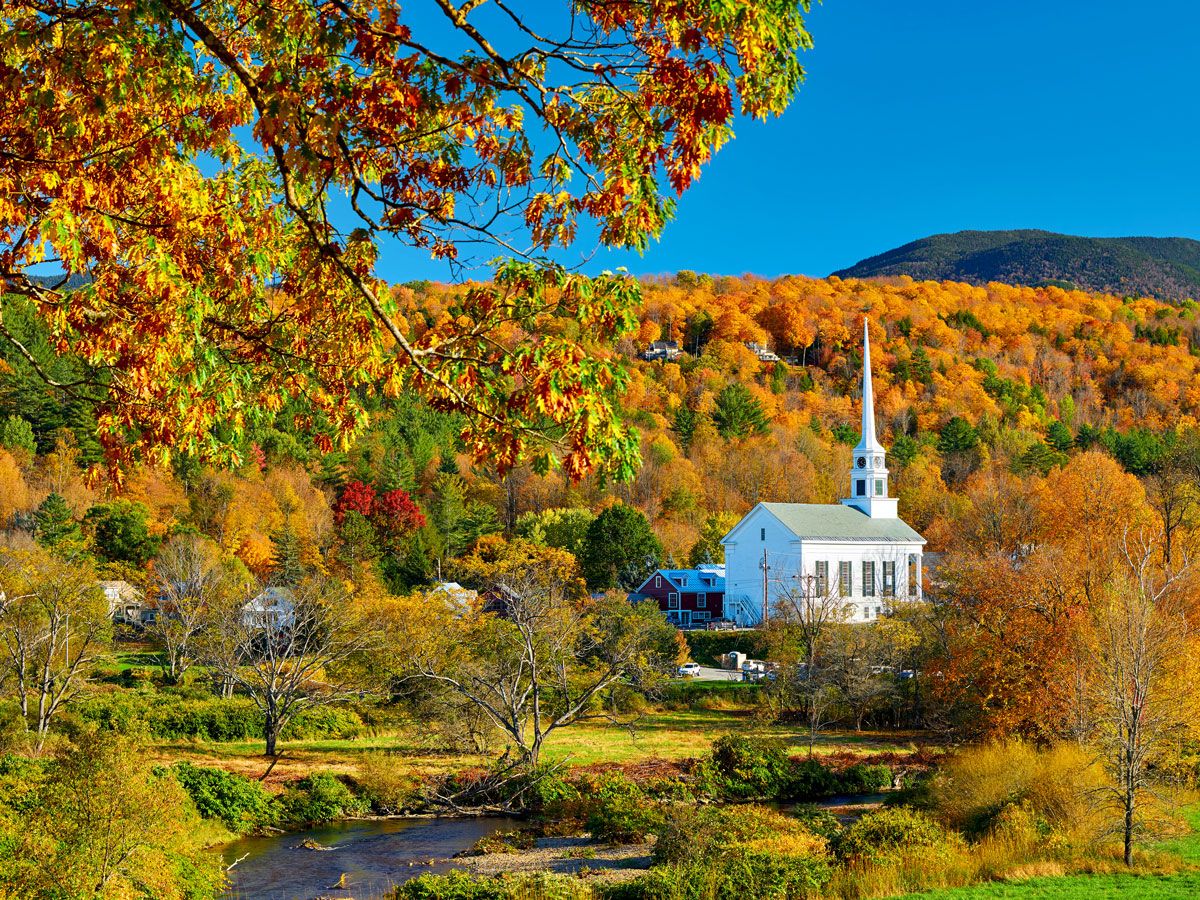
The median home price in Gregory is $105,600, well below the national average. On top of that, South Dakota is one of the few states with no state income tax, making it an attractive option for retirees on a fixed budget.

Related: The 8 States Without Income Tax

Bloomington, Indiana

Indiana University campus in Bloomington
Credit: Nicholas Klein/ iStock via Getty Images Plus 

For active retirees looking to stay and feel young at heart, Bloomington is certainly a city worth considering. As the home of Indiana University, the city has a vibrant college town energy and a year-round calendar of events, performances, and cultural activities. Bloomington takes pride in its thriving arts and culture scene, with local theaters, art museums, and plenty of live music at various venues. 

The city’s impressive culinary scene is another standout feature, with everything from food trucks and cafés to fine dining, breweries, and local wineries. For those who love the outdoors, Bloomington is located a few miles north of Monroe Lake, which offers hiking, boating, and fishing opportunities. For even more natural beauty, Hoosier National Forest, about an hour’s drive away, is known for its scenic trails and peaceful wilderness. 

Meanwhile, within the city, the art-dotted B-Line trail offers a paved biking and walking path that connects many of Bloomington’s neighborhoods and attractions. While home prices in Bloomington are higher than the Indiana state average, the median cost is around $348,000. 

Farmington, Missouri

Scenic river in Farmington, Missouri
Credit: larrybraunphotography.com/ Moment via Getty Images 

Access to nature and overall affordability are two major advantages of retiring in Farmington, Missouri. With a population of around 18,000, Farmington offers a comfortable environment for retirees looking to settle into a new community and make new friends. The cost of living is approximately 22% below the national average, and the median home price, while slightly higher than the national average, is approximately $300,000. While there are Midwest cities with more affordable housing options, Farmington attracts retirees who value staying active, social, and close to nature. 

The Farmington OAKS Senior Center provides a hub for socializing and activities, including games, reading, computer access, and a variety of dance and exercise classes, supporting a strong senior community. For wine lovers, Farmington is part of the Route du Vin, a celebrated regional wine trail featuring a number of award-winning wineries and picturesque vineyards. This central Missouri city is also surrounded by outdoor recreation, with St. Joe State Park and Mark Twain National Forest to the west, Pickle Springs Natural Area to the east, and Buck Hill Conservation Area to the south, meaning a wooded trail or beautiful park is never far away. 


Bay City, Michigan

Waterfront path in Bay City, Michigan
Credit: Joel Bigalke/ Alamy Stock Photo

Located on the edge of Saginaw Bay, part of Lake Huron, this town of approximately 32,000 appeals to those who value access to water, natural beauty, and a historically charming city. Bay City features several marinas, a scenic Riverwalk that winds through multiple parks along the east side of town, and easy access to the sandy shores of Lake Huron. Boaters will feel right at home in this community, with ample opportunities for fishing, boating, and a variety of water sports. 

The eclectic atmosphere of downtown Bay City adds to its appeal for retirees, with its mix of waterfront dining, cozy coffee shops, antique stores, local boutiques, and welcoming taverns. Affordability is another big draw: The median home cost in Bay City is around $115,000, and the cost of living is 19% lower than the national average, making it easier for retirees to make the most of their savings.

Related: The Most Livable U.S. Cities for Seniors
Post Banner Image
Tips

Why You Never Get a Passport Stamp Anymore

By Daily Passport Team
Read time: 5 minutes
May 20, 2025
Updated: October 21, 2025

Why You Never Get a Passport Stamp Anymore

By Daily Passport Team
Author
Daily Passport Team
Daily Passport writers have been seen in publications such as National Geographic, Food & Wine, CBC, Condé Nast Traveler, and Business Insider. They're passionate about uncovering unique destinations and sharing expert tips with curious travelers.

For generations of travelers, few parts of an international trip were as satisfying as the thud of a rubber passport stamp. It was as much an adventurous badge of honor as it was official proof of your travels. But recently, it’s more common to breeze through customs with nothing more than a camera flash and an automatic gate sliding open. As more countries lean into biometric technology and digital records, the trusty passport stamp is, in many cases, fading away. Let’s take a closer look at where the beloved travel ritual stands today. 

The History of Passport Stamps 

Person holding passport book filled with stamps
Credit: PeopleImages/ iStock via Getty Images Plus 

Passports as we know them today date back to the early 20th century. As international travel became more common and countries tightened their borders after World War I, stamps became an easy way to indicate when someone had entered or exited a country. By the 1950s and 1960s — what many consider the golden age of air travel — passport stamps were part of the romance of travel. Each inked impression was like a small souvenir from a far-off place, turning a passport into a sort of trusty travel diary. 

Over time, travel numbers surged and security protocols and technology evolved. Countries began adopting machine-readable passports throughout the 1980s, and in the 2000s, identity-confirming biometric features such as microchips started appearing. It wasn’t the end of passport stamps, but it did mark a major step toward stamps becoming more of a novelty than a necessity.

The Ink Starts To Fade

Traveler using automatic border control checkpoint
Credit: Matic Grmek/ iStock via Getty Images Plus 

Australia was the first country to test self-scanning passport stations as early as 2007; the country eliminated routine passport stamps for most travelers in 2012. Visitors through major international airports are instead automatically processed through a digital system known as SmartGate, using facial recognition technology, fingerprints, and other biometric data stored in your passport. Instead of on a stamp, your record of entry and departure exists only in a database. 

Other countries are increasingly following suit. The U.S. phased out passport stamps in 2022, opting instead for a digital record known as the I-94. Singapore stopped stamping passports the same year, replacing the ink with electronic visit passes sent by email. Argentina also phased out stamps in favor of QR codes, while Hong Kong and Macau issue landing slips rather than using the passport itself. 

Most recently, the European Union began rolling out a large-scale digital Entry/Exit System (or EES) in October 2025. Countries in the Schengen Area — including France, Italy, Spain, and other popular destinations for U.S. travelers — will now replace physical stamps with biometric data and automated tracking. (Analog fans can breathe easy — Cyprus and Ireland, though in the EU, will continue to manually stamp passports for the time being.)

Related: What Is the Schengen Area? A Guide to Europe’s Border-Free Zone

Countries That Still Use Passport Stamps

Officer stamping passport
Credit: FTiare/ iStock via Getty Images Plus 

Despite the move toward digital documentation, the shift away from paper and stamps hasn’t been universal or consistent, and plenty of countries still offer the classic stamp-on-entry. Japan (if you don’t preregister online), Mexico, Morocco, Indonesia, South Africa, Canada (if required) and many countries across South America continue to have staffed customs counters with officers who will stamp your passport, even as automated options are added. 

Many countries still operate with hybrid systems — what you get depends not only on the country, but sometimes even on the airport, terminal, or time of day. Some places will also still accommodate passport stamps for preference if they’re able to — just make sure to ask nicely.

Consider the Souvenir Passport Stamp

Woman sitting on street writing in journal
Credit: MStudioImages/ E+ via Getty Images 

As official stamps become scarce, some travelers are turning to souvenir stamps, which are unofficial designs of popular tourism sites you can get at visitor centers or post offices. Destinations such as Machu Picchu or the polar bear capital of Churchill, Manitoba, Canada, have them. They serve no legal purpose, and they do come with a word of caution: Novelty stamps can compromise the validity of your passport, so it’s best to bring a travel notebook for them instead. But for the nostalgic among us, they may scratch the same itch.

Related: 6 of the World’s Most Interesting Souvenir Passport Stamps

Are Passport Stamps Gone for Good?

Traveler being screened at customs checkpoint
Credit: EvgeniyShkolenko/ iStock via Getty Images Plus 

As more countries adopt biometric entry systems and electronic records, the humble passport stamp may soon become a relic. And passports themselves may soon join them. Some experts, such as border security expert Dr. Dalbir Ahlawat of Sydney’s Macquarie University, think physical passports may become altogether obsolete — maybe even within 10 years. 

In Italy, some airports have begun trials for “FaceBoarding,” allowing travelers to get through the airport and board their plane without a passport or boarding pass. Singapore also began allowing residents to enter the country without a passport in 2024, using face and eye-scanning to identify travelers.

Don’t toss your passport just yet, though. While some countries charge full digital steam ahead, many parts of the world still face infrastructure and security challenges that make the global shift to fully digital systems more complex. For now, paper passports and, if you’re lucky, the occasional inked stamp, still have a little life left in them.

Related: The World’s Most Powerful Passports for 2026
Post Banner Image
Culture

9 Regional U.S. Pizza Styles You Need To Try

By Daily Passport Team
Read time: 6 minutes
May 20, 2025
Updated: May 29, 2025

9 Regional U.S. Pizza Styles You Need To Try

By Daily Passport Team
Author
Daily Passport Team
Daily Passport writers have been seen in publications such as National Geographic, Food & Wine, CBC, Condé Nast Traveler, and Business Insider. They're passionate about uncovering unique destinations and sharing expert tips with curious travelers.

The modern version of pizza we’re familiar with today originated in the 18th century in Naples, Italy. But since its introduction to the U.S. in the early 20th century via Neapolitan immigrants in New York City, Americans have made it their own. Not only is it one of the most popular foods in the country today, but different regions have also made their own adaptations and tweaks. From coast to coast, you’ll find many variations in crust, toppings, shape, and baking style. Take a look at nine of the most fascinating (and delicious) regional pizza styles you might come across in the U.S.

New Haven

Chef placing New Haven-style pizza in oven
Credit: Lauren Lancaster/ The Washington Post via Getty Images

The first thing to know about New Haven pizza is how to get the name right. You’re in Connecticut now, and the locals refer to it as “apizza.” This version has its roots in the traditional Neapolitan style, like New York-style pizza, but that’s where the similarity ends.

New Haven pizza has a chewy crust, thanks to a dough that is allowed to ferment for a longer period of time (often overnight). It is oblong in shape and cooked in a coal-fired oven, which gives it a charred look and taste. A popular local topping is clams with a white sauce, although you’ll also find the standard meat, cheese, and tomato pies. But to really sound like a local, you want to order it “mootz” (with mozzarella).

St. Louis

St. Louis-style pizza on cutting board
Credit: Elena Rui/ iStock via Getty Images Plus 

Many associate St. Louis with barbecue rather than pizza, but the city is indeed home to a distinct pizza style. And it’s made for sharing with a group of friends — some even describe it as a giant nacho rather than a pizza.

There are quite a few similarities. For starters, there’s the base, which is thin and extra crispy. Toppings include a tomato sauce that has a hint of sweetness and a cheese blend known as provel (provolone, Swiss, and cheddar). The toppings go all the way to the edge, and it’s cut not into wedges but squares. St. Louis purists also insist that any toppings must be sliced instead of diced.

Related: A Guide to Regional Barbecue Styles Around the U.S.

New York

Woman enjoying slice of New York-style pizza
Credit: Cavan Images via Getty Images 

In 1905, Gennaro Lombardi opened what is widely considered the first pizzeria in the United States, although some historians believe immigrants were making and selling pizza as early as the 1880s. Using the pizza skills he had learned in Naples, Lombardi’s store in Little Italy was instrumental in defining what we now know and love as New York pizza.

New York pizza is a variation of the traditional Neapolitan style, with a thin, hand-tossed crust, a light amount of sauce, and a generous portion of cheese. New York-style pizza is often sold by the large triangular slice, and the main topping is typically just cheese, although pepperoni may be added too. If you want to enjoy your slice like a true New Yorker, fold it in half before digging in.

Chicago

Person serving slice of Chicago deep dish pizza
Credit: supitchamcsdam/ iStock via Getty Images Plus 

Grab a knife and fork, because there’s no eating Chicago-style deep dish with your hands. Chicago’s beloved pizza is a rich pie baked in a round skillet more similar to a cake pan and filled with thick layers of meat, sauce, and cheese. It is thought to date to 1943, when Ike Sewell and Ric Ricardo opened Pizzeria Uno in the River North neighborhood.

Not content with redefining pizza through deep dish, Chicago also claims credit for inventing stuffed pizza in 1974. This is similar to a deep dish but even deeper and with more cheese. Then there’s tavern-style Chicago pizza, which many locals prefer — thin crust, cut into squares, eaten by hand with your beer at the bar. In other words, you’re likely to find whatever pizza you prefer in the Windy City.

Detroit

Chef placing sauce on Detroit-style pizza in pan
Credit: Laura Chase de Formigny/ The Washington Post via Getty Images

This rectangular pie is cooked in a steel pan, which, according to local legend, was originally an auto parts pan. As the story goes, troops were returning home from Europe after World War II and craving the pizza they had eaten in Italy. Pizzeria owner Gus Guerra borrowed some pans from a friend who had been working in an auto plant, and Detroit-style pizza was born. The crust is thick but surprisingly light. For extra perfection, the pizza is baked twice with the sauce added last to prevent sogginess. Top it with pepperoni, melty brick cheese, and tomato sauce, and you have perfection in a pan.

Philadelphia

Philadelphia-style pizza in pan
Credit: Brent Hofacker/ Alamy Stock Photo

Philadelphia-style pizza, or tomato pie as the locals call it, consists of a thick crust covered in tomato sauce and served in squares. You can add cheese if you like, but it’s not a common topping in Philly. The cheese-free style likely originated in Sicily and was introduced to the city via an influx of immigrants at the turn of the 20th century. Traditionally, tomatoes were more plentiful than dairy cows in Sicily, and other toppings such as anchovies, onions, and oregano were often added to square pizzas. Don’t confuse it with the Trenton tomato pie (a thin, round pizza crust with tomato sauce) or a Southern-style tomato pie (an actual pastry pie).

Quad Cities

Person cutting slices of pizza made in the style of the Quad Cities of Iowa and Illinois
Credit: zoranm/ E+ via Getty Images 

Situated between St. Louis and Chicago, the Quad Cities of Iowa and Illinois have also made their mark in the pizza world. The first thing you’ll notice about the local pizza is the crust. The addition of brewer’s malt gives it a distinctly nutty flavor. The sauce also has a kick, made with red chili flakes and cayenne pepper. Popular toppings include Canadian bacon and sausage, which is also different here, since the local variety uses fennel in the meat. The pies are finished off with a thick layer of cheese. One last thing makes the Quad Cities style stand out: It is typically cut into strips before serving.

Rhode Island

Rhode Island-style pizza on plate
Credit: Matthew West/MediaNews Group/ Boston Herald via Getty Images

Is it even pizza if it doesn’t include cheese? Philadelphians would say it is, and Rhode Islanders would agree. You’ll just have to find this pizza at a local bakery instead of a pizzeria. Since the early 1900s, Italian bakeries have served strips of focaccia bread topped with tomato sauce, known as “bakery pizza” or simply “red strips.” Bakery pizza is usually served at room temperature as a snack and can be left on the tray for days. It might sound unusual to those outside of Rhode Island, but it’s definitely a staple of the Ocean State.

Ohio Valley

Close-up image of Ohio Valley-style pizza
Credit: Cavan Images/ Alamy Stock Photo

This style of pizza takes its name from the Ohio Valley (which encompasses parts of Ohio, Indiana, West Virginia, Pennsylvania, and Kentucky), but even there, this pizza is not particularly widespread. Ohio Valley-style pizza is different from any other style on this list because the toppings are added after the dough comes out of the oven. Stewed tomatoes are used instead of sauce and may be added before or after cooking. When it comes to toppings, you have plenty of the usual options – meat, veggies, lots of cheese. However, they are all added cold, after the base is taken out of the oven. The theory behind it is that the toppings will cook perfectly from the steam in the box.

Related: Grab a Slice For This Quiz About Pizza Around the World
Post Banner Image
Architecture

5 Former Prisons Turned Into Luxury Hotels

By Fiona Mokry
Read time: 5 minutes
May 20, 2025
Updated: May 20, 2025

5 Former Prisons Turned Into Luxury Hotels

By Fiona Mokry
Author
Fiona Mokry
Fiona has spent her career exploring the world and working in the travel industry, turning her lifelong passion into a profession. From planning custom trips to sharing stories as a travel writer for publications such as The Discoverer, she’s all about helping others experience the world in a deeper, more meaningful way.

Often, landmark buildings end up serving entirely different purposes than those they were originally built for. It may be difficult to imagine that a luxurious hotel once housed notorious criminals of a bygone era, but below you’ll find five fabulous penitentiaries-turned-hotels in the U.S. and Europe.

Note: All featured products and deals are selected independently and objectively by the author. Daily Passport may receive a share of sales via affiliate links in content.

Four Seasons Hotel Istanbul at Sultanahmet – Istanbul, Turkey

Courtyard and brightly painted exterior walls of the Four Seasons Hotel Istanbul at Sultanahmet
Credit: Hackenberg-Photo-Cologne/ Alamy Stock Photo

This five-star hotel in Istanbul’s historic district was once the first jailhouse in the capital of the Ottoman Empire. Originally designed as a guesthouse, the project shifted focus in 1918, and by 1919, it became the Sultanahmet Jail, a penitentiary for the empire’s most serious offenders. Located next to the courthouse, the jail also housed detainees awaiting trial. Many famous Turkish writers and poets were imprisoned here, and a few produced some of their most enduring works behind its bars. 

After the construction of a new jail, Sultanahmet was closed in 1969, and the prisoners were relocated. However, the building briefly reopened in 1980 as a prison for political detainees before closing in 1986. A decade later, the doors opened again, but this time as a luxurious Four Seasons hotel

After extensive renovations, the former jail was transformed into one of Istanbul’s top hotels, featuring 65 rooms and suites, a spa, contemporary Turkish art, and traditional woven kilim (rugs). Despite the hotel’s modern atmosphere and world-class hospitality, the building retains its neoclassical architecture, with original marble and stone elements still in place.

The Liberty Hotel – Boston, Massachusetts

Exterior of the Liberty Hotel in Boston, Massachusetts
Credit: Michael Dwyer/ Alamy Stock Photo

The building currently occupied by the Liberty Hotel in Boston’s Beacon Hill neighborhood once served as the Charles Street Jail. Built between 1848 and 1851, the jail housed infamous criminals such as James “Whitey” Bulger and Frank Abagnale Jr. before eventually closing in 1990. 

The building’s past is reflected in the hotel’s design, with exposed brick walls and catwalks offering sweeping views of what was once the central courtyard. Throughout the Liberty Hotel, nods to the jail’s history — like preserved wrought-iron bar detailing and aptly named restaurants (Alibi and Clink) — contrast playfully with the hotel’s contemporary decor. 

Nowadays, however, rooms feature Charles River views, marble bathrooms, and overstuffed armchairs — a stark contrast to the overcrowded conditions that led to a 1973 court ruling against the jail, prompting its eventual closure and construction of its replacement, the Suffolk County Jail. 

Related: 8 of the Most Unusual Hotels in America

The Bodmin Jail Hotel – Cornwall, England

Exterior of the Bodmin Jail Hotel in Cornwall, England
Credit: Ashok Saxena/ Alamy Stock Photo

With its stoic stone façade and utilitarian feel, the exterior of this four-star boutique hotel in Cornwall, England, still reflects its past as the Bodmin Jail. Built in 1779 by French prisoners of war under the supervision of military engineer Sir John Call, the jail operated until 1927. Over the following years, it served many purposes, from a car garage to a badminton court and even a nightclub. In 2018, a sizable investment saved the building from demolition and transformed it into the Bodmin Jail Hotel. 

While the catwalks, chain-link fencing, and steel details are a nod to the building’s history, the original cells have been transformed into 70 guest rooms. Though they still feature the original cell doors, the interior atmosphere is softened by warm lighting, crisp white linens, and spontaneous pops of color. The original bars on the windows keep a hint of the building’s past, while velvet furniture and dim lighting make the common areas feel cozy and welcoming.

Mamula Island – Montenegro

Mamula Island seen from the Bay of Kotor in Montenegro
Credit: Alla Morozova/ iStock via Getty Images Plus 

The historic fort atop this secluded island in Montenegro’s Bay of Kotor was originally constructed in 1853. During World War II, the defensive fort was transformed into a concentration camp under Mussolini’s regime. Known for its harsh treatment of its inmates, which included women and children, the site faced controversy when plans emerged to convert it into a luxury hotel and wellness center. 

Despite protests from families of former prisoners, the project moved forward, opening in spring 2023 as a luxury escape accessible from both Croatia’s southern tip and mainland Montenegro. The 32-room hotel offers a spa, beach club, marina, and multiple bars and restaurants. Alongside these upscale amenities, it features a historical memorial gallery to honor the fort’s 170-year history and the lives of its former prisoners. 

Malmaison Oxford – Oxford, England

Exterior of the Malmaison Oxford in Oxford, England
Credit: UrbanImages/ Alamy Stock Photo

This former prison-turned-boutique hotel opened in 2008 in the historic center of Oxford. The building’s history dates back to 1071 when Oxford Castle was built by Robert D’Oyly, a nobleman of William the Conqueror. It was later converted into a notorious prison known as Oxford County Gaol. After prison reforms in 1888, it reopened as HM Prison Oxford, housing criminals ranging from the infamous Donald Neilson (the “Black Panther”) to 7-year-old Julia Anne Crumpling, who was sentenced to a week in prison for stealing a stroller. 

Decommissioned in 1996, the prison was carefully renovated to retain its original features and reopened 10 years later as the Malmaison Oxford. The original ceilings, doors, and cells create an eye-catching contrast with contemporary pink chairs and gleaming wine glasses in the stylish restaurant below. Playful touches like a minibar designed as a row of lockers and original jail cell doors add a touch of character, while an adjacent museum features the intact turret of Oxford Castle. (Discounted tours are available for hotel guests.)

Related: 9 Must-Visit Historic Hotels That Are a Destination Themselves
Post Banner Image
Architecture

Is This America’s Most Beautiful Airport?

By Peter Vanden Bos
Read time: 6 minutes
May 20, 2025
Updated: October 7, 2025

Is This America’s Most Beautiful Airport?

By Peter Vanden Bos
Author
Peter Vanden Bos
Peter is a Toronto-based journalist, editor, content strategist, and self-professed avgeek with 15 years of experience covering all things travel. Prior to joining Daily Passport, he oversaw newsletter publication for Travelzoo. His favorite destinations to explore include Japan, France, Chile, New Zealand, and his adopted home country of Canada.

Ask a frequent flyer about the most beautiful airport they’ve traveled to, and they might mention Singapore Changi — recently ranked the best airport by Skytrax for the 13th year — or Hamad International Airport in Doha, thanks to its impressively modern architecture and excellent shopping. But what are the chances they name an airport in the U.S.? America’s airports are certainly among the world’s busiest, but they don’t exactly have a reputation for aesthetics. Enter Portland International Airport’s stunning new redesign, which may just change opinions about how beautiful an American airport can be. Below, peek inside the new terminal and explore how it came to fruition.  

A “Game Changer”

Light-filled interior and timber ceiling of new Portland International Airport terminal
Photo credit: Ema Peter Photography/ FlyPDX

If you’re a fan of architecture, construction, and engineering, you may already be familiar with the B1M, which says it’s the world’s largest and most subscribed-to video channel covering those topics. They know what they’re talking about when it comes to incredible design — which is why it was particularly noteworthy when they proclaimed, “America has finally built a beautiful airport,” after Portland International Airport (PDX) debuted its new terminal in 2024.

The experts at B1M went on to call the new PDX a “game changer” that’s “up there with the most beautiful airports in the world.” The $2 billion project was not only the most expensive public project in Oregon’s history but also the largest mass timber project of its kind in the world. 

The use of wood was intentional. “The Pacific Northwest is known for its timber background, so we took inspiration from the forest of our region,” project manager George Seaman told the B1M. “When people walk around the terminal building, we want them to know that sense of place, that this is the Pacific Northwest and not anywhere else in the country.” 

As soon as you step into the new terminal, your eyes are drawn upward to the massive wooden roof. Just how massive? According to ZGF Architects, the firm responsible for the redesign, the roof covers a whopping 400,000 square feet and weighs 18 million pounds. 

ZGF’s website says PDX is the first major airport in the country to incorporate a mass timber roof, which was “inspired by the sun filtering through a forested setting.” The effect is achieved through the clever lattice design and strategically placed skylights that illuminate 60% of the terminal with natural light. The new roof is also noteworthy for its sustainability, particularly since wood naturally sequesters carbon — a fitting feature for America’s greenest city

Further adding to the sense of being in a forest are walkways filled with the greenery the Pacific Northwest is so well known for. There are over 5,000 plants placed throughout the terminal, including 72 large trees that measure up to 25 feet tall.

Related: 7 of the Most Beautiful Places To Visit in the Pacific Northwest

How the New PDX Was Built

Person playing trumpet next to stairs where passengers sit in Portland International Airport in Oregon
Photo credit: Celeste Noche/ FlyPDX

While the PDX terminal was no doubt a massive undertaking, even more impressive is the fact that the airport remained fully operational while the three-year project was underway. According to the B1M, the building was split into three sections: the main terminal and two concourses, each weighing between 300 and 700 tons. 

The roof, the centerpiece of the project, was built on a separate construction site at the end of the runway. After it was fabricated, crews had to transport the roof a mile on wheels over to the terminal site, traveling approximately 1 mph; once there, they lifted the roof and put it in place. Because the terminal was still functioning during construction, the work had to take place each night between midnight and 3:30 a.m.

And this is only phase one of the project: A second phase, estimated to be complete by the end of 2025, will introduce new restaurants and shops, additional escalators, and new waiting areas. 

Related: 20 Incredible Feats of Engineering Around the World

Local Touches Throughout

Passengers in seating area of new PDX terminal
Photo credit: Dror Baldinger/ FlyPDX

Portland Airport’s redesign allowed it to double its passenger capacity and modernize its facilities, including more spacious TSA checkpoints, but it’s clear that a lot of thought went into how passengers would experience the new spaces.

In a press release, Curtis Robinhold, executive director for the Port of Portland, explained, “Our focus throughout this entire project was: How do we reflect the pride and love we all have for the region, in the new PDX? And that question drove every decision. To work with locally owned small businesses using local materials, to fill the new PDX with local art and shops from our favorite neighborhoods — and, of course, to bring back the iconic carpet” (a beloved feature of the previous terminal). 

The airport said that the 20 new eateries and shops introduced with the redesign are all locally owned (with 60% of them being woman- or minority-owned) and showcase regional favorites. Think: craft brews at Loyal Legion, coffee from Portland Coffee Roasters, and books from Powell’s Books, a Portland institution and the world’s largest independent bookstore. The airport also installed video walls with 24-hour art displays of Oregon landscapes. 

“Every part of the new terminal design aims to enhance the traveler journey and reduce stress,” ZGF managing partner Sharron van der Meulen said. “Travelers are immediately greeted with expansive views to the airfield, abundant natural light, and lush interior landscapes that create a sense of wonder and delight and evoke a walk through a Pacific Northwest forest.” You might even come across a therapy llama or alpaca from a nearby farm, too.  

Competition Is Heating Up

Exterior of Portland International Airport main terminal, seen at night
Photo credit: Dror Baldinger/ FlyPDX

While PDX has taken the crown for America’s most beautiful airport, at least in our eyes, it’s not the only game in town. In recent years, several U.S. airports have undertaken multibillion-dollar expansion projects to upgrade their passenger experience. 

Many are taking the same local-inspired approach as PDX. New York LaGuardia’s new Terminal B, completed in 2022, is a far cry from the cramped, outdated space that travelers were used to before the remodel. The $8 billion transformation added a stunning central water feature, local art installations, tons of natural light, and upgraded concessions, including NYC favorites like Brooklyn Diner and Hill Country BBQ. 

In 2024, the new Kansas City International Airport took home the “Project of the Year” award from the Design-Build Institute of America (DBIA) Mid-Atlantic Region, recognizing its exceptional, locally inspired design with upgraded facilities and passenger amenities. Another new terminal project that recently made a splash was Louis Armstrong New Orleans International Airport, with a gorgeous new terminal inspired by the geography of the Delta region and the Mississippi River

And lastly, in 2022, San Francisco International Airport’s new Harvey Milk Terminal 1 became the first airport terminal in the world to earn Platinum LEED certification for its sustainability features, which are in addition to the spacious new check-in lobby, expanded security checkpoints, and concessions from locally owned businesses. 

Related: The World's Top-Ranked Airports for 2024

Featured image credit: Ema Peters Photography/ FlyPDX

Post Banner Image
Tips

5 American Customs That Confuse Foreigners

By Michael Nordine
Read time: 3 minutes
May 15, 2025
Updated: May 15, 2025

5 American Customs That Confuse Foreigners

By Michael Nordine
Author
Michael Nordine
Michael is a staff writer for Daily Passport and film critic who writes the weekly newsletter Movie Brief. His writing and criticism have also appeared in the Los Angeles Times, Variety, and the Washington Post, among others. A native Angeleno, his favorite countries to visit are Norway and Japan.

No matter where you travel, you’ll find every culture does things a little differently. And while many American customs have been replicated elsewhere, just as many seem strange and, well, foreign to our friends across the globe. Here are five customs that may confuse locals on your next trip abroad.

Smiling at Strangers

Two people talking and crossing street
Credit: FilippoBacci/ E+ via Getty Images 

In the grand scheme of things, Americans are quite friendly. We say “hi” to passersby on hiking trails, make small talk in public, and smile at strangers — something much less common in countries like Russia, where smiling in public is so rare that people had to be trained to do it in the lead-up to the 2018 FIFA World Cup. (One woman was reportedly even questioned by the police because she was smiling while walking one day.) It’s not just Russia: Flashing a smile at a stranger you pass on the street could create confusion in other parts of Eastern Europe as well.

Tipping

Tip jar at restaurant counter
Credit: Nikola Stojadinovic/ E+ via Getty Images 

Though gratuity practices vary across the globe, many countries consider our approach to tipping, well, gratuitous. (Now that seemingly every interaction involving a cash register includes it, so do an increasing number of Americans.) Paying a little extra for good service isn’t just unnecessary in countries like Japan — it can even be considered rude in some cases. 

Omotenashi, which roughly translates to “hospitality” but also refers to a type of mindfulness, is an important cultural concept in Japan that runs counter to the very notion of tipping. You’re expected to look after your guests (or customers, in this case) to the best of your abilities, without expecting anything in return. If you can imagine your confusion at a houseguest trying to tip you for a good home-cooked meal, you can imagine a Japanese waiter’s confusion at a restaurant in Tokyo, too.

Related: Where Is Tipping Considered Rude? Tipping Rules You Need to Know

Consuming Large Portions

Person eating a plate of pasta
Credit: hxyume/ E+ via Getty Images 

According to the National Heart, Lung, and Blood Institute, portion sizes in American restaurants more than doubled from the 1990s to the early 2010s. In addition to having negative health effects domestically, this also created some puzzlement for international tourists. Bring the average Dane to a chain restaurant in the U.S. suburbs, and they’ll likely go wide-eyed when they see how much food we’re served here, as well as how often we bring home leftovers — something that isn’t done to nearly the same extent in Europe.

Sitting in the Back of a Taxi

Woman sitting in back of taxi
Credit: Nisian Hughes/ Stone via Getty Images 

Should you ever find yourself hailing a cab or ordering a rideshare in Australia, New Zealand, or parts of Ireland, Scotland, and the Netherlands, make sure you ride shotgun once they arrive. It’s considered friendlier and more egalitarian to do so, as it puts you and the driver on equal footing. (However, it’s generally more common for men to do so, as women may prefer to sit in the back for safety reasons.) When you have multiple people in your party, start in the front of the cab and have others sit in the back, rather than the other way around.

Wearing Shoes Indoors

Person sitting on floor writing in notebook
Credit: miniseries/ E+ via Getty Images 

We may have to side with our friends abroad on this one. Taking your shoes off as soon as you get home is more comfortable, prevents dirt from tracking indoors, and just feels neater in general. Opinions on it vary from country to country and culture to culture, with some considering it rude to wait to remove your shoes until you’re inside rather than leaving them just outside the front door. If you’d prefer some kind of footwear, you can follow the Japanese practice of wearing house slippers that are only to be worn indoors to maintain a barrier between inside and outside.

Related: 6 Hand Gestures You Should Never Use in Certain Countries
Post Banner Image
Tips

Why You Should Consider “Slow Travel” for Your Next Trip

By Daily Passport Team
Read time: 5 minutes
May 15, 2025
Updated: May 15, 2025

Why You Should Consider “Slow Travel” for Your Next Trip

By Daily Passport Team
Author
Daily Passport Team
Daily Passport writers have been seen in publications such as National Geographic, Food & Wine, CBC, Condé Nast Traveler, and Business Insider. They're passionate about uncovering unique destinations and sharing expert tips with curious travelers.

Many travelers are eager to check off as many bucket-list attractions as possible on their vacations. It’s easy to understand the motivation, especially if you don’t travel often, have limited vacation days to use, or are jetting off to a faraway destination. But there are some pros to taking your time instead. The increasingly popular practice of “slow travel” encourages you to savor every minute of the journey, making sure you’re present in every place. Here’s how slow travel is changing the way many of us travel — and how to adopt the practice on your next trip.

What Is Slow Travel?

Couple enjoying picnic on beach
Credit: bernardbodo/ iStock via Getty Images Plus 

The “slow travel” movement started with food, emphasizing fresh, local, and simple ingredients that emphasize the connection of a cuisine to its culture. Back in 1989, Italian food editor Carlo Petrini founded the grassroots organization Slow Food International to prevent the disappearance of culinary traditions and food cultures around the world. According to Petrini, the world’s desire to move at a quicker pace through advancements of technology has led to a warped carpe diem mentality that often leads to a needlessly rushed, busier schedule.

The “slow” approach places importance on taking time to smell the roses. From food to fashion, slow culture is a “revolution against the notion that faster is always better,” according to Carl Honoré, author of In Praise of Slowness. “It’s about seeking to do everything at the right speed. Savoring the hours and minutes rather than just counting them. Doing everything as well as possible, instead of as fast as possible,” he said.  

How does that relate to travel? Slow travel means connecting mindfully, respectfully, and responsibly with the environment and the people you encounter on your journey. It’s about making memories instead of barreling through bucket lists. It is, ultimately, about genuine discovery.

How To Slow Down

Couple riding bikes in Sausalito, California
Credit: Klaus Vedfelt/ DigitalVision via Getty Images 

Slow travel doesn’t mean you shouldn’t book direct flights if you fly — though long layovers can be a great way to explore — or that you need a month in a destination to “authentically” experience it. But there are some ways to integrate “slow travel” into your life, even when you’re not on vacation.

Exotic places always have their allure, but some amazing discoveries may be right in your own backyard. Don’t stress over an expensive foreign itinerary until you’ve explored the area you call home. Do you know its history? Its architecture? The varying cultures of your neighbors? This, too, is travel, and will enrich your life, minus a suitcase or passport.

Not sure where to start? Call your local library, historical society, or visitors bureau. After you’ve soaked in your own city, venture further afield to the attractions around you. Weekend or even day trips can provide an authentic escape and a deeper connection to your daily surroundings.

Related: 7 Easy Day Trips by Train From Major U.S. Cities

Skip Planes and Try Trains, Automobiles, or Boats

Cruise passenger looking out over open water
Credit: acobs Stock Photography/ Photodisc via Getty Images 

Sometimes, you just have to fly. But if you can, consider slower options that give you a chance to connect with the local landscape and the people who live there. Rent a car (or motorbike) and take advantage of serendipitous stops. And though a bullet train or quick flight is speedy, a regional train, bus, or ferry gives you a chance to look out the window, talk to your fellow passengers, and sometimes hop on and off to explore. While getting from point A to point B may be the goal, the experience along the way is also part of the journey — and the essence of slow travel.

Related: Why Your Next Vacation Should Be a Long-Distance Train Journey

Live Like a Local

Two people dining alfresco along canal in Amsterdam, Netherlands
Credit: Westend61 via Getty Images 

Instant fluency in a new language is not going to happen overnight, but every traveler is capable of learning a few phrases and putting in a bit of research before jaunting off. Find out about a destination’s unique culture ahead of time by reading a novel, watching a film, or simply browsing the internet for local recommendations. Upon arrival, a visit to a neighborhood market can be delightful and, in some cases, as helpful as information kiosks at a major tourist attraction.

Regardless of location, five-star resorts and high-end restaurants tend to be more alike than they are different. Instead of seeking out the most Instagrammable spots bragged about by high-profile influencers, research comfortable yet modest accommodations and restaurants that local residents can actually afford. Both your wallet and your experience will be much richer — and you’ll be able to take the next journey sooner.

Related: 8 Tips for Blending in With the Locals in a New Country

Consider Your Impact

Person walking on suspension bridge in forest
Credit: FredFroese/ E+ via Getty Images 

We’ll never scold a fellow traveler for chasing their dreams. But carefully consider how mass tourism can degrade the very destinations we love, in terms of pollution, poverty, and loss of affordable housing options for locals who often have no other choice. Research low-impact ways to connect with your surroundings in a respectful and sustainable way. 

Even if you’re traveling in an extremely affluent region, there are always good causes which need support. Ask a local schoolteacher how you can help, stop in at a community center or an animal shelter, or consider making a donation to a local cause or charity. But just as importantly, listen to locals and learn about what will best have a lasting impact on the community. 

Post Banner Image
Architecture

The 10 Tallest Buildings in the U.S.

By Julia Hammond
Read time: 7 minutes
May 15, 2025
Updated: May 30, 2025

The 10 Tallest Buildings in the U.S.

By Julia Hammond
Author
Julia Hammond
Julia is a U.K.-based travel writer whose work has been featured in The Independent, The Telegraph, The New Zealand Herald, and Culture Trip, among others. She’s an enthusiastic advocate for independent travel and a passionate geographer who has had the privilege of traveling to more than 130 countries in search of a story.

Where demand for real estate is high, prices soar. In such premium locations, oftentimes the only sensible answer is to build upward, which helps to explain why a list of the tallest buildings in the United States is dominated by New York City. However, as the home of the first skyscraper — the 10-story Home Insurance Building completed in 1885 — Chicago also appears on the list. And when 270 Park Avenue is fully completed, as is expected to happen by the end of 2025, the rankings will shuffle once again to make space for a new skyscraper. But for now, let’s take a look at the current top 10 tallest buildings in the United States, as of 2025.   

10. Bank of America Tower – New York, New York

Bank of America Tower surrounded by high-rises of midtown Manhattan
Credit: Ramin Talaie/ Corbis Historical via Getty Images 

Building height: 1,200 feet

The 10th-tallest building in America is One Bryant Park, also known as the Bank of America Tower, after its primary tenant. Completed in 2004, the skyscraper sits on the Avenue of the Americas (Sixth Avenue) across from Bryant Park in midtown Manhattan. 

This light and airy office building takes its inspiration from quartz crystal and is notable for its eco-credentials. One Bryant Park was the first commercial high-rise to receive LEED Platinum certification thanks to features such as a thermal storage system, gray water capture, and a commitment to recycling during the demolition and construction process. The indoor Urban Garden Room also connects the tower to Bryant Park — one of the world’s busiest public spaces, with 12 million visitors each year. 

9. Empire State Building – New York, New York 

Empire State Building with Manhattan skyline in background
Credit: Alexander Spatari/ Moment via Getty Images

Building height: 1,250 feet

The Empire State Building was the tallest building in the world from 1931 until 1972. Though other skyscrapers have since surpassed it in height, none has come close to making a cultural impact that can measure up to this art deco landmark

Construction of the 102-story building took just one year and 45 days, a remarkable feat for the time it was built. Two years after the Empire State Building was finished, it featured prominently in the 1933 movie King Kong, and since then it has captured the limelight in countless other films and TV shows. An estimated 2.5 million people visit every year, including those fit enough to race up the 1,860 steps as part of the Empire State Building Annual Run-Up.

Related: 5 U.S. Buildings That Have Their Own ZIP Codes

8. 30 Hudson Yards – New York, New York 

30 Hudson Yards with Edge observation deck protruding from 100th floor
Credit: Michael Lee/ Moment via Getty Images 

Building height: 1,270 feet

Hudson Yards, located on the west side of midtown Manhattan, has been the site of a massive — and expensive — redevelopment project over the last two decades. A 99-year lease on the air rights alone cost developers $1 billion. Construction began in 2012, with the first phase opening to the public in 2019, including the eye-catching (and climable) Vessel structure. 

A central feature of the development is 30 Hudson Yards, America’s eighth-tallest skyscraper, perhaps best known as the home of Edge. The outdoor deck juts out from the building at a height of 100 stories, and features a unique triangular-shaped transparent floor. It’s the highest outdoor skydeck in the Western Hemisphere.

Related: 7 Standout U.S. Buildings for Architecture Buffs To Visit

7. Trump International Hotel and Tower – Chicago, Illinois 

View of Trump International Hotel and Tower from Chicago River
Credit: Beata Zawrzel/ NurPhoto via Getty Images 

Building height: 1,389 feet

Home to a five-star hotel along with luxury condominiums, this 1,389-foot-tall building is one of the most recognizable on Chicago’s iconic skyline. It opened in 2008 as the tallest residential building in North America and the Windy City’s second-tallest building overall. Situated on the north side of the Chicago River near the Magnificent Mile, the 92-story glass-and-concrete building features an eye-catching series of setbacks in its design that each reflect the height of a nearby building.

6. 432 Park Avenue – New York, New York 

432 Park Avenue towering above other skyscrapers in New York City
Credit: anilakkus/ iStock via Getty Images Plus 

Building height: 1,397 feet

Completed in 2015, this stylish residential tower was designed by New York-based Uruguayan architect Rafael Viñoly. It’s the farthest east of the super-tall towers of Billionaire’s Row, the nickname for a cluster of luxury residential buildings at the southern end of Central Park and along 57th Street. 

The simple latticework of the white Portland cement façade is proof that when it comes to architecture, sometimes less is more. However, in 2021, reports surfaced of plumbing issues, malfunctioning elevators, and creaking walls affecting the building and those that had paid many millions of dollars to live in it. Developers CIM Group, for their part, responded that 432 Park Avenue “is a successfully designed, constructed and virtually sold-out project.”

5. One Vanderbilt Avenue – New York, New York 

View of One Vanderbilt Avenue amid skyscrapers of midtown Manhattan
Credit: Alexander Spatari/ Moment via Getty Images 

Building height: 1,401 feet

Located in midtown Manhattan, One Vanderbilt is a breathtaking skyscraper that overlooks Grand Central Terminal. Many visitors come to experience Summit One, an innovative multisensory experience featuring balls and mirrors that are so fun, you might even forget to look at the city beyond. Opened in 2020, the 73-story building mostly houses offices, with views that get better the higher you go. The Sky Floors on levels 72 and 73 feature outdoor private terraces to capitalize on those world-class views. 

4. 111 West 57th Street – New York, New York

Steinway Tower seen across Central Park in New York City
Credit: Michal Sikorski/ Alamy Stock Photo

Building height: 1,428 feet

Landing at No. 4 on the list of America’s tallest buildings, 111 West 57th Street has a striking height-to-width ratio of 24:1, giving rise to its nickname: “the Skinny Skyscraper.” The structure tapers toward the top to create a feathered edge and is clad in elegant terra-cotta. 

Some know it as the Steinway Tower, which stems from the fact that what appears to be one building from a distance is actually two. The Steinway Tower, a century-old neoclassical landmark that now forms the entrance to the much taller addition at 111 West 57th Street, was the headquarters of the piano company for almost 90 years. Architecture firm SHoP skillfully combined the two buildings, splitting the luxurious condos between them. 

Related: Reach New Heights With This Skyscrapers Quiz

3. Willis Tower – Chicago, Illinois

Willis Tower and Chicago skyline
Credit: benedek/ E+ via Getty Images 

Building height: 1,451 feet

A Chicago icon since 1973, Willis Tower (formerly known as Sears Tower) was the tallest building in the world until 1998. An impressive 76,000 tons of steel were used in the construction of this 110-story building. To ensure its stability in high winds, the skyscraper was designed to sway about 6 inches. 

Located on the 103rd floor of Willis Tower is the Skydeck observation platform, the highest of its kind in the United States. Riding the elevator to take in the view over the city and Lake Michigan takes just 60 seconds. At the top, you’ll find retractable glass boxes that were installed in 2009, enabling visitors to step onto the Ledge and look down to the street more than 1,300 feet below.

2. Central Park Tower – New York, New York

Central Park Tower above the Manhattan skyline
Credit: Frédéric VIELCANET/ Alamy Stock Photo

Building height: 1,550 feet

The tallest residences in not only the U.S., but also the world, are found within Central Park Tower, part of Billionaire’s Row. American architect Adrian Smith had previously designed Burj Khalifa in Dubai before he teamed up with Gordon Gill to create this jaw-dropping Manhattan landmark. 

The 1,550-foot-tall structure, completed in 2021, contains 179 homes ranging from studio suites to four-bedroom units. Floor-to-ceiling windows ensure uninterrupted views across Central Park. While you’ll need deep pockets to own one, anyone can access the first five floors of the building, which house Nordstrom’s flagship department store.  

1. One World Trade Center – New York, New York

One World Trade Center towering above 9/11 Memorial in New York City
Credit: Siegfried Layda/ The Image Bank via Getty Images 

Building height: 1,776 feet

Born out of tragedy post-9/11, this glittering skyscraper is emblematic of New York’s indomitable spirit. Architects Skidmore, Owings & Merrill wanted to create a building that “honors the World Trade Center’s past while standing as a symbol of hope for the future,” according to the firm’s website. 

One World Trade Center, initially known as the Freedom Tower, does just that. It’s topped by a 408-foot-high spire that brings its total height to a deliberately chosen 1,776 feet (after the year of American independence). As visitors ascend the elevator to the observation deck of this office tower, New York’s famous skyline rises with them. And 45 seconds later, they’ll step out onto the light-filled 102nd floor, where a 360-degree view of the Big Apple awaits.

Related: Top 10 Tallest Buildings in the World
Post Banner Image
Tips

The U.S. Airports With the Shortest (and Longest) TSA Wait Times

By Peter Vanden Bos
Read time: 4 minutes
May 15, 2025
Updated: May 15, 2025

The U.S. Airports With the Shortest (and Longest) TSA Wait Times

By Peter Vanden Bos
Author
Peter Vanden Bos
Peter is a Toronto-based journalist, editor, content strategist, and self-professed avgeek with 15 years of experience covering all things travel. Prior to joining Daily Passport, he oversaw newsletter publication for Travelzoo. His favorite destinations to explore include Japan, France, Chile, New Zealand, and his adopted home country of Canada.

Surely, waiting in the airport security line isn’t anyone’s favorite part of a travel day. But the truth is, some airports make it easier than others, whether that’s thanks to a more efficient layout, more screening capacity, or better staffing procedures. A 2024 study from the travel news and advice website Upgraded Points analyzed the 25 busiest airports in the U.S. to find out which ones had the shortest — and longest — TSA wait times on average. Check out the results below and find out if your home airport made either list. 

U.S. Airports With the Shortest TSA Wait Times

Control tower and terminal building at Washington Dulles International Airport
Credit: ajansen/ iStock via Getty Images Plus 

According to the study, these five airports had the shortest security lines:

5. Charlotte Douglas (CLT) and Detroit Metropolitan Airport (DTW) — 13.2 minutes (tie)
4. Minneapolis-St. Paul International Airport (MSP) — 13 minutes
3. Boston Logan International Airport (BOS) — 10.6 minutes
2. Washington Dulles International Airport (IAD) — 10.5 minutes
1. Salt Lake City International Airport (SLC) — 9.1 minutes

If you’re a Delta flyer, this list should be good news — the airline has hubs in Salt Lake City, Boston, Minneapolis, and Detroit. (Delta was also the carrier with the best on-time performance in 2024.) As for the others on this list, Dulles Airport near D.C. is a major hub for United, and American has around 800 daily flights through Charlotte. 

While the times listed are the average wait times from 4 a.m. to 11 p.m. (when the majority of flights depart), the study noted that the time you actually spend in line has a lot to do with the timing and day of your flight. For example, travelers at Minneapolis-St. Paul Airport waited only a minute on average if they joined the line on a Saturday between 8 and 9 p.m., but 43 minutes if they departed between 2 and 3 p.m. on a Monday.

U.S. Airports With the Longest TSA Wait Times

Aerial view of Terminal A at Newark Liberty International Airport
Credit: johnemac72/ iStock Editorial via Getty Images Plus 

These five airports had the longest TSA lines on average in the study:

5. Las Vegas Harry Reid International Airport (LAS) — 17.3 minutes
4. Baltimore-Washington International Airport (BWI) — 18.2 minutes
3. Miami International Airport (MIA) — 19.6 minutes
2. Houston George Bush Intercontinental Airport (IAH) — 19.8 minutes
1. Newark Liberty International Airport (EWR) — 23.1 minutes

Moral of the story: If you’re flying out of any of the airports above, be sure to arrive early at the airport, which might mean skipping the last-minute slot machine in Vegas or packing up a little earlier at the beach in Miami.

In addition to its long security lines, Newark also has made headlines recently for major flight delays due to FAA staffing and technology issues, so it’s a good idea to get there at least a few hours ahead of your scheduled flight. Based on the study, the worst time to fly out of Newark was Monday from noon to 1 p.m., when average wait times were 60 minutes.

How To Spend Less Time in the TSA Line

TSA PreCheck screening line at airport security checkpoint
Credit: David Tran/ iStock Editorial via Getty Images Plus 

The easiest way to wait less at the airport? Sign up for TSA PreCheck. That’s because PreCheck members have a dedicated line, filled with frequent travelers who don’t have to remove bulky items like laptops or jackets. According to the TSA, 99% of PreCheck passengers wait 10 minutes or less at the checkpoint. (Pro tip: Global Entry, which cuts down on your time spent in immigration and customs after landing in the U.S. from an international trip, also comes with PreCheck.) 

If you’re not a PreCheck member or you don’t qualify, there are other services you can use. About three dozen airports in the U.S. let you book a time slot at TSA security ahead of time, so you don’t have to wait in the general line. Best of all, the service is completely free to use. 

If all else fails and you end up in the standard security line, there’s one trick to remember: Always choose the line on the left. (It’s often shorter.) And when it’s finally your turn to undergo screening, make sure you’re not holding up the line by making these seven common mistakes.

About the data: Travel website Upgraded Points looked at the top 25 U.S. airports for total passenger boardings to analyze the average security line wait times, based on historical data published by the Transportation Security Administration (TSA). The study looked at data from 4 a.m. to 11 p.m. each day of the week over a 56-day period in spring 2024 to find average wait times. You can read the full report here.

Related: 10 Things the TSA Wants You To Know

Featured image credit: AzmanL/ E+ via Getty Images 

Post Banner Image
Tips

8 Tips for Blending in With the Locals in a New Country

By Rachel Gresh
Read time: 6 minutes
May 15, 2025
Updated: May 15, 2025

8 Tips for Blending in With the Locals in a New Country

By Rachel Gresh
Author
Rachel Gresh
Rachel is a Washington, D.C.–based travel and lifestyle writer with roots in the Great Lakes region. When she’s not writing for publications such as The Discoverer and Interesting Facts, you’ll find her wandering through museums or exploring destinations off the beaten path.

There’s nothing wrong with being a tourist — in fact, many places rely on tourism as a vital part of their economy. But if you want to experience a destination on a deeper level, you’ll have a more authentic experience if you make an effort to blend in with the locals — whether it’s by trying unfamiliar delicacies, navigating public transportation, or building meaningful connections with the people you meet on your travels. Doing so allows you to see the world through a different lens. However, blending in isn’t about pretending to be someone you’re not — it’s about showing respect, curiosity, and adaptability. Here are a few tips to avoid the “tourist” label and fully immerse yourself in a new country.

Learn the Language

Two people conversing
Credit: Klaus Vedfelt/ DigitalVision via Getty Images

You don’t need to be fluent in a country’s language to travel there, but knowing a few key phrases goes a long way. Start with the basics — “hello,” “goodbye,” “please,” “thank you,” and “excuse me” — but don’t forget to add practical questions like “How much does this cost?” or “Where is the restroom?” to your repertoire

Pronunciation matters, too. For instance, Spanish sounds noticeably different in Spain than in Latin America. When in Spain, the soft “C” in “Barcelona” is actually a “Th” sound (“Barthelona”), but in Latin America, it’s pronounced as an “S.” Locals will appreciate your attempt to use correct pronunciation. 

Also keep in mind that some foreign words have different regional meanings. In Spanish, having a cup of tinto in Latin America (especially Colombia) means black coffee, but it’s a glass of red wine in Spain. Don’t be afraid to ask locals for pronunciation or vocabulary help — most people will often respond warmly.

Related: 8 Unexpected Phrases To Learn Before Traveling to a Foreign Country

Understand the Dining Culture

Diners in a restaurant
Credit: monkeybusinessimages/ iStock via Getty Images Plus 

Before you arrive in a foreign country, it’s a good idea to conduct a little research on cultural and social norms, especially in regards to dining. What do locals do at restaurants? Do they tip

For example, according to the Japanese travel experts at Boutique Japan, “attempts to leave a tip will almost certainly be turned down” — a potentially awkward moment for both parties. Speaking of food and drinks, eating and drinking on the street or commuter trains is generally frowned upon in Japan and many other countries. Take a beat to observe what the locals are doing and adjust accordingly.

Dining practices can be quite different from those in North America. For example, European diners tend to linger at their tables after they’ve finished their meal — they usually don’t ask for the check at first chance. How you eat can also be very different. Skipping the silverware and eating with your hands is common in parts of India, Africa, the Middle East, and Southeast Asia. And in Japan, never point your chopsticks at anyone while eating — it’s considered a faux pas.

Related: Where Is Tipping Considered Rude? Tipping Rules You Need to Know

Grab a Newspaper

Man reading newspaper on street
Credit: lechatnoir/ E+ via Getty Images 

Learning about a country’s local events and recent history not only helps you understand and appreciate the attractions you will visit, but also helps you avoid major disruptions to your travel plans, such as strikes, protests, and events that could bring in crowds and traffic. The news will give context to what you see and hear, and as a bonus, you might just form a better connection with your taxi driver or tour guide if you know what’s happening in their world.

Skip the Chains

Woman eating at outdoor food market
Credit: Oleh_Slobodeniuk/ E+ via Getty Images 

What better way to experience authentic cuisine or find artisan goods than at local establishments? Look for family-run restaurants, market stalls, and street vendors rather than restaurant chains and big-box retailers, especially if you have them at home. This is also a great way to learn more about the local cuisine and discover regional goods.

Your tourism dollars go a long way in supporting local businesses, which help these communities thrive. According to a 2021 University of Minnesota Duluth study, small independent retailers return more than three times as much money per dollar of sales to the local economy than chain competitors. Spending your money at small businesses is a great way to show appreciation to the locals who have welcomed you into their city. 

Put Your Phone Away

Woman riding bike along Copenhagen waterfront
Credit: Klaus Vedfelt/ DigitalVision via Getty Images 

When asked about screen time during summer vacations, Michael Rich, director of the Digital Wellness Lab at Boston Children’s Hospital, says that digital devices can hamper vacation experiences. He explains, “Now, the issue with screen time also should not be that the time you spend on screen is toxic, but that it is displacing something else. And if it is displacing something that is arguably a richer, more positive experience, then one should be thoughtful about that and make that choice.” 

Experiencing your vacation through a phone screen will prevent you from living in the moment. And if you want to blend in with locals, they likely aren’t documenting every second of their day-to-day life. Instead, snap a few pictures and then put your phone away so you can enjoy your surroundings. 

Related: How To Use Your Phone When Traveling Abroad

Try Public Transportation

Person waiting for subway
Credit: rparobe/ E+ via Getty Images 

If public transit is readily available, skip the Uber or taxi and save some cash by learning to navigate as the locals do. This gives you a front-row seat to daily life. Many major cities have tourist passes for public transit, offering a limited number of days at a fixed price, so you can explore every corner of town without breaking the bank. For example, a Tourist Travelcard in Lisbon, Portugal, provides unlimited travel for 6.50 euros (for one day) or 14 euros (for three days) — in many cases, this is less than the cost of one taxi ride.

Related: 6 Cities With Free Public Transportation

Avoid Sticking to Only Tourist Spots

Woman walking through city square
Credit: pawel.gaul/ E+ via Getty Images 

When it comes to accommodations, hotels in heavily trafficked tourist areas can be tempting. But while much of the action is at your doorstep, it’s also in the epicenter of all things touristy. For a more authentic experience, choose accommodations near the hustle and bustle, but not in the middle of it. 

For instance, in London, you might avoid the busier tourist areas in the West End and stay in Notting Hill, known for its charming, colorful row houses, local eateries, and boutiques. Similarly, in Paris, you might avoid the areas near the Eiffel Tower and Champs-Élysées and instead enjoy the local feel in a neighborhood like Le Marais.

Be Curious — and Flexible

Two people eating ice cream cones on sidewalk
Credit: MStudioImages/ E+ via Getty Images 

To truly explore a city like a local, you must go in with an open mind, ask questions respectfully, and avoid comparing things to how they’re done “back home.” Adapting to mealtimes, work hours, and holidays is part of the experience. In Italy, for example, shops are closed for pausa di pranzo, a midday break for employees to enjoy a long lunch. It might inconvenience you for a few hours, but try to enjoy the slower rhythm while discovering a new culture.

Image Ad