



Post Banner Image
History

5 Airline Rules That Are Newer Than You Think

By Peter Vanden Bos
Read time: 4 minutes
July 1, 2024
Updated: October 24, 2025

5 Airline Rules That Are Newer Than You Think

By Peter Vanden Bos
Author
Peter Vanden Bos
Peter is a Toronto-based journalist, editor, content strategist, and self-professed avgeek with 15 years of experience covering all things travel. Prior to joining Daily Passport, he oversaw newsletter publication for Travelzoo. His favorite destinations to explore include Japan, France, Chile, New Zealand, and his adopted home country of Canada.

Flying has come a long way since the golden age of air travel, from how we book tickets to how we dress for flights and what’s served on board. Passengers these days have grown so accustomed to the modern air travel experience — for better or for worse — that it’s easy to forget how much has changed, even in recent years. You might find it surprising that these five rules of air travel only became the norm past 25 years.

In-Flight Smoking Bans

Passengers adjusting air conditioning vents with no-smoking sign visible in aircraft cabin
Credit: Rommel Gonzalez/ iStock via Getty Images

Societal attitudes toward smoking in public spaces have evolved considerably, especially in the last few decades. What was once commonplace in the U.S. — smoking in restaurants and bars, for example — is now a rarity, so it might be difficult to picture that the same was once true of airplanes

Smoking on planes was allowed for many years, but in 1973 the U.S. federal government stepped in to mandate smoking and nonsmoking sections. (You might imagine how effective that was.) Over the next couple of decades, as individual airlines began to enact their own nonsmoking policies, the government slowly expanded the ban to flights of certain distances (i.e., domestic flights under six hours). It wasn’t until 2000 that in-flight smoking was fully banned in the United States. 

Buy-on-Board Meals

Passengers eating meals from tray tables on airplane
Credit: damircudic/ E+ via Getty Images 

These days, economy-class passengers are lucky to get a complimentary soda and a bag of pretzels on domestic flights, but not long ago it was a much different in-flight experience. Complimentary hot meals were the norm (on flights over a certain distance). Though they probably weren’t much to write home about, they were free. That all began to change in the wake of the 9/11 terrorist attacks, which had a major financial impact on the aviation industry. 

As airlines looked to cut costs, free meals were one of the first passenger amenities to go. By the end of 2001, most airlines had eliminated or significantly reduced in-flight catering for coach passengers. A notable holdout was Continental Airlines, but after the carrier merged with United Airlines, it finally ended free meals in 2010. Now, it’s common for airlines to offer economy-class passengers buy-on-board meal options, part of a growing trend of a la carte airline services. 

Shoe Removal at Airport Security

Traveler removing shoes at airport security
Credit: Daniskim/ Shutterstock 

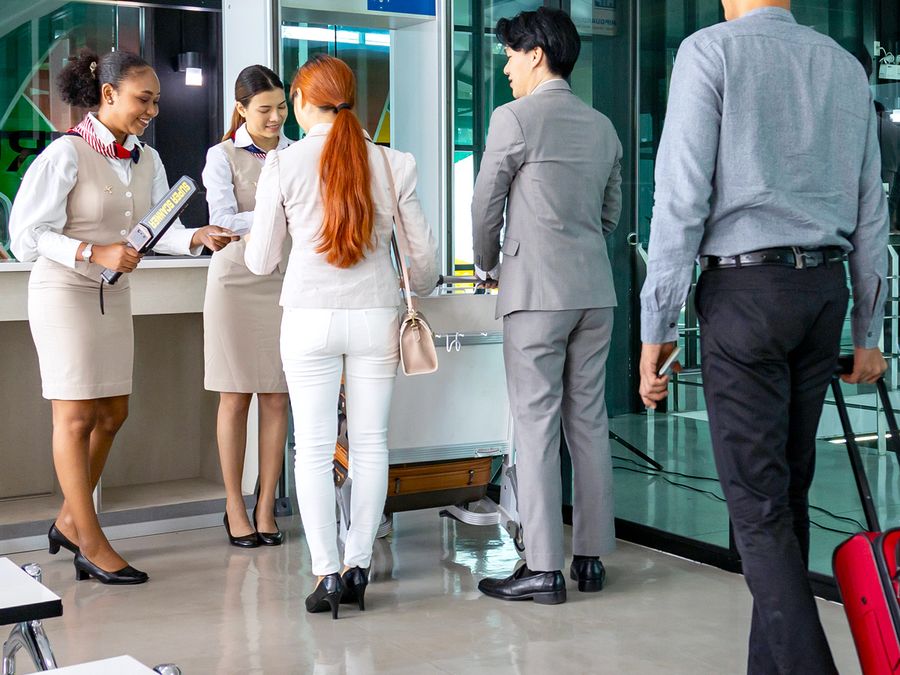
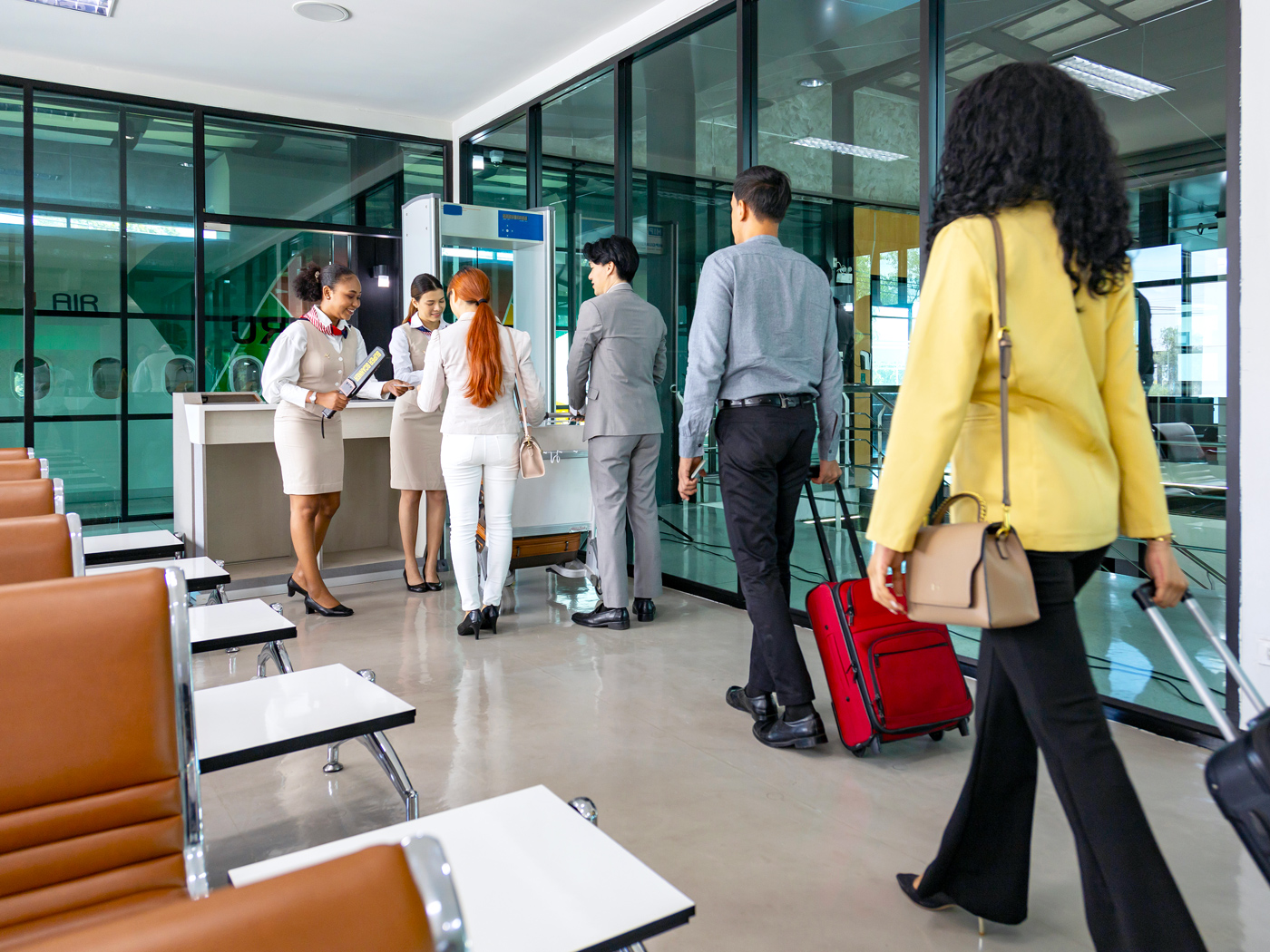
Another consequence of 9/11 was stricter airport security protocols and the creation of the Transportation Security Administration (TSA) in November 2001. Before the attacks, travelers could arrive at the airport much closer to boarding time, and they didn’t even need a boarding pass to get through security. Now, airline passengers are used to longer lines, strict ID checks, and many other security regulations

But it wasn’t until 2006, following several high-profile failed terrorist plots, that the rules extended to footwear and liquids. That year, the TSA banned all liquids, gels, and aerosols (before revising the ban to 3.4 liquid ounces or more) and also began requiring passengers to remove their shoes at security checkpoints to screen for explosives. These days, the only way for passengers to avoid removing their shoes is by signing up for the TSA PreCheck trusted traveler program. 

Checked Bag Fees

Passenger checking in at airport desk
Credit: Hinterhaus Productions/ Stone via Getty Images 

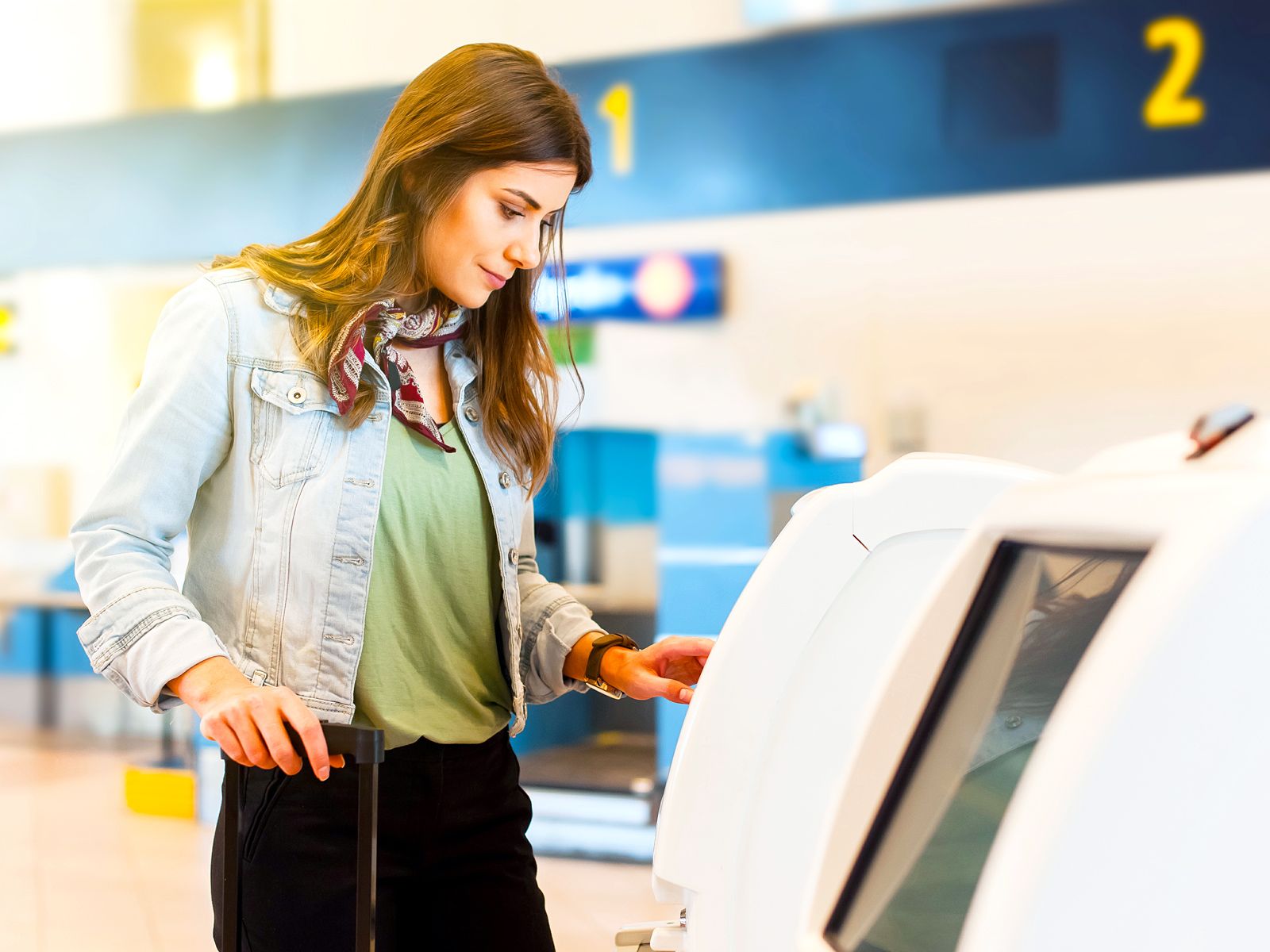
Another relatively new phenomenon of air travel? Checked bag fees. The cost of traveling with luggage in the hold was once included with every ticket, but as many airlines continued to struggle financially throughout the 2000s, they looked to ancillary fees to boost revenue. 

In 2008, American Airlines was the first major airline in the U.S. to introduce a checked bag fee. Back then, the fee was just $15 for the first checked bag, but fees have been steadily rising since. And unfortunately, they’re probably here to stay. (In fact, in 2024 the major U.S. airlines all hiked their fees.) For now, you can avoid those fees by flying an airline where bags are still included, such as Southwest Airlines, or through other methods such as signing up for airline credit cards. 

Automatic Refunds for Flight Disruptions

View of aircraft cabin aisle from back to front
Credit: Alex Desanshe/ Shutterstock 

One of the more recent developments in air travel rules concerns flight delays or cancellations. Before 2024, there were no federal rules around what counted as a “significant” enough flight disruption to necessitate the airline providing travelers a refund. It was up to the individual airlines to decide, which, predictably, led to some customer-unfriendly policies. 

But thanks to new rules introduced by the DOT in April 2024, there are now clear parameters for flight delays and cancellations and when the airline has to give you your money back. The rules even extend to delayed baggage and the failure of airlines to provide other paid services, such as in-flight Wi-Fi or seat upgrades

Post Banner Image
Tips

5 Stunning Lakefront Towns You Need To Visit

By Daily Passport Team
Read time: 5 minutes
June 28, 2024
Updated: March 26, 2025

5 Stunning Lakefront Towns You Need To Visit

By Daily Passport Team
Author
Daily Passport Team
Daily Passport writers have been seen in publications such as National Geographic, Food & Wine, CBC, Condé Nast Traveler, and Business Insider. They're passionate about uncovering unique destinations and sharing expert tips with curious travelers.

Nothing beats a lakefront town, especially in summer. Travelers can soak in beautiful scenery, a laid-back vibe, friendly locals, charming architecture, and a bevy of outdoor adventures. What’s not to love? If you’ve checked America’s prettiest lake towns off your list already, consider one of these five stunning lakefront towns around the world, from Austria to Argentina.

Hallstatt, Austria

Storybook lakefront village of Hallstatt, Austria
Credit: Alex Dinh/ 500px via Getty Images 

The stuff of storybooks and screensavers, Hallstatt doesn’t seem a particularly plausible outpost of the modern world. There is, for starters, the fairytale waterfront — all gables and spires — backed by Alpine peaks and that gorgeously reflect in the lake’s glassy surface. And then there’s the gothic cliff-side chapel topped with the 12th-century tower — not to mention a swan-to-human ratio that tends to stand out in a village of several hundred people. Nonetheless, this place is very much a living reality, every bit as beautiful as billed. 

But yet, there’s more than meets the eye: Set at the heart of a UNESCO World Heritage Cultural Landscape, the village is one of the oldest continuously inhabited settlements in Europe. Indeed, an entire Bronze Age culture came to be known as “Hallstatt” thanks to its rich archeological legacy here, best represented in the town’s ancient local salt mine — reported to be the planet’s oldest at 7,000 or so years in operation. The requisite mine tour adds just one more fascinating layer to this mountainside town that feels lost in time.

Queenstown, New Zealand 

Boat docked in Lake Wakatipu in Queenstown, New Zealand
Credit: Sushaaa/ iStock via Getty Images 

Billing itself as the “Adventure Capital of the World,” Queenstown sits alongside the gorgeous Lake Wakatipu on New Zealand’s South Island. Millions of years ago, the lake started out as a valley that was scraped open by a receding glacier. Over time, the rocks and sediment left behind by the glacier dammed off the valley and created Lake Wakatipu. The lake — 48 miles long and three miles wide — zigzags like a bolt of lightning through a dramatic landscape created by the aptly named Remarkables mountain range. 

Queenstown — home to about 30,000 year-round residents — is located on the lake’s eastern elbow and is a popular hub for tourists and Kiwis in search of natural beauty and outdoor adventure. As the birthplace of bungee jumping, Queenstown is synonymous with thrills. It is also a favorite destination to experience the Kiwi invention of jet boat riding, an adrenaline-fueled venture that hurdles riders through mountain canyons while racing across the waters at speeds of up to 45 mph on gas turbine powered boats.

Bled, Slovenia 

Church on shores of Lake Bled in Slovenia
Credit: Freeartist/ iStock via Getty Images 

Nestled in the Julian Alps, Slovenia’s Lake Bled, located in a town of the same name, is famous for a view that comes straight out of a storybook. A 15th-century, Gothic-style church towers over the tiny tear-shaped island in the middle of the lake and is often mirrored on the water’s surface, creating one of Slovenia’s most picturesque scenes. It’s no surprise that the lake is a popular tourist attraction for folks in search of fairy-tale charm; according to local legend, it was fairies themselves that created the lake. Angered by shepherds who allowed their sheep to eat all the grass and vegetation in the valley, fairies flooded the area. They left only the island — a sacred spot where they could convene and dance without any meddling grazers.

Whether or not you’re into folklore, you won’t be disappointed by Lake Bled and the towering medieval castles and mountain peaks that surround it. Located in Triglav National Park, about 35 miles from the capital, Ljubljana, the lake town can get crowded in summer, so try visiting during fall for stunning foliage. Or better yet, visit in winter, when a dusting of snow only adds to the lake’s fairy-tale allure. 

Lucerne, Switzerland

Medieval Kapellbrücke bridge over Reuss River in Lucerne, Switzerland
Credit: Leamus/ iStock via Getty Images 

The storybook Swiss city of Lucerne, set along the shores of its namesake lake, is nestled in a valley surrounded by the massive, snow-capped peaks of the Swiss Alps. Home to approximately 82,000 people, Lucerne is the most populous city in central Switzerland and a popular tourist hub thanks to its stunning surroundings and well-preserved medieval architecture

One of the best-preserved examples is Kapellbrücke, which translates literally to “chapel bridge” and is considered to be Europe’s oldest wooden covered bridge. Spanning Lucerne’s Reuss River, Kapellbrücke was constructed in 1333 to link the city’s old (right bank) and new (left) sections, while acting as a fortification to protect from attacks originating from Lake Lucerne. While the bridge was originally almost 900 feet long, riverbank amendments have now shortened the bridge’s span to just under 700 feet. It is one of Switzerland’s most popular (and most photographed) tourist attractions, offering lovely views of both the city and the lake.

El Calafate, Argentina

Perito Moreno glacier in El Calafate, Argentina, seen from above
Credit: kavram/ iStock via Getty Images 

El Calafate, a charming town located on the southern shores of Lago Argentino, is best known as the gateway to southern Patagonia’s Los Glaciares National Park. As its name suggests, the national park is home to more than 300 glaciers, none more famous than the mighty Perito Moreno. Covering a jaw-dropping 97 square miles, Perito Moreno (named after 19th-century explorer Francisco Moreno) is one of the only glaciers in the world that is advancing instead of shrinking. 

As the glacier’s size increases, large cracks slowly form along its edges. Stand in front of Perito Moreno long enough, and you’ll bear witness to piercing cracks and booms of huge chunks of ice calving off the glacier and falling into the frigid waters of Lago Argentino, 200 feet below. The viewing platform provides a spectacular vantage point from across the lagoon, but guided tours also offer the chance to climb and trek through the glacier’s craggy caves and towering walls of ice.

Post Banner Image
Geography

5 Beautiful Bays Around the World

By Daily Passport Team
Read time: 5 minutes
June 28, 2024
Updated: July 1, 2024

5 Beautiful Bays Around the World

By Daily Passport Team
Author
Daily Passport Team
Daily Passport writers have been seen in publications such as National Geographic, Food & Wine, CBC, Condé Nast Traveler, and Business Insider. They're passionate about uncovering unique destinations and sharing expert tips with curious travelers.

Bays form some of the planet’s dreamiest natural landscapes. These brilliant-blue coastal bodies of water are often surrounded by dramatic cliffs, towering rock formations, and postcard-worthy beaches — making them a surreal sight to witness up close. From the bay that sees the world’s highest tides to a bay named one of the Seven Natural Wonders of the World, check out five of the world’s most beautiful bays.

Halong Bay – Vietnam

Towering limestone rock formations and traditional boats and floating docks in Ha Long Bay, Vietnam
Credit: 12ee12/ iStock via Getty Images 

Around 1,600 jagged, rainforest-covered limestone pillars erupt from the emerald waters of Hạ Long Bay — creating one of Vietnam’s most surreal landscapes. The full name of this UNESCO World Heritage Site, Vịnh Hạ Long, translates to “Where the Dragon Descends to the Sea,” an evocative way to describe this 600-square-mile bay in the South China Sea’s Gulf of Tonkin that has become one of the country’s must-see tourist destinations.

Once an ideal hideout for pirates, the karst monoliths were made famous in the 1997 James Bond film Tomorrow Never Dies. Like Scotland’s Loch Ness, Hạ Long has its own mythical monster, a camera-shy sea serpent known as the Tarasque, but that doesn’t stop the hordes of visitors flocking to see the bay’s caves and beaches, peruse the area’s pearl farms, cruise on classic sailing vessels (junks) or explore under their own steam via kayak. About a three-hour drive from Hanoi, Hạ Long has a huge selection of lodging options, from basic guesthouses to five-star resorts. Many visitors also choose to stay overnight on the bay. 

Horseshoe Bay – Bermuda

Rocky coast along Horseshoe Bay, Bermuda
Credit: Samantha Williamson/ iStock via Getty Images 

Bermuda’s Horseshoe Bay is actually more crescent than U-shaped, but either way, it’s one of the island’s must-visits. Located in Southampton Parish, the expansive beach is famous for its pink-hued sand, the result of crushed coral and seashells. The pink of the shoreline contrasts crystal-clear turquoise water that, as an added bonus, is bathtub-warm and mostly calm in the high season (May to September). 

But if you’re looking to avoid crowds, take a romantic off-season stroll, check it out during a kite-flying festival every year on Good Friday, or time your visit for a weekday. Of course, there’s also the option of just embracing the crowds — thanks to its popularity, the beach offers a bevy of amenities. And we’re not talking just about snorkeling gear (look for angelfish and parrot fish among the reefs) — there are also chairs and towels, an array of casual snack bars and restaurants, a protected cove that’s great for kids, lifeguards and changing rooms, and striking limestone rock formations that more adventurous visitors love to climb over. Horseshoe Bay is easy and cheap to get to by bus — but we recommend getting there like a true Bermudan and renting a scooter.

Bay of Fundy – Canada

Plant covered sea stacks in Bay of Fundy, Canada
Credit: Rixipix/ iStock via Getty Images 

Twice daily, more than 175 billion tons of Atlantic seawater cascade in and out with the Bay of Fundy’s tides — an amount greater than the combined flow of all freshwater rivers on Earth. Approximately 190 million years ago, tectonic plates began to sever the Pangea supercontinent, creating the rift valley that the Bay of Fundy occupies between the Canadian provinces of New Brunswick and Nova Scotia. Erosion from the bay’s record-high tides has uncovered the world’s most complete chronicle of the 300 million-year-old Carboniferous Period at Joggins Fossil Cliffs — a UNESCO World Heritage Site — plus dinosaur fossils at the Cliffs of Fundy UNESCO Global Geopark. 

More than 1 million nature enthusiasts arrive each year to witness these incredible natural wonders. At high tide, waves peak at 70 feet tall, but when the coastline calms, sea kayakers and their guides are able to paddle through the dynamic scenery. From May to October, visitors on foot can approach the Hopewell Rocks or “Flower Pot Rocks,” sandstone sea stacks topped with plant life. These months correspond with boat tours of the Fundy Aquarium Ecozone: Lucky spectators may spot four species of whales — including the planet’s second-largest animal, the finback whale — as well as dolphins and porpoises.

Wineglass Bay – Australia

View of Wineglass Bay in Tasmania from surrounding mountains
Credit: benstevens/ iStock via Getty Images 

Part of the Freycinet Peninsula on the east coast of Tasmania, Wineglass Bay is often cited as one of the world’s best beaches, as well as the state’s most photographed vista. And given the mountain-backed swirl of transparent turquoise you’ll find here, both superlatives make perfect sense. The origins of the name itself, though, are a little less straightforward — it comes not from the crescent-shaped shoreline that might resemble a wineglass when viewed from above, but from a darker history. In the 1800s, whalers would set out from these shores to harpoon passing prey, and as the unfortunate catch was towed back in, the bay would turn blood-red (or wine-red, as the imaginative onlooker might see). 

Fortunately, by the mid-19th century, shore-based whaling had ceased in the area, and in 1916, Freycinet became a 65-square-mile national park. The combined result is that these waters are now protected and pristine — to the elation of visiting divers, kayakers, eco-cruisers, hikers, and nature photographers from around the world who come to visit the photogenic bay.

Guanabara Bay – Brazil 

Aerial view of Guanabara Bay with Rio de Janeiro skyline and Sugar Loaf Mountain
Credit: Grafissimo/ E+ via Getty Images 

One of the Seven Natural Wonders of the World, Guanabara Bay is the world’s largest bay by volume of water. The bay’s resemblance to a river inspired the name of the city along its western shores. In January 1502, Portuguese explorers mistook the entrance to the bay as a mouth to a river and named their settlement Rio de Janeiro, which translates to “River of January.” Guanabara Bay features bright, blue waters that are surrounded by the iconic Sugar Loaf Mountain, which juts from the water at the mouth of the bay, and the statue of Christ the Redeemer. Sitting atop 2,300-foot-tall Mount Corcovado in Rio de Janeiro, Christ the Redeemer stands as a symbol of strength with his arms wide open over Guanabara Bay.

Post Banner Image
Tips

7 Things You Should Never Do in a National Park

By Bennett Kleinman
Read time: 5 minutes
June 28, 2024
Updated: June 28, 2024

7 Things You Should Never Do in a National Park

By Bennett Kleinman
Author
Bennett Kleinman
Bennett is a New York City-based staff writer for Daily Passport. He previously contributed to television programs such as the Late Show With David Letterman, as well as digital publications like the Onion. Bennett has traveled to 48 U.S. states and all 30 Major League Baseball stadiums.

The U.S. National Park System contains 429 individual sites that cover more than 85 million acres of land. These federally protected landmarks are renowned for their natural beauty and historical significance. But while it’s easy to get swept up in the wonder of visiting these parks, it’s also important to practice proper etiquette during your visit. This helps keep the parks in pristine condition and also ensures the safety of yourself and those around you. Breaking any park rules may result in serious injury, fines, and possibly even arrest. Here are seven things you should never do in a national park.

Approach Wildlife

Herd of bison grazing beside lake in Yellowstone National Park, Wyoming
Credit: Gerald Corsi/ iStock via Getty Images 

Approaching wildlife is one of the most dangerous things any national park visitor can do, as it jeopardizes the well-being of both you and the animal. This is especially true in the case of larger, more dangerous creatures such as the bison that live in Yellowstone or the alligators found in the Everglades. You should familiarize yourself with each park’s guidelines, but in general, the National Park Service says you should keep a minimum of 25 yards from most wildlife and 100 yards from predators like wolves and bears.

If you come upon an animal while hiking, keep your distance until the animal goes on its way. Getting too close may cause the animal to react to your presence by panicking or attacking, and touching an animal may result in further harm or disease. As the Park Service sums up, “Let wildlife be wild and observe from a distance.”

Take Home Natural Souvenirs

Flowers blooming on mountainside
Credit: kellyvandellen/ iStock via Getty Images 

Removing rocks, plants, or any other natural souvenir from a national park site is not permitted, as your actions may negatively impact the ecology of the region. What may look like a simple rock could actually be an important fossil, and you never know what plant species may be protected. Even broken branches on the trail should be left where they are, as they may be essential tools for an endangered bird to build its nest. The only items you should take from any national park site are those purchased in the gift shop.

Leave Any Trace Behind

Summer landscape of Yosemite National Park, California
Credit: Konoplytska/ iStock via Getty Images 

Likewise, the only evidence of your visit to a national park should be the footprints on the trail that you leave behind. If you’re camping, be sure to take all of your garbage and dispose of it in the proper receptacles. This especially includes food items — many creatures in the parks may struggle to digest human food, or it may cause the animals to become reliant on humans for food. Vandalism is also strictly forbidden. Never carve your initials into a tree, paint a smiley face onto a rock, or any other similar act.

Fly Drones

Fall foliage on Mount Rainier in Washington
Credit: Riddhish Chakraborty/ Moment via Getty Images\

You might be tempted to capture the beauty of a park with aerial photography, but flying drones or other unmanned aircraft is explicitly forbidden at the majority of national park sites. This ban exists for several reasons. First, it’s meant to limit noise pollution that can bother fellow parkgoers and startle the animals. It also protects the privacy of any visitors to the park. Plus, there have been several instances of drones crashing in national parks, which poses a serious risk to the wildlife and vegetation. It’s essentially considered littering should your drone crash into a canyon or other inaccessible area.

Smoke

Hiking trail through Redwood National Park in California
Credit: HadelProductions/ iStock via Getty Images 

Some national park sites have explicit smoking bans, while others permit it. But even if you’re technically allowed to smoke, it’s still good park etiquette to keep your cigarettes in the car while out on a hiking trail. People visit national parks to take in the beauty of nature — not to inhale secondhand smoke. Ingesting smoke is harmful not just to other visitors, but also to the wildlife. Finally, leaving used cigarette butts along the trail or in the parking lot contributes to unwanted pollution and could even pose a fire risk. All it takes is one glowing ember and some dry grass to cause widespread destruction.

Ignore Signage

View of El Capitan and Half Dome in Yosemite National Park, California
Credit: Paul D Wade/ iStock via Getty Images

It may seem obvious, but it’s worth reiterating: Always adhere to any signage you see in a national park. If a sign says “trail closed,” for instance, then you should find another trail to hike down rather than proceed with caution. Signs like that are there for your safety and to help protect the delicate ecosystem of the park. Ignoring a sign could cause any number of issues, from agitating animals to damaging important plant life. These signs may also be there to warn you about a slippery or uneven trail, which may pose a serious risk of potential injury.

Bring Unleashed Dogs

Hiker and her dog on mountaintop
Credit: Cavan Images/ Cavan via Getty Images 

Pets are welcomed at many national park sites, especially in campgrounds and marked trail areas. However, park goers should never allow their dogs to go off leash, as it increases the risk of harm to both your pet and also yourself. Imagine visiting Yellowstone and encountering a brown bear on the trail — even if well trained, dogs are unpredictable, and the situation may suddenly turn dire if your dog starts barking and charging at the bear. To ensure that everyone stays safe and happy, always keep your dog on a leash while visiting any national park.

Post Banner Image
Tips

5 Items You Should Always Bring to a Hotel Room

By Daily Passport Team
Read time: 3 minutes
June 28, 2024
Updated: February 12, 2026

5 Items You Should Always Bring to a Hotel Room

By Daily Passport Team
Author
Daily Passport Team
Daily Passport writers have been seen in publications such as National Geographic, Food & Wine, CBC, Condé Nast Traveler, and Business Insider. They're passionate about uncovering unique destinations and sharing expert tips with curious travelers.

The average hotel room contains the same old gadgets we’ve all seen before — an alarm clock from the 1990s, a remote control that only sort of works, and a hair dryer that blows way too hot. But there are plenty of other useful items you can (and should) bring to elevate a hotel stay. These nifty products include easy-to-install safety mechanisms, tools to keep your room clean, and other convenient items that promise to make time on the road much easier. Check out these five handy gadgets for your next trip.

Portable Lock

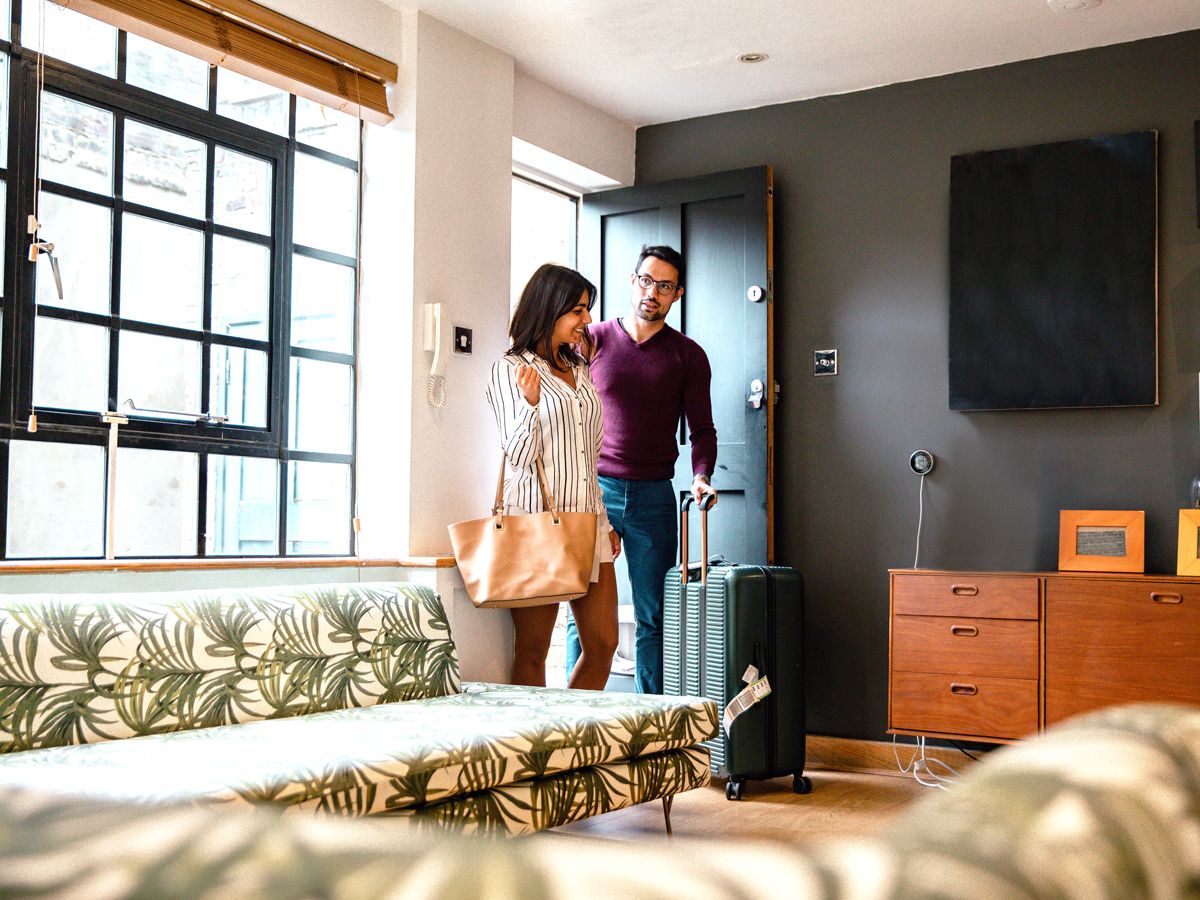
Traveler entering hotel room with luggage
Credit: Boy_Anupong/ Moment via Getty Images

Not every hotel door locks automatically when you close it, but even those that do are still at risk of being jimmied open. The Addalock can help you sleep soundly by keeping that door firmly shut and providing much-needed peace of mind in your hotel room. To install this device, insert the metal “claws” into the strike of the door and then close the door to hold the Addalock in place. Then, grab the dangling red handle and insert the moving metal rod into the portion already attached to the door. Once installed, the door will be securely locked from the inside without any way to open it from the hallway, even for people with a key.

Virtual Private Network

Person at desk using cellphone and laptop computer
Credit: Anchiy/ E+ via Getty Images

Many hotel Wi-Fi networks are vulnerable to cyber attacks, which puts your personal data at risk. This includes your name, credit card information, passwords, and other sensitive information. To protect against these potential attacks, it’s worth using a virtual private network (VPN). VPNs encrypt sensitive information on your computer so that it can’t be accessed by hackers. Plus, they are easy to install. Just go to your device’s network settings, search for the specific VPN you want to use, enter a username and password, and hit “connect.” Some of the most popular VPN services include NordVPN and Private Internet Access.

Travel Adapter

Person plugging in cellphone to charge
Credit: Pheelings Media/ iStock via Getty Images 

Travel adapters are especially useful when staying in a hotel abroad, as they’re compatible with a wide range of unfamiliar outlet shapes. But this device is also great for domestic travel, just in case you need a USB-C outlet or another connection the hotel may not have. For instance, this adapter works in over 200 countries and includes USB and USB-C slots, in addition to a slot for more traditional power plugs. You can also plug in multiple devices and charge your computer, smartphone, and tablet all at once.

Personal Toiletry Holders

Travel-size bottles labeled shampoo, body gel, and body lotion
Credit: onsuda/ iStock via Getty Images 

Complimentary hotel toiletries can be hit-or-miss, and you may wish that you had the personal care products you use at home. Thanks to LiquiSnugs, you can. These tiny silicone bottles are easy to fill with any shampoo, conditioner, soap, or other squeezable toiletry. This allows you to bring a small portion of your preferred shampoo with you on the road rather than lug around the whole bottle. LiquiSnugs are also TSA-approved and are designed to prevent any leaking in your luggage. Plus, they aren’t just for personal care items — you can also fill them with your favorite condiment to spice up that room service order.

UV Light Sanitizer

Person using UV light sanitizer on cellphone
Credit: cameraguy/ iStock via Getty Images 

Door handles, telephone buttons, and the remote control are some of the most germ-covered areas of any hotel room. This portable UV light from LivePure helps clean these touch points by killing 99.9% of invisible germs and bacteria. The light easily fits into any bag or purse so you can take it with you on your next trip. It’s also great to bring when you leave the hotel and use public transportation, go out to dinner at a crowded restaurant, or stop off anywhere else that you may be concerned about germs.

Note: All featured products and deals are selected independently and objectively by the author. Daily Passport may receive a share of sales via affiliate links in content.

Post Banner Image
Tips

8 Things Passengers Do That Flight Attendants Hate

By Rachel Gresh
Read time: 6 minutes
June 26, 2024
Updated: June 26, 2024

8 Things Passengers Do That Flight Attendants Hate

By Rachel Gresh
Author
Rachel Gresh
Rachel is a Washington, D.C.–based travel and lifestyle writer with roots in the Great Lakes region. When she’s not writing for publications such as The Discoverer and Interesting Facts, you’ll find her wandering through museums or exploring destinations off the beaten path.

While flying on an airplane, following directions, limiting loud noises, and not making a mess (hopefully) goes without saying. Still, there are plenty of other things passengers do that make flight attendants’ skin crawl — and they might not even realize they’re doing it. Here are some of the most annoying things airline passengers do, according to flight attendants. 

Talking During the Safety Demonstration 

Flight attendant performing safety demonstration on airplane
Credit: ake1150sb/ iStock via Getty Images 

It’s not just that flight attendants want passengers to pay attention during safety demonstrations — the Federal Aviation Administration requires it. You never know when you might need this vital information during an emergency. Wearing headphones is one thing, but flight attendants say it’s incredibly annoying when passengers talk loudly during the safety presentation. Not only is it evident that they aren’t paying attention, but they’re also distracting nearby passengers and possibly preventing them from hearing potentially lifesaving safety information.

Special Requests During Trash Time 

Flight attendant in airplane aisle serving passengers  from beverage cart
Credit: Me 3645 Studio/ Moment via Getty Images 

A simple way to make flight attendants’ lives easier is to let them handle one task at a time. During trash collection, try not to make any extra requests requiring them to return to the galley. This is especially true when asking for drinks or snacks while flight attendants are collecting trash — they can’t write down orders with both hands on the trash bag, so it’s all from memory. As one flight attendant pointed out on Reddit, “How am I going to remember that 6B wants a Coke, 10A wants coffee with three creams, 12F wants a vodka soda, 13F needs headphones, and 20D wants a beer by the time I’ve finished doing trash for 30 rows?” 

Of course, flight attendants are there to assist you, but they’re primarily focused on safety. Any other needs are secondary and should be addressed while they aren’t preoccupied. For example, try not to ring the bell for trash collection (unless you’ve made a big mess and need assistance). Flight attendants come around at least once before the flight is over. 

Invading Their Personal Space

Flight attendant walking down aircraft aisle checking on passengers
Credit: Anchiy/ E+ via Getty Images 

It may seem obvious, but unfortunately, this is one of flight attendants’ most common complaints: Never poke or tap airline staff to get their attention. Instead, politely wait until they’re done with their task. You’d never poke a bus driver, waiter, or retail employee to get their attention, but for some reason, passengers don’t seem to honor personal space on planes, according to many flight attendants on Reddit. Similarly, customers should always respect crew members’ personal space in airports

Not Obeying the Fasten Seatbelt Sign

Airplane passenger fastening seatbelt
Credit: urbazon/ E+ via Getty Images 

When the “fasten seatbelt” sign is on during periods of turbulence, both passengers and flight attendants should be seated. This isn’t a good time to ring the call bell for a drink or to get up and go to the bathroom — you could hurt yourself and others. After all, turbulence accounts for around 75% of annual weather-related incidents on commercial planes. A good rule of thumb: If flight attendants are in their jumpseats, you should be in your seat, too. 

Not Properly Disposing of Diapers 

Mother reading to baby on airplane
Credit: tatyana_tomsickova/ iStock via Getty Images 

Flight attendants work to make you more comfortable while flying with your little ones, but they ask you to extend the same common courtesy to them. Passengers should take used diapers to the lavatory and dispose of them in the trash can, and never try to flush them. And please, don’t hand the diaper to a flight attendant (yes, it happens) or try to put it in any other onboard trash bag aside from the one in the bathroom, because doing so can result in a smelly cabin. The same goes for changing diapers: Always take little ones to the onboard lavatory for that task. You might be surprised at the number of flight attendants who have witnessed parents changing diapers on a seat or tray table.

Swapping Seats

Traveler walking up airplane aisle toward front of cabin
Credit: Dobrila Vignjevic/ E+ via Getty Images

Only move to an empty seat after checking with a flight attendant first. Chances are, that seat is taken, and the passenger with that seat assignment hasn’t boarded yet. Plus, there’s often an extra charge to reserve specific seats, explains one flight attendant, who says their biggest annoyance is “seat problems.” When someone sits in a seat they didn’t reserve or pay for, it “causes a huge delay during boarding because we have to figure out who’s sitting in the wrong seat.” 

Another flight attendant adds that passengers often move to an upgraded seat, and “they get angry when they have to move to the correct seat.” Of course, flight attendants are happy to work with you if you’re separated from your children on a flight, for example, but the best course of action is to determine seating with the gate agent before you board (if you didn’t already pick out your seats during booking).

Poor Lavatory Etiquette

Illuminated lavatory and exit signs on aircraft
Credit: Jackal Pan/ Moment via Getty Images 

If you need to use the lavatory during your flight, always wait until the seatbelt sign is turned off. If you try to use the restroom before the plane takes off, you could delay the flight because everyone needs to be seated while the aircraft is taxiing. “People don’t realize we have to wait for everyone to be seated before we can taxi,” a flight attendant explains on Reddit. 

Many flight attendants have also seen passengers walking to the bathroom in only their socks — or worse, bare feet. This is not only unsanitary, but it also wouldn’t be considered normal behavior anywhere else in public. And remember to lock the lavatory door while you’re in there to avoid any in-flight mishaps and shut it on your way out. Flight attendants spend most of their time near the bathroom during flights, and they say it can get smelly if the door is left open.

Baggage Blunders

Flight attendant stowing passenger's bag in overhead bin
Credit: Hispanolistic/ E+ via Getty Images 

Large carry-ons such as roller bags and duffel bags go in the overhead bins, but smaller items — purses, jackets, hats, and small backpacks — belong on the floor in front of you. This is especially important on fully booked flights or smaller planes where overhead space is limited. Takeoff can be delayed while attendants reorganize overhead bins.

“When the flight is completely sold out, and we know we’re gonna run out of bin space, people will fill the overhead bin with their jackets and purses and small things that could go under the seat in front of them,” a flight attendant explains, adding that people do this even when they are specifically asked to move small items under the seat. For safety reasons, flight attendants aren’t supposed to help you lift your bags, either, so keep that in mind when putting something in the overhead bin.

What Flight Attendants Love: Courteous Customers

Flight attendant directing passengers down airplane aisle
Credit: Caia Image/ Collection Mix: Subjects via Getty Images 

The best gift you can give a flight attendant is simply following their directions. This makes their job easy and keeps things running smoothly. But perhaps the second-best gift you can give them is a smile. Sadly, one of the biggest annoyances of flight attendants is that plenty of passengers don’t say “hello,” “goodbye,” or acknowledge them at all — so sometimes, simply asking how they’re doing goes a long way. Some flight attendants feel extra special if a passenger goes out of their way to give them a small gift, such as candies, a Starbucks gift card, or even a thank-you note. After all, it’s always nice to feel appreciated.

Post Banner Image
Tips

What To Do if You Lose Your Passport on Vacation

By Fiona Mokry
Read time: 3 minutes
June 26, 2024
Updated: June 27, 2024

What To Do if You Lose Your Passport on Vacation

By Fiona Mokry
Author
Fiona Mokry
Fiona has spent her career exploring the world and working in the travel industry, turning her lifelong passion into a profession. From planning custom trips to sharing stories as a travel writer for publications such as The Discoverer, she’s all about helping others experience the world in a deeper, more meaningful way.

Losing your passport on vacation is a stressful scenario no traveler wants to find themselves in. Fortunately, there are measures in place to help you remedy the situation and get home quickly from your trip abroad. Follow this step-by-step guide for what to do when you lose your passport on vacation. 

Don’t Panic

Traveler sitting in train station
Credit: miodrag ignjatovic/ E+ via Getty Images

Sure, it’s easier said than done, but remember that panicking will not bring your passport back. It’s important to take a deep breath, think back to where you last saw it, and retrace your steps. If your passport still doesn’t turn up, stay calm and know that, while inconvenient, there are processes in place to help you obtain a new one.

File a Police Report

Close-up image of person writing on clipboard
Credit: VioletaStoimenova/ E+ via Getty Images 

Whether you suspect your passport was stolen, lost, or misplaced, your next step should be to file a report with the local authorities. Reporting the situation is less about the police locating your passport and more about you obtaining official documentation. However, this is not a mandatory step. If circumstances prevent you from doing this or your travel itinerary doesn’t allow for it, you can still apply for a new passport without an official report. 

Contact the Nearest U.S. Embassy or Consulate

American flag flying outside of embassy building
Credit: Inna Polekhina/ iStock via Getty Images 

Next, contact the nearest U.S consulate or embassy and ask to speak to their consular section to report your passport lost or stolen. You will need to make an appointment to appear in person at the nearest location to apply for a new passport, and it could take some time to get there. Depending on the situation and urgency, the consular section may issue you a limited-validity emergency passport, which can usually be ready within one day and is good for up to one year. If there’s sufficient time, you may be issued a fully valid passport good for 10 years. Both passports have the standard $140 fee attached (as of 2024). 

Apply for a New Passport

Person with passport application at embassy
Credit: mediaphotos/ iStock via Getty Images 

To apply for a new passport, you will need to bring the following items with you to your in-person appointment at the embassy or consulate: a passport photo, another form of valid identification (such as a driver’s license), proof of U.S. citizenship (a birth certificate or photocopy of your passport), your flight itinerary, a completed DS-11 Passport Application, and a DS-64 Statement Regarding a Lost or Stolen Passport. (In the event you can’t provide all these documents, the State Department’s website notes that consular staff will do their best to assist.) 

Given these requirements for obtaining a new passport, it’s critical that you keep a virtual copy of your passport on your phone, as well as a photocopy. It’s also advisable to carry your driver’s license with you as a second form of identification. Remember to store these important documents in a separate place from your passport and avoid tucking them into the flap or pages of your passport.

Be Flexible With Your Travel Plans

Bus rider taking photo out of window with cellphone
Credit: d3sign/ Moment via Getty Images 

Keep in mind that embassies and consulates typically do not issue passports on weekends or holidays. If you happen to lose your passport during these periods and have an upcoming flight, you’ll likely need to reschedule. This will ensure sufficient time to obtain a new passport before your departure. (Travel insurance may be able to offset some of these costs.)

Exchange Your Passport at Home

Person sorting through mail at home
Credit: nortonrsx/ iStock via Getty Images 

If you were issued a limited-validity emergency passport, this can be exchanged for a fully valid one when you get home. Complete the DS-5504 form along with another DS-11 Passport Application form and submit by mail. If you’ve already paid the $140 passport fee abroad, you won’t need to pay any additional charges, unless you opt for expedited processing, which costs an extra $60.

Post Banner Image
Culture

The Biggest (and Best) Fourth of July Celebrations in America

By Fiona Mokry
Read time: 4 minutes
June 26, 2024
Updated: June 26, 2024

The Biggest (and Best) Fourth of July Celebrations in America

By Fiona Mokry
Author
Fiona Mokry
Fiona has spent her career exploring the world and working in the travel industry, turning her lifelong passion into a profession. From planning custom trips to sharing stories as a travel writer for publications such as The Discoverer, she’s all about helping others experience the world in a deeper, more meaningful way.

Marking the day the Declaration of Independence was adopted on July 4, 1776, America’s Independence Day is celebrated throughout the country with fireworks, parades, and backyard barbecues. Some people might prefer a low-key affair; others are looking for a grand spectacle to commemorate the birth of our nation. If you count yourself among the latter, check out these six Fourth of July celebrations that are renowned as the nation’s biggest and best.

Bristol Fourth of July Parade – Bristol, Rhode Island

Participants dressed in Revolutionary War garb in the Bristol Fourth of July Parade in Bristol, Rhode Island
Credit: kickstand/ iStock Unreleased via Getty Images 

The Bristol Fourth of July Parade in Bristol, Rhode Island, is the centerpiece of the nation’s oldest Independence Day celebration. The festivities began in 1785 when Reverend Henry Wright led patriotic exercises in the town of Bristol that featured hymns and speeches. As community members gathered and marched toward the meeting point, this set in motion what would become the longest-running Fourth of July celebration in the country. Today, Bristol takes its honorary title seriously. The celebration gets underway on June 14 with Flag Day festivities and concludes a full three weeks later with the epic 2.5-mile-long Fourth of July parade that draws up to 200,000 spectators from across the state and around the world. 

Macy’s Fourth of July Fireworks – New York City, New York

Aerial view of Macy's Fourth of July Fireworks on Hudson River in New York City
Credit: DLe/ Shutterstock 

The highly anticipated Macy’s Fourth of July Fireworks attract several million people each year, who come to see the country’s largest Fourth of July fireworks show take place from barges on the Hudson River in New York City. (An additional 15 million people watch the spectacle on TV.) Tens of thousands of fireworks produce the extravagant display, which is accompanied by pyrotechnics, dancing, and live musical performances around the viewing area of the fireworks. There’s no parade with colorful floats and marching bands, but New York City still hosts one of the largest and most spectacular Fourth of July celebrations in the country. 

Harborfest – Boston, Massachusetts 

Sailors in parade at Harborfest Fourth of July celebration in Boston, Massachusetts
Credit: NB/ROD/ Alamy Stock Photo

It’s only fitting that, as one of the oldest cities in the nation, Boston would also throw one of the biggest parties in the country to celebrate Independence Day. Harborfest is a multiday festival that takes place in Boston from July 1 to July 4 each year. The festival features an array of events and activities catering to all ages and interests, including historical reenactments, boat tours, live music, food vendors, art markets, a chowder festival, and the famous Boston Pops Fireworks Spectacular fireworks display. 

The morning of July 4 starts with a flag-raising ceremony and a wreath-laying ritual at Granary Burying Ground, followed by a reading of the Declaration of Independence at the Old State House and an oration at historic Faneuil Hall. The event concludes with fireworks, as well as the USS Constitution sailing from Boston Harbor to Castle Island and back. In 2022, Boston’s Harborfest drew an estimated 2 million spectators.

Huntington Beach 4th of July Celebration – Huntington Beach, California

Fourth of July parade in Huntington Beach, California
Credit: Jeff Gritchen/Orange County Register/ MediaNews Group via Getty Images

Southern California’s surf capital has been celebrating America’s birthday in style since 1904. The original Huntington Beach 4th of July Celebration coincided with the opening of the first electric train connecting Huntington Beach with nearby Long Beach and Los Angeles, which brought 50,000 people to Huntington Beach’s shores to celebrate. Though that train no longer exists, today the renowned party attracts upwards of 500,000 revelers

Activities and events include the Surf City 5K Run, a parade, fireworks, and a house-decorating contest for Huntington Beach residents. The celebration reaches its peak with a July 5 block party, in which the city’s Main Street is transformed into a lively pedestrian-only zone featuring live music, with bars and restaurants opening their doors to the crowds. 

Let Freedom Sing! – Nashville, Tennessee

Fireworks spectators in downtown Nashville, Tennessee
Credit: Danielle Del Valle via Getty Images Entertainment

Music City certainly lives up to its name with the annual Let Freedom Sing! Fourth of July celebration. The party kicks off on the afternoon of July 4 with a star-studded lineup of musical artists — the 2024 show features Chris Young, YOLA, Girl Named Tom, and many more. Following the free concerts is one of the largest fireworks shows in the nation, synchronized to a live performance by the Grammy Award-winning Nashville Symphony. The party also features a family-fun zone with inflatables, face painting, and other activities, as well as a wide variety of tasty food vendors and food trucks. 

A Capitol Fourth – Washington, D.C.

Fireworks over Washington, D.C.
Credit: Ana Maria Tudor/ Alamy Stock Photo

As you might expect, America’s capital stages one of the country’s biggest and best Fourth of July celebrations. The festivities kick off in the late morning of July 4 on Constitution Avenue with the National Independence Day Parade, consisting of marching bands, drum corps, floats, military and specialty units, giant balloons, equestrians, drill teams, national dignitaries, and celebrity participants. Happening simultaneously are family-friendly activities on the grounds of the Washington Monument. As night falls, a free concert gets underway with a lineup of popular musical artists. (Boyz II Men, Chicago, and Babyface were among the sperformer in 2023.) The night concludes with Fireworks at the National Mall, an annual spectacle that attracts roughly 700,000 people.

Post Banner Image
History

6 of the Most Famous Memorial Sites to Visit in the U.S. 

By Daily Passport Team
Read time: 6 minutes
June 26, 2024
Updated: June 27, 2024

6 of the Most Famous Memorial Sites to Visit in the U.S. 

By Daily Passport Team
Author
Daily Passport Team
Daily Passport writers have been seen in publications such as National Geographic, Food & Wine, CBC, Condé Nast Traveler, and Business Insider. They're passionate about uncovering unique destinations and sharing expert tips with curious travelers.

The United States is home to thousands of sites that commemorate influential historical figures, military heroes, civil rights leaders, and significant turning points in the nation’s history. Visiting these landmarks is all but guaranteed to leave you with a sense of awe and a deeper appreciation for the trailblazing Americans who shaped our country. Here are seven of the more important memorial sites you should visit. 

Crazy Horse Memorial – Black Hills, South Dakota

Image of the Crazy Horse Memorial carved into mountain in South Dakota
Credit: Martina Birnbaum/ Alamy Stock Photo

The Crazy Horse Memorial in the Black Hills of South Dakota is set to be the world’s largest sculpture — but only once it’s finished. More than 70 years after it began, work on the monument is still in progress, and some are skeptical that it will ever be completed. While construction started in 1948, the memorial’s history dates back to Mount Rushmore, which was built in 1927 on Lakota Native American lands. In response, Chief Henry Standing Bear petitioned Polish-American sculptor Korczak Ziolkowski (who assisted on Mount Rushmore) to carve a memorial dedicated to Crazy Horse, the Oglala Lakota chief who successfully fought Custer’s army at the 1876 Battle of Little Big Horn. 

Crazy Horse’s face alone is 87 feet tall (compared to Rushmore’s 60-foot George Washington profile), while the entire memorial will stand at 563 feet — four times the height of the Statue of Liberty. Although Ziolkowski passed away in 1982, leaving his masterpiece unfinished, roughly 1 million visitors still make the journey each year to admire the single completed segment, a majestic profile of Crazy Horse carved into a rocky mountain face.
9/11 Memorial – New York, New York

Reflecting pool of the 9/11 memorial lined with the names of victims and surrounded by downtown Manhattan skyscrapers
Credit: Stefano Politi Markovina/ Alamy Stock Photo

In stark contrast to the skyscrapers and busy streets of downtown Manhattan, two reflecting pools sit quietly on the former site of the World Trade Center’s towers. The waters flow inward, first to a pool 30 feet below street level and then another 20 feet into a void that represents, in the architects’ words, “absence made visible.” Surrounding them are the names of the nearly 3,000 victims who lost their lives on September 11, 2001, as well as those who perished in the 1993 terrorist attack.

Designed by Michael Arad and Peter Walker, the pools are part of the 9/11 Memorial & Museum — a site which has drawn more than 50 million people since it opened in 2014. The 8-acre memorial complex also houses an incredible underground museum with 60,000-plus artifacts and interactive exhibits. Above ground are 400 swamp white oak trees, a species native to New York, Virginia, and Pennsylvania — the three plane crash sites. A single Callery pear tree, which was damaged during the attack, has been revived and is now known as the Survivor Tree and stands as an enduring symbol of resilience. 

Vietnam Veterans Memorial – Washington, D.C.

Names of fallen soldiers listed on Vietnam Veterans Memorial in Washington, D.C.
Credit: Ian Dagnall/ Alamy Stock Photo

In 1980, a competition was held for the design of a new memorial to Vietnam veterans. The winning entry by Maya Lin, then a Yale University senior, was a graceful, stark work that elicits contemplation. The memorial features a V-shape gash carved into the sod of the National Mall and held open by black granite walls. The walls are etched with the 58,281 names of those who lost their lives in the Vietnam War, and from the vertex where they meet, the walls extend 246 feet in opposing directions, toward the Washington Monument and the Lincoln Memorial. In 1984, a more traditional sculpture — of three soldiers and a U.S. flag — was added to the site.

Nine years later, a Vietnam Women’s Memorial, a figurative sculpture depicting nurses tending to a fallen soldier, was erected nearby and, in 2004, a plaque honoring those who died after the war but as a result of their service was added to the solemn memorial group. And on Veterans Day 2020, the National Native American Veterans Memorial was unofficially unveiled. (It had an official post-pandemic dedication two years later.) Placed in a wooded wetland reestablished outside the Smithsonian’s National Museum of the American Indian, the memorial offers the chance for some quiet reflection on Washington, D.C.’s well-trodden National Mall

Pearl Harbor National Memorial – Hawaii

Floating USS Arizona Memorial in Pearl Harbor, Hawaii
Credit: mphillips007/ iStock Unreleased via Getty Images 

On December 7, 1941, “a date which will live in infamy,” as FDR so memorably described it, Japanese forces attacked Oahu’s Pearl Harbor, the event that finally precipitated the United States’ long deliberated entry into World War II. Eighty years after the fact, the Pearl Harbor National Memorial stands as a sobering reminder of the unthinkable number of lives lost on that day — and remains one of the most visited attractions in the state of Hawaii

The centerpiece of the experience is the USS Arizona Memorial, which sits alongside a still active military base and is accessible only by shuttle boat (for which you’ll need a ticket and designated departure time). The unique floating white concrete-and-steel structure, designed by Austrian architect Alfred Preis, is built atop the eponymous sunken battleship. Visitors can still see its remains from the surface, and its 1,177 deceased officers and crewmen are enshrined in marble at the site. Around the broader national memorial, you’ll find surprisingly serene natural spaces, artifacts from the damaged ships, and educational films about one of the most pivotal moments in American history.

Martin Luther King Jr. Memorial – Washington, D.C.

Image of the Martin Luther King, Jr. memorial against blue sky in Washington, D.C.
Credit: imageBROKER.com GmbH & Co. KG/ Alamy Stock Photo

Before 2011, the National Mall didn’t have a memorial dedicated to any Black Americans, but that changed when Baptist minister-turned-civil rights activist Martin Luther King, Jr. was honored with this impressive 30-foot granite stone sculpture. (It’s also the first memorial on the mall not dedicated to a President or war.) Prominently located at the Tidal Basin opposite the Jefferson Memorial, King’s memorial is packed with symbolism — right down to its address at 1964 Independence Avenue SW, honoring the Civil Rights Act of 1964.

The winning design for the monument (out of 900-plus entries) took inspiration from one of King’s quotes: “With this faith, we will be able to hew out of a mountain of despair, a stone of hope.” Upon entering the memorial, visitors first pass through two halves of the Mountain of Despair before reaching the Stone of Hope, where King’s statue is located. Throughout the memorial, King’s words are inscribed into stone — a powerful reminder of the continuing struggle for civil rights around the globe.

National Memorial for Peace and Justice – Montgomery, Alabama

Image of the National Memorial for Peace and Justice in Montgomery, Alabama
Credit: wellesenterprises/ iStock via Getty Images Plus 

By design, memorials are sobering places, where reflection, silence, and intense emotional reactions come reflexively, without instruction. Opened in April 2018, the National Memorial for Peace and Justice in Montgomery is no exception — and one that was long overdue. Created by the Equal Justice Initiative in collaboration with artists such as Kwame Akoto-Bamfo, Dana King, and Hank Willis Thomas, the open-sided, single-story structure is, in the words of the EJI, the “nation’s first memorial dedicated to the legacy of enslaved Black people, people terrorized by lynching, African Americans humiliated by racial segregation and Jim Crow, and people of color burdened with contemporary presumptions of guilt and police violence.”

Inside, suspended from the ceiling is the focal point of the six-acre site: orderly rows of six-foot slabs of Corten steel, each of the 800 roughly human-sized slabs representing a U.S. county and is inscribed with the names of the thousands of men, women, and children who were violently murdered there. The memorial and the adjacent museum, a sobering reminder of the nation’s history of racial inequality, was created with $20 million in private funds, and has quickly become one of the top tourist destinations in Alabama.

Post Banner Image
Tips

8 Things You Should Always Pack in Your Carry-On

By Julia Hammond
Read time: 5 minutes
June 26, 2024
Updated: April 10, 2025

8 Things You Should Always Pack in Your Carry-On

By Julia Hammond
Author
Julia Hammond
Julia is a U.K.-based travel writer whose work has been featured in The Independent, The Telegraph, The New Zealand Herald, and Culture Trip, among others. She’s an enthusiastic advocate for independent travel and a passionate geographer who has had the privilege of traveling to more than 130 countries in search of a story.

If you’re off on a big trip, chances are you’ll have a suitcase that you’ll want to check. But even so, it’s important to give some thought to what’s going on the plane with you, especially if you’re flying long-haul. After all, you don’t want to be stuck on a delayed flight or arrive at your destination lacking important items to make you comfortable. Here are eight things you should always pack in your carry-on.

Passport and Other Important Documents

Traveler packing suitcase with passport, airline ticket, and clothing
Credit: simon2579/ iStock via Getty Images 

When traveling abroad, you certainly can’t get far without your passport, so keep it with you at all times (and preferably in a wallet so it doesn’t get lost within a larger bag). Along with your boarding pass (if printed), travel insurance details, and a small stash of emergency cash, you might also want to keep the booking reference for your first night’s accommodation with you. Carrying a paper copy is a good idea — if you’re delayed and your cellphone battery is perilously low, you won’t have to worry about finding somewhere to charge up until after you’ve checked in.

Essential Medicines and a Hygiene Kit

Traveler packing hygiene items in suitcase
Credit: Artit_Wongpradu/ iStock via Getty Images 

Health and hygiene products are the next group of items you should always pack in your carry-on. It’s vital that any prescription medicines are carried with you on the plane so they don’t get lost in transit. And depending on your destination, you might also want to carry a copy of the prescription itself to satisfy officials of their purpose. A small first-aid kit and some antibacterial wipes or gel will also give you peace of mind while you’re on the go. Other products such as a folding toothbrush and toothpaste, stick deodorant, lip balm, and moisturizer will keep you feeling fresh, even on a long journey.

Travel Pillow and Eye Mask

Traveler using neck pillow at airport and browsing cellphone
Credit: mihailomilovanovic/ E+ via Getty Images 

On flights where you’re hoping to sleep, it’s worth slipping a travel pillow and eye mask into your carry-on. Ensuring your neck is properly supported will help you rest, and wearing an eye mask means that open window blinds or bright cabin lights won’t bother you. Just be sure to test these items before you leave to ensure they’ll keep you comfortable. Then, all you’ll need to do to catch some z’s is to buckle up over your blanket so that the flight attendants can see you’re safely strapped in if the plane encounters any turbulence.

Noise-Canceling Headphones

Airplane passenger wearing noise-canceling headphones and looking at cellphone
Credit: urbazon/ E+ via Getty Images 

We’ve come to rely on in-flight entertainment to keep us occupied while we’re in the air, whether it’s the airline’s seatback offering or shows downloaded onto your personal device. Whichever you prefer, using noise-canceling headphones will help you block out background chatter so you can concentrate uninterrupted on the music, movies, or games you’ve selected. These high-quality headphones are designed with comfort in mind and are more effective than the freebies the airlines hand out, so you’ll be glad you saved space for them in your carry-on.

Phone Charger

Traveler sitting at gate using portable charger to charge phone
Credit: O_Lypa/ iStock via Getty Images 

We forget how much we rely on our cellphones — until the battery’s almost dead. Consider carrying a multicountry adpater and topping up at the gate while you’re waiting to board. And if you’re changing planes along the way, it’s worth packing a cable with a USB adapter so you can keep the battery topped up during your flight if the airline provides outlets. Alternatively, throw a portable power bank into your carry-on and recharge that way.

Refillable Water Bottle

Traveler filling reusable water bottle at filling station
Credit: MalaikaCasal/ iStock via Getty Images 

Air travel can be dehydrating, and cabin crew members don’t always have the time during a busy flight to deliver drinks on demand. Instead, pop a large reusable water bottle into your carry-on and fill it up at an airport water fountain before you board your flight. Over time, this will save money on the cost of buying bottles of water at the airport, and you’ll also be doing your bit to save the planet by cutting down on single-use plastics.

Snacks

Father and child eating snack on airplane
Credit: Dobrila Vignjevic/ E+ via Getty Images 

On a long flight, you might also consider throwing in a few healthy, nutritious snacks to keep up your energy levels. Plus, if you’re stuck waiting for an extended period on the tarmac before takeoff, you won’t be worrying about a rumbling stomach on top of the delay. It’s a good idea to be mindful of the needs of other passengers by avoiding peanuts or other foods that may trigger an allergic reaction. Also, note that spreadables count as liquids when going through airport security. Finally, depending on your destination’s customs rules, you might not be able to deplane with certain leftover snacks, so bear that in mind when working out how much to take.

Change of Clothes

Open suitcase on bed showing contents
Credit: kitzcorner/ iStock via Getty Images 

While most checked bags arrive at the same time you do, there’s always a chance that you’ll arrive at your destination to find your luggage has been delayed or lost in transit. Fortunately, the majority of mishandled baggage is reunited with its owners eventually, but in the meantime, a missing bag can still have a big impact on your vacation. So, be sure to always pack a change of clothes, especially a spare set of underwear, in your carry-on. This will buy you time until the shops open or the rest of your belongings show up. Be destination-ready: If you’re heading to a beach resort, throw in a pair of flip-flops and a swimsuit; for a city break, don’t fly without a fresh pair of pants, a clean T-shirt, and some comfy waterproof sneakers in your carry-on.