

Tips •September 11, 2025•Updated: September 11, 2025
By Nicole Villeneuve
Author
Nicole Villeneuve
Nicole is a writer and researcher with over 15 years of experience seeking out arts, culture, and lifestyle stories in places like remote northern Quebec and the unforgettable streets of Amsterdam. Her work has also appeared in PureWow, Brit + Co, AUX TV, and CBC.
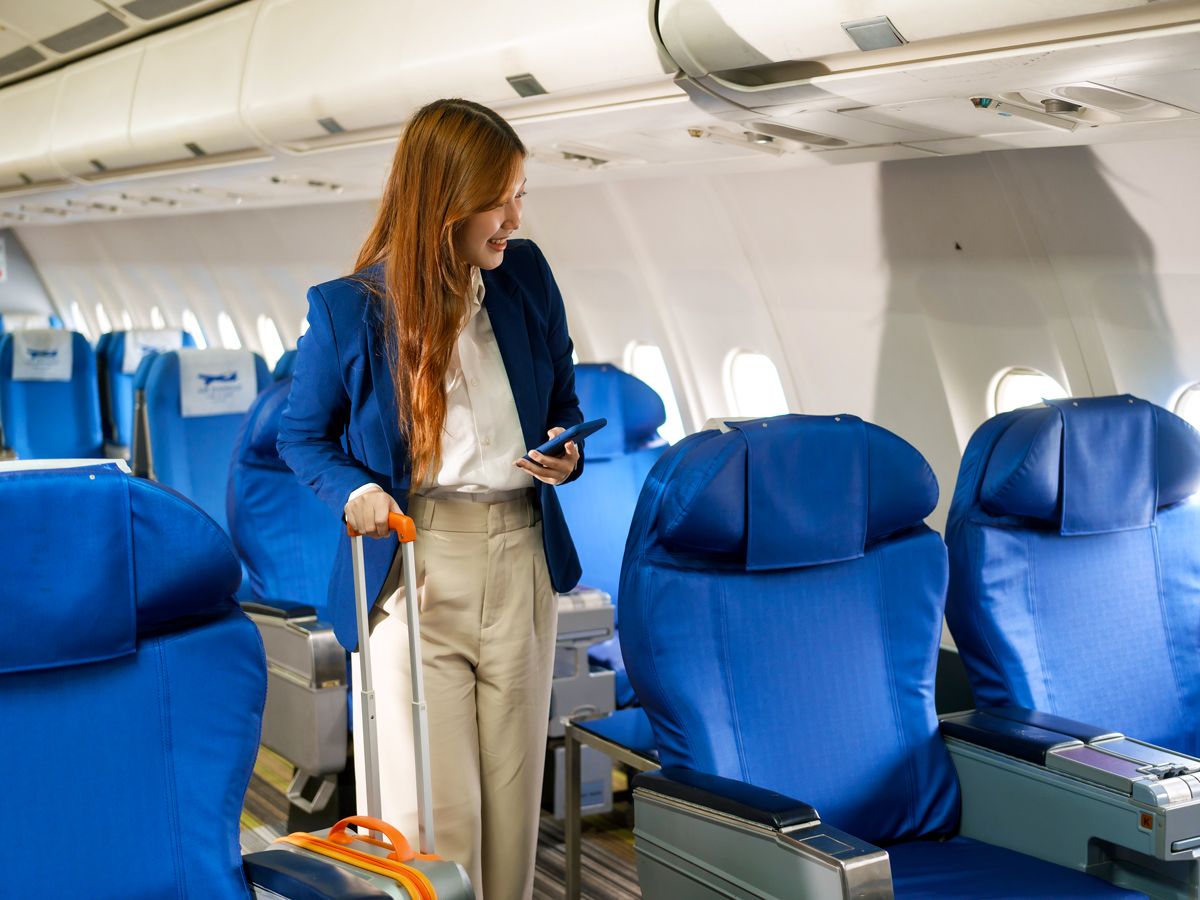
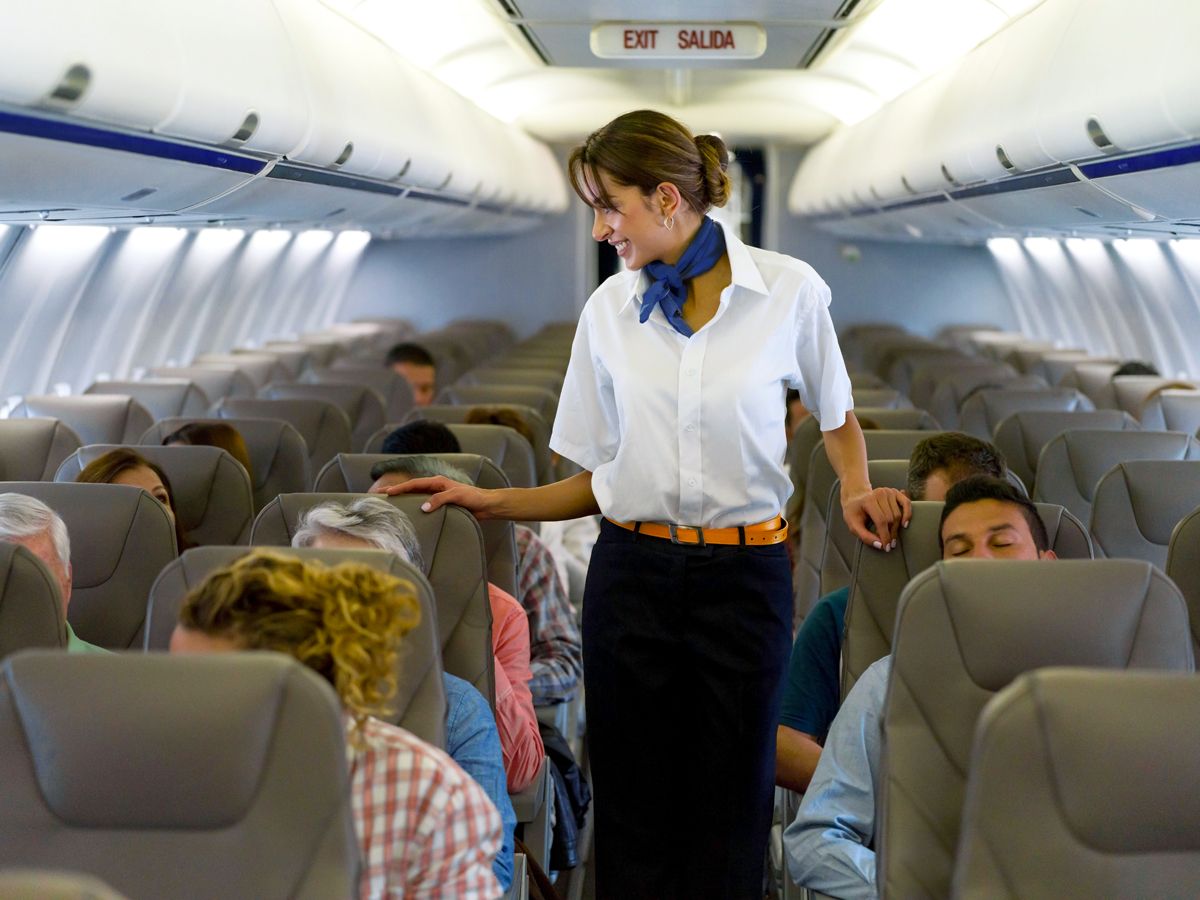
Every day, more than 3 million people fly in and out of U.S. airports, but it’s fair to say that most passengers do so with little insight about what really goes on behind the scenes. From why your snack options are limited to the not-so-great truth about airplane coffee, many cockpit and cabin decisions are more strategic — and, let’s be honest, cost-driven — than they appear. Here are eight things that airlines won’t tell you.
In the 1950s, passengers came to expect a full meal every time they flew, even on short flights. Today, you’ll most likely get a small package of pretzels, nuts, or cookies — a shift that began in the 1970s to help reduce costs and keep airfares low amid increased competition. So, how are those few staple snacks chosen?
According to interviews with airline executives, it’s a combination of factors, and one of them is the snack’s weight, since every extra pound on board means more fuel consumed. Snacks are also chosen for their flavor profile (since our ability to detect sweet and salty flavors drops by about 30%at altitude), and their suppliers, who must be able to deliver millions of peanut-free, shelf-stable packs reliably and cost-effectively. Airlines have dedicated food and beverage teams that choose the snacks, aided by on-board taste tests by the flight crew, and they encourage customers to provide feedback, since passenger preferences also have a lot to do with what gets served on board.
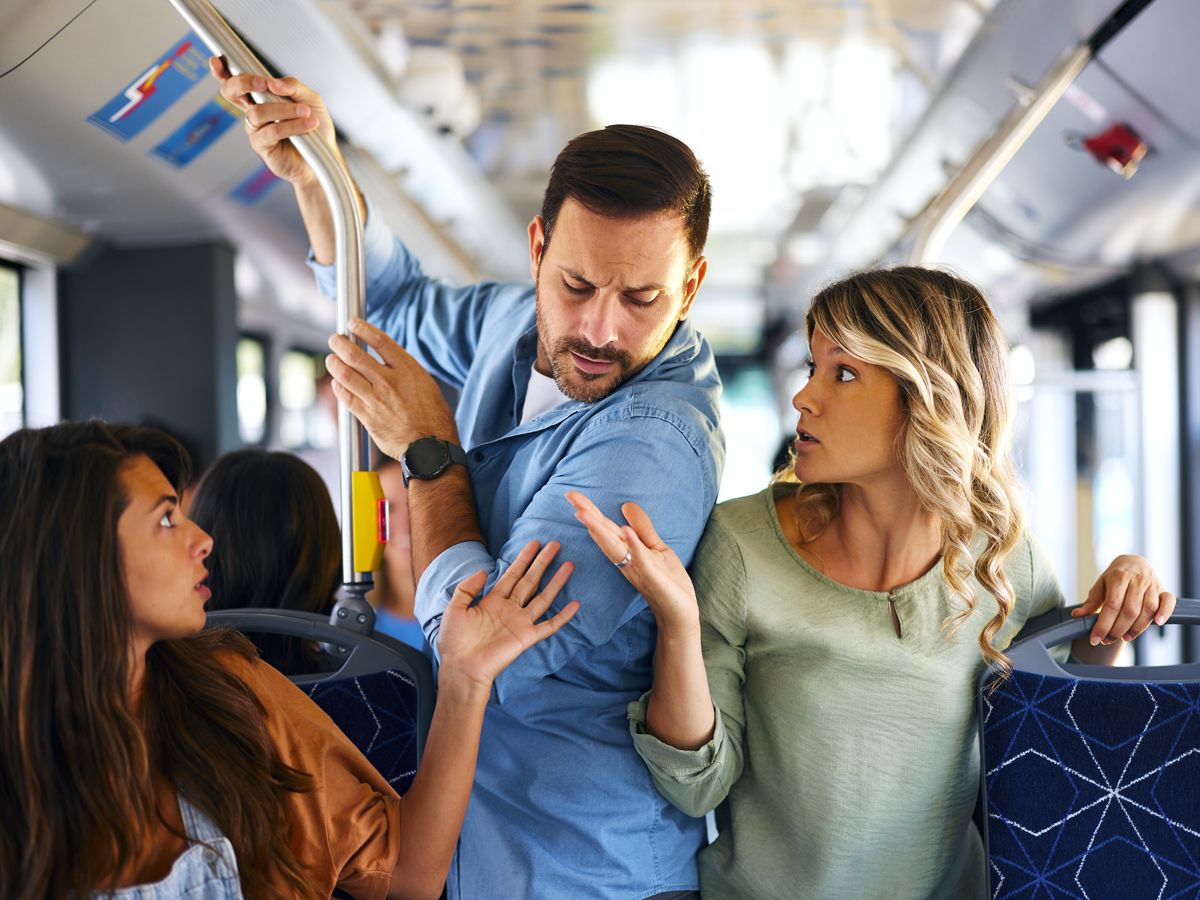
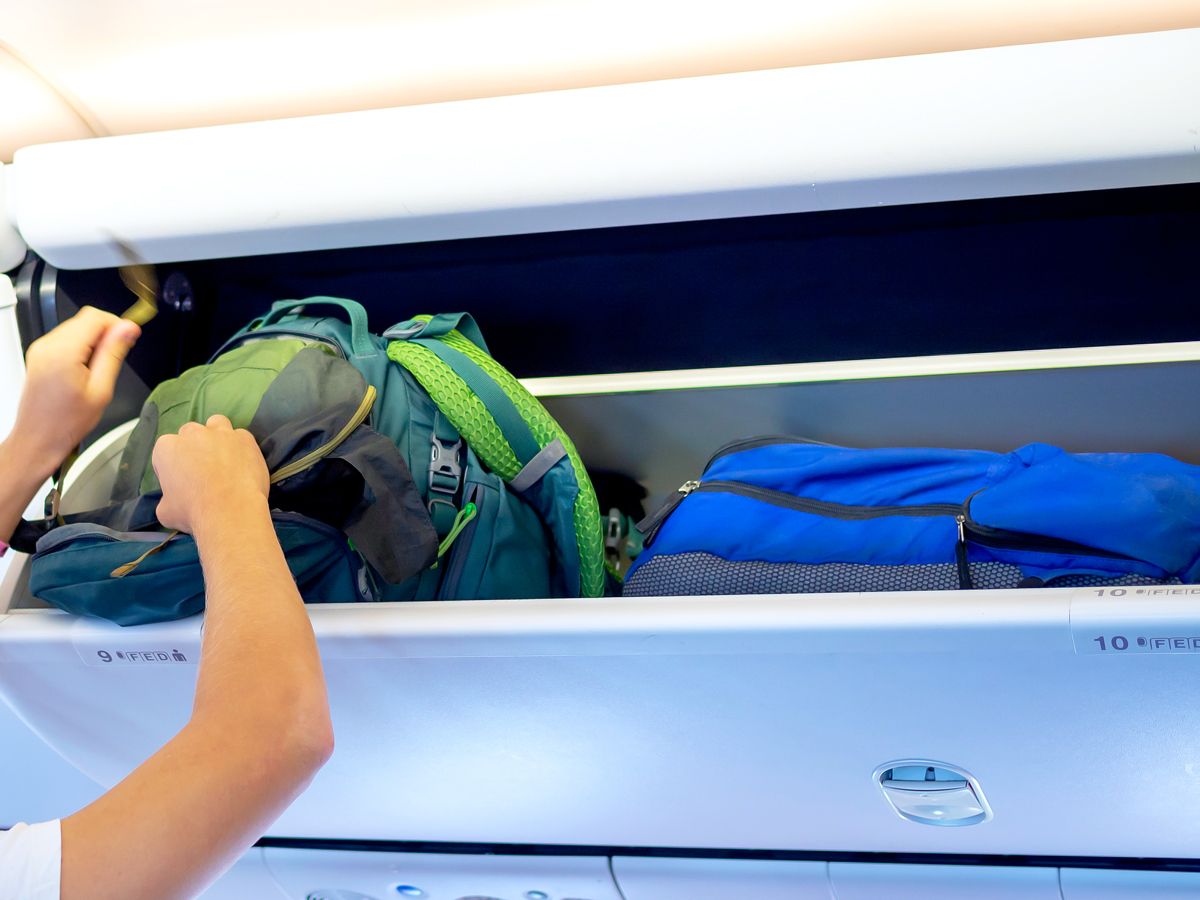
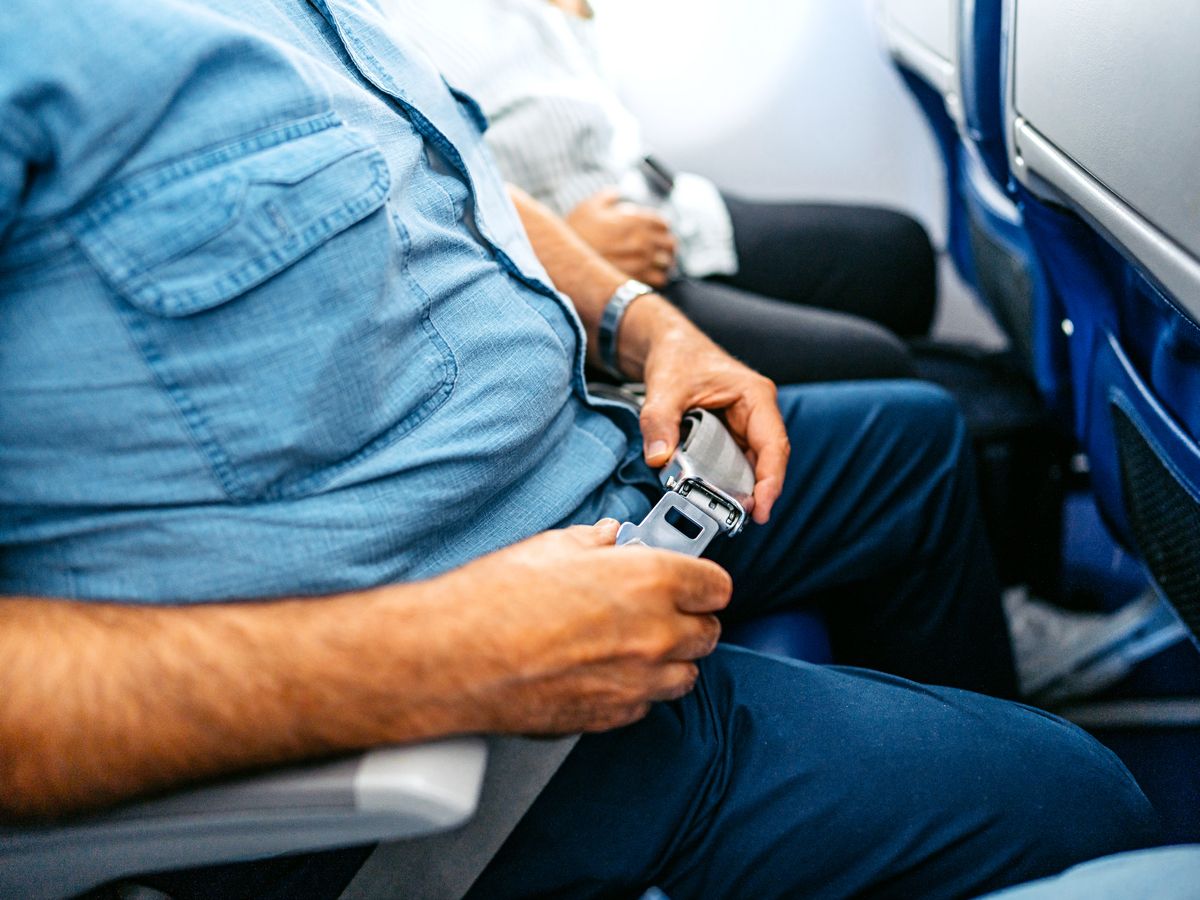
Airplane seat belts aren’t exactly high-tech, but they are effective. The Federal Aviation Administration (FAA) says that the most common cause of injury on an airplane is turbulence — more specifically, when passengers aren’t buckled in during a sudden pocket of rough air. Modern aircraft are, of course, built to withstand heavy jolts, but your body isn’t. One thing airline crews will tell you is that using the restroom or reaching into an overhead bin can wait until that seat belt light is turned off.
In an iconic Friends episode, in an attempt to get Rachel off a flight, Phoebe tells her that there’s a problem with her plane’s “left phalange.” In real life, there is no phalange on a plane, and even if there were, the aircraft might be able to fly without it. Commercial planes have a Minimum Equipment List (MEL) — essentially a manual of what must be working or in place before the plane can legally take off. If something such as a coffee maker malfunctions, airlines don’t necessarily need to cancel the flight, but it must be either repaired before departure or officially deferred under the MEL for repair later. Of course, other more critical systems, such as navigation or hydraulics, must be fixed before a plane can take off.
Many airlines require the captain and first officer to eat different meals. This way, if one pilot gets sick, the other can take over flying and land the plane safely. While it’s not an FAA regulation, this policy is standard within the industry. It doesn’t just apply to a pilot’s time on board the plane, either. “When pilots are not on the plane, they still have to be mindful about the type of food they eat,” former airline pilot Dan Bubb told Reader’s Digest. Pilots and flight attendants are also allowed to bring their own food for flights.
Airlines don’t just accidentally sell too many tickets on a given flight — it’s all part of their revenue strategy. Since a certain percentage of passengers will almost always miss a flight or cancel at the last minute, overbooking ensures planes stay full, maximizing revenue. Most of the time, the system works smoothly and no one notices. But when more people show up than expected, passengers may be asked to voluntarily switch flights in exchange for travel or accommodation vouchers. If no one volunteers, the airline can choose to involuntarily bump passengers — a legal, if very frustrating, practice.
Many passengers avoid choosing a seat in the back rows, instead selecting a seat near the front for a faster exit. But savvy travelers know that sometimes those back seats come with perks. As flight attendant Annie Kingston shared in a blog post for Oyster, “We like to avoid responding to call bells from the front of the plane,” since carrying items through the cabin can spark copycat requests. Limited supplies of things like alcoholic beverages or pillows can make this tricky. But in the back, Kingston says, it’s easier to do little favors for passengers, “like slipping in that second mini bottle of wine,” according to Kingston.
A cup of hot coffee can really do the trick on an early morning flight, but the truth is that even flight attendants try to avoid it. Coffee and tea on planes are brewed with water from the onboard tanks. These tanks aren’t emptied or cleaned between every flight — or even very often at all, according to one former flight attendant’s helpful TikTok.
And while the water is treated and tested to meet safety standards, its reputation among crew is less than stellar. “I never drank the tap water,” former flight attendant Sue Fogwell told Travel + Leisure. If you really need a caffeine fix, you may have to line up at Starbucks in the terminal before your flight, or ask the flight attendants for a can of Coke or Pepsi instead.
Booking multiple tickets at once may be the simplest option for a large group, but it may not work in your favor when it comes to airline pricing strategies. When you search for, say, four tickets, the system looks for four seats in the same fare class. If only two are left at the lowest price, the airline won’t split them. Instead, it’ll bump the whole group up to the next-highest fare. For very large groups, some airlines may offer a special rate, but if you’re just trying to book a getaway with your friends or family, it may be better to try buying individual tickets.
Advertisement
More from our network
Daily Passport is part of Inbox Studio, an email-first media company. *Indicates a third-party property.
The TSA Just Banned These Common Items From Checked Bags
By
Bennett Kleinman
Read time: 3 minutes
September 9, 2025
Updated: September 9, 2025
The TSA Just Banned These Common Items From Checked Bags
Tips •September 9, 2025•Updated: September 9, 2025
By Bennett Kleinman
Author
Bennett Kleinman
Bennett is a New York City-based staff writer for Daily Passport. He previously contributed to television programs such as the Late Show With David Letterman, as well as digital publications like the Onion. Bennett has traveled to 48 U.S. states and all 30 Major League Baseball stadiums.
Planning to pack personal beauty products for your next getaway? While certain products pose little to no risk in the comfort of your own home, they can be a potential problem when stowed inside your checked luggage. Recently, the TSA banned three specific items from checked bags, amid concerns over the fact that they contain hazardous materials that could be inadvertently activated mid-flight. So, before you head to the airport and have your personal items confiscated, here’s what you need to know about the TSA’s new rules.
In August 2025, the TSA announced a new ban on any “cordless curling irons containing a gas cartridge,” along with “butane-fueled curling irons.” Cordless flat irons are also subject to this same rule. However, the ban applies only to checked luggage, so you’re permitted to travel with these types of irons inside your carry-on bag.
The ban aims to limit the risk of accidental activation. If checked luggage moves around the cargo hold and bumps into something, it could theoretically cause a cordless iron inside to accidentally power on, increasing the risk that it might ignite something and start a fire. As a result of the new policy, you can expect TSA agents to confiscate any cordless irons they find in a checked suitcase.
These irons are permitted in your carry-on bag (with a limit of one per passenger), provided they have a safety cover that prevents the heating element from easily turning on. In the unlikely event that the device does power on while the plane is in motion, you will be able to reach into your carry-on and turn the iron off. Note that electric curling irons (i.e., ones that plug into an outlet) aren’t restricted and can continue to be stored in checked or carry-on luggage.
Lastly, the TSA has also prohibited gas refills (spare cartridges) for cordless irons under any circumstances. You won’t be able to bring these types of cartridges onto the plane, whether inside a checked suitcase or a carry-on bag, since they contain potentially hazardous and combustible materials.
How To Protect Your Device
Photo credit: Image courtesy of vendor
While the odds of your curling iron causing an issue are slim, it never hurts to come prepared. For added protection, consider traveling with a heat-resistant silicone pouch. This affordable product fits any standard hair straightener or curling iron and provides a safe buffer that keeps heat in, should the device accidentally power up.
It’s not just curling irons that pose a risk. Earlier this year, the TSA also banned lithium batteries in checked luggage. These batteries — found in portable chargers, power banks, and similar devices — caused 84 incidents in 2024 in which they produced smoke or caught on fire.
Because of the frequency at which these incidents occur, many airline crews are trained to recognize and deal with lithium battery malfunctions should they arise. However, it’s far easier to tackle the problem if the battery is contained inside a person’s carry-on bag, rather than bags in the aircraft’s cargo hold.
In early September, the TSA took to social media to clarify that toothbrushes are another potential problem area. In an X post, the agency wrote, “Traveling with your electric toothbrush, or other items that buzz? If they have an installed lithium battery you should pack them in your carry-on bag. Any spare or uninstalled lithium batteries must be placed in a carry-on bag.”
History •September 9, 2025•Updated: September 10, 2025
By Daily Passport Team
Author
Daily Passport Team
Daily Passport writers have been seen in publications such as National Geographic, Food & Wine, CBC, Condé Nast Traveler, and Business Insider. They're passionate about uncovering unique destinations and sharing expert tips with curious travelers.
From the Lone Star State to the Golden State and the Grand Canyon State, some U.S. state nicknames are immediately obvious. (We’re looking at you, Texas, California, and Arizona.) Other state nicknames may leave you scratching your head, but they contain fascinating insights into the unique histories of a state’s people, culture, and landmarks. Below, discover 10 lesser-known state nicknames and how they came to be.
Minnesota’s official nickname is the North Star State, but it’s also unofficially known as the Gopher State. The reasons for the nickname likely don’t have much to do with the critters themselves, but instead go back to an 1858 political cartoon. At the time, the newly admitted state wanted to amend its constitution to allow legislators to issue credit and raise $5 million to build new railroads. Political cartoonist R.O. Sweeny saw the deal as corrupt, and drew a satirical cartoon depicting nine legislators as gophers with human heads pulling a railroad car filled with bond holders. It’s not entirely clear why Sweeny chose the rodents, except that they were plentiful in the state at the time, and the bane of local farmers. Nonetheless, the nickname has persisted; the gopher is even the mascot for the University of Minnesota.
As the first territory to give women the right to vote in 1869 and the first state to swear in a female governor in 1924, Wyoming has a long history to back up its nickname. Wyoming’s official state motto, “Equal Rights,” adorns the state flag and state seal. But while the state may have had progressive views on women’s suffrage for the time, one reason they were the first state to pass the women’s vote was due to the state’s population size — or lack thereof. Without women being granted the vote, the state would have fallen short for the population requirement for statehood. But they did kick off a trend for women’s suffrage, with Utah, Washington, Montana, and Alaska soon following suit.
Ohio may call itself the “Mother of Presidents,” but when it comes to the second-highest office in the land, its next-door neighbor Indiana takes the spotlight. The state earned the nickname “Mother of Vice Presidents” after Republicans and Democrats put an Indiana-born vice presidential candidate on the ticket in 10 of the 13 elections that took place between 1868 and 1916. The Hoosiers who have served as vice president include Schuyler Colfax, Thomas Hendricks, Charles W. Fairbanks, Thomas R. Marshall, Dan Quayle, and Mike Pence. Despite Indiana’s nickname, New York has produced nearly double the amount of vice presidents (11, compared to Indiana’s six).
At only 12,406 square miles, Maryland is one of the smallest states in the U.S. — but it packs a punch. The state is home to a wide range of natural features, from the Appalachian Mountains to the Piedmont Plateau to the Atlantic Coastal Plain. This diverse landscape, along with Maryland’s foundational role in the nation’s history, is what earned it the “America in Miniature” nickname. Maryland’s other nicknames include the “Old Line State,” a reference to George Washington’s army in the Revolutionary War, and the “Free State,” a name which came about thanks to residents’ opposition to Prohibition.
Connecticut – The Nutmeg State
Credit: pabradyphoto/ iStock via Getty Images Plus
Connecticut’s official nickname is the Constitution State, but one of several unofficial nicknames is the Nutmeg State, which means its residents are “Nutmeggers.” The origin of the Nutmeg State nickname is unclear. Nutmegs are seeds that come from a tree native to the Spice Islands of the East Indies. Under colonial rule, Connecticut merchants imported large amounts of nutmegs, which became popular in early American cuisine. Another theory is that unscrupulous merchants actually sold wooden nutmegs in place of real ones to unsuspecting buyers, and the term “Nutmegger” became associated with fraud. Whatever the origin, the nutmeg symbol has stuck — look out for it on souvenirs the next time you visit Connecticut.
North Dakota flicks around as the “Flickertail State,” definitely one of the most unique nicknames of the 50 states. The moniker refers to the noteworthy population of Richardson ground squirrels. Many people got behind the nickname, considering the distinct flick of the squirrels’ tails as they run is quite charming. The state song also relates this nickname: The “Flickertail March” became the title of North Dakota’s state song, as the original title, “Spirit of the Land,” was too similar to the name of another march. North Dakota is also known by the nicknames the “Peace Garden State” and the “Roughrider State.”
California might be known as the Golden State, but Nevada takes second prize with the nickname the “Silver State.” Nevada earned the nickname when silver was discovered in the region back in 1859, causing a silver rush of miners hoping to strike it rich. In fact, Nevada is rich with all kinds of precious materials, as the state is the fourth-largest producer of gold in the world, supplying 75% of all gold mined in America. Copper and black opals are also mined in Nevada.
Maine is the only U.S. state whose official state flower isn’t quite a flower. Rather, it’s an eastern white pine cone. Given Maine’s nickname as the “Pine Tree State” and its abundance of eastern white pines, perhaps Mainers can be forgiven for favoring the pine cone, even if it doesn’t technically qualify as a flower. Named the official state flower in 1945, the eastern white pine cone is known as a gymnosperm, which is a plant that produces seeds without true flowers. The eastern white pine is also Maine’s official state tree, reflecting the central role of lumber in the state’s economy.
The only two states with “mountain” in their official nicknames are Vermont, the “Green Mountain State,” and West Virginia, the “Mountain State.” Vermont gets both its name and nickname from the actual Green Mountains that Samuel de Champlain encountered in 1647 and named “Verd Mont,” meaning green mountain in French. West Virginia, meanwhile, lies completely in the Appalachian Mountain region and has the highest average elevation (around 1,500 feet) of any state east of the Mississippi.
The beehive has long been a Mormon symbol, and Utah’s short-but-sweet motto of “Industry” is a reference to the industrious insect. The early Mormons who settled Utah had few resources, and they attributed their success to cooperation and hard work. The beehive represents these virtues that the pioneers valued. Utah’s state motto became official in 1959, and it’s featured on both the state seal and the state flag accompanied by the beehive emblem.
5 Famous Literary Destinations for Bookworms To Visit
By
Fiona Mokry
Read time: 5 minutes
September 9, 2025
Updated: September 16, 2025
5 Famous Literary Destinations for Bookworms To Visit
Culture •September 9, 2025•Updated: September 16, 2025
By Fiona Mokry
Author
Fiona Mokry
Fiona has spent her career exploring the world and working in the travel industry, turning her lifelong passion into a profession. From planning custom trips to sharing stories as a travel writer for publications such as The Discoverer, she’s all about helping others experience the world in a deeper, more meaningful way.
For book lovers, a journey into the world of a favorite story can be a great excuse for a getaway. The growing trend of literary tourism lets travelers step into the settings that inspired iconic works and the places authors once called home. From charming villages to historic homes, these destinations bring literature to life. Check out five worthwhile literary destinations you can visit around the world.
Lucy Maud Montgomery, author of the 1908 classic Anne of Green Gables, was born in the town of Clifton (now New London) on Canada’s Prince Edward Island. After her mother’s death, she was raised by her grandparents on the island’s north shore, where the striking red cliffs, rolling green hills, and sparkling blue ocean sparked her imagination — and ultimately inspired her future novel.
Montgomery’s childhood home became the backdrop for Anne of Green Gables, the author’s first book in a series that has since been translated into more than 30 languages and has sold millions of copies worldwide. Today, Prince Edward Island remains an integral part of the legacy of Montgomery’s life and literature. Though it’s Canada’s smallest province, it attracts Green Gables fans and travelers who come to see the idyllic world that inspired Montgomery’s iconic story. Visitors can tour Green Gables Heritage Place in Cavendish and experience the small villages and rural landscapes that inspired her work.
Bath, England
Credit: Thomas Faull/ iStock via Getty Images Plus
Jane Austen was born in the village of Steventon, England, but it’s the city of Bath in southwest England that is most closely tied to her legacy. Austen moved there with her family when she was 26 and lived in the city from 1801 to 1806. Bath later became the setting for two of her novels, Northanger Abbey (1817) and Persuasion (1817), with its social scene and high society inspiring much of her writing.
Austen referenced notable locations such as the Assembly Rooms, once a place where women gathered to find suitable husbands, and the Pump Room, another fashionable gathering spot now transformed into an elegant restaurant. Today, Austen fans flock to Bath — named for its Roman baths built on natural hot springs — for a deeper connection to her world. Highlights include the Jane Austen Centre, which explores her life and ties to the city; the curved Royal Crescent, where a scene from the TV adaptation of Persuasion was filmed; Austen’s former family home; and, of course, the Roman Baths themselves.
Stratford-upon-Avon, England
Credit: kodachrome25/ iStock via Getty Images Plus
Stratford-upon-Avon was the hometown of William Shakespeare — the place where he was born in 1564, raised a family, and was eventually buried. Though Shakespeare spent much of his adult life in London building his lustrous career as an actor and playwright, Stratford remained his true home, and he returned often until his death in 1616.
Today, this charming riverside town welcomes around 6 million visitors each year, many of whom are eager to learn the intimate details of arguably the world’s most famous writer. Must-visits include Shakespeare’s Birthplace, a timber-framed house on Henley Street that has since been converted into a museum; New Place, the site of his grand family home and now a heritage garden; Anne Hathaway’s Cottage, the historic childhood home of his wife; Holy Trinity Church, where he was baptized and buried; and the Schoolroom and Guildhall, where a young Shakespeare encountered literature for the first time.
Louisa May Alcott, author of the 1868 classic Little Women, was raised in Concord, Massachusetts, a town celebrated for both its Revolutionary War history and its literary legacy. Concord played a central role in Alcott’s upbringing and later became the setting for her famous novel about four sisters growing up from girlhood to womanhood. The story drew inspiration from her own family: her parents, three sisters, and their home, Orchard House, where they lived from 1858 to 1877.
Today, the house is preserved as a museum, with original furnishings, family artwork, and the desk where Alcott wrote Little Women. Concord is a true literary destination, also once home to Ralph Waldo Emerson, who lived at the Old Manse and wrote influential works on the transcendentalist movement. About a decade later, author Nathaniel Hawthorne and his family moved into the same house, where he went on to produce some of his most notable writings.
Born in Illinois in 1899, Ernest Hemingway spent his early years in the Midwest, but by the time he reached his 20s, the world was calling. At the age of 22, Hemingway moved to Paris, where he lived for seven years (1921 to 1928) before unexpectedly settling in Key West, Florida. What began as a brief trip to retrieve a car turned into nearly a decade on the island. Both of his sons were born there, and it inspired such works as The Old Man and the Sea (1952) and Islands in the Stream (1970) — parts of the latter, which was published posthumously, were written in Key West.
Hemingway and his family lived in an 18th-century Spanish colonial-style home that still stands today, known as Hemingway House and preserved as a museum. Visitors can explore Hemingway’s original furnishings, personal artifacts, and writing studio, along with the lush gardens — still home to around 50 six-toed cats, descendants of his own famously polydactyl pet.
The TSA Could Flag You for Sweating Too Much — Here’s Why
By
Bennett Kleinman
Read time: 4 minutes
September 9, 2025
Updated: September 9, 2025
The TSA Could Flag You for Sweating Too Much — Here’s Why
Tips •September 9, 2025•Updated: September 9, 2025
By Bennett Kleinman
Author
Bennett Kleinman
Bennett is a New York City-based staff writer for Daily Passport. He previously contributed to television programs such as the Late Show With David Letterman, as well as digital publications like the Onion. Bennett has traveled to 48 U.S. states and all 30 Major League Baseball stadiums.
Whether because you overslept, got caught in traffic, or simply didn’t allot enough time, you might end up sprinting through the airport trying to catch your flight. Sprinting can lead to sweating, and did you know that could inadvertently raise suspicions at airport security? While there’s obviously no rule that prohibits perspiring, excessive sweat is known to trigger alarms, and as a result, TSA agents may pull you aside to investigate. Here’s a closer look at why this happens and what you can do to avoid being flagged.
Why Sweat Raises Alarms
Credit: bymuratdeniz/ iStock via Getty Images Plus
A recent CNN report investigated an uptick in passengers being pulled aside for excessive sweat, particularly during the busy summer travel season. According to a TSA spokesperson, “added moisture from a person’s body can alter the density of clothing, so it is possible perspiration may cause our Advanced Imaging Technology machines to alarm.” In other words, it’s not exactly the sweat itself causing issues, but rather the effect that sweat has on your clothing.
The TSA began introducing new AIT machines in 2007. They are programmed to flag any visual anomalies in a person’s appearance that could be indicative of a potential threat; however, the technology isn’t perfect. While the devices have undergone recent improvements — such as being upgraded to produce higher resolution scans — they’re still prone to errors. False alarms are frequently triggered by unexpected patterns and shapes, including sweat stains under the arms or on other parts of your clothing.
Airport security expert Shawna Malvani Redden explained to USA Today that it’s not the sweat itself triggering machines, but the large, dark, wet stains. The “darker shadow” is processed by the machines in the same way they would process the dark shape of a hidden weapon. Redden adds this is “due to the privacy software that protects passengers from having naked images of them produced by the scanners.” Because of this, the machines can offer details only “about an anomaly’s general location,” but lack any additional “information about exactly where or what the object might be.”
It’s frustrating to be pulled aside at airport security for any reason, but it’s especially annoying if it has to do with an unavoidable bodily process such as sweating. No traveler likes being singled out as part of an already-time-consuming screening process, and the stress may cause you to sweat even more.
There’s nothing to worry about too much, though. If a TSA agent pulls you aside for an additional screening, simply follow their instructions and you’ll be on your way before long. The officer will likely pat you down, perhaps putting an extra focus on the parts of your body that triggered the alarms. If you’d prefer some additional privacy instead of being patted down out in the open, you can request to be taken into a private room. Once the officer confirms that there’s nothing dangerous on your person, you’ll be free to proceed into the airport.
Other Potential Alarm Triggers
Credit: AzmanL/ E+ via Getty Images
It’s not just excessive sweat stains that are causing travelers issues, as the newer AIT screening machines are frequently set off by other common, yet harmless triggers. Thicker clothing may prevent AIT machines from getting an accurate reading, and certain feminine products, prosthetics, and medical devices have also been known to set off alarms. Even some hairstyles and religious head coverings such as scarves and turbans have triggered extra screenings. Larger-bodied fliers have also reported being flagged more frequently than comparatively slim travelers. The machines sometimes also detect cysts, hernias, and other dense bumps underneath the skin.
Of course, while you can always wear thinner clothing, the rest of these potential problem areas are somewhat unavoidable. Just be aware of the heightened risk that you may set off the machine and be pulled aside for further screening. It’s a nuisance, yes, but if you arrive early at the airport, you’ll have plenty of time to make your flight — plus, you can follow our other tips to speed through security faster.
Geography •September 9, 2025•Updated: September 9, 2025
By Michael Nordine
Author
Michael Nordine
Michael is a staff writer for Daily Passport and film critic who writes the weekly newsletter Movie Brief. His writing and criticism have also appeared in the Los Angeles Times, Variety, and the Washington Post, among others. A native Angeleno, his favorite countries to visit are Norway and Japan.
Technically speaking, every city in the U.S. is part of one state and one state only. In practice, however, several cities share the same name and are located right next to each other on opposite sides of state borders. These twin cities are linked by a shared history and culture that unites them more than lines on a map divide them, and most are found in the South and Midwest. Below, discover five U.S. cities that cross state lines.
Bristol, Tennessee and Virginia
Credit: Kyle Little/ iStock Editorial via Getty Images Plus
You could easily pass from one Bristol to the next without realizing it, as the twin cities share a downtown district. The border dividing them is in the middle of State Street. The distinction was much clearer in the 1850s, when Bristol, Tennessee, was established as a railroad junction and trading town. Goodsonville, Virginia, followed not long after. By the time the latter officially changed its name in 1890, the two had already become two sides of the same coin. They even welcome visitors with a single sign that was first erected in 1910 and describes both halves of Bristol as “a good place to live.”
Due to how many important artists recorded some of their first music there, Congress recognized the twin cities of Bristol, Tennessee, and Bristol, Virginia, as the Birthplace of Country Music in 1998. A museum of the same name has celebrated that legacy since 2014.
Kansas City, Missouri and Kansas
Credit: TriggerPhoto/ iStock via Getty Images Plus
Perhaps the most famous example of a metropolitan area that spans state lines is Kansas City — especially because the bigger of the two isn’t in Kansas. The 38th-most populous city in the country is also the sixth-most populous city in the Midwest, with just over 500,000 Missouri residents enjoying KC’s famous barbecue, as well as its three major sports teams: the Chiefs (football), Royals (baseball), and Sporting Kansas City (soccer).
On the other side of the state line is Kansas City, Kansas, which was incorporated in 1872 — 22 years after its counterpart — and has a population of 156,000 people. Had the Missouri city not changed its name from Town of Kansas to City of Kansas in 1853, before finally becoming Kansas City in 1889, there might be less confusion today between the two cities, which are located at the confluence of the Kansas and Missouri rivers.
As you might have guessed from its name, Texarkana spans Texas and Arkansas. The two cities hold the distinction of being the site of the only federal building in the country that straddles two states: the U.S. Post Office and Courthouse, which is located between Fifth Street and Sixth Street on State Line Avenue. True to its name, the avenue marks the border between Texas and Arkansas. With a combined population of just over 65,000, the twin cities are part of the Texarkana metropolitan area, along with Bowie County, Texas, and Miller County, Arkansas.
With a similarly unimaginative name, the twin towns of Texhoma are home to just over 1,100 people combined. The Oklahoma side is responsible for the lion’s share of that pint-sized population — perhaps because of a 1932 survey that redrew the border 465 feet south and resulted in the bank, post office, and several businesses “moving” from Texas to Oklahoma without actually moving. Texhoma is situated in Oklahoma’s Panhandle, a sparsely populated region also known as No Man’s Land.
There’s a reason so many train stations are called Union Station: Their tracks are shared by multiple rail companies whose services converge — or, you might say, unite — there. In Indiana and Ohio, the name Union City is shared between two cities, and their joint nickname is Hub City because two railroads intersected there. About 5,000 people live in both towns, with the Indiana half having been established in 1849, 11 years before its twin. It’s also home to the Union City Public Library, a Carnegie library that opened in 1905 and was added to the National Register of Historic Places in 2004.
Advertisement
More from our network
Daily Passport is part of Inbox Studio, an email-first media company. *Indicates a third-party property.
Does It Matter What Time You Check in for a Flight?
By
Marissa Kozma
Read time: 4 minutes
September 9, 2025
Updated: September 16, 2025
Does It Matter What Time You Check in for a Flight?
Tips •September 9, 2025•Updated: September 16, 2025
By Marissa Kozma
Author
Marissa Kozma
Marissa is a cheap airfare aficionado who loves exploring offbeat destinations with her husband. Based in Los Angeles and Joshua Tree, Marissa has been featured in publications such as San Diego Magazine, Palm Springs Life Magazine, 303 Magazine, and Mountain Living.
Given the fact that many airlines — especially low-cost airlines — charge for seat selection, it’s tempting to skip that add-on if you’re traveling on a budget or if you’re flying solo. But if you do opt to select your seat in advance, either for free or for a fee, you may be wondering if it really matters what time you check in for a flight. And if you’re checking bags, why waste time checking in online when you have to visit the counter at the airport anyway? However, the 24-hour window to check in online before your departure does matter for a number of reasons — here’s why you shouldn’t wait to do it until you get to the airport.
It’s always better to have options: If you didn’t pay to select a seat ahead of time, checking in to your flight early will ensure that you can choose between a window or an aisle seat before the rest of the seats on the plane are assigned. If other passengers beat you to the punch, chances are that you’ll end up with the dreaded middle seat and be unable to pay for an alternative or request a swap — especially if you have limited mobility and need to easily get in and out of your row, or if you wish to be seated closer to the bathroom. Selecting your seat ahead of time when you purchase your flight is a surefire way to avoid a headache, but if you opt to wait until check-in opens, make sure you grab your boarding pass right away.
Some airlines allow you to secure paid upgrades at check-in, so if there are only one or two upgrades available, the early bird will get the worm. These upgrade offers are often a great deal, particularly if the airline wants to fill unsold seats in the front cabin. Additionally, many airlines will upgrade frequent flyers who hold elite status in the days leading up to departure, which may free up better seats in the back of the plane. Likewise, some economy-class seats may be blocked for operational reasons or sold for an extra fee, but if they remain empty or unsold, they could become available to select for free come check-in time. Again, the early bird gets the worm, so it’s always worth checking the seat map as soon as check-in opens to see if your options have changed.
On some airlines, boarding order is determined by check-in time, so being among the first to check in means you can get situated on the plane before other passengers. For example, on Southwest Airlines, those who receive a boarding number that starts with A, based on check-in time, will also get to pick their own seats first, beating out those in B or C groups. Checking in early online will ensure a better boarding zone, so you don’t have to be the last on the plane. Boarding earlier can also help you secure overhead bin space for your carry-on. Note, however, that Southwest is changing its policy in 2026.
Although it’s generally recommended to arrive at the airport two hours before domestic flights and three hours before international flights, many passengers often mismanage time and end up in long counter lines. This can be especially true if they didn’t check in online and still need a seat or to purchase carry-on or checked bags. If you’re not checking your bag — or flying internationally and need to show your passport to an agent — you can often skip the physical counter line and head straight to TSA inspection if you’ve already checked in online and have your boarding pass on your phone. Even if you have to visit the counter to check a bag, some airlines have special shortcut lines at the airport for those who already have their boarding pass. And if you have an international leg, most airlines will allow you to fill out your passport information online during check-in, so the process can be even quicker.
According to the U.S. Department of Transportation, airlines are allowed to oversell flights to compensate for the fact that many travelers no-show for their flights. You never want to be the person who arrives at the airport only to realize that you don’t have a seat if the plane is overbooked. If you’re the last person to check in, you may be the passenger who is cut from the roster and bumped to a later flight, so checking in early can help you avoid this scenario.
Tips •September 8, 2025•Updated: September 8, 2025
By Cynthia Barnes
Author
Cynthia Barnes
Cynthia kicked around the world for a while before landing in Colorado. Her work has appeared in Food & Wine, the Boston Globe, and National Geographic, among others. She loves dives — both scuba and bars — baseball, the Oxford comma, and live music.
If you think you need to break the bank for an amazing all-American vacation, think again. While coastal hot spots such as New York City and San Francisco regularly draw hordes of tourists, they also attract attention for their eye-watering prices. Many of the country’s most desirable destinations welcome visitors with incredible experiences and surprisingly inexpensive prices. These cities are packed with enticing culinary scenes, stunning natural landscapes, rich history, and unrivaled cultural attractions. From the musical heritages of Memphis, Nashville, and Kansas City to Washington, D.C.’s free world-class museums, these budget-friendly destinations show that memorable vacations don’t have to command a premium price. Here are six of our favorite surprisingly affordable U.S. cities to visit.
Kansas City, Missouri
Credit: TriggerPhoto/ iStock via Getty Images Plus
It’s easy to see why this Midwest gem consistently ranks among America’s most affordable major cities to visit. Located less than three hours by plane from either coast, Kansas City offers an easy and affordable way to gather friends and family in one central location.
In particular, the city’s cultural attractions often punch well above their price point. From fountain tours (KC has more public fountains than any city except Rome) to free brewery samples, impressive museums, and an extensive parks system, Kansas City delivers top-notch experiences at reasonable prices.
And then, there’s the food. Sizzling steaks, handcrafted cocktails, and fresh, local produce — you’ll find it all in Kansas City. The city’s legendary barbecue scene offers incredible value; at spots such as Joe’s Kansas City and LC’s Bar-B-Q, diners can expect to enjoy hearty meals for less than $25. And don’t forget the free streetcar system, which connects downtown attractions and cuts down on transportation costs.
The nation’s capital might seem expensive, but it’s actually one of America’s best travel values when you consider what’s free. Attractions that might command over a hundred dollars for a family elsewhere cost nothing here: All Smithsonian museums, the National Zoo, some Kennedy Center performances, and many monuments are absolutely free. The excellent and affordable Metro system makes getting around easy (and also makes suburban stays in nearby Virginia and Maryland an attractive option for lodging).
Although D.C. boasts many Michelin-recognized restaurants, food trucks and casual spots regularly offer meals for well below $20. The diverse international dining scene provides excellent affordable and midrange options, including cuisine from Iran, Colombia, Croatia, and more.
Tours of the Capitol, Supreme Court, and Library of Congress are also free, and even visiting the Washington Monument costs only a dollar. Countless cultural events — including the National Cherry Blossom Festival and Fourth of July celebrations — similarly cost nothing, while biking or strolling the Tidal Basin and National Mall are a great way to explore the country’s history.
Delivering authentic culture at affordable prices, Memphis should not be missed. Hotels are generally affordable in the “Home of the Blues” — even a night at the landmark Peabody Hotel can be enjoyed for less than $200. (And don’t miss the legendary duck parade!)
Barbecue joints like Central BBQ and Gus’s World Famous Fried Chicken serve generous portions for reasonable prices. Another highlight is the soul food at the Four Way: The restaurant was a favorite of leaders of the Civil Rights Movement, such as Martin Luther King Jr. and Rev. Jesse Jackson. To this day, the affordable home cooking can’t be beat.
After you enjoy a meal, the iconic musical history of Memphis begs to be explored. Graceland tours start at $42, but the Blues Hall of Fame is just $15 for adults, and many outdoor concerts at Tom Lee Park are free. The city is also a nonstop whirl of festivals bringing in nationally known performers: Check out RiverBeat, Shell Fest, and the International Blues Challenge for a taste.
Many clubs offer free live music during the early evening hours, while legendary music venues along Beale Street often have minimal cover charges of around $5 to $10. Memphis’ compact downtown makes many attractions walkable, and the free trolley system connects major points of interest.
Combining stunning natural beauty with reasonable costs, Colorado Springs offers a Rocky Mountain vacation priced significantly lower than destinations such as Aspen or Vail. The city is home to the iconic Broadmoor Hotel, and even if you’re not splurging for an overnight stay, you can still enjoy a drink in the opulent lobby and a stroll around the immaculate grounds.
For a mountain destination, dining costs in Colorado Springs remain modest. The craft brewery scene offers excellent value, with tasting flights often costing less than $15. Local stores also stock hiking supplies and picnic ingredients at reasonable prices, making it easy to take advantage of the area’s natural attractions.
The world-famous hiking and rock formations at Garden of the Gods are completely free, and even touring by car provides an accessible glimpse at the park’s grandeur. The cog railway to the top of Pikes Peak’s purple mountain majesty costs a steep $58, but for those willing to splurge, it offers an unforgettable experience. On the other hand, driving your own car up the winding road to the top costs $18 per adult (or $65 per vehicle for up to five passengers), plus a $2 timed-entry permit during peak season. (No matter how you get to the summit, be sure to indulge in a “donut in the sky” while you’re there.)
San Antonio consistently ranks among America’s most affordable major cities, and the compact downtown keeps transportation costs to a minimum. Mouthwatering Tex-Mex cuisine offers plentiful portions at pleasing prices, happy hour specials abound, and the city’s numerous food halls provide tasty variety on a budget.
The city has plenty of free and low-cost attractions, too. The picturesque River Walk costs nothing to explore, while narrated boat tours run approximately $15 to $25. The four historic Spanish colonial missions at San Antonio Missions National Historical Park charge no admission, and many festivals throughout the year are free to attend.
The San Antonio Museum of Art, meanwhile, offers free admission for residents and discounted days for visitors. Historic Market Square hosts free cultural events, and the King William Historic District provides excellent and affordable walking tours. With a low-cost public transportation network and free parking in many areas, Alamo City delivers rich cultural experiences and historic significance at budget-friendly prices.
While Music City has been gaining popularity in recent years, it’s still possible to find affordable lodging, transportation, and dining options — which means that your Nashville getaway doesn’t have to break the bank. Nashville’s legendary music scene often offers incredible value: Many honky-tonk venues on Broadway provide free live music daily, while cover charges at premium venues rarely exceed $15. The Country Music Hall of Fame costs $26, but the city hosts numerous free outdoor concerts year-round, especially during CMA Fest and other festivals.
Famous hot chicken spots such as Hattie B’s serve generous portions for under $20, while emerging neighborhoods including the Gulch and Music Row provide excellent midrange dining options. Free activities abound, from exploring the full-scale Parthenon replica at Centennial Park to walking around the vibrant murals throughout the city.
Advertisement
More from our network
Daily Passport is part of Inbox Studio, an email-first media company. *Indicates a third-party property.

Tips •September 8, 2025•Updated: September 9, 2025
By Rachel Gresh
Author
Rachel Gresh
Rachel is a Washington, D.C.–based travel and lifestyle writer with roots in the Great Lakes region. When she’s not writing for publications such as The Discoverer and Interesting Facts, you’ll find her wandering through museums or exploring destinations off the beaten path.
Have you ever dreamed of traveling not just to a destination, but to a specific moment in time? With retro travel, you can do just that. This vacation trend is all about creating new memories in nostalgic settings. Imagine sipping a malted milkshake at a 1950s-style diner or watching a St. Tropez sunset aboard a classic 1960s-era Riva boat. Retro travel invites you to bridge the gap between past and present, connecting you to your favorite moments in time — or moments you wish you could have experienced firsthand. Find out how to celebrate the joy of “the good old days” by embracing the retro travel trend.
Why Time Travel Is Trending
Photo credit: Image courtesy of Hilton Madison
Nostalgic travel is on the rise. According to research from Hilton Hotels, “recreating memories” ranks as the third-most popular reason for leisure travel in the United States in 2025. Furthermore, 58% of global travelers expressed their desire to visit destinations tied to their childhood.
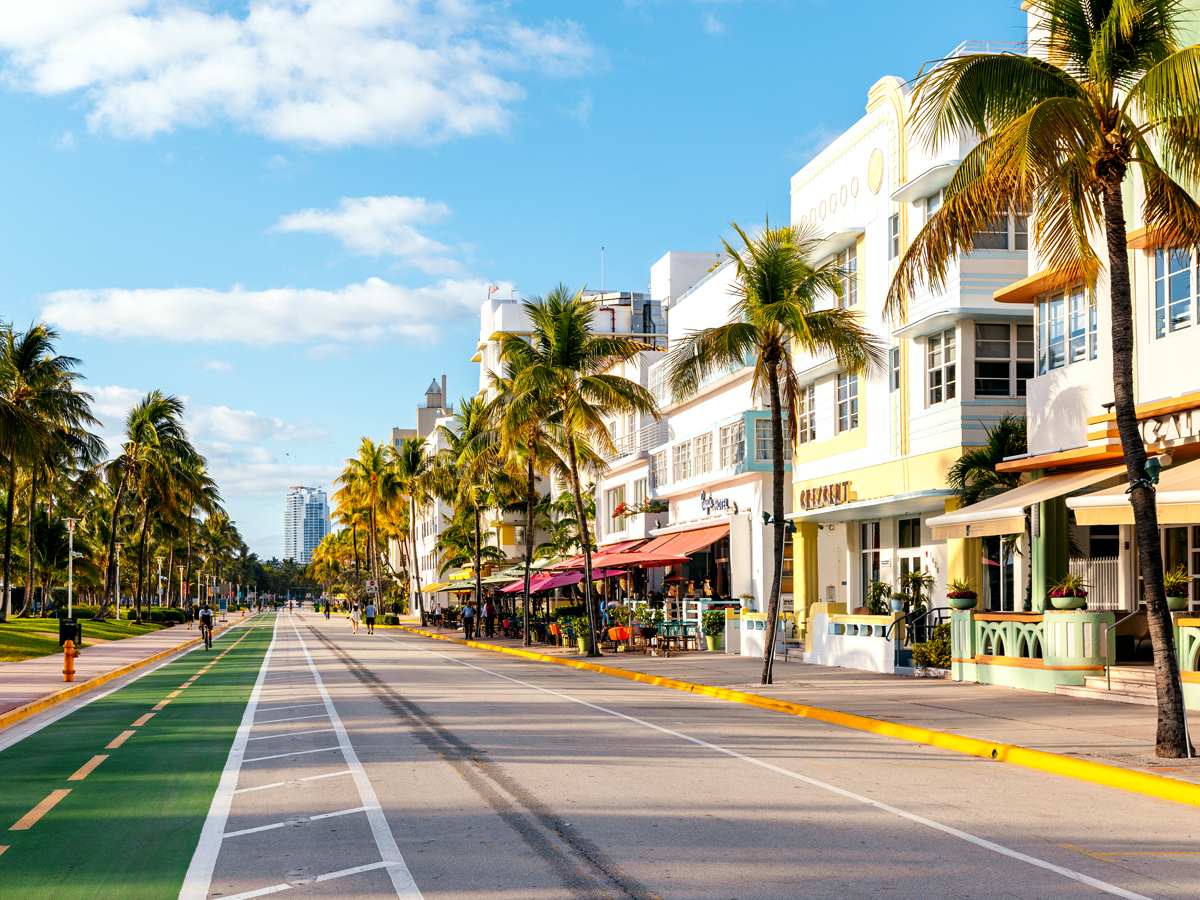
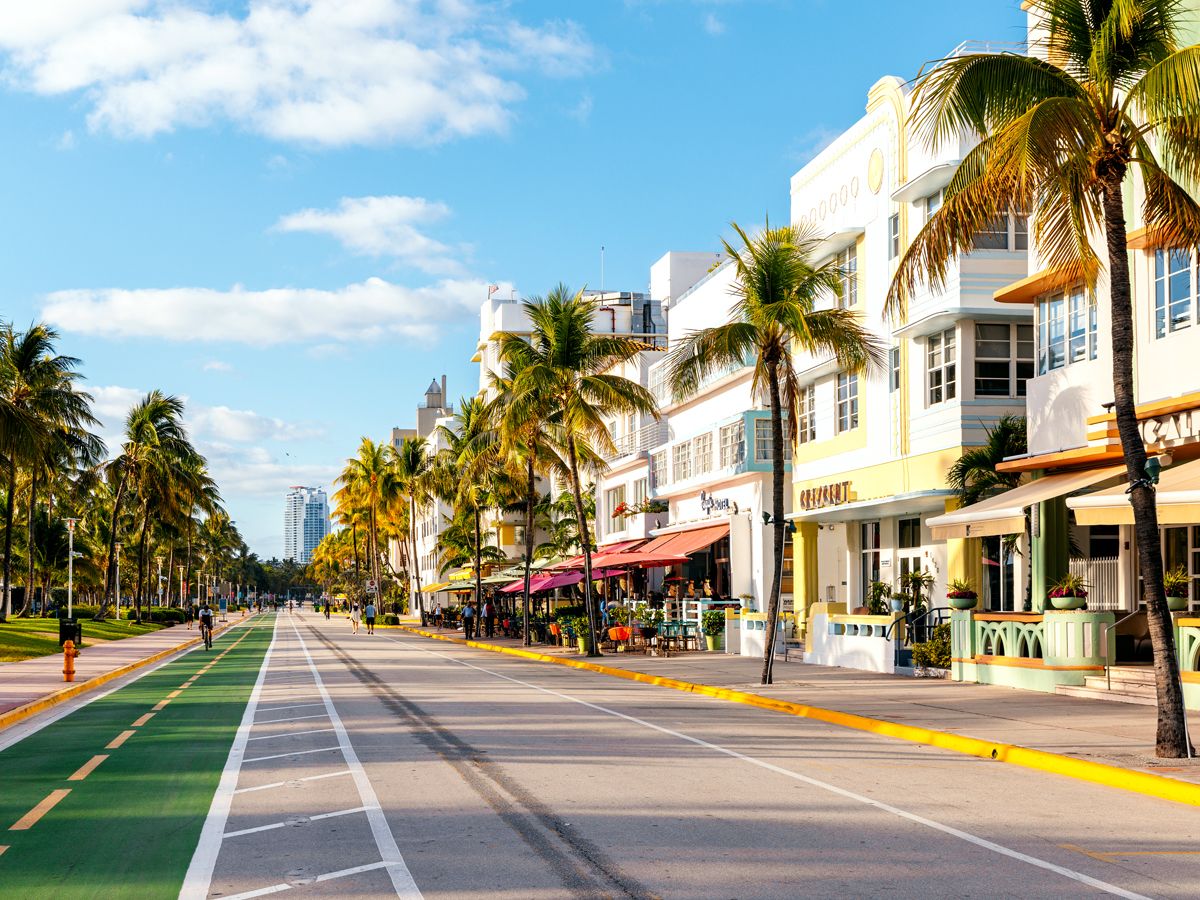
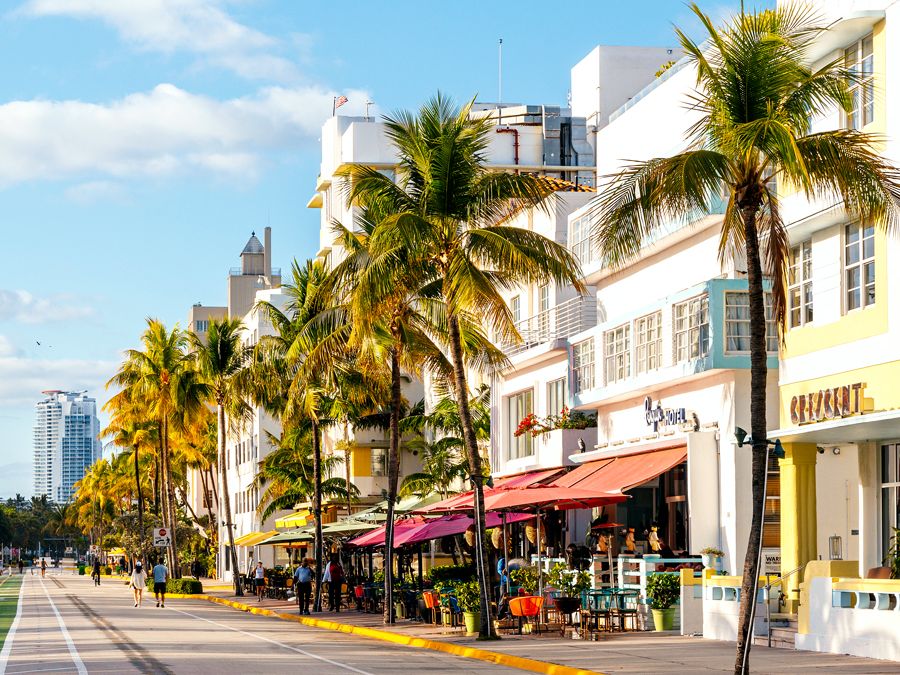
The term “retro,” by definition, describes something that is imitative of a style, fashion, or design from the recent past. But the retro travel trend is also about personal connections to these memories. You might be dreaming of wandering the streets of London like your favorite band, the Beatles, did in the 1960s. Or perhaps you’d like to soak up the sun in the streets of Miami, surrounded by 1920s art deco architecture and swaying palms. Retro travel can also be as simple as taking a day trip to a drive-in movie theater or renting a spot at your favorite childhood campground. Essentially, if it stirs up memories from the not-so-distant past, it qualifies as retro. Below, explore a few ideas for your next retro getaway.
Set Out on an Americana Road Trip
Credit: Tiago_Fernandez/ iStock Editorial via Getty Images Plus
A road trip is one of the most nostalgic ways to see the U.S. While there are many worthwhile routes to choose from, none captures the essence of classic Americana quite like Route 66. Spanning from Chicago, Illinois, to Los Angeles, California, this highway features all the key elements of a bygone era, from roadside diners and motels to kitschy attractions and quirky museums.
At the eastern end of Route 66, you’ll find one of Chicago’s oldest diners still in operation, Lou Mitchell’s. This classic eatery has been fueling travelers with all-day breakfast since 1923, three years before Route 66 first opened. On the opposite end of the route lies Santa Monica Pier, home to one of the best photo ops on Route 66: the famous “End of the Trail” sign.
Whichever way you travel, the journey is just as memorable as the destination. Along the way, keep your eyes peeled for eccentric roadside attractions that make Route 66 a nostalgia-fueled ride. Oklahoma’s Blue Whale of Cantoosa, Amarillo’s Cadillac Ranch in Texas, and the Wigwam Motel in Holbrook, Arizona, are among the many highlights.
Picture this: You’re relaxing at a stylish beach club under striped umbrellas while enjoying a refreshing spritz or traditional gelato, just as iconic Hollywood stars did on the Italian and French Rivieras during the mid-20th century.
Today, you can embrace the spirit of la dolce vita (Italian for “the sweet life”) in the picturesque Italian fishing village of Portofino, where legends including Elizabeth Taylor, Humphrey Bogart, and Clark Gable frequently vacationed. One of the most glamorous hotels in the region, Splendido, was known to host royals and celebrities during these halcyon days. Elevate your stay by chartering a classic mahogany Riva boat, a symbol of sophistication during this era.
On the French Riviera, seaside retreats such as Nice, Monaco, St. Tropez, and Cannes also offer a taste of Old Hollywood magic. Explore chic hotels, retro beach clubs, and French vintage markets, or partake in some Gatsby-inspired sightseeing at the Villa Ephrussi de Rothschild in Saint-Jean-Cap-Ferrat. Built in the early 20th century, this bubblegum-pink villa features nine themed gardens that overlook the Mediterranean Sea. And don’t forget the timeless Monte Carlo Casino in Monaco, a staple of the French Riviera, with vintage sports cars parked outside the glamorous Belle Époque-style building.
Before the Jet Age, to cross the Atlantic aboard ocean liners often took a week or so, but those lucky travelers could take advantage of the leisurely pace with ballroom dancing, gourmet meals, and evenings beneath the stars.
Reminiscent of a floating time machine, the Queen Mary 2 is the only modern version of an ocean liner sailing today, transporting guests between New York City and Southampton, England. This isn’t your typical cruise ship — you won’t find any waterslides or thrill rides — but the Queen Mary 2 epitomizes the spirit of the classic ocean liner.
While aboard, guests are invited to take afternoon tea on the high seas, attend a black tie gala, or sip Champagne to the backdrop of live music. For an added touch of nostalgia, consider booking your getaway through a tour company like Ahoy Vintage Cruises, where you can immerse yourself in themed itineraries, such as a 1920s art deco journey aboard the ship.
Sometimes, the hotel itself is the destination, where you can fully immerse yourself in your chosen retro time period. Take, for example, the Très Hotel in Kuala Lumpur, Malaysia. Inspired by Wes Anderson’s unique filmmaking style, this hotel features suites with names such as “the Rushmore” and “the Moonrise,” and it leans into the retro theme with a candy-hued 1960s color palette, funky decor, and mismatched furniture.
In Spain’s Balearic Islands, the Paradiso Ibiza Art Hotel brings the atmosphere of Miami’s Ocean Drive in the 1970s and ’80s to the Mediterranean. This playful beachside retreat feels like stepping into a time capsule. It features bold and bright suites equipped with vintage amenities, including Marshall speakers and Smeg refrigerators.
Back in the United States, the TWA Hotel at New York’s JFK Airport stands out as one of the most nostalgic accommodations in the country. This mid-century modern marvel transports visitors back to the golden age of air travel; in fact, it’s housed in the iconic TWA terminal at JFK that opened in 1962 and reopened as the hotel in 2019. One of its most notable features is the restored 1958 Lockheed Constellation aircraft parked outside, which has been converted into a bar called Connie. The TWA Hotel recently won the 2025 Skytrax World Airport Award for the Best Airport Hotel in North America, proving that nostalgia-influenced travel remains more popular than ever.
I Visited All 30 MLB Stadiums — Here’s My Ranking of the Best Ballparks
By
Bennett Kleinman
Read time: 18 minutes
September 4, 2025
Updated: September 4, 2025
I Visited All 30 MLB Stadiums — Here’s My Ranking of the Best Ballparks
Culture •September 4, 2025•Updated: September 4, 2025
By Bennett Kleinman
Author
Bennett Kleinman
Bennett is a New York City-based staff writer for Daily Passport. He previously contributed to television programs such as the Late Show With David Letterman, as well as digital publications like the Onion. Bennett has traveled to 48 U.S. states and all 30 Major League Baseball stadiums.
In 1997, I attended my first baseball game at the former Yankee Stadium. I didn’t realize it at the time, but that was the start of my journey to becoming an avid baseball fan. Eventually, it became a personal goal of mine to visit all 30 active MLB stadiums. After nearly three decades of traveling around the country, I finally accomplished that feat in 2025. Looking back, I can say that each ballpark had something to offer and that I have fond memories of all the games I got to experience in person. But some stadiums stood out more than others, and as a baseball superfan who views the sport as a great excuse to travel to a new city, I set out to rank all 30 ballparks in the league, hoping to help other travelers narrow down their bucket lists. Without further ado, here is my ultimate (and highly subjective) ranking of the best baseball stadiums in America.
30. Sutter Health Park – West Sacramento, California
Credit: JasonDoiy/ iStock Unreleased via Getty Images
Located roughly a mile west of the California State Capitol, Sutter Health Park was originally built in 2000 as a Minor League Baseball stadium. However, it currently serves as the temporary home of the Athletics (formerly of Oakland) until their planned relocation to Las Vegas in 2028. It was also the 30th and final active MLB ballpark I needed to visit to finish my goal of visiting every single stadium. I enjoyed the stadium for what it was, but the reality is it’s a small ballpark with limited amenities, so it lands at the bottom of my ranking. That said, Sutter Health Park will always hold a special place in my heart for being the last stop on my journey in July 2025 — at least until future MLB stadiums are built.
George M. Steinbrenner FIeld, located in northwest Tampa, is technically administered by the New York Yankees, who hold spring training there each year. As of 2025, however, it’s also the current home of the Tampa Bay Rays, who are temporarily displaced due to extensive damage to their usual home stadium, Tropicana Field, from Hurricane Milton in 2024. I have fond memories of visiting Steinbrenner Field in 2004 to see my beloved Yankees train for the season ahead. But, like Sutter Health Park, it’s a small stadium with fewer amenities than a true MLB ballpark. I’ll add that I did see the Rays play at Tropicana Field in 2023, so as soon as they move back after renovations, expect their home field to get bumped up a few spots in my ranking of the best MLB stadiums.
28. Rate Field – Chicago, Illinois
Credit: Joseph Weiser/ Icon Sportswire via Getty Images
As far as permanent MLB stadiums, I rank the home of the Chicago White Sox last — though that’s not to say I consider it a bad stadium by any means. Located on the South Side of Chicago, Rate Field is easily accessible via the CTA’s Red Line and has served as the home of the White Sox since 1991. I visited first in 2001 and again for the 2003 MLB All-Star Game, which was one of my favorite baseball memories. While I find many elements of the stadium to be unremarkable, there are several features that pay homage to the team’s original home — including colorful pinwheels atop the scoreboard, plus a shower in the outfield concourse that used to be part of Comiskey Park, where fans can cool down during the game.
While nearby Disneyland is said to be the “happiest place on Earth,” I’d consider Angel Stadium to be the “most adequate place to watch a baseball game.” Though the park, built in 1966, is the fourth-oldest in MLB, it doesn’t exactly feel unique, nor does it seem to embrace its history. That said, Angel Stadium benefits from the beautiful year-round weather of Southern California and the wonderful talents who have played there. In 2018, I watched three-time MLB MVP Shohei Ohtani pitch during his rookie season, which will always be a fond memory for me.
26. LoanDepot Park – Miami, Florida
Credit: felixmizioznikov/ iStock Editorial via Getty Images Plus
When I visited this home of the Miami Marlins in 2023, I was impressed by many of its modern features, including the retractable roof that remained open for the games I attended. But at the same time, I found the concessions — and the crowd — to be somewhat lacking. Part of that might be due to the stadium’s location (2 miles west of downtown Miami, which can be a headache to navigate through traffic), but I still enjoyed sitting just a few rows behind home plate for less money than I’d pay to sit in the upper deck at Yankee Stadium.
25. Rogers Centre – Toronto, Ontario
Credit: Jon Blacker/ MLB via Getty Images
I’ll be the first to admit that my ranking of the Rogers Centre is somewhat dated, as I last visited in 2008, well before an extensive renovation process that took place in the 2020s. While I can only speak to my time there long before those upgrades — which added wider seating and improved concessions — it remains true that, when the stadium’s roof is open, guests are still treated to incredible views of the CN Tower looming overhead. I also think that the hotel built directly into the stadium is a delightful quirk (one you won’t find at any other MLB stadium), and the stadium’s convenient proximity to downtown Toronto can’t be topped.
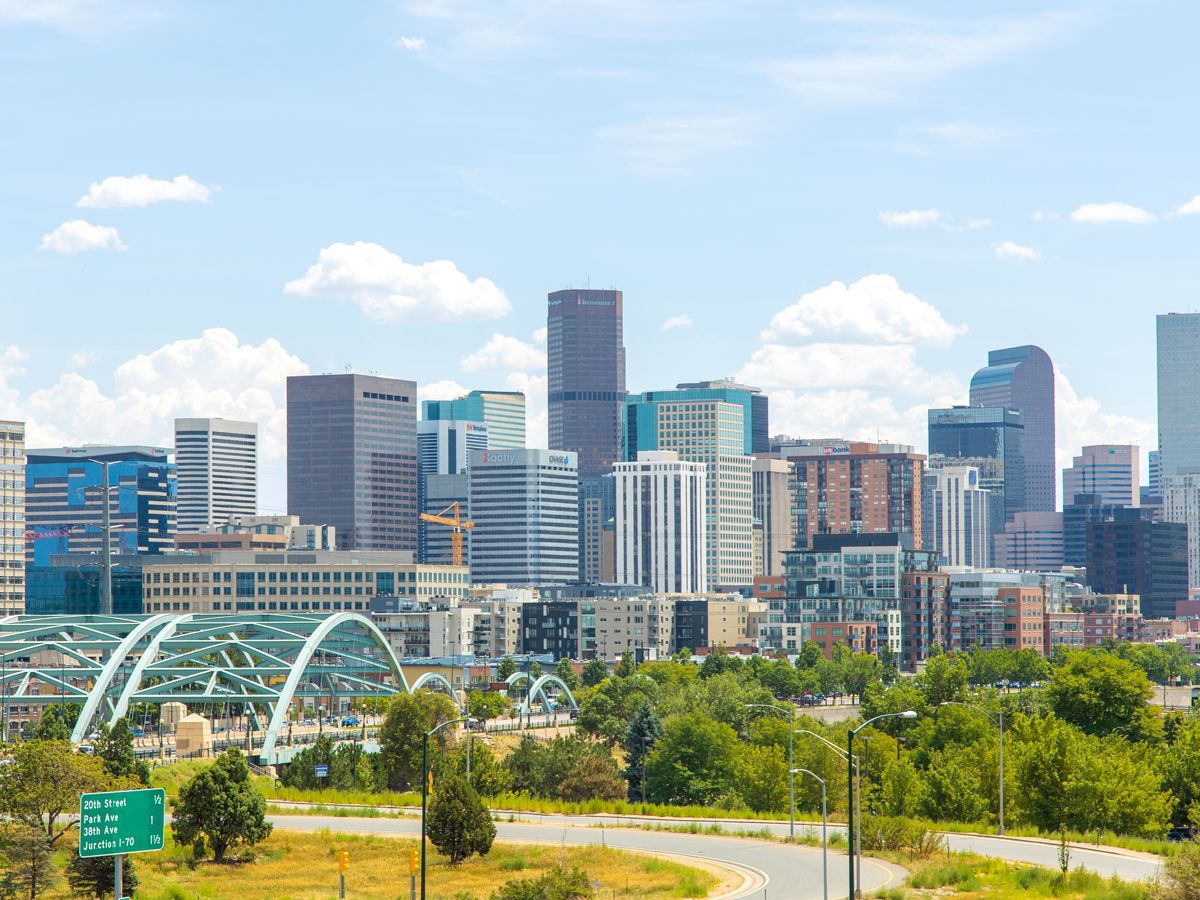
When you step foot in Coors Field — as I did for the first time back in 2012 — you’ll probably notice a row of purple seats located in the upper deck. This unique feature denotes the chairs located exactly 1 mile above sea level. It’s one of the many memorable details I enjoyed about this home of the Colorado Rockies, which opened in 1995 in downtown Denver. Coors Field also offers the most unique ballpark concession I’ve ever consumed: fried rocky mountain oysters. While I’d probably opt for a hot dog next time, it was, without question, a memorable culinary experience.
As someone who used to consider the Montreal Expos my second-favorite team, I was disappointed when they moved to D.C. in 2005 and became the Washington Nationals. But when the team opened up a new stadium in 2008, I decided to let bygones be bygones and attend a game. During my 2010 visit, I was struck by how convenient it was to get to the ballpark aboard the D.C. Metro. I was also quite impressed by the stadium itself — it didn’t seem like there was a bad seat in the house. I’ve visited many times since, usually indulging in a half-smoke hot dog from Ben’s Chili Bowl each time.
Busch Stadium, home of the St. Louis Cardinals, offers one of the most majestic views of any baseball stadium, with the Gateway Arch located less than a half mile past centerfield. But landmarks aside, it’s simply a great place to watch baseball. During my two visits to Busch in 2012 and 2018, I found it to be a comfortable and affordable place to take in a ballgame with one of the most storied teams in the MLB. My only criticism is of the closed concourses, which make it difficult to see what’s happening on the field while you go to buy food or head to the bathroom.
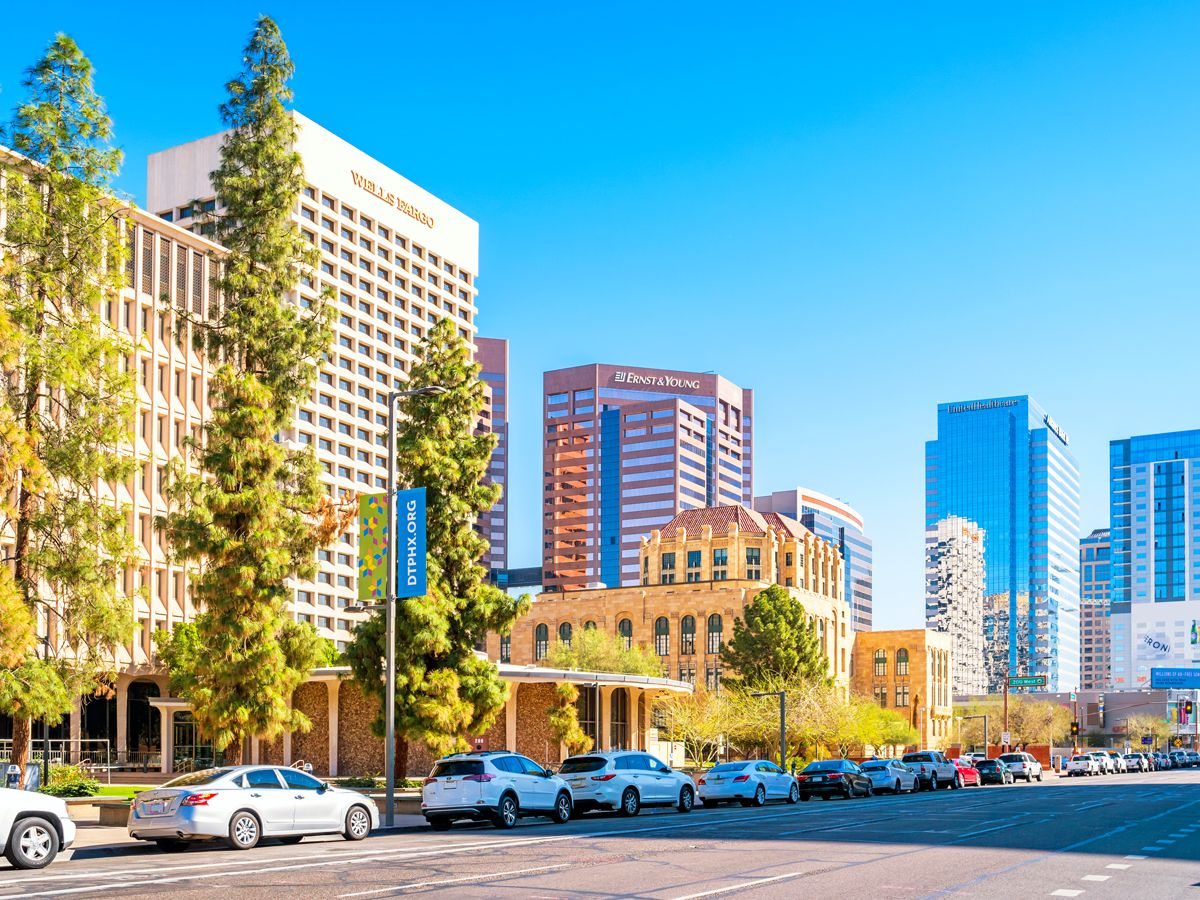
Waiting in line to get into Chase Field in 105-degree Arizona heat certainly wasn’t fun, but thankfully, I felt relief the moment I stepped inside. The stadium, which opened in 1998 in the central part of Phoenix as the home of the Arizona Diamondbacks, has a retractable roof to keep the sun out and spectators comfortable. One of the ballpark’s most interesting features is the pool in right field, though my ticket didn’t provide me access, so that bucket-list opportunity will have to wait for another day. But I still enjoyed a delicious churro dog — a play on a typical hot dog with a churro instead of meat, a long glazed doughnut instead of a bun, and caramel and chocolate sauce instead of mustard and ketchup.
20. Globe Life Field – Arlington, Texas
Credit: CRobertson/ iStock Editorial via Getty Images Plus
In 2024, I visited the newest MLB stadium to date, Globe Life Field, which was built in 2020 for the Texas Rangers. The field is located in an Arlington sports and entertainment complex that also hosts the Dallas Cowboys. One of the best features of Globe Life Field is its retractable roof, which thankfully remained closed the entire time I was there because of the sweltering heat outside. I also enjoyed the state-of-the-art video boards broadcasting images in crystal-clear quality and the comfortable and affordable seats just a few rows from the field.
19. Oriole Park at Camden Yards – Baltimore, Maryland
Credit: Rob Tringali/ MLB Photos via Getty Images
A No. 19 ranking for Camden Yards may be controversial among die-hard baseball fans, but we’ve reached the point in our rankings where I have mostly positive things to say about each remaining stadium. Camden Yards is no exception. Located in downtown Baltimore near the Inner Harbor, the ballpark opened in 1992, helping to usher in a new era of stadium design that diverged from many of the less interesting, cookie-cutter fields that preceded it. Among the stadium’s most notable features is the old warehouse located on Eutaw Street beyond the right-field wall and the many brass markers commemorating past home runs that landed on the street over the course of the stadium’s history.
18. Yankee Stadium – The Bronx, New York
Credit: Rob Tringali/ Sports Illustrated via Getty Images
As a lifelong Yankees fan and someone who attends dozens of home games each year, I spend a lot of time in the new Yankee Stadium, which opened in 2009. Unfortunately, I feel that it lacks the character of the old stadium in many ways — it’s a little too polished and corporate. But despite those criticisms, it also provides many comforts that were lacking in its predecessor. For instance, all of the seats on the lower level are padded, which is a major step up from the hard, plastic seats found in many other ballparks. Additionally, the stadium is a quick 20-minute subway ride from midtown Manhattan up to the Bronx.
When I visited the home of the Cincinnati Reds in April 2018, I was surprised by how few other people were in attendance at such a nice ballpark. The park is located conveniently in downtown Cincinnati, and I was able to walk to the stadium from my hotel across the river in Covington, Kentucky. I also enjoyed taking a stroll through the adjacent Hall of Fame and Museum, which contained many fascinating relics from Cincinnati Reds history. As for the ballpark itself, there isn’t a bad seat in the house, in my opinion.
I’ve attended games at Progressive Field many times between the mid-2000s and 2019, including a World Series and an All-Star Game. You can always tell how passionate the Cleveland fanbase is about their team — in fact, the stadium sold out 455 consecutive games between 1995 and 2001. Opened in 1994, Progressive Field is just a 25-minute walk from the shores of Lake Erie, placing it in a convenient spot in downtown Cleveland. One of the most notable highlights of the stadium is just how close you can get to the bullpens in right field, allowing you to see pitchers warm up just a few feet away.
There’s an ongoing debate in Kansas City over whether and where to build a new stadium for the Royals. Personally, I find that unnecessary, because I consider the current Kauffman Stadium to be among the nicest MLB ballparks in North America. Though the park opened in 1973, it feels much newer. It’s located in a dedicated sports complex adjacent to the home of the NFL’s Kansas City Chiefs, which some would argue is a drawback given how difficult it is to reach without a car. That said, the park has many stunning features, none more beautiful than the fountains and waterfalls beyond the outfield wall. I had a fantastic experience when I visited in 2018, made all the more pleasant by the fact that I took in a game while indulging in some classic Kansas City-style barbecue.
Credit: Greg Nelson/ Sports Illustrated via Getty Images
There’s no sugar-coating this: As a Yankees fan, I despise the Houston Astros. But I will give their ballpark credit — when I visited in 2024, I was struck by its unique architecture and its convenient proximity to downtown Houston. The stadium, opened in 2000, features a retractable roof that keeps the Houston humidity at bay. As I did a lap around the stadium, I enjoyed looking at the field from the many vantage points throughout the park. These include the Crawford Boxes in left field, which provide an elevated view of the outfield from 19 feet above.
13. American Family Field – Milwaukee, Wisconsin
Credit: Joe Hendrickson/ iStock Editorial via Getty Images Plus
American Family Field holds a special place in my heart as the first location my family visited on a baseball road trip we took in 2001, and I’ll admit that nostalgia may have bumped it up a few spots in my rankings. The field, located roughly 4 miles west of downtown Milwaukee, opened the very same year I first visited. No trip to this park is complete without seeing the Sausage Race, a competition between five different sausage mascots that happens every game prior to the seventh inning. If you’re wondering, sausages are also sold at various concession stands around the ballpark, so be sure to pick up your favorite flavor during your visit.
In 2000, the Detroit Tigers replaced the historic Tiger Stadium with Comerica Park, located in downtown Detroit as part of a complex that also hosts the NFL’s Detroit Lions next door. What impressed me about Comerica Park was its no-frills approach — it’s a delightful spot to take in the sport I love, and there’s not a bad seat in the house. There are also activities for the entire family, including a carousel along the first-base concourse. The park’s convenient location and retro design elements make it a must-visit for any baseball fan.
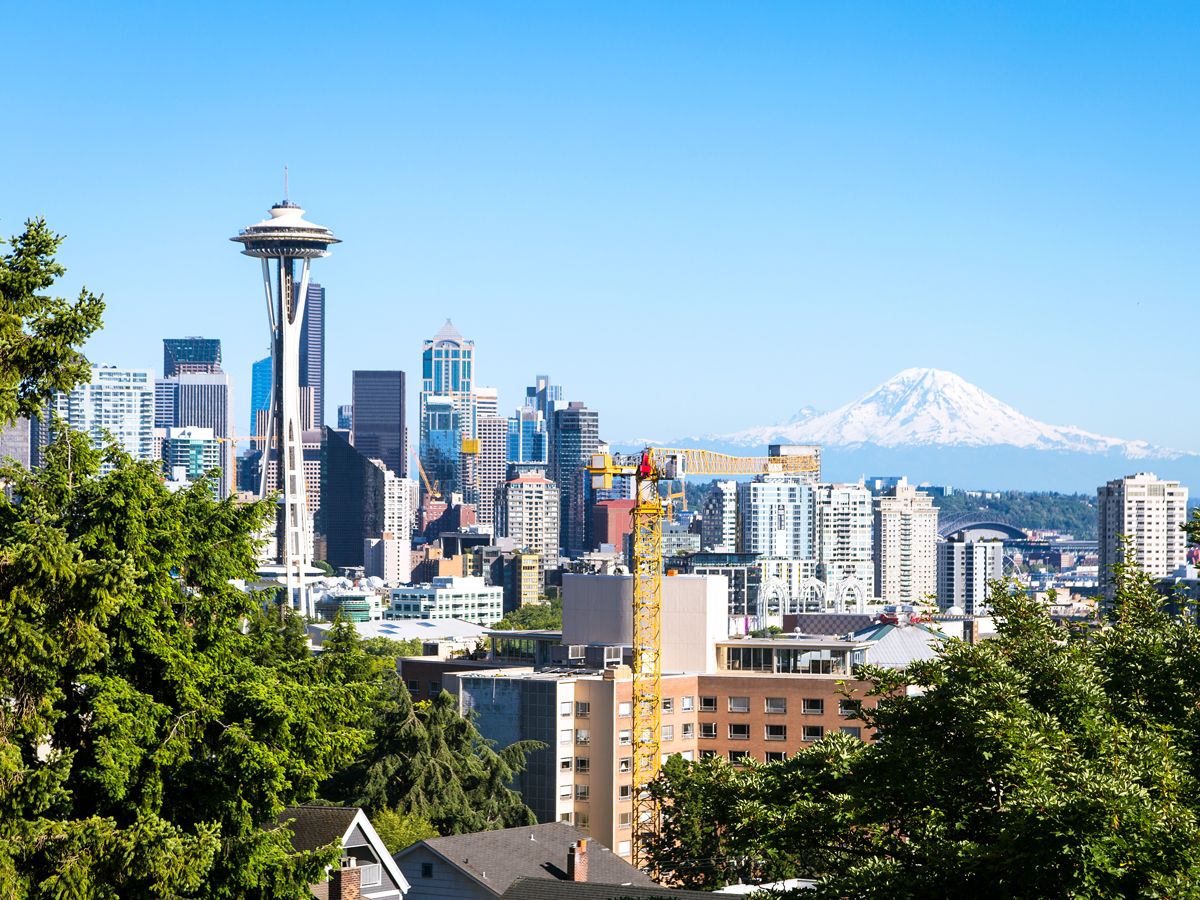
Venture to the upper deck at T-Mobile park, and you’re in for quite the treat. Look one way and you’ll see the Space Needle in the distance; gaze the other direction to witness Mount Rainier in all its splendor. But in addition to those stunning views, this home field of the Seattle Mariners excels in its core mission — it is simply a great place to watch baseball. I enjoyed the concessions, from the happy-hour-priced beers before first pitch to the decadent crab sandwich, along with the impressive merchandise selection.
When I first visited the home of the Cubs in 2001 as a young child, I didn’t truly appreciate or understand the stadium’s history. But when I came back to Wrigley as an adult in 2014 and again in 2015, I changed my tune. Opened in 1914, Wrigley Field is the second-oldest ballpark in MLB. It boasts many unique and historic features, perhaps none more memorable than the ivy plants that adorn the outfield wall. The ballpark is surrounded by the vibrant Wrigleyville neighborhood, a delightful place to eat, drink, and shop alongside fellow Cubs fans before and after a game.
9. Dodger Stadium – Los Angeles, California
Credit: Kirk Wester/ iStock Editorial via Getty Images Plus
As the third-oldest ballpark in MLB, Dodger Stadium boasts a retro style that hearkens back to the 1960s era when it opened. Some of the seats may not be the most comfortable, and the concessions didn’t leave me especially impressed — sorry to all you Dodger Dog fans out there — but all told, the stadium was a beautiful and memorable spot to watch a baseball game. Though many fans complain about the traffic, it’s just a short walk to the nearby neighborhood of Echo Park, where my friends and I enjoyed a few beers and street hot dogs after the game.
8. Citizens Bank Park – Philadelphia, Pennsylvania
Citizens Bank Park opened in 2004 as part of the South Philadelphia Sports Complex, which is easily accessible along the city’s Broad Street subway line. My favorite part of the ballpark? The food. The stadium serves up some of the tastiest ballpark concessions I’ve ever ordered, from cheesesteaks to crab fries and roast pork sandwiches. I recently returned to the ballpark earlier in 2025 and was pleased to see that it maintains the same charm and appeal it had when I first visited as a kid back in 2004.
In 2016, I visited Atlanta to take in a game at Turner Field, the former home of the Braves. But that stadium paled in comparison to their current home, Truist Park, which opened in 2017. I visited in 2023 and found that the area around the stadium features a great selection of bars, restaurants, and other venues for Braves fans to congregate before and after the game. Inside the stadium, I enjoyed delicious barbecue and a tasty craft beer at the Terrapin Taproom in right field, before venturing over to my seat for some baseball. While temperatures were chilly and rainy that night, I still had a blast taking in a game at this lovely stadium.
Despite the fact that it was 30 degrees Fahrenheit outside when I visited Target Field in 2024, I still look back fondly on my game there. Target Field opened in 2010 in downtown Minneapolis, replacing the former Metrodome (which I also had the pleasure of visiting). The field is beautifully adorned with limestone, and the heaters along the concourse are a nice touch to keep fans from freezing on those cold early spring nights. I also enjoyed the concessions, including the Asian-style hot dog I got from Union Hmong Kitchen in left field. Leaving the stadium after the game was a breeze, too.
5. Citi Field – Queens, New York
Credit: Tim Clayton/ Corbis Sport via Getty Images
When Citi Field and the new Yankee Stadium both opened in 2009, I wholeheartedly believed that my team had the better park. But as the years have gone by, I’ve come to realize that the Mets have gained the upper hand in making their ballpark a must-visit destination for baseball fans. It starts with the incredible food, which includes New York City staples such as hot pastrami sandwiches, burgers from Shake Shack, slices from Prince Street Pizza, and other local favorites. It’s also just a 30-minute subway ride on the 7 line from Grand Central Station in midtown Manhattan, making it incredibly convenient whether you’re a local or someone visiting the city.
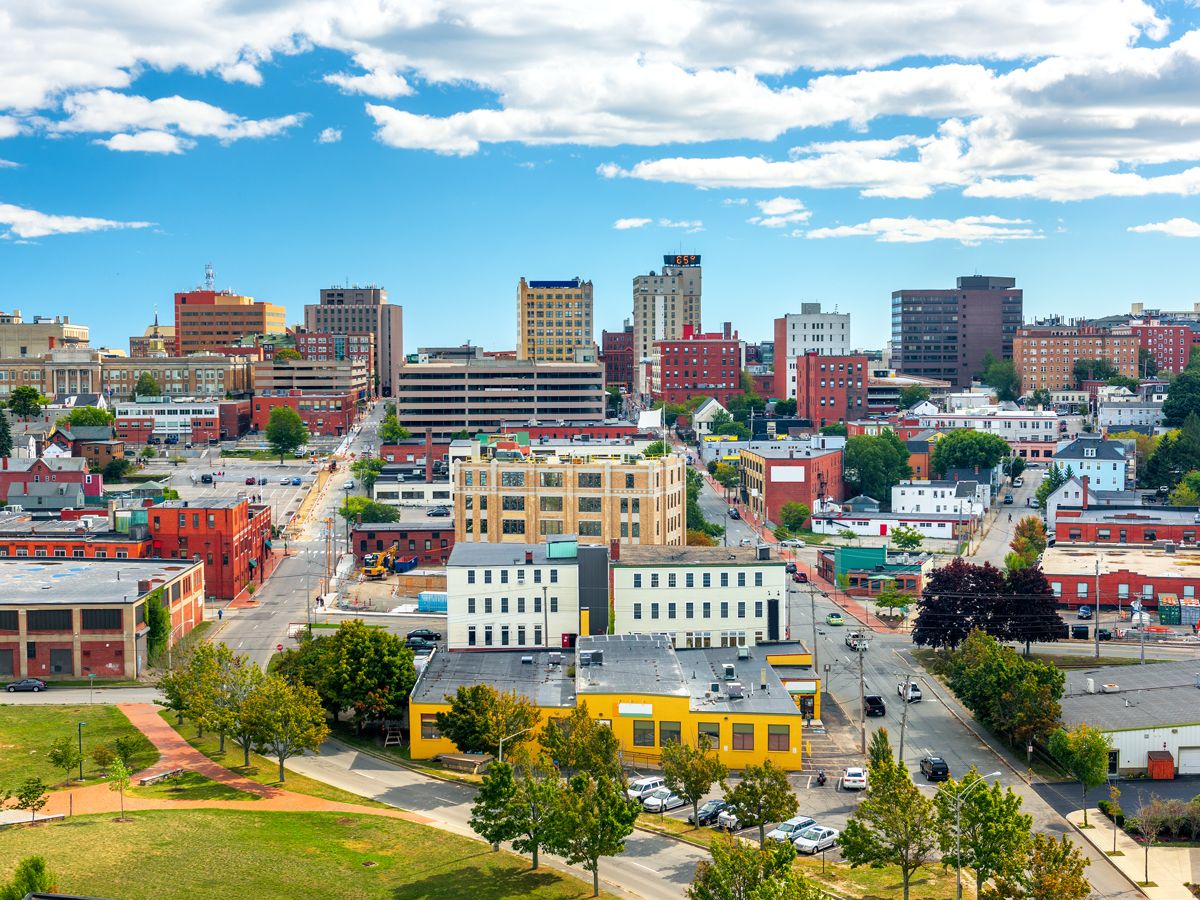
San Diego has a reputation for being a beautiful city, and that extends to their MLB ballpark. In my opinion, the Padres play in one of the most impressively designed stadiums in the league. One of the park’s standout features is the historic Western Metal Supply Co. building in left field, which has been seamlessly integrated into the stadium design. Petco Park also features a 2.8-acre greenspace past centerfield called Gallagher Square, which offers views of the game, a playground for kids, and even an off-leash dog park. The stadium is conveniently located in the city’s Gaslamp Quarter, putting it in close proximity to popular hotels, restaurants, and attractions.
When I was young, I spent many hours watching Barry Bonds hit home runs into McCovey Cove on TV. So, it was a bucket-list experience when I finally got to see the stadium with my own eyes in July 2025. The views from inside the stadium are among the best you’ll find in baseball, as the ballpark sits adjacent to San Francisco Bay. The experience is made all the better by the giant plates of garlic fries being served up at various concession stands around the park. I was also lucky to see a memorable game: I witnessed the Giants’ Patrick Bailey hit a walk-off, inside-the-park home run to cap off a wonderful night.
2. PNC Park – Pittsburgh, Pennsylvania
Credit: Brandon Sloter/ Icon Sportswire via Getty Images
In terms of modern stadiums, my favorite is PNC Park, home of the Pittsburgh Pirates. The stadium, opened in 2001, is located along Allegheny River, near where it converges with the Monongahela River to form the Ohio River. Fans are treated to stunning views of the city skyline, plus tasty concessions such as french fry-stuffed sandwiches from Primanti Bros. I’ve been lucky enough to visit PNC Park on many occasions, including the 2006 All-Star Game, and I eagerly await an opportunity to return.
1. Fenway Park – Boston, Massachusetts
Credit: Billie Weiss/ Boston Red Sox via Getty Images Sport
Built in 1912, Fenway Park — the home of the Red Sox — is the oldest MLB stadium still in use. And while it pains me to admit it as a Yankee fan, Fenway is also my favorite ballpark in the league. I’ve been attending games at Fenway since I was 8 years old; in fact, I loved it so much that I used to make a point of visiting at least once a year. Its historic design is unlike any other, especially the Green Monster, a towering 37-foot wall in left field. In 2003, the Red Sox installed seats atop the Green Monster, providing a bird’s-eye view of the field and a memorable experience to anyone lucky enough to sit there. But, truly, no matter where you sit, Fenway is a wonderful place to take in a baseball game — you won’t find a more classic baseball experience anywhere else in the league.