




Post Banner Image
Architecture

7 Architecturally Stunning Malls Around the World

By Julia Hammond
Read time: 4 minutes
October 11, 2024
Updated: October 11, 2024

7 Architecturally Stunning Malls Around the World

By Julia Hammond
Author
Julia Hammond
Julia is a U.K.-based travel writer whose work has been featured in The Independent, The Telegraph, The New Zealand Herald, and Culture Trip, among others. She’s an enthusiastic advocate for independent travel and a passionate geographer who has had the privilege of traveling to more than 130 countries in search of a story.

The best architects design remarkable buildings that break the mold and provide talking points, from office developments housed in glittering skyscrapers to residential complexes that redefine how we might live. With meticulous attention to detail on the inside and exteriors that demand attention, shopping malls, too, have become destinations in their own right. Here are seven splendidly stunning malls around the world you shouldn’t miss.

Galleria Vittorio Emanuele II – Milan, Italy

Inside the light-filled Galleria Vittorio Emanuele II in Milan, Italy
Credit: benedek/ iStock Unreleased via Getty Images 

Italy’s oldest operating shopping gallery, this exquisite Milanese arcade houses some of fashion’s most prestigious brands, including Prada, Gucci, and Armani. Nicknamed “il salotto di Milano” (“Milan’s drawing room”), it was constructed between 1865 and 1877 and is the work of Italian architect Giuseppe Mengoni. While your attention will undoubtedly be drawn to the mall’s magnificent glass-domed roof, be sure to also check out the mosaic-clad floor. Part of it depicts a dancing bull, the symbol of the city of Turin. According to legend, those who touch the bull mosaic with their right foot and spin clockwise three times will have good luck.

Emporia Shopping Center – Malmö, Sweden

Curving, amber-hued glass facade of the Emporia Shopping Center in Malmö, Sweden
Credit: stevanovicigor/ iStock Editorial via Getty Images Plus

Cosmopolitan Malmö is Sweden’s third-largest city, after Stockholm and Gothenburg, and though it has loads of historic charm, it also embraces modernity. The Emporia Shopping Center is the work of Swedish architectural firm Wingårdhs, whose unusual design sets this mall apart. The entrance, made from panes of amber-hued glass, is styled as a plunging chasm and makes a jaw-dropping first impression. The interior is equally stylish, utilizing bold colors to help shoppers navigate each atrium. Over 1 million-plus square feet and three levels, they’ll find more than 200 stores and restaurants to choose from.      

Toreo Parque Central – Mexico City, Mexico

Shops and escalators under glass roof in Toreo Parque Central in Mexico City
Credit: Keizers/ Wikimedia

Built on the site of a former bullfighting arena, Toreo Parque Central is a visually stunning mixed-use development that incorporates a light and airy contemporary mall. For a decade, it has been a landmark complex in Naucalpan, a suburb on the northwest periphery of Mexico City. The firm behind its design, Sordo Madaleno Arquitectos, aimed to embody the characteristics of an urban park, and inside, you’ll find trees and fountains alongside its approximately 200 retail units. But it’s the glass domed roof that gives this mall its wow factor and floods the space with light.

Khan Shatyr Entertainment Center – Astana, Kazakhstan

Tent-like shape of the Khan Shatyr Entertainment Center in Astana, Kazakhstan
Credit: Elena Odareeva/ iStock Editorial via Getty Images Plus

Acclaimed British architect Norman Foster designed this tent-shaped building devoted to retail and entertainment, which opened in 2010. Khan Shatyr is known colloquially as the “Grand Marquee” or “Royal Marquee.” Its distinctive shape makes it one of the most easily identifiable buildings in the Kazakh capital, Astana — one of the world’s newest cities. The translucent roof is made of ETFE (a type of plastic called ethylene tetrafluoroethylene) and is suspended from a tubular steel tripod supporting a net of cables. Beneath it, you’ll find dozens of shops for well-known brands such as Calvin Klein, Tommy Hilfiger, Timberland, Zara, Reebok, Adidas, and Lacoste.

K11 Musea – Hong Kong

Exterior of K11 Musea shopping mall in Hong Kong
Credit: Nikada/ iStock Unreleased via Getty Images 

The creative minds behind K11 Musea, opened in 2019, claim that they’ve created the world’s first cultural-retail destination, which is located at the heart of the Victoria Dockside development in Hong Kong. Their inspiration was a river journey, and the building’s design aims to capture the essence of the changes that take place from delta to source. A green wall on the exterior of the building mimics the verdant scenery in the islands and countryside that lie beyond this densely populated city.

Battersea Power Station – London, England

Exterior of Battersea Power Station in London, England

Sometimes, a mall is the ideal solution to finding a new tenant for a redundant space, as was the case with Battersea Power Station in London. This art deco behemoth opened in 1935, and at its peak capacity, it supplied approximately 20% of the city’s energy. As operating costs rose and output declined, the original phase of this coal-fired power station’s journey came to an end. For years it sat empty, a historic landmark that Londoners cherished but no one knew quite what to do with. After extensive redevelopment, it opened as an upscale shopping, dining, and entertainment center in 2022.

My Zeil – Frankfurt, Germany

Vortex-like interior of MyZeil shopping mall in Frankfurt, Germany
Credit: ullstein bild via Getty Images 

Designed by Italian architect Massimiliano Fuksas, Frankfurt’s MyZeil shopping mall takes its name from the German city’s main shopping street, Zeil, onto which it opens. The façade is clad with diamond-shaped panes of glass, but a vortex-like dent in the side challenges perceptions as it punches through to the inner atrium. Inside, ride the 138-foot-long Expressway, the longest indoor unsupported escalator in Europe. The building’s fluid shape leads to a more conventional wing opposite the Palais Thurn und Taxis, a post-WWII reconstruction of an 18th-century palace built for an influential noble family.

Post Banner Image
Tips

6 Countries Where You Almost Never Have To Tip

By Bennett Kleinman
Read time: 5 minutes
October 11, 2024
Updated: May 15, 2025

6 Countries Where You Almost Never Have To Tip

By Bennett Kleinman
Author
Bennett Kleinman
Bennett is a New York City-based staff writer for Daily Passport. He previously contributed to television programs such as the Late Show With David Letterman, as well as digital publications like the Onion. Bennett has traveled to 48 U.S. states and all 30 Major League Baseball stadiums.

In the United States, tipping for services is ingrained in the culture, from hotels to restaurants, hair salons, and valet parking lots. But there are other places where it’s rare to tip at all. In fact, tipping is even considered rude in certain countries. Before traveling abroad, it’s worth brushing up on the local tipping etiquette so you don’t pay more than you need to — or ruffle any feathers by adding a few extra dollars to the bill. Here are six countries where you don’t have to tip.

Spain

Cityscape of Seville, Spain
Credit: Jacek_Sopotnicki/ iStock via Getty Images Plus 

Tipping culture in Spain, like in many European countries, is quite different than it is in the United States. One reason for that is servers are paid a higher wage, whereas servers in the U.S. typically rely on tips for a bulk of their income. It is generally not expected, but if you choose to tip in Spain, it’s usually a modest amount. 

Travel magazine Afar broke down the rare occasions when you should tip in Spain and how much to leave. When dining at restaurants, tipping is entirely optional, though the server wouldn’t be insulted if you added an extra 10% to 15% for excellent service. If you’re grabbing coffee or a beer, tipping isn’t expected, though you can round up to the nearest euro, especially if you order food, too. Likewise, taxi drivers don’t expect a tip, though it’s a nice gesture to add two or three euros if they helped you with your bags.

Japan

Brightly colored signs along busy pedestrian street looking toward Osaka Tower in Osaka, Japan
Credit: Nikada/ iStock via Getty Images Plus 

Unlike in many Western countries, tipping is rarely expected in Japan. According to the Japan National Tourism Organization, adding a gratuity is quite uncommon at restaurants and hotels, or when taking a taxi. Restaurant staff may go so far as to refuse any extra cash customers leave behind. According to travel guide Fodor’s, certain workers may even feel embarrassed upon receiving a tip. In general, the belief is that the customer already pays for good service, and Japanese culture prides itself on delivering it — so there is no need to add an extra tip. Doing so can even be considered rude in some situations.

However, there is a special (albeit rare) type of gratuity in Japan known as kokorozuke (“coming from the heart”). This is done as a gesture of overall gratitude rather than as a thanks for any specific service. As visitors, it’s recommended to forgo tipping altogether while traveling through Japan. An exception is for a private tour guide, who most likely would appreciate a discreet tip for their services. But at a restaurant, you may find yourself chased down the street by employees looking to return the extra money you left behind.

South Korea

Narrow street between traditional Korean architecture, overlooking modern cityscape of Seoul
Credit: f11photo/ iStock via Getty Images Plus 

South Korea has long been a tip-free society. One reason for that is service workers here are also usually paid a livable wage by their employers. Tipping is sometimes viewed as insulting in South Korea, as it implies the worker is in need of charity from the customer, which is almost always not the case. 

But in recent years, there’s been some debate over the issue, in part due to an influx of foreign tourists. According to Deutsche Welle, controversy arose over tip jars appearing in certain establishments, as many international visitors felt an obligation to leave a gratuity. But as reported by the Korea Times, seven out of 10 Koreans view tipping as “unacceptable,” and only 5% of local survey respondents say they’re OK with the practice.

Denmark

Colorful row homes in Copenhagen, Denmark
Credit: Alexander Spatari/ Moment via Getty Images 

Danish law requires that all service charges and mandatory gratuities be included in the listed price, whether on a restaurant menu or in a taxicab, according to the Visit Nordic blog. You’re also not expected to tip tour guides, as the cost of tours includes a built-in gratuity. That said, if you’d like to leave a little extra, many employees would appreciate the gesture instead of viewing it as insulting. According to Visit Copenhagen, you can leave around a 10% tip if you’re looking to show extra appreciation for someone’s service, even though there’s no obligation for you to do so.

Mainland China

Modern skyscrapers in the financial district of Beijing, China
Credit: Sean Pavone/ iStock via Getty Images Plus 

According to the BBC, tipping in China was once considered rude, but it has become more acceptable as more Western tourists have visited. However, there’s still no expectation of tipping when visiting mainland China. If anything, you’ll find yourself paying a built-in service charge. 

There is one important exception to this rule — you should tip your Chinese tour guide and driver. The Frommer’s guidebook suggests giving the guide around $10 to $20 USD per day, and half of that amount to the driver. If possible, try to give them the tip in a card or envelope, as being discreet is valued in Chinese culture. Also, keep in mind that these tipping rules apply to mainland China, whereas customs are different in places like Hong Kong and Macau, where the practice of leaving small tips for hotel staff or your taxi driver is more prevalent.

Brazil

Church and colorful homes in Pelourinho, Brazil
Credit: Fred_Pinheiro/ iStock via Getty Images Plus

Tipping isn’t a big part of the culture in Brazil, either. Instead, many restaurants and hotels have built-in fees to cover the cost of service. However, if service isn’t up to par, Frommer’s suggests requesting that the manager remove the 10% charge from your bill to make up for it. (In the rare cases a service charge isn’t automatically added to a restaurant check, it’s appropriate to tip 10%, or 15% for excellent service.) Elsewhere when traveling in Brazil, you may want to round your taxi fare up to the nearest real, which is the local currency. But this is usually considered less of a gratuity and more so a convenience for the taxi driver to be able to make change.

Post Banner Image
Culture

What Happens to Coins Tossed in Famous Fountains?

By Julia Hammond
Read time: 4 minutes
October 11, 2024
Updated: October 11, 2024

What Happens to Coins Tossed in Famous Fountains?

By Julia Hammond
Author
Julia Hammond
Julia is a U.K.-based travel writer whose work has been featured in The Independent, The Telegraph, The New Zealand Herald, and Culture Trip, among others. She’s an enthusiastic advocate for independent travel and a passionate geographer who has had the privilege of traveling to more than 130 countries in search of a story.

Each year, more than a million euros end up in the Trevi Fountain in Rome, making it the most lucrative fountain on the planet. That’s largely thanks to a scene in the 1954 movie Three Coins in the Fountain, in which two of the lead characters popularized the tradition of throwing coins into the waters of the Trevi Fountain, which, according to legend, ensures the visitor will one day return to the Eternal City. Over the years, the tradition has evolved, and now tourists make any wish as they toss in their money. But have you ever wondered what happens to the cash that accumulates in the Trevi Fountain and other famous fountains like it? Find out below.

The History of the Trevi Fountain

Image of the Trevi Fountain in Rome, Italy
Credit: dmitriymoroz/ iStock via Getty Images Plus 

The Trevi Fountain was designed by Nicola Salvi to replace an earlier fountain that graced the same site in Rome’s Trevi district. After the architect’s death in 1751, fellow architect Giuseppe Pannini oversaw the project’s completion in 1762. Today, the Trevi Fountain is widely considered to be one of the world’s most impressive late-Baroque fountains. It stands 85 feet tall and 160 feet wide, featuring a magnificent statue of the god Oceanus riding a chariot pulled by seahorses and flanked by tritons. Its water is still supplied by the ancient Acqua Vergine aqueduct, a 12-mile-long structure commissioned by Roman statesman Marcus Vispsiano Agrippa more than 2,000 years ago.

How the Fountain Is Maintained

View of statues above Trevi Fountain at night
Credit: CassielMx/ iStock via Getty Images Plus 

It’s important that a treasured landmark such as the Trevi Fountain is properly cared for. To keep the fountain in tip-top shape, workers from utility company Acea have the task of periodically clearing it out. Every few days, the Acea crew cleans the fountain and checks pH levels, temperature, and chlorine content to ensure everything is functioning correctly. And at two-week intervals, they drain the fountain and add disinfectant to the water.

It’s not the only way the city looks after this cherished historic landmark. Behind its ornate marble façade, there’s also a double-tank reservoir that holds the fountain’s water. Each reservoir has a capacity of more than 100,000 gallons of water; around 58 gallons per second are pumped through the fountain. The flow of the water is remotely and carefully managed to ensure that the pressure stays even, without any interruptions or overflows. The water is also recycled to ensure that there’s no waste. And recently, officials announced that the fountain will undergo a major cleaning and restoration in late 2024, which comes with temporary restrictions on access to the popular landmark.

A Worthy Beneficiary

Person holding 1 euro coin in front of Trevi Fountain
Credit:  LordHenriVoton/ E+ via Getty Images 

Thanks to the popular coin-tossing tradition, approximately €3,000 worth of coins accumulates in the Trevi Fountain every day, so collecting the money is a significant and ongoing task. During the cleaning process, the coins are collected using long brooms and suction hoses. They are then donated to the Catholic charity Caritas, which has a global reach. Volunteers working for the organization load bags of coins into their van and take them to the head office. There, the sizable haul is dried by hand using hairdryers. Coin counter machines sort and tally up the amount raised, which is used to fund projects such as local food banks, health care initiatives, and shelters for unhoused populations.

The Coin Thief

Close-up view of coins at bottom of Trevi Fountain in Rome, Italy
Credit: fotopanorama360/ Shutterstock 

While most people respect that the coins aren’t there for the taking, that hasn’t always been the case. For years, a man named Roberto Cercelletta, nicknamed “D’Artagnan,” became notorious as the Trevi Fountain coin thief. He repeatedly gathered up coins from the water to support his own lifestyle. Despite him being caught by police on numerous occasions, his actions weren’t initially deemed illegal. This prompted the city to pass legislation that established ownership of all property in the fountain and banned people from acts such as stepping into the water or retrieving its pecuniary contents. 

Spare a Dime for a Good Cause?

Aerial view of Fountains at Bellagio and the Las Vegas Strip
Credit: RandyAndy101/ iStock Editorial via Getty Images Plus

In the U.S., coins tossed in other famous fountains are also donated to worthy causes. Those thrown into the famous fountains outside the Bellagio on the Las Vegas Strip are collected and donated to charity. A video released by the resort in 2022 reported that the coin collections from the previous five years amounted to about $200,000, all of which went to people in need.

Similarly, change dropped in the indoor ponds at the Mall of America near Minneapolis is donated to local nonprofit organizations. Each month, a different organization is selected to receive a share of the estimated $24,000 that is donated annually. Community projects wishing to be considered are asked to submit a formal request to the mall’s staff. And a post on Disney’s Instagram feed reports that the coins thrown into fountains across the company’s theme parks are periodically collected and given to charity. In 2022, a $30,000 donation was made to Give Kids The World Village, a nonprofit that makes wishes come true for critically ill children.

Post Banner Image
Tips

These Are North America’s Best Airports for 2024

By Daily Passport Team
Read time: 5 minutes
October 10, 2024
Updated: October 31, 2025

These Are North America’s Best Airports for 2024

By Daily Passport Team
Author
Daily Passport Team
Daily Passport writers have been seen in publications such as National Geographic, Food & Wine, CBC, Condé Nast Traveler, and Business Insider. They're passionate about uncovering unique destinations and sharing expert tips with curious travelers.

What makes an airport satisfying to travel through? The folks at consumer analytics company J.D. Power set out to answer that question with the J.D. Power 2024 North America Airport Satisfaction Study, which compiled opinions from more than 26,000 U.S. and Canadian airline passengers. The study divided airports into three categories based on passenger volume, and analyzed factors such as ease of travel through airport, terminal facilities, staff, food and beverage, and retail options. Take a look at which so-called “mega airports” — those with 33 million or more passengers per year — scored the highest ranking among travelers. Here are North America’s best large airports in 2024.

8. Orlando International Airport – Florida

Passengers inside light-filled terminal at Orlando International Airport in Florida
Credit: Alexis Gonzalez/ iStock Unreleased via Getty Images 

The busiest airport in Florida also scored the state’s highest satisfaction rating among travelers. That’s good news, considering that Orlando International Airport expects to see record passenger volumes this year (a trend among many airports in the survey), with some estimates projecting 60 million passengers by the end of 2024. The airport opened the state-of-the-art Terminal C in late 2022 and currently has plans to expand and renovate existing terminals. Orlando’s large passenger volumes should come as no surprise, given it’s one of America’s top 10 tourist destinations

7. San Francisco International Airport – California

Jet taking off in distance with sweeping glass facade of the International Terminal in foreground at San Francisco International Airport
Credit: JasonDoiy/ iStock via Getty Images Plus 

California’s San Francisco International Airport is also overhauling its terminals to improve the passenger experience, which is reflected in its No. 7 ranking in the survey of America’s best large airports. Notably, SFO debuted the final section of its award-winning Harvey Milk Terminal 1 in 2024. The terminal features a spacious new check-in lobby and gate areas with modern amenities, dozens of retail and dining options, and a gallery and museum area honoring San Francisco’s hometown trailblazing LGBTQ+ politician Harvey Milk. The airport is also known for its innovative passenger amenities, such as yoga rooms and therapy dogs roaming the terminals.

6. Las Vegas Harry Reid International Airport – Nevada

Sign inside passenger terminal at Harry Reid International Airport in Nevada proclaiming, "Welcome to Las Vegas"
Credit: agaliza/ iStock Editorial via Getty Images Plus

It wouldn’t be Sin City without the chance to gamble at the slots, hundreds of which can be found throughout the terminals at Harry Reid International Airport. Perhaps that’s one reason passengers ranked the airport the No. 6 best large airport in the U.S. Like Orlando International, Harry Reid International serves one of the busiest tourist destinations in the U.S., and the airport is planning a major expansion to meet surging passenger demand. The current plan calls for 26 new gates to be added to Terminal 1 in the coming years. 

5. Dallas/Fort Worth International Airport – Texas

Light-filled interior of terminal building at Dallas/Fort Worth International Airport in Texas
Credit: sestevens/ E+ via Getty Images 

Dallas/Fort Worth International fits the “mega airport” category better than any other airport on this list — it’s not only the second-busiest airport in the U.S., but also the second-busiest in the world. The North Texas airport serves around 73 million passengers annually and is a major hub for American Airlines, the world’s largest airline by passenger volume. Despite all that traffic, DFW officials have risen to the challenge — the airport landed at No. 5 in the 2024 J.D. Power ranking.

4. New York John F. Kennedy International Airport – New York

AirTrain passing by passenger terminal and air traffic control tower at New York's John F. Kennedy International Airport
Credit: Skyhobo/ E+ via Getty Images 

JFK is one of three airports serving America’s largest metro area, along with LaGuardia and Newark Liberty International Airport. While LaGuardia fell into the “medium” airport category in the survey, JFK landed ahead of Newark in the “mega airport” ranking. Perhaps JFK’s travelers were satisfied by the sheer number of destinations at their fingertips — it was named America’s most connected airport, with flights to over 180 international destinations. The airport is also revamping its passenger experience, including by building a brand-new Terminal One slated to open in 2026. Meanwhile, individual airlines are adding new amenities like the 39,000-square-foot Delta One Lounge for premium passengers in Terminal 4.

3. Phoenix Sky Harbor International Airport – Arizona

Palm tree outside of terminal building at Phoenix Sky Harbor International Airport in Arizona
Credit: Boarding1Now/ iStock Editorial via Getty Images Plus

Serving America’s most populous capital city, Phoenix Sky Harbor International Airport is yet another U.S. airport on track for its busiest year ever. Fortunately, passengers still had a favorable impression when traveling through this busy hub for both American Airlines and Southwest Airlines. On a typical day, more than 130,000 passengers transit the airport, which has three passenger terminals; the newest, Terminal 4, added an eight-gate concourse in 2022 to accommodate growth in passenger traffic.  

2. Detroit Metropolitan Wayne County Airport – Michigan

View of aircraft parked at terminal and air traffic control tower at Detroit Metropolitan Wayne County Airport in Michigan
Credit: Kirk Hewlett/ iStock Editorial via Getty Images Plus

Detroit is home to America’s second-best airport, according to the J.D. Power survey. In a separate ranking from USA Today’s 10Best, the airport also scored high marks for its variety of shopping and dining options, ranking No. 2 in both categories. Detroit is a major hub for Delta Air Lines, which has invested in the passenger experience with initiatives such as its Delta Digital ID program that uses facial recognition to save travelers time at the airport.

1. Minneapolis-St. Paul International Airport – Minnesota

Cars lined up on roadway next to passenger terminal at Minneapolis-St. Paul International Airport in Minnesota
Credit: Brandon Bell via Getty Images News

Another busy Delta hub ranked highest in satisfaction among America’s “mega airports.” The airport impressed travelers with its ease of use and amenities, but perhaps another important factor was its timeliness — after all, no passenger likes a flight delay. In a separate study, the Twin Cities’ primary international gateway ranked as the most on-time airport in the U.S. Interestingly, the best airport in the country is also one of the oldest airports in America, dating back to 1920.

Post Banner Image
Outdoors

9 Lesser-Known Natural Wonders To Visit in California

By Daily Passport Team
Read time: 6 minutes
October 10, 2024
Updated: October 10, 2024

9 Lesser-Known Natural Wonders To Visit in California

By Daily Passport Team
Author
Daily Passport Team
Daily Passport writers have been seen in publications such as National Geographic, Food & Wine, CBC, Condé Nast Traveler, and Business Insider. They're passionate about uncovering unique destinations and sharing expert tips with curious travelers.

As the nation’s third-largest state, California is filled with natural wonders. Some — like Yosemite National Park or Big Sur — are world-famous, while others remain relatively hidden gems… for now. If you’re looking to get off the beaten track on your next California getaway, discover nine lesser-known natural wonders to visit in the Golden State.

Glass Beach – Fort Bragg

Small glass stones covering Glass Beach in California
Credit: Wollert/ Shutterstock 

Glass Beach takes the phrase “one person’s trash is another person’s treasure” to heart. Located along the Mendocino Coast in Fort Bragg, this former city dump has been transformed into an oceanside destination bespeckled with gemstone-like sea glass. Between 1906 and 1967, the beach was a disposal site for everything from old cars to empty bottles, but in the decades since, it has become coated with a layer of tiny smooth glass treasures — formed from the powerful ocean waves colliding with the discarded refuse.

The crystalline pebbles that adorn Glass Beach come in a kaleidoscope of colors, which largely correspond to the type of trash they originated from. Blue typically correlates to old seltzer or apothecary bottles, pink and green ones might have formed from perfume containers that have since oxidized, and the rarer ruby red gems are believed to have been automobile tail lights. While removal of any glass is prohibited, visitors are encouraged to explore any of the beach’s three sections in search of the most vibrant and photogenic bits of glass.

Devil’s Golf Course – Death Valley

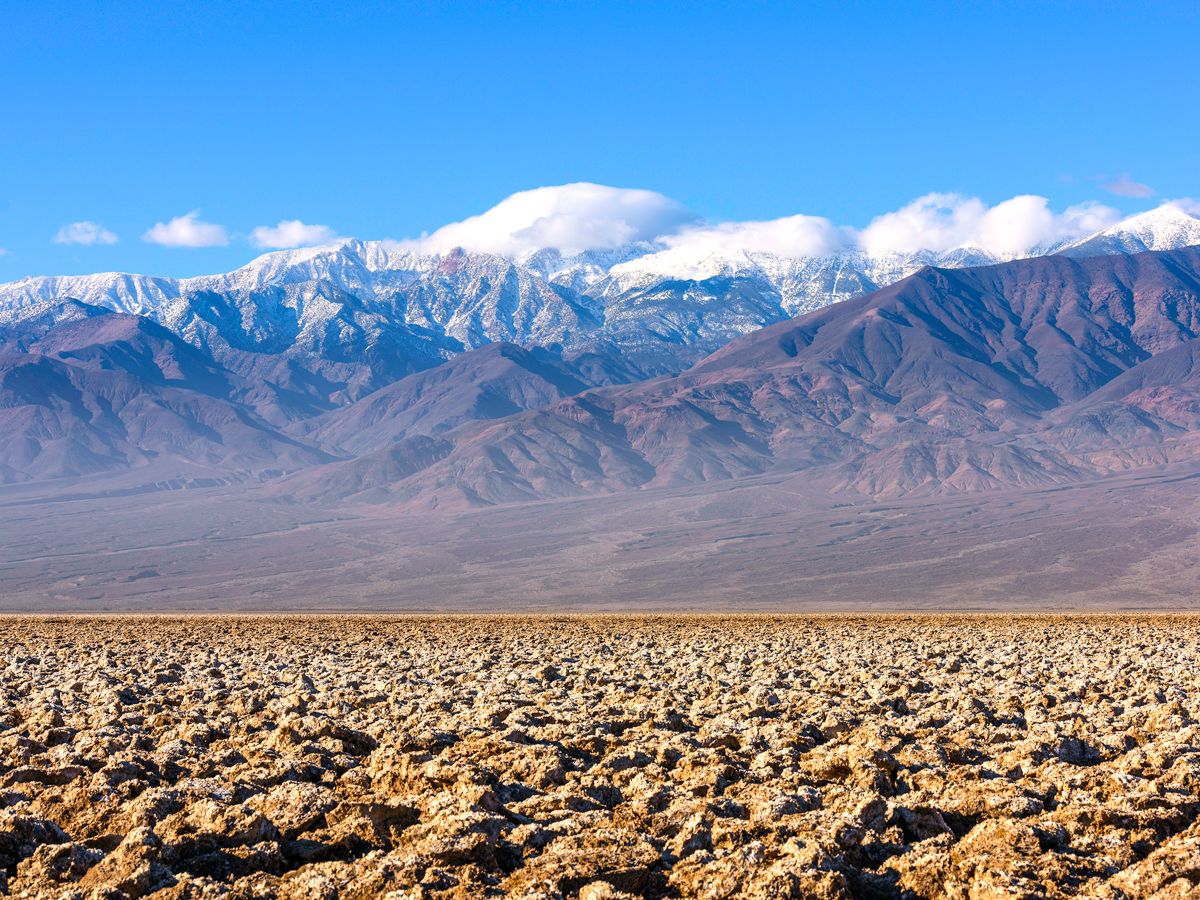
Rugged landscape of the Devil's Golf Course in Death Valley, California
Credit: delray77/ iStock via Getty Images Plus 

A 1934 guidebook from the National Park Service reads, “Only the devil could play golf in this Death Valley landscape.” California’s Devil’s Golf Course in Death Valley National Park isn’t exactly fit to host a tournament. The apocalyptic landscape consists of a former lakebed from a lake that evaporated thousands of years ago. The “golf course” refers to the salt and mineral pan punctured by deep divots, which are sometimes reshaped by rainfall. Since the beating desert sun regularly evaporates the water, thorny formations as high as two feet tall remain.

Alamere Falls – Point Reyes National Seashore

Beachfront waterfall in Point Reyes National Seashore, California
Credit: Shyam Sundar Kalyanaraman/ 500px via Getty Images 

Tidefalls are waterfalls that lead directly into the ocean. The rarity of this occurrence makes Alamere Falls in Point Reyes National Seashore, California all the more special. As one of only two tidefalls in the state (the second is McWay Falls near Big Sur), the 30-foot cascade drops from the cliff onto Wildcat Beach — one of America’s coolest secret beaches. To see the unique falls, you’ll have to put in considerable legwork. Reaching Alamere Falls requires a 13-mile, round-trip trek along the Coast Trail, but the hike is worth the effort. Not only will you be rewarded with views of the cascade, but you’ll also pass two beautiful lakes along the way — Pelican and Bass Lake — which are popular spots for swimming.

Pfeiffer Beach – Big Sur

Sunset shining through Keyhole Arch off Pfeiffer Beach, California
Credit: Kathleen Herman/ Shutterstock 

Big Sur offers many spectacular panoramas, but Pfeiffer Beach is perhaps the most stunning view on the California coast. This unique purple-sand beach is one of Big Sur’s most photographed landscapes, in part due to the Keyhole Arch that lies just beyond. But it’s located just enough off the beaten tourist path to have fewer crowds than the rest of this stunning coastline. Surrounded by other tall sea stacks, the keyhole truly is something special, particularly when the sun is shining through it. As for the magical purple sand, the shade is caused by deposits of manganese garnet that wash up on the beach from the surrounding hills. Pro tip: Visit after a winter storm to see the most effervescent shade of violet.

Chandelier Drive-Thru Tree – Leggett

Road leading through the Chandelier Tree in California
Credit: Alberto Loyo/ Shutterstock 

The Chandelier Drive-Thru Tree in Leggett, three hours north of San Francisco, is one of just a handful of redwood trees that visitors can drive through. Located in Underwood Park, the 2,400-year-old giant is 315 feet tall and 21 feet in diameter, allowing it to stand while the middle of its trunk is missing. In the past 50 years or so, some of the world’s most famous drive-thru trees have fallen down, including Yosemite’s Wawona Tree and Calaveras Big Trees State Park’s Pioneer Cabin Tree. Redwood and giant sequoia trees are some of the biggest species in the world. They are found almost entirely in the Pacific Northwest and Northern California, the latter of which is home to Redwood National and State Parks.

Morro Rock – Morro Bay

Aerial view of Morro Rock in Morro Bay, California
Credit: Mindaugas Dulinskas/ iStock via Getty Images Plus 

Morro Bay is one of the most charming towns on California’s lesser-trafficked Central Coast, and Morro Rock is its most distinguishable landmark — for good reason. This massive rock — an ideal pit-stop on a road trip through the Golden State — stands 576 feet tall and is located at the mouth of the harbor on the edge of the Pacific. Nesting peregrine falcons reside on Morro Rock, which is part of a chain of nine ancient volcanic peaks stretching from San Luis Obispo to Morro Bay called the “Nine Sisters.” Morro Rock is an official California Historical Landmark and was formed about 23 million years ago from the plug of an extinct volcano. While it’s beautiful to admire from afar, climbing the rock is strictly prohibited.

Ancient Bristlecone Pine Forest – Inyo National Forest

Twisted barren trees in the Ancient Bristlecone Pine Forest in California
Credit: Luc Mena/ Shutterstock 

The twisted trees of the Ancient Bristlecone Pine Forest are the oldest trees in the world — remarkably, some of these Great Basin bristlecone pine trees have stood for more than 4,000 years. They are also one of the few plants that grow in the White Mountains of eastern California, due to the alkaline limestone content of the soil. Some bristlecone pines also grow in mountainous parts of Nevada and Utah, and they seem to prefer soil that is inhospitable to most plants. The Ancient Bristlecone Pine Forest is part of Inyo National Forest, located between Yosemite and Death Valley on the eastern edge of the state. Visitors can learn more about the fascinating trees at the visitor’s center and embark on one of several self-guided trails through the forest.

Eureka Dunes – Death Valley National Park

Sweeping sands of the Eureka Dunes near Death Valley, California
Credit: Greg Vaughn/ Alamy Stock Photo

Part of Death Valley National Park, Eureka Valley is located northwest of Death Valley itself at 3,000 feet in elevation. Most notably, the valley is home to the Eureka Dunes, the tallest sand dunes in California. They cover an area that is three miles long and a mile wide, with the dunes rising over 680 feet above the desert floor. Visitors can climb to the top of the sinking sand and listen carefully for a low bass note; unless it’s damp, you might be fortunate enough to hear the sand singing as it drifts down the steep dune face. The dunes are only one part of this valley’s majestic landscape — the 8,600-foot-tall Last Chance Mountains tower alongside them.

Farallon Islands – San Francisco

Homes on the rugged Farallon Islands near San Francisco, California
Credit: Jivan Nagi/ Shutterstock 

The Farallon Islands certainly look remote and rugged, but the archipelago is just 30 miles west of the Golden Gate Bridge in San Francisco. While the islands are close to the city, they haven’t been inhabited since the 1960s. Fur traders used to kill wildlife for pelts, blubber, and eggs as early as the 1800s, but the U.S. Fish and Wildlife Service has managed the islands since 1969, attempting to return the area to its natural state. Today, the Farallons are part of the San Francisco Bay National Wildlife Refuge Complex, which is home to the largest seabird nesting colony south of Alaska.

Post Banner Image
Culture

10 of America’s Spookiest Small Towns

By Daily Passport Team
Read time: 9 minutes
October 10, 2024
Updated: October 21, 2025

10 of America’s Spookiest Small Towns

By Daily Passport Team
Author
Daily Passport Team
Daily Passport writers have been seen in publications such as National Geographic, Food & Wine, CBC, Condé Nast Traveler, and Business Insider. They're passionate about uncovering unique destinations and sharing expert tips with curious travelers.

When travelers think of small-town America, they often picture tree-lined streets, friendly neighbors, and a slow pace of life. This may be true for some towns, but for others? Not quite so. Across the U.S., there are some small towns with spooky histories and eerie legends — from ghost sightings to unsettling local folklore — that give them a spine-tingling edge. These are 10 of the spookiest towns in America. 

Jefferson, Texas

Trees by lake in autumn in Jefferson, Texas
Credit: Herbert Rong/ 500px via Getty Images 

Considered one of the most haunted small towns in Texas, Jefferson has earned its spooky reputation through countless ghost stories and local legends. Today, the town has fewer than 2,000 residents, but in the 19th century it thrived as a busy and prosperous river port city. 

Among Jefferson’s most infamous haunts is the Historic Jefferson Hotel, where guests have reported sightings of the mysterious Vanishing Man, who appears suddenly before disappearing without a trace. The Excelsior House Hotel, the oldest continuously operating hotel in Texas, is another site of frequently reported paranormal activity, with tales of objects flying across rooms, closet doors swinging open, and shadowy figures drifting through the halls. Director Steven Spielberg stayed at the hotel and told of a chilling encounter with the ghost of a young boy who asked him about breakfast; he also had a briefcase mysteriously hurled at him from across the room. 

If these haunted tales aren’t enough to spook you, a walk through Oakwood Cemetery — with its unmarked graves and eerie floating orbs — or a tour of the Grove, a historic home said to be haunted by former residents, might just do the trick.

Sleepy Hollow, New York

Clock and Halloween decorations in Sleepy Hollow, New York
Credit: John Greim/ LightRocket via Getty Images 

Washington Irving put this village on the map with his 1820 short story “The Legend of Sleepy Hollow.” The author was a New York native and spent time in Sleepy Hollow, located about 30 miles north of New York City, and some theories suggest he was influenced by the local legend of a headless Hessian soldier who was decapitated by a cannonball during the American Revolution.

Today, Ichabod Crane fans can visit the spooky Old Dutch Church (the Headless Horseman’s supposed home) and the adjacent Sleepy Hollow Cemetery, the final resting place for over 45,000 people — including Irving himself. Nearby, the famous Headless Horseman Bridge and the Headless Horseman Statue add to the town’s creepy allure.

The Headless Horseman isn’t the only ghost to haunt Sleepy Hollow, either. The ghost of a British soldier, Major John André, who was hanged as a spy, is said to haunt Patriots Park, where he was captured. Another author, Edgar Mayhew Bacon, was inspired to write about the wailing woman of Raven Rock, a disturbing story of a woman who perished in a blizzard while seeking shelter from the storm in a nearby ravine.

Estes Park, Colorado

View of Stanley Hotel and mountains in distance in Estes Park, Colorado
Credit: pabradyphoto/ iStock Editorial via Getty Images Plus

If it’s spooky enough for Stephen King, it’s certainly spooky enough to make this list. Estes Park, a town of about 6,000 people nestled in the Colorado Rockies, approximately 90 miles northwest of Denver, is best known for the Stanley Hotel. Opened in 1909, the Colonial Revival hotel has become infamous for its paranormal activity. King himself stayed there, an experience that inspired his 1977 bestseller, The Shining

Over the years, there have been reports of disembodied children’s laughter and footsteps in empty hallways, the ghost of a housekeeper injured in a gas explosion who now haunts room 217 (the same room King stayed in), and the ghost of Flora Stanley, the founder’s wife, whose piano music is still heard echoing through the concert hall. Guests today can learn more about the Stanley’s haunted history with regular ghost tours.

Related: 19 of the Most Haunted Hotels Around the World 

Alton, Illinois

Main thoroughfare lined with buildings in Alton, Illinois
Credit: Serhii Chrucky/ Alamy Stock Photo

Alton, located about 30 miles north of St. Louis, is a city that’s well known for its ghostly hauntings, drawing film crews from the TV shows Ghost Adventures and Ghost Hunters in hopes of capturing evidence of paranormal activity. McPike Mansion, the star attraction in town, is an 1869 Victorian home that sits atop Mount Lookout overlooking all of Alton. Henry McPike, the city’s former mayor, occupied the home with his family until his death in 1910, before it went on to become the Browns Business College and then a boarding home. 

McPike Mansion, once a grand estate featuring 11 marble fireplaces and intricately carved banisters, fell into disrepair after its abandonment in the 1950s. Targeted by vandals and thieves, the property was stripped of anything valuable. Today, it is regarded as one of America’s most haunted locations, with theories suggesting that the spirits of Henry McPike, his family, and their staff haunt the property. The current owners, Sharyn and George Luedke, report at least a dozen spirits, with the cellar being the focal point of paranormal activity. Photographs taken inside often reveal unexplained orbs, balls of light, and even figures in the windows that are invisible to the naked eye.

Bodie, California

Abandoned buildings in Bodie, California
Credit: zrfphoto/ iStock via Getty Images Plus 

Setting foot in Bodie, a ghost town high in the Sierra Nevadas, feels like stepping back into the 19th century. When gold was discovered in the area in 1877, it drew thousands of prospectors, and Bodie quickly earned a reputation as one of the rowdiest boomtowns in the West. While the town rose quickly, it fell just as fast, peaking in 1880 before its population began to dwindle the next year. Mining was officially halted by government order in 1942, and the last residents eventually drifted away in the following years. 

Designated a California State Historic Park in 1962, Bodie is now one of the West’s most infamous ghost towns. Weathered buildings and empty streets still stand, some with furniture and dishes left behind, signaling the residents’ hasty departures. Visitors also report haunting stories of phantom pianos, children’s laughter, and shadowy figures in windows. 

The old Bodie Hotel, rumored to have been the site of several murders, is one of the most haunted sites in town. And then there’s the legendary Bodie curse — anyone who swipes a souvenir to take home supposedly risks misfortune until it’s returned, a belief reinforced by the apology letters and packages that still arrive at the park each year. 

Related: 7 Eerie Ghost Towns You Can Still Visit in the U.S. 

Gettysburg, Pennsylvania

Cannons on historic Gettysburg battlefield in Pennsylvania
Credit: dszc/ E+ via Getty Images 

The Battle of Gettysburg during the Civil War was one of the deadliest conflicts in U.S. history. Over the course of the three-day battle in Gettysburg, Pennsylvania, from July 1 to July 3, 1863, approximately 51,000 soldiers tragically lost their lives. The families of the deceased lobbied for a proper burial ground for their loved ones, resulting in the commission of the Gettysburg National Cemetery, where President Abraham Lincoln delivered his now-famous Gettysburg Address in 1864. 

Today, the cemetery is the final resting place of some 6,000 service men and women, with 3,500 of those killed in the Battle of Gettysburg. With so much loss of life, it’s no surprise that there have been accounts of paranormal sightings here. Some people claim to hear the distant sound of drumming or musket fire. Others claim they’ve seen soldiers’ ghosts floating through the grounds of the Gettysburg National Cemetery.

Salem, Massachusetts

Graveyard in Salem, Massachusetts
Credit: Jaclyn Vernace/ iStock Editorial via Getty Images Plus

While it’s not quite a “small” town, a list of spooky American places wouldn’t be complete without mentioning Salem, the site of the infamous Salem Witch Trials from 1692 to 1693. This dark period in Massachusetts history began when two young girls, Elizabeth Parris and Abigail Williams, began acting strangely, claiming they were possessed by the devil and accusing several women in the town of witchcraft. Over the ensuing months, 19 people were hanged, one was crushed to death, and five died in custody. 

Today, Proctor’s Ledge, the site of the hangings, remains one of the most haunted locations in Salem. Other spooky spots include Burying Point Cemetery, where the unapologetic Judge John Hathorne is buried, and the Witch House, home of Jonathan Corwin, another participating judge in the trials. Giles Corey, who was crushed to death at Howard Street Cemetery, is said to have cursed Salem, leading to centuries of misfortune — including a devastating fire and eight premature deaths in the Corwin family (known as the Corwin Curse). 

Pawleys Island, South Carolina

Inn in Pawleys Island, South Carolina
Credit: Wirestock, Inc./ Alamy Stock Photo 

Part of the 60-mile Grand Strand along South Carolina’s coast, Pawleys Island lies 25 miles south of bustling Myrtle Beach. Known for its quiet atmosphere and unspoiled beauty, the barrier island is less than 4 miles long and half a mile wide. Yet, its beauty may only be skin deep. 

Several ghost stories swirl around the island, the most famous of which is the tale of the Gray Man, a figure said to appear before storms to warn residents to evacuate. According to local legend, those who heed his warning are often spared major damage to their homes. Another tale tells of Alice Flagg, the daughter of a wealthy 19th-century plantation owner. As the story goes, her father did not approve of her suitor and threw her engagement ring out the window. Locals say her ghost still appears on the island late at night, wandering around Litchfield Plantation and searching for her lost engagement ring.

Athens, Ohio

Campus of Ohio University in Athens, Ohio
Credit: Wendy Van/ iStock Editorial via Getty Images Plus 

Home to Ohio University, the small city of Athens has a population of about 24,000 people, in addition to more than 28,000 students enrolled at the university. But beyond its lively college-town atmosphere lies a darker history tied to the Athens Lunatic Asylum, which operated from 1874 to 1993. Initially praised for its progressive care under the Kirkbride Plan, which emphasized humane treatment, the hospital later became infamous for harsh practices such as electroshock therapy and lobotomies. Tragically, nearly 2,000 patients are believed to have died there, many buried in unmarked graves still visible today, fueling stories of paranormal activity. 

Now known as the Ridges, the former asylum has been renovated and is currently being used as part of Ohio University; it houses classrooms, research labs, and cultural spaces. Yet even through its modernization, reports of paranormal activity persist — phantom voices, apparitions, unexplained bangs and screams, and strange flickering lights.

Related: 15 College Towns That Double as Great Tourist Destinations

Calico, California

Old West buildings in Calico, California
Credit: JHVEPhoto/ Alamy Stock Photo

Calico is a former mining town in San Bernardino County, located northeast of Los Angeles in the Mojave Desert. The original settlement dates back to 1881, when silver was discovered in the area. Calico’s silver production peaked between 1883 and 1885, but its rapid rise was followed by a decline in the mid-1890s, after the Silver Purchase Act reduced the price of the precious metal. Calico effectively became a ghost town until farmer and businessman Walter Knott breathed new life into the abandoned town in the 1950s. 

Knott purchased Calico and restored many of its historical buildings, but despite its fresh face, Calico is still known as one of the most haunted towns in California. Many claims of paranormal activity plague the town, including sightings of the ghost of lifetime resident Lucy Bell Lane, who has reportedly been spotted walking between her home and the general store she once co-owned with husband. Other eerie sightings include former teachers peering out from the windows of the old schoolhouse, the ghost of the former town marshal roaming Main Street, and several spirits said to linger around Hank’s Hotel.

Post Banner Image
Architecture

7 Apartment Buildings That Are Architectural Marvels

By Julia Hammond
Read time: 4 minutes
October 9, 2024
Updated: October 9, 2024

7 Apartment Buildings That Are Architectural Marvels

By Julia Hammond
Author
Julia Hammond
Julia is a U.K.-based travel writer whose work has been featured in The Independent, The Telegraph, The New Zealand Herald, and Culture Trip, among others. She’s an enthusiastic advocate for independent travel and a passionate geographer who has had the privilege of traveling to more than 130 countries in search of a story.

The world’s most breathtaking apartment buildings are the antithesis of boring tower blocks. Born out of a desire to create something striking, each reflects the era during which it was built and the values its creators cherished. Today, their beautiful and often unusual architecture makes them stand out in a sea of drab residential complexes in many major cities. Here’s where to find seven unique apartment buildings that are architectural marvels.

Kubuswoningen – Rotterdam, The Netherlands

Unique slanted cubes of Kubuswoningen apartments in  Rotterdam, The Netherlands
Credit: InFocus.ee/ Shutterstock

Piet Blom, the Dutch architect behind Rotterdam’s quirky cube houses, envisioned an urban forest when he created these unusual stacked apartments. Meant to represent individual trees, the cubes are slanted at an angle and painted a bright shade of yellow. They’re an instantly memorable landmark — no small feat in a city that’s made a name for itself with its boundary-pushing building design. 

Inside the cube houses, which were completed in 1984, bespoke furnishings make the most of every inch of space, while the geometric angles of their windows are an ever-present reminder that these apartments break the mold. Most of the cubes are private residences, but one is a museum that curious visitors can tour.

Reversible Destiny Lofts – Mitaka, Japan

Inside apartment at the Reversible Destiny Lofts in Mitaka, Japan
Credit: Koichi Kamoshida via Getty Images News

Located in a suburban Tokyo neighborhood, this colorful apartment complex is one of the most eye-catching apartment buildings in Japan. Built in 2005, it is the work of architects Shusaku Arakawa and Madeline Gins. The playful design of Reversible Destiny Lofts focuses on three stacked shapes — cube, tube, and sphere — which are connected by walkways and staircases. Inside, the floors are deliberately uneven, and the spaces are fitted with vertical poles to make navigating this unusual space possible. 

The architects believed such constant stimulation would mean they’d prolong their lives and stave off age-related cognitive decline in the process. The entire complex is dedicated to the memory of Helen Keller, who “was a role model and a source of inspiration, someone who was able to practice ‘reversible destiny’ in her own lifetime,” according to the building’s website.

Aqua Apartments – Chicago, Illinois

View from street level looking up at Aqua Apartments in Chicago, Illinois
Credit: Iuliia Serova/ iStock Editorial via Getty Images Plus

Opened in 2009, this 82-story apartment building in Chicago’s Lakeshore East neighborhood is one of the most distinctive skyscrapers to be built in the city in recent years. It was constructed on what was once a rail yard and surrounded by other high-rises, which proved a challenge for the architects when it came to protecting residents’ views. The answer: curvaceous, rippling balconies made from white concrete that extend outward to varying degrees from the walls of the building. These have the serendipitous benefit of also helping to protect the structure from the strong winds for which the city is known.

Burj Khalifa – Dubai, UAE

Burj Khalifa, the world's tallest skyscraper, surrounded by other buildings in downtown Dubai, UAE
Credit: Fraser Hall/ The Image Bank via Getty Images 

When Burj Khalifa topped out in 2009, it became the world’s tallest building, a position that it has held ever since. It rises 2,722 feet tall, standing as the needlelike centerpiece of the Downtown Dubai mixed-use development. There are 900 private residences in this iconic skyscraper, ranging from studios to four-bedroom apartments. The highest of these occupies the 108th floor, where, interestingly, the sun sets a couple of minutes later than at ground level — an important consideration for some residents during Ramadan.

Casa Milà – Barcelona, Spain

Unique curved facade of Casa Milà in  Barcelona, Spain
Credit: eye35.pix/ Alamy Stock Photo

Groundbreaking architect Antoni Gaudí’s unconventional, elaborate, and fantastic structures can be found all over Barcelona, including the Sagrada Família, Parc Güell, and Casa Batlló. Though visitors can access the roof terrace and a fourth-floor apartment of Casa Milà, known to locals as La Pedrera (“The Quarry”), it remains primarily a residential building. On the outside, its apartments bear the architect’s signature curves and embellishments in the undulating stone and wrought-iron balconies, along with the marble and glass-clad roof.

Condominio 25 Verde – Turin, Italy

View from street level up at Condominio 25 Verde complex interspersed with trees in Turin, Italy
Credit: archimago/ Alamy Stock Photo

Architect Luciano Pie’s whimsical Condominio 25 Verde has graced the Turin skyline since 2012. Sharing a similar “vertical forest” aesthetic to Milan’s Bosco Verticale, the building incorporates plants and trees as an integral part of its design, injecting a bit of much-needed greenery into the surrounding urban environment. The plants also play a key role in reducing urban noise, achieving temperature control, and purifying the surrounding air. Rainwater harvesting systems are used to keep the vegetation healthy, while solar panels provide a source of renewable energy for the inhabitants of its 63 apartments.

The Interlace – Singapore

Aerial view of the Interlace apartment complex in Singapore
Credit: Finbarr Fallon/ Alamy Stock Photo

The architect behind the design of this Singaporean apartment complex was keen to address the potential issue of social isolation, which can be problematic for people who live in city high-rises. Ole Scheeren achieved his goal by creating a set of unique staggered blocks that form a hexagonal arrangement. Each of the 31 units is six stories tall, though the stacked design means that the center of the complex is actually 24 floors high. Cascading sky terraces, roof gardens, and unobstructed views of the verdant Southern Ridges make this feel like a true village and community in a way a vertical development never could.

Post Banner Image
Culture

14 of the Best Free Attractions in Major U.S. Cities

By Marissa Kozma
Read time: 7 minutes
October 9, 2024
Updated: October 11, 2024

14 of the Best Free Attractions in Major U.S. Cities

By Marissa Kozma
Author
Marissa Kozma
Marissa is a cheap airfare aficionado who loves exploring offbeat destinations with her husband. Based in Los Angeles and Joshua Tree, Marissa has been featured in publications such as San Diego Magazine, Palm Springs Life Magazine, 303 Magazine, and Mountain Living.

When it comes to travel, the old adage “the best things in life are free” at times rings true. From natural history museums to private art collections, these fascinating attractions in major cities across the U.S. will seriously elevate your next vacation itinerary, all without costing a pretty penny

Lincoln Park Conservatory – Chicago, Illinois

Colorful flowers at the Lincoln Park Conservancy and Gardens in Chicago, Illinois
Credit: Jumping Rocks/ Universal Images Group via Getty Images 

Located a few miles north of downtown, Lincoln Park is Chicago’s largest park, covering 1,214 acres. It’s also one of the country’s best city parks, making it a must-visit attraction during your stay in the Windy City. The park is home to miles of pathways through manicured gardens, with views of Lake Michigan and the Chicago skyline, as well as a free zoo. One of the best attractions in the park, however, is the Lincoln Park Conservatory and Gardens. There’s no admission fee to walk through this indoor botanical and admire the lush, tropical fauna, including ancient ferns and rare, delicate orchids. It’s located inside a Victorian-era glass arboretum that has been standing in Lincoln Park since 1895.   

Coit Tower – San Francisco, California

Coit Tower on San Francisco hilltop
Credit: S. Greg Panosian/ iStock via Getty Images Plus 

A fixture of the San Francisco skyline since 1933, the 210-foot-tall Coit Tower on Telegraph Hill offers free admission — if you skip the elevator and take the stairs, that is. Offering 360-degree views of the city and historic murals installed after the Great Depression, the monument honors the devoted volunteer firefighters who serve the city. It is named after Lillie Hitchcock Coit, who was a patron of the volunteer firefighters and helped to fund the tower’s construction. If you’re lucky, you may also spot the wild parrots who live on Telegraph Hill during your visit. 

Minneapolis Sculpture Garden – Minneapolis, Minnesota

Famous "Spoonbridge and Cherry" sculpture at Minneapolis Sculpture Garden
Credit: Star Tribune via Getty Images

With more than 60 sculptures as part of Walker Art Center’s collections, the 11-acre Minneapolis Sculpture Garden is one of the best free attractions in the Twin Cities. The most famous sculpture in the garden is the iconic Spoonbridge and Cherry, made of aluminum and stainless steel by Swedish American pop artist Claes Oldenburg and his wife and fellow artist Coosje van Bruggen. The open-air museum is open 365 days a year, from 6 a.m. to midnight.

Columned exterior of the National Portrait Gallery in Washington, D.C.
Credit: UCG/ Universal Images Group via Getty Images 

Washington, D.C., is perhaps the best city in the country to enjoy free museums and attractions. Each of the 17 Smithsonian museums and galleries in D.C. — including 11 along the National Mall — is completely free to visit, as is one of America’s most treasured art exhibits. Home to the most extensive collection of portraits in the world, the National Portrait Gallery is a unique art museum of commissioned portraits ranging from U.S. presidents to Oprah Winfrey and other dignitaries. 

Red Rocks Park and Amphitheatre – Denver, Colorado

View of stage and surrounded mountains from top level of Red Rocks Amphitheatre in Colorado
Credit: Federico Curcio/ Shutterstock 

One of the most famous concert venues in the nation, Red Rocks Amphitheatre is a must-see when visiting the Mile High City. You won’t be alone, however — in 2023 alone, the venue sold 1.65 million tickets to popular acts such as Zach Bryan, Tori Amos, and Jon Pardi. But you don’t have to buy concert tickets to admire this historic venue. Located in the hills of Morrison, Colorado, just west of Denver, Red Rocks is a free attraction that anyone can enjoy when there’s no live music. Visit the Red Rocks Hall of Fame inside the visitor’s center to learn more about the venue’s history and the many famous bands and performers who have impacted its legacy.

Skyscraper Museum – New York, New York

Exhibits inside the Skyscraper Museum in New York City
Credit: Randy Duchaine/ Alamy Stock Photo

The New York City skyline is home to some of the world’s most iconic buildings, and one of the best places to learn about them isthe Skyscraper Museum. Celebrating these vertical marvels and the architectural geniuses behind them, the museum in lower Manhattan’s Battery Park City is free to the general public, but it’s advised you reserve your timed-entry ticket in advance.

Sazerac House – New Orleans, Louisiana

Exterior of the Sazerac House in New Orleans, Louisiana
Credit: William Morgan/ Alamy Stock Photo

Sazerac is a beloved New Orleans whiskey brand that dates to 1869, and for some, there’s no better way to spend an afternoon in the Big Easy than sampling some spirits — especially when they’re on the house. Sazerac House, a multifloor interactive museum chronicling the company’s history and the city’s apothecary culture, engages attendees with free tastings and unlimited access to the exhibits. Visitors can reserve tickets ahead of time for the free tasting and tour.

Forest Park – St. Louis, Missouri

Pond and pagoda at Forest Park in St. Louis, Missouri
Credit: traveler1116/ iStock via Getty Images Plus 

Opened in 1876, Forest Park hosted the 1904 world’s fair and the 1904 Summer Olympic Games in St. Louis. Covering 1,326 acres, the gorgeous park is actually larger than New York City’s Central Park and includes waterways for boating, tree-lined trails for jogging, tennis courts, and much more. Forest Park is also home to the St. Louis Zoo, St. Louis Art Museum (SLAM), and St. Louis Science Center — which are all free to explore, as well. 

Cable Car Museum – San Francisco, California

Exhibit at the Cable Car Museum in San Francisco, California
Credit: Simon Westlake/ Alamy Stock Photo

Located in the Nob Hill neighborhood of San Francisco, the Cable Car Museum is housed in a historic cable car barn and powerhouse. Visitors can explore a subterranean walkway to witness the cable line and large sheaves that operate the vintage cars that still roll up and down the city’s hills today. With three cars from the 1870s, the landmark is a unique place to understand San Francisco’s history, and it’s totally free to visit.

Getty Villa Museum – Los Angeles, California

Statue and pool in courtyard of the Getty Villa in Los Angeles, California
Credit: George Rose via Getty Images News

Visitors can explore the grounds of this impressive manicured estate near the Malibu coast free of charge. Wandering the gardens of the Getty Villa and admiring the private collection of Greek and Roman antiquities is a wonderful way to spend an afternoon away from the hustle and bustle of Hollywood. The museum is located on the city’s west side, off the famed Pacific Coast Highway. While admission is free, visitors must reserve a timed entry in advance, and there’s a charge for parking. 

Chicago Cultural Center – Chicago, Illinois

Stained glass domed ceiling at the Chicago Culture Center
Credit: Bob Krist/ The Image Bank Unreleased via Getty Images 

The Chicago Cultural Center is situated across from Millennium Park, home to the city’s famous “Bean” sculpture and one of the country’s most-visited tourist attractions. It features two stained-glass domes, a 200-seat historic theater, a learning lab, and a banquet hall for art, film, dance, theater, and music events. Best of all, the screenings and shows are 100% free. Check the center’s calendar ahead of your trip to stay on top of the latest happenings.

International Rose Test Garden – Portland, Oregon

Visitors walking through the International Rose Test Garden in Portland, Oregon
Credit: Jumping Rocks/ Universal Images Group via Getty Images 

As the oldest continuously operating rose test garden in the U.S., the International Rose Test Garden in Portland is home to some 10,000 blossoms. It also offers spectacular views of the downtown area and Mount Hood. The garden began as a space for hybrid roses grown in Europe during World War I, but has since grown into one of the best free attractions not only in Portland, but also in the country. 

Fabric Workshop and Museum – Philadelphia, Pennsylvania

Extgerior of the Fabric Workshop and Museum in Philadelphia, Pennsylvania
Credit: Robert K. Chin – Storefronts/ Alamy Stock Photo

Explore the creative world of textiles at the Fabric Workshop and Museum, a nonprofit contemporary art museum offering free admission (with an optional suggestion donation) in Philly. Located downtown near the city’s famous Reading Terminal market, the museum features rotating exhibits and hands-on classes in which attendees can learn more about the art of block printing, dyeing, needlework, and more. When you visit, you’ll gain a newfound appreciation for one of art’s most expressive mediums.  

U.S. Capitol – Washington, D.C.

View of the U.S. Capitol building in Washington, D.C.
Credit: Rudy Sulgan/ The Image Bank via Getty Images 

No trip to D.C. would be complete without a stop at the U.S. Capitol. All tours of the grounds are free of charge, but check ahead to see if the Senate or House of Representatives is in session, as it is also free to watch Congress in action. The galleries are not open to the public during joint sessions or joint meetings, but visiting the Capitol is still a great way to learn more about important matters and get the chance to spot well-known political figures.

Post Banner Image
Tips

How Can You Tell if a Hotel Room Really Is Clean?

By Bennett Kleinman
Read time: 4 minutes
October 9, 2024
Updated: December 9, 2024

How Can You Tell if a Hotel Room Really Is Clean?

By Bennett Kleinman
Author
Bennett Kleinman
Bennett is a New York City-based staff writer for Daily Passport. He previously contributed to television programs such as the Late Show With David Letterman, as well as digital publications like the Onion. Bennett has traveled to 48 U.S. states and all 30 Major League Baseball stadiums.

While many hotel cleaning staffs do an excellent job cleaning rooms between stays, other hotels have a reputation for cutting corners and failing to thoroughly disinfect everything. For this reason, some travelers have a tiny voice in the back of their heads that wonders if the room is actually as neat and tidy as it should be. Sometimes, you may find stains on the pillow or fingerprints all over the TV remote, while other times the germs and bacteria may be invisible to the naked eye. With that in mind, here are six helpful tips for how to tell if your hotel room is really clean when you check in.

Check the Bedding

Hotel guest rearranging pillow on bed
Credit: Biserka Stojanovic/ iStock via Getty Images Plus 

When it comes to hotel bedding, there are several obvious visual signs to look for. Begin by examining the sheets and pillowcases for any stains or discoloration. Also inspect the sheets for any unusual creasing; this messy appearance may suggest that the bed was hastily made between guests rather than completely washed and replaced with fresh sheets. Consider removing the pillowcases and checking the pillows, too, for an unsightly yellow color that may suggest they need to be replaced. It might also be worth traveling with a handheld blacklight that you can use to literally shine a light on invisible bed stains.

But perhaps the single most important thing to look out for when checking the bedding is evidence of bed bugs — which is why experts recommend you should always put your luggage in the hotel bathtub first. Examine the sheets for any dry red or black spots, which could be indicative of dried bed bug excrement. Then, remove the sheets and look for actual bugs in the crevices of the mattress itself. If any red flags are raised, contact the front desk to request new bedding or a new room.

Peek Behind Fixtures

Hotel guest opening mini fridge in room
Credit: Anchiy/ E+ via Getty Images 

At first glance, your hotel room may appear spick-and-span, but a little snooping can reveal some untidy spots. Look behind the dresser, under the bed, and move some chairs around to make sure nothing was missed during cleaning. Then, carefully move around some of the fixtures, like the TV, bedside lamp, or mini fridge. Chances are, you’ll reveal some dirt and grime you may have otherwise overlooked. Unfortunately, if this is the case in your room, it’s probably the case in every other room as well. That’s why it’s recommended to travel with a portable air purifier that can help you deal with any potential dust concerns.

Search for Mold

Traveler rolling suitcase into hotel room
Credit: Luis Alvarez/ DigitalVision via Getty Images 

Extreme mold buildup often doesn’t happen overnight, so moldy walls can be indicative of repeated failures to keep the room clean. Look for peeling wallpaper or water stains on the wall, both of which are likely signs of mold growth. Also feel around for any damp sections of the rug, as there could be moisture and mold growth underneath your feet. Then, head into the bathroom and look for any black mold along the edges of the tub or around the toilet and sink. Lastly, take a deep whiff of the room — if it smells musty or damp, that’s usually a sign of the room being unclean.

Inspect Common Touchpoints

Hotel guest sitting on bed using TV remote
Credit: Morsa Images/ DigitalVision via Getty Images 

Door handles, TV remotes, and light switches are some of the most common touchpoints in any hotel room. A 2012 study conducted by researchers at the University of Houston found these specific items to be among the dirtiest objects in a hotel. These findings suggested that some hotel cleaning crews were neglecting touchpoints and leaving future guests susceptible to germs and bacteria. When you check into your room, examine these objects for obvious signs of dirt such as smudges or fingerprints, and bring some disinfecting wipes with you in case you need to wipe them down. You can always contact the front desk to express your concerns, too.

Scan Communal Areas

Hotel guest with luggage at front desk
Credit: Anchiy/ E+ via Getty Images 

Dirty common areas can raise red flags about a hotel’s commitment to overall cleanliness. For instance, if you notice trash all over the parking area, that’s a potentially concerning sign right off the bat. And if you go into the lobby and notice crumbs all over the breakfast area or overflowing garbage bins, that’s also a sign of neglect. Often, it’s not the fault of the housekeeping crew, who may be short-staffed or have limited supplies, but it’s still something worth noting, as that lack of cleanliness may very well carry over to the guest rooms.

Do Your Research

Woman sitting on couch using laptop computer
Credit: PIKSEL/ iStock via Getty Images Plus 

Sites like Google Reviews and Tripadvisor make it simple for hotel guests to post reviews to warn future visitors about issues they encountered during their stay. Before booking any room, check recent reviews to see if there are any comments on cleanliness. If you notice a repeated pattern of negative reviews and unsatisfied individuals, it’s unlikely your stay will be much different. You can always contact the hotel and express your concerns, as some hotel managers will try to go above and beyond to ensure you have a pleasant stay. But otherwise, heed the warning of those who stayed at the hotel before you.

Post Banner Image
Tips

6 Questions To Consider When Booking a Guided Tour

By Julia Hammond
Read time: 5 minutes
October 9, 2024
Updated: October 9, 2024

6 Questions To Consider When Booking a Guided Tour

By Julia Hammond
Author
Julia Hammond
Julia is a U.K.-based travel writer whose work has been featured in The Independent, The Telegraph, The New Zealand Herald, and Culture Trip, among others. She’s an enthusiastic advocate for independent travel and a passionate geographer who has had the privilege of traveling to more than 130 countries in search of a story.

It’s a question commonly asked by travelers: Should I go it alone or enlist the help of a tour guide? Either approach has its benefits, but also its downsides. To make planning your next trip easier, we’ve dissected the pros and cons of guided tours, from multiday outings to half-day excursions, as well as how to decide whether they’re the right choice for you. Here are six questions to consider before you book.

What Type of Experiences and Activities Are You Looking For?

Man leaning over boat to lout out over canal
Credit: VeeStudio89/ E+ via Getty Images 

While there’s no reason you can’t walk around the historic core of an Italian city on your own, ski down a mountain in Colorado without a guide, or take a self-drive safari in South Africa, there are some activities that you just can’t do on your own. These types of guided tours and activities are ideal for travelers seeking immersive experiences rather than sightseeing. Professionally hosted cooking classes, wellness breaks, and photography tours all fall into this category. 

According to the 2024 U.S. Tour Taker Report from travel company Arival, it’s a trend that is increasingly apparent with Gen Z and millennial travelers from the U.S. Their findings are backed up by a 2024 Get Your Guide survey, which reported that 89% of travelers believed that teaming up with a local guide is the best way to explore a new destination, as these respondents valued authentic insights into a different culture over a superficial visit.

Is a Guided Tour a Safer Option?

Tour guide pointing out animal on safari
Credit: Klaus Vedfelt/ DigitalVision via Getty Images 

On the other hand, some places aren’t safe to visit independently, and taking a guided tour is the only option to ensure that you don’t put yourself (or others) in danger. For instance, it’s possible to explore underground caverns, hike on a glacier, or venture inside a glittering ice cave  — as long as you appreciate the risks and are accompanied by a local expert. As Viktória Komjáti of tour operator Icelandia explains, “We usually recommend booking guided tours for three main reasons: safety, comfort, and immersion. Activities in fragile or extreme environments, such as glaciers or wilderness areas, are much safer with skilled local guides.” 

The tour operator will monitor conditions not only on the day of your visit but also in the weeks and months leading up to it, giving them the knowledge they require to make an informed decision about whether it’s safe to proceed. Along with the comfort of knowing that someone is watching out for your safety, the social nature of such an excursion can be an added perk — group tours can be a great way to meet like-minded travelers and make new friends.  

Do You Have Time To Research a Trip Yourself?

Woman looking out over cityscape
Credit: Adrian Seliga/ iStock via Getty Images Plus 

If you’re keen to maximize your time in a destination with which you’re unfamiliar, then it might make sense to opt for an organized tour for all or part of your vacation. Doing so can save hours of scrolling through blog articles and social media posts and sifting out genuine reviews. Whether you’re considering a day excursion or planning a multiday itinerary for a longer trip, trusting someone else to take the reins can give you confidence that you won’t miss out on must-sees or overlook hidden gems. 

Stan Ellerm of Australian tour company Tasmanian Hikes believes that “guided walks give you a greater understanding and appreciation for the area that you are exploring. Our guides have curated the best places to visit and are there to enhance the overall experience, as well as take care of your well-being.”

How Well Do You Cope With Unfamiliar Surroundings? 

Group walking across stone bridge over river
Credit: SolStock/ E+ via Getty Images 

If you’re likely to spend your trip worrying about committing a cultural faux pas, getting lost, or being unable to make yourself understood, visiting new places on a guided tour will most likely feel a lot less daunting. You’re also paying for someone else to shoulder the responsibility for delivering a seamless and enjoyable trip. The company will usually take care of logistical matters such as purchasing tickets and getting from one visitor attraction to the next, giving you peace of mind and leaving you free to enjoy the experience.

However, more adventurous travelers could find a tour itinerary constraining — instead, they might be excited about the problem-solving opportunities a far-flung adventure somewhere new could deliver. 

Is a Guided Tour Worth the Money?

Guide speaking to tour group on bus
Credit: xavierarnau/ E+ via Getty Images 

Ultimately, one of the biggest downsides to joining a guided tour is the cost. If it’s a group tour, sharing these costs with others means you don’t shoulder the burden alone, but you wouldn’t incur them at all if you were traveling independently. However, tour companies can sometimes negotiate a better deal with hoteliers and specialist providers, as they can offer repeat business throughout the season. You’ll also get added value from the insights and information they impart during the tour. 

Before signing up, it’s a good idea to do some price comparisons. Dig into what the tour includes and price out what each separate element would cost if you were to book on your own. With some online research, you’ll be able to figure out whether the guided tour you’re considering represents good value for your money. 

Would a Hybrid Approach Work Better?

Tour group riding bikes along city canal
Credit: AleksandarNakic/ E+ via Getty Images 

Don’t forget to consider a hybrid approach. If you’re planning a city break, kicking things off by taking a guided walk or seeing the key sights on a minibus tour could make sense for you. But once you have a feel for the place, you’ll have more confidence to venture out on your own as you take a deeper dive into what interests you most. Meanwhile, on an extended vacation, opting for guided tours for some activities and doing others independently allows you to enhance your vacation with expert-led activities and experiences, while giving you personal space to absorb and process this new environment. 

You might also choose an organized tour as a way of overcoming patchy availability of long-distance public transportation. Where roads aren’t in great shape, independent travel might be too daunting. Or if you’d need to rent a car or hire a driver, the itinerary could become prohibitively expensive. Interspersing periods of individual travel with guided tours could give you the best of both worlds.