Post Banner Image
Tips

The Safest Countries To Visit in 2026

By Rachel Gresh
Read time: 5 minutes
October 24, 2024
Updated: April 28, 2026

The Safest Countries To Visit in 2026

By Rachel Gresh
Author
Rachel Gresh
Rachel is a Washington, D.C.–based travel and lifestyle writer with roots in the Great Lakes region. When she’s not writing for publications such as The Discoverer and Interesting Facts, you’ll find her wandering through museums or exploring destinations off the beaten path.

When traveling, safety is just as important as the scenery. And while there’s no way to completely eliminate risk, the travel insurance provider Berkshire Hathaway has revealed its annual ranking of the world’s safest countries for travel in 2026, highlighting destinations where peace of mind comes with the plane ticket. The safety scores are based on traveler surveys, data from the Global Peace Index and Numbeo’s Safety Index, and an average of the GeoSure Global scores for the major cities in each country. To help you plan your next journey worry-free, below we explore the safest countries for travel in 2026.

5. Canada

Benches along boardwalk overlooking St. Lawrence River in Quebec City, Canada
Credit: © http://santinovchphoto.com/stock.adobe.com

Canada has been listed on Berkshire Hathaway’s safety index ever since its inception in 2018, and for good reason. In addition to the country’s fifth-place ranking overall, it’s home to the top six safest cities in North America on Numbeo’s safety index, with Quebec City taking the top spot this year. Canada also ranks among the 15 most peaceful nations on the 2026 Global Peace Index, with low levels of conflict, political violence, and violent crime.

However, there are a few safety considerations for visitors. When visiting tourist hot spots and metropolitan areas, such as Niagara Falls or Toronto, be aware of your surroundings and avoid leaving items in your car, as break-ins can occur. Additionally, Canada’s great outdoor adventure spots, such as Banff National Park and the Whistler ski area, attract many tourists who are unfamiliar with the remote terrain. It’s crucial to follow local guidelines and warning signs to avoid accidents.

4. Iceland

The Blue Lagoon in Iceland
Credit: © InfiniteFlow/stock.adobe.com

A recurring favorite of Berkshire Hathaway’s annual list of the safest countries to travel to, Iceland receives more than 2 million tourists annually. And what’s not to like? It’s the world’s most peaceful country, according to the Global Peace Index, and the second-happiest country in the world, per the World Happiness Report. Iceland’s capital city, Reykjavik, also boasts a strong sense of community and is surrounded by natural beauty, making it a welcoming home base for visitors exploring the island nation.

Popular activities in Iceland include bathing in the Blue Lagoon, viewing the northern lights, and hiking to glaciers and waterfalls. However, Iceland’s dramatic landscapes come with a unique safety hazard: volcanoes. Lava flows may occasionally impact main roads along popular tourist routes, possibly leaving drivers stranded. Always use caution and monitor local guidance during periods of eruption.

3. Austria

Busy Stephansplatz Square in Vienna, Austria
Credit: © Mistervlad/stock.adobe.com

Known for its Alpine beauty, Austria is new to the safest countries for travelers list in 2026. Austria ranks fourth globally on the Global Peace Index, cited for its low rates of internal conflict, violent crime, and political terror. However, in busy urban centers such as the capital, Vienna, visitors should use extra caution, as petty crime and pickpocketing do occur, even in such a safe country.

Beyond the cities, Austria has no shortage of appeal for visitors, whether you’re enjoying world-class skiing in Innsbruck or trying culinary staples like Wiener schnitzel at a local gasthaus. While exploring, it’s important to follow safety warnings, especially in Alpine regions where avalanches may occur. Moreover, altitude sickness and mountain sports such as hiking and biking can pose safety risks.

2. Australia

Swimmers and stand-up paddleboarders in Byron Bay, Australia
Credit: © Darren/stock.adobe.com

Australia has ranked in the top 10 safest countries each year since 2018. It also ranks in the top 20 overall on the Global Peace Index, with particularly low rates of violent crime, political instability, and terrorism. The top three safest major cities in the country are Canberra (the capital), Adelaide, and Sydney, respectively.

Many tourists head to Australia to enjoy outdoor activities such as snorkeling the Great Barrier Reef, exploring the wild outback, driving along the Great Ocean Road, and surfing at Byron Bay, to name a few. But visitors must remain vigilant, as the biggest risks for tourists in Australia occur while outdoors. This includes extreme weather and natural disasters, such as wildfires, as well as coastal hazards, including rip currents and jellyfish. Follow all posted signage, heed weather warnings, and be aware of your surroundings while enjoying Australia’s beautiful landscapes.

1. The Netherlands

Person riding bike across bridge in Amsterdam, the Netherlands
Credit: © rh2010/stock.adobe.com

Known for its historic canals, colorful tulip fields, and charming windmills, the Netherlands ranks as the safest country for international travelers in 2026. Travelers surveyed by Berkshire Hathaway gave the country nearly perfect scores for health and overall safety, as well as high rankings for the safety of female travelers, LGBTQIA+ travelers, and travelers of color. However, if there’s one thing tourists should keep an eye out for in the Netherlands, it’s bicycles. Because the Netherlands is the leading cycling nation in the world, pedestrians should be aware of bicycle lanes to avoid injury.

Beyond its safety credentials, visitors flock to the country for its diverse attractions, from the bustling streets of Amsterdam to the solemn World War II memorial sites scattered throughout the country. Meanwhile, The Hague ranks as Europe’s third-safest major city, according to Numbeo. It’s home to the Peace Palace, the Binnenhof, and the Mauritshuis Museum, boasting famous 17th-century works by Rembrandt and Vermeer.

Top 15 Safest Countries for Travel in 2026

Docks and windmills along river in the Netherlands
Credit: © Denis Rozhnovsky/stock.adobe.com

Below, check out the full index of 15 countries in Berkshire Hathaway’s 2026 safest countries report. (Note: This list was published before the regional conflict in the Middle East, which is impacting travel warnings to the UAE. Follow your country’s travel guidelines when considering a trip to this region.)

  • The Netherlands
  • Australia
  • Austria
  • Iceland
  • Canada
  • New Zealand
  • United Arab Emirates
  • Switzerland
  • Japan
  • Ireland
  • Belgium
  • Portugal
  • France
  • United Kingdom
Post Banner Image
Geography

Top 10 Largest Lakes in the World

By Bradley O'Neill
Read time: 8 minutes
October 24, 2024
Updated: January 23, 2025

Top 10 Largest Lakes in the World

By Bradley O'Neill

Scientists estimate that there are over 300 million lakes worldwide. These bodies of water, entirely surrounded by land, can be either freshwater or saltwater. They vary in size, from small pools to vast inland seas, and support diverse ecosystems. Lakes can be found in high mountains, near seashores, and even in arid deserts. In addition to providing drinking water and supporting fisheries, lakes also offer countless recreational opportunities, such as boating, hiking, fishing, and sailing. Curious which of these lakes stand out from the pack? Below, discover where to find the 10 largest lakes in the world.

10. Great Slave Lake – Canada 

Houseboats on Great Slave Lake in Yellowknife, Canada
Credit: GeGiGoggle/ Shutterstock 

Size: 11,030 square miles

The second-largest lake located entirely in Canada, Great Slave Lake is also the deepest lake in North America, plunging to a maximum depth of over 2,000 feet. The first known record of the lake, which is located in Canada’s Northwest Territories, was a 1767 drawing by two Chipewyan First Nations peoples. It takes its name from the Slavey Dene peoples, an Indigenous group who speak the Slavey language. 

Today, the shores of Great Slave Lake are home to five bustling communities where over half of the Northwest Territories’ population lives. Yellowknife, the largest city, was established during a 1930s gold rush around Yellowknife Bay. Kayaking, sailing, and paddleboarding are popular activities on the lake, and there’s also world-class fishing on the lake’s East Arm and North Arm. Come winter, Great Slave Lake freezes over and is the setting for festivals such as the Hay River Pond Hockey Tournament and SnowKing Winter Festival

9. Lake Malawi – Malawi, Mozambique, and Tanzania

Sandy beach along Lake Malawi in Africa, seen from above
Credit: Romina Facchi/ Moment Open via Getty Images 

Size: 11,429 square miles

Shared between Malawi, Mozambique, and Tanzania, Lake Malawi (also known as Lake Nyssa or Lago Niassa) is the third-largest lake in Africa. It boasts a huge fishing industry, employing 56,000 fishers and supporting the livelihoods of around 1.6 million people. The waters are inhabited by an estimated 800 to 1,000 fish species. Of the 350 species of mbuna fish, 345 are endemic to the lake. It’s a vital habitat for cichlids, too, the majority of which are also endemic to Lake Malawi. The southern end of the lake forms Lake Malawi National Park, a UNESCO World Heritage Site. 

Among the most-loved spots for tourism activities is Malawi’s Cape Maclear, which falls within the national park. Here, visitors can find sandy beaches along with kayaking, snorkeling, and diving tours. On the eastern shores, Nkhotakota is the gateway to Nkhotakota Wildlife Reserve. It’s Malawi’s oldest and largest wildlife reserve — home to 320 bird species, hundreds of elephants, and large herds of game animals such as buffalo and impala. 

8. Great Bear Lake – Canada

Small boat on Great Bear Lake in Canada
Credit: Tawna Brown/ Alamy Stock Photo

Size: 12,096 square miles

Crossed by the Arctic Circle in the remote Northwest Territories, Great Bear Lake is the largest lake entirely in Canada. It’s the traditional home of the Sahtú Dene peoples, in addition to the Inuvialuit, Kitikmeot Inuit, and Tłı̨chǫ communities. The lake’s name is thought to originate from the Chipewyan phrase “sa tue dene,” which translates to “grizzly bear water people.” Besides the village of Délı̨nę and a few smaller settlements, the lake is sparsely inhabited. Summers, which are bathed in the midnight sun, are short, and the lake is rarely free of ice. 

Despites its remote location and harsh weather conditions, Great Bear Lake is popular for trout fishing and renowned for some of the world’s biggest catches. Délı̨nę is the starting point for most activities around the lake. Cultural tours with Dene elders shed light on the community’s heritage and traditions, including medicine, beadwork, and caribou hide making. 

7. Lake Baikal – Russia

Rock formation on coast of Lake Baikal in Siberia
Credit: demerzel21/ iStock via Getty Images Plus 

Size: 12,200 square miles

Located in eastern Siberia, Lake Baikal is the deepest lake in the world, plunging to depths of over 5,300 feet. It holds one-fifth of the planet’s total unfrozen freshwater reserve, making it the largest freshwater lake in the world. When Lake Baikal is compared to countries, it’s slightly larger than Belgium.

Formed approximately 20 million to 25 million years ago, Lake Baikal is one of Earth’s oldest lakes, too. Its waters and surroundings provide a habitat for thousands of animal species, including around 2,000 bird species and 58 fish species. Remarkably, almost two-thirds of the lake’s plants and animals, such as the Baikal dolphin, are endemic.

The Baikal Nature Reserve is one of the best places to experience the wildlife and nature up close. While travel to Russia is currently not possible for U.S. citizens, attractions around the lake include ice skating in winter, riding the scenic Circum-Baikal Railway, and visiting rugged Olkhon Island. 

6. Lake Tanganyika – East Africa

Empty boats on beach of Lake Tanganyika in East Africa
Credit: rchphoto/ iStock via Getty Images Plus 

Size: 12,700 square miles

Lake Tanganyika is the longest freshwater lake in the world and the second-deepest lake, reaching 4,700 feet below the surface due to a sheer coastline created by East Africa’s Great Rift Valley. Spanning the countries of Burundi, Democratic Republic of Congo, Tanzania, and Zambia, Lake Tanganyika is known for its unique biodiversity and over 350 fish species, including the goliath tigerfish and great and small Nile perch. As such, the area is a popular destination for sport fishing. 

Many of Tanganyika’s marine animals are also endemic, with 98% of its cichlids found nowhere else on Earth. Although crocodiles inhabit much of the shoreline, Mpulungu, a lakefront town in northern Zambia, is a favorite swimming spot. Visitors can also check out Tanzania’s Gombe Stream National Park for a chance to see chimpanzees. 

5. Lake Michigan – United States

Wooden staircase leading to sandy beach on Lake Michigan
Credit: ehrlif/ iStock via Getty Images Plus 

Size: 22,300 square miles

The third-largest of the Great Lakes, Lake Michigan is the only one of the five lakes located entirely in the United States. Over 12 million people live along its shores, in both small towns and big cities such as Chicago, Green Bay, and Milwaukee. The lake’s ecosystem supports everything from fruit orchards and forests to savannas, tallgrass prairies, and wetlands. 

Near the northeastern corner of Lake Michigan, Sleeping Bear Dunes National Lakeshore is home to the largest freshwater sand dunes on Earth. Wildlife also thrives here, including 140 bird species.

Meanwhile, spanning the Straits of Mackinac — which connects Lake Michigan with Lake Huron — is the 5-mile-long Mackinac Bridge, one of the world’s longest suspension bridges. Another area of interest for visitors is the Indiana Dunes National Park, one of the country’s most biologically rich national parks

4. Lake Huron – Canada and United States

Evergreen trees along coast of Lake Huron
Credit: Selector Jonathon/ Shutterstock 

Size: 23,000 square miles

Only slightly smaller than the state of West Virginia, Lake Huron is shared by Michigan and Canada’s Ontario province. Huron, one of the top 10 largest lakes in the world, provides drinking water, outdoor recreation, and employment opportunities to some 3 million people in both the U.S. and Canada. It also has the longest shoreline — 3,827 miles — of all of the Great Lakes. 

Visitors will find plenty to explore along beaches such as the 7-mile-long Sauble Beach and 8.7-mile Wasaga Beach. There are also approximately 30,000 islands in Lake Huron, including the popular Benjamin Islands.

The lake’s eastern section is called Georgian Bay, and it shelters the shipwreck-filled Fathom Five National Marine Park. According to Ojibwe legend, a dragonlike panther called Mishipeshu inhabits its deep waters. 

3. Lake Victoria – Kenya, Tanzania, and Uganda

Sunset over Lake Victoria
Credit: Stefan Haider/ Shutterstock 

Size: 26,828 square miles

The source of the Nile, the world’s longest river, Lake Victoria is Africa’s largest lake and the world’s largest tropical lake. Shared by three countries in the continent’s southeastern region, it was formed around 400,000 years ago. English explorer John Hanning Speke arrived here in 1858 and named the lake after Queen Victoria of the United Kingdom. 

Historically a trade route for local communities, Lake Victoria continues to support the regional economy through both industry and tourism. It’s home to the world’s largest freshwater fishery, providing employment for approximately 200,000 people. It also has several dams that generate hydroelectricity. Pristine beaches line the lake’s 2,137-mile coastline, most notably Uganda’s Ssese Islands. 

2. Lake Superior – Canada and United States

Forested area on coast of Lake Superior
Credit: Susan Ruggles/ Photodisc via Getty Images

Size: 31,700 square miles

Its name is no accident: Lake Superior is the mightiest of North America’s Great Lakes and the world’s largest freshwater lake, home to 10% of the world’s fresh surface water. Superior’s meandering 2,725-mile-long shoreline borders Ontario and the states of Michigan, Minnesota, and Wisconsin. 

Formed by volcanic activity about a billion years ago, the lake has long been a vital migration route for Indigenous groups and European settlers. But not all journeys reached their destination: An estimated 350 ships have run aground or sunk in Lake Superior’s waters, with half still undiscovered.

Today, the lake is a hot spot for kayaking, fishing, and swimming. Isle Royale National Park occupies a wilderness archipelago in the middle of the lake, with its own lakes and superb scuba diving. 

1. Caspian Sea – Eurasia

Boats off rocky shoreline of the Caspian Sea
Credit: ekipaj/ iStock via Getty Images Plus 

Size: 143,200 square miles

Though it’s called a sea, the Caspian Sea is actually the world’s largest inland body of water, occupying an area roughly equivalent to that of Germany or Japan.

Set between five countries (Azerbaijan, Iran, Kazakhstan, Russia, and Turkmenistan) in Eastern Europe, the Caspian Sea takes its name from the ancient Caspi peoples who once inhabited the region. Until around 11 million years ago, it was connected to both the Black Sea and the Mediterranean Sea. 

Exhibiting both freshwater and saline characteristics, the Caspian Sea has rich biodiversity and shelters several unique species. One of these is the sturgeon fish, which is prized for producing caviar. Around its shores are bustling cities such as Aktau, Kazakhstan, and Baku, Azerbaijan, along with coastal destinations including Chalus Beach and Ramsar Beach in Iran. 

Post Banner Image
Tips

5 Things You Don’t Need To Tip for When Traveling in the U.S.

By Bennett Kleinman
Read time: 4 minutes
October 24, 2024
Updated: October 24, 2024

5 Things You Don’t Need To Tip for When Traveling in the U.S.

By Bennett Kleinman
Author
Bennett Kleinman
Bennett is a New York City-based staff writer for Daily Passport. He previously contributed to television programs such as the Late Show With David Letterman, as well as digital publications like the Onion. Bennett has traveled to 48 U.S. states and all 30 Major League Baseball stadiums.

Tipping is arguably more prevalent in the United States than in any other country. For many services, it’s often expected that customers leave a 15% to 20% gratuity. Still, there are certain instances when you don’t need to tip at all, and knowing when not to add a gratuity is useful intel when traveling around the country. Here are five things you shouldn’t tip for when traveling in the United States.

Counter Service

Customer picking up takeout food order
Credit: LordHenriVoton/ E+ via Getty Images 

Whether you just landed at the airport or pulled off the highway to stop at a service station, you may be tempted to grab a burger and fries at the nearest fast-food restaurant. But unlike at eateries where waiters bring the food to your table and clean up after you, there’s no expectation to leave a tip at eateries that offer counter service. 

Etiquette experts say tipping in these types of eateries — whether larger chains like Starbucks and McDonald’s or local delis and takeaways — is entirely discretionary. And research from the Pew Center reveals that just 12% of Americans reported leaving a tip for counter service. So, you shouldn’t feel obligated to leave a gratuity, even if you see a prompt on the touch screen to do so. That said, it would certainly be appreciated by the staff if you left a few dollars in the tip jar to thank them for excellent service.

Hotel Receptionists

Front desk receptionist speaking to hotel guest
Credit: PixelsEffect/ E+ via Getty Images

If a hotel valet parks your car, a bellhop brings bags up to your room, or a housekeeper cleans up after you, then leaving them a few dollars is a standard gesture. (For more detail, see our ultimate guide to tipping at hotels.) However, there’s one scenario where leaving an additional gratuity is quite uncommon: at the front desk. 

When checking in, you may be asked to provide your credit card for the cost of the room or incidentals, but there’s no need to tip on top of that. There are, of course, exceptions where you may want to thank the receptionist for going above and beyond, such as if they booked you into a specific room or handled a special request, but there’s no expectation of you doing so.

Flight Attendants

Flight attendant closing overhead bin on aircraft
Credit: Narongrit Sritana/ iStock via Getty Images Plus 

Many flight attendants go out of their way to ensure the comfort and safety of their passengers. But no matter how excellently they perform those duties, you shouldn’t leave them a tip. According to Travel + Leisure, the majority of major airlines discourage staff members from taking any cash tips, and per Fodor’s, some companies like United and Allegiant have banned the practice outright. 

One notable exception is budget airline Frontier, which is known to prompt passengers who buy food or drink to leave a gratuity on their digital tablet, according to CNBC. If you’d like to thank your flight attendant for their assistance, kind words of gratitude are always appreciated, or you can go above and beyond and gift them some individually wrapped candies or other tokens of your appreciation.

Certain Professionals

Patient speaking to doctor
Credit: SDI Productions/ E+ via Getty Images 

Urgent medical issues can arise at any time, even when you’re on vacation. But if you suddenly need to see a doctor or visit a hospital while traveling around the U.S., leaving a tip should be the last thing on your mind. As noted by etiquette expert Thomas Farley, there’s no need to tip people who earn a full salary or perform a trade, such as doctors, lawyers, teachers, and plumbers. Farley states that “it would be highly unorthodox and very awkward” to do, and perhaps even misconstrued as a bribe. Medical costs are already high enough, even if you have insurance, so don’t worry about paying any more than you need to.

Unsafe Drivers

Close-up image of driver's hand on steering wheel
Credit: miniseries/ E+ via Getty Images 

In the U.S., it’s customary to tip taxi or ride-share app drivers (such as Uber or Lyft) 20% at the end of your ride. Even mediocre experiences generally warrant at least 10%, according to etiquette experts interviewed by Reader’s Digest

But if you feel unsafe while riding in the back of a car, you should never feel obligated to tip the driver. Maybe their driving was reckless, or maybe they made unwanted flirtatious advances. Either way, that type of behavior is highly unprofessional and potentially dangerous, and it should be reported — either by filing a complaint within the app or via a police report. Just try to be honest with your assessment, and don’t skimp out on tipping the drivers who do perform an excellent job.

Post Banner Image
Architecture

6 Historic Buildings That Have Been Restored to Their Former Glory

By Julia Hammond
Read time: 5 minutes
October 24, 2024
Updated: October 24, 2024

6 Historic Buildings That Have Been Restored to Their Former Glory

By Julia Hammond
Author
Julia Hammond
Julia is a U.K.-based travel writer whose work has been featured in The Independent, The Telegraph, The New Zealand Herald, and Culture Trip, among others. She’s an enthusiastic advocate for independent travel and a passionate geographer who has had the privilege of traveling to more than 130 countries in search of a story.

Historical buildings give us a sense of connection to those who came before us and provide an insight into the values and priorities of times past. As these structures age, it’s important to actively preserve them to prevent the loss of cultural heritage and conserve their unique architecture and design. Sometimes, such work is an ongoing process, but it can also take place in response to devastating and unexpected events like natural disasters or accidental fires. Explore six landmark buildings around the world that have been restored to their former glory.

Notre-Dame de Paris – France 

Notre-Dame de Paris lit at night
Credit: Kyrylo Neiezhmakov/ iStock via Getty Images Plus 

Notre-Dame de Paris, an iconic landmark on the Île de la Cité in the French capital, was built between 1163 and 1345. Tragically, the structure caught fire during restoration work in 2019 and suffered extensive damage, particularly to the wooden roof and wooden spire. However, the vaulted stone ceiling fortunately prevented the falling debris from reaching the rest of the building. 

Nevertheless, it has still been a gargantuan task to carry out the repairs, and work remains ongoing in some parts of the cathedral. Restoration of the apse and sacristy is scheduled to take place in 2025, and stained glass windows are expected to be fitted by 2026. However, the majority of the building has been completed and there’s now good news for visitors to Paris: Notre-Dame has a confirmed reopening date of December 7, 2024. 

Great Mosque of Djenné – Mali 

Adobe facade of the Great Mosque of Djenné in Mali
Credit: Guido Cozzi/Atlantide Phototravel/ Photodisc via Getty Images 

In contrast to Notre-Dame, repairing the Great Mosque of Djenné in the West African country of Mali is an annual occurrence. The current structure was built in 1907, though it stands on the site of a 14th-century mosque. The largest adobe structure in the world, it’s a splendid example of Sudano-Sahelian architecture and part of a UNESCO World Heritage Site inscribed in 1988.  

Sun-baked mud bricks form the basis of the mosque’s 65-foot-high walls, as well as its supporting pillars and minarets. As a consequence, the mosque is habitually damaged during the rainy season. Replastering the structure — a ceremony known as the Crépissage — is a community affair each spring. Everyone who is able carries buckets of water and mud mixed with rice husks to supply the skilled masons tasked with the repairs.

House of the Black Heads – Riga, Latvia

Cobblestone square in front of the House of the Black Heads in Riga, Latvia
Credit: Maremagnum/ Corbis Documentary via Getty Images 

Located in the Old Town of Riga, the capital of Latvia, the House of the Black Heads was originally built in 1334. It served a double purpose, acting as both a warehouse and a place where merchants could gather for meetings and celebrations. In its early days, the building would have lacked the ornamentation that gives it much of its appeal today; these details were added during a 17th-century renovation. During World War II, however, Riga was heavily bombed, and the building was left in ruins with only its cellar intact. Then, under Soviet rule, the site was demolished, despite protests from the local community. 

However, there was a prophetic inscription on the original House of the Blackheads that read: “If I were to ever collapse, raise me up once again.” So, in the mid-1990s, in a newly independent Latvia, the House of the Blackheads was finally reconstructed, closely adhering to the original design. More than 5,000 people made a private donation so they could place a brick in the wall.

Cathedral Basilica of Arequipa – Peru 

People gathering in Plaza de Armas in front of Cathedral Basilica of Arequipa, Peru
Credit: Iuliia Serova/ iStock Editorial via Getty Images Plus

Arequipa’s glorious sillar stone cathedral dominates its main square, the Plaza de Armas. A place of worship was first built on this site in 1544, but it was destroyed by seismic activity just 39 years later. Construction recommenced in 1590, but once again, it was hampered by a volcanic eruption a decade later and an earthquake that shook what was left in 1604. In the first half of the 17th century, a cathedral rose from the rubble. Further earthquakes impacted the structure in 1666, 1668, 1687, and 1784, but it survived — until a fire tragically gutted it in 1844. 

The laborious process of rebuilding began again, only for the city to experience yet another devastating earthquake in 1868, which left parts of its new cathedral in ruins. Undeterred, officials carried out further repairs. History repeated itself in 2001 after a magnitude 8.4 quake damaged both towers, but miraculously, within a year the cathedral was as good as new.

Fairmont Hotel – San Francisco, California

Exterior of the Fairmont San Francisco hotel in Nob Hill neighborhood
Credit: Chon Kit Leong/ Alamy Stock Photo

On April 18, 1906, San Francisco was hit by a massive earthquake. The extensive devastation was compounded by a fire that blazed throughout the city for three days. When the smoke cleared, at least 80% of San Francisco was destroyed, with many of the wrecked and burnt-out buildings deemed unsalvageable. Originally scheduled to open on the day of the quake, the Fairmont Hotel had remained standing during the tremors but didn’t survive the fire. 

Repairs began soon after, and the luxurious Nob Hill property became the first major business to reopen after the earthquake; as a consequence, people referred to it as “a hotel so grand they built a city around it,” according to the hotel’s website. Exactly a year after the quake, the Fairmont welcomed its first guests with an extravagant party. It wasn’t all smooth sailing from then on, as the Great Depression later took its toll. But by the late 1940s, the Fairmont had been lavishly remodeled and once again became the city’s playground for the rich and famous. Today, it remains as fabulous as ever after an $85 million refurbishment in 2001.
Hatshepsut Temple – Luxor, Egypt

Hatshepsut Temple surrounded by desert and mountains in Luxor, Egypt
Credit: bloodua/ iStock via Getty Images Plus 

Hatshepsut Temple dates back to the Eighteenth Dynasty of Egypt (1550 to 1292 BCE) and was built as a mortuary temple for Hatshepsut, one of the few women to rule ancient Egypt as a pharaoh. The site chosen was at Deir al-Bahari, close to the Valley of the Kings

Partially hewn out of the surrounding rock, this impressive ancient temple consists of three stories, its terraces linked by ramps. Excavation work first took place in 1891 and has continued ever since. Large-scale reconstruction of the temple and its statues has been underway since 1967. Historic sections of the temple have been revealed in stages: The Upper Festival Courtyard opened to visitors in 2000, the Solar Cult Complex in 2015, and the Main Sanctuary of Amun-Re in 2017. Additional rooms opened in 2023. Painted reliefs depict important events of the time and provide an insight into the temple rituals and religious festivals that would have taken place in ancient times.

Post Banner Image
Culture

5 of the Most Haunted Places in the U.S.

By Daily Passport Team
Read time: 4 minutes
October 24, 2024
Updated: October 31, 2024

5 of the Most Haunted Places in the U.S.

By Daily Passport Team
Author
Daily Passport Team
Daily Passport writers have been seen in publications such as National Geographic, Food & Wine, CBC, Condé Nast Traveler, and Business Insider. They're passionate about uncovering unique destinations and sharing expert tips with curious travelers.

Do you prefer your getaways with a spine-tingling edge? From eerie cemeteries to spooky mansions, there are a host of fascinating haunted attractions across the U.S. Some have centuries of history behind the spooky lore, making them fascinating places to visit. Today, these five eerie locations remain hotbeds of paranormal activity, earning their place among the most haunted spots in America.

St. Louis Cemetery No. 1 – New Orleans, Louisiana

Shattered stones at burial site at St. Louis Cemetery No. 1 in New Orleans, Louisiana
Credit: Scott A . Burns/ Shutterstock 

A storied and often tragic history places New Orleans among the most haunted cities in the U.S. Even its graves sit above ground as tombs, creating a sort of “city of the dead,” and New Orleans’ oldest cemetery, established in 1789, has been the site of paranormal activity for nearly its entire existence over 200-plus years. 

The most famous ghost encountered on the grounds of St. Louis Cemetery No. 1 belongs to Marie Laveau. Better known as the Voodoo Queen, she has been the subject of reported sightings not only in the cemetery, but also throughout the French Quarter. Legend has it that people still visit her tomb and ask for guidance, and she can sometimes be heard from beyond the grave. Whatever you do, don’t show any disrespect to her practices — she reportedly scratches or pushes offenders if she’s angry. 

Eastern State Penitentiary – Philadelphia, Pennsylvania

Halls of the Eastern State Penitentiary in Philadelphia, Pennsylvania
Credit: Dale Fornoff/ iStock via Getty Images Plus 

The imposing Eastern State Penitentiary was once one of the most notorious prisons in the U.S., infamous for its harsh punishments for prisoners. The inmates unfortunate enough to be housed here endured complete silence and solitude. When they weren’t in solitary confinement, a bag was sometimes placed over prisoners’ heads so they could neither see or be seen. The guards even went as far to wear socks over their shoes to muffle the sounds of their footsteps. 

The prison was operational from the time it was built in 1829 until 1971, closing after 142 years. In 1994, it reopened as a historical landmark. With the gruesome history of prison treatment, it’s no surprise the prison also ranks as one of the most haunted places in America. Paranormal activity has been reported in the form of disembodied laughter, footsteps, and shadowy figures walking the penitentiary halls. The TV shows Ghost Hunters and Ghost Adventures have both filmed episodes here, and today brave tourists can book night tours and special Halloween tours to experience the penitentiary’s spooky history. 

The Pirate’s House – Savannah, Georgia

Exterior of the Pirate's House in Savannah, Georgia
Credit: RM Floral/ Alamy Stock Photo

Savannah’s haunted history dates back centuries, and the Pirate’s House is one of the city’s oldest buildings — one holding a tumultuous and haunted past. A high level of paranormal activity is often reported at this tavern, said to be haunted by ghosts of sailors from the 1700s who once frequented this rough-and-tumble bar where sailors, pirates, and criminals used to gather. 

The tunnel that runs under the bar’s basement was allegedly used to transport people who were kidnapped, and today, some visitors have reported eerie moans heard emanating from these tunnels. And on slow nights, staff have reported hearing footsteps on the wood plank floor, the sensation of being watched, and even seeing ghostly sailors drift in and out of view. 

Greenwood Cemetery – Decatur, Illinois 

Tombstones at Greenwood Cemetery in Decanter, Illinois
Credit: rocksunderwater/ iStock via Getty Images Plus

Ghost sightings, unexplained lights and sounds, and an abundance of paranormal activity make this one of the spookiest cemeteries in the U.S. Greenwood Cemetery, located in the central Illinois city of Decatur, was dedicated in 1857, making it one of the state’s oldest cemeteries, although it is believed that burials started sometime in the 1820s. 

Several factors contribute to the cemetery’s haunted reputation. One is that it sits atop a Native American burial ground; another is that, during the Civil War, a train transporting Confederate prisoners reportedly left the bodies of soldiers who died from yellow fever there. A shallow mass grave was hastily dug, and it was feared that some men might have been buried alive. Today, there are reports of hauntings from a man wearing a tattered uniform, looking lost and confused, and asking for help. Other reputed ghosts at this eerie location include the Greenwood Bride, a woman said to be looking for her fiancé who was tragically killed.

The Cuban Club – Tampa, Florida

Exterior of the Cuban Club in Tampa, Florida
Credit: Ebyabe/ Wikimedia 

Local paranormal investigators consider the Cuban Club, located in Tampa’s Ybor City neighborhood, to be one of the most haunted places in the city. The current event space has a rich history among the city’s Cuban immigrants, who congregated there in the early 1900s to enjoy recreational facilities and to organize outreach efforts within their community. 
But over the years, some unfortunate accidental deaths occurred within the club’s walls. One of the club’s former owners claims to have heard empty elevators running on their own and doors opening and closing themselves. Paranormal experts claim to see people sitting in photos of empty seats and in empty windows. The Cuban Club even acknowledges its hair-raising reputation, but perhaps those brave enough to explore should decide for themselves. 
Post Banner Image
Tips

Everything You Need To Know About Booking Separate Airline Tickets

By Peter Vanden Bos
Read time: 5 minutes
October 24, 2024
Updated: October 24, 2024

Everything You Need To Know About Booking Separate Airline Tickets

By Peter Vanden Bos
Author
Peter Vanden Bos
Peter is a Toronto-based journalist, editor, content strategist, and self-professed avgeek with 15 years of experience covering all things travel. Prior to joining Daily Passport, he oversaw newsletter publication for Travelzoo. His favorite destinations to explore include Japan, France, Chile, New Zealand, and his adopted home country of Canada.

It’s safe to say that most travelers prefer a nonstop flight to reach their destination, but that’s not always possible. If you live in a small or midsize city with fewer direct flight options, you might have to settle for an itinerary that has a layover in an airline’s hub airport — say, flying from Columbus to London via New York’s JFK Airport. Most often, you’ll be able to buy this as one through ticket, either on a single airline or an airline and its codeshare partner. But in other scenarios, it might be beneficial to book those two legs as two individual tickets — although doing so comes with a certain level of risk. Find out everything you need to know about booking separate airline tickets.

What Are the Benefits of Booking Individual Tickets?

Airline passenger handing gate agent boarding passes
Credit: Hinterhaus Productions/ Stone via Getty Images 

One of the top reasons you might consider booking each leg of your flight itinerary separately is cost. For example, KLM could be offering a flight from Washington, D.C., to Krakow, Poland, via Amsterdam that costs $1,500 round trip. But if you search using Google Flights — one of our favorite tools for finding flight deals — the site may suggest what Google calls a “virtual interline” itinerary. Instead, you would book the flight to Amsterdam with KLM and then book a separate leg on a low-cost carrier such as EasyJet and make a self-transfer to reach your final destination of Krakow. In this case, booking separately could save you a significant amount on airfare.

Another reason some travelers prefer to book separate tickets is that it often affords them more flexibility. For instance, if travelers have a preferred airline, but that airline doesn’t offer the flights they are looking for, they might book a portion of the itinerary to the preferred airline’s hub and the rest of the trip on a separate carrier. This often works well when trying to redeem points, too, as airlines may offer better redemption deals to certain airports. If you’re willing to get yourself to a different airport on a separate ticket, you could score that award ticket for much less

And finally, you might also consider booking separate tickets if you want to add a short stopover to your trip. If you’re flying all the way to Europe, after all, maybe you want to spend a few hours exploring Amsterdam before you continue on to your final destination. 

What Are the Risks of Buying Airline Tickets Separately? 

Airline passenger looking at boarding pass while sitting in gate area
Credit: Yiu Yu Hoi/ DigitalVision via Getty Images 

The single biggest risk with booking separately is flight delays. Because you’re booking with separate carriers, if your first flight is delayed, causing you to miss your next flight, the second carrier has no obligation to rebook you free of charge. In contrast, if you buy a single ticket with the same airline, the carrier is obligated to rebook you on the next available flight to your final destination. 

Another potentially thorny issue? Luggage. If you’re planning to check a bag on separate tickets, you’ll have to check it with the first operating carrier, claim it at your transfer airport, and then recheck it with the next airline. If your first flight is delayed, you may not have enough time to meet the baggage check-in cutoff time for your next flight, or if the first airline loses your bag, it might be more of a headache to locate it and deliver to your final destination. And if both airlines charge baggage fees for your ticket, you’ll end up paying more for checking luggage, too.

Finally, there’s also a risk that airlines could change their schedules. The risk is greater the further out you book, when most airlines have “placeholder” schedules. These schedules are based on historical passenger data — it isn’t until a few months out that many airlines adjust their schedules to what they actually plan to fly. If you bought a single ticket, the airline will reaccommodate you in the event of a schedule change, but if you book separately, airlines won’t rebook for free because of another airline’s schedule change. 

As USA Today explains, “The crux of the problem is that if you book separate tickets from point A to point B to point C, the airline operating your first flight has no responsibility to transport you to your final destination. What you may think of as a single trip is actually two separate itineraries, and each carrier is only required to fly you on the segment you booked with it.”

Tips for Booking Separate Airline Tickets

Travelers standing with luggage in airport security line
Credit: Enes Evren/ E+ via Getty Images 

Despite the risks, it might still make sense to book a split ticket. If you do, be sure to leave a healthy buffer in between flights. Most experts recommend a minimum layover of four to six hours — or more if the layover involves an airport change or if you’ll have to spend extra time clearing customs and immigration. (If that’s the case, be sure to check entry requirements at your layover city — if you’ve booked separately, you’ll have to enter the country to check in again with another carrier.)

Some experts even caution against a same-day layover. “The only time when a split ticket can make sense is when you are planning to spend some extra time in your connection city — at least an overnight stay,” says Robert Niles, editor of Theme Park Insider. “That extra time gives you some wiggle room should your initial flight not get you to the connecting airport when you planned.”

If you’re planning to go this route, it may make sense to purchase travel insurance, too, which can cover you in the event of flight delays. But as financial website This Is Money cautions, you’ll need to read the fine print of your policy carefully to ensure you have full coverage. 

Given the risks, you’ll always want to be prepared for the unexpected when booking separately. While your travel day may go smoothly — and save you hundreds of dollars in the process — make sure you have your essentials packed in your carry-on, including toiletries and a change of clothes, so you’re covered in case of unforeseen disruptions. 

Post Banner Image
Culture

The Most Expensive Neighborhoods in the U.S.

By Bennett Kleinman
Read time: 6 minutes
October 24, 2024
Updated: July 25, 2025

The Most Expensive Neighborhoods in the U.S.

By Bennett Kleinman
Author
Bennett Kleinman
Bennett is a New York City-based staff writer for Daily Passport. He previously contributed to television programs such as the Late Show With David Letterman, as well as digital publications like the Onion. Bennett has traveled to 48 U.S. states and all 30 Major League Baseball stadiums.

The most expensive neighborhoods in the U.S. to live are often highly desirable for travelers, too. The exorbitant real estate prices found in the most exclusive neighborhoods in America are due to a number of factors, such as climate, safety, and the quality of the public school system, all of which can drastically affect the price of a house that would cost far less elsewhere. A new report from warranty provider American Home Shield compiled a list of the hottest communities in the country based on price-per-square-foot (as of December 2023). Here are the 10 most expensive neighborhoods in the U.S., according to the report.

10. West Village – New York County, New York

Brick apartment buildings on tree-lined street in the West Village, New York City
Credit: Alexander Spatari/ Moment via Getty Images 

Average price per square foot: $2,680

The priciest neighborhood in New York City — and the 10th-most expensive neighborhood in the U.S. — is the West Village in Manhattan. This popular area is bordered by the Hudson River to the west, 14th Street to the north, Houston Street to the south, and Sixth or Seventh Avenue to the east (depending on who you ask). The West Village developed rapidly between 1825 and 1840, with its population increasing fourfold during that time. Today, it’s known for its historic architecture, including the beautiful brownstones you encounter on nearly every block. The West Village is also a cultural hub, where you can find landmarks such as the Stonewall Inn, the Whitney Museum of American Art, the Comedy Cellar, and the legendary Village Vanguard jazz club, among many other institutions.

Related: 7 of North America's Best Historic City Neighborhoods to Visit

9. Casa del Lago – Palm Beach County, Florida

Aerial view of Palm Beach, Florida, and Atlantic Ocean
Credit: Cassanas/ iStock via Getty Images Plus 

Average price per square foot: $2,754

There are just a handful of highly desirable homes in Casa del Lago, a tight-knit community west of Boca Raton, and they come with an eye-watering median listing price of $6,895,000. Many of the houses are surrounded by a pristinely manicured golf course, which golfers can enjoy year-round thanks to the beautiful Florida weather. Casa del Lago is located adjacent to the northern Everglades, which contains some of the most unique flora and fauna in the U.S. The neighborhood is also a short drive to scenic Lake Okeechobee, which, at 730 square miles, is the largest freshwater lake in the state.

8. Crystal Cove – Orange County, California

Beach goers on sandy beach in Crystal Cove, California
Credit: Cavan Images/ iStock via Getty Images Plus 

Average price per square foot: $2,771

Located in Newport Beach, between Los Angeles and San Diego, Crystal Cove is a resplendent oceanside neighborhood that’s known for its natural beauty, which is best enjoyed while taking a stroll through nearby Crystal Cove State Park. This park encompasses 3.2 miles of Pacific coastline and contains many ecologically diverse tide pools, along with 46 vintage coastal cottages that date back to the 1920s and 1930s. For those craving the amenities of a bigger city, it’s less than an hour’s drive from Crystal Cove to downtown Los Angeles.

7. Star, Palm, and Hibiscus Islands – Miami-Dade County, Florida

Cars on causeway from Miami to Star, Palm, and Hibiscus Islands in South Florida
Credit: byvalet/ Alamy Stock Photo

Average price per square foot: $2,861

Star, Palm, and Hibiscus Islands are a trio of human-made landmasses that were created by the Army Corps of Engineers in 1922. Long a hot spot for celebrities and high rollers, the islands are located in the waters of the Atlantic Ocean between downtown Miami and Miami Beach. In fact, Palm Island once served as the winter home of notorious gangster Al Capone, and other famous residents have included Barbara Walters and Shaquille O’Neal. Palm Island was also once home to the popular Latin Quarter nightclub, which welcomed performers such as Frank Sinatra and Sammy Davis Jr. Many homes on these islands come with private docks, and the gated community is staffed by guards, though the neighborhood is open to the public.

6. Stinson Beach – Marin County, California

Homes in hills along coast of Marin County, California, seen from above
Credit: IMAGES@ARTIST-AT-LARGE/ Alamy Stock Photo

Average price per square foot: $2,988

The estates along Stinson Beach are among the most in-demand residences on the West Coast. This neighborhood sits adjacent to Bolinas Bay, about 20 miles northwest of downtown San Francisco. The beach itself is known for its pristine white sands, its wonderful swimming opportunities, and an ideal breeze in the afternoon for windsurfing. Moving into Stinson Beach doesn’t come cheap, though, as prime oceanfront properties run in excess of $20 million.

5. Aqualane Shores – Collier County, Florida

Pier off the coastline of Collier County, Florida
Credit: John Greim/ LightRocket via Getty Images 

Average price per square foot: $3,132

Located along the Gulf of Mexico, Aqualane Shores bills itself as “the Friendliest Neighborhood in Naples.” There are only about 350 properties here, making Aqualane Shores an extremely desirable and exclusive neighborhood. This results in homes often selling for well over $10 million, though one particularly lavish property is currently listed for over $170 million. Adding to its appeal, the neighborhood is a short drive from the beach, the Naples Botanical Garden, and the award-winning Naples Zoo.

4. Port Royal – Collier County, Florida

Bright yellow Mediterranean-style mansion with fountain and palm trees in Florida
Credit: John Greim/ LightRocket via Getty Images 

Average price per square foot: $3,375

Just south of Aqualane Shores is the neighborhood of Port Royal, which lands one spot higher on the list of America’s most expensive neighborhoods. Before development, Port Royal was mostly swampland, but in 1930, a man named John Glen Sample purchased the land for around $200,000 in today’s dollars — an investment that clearly paid off. The area was quickly developed into a luxurious community, and the exclusive Port Royal Beach Club opened in 1959. Today, this area is dotted with beautiful homes, many with Mediterranean-style accents.

3. Downtown Bellevue – King County, Washington

High-rises next to lake in downtown Bellevue, Washington
Credit: 4nadia/ iStock via Getty Images Plus 

Average price per square foot: $3,619

Downtown Bellevue is the second-largest city center in Washington after Seattle, which is located just across Lake Washington. This neighborhood is highly desirable — and expensive — in part because of how easy it is to get around. The community boasts a walk score of 95, and there are several public transportation options. Downtown Bellevue is also home to high-end retailers such as Gucci, Louis Vuitton, Apple, and more. Its proximity to Seattle can’t be beat, and residents can easily head there to enjoy a Seattle Seahawks NFL game, a Seattle Mariners MLB game, or a Seattle Kraken NHL game.

2. Old Town Carpinteria – Santa Barbara County, California

Aerial view of Santa Barbara, California, coastline
Credit: Spencer Gentz/ Shutterstock 

Average price per square foot: $4,129

In terms of tourist appeal, Old Town Carpinteria is significantly quieter than nearby Santa Barbara, but that’s how those in this tight-knit community, one of America’s most exclusive neighborhoods, prefer it. The oldest bungalows in Old Town Carpinteria date to the early 1900s, but there are plenty of modern accommodations alongside the ocean, too. The beach is a popular spot for swimmers and surfers alike, and Carpinteria Salt Marsh Nature Park is home to over 200 bird species and plenty of rare plants. The town is also connected to a nearby Amtrak station, where residents can easily travel to larger metropolitan areas elsewhere in California.

1. South of Market – San Francisco County, California 

Skyline of downtown San Francisco, California
Credit: Michael Lee/ Moment via Getty Images 

Average price per square foot: $5,415

The most expensive neighborhood in America is South of Market — better known as SoMa — in the heart of San Francisco. After being destroyed by the historic 1906 earthquake, the area was later developed into a commercial and cultural hub. Today, SoMa is home to popular museums such as the San Francisco Museum of Modern Art, the California Historical Society, and the Museum of the African Diaspora, to name a few. Given the limited square footage available in San Francisco, in SoMa it costs, on average, double what it would take to move into an apartment in NYC’s West Village.

Post Banner Image
Culture

The 10 Most Walkable U.S. Cities To Visit

By Bradley O'Neill
Read time: 6 minutes
October 21, 2024
Updated: September 15, 2025

The 10 Most Walkable U.S. Cities To Visit

By Bradley O'Neill
Author
Bradley O'Neill
Bradley is an English travel writer who’s wandered through 50-plus countries and lived on four continents while chasing waves, the perfect pint, and family adventures. Bradley's work has appeared in publications such as Skyscanner and Matador Network, and he now splits his time between Buenos Aires and Uruguay.

Experiencing a city on foot gives you the freedom to amble from one attraction to another, discovering hidden bars, quirky shops, and lesser-known spots along the way. In walkable cities, the streets are attractions in themselves, buzzing with everyday life, art, and architecture. You move at your own pace, never getting stuck in traffic or circling for a parking space. So, lace up some comfortable footwear and explore the most walkable cities in the U.S. for 2025, according to a report from USA Today’s 10Best.

10. New York, New York

Skyscrapers in New York City
Credit: Barry Winiker/ Photodisc via Getty Images 

Less than half of households in New York City own a car, which means millions of pedestrians fill the city’s busy sidewalks daily. And thanks to the city’s Walk to a Park initiative, 84% of New York residents now live within walking distance of a park. In particular, the grid system in Manhattan makes navigating the city relatively easy. Often, the best way for visitors to sample life in Little Italy, Nolita, and other eclectic neighborhoods is on foot. Spend a day wandering through Central Park, the High Line (a former elevated railway converted into a pedestrian-friendly space), and the Hudson River Greenway

9. Washington, D.C.

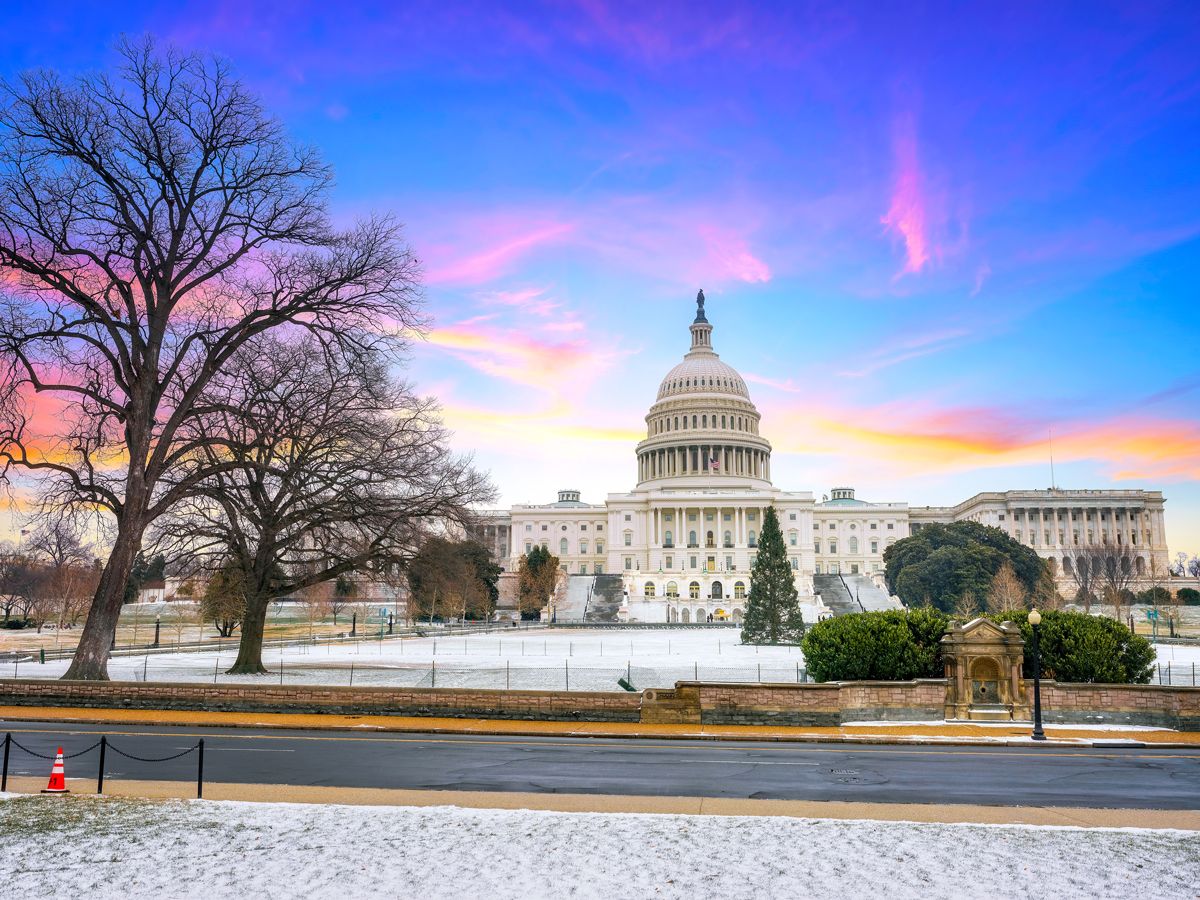
Residential neighborhood in Washington, D.C.
Credit: Grace Cary/ Moment via Getty Images Plus 

Washington, D.C.’s Pedestrian Master Plan aims to make walking safe and convenient throughout the city. It’s an ongoing vision to turn the nation’s capital into a place where any journey can be made without a car. Currently, almost the entire city population lives within half a mile of a bus stop or railway station. In addition to this pedestrian-focused mission, D.C.’s downtown area alone features 27 acres of public space, made up of 32 parks and plazas. Popular areas for tourists to explore at walking pace include the National Mall — a leisurely 2.5-mile stroll will take you from the United States Capitol to the Lincoln Memorial via parkland, water features, and iconic museums.

8. Savannah, Georgia

Waterfront buildings in Savannah, Georgia
Credit: Sean Pavone/ iStock via Getty Images Plus 

The oldest city in Georgia, founded in 1733, Savannah sits along the banks of the Savannah River. The former English colony is home to the country’s largest National Historic Landmark District, split into North Historic District and South Historic District, where tree-lined streets connect a collection of 23 leafy squares and plazas. Framed by grandiose colonial and Georgian homes, cobblestone Jones Street is often dubbed the “prettiest street in Savannah.” When you’re done exploring the many boutiques, museums, and restaurants of downtown, head over to River Street, where a mix of antique stores, converted warehouses, galleries, and pubs highlights the best of old and new Savannah.

7. Chicago, Illinois

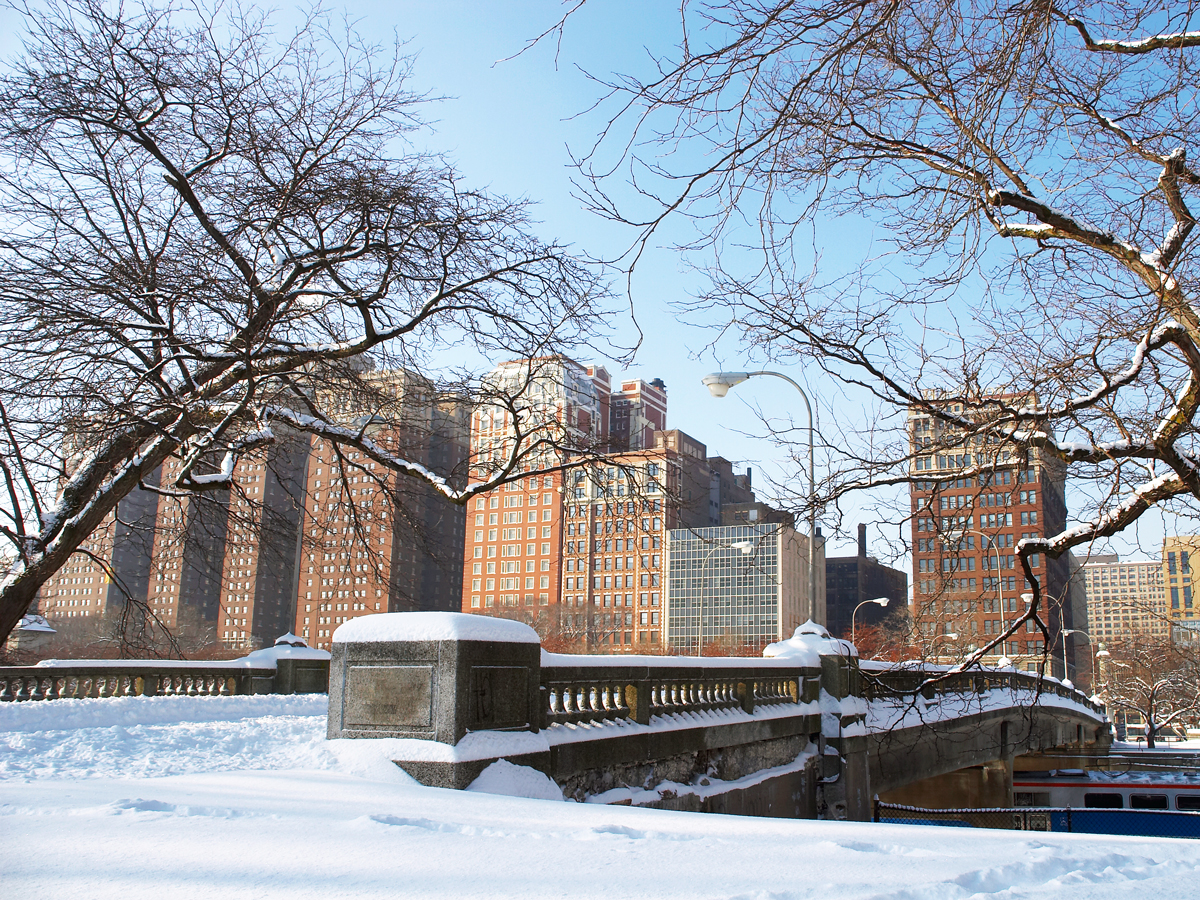
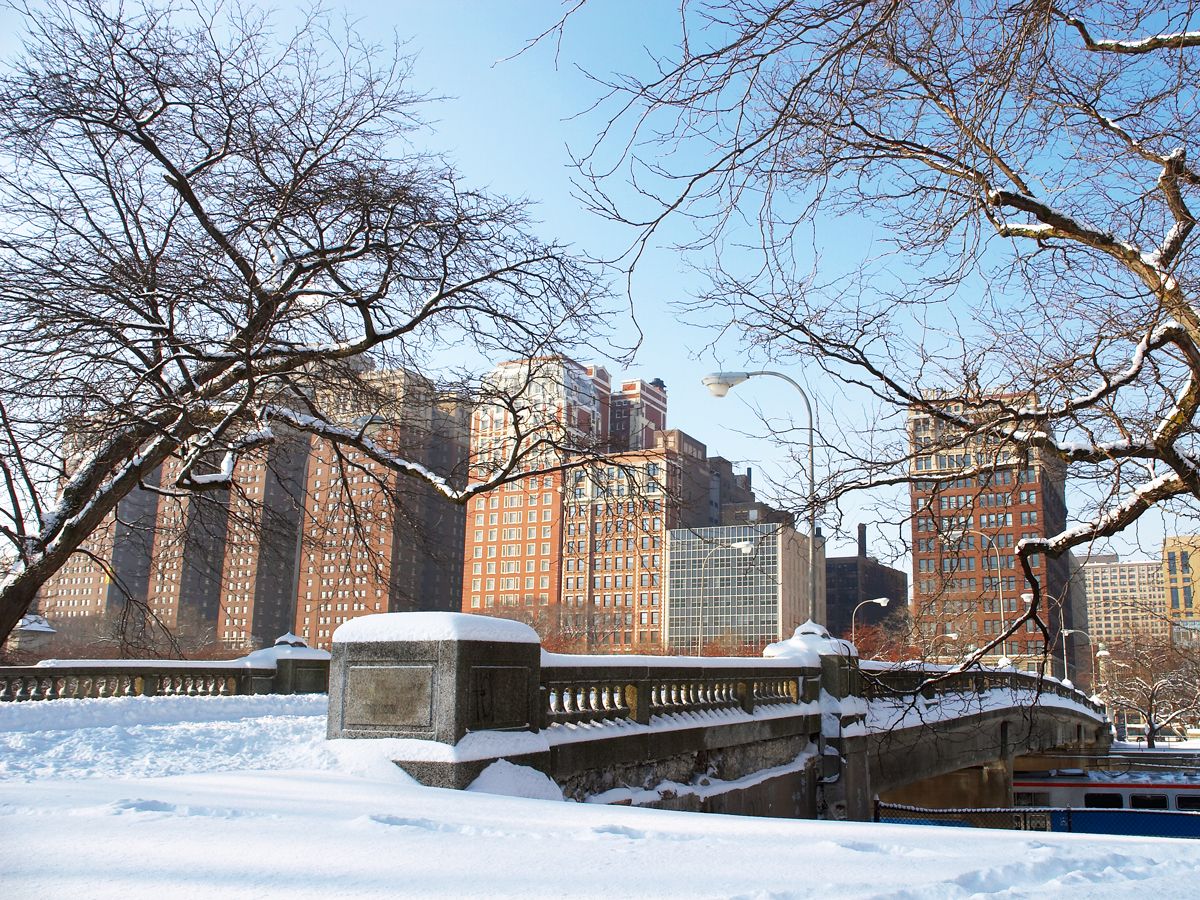
Bridge over Chicago River surrounded by skyscrapers
Credit: Starcevic/ iStock via Getty Images Plus

Set along Lake Michigan, Chicago is famous for its glistening skyline and sporting culture. Although it’s one of the country’s biggest cities, the Windy City remains an appealing destination for pedestrians. Chicago’s downtown district, known as the Loop, is filled with walkable areas, including the theater district on Randolph Street and the lush green spaces of Grant Park and Millennium Park. Just north of downtown, the Magnificent Mile invites shoppers to stroll among high-end fashion boutiques. Even in winter, a 40-block network of underground tunnels and overhead bridges called Pedway makes walking easy in Chicago.

6. San Francisco, California

The Painted Ladies Victorian homes in San Francisco, California
Credit: Bjorn Bakstad/ iStock via Getty Images Plus 

It may be one of the world’s hilliest cities, but San Francisco is packed with pedestrian-friendly neighborhoods. One of the best areas to explore on foot is Chinatown, a 30-block labyrinth of colorful alleys lined with dim sum restaurants, bakeries, and karaoke spots. Meanwhile, the Tenderloin is home to live music venues, theaters, and speakeasies. When you need to rest your legs, historic streetcars and cable cars travel to almost every corner of the city. Green spaces are abundant, too, including Golden Gate Park and the Presidio

5. Boston, Massachusetts

Aerial view of sailboats in Boston Harbor with skyline in background
Credit: DenisTangneyJr/ E+ via Getty Images 

There’s no better way to discover Boston’s famous Freedom Trail than on foot. This 2.5-mile-long pathway passes 16 historically significant sites such as Bunker Hill and the Old Cornerstone Bookhouse. Elsewhere in Boston, the Charles River Esplanade and Harbourwalk are two appealing ways for walkers to explore one of America’s oldest cities. Beacon Hill, Chinatown, and North End are also some of Boston’s most walkable neighborhoods. In addition, the Boston metro area ranks highly in the safest cities for pedestrians, according to the National Complete Streets Coalition.

Related: 7 Historic U.S. City Trails to Explore From Coast to Coast

4. Columbus, Ohio

Aerial view of Scioto Mile and Columbus, Ohio, skyline
Credit: Sky Noir Photography by Bill Dickinson/ Moment via Getty Images 

Ohio’s state capital is home to the Scioto Mile, a collection of urban parks that stretches for 175 acres along the Scioto River waterfront. Running from the Arena District to the Whittier Peninsula, it features nine distinct green spaces that are perfect for pedestrians. Check out Bicentennial Park for its amphitheater, fountain, and splash pad, or Battelle Riverfront Park for landscaped lawns and memorials. Columbus’ neighborhoods are also great to explore on foot — find art galleries, hip bars, and vintage boutiques in the Short North Arts District, or amble between bakeries, bookstores, pubs, and the lush Schiller Park in the German Village

3. Burlington, Vermont

Church Street Marketplace in Burlington, Vermont
Credit: Sean Pavone/ Alamy Stock Photo 

Overlooking Lake Champlain, Burlington is a small, laid-back city that exudes small-town vibes. With almost 100% sidewalk coverage, Burlington boasts an infrastructure that lends itself to safe walking, including downtown’s four-block pedestrian mall, Church Street Marketplace. More than 30 restaurants, 60 shops, and various cultural events make this the place to be for alfresco entertainment. Elsewhere, the Old North End is home to global eateries and the scenic Hilltop Battery Park. Away from urban life, Burlington Greenway is a multiuse recreational path covering 8 miles of lakefront, part of the Island Line Trail linking the city to South Hero. 

2. Providence, Rhode Island

Skyline of downtown Providence, Rhode Island
Credit: SeanPavonePhoto/ iStock via Getty Images Plus

In Rhode Island’s state capital, the compact downtown Providence district is where historic landmarks rub shoulders with cultural institutions and a vibrant dining scene. Visitors can reach major attractions, such as the Arcade Providence shopping center and Providence Performing Arts Center, easily by foot. Providence’s walkable city center is complemented by the 2.4-mile-long Providence Riverwalk. From Point Street Bridge to Waterplace Park, it incorporates waterfront pathways, green spaces, and public art installations. And don’t miss a stroll up to Neutaconkanut Hill for sweeping views of the skyline. 

Related: 10 U.S. State Capitals Tourists Always Overlook

1. Philadelphia, Pennsylvania

Swann Memorial Fountain with Philadelphia City Hall in background
Credit: f11photo/ Shutterstock 

The birthplace of American independence, Philadelphia has a well-planned grid system and relatively flat terrain that lends itself to getting around easily on foot. Major tourist attractions such as the Liberty Bell, Independence Hall, and Washington Square are within a short stroll of each other. Some of the most walkable areas of Philly include the Avenue of the Arts — a hub for art, music, and theater — and the upmarket shopping and dining district of Rittenhouse Square. Adding to its appeal for pedestrians, Philadelphia also boasts over 10,000 acres of green space and the scenic Delaware River Waterfront.

Post Banner Image
Tips

What Does It Mean To Fly Standby?

By Peter Vanden Bos
Read time: 5 minutes
October 21, 2024
Updated: October 21, 2024

What Does It Mean To Fly Standby?

By Peter Vanden Bos
Author
Peter Vanden Bos
Peter is a Toronto-based journalist, editor, content strategist, and self-professed avgeek with 15 years of experience covering all things travel. Prior to joining Daily Passport, he oversaw newsletter publication for Travelzoo. His favorite destinations to explore include Japan, France, Chile, New Zealand, and his adopted home country of Canada.

Picture this scenario: It’s your last day of vacation and you planned to make the most of it, so you booked a flight home at 9 p.m. But despite your best intentions, by lunchtime you’re just ready to get home. So, you decide to head to the airport with hopes of catching an earlier flight. Chances are, you’ll be joining what’s called the “standby list” — here’s everything you need to know about how it works and how to take advantage of flying standby on your next trip. 

What Is Flying Standby?

Travelers in airport queue with luggage
Credit: izusek/ E+ via Getty Images 

Essentially, flying standby means that you don’t have a confirmed seat assignment on a flight. A passenger who joins the standby list could — like in the scenario above — have a confirmed ticket on a later flight that day, but they’re looking to catch an earlier flight. Or they could have missed their earlier flight (or been booked on a flight that was canceled or delayed) and they’re hoping for a seat on the next available flight out. 

Many airline employees (and often their relatives) also have standby privileges as part of their benefits. For a deeply discounted price, they can hop on any flight they want as long as there’s a seat available. However, this type of standby isn’t available to the general public. 

The term “flying standby” has changed in meaning over the years. In the past, passengers could simply show up at the airport without a ticket and hope to score a “standby” ticket on a flight with open seats, often at a significant discount. Nowadays, passengers need a confirmed ticket to fly standby — it essentially means they’re looking to exchange it for a different flight the same day.

How Does Flying Standby Work?

Airline passenger scanning boarding pass at gate
Credit: SolStock/ E+ via Getty Images 

Most U.S. airlines offer travelers the option to make same-day changes. These are different from regular ticket changes because they can only be made on the day of travel. Rules vary by airline, but usually passengers are eligible to make these changes exactly 24 hours before their original scheduled departure time. This option gives travelers more flexibility on the day of travel — instead of having to pay for a more expensive last-minute fare, they can switch to another flight for a modest fee, or sometimes for no charge at all. 

Same-day changes fall into two categories: same-day confirmed or same-day standby. With confirmed changes, a passenger is able to exchange their ticket for a flight the same day and get a confirmed seat assignment right away, either by speaking with a reservations agent on the phone or at the airport, or by using the airline’s website or app. (Again, rules vary by airline, so be sure to check your airline’s policy.)

If a confirmed seat isn’t available, the passenger will usually have the option of same-day standby. This might be because the flight the passenger wants to take is full. But if there are any last-minute no-shows or passengers who miss their connections, the airline will assign any open seats to those flying standby. In other cases, airlines might hold back a certain number of seats for lucrative last-minute fares, but if they don’t sell, the airline will give them away to passengers on the standby list. 

How Much Does It Cost To Fly Standby?

Airline passenger sitting in terminal using cellphone
Credit: andreswd/ E+ via Getty Images 

Many U.S. airlines charge a fee for the peace of mind that comes with a confirmed same-day change (typically between $50 and $75, but often waived for those with elite status in an airline’s frequent flyer program). For same-day confirmed changes, passengers will get a confirmed seat assignment right away. If that option isn’t available, however, passengers can choose to join the standby list.

For example, as of late 2024, United lets you join the standby list for free, but no more than 24 hours before departure of your original flight, and you must be flying to and from the same airport. If any seats become available, they’ll be assigned to those waiting on the standby list free of charge. As on many airlines, the standby list has a specific priority order — elite members, for example, will jump to the front of the queue, while those without elite status will be prioritized after them based on the time they request to join the list.  

With American, same-day standby is also free, but you need to be a member of the airline’s frequent flyer program, and it’s only available when flying in the U.S., Puerto Rico, or the Virgin Islands. Similarly, Delta’s standby offering is free but available only in those same regions. Southwest, on the other hand, offers free same-day standby on all flights. 

Some airlines, like Alaska Airlines, offer same-day standby on a limited number of routes or ticket types. Otherwise, the only option is to make confirmed changes for a fee of $50 ($25 within California), if available. On JetBlue, both same-day confirmed and same-day standby changes cost $75, though the fee is waived for elite members. 

It’s important to note, too, that some fares may have restrictions when it comes to same-day changes. Usually, basic economy tickets are not eligible for this option. But if your ticket is eligible, flying standby could save you a considerable amount when your plans change last-minute on the day of travel. 

Post Banner Image
Outdoors

10 of South America’s Most Beautiful Natural Wonders

By Daily Passport Team
Read time: 9 minutes
October 21, 2024
Updated: October 22, 2024

10 of South America’s Most Beautiful Natural Wonders

By Daily Passport Team
Author
Daily Passport Team
Daily Passport writers have been seen in publications such as National Geographic, Food & Wine, CBC, Condé Nast Traveler, and Business Insider. They're passionate about uncovering unique destinations and sharing expert tips with curious travelers.

Covering over 6.8 million square miles, South America is home to many of the planet’s most jaw-dropping natural attractions. Not sure where to begin? From a massive waterfall that spills into two countries to the world’s largest salt flat and an Insta-famous rainbow mountain, check out 10 of the most beautiful natural wonders in South America.

Perito Moreno Glacier – Argentina

Aerial view of Perito Moreno glacier in Patagonia, Argentina
Credit: NNER/ Shutterstock 

Covering a jaw-dropping 97 square miles, Perito Moreno is one of the only glaciers in the world that is advancing instead of shrinking. That’s certainly good news for the planet, but it’s also great for visitors, who are in for an incredible natural show. As the glacier’s size increases, large cracks slowly form along its edges. Stand in front of Perito Moreno long enough, and you’ll bear witness to piercing cracks and booms of huge chunks of ice calving off the glacier and falling into the frigid waters of Lago Argentino, 200 feet below. 

Located near the town of El Calafate in southern Patagonia’s Los Glaciares National Park, Perito Moreno (named after 19th-century explorer Francisco Moreno) is perhaps the most accessible of the four dozen glaciers fed by the Southern Patagonian Ice Field. The viewing platform provides a spectacular vantage point from across the lagoon, but guided tours also offer the chance to climb and trek through the glacier’s craggy caves and towering walls of ice.

Salar de Uyuni – Bolivia

Cracked surface of Salar de Uyuni, world's largest salt flat, in Bolivia
Credit: Lucas Ninno/ Moment via Getty Images 

The largest salt flat in the world covers more than 4,000 square miles of Bolivia’s windswept western landscape — which, incredibly, is almost the size of the state of Connecticut. Resembling a shattered slab of ice, Salar de Uyuni (Uyuni Salt Flat) formed when a lake dried up between 10,000 and 25,000 years ago. The Indigenous Aymara peoples have long gathered cooking salt from here, and today, the sprawling natural wonder, located 12,000 feet above sea level, serves as a major source of salt for the entire country. Uyuni also contains vast amounts of untapped lithium beneath the surface, the result of prehistoric volcanic eruptions. 

Salar de Uyuni has become increasingly popular with visitors, too, though it can be challenging to get to. Many of them come to experience the Palacio de Sal (The Salt Palace), the world’s first salt hotel. Located on the edge of the salt flat, the lodging is built entirely of salt. The best time to appreciate the salt flat in all its glory is usually between December and April, the season when Salar de Uyuni collects rainwater to create an astonishing mirrored reflection on its surface. 

Iguazu Falls – Argentina/Brazil

Aerial view of Iguazu Falls on the border of Argentina and Brazil
Credit: roevin/ Moment Open via Getty Images 

The name “Iguazu” is derived from a Guaraní word meaning “great water,” but even that may be an understatement. Wider than Victoria Falls at 1.7 miles across and 100 feet taller than Niagara at its highest point, Iguazu Falls is considered the world’s largest waterfall system. Made up of more than 275 separate cascades along the Iguazu River, the falls straddle the border between Argentina and Brazil, and both countries have rightfully created national parks around this true natural wonder.

In the midst of the glorious waterfall complex, the memorably named Devil’s Throat stretches over 300 feet wide. Catwalks extend over the Iguazu River, allowing visitors to walk across and peer just over the edge of a precipitous drop more than 260 feet below. The horseshoe-shaped curtain of water is so powerful that it completely obscures the pool below with a thick mist. You can also experience that mist firsthand, as a popular way to visit the falls is to join one of the many boat tours that skirt just below Iguazu’s many impressive cascades.

Laguna Colorada – Bolivia

Flamingos standing in shallow waters of Laguna Colorada in Bolivia
Credit: Stefano Gi/ iStock via Getty Images Plus 

According to Bolivian lore, Laguna Colorada is stained red from spilled blood of the gods. In actuality, the lake’s crimson hue comes from native algae called Dunaliella salina, but you can’t help but feel a divine presence when gazing out at this 15,000-acre saltwater lake perched 14,000 feet above sea level in the country’s southwestern high plains. 

Laguna Colorada is the largest lake in the Eduardo Avaroa Andean Fauna National Reserve — so large, that its deposits of white borax marbling its surface are visible from space. Less than three feet deep, the shallow water hosts various flamingo species, including the endangered James flamingo, which is believed to nest here more frequently than anywhere else on Earth. Alpacas, Andean foxes, and high-jumping, chinchilla-like vizcachas round out the lakeside wildlife. 

Laguna Colorada is located a few hours from one of Bolivia’s other star attractions, the aforementioned Salar de Uyuni, and many of the lake’s 30,000 visitors each year arrive via a multi-day Jeep tour that originates in Uyuni.

Torres del Paine National Park – Chile

Jagged mountain peaks reflecting on lake in Chile's Torres del Paine National Park
Credit: DieterMeyrl/ E+ via Getty Images 

The crown jewel — and namesake — of this Chilean national park are the three dramatic, craggy granite peaks that stretch up to touch the Patagonian sky. The towers themselves take their name from an Indigenous word for “blue,” referring to the gray-blue hue that the granite takes under a certain light.

The Torres del Paine are also the centerpiece of the park’s “W” Trail — a challenging 46-mile circuit that claims one of the top spots on any serious hiker’s bucket list. The multi-day backpacking trip traverses some of South America’s most stunning scenery, offering sheer granite cliffs, calving icebergs, golden grasslands, and impossibly clear glacial lakes. 

October through April are the most popular months to visit, as summer in the Southern Hemisphere brings warmer temperatures into the high mountains, as well as abundant daylight (up to 17 hours a day). Wildlife lovers will thrill to the sight of majestic condors, along with foxes, huemuls (South Andean deer), pumas, and guanacos, a small, llama-like creature abundant in these landscapes.

Vinicunca Mountain – Peru

Hikers admiring rainbow colors of Peru's Vinicunca Mountain
Credit: SCStock/ Shutterstock 

High in the Andes (more than 17,000 feet above sea level, in fact) lies Vinicunca, better known as Rainbow Mountain. Largely thanks to Instagram, the multicolored mound southeast of the city of Cusco exploded in popularity in the mid-2010s for its striped shades, which look Photoshopped but are actually the result of oxidized minerals from the surrounding environment. The mountain’s seven layers of color were obscured by snow and glaciers until the past decade, when warming temperatures finally revealed the marbled mineralogy and its stunning hues ranging from gold to maroon to turquoise. 

Now the second-most visited spot in the Cusco region (after Machu Picchu), Vinicunca is a high-altitude challenge to get to, and its brilliant hues are often obscured by inclement weather. It’s recommended to spend at least a few days in Cusco acclimating to the altitude, but the resulting vistas are worth the wait — especially when you come upon a llama posing before the peaks.

Caño Cristales – Colombia

Bright red colors in Caño Cristales river, deemed Colombia’s “Liquid Rainbow”
Credit: jorge ivan vasquez cuartas/ iStock via Getty Images Plus 

For much of the year, this 62-mile-long river located about 175 miles south of Bogotá wouldn’t be worth going out of your way for. But in-the-know travelers who make the trek between July and November will witness Colombia’s “Liquid Rainbow” — a natural phenomenon found nowhere else on the planet. During these months, the otherwise unassuming river explodes into an array of psychedelic colors, all thanks to a blooming river weed called Macarenia clavigera.

Part of the Sierra de La Macarena National Natural Park — tucked into a stunning mountain range near the Andes — the fast-moving river and its falls have carved pits into the rocks along its bed over time, creating a perfect environment for the Macarenia clavigera to thrive. The plant mostly blooms in deep reds, maroons, and pinks, but where there’s shade over the water, the blooms grow bright green and yellow and sometimes even blue — giving the river its nickname, the “River of Five Colors.” But some onlookers, putting it even more simply, have dubbed it the “most beautiful river on Earth.” 

Chapada Diamantina National Park – Brazil

Flowers, grassy plain, and towering  rock formation in Brazil's Chapada Diamantina National Park
Credit: Martinelli73/ iStock via Getty Images Plus

Spanning over 375,000 acres, Brazil’s Chapada Diamantina National Park is larger than some European countries. The glorious preserve was established in 1985 in the country’s northeast state of Bahia. Though it’s home to Brazil’s highest peak — Pico do Barbado, which soars 6,680 feet above sea level — Chapada Diamantina is more than just mountains. There are dense jungles, dramatic waterfalls, lush valleys, and grass-covered plateaus that host innumerable bird species, jaguars, cougars, as well as giant armadillos and giant anteaters. 

While there is something for all types of outdoors enthusiasts —  mountain climbing, hiking, swimming, snorkeling, and kayaking, for starters — Chapada Diamantina is a particular hotspot for cave diving. The park features a vast network of underground caverns formed over centuries by subterranean rivers and erosion. So famous are these ancient caves and formations that Chapada Diamantina is often referred to as “Brazil’s Lost World.”

One of the most famous caves is the flooded Poco Azul (Blue Well). When explorers dove into the blue-hued space in 1920, they discovered the bones of roughly 40 different animal species, many of which are now extinct. The cache included the remains of a megatherium, an ancient creature roughly the size of an elephant.

Angel Falls – Venezuela

Distant view through jungle of Angels Falls, world's tallest waterfall, in Venezuela
Credit: robas/ iStock via Getty Images Plus 

The majestic curtain of white water billowing down Venezuela’s Angel Falls — the world’s tallest uninterrupted waterfall — would certainly be a worthy inspiration for its celestial name. But the waterfall was actually named after an American pilot, Jimmy Angel, who was the first to fly over it and share his discovery with the outside world. In 1935, Angel was scanning the mountains of southern Venezuela for potential sites to mine precious jewels when his plane crashed on a mesa. Fortunately, he survived, only to later spot the falls in the distance. Today, his restored plane resides in Venezuela’s Aeronautics Museum, while a replica overlooks the cascade.  

Angel Falls consists of one dramatic single drop from Auyantepui Mountain to the unspoiled wilderness 3,212 feet below. To put that into perspective, that’s nearly 20 times taller than Niagara Falls. The dense jungle region surrounding the falls is nicknamed the “lost world,” otherwise known as Canaima National Park, a UNESCO World Heritage Site. Due to its extreme isolation, visitors must take either an airplane tour or a long river journey to witness the falls in person, but it’s hard to argue the payoff isn’t heavenly. 

Valle de la Luna – Chile

Mountainous, lunarlike landscape of Valle de la Luna in Chile
Credit: Jekaterina Sahmanova/ iStock via Getty Images Plus 

Chile’s spectacular Valle de la Luna (Moon Valley) was named for its otherworldly barren landscapes which are devoid of trees and plants. Instead, its mineral-tinted peaks and pitted bowls are windswept and encrusted with white traces of parched salt. Visitors make the trip from San Pedro de Atacama (about 9 miles away) not only to hike and admire the valley’s lunarlike landscapes but also to sandboard down its slopes, their whoops bouncing off the desert rocks. By far the most popular time to visit is dusk, when you can watch the reds, pinks, and golds of the wind-whittled geologic formations glow and darken under the setting sun. 

Another unearthly element of the Valley of the Moon (and the greater Atacama Desert) is the typically cloudless sky. A combination of the Andes Mountains blocking any rain that could blow in from the east, and an atmospheric condition caused by super cold Pacific water inhibiting evaporation, means constantly clear skies over the desert. This also accounts for the desert’s popularity as a site for observatories — the world’s highest observatory, the University of Tokyo Atacama Observatory, is also located here.