History •February 6, 2025•Updated: February 7, 2025
By Fiona Mokry
Author
Fiona Mokry
Fiona has spent her career exploring the world and working in the travel industry, turning her lifelong passion into a profession. From planning custom trips to sharing stories as a travel writer for publications such as The Discoverer, she’s all about helping others experience the world in a deeper, more meaningful way.
Throughout history, certain places and landmarks have become symbols of timeless love stories. From Verona, Italy, the setting for Shakespeare’s Romeo and Juliet, to the tale of heartbreaking devotion behind the Taj Mahal’s splendor, these sites offer not only beautiful architecture and historical significance, but also a glimpse into the sweeping romances that shaped them. Here are five of the most romantic places in the world you can visit today.
Taj Mahal – Agra, India
Credit: Kenny McCartney/ Moment via Getty Images
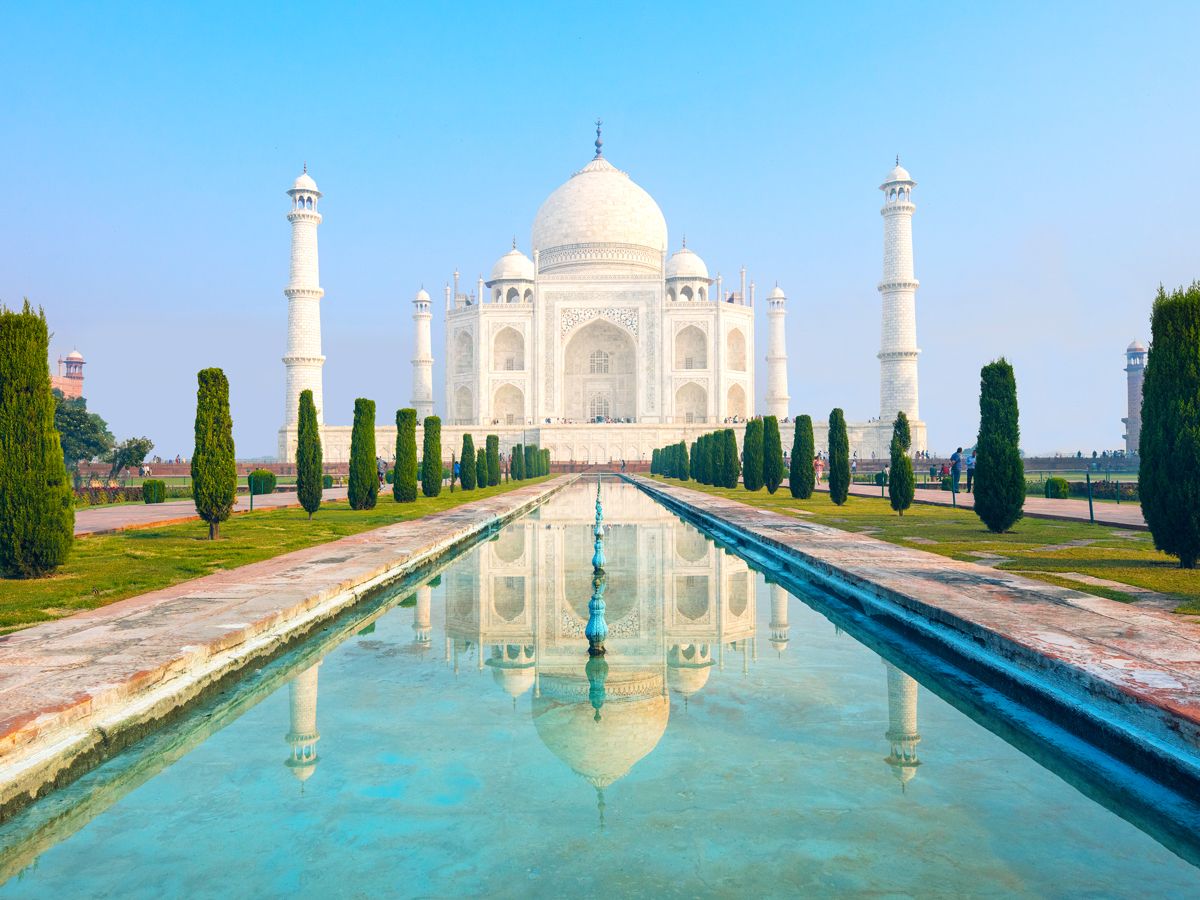
One of the New Seven Wonders of the World and an internationally recognized symbol of India, the Taj Mahal has a fascinating story behind its magnificent structure — one of love, adoration, and mourning. Mughal Emperor Shah Jahan built the Taj Mahal as a mausoleum for his late wife Mumtaz Mahal, who died in 1631 while giving birth to the couple’s child. The inconsolable emperor ordered the construction of the mausoleum in 1632.
The Taj Mahal features white marble from Jodhpur, India, which gives the main dome a radiant glow as it reflects the light, alongside red sandstone and an array of precious and semiprecious stones sourced from across Asia. Upon its completion in 1648, the monument became the final resting place of Mumtaz Mahal. Now a UNESCO World Heritage Site, the Taj Mahal stands as one of the world’s most celebrated monuments of unwavering devotion.
Casa di Giulietta – Verona, Italy
Credit: Imagesines/ iStock via Getty Images Plus
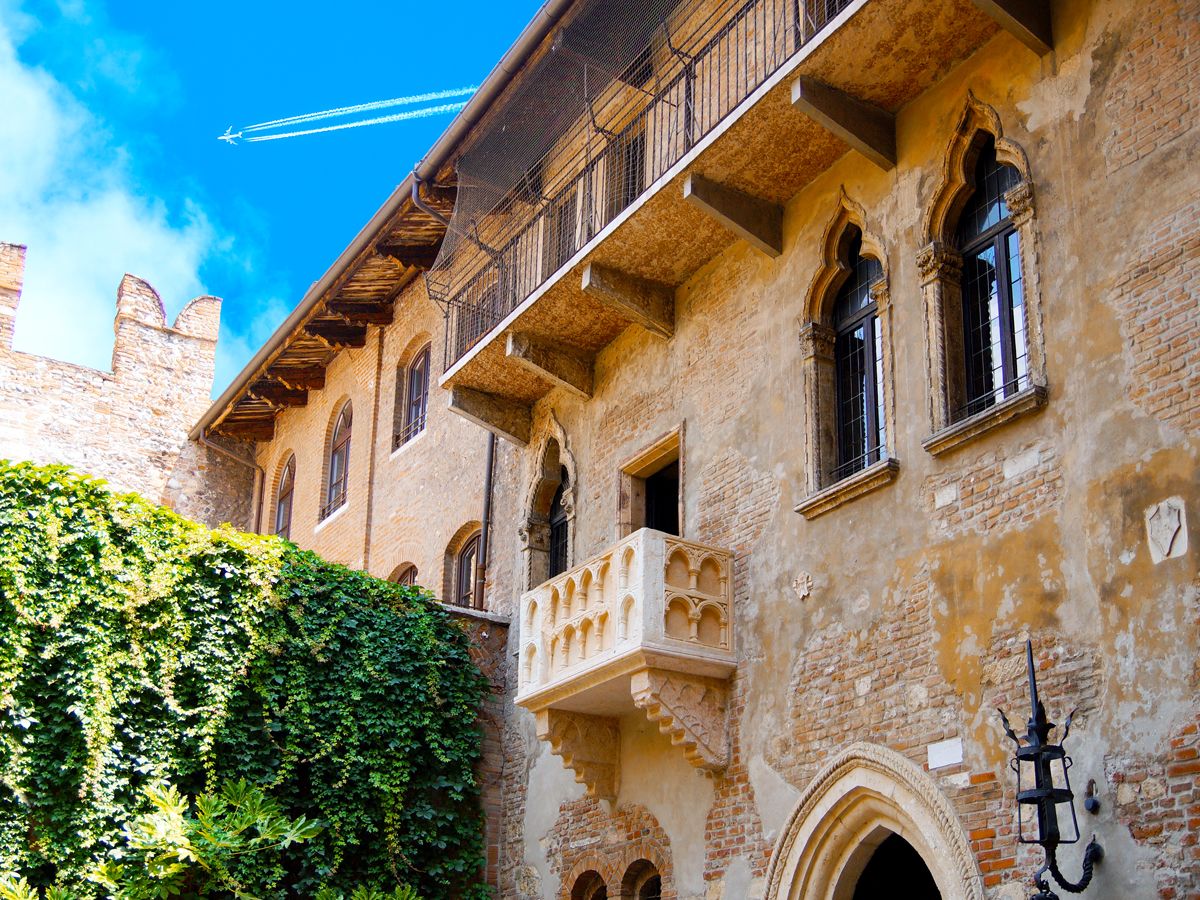
The famous setting of Shakespeare’s classic Romeo and Juliet, Verona attracts visitors from far and wide who are eager to explore its connection to the tragic love story. The city’s most famous site is Casa di Giulietta (Juliet’s House), a 13th-century medieval home on Via Cappello. According to legend, the Cappello family inspired Shakespeare’s Capulets, the fictional family at the center of the story. Their home, featuring the iconic balcony, draws fans who visit to see the whimsical setting and rub the bronze Juliet statue for good luck.
Shakespeare aside, the city of Verona inspires romance at every turn. A sunset walk across Ponte Pietra, a classic Roman arch bridge spanning the Adige River, leads to the Castel San Pietro Cable Car, which takes visitors to the top of a 14th-century hill with breathtaking views over the city. Be sure to enjoy a moonlit stroll across the illuminated Castelvecchio footpath, followed by a walk along the river to a charming café for Veronese wine and a traditional Italian meal, to truly experience Verona’s romantic charm.
Dobroyd Castle – Todmorden, England
Photo credit: Image courtesy of Craig Shaw
In Todmorden, West Yorkshire, a castle stands as a symbol of enduring love, built by a husband who made a promise to his wife. John Fielden, a wealthy industrialist and mill owner, fell in love with his neighbor Ruth, a weaver from one of his mills. Despite their differences in social class, their love prevailed, and they married in 1857.
According to historic accounts, Ruth agreed to marry John only if he built her a castle on a hill. In 1866, Fielden commissioned renowned architect John Gibson of London to build Dobroyd Castle. Completed in 1869, the castle became the couple’s permanent home, with 66 rooms, a 17-horse stable, and the couple’s initials carved throughout as a testament to their love.
After Ruth’s passing at age 50, John remarried and spent his final years in the castle with his second wife. After John died in 1893 at the age of 77, the mansion became a school, then a Buddhist center, and is now home to Robinwood, an activity center for children.
Alhambra Palace – Granada, Spain
Credit: Perszing1982/ iStock via Getty Images Plus
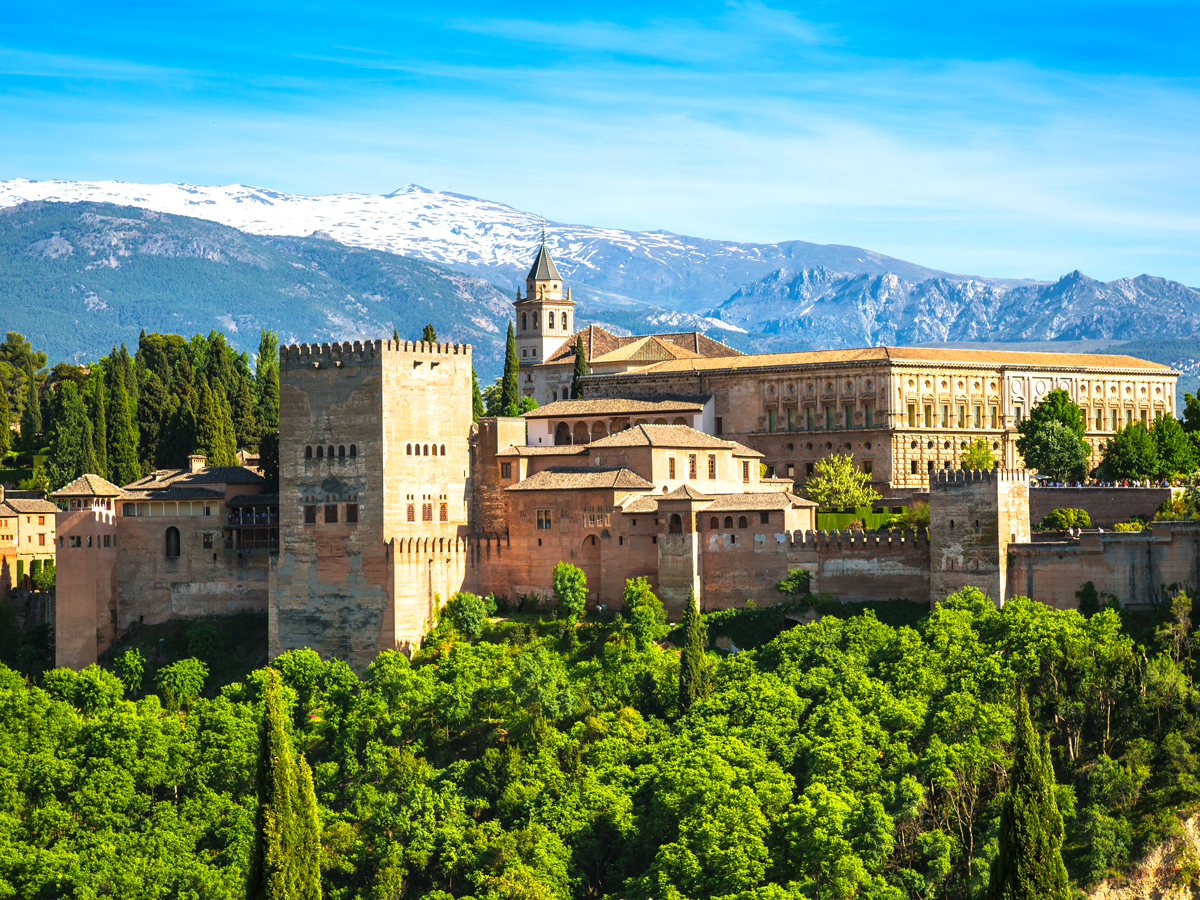
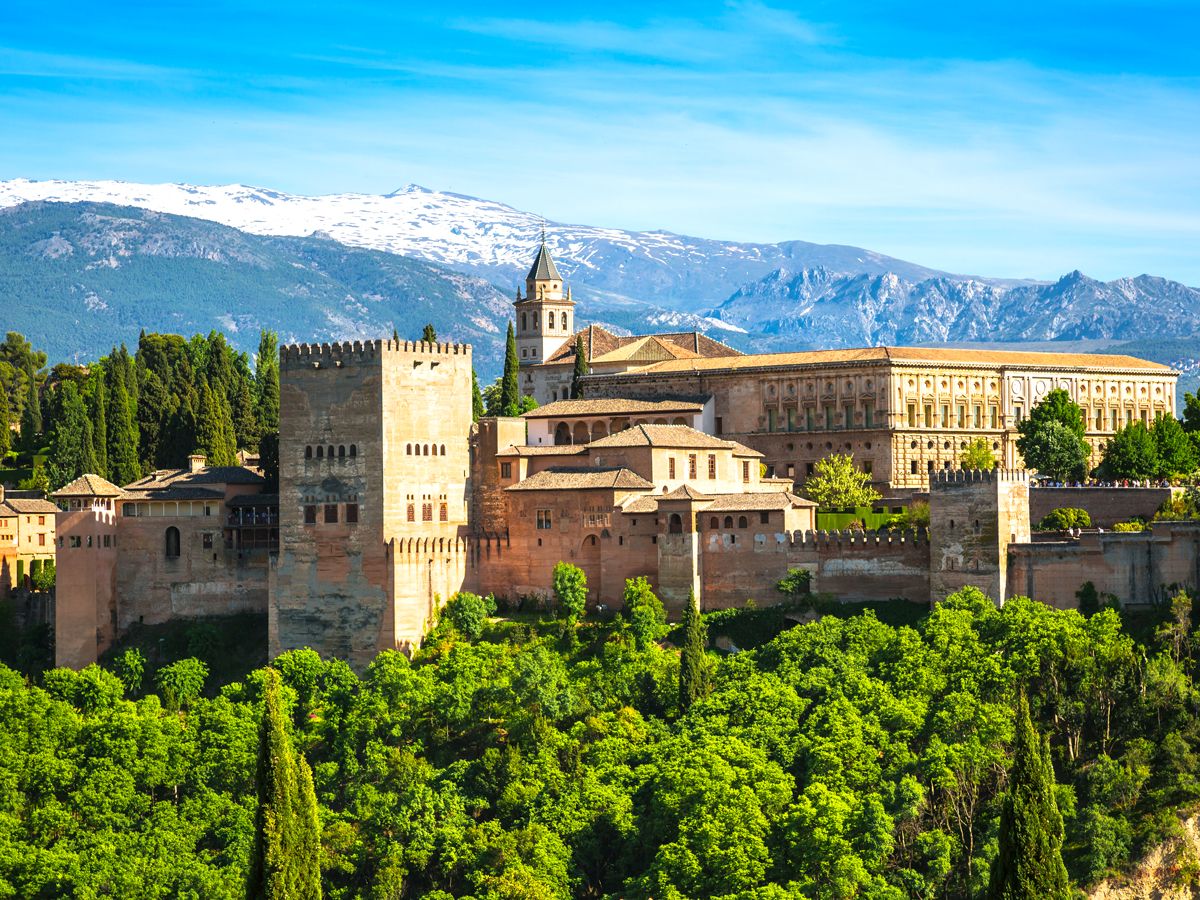
The Alhambra — a breathtaking fortress and palace in southern Spain — is a masterpiece of Moorish architecture, renowned for its intricate designs, lush gardens, and stunning views. A UNESCO World Heritage Site, the Alhambra is also steeped in love stories from the time of the Nasrid dynasty, the last Muslim dynasty to reign over Spain, whose rulers built the castle beginning in 1238.
Notable tales include the forbidden love between Zoraida, an enslaved Christian, and Sultan Muley Hacén, who made her his queen. There’s also the story of Muhammad VII locking his daughters in a tower to protect them from love, only for two to escape and fall in love with knights. Another legend involves a young princess who cursed her family to reunite with a forbidden lover. These captivating stories inspired author Washington Irving to write Tales of the Alhambra in 1832 after briefly residing in the palace in 1829.
Bory Castle – Székesfehérvár, Hungary
Credit: Bartoshd/ iStock Editorial via Getty Images Plus
The story of Bory Castle is one of passion and artistic vision — that of renowned Hungarian architect Jenő Bory, who honed his craft in Hungary, Germany, and Italy, and also served as a professor at the Hungarian University of Fine Arts in Budapest in the early 1900s. In 1912, Bory purchased a plot of land in the countryside of Székesfehérvár, where he began his lifelong architectural project.
Over four decades, Bory, deeply inspired by nature and art, gradually constructed a castle dedicated to his wife, while also using the project as an outlet for his creative expressions. Blending Romantic, Gothic, and Art Nouveau styles, the castle features romantic towers, intricate stone carvings, ceiling frescoes, and a natural integration of rock formations with human-made structures.
The surrounding gardens, with their lush vegetation and sculptures, were influenced by Bory’s wife and muse, Ilona Komocsin, while the castle’s interior is filled with an eclectic collection of items Bory gathered during his travels across Europe. Though Bory passed away in 1959, his family still owns the castle, which was later opened to the public as a museum that celebrates its unique artistic and cultural significance.
Advertisement
More from our network
Daily Passport is part of Inbox Studio, an email-first media company. *Indicates a third-party property.
Rachel is a Washington, D.C.–based travel and lifestyle writer with roots in the Great Lakes region. When she’s not writing for publications such as The Discoverer and Interesting Facts, you’ll find her wandering through museums or exploring destinations off the beaten path.
In a world where you can book restaurant tables through an app and download audio tours to your phone, you might think you don’t need a hotel concierge. But a good concierge can be your local guide and behind-the-scenes hero, making your stay as memorable as it is comfortable. While services vary by hotel, concierges are experts at crafting personalized experiences, from securing local reservations to handling unexpected requests. Here’s a closer look at what they can do and how you can utilize this amenity to the fullest during your next vacation.
The Basics
Credit: Nattakorn Maneerat/ iStock via Getty Images Plus
While the front desk can handle simple requests such as having an extra pillow sent up to your room, the hotel concierge is your go-to for planning special events, getting into exclusive restaurants, and finding the best things to do around town.
Dining Recommendations and Reservations: One of the most common questions a concierge receives is, “Where should I eat?” Leveraging their local connections, concierges excel at securing reservations at even the hardest-to-book spots. They also know the best hole-in-the-wall eateries to find regional specialties.
For instance, Neil Maclean, a concierge at the Fairmont Hotel Vancouver in Canada, told travel expert Robin Esrock in an interview that he keeps a physical copy of every restaurant menu in the city to aid guests’ decisions. “A concierge is essential for a luxury hotel,” Maclean said. “They’re the face that a guest can go to instantly for trusted advice.”
Filling Your Itinerary: Whether you need to craft a full itinerary for your stay or find tickets to that one special event you’ve been dreaming of, concierges have you covered. Concierges at luxury hotels get invited to restaurant and gallery openings, special events, and tours. Thanks to these connections, they often have the best recommendations. From arranging a local cooking class to a private boat tour, they’ll ensure you make the most of your visit. They’ll also assist with booking in-house hotel services like spa treatments and fitness classes to suit your schedule.
Special Occasions and Celebrations: If you’re orchestrating a surprise anniversary dinner or an elaborate birthday celebration, a concierge can also help you prepare, so the stress of planning doesn’t interrupt your vacation. They’ll arrange everything from flowers and gifts to private catering, ensuring your big moment is flawless.
Room Upgrades and Services: The concierge can even request room upgrades on your behalf, especially if you’re a loyalty member or have specific needs. They’ll work directly with the front desk to upgrade or change your room, depending on availability and the hotel’s policies.
At some high-end hotels, luxury services such as unpacking are included, allowing you to unwind while a concierge arranges for your clothes and belongings to be settled in your room. If you mention that you’re celebrating a special occasion such as a birthday or anniversary, they might even throw in freebies such as a bottle of Champagne or a credit to their on-site restaurant.
Hotel concierges can also go above and beyond for their guests, whether you need help finding the perfect local wine to pair with your dinner or calling the airline for your lost luggage. (Remember, if your concierge goes above and beyond, it’s polite to tip.)
Adjusting Travel Plans: No one wants to spend hours on the phone with the airline during their vacation. Fortunately, if you run into any snags with your travel itinerary, a concierge can help. “We have relationships with airlines and operators and usually get special treatment,” Maclean explained. Not only can they modify any aspect of your travel itinerary, but they also can track down misplaced luggage and help with lost passports.
A Helping Hand: Traveling isn’t always smooth sailing. From coordinating medical assistance to helping with forgotten materials, the concierge can help. For example, one traveler remarked on Reddit that their concierge helped when their child got sick during a vacation. The concierge team conferred with medical staff to find the correct over-the-counter medication, as the child’s pediatrician recommended, and even went to a local pharmacy to purchase it. “We had it back to us within an hour,” the guest wrote.
Another Reddit user shared that they were traveling for work and forgot their business cards. The concierge researched a printer, ordered replacement cards, and picked them up for the grateful guest.
Breaking Language Barriers: Traveling to a foreign country where you don’t speak the language? Your concierge can teach you key phrases, translate for you, or even find a local interpreter, ensuring you never feel lost in translation. They also can teach you local customs and traditions, allowing you to immerse yourself in the culture and gain a deeper understanding of your destination.
Unusual Requests: A hotel concierge is accustomed to strange and unexpected requests. While some guests may seek out rare local wines or hard-to-find souvenirs, others ask for more unconventional items.
Maclean recalled that his most outrageous guest request was a pair of moose antlers, which he eventually tracked down at a local taxidermist. He has also arranged a private screening for Jerry Seinfeld and a belt for President Bill Clinton — and he has the thank-you letter with a presidential stamp to prove it.
Geography •February 6, 2025•Updated: February 14, 2025
By Daily Passport Team
Author
Daily Passport Team
Daily Passport writers have been seen in publications such as National Geographic, Food & Wine, CBC, Condé Nast Traveler, and Business Insider. They're passionate about uncovering unique destinations and sharing expert tips with curious travelers.
Valleys form some of the planet’s most jaw-dropping landscapes, attracting visitors from far and wide to marvel at their natural beauty. Some valleys also hold centuries’ worth of human history, from Egypt’s Valley of the Kings to Peru’s Sacred Valley, while others are notable for their otherworldly features, such as Chile’s Valley of the Moon. Check out 10 famous valleys that deserve a spot on any travel wish list.
Valley of Fire – Nevada
Credit: roman_slavik/ iStock via Getty Images Plus
The Valley of Fire isn’t exactly as it sounds. The valley, part of the largest and oldest state park in Nevada, established in 1935, is named for its dramatic red sandstone rather than flames. When the sun falls on the park’s rock formations and natural arches each evening, they appear to be alight.
But that doesn’t mean the valley isn’t without its mysteries. Ancient peoples who once resided in the valley left their mark in the form of petroglyphs around the park, with some of the most notable carvings located at Atlatl Rock and Mouse’s Tank. If you want to see them yourself, the Valley of Fire is only an hour’s drive northeast of Las Vegas.
Valley of the Kings – Egypt
Credit: Image by Ramesh Thadani/ Moment via Getty Images
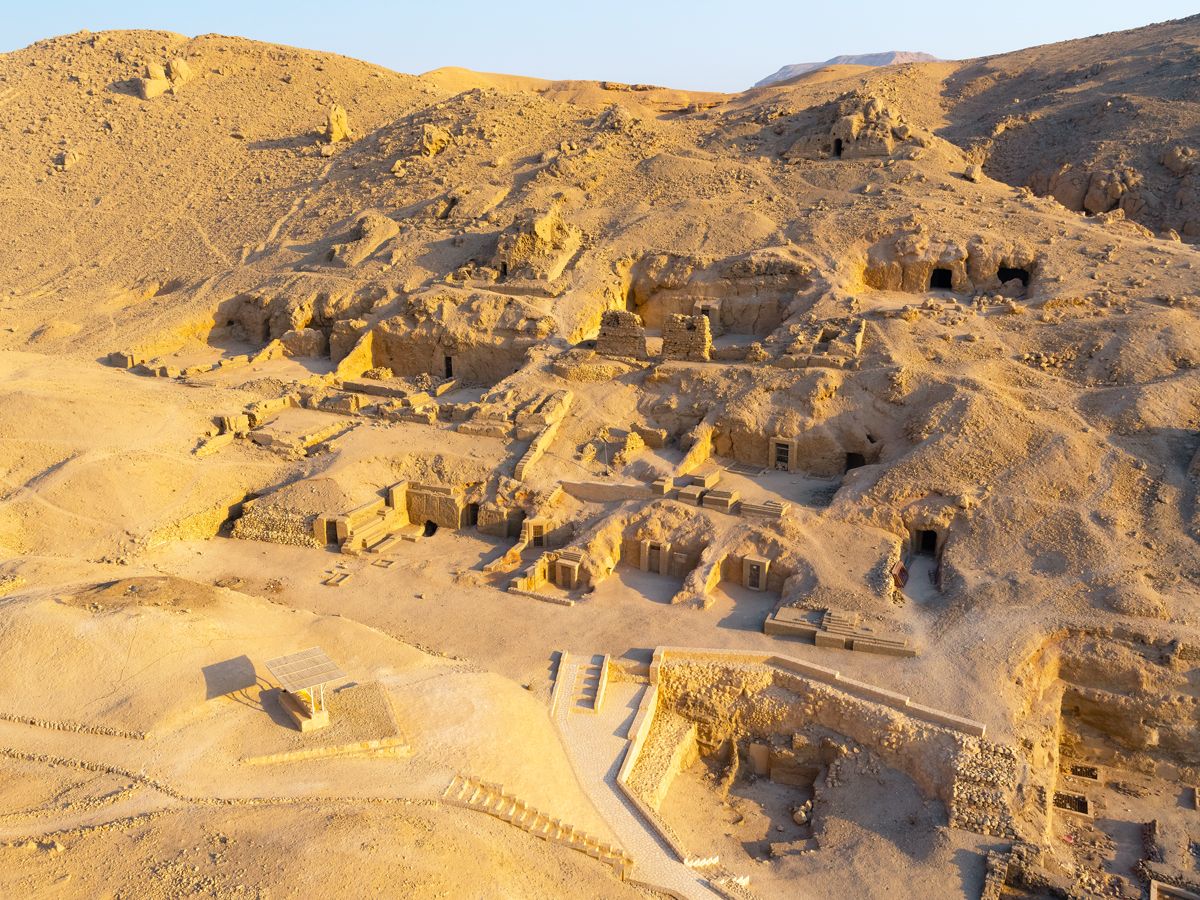
Egypt’s Valley of the Kings is located near the modern city of Luxor, on the west bank of the Nile River. The tombs of 63 rulers are found here — including Ramses VII, Ramses IV, Merneptah, and Akhenaten — but the most famous burial site is the legendary tomb of King Tutankhamen.
Discovered in 1922 by Howard Carter’s expedition, the boy king was buried here after his death in 1323 BCE. Though most of the tombs in the Valley of the Kings have been plundered by treasure hunters, damaged by floods, and trodden on by careless tourists, the site remains a historical treasure trove — which may still have secrets to reveal.
Yosemite Valley – California
Credit: Matt Calo/ iStock via Getty Images Plus
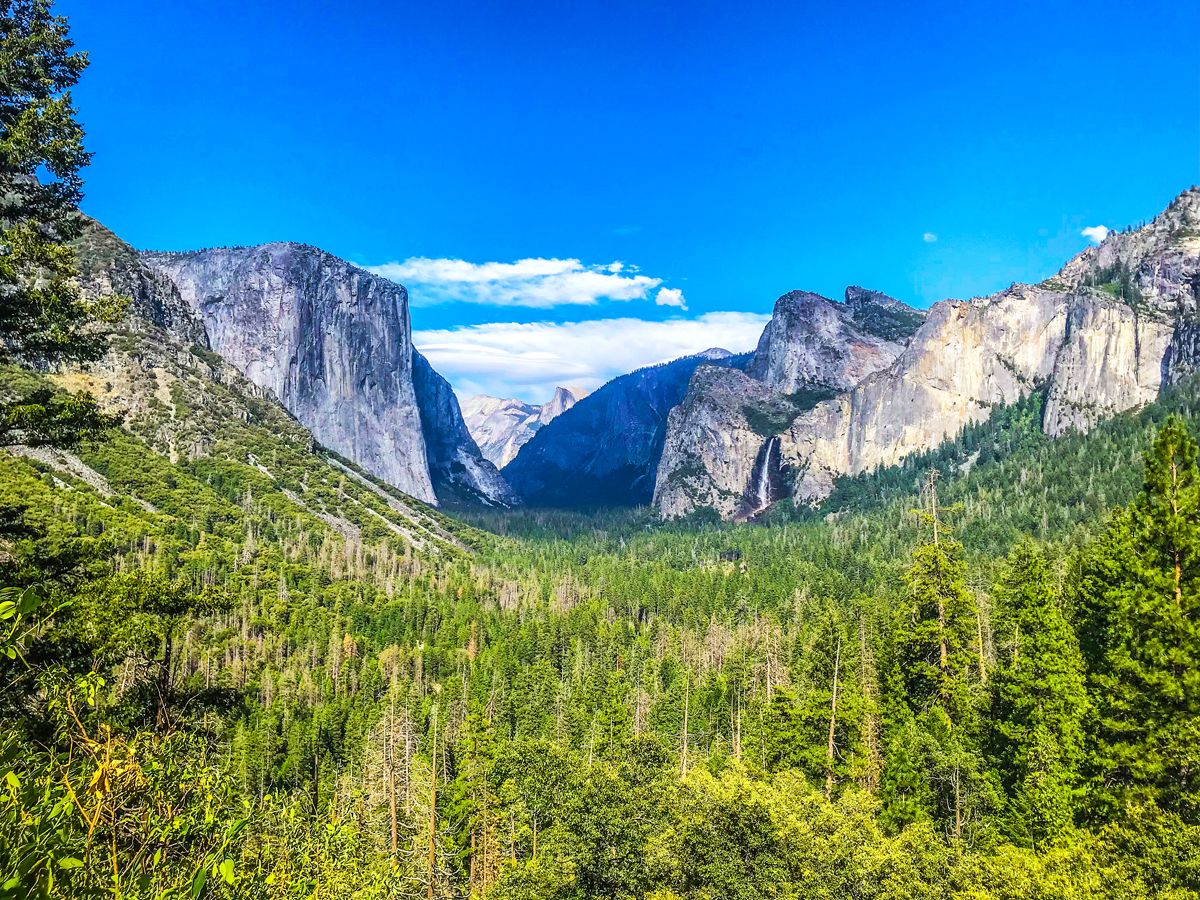
Towering above the west end of Yosemite Valley is El Capitan, which translates to “The Captain.” The granite rock formation stands over 3,000 feet above the floor of the valley that lends the national park — one of America’s oldest — its name.
Nicknamed “El Cap,” the monolith has gained even more popularity in recent years, thanks in part to climber Alex Honnold, who in 2017 completed the first-ever free solo climb of the rock formation’s vertical face without the aid of safety equipment. But it doesn’t take an insane athletic feat to witness the glory of El Capitan, which is visible from many park roads. Hikers can head up the opposite side for great views without having to do any serious rock climbing.
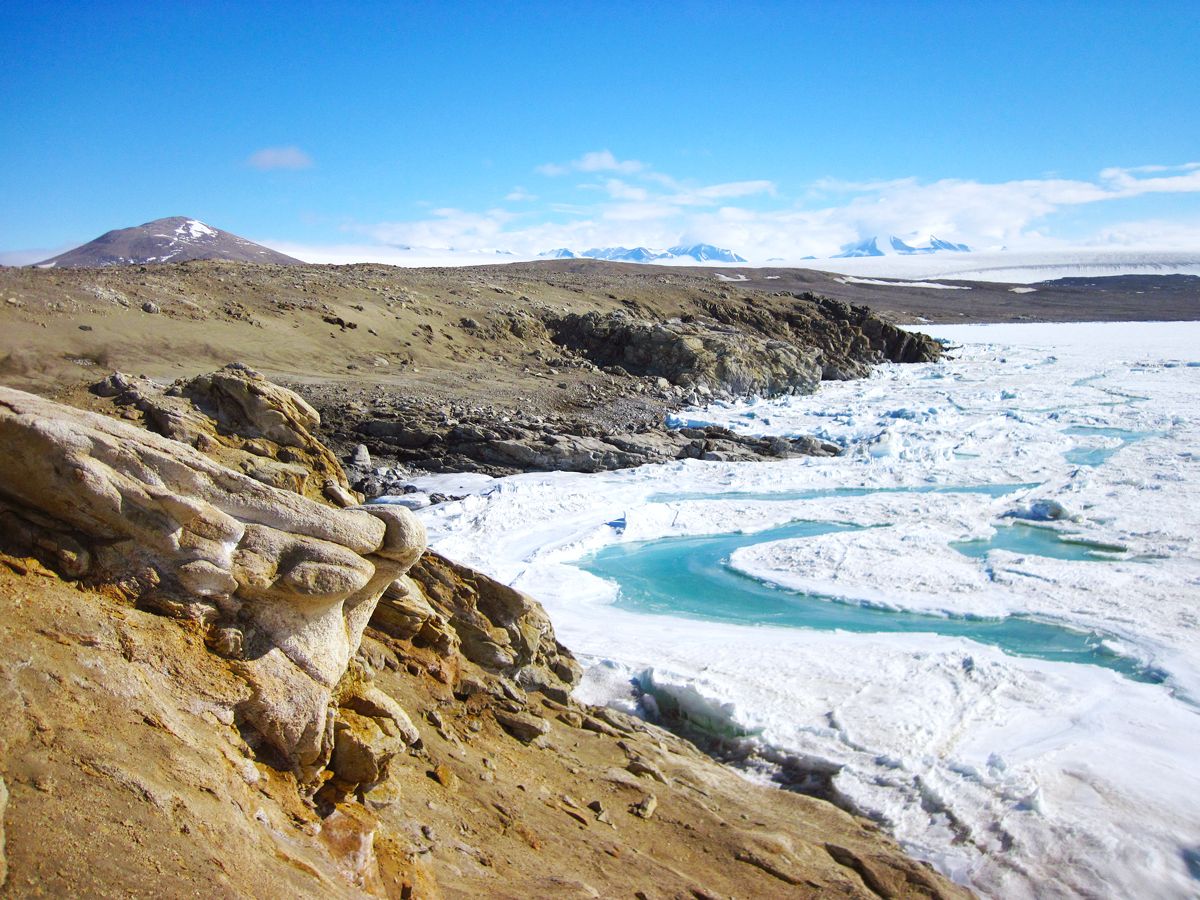
The Dry Valleys of Antarctica more than deserve their name — this area has an average annual rainfall of exactly 0 inches. And that’s been the case for around 2 million years, making it the driest place on Earth.
The valleys have extremely low humidity, due to winds as strong as 200 mph that quickly evaporate any moisture, and mountains that block sea ice from entering the valleys. The area has conditions similar to the planet Mars, and scientists have not found any living organisms — not even microbial — in the Dry Valleys.
Death Valley – California
Credit: Andia/ Universal Images Group via Getty Images
The hottest temperature ever recorded in North America (134 degrees Fahrenheit) was measured in Death Valley in 1913. The valley is also home to the lowest point on the continent, Badwater Basin, which sits 282 feet below sea level.
Established as a national monument in 1933 and a national park in 1994, Death Valley welcomes nearly 1.7 million visitors annually and is the largest national park in the lower 48. The valley got its ominous name from a group of pioneers who became lost and stranded there in the winter of 1849-1850.
Douro Valley – Portugal
Credit: zm_photo/ iStock via Getty Images Plus
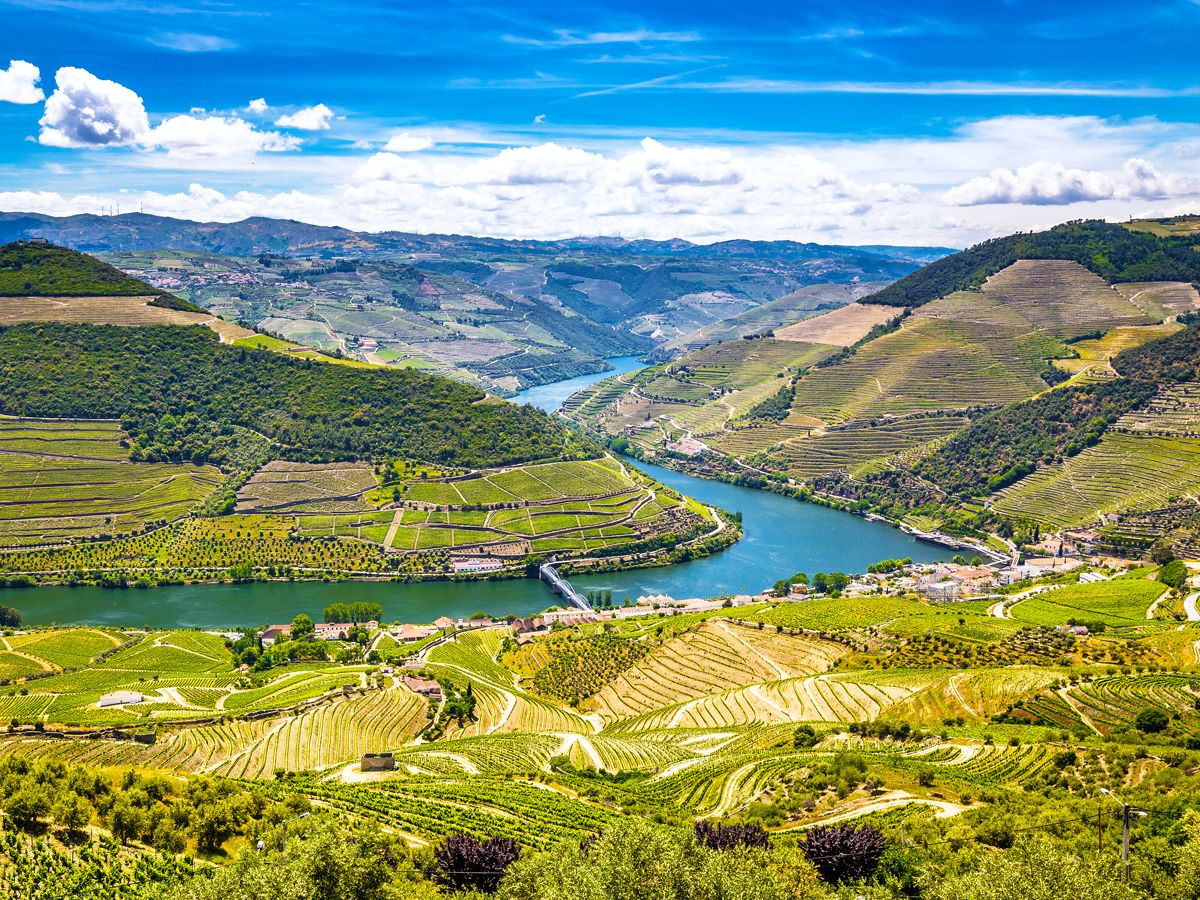
Rio Douro, which translates to “river of gold,” meanders more than 200 miles through the Iberian Peninsula from central Spain west to its mouth in Porto, Portugal’s second largest city, on the Atlantic coast. The Douro’s river valley, about 60 miles inland from Porto, is one of the country’s most breathtaking regions.
The area is known for its vineyards that produce Portugal’s most famous export, port wine, which comes from the grapevines grown on steep, terraced banks that wind along every turn of the river. The region was demarcated in 1756, which made the Douro Valley the only place in the world that can legally produce traditional port. The fortified wine is made from a blend of grapes and is sweetened with brandy during the fermentation process.
Valley of Flowers – India
Credit: Swati Pandey/ 500px via Getty Images
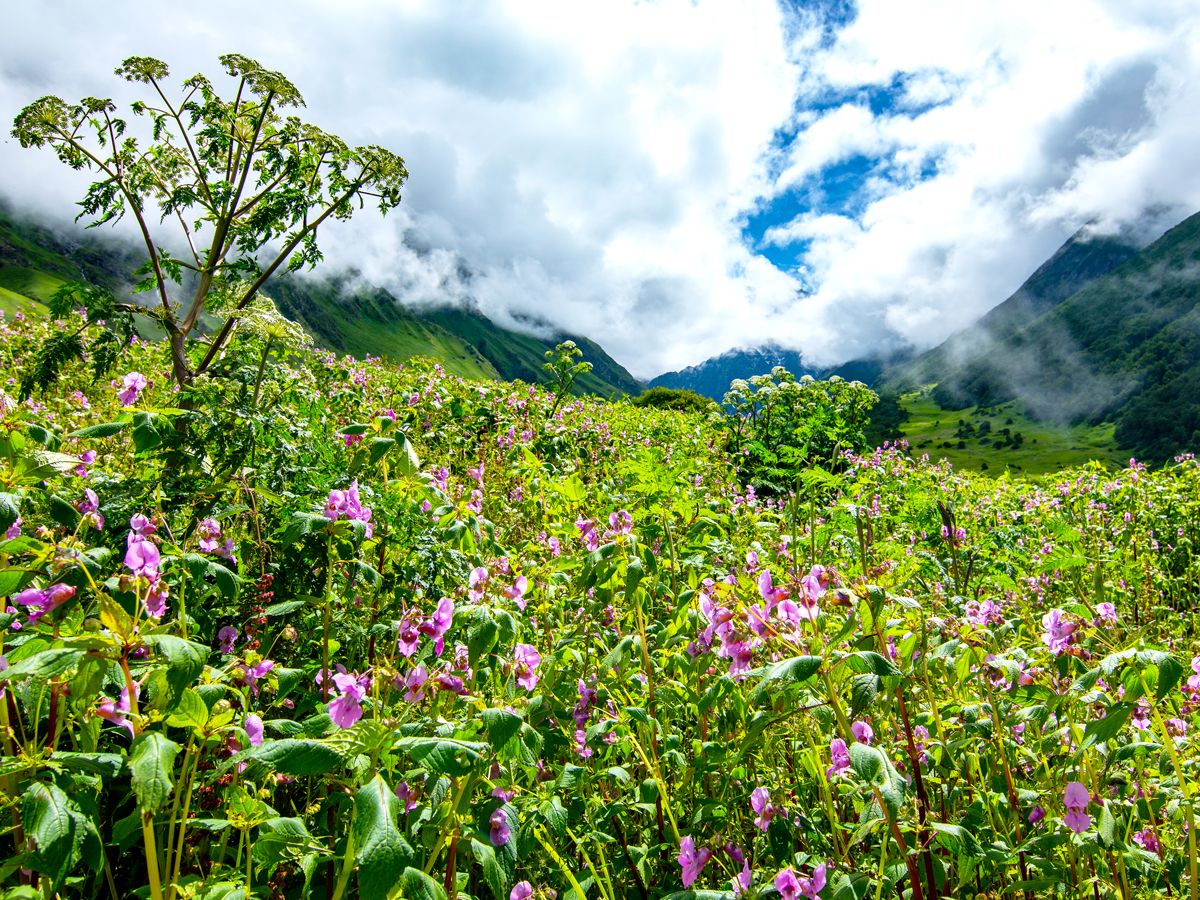
High up in the Himalayas, India’s Valley of Flowers National Park is known for lush carpets of alpine blossoms amid glaciers and snow-capped mountains. The valley is home to at least 300 species of flowers, as well as a variety of rare and threatened animal species, including the Asiatic black bear, snow leopard, and blue sheep.
Mentions of its breathtaking scenery date back many centuries in Hindu mythology, particularly as a place of meditation. But due to its remote location, the valley wasn’t discovered by the outside world until 1931, when British mountaineer Frank Smythe chanced upon it. It became a national park in 1982, and in 2005 was listed as a UNESCO World Heritage Site along with the nearby Nanda Devi National Park — which gets its name from India’s second highest mountain peak.
Sacred Valley – Peru
Credit: Wirestock/ iStock via Getty Images Plus
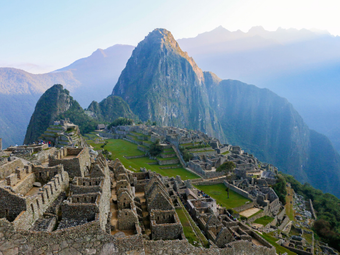
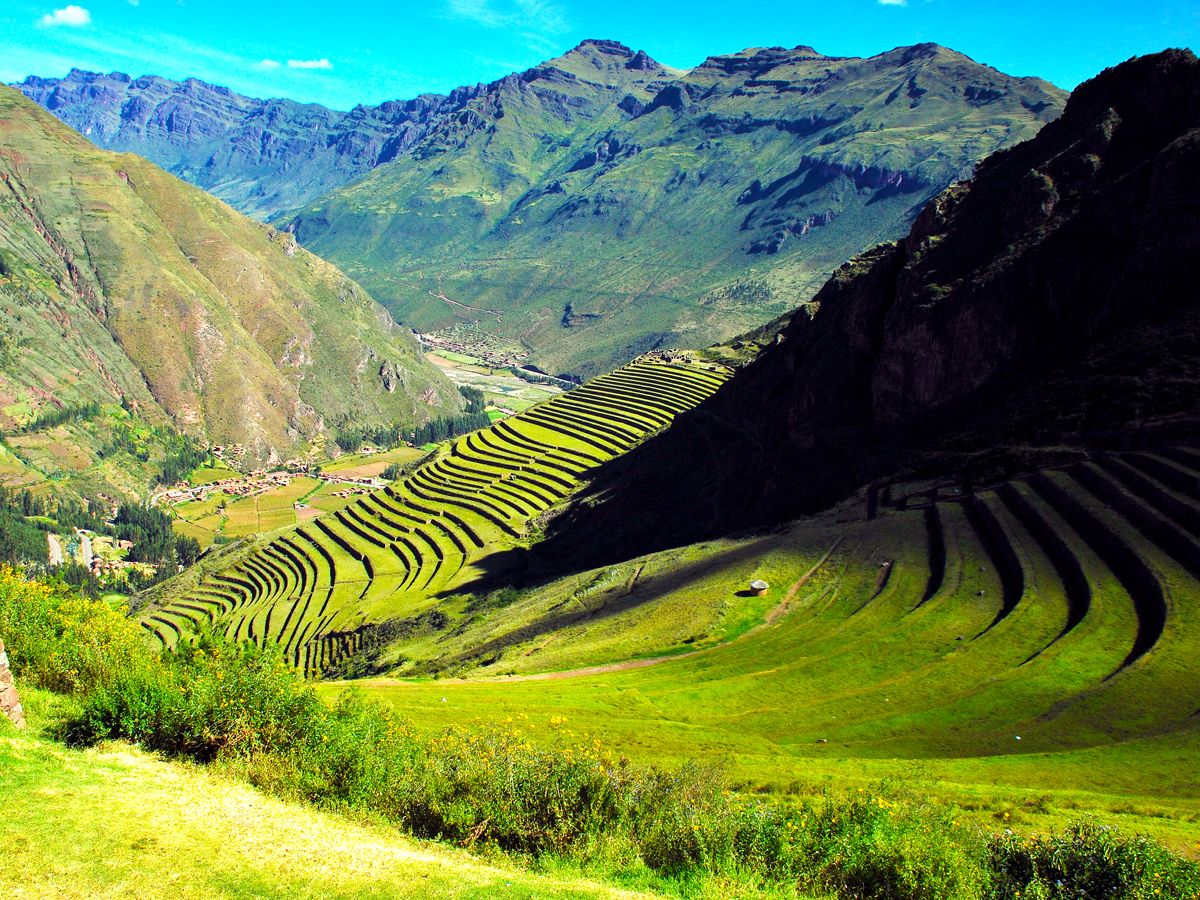
Machu Picchu isn’t the only incredible Incan ruin in Peru. Located in the Sacred Valley of the Incas in the village of Ollantaytambo is an ancient fortress known as Temple Hill or Temple of the Sun. The well-preserved ruins once served as Emperor Pachacuti’s estate.
A ceremonial venue sits at the town center, later used by Manco Inca Yupanqui as a fortress when he led the Incan resistance against Spain. Ollantaytambo was the only village able to repel the Spanish army’s conquest back in 1536. Today, you can see the Temple of the Sun with its ancient symbolic markings alongside the Princess Baths, which were once used for ceremonial bathing.
Valley of the Ten Peaks – Canada
Credit: YayaErnst/ iStock via Getty Images Plus
Home to the stunning turquoise waters of Moraine Lake, the Valley of the Ten Peaks is located in Banff National Park, Canada’s oldest national park, established in 1885. As its name suggests, there are 10 notable peaks that surround the valley, which borders the provinces of Alberta and British Columbia. One of Canada’s most breathtaking landmarks, it was featured on the country’s $20 bill.
Elsewhere in Banff National Park, you’ll find the “Castle of the Rockies,” aka the Fairmont Banff Springs hotel. A National Historic Site of Canada, the chateau-style resort features 757 rooms and suites, many with jaw-dropping views of the surrounding Canadian Rockies.
Valley of the Moon – Chile
Credit: agustavop/ iStock via Getty Images Plus
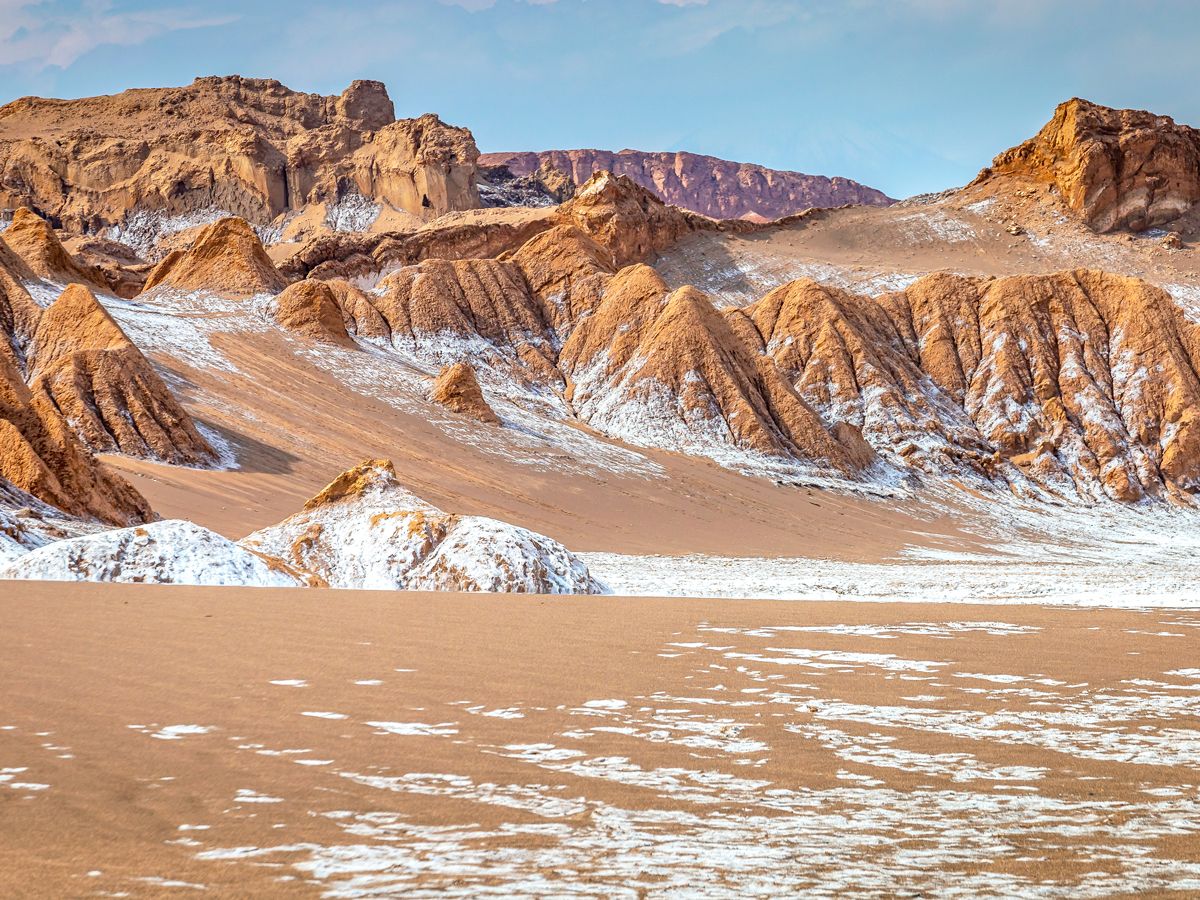
Chile’s spectacular Valle de la Luna (Valley of the Moon) was named for its otherworldly barren landscapes, devoid of trees and plants. Instead, its mineral-tinted peaks and pitted bowls are windswept and encrusted with white traces of parched salt.
Visitors make the trip from San Pedro de Atacama (about 9 miles away) not only to hike and admire the valley’s lunarlike landscapes but also to sandboard down its slopes. By far the most popular time to visit is dusk, when you can watch the reds, pinks, and golds of the wind-whittled geologic formations glow and darken under the setting sun.
Advertisement
More from our network
Daily Passport is part of Inbox Studio, an email-first media company. *Indicates a third-party property.
Daily Passport writers have been seen in publications such as National Geographic, Food & Wine, CBC, Condé Nast Traveler, and Business Insider. They're passionate about uncovering unique destinations and sharing expert tips with curious travelers.
The first scheduled passenger flight took place in 1914 between the Florida cities of St. Petersburg and Tampa. Throughout over a century of history, the industry has become notorious for its volatility — RIP, Pan Am, Eastern, and Braniff Airlines — yet some of the earliest airlines have proven that they are in it for the long haul. These are the world’s 10 oldest continuously operating airlines.
10. Grand Canyon Airlines – United States
Credit: thamerpic/ iStock Editorial via Getty Images Plus
Established: October 3, 1927
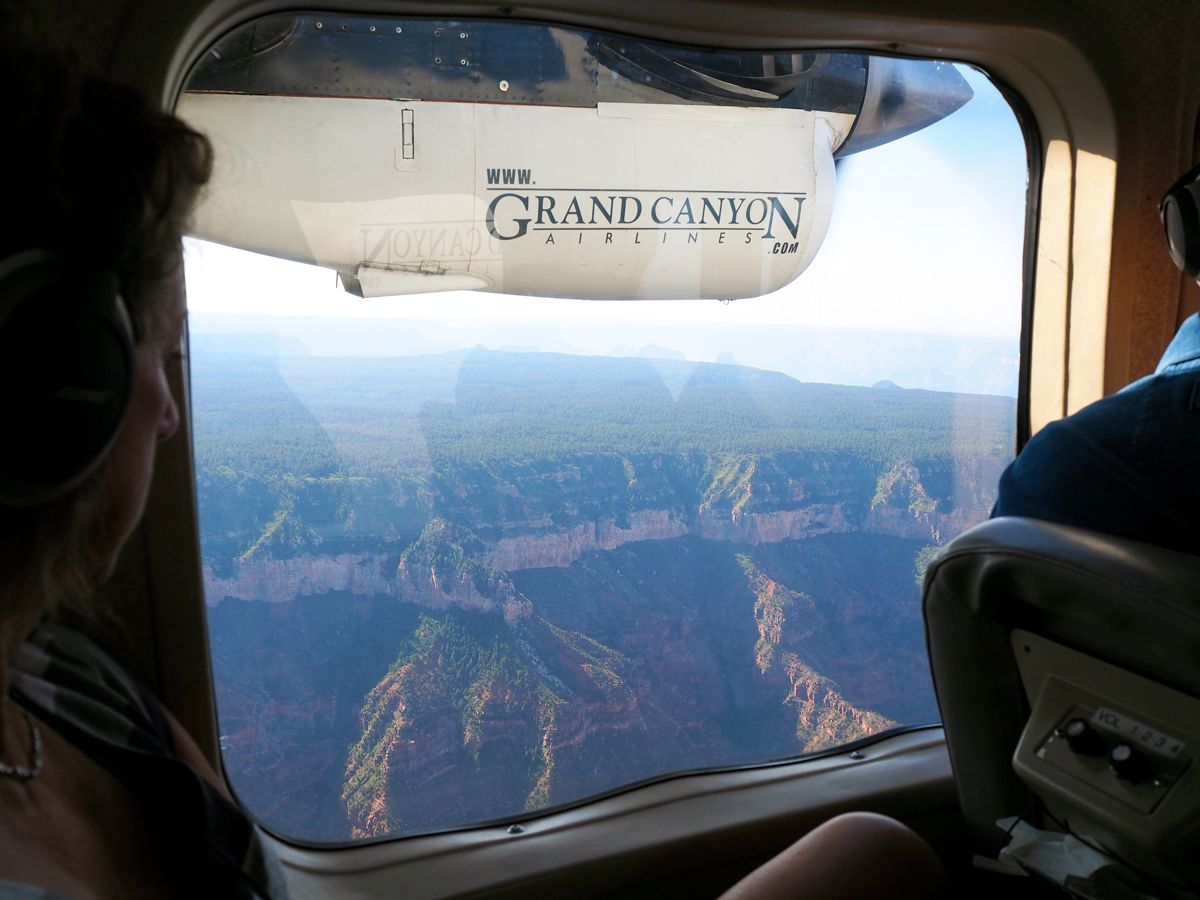
For nearly a century, Grand Canyon Airlines has been offering aerial tours over one of the Seven Natural Wonders of the World. According to the carrier, it is the world’s oldest aerial tour company and has flown more than 100 million passengers over the Grand Canyon and surrounding landmarks since its first flight in 1927. Back then, the airline was called Scenic Airways, before changing its name to Grand Canyon Airlines in 1930.
The company introduced commercial flights to Boulder City Airport in Nevada in 1936. Today, the airline is still based near the Grand Canyon. It operates a fleet of more than 20 de Havilland DHC-6 Twin Otter and Cessna 208B Caravan aircraft on tours of the canyon and nearby natural wonders like Monument Valley, Rainbow Bridge, and Antelope Canyon.
9. Iberia – Spain
Credit: Photoservice/ iStock Editorial via Getty Images Plus
Established: June 28, 1927
Iberia, the flag carrier of Spain, was established in June 1927 to provide an air link from the Spanish mainland to the Canary Islands and North Africa. The first flights took place on Rohrbach Roland airplanes, which had space for just two crew members and 10 passengers. In 1946, the company launched the first regular service between Europe and South America. Flight attendants were also introduced at the same time.
Originally a government-owned company, Iberia was privatized in 2001 and joined the IAG Group in 2011, which also includes airlines such as British Airways and Aer Lingus. As of 2025, Iberia has a fleet of more than 160 aircraft that connect to 135 cities throughout Africa, the Americas, Asia, Europe, and the Middle East.
8. Air Serbia – Serbia
Credit: NurPhoto via Getty Images
Established: June 17, 1927
The history of Air Serbia began in the same month as Iberia with the founding of an airline called Aeroput. The company’s first regular route was between Belgrade and Zagreb, which at the time were located in the Kingdom of Serbs, Croats, and Slovenes (later called Yugoslavia). Aeroput paused operations during World War II, but the company began to fly again in 1947 under the name Yugoslav Airlines.
The name changed again in 2003 to Jat Airways and, following an investment from Middle East carrier Etihad Airways, finally changed in 2013 to Air Serbia. With a main hub in Belgrade, the airline has a fleet of over 30 aircraft, as of 2025, and reaches over 90 destinations in Europe, North America, and the Middle East.
7. American Airlines – United States
Credit: OntheRunPhoto/ iStock Editorial via Getty Images Plus
Established: April 15, 1926
American Airlines’ journey started in April 1926, when acclaimed aviator Charles Lindbergh piloted a postal service route between St. Louis, Missouri, and Chicago, Illinois. Following eight years of mail-only routes, the airline introduced passenger services in 1934. In 1936, the airline was the first to fly the revolutionary Douglas DC-3 aircraft, with service from New York City to Chicago. American also pioneered the first nonstop transcontinental jet flight across the U.S. in 1959 aboard a Boeing 707.
Other groundbreaking events in the airline’s history include the introduction of the world’s first flight attendant training facility in 1957 and one of the first airline loyalty programs (and oldest one still in existence), AAdvantage, in 1983. In 2013, American merged with US Airways to become the world’s largest airline in terms of passengers carried. American now flies to around 350 destinations in 50 countries with a fleet of over 900 aircraft.
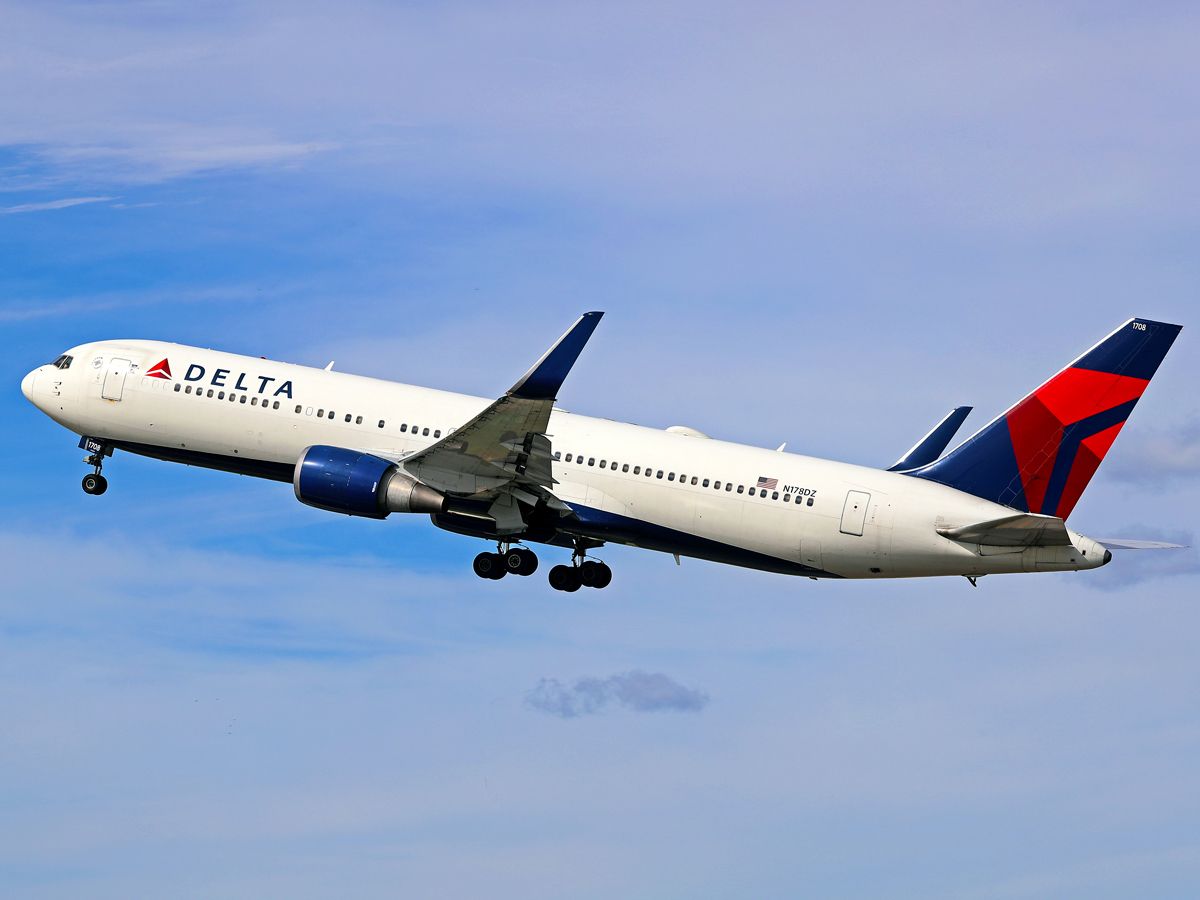
Delta’s history dates back to 1925 with the founding of Huff Daland Dusters, an aerial crop-dusting company based in Macon, Georgia. Passenger services commenced in 1929, with a flight from Dallas, Texas, to Jackson, Mississippi. It became Delta Air Lines in 1945, and one year later, the airline launched the first nonstop flight between Chicago and Miami on the Douglas DC-4.
Through several mergers — including with Northeast Airlines in 1972, Western Airlines in 1987, and Northwest Airlines in 2008 — Delta has grown to become one of the largest airlines in the world. Today, it transports over 200 million passengers per year to over 275 destinations on six continents. Aviation buffs can delve further into the airline’s history and see restored former planes at the Delta Flight Museum at Atlanta Hartsfield-Jackson Airport.
5. Finnair – Finland
Credit: FABRICE COFFRINI/ AFP via Getty Images
Established: November 1, 1923
Finland’s flag carrier and largest airline began operations in 1923 as Aero, a company that flew mail from Helsinki to Tallinn, Estonia. For the first 12 years of its operations, Aero used Junkers aircraft fitted with floats for water landings. Following a hiatus during World War II, the Finnish government took control of Aero and introduced longer European routes. A major expansion occurred in 1952, when the Helsinki Olympics led to an increase in passenger numbers to over 100,000 annually.
The name Finnair first began to appear on marketing releases in 1953, but it wasn’t until 1968 that the name was officially changed. In 1983, it became the first European airline to offer nonstop flights from Western Europe to Japan, with service from Helsinki to Tokyo. Today, Finnair flies a fleet of more than 70 aircraft to over 100 destinations in Europe, Asia and North America.
4. Aeroflot – Russia
Credit: mtcurado/ iStock Unreleased via Getty Images
Established: February 3, 1923
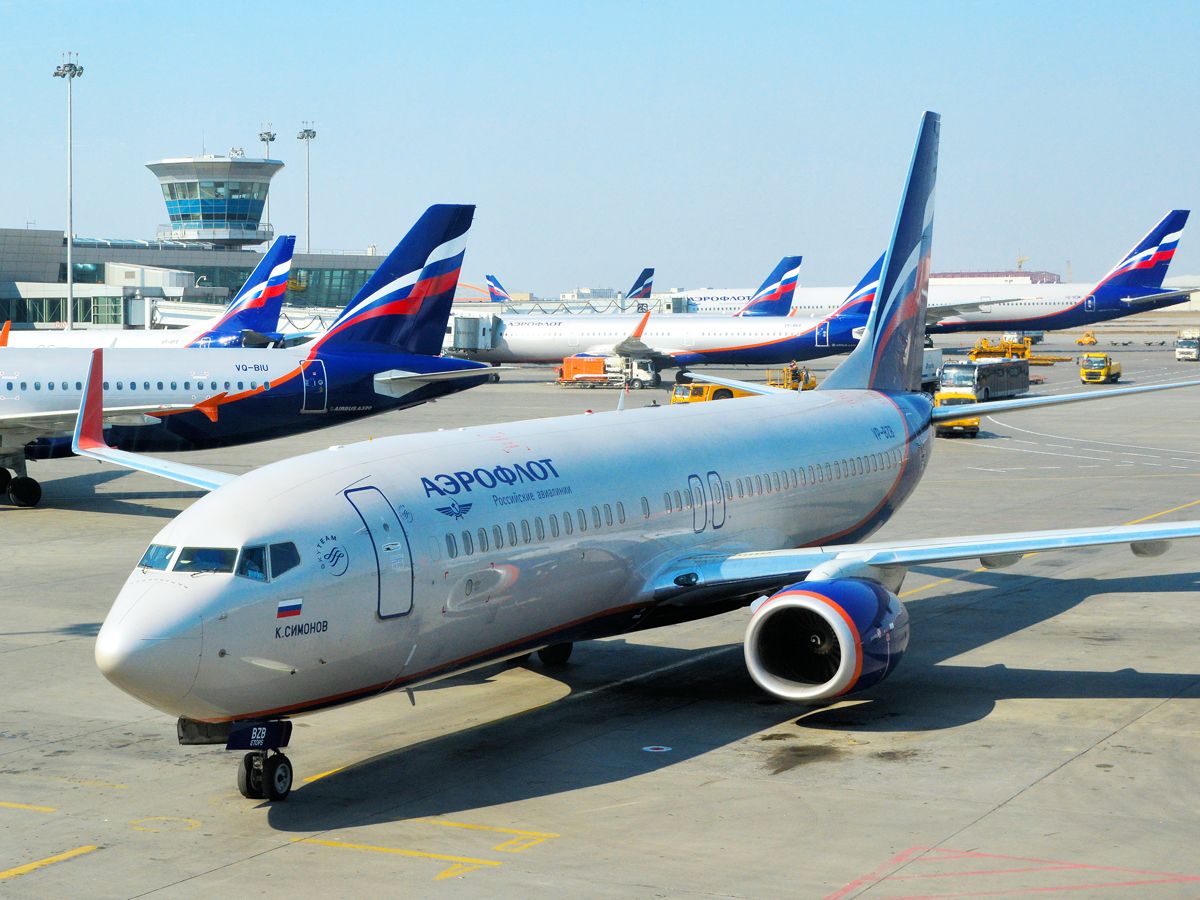
When a Junkers F 13 aircraft took off from Moscow to Nizhny Novgorod in March 1923, it laid the foundations for what is today Russia’s flag carrier. Originally called Dobrolet, the airline adopted the name Aeroflot, which translates to “air fleet,” in 1932.
Mail and cargo were the main focus throughout the 1930s — at one time, Aeroflot transported larger volumes of freight than any carrier in the United States. Following the dissolution of the Soviet Union in the early 1990s, the airline was divided into several regional carriers. However, a merger in 2011 reorganized the airlines under the Aeroflot brand.
3. Qantas – Australia
Credit: RyanFletcher/ iStock Editorial via Getty Images Plus
Established: November 16, 1920
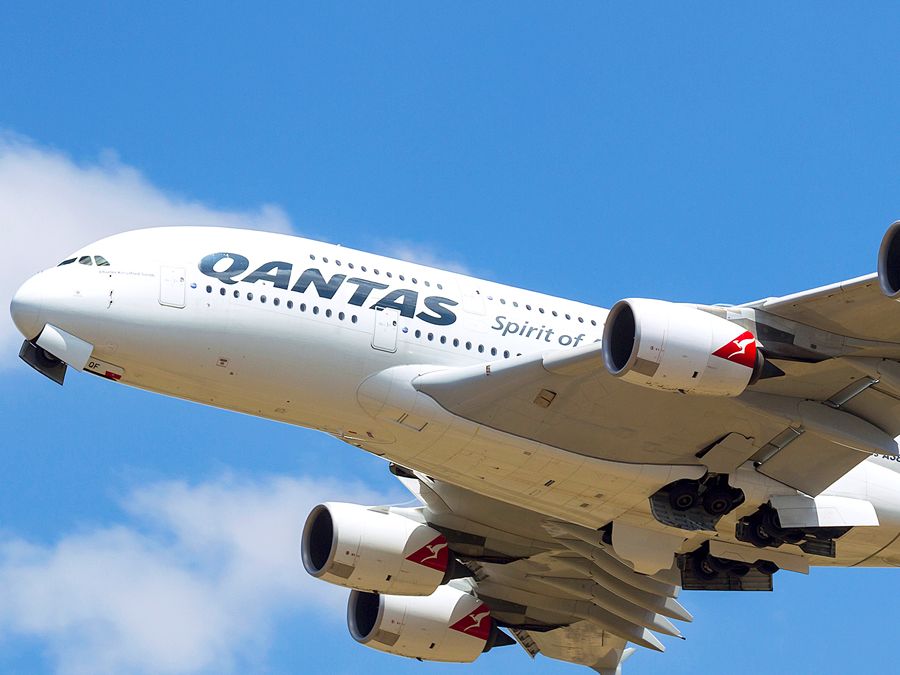
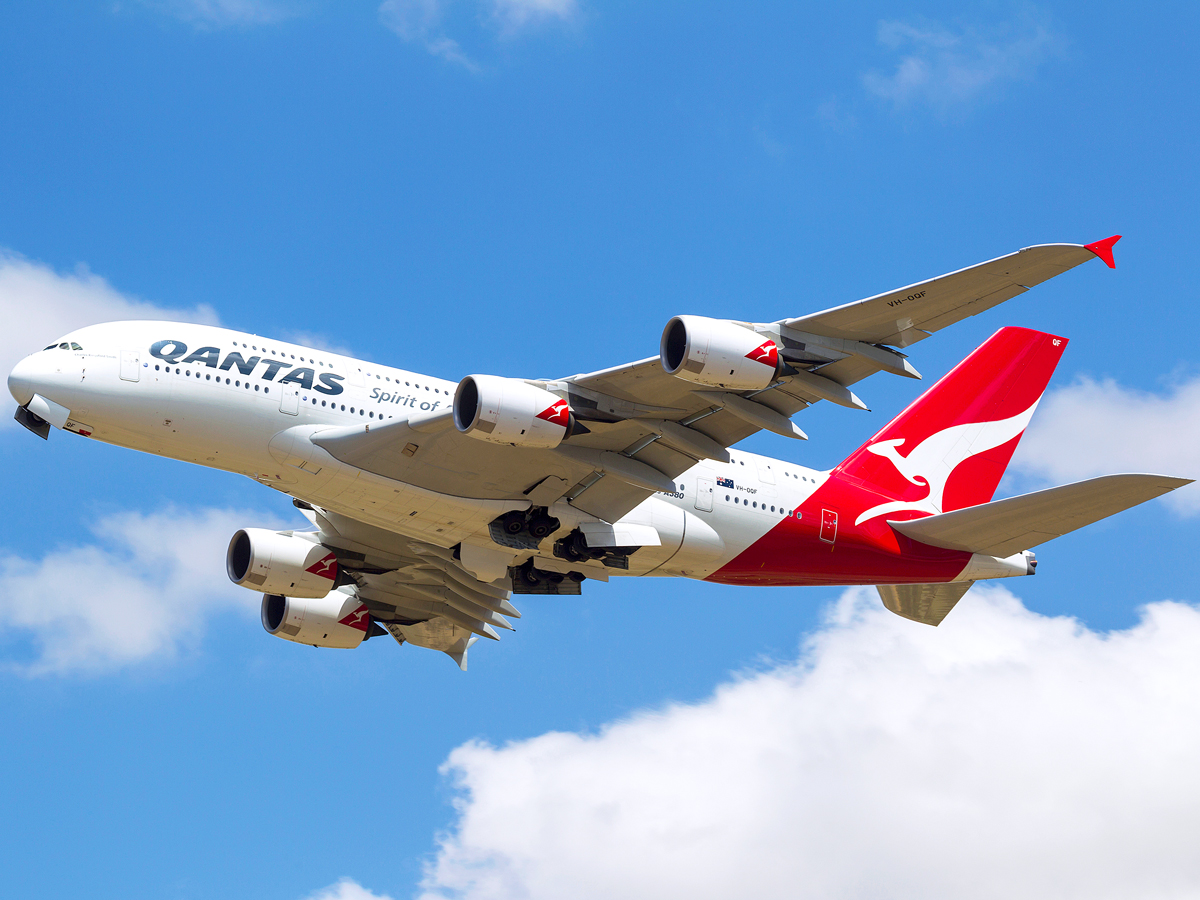
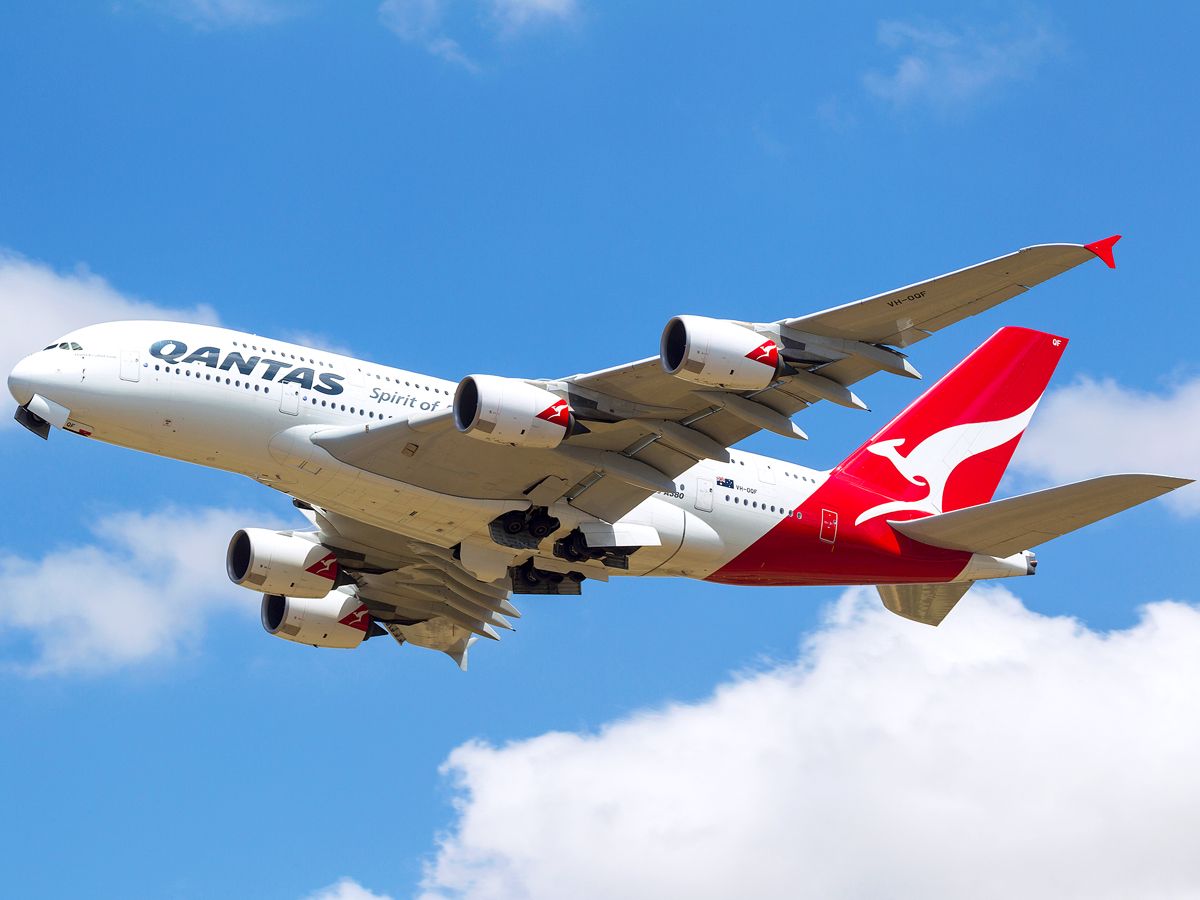
Queensland and Northern Territory Aerial Services — Qantas for short — was established in Australia in November 1920 by World War I veterans Paul McGinness and Hudson Fysh. The airline’s first flights helped to connect people and goods with the country’s remote northern region. Regularly scheduled mail and passenger services began in 1922, and the first passenger was an 84-year-old pioneer of the Australian outback named Alexander Kennedy.
Overseas routes were introduced in the 1930s, first to Singapore and later to the United Kingdom via a connecting service. Nicknamed the “Flying Kangaroo,” Qantas launched nonstop services from Australia to the U.S. in 1984 on Boeing 747SP aircraft. In 2026, Qantas plans to launch the world’s longest nonstop flights from Melbourne and Sydney to New York and London.
The world’s second-oldest airline still in operation is Colombia’s flag carrier, Avianca. The airline was established in December 1919 as Sociedad Colombian Alemana de Transportes Aéreos (SCADTA). During its first decade, the airline had a fleet of 25 aircraft that connected from its base in Barranquilla to Bogota, Girardot, Puerto Berrío, and Neiva.
International routes started in 1940 to Lima, Miami, Panama, Quito, and several European cities. At the same time, SCADTA merged with the Colombian Air Service and became Aerovías Nacionales de Colombia S.A., or Avianca. The airline was the first Latin American carrier to fly a Boeing 747 jumbo jet in 1976. Avianca is now the flagship carrier of the Avianca Group, a network of Latin American carriers that formed in 2010.
1. KLM – The Netherlands
Credit: NurPhoto via Getty Images
Established: October 7, 1919
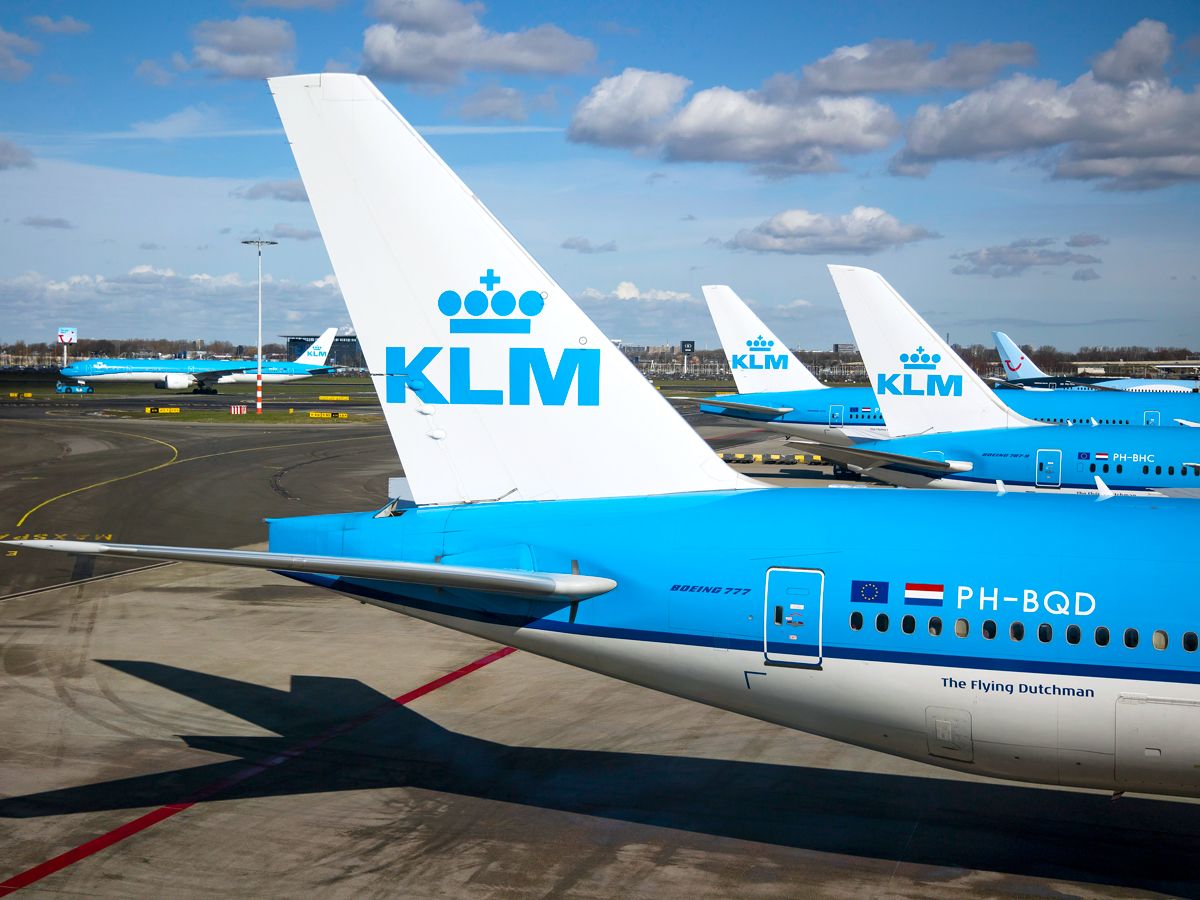
Established in the Netherlands just two months prior to Avianca, KLM Royal Dutch Airlines (officially named Koninklijke Luchtvaart Maatschappij N.V., or “Royal Aviation Company”) is the oldest extant airline in the world. The first KLM-operated flight traveled from London to Amsterdam in May 1920. Onboard were the pilot, two journalists, newspapers, and a letter from the Mayor of London to the Mayor of Amsterdam.
Four years later, KLM launched the longest air route at the time, from Amsterdam to Jakarta. Another groundbreaking event took place in 1946 with the first scheduled flights from Europe to New York. KLM merged with Air France in 2004, although both retained their individual operations and branding.
Advertisement
More from our network
Daily Passport is part of Inbox Studio, an email-first media company. *Indicates a third-party property.
The Real Reason Airlines Have Strict Baggage Weight Limits
By
Michael Nordine
Read time: 4 minutes
February 3, 2025
Updated: February 3, 2025
The Real Reason Airlines Have Strict Baggage Weight Limits
Tips •February 3, 2025•Updated: February 3, 2025
By Michael Nordine
Author
Michael Nordine
Michael is a staff writer for Daily Passport and film critic who writes the weekly newsletter Movie Brief. His writing and criticism have also appeared in the Los Angeles Times, Variety, and the Washington Post, among others. A native Angeleno, his favorite countries to visit are Norway and Japan.
If you’ve ever weighed your checked baggage before leaving for the airport, you’ve surely wondered: What actually happens if it’s over 50 pounds? Well, you’ll pay a fee, of course — anywhere from $30 to $200, depending on the airline and just how far over the limit you are. But does it actually have any effect on the plane? The cynical answer would be no, it doesn’t; if it did, the airline wouldn’t allow you to bring it aboard rather than simply charge you extra. However, there’s a longer, more accurate answer to this question — find out everything you wanted to know about airline baggage limits below.
Striking the Right Balance
Credit: ArtMassa/ iStock via Getty Images Plus
The combined weight of passengers, luggage, and everything else required to operate a commercial aircraft does indeed have a significant effect on the plane’s ability to safely ferry you to your final destination. Not only does baggage have to be within safe limits for crew to manually handle it, but the aircraft’s maximum takeoff weight (MTOW) also comes into play. This is the heaviest the aircraft can weigh for it to safely take off, and a variety of factors are calculated — including passenger baggage.
And it isn’t just weight: Balance plays a huge role as well, hence why you might be moved to a different part of the plane in order to achieve the most efficient center of gravity. If a plane is improperly balanced, it can even tip over — which is what happened to a JetBlue Airbus A321 in late 2023 as passengers were disembarking at New York’s JFK Airport.
The Federal Aviation Administration’s own Weight and Balance Handbook, puts the importance of balance in plain language: “Because of abnormal stresses placed upon the structure of an improperly loaded aircraft, or because of changed flying characteristics of the aircraft, loss of life and destruction of valuable equipment may result.”
The National Transportation Safety Board (NTSB) attributed 136 general aviation (GA) accidents to improper preflight weight and balance calculations, a third of which resulted in fatalities. In other words, it’s considerably more important than putting your phone in airplane mode before takeoff.
Loading passengers, fuel, and luggage on a commercial aircraft is a bit like Tetris, albeit with more math. Because weighing every single passenger and carry-on would be intrusive, time-consuming, and tedious, airlines estimate and average them. They have different methodologies for doing so, with seasonal factors like winter clothing coming into effect, and it’s a crucial part of getting a plane off the ground.
That isn’t to say that airlines couldn’t individually weigh each passenger and bag if they felt it was necessary, however. In 2024, Finnair began a voluntary weigh-in process to have more accurate calculations, a move that some passengers decried as “appalling” and “humiliating.”
However, obtaining as accurate measurements as possible is necessary when it comes to calculating everything from how much fuel will be required for a given route, which emergency landing sites would be viable in case of an emergency, and how far a plane will actually be able to travel. The FAA stated in a 2021 memo that “regardless of the sampling method used, an operator has the option of surveying each passenger and bag aboard the aircraft and should give a passenger the right to decline to participate in any passenger or bag weight survey.”
Interestingly, in 2022, the European Union Aviation Safety Agency (EASA) conducted a voluntary weigh-in survey of passengers and their baggage at major European airports. The agency updated its passenger weight data after it found that the average figures had increased from the previous survey in 2009.
Individual airlines also have different terms and conditions when it comes to weight restrictions. Delta’s contract of carriage allows operators to refuse compensation to passengers denied boarding “due to weight/balance restrictions when required by operational or safety reasons.” United and American have similar language in their own contracts of carriage.
It isn’t just the size of the plane that matters, but also the length of the runway: Shorter ones necessitate lighter planes; otherwise they wouldn’t be able to reach a necessary takeoff speed. High altitudes, temperatures, and wind speeds also come into account.
None of these factors should cause passengers stress, however. Airlines and aviation safety agencies have clearly put a lot of thought into the process, but still, it may be worth keeping in mind next time you weigh your bag before a flight.
Advertisement
More from our network
Daily Passport is part of Inbox Studio, an email-first media company. *Indicates a third-party property.
Fiona has spent her career exploring the world and working in the travel industry, turning her lifelong passion into a profession. From planning custom trips to sharing stories as a travel writer for publications such as The Discoverer, she’s all about helping others experience the world in a deeper, more meaningful way.
Despite being a part of our highly digitalized world, there are many countries around the world that still deal mostly in cash. Digital payments are on the rise worldwide, but a variety of countries in Africa, Asia, and Europe are resistant or slow to join the fintech movement. So, be sure to visit an ATM or currency exchange office before traveling to these five cash-reliant countries around the world.
Morocco
Credit: Edwin Tan/ E+ via Getty Images
Blending African, Arab, and European influences, Morocco is a captivating destination for the culturally curious. But be sure to have some currency on hand when you visit: From bazaar purchases to restaurant bills and cab fares, Moroccans often prefer using cash, making it the most common method of payment throughout the country.
While credit and debit cards are commonly accepted in larger cities and tourist areas, approximately 90% of purchases are still made in cash. Smaller cafes, shops, and rural towns may accept only cash, so it’s wise for tourists to carry it, especially when traveling outside major urban centers.
Make sure to plan your cash withdrawals and currency exchanges carefully, as the local currency, the Moroccan dirham, can be difficult to exchange outside of Morocco. It’s also a good idea to exchange any unused dirhams back to U.S. dollars before leaving the country.
Egypt
Credit: Anton Aleksenko/ iStock via Getty Images Plus
Egypt is renowned for attractions like the Pyramids of Giza, Luxor, and the Nile River. When visiting, make sure to bring cash — both in Egyptian pounds and U.S. dollars — as the latter is widely accepted in major tourist establishments, hotels, and souvenir shops.
Cash is king in Egypt, with only 3% of the population owning credit cards and around 70% of transactions made in cash. It’s especially essential for dining at local restaurants, shopping at markets, and booking tours. While high-end hotels and restaurants typically accept cards, it’s always wise to confirm beforehand to avoid being caught short when the bill arrives.
Romania
Credit: Alexander Spatari/ Moment via Getty Images
Romania is one of the most cash-reliant countries in Europe. Cash accounts for 76% of transactions, and 42% of the population remains unbanked, meaning they have no checking or savings account. Many Romanians feel more comfortable using cash, citing that they perceive the value of their money more clearly when paying this way.
Cultural factors, including the prevalence of a large informal economy where only cash is accepted, also contribute to this preference. Additionally, 45% of the population still prefers to pay for online orders in cash upon delivery. Romania ranks the lowest in Europe for digitalization in terms of integrating digital technology and providing digital public services, which may explain the ongoing issues some customers face when attempting to pay by card.
While the country is gradually shifting toward digital payments, cultural and technological factors mean it will likely remain cash-reliant for years to come. Tourists should keep this in mind — credit and debit cards are often accepted in major cities, but carrying cash is recommended, particularly in rural areas and at smaller establishments.
Germany
Credit: lechatnoir/ iStock via Getty Images Plus
You may be surprised to learn that Europe’s largest economy is still very much attached to cash payments. According to the German bank Bundesbank, cash payments were still the most frequent transactions in the country in 2021. A study that year reported that 58% of transactions were completed in cash, down from 74% in 2017.
The decline in cash usage was strongly linked to the pandemic, which spurred the boom of online shopping worldwide. As the number of cash payments continues to slowly decline in Germany, it suggests that the population is becoming more comfortable with credit cards and online banking.
However, the majority of Germans still reported feelings of mistrust of the financial industry; only social media was trusted less. If you’re traveling to Germany, take a cue from the locals and plan to keep around 100 euros in your wallet. This will ensure you can easily settle bills or buy souvenirs, while also making local vendors happy.
The Philippines
Credit: holgs/ iStock Unreleased via Getty Images
While recent reports show an increase in digital and card payments in the Philippines, cash remains a popular method of payment throughout this Southeast Asian country. Over half of the population is unbanked and lacks internet access, which makes cash transactions more common. However, the younger generation is driving the shift toward cashless payments, using digital wallets and QR codes, and around 30% of respondents in a recent survey believe the country will become entirely cash free by 2030.
While the future looks promising for the country’s growing fintech enthusiasts, cash is still an essential part of daily life here. For visitors to the Philippines — and other Southeast Asian countries like Vietnam and Thailand — it’s important to carry local currency for street food, tipping, and other everyday transactions, especially if you plan to visit off-the-beaten-path destinations.
What other countries have you traveled to that deal primarily in cash? Let us know in the comments!
Advertisement
More from our network
Daily Passport is part of Inbox Studio, an email-first media company. *Indicates a third-party property.
Which Countries Drive on the Left Side of the Road?
By
Daily Passport Team
Read time: 8 minutes
February 3, 2025
Updated: February 3, 2025
Which Countries Drive on the Left Side of the Road?
Culture •February 3, 2025•Updated: February 3, 2025
By Daily Passport Team
Author
Daily Passport Team
Daily Passport writers have been seen in publications such as National Geographic, Food & Wine, CBC, Condé Nast Traveler, and Business Insider. They're passionate about uncovering unique destinations and sharing expert tips with curious travelers.
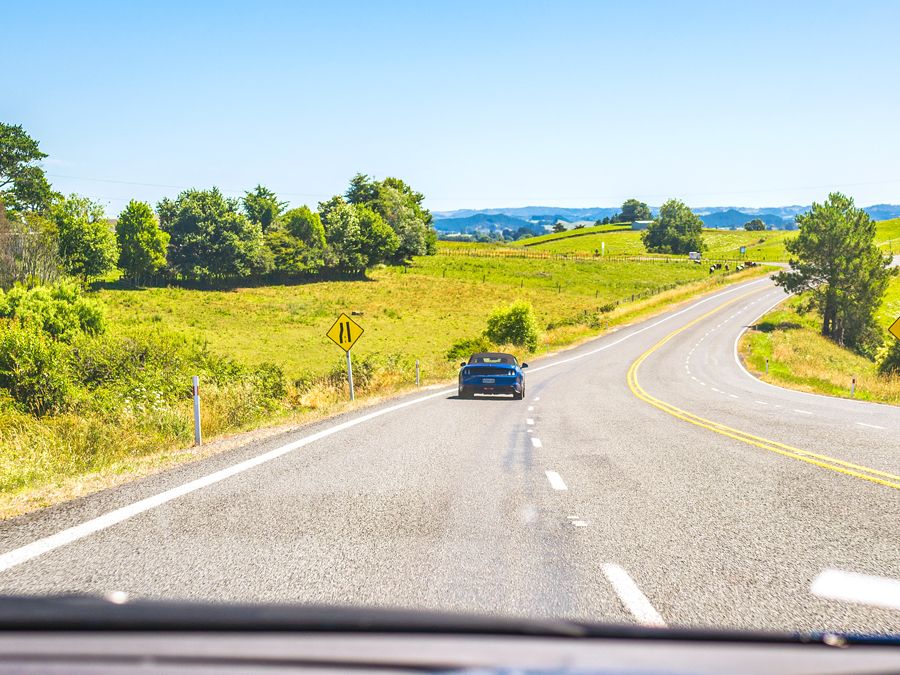
Before you rent a car and hit the road in a foreign country, it’s essential to brush up on local driving laws and customs. Of course, that starts with which side of the road locals drive on. According to Statista, 174 countries around the world mandate driving on the right-hand side of the road, while 78 officially keep to the left. If you’re from the U.S., chances are you’re probably not very used to driving on the left, so here’s a primer on the major countries that follow this practice (and why).
Why Do Some Countries Drive on the Left?
Credit: SolStock/ iStock via Getty Images Plus
No one knows for sure how choosing to drive on the right side of the road (or the left) became common practice, but some historians theorize that driving on the left side was a natural progression for those who had once ridden horses. Keeping to the left of a path would have enabled the rider to easily draw a sword with the right hand — usually the most dexterous — to ward off an attack.
Conversely, in places where large wagons were commonly used as transportation, it would have been easier to hold the reins with the left hand — leaving the whip hand free to control the horses. Sitting on the left side of the cart also made it easier to reach across the buggy, so keeping to the right side of the road meant that the driver was in the best position to ensure that the wheels on the wagon didn’t clash when another wagon approached
While we don’t know for sure how driving conventions differed over time, the current driving preferences across the world are easier to understand.
Europe
Credit: MoreISO/ iStock via Getty Images Plus
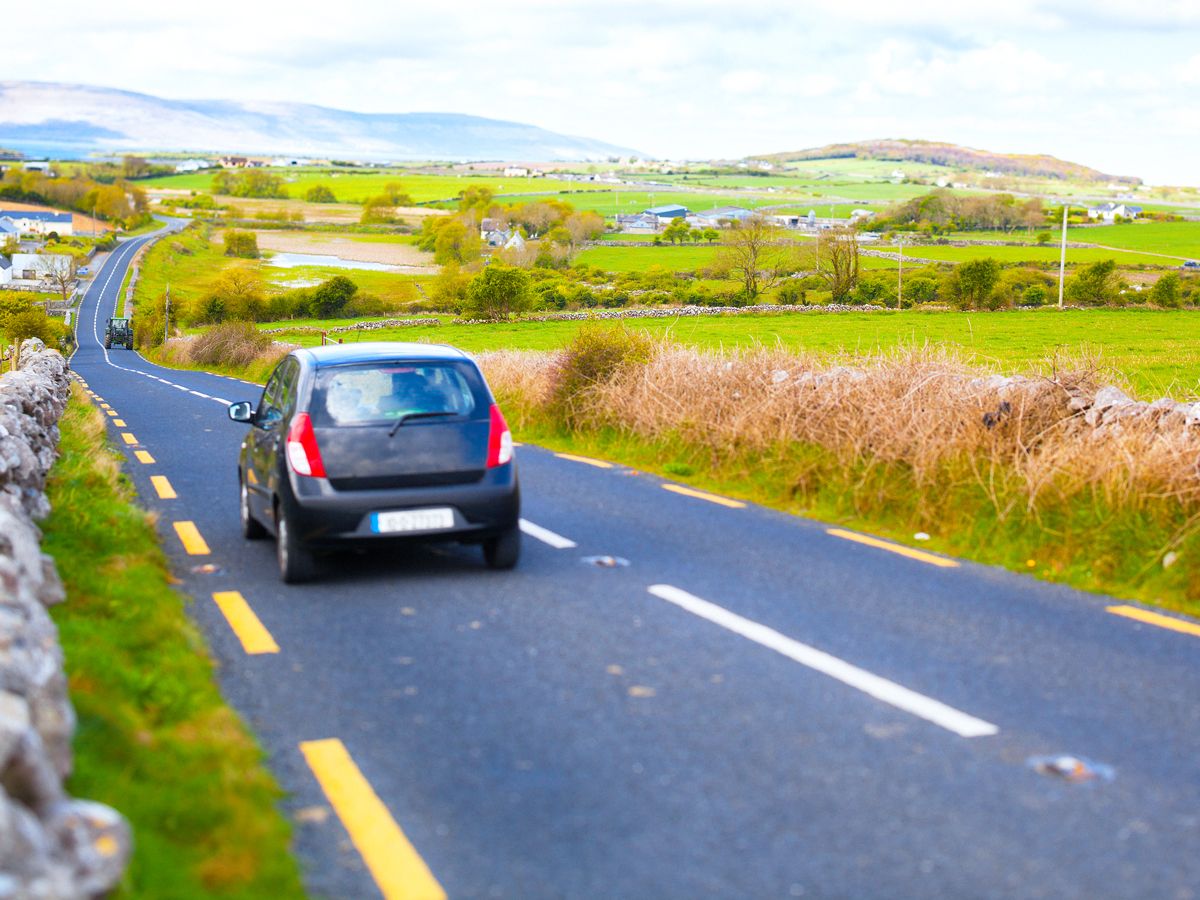
Only four countries in Europe drive on the left side of the road, and they are all islands: the United Kingdom, Ireland, Malta, and Cyprus.
At the height of the British Empire, the U.K. began to influence driving standards in other parts of the world. The custom of driving on the left in England was encouraged by the General Turnpike Act passed in 1773, though technically it was only a recommendation until the Highway Act of 1835 officially enforced the practice. Of course, there was far less traffic on the roads in those days, so this ambiguity didn’t cause the chaos you might expect.
Interestingly, there’s a road in the heart of central London that does favor the right side of the road: Savoy Court, a private road leading to the Savoy Hotel, maintains this unusual practice. It enables taxis to drop off passengers at the adjacent theater and then move on to pick up their next fare without blocking access to the hotel.
After the construction of the Channel Tunnel connecting England to France, some speculated that Britain would switch sides to align with mainland Europe. After all, that’s exactly what Sweden did in 1967 and Iceland too, a year later. However, there’s never been sufficient popular support to follow suit.
However, the British Overseas Territory of Gibraltar switched to driving on the right side of the road in 1929. Since Gibraltar shares a land border with Spain, officials felt the change would improve road safety.
The Americas and the Caribbean
Credit: SL_Photography/ iStock Editorial via Getty Images Plus
Interestingly, Brazil was actually once a split country when it came to its roads — some citizens drove on the left side and some drove on the right. But when Portugal began driving on the right side in 1928, the South American country followed suit, and all remaining regions switched sides, too.
In Central America, British Honduras (which later became Belize) drove on the left side until 1961, 20 years before it gained its independence. The construction of the Pan-American Highway — the world’s longest road — significantly increased traffic within Central America. Though the highway bypassed Belize, it was still a prudent move for the country to fall in line with its neighbors and adopt driving on the right.
Today, only two nations in South America drive on the left: Suriname and Guyana. Geography, as well as politics, may help explain this.
Guyana was also a British colony and followed convention. There is little cross-border traffic with Guyana’s western neighbor, Venezuela, so it didn’t matter quite so much that the two countries adopted different systems.
Guyana’s eastern border is with Suriname, which also drives on the left. Suriname’s border with right-favoring French Guiana is formed by major rivers, so cross-border driving isn’t much of an option there, either.
Then, there are a number of countries in the Caribbean that prefer to drive on the left. Among them are Anguilla, Antigua and Barbuda, the British Virgin Islands, Barbados, Dominica, Grenada, the Cayman Islands, Jamaica, St. Kitts and Nevis, St. Lucia, St. Vincent and the Grenadines, and Trinidad and Tobago. All of these island nations used to be part of the British Empire and retained the practice of driving on the left when they gained independence.
Particular care is required when driving in the U.S. Virgin Islands. The territory is the only part of the United States that officially drives on the left. The U.S. acquired the islands from Denmark in 1917 and it was thought best to keep the status quo. However, many vehicles today are imported from the U.S. and feature the driver’s seat on the left side. That can make things a little tricky for visiting drivers who might be disconcerted by sitting in their usual seat while they are driving on the “wrong” side of the road.
Africa
Credit: Smartshots International/ Moment via Getty Images
Prior to gaining independence from Britain, many countries in West Africa also drove on the left side of the road. But driving began to get confusing, since some British-controlled nations shared land borders with French colonies that drove on the opposite side of the road.
To facilitate cross-border traffic and the import of vehicles, countries such as Ghana, Nigeria, Sierra Leone, and the Gambia made the decision to follow other countries in the region and drive on the right side.
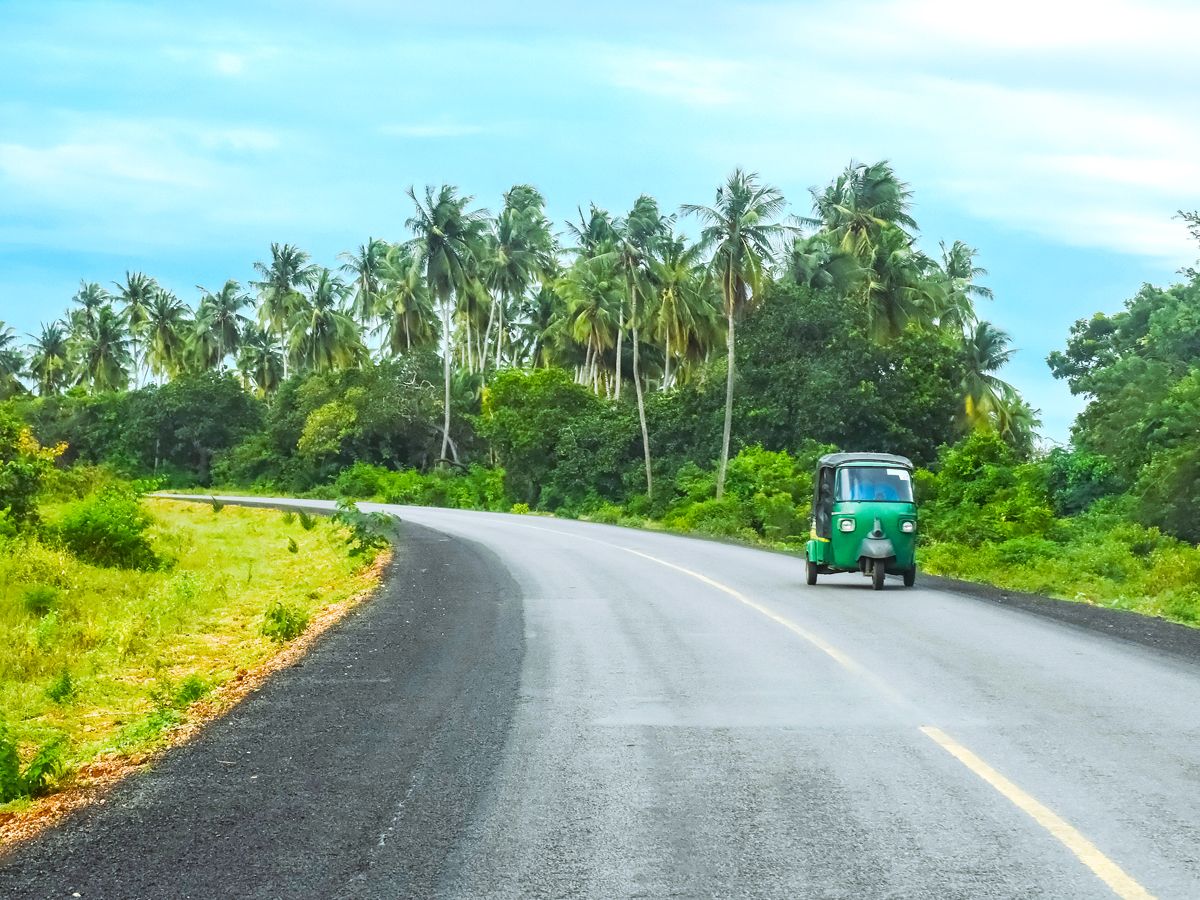
However, the converse is true in East Africa. If you travel to former British colonies, such as Kenya, Tanzania, and Uganda, you’ll find traffic sticks to the left-hand side of the road. The same can be said of Zambia, Zimbabwe, and South Africa. Neighboring Rwanda and Burundi currently drive on the right side, but to simplify matters at the border, their governments are considering making a switch.
Sometimes, anomalies occur. Countries such as Angola, Cabo Verde, Guinea-Bissau, and São Tomé and Príncipe, then under Portuguese rule, had to follow the European country’s lead when Portugal changed driving sides in 1928.
But a few of Portugal’s overseas territories were granted an exemption. Mozambique is one of them. To this day, the African nation remains resolutely in the left camp and shows no sign of changing its ways, as the countries surrounding it all drive on the left side, too.
Oceania
Credit: georgeclerk/ iStock via Getty Images Plus
As a result of British influence, both Australia and New Zealand drive on the left side as well. In 1770, Captain James Cook claimed the eastern portion of the continent and named it New South Wales. Australia became independent in 1901 but retained close ties to Great Britain.
Cook landed in New Zealand in 1769. Though the first European immigrants crossed the Tasman Sea from Australia, subsequent travelers sailing directly from Britain and Ireland formed the bulk of incomers drawn by the promise of land and gold in the 19th century. New Zealanders remained British citizens until 1948, though they’d been self-governing since 1853.
The trend continues across the South Pacific. For instance, the island nations of Tuvalu, Tonga, Kiribati (all former British protectorates), and Fiji (once a British colony) also drive on the left side as a result of this historic connection.
Interestingly, the Pacific island of Samoa switched sides in 2009 — becoming the first country in many years to do so. Citizens of the island nation now drive on the left. The decision was influenced by the diaspora of roughly 170,000 Samoans who now live in Australia and New Zealand.
Simple economics also played a part in the government’s decision. It’s cheaper for Samoa to import cars from its Australian neighbors than from more distant countries like the United States. The actual change took place over a two-day national holiday in the hope that there’d be less traffic on the roads, while a three-day ban on alcohol sales was also enforced to minimize the risk of accidents.
Asia
Credit: zms/ iStock via Getty Images Plus
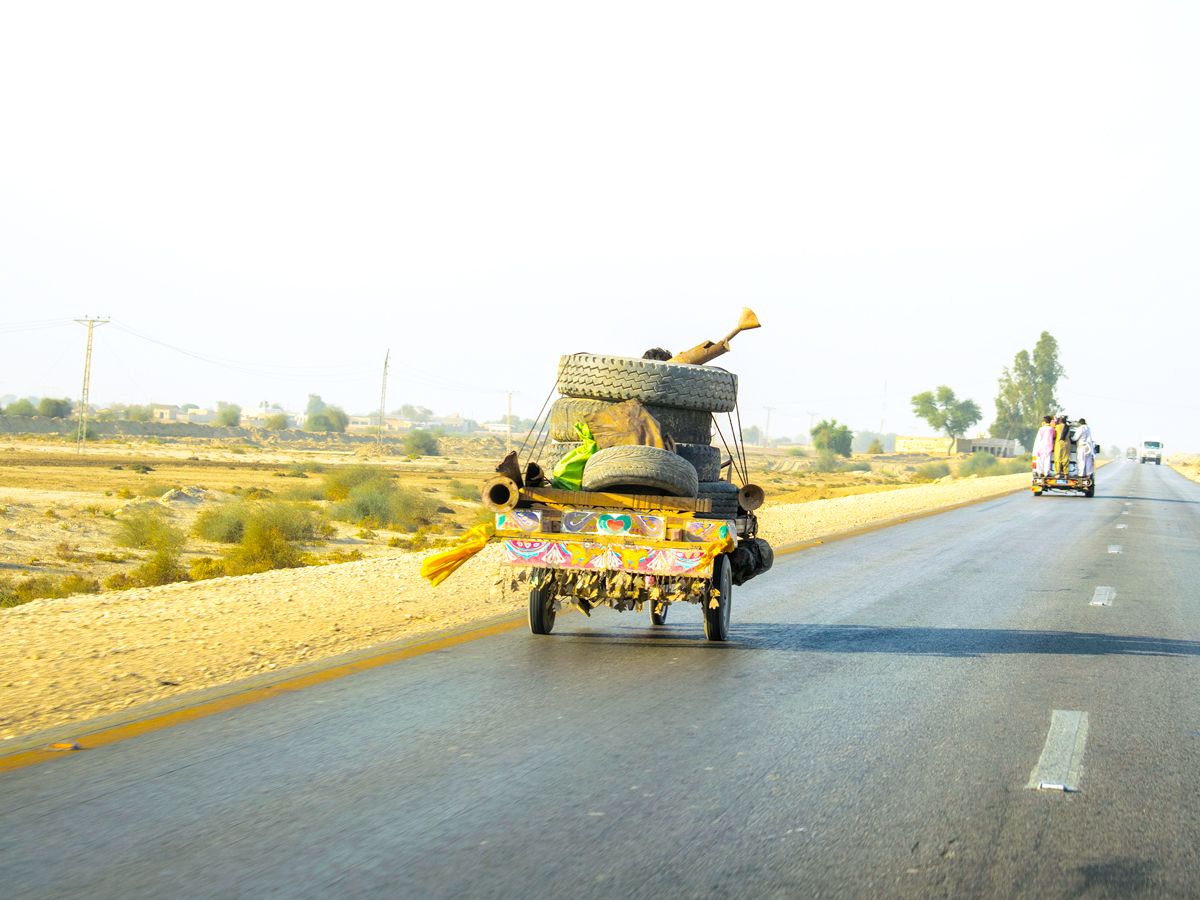
British influence can also explain left-side driving in India, Pakistan, Bangladesh, Nepal, and Sri Lanka.
Hong Kong, a special administrative region (SAR) of China since 1997, drives on the left, as it did when overseen by the U.K. That is likely to be the case until at least 2047, under the terms of the handover (known as the Basic Law), which require no significant change be made to the way of life in Hong Kong.
Macau, also a special administrative region of China, is another anomaly. The former Portuguese colony was an exception (as with Mozambique) to the 1928 shift to driving on the right. Drivers in Macau continue to drive on the left side of the road. China, however, drives on the right, so crossing the border requires considerable concentration on the part of drivers as they navigate specially designed interchanges built to ensure the traffic keeps flowing.
But what about Japan, which drives on the left, but was never part of the British Empire?
Japanese citizens have habitually driven on the left side of the road for centuries. In 1872, the British provided technical support as Japan built their first railway. As the network expanded, trains kept to the left, and it was a natural progression to extend that concept to road traffic. Driving on the left side of the road officially became law in 1924.
However, there was one interesting — if only temporary — exception. After World War II, the Japanese prefecture of Okinawa was administered by the United States for a time and began driving on the right. In 1978, the island reverted to the left side to align with the rest of Japan.
Incidentally, the Thai government also toyed with the idea of switching to right-hand side traffic in 2013. The country hoped to align with bordering nations that were part of the Association of Southeast Asian Nations (ASEAN), such as Laos and Cambodia. Although the government proposed making the switch by 2014, Thailand still drives on the left side, as do Malaysia and Singapore.
Advertisement
More from our network
Daily Passport is part of Inbox Studio, an email-first media company. *Indicates a third-party property.
7 States With the Most UNESCO World Heritage Sites
By
Jersey Griggs
Read time: 6 minutes
January 31, 2025
Updated: February 11, 2025
7 States With the Most UNESCO World Heritage Sites
Culture •January 31, 2025•Updated: February 11, 2025
By Jersey Griggs
Author
Jersey Griggs
Jersey is a travel and lifestyle writer whose work has appeared in publications such as Condé Nast Traveler, Business Insider, and Bust. When she’s not exploring her adopted home state of Maine, she’s likely planning her next big trip.
UNESCO — the United Nations Educational, Scientific and Cultural Organization — has strict criteria for its World Heritage Sites, choosing landmarks with particular natural, scientific, historical, or cultural significance. Considering the list features the likes of Machu Picchu, Stonehenge, and the Great Barrier Reef, UNESCO’s standards are pretty high. Of the 1,121 World Heritage Sites spread across the world as of 2025, 26 are in the U.S. Here are the seven states that rank highest for the most UNESCO World Heritage Sites.
New York
Credit: travelview/ iStock Editorial via Getty Images Plus
New York state is home to two UNESCO World Heritage Sites, both celebrated in their own right. The first of the two, the Statue of Liberty, serves as a national symbol for freedom and democracy and is a must-see tourist destination in New York Harbor, within New York City. A collaboration between sculptor Frédéric Auguste Bartholdi and engineer Gustave Eiffel, the 305-foot sculpture was a gift from France to the United States in 1886.
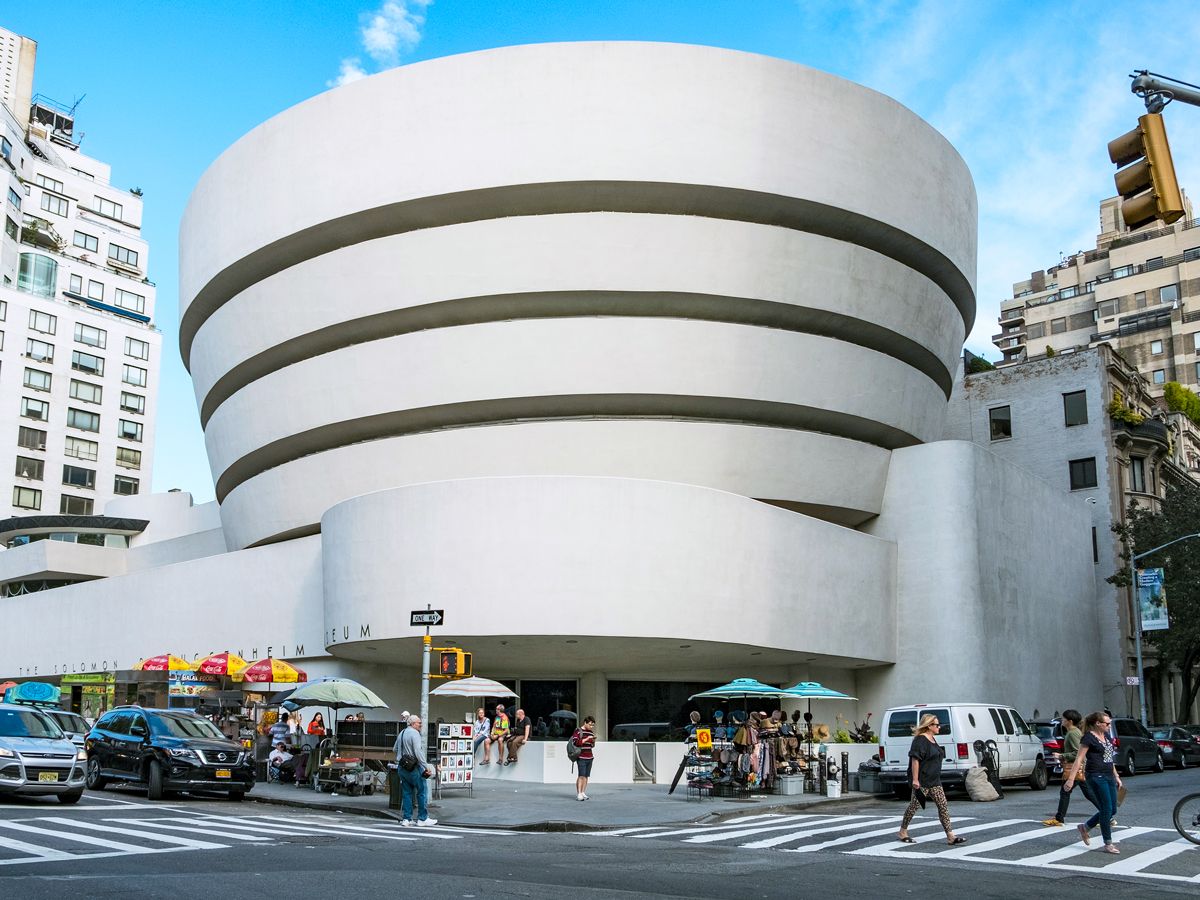
In 2019, New York City’s Solomon R. Guggenheim Museum was also added to the illustrious list, as part of the 20th Century Architecture of Frank Lloyd Wright. This UNESCO Site includes eight of Wright’s most famous works, constructed over the course of five decades. The Guggenheim is not only an architectural marvel with its spiral design, but also a cultural landmark that features work from legendary artists such as Jackson Pollock and Pablo Picasso.
Wisconsin contains two UNESCO World Heritage Sites, both designed by Frank Lloyd Wright. The Herbert and Katherine Jacobs House was finished in 1937 in Madison, Wisconsin, as a private home for a journalist and his wife. Before construction, Jacobs dared Wright to build a modest-sized home for $5,000, the equivalent of about $110,000 in today’s currency. Never one to skirt a challenge, Wright produced his first Usonian structure, a term used to describe his vision for affordable American architecture.
Nearby, in Spring Green, Taliesin is one of Wright’s most famous masterpieces, built as the personal home and retreat of the architect himself. Construction on Taliesin began in 1911 and was never fully finished due to continual renovations. Destroyed twice by separate fires, Taliesin was marked by tragedy, but its innovative design of interconnected buildings and landscaped gardens make it a worthy stop in central Wisconsin.
Arizona
Credit: raagoon/ iStock via Getty Images Plus
Arizona is another state with two UNESCO sites, but only one of them belongs to Frank Lloyd Wright. During the last two decades of his life, before his death in 1959, Wright decamped to Scottsdale annually to stay in Taliesin West, his winter home. Wright invited his students to join him in the desert city, where they tested out design ideas and construction techniques, including Taliesin West’s original canvas roofing. Today, the midcentury modern building remains an architecture school and is open for tours.
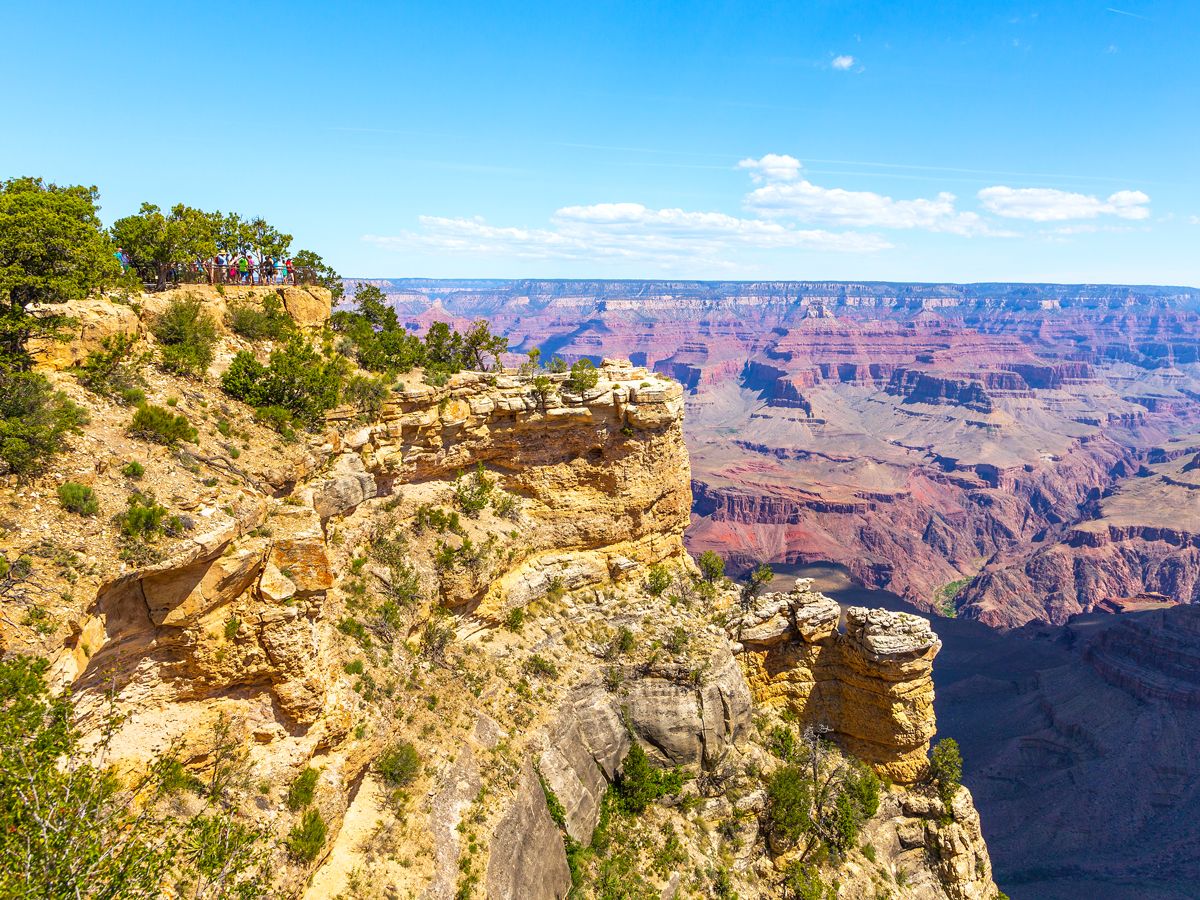
Arizona’s other UNESCO World Heritage Site is the first natural phenomenon on this list. The Grand Canyon is often considered the most impressive natural wonder in the country, if not the world. Carved by the Colorado River over the course of 2 billion years, the massive canyon features sheer heights, beautiful formations, and diverse ecosystems that make it a true showstopper.
Pennsylvania
Credit: A-Tom/ iStock via Getty Images Plus
Pennsylvania’s three World Heritage Sites include a transnational site. Located in the small town of Bethlehem, the Moravian Church comprises four early Protestant settlements throughout four countries — the U.K., Germany, Denmark, and the U.S. — all of which display magnificent urban design and remain open for worship.
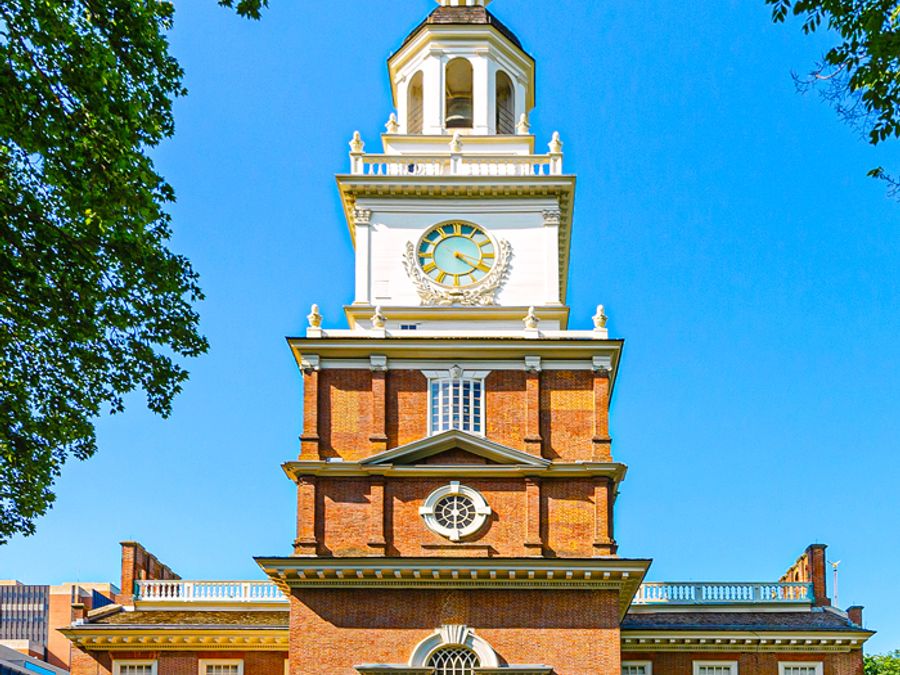
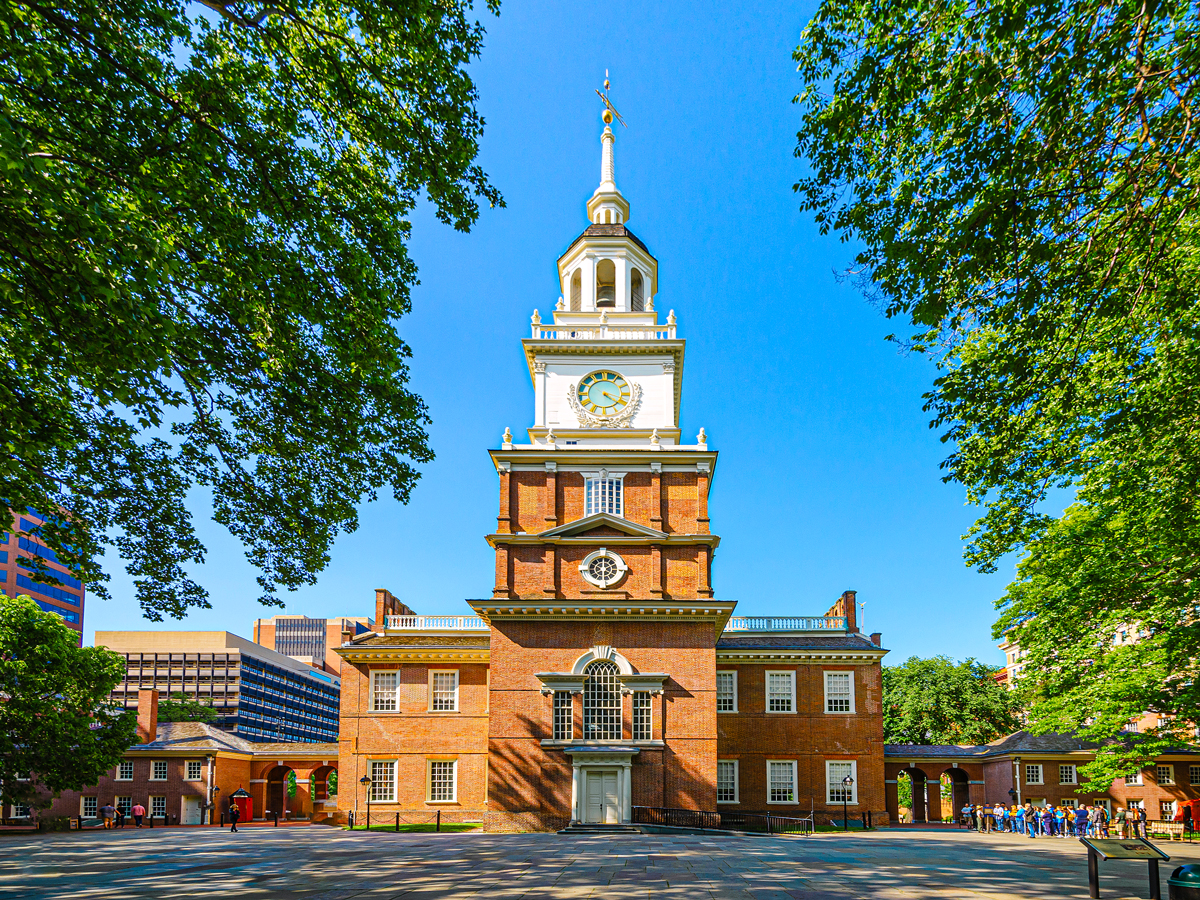
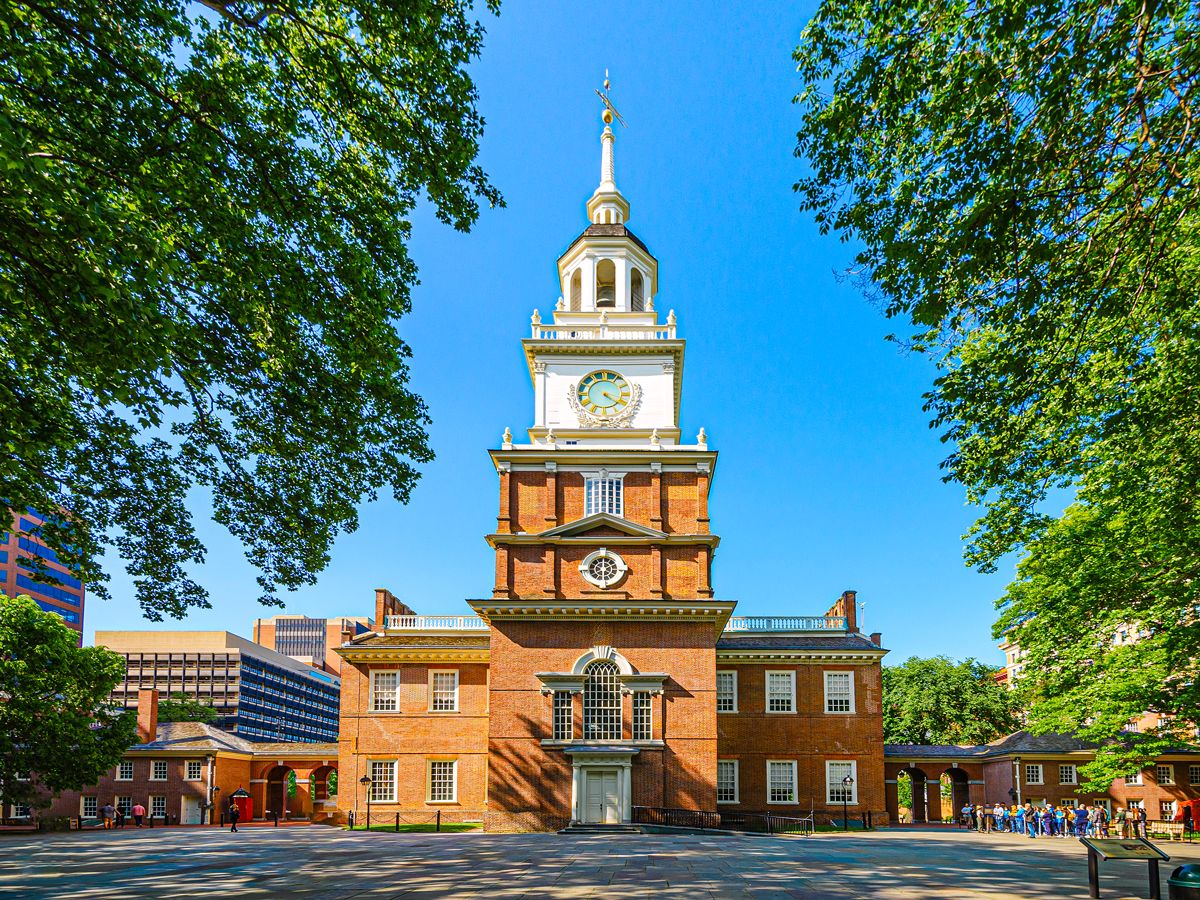
In nearby Philadelphia, Independence Hall was chosen by UNESCO due to its historical and cultural significance. As the site where both the Declaration of Independence and U.S. Constitution were drafted and signed — in 1776 and 1787, respectively — it’s where American democracy was born and it continues to play an important role in our nation today.
In the Western half of the state, Fallingwater is another stunning achievement by architect Frank Lloyd Wright. Fallingwater’s one-of-a-kind design is integrated with a naturally occurring waterfall. The result is a unified sense between the indoors and outdoors, a characteristic that defines Wright’s work.
Illinois
Credit: JByard/ iStock via Getty Images Plus
Illinois is home to three UNESCO World Heritage Sites: Cahokia Mounds State Historic Site, Unity Temple, and the Frederick C. Robie House. The latter two showcase Wright’s earlier work in Chicago, where he began his career. Both buildings are celebrated as early examples of the architect’s signature style, which employed innovative materials and clean lines to create interior space and allow for ample light.
Farther south, Cahokia Mounds was once a settlement of a group of prehistoric Indigenous peoples called the Native Americans of the Mississippian. As the largest pre-Columbian site north of Mexico, Cahokia still contains 70 of the original 120 earthen mounds that were built by these ancient peoples, including Emerald Mound, which is now accessible via stairs. At interpretive galleries and a museum, visitors to this UNESCO site can learn more about the lives of the people who lived in the region around 1200 BCE.
California
Credit: Education Images/ Universal Images Group via Getty Images
The Golden State also features three UNESCO World Heritage Sites. Completed in 1921 in Los Angeles, Hollyhock House is an earlier example of Frank Lloyd Wright’s work. Named for the hollyhock flower, a feature employed in the landscaped gardens and architectural designs, Wright’s design used reinforced concrete to create a modern, light-filled, and open space.
When Yosemite National Park was designated a UNESCO site in 1984, it had already been a national park for almost 100 years. Located in the Sierra Nevada, Yosemite is known for its staggering landmarks, including El Capitan and Half Dome.
Farther north, Redwood National Park showcases the state’s breadth of natural beauty, thanks to the flora that thrives in California’s coastal climate. The park is home to the tallest trees in the world — centuries-old behemoths that stretch as high as 350 feet and up to 14 feet wide.
New Mexico
Credit: Wolfgang Kaehler/ LightRocket via Getty Images
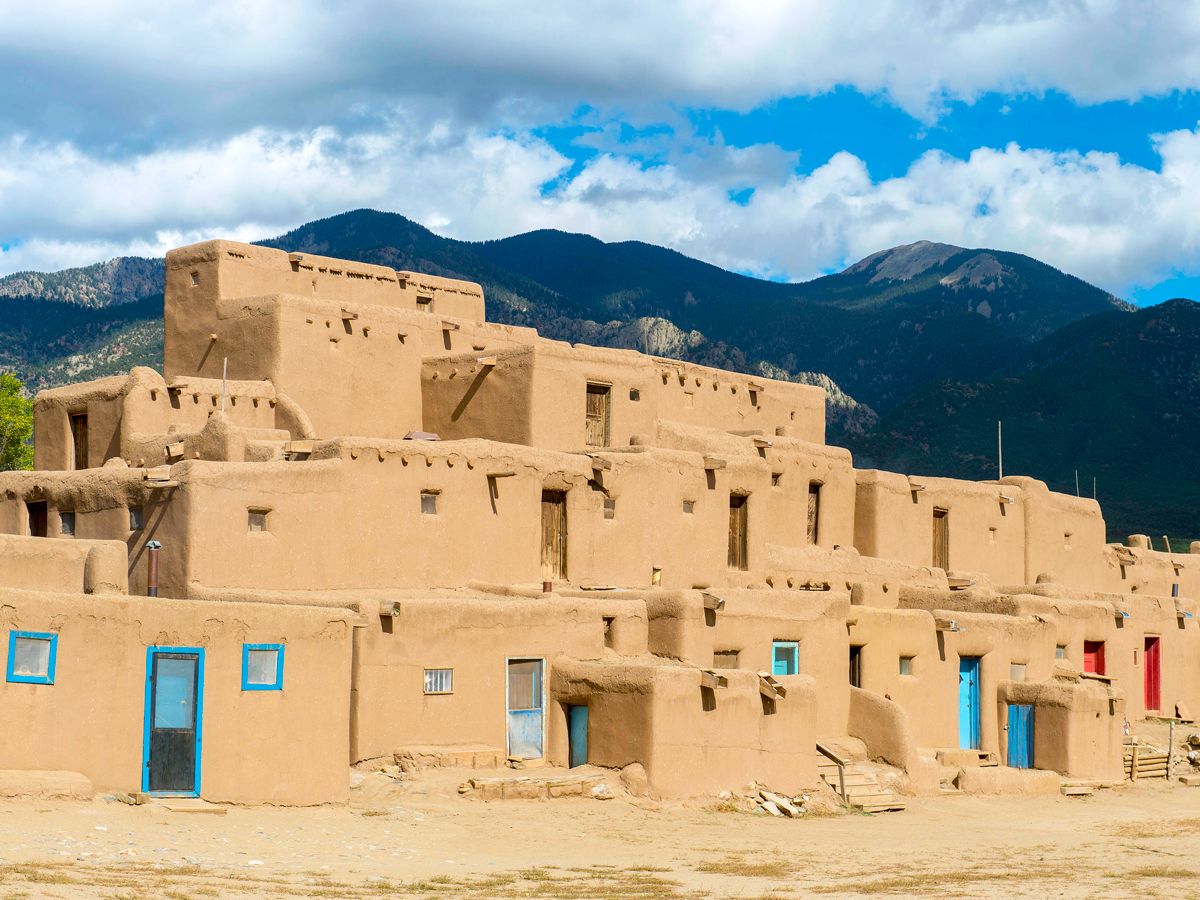
Finally, New Mexico also has three UNESCO World Heritage Sites, but not a single one belongs to Frank Lloyd Wright. Renowned for their architectural, cultural, and historical significance, the traditional adobe buildings at Taos Pueblo have been inhabited by Ancestral Puebloans and their descendants for over 1,000 years. In northwestern New Mexico, Chaco Canyon was a hub of Ancestral Puebloan culture between 850 and 1250, and today the Chaco Culture National Historical Park preserves their remarkable ceremonial ruins.
In the southeastern corner of the state, the caves within Carlsbad Caverns National Park date back approximately 250 million years, and are also believed to have been used by the Ancestral Puebloans. In addition to limestone formations creating stalagmites and stalactites, Carlsbad is famous for its colony of bats — 400,000 in total — who make an appearance every day around dusk.
Advertisement
More from our network
Daily Passport is part of Inbox Studio, an email-first media company. *Indicates a third-party property.
Buying Duty-Free Abroad? Here Are the Rules for TSA Security
By
Bennett Kleinman
Read time: 4 minutes
January 31, 2025
Updated: January 31, 2025
Buying Duty-Free Abroad? Here Are the Rules for TSA Security
Tips •January 31, 2025•Updated: January 31, 2025
By Bennett Kleinman
Author
Bennett Kleinman
Bennett is a New York City-based staff writer for Daily Passport. He previously contributed to television programs such as the Late Show With David Letterman, as well as digital publications like the Onion. Bennett has traveled to 48 U.S. states and all 30 Major League Baseball stadiums.
When passing through airport security in the U.S., you have to abide by the TSA’s strict 3.4-ounce size limit for any liquids, gels, or aerosols stashed in your carry-on. Even if your mini bottle of shampoo or toothpaste is just 0.5 ounces too big, you’ll have no choice but to throw it out before boarding. There is one instance, however, where this size limit may not apply: duty-free purchases. If you buy alcohol at a duty-free shop in the airport, for instance, you may be able to keep it in your carry-on regardless of the bottle’s size. Here’s what you need to know.
Duty-Free: A Brief Explainer
Credit: typhoonski/ iStock Editorial via Getty Images Plus
The first thing to note is that duty-free stores are only available to those traveling internationally and not domestically. The idea behind duty-free stores is to allow travelers to buy retail goods such as alcohol, perfume, tobacco, or leather bags without paying local sales tax.
The lack of any local taxes means that products sold by duty-free shops are often cheaper, though you may still be subject to paying taxes on declared goods upon reaching your destination. For more on duty-free shopping — and whether or not it’s a good deal — check out our in-depth guide.
Rules for Duty-Free Liquids
Credit: AzmanJaka/ E+ via Getty Images
Given that duty-free stores are only available for those traveling internationally, the exemption in question won’t apply to any domestic flights. Additionally, if you’re taking a direct flight from a foreign country back to the U.S. without any connections, you won’t have to pass through a security checkpoint upon landing.
The exemption to the 3.4-ounce size rule primarily applies to flights returning to the United States that involve a domestic connection. Let’s say you buy a bottle of alcohol in London and are traveling back home to Los Angeles via a connecting flight in New York City. You’ll be able to keep the large bottle of liquor in your carry-on bag assuming certain criteria are met.
First, the item must have been purchased from a duty-free store abroad. Second, it must remain untouched in the sealed, tamper-evident bag that the shop provided, and the bag must be transparent. And third, you must have the receipt handy, which shows a purchase within the last 48 hours.
Assuming you check all three boxes, you can keep the liquor in your carry-on (or carry it on separately) throughout the process of making your connection in New York City. But if you fail to meet any of the criteria, you’ll need to transfer the liquor over to your checked luggage before continuing on to L.A. Additionally, if the TSA is unable to screen or clear an item for any reason, you may be forced to check or surrender it, even if you meet the above criteria.
In order to avoid any potential complications or misunderstandings, it’s worth noting that the TSA recommends putting all liquids in your checked baggage, regardless of the criteria outlined above. Doing so should make the security screening process smoother, allowing you to continue on to your connecting flight stress-free.
Packing Precautions
Credit: Oscar Wong/ Moment via Getty Images
Whether you’re traveling with duty-free liquids inside your carry-on or checked bag, you want to avoid the scenario of the bottle breaking and leaking over the contents of your luggage. If you’re planning to travel with a fragile duty-free item, pack a small amount of bubble wrap and tape that won’t take up too much space in your bag. This could protect the bottle from damage and your clothes from stains.
You may also want to wrap any duty-free liquids in a plush towel or other fabric to create a soft barrier. Another option is to purchase a WineSkin carrying case: This soft, transparent, sealable bag in the shape of a wine bottle can protect any items you purchase from duty-free.
Note: All featured products and deals are selected independently and objectively by the author. Daily Passport may receive a share of sales via affiliate links in content.
Advertisement
More from our network
Daily Passport is part of Inbox Studio, an email-first media company. *Indicates a third-party property.
20 Incredible Feats of Engineering Around the World
By
Daily Passport Team
Read time: 11 minutes
January 31, 2025
Updated: September 15, 2025
20 Incredible Feats of Engineering Around the World
Architecture •January 31, 2025•Updated: September 15, 2025
By Daily Passport Team
Author
Daily Passport Team
Daily Passport writers have been seen in publications such as National Geographic, Food & Wine, CBC, Condé Nast Traveler, and Business Insider. They're passionate about uncovering unique destinations and sharing expert tips with curious travelers.
The Great Pyramids, the Eiffel Tower, and the Great Wall of China are just a few testaments to human ingenuity throughout the ages. As building technology has advanced, so have engineers been able to create ever more impressive structures. Buildings grow taller, bridges stretch longer, and tunnels dig deeper. Indeed, some of the newest marvels seem to defy the laws of physics and nature. Learn about 20 incredible engineering feats that might merit a visit on your next vacation.
Panama Canal – Panama
Credit: Federico Barbieri/ iStock via Getty Images Plus
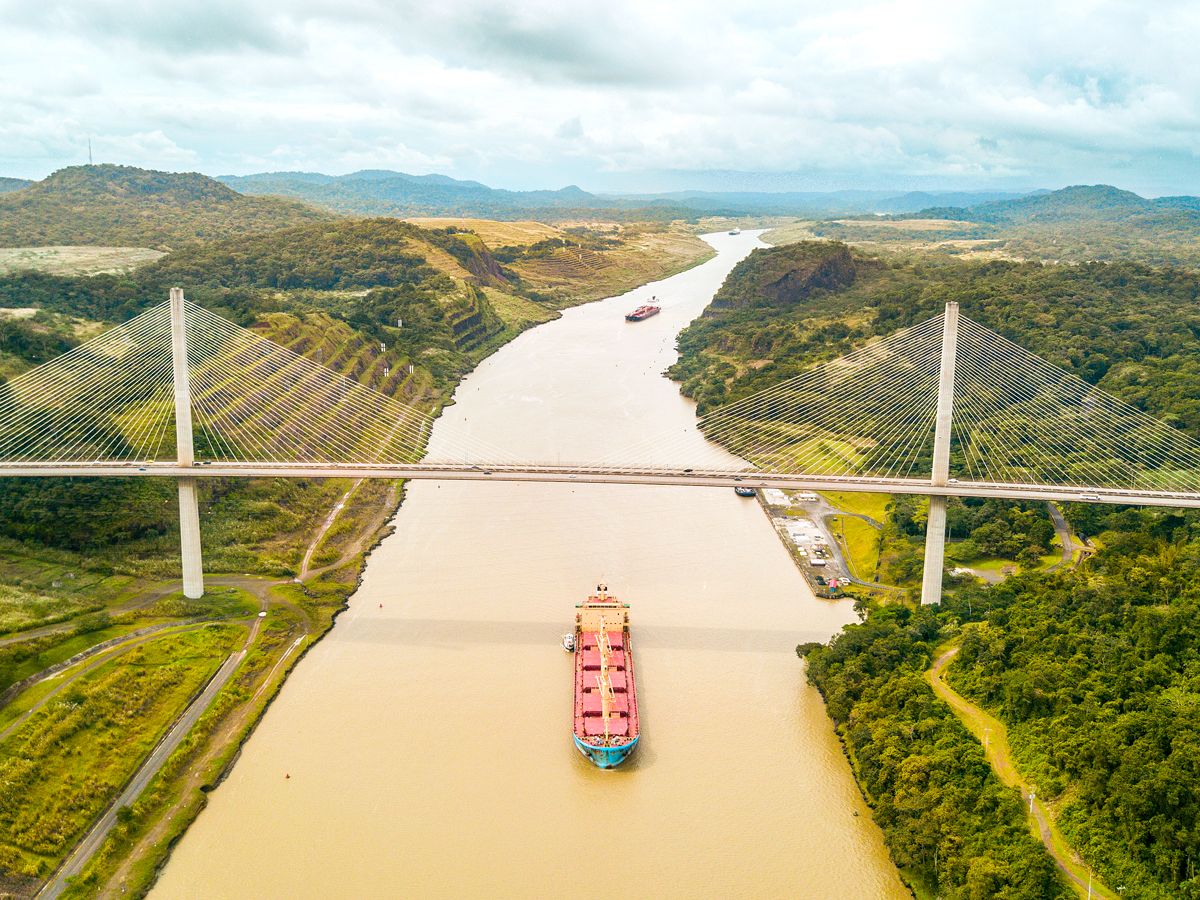
At one point in history, we might have been calling this feat of engineering the Nicaragua Canal, since it was nearly built there. For centuries, traders and explorers had pondered a way to cross the Isthmus of Panama, thus saving the costly journey around South America. In the 19th century, the U.S. considered two routes — one through Nicaragua and one through Panama — before a French company began construction in the 1880s on a canal through Panama. The project failed due to poor planning and bankruptcy, but the U.S. Congress authorized the Spooner Act in 1902 to purchase the assets of the French company and continue building the canal.
Finally, the dream became reality with the opening of the Panama Canal in 1914, which swiftly revolutionized international trade. A trip through the 50-mile passage takes roughly 10 hours, cutting 8,000 nautical miles off the journey around South America’s Cape Horn. Today, around 14,000 ships travel through the Panama Canal each year.
Credit: tobiasjo/ iStock Unreleased via Getty Images
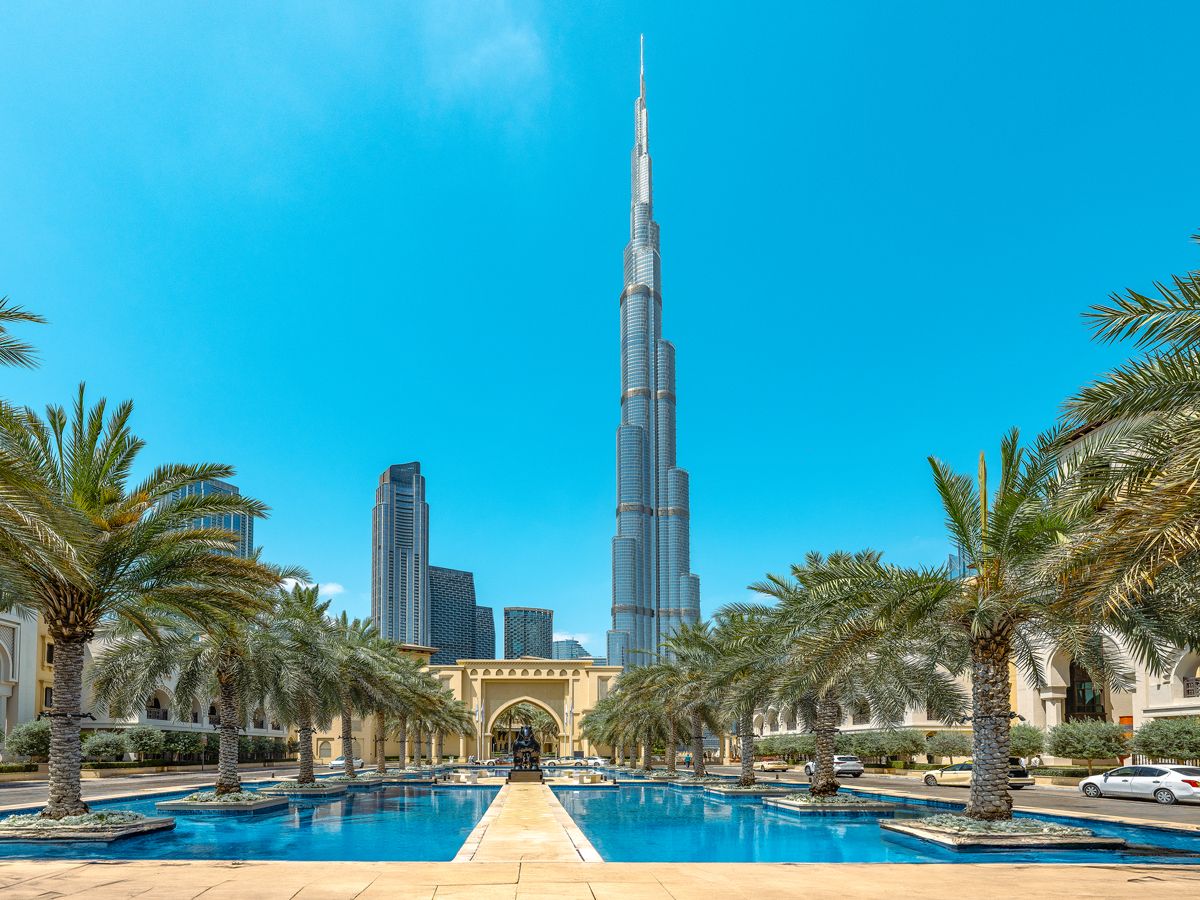
The United Arab Emirates is the site of several incredible engineering feats, and the Burj Khalifa rises above them all — literally. The tallest building in the world, it towers 2,716 feet and 162 breathtaking stories over the Dubai skyline.
Construction on the Burj Khalifa was completed in 2010 at a cost of $1.2 billion USD. Visitors can take one of the world’s longest elevator rides to the world’s highest outdoor observation deck (1,820 feet above ground) where they can enjoy spectacular views of Dubai. And on the way down, they can stop for a dip at the 39th-floor swimming pool.
Hoover Dam – Arizona and Nevada
Credit: imageBROKER/Mara Brandl/ imageBROKER via Getty Images
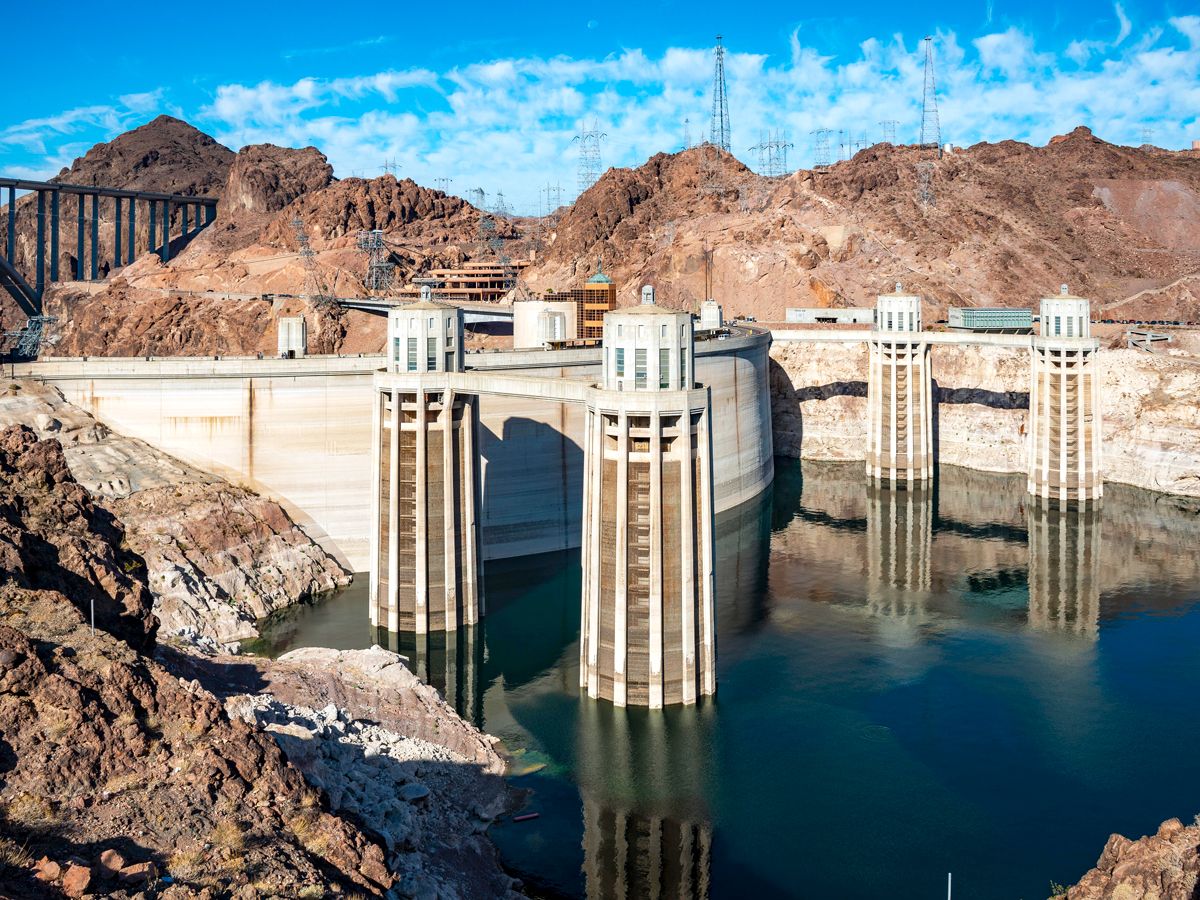
When it was built at the height of the Great Depression, the Hoover Dam was the largest concrete structure in the world. Although it has since been surpassed by larger dams, the construction of the Hoover Dam marked the beginning of the mega-dam era. It took an army of more than 21,000 workers to complete the dam on the Arizona-Nevada border, but it was finished in 1936, two years ahead of schedule.
The project, which diverted the Colorado River through four tunnels, now produces enough hydroelectricity to power more than 1.5 million homes, and cities such as Las Vegas and Phoenix owe much of their growth to the Hoover Dam.
Three Gorges Dam – Yichang, China
Credit: NurPhoto via Getty Images
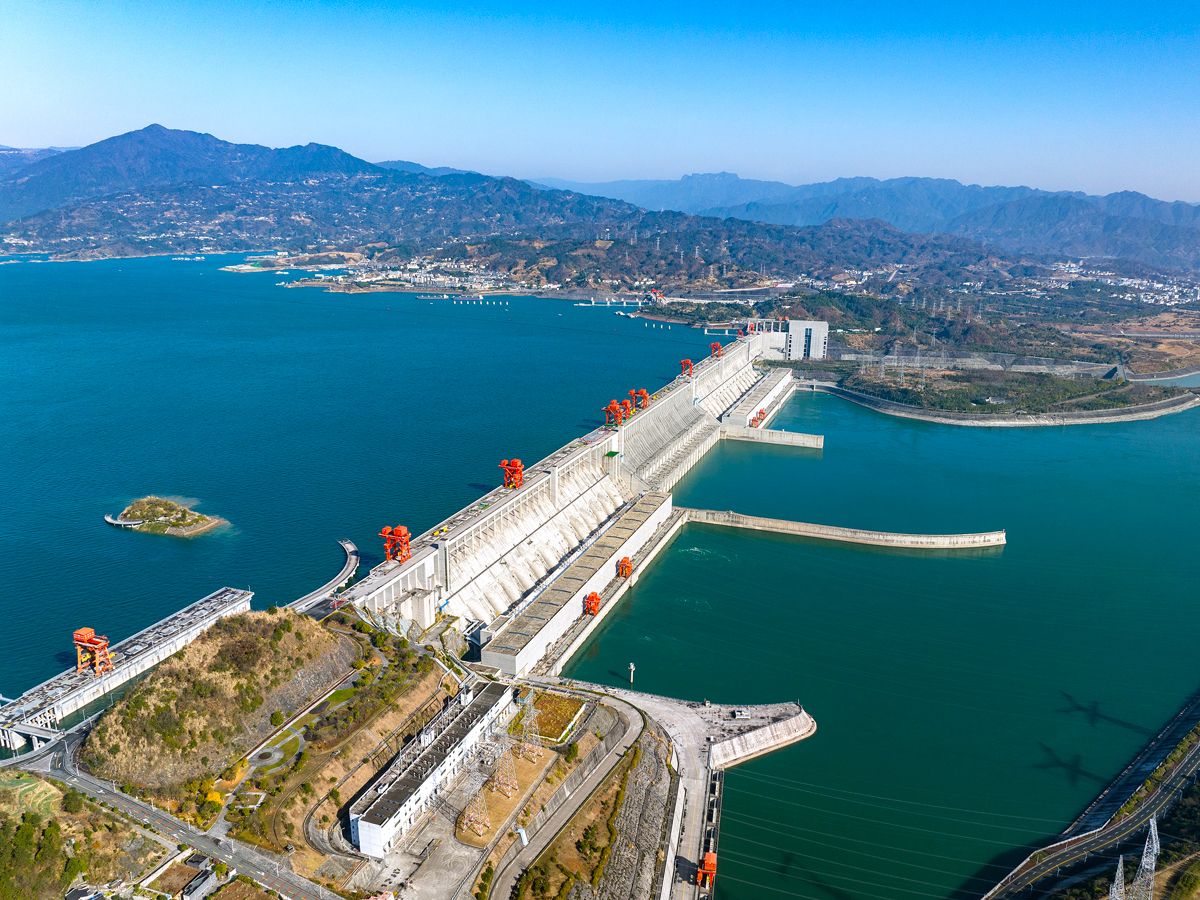
Giving Hoover Dam a run for its money is the Three Gorges Dam in China’s Hubei Province. When completed in 2006, nearly a century after it was first conceived, the Three Gorges Dam was the largest dam in the world. It measures more than a mile in length and 607 feet above ground at its highest point. It also remains the world’s largest hydroelectric facility, with the capacity to generate 100 billion kilowatt-hours of electricity per year. The reservoir created by the dam is so large that ocean freighters can carry cargo inland from Shanghai.
Channel Tunnel – France and United Kingdom
Credit: DENIS CHARLET/ AFP via Getty Images
With the completion of the Channel Tunnel in 1994, Britain and France were connected for the first time since the last ice age. The idea for the Chunnel, as it is affectionately known, was first proposed in the early 19th century, but it would take nearly 200 years for the dream to become reality.
‘The tunnel consists of three separate but connected tunnels which extend a total of 31 miles, including a 23-mile stretch under the English Channel. Thanks to the Channel Tunnel and a high-speed train, people can now travel between central London and Paris in a little over two hours.
Danyang-Kunshan Grand Bridge – Jiangsu, China
Credit: Edward L. Zhao/ Moment Open via Getty Images
Danyang-Kunshan Grand Bridge runs an impressive 102.5 miles between Shanghai and Nanjing, making it the longest bridge in the world. Part of the Beijing-Shanghai high-speed railway, the bridge runs alongside the Yangtze River, crossing wetlands and rice fields. Despite having to navigate a number of challenging terrains, the bridge was completed within four years, at a cost of $8.5 billion USD. It was built to withstand earthquakes, typhoons, and even a direct hit from a 300,000-ton naval ship.
The Big Dig – Boston, Massachusetts
Credit: Darren McCollester via Getty Images News
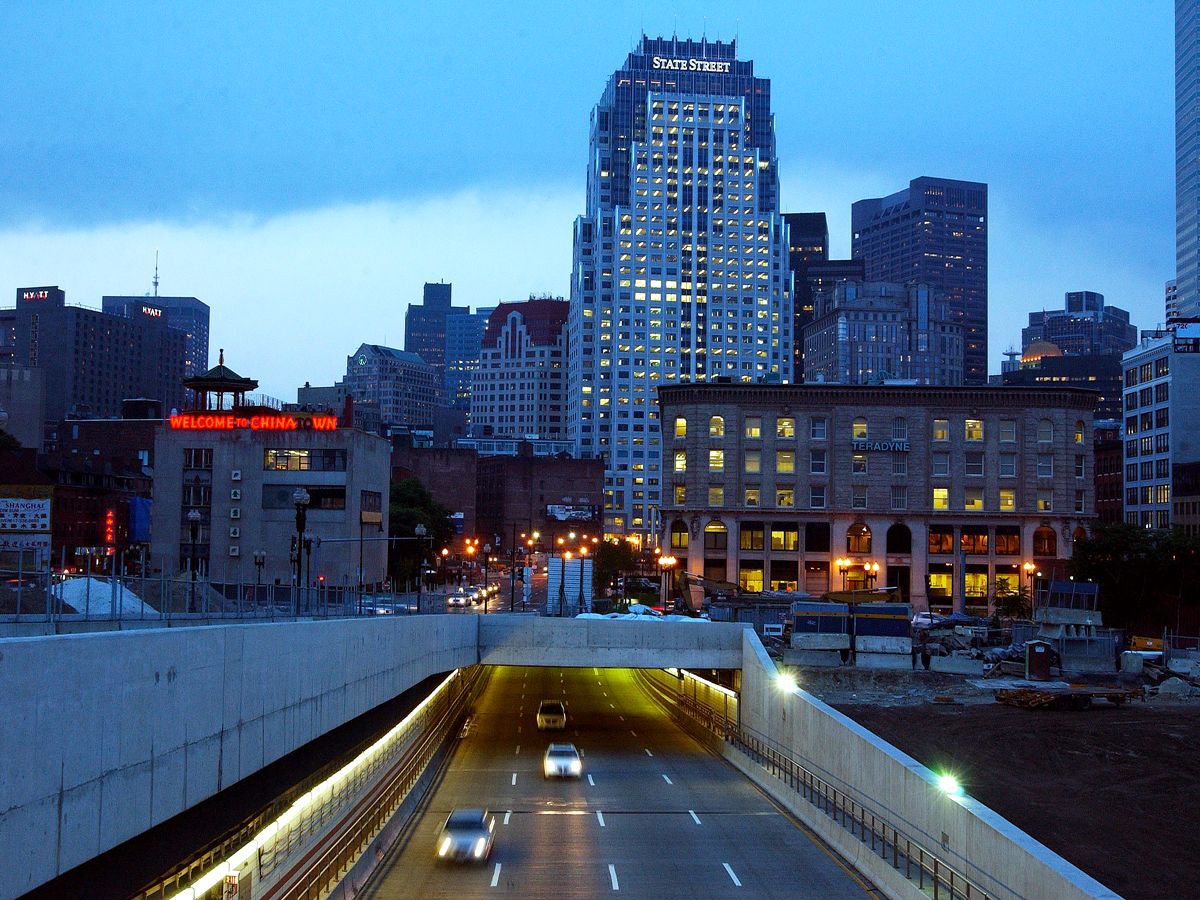
Traffic congestion in Boston was a huge — and worsening — problem by the late 20th century. Main arteries were congested for up to 10 hours a day, and the road accident rate was four times the national average. A project known as the Big Dig was proposed as a solution. Completed in 2007, it involved constructing a network of tunnels through much of the downtown area.
The total cost was $14.6 billion, making it the largest and most expensive highway project in U.S. history. In addition to reducing traffic congestion, the Big Dig also reduced carbon monoxide levels in central Boston and allowed for the construction of more than 45 new parks above the tunnel.
Millau Viaduct – France
Credit: rusm/ iStock Unreleased via Getty Images
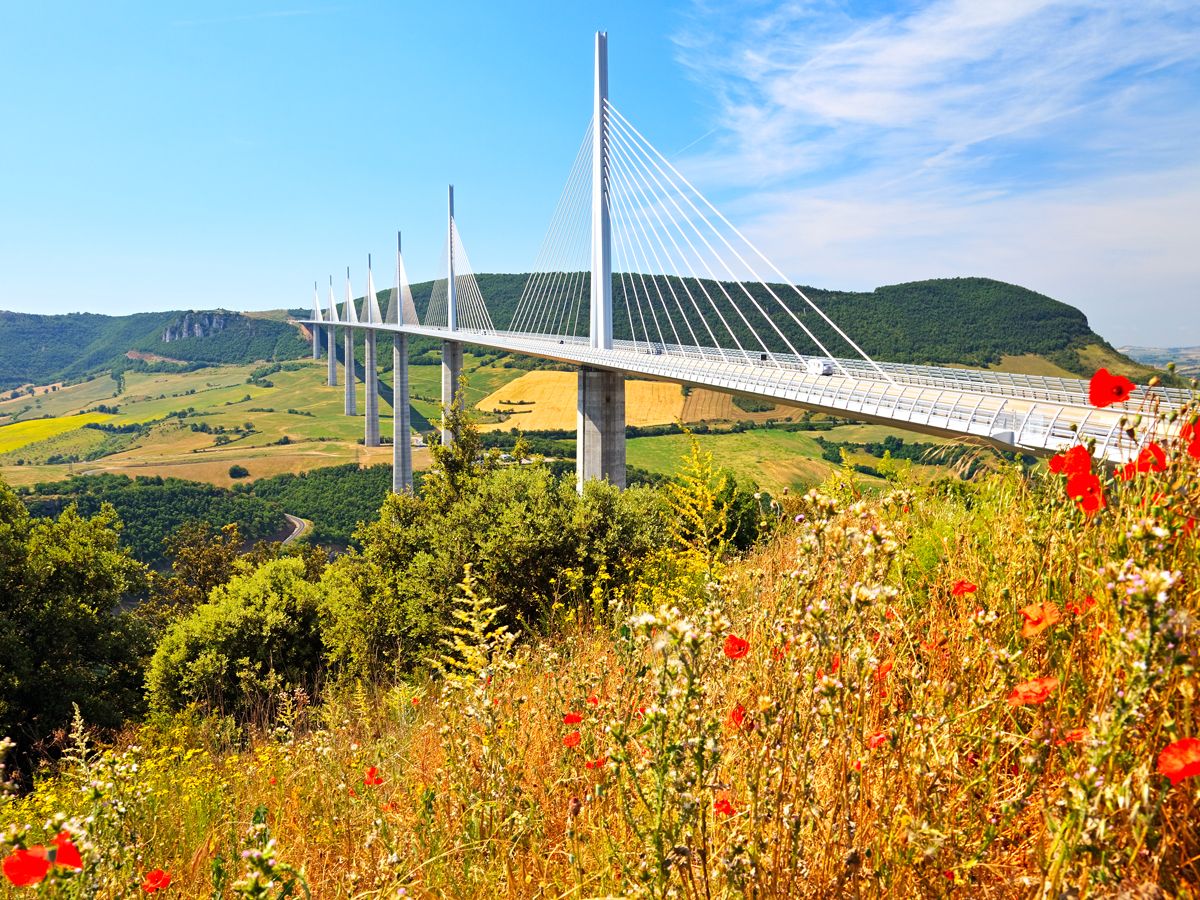
Many consider the Millau Viaduct, the brainchild of English architect Norman Foster, to be a true work of art. One of the world’s tallest bridges, reaching 1,125 feet high, it is located in the Massif-Central region in southern France. The steel bridge traverses the River Tarn valley and helps to alleviate heavy tourist traffic between France and neighboring Spain. When crossing the bridge, it is not unusual to look out of one’s car window at the clouds below. The Millau Viaduct is also the world’s longest cable-stayed bridge, extending 8,071 feet.
National Stadium – Beijing, China
Credit: fotoVoyager/ iStock Unreleased via Getty Images
Beijing National Stadium, nicknamed “The Bird’s Nest,” was built to host the 2008 Summer Olympics. Designed by Swiss architects Jacques Herzog and Pierre de Meuron, the massive building has a circular shape to symbolize heaven, but many say its random geometric angles also resemble Chinese-style “crazed pottery.”
Builders used precast concrete slabs to support the seating for the stadium. In addition, the entire structure is supported by 24 columns weighing approximately 1,000 tons each. The National Stadium’s layout ensures that all 91,000 spectators can enjoy an optimal view of whatever event they are watching, from concerts to soccer championships.
Golden Gate Bridge – San Francisco, California
Credit: Nirian/ E+ via Getty Images
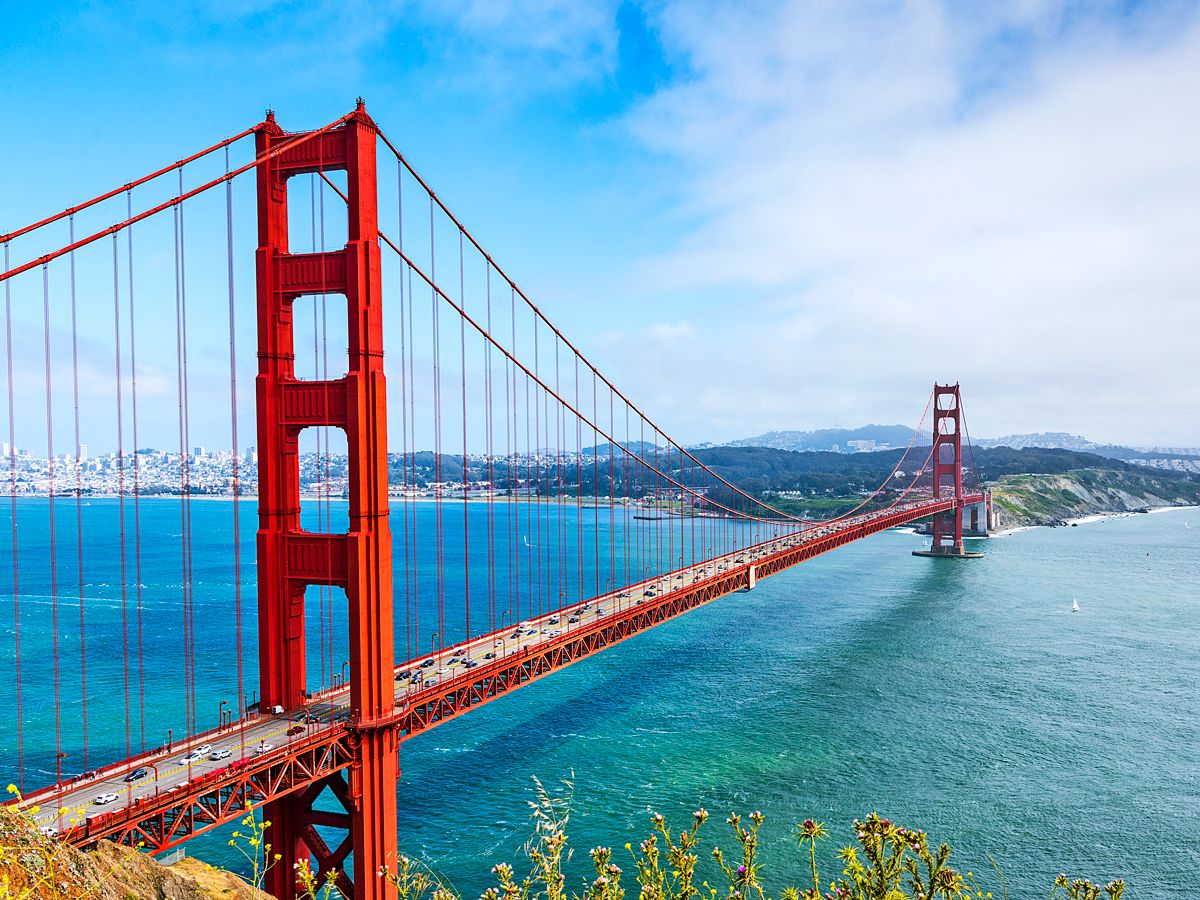
Surprisingly, the design of the now-beloved Golden Gate Bridge was not that popular with the public when it was first proposed. Fortunately, the plans of Joseph Strauss and Irving Morrow went ahead, and work on the bridge was completed in 1937. Now, people take more than 112,000 trips across the Golden Gate each day.
Named for the strait it crosses, the bridge is made of enough cable to circle the earth three times. Thanks to its design, which allows it to bend as needed, it can withstand earthquakes, a vital feature given its location. The striking paint job, known as “international orange,” was originally intended to be a primer, but the color proved so popular, so it remained the permanent color.
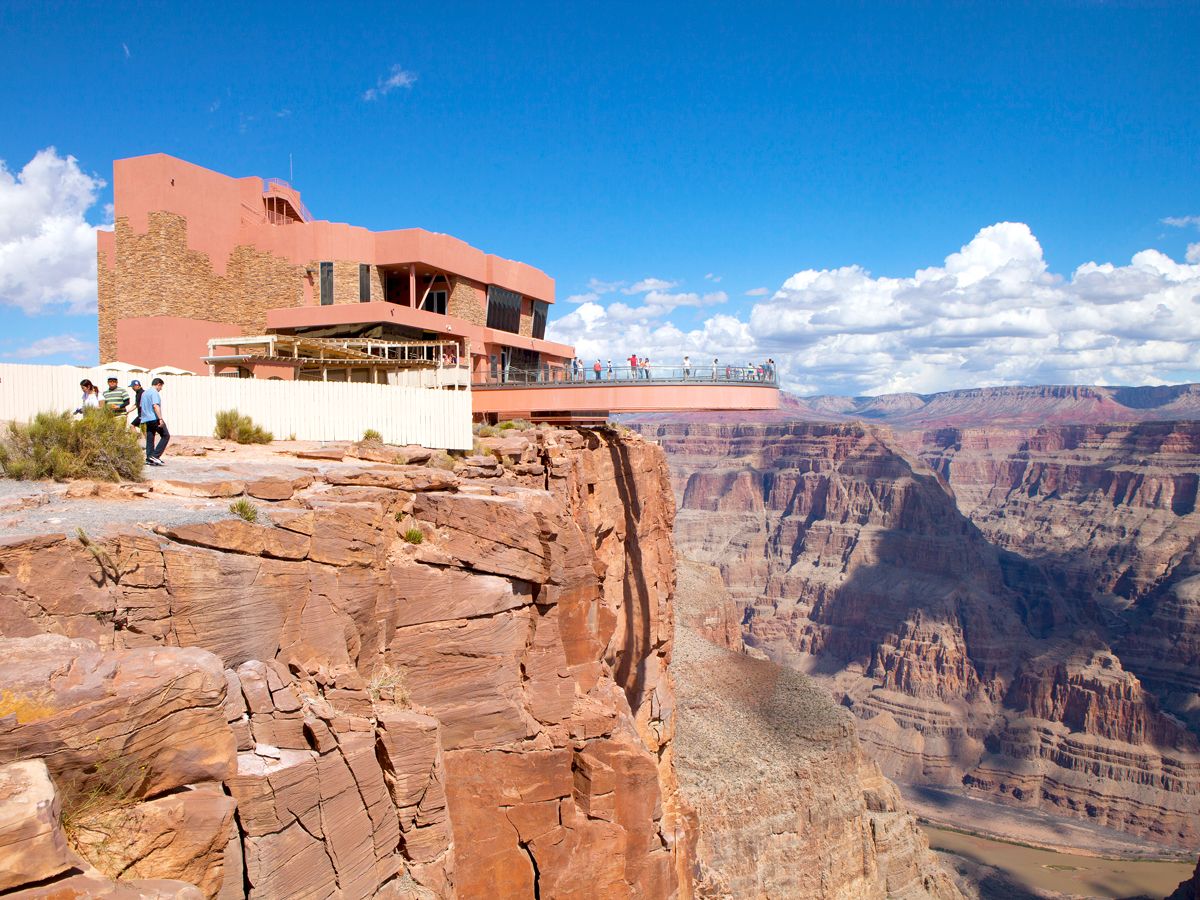
Grand Canyon Skywalk – Arizona
Credit: Aneese/ iStock Editorial via Getty Images Plus
The Grand Canyon may be one of the world’s most recognizable natural wonders, but it is also the site of a human-made engineering feat. The Grand Canyon Skywalk is a 10-foot-wide, horseshoe-shaped walkway with a steel frame and glass floor that extends about 70 feet over the canyon’s Western Rim. It offers visitors jaw-dropping views down to the floor of the Grand Canyon, some 4,000 feet below. The Skywalk is located on the land of the Hualapai Nation and has vastly increased tourism (and income) to the Western Rim.
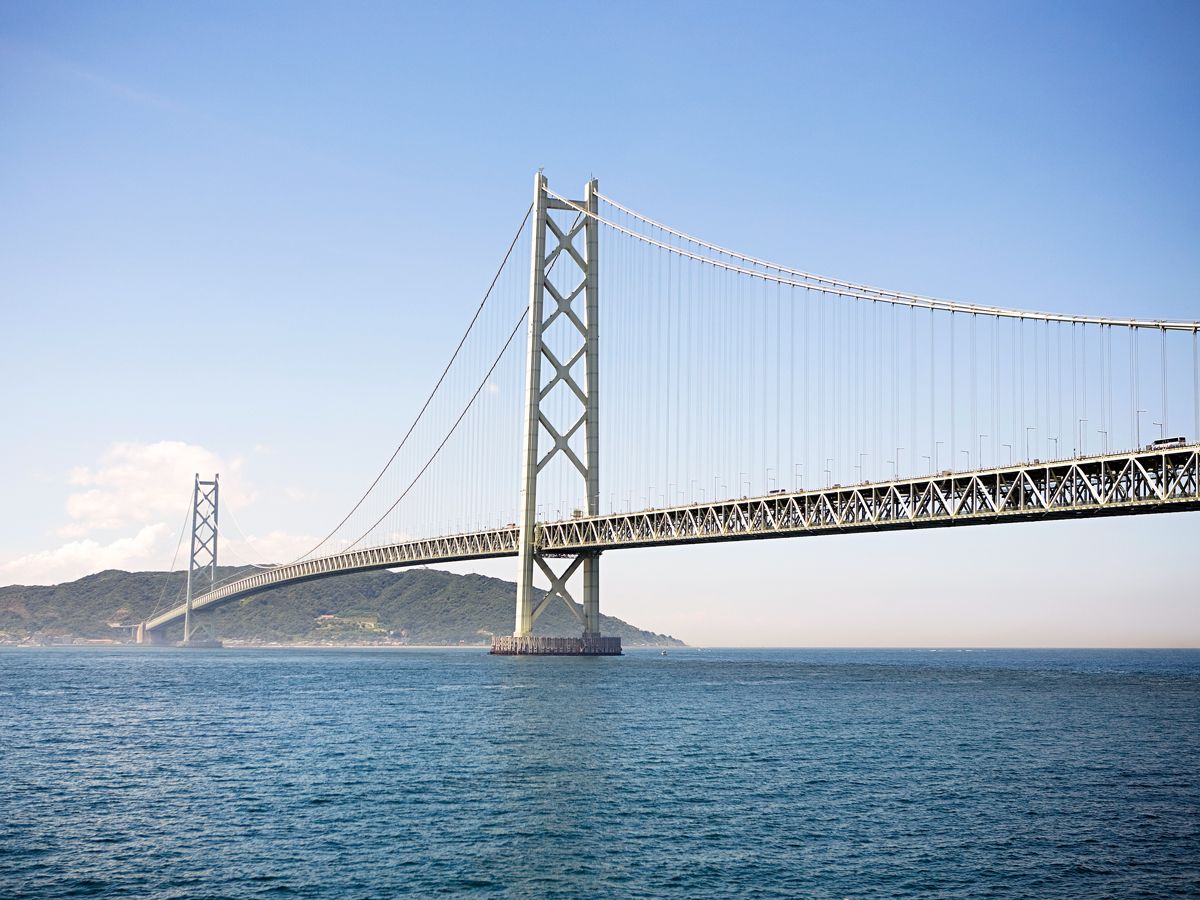
Akashi Kaikyo Bridge – Japan
Credit: Connect Images via Getty Images
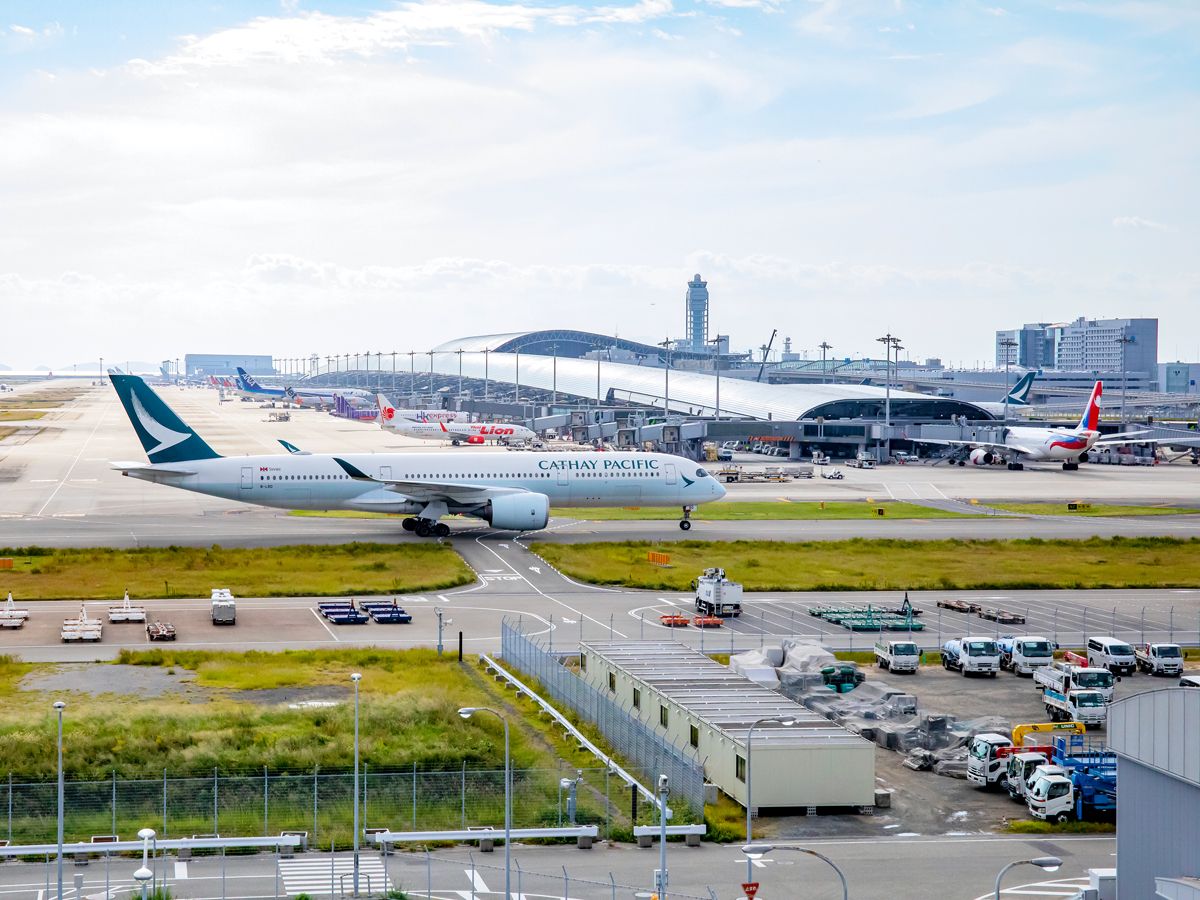
When the Akashi Kaikyo Bridge opened in 1998, it was the world’s longest suspension bridge, though it has since lost that title to Turkey’s 1915 Çanakkale Bridge. Nevertheless, it remains an impressive structure. The bridge — which connects the Japanese city of Kobe and the island of Awaji — has a central span of 6,532 feet, and its total length measures 12,831 feet.
The bridge faced several engineering challenges: It needed to be tall enough to not block sea traffic, while also being strong enough to deal with the region’s extreme weather. Thanks to chief designer Satoshi Kashima’s ingenuity and some steel girders, an estimated 23,000 cars now cross the bridge each day.
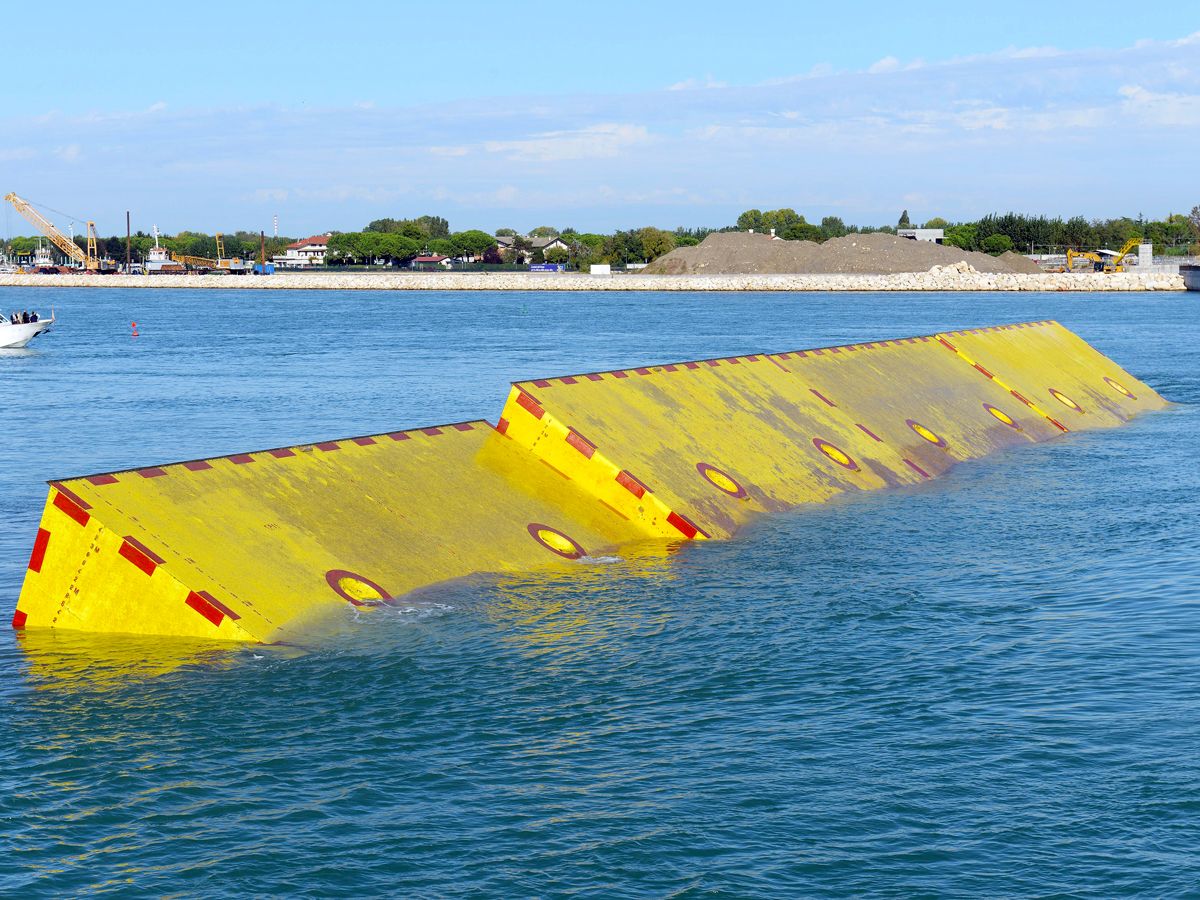
Venice Tide Barrier – Venice, Italy
Credit: AFP via Getty Images
Flooding has long been a problem in the Italian city of Venice. In recent decades, the problem has worsened, and the rising waters have threatened to destroy centuries of history. Engineers hope that the solution lies in MOSE, the Italian acronym for the Venice Tide Barrier.
The concrete island (which some say resembles a James Bond villain’s lair) and huge yellow floodgates faced several decades of funding and construction issues, before finally opening in 2002. It proved its worth in 2020, when extreme high tides were held at bay. Since then, the barriers have been closed more than 30 times, helping to prevent disaster.
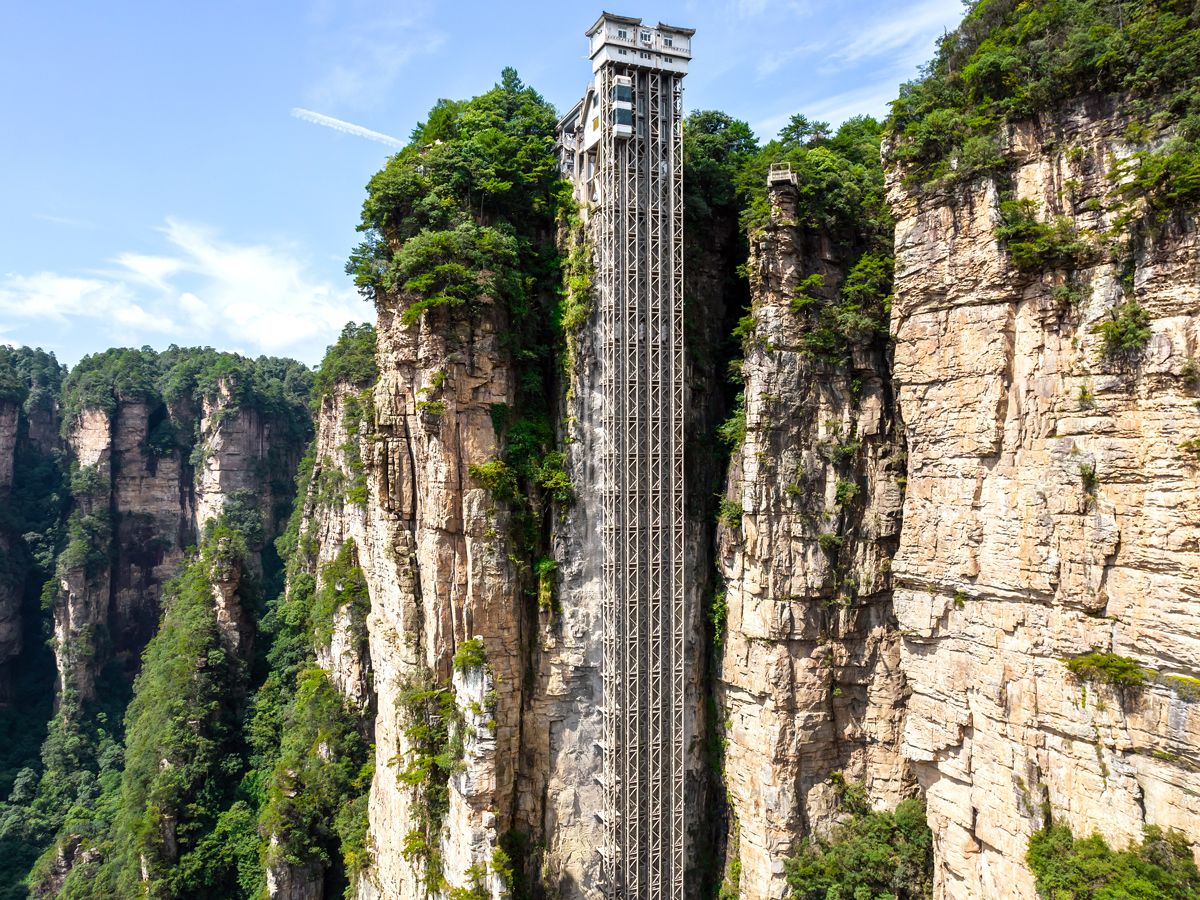
Bailong Elevator – Zhangjiajie, China
Credit: wonry/ E+ via Getty Images
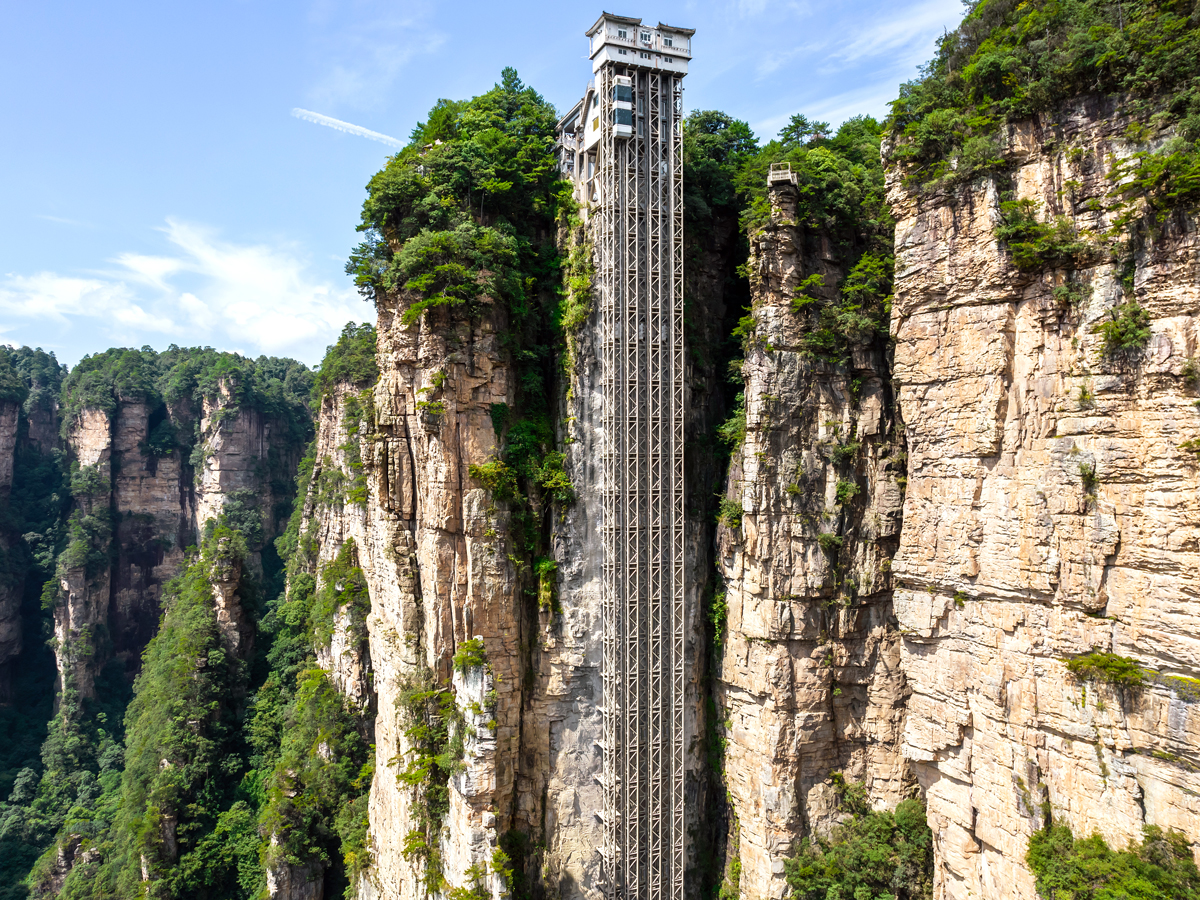
The Bailong Elevator makes enjoying the spectacular scenery of China’s Zhangjiajie National Forest Park much easier. What was once an arduous hike to the top of the mountains to see impressive gorges and waterfalls has been replaced by the world’s tallest outdoor elevator.
However, a ride in one of the double-story glass-and-steel cars is not for the faint-hearted, as it ascends 1,082 feet in about 90 seconds. Still, thousands of visitors each day take the Bailong Elevator (also nicknamed the Hundred Dragon Elevator) to witness the region’s natural wonders. The construction was controversial, given that the area is a UNESCO World Heritage Site, but proponents argued that it would help to prevent further erosion of delicate mountain trails.
Great Man-Made River – Libya
Credit: SOPA Images/ LightRocket via Getty Images
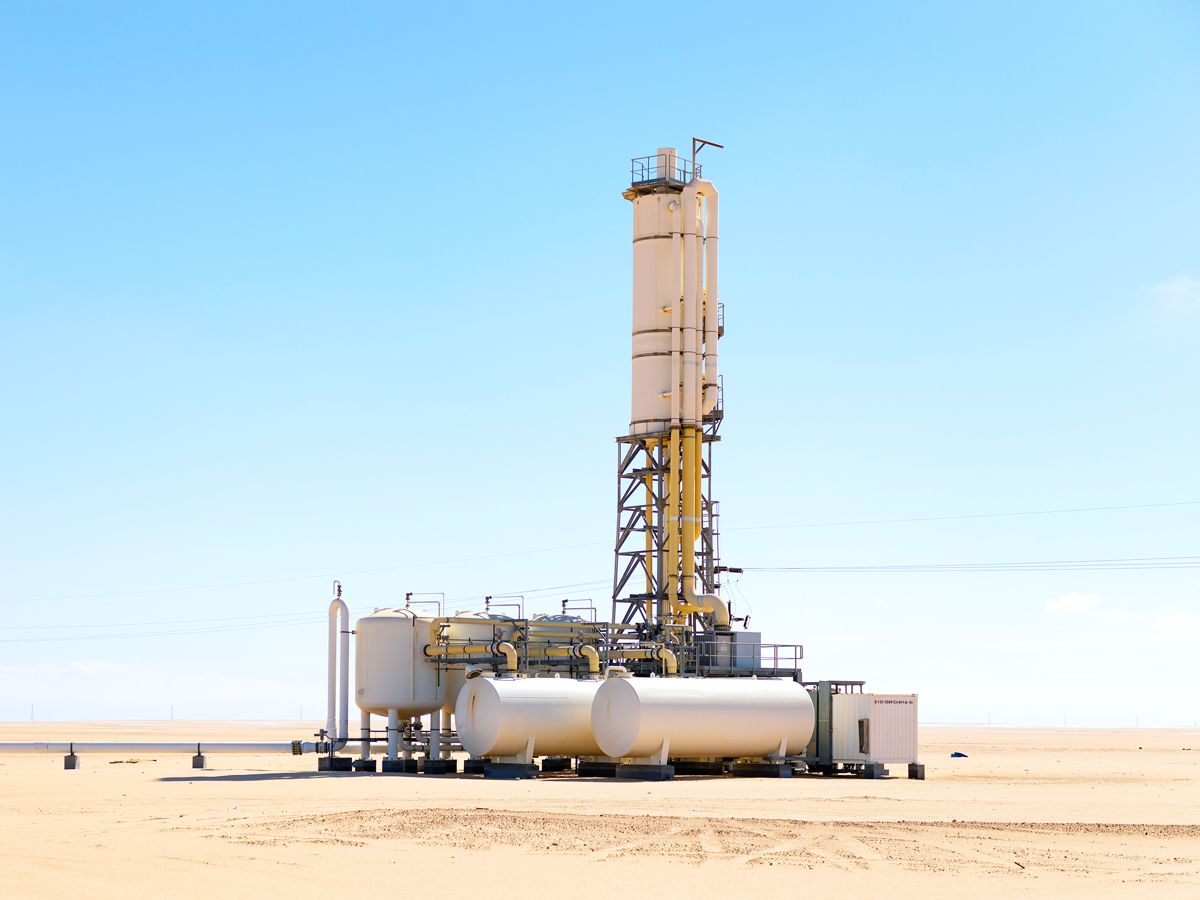
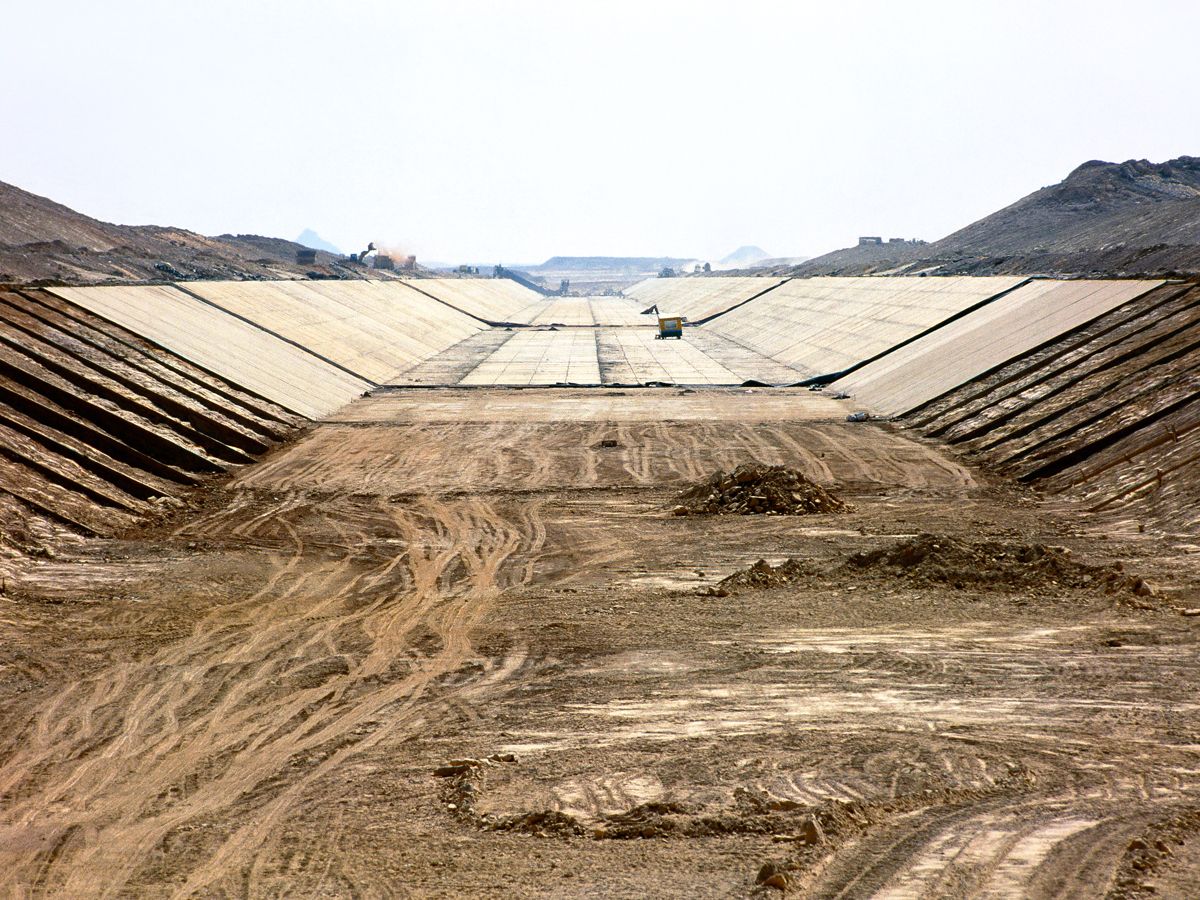
Several major engineering feats of the last century have involved supplying freshwater to desert regions. Funded by the Libyan government, the Great Man-Made River is one of the world’s largest irrigation projects. Work began in 1983 and is still ongoing. The project consists of a huge network of 1,752 miles of pipelines and 1,300 wells to pump water from deep beneath the Sahara Desert to cities along the coast of Libya. In addition to providing drinking water, it has made agriculture possible in vast areas of previously arid land.
Delta Works – The Netherlands
Credit: Hugo Kurk/ iStock via Getty Images Plus
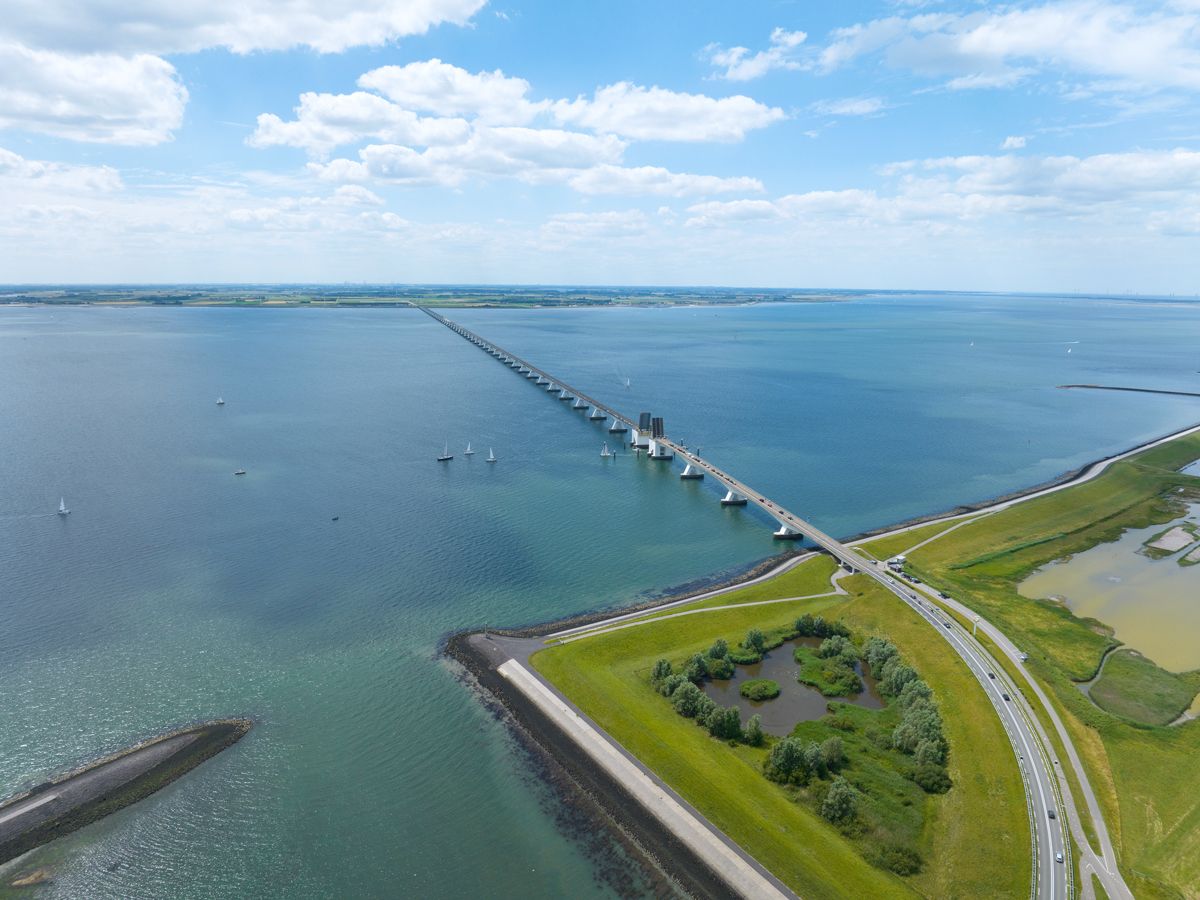
The Netherlands is one of the lowest-lying countries in the world. As such, flooding is a constant threat. The Delta Works are a system of dams and barriers built to protect much of the country from the waters of the North Sea. The Dutch Ministry of Infrastructure and Water Management began work on the project in 1954, one year after catastrophic flooding killed nearly 2,000 people.
The Delta Works were completed in 1997, although an extra storm surge barrier has since been added. As well as flood protection, the Delta Works help to improve overall water quality in the Netherlands and increase the supply of fresh water to nearby agricultural land.
Palm Islands – Dubai, United Arab Emirates
Credit: NurPhoto via Getty Images
In addition to having the world’s tallest skyscraper, Dubai has made headlines with a giant human-made archipelago shaped like a palm tree. There are plans for three islands, but, as of 2025, only Palm Jumeirah is complete. The island — which took six years and $12 billion to build — is also the only island which will be open to the public. It features apartments, hotels, and resorts, all linked to the mainland by a monorail. To create each island, more than 53 million pounds of sand have been dredged from the Persian Gulf.
Itaipu Dam – Brazil and Paraguay
Credit: tifonimages/ iStock via Getty Images Plus
Containing enough concrete to build five Hoover Dams, the Itaipu Dam stands at the border of Brazil and Paraguay. The project took a decade to complete and required moving 50 million tons of rock to shift the course of the Paraná River. One of the largest hydroelectric plants in the world, the dam contains 20 generators that can produce 14 gigawatts — enough to provide electricity to about three-quarters of all Paraguayan households, plus parts of southern and central Brazil.
Kansai Airport – Osaka, Japan
Credit: HIROSHI_H/ iStock Editorial via Getty Images Plus
As Japan’s second-largest city grew, its previous airport could not handle the daily influx of flights and had no room to expand. The new Kansai International Airport was built in 1994 on an artificial island in Osaka Bay, connected to the mainland via a 6-mile bridge.
While the design could withstand earthquakes and tsunamis, it could not handle another unforeseen problem: The island began to sink into the muddy layer at the floor of the sea. A complex series of sensors and hydraulic jacks have resolved the issue (for now), but the solution made the project one of the most expensive airports in history, costing an estimated $14 billion USD.
New Valley Project – Egypt
Credit: Barry Iverson/ Alamy Stock Photo
The final engineering project on this list has been hailed as both a modern marvel and a mega-failure.
Egypt’s New Valley Project, also called the Toshka Project, is designed to reclaim half a million acres of desert via irrigation channels pumping water from Lake Nasser. The land will then be used for agriculture, creating millions of new jobs and allowing for the creation of new towns, a much-needed prospect for the nation’s rapidly expanding population. Construction began in 1997; however, various technical problems and skyrocketing costs mean that the project is currently only partially complete, and its future is uncertain.
Advertisement
More from our network
Daily Passport is part of Inbox Studio, an email-first media company. *Indicates a third-party property.